





Introduction
Design education has been changing – with the specialisation of disciplines such as biodesign, ecological design, and biocultural design – to address posthumanism and non-anthropocentrism (Yan et al. Reference Yan, Litts and Na2020). Design scholar Boehnert (Reference Boehnert2013a) emphasises that recognising the deep-rooted separation between humanity and the natural world and learning interrelations with the natural world will serve as a foundation for sustainable design, enabling students to navigate complex challenges and suggesting that without ecological literacy, sustainability efforts risk being superficial or limited in their impact. Recent scholarship in biodesign education has foregrounded the need for pedagogical models that can meaningfully engage with biological complexity, material agency, and interdisciplinary collaboration (Parisi Reference Parisi2021). As biological processes increasingly enter design studios and laboratories, educators are required to develop learning environments that move beyond representational design practices towards embodied, experimental, and systems-oriented modes of inquiry. Within this context, algae-based experimentation for living colour offers a particularly productive pedagogical framework, as it combines material experimentation, temporal processes, and ecological thinking.
A growing body of research demonstrates how photosynthetic microorganisms can serve as active agents in both material generation and colour formation, providing fertile ground for pedagogical models that rely on living processes. For instance, Reali et al. (Reference Reali, Sampietro, Diani, Celli, Cantini, Marseglia and Biondi2024) document a biodesign/microbiology collaboration in which microalgae drive biomineralisation processes to produce new biomaterials from marble extraction leftovers. Their work highlights how material-driven and laboratory-based experimentation can support transdisciplinary learning, offering a framework in which algae are approached simultaneously as biological collaborators and design resources (Reali et al. Reference Reali, Sampietro, Diani, Celli, Cantini, Marseglia and Biondi2024). Similarly, Marseglia et al. (Reference Marseglia, Biondi, Cantini, Celli, Brunelli, Reali and Sampietro2025) presents a study on the design of new materials fabricated through biofabrication processes induced by photosynthetic microorganisms, including microalgae and cyanobacteria. Their research foregrounds chromatic processes as dynamic and ecological phenomena, establishing a clear precedent for living colour biofabrication and reinforcing the view of living systems as temporal, co-creative partners in material development (Marseglia et al. Reference Marseglia, Biondi, Cantini, Celli, Brunelli, Reali and Sampietro2025). These case studies are further contextualised by Marseglia et al. (Reference Marseglia, Cantini, Celli, Brunelli and Lotti2026), who outline a transdisciplinary approach to biodesign that hybridises scientific method and design practice. Their framework positions living materials as both dynamic and pedagogically valuable, offering strategies for integrating laboratory experimentation, scientific inquiry, and ecological awareness within design education (Marseglia et al. Reference Marseglia, Cantini, Celli, Brunelli and Lotti2026). Taken together, the research by Marseglia et al. (Reference Boehnert2026), Reali et al. (Reference Reali, Sampietro, Diani, Celli, Cantini, Marseglia and Biondi2024), and Marseglia et al. (Reference Marseglia, Biondi, Cantini, Celli, Brunelli, Reali and Sampietro2025) provides a coherent foundation for algae-based colour pedagogies. These works collectively offer both the educational principles, transdisciplinarity, ecological literacy, lab-based inquiry and the biofabrication case studies that demonstrate how learning can be structured through biological temporality, material emergence, and co-creation with living systems. The Living Pigments project is situated within this lineage, contributing to a pedagogical model in which colour is not merely applied but cultivated, observed, and understood as a living, evolving process.
Developing an interdisciplinary curriculum through living systems laboratory experimentation
The MA Biodesign course takes an interdisciplinary approach to design-led studio learning, with students from both design and science backgrounds. The programme is supported by a biosafety level 2 teaching lab, where Year 1 students receive weekly laboratory training, and technical support in biological protocols and cultivation methods. Our staff expertise spans prototyping for product design, speculative design, microbiology, textiles, plant science and microalgal biotechnology and a range of external experts joining us who are academic researchers, biodesign practitioners, lab founders and leading voices in biodesign education and research. Teaching is delivered through collaboration between tutors and the Grow Lab technical team and associate lecturers hosting lab workshops and science surgeries, is a highly programmed approach to design-led biodesign education at postgraduate level.
The Living Pigments project, delivered in the final semester of Year 1, aims to develop and test biodesign-making workflows and techniques that lay the foundation for the core biodesign project undertaken by the students in the second year. Through prototyping and experimentation, students integrate biological systems into design strategies and translate theoretical knowledge into informed, material outcomes. The teaching framework is supported by workshops covering a diverse range of biodesign practices, bio-craft techniques, and biofabrication methods. Learning outcomes focus on interdisciplinary research methods, experimental prototyping, documentation, reflective communication and ethical collaboration within biodesign contexts.
How does this unit connect biology, design and prototyping
This unit builds on the experimental and conceptual foundations developed in earlier semesters, guiding students toward a focused biodesign and biofabrication practice. Students develop experimental protocols that combine scientific methods with design-led inquiry, whilst strengthening lab, prototyping and documentation skills through their experimentation with algae.
The pedagogical emphasis of the unit is on designing-with living organisms, particularly pigment-producing algae. Students develop design outcomes while learning to sustain and adapt cultivation processes over time. Human interventions establish cultivation conditions, while the algal growth and pigmentation respond within these constraints. This process encourages students to observe and respond to biological variability as part of the biodesign process, rather than treating living systems as fully controllable materials.
The Living Pigments project introduces students to the creative and scientific potential of living colour as a biodesign material. Through a series of thematic laboratory sessions, students cultivate and observe pigment-producing organisms – primarily algae – to understand how biological behaviour can inform and inspire biodesign practice. Adopting a designing-with approach, the teams develop materials, tools, and processes that harness the aesthetic and functional qualities of microalgae pigmentation.
Complementing the lab sessions, an in-studio biofabrication workshop extends these explorations into fabrication and scaling, enabling students to translate fabrication methods into environments that help growth, sustain and even shape their organisms towards a desired output, all without genetically engineering them. Each student team selects one of two project streams:
-
1) Designing a tool for working with organisms and pigmentation, focuses on developing responsive systems – such as bioreactors, cultivation environments, or toolkits – that support and modulate pigment production while sustaining the organisms’ (growth). This stream encourages a synthesis of engineering, craft, and digital fabrication, foregrounding both the functional and aesthetic integration of living processes.
-
2) Designing a material that supports biological responsiveness invites students to create materials or surfaces that interact with and express living pigmentation. Here, the aim is to maintain biological activity and enable continuous colour evolution, using existing or newly developed bio-based composites to explore fluid, dynamic relationships between organism, material, and form.
Across both streams, students are challenged to move beyond pigment extraction and towards working with biological variability, the inherent behaviours and responsiveness and needs of the living organisms involved. The project foregrounds care, maintenance, and evolving and responsive qualities of living colour. Throughout the process, students follow structured guidelines for experimentation and reflection, including detailed planning of biological variables, maintaining laboratory notebooks that capture data and observations, and iteratively refining their methods and prototypes through successive trials. Final deliverables include an experimental plan, process documentation, and a completed prototype – presented through a visual display and oral presentation. Outcomes may take the form of functional tools, responsive materials, or hybrid systems developed through biodesign methodologies.
Teaching roles
An interdisciplinary team of biodesigners and scientists teaches the unit. Together, we integrate laboratory experimentation with design-led research and making. Each staff member contributes distinct expertise: biodesigners lead the Living Pigments brief and design studio; An environmental scientist with expertise in algae delivers a field sampling and lab-based workshop series on lab-based microalgae ecology, cultivation, and pigment extraction; and another designer develops digital fabrication sessions, including a 3D-printing workshop on aeration device design for optimising organism growth, created collaboratively with biodesigners.
The team models the ethos of collaboration central to the course, expanding scientific methods into creative practice and demonstrating the potential of designing-with biology.
Pedagogical framework
Learning orientation and pedagogical intent
The pedagogical approach of this unit was centred on learning through hands-on experience, collaboration, and ongoing critical reflection.
The project brief invited student pairs to develop experimental protocols aligned with their project interests. This fostered greater autonomy and helped students practice and navigate the inherent unpredictability of working with living organisms more freely than in the two previous units. Year 1 of the curriculum is a fast-tracking of training students in working in the lab and with living organisms, and opening self-led experimental design in the third semester of year 1 prepares them for their independent projects in year 2, whilst offering the challenge of year 1 being very fast-paced. Design-trained students absorb and iterate on learnings at a very rapid pace, which is a challenge when working with living systems, and we, as the course, continuously trial this in close collaboration with the Grow Lab team.
Integrating biological experimentation within biodesign project timelines reflects challenges commonly encountered in professional biodesign practice. The course addresses this through shorter experimental cycles and close collaboration between teaching and lab staff.
Collaboration, ethical consideration, and interdisciplinary thinking were embedded into the mindset fostered by the unit through a lecture about designing-with as method and the method embedded in the project brief. Designing-With is a term and method defined by Ron Wakkary, who argues that human-centred design is part of the problem, not the solution (Wakkary Reference Wakkary2021). It places humans above all else and ignores the exploitation of non-humans and materials. In response, he proposes “designing-with”: a way of designing that recognises humans are not alone at the centre of design. Designing-with means collaborating with both humans and non-humans – materials, environments, animals, and technologies – as active participants in design. Wakkary describes designing-with as an inclusive practice that acknowledges our mutual dependencies – material, ethical, and existential. Students learn to approach living systems as active collaborators rather than inert materials, considering organism health, environmental impact, and the ethical dimensions of design choices. This orientation encourages them to reflect on their role as designers working “with” rather than “on” living matter, and to understand how biodesign practice can support symbiotic and resilient futures within their shared environment.
Teaching structure and modes of engagement
The multimodal structure of the unit (lab, studio, lectures, workshops) ensured that conceptual understanding, ecology and species diversity, laboratory-based technical skills, and creative exploration progressed in parallel. The three microalgal laboratory-based workshops introduce microalgae as ecologically central, metabolically versatile organisms whose behaviour is tightly coupled to their environment and increasingly relevant to applied research and biotechnology. The first workshop situates microalgae within their natural complex ecological contexts, emphasising their ubiquity across aquatic and terrestrial systems. Students are shown how to sample safely within the surrounding environments and explore the prolific biodiversity supporting local habitats. Fundamental roles explored include primary production and oxygen generation, and their ability to adapt morphologically and metabolically in response to environmental pressures, positioning them as natural bioremediators, environmental engineers and pigment producers. The second workshop builds on this by examining microalgal growth under controlled laboratory conditions, focusing on growth dynamics, culturing strategies, and key physical and chemical variables such as light, gas exchange, nutrients, and sterility that govern productivity and metabolic outcomes in liquid culture and photobioreactor systems. The final workshop shifts attention to algal biochemistry, introducing pigments and associated metabolic pathways, and provides practical experience in biomass processing, pigment extraction, analysis, and separation, while encouraging critical discussion around the application of living pigments within students’ own project-based research contexts, while workshops provided opportunities to translate these concepts into practical experimentation and design development. Studio tutorials and critiques supported reflection and iterative refinement, helping students articulate both their design intent and process.
Students worked in pairs, sharing responsibility for research planning, experimentation, and design development. This collaborative structure reflected real-world biodesign practice, where interdisciplinary teams must communicate, negotiate, and integrate diverse skill sets. Pair-based work fostered peer learning, distributed knowledge, and confidence in decision-making, while encouraging students to develop strategies for shared leadership within the studio and lab context.
The teaching team acted as facilitators rather than directors, guiding reflection, monitoring progress, and offering support as students translated laboratory observations, analysis and results into design applications. Feedback sessions in both studio and lab spaces encouraged iterative development and critical discussion.
Lecture series: exploring biodesign practices
Lectures on biodesign case studies function as a critical bridge between conceptual discourse and algae-based studio experimentation. By examining pioneering projects by ecoLogicStudio (Pasquero and Poletto Reference Pasquero and Poletto2020) and the material-driven design research of Elvin Karana (Karana et al. Reference Karana, Barati, Rognoli and van der Laan2015, Reference Karana, Blauwhoff, Hultink and Camere2020), students encounter applied models of working with photosynthetic organisms at multiple scales. These cases foreground algae as a living system with metabolic and temporal dynamics that shape design outcomes through interaction with environmental conditions. Through analysis of cultivation systems, photobioreactor design, and feedback-driven fabrication workflows, lectures introduce systems thinking – linking growth conditions, light exposure, nutrient cycles, and material performance as a collaborative expression. Drawing on Karana’s Material Driven Design methodology and ecoLogicStudio’s urban algae installations, students translate theoretical insights into studio prototyping. Case studies also foreground maintenance, ethics, and lifecycle considerations, prompting iterative experimentation rather than static object-making. By situating algae within environmental, technological, and socio-cultural contexts, lectures cultivate an expanded design methodology integrating living systems, computational modelling, and ecological aesthetics into hands-on experimentation.
Biofabrication workshop
The biofabrication workshop combined conceptual framing with hands-on experimentation through an object-based learning approach (Hardie Reference Hardie2015). The session began with two clear learning outcomes: students would analyse how variations in nozzle design influence air and water flow and use diagrammatic drawing to explore and communicate these environmental effects. Building on a case study of Aileen Hoenerloh’s aeration methods for shaping bacterial cellulose (Hoenerloh et al. Reference Hoenerloh, Sonne and Nicholas2024), students were asked to design a 3D-printable nozzle for a simple fish tank air pump. While SCOBY was introduced as a reference organism, the exercise encouraged broader thinking about how airflow might structure growth conditions for diverse living systems. Working in groups, students developed and tested nozzle geometries through sketches or Rhino models, examining how small design modifications could alter circulation, material formation, and biological behaviour. By focusing on accessible DIY aeration tools, iterative prototyping, and close observation, the workshop positioned the designed object – the nozzle – as a mediating device through which environmental systems could be investigated, exemplifying object-based learning in practice.
Integration of laboratory practice and scientific methods
A central component of the pedagogical approach was the integration of laboratory-based scientific practice. Students participated in three structured lab workshops and two independent lab sessions, preparing experiment plans, managing schedules, and conducting their own culturing and testing. This marked the first point in the programme where students were expected to self-organise laboratory work.
This deep dive into continued laboratory practice and new skill sets in working with algae was supported by tutors and the lab team, balancing ongoing guidance of experimental design and iteration with studio practice and dynamic evolving of the projects. This stage highlights a key pedagogical challenge in design-led biodesign: aligning studio practice and design emergence with the constraints and rhythms of the lab practice, which need different modes of attention and pacing. The lab needs a highly structured, well-timed approach, while allowing creativity and impromptu iteration can be challenging for students who are still learning. The lab staff and teaching team also need to find a balance to address emerging student needs for their projects.
Microalgal workshops
-
1. Microalgae Ecology and Environmental Context
This session begins with a lecture on algal ecology, which focuses on observational and analytical methods used to contextualise microalgae within natural and built environments. Students are introduced to net, tube and scrape sampling, taxonomy, microscopy inspection, and qualitative assessment of microalgal presence within biofilms and aqueous systems, alongside discussion-based methods for interpreting ecological function, symbiosis, and environmental adaptation. Emphasis is placed on recognising species morphology and behaviour as indicators of environmental health, appreciating the critical role these organisms play in sustaining resilient global systems, and on recognising their biodiversity as an indicator of anthropogenically driven ecological pressures and seasonal dynamics.
-
2. Biodiversity: Microalgal Cultivation and Growth Analysis
Beginning with a lecture on the dynamic variables which effect living systems and microalgal cultivation. Methods taught in this session centre on aseptic culturing and controlled propagation of a variety of single microalgal strains. Students learn techniques for inoculation, sterile handling, preparation and modification of nutrient media, and the management of light and gas exchange. Quantitative and semi-quantitative approaches to monitoring growth are introduced, including cell density estimation and colour-based assessments, as well as interpretation of growth curves across lag, exponential, stationary, and decline phases within batch and semi-continuous culture systems.
-
3. Pigment Extraction and Analysis
Following a lecture on metabolic processes within living systems, this session introduces biochemical laboratory methods for working with microalgal biomass. Students are guided through methods for working with live pigmented cultures and biomass harvesting and preparation, pigment extraction, and analytical techniques for pigment characterisation. These include spectrophotometric profiling to assess pigment composition and concentration, and thin-layer chromatography for pigment separation, alongside discussion around the potential application of algal pigments in material and design-led research.
Assessment of the team submissions valued experimentation design, reflection on observations and findings, and iterative process alongside final outcomes and how these outcomes were situated in biodesign and products, tools, materials – supported by proof-of-concept work in the lab, where achieved. Students submitted a portfolio documenting experimental planning, iterative development, and design outputs, complemented by an oral presentation that communicated their methods, observations, and critical insights.
Overall, this pedagogical framework fostered independence in working across studio and lab, curiosity to learn about new organisms and design towards their needs or properties, interdisciplinary collaboration across the teams, and ethical engagement through designing-with method reflections and application (where possible). It prepared students to navigate the complexities of designing-with living systems. It supported the development of skills, confidence, and reflective practice that would underpin their subsequent projects in year two and beyond, equipping them to engage with diverse biodesign contexts in professional and research environments.
Design studio outcomes: living pigments in practice
The following case studies illustrate how students engaged with the Living Pigments pedagogy across laboratory, studio, and fabrication contexts. Rather than foregrounding outcomes, the examples focus on learning processes, methodological development, and shifts in how students approached living systems as collaborators within a design-led biodesign framework. The projects were selected to reflect a range of experimental approaches, material strategies, and conceptual framings, while revealing shared pedagogical patterns that emerged across the unit.
Within the case studies, the focus lies less on final artefacts as endpoints and more on observable indicators of learning, including how students structure experimentation, responded to biological variability and adjusted their design intentions through iterative making and reflection. The projects are discussed through several pedagogical themes embedded within the unit, including biological temporality through cultivation and maintenance process, material emergence and variability during experimentation, an adaptive decision-making in response to changing biological conditions.
Together the projects provide insight into how multimodal learning across laboratory experimentation, studio prototyping, biofabrication and reflective discussion supported students in developing situates biodesign practice under conditions of uncertainty and responsiveness.
Contextualising microalgae as living, responsive systems
In combination with a studio lecture on biodesign practice, weekly studio tutorials, and fabrication sessions, this first stage of the project invited student teams to situate their design thinking within the parameters of their biodesign brief. A first science lecture on microalgae introduced the core organism students would work with throughout the unit, enabling focused engagement with algae while opening the door to research on species diversity and biological properties.
Students were encouraged to work within the focused constrains of algae cultivation and living pigments as a framework for experimentation rather than limitation. This structure approach supported curiosity, iterative testing, and early reflection on how biological conditions could influence material and design outcomes.
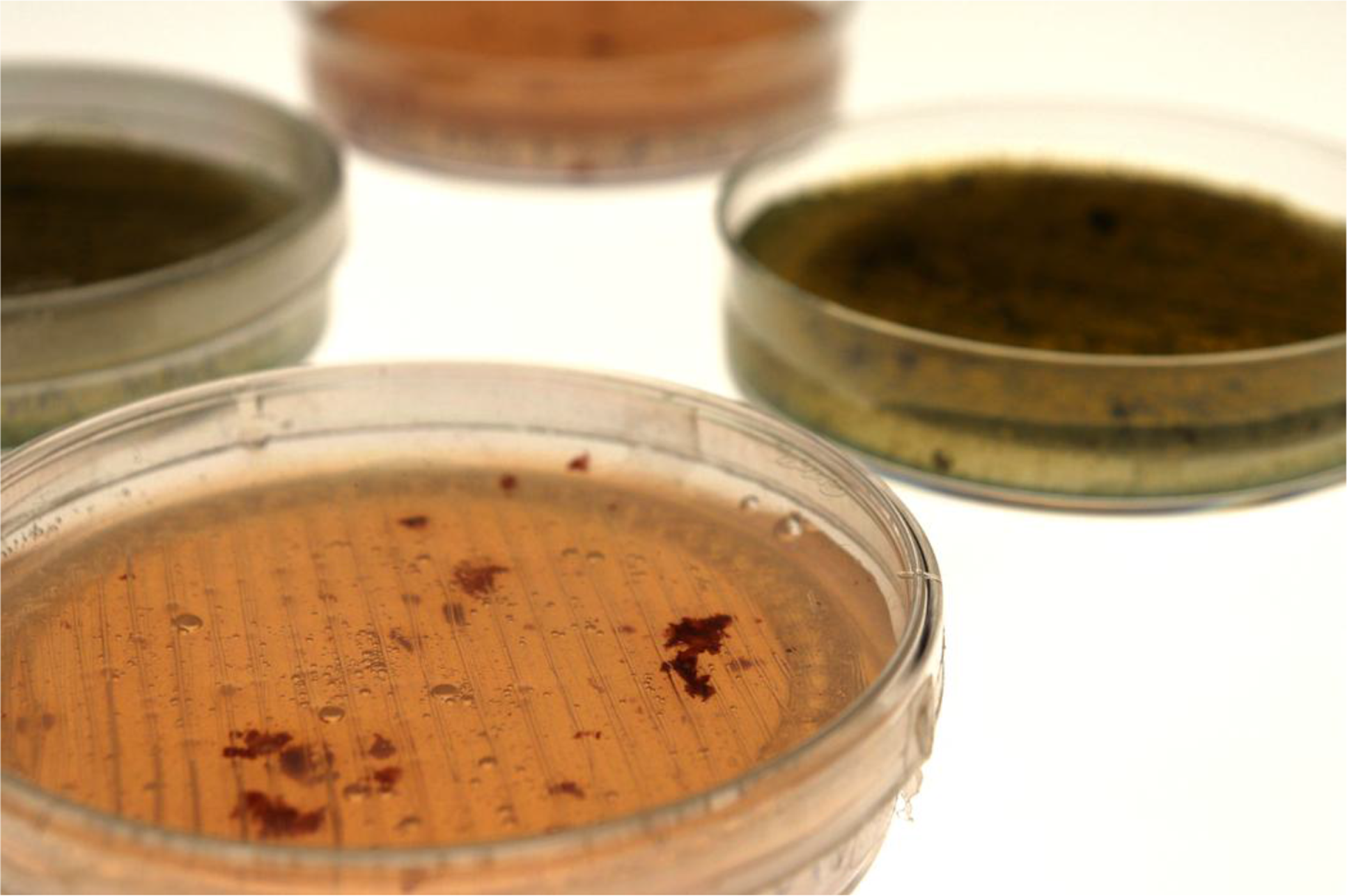
The first laboratory lecture and workshop situated microalgae ecologically, translating field and laboratory observations into early material explorations. Students encountered microalgae as responsive, adaptive organisms whose colour, form, and behaviour fluctuated according to environmental conditions. These fluctuations were interpreted not as instability but as meaningful expressions of metabolic activity, adaptation, and ecological agency that could be linked to pigmentation and colour range opportunities. Studio tutorials and reflection sessions encouraged students to consider how these observations could inform design ideas, sketches, and prototypes, integrating ecological understanding with emerging creative strategies (Figure 1).
Algae embedded in hydrogel and scaffold in a Petri dish.

Figure 1. Long description
The image shows algae cultured within a hydrogel matrix that is reinforced by a woven scaffold and placed in Petri dishes.
Project – Green Screen
Green Screen explored a speculative wearable system in which living algae – Porphyridium purpureum and Arthrospira sp. (Spirulina) – provide UV protection while asserting their own agency and inner life within the design. Students treated the algae as vibrant, responsive collaborators, reacting to the care provided, the space, light, air, and wear, and integrated these behaviours into material and design decisions.
Within the context of the student projects discussed in this paper, agency is understood not as intentional decision-making, but as the observable responsiveness of living systems – their capacity to adapt, fluctuate and produce variable outcomes within designed cultivation conditions. Where the students used the terms “agency” within their projects and reflections, it is retained here within this situated pedagogical perspective.
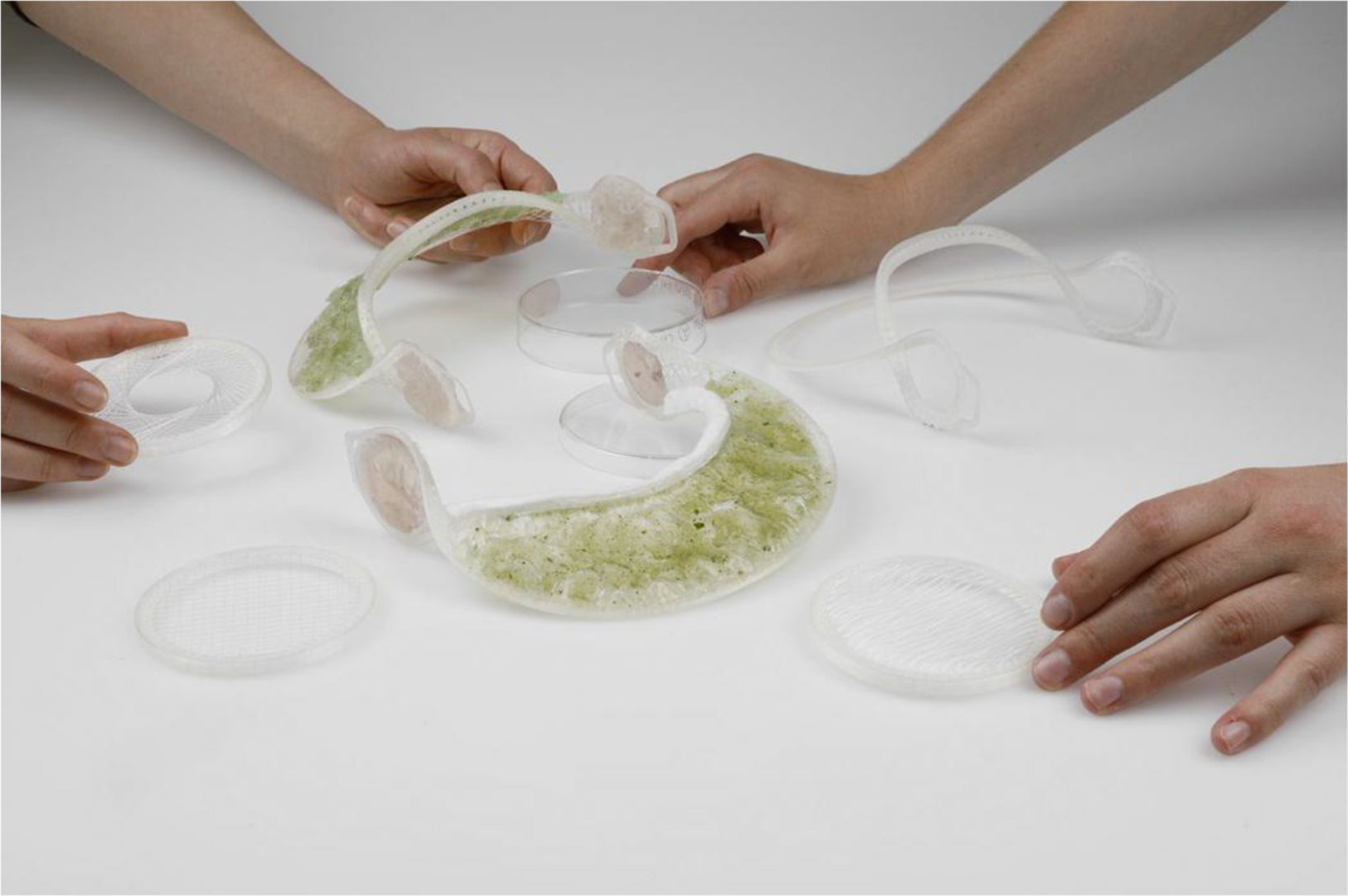
The visor accommodates algal life cycles – lag, exponential growth, and stationary phases – embedding care, maintenance, and mutual responsiveness into the prototype. Laboratory cultivation and studio prototyping emphasised iterative observation, adaptability, and attention to the more-than-human, positioning the algae as co-creators rather than passive materials. In doing so, the project enacted a non-hierarchical, pluralistic approach to design, prototyping unproven futures, embracing emergence, complexity, and evolving outcomes. The wearable ecosystem challenges extractive, industrial design by foregrounding object agency, sustainability, and relationality, demonstrating designing-with as a practice where biological behaviour, material strategy, and human interaction co-evolve.
Cultivation, care, and maintenance as design practice
A Designing-With lecture introduced situated design as a framework for working with living systems. Situated design acknowledges that all design unfolds within specific cultural, material, ecological, and social contexts, resisting abstract or detached approaches (Wakkary Reference Wakkary2021). Drawing on Wakkary’s posthuman framing, situatedness was extended to include non-human perspectives, recognising that plants, technologies, animals, and environments hold their own agencies and temporalities. Design, in this sense, becomes emergent and co-evolving – responsive rather than predetermined.
Building on initial studio prototyping, the second lab lecture and workshop centred on cultivation of liquid, hydrogel and biofilm cultivation options and controlled growth experiments. Students were encouraged to reconceptualise failure, learn the disciplines of culture maintenance, and care as active components of design practice. Working with monocultures under laboratory conditions made the sensitivity of microalgae explicit: growth, decline, and recovery depended on environmental variables and human intervention. While following established scientific protocols, students reflected on them through a designing-with lens embedding attentiveness and responsiveness into both laboratory routines and material decisions. Maintenance shifted from corrective task to generative design condition.
Following this positioning, the studio biofabrication session extended these questions through practice. Working with bacterial cellulose in liquid cultures, students explored how aeration, circulation, and nozzle geometry could cultivate and direct growth. Rather than focusing on technical mastery alone, the session foregrounded prototyping as an encounter with uncertainty – where environmental tuning, fabrication limits, and organism behaviour intersect. The aim was to frame biofabrication not simply as production, but as a method for testing relational and situated design propositions.
Preceded by the Designing-With reflections, students engaged with a recorded conversation between design researchers and educators Ron Wakkary and Oscar Tomico through a biodesign lens. Their responses revealed ongoing negotiation between theory and practice. As one student reflected:
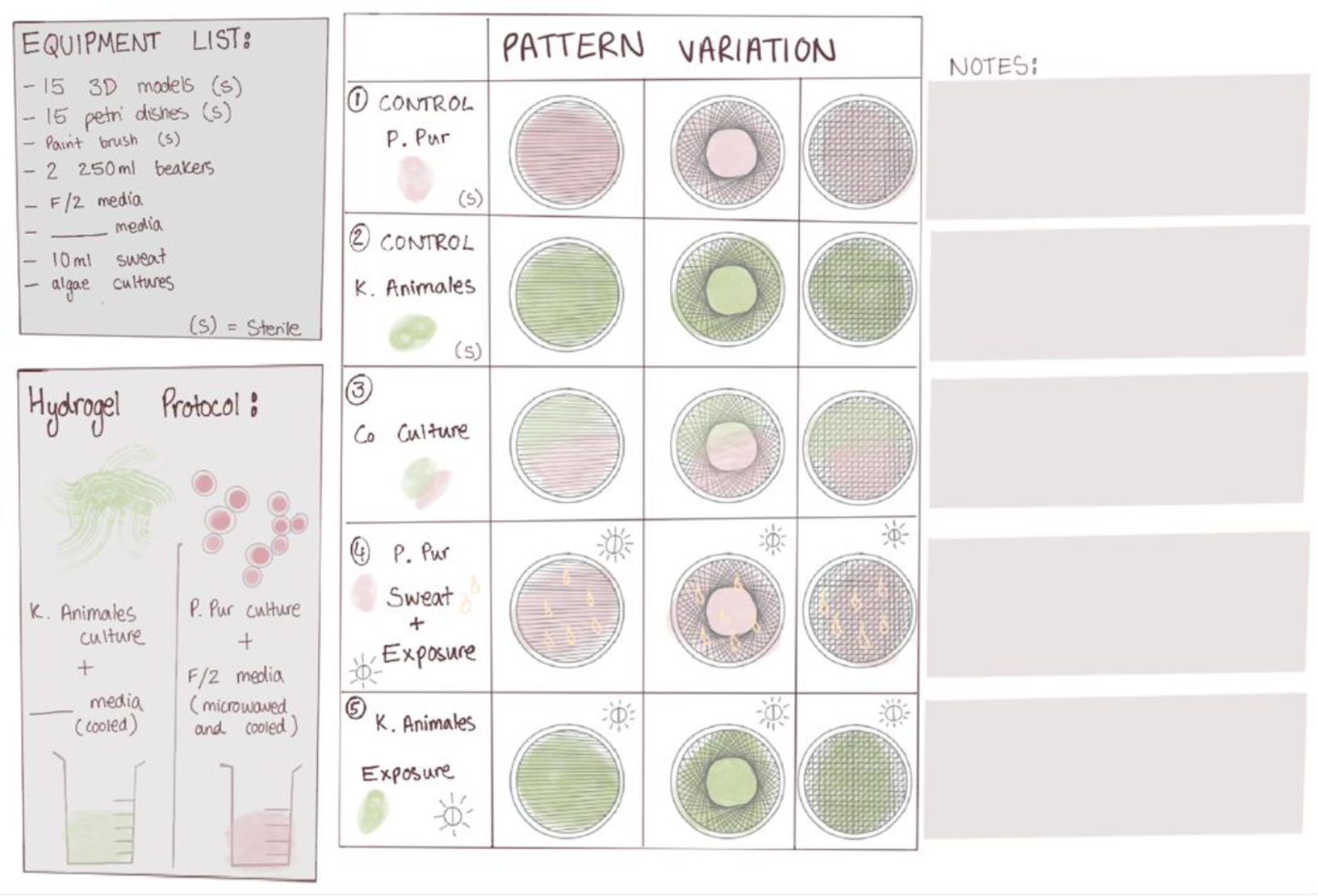
Student: What resonated with me most in the video was the discussion of risk in prototyping and how it relates to the limits of situated knowing in a design practice. When I think of our current project, the visor scaffold for an algal hydrogel culture, I am struck by the many levels of uncertainty it encapsulates; We are collaborating with a living organism we are only beginning to understand (biological), using a method of fabrication that is yet untested and likely to fail (physics), and are prototyping a product that would inherently require ongoing cycles of care (human behaviour). While this is daunting, the urgency for prototyping other worlds and the multiplicity of ideation emerging from the practice of biodesign offers a grounding context where our small project can act as a whisp of critical questioning (however flawed) directed at dominant material cultures (Figures 2 and 3).
Growth patterns tracked.
©Green Screen.

Figure 2. Long description
The figure presents a hand-sketched experimental protocol and observation document divided into multiple sections.
The visor in use.
©Green Screen.

Figure 3. Long description
The figure presents a final visor display alongside separate prototype components.
Access to 3D printing within the studio enabled students to iteratively test these propositions, designing-with liquid environments while confronting the ethical and practical implications of care, maintenance, and co-evolution. Studio tutorials and peer discussions further reinforced these themes, embedding cultivation not only as technical process but as both a reflective biodesign and pedagogic practice.
Project – A Patch That Speaks
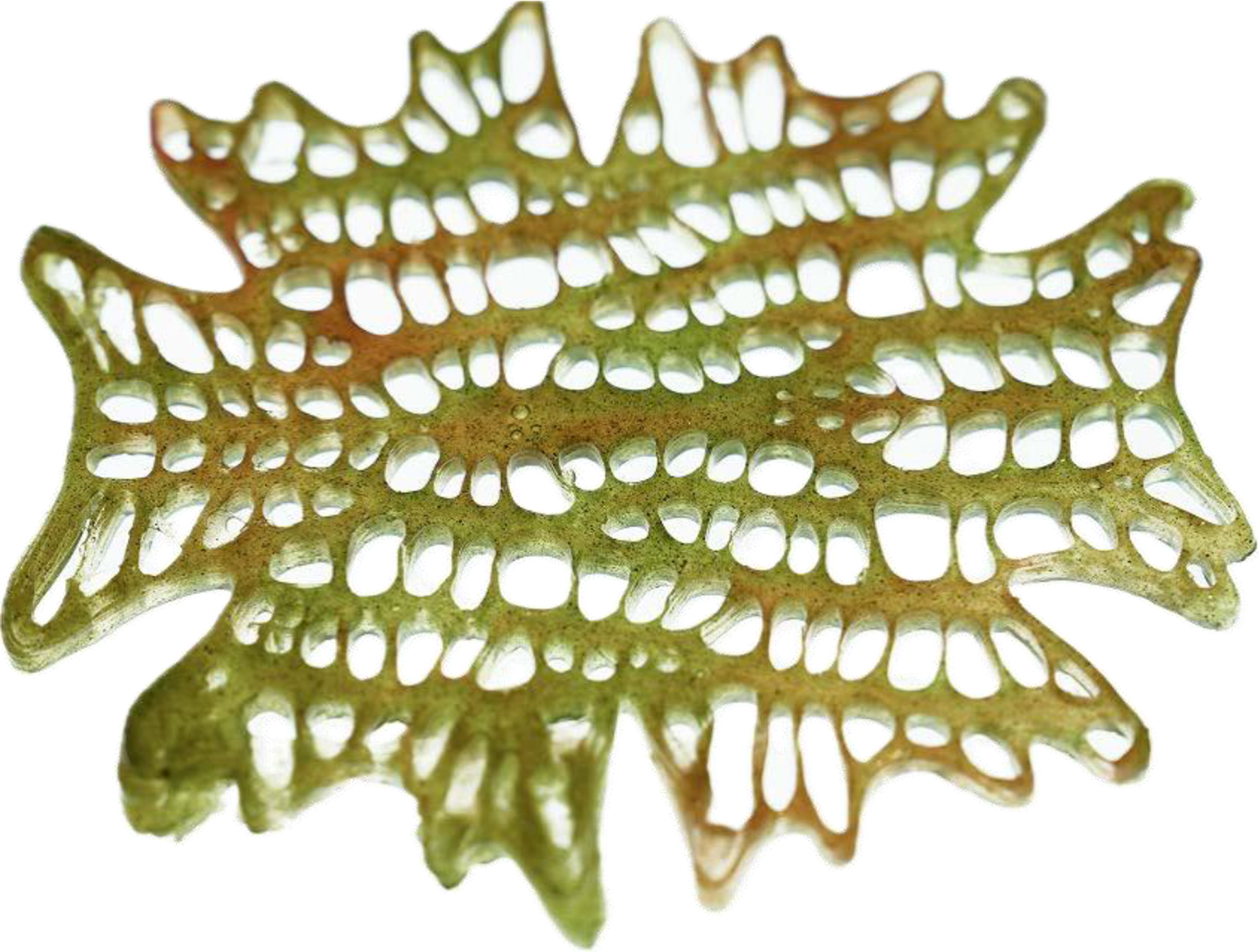
A Patch That Speaks explored soil–algal microcosms as environmental sensing systems, positioning cultivation as an ongoing design practice rather than a preliminary step. Laboratory cultivation foregrounded the challenges of maintaining algal viability, particularly when working across soil and hydrogel environments. As early soil-based liquid cultures proved unstable, studio prototyping reverted to the methods taught on immobilised algae growth within hydrogel formations, as these methods better supported the culture growth of and facilitated living dynamic pigment expression better suited to the project’s design outputs. Throughout this process, the students treated fluctuations in colour and vitality not as failure, but as indicators of environmental conditions and organism response. Reflection sessions supported the integration of these observations into material and structural decisions, demonstrating how maintenance, adjustment, and care informed the iterative development of a responsive living system (Figure 4).
Algae in a shaped hydrogel.

Figure 4. Long description
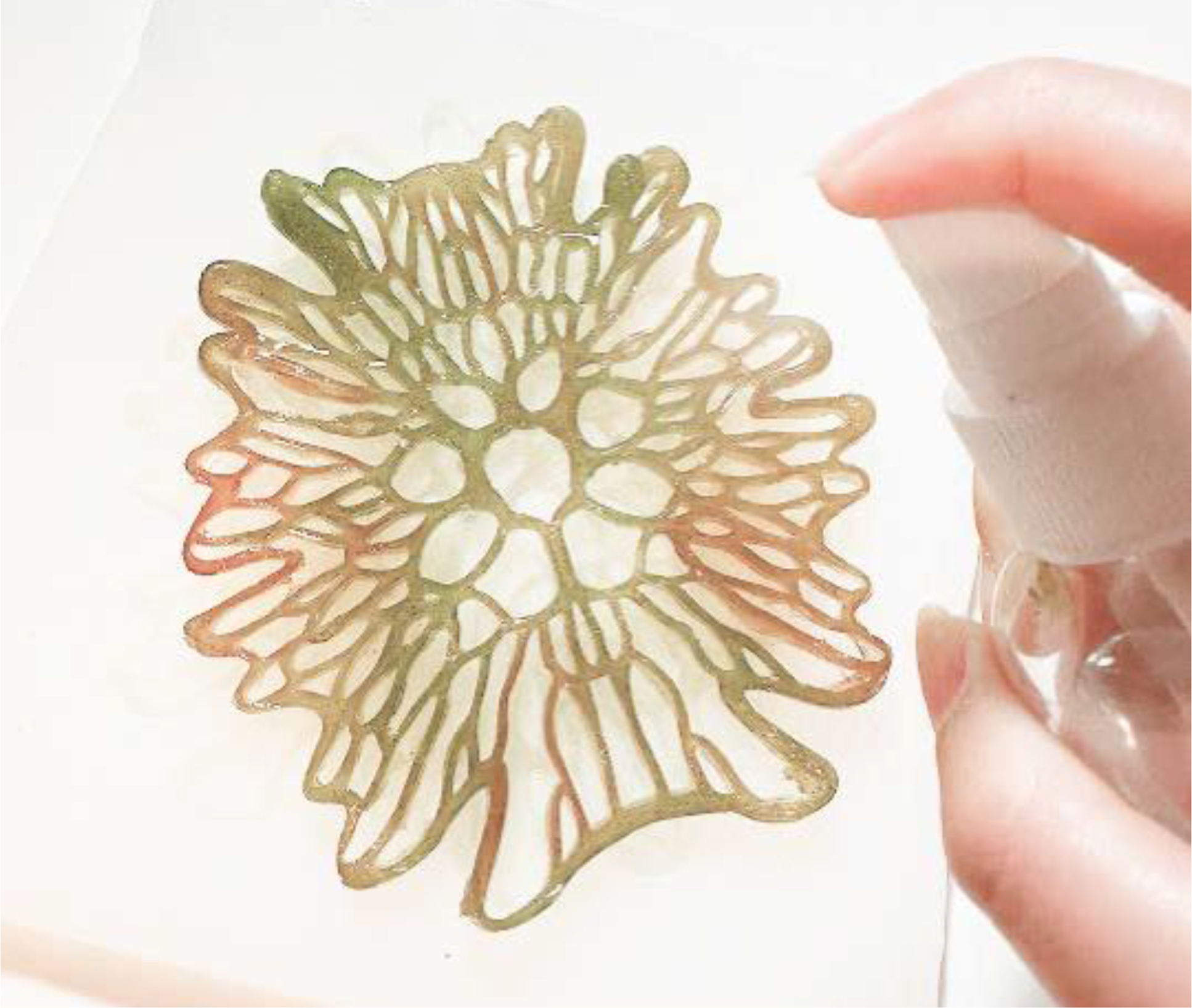
The figure shows a hydrogel structure formed into a distinct, non-standard shape. The hydrogel contains living algae distributed throughout the material.
Project – AEom
AEom Pen reconsiders drawing inks as living, time-based systems, foregrounding cultivation and care as integral to artistic practice. The project developed a drawing tool capable of housing beads of immobilised microalgae alongside a reactive, pH-sensitive ink, requiring ongoing attention to organism behaviour and environmental conditions. When released into the ink cartridge, the algae initiate gradual colour changes through photosynthesis and respiration, producing a dynamic range of hues over time. Rather than seeking material stability, the project embraced temporal change and biological responsiveness as core design parameters. In doing so, AEom positions drawing as a collaborative act, where successful outcomes depend on sustained care, observation, and negotiation with living processes rather than full material control.
Pigment, variability, and process-led material exploration
In the final lab lecture and workshop, pigment enhancement and extraction techniques and metabolic analysis were introduced, with students carrying these insights into studio-based prototyping and fabrication exercises. Emphasis was placed on utilising the natural responses of metabolic pathways operating within cultures when grown under variable conditions, rather than uniform outputs.
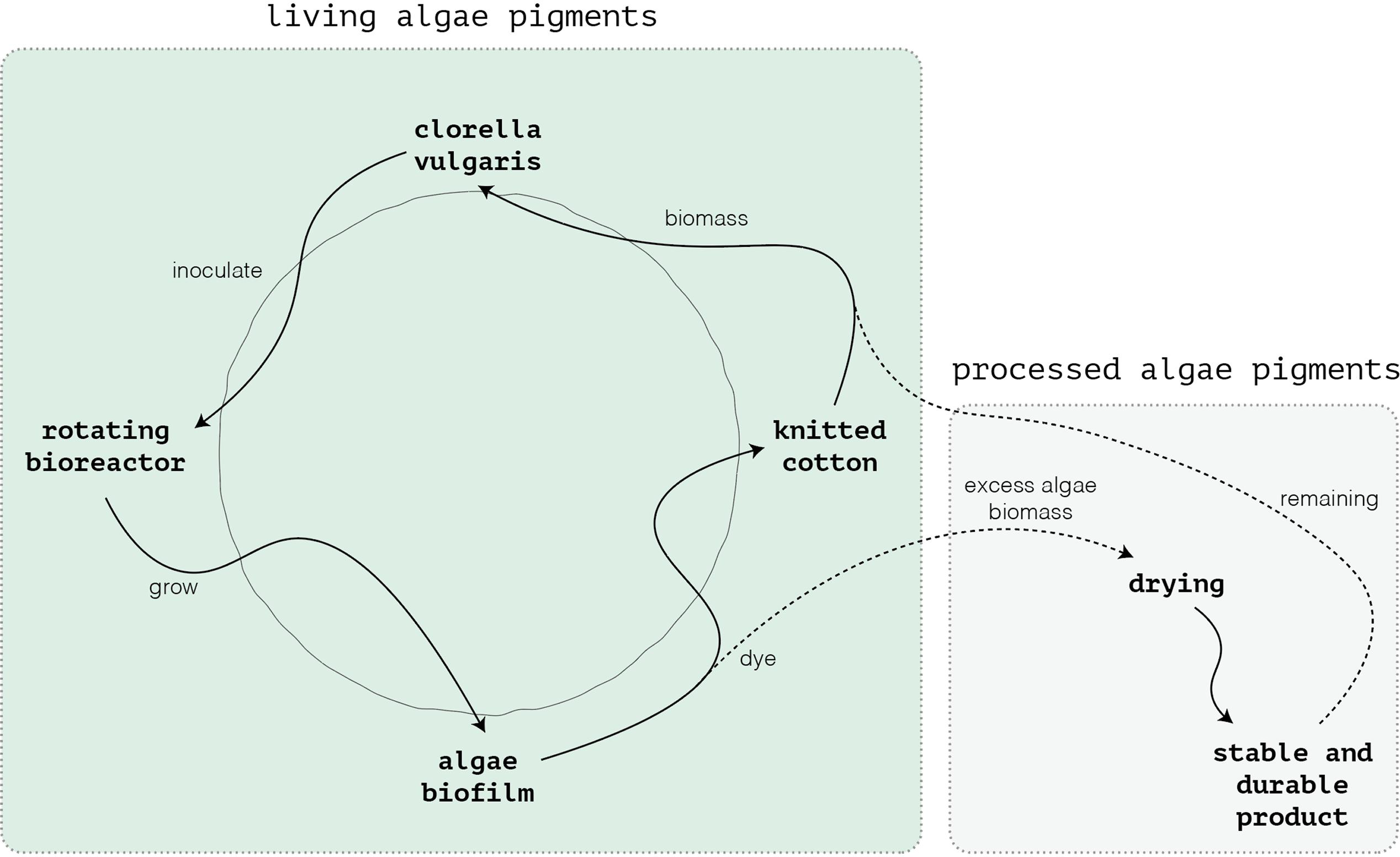
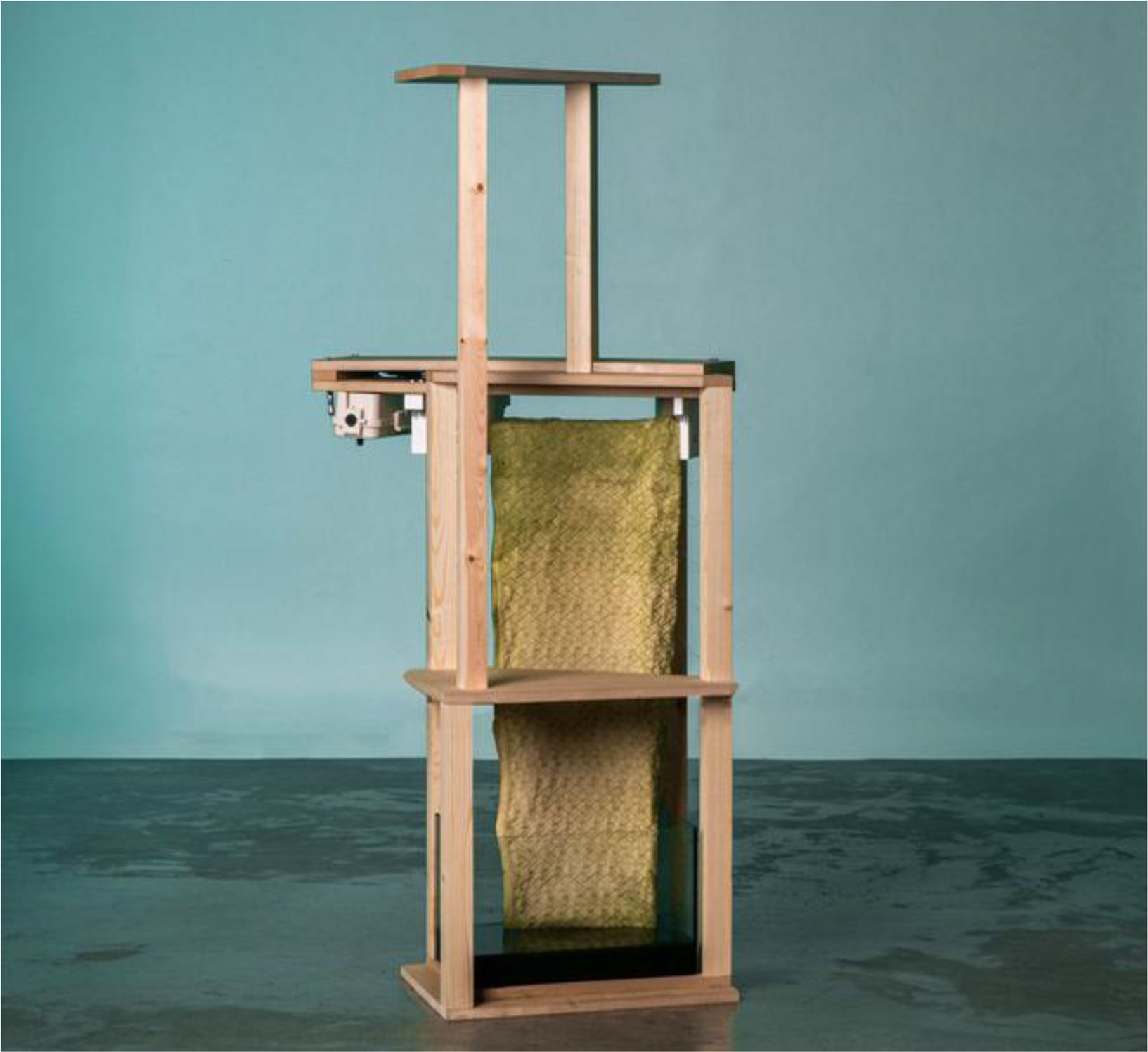
Projects explored living colour as a dynamic, process-led integration of pigmentation into surfaces, tools, and hybrid materials. Students worked across form, scale, and function, while tutorials continued to encourage critical consideration of biological, ethical, and aesthetic dimensions. For example, Bioloops employed a studio-built bioreactor and textile system to grow and harvest algae biofilm through the bioreceptivity of a designed knitted textile, positioned as a rotating element within a self-built reactor. A subsequent stage involved pigment extraction, linking cultivation to material application.
Project – Bioloops
Bioloops explored algae-based pigment production as a process-led, cyclical material system rather than a linear extraction workflow. The project integrated microalgal cultivation of Chlorella vulgaris, spatially configured bioreactors, and material experimentation to investigate how pigmentated biological growth emerges within the novel environmental conditions provided by this uniquely woven material over time. Rather than prioritising pigment stability or uniformity, the project embraced variability across biofilm cultivation, extraction through natural biofilm shedding, and optimal application stages. Pigments were applied to sculptural surfaces as traces of metabolic activity, positioning colour as an outcome of ongoing biological processes. Through this closed-loop approach, Bioloops demonstrated how living systems can inform material exploration and aesthetic expression while foregrounding temporal change and biological responsiveness (Figure 9).
Synthesis across the projects
Across the Living Pigments projects, learning emerged through an interplay of laboratory experimentation, studio-based prototyping, fabrication workshops, and structured reflection. Students articulated microalgae as responsive biological participants within the biodesign process – requiring specific environmental conditions, while remaining sensitive, adaptive and not fully predictable rather than passive materials. Despite different design directions, shared patterns emerged around care, iteration, and the negotiation of biological time within fast-paced design contexts. Together, the case studies illustrate how the multimodal structure of the unit supported students in working productively with uncertainty, integrating biological constraints with design and material strategies.
Discussion
Learning process: working with living systems
Across the duration of the Living Pigments unit, attention was given to how students learned through their ongoing engagement with the living systems. This included what it meant to work with microalgae in a biodesign context, how responsiveness emerged through cultivation, care, material contexts and how students gradually developed confidence in observing metabolic change and material transformation over time. This learning was not linear but unfolded through repeated encounters between design intent and biological behaviour.
The discussion is structured through four pedagogical dimensions that were used as a guiding lens when viewing the student projects: (1) biological temporality, referring to the rhythms of growth, maintenance, and cultivation over time; (2) material emergence, describing the unexpected shifts, adaptations, and variations that arise during experimentation; (3) designing-with as situated negotiation, where design decisions are continuously shaped in relation to living systems; and (4) iterative prototyping under constraint, where time, laboratory conditions, and material limits actively shape what can be made and learned. These dimensions are not used as strict evaluation criteria, but as a way of staying close to the learning processes visible across studio, lab, and fabrication work.
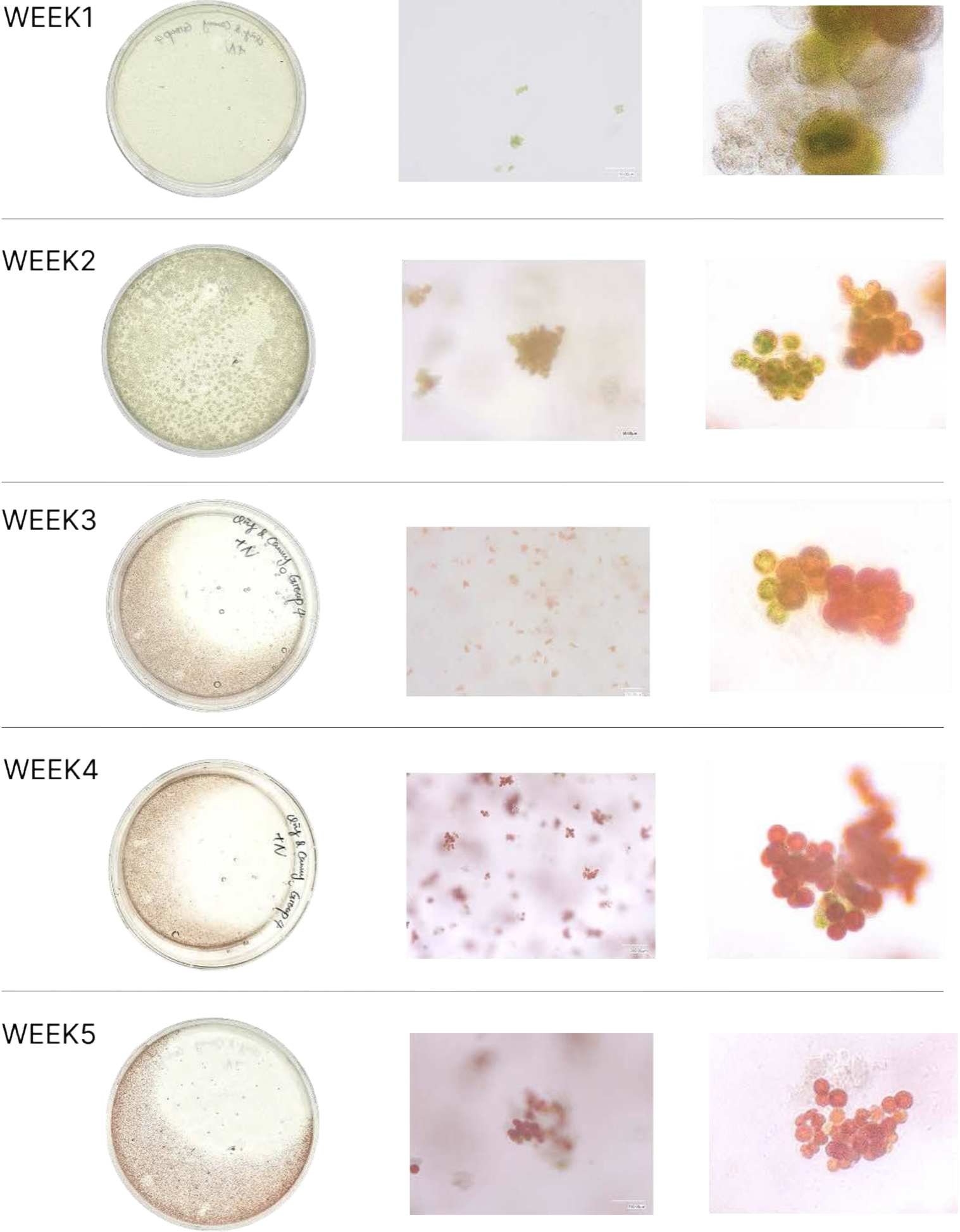
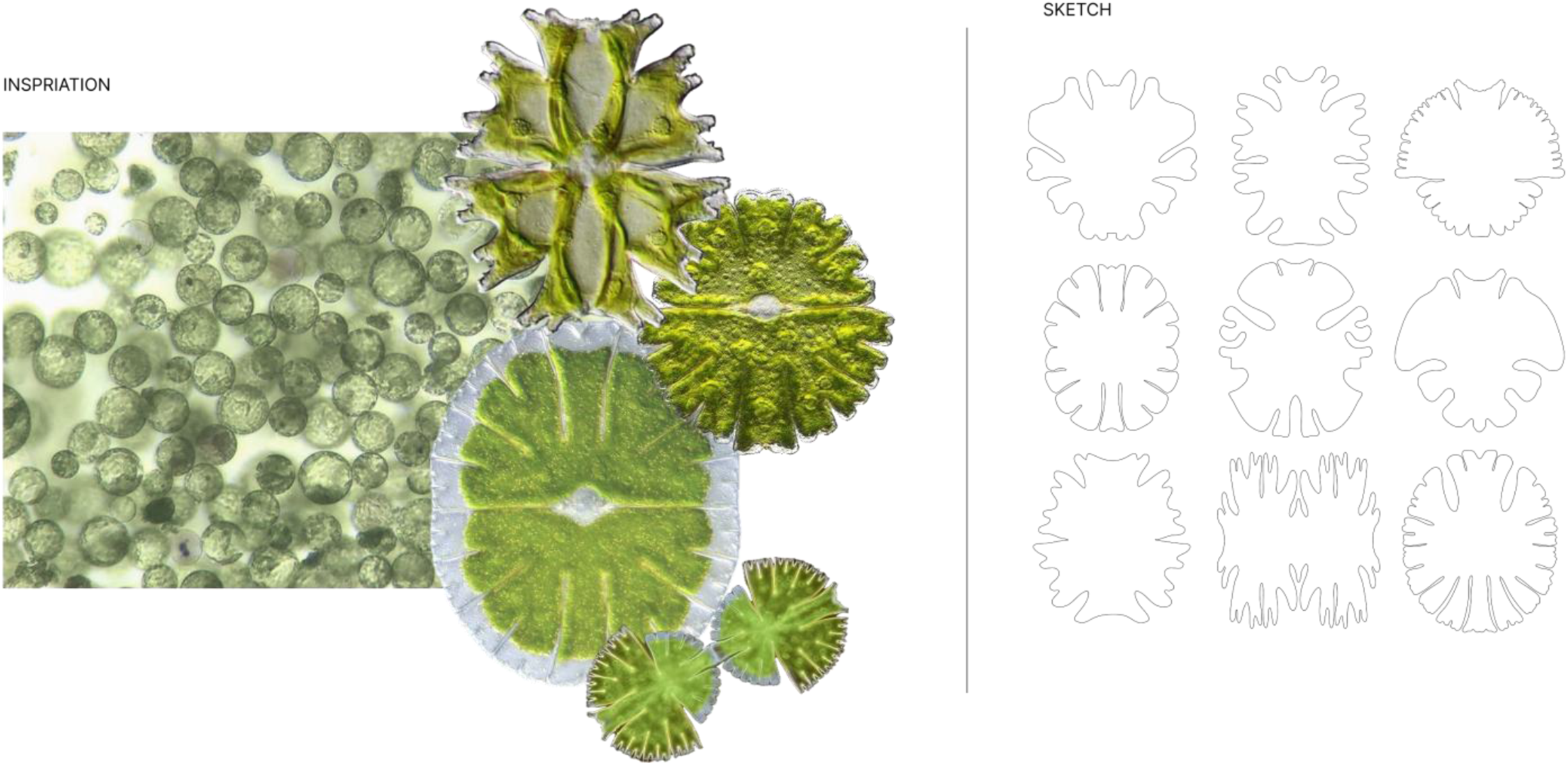
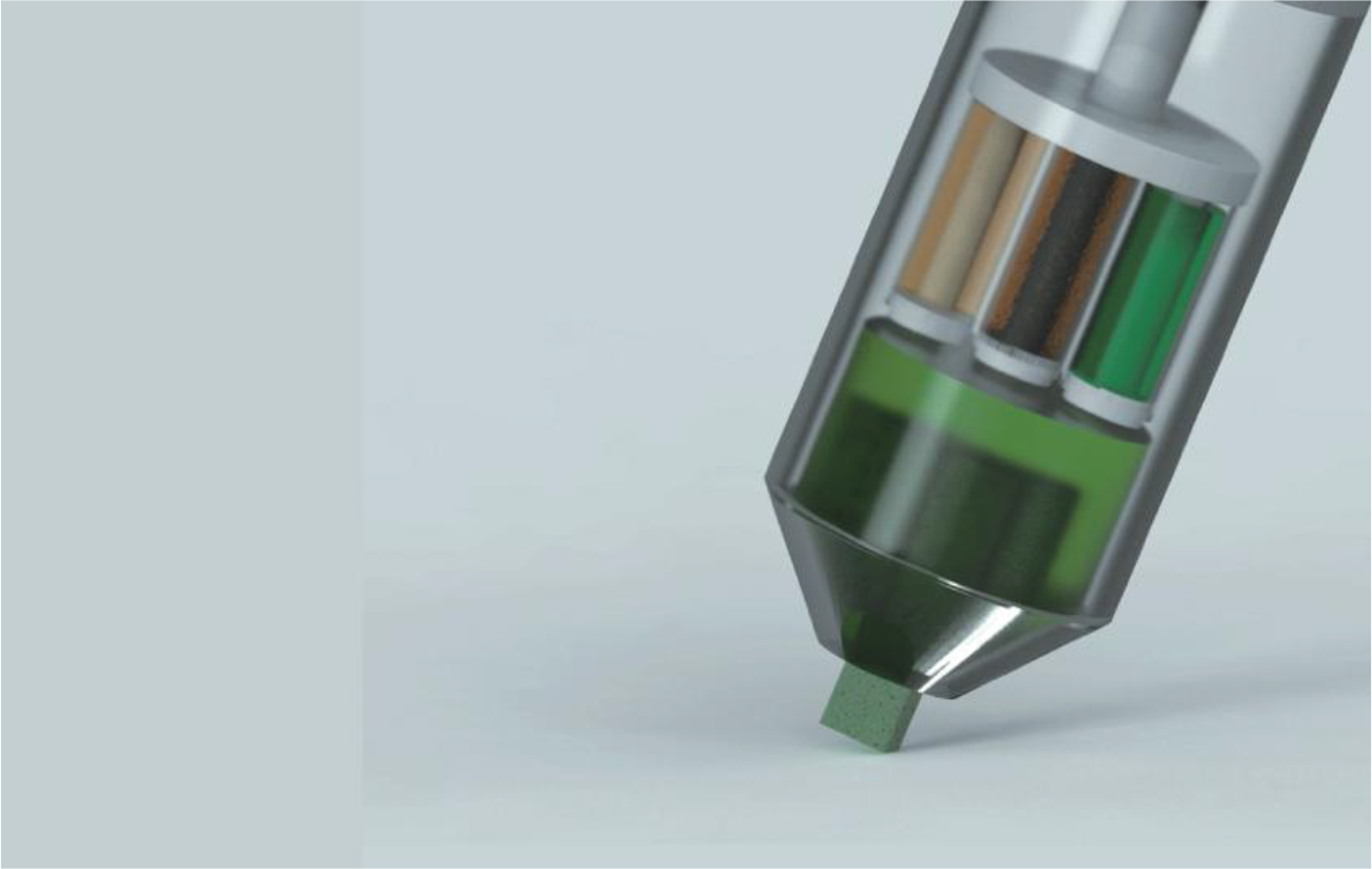
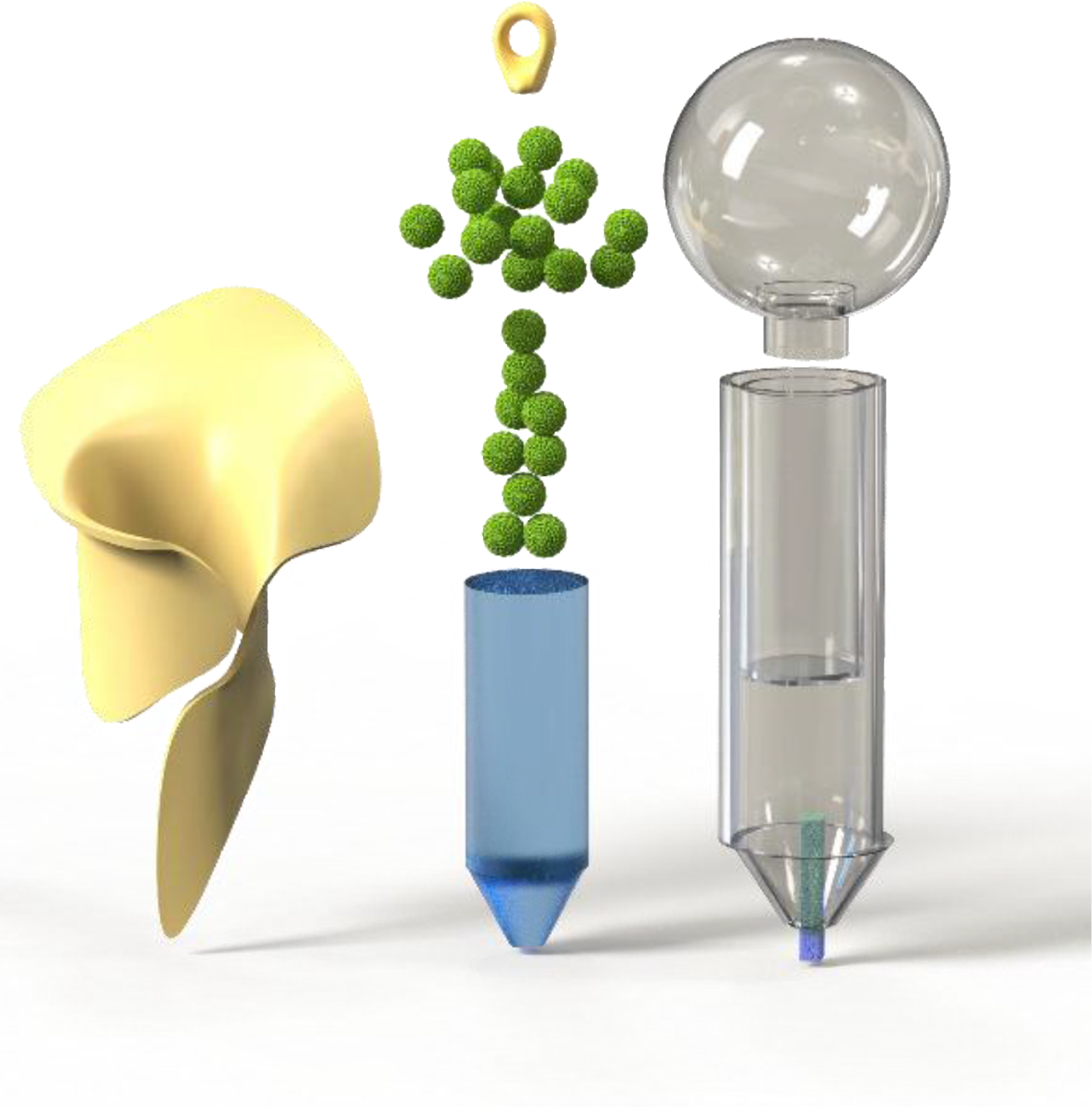
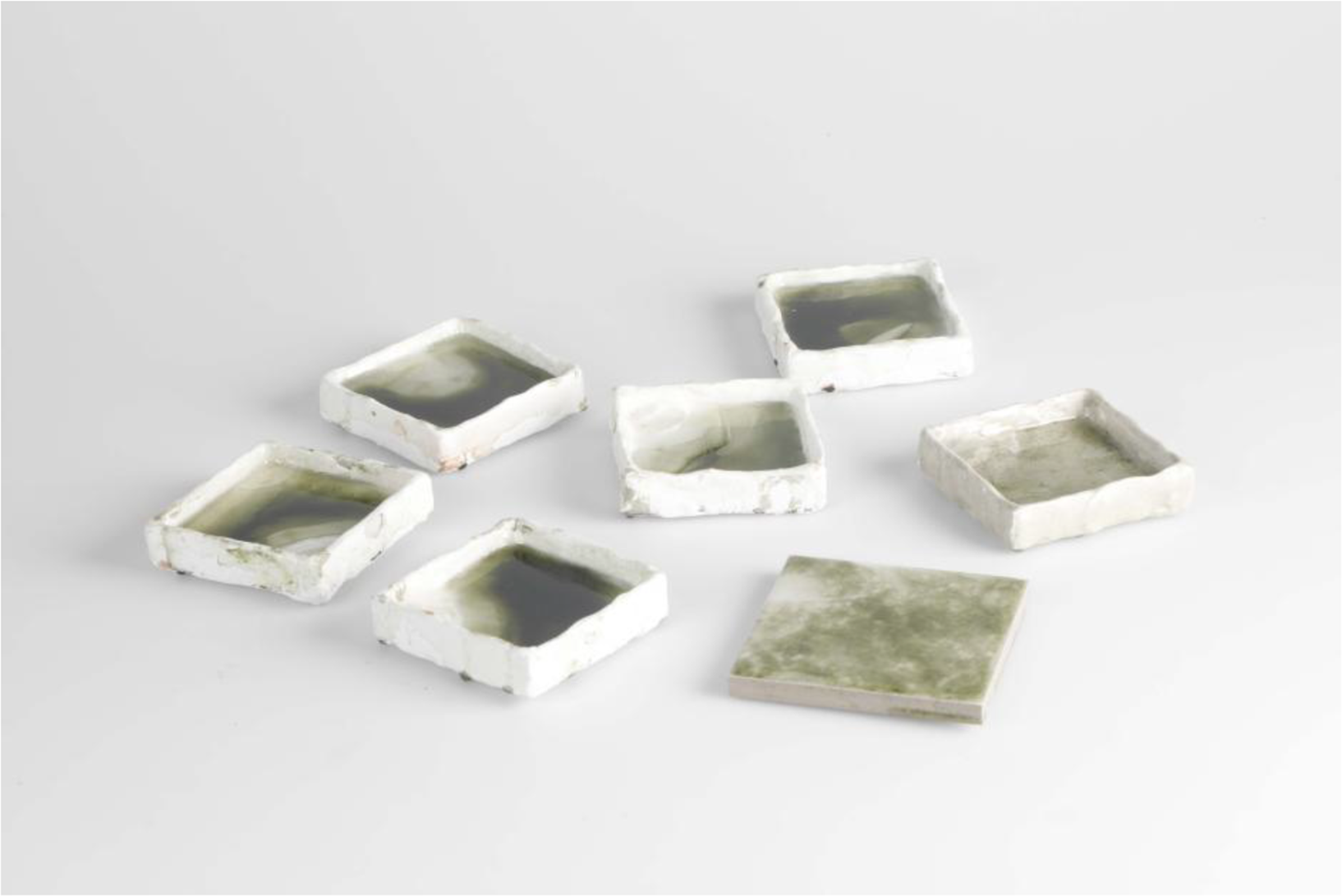
Bioloops: The project highlighted the challenge of working with living materials and endeavouring to consider the natural biofilm growth preferences of their microalgal collaborator. While the team aimed for a closed-loop approach by utilising excess culture for destructive and irreversible pigment extraction which was incorporated into tiles with resin, this irreversible extraction allowed space for new cell growth, and for a replenishing of living culture biomass. This process showed creative ideation but also revealed how biodesign can become complex when execution and material behaviour are considered. Simple steps in theory often translate into more complicated realities in practice, and turning a hypothesis into a proof-of-concept without leaving unresolved issues requires careful, slow engagement with the organisms. In Bioloops, biological temporality became particularly visible. The timing of growth, extraction, and regrowth shaped what the students could realistically test, adjust, or carry forward. The algae’s own rhythm set conditions for the biodesign process, sometimes slowing it down as the students adjusted to time needed for the algae to respond to the conditions offered, sometimes opening unexpected possibilities that pushed ideation into new pathways (Figures 5–8).
Colour change over time tracked through microscopy and photographs.

Figure 5. Long description
The figure presents a longitudinal visual record of algae culture development over five weeks.
Prototyping shapes informed by organism observations through microscopy and sketching.

Figure 6. Long description
The figure compares microscopic observations of microalgae with corresponding hand-drawn interpretive sketches used in prototype development.
Living ink system within the AEom pen.

Figure 7. Long description
The figure shows a rendered sectional view of the lower half of a proposed device referred to as the “AEom pen.”
Living ink system material layers and algae bead components.

Figure 8. Long description
The figure presents an exploded view of three main components of a proposed pen design.
Students began by testing foundational principles. Skipping these, even if they seem basic, risks proposing conceptually ambitious systems that are materially ungrounded (a core teaching point in our biodesign course). The message is to realise a connection with the living system in which there is a level of reciprocity and to trust the process: stay open-minded and build from the basics outward (Figures 9 and 10).
Bioloops loop circular methodology approach.
©Bioloops.

Figure 9. Long description
The figure presents a circular methodology sketch for the Bioloops project.
Bioreactor in operation.
©Bioloops.

Figure 10. Long description
The figure shows a wooden supporting structure holding a vertically oriented knitted textile.
Student projects showed developments of the technical, reflective and interdisciplinary skills core to the development of biodesign practice. The integration of living systems ecology offered insights into the complexity of working systems biology and the integration of standard methods within the laboratory space allowed for a transfer of validated skills, which students could implement as tools and references. As learning emerged across lectures/studio and lab sessions, relationships developed between the microorganisms and students which were dynamic and relational, with both parties demanding from one another and compromising to each other’s needs as they grew. In this sense, designing-with can be understood as a kind of situated negotiation. Students adjusted their decisions in response to what the living systems were doing, while also shaping the conditions those systems were growing within. This dynamic differs greatly to working with any inert material, providing support and autonomy for year 2, and growth as biodesigners across disciplines.
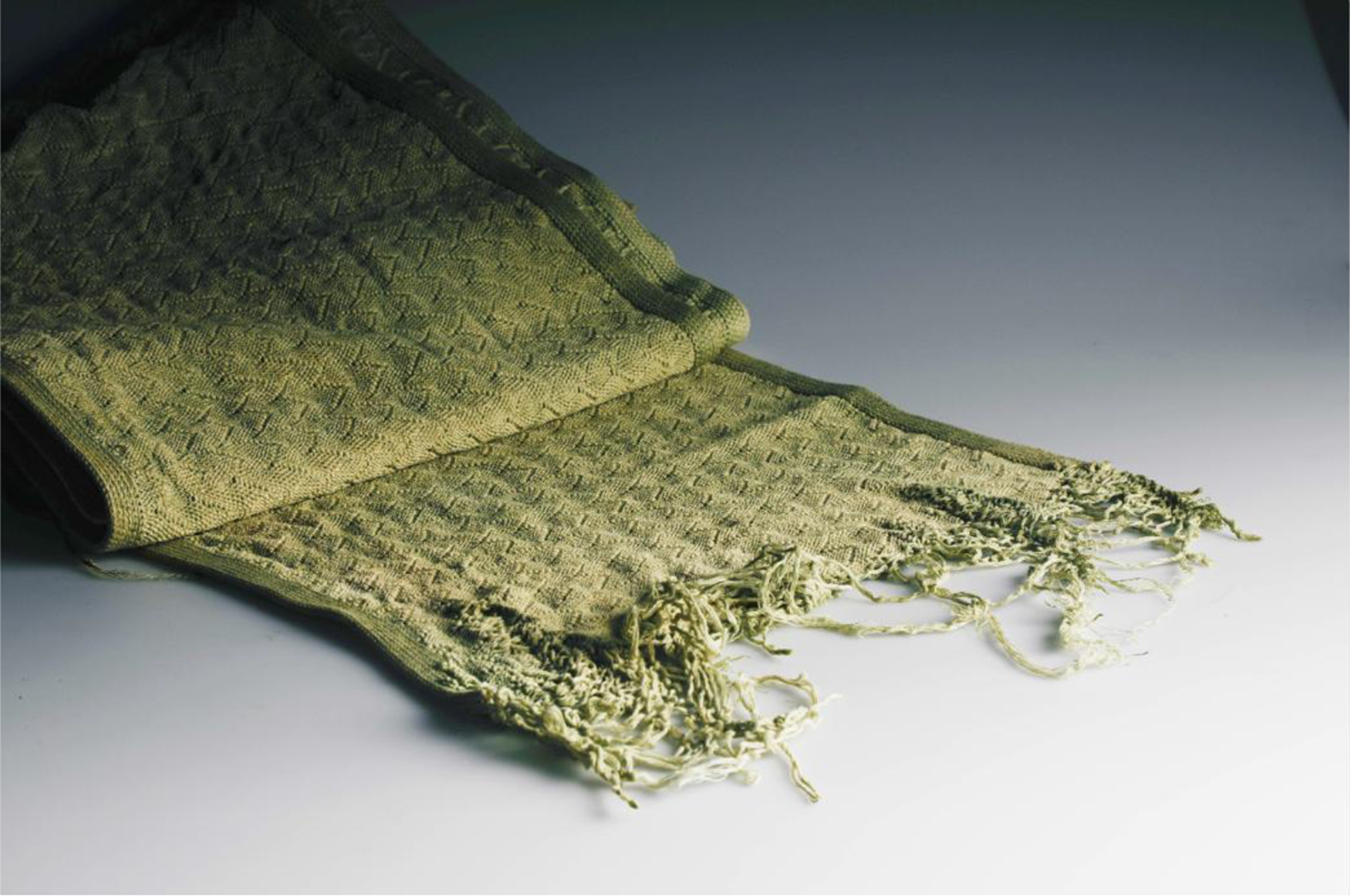
This method of offering iterative cycles and dynamic growth challenged both lecturers and students, providing an opportunity to expand into a nascent transdisciplinary pedagogical approach where the microalgal living systems expressed their relationship with the designed environment through their pigmented profile. Across these cycles, dynamic and relational iteration became a defining condition of the studio. Time, laboratory access, algae culture stability, and fabrication limits were not external restrictions, but part of what shaped the biodesign outcomes themselves (Figures 11 and 12).
Algae mass on the knitted textile.

Figure 11. Long description
The figure shows a detailed close-up of a knitted textile material.
Colour variations of algae pigment coating on tiles.

Figure 12. Long description
The figure shows seven tiles arranged together in a grouped composition.
Iterative cycles and dynamic growth
Green screen: The woven scaffold was designed to flex and respond to environmental changes and with the algae hydrogel, accommodating the algae’s natural behaviour. Its porosity allowed light, moisture, and air to circulate, supporting life while respecting the agency of the material. The scaffold became a cohabitation strategy.
Bioloops: This study tested the bioreceptivity of different fabric types to determine which best supported Chlorella vulgaris growth within a two-week growth window. Students worked rapidly, often without triplicates, to maintain progress. While this limited methodological rigour, the approach demonstrates the balance between teaching objectives, practical timelines, and meaningful engagement with living materials. The aim was to meet project objectives while learning from and responding to the organisms.
By managing the complexity of this transdisciplinary collaboration, the seemingly unpredictable behaviour of microalgal together with and the fast-paced timelines, students developed a specific biodesign skill set. Students took forward the basic culturing methods that they had learnt in the microalgal workshops and further optimised them to suit their design outputs. This is also where iterative prototyping under constraint becomes most apparent. Students worked within tight timeframes and variable biological conditions and gradually learned how to adjust their experiments in response to what was actually growing rather than what was planned. This process posed several real challenges for students who were otherwise unfamiliar with managing the variables associated with microalgal growth and the support offered by the technical staff at the ab offered critical guidance in technical planning and execution with creative exploration being guided by tutorials. Students learnt how to manage experimental design in line with culture growth dynamics how to problem solve and iterate design under biological collaboration/ constraint (Figures 13 and 14).
Fabrication testing.
©A Patch That Speaks.

Figure 13. Long description
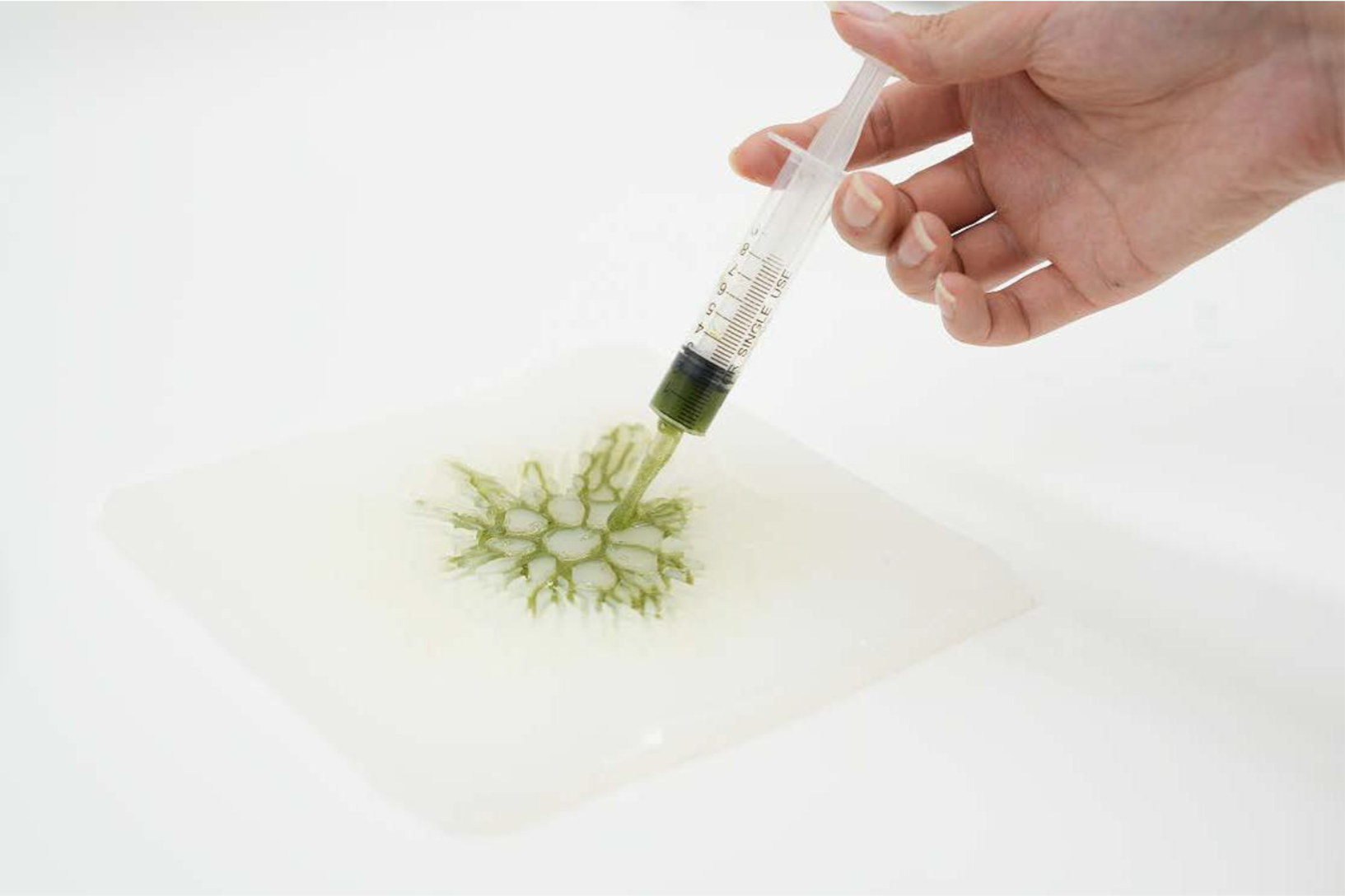
The figure shows a silicone mould during a fabrication process in which a green material is injected using a syringe.
Fabrication testing.

Figure 14. Long description
The figure shows the hydrogel structure previously introduced, now viewed during an additional treatment or processing step.
Through this process, students were developing the scientific method as a biodesign tool within their practice, where “failure” is understood as an outcome, in which rigorously gathered data indicates direction. The fast-paced lab and studio work mirrors professional biodesign practice, preparing students for real-world interdisciplinary challenges.
Translating design vision to biological experimentation
Multimodal strategies supported the translation of design vision into biological experimentation by asking students to develop an understanding through engagement with the living system, biological experiments, and the monitoring of the metabolic effects environmental variables and design concepts had on the pigment profiles of the algae.
Working with the microalgae, observing the shape, form and health of the culture on a regular basis, being vigilant for contaminants which could overwhelm cultures and working towards an environment where cultures could flourish, evoked a sense of care throughout lab work, material choice, aesthetic and concept decisions. Within the framing of this paper, this sense of care can be understood as part of biological temporality – a sustained attentiveness to growth conditions, maintenance, and the ongoing needs of living cultures over time, which has potential to shift how a design-led project is contextualised and realised.
AEom pen: Students treated algae as an active collaborator and an indicator of change. They utilised laboratory process using immobilised algae, inoculated into nutrient rich alginate beads emersed within a hydrocarbonate indicator solution, normally used to study photosynthesis and CO2 production, which behaved as a reactive ink. The phytosynthetic activity of the algae altering the CO2 concentration within the ink dictated colour changes in the drawing process, forcing students to observe, respond, and support the organism – foregrounding designing-with principles where outcomes depend on collaboration and maintenance rather than complete human control.
A patch that speaks: Following the unique taxonomy of the green algae Desmidiaceae, students merged unique architecture with 3D printing and mould-making to translate living hydrogels into prototypes. Early attempts with silicone moulds revealed material constraints; the sodium alginate required specific solidification steps. Success came through iterative trials, showing how fabrication must account for both organism and material needs.
Students integrated lab-grown biomass with 3D printing and mould-making to translate living hydrogels into prototypes, requiring multiple iterative trials and non-linear fabrication processes. Green Screen further explored object agency through living components in woven scaffolds, acknowledging the material’s active role.
Care, collaboration and ethical Positioning
Green screen: Prototype limitations were balanced with nourishment strategies. Students considered cell wall permeability, hydrogel barriers, material degradation, environmental variability, and ongoing care. The symbiotic relationship between human and algae, even if partly speculative, encouraged collaborative and responsive design approaches.
It is worth questioning whether the microalgae could be considered a collaborator within these design process. As we can observe within the natural world, there are few places where microalgae do not like to grow. As a primary producer, it forms the base of many ecosystems in many novel anthropocentric settings, feeding of the air, light and nutrients available.
It is not always kind or welcomed within those settings. Operating with an opportunistic swarm dynamic, many algae blooms are considered problematic. But these are living systems that are closely tied to the world humans inhabit, in fact it could be argued that humans are simply inhabiting their world. There is no doubt that they manage the planetary gas exchange processes that sustain resilient life on earth, as they flourish, bloom and blush with biochemical response, responding to gas composition, nutrients and light. Microalgae will continue to produce fresh cells until the niche they occupy is exhausted, then they will cyst, incubate and await the next opportunity to grow and bloom whether it is human beings providing this niche or other agents of change that provide the opportunity to evolve once more.
Once the project is finished a small aliquot of the culture is taken back, cleaned and placed in fresh media within slow growth conditions where it is sub-cultured while it waits for the next opportunity to grow and the cells that grew with the students’ projects die there once the project is finished. This is much like the way microalgae will bloom in a lake or on a seashore, where most will die there but a few, indeed enough, will recede into the waters and await the next upwelling of nutrients, which will allow them to bloom.
There are undoubtedly healthy limits at the interface or these relationships for both the microalga and the human partners.
Students learned to observe and adapt to organism needs through iterative lab work, adjusting light, nutrients, gas exchange and various growth conditions. Projects were not sustained beyond the unit, highlighting challenges of integrating long-term care into curricula. This opens discourse on how long-term organisms and living materials care could be embedded within biodesign education when the organisms and living prototypes do not stop needing care once the project ends.
Interdisciplinary skill sets and transdisciplinary pedagogy
Teamwork across design and science disciplines fostered negotiation, peer learning, and problem-solving. Students from diverse backgrounds needed to carefully tune language and terminology and working methods to collaborate effectively across lab and studio
Rather than emerging as isolated learning outcomes, interdisciplinary skills developed through the process of working with living systems themselves. Through responding to biological temporality, negotiating material variability and adapting the design decisions in relation to changing experimental conditions and learnings. This pedagogical approach encouraged students to move between scientific observation, material and prototyping experimentation, fabrication and reflective inquiry, whilst the living systems – the algae – became part of this wider collaborative process.
Peer learning and collaboration enhanced transdisciplinary perspectives and problem-solving capabilities, a process which was deeply enhanced by the diverse nature of the student cohort. These experiments and prototyping methods became important steps towards developing situated and hybrid skill sets and methodologies that are transferable to future biodesign projects and career pathways.
Emergent pathways and future directions
Scaling is not just enlargement; it is systemic transformation. Responsible scaling required grounding in fundamentals, such as hydrogel behaviour when wet and drying, reinforcing the importance of starting with basics and trusting iterative processes. Any novel and emergent pathways observed point towards the value of extended timelines. Extended timelines could allow deeper exploration of organism behaviour, materials experimentation, and long-term care, highlighting opportunities rather than limitations.
In this unit, different student projects exemplified these emergent possibilities: Green Screen explored object agency through living components in woven scaffolds; A Patch That Speaks required multiple iterative trials integrating biofabrication and digital fabrication techniques; and AEom Pen demonstrated how reactive biological systems could reshape drawing practices.
With additional time or resources, projects may have further explored unexpected biological behaviour and expanded the depth of organism–design collaboration, suggesting emergent pathways for biodesign education. Rather than critiquing the module structure, these student projects show the opportunities that iterative, organisms-centred approaches can generate for both pedagogies and biodesign practice.
Conclusion
The Living Pigments framework demonstrates how interdisciplinary, design-led biodesign education can meaningfully integrate scientific experimentation with creative practice, encouraging students to work ethically, attentively, and collaboratively with living systems. The case studies show how students from diverse design and science backgrounds engaged with cross-disciplinary methods, developed original research and prototyping strategies, and cultivated iterative, reflective ways of working with microalgae. Through intensive laboratory access, hands-on workshops, and close collaboration with practitioners and researchers, the unit supports the development of technical competence, critical reflection, and confidence in navigating the complexities and uncertainties inherent to living systems.
This approach not only prepares students for further independent modes of practice but also lays the groundwork for future engagement with external laboratories, residencies, and professional research contexts. By bridging scientific practice and design inquiry, the unit contributes to the growing impact of biodesign pedagogies and helps students carry biodesign thinking beyond the programme (Figure 15).
Project pathways.

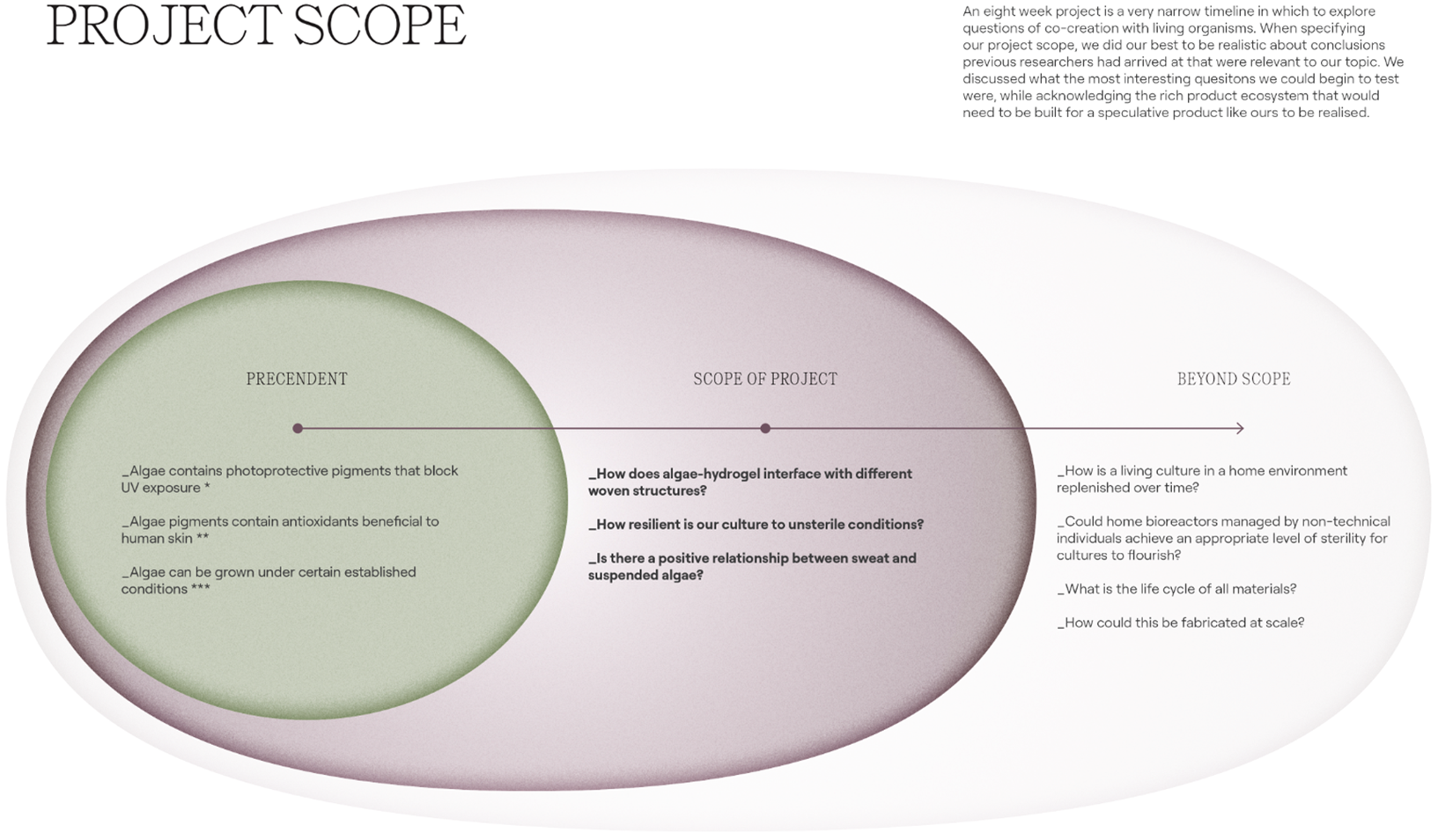
Figure 15. Long description
The figure presents a conceptual diagram outlining the scope of the Green Screen project using a bubble-based structure.
The Living Pigments brief articulates a pedagogical orientation that supports biodesign practice through a set of interconnected pedagogical dimensions that we use here as an analytical lens on the student projects. It cultivates ecological literacy, enabling students to understand environmental cycles, and the interdependencies underpinning biological activity. It embeds care, responsiveness and relational biodesign practices and ethical positioning, bringing students into active laboratory environments where interdisciplinary negotiation and shared problem-solving are essential. It develops temporal awareness, foregrounding living colour as a dynamic process shaped by metabolic change, growth, and environmental responsiveness. Finally, it advances material prototyping and performativity, positioning living matter as an evolving medium rather than a static resource and inviting students to prototype with rather than extract from biological systems. Collectively, these orientations reinforce a design practice that is ecological, relational, temporal, and deeply attuned to the agency of living materials.
Data availability statement
Data availability is not applicable to this article as no new data were created or analysed in this study.
Acknowledgements
We would like to thank the students behind the projects discussed in this paper: Green Screen: Anastasia Glass, Audrey Levy, Alice Offenbach – A Patch that Speaks: Qing Kong, Yu Yu – Bioloops: Ernest Wong, Xiaojing Jiang, Xivier Zhou – AEom: Jiawei Chu, Tom Saville – as well as the CSM Grow Lab team for their support throughout the Living Pigments unit.
Author contributions
Paula Nerlich and Lorraine Archer contributed equally to the conception, writing, and development of this paper. Paula Nerlich led the development of the Living Pigments project brief. Nancy Diniz contributed to the overall framing of the course and its positioning within the broader pedagogical and biodesign literature.
Financial support
This research received no specific grant from any funding agency, commercial or not-for-profit sectors.
Competing interests
None.
Ethical standards
All projects adhered to safe studio and laboratory practices. Only non-pathogenic microalgal cultures were used, and laboratory work followed Biosafety Level 2 (BSL-2) protocols. Staff and university health and safety officers ensured a safe environment across studios, workshops, and laboratories.

 Open access

