In their book What Darwin Got Wrong, Jerry Fodor and Massimo Piattelli-Palmarini (hereafter, FP) try to drive a stake through the heart of evolutionary theory, but they are not the would-be vampire killers you might expect. They are not creationists; on the contrary, they repeatedly say that they are dyed-in-the-wool atheists. Nor do they deny that all current life traces back to one or a few common ancestors (1).Footnote 1 Sometimes they say that their target is the whole theory of natural selection. For example, they write that “the theory of natural selection reduces to a banal truth: ‘If a kind of creature flourishes in a kind of situation, then there must be something about such creatures (or about such situations, or about both) in virtue of which it does.’ Well, of course there must; even a creationist could agree with that” (137). Here, FP echo an old saw familiar from creationists—that the theory of evolution is a tautology (Sober Reference Sober1984). In fact, FP's target is more limited. In the book's second half, they focus on the distinction between two concepts that are used to discuss natural selection—selection-of and selection-for. They claim that there cannot be selection for one but not the other of two traits that are perfectly correlated in a population; they then argue that there cannot be an evolutionary theory of adaptation. This claim and conclusion are not based on empirical discoveries; rather, FP assemble an a priori argument (21), spun from the philosophical armchair.
Let us begin with an example that FP discuss (110) in which the distinction between selection-of and selection-for seems to make sense. Imagine a population in which some organisms have hearts and others do not. Organisms with hearts pump their blood and make thump-thump noises; organisms without hearts do neither. The two traits, pumping blood and making thump-thump noises, are “locally coextensive,” meaning that they are exemplified by exactly the same organisms in this population. Suppose we return to this population some generations later and find that all the organisms now have hearts. Why did the traits change frequency? Suppose the answer is natural selection; organisms that pumped their blood were on average fitter (better able to survive and reproduce) than organisms that did not. Since the two traits in question are coextensive, it also is true that the organisms that made thump-thump noises were on average fitter than the organisms that did not. FP do not reject the story as told so far. The shooting starts with the following claims about selection-for (which I think might well be true). There was natural selection for pumping blood; there was no selection for making thump-thump noises. Pumping blood got selected and so did making thump-thump noises, but there was selection for the first trait, not for the second. Selection-of applies to both traits; selection-for applies to only one. FP's thesis is that all claims that say that there was natural selection for one but not the other of two locally coextensive traits are false. For FP, the only thing natural selection can do is perform acts of selection-of; if one of two coextensive traits gets selected, the other does too, and that is all there is to the process; “natural selection cannot distinguish between coextensive phenotypic traits” (154).
FP develop their point by talking about traits that are selected-for and traits that are “free-riders.” This terminology will mislead those who know the term “free-rider” from game theory; evolutionary biologists usually use the phrase “correlation of characters.” Biologists distinguish between traits that evolve because there is selection for them and traits that evolve merely because they are correlated with other traits that are selected-for. In what follows, I will abbreviate this distinction by talking about traits that are selected-for and traits that are “merely correlated.”
It may strike the reader that the distinction between selection-for and free-riding is nothing other than the distinction between cause and correlation. If there is selection for pumping blood, this means that pumping blood causes enhanced survival and reproductive success. If there is no selection-for the trait of making thump-thump noises (but merely selection-of that trait), then the noise making is merely correlated with enhanced survival and reproductive success. Several commentators have taken FP's argument to require a wholesale rejection of science's ability to separate cause from correlation (Block and Kitcher Reference Block and Kitcher2010; Okasha Reference Okasha2010; Papineau Reference Papineau2010). FP do not understand their argument in this way. They think there is something special about selection-for that is the problem. As FP (Reference Fodor and Piattelli-Palmarini2010a) say, if drinking scotch on the rocks makes you tipsy and you wonder whether this is because of the whiskey or the ice, it is obvious how to resolve your puzzlement. Forgo the ice and see whether drinking whiskey neat is accompanied by tipsiness; then, eliminate the whiskey and see whether drinking ice water is accompanied by tipsiness. For FP, this is humdrum Philosophy 101. They do not deny that there is a “fact of the matter about which of the correlated traits causes increased reproductive success.” What they deny is that “natural selection, as neo-Darwinians understand it, is able to distinguish the causes of fitness from their local confounds” (Reference Fodor and Piattelli-Palmarini2010a). FP's thesis goes beyond the assertion that we are cut off from knowing that there was selection for pumping blood but not for making thump-thump noises. Their thesis is that all such claims are untrue. It is not that there is a fact here that is hidden from us; there is no such fact.
The quotations cited above show that FP (Reference Fodor and Piattelli-Palmarini2010a, Reference Fodor and Piattelli-Palmarini2010b) really do maintain that there cannot be natural selection for one but not the other of two traits that are locally coextensive. More textual evidence will surface soon. However, in Fodor and Sober (Reference Fodor and Sober2010), Fodor denies that the book says this; in fact, he insists that it says just the opposite. Fodor says that the book's main thesis is that there cannot be a theory about selection-for. This thesis also will be discussed below.
1 The Main Argument
Suppose traits T and T* are locally coextensive. Can there be selection for T without there being selection for T* in the population? FP's answer is no. Here is why:
i) If there is selection for T but not for T*, then various counterfactuals must be true.
ii) If these counterfactuals are true, then natural selection must be an intentional agent (“Mother Nature”), or there must be laws about selection-for.
iii) Natural selection is mindless.
iv) There are no laws about selection-for.
∴ It is false that there is selection for T but not for T* in the population.
The counterfactuals in question are something like the following: if T and T* were uncorrelated, then T would increase in frequency and T* would not (103, 154). This counterfactual needs refining, but set that point aside. I accept i and iii. That leaves ii and iv.
This formulation of FP's argument is not what the authors sometimes say their argument is. For example, in the next-to-last chapter they say that “the main argument of this book, so far has been that … you can't infer from ‘Xs have trait T and Xs were selected’ to ‘Xs were selected for having trait T’” (144). This is not their main argument. Clearly, selection of organisms that make thump-thump noises does not entail that there was selection for making those noises. This is just a fact about the two concepts, not a critique of evolutionary theory. FP say that “Darwinism” is committed to making the fallacious inference described above (xv). They are mistaken, if Darwinism has anything to do with what evolutionary biologists think and do. The distinction between traits that are selected-for and traits that are merely correlated is perfectly standard in “Darwinism.” For example, the term “pleiotropy” has long been used to describe situations in which a gene has two phenotypic effects; the two phenotypes will be correlated, even if one is advantageous while the other is neutral or deleterious. Selection for the advantageous phenotype can cause both phenotypes to increase in frequency. The same possibility also arises under the heading of “genetic linkage,” another standard concept from population genetics; two genes that are close together on a chromosome will evolve together, with selection for one of them causing its neutral or deleterious neighbor to evolve as well. This is called “genetic hitchhiking.”
Focusing just on FP's first premise may suggest that their argument pertains only to the question of whether there can be selection for one but not the other of two locally coextensive traits. If so, perhaps FP's point is a modest one that can be granted without there being any major challenge to evolutionary biology. In fact, FP think the stakes are higher. Their premise iv says that there are no laws about selection-for. As we will see, FP take their argument to show that there cannot be a theory of adaptation.
2 Why Do FP Think There Are No Laws about Selection-for?
FP say, “It's a thing about laws that they aspire to generality. … But if that's right, then quite likely there aren't any laws of selection. That's because who wins a t1 versus t2 competition is massively context sensitive. Equivalently, it's massively context sensitive whether a certain phenotypic trait is conducive to a creature's fitness” (123). This is a poor argument. The gravitational force now acting on the earth depends on the mass of the sun, the moon, the stars, and everything else. It does not follow that there are no laws of gravity, only that the laws need to have numerous placeholders. FP may object to this analogy because it is always the mass of these various objects and their distances from the earth that are relevant to the gravitational force that the earth experiences. My reply is that this makes no difference. The fact that an effect has numerous complexly interacting causes does not show that there are no laws about this complex cause-effect relation. Context sensitivity is no argument for lawlessness.
My point so far is not that there are laws about selection-for, only that FP have not given a good argument for denying that there are. Let us now consider the substantive question.
3 Are There Laws about Selection-for?
Whether there are laws in biology generally, and in evolutionary biology specifically, is contested territory in current philosophy of biology (e.g., see Rosenberg Reference Rosenberg1994; Beatty Reference Beatty, Wolters and Lennox1995; and Sober Reference Sober1997). My view is that mathematical biology has such laws aplenty. Biologists usually do not call them “laws.” Rather, they talk about “models.” These models are nonaccidental generalizations that support counterfactuals. I also think these models are a priori true when stated carefully (Sober Reference Sober1984). If you insist that laws must be empirical, then you will not want to call these models “laws.” I regard that as mostly a terminological question. Notice that in FP's main argument, it is the supporting of counterfactuals that matters. They deny that there are counterfactual-supporting generalizations about selection-for. We should bracket the question of whether laws must be empirical; this issue nowhere figures in FP's argument.
Although half of FP's book discusses recent and not-so-recent findings in biology, they never consider the dynamical models of natural selection that evolutionary theorists develop. The example I will now sketch is something I have described several times before, including in a paper (Sober Reference Sober2008) in which I criticized Fodor's (Reference Fodor2008) critique of selection-for. Fodor's argument in that earlier paper is the same as the FP argument described above. The example involves Fisher's (Reference Fisher1930) model of sex ratio evolution. To simplify the exposition, I will describe a special case of Fisher's model: in populations of a certain kind in which there are two sex ratio strategies (produce all sons and produce all daughters), if there is a preponderance of males, then there will be selection for producing all daughters.
In the kind of population involved here, each offspring has one mother and one father, there is random mating, and the cost of rearing the average son is the same as the cost of rearing the average daughter. This proposition from Fisher is a generalization that supports counterfactuals. Like many others in evolutionary biology, it describes a source of selection (Sober Reference Sober1984); it describes circumstances that give rise to facts about selection-for. Because FP repeatedly assert that evolutionary theory is committed to the idea that the causes of natural selection are “ecological” and “exogenous,” not “endogenous” (e.g., 6, 19, 99, 128), it is worth noting that the processes described in sex ratio theory involve a source of selection that is of the population's own making. It is not the weather but an endogenous feature of the population itself (the mix of males and females it contains) that brings these instances of selection-for into being.
It is not germane to FP's argument whether laws must be empirical. If they must be, then premise ii is wrong. If laws do not need to be empirical, then premise iv is wrong.
4 Selection-for, Causality, and Experimental Manipulation
As noted, FP do not deny that science can separate cause from correlation. This was the point of their scotch-on-the-rocks example. For them, there are special problems with the distinction between selection-of and selection-for. Although this is what FP think, it is impossible to maintain that selection-for is guilty while maintaining that the separation of cause from correlation in the rest of science is innocent. This is because selection-for describes a causal relation. The relevant definition is this: “There is selection for trait T in a population if and only if having trait T causes organisms to have enhanced reproductive success in that population” (Sober Reference Sober1984, 100; Reference Sober1993, 83). What FP say you can do with scotch on the rocks, evolutionary biologists routinely do when they run experiments on natural populations. Did hearts evolve because they pumped blood or because they made thump-thump noises? We can manipulate present-day organisms just as we can manipulate whiskey and ice. If we prevented hearts from pumping blood but allowed them to continue to make thump-thump noises, how fit would these organisms be? And if we allowed hearts to pump blood while muffling the sounds, what effect would that have on the survival and reproductive success of the affected organisms?
Of course, questions about selection-for in past populations are questions about the past, whereas the question about the whiskey in your glass right now is a question about the present. That is true but irrelevant to FP's argument. Their argument concerns all supposed cases of selection-for, both past and present. Even when biologists manipulate a present population to discover which traits are now being selected-for and which are merely correlated, they are, according to FP, on a fool's errand. Just as FP do not discuss any mathematical models concerning selection-for, they also do not discuss the experiments that biologists do concerning selection-for in the wild. A well-known book on that subject is by Endler (Reference Endler1986).
A more high-tech application of whiskey-and-ice methodology can be found in the use of knockout genes. If two genes are perfectly correlated in a natural population, you can study organisms in the laboratory and knock out one but not the other, then knock out the other but not the one, and then knock out both. The results will provide guidance as to which genes cause enhanced survival and reproductive success.
In field experiments and in the genetics laboratory, creatures with minds (i.e., scientists) do the manipulations and thereby distinguish traits that are selected-for from those that are merely correlated. But can natural selection (which is a mindless process) discriminate between two traits that are perfectly correlated? FP say no. Of course they are right that if two traits are perfectly correlated, then one of them will be selected precisely when the other is too. But there is more to selection processes than selection-of; there also are facts about selection-for. Manipulation experiments performed by conscious agents help reveal the causal properties of a mindless process.
5 Narrative Explanations and What All Adaptations Have in Common “as Such”
FP offer a different reason for thinking that there are no laws about selection-for. They say that these laws must describe what all adaptations have in common, “as such” (xx, 135). This is equivalent to the demand that the laws describe what all instances of selection-for have in common, since adaptation and selection-for are connected by the following definition: “Trait T is now an adaptation for X-ing in a population if and only if trait T evolved in the lineage leading to that population because there was selection for trait T, and there was selection-for trait T because having T caused X-ing” (Sober Reference Sober1984, 208; Reference Sober1993, 85; 2010, sec. 5.2). FP think there is nothing much to be said about what all adaptations have in common because of the fact about context sensitivity mentioned before. There are definitional facts concerning what selection-for means, and that is about it. FP say that the concept of adaptation resembles the concept of being rich (135). Different people become rich for endlessly varied reasons; there is nothing much to be said concerning what all rich individuals have in common. If FP are right about selection-for, economists have something to worry about—their theorizing about wealth is a house built on sand.
If it is impossible to give a substantive (nondefinitional) answer to the question of what all adaptations have in common as such, what is there for evolutionary biologists to say about natural selection? Theorists of natural selection need to find another line of work, but FP have nothing against natural history. Instead of seeking general laws about selection, biologists can study the specific events that have occurred in the history of life in all their particularity. FP draw a sharp line between theory and history (159). Since there cannot be a maximally universal theory of adaptation, FP conclude that the only thing left is an endless tangle of unsystematized detail. Unfortunately, they have missed the middle ground; it is there that productive theorizing occurs. There are theories about the evolution of sex ratio, optimal foraging, cooperation, and so on (Sober Reference Sober2008). Within each of these categories, models describe the circumstances that give rise to there being selection for this or that trait; counterfactual supporting generalizations abound.
For FP, “natural history offers not laws of selection but narrative accounts of causal chains that lead to the fixation of phenotypic traits. Although laws support counterfactuals, natural histories do not” (157). Here's an example that FP give of a historical explanation from outside evolutionary biology: “Napoleon lost at Waterloo because the rain made it too muddy for a cavalry charge.” Since this is a singular statement that mentions specific individuals and places, it is not a law. FP say that “it doesn't follow [from this statement] that there are laws about mud so described, or about battles so described” (133). Well, maybe it does not follow that there are such laws. However, FP are committed to something stronger—that there are no laws that use the concepts of mud and battle and that help explain why the mud prevented a cavalry charge and why the absence of a cavalry charge caused Napoleon to lose. FP need to provide an argument that shows that no such laws exist.
There is another issue. It is perhaps a slip of the pen that leads FP to mention “mud so described” and “battles so described”; the word “mud” occurs in the target sentence, but “battle” does not. This means that there are two questions to consider:
Are there laws in any of the special sciences that apply to the events described about Napoleon's defeat that use the same concepts that are used in this singular causal statement?
Are there laws in any of the special sciences that apply to the events described about Napoleon's defeat that use different concepts from the ones used in this singular causal statement?
The term “special sciences” is Fodor's (Reference Fodor1974) name for everything other than physics. Davidson (Reference Davidson and Sosa1967, 92) distinguishes these questions when he says that “singular causal statements entail no law” and that “they entail there is a law.” Although FP do not address the second question just described, Fodor (Reference Fodor1974) does. He argues that there are laws of psychology; presumably, these would be relevant to understanding Napoleon's defeat. Nor does Fodor rule out there being laws of mineralogy that might allow one to think about mud, even if those laws do not use that very concept. Given this, why should one think that there are no laws in evolutionary biology that underwrite singular causal statements about there being selection for this or that trait? FP's answer is something I have already discussed—that selection is context dependent and that such laws would have to describe what all instances of selection-for have in common, as such. Their discussion of natural history furnishes no additional reason for doubting that there are laws about selection-for.
It is surprising that FP say that the singular causal claims made in natural history “do not support counterfactuals” (157). Many philosophers hold that singular causal claims entail counterfactuals. They think that if her slipping on a banana caused her to fall (133), then she would not have fallen had she not slipped. This may be too simple; overdetermination and indeterministic causation may be problems for this philosophical thesis. But that does not show that singular causal claims entail no counterfactuals; the most that follows is that we must fine-tune our description of what those entailed counterfactuals are. Again, FP need to provide an argument that singular causal claims do not support counterfactuals.
Now let us return to FP's claim that the statement about Napoleon could be true even if there are no laws that use the concepts that occur in that statement. If they are right, a new question arises. Why is the same not true of singular causal statements about there being selection for one but not the other of two locally coextensive traits? Why cannot such statements be true without there being any laws about selection-for? If Mother Nature is a myth, this throws doubt on FP's premise ii.
6 Two Arguments That Do Not Mention Laws
Although FP endeavor to show that there cannot be laws about selection-for, they run two simpler arguments in which the concept of law does not appear. Their first argument is that “selection-for is a causal process. … Actual causal relations aren't sensitive to counterfactual states of affairs. … The distinction between traits that are selected-for and their free-riders turns on the truth (or falsity) of relevant counterfactuals. … So if T and T′ are coextensive, selection cannot distinguish the case in which T free-rides on T′ from the case in which T′ free-rides on T. … So the claim that selection is the mechanism of evolution cannot be true” (113–14).
FP's second premise is problematic. As noted, many philosophers think that causal claims entail counterfactuals. Whether or not this thesis is true, it does not entail that causal claims are not about the actual world. To say that her slipping caused her to fall is to describe an actual causal relation. If the statement entails that she would not have fallen had she not slipped, that is fine—the causal statement still describes an actual causal relation. If statements about which traits experience selection-for and which are merely correlated entail counterfactuals, that does not show that these statements fail to describe what actually causes what.
FP (Reference Fodor and Piattelli-Palmarini2010a) present a second argument that does not mention laws. It begins with the demand that a theory of natural selection must describe a “mechanism” that intervenes between a trait's causing enhanced reproductive success and there being selection for that trait. FP claim that evolutionary biology cannot fill the bill and that the science is therefore inadequate. I agree that the science cannot do this, but I deny that this is a defect. Their demand is misplaced. Given the definitional connection noted before between a trait's causing enhanced reproductive success and there being selection for that trait, no such mechanism is necessary or possible. No referee, no matter how skinny, can squeeze between x and y, if x and y are identical.
7 The Selection Toy
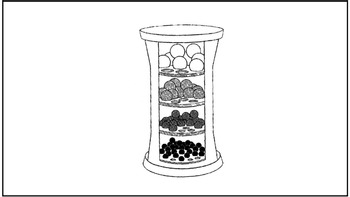
FP (127–30) discuss a toy I once described in order to explain the distinction between selection-of and selection-for (Sober Reference Sober1984, 99–100). The toy (shown in black and white in fig. 1) contains balls of different sizes and colors, where these two traits are locally coextensive; balls of the same color have the same size and balls of the same size have the same color. The red balls are largest, the yellow balls are smaller, and the green balls are the smallest. The interior of the toy has several disks with spaces in between; each disk contains holes. The top disk has large holes, the middle disk has smaller holes, and so on. If you hold the toy upside down and shake it, all the balls fall to the bottom. If you then hold the toy right-side up and shake it again, the balls sort. The big red balls remain at the top, the middling yellow balls settle in the middle, and the small green balls settle at the bottom. If you think of the toy as a selection device, it seems obvious that there is selection-for size but not for color.
In this toy, a ball's size, not its color (colors not shown here), causes it to reach the bottom or remain at the top (Sober Reference Sober1984, 99).

FP have two objections to the use I make of the toy. First they say that we understand the toy
because we know how it works; that is, we know the relevant fact about its endogenous structure. In particular, we know that what the toy does to the marbles is independent of their colour but not of their size. By contrast, the laws of evolution that adaptationism requires are supposed to express generalizations about which ecological variables determine the relative fitness of phenotypes. The idea is that it's ecological laws—laws that apply by virtue of a creature's exogenous relations—that support counterfactuals about which traits the creature would be selected for if it had them. And ecological laws tell us nothing at all about endogenous features (except that they generate phenotypic variations at random). (128)
FP's contrast between the endogenous structure of the toy and the exogenous character of natural selection misses the point. To understand what happens in this toy, you cannot focus on the intrinsic properties of the balls; it is the relation between the sizes of the balls and the sizes of the holes in the disks that matters. For both balls in the toy and organisms in their environments, selection depends on relational facts.
FP's second objection to what I say about the toy is that “what the machine is sorting for depends on what the prospector had in mind when he did the sorting” (129). When you sieve flour, your goal is to get the smallest objects; when you pan for gold, your goal is to find the largest. Whether there is selection for being big or selection for being small is not intrinsic to the toy but depends on the goals of the user. FP conclude that “Sober's sieve suffers from … indeteminancy” (129) with respect to whether there is selection for being big or selection for being small. My reply is that I never thought otherwise. In my 1984 book (Sober Reference Sober1984), I asked the reader to imagine that “the name of the game” is for balls to get to the bottom; this allowed me to say that balls are selected for being small. I could equally have stipulated that the name of the game is for balls to remain at the top, in which case I would have said that balls are selected for being big. It does not matter which description you choose; the point is that there is selection for size, not for color. Although “the name of the game” is a matter of stipulation in my description of the toy, the name of the game in natural selection is unambiguous; there is selection for traits that enhance survival and reproduction, not for traits that do the opposite.
I think it is not just true, but obviously true, that there is selection for size, not for color, in this toy, even though size and color are locally coextensive. FP reject even this: “Say, if you like, that the machine sorts for size rather than for colour. But, since all and only red marbles stay on top, you might equally say that the machine is sorting for colour rather than size” (129). Here they contradict what they say a page earlier—that “we know that what the toy does to the marbles is independent of their colour but not of their size.”
8 The Biological Part of FP's Book
FP's a priori critique of the concept of selection-for is the main subject of their book's second half. The first half describes various empirical biological discoveries that the authors think show that natural selection is less important than “adaptationists” have thought. There is a trivial sense in which any discovery about evolution that does not involve selection diminishes the role that selection can play. If natural selection is the only thing on your list of what is important, any addition to the list means that selection must share the limelight. But here we must be careful. Consider the fact of common ancestry. Is it a challenge to adaptationism? That, of course, depends on how you define “adaptationism.” Darwin's theory fruitfully combined common ancestry and natural selection (Sober 2010), and I doubt that current biologists who are impressed with the power of natural selection would see any difficulty in following the Master's lead in this respect. Adding common ancestry to the list is no threat to adaptationism.
Unfortunately, the same point holds for much of the material in the first part of FP's book; the biological findings they report do nothing to diminish the importance of natural selection. They say that they have heard this objection from “the majority of biologists” whom they have cited (55). Here, I include the fact of horizontal gene transfer (67–69), the fact that selection is path dependent (85), the rock/paper/scissors phenomenon that I guess FP are referring to when they say that “x is fitter than y” is nontransitive (52), the fact that genes differ in their mutation probabilities (33), and the fact that traits sometimes begin evolving because of one sort of selection and then continue to evolve because another sort of selection comes online (86).
There are other wrong turns in this first half of the book. For example, FP describe traits in nature that they think are optimal (e.g., optimal foraging in honeybees) and claim that selection cannot be the explanation since selection “cannot optimize” (92). They never explain what this means or defend their claim. A better formulation is that selection need not optimize; models of selection do not always predict that the fittest of the available phenotypes will evolve to fixation. However, there are plenty of models that predict precisely this. Optimality models of selection do have their place in biology, and you do not need to be an adaptationist to think so.
FP also say that evolutionary theory holds that “fitness generally increases over time” (8). This is mistaken. Selection does cause fitter traits to replace less fit traits, but that does not entail that fitness increases. Frequency- and density-dependent selection are general facts of life. The average number of babies produced by the parents in a population does not generally keep increasing from one generation to the next while a selection process is under way. It often cannot, for Malthusian reasons.
9 Concluding Comments
FP's main argument in the second part of their book contains three claims that they fail to adequately defend. Assuming that natural selection is a mindless process (as do I), they say that
1. If there is selection for trait T in a population, but not for the locally coextensive trait T*, then there must be laws about selection-for.
2. There are no laws about selection-for because selection is context dependent.
3. There are no laws about selection-for because those laws would have to describe what all instances of selection-for have in common, as such.
I have criticized both 2 and 3. I also have suggested that there are laws about selection-for and have described a characteristic example. As for 1, the issue here is whether singular causal claims require there to be laws. I have not denied this, although some philosophers have done so (e.g., Anscombe Reference Anscombe and Sosa1971); I have held back because these denials do not seem to me to be backed by adequate arguments. I feel the same way about the opposite thesis—that a singular causal statement entails that there is a law (Davidson Reference Davidson and Sosa1967).
Although FP think the main argument in the second part of their book involves special features of the concept of natural selection, what is going on here is simply that FP fail to take seriously the fact that selection-for is a causal concept in a way that selection-of is not. Their thesis is that “all natural selection can do is respond to correlations between phenotypic traits and fitness” (Reference Fodor and Piattelli-Palmarini2010a). If selection-of were all there is to the process of natural selection, they would be right. But there is more.
In addition to the problems concerning these numbered propositions, there is a wider problem with how this book is put together. FP do discuss some biology, but they never examine the theoretical models in evolutionary biology that describe the circumstances that give rise to selection processes, nor do they consider how biologists use observations, including observations obtained from manipulation experiments, to test hypotheses about selection-for. Would-be vampire killers who feel sure they have a lethal stake at hand may think they do not need to check the detailed anatomy of their intended victim, but prudent vampire killers know that checking is necessary. It is one thing to attack a scientific theory at its foundation; it is another to mount that attack without paying attention to what is in the theory.