Implications
This review highlighted important health benefits of pasture-based over continuously housed systems including; less lameness, hock lesions, mastitis and uterine disease. Furthermore, pasture access resulted in improved behaviour, with cows also showing an overall preference for pasture if given the choice between it and indoor housing. There are considerable welfare benefits from incorporating pasture access into dairy production systems, challenging the increasing use of continuously housed systems. Given that the latter are now widely used, future research should also be directed at finding ways to incorporate the welfare benefits of pasture-based systems within the housed environment.
Introduction
Globally, there is increasing interest in the use of continuous housing systems for dairy cows. For example, in North America most dairy operations (63.9%) comprise housed systems, with these encompassing 82.2% of dairy cows (National Animal Health Monitoring System (NAHMS), 2010). The use of these systems is also increasing in Europe. For example, the percentage of Danish dairy cattle that are continuously housed increased from 16% to 70% between 2001 and the present, and in the Netherlands, this figure increased from <10% to almost 30% since 1992 (Reijs et al., Reference Reijs, Daatselaar, Helming, Jager and Beldman2013). Similarly in Great Britain, recent survey work showed that only 31% of farms maintained traditional grazing systems with no forage feeding indoors during the summer. In addition, on 8% of farms milking cows were housed all year, whereas high yielding or early lactation cows were continually housed on a further 8% of farms (March et al., Reference March, Haskell, Chagunda, Langford and Roberts2014). These changes are occurring within the context of a growing human population, predicted to reach 9.5 billion by 2050, and expanding markets for dairy products (Food and Agriculture Organization of the United Nations (FAO), 2006). Housed dairy systems have been advocated as a means of intensification to meet the growing demand for dairy products, although they can also be criticised in this regard due to their reliance on crops that could be used for direct human consumption. Other reasons for the development and uptake of continuous housing include; the ability to manage and provide a consistent feed ration to high-yielding cows, increases in herd size, limited land availability for pasture-based production, the uptake of robotic milking, and climatic factors including adverse and unpredictable weather events. However, the welfare of dairy cows is typically perceived to be better within pasture-based systems. For example, a British study (Ellis et al., 2009) found that 95% of consumers questioned did not think it acceptable to keep cows permanently housed indoors. Similarly, pasture access was viewed as important for welfare in a recent North American survey amongst both those affiliated and unaffiliated with the dairy industry (Schuppli et al., Reference Schutz, Clark, Cox, Matthews and Tucker2014).
The findings of these surveys highlight an apparent conflict between consumer attitudes and predominant industry reality. In addition, within the context of increasing global milk price volatility, many dairy farmers are considering their production system options. The purpose of this review is to interrogate relevant scientific literature to compare the welfare, including health, of dairy cows in continuously housed and pasture-based systems. In this review, continuous housing refers to systems typically characterised by all year round housing, non-seasonal calving, total mixed ration (TMR) feeding, and high milk yield per cow. Various synonyms are used in the literature including; confinement, zero-grazing and high-input/high-output. Comparisons are made to pasture-based systems that are characterised by access to pasture grazing for the provision of forage, typically for at least 6 months of the year, with housing over the winter, and a seasonal calving pattern. In comparing these two production systems, it should be remembered that they differ in two main ways; nutrition and housing.
Although summarising existing work, the review also seeks to identify knowledge gaps and provide direction for future research. The review is structured under the following welfare relevant categories: health, behaviour and physiology.
Health
Lameness
Lameness is a major health and welfare problem, the impacts of which have recently been reviewed (Huxley, Reference Huxley2013) and include a reduction in the time spent feeding and in milk yield, associations with low body condition scores, substantial negative effects on reproductive parameters and fertility performance, and increased culling. Lameness has a multifactorial and complex aetiology, resulting from interactions between the farm environment, management, nutrition and animal characteristics. However, a potentially important factor influencing lameness is whether or not cows can access pasture within a production system.
The majority of papers identified comprised observational, epidemiological studies that detailed various risk factors for lameness/poor hoof health on farms (10 studies). Only four controlled experiments that compared housed and pasture-based systems were identified. Two of the controlled studies (Hernandez-Mendo et al., Reference Hernandez-Mendo, von Keyserlingk, Veira and Weary2007; Olmos et al., Reference Olmos, Boyle, Hanlon, Patton, Murphy and Mee2009a) showed an improvement in locomotion and a reduction in clinical lameness when cows had access to pasture, whereas the other two studies (Baird et al., Reference Baird, O’Connell, McCoy, Keady and Kilpatrick2009; Chapinal et al., Reference Chapinal, Barrientos, von Keyserlingk, Galo and Weary2010) showed no significant effect of pasture access on locomotion. In the studies where a positive effect of pasture access was observed, this effect occurred quite quickly. For example, the study by Olmos et al. (Reference Olmos, Boyle, Hanlon, Patton, Murphy and Mee2009a) involved keeping Holstein-Friesian cows at pasture or in cubicle housing for a full lactation. They found a divergence in locomotion immediately after calving, with housed cows showing a deterioration and pasture cows an improvement. In general, housed cows were more likely to present as being clinically lame (61% v. 17% prevalence), and this effect was significant from day 180 post calving onwards (odds ratio (OR)=2.2). In addition, Hernandez-Mendo et al. (Reference Hernandez-Mendo, von Keyserlingk, Veira and Weary2007) compared housed with pasture systems for lactating Holstein dairy cows over just a 4-week period, and found a significant increase in clinical lameness in the housed treatment by the end of the study.
Of the on-farm epidemiological studies identified in this review that included a measure of locomotion (e.g. Haskell et al., Reference Haskell, Maslowska, Bell, Roberts and Langford2006 (UK); Barker et al., Reference Barker, Leach, Whay, Bell and Main2010 (UK); Chapinal et al., Reference Chapinal, Goldhawk, de Passille, von Keyserlingk, Weary and Rushen2013 (USA); de Vries et al., Reference De Vries, Bokkers, van Reenen, Engel, van Schaik, Dijkstra and de Boer2015 (the Netherlands)), all suggested that reduced access to pasture was a risk factor for lameness. For example, Haskell et al. (Reference Haskell, Maslowska, Bell, Roberts and Langford2006) found that farms that adopted continuous housing had a higher prevalence of lameness than farms that allowed grazing (39% v. 15% lameness prevalence). Interestingly, these findings (and those of de Vries et al., Reference De Vries, Bokkers, van Reenen, Engel, van Schaik, Dijkstra and de Boer2015) occurred despite the fact that observations took place during the winter months when all cows were housed. This highlights the apparent longer term benefits of grazing in terms of reduced lameness following re-housing.
Controlled and on-farm epidemiological studies both indicate increased prevalence of a range of hoof pathologies (of both infectious and non-infectious aetiology) within more confined dairy systems (in addition to those discussed below, see Rodriguez-Lainz et al., Reference Rodriguez-Lainz, Melendez-Retamal, Hird, Read and Walker1999; Somers et al., Reference Somers, Frankena, Noordhuizen-Stassen and Metz2005), and this may contribute to poorer locomotion. For example, in the controlled study referred to above, Olmos et al. (Reference Olmos, Boyle, Hanlon, Patton, Murphy and Mee2009a) found increased sole and white line haemorrhages, white line disease, heel horn erosion and digital dermatitis in the housed treatment from 85 days post calving onwards. Furthermore, housed cows were more likely to present with traumatic and other disorders (e.g. white line abscess, under-run sole, sole ulcer, inter-digital growths). This effect was significant across all inspections during lactation (OR=2.0), and increased dramatically with time (at 210 days after calving OR=22.8). In addition, Somers et al. (Reference Somers, Frankena, Noordhuizen-Stassen and Metz2003) found that during the pasture period, continuously housed cows had a significantly higher prevalence of interdigital dermatitis/heel erosion (40.3% v. 20.7%, OR=2.59), digital dermatitis (49.0% v. 29.7%, OR=2.28), sole haemorrhages (63.2% v. 45.1%, OR=2.10), sole ulcers (7.4% v. 3.3%, OR=2.34) and interdigital hyperplasia (11.1% v. 5.1%, OR=2.33). Furthermore, Swiss dairy herds with access to outdoor grazing during the summer period had a reduction in white line fissures (64% v. 84%, OR=0.3), a lower prevalence of digital dermatitis on farms with slatted floors (22% v. 1%), and a reduction in the odds of finding any subclinical claw lesions at the end of the summer period (OR=0.72) compared with those that were continuously housed (Haufe et al., Reference Haufe, Gygax, Wechsler, Stauffacher and Friedli2012).
As stated previously, in many studies management (particularly in terms of diet) also differs between systems with varying degrees of confinement, and this may independently affect levels of hoof pathologies. However, benefits of access to pasture have also been speculated to derive from providing a comfortable, soft and hygienic standing and walking surface (Onyiro and Brotherstone, Reference Onyiro and Brotherstone2008; Olmos et al., Reference Olmos, Mee, Hanlon, Patton, Murphy and Boyle2009b; Chapinal et al., Reference Chapinal, Goldhawk, de Passille, von Keyserlingk, Weary and Rushen2013), promoting exercise (Loberg et al., Reference Loberg, Telezhenko, Bergsten and Lidfors2004; Chapinal et al., Reference Chapinal, Goldhawk, de Passille, von Keyserlingk, Weary and Rushen2013), reducing restlessness and increasing lying times (Olmos et al., Reference Olmos, Boyle, Hanlon, Patton, Murphy and Mee2009a). As with findings presented above on clinical lameness (Haskell et al., Reference Haskell, Maslowska, Bell, Roberts and Langford2006; De Vries et al., Reference De Vries, Bokkers, van Reenen, Engel, van Schaik, Dijkstra and de Boer2015), the beneficial effects of pasture access on claw health appear to persist into the housing period. For example, using the study population detailed by Somers et al. (Reference Somers, Frankena, Noordhuizen-Stassen and Metz2003), Somers et al. (Reference Somers, Frankena, Noordhuizen-Stassen and Metz2005) indicated a negative effect of days housed at the end of the pasture season on digital dermatitis risk, with a lower risk for 0 to 25 days housed compared with >75 days (24.0% v. 33.3%, OR=1.95). These authors also noted that compared with full pasture access, restricted pasture access increased the risk of digital dermatitis being detected during the subsequent housing period (26.4% v. 32.3%, OR=1.71).
It is worth noting that two studies highlighted in this review found an adverse effect of access to pasture on hoof health. Baird et al. (Reference Baird, O’Connell, McCoy, Keady and Kilpatrick2009) found that cows managed on pasture had poorer claw health than cows kept indoors, whereas Barker et al. (Reference Barker, Amory, Wright, Mason, Blowey and Green2009) found an increased risk of white line disease when cows were at pasture by day and housed at night, compared with being housed 24 h/day (OR=1.93). A potential explanation for these results is the quality of cow tracks and lanes used by cows to access pasture (Burow et al., Reference Burow, Thomsen, Sorensen and Rousing2014), the herding management of animals at pasture, and the distance walked between pasture and the milking parlour (Laven and Lawrence, Reference Laven and Lawrence2006). Future studies should seek to quantify the effects of these factors on lameness.
Hock lesions
Skin lesions, such as hock and knee lesions, are increasingly being used as an animal-based welfare indicator and incorporated into indices that seek to objectively assess dairy cow welfare (e.g. Burow et al., Reference Burow, Thomsen, Rousing and Sorensen2013a), with fewer lesions being associated with better welfare. There is a high prevalence of ‘hock lesions’ in dairy cows (see Kester et al., Reference Kester, Holzhauer and Frankena2014 for a recent review), with the term describing multiple clinical presentations of hock damage, ranging from mild hair loss to ulceration and swelling, which can progress to more serious conditions. In addition, there is a positive association between hock lesions and lameness (Kester et al., Reference Kester, Holzhauer and Frankena2014), although the causal relationship is not yet known. Importantly, a number of studies have found benefits of pasture access for reducing hock lesions (Rutherford et al., Reference Rutherford, Langford, Jack, Sherwood, Lawrence and Haskell2008; Potterton et al., Reference Potterton, Green, Harris, Millar, Whay and Huxley2011; Burow et al., Reference Burow, Thomsen, Rousing and Sorensen2013b). This is easy to understand, given hock lesions arise from cows lying on abrasive surfaces, or colliding with cubicle fittings (Kester et al., Reference Kester, Holzhauer and Frankena2014).
Mastitis
Although few studies have compared the prevalence of mastitis within continuously housed and pasture systems, those comparisons which do exist provide evidence of increased mastitis within the former. The most comprehensive research on this topic was a multiple-year experimental study conducted at North Carolina State University between 1995 and 1998 (Washburn et al., Reference Washburn, White, Green and Benson2002; White et al., Reference White, Benson, Washburn and Green2002). This revealed that confined Holstein cows had an increased prevalence of mastitis (cows infected: 51% v. 31%), a greater number of cases of mastitis per cow (1.1 v. 0.6), and an increased risk of being culled due to mastitis (9.7% v. 1.6%), compared with the pasture-based cows. A number of epidemiological studies have also implicated a lack of pasture access with an increased risk of compromised udder health. For example, Barkema et al. (Reference Barkema, Schukken, Lam, Beiboer, Benedictus and Brand1999) found that in Dutch dairy herds, not having access to pasture at night was associated with an increased risk of clinical mastitis, and more specifically, an increase in mastitis caused by Escherichia coli (OR=1.3). Moreover, in a survey of Vermont dairy farms, Goldberg et al. (Reference Goldberg, Wildman, Pankey, Kunkel, Howard and Murphy1992) found fewer occurrences of udder health problems (clinical mastitis, udder oedema and teat injuries) in grazing compared with housed herds, with Swedish studies reporting similar findings (Bendixen et al., Reference Bendixen, Vilson, Ekesbo and Astrand1986; Bendixen et al., Reference Bendixen, Vilson, Ekesbo and Astrand1988).
It has been suggested that the lower levels of mastitis in pastured cows is because they are exposed to fewer environmental pathogens compared with confined cows. Consistent with this suggestion, an increased risk of high somatic cell count (SCC) and intramammary infections has been associated with cows having dirty udders and legs (Schreiner and Ruegg, Reference Schreiner and Ruegg2003; Ellis et al., 2007; Breen et al., Reference Breen, Green and Bradley2009). Moreover, in a longitudinal study of UK dairy farms, Ellis et al. (2007) found that cows were dirtier during housing than at pasture, whereas Nielsen et al. (Reference Nielsen, Thomsen and Sorensen2011) observed an increased risk of cows being dirtier in Danish herds with no pasture access (OR=3.75). Although noting these general trends, it is of course also the case that cow cleanliness can be poor within pasture-based systems, being influenced by climatic factors and track conditions to and from pasture. Equally, cow cleanliness can be good within well managed continuously housed systems.
Further experimental evidence supporting reduced udder health in housed systems is available from production studies that have recorded SCC. For example, in a 37-week experiment, Fontaneli et al. (Reference Fontaneli, Sollenberger, Littell and Staples2005) observed continuously housed Holstein cows to have a higher mean SCC than those in two pasture-based systems (654 000 v. 223 000 and 364 000 SCC/ml milk). Similarly, in a full lactation study, Vance et al. (Reference Vance, Ferris, Elliott, McGettrick and Kilpatrick2012) reported a trend for a greater SCC in cows in a high-input continuously housed system compared with those in a medium-input pasture system. However, it is worth noting that a number of studies failed to find a significant difference in SCC between housed and pasture systems (Kolver and Muller, Reference Kolver and Muller1998; White et al., Reference White, Bertrand, Wade, Washburn, Green and Jenkins2001; Bargo et al., Reference Bargo, Muller, Delahoy and Cassidy2002; AbuGhazaleh et al., Reference AbuGhazaleh, Felton and Ibrahim2007).
Contrary to the general beneficial effects of pasture access, the risk of so-called ‘summer mastitis’ is likely to be a greater problem within pasture-based systems. Summer mastitis is a severe acute clinical mastitis that occurs in non-lactating cattle at pasture during the summer. It has a complex aetiology, involving environmental pathogens (e.g. Trueperella pyogenes and Streptococcus dysgalactiae) and transmission by the head fly, Hydrotaea irritans (Chirico et al., Reference Chirico, Jonsson, Kjellberg and Thomas1997), with control measures including reducing exposure to flies.
Uterine disease
As part of the lameness study outlined previously (Olmos et al., Reference Olmos, Boyle, Hanlon, Patton, Murphy and Mee2009a), Olmos et al. (Reference Olmos, Mee, Hanlon, Patton, Murphy and Boyle2009b) found evidence of increased dystocia, metritis (see also Bruun et al., Reference Bruun, Ersboll and Alban2002) and endometritis in continuously housed cows. It was suggested that since bacterial counts will be higher indoors (Sheldon et al., Reference Sheldon, Lewis, LeBlanc and Gilbert2006), this increases the level of contamination of the uterine lumen postpartum, and thus the risk of metritis. Moreover, Olmos et al. (Reference Olmos, Mee, Hanlon, Patton, Murphy and Boyle2009b) observed a trend for lower plasma calcium levels at calving and postpartum, which, given its role in uterine smooth-muscle contractility, led the authors to speculate that this may have also contributed to the observed findings of increased dystocia and metritis in the housed cows. However, the extent to which this is the case remains to be investigated.
Other infectious disease
Studies directly comparing the incidence of infectious disease in continuously housed and pasture-based systems, are generally lacking, although Veling et al. (Reference Veling, Wilpshaar, Frankena, Bartels and Barkema2002) found that unrestricted grazing during summer (pastured day and night; indoors only at milking time) had a protective effect (OR=0.07) against salmonellosis.
A particular risk factor for infectious disease in pasture-based systems is that posed by contacting neighbouring cattle (Mee et al., Reference Mee, Geraghty, O’Neill and More2012). Cattle are gregarious animals and many farm boundaries have developed without biosecurity in mind. For example, Brennan et al. (Reference Brennan, Kemp and Christley2008) found that in more than half of UK farms surveyed, nose-to-nose contact was possible between cattle on adjacent farms. Such contact offers important transmission routes for infections including; infectious bovine rhinotracheitis, bovine viral diarrhoea and bovine tuberculosis (bTB). Appropriate biosecurity measures to combat this risk are aimed at preventing the opportunity for direct contact and straying, and include attention to fencing and hedgerow maintenance (Mee et al., Reference Mee, Geraghty, O’Neill and More2012).
Other domestic animals and wildlife offer important infection reservoirs for cattle in both housed and pasture-based systems. For example, the role of the Eurasian badger (Meles meles) in the maintenance and spread of bTB is a matter of considerable scientific, political and public debate in the UK (e.g. Godfray et al., Reference Godfray, Donnelly, Kao, Macdonald, McDonald, Petrokofsky, Wood, Woodroffe, Young and McLean2013). Recent evidence using proximity collars indicated that direct contact between badgers and cattle at pasture did not occur (O’Mahony, Reference O’Mahony2014), yet indirect transmission associated with contaminated pasture, setts, latrines and water troughs present potential sources of infection (Ward et al., Reference Ward, Judge and Delahay2010). Farmyards and buildings also represent an important potential source of bTB transmission, since badger visits can be frequent (Tolhurst et al., Reference Tolhurst, Delahay, Walker, Ward and Roper2009; Ward et al., Reference Ward, Judge and Delahay2010; Judge et al., Reference Judge, McDonald, Walker and Delahay2011), providing opportunities for direct and indirect contact between badgers and cattle. Relatively simple biosecurity measures can be implemented to exclude badgers from buildings (Ward et al., Reference Ward, Judge and Delahay2010; Judge et al., Reference Judge, McDonald, Walker and Delahay2011), although the cost-effectiveness and efficacy of such measures remains to be further investigated.
The close contact between cows in continuous housing systems offers an infection risk, with recent modelling studies highlighting an important role of housing in facilitating disease spread (Moustakas and Evans, Reference Moustakas and Evans2015). However, there is a need for more studies to examine how the type of production system interacts with disease transmission, including for bTB where the relative importance of transmission routes are still being debated (e.g. Godfray et al., Reference Godfray, Donnelly, Kao, Macdonald, McDonald, Petrokofsky, Wood, Woodroffe, Young and McLean2013; Brooks-Pollock et al., Reference Brooks-Pollock, Roberts and Keeling2014).
Endoparasites
In contrast to the benefits of pasture access for health, a number of epidemiological studies demonstrate that grazing is, unsurprisingly, a risk factor for exposure to gastrointestinal (GI) parasites. Although dairy cattle develop a degree of immunity to GI parasites following exposure at pasture during early life, this is not complete. Adult dairy cows still harbour GI nematodes, generally in low numbers, with Ostertagia ostertagi being the most prevalent (Agneessens et al., Reference Agneessens, Claerebout, Dorny, Borgsteede and Vercruysse2000; Borgsteede et al., Reference Borgsteede, Tibben, Cornelissen, Agneessens and Gaasenbeek2000). Detrimental impacts are illustrated by studies demonstrating a positive response in adult dairy cows to anthelmintic treatment in terms of milk yield, increased appetite, improved liveweight, condition score and reproductive performance (Sanchez et al., Reference Sanchez, Dohoo, Carrier and DesCoteaux2002, Reference Sanchez, Nodtvedt, Dohoo and DesCoteaux2004; Forbes et al., Reference Forbes, Huckle and Gibb2004; Gibb et al., Reference Gibb, Huckle and Forbes2005). Levels of O. ostertagi exposure were lower in continuously housed herds compared to where cows had access to pasture, and also positively associated with; earlier turnout, later housing and longer grazing times per day (Charlier et al., Reference Charlier, Claerebout, De Muelenaere and Vercruysse2005; Forbes et al., Reference Forbes, Vercruysse and Charlier2008; Bennema et al., Reference Bennema, Ducheyne, Vercruysse, Claerebout, Hendrickx and Charlier2010; Vanderstichel et al., Reference Vanderstichel, Dohoo, Sanchez and Conboy2012). Similarly, liver fluke, Fasciola hepatica exposure has been associated with an increased proportion of grazed grass in the diet, a longer grazing season and no pasture mowing (Bennema et al., Reference Bennema, Vercruysse, Morgan, Stafford, Hoglund, Demeler, von Samson-Himmelstjerna and Charlier2011). These studies highlight the necessity for adequate anthelmintic parasite control regimens within pasture-based production systems.
Mortality
In terms of ‘iceberg indicators’, mortality (death and euthanasia) can be viewed as the top of the iceberg, with high herd mortality levels indicating suboptimal health and welfare conditions (Thomsen and Houe, Reference Thomsen and Houe2006). In addition, death may have been preceded by a period of suffering and is therefore a potential welfare concern. Thomsen et al. (Reference Thomsen, Kjeldsen, Sorensen, Houe and Ersboll2006) found that mortality risk during the first 100 days of lactation in Danish dairy herds was reduced when the cows were on pasture during the summer (OR=0.78) compared with being continuously housed, consistent with the results of others (e.g. Burow et al., Reference Burow, Rousing, Thomsen, Otten and Sorensen2011; Alvasen et al., Reference Alvasen, Mork, Sandgren, Thomsen and Emanuelson2012). More recently, Alvasen et al. (Reference Alvasen, Roth, Mork, Sandgren, Thomsen and Emanuelson2014) reported that Swedish dairy herds were more likely to be in a high mortality group if cows were not on pasture during the summer season (OR=3.6).
Some evidence of possible reasons for higher mortality levels in continuously housed herds was provided by Danish studies (Thomsen et al., Reference Thomsen, Ostergaard, Houe and Sorensen2007a, Reference Thomsen, Ostergaard, Sorensen and Houe2007b) examining so-called ‘loser cows’. A ‘loser cow score’ was generated for each individual based on a clinical evaluation of body condition, lameness, hock lesions, other cutaneous lesions, vaginal discharge, condition of hair coat and general condition (Thomsen et al., Reference Thomsen, Ostergaard, Houe and Sorensen2007a), providing a composite measure of health. Loser cows had an increased risk of death and culling, and a decrease in milk production, whereas morbidity was generally twice as high as among non-loser cows (Thomsen et al., Reference Thomsen, Ostergaard, Houe and Sorensen2007a). Cows were almost twice as likely to become a loser cow if they were in a herd with no grazing (Thomsen et al., Reference Thomsen, Ostergaard, Sorensen and Houe2007b). Given the loser cow score comprised health measures shown previously in this review to differ between the two systems, the increased risk of becoming a loser cow in a continuously housed herd is unsurprising.
Behaviour
Pasture-based systems are perceived to offer greater behavioural freedom than continuously housed systems, and as such, interpreted as offering enhanced welfare. The impact of production systems on behaviour is an important component of welfare assessment, comprising one of the ‘five freedoms’, namely ‘freedom to express normal behaviour’. This leads to the question of what constitutes ‘normal’ behaviour? Although comparisons can be drawn to the wild ancestors of some farmed species to determine ‘normal’ behaviour, this is not the case for cattle. However, a number of studies have examined the behaviour of free-living domesticated cattle at pasture with little human interference (some populations termed feral cattle). In pursuing ‘normal’ cattle behaviour, Kilgour (Reference Kilgour2012) identified and reviewed 22 such studies. From this review it was evident that cattle have an extensive behavioural repertoire, comprising 40 identifiable categories. Grazing was the most common behaviour, followed by ruminating and resting, with these three categories accounting for 90% to 95% of an animal’s day. The data revealed most grazing is performed during the hours of daylight, with little grazing at night, and cattle instead spending more time resting and ruminating at night. Moreover, there is a diurnal rhythm of behaviour, characterised by peaks of grazing activity associated with sunrise and sunset.
Few studies have compared dairy cow behaviour in pasture v. continuously housed production systems. Furthermore, the majority of studies that have examined the issue were conducted a number of years ago, with cow genotypes and production environments having changed since then. Nonetheless, below we examine the available literature, considered under three main behavioural themes of; feeding/grazing, lying/resting and aggression.
Feeding/grazing
Roca-Fernandez et al. (Reference Roca-Fernandez, Ferris and Gonzalez-Rodriguez2013) compared the behavioural activities of two dairy cow genotypes (Holstein-Friesian v. Jersey×Holstein-Friesian) in a pasture-based and continuously housed production system (TMR and cubicles) using a 2×2 factorial design. Cow genotype had no effect on behaviour. However, cows in the pasture system spent 68% of their time grazing, whereas cows in the housed system spent 22% feeding. Moreover, in the pasture group there was synchronisation of grazing behaviour, with main bouts occurring after each milking, and being more prolonged in the evening than morning. In contrast, the feeding behaviour of the housed cows was spread throughout the day, with ~30% of the animals feeding at any one time. Regarding the feeding patterns observed, it is interesting to note that the pasture treatment closely resembles the description of ‘normal’ provided by Kilgour (Reference Kilgour2012). This is not the case for the housed cows, and the implications for welfare remain to be further investigated. For example, are there negative welfare implications of altered time budgets in animals whose ancestors displayed particular patterns of grazing behaviour?
Lying/resting
The study by Olmos et al. (Reference Olmos, Boyle, Hanlon, Patton, Murphy and Mee2009a), described previously under the lameness section, also provided a comprehensive comparison of the lying behaviour of cows in the two scenarios. Data-loggers were used to examine the lying behaviour of pasture-based and cubicle-housed cows at days 33, 83 and 193 post calving. This revealed pasture-based cows had greater mean total lying times per 48 h period (42.7% v. 37.7% of time spent lying) and longer lying bouts (50.3 v. 39.3 min). This was interpreted as a welfare benefit of pasture, as reduced lying times and restlessness associated with housing are indicators of lack of comfort, udder problems, overcrowding, as well as being a risk factor for hoof disorders, especially since decreased lying equates to increased time spent standing (Olmos et al., Reference Olmos, Boyle, Hanlon, Patton, Murphy and Mee2009a). These results are consistent with previous reports of increased lying times at pasture (O’Connell et al., Reference O’Connell, Giller and Meaney1989; Singh et al., Reference Singh, Ward, Lautenbach, Hughes and Murray1993), although both these studies suffered from confounding effects of season and differing stages of lactation and should be treated with some caution. In addition, O’Connell et al. (Reference O’Connell, Giller and Meaney1989) reported a loss of lying synchrony indoors, with <45% of the cows observed lying at any one time, compared with up to 90% of cows lying at any one time on pasture, during the period from sunset to sunrise. A loss of synchrony indoors may be due to reduced space allowance, increased disturbance and competition for lying places, and has been suggested to represent an index of reduced welfare (Miller and Wood-Gush, Reference Miller and Woodgush1991). In addition, lying deprivation has been shown to be physiologically stressful for lactating cows in terms of elevated cortisol levels, and reduced ACTH and cortisol responses following corticotrophin releasing hormone (CRH) challenge, suggesting a degree of pituitary down-regulation (Fisher et al., Reference Fisher, Verkerk, Morrow and Matthews2002).
Aggression
Only two studies (O’Connell et al., Reference O’Connell, Giller and Meaney1989; Miller and Wood-Gush, Reference Miller and Woodgush1991) have compared the aggressive behaviour of cows in the two scenarios. O’Connell et al. (Reference O’Connell, Giller and Meaney1989) reported that agonistic interactions occurred at low levels at pasture, being significantly greater when housed, where two peaks of agonistic activity coincided with the delivery of fresh feed. Furthermore, while there was a significant correlation between the dominance hierarchies in both environments, the outdoor ranking was a rather poor predictor of indoor ranking. This suggests that the nature of agonistic interactions and determinants of dominance differed between the two scenarios, possibly the result of the indoor scenario involving contests for access to food, combined with reductions in space. Consistent with these findings, Miller and Wood-Gush (Reference Miller and Woodgush1991) reporting on a herd of Holstein-Friesian cows, also found higher levels of aggression during the winter cubicle housing period compared with the summer grazing period (this study also suffered from time and stage of lactation confounds). Indeed, the average number of agonistic interactions recorded during focal animal observations was 1.1/h at pasture and 9.5/h while housed, with the majority of indoor aggression occurring in the feeding area.
Given the welfare concerns of aggression, together with potential adverse effects on low ranking individuals in terms of health, production and fertility, there is clearly a need for more work in this area to better understand and quantify the agonistic behaviour of dairy cows. In this endeavour, it may be useful to apply principles from behavioural ecology, an approach which has previously been advocated in the study of animal welfare (e.g. Andersen et al., Reference Andersen, Naevdal, Boe and Bakken2006). More specifically, this approach seeks to better understand the strategies used by animals to resolve contests (see Arnott and Elwood, Reference Arnott and Elwood2009 for review), as well as the impact of the resource being contested (see Arnott and Elwood, Reference Arnott and Elwood2008 for review).
Behavioural knowledge gaps
It is clear from the above summary that there is a lack of detailed up-to-date research comparing the behaviour of cows in the two contrasting environments. In addition, although challenging, behavioural research should also be aimed at examining positive emotional states and how ‘happy’ the cow is in her environment. For example, the work on cognitive bias used to investigate emotions in other species (e.g. Harding et al., Reference Harding, Paul and Mendl2004) could be a useful approach, as could quantifying play behaviour, which can be used as a positive welfare indicator (Boissy et al., Reference Boissy, Manteuffel, Jensen, Moe, Spruijt, Keeling, Winckler, Forkman, Dimitrov, Langbein, Bakken, Veisser and Aubert2007). Furthermore, the welfare implications of the altered time budgets observed indoors compared with more ‘normal’ settings (Kilgour, Reference Kilgour2012) remain to be further investigated. Studies are also beginning to investigate the potential for environmental enrichment to improve the housed environment (e.g. Haskell et al., Reference Haskell, Rennie, Bowell, Bell and Lawrence2013). Technological improvements and increased availability of remote behavioural recording devices should assist researchers in these endeavours.
Cow Preference
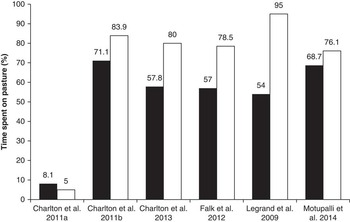
An alternative approach to examining whether welfare of dairy cows is better indoors or at pasture is to ask the cow what she prefers? This can be achieved by conducting preference tests, whereby the animal is given a choice, in this instance between pasture and cubicle housing. Preference tests have been successfully used in a variety of contexts, providing important insights to assess and improve animal welfare (e.g. Dawkins, Reference Dawkins1990; Kirkden and Pajor, Reference Kirkden and Pajor2006). Six studies were identified (Legrand et al., Reference Legrand, von Keyserlingk and Weary2009; Charlton et al., Reference Charlton, Rutter, East and Sinclair2011a, Reference Charlton, Rutter, East and Sinclair2011b, Reference Charlton, Rutter, East and Sinclair2013; Falk et al., Reference Falk, Weary, Winckler and von Keyserlingk2012; Motupalli et al., Reference Motupalli, Sinclair, Charlton, Bleach and Rutter2014) that used this approach to examine if cows had a preference for pasture over indoor housing (Figure 1). With the exception of Charlton et al. (Reference Charlton, Rutter, East and Sinclair2011a), the results from these studies were broadly consistent.
Summary of studies investigating pasture preference of cows. Black bars represent the overall percentage of time on pasture (day and night), and white bars represent the time on pasture at night.

Researchers at the University of British Columbia’s dairy research centre (Legrand et al., Reference Legrand, von Keyserlingk and Weary2009) offered late lactation Holstein cows the choice between free access to pasture and to cubicle housing, with TMR offered indoors. Cows spent on average 54% of their time on pasture. However, pasture use varied considerably with time of day. Cows preferred to be indoors during the day (outside less than one-third of the time between morning and evening milkings), using this time for feeding, with feeder use peaking following milkings. In contrast, cows showed an almost exclusive preference for pasture at night, and spent more of their lying time on pasture (69% of total lying time/day). Similarly, a more recent study from the same research farm (Falk et al., Reference Falk, Weary, Winckler and von Keyserlingk2012) also found cows displayed a partial preference for pasture, averaging 57% of their time on pasture, with cows spending more time outside at night (78.5%) than they did during the day (41.5%). In addition, and contrary to predictions, Falk et al. (Reference Falk, Weary, Winckler and von Keyserlingk2012) found no effect of cubicle availability on time spent at pasture. It was suggested that the short duration of cubicle availability manipulations (4 days) may have explained the lack of effect. Future work should investigate effects of stocking density over longer time periods.
A series of studies have also been conducted by researchers in the UK (Charlton et al., Reference Charlton, Rutter, East and Sinclair2011a, Reference Charlton, Rutter, East and Sinclair2011b, Reference Charlton, Rutter, East and Sinclair2013; Motupalli et al., Reference Motupalli, Sinclair, Charlton, Bleach and Rutter2014). Charlton et al. (Reference Charlton, Rutter, East and Sinclair2011b) provided Holstein-Friesian cows in late lactation, the choice between indoor cubicle housing (with access to TMR) and pasture (with half of the trials also offering TMR on pasture to see how this influenced the choice). Consistent with the Canadian studies, the cows spent more time on pasture than indoors (71% v. 29%), with more time spent on pasture at night than during the day (84% v. 51%). Contrary to initial predictions, there was no TMR treatment effect. That is to say, providing the cows with TMR both indoors and outdoors did not increase pasture use, despite an increase in TMR consumption when this was offered in both locations.
A limitation of the preference tests outlined so far is that they do not provide information on the strength of preference. This can be overcome, and motivation measured by imposing an increasing cost on the animal to gain access to a particular resource (Jensen and Pedersen, Reference Jensen and Pedersen2008). Using this principle, Charlton et al. (Reference Charlton, Rutter, East and Sinclair2013) varied the distance cows were required to walk to access pasture (60, 140 or 260 m). Overall, and consistent with the other studies (Legrand et al., Reference Legrand, von Keyserlingk and Weary2009; Falk et al., Reference Falk, Weary, Winckler and von Keyserlingk2012; Charlton et al., Reference Charlton, Rutter, East and Sinclair2011b), cows had a partial preference for pasture, spending 58% of their time outside, and spending more time outside during the night (80%) than during the day (44%). Relating to preference strength, at night there was no effect of access distance on pasture use. However, during the day, time spent on pasture declined as distance increased, with cows spending longer on pasture when they had to walk 60 m compared with 140 or 260 m (45% v. 27% v. 21%). The difference between findings for day and night-time pasture use with distance suggests that cows were more motivated, revealed by walking longer distances, for pasture use during the night compared with during the day. During the day, cows may have preferred to be indoors (overall average of 56% of time spent indoors during the day) to access TMR and meet their nutritional needs, particularly post milking and following delivery of fresh feed. The necessity of meeting nutritional demands during the day appears to have traded off with the desire to access pasture, revealed when the cost of the latter was increased by having to walk 140 or 260 m.
Recently, in a study investigating effects of herbage mass and distance to pasture, Motupalli et al. (Reference Motupalli, Sinclair, Charlton, Bleach and Rutter2014) found results consistent with those of Charlton et al. (Reference Charlton, Rutter, East and Sinclair2013). Distance affected pasture use during the day, with cows spending more time at pasture in the near (38 m) compared with far distance (254 m), but had no effect on pasture use at night. Moreover, also in line with previous findings, the cows showed an overall partial preference to be at pasture, spending almost 70% of their time at pasture. Herbage mass did not influence preference, nor did it interact with distance to pasture. The lack of a herbage mass effect was most likely due to the fact that high-quality TMR feed was available ad libitum indoors, with low pasture intakes in general indicating that cows only used pasture to supplement their high TMR intake. Motupalli et al. (Reference Motupalli, Sinclair, Charlton, Bleach and Rutter2014) also found no difference in TMR intake between the cows given free access to pasture and a control group of continuously housed cows, and the former group actually recorded higher daily milk yields. There were also indications of increased comfort in the free choice cows, which had increased lying times compared with the continuously housed cows. Results of this study suggest that providing cows with the opportunity to access pasture, and thus greater control over their own environment, has welfare and production benefits.
The results of Charlton et al. (Reference Charlton, Rutter, East and Sinclair2011a) are in complete contrast to those discussed above, with cows displaying a preference to be indoors compared with on pasture (92% v. 8%). The preference for housing in this study may have been due to the cows’ prior experience, as they had been housed indoors and fed TMR in the months preceding the study. Furthermore, all the cows had been reared indoors, and it was only 2 weeks before the onset of the first study period that cows were given experience of pasture, while still receiving indoor TMR. It was also speculated that the distance to access pasture from the choice point (48 m) may have had an impact.
Summarising the results of these preference test studies (Figure 1), reveals, with one exception (Charlton et al., Reference Charlton, Rutter, East and Sinclair2011a), that dairy cows have an overall partial preference for pasture (Legrand et al., Reference Legrand, von Keyserlingk and Weary2009; Charlton et al., Reference Charlton, Rutter, East and Sinclair2011b, Reference Charlton, Rutter, East and Sinclair2013; Falk et al., Reference Falk, Weary, Winckler and von Keyserlingk2012; Motupalli et al., Reference Motupalli, Sinclair, Charlton, Bleach and Rutter2014). During the day, cows had a partial preference for indoor housing (Legrand et al., Reference Legrand, von Keyserlingk and Weary2009; Falk et al., Reference Falk, Weary, Winckler and von Keyserlingk2012; Charlton et al., Reference Charlton, Rutter, East and Sinclair2013), or spent similar time periods indoors and on pasture (Charlton et al., Reference Charlton, Rutter, East and Sinclair2011b, Motupalli et al., Reference Motupalli, Sinclair, Charlton, Bleach and Rutter2014). This was explained by the presence of fresh TMR indoors enabling cows to meet their nutritional demands following milking. However, at night cows displayed a preference for pasture (Legrand et al., Reference Legrand, von Keyserlingk and Weary2009; Charlton et al., Reference Charlton, Rutter, East and Sinclair2011b, Reference Charlton, Rutter, East and Sinclair2013; Falk et al., Reference Falk, Weary, Winckler and von Keyserlingk2012; Motupalli et al., Reference Motupalli, Sinclair, Charlton, Bleach and Rutter2014). Indeed, the studies by Charlton et al. (Reference Charlton, Rutter, East and Sinclair2013) and Motupalli et al. (Reference Motupalli, Sinclair, Charlton, Bleach and Rutter2014) revealed that cows seemed particularly motivated to access pasture at night, since there was no effect of distance on their preference for pasture, yet during the day cows spent less time on pasture when they had to walk greater distances. The preference for pasture at night is most easily explained by a desire for a comfortable lying area, supported by findings of time spent lying while at pasture (e.g. Legrand et al., Reference Legrand, von Keyserlingk and Weary2009; Charlton et al., Reference Charlton, Rutter, East and Sinclair2013). However, the preferences were also complex, being influenced by environmental parameters, and time of day. For example, unsurprisingly, climatic variables influence preferences, with pasture use decreasing with increasing rainfall (Legrand et al., Reference Legrand, von Keyserlingk and Weary2009; Falk et al., Reference Falk, Weary, Winckler and von Keyserlingk2012; Charlton et al., Reference Charlton, Rutter, East and Sinclair2011a, Reference Charlton, Rutter, East and Sinclair2013) and being influenced by the temperature–humidity index (Legrand et al., Reference Legrand, von Keyserlingk and Weary2009, Charlton et al., Reference Charlton, Rutter, East and Sinclair2011b; Falk et al., Reference Falk, Weary, Winckler and von Keyserlingk2012) and season (Charlton et al., Reference Charlton, Rutter, East and Sinclair2011b). Cow factors including milk yield and lameness score also influenced preference, with Charlton et al. (Reference Charlton, Rutter, East and Sinclair2011a) reporting that higher yielding cows spent more time indoors than lower yielders, whereas Charlton et al. (Reference Charlton, Rutter, East and Sinclair2011b) report that cows with a poorer lameness score spent more time indoors.
The preference test studies also highlight knowledge gaps. For example, Charlton et al. (Reference Charlton, Rutter, East and Sinclair2011a) suggested previous experience may have explained their contradictory results, whereas Legrand et al. (Reference Legrand, von Keyserlingk and Weary2009) also highlighted that previous experience may have accounted for the relatively low partial preference (54%) for pasture found in their study, since before the beginning of the experiment, cows had spent their entire lactation housed in the barn. However, the role of prior experience and rearing history remains to be further investigated. Furthermore, in the tests examining the strength of motivation to access pasture, only a restricted range of distances have been used (60 to 260 m), and there is a need to investigate preference over a greater distance range. Stage of lactation is an additional area for preference test investigation. Existing studies have used mid or late lactation cows. No studies have examined cows in early lactation when it might be expected that the higher milk yield and nutritional demands would bias cows towards an indoor environment if TMR was available. Thus, future studies should quantify the role of nutrition on preference, both in terms of pasture quality, and indoor TMR quality and how these could trade-off against each other. Indeed, all the preference tests have involved offering TMR indoors and therefore offering an incentive for cows to come inside. It would be revealing to examine the preference if freshly harvested pasture only was offered indoors. Such a scenario would reveal if cows have an underlying desire to graze outside per se. Also, in countries where summer heat stress is a problem, there is a need to examine how pasture preference is influenced by the availability of shade. It is also interesting to note that a number of the above studies documented considerable variation between individual cows in their pasture preferences (e.g. ranging from 5% to 90% of time on pasture, Charlton et al., Reference Charlton, Rutter, East and Sinclair2013), and this, together with the influence of herd mates, should be investigated further. Moreover, existing studies have focussed on Holstein/Holstein-Friesians, and it would be interesting to identify if any breed/genotype differences in pasture preference exist. Would Jerseys, cross-breds, and NZ genotypes show a greater preference for pasture?
Physiology
Few studies have used physiological measures to compare the welfare of dairy cows in pasture compared with continuously housed systems. Indeed, the only comprehensive example in the context of welfare is provided by Olmos et al. (Reference Olmos, Mee, Hanlon, Patton, Murphy and Boyle2009b) who examined blood levels of acute phase proteins (APP), cortisol, white blood cell (WBC) differential and counts and other biochemical metabolites as non-specific indicators of sub-clinical ill-health and nutritional stress. Although there were no differences in APP, cortisol or WBC counts between treatments, pasture-based cows had higher levels of non-esterified fatty acids (NEFA), β-hydroxybutyrate and triglyceride postpartum, consistent with a limited energy supply. In addition, pasture cows showed a tendency for higher concentrations of bilirubin and numerically higher bile acid concentrations, both indicative of greater hepatic lipidosis. Put together, these findings indicate a greater degree of negative energy balance in cows on pasture than in housed cows, as has been reported for a number of production performance studies (Kolver and Muller, Reference Kolver and Muller1998; Bargo et al., Reference Bargo, Muller, Delahoy and Cassidy2002; Boken et al., Reference Boken, Staples, Sollenberger, Jenkins and Thatcher2005; Fontaneli et al., Reference Fontaneli, Sollenberger, Littell and Staples2005; Kay et al., Reference Kay, Roche, Kolver, Thomson and Baumgard2005; Vance et al., Reference Vance, Ferris, Elliott, McGettrick and Kilpatrick2012). Nutritional and metabolic stress in the peripartum period is a welfare concern, with negative implications for immune function and cow health in early lactation, and further negative downstream effects on fertility (Ingvartsen, Reference Ingvartsen2006; Butler, Reference Butler2014; Drackley and Cardoso, Reference Drackley and Cardoso2014). However, although the pasture cows in the study by Olmos et al. (Reference Olmos, Mee, Hanlon, Patton, Murphy and Boyle2009b) had evidence of greater nutritional and metabolic stress, they had better reproductive health. Clearly, there is a need for more research using biomarkers to assess the welfare of dairy cows in various production scenarios.
Thermal stressors
The thermal environment can act as a stressor for cattle, with negative effects of cold and heat stress (e.g. Hemsworth et al., Reference Hemsworth, Barnett, Beveridge and Matthews1995 for review). A potential welfare concern in pasture-based systems is the exposure of cows to adverse climatic conditions. Within many of these systems, cows will be housed during the winter and therefore protected from adverse weather. However, a particular problem in some countries, such as New Zealand and Ireland, is the changeable nature of the weather, with cows being exposed to sudden, relatively brief periods of cold and wet weather. The intermittent nature of such exposure may prevent adaptation to cold (Bergen et al., Reference Bergen, Kennedy and Christopherson2001; Kennedy et al., Reference Kennedy, Bergen, Christopherson, Glover and Small2005).
In this context, a number of studies (Tucker et al., Reference Tucker, Rogers, Verkerk, Kendall, Webster and Matthews2007; Webster et al., Reference Webster, Stewart, Rogers and Verkerk2008; Schutz et al., Reference Schuppli, von Keyserlingk and Weary2010) report indicators of cold stress in New Zealand dairy cows exposed to periods of experimentally induced wet and windy weather, compared with those sheltered from such conditions. The behavioural indicators comprised decreased feeding, increased standing and decreased lying. For example, Tucker et al. (Reference Tucker, Rogers, Verkerk, Kendall, Webster and Matthews2007) found an average outdoor lying time (4/24 h) well below normal levels for dairy cattle (12 to 13 h/day, Jensen et al., 2005) when exposed to experimentally induced wet and windy conditions. This study also found differences in lying posture, with cows spending less time with their head rested against their flank or on the ground when outside, interpreted as indicating less opportunity for rapid-eye-movement (REM) sleep compared with indoors, as the neck muscles must be supported and the head rested against the body or the ground for cattle to experience REM sleep (Ruckebusch et al., Reference Ruckebusch, Dougherty and Cook1974). In contrast, when outdoors they spent more time lying in postures that reduced the surface area exposed to wind and rain (front legs bent and hind legs touching their body). Evidence of a classic stress response, involving activation of the hypothalamic–pituitary–adrenal axis, was also found (Tucker et al., Reference Tucker, Rogers, Verkerk, Kendall, Webster and Matthews2007; Webster et al., Reference Webster, Stewart, Rogers and Verkerk2008), with greater cortisol levels in response to cold and wet conditions, and thinner cows being particularly susceptible (Tucker et al., Reference Tucker, Rogers, Verkerk, Kendall, Webster and Matthews2007). The cold and wet conditions may have invoked the stress response directly, but there may also have been an indirect effect of reduced lying time, as this is known to invoke a stress response (Fisher et al., Reference Fisher, Verkerk, Morrow and Matthews2002). Furthermore, Webster et al. (Reference Webster, Stewart, Rogers and Verkerk2008) found evidence of immunosuppression in cows managed under the cold and wet conditions, with a reduction in WBC counts, due mainly to a reduction in lymphocytes and basophils. Alterations in circadian body temperature rhythm were also documented, with an increased amplitude resulting from a lower minimum and higher maximum (Tucker et al., Reference Tucker, Rogers, Verkerk, Kendall, Webster and Matthews2007; Webster et al., Reference Webster, Stewart, Rogers and Verkerk2008), and thinner cows having a lower minimum (Tucker et al., Reference Tucker, Rogers, Verkerk, Kendall, Webster and Matthews2007). It was suggested that the altered temperature rhythm in response to cold stress may be an indicator of reduced welfare, as disturbed circadian rhythms are a consistent response to stress (e.g. Meerlo et al., Reference Meerlo, Sgoifo and Turek2002).
The above studies indicate that exposure of cows to wind and rain can reduce welfare, with cows in poor body condition being most susceptible (Tucker et al., Reference Tucker, Rogers, Verkerk, Kendall, Webster and Matthews2007). However, the extent to which the experimentally induced conditions translate to real on-farm conditions is uncertain. In addition, cows have behavioural coping strategies to deal with periods of adverse weather, selecting microclimates that provide protection (Olson and Wallander, Reference Olson and Wallander2002), including sheltering along hedge rows and tree-lined areas, that may suffice in all but very extreme conditions. In this regard, the preference test results of decreasing pasture use with increasing rainfall (Legrand et al., Reference Legrand, von Keyserlingk and Weary2009; Falk et al., Reference Falk, Weary, Winckler and von Keyserlingk2012; Charlton et al., Reference Charlton, Rutter, East and Sinclair2011a, Reference Charlton, Rutter, East and Sinclair2013) are also relevant.
Heat stress can be a problem in both housed and pasture-based systems, with negative consequences for production, fertility and welfare. In the preference tests discussed previously, cows spent more time on pasture as the temperature–humidity index increased indoors and outdoors in the UK-based study (Charlton et al., Reference Charlton, Rutter, East and Sinclair2011b) indicating that in this temperate region cows found the outdoor pasture more comfortable than the indoor housing. However, in the North American based preference studies (Legrand et al., Reference Legrand, von Keyserlingk and Weary2009; Falk et al., Reference Falk, Weary, Winckler and von Keyserlingk2012) time spent on pasture during the day decreased as the outdoor temperature–humidity index increased, likely reflecting the shade and ventilation offered in the housed environment. In those circumstances where heat stress can be a problem, a variety of mitigation strategies can be successfully used to ensure adequate thermal comfort (Van Iaer et al., Reference Van Iaer, Moons, Sonck and Tuyttens2014).
The impact of sunlight
Do cows derive health and welfare benefits from exposure to sunlight when outdoors? Exposure of skin to sunshine is an important source of vitamin D, and higher levels reported in summer compared with winter (Jakobsen and Saxholt, Reference Jakobsen and Saxholt2009) have been attributed to outdoor grazing during the pasture period, with vitamin D status showing a positive relationship with time on pasture during the summer (Hymoller and Jensen, Reference Hymoller and Jensen2012). Does this confer a health benefit to cows? For example, recent experimental studies in biomedical research have found sun exposure to have positive effects on cardiovascular health, lowering blood pressure (Liu et al., Reference Liu, Fernandez, Hamilton, Lang, Gallagher, Newby, Feelisch and Weller2014), and on immune function (Hart et al., Reference Hart, Gorman and Finlay-Jones2011). Moreover, sunlight exposure is apparently rewarding, with hedonic and addictive properties (e.g. Fell et al., Reference Fell, Robinson, Mao, Woolf and Fisher2014). Could these factors contribute to a positive emotional state in cows with outdoor access? Such factors remain to be investigated.
Conclusions
Animal welfare is a multi-criteria characteristic (Rushen and de Passille, Reference Rushen and de Passille1992). In this review we compared the welfare of dairy cows in pasture-based v. continuously housed systems. Lower levels of lameness, hoof pathologies and hock lesions were observed in pasture-based compared with continuously housed systems. These benefits likely derive from providing a comfortable, soft and hygienic standing, walking and lying surface, with additional benefits associated with exercise in terms of grazing and walking to and from pasture. The prevalence of mastitis and uterine disease was generally lower within pasture-based systems, thought to derive from reduced exposure to environmental pathogens and improved cow cleanliness. Given the detrimental impact of uterine disease on subsequent fertility and lactation performance (e.g. see LeBlanc, Reference LeBlanc2014 for a review) this is an important issue (Mee, Reference Mee2012). By contrast, there are some risks posed by contacting neighbouring cattle in pasture-based systems, highlighting the need for appropriate biosecurity measures, and grazing is unsurprisingly a risk factor for endoparasite infection. However, overall, pasture access has a positive effect on dairy cow health. Indeed, mortality is lower in herds having access to pasture than in continuously housed herds.
Pasture-based systems offer increased freedom for cows to express their full behavioural repertoire, a grazing pattern and level of group synchrony more akin to their wild counterparts, improved lying/resting and lower levels of aggression. Dairy cows typically experience a period of negative energy balance during early lactation. The severity of this may be increased within pasture-based systems. Meeting the nutritional needs of modern dairy cows has been one of the drivers for the adoption of continuously housed systems. However, cows managed exclusively indoors still undergo a period of negative energy balance, so neither system is ideal in this context.
The risk of thermal stressors compromising welfare was highlighted for both systems. Wind and rain have the potential to reduce welfare, but there is a need for studies to investigate this under real on-farm conditions. We also hypothesised that cows may derive health and welfare benefits from exposure to sunlight when outdoors, but this remains to be investigated.
Our review indicates that there are considerable welfare benefits from incorporating pasture access within milk production systems in terms of health and behaviour. This view is consistent with the view of cows themselves: in preference tests, when offered the choice between pasture and indoor housing, cows tend to prefer pasture. It is also consistent with Burow et al. (Reference Burow, Thomsen, Rousing and Sorensen2013a) that used an integrated welfare assessment covering feeding, housing and health, finding that Danish dairy herds had improved welfare during the summer grazing period, with a positive effect of daily grazing time. The European Food Safety Authority (EFSA) also stated in a report on dairy cow welfare and disease (European Food Safety Authority (EFSA), Reference Ellis, Innocent, Mihm, Cripps, McLean, Howard and Grove-White2009a) that ‘at present, it is not possible to guarantee that indoor housing without access to pasture will result in the same or better level of welfare that could be achieved if the cows could have access to pasture’. In an opinion article, the recommendation of European Food Safety Authority (EFSA) (Reference Ellis, Billington, McNeil and McKeegan2009b) was that ‘when possible, dairy cows and heifers should be given access to well managed pasture or other suitable outdoor conditions, at least during summer or dry weather.’ Here we note the use of the term ‘well managed pasture’, and we acknowledge that within each type of production system there will be large variation in standards and quality. In other words, a poorly managed pasture-based system will have a detrimental impact on welfare.
As continuously housed systems are a commercial reality, it will be important to build on existing research that has aimed to improve aspects of dairy housing including; cubicle design (e.g. Bernardi et al., Reference Bernardi, Fregonesi, Winckler, Veira, von Keyserlingk and Weary2009; Abade et al., Reference Abade, Fregonesi, von Keyserlingk and Weary2015), floor type (e.g. Schutz and Cox, Reference Schutz and Cox2014), loafing areas (e.g. Haskell et al., Reference Haskell, Rennie, Bowell, Bell and Lawrence2013) and environmental enrichment (Mandel et al., Reference Mandel, Whay, Klement and Nicol2016). The influence of grazing behaviour and potential benefits of exercise should also be investigated. Results from this review advocate seeking ways to incorporate the welfare benefits of pasture-based systems within the housed environment.
Acknowledgements
This review was supported by funding from AgriSearch (Northern Ireland Agricultural Research and Development Council). The authors also thank the editor and two anonymous reviewers for their useful comments and suggestions.