Introduction
The role of extensive skull base surgery in patients with necrotising otitis externa has been superseded by the use of anti-pseudomonal antibiotics.Reference Mahdyoun, Pulcini, Gahide, Raffaelli, Savoldelli and Castillo1 The infective condition was first described in 1968 as an external ear infection causing skull base osteomyelitis in the elderly and diabetics.Reference Lucente and Parisier2 In the last 10 years, there has been a six-fold increase in UK hospital admissions for necrotising otitis externa, with 1756 admissions during 2018–2019.Reference Digital3 The increased numbers of patients affected, and the apparent increased severity of the infections, have implications both for the patients involved and for society, given the increased costs and demands on health services. Management requires a multidisciplinary approach, with significant input from otolaryngology, radiology, and hospital and community-based infectious diseases teams. Additionally, it is a condition with significant morbidity and mortality, with potential complications including hearing impairment, cranial nerve palsy, intracranial infections and death.Reference Lee, Lee, Seon, Jung, Lee and Choi4
Necrotising otitis externa is strongly associated with diabetes mellitus and immunocompromised states.Reference Hollis and Evans5 Furthermore, necrotising otitis externa is a disease of the elderly, and age is independently related to a greater number of co-morbidities.Reference Göllnitz, Inhestern, Wendt, Buentzel, Esser and Böger6 The weighting of co-morbidity may influence treatment options, outcomes and survival; hence, it is important to consider co-morbidities during clinical decision making. The ability to identify patients at increased risk of morbidity and mortality from necrotising otitis externa can reduce the economic impact of the disease and optimise the use of resources.Reference Lee, Lee, Seon, Jung, Lee and Choi4 Whilst Schwam et al.Reference Schwam, Ferrandino, Kaul, Wanna and Cosetti7 assessed the relationship between patient-related factors and re-admission rates, no study to our knowledge has investigated their impact on mortality.
This study aimed to evaluate use of the Charlson Comorbidity Index as a validated tool to quantify patient co-morbidities based on the International Classification of Diseases (10th Revision), and to compare the findings with the outcome of treatment in patients with necrotising otitis externa.
Materials and methods
Data collection
Our study included all consecutive patients admitted with necrotising otitis externa in a tertiary referral UK-based otolaryngology unit. Retrospectively identified patients from 2018 to 2019 were prospectively observed over one year with approval from the clinical governance department. On index admission, demographic data, patient co-morbidities, known risk factors for necrotising otitis externa and findings from clinical assessment were collected. Markers of disease severity were measured through findings from clinical and para-clinical assessments, radiological investigations and microbiological sampling.
Necrotising otitis externa was diagnosed in the presence of clinical signs and symptoms of otitis externa with radiological evidence of bony erosion and inflammatory findings on external ear canal biopsy.
Co-morbidity and outcome assessment
The Charlson Comorbidity Index is a weighted co-morbidity scoring method that uses a claims-based diagnostic approach from International Classification of Diseases codes established from hospitalisation.Reference Kallogjeri, Gaynor, Piccirillo, Jean, Spitznagel and Piccirillo8 The summary score is based on a binomial value (present or absent) from 19 different co-morbidities, and measures relative risk of one-year mortality.Reference Charlson, Pompei, Ales and MacKenzie9 It is also a validated tool for predicting secondary care visits and hospitalisation, thus assessing healthcare utilisation.Reference Ou, Mukherjee, Erickson, Piette, Bagozzi and Balkrishnan10
Given the prevalence of poly-morbidity in patients with necrotising otitis externa, we used the age-adjusted Charlson Comorbidity Index, based on a study by Charlson et al.,Reference Charlson, Pompei, Ales and MacKenzie9 to grade the severity of co-morbidities. We subdivided patients based on Charlson Comorbidity Index scores of 5 or more or less than 5, to establish whether the burden of disease was severe or non-severe, respectively.
Other individual prognostic factors for estimating morbidity and mortality in necrotising otitis externa patients highlighted by previous studies,Reference Mahdyoun, Pulcini, Gahide, Raffaelli, Savoldelli and Castillo1,Reference Lee, Lee, Seon, Jung, Lee and Choi4,Reference Eveleigh, Hall and Baldwin11 such as cranial nerve involvement and radiological evidence of severe disease, defined as bony erosion or soft tissue involvement beyond the external auricular canal, were also included in our study.
Statistical analysis
Statistical analysis was performed using SPSS software (version 25.0; IBM, Armonk, New York, USA). Comparison between groups was performed using the paired t-test for parametric variables and the Mann–Whitney U test for non-parametric variables. A chi-square test was used to compare categorical variables where Fisher's exact test was not adequate. Kaplan–Meier survival analysis was used to compare unadjusted survival rates.
Univariate and multivariate logistic regression analyses were used to assess predictors of all negative outcomes, whilst the Cox proportional hazards model analysed predictors of one-year morbidity and mortality. The univariate predictors that were assessed included age, sex, type of diabetes, Charlson Comorbidity Index score (as a continuous variable), cranial nerve palsy as an indicator of clinical severity, and radiological findings of severe infection. In order to validate use of the Charlson Comorbidity Index as a predictor of morbidity and mortality, Charlson Comorbidity Index scores were calculated for each patient and the discrimination was assessed using receiver operating characteristic curves. Only variables with a p-value of less than 0.1 were included in our Cox proportional hazards model. Associations were summarised by calculating hazard ratios and their corresponding 95 per cent confidence intervals (CI).
All calculated p-values were two-sided, and a p-value of less than 0.05 was considered statistically significant.
Results
Study cohort
A total of 26 patients with a new diagnosis of necrotising otitis externa admitted at our centre over one year, between 2018 and 2019, were included. Of these patients, 65.3 per cent were male. The age range was 58–94 years, with a mean age of 78.8 years and median age of 80 years.
Cranial nerve involvement was present on admission in seven patients (26.9 per cent), whilst three patients (11.5 per cent) developed cranial nerve palsies subsequent to admission.
Inflammatory markers were only mildly elevated, with a mean white cell count of 9.4 ×10/l and C-reactive protein level of 46.4 mg/l. Pseudomonas was the most common micro-organism isolated, which is consistent with most other studies.Reference Hollis and Evans5
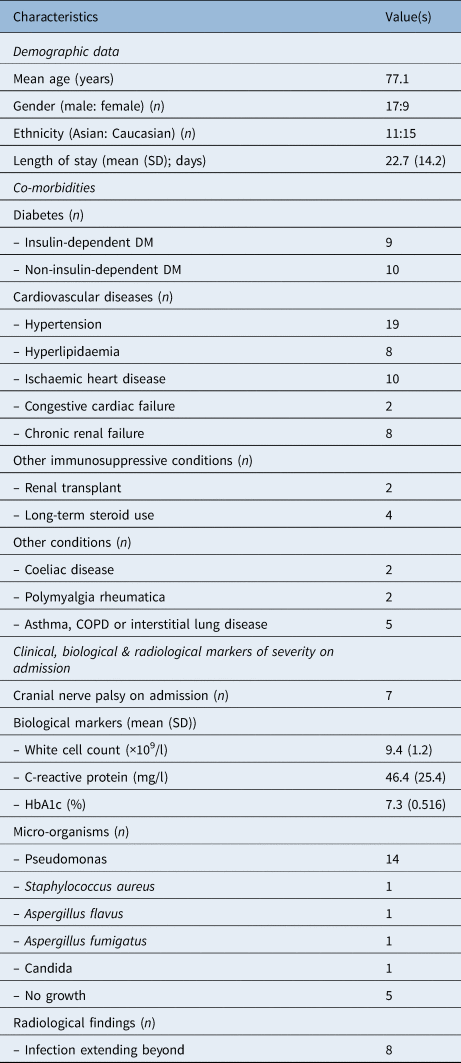
A summary of the patient demographic data, associated co-morbidities, and clinical, biological and radiological markers of disease severity, is shown in Table 1.
Patient and disease characteristics

SD = standard deviation; DM = diabetes mellitus; COPD = chronic obstructive pulmonary disease; HbA1c = haemoglobin A1c
Cohort stratified by co-morbidity
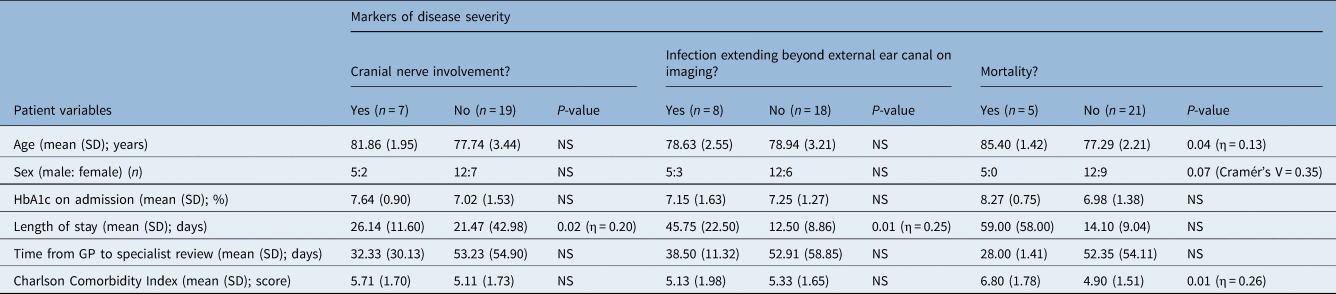
Table 2 cross-tabulates markers of disease severity against known risk factors, in addition to summary scores from the Charlson Comorbidity Index.Reference Chen, Chen, Yeh, Hsu and Tseng12
Markers of disease severity in terms of cranial nerve involvement, disease extension and mortality, stratified against known risk factors

SD = standard deviation; NS = non-significant (p > 0.05); HbA1c = haemoglobin A1c; GP = general practitioner
The incidence of diabetes among the necrotising otitis externa group was 80.7 per cent; length of stay was longer in patients with insulin-dependent (as opposed to non-insulin-dependent) diabetes. Seven patients presented with cranial nerve involvement, which was associated with a significant increase in length of in-patient stay (p = 0.02, η2 = 0.20). However, the latter was not found to be associated with age, haemoglobin A1c (HbA1c) or Charlson Comorbidity Index grade. Radiological evidence of disease extension beyond the external auricular canal was a marker of disease severity, and was associated with an increased length of stay (p = 0.01, η2 = 0.25) independently of all other variables.
Cohort stratified by Charlson Comorbidity Index
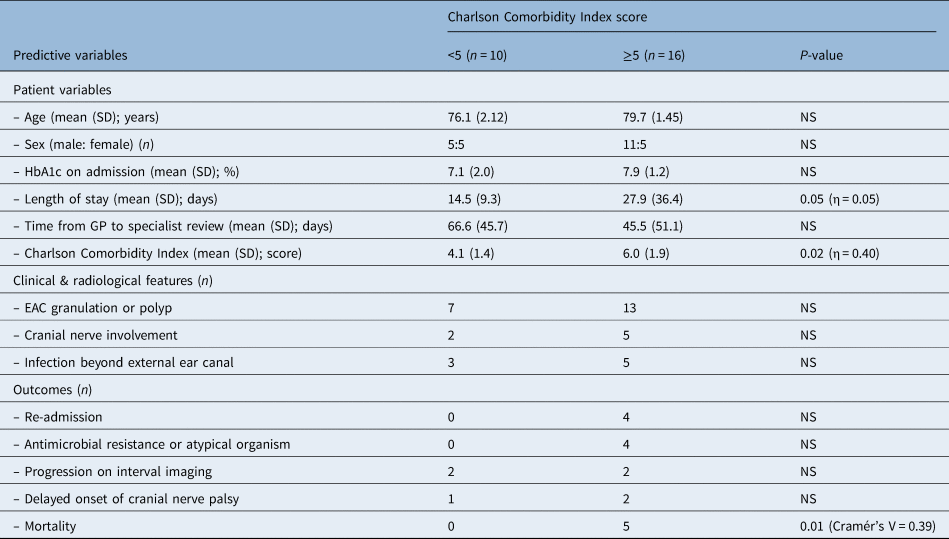
A summary of the Charlson Comorbidity Index scores for each group against patient variables, clinical and radiological features, and outcomes, is shown in Table 3.
Predictors of one-year morbidity and mortality in necrotising otitis externa patients

SD = standard deviation; NS = non-significant (p > 0.05); HbA1c = haemoglobin A1c; GP = general practitioner; EAC = external auditory canal
Patients with a Charlson Comorbidity Index score of 5 or more had a higher mean age, of 79.7 years, compared with 76.1 years in those with a score of less than 5; however, this difference was not significant in our analysis.
Those with a Charlson Comorbidity Index score of less than 5 (graded as non-severe) were younger, had lower HbA1c and remained as in-patients for a shorter duration (p = 0.05, η2 = 0.05). They were also found to have a lower weighted co-morbidity index score (mean ± standard deviation (SD) Charlson Comorbidity Index = 4.13 ± 1.43; p = 0.02, η2 = 0.40).
Sixteen patients had a Charlson Comorbidity Index score of greater than 5, indicating severe co-morbidity (mean ± SD Charlson Comorbidity Index = 6.03 ± 1.86). These patients had poorer glycaemic control and an extended mean length of stay (mean ± SD = 27.87 ± 36.69 days; p = 0.05, η2 = 0.05).
Mortality was associated with a Charlson Comorbidity Index score of more than 5, with a high degree of statistical significance (p = 0.01, Cramér's V = 0.39). Re-admissions, antimicrobial resistance and atypical organisms were only found in the high Charlson Comorbidity Index score cohort, although we found no statistically significant differences in our analysis.
Outcomes
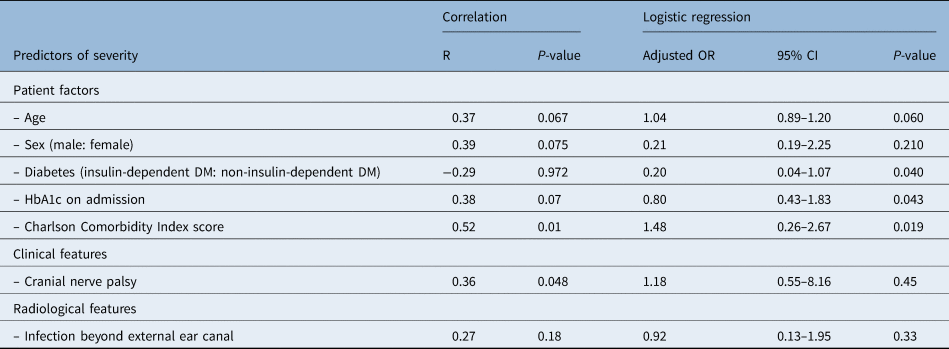
At one-year follow up, there was 19 per cent mortality (n = 5); one patient died in hospital following their index admission. Of the 25 patients who survived their first in-patient stay, 6 further developed severe morbidity within one year (evidence of disease progression on interval imaging, new onset of facial nerve palsy, development of antibiotic resistance and re-admission because of clinical worsening). Within the mortality group, patients were significantly older (p = 0.04, η2 = 0.13) and had a greater weighting of co-morbidities (average Charlson Comorbidity Index = 6.08, p = 0.01, η2 = 0.26). Table 4 shows the multivariate Cox regression analysis for negative outcomes.
Multivariate logistic regression analysis for negative outcomes

OR = odds ratio CI = confidence interval; DM = diabetes mellitus; HbA1c = haemoglobin A1c
A high Charlson Comorbidity Index score was found to correlate linearly with the observed morbidity and mortality in our study (r = 0.43, p = 0.03). Moreover, multivariate logistic regression of the significant risk factors identified in Table 4 showed that a high Charlson Comorbidity Index score independently increased the risk of morbidity and mortality following first presentation (odds ratio = 1.48, 95 per cent CI = 0.97–3.26, p = 0.033). Glycaemic control, insulin dependency and age did not show statistical significance on regression. Clinical and radiological severity indicators also appeared to show no correlation, and did not subject patients to any additional risk.
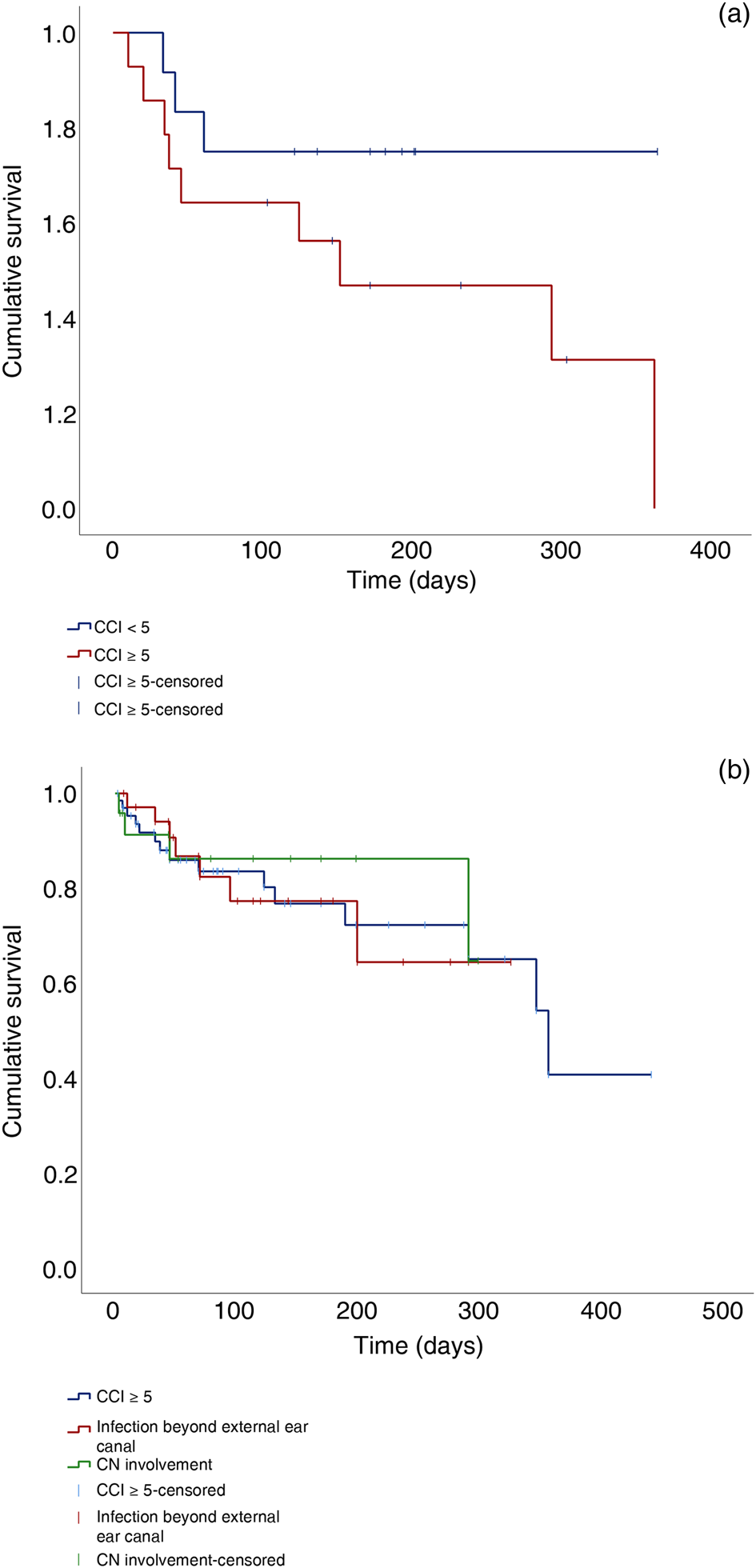
Cumulative survival in the severe (Charlson Comorbidity Index score of 5 or more) and non-severe (score of less than 5) subgroups is shown in Figure 1. Cumulative morbidity and mortality in the two Charlson Comorbidity Index score groups were matched in the first 60 days; however, patients with a score of 5 or more had significantly reduced overall survival (log-rank test, p = 0.010). Moreover, the survival function was similar in patients with: a score of 5 or more, an infection extending beyond the external ear canal or cranial nerve involvement (log-rank test, p = 0.927).
(a) Kaplan–Meier plot of groups differentiated by Charlson Comorbidity Index (CCI) score (log-rank test, p = 0.010). (b) Kaplan–Meier plot of severe Charlson Comorbidity Index score against known markers of disease severity (log-rank test, p = 0.927). CN = cranial nerve

Predictors of morbidity and mortality
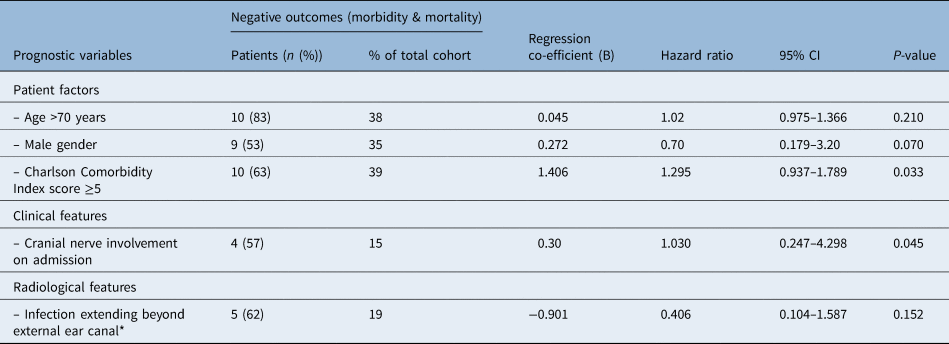
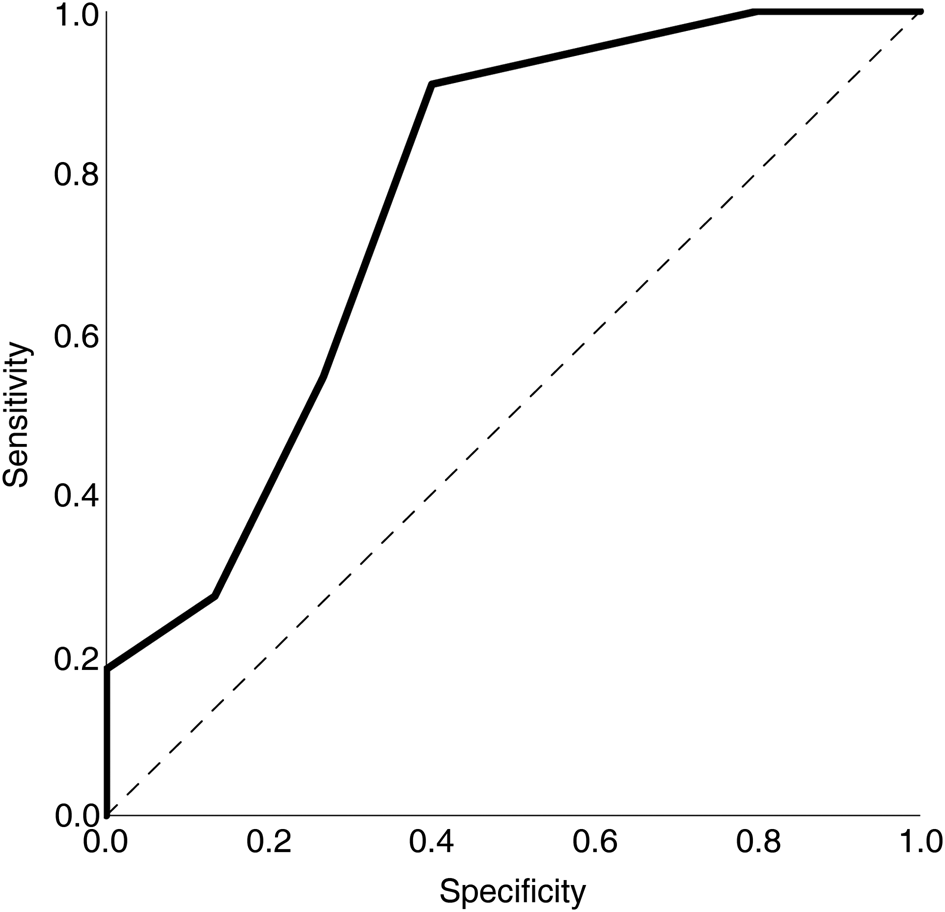
Table 5 shows the predictive variables included in our Cox proportional hazards model. A high Charlson Comorbidity Index score was an independent predictor of one-year morbidity and mortality, whereby a unit increase in Charlson Comorbidity Index score increased risk by 29.5 per cent (hazard ratio = 1.295, 95 per cent CI = 0.937–1.789, p = 0.033). Additionally, the area under the receiver operating characteristic curve was 0.764, validating our use of the Charlson Comorbidity Index in our prediction model (95 per cent CI = 0.580–0.847, p = 0.024).
Cox proportional hazard model – predictors of one-year morbidity and mortality

CI = confidence interval
Discussion
Our novel study is the first to assess the predictive impact on mortality of summary co-morbidity scores in patients diagnosed with necrotising otitis externa. We classified the extent of necrotising otitis externa based on: (1) radiological findings of inflammation beyond the external ear canal; (2) cranial nerve involvement; and (3) summary co-morbidity scores using the Charlson Comorbidity Index. Within six months of necrotising otitis externa diagnosis, we observed 12 patients with adverse outcomes in the form of re-admission, antimicrobial resistance or atypical organisms, new cranial nerve involvement, or disease progression on interval imaging. Of these patients, 80 per cent had a Charlson Comorbidity Index score of 5 or more, indicating that the burden of non-otological disease may increase the short-term risk of necrotising otitis externa-related morbidity (relative risk = 2.50, 95 per cent CI = 0.93–6.07, p = 0.06).
The incidence of mortality in our cohort was 19.2 per cent; all of those who died were males, with a Charlson Comorbidity Index score of 5 or more (p = 0.07 and p = 0.05, respectively). Whilst this finding reflects the mortality rates in previous literature,Reference Chen, Chen, Yeh, Hsu and Tseng12 a high Charlson Comorbidity Index was linearly correlated (r = 0.52, p = 0.01) to increased risk of mortality, independently of all other known risk factors. Based on our receiver operating characteristic curve, Charlson Comorbidity Index scores modelled long-term mortality prediction with good discriminative power (area under the curve = 0.764, 95 per cent CI = 0.580–0.947, p = 0.024), as shown in Figure 2. Furthermore, we observed a 29.5 per cent increased risk of morbidity and mortality with each unit increase in Charlson Comorbidity Index score. The co-morbidity burden, together with the inflammatory condition of necrotising otitis externa, increases the risk of mortality in these patients.
Receiver operating characteristic curve for Charlson Comorbidity Index scores (area under the curve = 0.764, 95 per cent confidence interval = 0.580–0.947, p = 0.024).

Haemoglobin A1c was significantly higher in patients with a higher Charlson Comorbidity Index score (p = 0.045). However, in concordance with Lee et al.,Reference Lee, Lee, Seon, Jung, Lee and Choi4 our results showed that HbA1c is not an independent predictor of morbidity and mortality.
Skull base osteomyelitis results from several spreading patterns from the external auditory canal, which ultimately indicate severity and guide treatment.Reference Kwon, Han, Oh, Song and Chang13 Infection beyond the external auditory canal and cranial nerve involvement were present in 63 per cent and 71 per cent, respectively, of all patients with a Charlson Comorbidity Index score of 5 or more. Moreover, our findings showed a positive correlation (r = 0.36, p = 0.048) for cranial nerve involvement as a marker of clinical severity.
There is currently no risk-stratification model for predicting long-term outcomes for patients who are diagnosed with necrotising otitis externa. We have shown that summary scores of co-morbidities using the Charlson Comorbidity Index can predict long-term morbidity and mortality, and may identify patients at greatest risk of disease progression. Table 5 shows the predictive variables used in our Cox model. A high Charlson Comorbidity Index score was an independent predictor of one-year morbidity and mortality (hazard ratio = 1.295, 95 per cent CI = 0.937–1.789, p = 0.033). In support of this analysis, patients with a Charlson Comorbidity Index score of 5 or more had a similar survival function compared with known markers of disease severity, as shown in Figure 1. However, we observed worsened cumulative survival at one year in the high Charlson Comorbidity Index group. We believe this may be secondary to standardised treatment provided to all patients, including those in the high Charlson Comorbidity Index score group who did not exhibit other clinical or radiological markers of disease severity. Thus, their time to follow up and interval scanning, duration of antibiotics, and multidisciplinary surveillance might require alteration in future once similar patients are identified as high-risk patients.
In our study, the length of stay ranged from 1 to 8 weeks, with a mean of 3.27 weeks. The outliers for the prolonged time of admission were because of delayed in-hospital diagnosis and for social reasons, highlighting the ongoing management challenge. We did not include treatment in our analysis, as it is not independent of disease stage. However, it was observed that those with a Charlson Comorbidity Index score of 5 or more, who exhibited clinical and radiological markers of disease severity, were offered a prolonged course of antimicrobial therapy, which reduced the risk of mortality from the disease, as shown in Figure 1. It is evident from prior studies that co-morbidities can drive treatment selection and affect outcomes. Hence, a blanket approach to necrotising otitis externa treatment for all patients might not be best medical practice. We believe that stratifying patients using the Charlson Comorbidity Index may enable clinicians to holistically counsel patients and tailor their treatment, in order to improve their prognosis and subsequently alleviate the burden of necrotising otitis externa.
Limitations
Our study is limited by the retrospective identification of the patient cohort and the lack of a validation cohort. The relatively small sample size is also a potential limitation, although, given the population of diabetic patients in our region, we feel that it is representative of disease prevalence in the UK. Prospective surveillance was used in our survival analysis; however, this is susceptible to attrition bias, as the length of surveillance differed between patients; some were discharged from the ENT department after symptom resolution with no further documented follow ups. Further prospective studies are required to confirm the role and usefulness of the Charlson Comorbidity Index in patients with necrotising otitis externa.
• Necrotising otitis externa patients were categorised into two groups based on pre-existing co-morbidities (high vs low Charlson Comorbidity Index score)
• Patients with a high Charlson Comorbidity Index score were older, with a higher weighted co-morbidity index score
• Patients with a high score had significantly higher haemoglobin A1c, but it was not an independent predictor of morbidity and mortality
• A high score correlated with increased mortality risk, independent of all other known risk factors, and was an independent predictor of one-year morbidity and mortality
• A high score was associated with significantly reduced overall survival, with similar survival function to cranial nerve palsy involvement and disease extension
Despite these limitations, the increased use of clinical prediction models in cases of other infectious and non-infectious diseases, coupled with our analysis and findings, indicates that the Charlson Comorbidity Index is potentially useful in the risk stratification of necrotising otitis externa patients.
Conclusion
As evidenced in our study, patients who develop skull base osteomyelitis secondary to external ear infections have multiple co-morbidities. Disease severity is usually graded with reference to the clinical picture, and biological and radiological findings. However, we have shown that patients may still develop severe necrotising otitis externa despite being deemed low risk when considering traditional variables. The use of the Charlson Comorbidity Index provides a validated method for risk stratification of these patients, which allows the prediction of potentially poor outcomes and offers a tailored management plan to affected patients at the time of the initial diagnosis.
Acknowledgement
The authors thank Dr Ram Vaidhyanath for his guidance on radiological interpretations of necrotising otitis externa patterns.
Competing interests
None declared