The importance of applying the knowledge derived from behavioral sciences to understanding and treating individuals who experience significant adversity and mental illness is reflected in the growing emphasis placed on translational research at multiple levels of the scientific enterprise (Cicchetti & Posner, 2005; Pellmar & Eisenberg, 2000; Toth & Cicchetti, 1998). For example, the Journal of the American Medical Association (Zerhouni, 2005b) and the New England Journal of Medicine (Zerhouni, 2005a) have recently published articles exhorting those working in multiple areas of the biomedical sciences to translate their research findings and to disseminate them to society. Moreover, editorial guidelines at scientific journal outlets such as the Journal of Family Psychology now uniformly challenge contributors to outline how empirical findings may inform clinical practice and public policy (Kazak, 2004; Parke, 1998). Furthermore, the fields of applied developmental psychology and developmental psychopathology have long championed the necessity of applying basic research findings to the clinical and societal arenas (Cicchetti, 1993; Cicchetti & Toth, 1998; Higgins-D'Alessandro & Jankowski, 2002).
Likewise, modifications in the organization and priorities of funding agencies like the National Institute of Mental Health signify an overarching commitment to translating knowledge in behavioral and social sciences to understanding and reducing mental illness (Cicchetti & Valentino, in press; Dingfelder, 2004; Institute of Medicine, 1994; National Advisory Mental Health Council Behavioral Science Workgroup, 2000; Pellmar & Eisenberg, 2000). Accompanying such changes in the infrastructure of the behavioral sciences is some, albeit modest, progress in addressing the many significant gaps in integrating behavioral theory and science with intervention and policy initiatives (see Cicchetti & Hinshaw, 2002; Cicchetti & Toth, 2000).
Consistent with this focus on translational research, the purpose of this paper is to explicate how the emotional security theory (EST) and its assumptions about how family discord affects children can be applied to advance knowledge on the etiology, course, and amelioration of child psychopathology. Davies and Cummings (1994) originally developed the EST to explain relatively normative developmental differences in children's coping and adaptation patterns in contexts of interparental conflict. In accordance with the developmental psychopathology approach and its goal of elucidating the reciprocal interplay between normality and psychopathology (Cicchetti, 1984; Cicchetti & Schneider-Rosen, 1986; Sroufe, 1990, 1997), our goal in this paper is to expand the traditional conceptual boundaries of the EST by more systematically examining its potential for understanding child development in abnormal and high-risk contexts.
As an initial foray into describing the utility of the EST in clinical and abnormal settings, we specifically examine how the emotional security theory may help to advance the understanding and treatment of child development in families experiencing interadult domestic violence. Our paper is organized into four parts. The first section provides an overview of the EST, including coverage of the theoretical assumptions and the significance of translating or applying the theory to high-risk contexts. In the second part of the paper, we address how children's difficulties in preserving security may emerge in the face of domestic violence and accompanying forms of severe family adversity. In the penultimate section, we illustrate the implications of emotional insecurity for the development of childhood psychopathology in domestically violent homes. In the final section, we address how the EST may be useful in informing public policy and intervention initiatives designed to reduce the burden of mental illness.
Primary Assumptions and Historical Roots of the Emotional Security Theory
The EST was originally developed to account for why children exposed to high levels of interparental conflict evidenced a range of maladaptive outcomes (e.g., Davies & Cummings, 1994). Extant research at the time led to the conclusion that there were two primary pathways underlying the risk posed by interparental conflict. First, in supporting a direct path model, evidence suggested that interparental conflict increases children's vulnerability to adjustment problems by progressively amplifying their distress and reactivity to subsequent adult conflicts. Second, consistent with an indirect path model, findings from an independent line of research supported the prediction that disturbances in parenting practices and parent–child relations mediated the link between interparental conflict and child psychological maladjustment.
Although this research underscored that exposure to interparental conflict and its accompanying family disturbances (e.g., parenting difficulties) were emotionally charged experiences for children, children's emotions in the family did not assume primacy in any existing conceptual models of interparental conflict (e.g., Emery, 1982; Grych & Fincham, 1990). Rooted in the functionalist perspective on emotion, the EST was designed to address this gap. Within the functionalist perspective, emotion regulation is understood relationally within the context of goals and the dynamic relation between the person and environment (Campos, Mumme, Kermoian, & Campos, 1994; Thompson, 1997). Accordingly, identifying the goals and contexts relevant to emotion is a primary task in any theoretical application of the functionalist perspective. Attachment theory, with its focus on emotional security as a goal for children in the parent–child relationship, served as a guide in specifying that preserving security may be a salient goal in the interparental relationship and the broader family system (Ainsworth, Blehar, Waters, & Wall, 1978; Bowlby, 1969; Sroufe & Waters, 1977). Thus, correspondence between the emotional security and attachment theories lies in the shared assumption that the quality of the parent–child relationship can affect children's adaptive functioning by enhancing or undermining children's security in the parent–child subsystem.
However, unlike attachment theory, the EST emphasizes that preserving security is relevant beyond the context of the parent–child relationship. More specifically, consistent with the examination of children's coping in the broader family unit in family systems theory (Davies, Cummings, & Winter, 2004), the EST posits that preserving emotional security is an important goal that organizes children's emotional experiences (e.g., fear), action tendencies (e.g., withdrawal, involvement), and appraisals of the self and others (e.g., perceptions of threat to well-being) across multiple family relationships, including the interparental subsystem. Although the EST does not deny the significance of multiple goals and tasks for children's adaptation, the emotional security theory postulates that within the hierarchy of human goals, protection, safety, and security are among the most salient and important (Davies, Harold, Goeke-Morey, & Cummings, 2002). Thus, one implication is that a child's sense of security in the interpartner relationship is a prominent process that is relatively distinct in its origins, organization, and sequelae from security within the parent–child relationship.
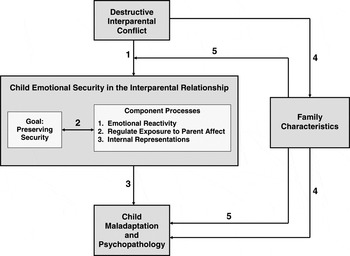
Building on the assumption that children develop their own distinct sense of security in the interparental relationship, the direct path component of the EST proposes that children's security in the interparental relationship is a central mediating mechanism underlying the direct risk posed by interparental conflict for children. As illustrated in Path 1 of Figure 1, repeated exposure to heightened hostility, distress, and disengagement between parents is specifically theorized to increase children's concerns about their security over time as they grapple with worries about the welfare of their parents, proliferation of parental discord into the parent–child subsystem, and the implications for family instability and dissolution. Reflecting the distinct nature of the organization of security in the interpartner relationship, preserving security in the interpartner relationship is conceptualized as a latent goal that regulates and is regulated by three observable classes of response processes: emotional reactivity, regulation of conflict exposure, and internal representations. Thus, as shown in Path 2 of Figure 1, threats to the goal of security in the interpartner relationship are posited to trigger greater emotional reactivity, characterized by prolonged, dysregulated fear and distress in the context of interparental discord; regulation of conflict exposure in the form of avoidance of and involvement in interparental problems; and hostile internal representations of the consequences interparental difficulties have for the welfare of the self and family (Davies & Cummings, 1994, 1998). Illustrating the bidirectional interplay between the goal and response processes, these processes are posited to serve the evolutionarily adaptive function of facilitating the attainment of safety in the average expectable environment. For example, heightened states of vigilance and arousal that characterize emotional reactivity are theorized to increase children's sensitivity to signs of impending threat in the family unit and energize them to quickly cope with stress and preserve their well-being.

A family-wide model of the impact of interparental conflict on child emotional security and psychopathology.
Although elevated concerns about security for children from high-conflict homes may hold adaptational value in the immediate context of the family, the EST further postulates that these concerns are maladaptive for children's long-term functioning. Thus, Path 3 in Figure 1 illustrates the second link of the mediational pathway and its assumption that vigilance, distress, worry, and negative appraisals triggered by exposure to interparental difficulties lay the foundation for broader patterns of internalizing and externalizing symptoms. In the second part of the mediational chain, response processes linked with the emotional security system are hypothesized to increase child vulnerability to psychological symptoms. Supporting this hypothesis, research indicates that security in the interparental relationship partially mediates the link between interparental conflict and young adolescent internalizing and externalizing symptoms even after taking into account social–cognitive appraisals of threat and self-blame and parent–child attachment security (Davies, Harold, et al., 2002).
Despite the empirical support for the direct path hypothesis of EST, the modest to moderate magnitude of the mediational role of security in the interparental relationship highlights the considerable variability of coping and adaptation processes experienced by children exposed to similar family circumstances. Thus, the findings also reflect diversity and plurality in pathways between interparental conflict and psychopathology across children. According to the family systems component of EST, processes in the broader family context may be central sources for the multiplicity of pathways experienced by children that may alter direct pathways in two broad ways. First, as shown by Path 4 in Figure 1, the indirect path component of EST demonstrates that the link between interparental conflict and child psychopathology is at least partially mediated by family disturbances, including parenting difficulties characterized by emotional unavailability and psychological control (e.g., Fauber, Forehand, Thomas, & Weirson, 1990; Gonzalez, Pitts, Hill, & Roosa, 2000; Harold, Fincham, Osborne, & Conger, 1997). In furthering a family-wide model of emotional security, the indirect path component of the theory specifically posits that the joint influence of destructive interparental conflict and poor parenting practices increases child vulnerability to maladaptation by undermining security across both parent–child and interparental relationships. Given that protection is a primary function of the attachment relationship, variations in the quality of attachment patterns are assumed to reflect individual differences in the ability of children to use the caregiver as a haven of protection and safety (Cicchetti, Cummings, Greenberg, & Marvin, 1990; Kobak, 1999). However, at least until recently, the substantive scope of attachment theory has been largely confined to identifying specific parenting (e.g., responsiveness) and child (e.g., temperament) attributes in isolation from the broader family system (Thompson, 1997). In extending the literature on parent–child relations, the indirect hypothesis of EST contends that parenting difficulties accompanying interparental conflict are related to child adjustment problems through their association with child–parent attachment security. Consistent with this prediction, research utilizing structural equation modeling (SEM) has indicated that the mediational role of parenting difficulties in associations between interparental conflict and early adolescent psychological symptoms is further mediated by children's insecurities about the accessibility of their parents as support figures (Davies, Harold, et al., 2002).
Second, the family-wide model of EST postulates that family characteristics also serve moderator roles as potentiating or protective factors that alter the magnitude of mediational pathways among parental conflict, child security, and child adjustment. Path 5 in Figure 1 illustrates the hypothesis that interparental conflict may have different implications for children's concerns about security in the interparental relationship depending on the processes in the larger family unit. Children's concerns about security following repeated exposure to interparental conflict are specifically proposed to be amplified in family units that are exhibiting other signs of significant vulnerability (e.g., family discord, parental psychopathology). Conversely, interparental conflict is hypothesized to take on a different, more benign meaning in the context of significant psychosocial strengths and resources in the family unit (e.g., cohesion, social support).
Despite empirical support for the EST, the theory was initially developed to account for patterns of relationships among interparental discord, children's reactions to interparental interactions, and children's psychological adjustment in relatively well-functioning samples of families. Moreover, subsequent empirical tests of the main hypotheses derived from the emotional security theory have been largely, if not exclusively, confined to families who do not experience significant risk or psychopathology. However, the viability of the EST for understanding mental health and illness hinges on advancing additional efforts to translate and apply the emotional security theory to families and children who experience significant adversity. From a developmental psychopathology perspective, understanding development requires consideration of both normal and abnormal functioning (Cicchetti, 1993; Cummings, Davies, & Campbell, 2000; Sroufe, 1997; Warren & Sroufe, 2004). Thus, a key direction in the future development and refinement of the theory is to examine the generalizabilty and specificity of security processes across multiple contexts, particularly in families experiencing high levels of risk. As an initial step in expanding the viability of the emotional security theory, we first address how the application of emotional security theory may raise new questions and advance an understanding of how and why domestic violence increases child vulnerability to psychopathology.
Child Security in the Face of Domestic Violence and Accompanying Family Risks
In attempting to elucidate the severity of different types of stressful events for children, Milgram (1998) ranked witnessing acts of violence as moderate to high in adversity (i.e., 7 on a 9-point scale) and comparable to experiencing maltreatment, life-threatening illness, and permanent injuries. Likewise, as an extreme form of interpartner dysfunction, domestic violence is regarded as a form of psychological maltreatment that poses a considerable risk to children's psychological and physical welfare (Barnett, Manly, & Cicchetti, 1993; Margolin & Gordis, 2000). Consistent with these conceptualizations, physical violence between partners or parents poses a robust and unique risk to children's adjustment. For example, interpartner physical aggression has been shown to predict a wide range of child psychological problems even when statistically controlling for general interpartner discord, child maltreatment, and parent mental health (Fergusson & Horwood, 1998; McDonald, Jouriles, Norwood, Ware, & Ezell, 2000; Yates, Dodds, Sroufe, & Egeland, 2003).
Although children who are exposed to severe domestic violence are substantially more likely to exhibit psychopathology than are children in the general population (Cummings & Davies, 1994; McDonald & Jouriles, 1991), most children from violent homes do not experience clinically significant levels of psychopathology (Hughes, 1997; Hughes, Graham-Bermann, & Gruber, 2001). Despite the risk for psychopathology and variability in outcomes among children exposed to domestic violence, little is known about how and why children from violent homes develop specific outcomes over time (Jouriles, Norwood, McDonald, & Peters, 2001; Jouriles, Spiller, Stephens, McDonald, & Swank, 2000). In addressing this gap in understanding process-oriented relationships between domestic violence and child adjustment, EST postulates that domestic violence can be characterized as a proxy for underlying patterns of destructive interparental interactions. Domestic violence specifically comprises multiple dimensions including the type of perpetrator (e.g., mother, father, mutual), form of violence (e.g., physical, psychological, sexual), frequency, developmental timing (e.g., exposure in early childhood versus adolescence), and temporal course (e.g., stable, increasing, or decreasing trajectories; Anderson & Cramer-Benjamin, 1999; Jouriles et al., 1998; Jouriles, Norwood, McDonald, Vincent, & Mahoney, 1996). Individual differences in the experience of these properties of domestic violence are thought to have multiple reverberations for children and families. For example, research has shown that different forms of physical aggression are uniquely associated with child psychological problems (Jouriles et al., 1996, 1998). Likewise, some social scientists consider domestic violence as having repercussions that are more serious for children and families if the perpetrator is the male partner (Bachman & Pillemer, 1992; Holtzworth-Munroe, Smutzler, & Sandin, 1997; Jouriles et al., 2001). However, in reflecting the complexity of disentangling process relations among domestic violence parameters and child adjustment, domestic violence is a robust risk factor for children regardless of the gender of the perpetrator and gender differences are often relatively weak and qualified by other family processes (e.g., Dutton, in press; Dutton & Nicholls, in press).
Direct paths of domestic violence
Efforts to address how and why domestic violence affects children have predominantly focused on delineating the familial processes (e.g., parental stress; family negative affect) that mediate child susceptibility to psychological difficulties (Holden & Ritchie, 1991; Kilpatrick & Williams, 1998; Levendosky, Huth-Bocks, Shapiro, & Semel, 2003; Margolin & John, 1997). Consequently, little is known about the unfolding sequence of processes that domestic violence directly sets in motion within children that ultimately increase their vulnerability to psychopathology. As one particular sign of this gap, even when findings are interpreted as supporting the notion that domestic violence is a direct source of risk for children, the general incidence of domestic violence is commonly used as a rough proxy for children's exposure to domestic violence (Holden, 1998). Thus, two main goals in applying the direct path component of EST to families experiencing domestic violence are to explicate the dimensions of domestic violence that children are exposed to and to articulate the specific intrachild characteristics that are altered by such exposure.
First, as depicted in Path 2 of Figure 1, the direct path of EST precisely distinguishing between the multiple properties of domestic violence and children's direct exposure to specific dimensions of violence and discord. On the one hand, parents may be able to successfully shield or buffer children from domestic violence or accompanying forms of destructive interparental interactions. Thus, although the occurrence of domestic violence and child exposure to domestic violence are often tacitly equated at a conceptual level, there is not a one to one correspondence between occurrence of domestic violence and child exposure to domestic violence (Sternberg, Lamb, & Dawud-Noursi, 1998). On the other hand, however, the small corpus of extant studies consistently supports the hypothesis that the majority of children from domestically violent homes do witness interparental assaults (e.g., Dobash & Dobash, 1984; Hughes, Parkinson, & Vargo, 1989; Sternberg et al., 1998). Moreover, irregardless of whether children are direct bystanders of violence between parents, children from violent homes are still likely to experience a range of destructive interparental interactions characterized by verbal hostility, psychological abuse, threats, withdrawal, disengagement, and stonewalling (Cummings, 1998). Thus, from an EST perspective, the defining parameters of domestic violence are hypothesized to substantially increase the probability that children will be exposed to destructive interparental processes characterized by more frequent and protracted bouts of aggressive relational tactics (e.g., physical and psychological aggression), escalating, unresolved conflicts, and disengaged, cold interaction patterns between parents (Holtzworth-Munroe et al., 1997; Jouriles et al., 2001).
The second goal of applying the direct pathway hypothesis of EST to families facing domestic violence involves the theoretical and empirical articulation of specific intrachild characteristics that are altered by children's direct exposure to the destructive conflict properties in domestically violent homes. As the prevailing theoretical framework in the study of intrachild mechanisms of domestic violence (e.g., Grych, Jouriles, Swank, McDonald, & Norwood, 2000; Jouriles et al., 2000), the cognitive–contextual framework was originally an application of work on attribution theory in adult and adolescent samples. Because many of the social–cognitive processes featured in the cognitive–contextual framework require advanced information processing capacities, these processes can have limited applicability in explaining why interpartner violence may pose a risk to the adjustment of younger children. Moreover, despite the emotionally charged contexts within which domestic violence takes place, research has generally ignored the study of child emotional processes in favor of the cognitive and behavioral processes within children that are altered by exposure to domestic violence.
Toward the goal of extending knowledge in this area, a primary assumption of EST in the study of domestic violence is that children faced with such considerable family adversity can exhibit their difficulties in preserving security in the face of considerable family adversity through rudimentary patterns of emotional reactivity and representational capabilities (Davies & Forman, 2002). Johnston and Roseby (1997) provide vivid qualitative descriptions of how processes evolving from rudimentary sensorimotor systems of children may develop into stable patterns of child reactivity in violent homes. In their words, scripts “can initially be formed from schema of preverbal and perceptual experience … long before the child has access to language to encode the experience” and, as a result, “frightening scenes of family conflict and violence may never be available for cognitive recall but can continue to manifest themselves in scary dreams and anxious feelings” (Johnston & Roseby, 1997, p. 59). Thus, children's experiences with insecurity in interparental or parent–child relationships may be largely rooted in affective structures that are outside of the child's conscious awareness or expressive articulation. Moreover, the traumatizing experience of directly witnessing aggression and other destructive interactions between parents may engender suppression or denial of subjective threat through dissociation, emotional constriction, and psychological numbing, as children try to negotiate the hazards to their safety and security (Wolak & Finkelhor, 1998). Thus, although some prior conceptual accounts have been valuable in articulating some of the intrachild mechanisms of domestic violence (e.g., Grych & Fincham, 1990), EST may provide some unique explanatory power in identifying the child characteristics that mediate the risk of growing up in the face of family violence.
Path 1 in Figure 1 illustrates, in part, the assumption that destructive properties of interparental interaction undermine children's security in the interparental relationship. In extending the direct path hypothesis, one possibility is that preserving security is even more salient in the context of severe interparental dysfunction in domestically violent homes than the more normative forms of interaprental adversity in community samples. Child concerns about security in the context of domestic violence may specifically evolve from multiple sources. For example, the co-occurrence of domestic violence and severe parenting disturbances (e.g., maltreatment; Appel & Holden, 1998) suggests that children have sound justification for worrying that discord and rancor between parents may proliferate to the parent–child subsystem, and directly compromise their psychological or physical welfare. Likewise, as children age and social perspective taking abilities develop, children exposed to domestic violence may become increasingly preoccupied with the deleterious implications of discord for the safety of one or both of their psychologically vulnerable and volatile parents. Severe bouts of conflict characteristic of domestic violence may also signify to children that the structure, composition, and stability of the interparental relationship and broader family unit are in significant jeopardy. Thus, children exposed to domestic violence may have a greater psychological stake in their experiences with interpartner difficulties than children whose parents are not physically aggressive. If this assumption is correct, then associations between the high levels of exposure to destructive interparental interactions and the three components of emotional security—children's emotional reactivity, forms of regulating exposure to the interparental relationship (e.g., avoidance, involvement), and negative internal representations of interparental relations—may be more pronounced in violent homes than nonviolent homes.
A complementary hypothesis derived from integrating EST with models of family violence is that extreme forms of interparental dysfunction in violent homes may transform children's goal system of emotional security in ways that are qualitatively different ways from changes in the emotional security systems of children from nonviolent families. With repeated exposure to severe forms of domestic violence, children may specifically display forms of responding within the three component processes of security that are rarely, if ever, observed in normative samples of children. For example, in the parallel literature on parent–child relations, systems for assessing children's internal representations of the family and attachment patterns for relatively low-risk, community samples required substantial modifications to accommodate differences in the substance of representations of maltreated children experiencing severe forms of parenting disturbances (Cicchetti, 1987; Toth, Cicchetti, Macfie, Rogosch, & Maughan, 2000; Waldinger, Toth, & Gerber, 2001).
Correspondingly, the trauma of witnessing domestic violence may alter the structure and organization of children's patterns of responding to interparental relations in novel ways. New forms of regulating exposure to parents may emerge as children are forced to process and cope with the frightening and frightened behaviors displayed by parents during incidents of interparental violence. For example, although children from nonviolent homes rarely exhibit stereotypic self-soothing movements (e.g., rocking back and forth) in response to interparental difficulties, the imminent threat and danger experienced by children exposed to domestic violence may engender these reflexive, protective patterns of avoidance. Likewise, children's attempts to regulate the destructive forms of interparental conflict in violent homes may necessitate intervention strategies that require substantially greater emotional investment and psychological forethought. Therefore, although rarely observed in the average expectable environment, excessive caregiving behaviors (e.g., assuming the role of the parent in caring for the needs of the parent) and triangulation (e.g., formation of alliances with one caregiver against the other) may be the only means for children to help protect themselves and establish some stability in violent homes (Byng-Hall, 2002; Davies, 2002).
Applying pattern-based refinements of EST to the study of domestic violence also generates possibilities and predictions of new organizations in the interplay among the component processes serving the goal of emotional security (Davies & Forman, 2002). In community samples of families, Davies and Forman (2002) distinguished between children based on differences in their higher order organization of responding across subjective and overt indices of emotional reactivity and regulation of exposure to conflict (e.g., involvement) and the quality of their internal representations. Results provided evidence for the existence of three higher order patterns of security in the interparental relationship. In outline, secure children exhibited well-regulated, mild forms of concern and distress, but the broader pattern of responding suggested that this concern was well regulated and embedded in a larger context of security (e.g., confidence in parents to manage disputes in ways that maintain family harmony). In contrast, preoccupied children displayed insecurity through heightened emotional reactivity, regulation of exposure to interparental difficulties, and hostile internal representations. Finally, dismissing children displayed high levels of overt emotional reactivity (e.g., behavioral distress) and low levels of subjective distress and hostile internal representations. Thus, the disparity between overt and subjective signs of insecurity was interpreted to constitute forms of normative dissociation characterized by suppression of subjective experiences of threat. Moreover, the results supported the hypothesis that the qualitatively different patterns of insecurity in the interparental subsystem develop from distinct family dynamics.
Of importance, the findings failed to support the existence of the fourth hypothesized pattern of security: a masking-insecure pattern characterized by attempts by children to dissemble or “mask” overt expressions of distress in the face of subjective experiences of considerable threat and distress. However, in posing a more imminent threat to the child, homes characterized by violence may be particularly likely to engender attempts to suppress or deactivate overt displays of distress (Cole, Michel, & Teti, 1994; Davies & Forman, 2002; Shipman, Zeman, Penza, & Champion, 2000). Reflecting possible correspondence with fearful or defended strategies for coping with parent–child attachment relationships (Colin, 1996; Crittenden, 1992), dissembling in these families may help to preserve the safety of children by reducing their salience as potential targets of hostility by angry adults. In addition, exposure to more severe forms of interparental dysfunction in domestically violent homes may significantly alter the distribution of children exhibiting different patterns of security in the interparental relationship. Thus, although prior research has found that approximately half of the children in the community samples are classified as preoccupied or dismissing, EST hypothesizes that markedly higher proportions of children exposed to domestic violence will be classified into one of the three insecure profiles (i.e., preoccupied, dismissing, masking).
In summary, applying the principles of EST to contexts of domestic violence does not necessarily translate into an identical set of predictions about the pattern of process relations among the destructive properties of interparental interactions and children's patterns of security in the interparental relationship. Whereas some conceptual models suggest that interrelationships between domestic violence and child insecurity may be greater in magnitude for children exposed to domestic violence, other formulations of security suggest that pathways between interparental conflict and child security may be qualitatively different.
Indirect paths of domestic violence
In translating research findings on normative forms of interparental conflict to contexts of domestic violence, the indirect path hypothesis of EST maintains that more prolonged, severe bouts of domestic violence undermine children's adjustment through their association with multiple forms of child-rearing difficulties. At its most extreme, domestic violence is associated with substantial increases in child physical abuse; recent reviews indicate that the median co-occurrence rate of interparental violence and child physical abuse is approximately 40%, with higher rates in more extreme samples (e.g., battered women; Appel & Holden, 1998). In addition, interparental aggression has been associated with parental unresponsiveness, rejection, and poor disciplinary practices (Holden & Ritchie, 1991; Margolin, Christensen, & John, 1996; O'Brien & Bahadur, 1998). Although interparental violence is likely to vary importantly in its function as a cause, correlate, or sequelae of parenting disturbances (Anderson & Cramer-Benjamin, 1999; Appel & Holden, 1998), parental maltreatment, emotional unavailability, and poor child management techniques are postulated to serve as partial mediators of children's vulnerability to domestic violence. In support of this hypothesis, studies have reported that various forms of parental caregiving difficulties explain part of the association between domestic violence and child maladjustment (e.g., Kilpatrick & Williams, 1998; Levendosky et al., 2003).
However, a central, but untested, assumption of the indirect path of EST in the study of domestic violence is that the mediational role of parenting difficulties in the link between domestic violence and child maladjustment is further mediated by children's insecurity in the parent–child relationship. Thus, regardless of children's direct exposure to domestic violence, the severe parenting disturbances accompanying domestic violence are proposed to ultimately increase child risk for psychopathology by undermining children's confidence in their parents as sources of protection and safety. Given the substantially higher prevalence of rejection, emotionally unavailability, and forms of maltreatment, it is likely that attachment processes may assume even greater salience in families experiencing domestic violence than families from normative or community samples. For example, as targets of physical abuse, maltreatment, and other severe forms of parenting disruptions (e.g., frightened or frightening parental behaviors; Hesse & Main, 2000; Main & Hesse, 1990), children in domestically violent homes may not only lack confidence in their parents as protective figures, but also may appraise their parents as actual causes of apprehension. Reflecting differences in the magnitude of indirect pathways between community samples and high-risk samples, disruptions in children's abilities to use parents as a secure base in the attachment relationship may be an even more robust explanatory mechanism in the indirect pathways among interparental conflict, parenting difficulties, and child adjustment problems in domestically violent homes.
In the face of such peril and danger in the family, children are particularly challenged to find a coherent strategy for negotiating a sense of felt security in the parent–child relationship (Lyons-Ruth & Jacobvitz, 1999). Although the parent–child attachment system, at an evolutionary level, is geared toward reducing threat to children by drawing them toward caregivers in times of stress, this tendency to seek proximity and support is counteracted by the frightening experiences of children in interactions with their caregivers. Thus, for many of these children, the natural basis for allaying fear is also a source of their threat. The virtual “draw” between evolutionary and experiential forces is theorized to manifest itself in disorganized, disoriented (i.e., D) attachment patterns characterized by fearful, bizarre, aimless, and overtly contradictory behaviors (e.g., simultaneous or sequential displays of approach and avoidance behaviors; Main & Solomon, 1990). Accordingly, translating the study of emotional security to the extreme parenting disturbances that accompany domestic violence may set the stage for the identifying qualitatively distinct patterns of insecurity in the parent–child relationship.
If preserving security in the parent—child relationship is even more salient in the hierarchy of goals for children exposed to domestic violence as our translational hypothesis suggests, then a central, but untested, question is whether the risk posed by domestic violence and the accompanying insecurity in the inteparental relationship will remain robust in the face of the more harsh parenting practices. Although EST proposes that the direct pathway will remain in the face of traumatizing experiences of witnessing domestic violence, an alternative interpretation that challenges this hypothesis is that severe parenting difficulties in domestically violent homes may be substantially more traumatizing than witnessing domestic violence and, as a result, may supersede the direct risk posed by exposure to interpartner aggression. Consistent with this hypothesis, Maughan and Cicchetti (2002) found that maltreatment, rather than interparental violence, was associated with children's dysregulated emotion patterns in response to a live simulated conflict involving their mothers. However, because this study was not designed to test the applicability of the direct path hypothesis for families experiencing interadult domestic violence, definitive conclusions await future research. For example, the study assessed children's emotion regulation patterns in response to a conflict between an adult and mother in a sample of maltreating families rather than children's patterns of preserving security in the interparental relationship in a sample of families experiencing domestic violence. Moreover, other studies have suggested that interparental violence uniquely predicts children's maladaptation even after taking into account children's experiences with maltreatment (Fergusson & Horwood, 1998; Yates et al., 2003).
Consistent with the multivariate process models in developmental psychopathology, the interplay between interparental relationship processes and parenting in our family-wide theory of emotional security also presumes that other possible pathways to security in family relationships may emerge in domestically violent homes. Thus, although security in any specific family relationship is proposed to be most strongly affected by children's experiences within that particular relationship, the family systems components of our theory suggest that other family processes may also engender child worries about security in family relationships (Cummings & Davies, 2002; Davies & Cummings, 2006). For example, permeability across relationship subsystems in the family unit indicate that the health and welfare of the family and its members depends on boundaries that govern the transmission of resources, energy (e.g., affect), and information across different family relationships (Davies et al., 2004). Likewise, the principle of holism in family systems theory assumes that the functioning of any relationship is ascertained within the broader organization of the family unit. In outlining the implications of this assumption for the direct pathway model, children's histories of experience with substantial parenting difficulties in some domestically violent homes may alter how safe they feel in the context of the interparental subsystem even after taking into account their exposure to interparental difficulties. Thus, the elevated incidence of parental rejection, unavailability, and maltreatment in domestically violent homes may disrupt effective emotion regulation strategies, self-confidence, and agency, the very capacities and building blocks that are theorized to be necessary to efficiently attain and preserve security in the interparental subsystem (Davies & Cummings, 2006; Davies et al., 2004). Consequently, the interplay between parenting disruptions and interparental conflict may be additive in the prediction of children's emotional security in the interparental relationship, with the functioning in each subsystem uniquely accounting for individual differences in children's security.
Just as security in the interparental relationship is postulated to be a product of processes in multiple family subsystems, the family systems perspective also underscores that security in the parent–child relationship may also be affected by experiential histories in other family subsystems, including the interparental subsystem. For example, witnessing frightening or frightened behaviors by parents during bouts of interparental discord may directly compromise children's confidence in parents as sources of protection and support and, in the process, increase child insecurity in the parent–child subsystems. Consistent with this prediction, interparental conflict has been shown to predict insecure and disorganized parent–child attachment relationships after statistically controlling for parental sensitivity and warmth in community samples (Frosch, Mangelsdorf, & McHale, 2000; Owen & Cox, 1997). However, questions remain about the applicability of these findings to high-risk or clinical samples of families. In the context of the elevated incidence of exposure to destructive interparental interactions characterized by aggression, hostility, and volatility, EST proposes that children from domestically violent homes may be particularly likely to experience alarming or vulnerable behaviors by parents. Accordingly, pathways between interparental discord and children's attachment security may be stronger, particularly in the prediction of disorganized or disoriented patterns of attachment that reflect dysregulated and paralyzing forms of fear in the parent–child relationship.
The Role of Family Contextual Factors in Models of Security in Domestically Violent Homes
Another fundamental goal in translating EST to the study of high-risk populations is to understand the role of family characteristics as potential moderators in associations between family discord and children's security in the interparental and parent–child relationships. Guided by risk and protective models in developmental psychopathology, considerable diversity is likely to be evident across children in pathways between exposure to interparental and parenting disturbances and their emotional security in different family relationships (Cicchetti & Rogosch, 1996a, 1996b; Sroufe, 1989). Path 5 in our family-wide model of emotional security (see Figure 1) illustrates the assumption that children from families that evidence high levels of relational discord, instability, or disconnectedness have more at stake in monitoring and repairing any damaged relationships in an already fragile family system. Because children's emotional security is theorized to hinge on the meaning interparental functioning has for the welfare of the family and child, the assumption is that interparental conflict may have a larger impact on children's concerns about security when it takes place in an already fragile family system. In partial support of this hypothesis, Davies, Harold, et al. (2002) reported that high levels of unstable events in the family potentiated the relationship between interparental conflict and children's insecurity in the interparental relationship.
However, because this single study relied on a largely middle-class sample, we possess a very poor understanding of the nature of the relationships between inteparental discord and child insecurity in families experiencing significantly higher levels of risk. In circumstances of domestic violence, families must commonly cope with formidable stressors that are experienced rarely, if at all, by normal families. For example, women who are victims of domestic violence are between three and 15 times more likely to experience a range of severe psychological disturbances, including alcohol problems, substance use, depression, suicidal attempts, and various forms of psychosis, than women in nonviolent domestic situations (Dutton, 1992; Kernic, Wolf, & Holt, 2000; Radford & Hester, 2001). Consequently, discord and instability in the broader family unit may assume distinct forms in domestically violent homes. For example, families may struggle with a wider array of different types of instability characterized by loss of primary caregivers for the child and cyclical formation and dissolution of adult relationships in the home (Ackerman, Kogos, Youngstrom, Schoff, & Izard, 1999). Thus, progress in testing the specificity and generalizability of EST will require comprehensive tests of the potentiating role of family characteristics in higher risk families.
Nonetheless, solely identifying family risk factors that amplify difficulties with security runs the risk of overpathologizing families experiencing domestic violence. Although levels of psychosocial support in violent families are substantially lower than in nonviolent families, violent families still experience considerable heterogeneity in family resources such as levels of cohesion and support (Holden, Stein, Ritchie, Harris, & Jouriles, 1998; Howes, Phillipsen, & Peisner-Feinberg, 2000; Levendosky et al., 2003). Access to these family resources may serve as protective factors that mitigate, at least to some degree, the direct pathway between interparental dysfunction and child insecurity in violent families. Specifically, within EST, domestic violence and its associated family processes are theorized to assume less deleterious meaning for children in families with relatively higher levels of cohesion, satisfaction, and support because the confluence of these factors may signify that any unresolved difficulties between parents is less likely to disrupt the family unit. Although there is some empirical support for the role of family cohesion as a protective factor in relatively low-risk community samples of families (Davies, Harold, et al., 2002), the potency of family cohesion and support as protective factor may be diluted or neutralized by the relatively low levels of support and high levels of interparental aggression in domestically violent homes. In such circumstances, access to some level of support in the family may not substantially allay children's concerns about their security in the face of the superseding threat of witnessing destructive interpartner interactions. Thus, protective effects of family resources for children's sense of security are hypothesized to be less robust in homes characterized by domestic violence.
Drawing from diathesis-stress models (Wachs, 1991; Windle & Tubman, 1999), EST further postulates that associations between interparental conflict and child insecurity may vary as a function of particular characteristics of the child. Children from domestically violent homes experience wide variability in the manifestation of difficult temperament characteristics, prior histories of psychological vulnerability, and difficulties in resolving stage-salient tasks. Therefore, for the subset of children who share these prior “diatheses,” these early experiences may prime them to become increasingly sensitive and vigilant to bouts of interparental problems at subsequent developmental periods (Cummings & Davies, 2002). As a result, histories of psychological susceptibilities may serve as provoking agents that magnify the impact of exposure to destructive interparental conflict on children's subsequent concerns about their security (Davies & Cummings, 2006; Goodyer, 1990; Rutter, 1983). However, models guided by the concept of canalization generate an alternative hypothesis in suggesting that plasticity and change in dysfunctional psychological systems become progressively constrained with development (Cicchetti & Curtis, 2006; Cicchetti & Tucker, 1994; Sroufe, 1997). Consequently, prolonged psychological difficulties may supplant or otherwise constrain any changes in security that may result from differences in exposure to interparental conflict as active (e.g., selecting deviant niches) and evocative (e.g., evoking negative responses from significant others) genotype–environment interactions assume greater salience (Belsky & Cassidy, 1994; Scarr & McCartney, 1983).
Another possibility, which is broadly consistent with the mediational paths in the indirect path component of EST (see Path 4 in Figure 1), is that family characteristics account for the links between domestic violence and children's emotional security. For example, parent psychopathology or child difficult temperament may partially mediate the link between domestic violence and child adaptation in the roles as phenotypical markers of genetic transmission. Alternatively, in socialization theories that are more conceptually compatible with EST, the stressfulness of living with high rates of parental psychopathology and other caustic dimensions of the family climate (e.g., family instability) may partially mediate the impact of family violence on children's psychological welfare (Ackerman et al., 1999; Cummings & Davies, 1994; Goodman & Gotlib, 1999). Given that no studies have directly examined the roles of family contextual factors in links between interparental violence and child insecurity, tests of these alternative hypotheses are critical to advancing simultaneously the developmental psychopathology of family violence and refining the emotional security theory.
The Developmental Sequelae of Child Insecurity in Violent Families
The high incidence of severe forms of psychopathology experienced by children from violent families affords the opportunity to further refine and test predictions about the implications child insecurity has for childhood mental illness. Because observations of child functioning in normal, middle-class families served as the primary basis for the development of EST, a primary goal of prior work was to identify broad-based measures of internalizing symptoms, externalizing problems, and scholastic adjustment as sequelae of difficulties in preserving security. However, low proportions of children with psychological disorders and accompanying restrictions in the range of psychological symptoms have hindered a comprehensive analysis of the role of security in the development of child psychopathology. Thus, the scope and range of clinical difficulties and disorders experienced by children who have difficulties preserving security are ill defined. In turn, the failure to delineate patterns of associations among insecurity and types of psychopathology has hampered progress in identifying the multiple mechanisms that account for how and why emotional insecurity is associated with psychopathology. Therefore, elucidating process relations among child insecurity and mental illness is a critical step toward advancing a more comprehensive understanding of emotional insecurity and developmental psychopathology.
The multiplicity of pathways among child insecurity and psychopathology
To achieve the goal of elucidating the implications of emotional insecurity in high-risk contexts, it is necessary to outline the primary mechanisms underlying paths between insecurity and child outcomes in EST. As shown in Figure 2, EST specifically postulates that concerns about insecurity, although adaptive in the context of immediate circumstances of family threat, pose long-term problems for child adjustment through three broad classes of processes. The underlying premise of the first class of processes is that insecurity in the interparental system signifies the emergence of particular patterns of responding to interparental difficulties that are applied as lenses for simplifying, interpreting, and coping with the complexity of subsequent challenging (i.e., stressful, novel) contexts. As one of the component processes of insecurity, children's may use representations about the negative implications of interparental conflict for their well-being as maps for identifying potential threats in subsequent stressful social contexts, such as negative peer interactions. In this process, children from high-conflict homes may draw on their negative representations of how the family operates in times of interparental difficulties to direct and inform their understanding of the origins, course, and impending consequences of interpersonal interactions in other familial or extrafamilial settings. However, in our theory, the tendency to employ old patterns of interpreting and responding to subsequent settings is not confined to conscious appraisals or representations of family life. Rather, consistent with clinical accounts (e.g., Johnston & Roseby, 1997), affective analogs characterized by high levels of hypervigilance, distress, and extreme forms of avoiding or intervening may function as “scripts” or alarm systems for scanning new, potentially threatening social scenes for “old dangers” that originally stemmed from exposure to interparental conflict (see Johnston & Roseby, 1997, p. 60; also Davies, Forman, Rasi, & Stevens, 2002). Thus, children exhibiting difficulties with insecurity may be more prone to developing psychopathology by virtue of their greater tendency to apply their negative cognitive (e.g., appraisals of threat to self) and affective (e.g., high levels of emotional reactivity, avoidance, involvement) scripts developed in the face of interparental difficulties to novel or challenging social settings.

A model of the multiplicity of processes underlying the pathways between child insecurity and psychopathology.
Consistent with resource allocation formulations (Hobfoll, 1989; Milgram, 1998), the second hypothesized class of processes is rooted in the assumption that frequent, prolonged operation of emotional security in any family subsystem requires considerable expenditure of biopsychosocial resources that deplete children of the reserves necessary to resolve other important goals, tasks, and challenges (see Davies, Forman, et al., 2002). Through this process, difficulties in preserving security may create deviations in homeostatic balance and efficient psychobiological resource allocation that reverberate across multiple levels of functioning. Thus, in accordance with the concept of allostatic load (Evans, 2004; Lupien et al., 2006; McEwen & Stellar, 1993; Repetti, Taylor, & Seeman, 2002), insecurity in family relationships may result in physiological dysregulation and accompanying problems maintaining homeostasis and mounting effective physiological responses to stress in several biological systems, including sympathetic–adrenomedullary, hypothalamic–pituitary–adrenocortical (HPA), and serotonergic functioning. If concerns about security deplete psychosocial resources of children as EST suggests, then the sequelae of insecurity may also be manifested in disruptions in neuropsychological functioning. Because attention focusing and shifting, task persistence, response inhibition, problem solving, and organization of effective responses to challenge require particularly large reservoirs of psychobiological resources, insecurity may be particularly likely to undermine these dimensions of neuropsychological functioning and, through this process, increase the probability of developing along maladaptive trajectories (Posner et al., 2003).
Integrating resource allocation and developmental psychopathology models, a third broad pathway proposes that the mental health sequelae of emotional insecurity are partially mediated by difficulties in resolving stage-salient tasks (Cicchetti et al., 1990). Stage-salient tasks specifically refer to challenges that become prominent at a given developmental period and remain important throughout an individual's lifetime (Cicchetti, 1993). For example, during the toddler period, developmental challenges include exploration of social and physical worlds, development of a sense of mastery, individuation, and an autonomous sense of self, the acquisition of internal state language, and the internalization of moral standards (e.g., Beeghly & Cicchetti, 1994; Cicchetti, 1993; Cicchetti & Schneider-Rosen, 1986; Cummings et al., 2000). Because stage-salient tasks are challenging and require access to considerable resource capacities, their successful resolution may be particularly sensitive to preexisting individual differences in adaptation or maladaptation. Thus, in a cascading series of processes, insecurity may pose significant long-term problems for the psychological well-being of children by setting the stage for subsequent failure in resolving important developmental tasks (Cicchetti & Toth, 1991; Waters & Sroufe, 1983).
Given the focus of EST research on the impact of security on child adjustment in normative contexts, important questions remain regarding the operation of these pathways in contexts of high risk. Although EST suggests that children from both normal and abnormal contexts share some common forms of risk and sequelae, our theory provides grounds for hypothesizing that there may also be important differences in the magnitude and nature of associations between children's insecurity and developmental outcomes across these contexts.
The magnitude of paths among child security and outcomes in domestically violent families
If greater exposure to interpartner difficulties in violent homes does intensify and prolong children's difficulties preserving security as EST suggests, then it follows that the experience of quantitatively greater degrees insecurity in the interparental relationship may expend an even greater toll on children's adjustment through the three proposed pathways in Figure 2. In the context of the first pathway, extreme negative forms of emotional reactivity to interparental difficulties stemming from exposure to domestic violence may engender greater inflexibility and intractability in reacting to new settings as children use extant response patterns as guides or analogs to identifying similar threats in new settings (see Johnston & Roseby, 1997). The tendency for individuals to seek out confirmation for their representational scripts of how the world operates may not only be reflected in the selective processing of threatening cues in subsequent contexts among child witnesses of domestic violence, but also in their active selection of pathogenic niches or settings (Belsky & Cassidy, 1994; Scarr & McCartney, 1983).
Greater concerns about security for children from violent homes may also result in the magnification of vulnerability to psychopathology by undermining the balanced expenditure of biopsychosical resources. Interpreted in relation to the second pathway in Figure 2, one implication of this resource allocation model is that resulting disruptions in children's capacities to marshal physical and psychological resources and maintain homeostasis through efficient resource allocation to biological systems may become a particularly robust mediator of the association between insecurity and psychopathology for child bystanders of domestic violence. Likewise, from a multiple levels of analysis perspective in developmental psychopathology (Cicchetti & Blender, 2004; Cicchetti & Dawson, 2002), the higher disruptions in the allocation of resources accompanying higher levels of insecurity of children exposed to violence may also be manifested in greater difficulties in resolving stage-salient tasks (see Pathway 3 in Figure 2).
The family-wide component of EST can also inform predictions about the magnitude of risk experienced by insecure children in violent homes. According to EST, some dimensions of family functioning may serve as moderators of the relationship between children's insecurity and their adjustment problems (the lower part of Path 5 in Figure 1). Indices of fragile functioning such as parental psychopathology, family instability, and family disengagement are specifically hypothesized to potentiate the risk insecurity poses to children's functioning, whereas family psychological strengths and resources are proposed to mitigate the deleterious consequences of insecurity for children's adjustment. In support of this pathway, research with community samples found that associations between child insecurity in the interparental relationship and child maladjustment were significantly stronger at higher levels of family problems, while dimensions of family harmony served as protective factors that reduced the vulnerability of high levels of insecurity for children's developmental outcomes (Davies, Harold, et al., 2002).
Despite the fact that definitive conclusions about the role of family risk factors in models of security will require replication of these findings, they do provide bases for developing predictions about the magnitude of risk associated with children's insecurity in adverse contexts such as domestic violence. Interpartner violence is specifically associated with disproportionate increases in exposure to other forms of family adversity and a relative dearth of supportive dimensions of family functioning. For example, recent reviews indicate that the median co-occurrence rate of interpartner violence and child physical abuse is approximately 40%, with higher rates in more extreme samples (e.g., battered women; e.g., Appel & Holden, 1998). In addition, interparental aggression is associated with higher levels of depression, trauma, anxiety, and personality disorders, schizophrenia, and alcohol and substance use (Coker et al., 2002; Dutton, 1992; Kernic et al. 2000; Radford & Hester, 2001) and lower levels of cohesion and support (Holden et al., 1998; Howes et al., 2000; Levendosky et al., 2003). Accordingly, in comparison to children from nonviolent homes, the relatively low levels of support and heightened discord may amplify the magnitude of the pathways among insecurity and psychological problems for children in violent homes. For example, a primary assumption of Path 1 in Figure 2 is that children utilize “scripts” for responding to interparental difficulties as guides in identifying and coping with danger in subsequent contexts that contain similar challenges and stressors. Thus, by virtue of their exposure to a larger array of family risk factors such as parent psychopathology and family instability, children from domestically violent homes may be particularly likely to enlist these scripts as a means of coping with the greater family discord than are children in nonviolent homes. Thus, the mediational path outlined in Path 1 of Figure 2 may be particularly robust for children exposed to domestic violence as their tendencies to experience vigilance, distress, regulation of exposure to stress, and negative internal representations in the face of interparental difficulties proliferate and crystallize into broader patterns of responding to family stress and, ultimately, psychological problems.
Although translation of elements of EST to high-risk contexts has converged to suggest that associations between insecurity in the interparental relationship and child psychopathology may be particularly robust for children exposed to domestic violence, there is one component to our model that may actually counteract or dilute the strength of these pathways. A specific possibility raised by the indirect path component of EST (Path 4 of Figure 1) is that parenting difficulties (e.g., maltreatment, emotional unavailability) and attachment insecurity mediate destructive interparental processes and, in the process, may serve to dilute pathways between insecurity in the interparental relationship and child psychological problems. However, questions remain about the extent to which these family risk factors function as explanatory processes in models of interparental discord that substantially attenuate or counteract the processes involved in the amplification of the paths between child insecurity and psychopathology in violent homes. For example, utilizing samples of families recruited from the community, studies have shown that child insecurity in the interparental relationship continues to predict child psychological problems even after taking into account parenting practices (e.g., warmth) and attachment security (Davies, Harold, et al., 2002; Forman & Davies, 2005). However, the substantially higher incidence of extreme dysfunction in parent-child relationships (e.g., maltreatment; disorganized attachment) within violent homes may conspire against the moderating conditions that forge stronger paths between insecurity and psychopathology by overriding (at least in part) the risk of exposure to interparental violence. For example, the developmental correlates of high levels of insecurity in the interparental relationship are remarkably similar to the psychological problems experienced by maltreated children (e.g., aggression, depression, anxiety, emotional lability; Shields & Cicchetti, 2001). Studies that simultaneously examine multiple components of EST in high-risk contexts will be necessary to address this complex constellation of processes and its implications for elucidating the developmental sequelae of children who experience high levels of insecurity in the interparental relationship.
The nature of paths among child security and outcomes in domestically violent families
Applying our theory to children experiencing high levels of adversity further underscores the possibility of exploring qualitatively different forms of insecurity in the interparental relationship and psychological problems. Although three different strategies for preserving security in the interparental relationship and larger family system (i.e., secure, insecure-preoccupied, insecure-dismissing) have been identified in middle-class samples (Davies & Forman, 2002; Forman & Davies, 2005), the greater prevalence of insecurity in high conflict homes may permit the identification of novel developmental trajectories of psychopathology (for details, see Direct Paths of Domestic Violence section). On the one hand, expected increases in the incidence of the two patterns of insecurity and psychological problems exhibited by children exposed to domestic violence may increase the power to test predictions about the specificity of associations between types of security and forms of psychological problems. For example, the excessive worrying, vigilance, and rumination about family discord that characterize preoccupied children have been specifically proposed to cohere into broader patterns of internalizing symptoms (e.g., anxiety, depression, social withdrawal) as children use this type of insecurity pattern or script in new interpersonal settings. Through a similar process, dismissing children's tendency to downplay the significance of interparental relations may increase risk for externalizing symptoms by breeding larger patterns of emotional disengagement in interpersonal relationships, hostile views of the social world, and impulses to violate moral and conventional standards (Davies & Forman, 2002; Finnegan, Hodges, & Perry, 1996; Kobak, Cole, Ferenz-Gillies, Fleming, & Gamble, 1993).
On the other hand, the prospect of identifying different forms of insecurity in the face of high levels of interparental dysfunction may also result in a more comprehensive understanding of the multiplicity of developmental pathways experienced by child witnesses of domestic violence. For example, if children exposed to domestic violence are at risk for developing a masking pattern of insecurity as our theory suggests, then a key task is to identify whether it explains, in part, the heightened vulnerability to specific forms of psychopathology exhibited by children from violent homes. A central untested prediction is that masking children may exhibit disproportionate risk for a wide range of internalizing symptoms (e.g., anxiety, depression, posttraumatic stress disorder) by virtue of their greater sensitivity and motivation to defend against the emergence of old threats to their welfare in other social settings (Cole et al., 1994; Johnston & Roseby, 1997; Shipman et al., 2000).
Studying child adaptation in contexts of domestic violence also provides opportunities to expand our understanding of the scope and nature of developmental sequelae of security in family relationships. Reflecting the general state of the literature on interparental discord, EST is only in the very early stages of precisely identifying the long-term, mental health consequences of children's difficulties in preserving a sense of security in the interparental relationship, with the main focus on distinguishing between child internalizing and externalizing symptoms. For example, operating from the premise that experiences of specific forms of mental illness hinge partially on individual differences in how difficulties with insecurity are expressed by children, our person-based reformulation of EST generates specific predictions about which organizational patterns of insecurity (i.e., preoccupied, dismissing, masking) are precursors to internalizing and externalizing symptoms. Although this is a useful starting point in the search for the multiplicity of paths and outcomes developing out of difficulties in preserving security, it does not fully address the question of why children who witness domestic violence experience a wide array of different disorders. A growing body of research indicates that children growing up in domestically violent homes must endure the burden of experiencing a wide array of specific disorders and symptoms, including depression, anxiety, conduct, posttraumatic stress, and dissociative disorder (Jouriles et al., 2001; Kilpatrick & Williams, 1997; Rossman, Bingham, & Emde, 1997; Silvern & Kaersvang, 1989). Therefore, a formidable objective is to identify the specificity and range of risk incurred by insecurity for children's mental health prognoses, with a particular eye toward understanding the conditions that forge specific pathways between insecurity and particular forms of psychopathology.
Two components of EST may serve as useful tools in achieving this objective. First, the different forms of insecurity outlined in the person-based formulation of EST may assist in distinguishing between children who develop specific types of disorders. For example, dismissing patterns of insecurity and normative forms of dissociation share a similar organizational function of blunting of overwhelming subjective distress and fear (Davies & Forman, 2002; also see Cole et al., 1994). However, regardless of whether security is conceptualized along categorical indices or a single continuum, simple bivariate models will not be sufficient to delineate the multiplicity of outcomes experienced by children in violent homes. For example, in returning to our discussion of the correspondence between insecurity and normative forms of dissociation, research suggests that dissociative disorders do not simply fall on the extreme end of a quantitative spectrum of dissociative experiences. Rather, some of the data suggest that dissociative disorders are qualitatively distinct from normative dissociation experiences (Griffin, Resick, & Mechanic, 1997; Putnam, 2000; Waller & Ross, 1997). Thus, significant gaps remain in our understanding of the processes by which insecurity evolves into specific forms of psychopathology. Likewise, the other types of insecurity within the person-based formulation of EST (e.g., preoccupied, masking) and the variable-based approach to examining insecurity along continua do not readily map onto the genesis or maintenance of specific forms of mental illness.
In further illustrating the importance of a second component of EST aimed at identifying moderators in the association between insecurity and child adjustment (see Path 5 in Figure 1), the specific pathogenic processes set in motion by threats to security may vary as a function of child characteristics and the larger ecology of the family unit. For example, dissociative and posttraumatic stress disorders signify common underlying difficulties in processing and integrating traumatic experiences into perceptual and memory systems (Fletcher, 1996; Foa, Steketee, & Rothbaum, 1989; Putnam, 2000). Accordingly, insecurity stemming from exposure to traumatic bouts of violence between parents may only develop into these specific types of disorders if family conditions undermine children's abilities to assimilate and accommodate the traumatic experiences into their working models of the world. Thus, censuring communication about family violence or denying the occurrence of traumatic incidents witnessed by the child may serve as potentiating conditions in pathways between insecurity and posttraumatic stress and dissociative disorders. Conversely, some forms of parent discourse centered on the coconstruction of the meaning of the stressful events for the welfare of the child and family may stave off these potential pathological sequelae of insecurity by facilitating the process of integrating affectively charged experiences within views of the self and larger world (Dunn, Brown, & Beardsall, 1991; Laible, 2004; Root & Jenkins, 2005; Winter, Davies, Hightower, & Meyer, in press).
Challenges also remain in identifying the different family circumstances that are responsible for transforming the operation of the fear system underlying threats to security into depressogenic or aggressogenic processes (see Jenkins, 2002). Within the framework of EST, difficulties in preserving security may develop into bouts of depression when interparental violence occurs in a broader context of disengaged, unsupportive family relationships. Without the support and cohesiveness of the family, insecurity in the interparental relationship may evolve into depression by engendering a specific pattern of learned helplessness in which children hold fast to the belief that efforts to defend against continued dangers to their welfare are futile (Abramson, Seligman, & Teasdale, 1978; Fletcher, 1996; Seligman, 1975; Toth, Cicchetti, & Kim, 2002).
In the context of elucidating developmental trajectories of aggression and conduct problems, one prediction derived from the functionalist perspective on emotion is that threats to security in the face of interparental violence may be particularly likely to lead to hostile, defiant outbursts by children when they appraise their parents as blocking their ability to attain security (Jenkins, 2002). Moreover, as outgrowths of high levels emotional reactivity and arousal in the emotional security system (Cummings & Zahn-Waxler, 1992; Zeanah & Scheeringa, 1997), displays of aggression and antagonism may intensify and crystallize when it serves a “detouring” function that distracts parents from engagement in destructive conflicts (Buchanan & Waizenhofer, 2001; Emery, 1989; Kerig, 1995). This detouring process may facilitate the attainment of security by reestablishing of some degree of stability in the family, particularly in families where anger can be safely expressed (e.g., parents with low potential for abusing children). Although our illustrations of potential moderating conditions in pathways between insecurity and specific forms of psychopathology have primarily centered on the family system, delineating child characteristics (e.g., temperament, genotype) that shape associations between insecurity and psychopathology is likely to generate progress in understanding the outcomes of insecure children from violent homes (Caspi et al., 2002; Moffitt, Caspi, & Rutter, 2005; Vasey, El-Hag, & Daleiden, 1996).
The implications of the emotional security theory for public policy and intervention initiatives
Our ultimate objective in refining and testing EST is to utilize the resulting scientific knowledge to inform public policy and clinical treatment initiatives that reduce mental illness and promote mental health. Progress in generating and disseminating knowledge on the psychological and physical perils children face in witnessing domestic violence has already resulted in greater awareness of this public health problem in the community (Graham-Bermann & Edleson, 2001; Holden, 1998; Jaffe, Baker, & Cunningham, 2004). Public health professionals, in turn, have responded by using the knowledge as a blueprint for protecting children through the development and modification of policy, legislation, and prevention and intervention programs (Baker, Cunningham, & Jaffe, 2004; Cicchetti & Toth, 1993; Edleson, 2004; Johnston & Roseby, 1997; Rossman, Rea, Graham-Bermann, & Butterfield, 2004). However, the generation of policy, legislation, and services for children and families experiencing domestic violence is still in its infancy as public health, community, and legal systems continue to grapple with the treatment implications of a small, complex corpus of data on domestic violence. For example, difficulties in translating scientific information to policy and treatment initiatives are reflected in considerable differences in laws and policies across states and the resulting variability in responses to child exposure to domestic violence at the level of the criminal justice system, child protection services, and treatment programs for domestic violence (Dunford-Jackson, 2004; Edleson, 2004). At the extreme, hasty efforts to apply scientific knowledge to family law, policy, and services pose a very real danger of producing negative, unintended consequences for children (e.g., see Edleson, 2004). Thus, considerable care should be exercised in applying research results on the emotional security theory to community and public health services. In fact, given the early stages of research on the emotional security theory and its implications for high-risk contexts, it is premature to offer any authoritative recommendations for treatment or public policy. However, we outline, at a broad level, the potential translational implications of EST for alleviating the burden of child mental illness.
Identification of children at greatest risk for experiencing mental illness in violent homes
Research indicates that the majority of children exposed to domestic violence (i.e., 55–65%) do not experience clinically significant levels of psychopathology at any one time (Hughes, 1997; Hughes et al., 2001). When these findings are interpreted in the context of the considerable financial and organizational constraints of agencies and programs designed to protect and serve children and families (Edleson, 2004), the task of identifying children and families who benefit most from prevention and intervention programs assumes even greater urgency. The knowledge gained about the specific family and child characteristics that potentiate child vulnerability in pathways among destructive interparental conflict, emotional security, and child psychopathology has the potential to improve our ability to identify children and families most in need of treatment (Path 5 in Figure 1). Our model specifically proposes that children possessing specific characteristics (e.g., difficult temperament) or facing discord in the broader family system are at disproportionately greater risk for experiencing psychopathology. As tests of these hypotheses progress in identifying the magnitude of associations between domestic violence and child psychopathology across various classes of contextual characteristics, the resulting body of findings may help to inform debates regarding when and how to intervene to protect child and adult victims of domestic violence.
Delineation of targets and goals of treatment
Successfully reducing the incidence of mental illness in childhood will also require complementing scientifically informed progress in the ability to identify families most in need of treatment with corresponding advances in treatment programs. A first step toward this objective is to outline the specific goals of the intervention. As a theory designed to address the multiple etiological roots and antecedents of child psychopathology, the EST can provide direction in the identification of intervention targets. Figure 1 specifically illustrates that there may be multiple sites for treatment. First, if future research supports our contention that child insecurity in the interparental relationship partially explains the high prevalence of psychopathology experienced by children exposed to domestic violence (see Paths 1 and 3 of Figure 1), then one implication is that programs may be able to reduce child mental illness by focusing on fostering a sense of security.
However, from the EST perspective, any program that attempts to alter components of the goal-corrected system of emotional security (e.g., emotional reactivity, internal representations) must consider treatment in relation to its impact on the family system. Because high levels of reactivity in discordant homes hold some adaptive value for children in the immediate context of the family, treatment programs that change how children cope with interparental dysfunction based on a single, one size fits all, standard of healthy coping will be ineffective in reducing child psychopathology, and may actually amplify children's vulnerability to psychopathology. For example, despite some accompanying long-term risks, high levels of emotional (e.g., worrying) or behavioral (e.g., mediation) involvement in the destructive interactions of violent parents may, under some conditions, actually help children to identify and effectively manage potential threats to the family system. Consequently, failure to fully appreciate the underlying meaning and short-term efficacy of the way a given child copes with interparental conflict may have unintended, negative consequences for how stress is managed in the family unit.
If research supports these assumptions, then any treatments designed to alter child response patterns to interparental dysfunction must, at a minimum, be developed and implemented in a way that insures that any resulting changes in family processes do not inflict additional risk to children. However, even if treatment programs are able to identify targets of change that enhance child security, the EST suggests that children will revert to previously established patterns of coping developed over lengthy histories of exposure to destructive family interactions as they continue to negotiate the intransigent perils of family processes that were not targets of intervention. Thus, from an EST perspective, maximizing the effectiveness of intervention programs designed to reduce child psychopathology will hinge on improvements in multiple family subsystems, including the interparental and parent–child relationships.
By the same token, practitioners in many settings may not always be privy to the complex transactions among children's coping strategies and the specific dynamics of their family systems due to limitations in time, resources, or authority to intervene in family matters. Such cases raise a key question. How do we begin to foster the mental health of these children if the EST warns against the dangers of modifying children's patterns of adapting in violent homes? If insecurity in family relationships does increase the vulnerability of children from dysfunctional homes by disrupting the efficient allocation of biopsychosocial resources and fostering the reflexive use of response patterns to parental conflict in new social settings (see Figure 2), then it may be possible to develop clinical initiatives that interrupt these pathogenic processes without altering children's patterns of security. Guided by the processes in Figure 2, specific clinical goals for children might include (a) processing and integrating stressful events stemming from exposure to interparental violence and discord into their schema and world views (Fletcher, 1996; Lieberman, 2004); (b) fostering flexible patterns of appraising, interpreting, and coping with extrafamilial relationships in ways that are tailored to the unique features and circumstances of the relational context (Conduct Problems Prevention Research Group, 1999); and (c) successfully resolving stage-salient tasks (e.g., Cicchetti, 1993; Sroufe & Rutter, 1984).
Development of treatment tools
With the identification of populations and targets of treatment in the first two steps of the translational process, another goal is to develop theoretically and scientifically informed treatment tools. Given the early juncture of research on EST in high-risk children and families, offering definitive recommendations about specific therapeutic tools is premature. However, in the event that our account of the mechanisms mediating child vulnerability to interparental discord is supported by future research, our conceptual focus on organized patterns of responding that evolve from exposure to disturbances in the interparental and parent–child subsystems specifically underscore the potential value of therapeutic tools designed to alter relationship quality and experiences in the family system. Because relatively stable patterns of security in the interparental relationship are postulated to develop rapidly in response to repeated exposure to interparental discord, attempts to intervene in the beginning stages of the genesis of family disturbances is predicted to lead to better prognoses for the children. Moreover, given that EST postulates that child security is partially embedded in sensorimotor systems that develop out of relationship experiences in the family and operate outside of children's conscious awareness, instituting child psychoeducational programs designed to alter cognitions (e.g., patterns of interpreting family processes) and coping skills (e.g., involvement) will likely be insufficient methods for disrupting the unfolding pathogenic processes. Rather, although interventions designed to alter relationship experiences in the family generally require greater time, effort, and expense than psychoeducational programs, our theory suggests that these psychotherapeutic treatments will provide more efficacious and enduring means for reducing child psychopathology. For example, assuming that the parent–child attachment relationship is a central mechanism of effect in domestically violent homes, adapting and refining attachment-based therapies used in other high-risk contexts to homes with domestic violence may be a fruitful clinical direction (Cicchetti, Rogosch, & Toth, 2006; Cicchetti, Toth, & Rogosch, 1999; Lieberman, 2004; Toth & Cicchetti, 1993; Toth, Maughan, Manly, Spagnola, & Cicchetti, 2002). Likewise, family therapies may provide a useful foundation for the development of a multicomponent intervention program that is designed to enhance relationship quality and security across multiple family subsystems (Byng-Hall, 2002; Cowan & Cowan, 2002; Liddle & Schwartz, 2002).
In addition, carefully planned prevention trials can lead to an increased understanding of causal pathways to dysfunction. Prevention research is based on theoretical models of how risk conditions are related to adverse outcomes, positing processes that link the risk condition to the negative outcome (Mrazek & Haggerty, 1994), and theories of prevention should specify developmental processes that alter trajectories toward the onset or maintenance of dysfunction. If the developmental course is changed due to a prevention program, and the risk of the disorder or negative outcome is reduced, then the research results will contribute to our understanding of the developmental process (Coie et al., 1993). Moreover, the synergy among theory, research, and practice can contribute to the translation of basic research into intervention initiatives and evaluations.
Conclusion
In conclusion, although the EST is a midlevel theory designed to explain, in part, why children exposed to high levels of interparental discord experience heightened vulnerability to psychopathology, little is known about how and why children respond to and cope with interparental difficulties in families experiencing significant adversity. Reflecting this knowledge gap, the unfolding mediating mechanisms and the potentiating and protective conditions that shape the multiplicity of pathways underlying associations between interparental discord and child maladjustment in high-risk contexts are poorly understood (Davies & Cummings, 2006; Kitzmann, Gaylord, Holt, & Kenny, 2003). Thus, applying the EST to clinical and abnormal family contexts may provide a means of advancing understanding and treatment of child psychopathology and refining and expanding the EST. The objective of this paper was to provide the initial groundwork for illustrating the potential value of the EST in delineating the genesis, course, and treatment of children's psychological problems in families experiencing interadult domestic violence.