




No CrossRef data available.
Article contents
Re: Creating Common Article 3
Published online by Cambridge University Press: 24 September 2026
Abstract
An abstract is not available for this content. As you have access to this content, full HTML content is provided on this page. A PDF of this content is also available in through the ‘Save PDF’ action button.
Information
- Type
- VISUAL
- Information
- Creative Commons

 This is an Open Access article, distributed under the terms of the Creative Commons Attribution licence (https://creativecommons.org/licenses/by/4.0/), which permits unrestricted re-use, distribution and reproduction, provided the original article is properly cited.
- Copyright
- © The Author(s), 2026. Published by Cambridge University Press on behalf of The Foundation of the Leiden Journal of International Law in association with the Grotius Centre for International Law, Leiden University
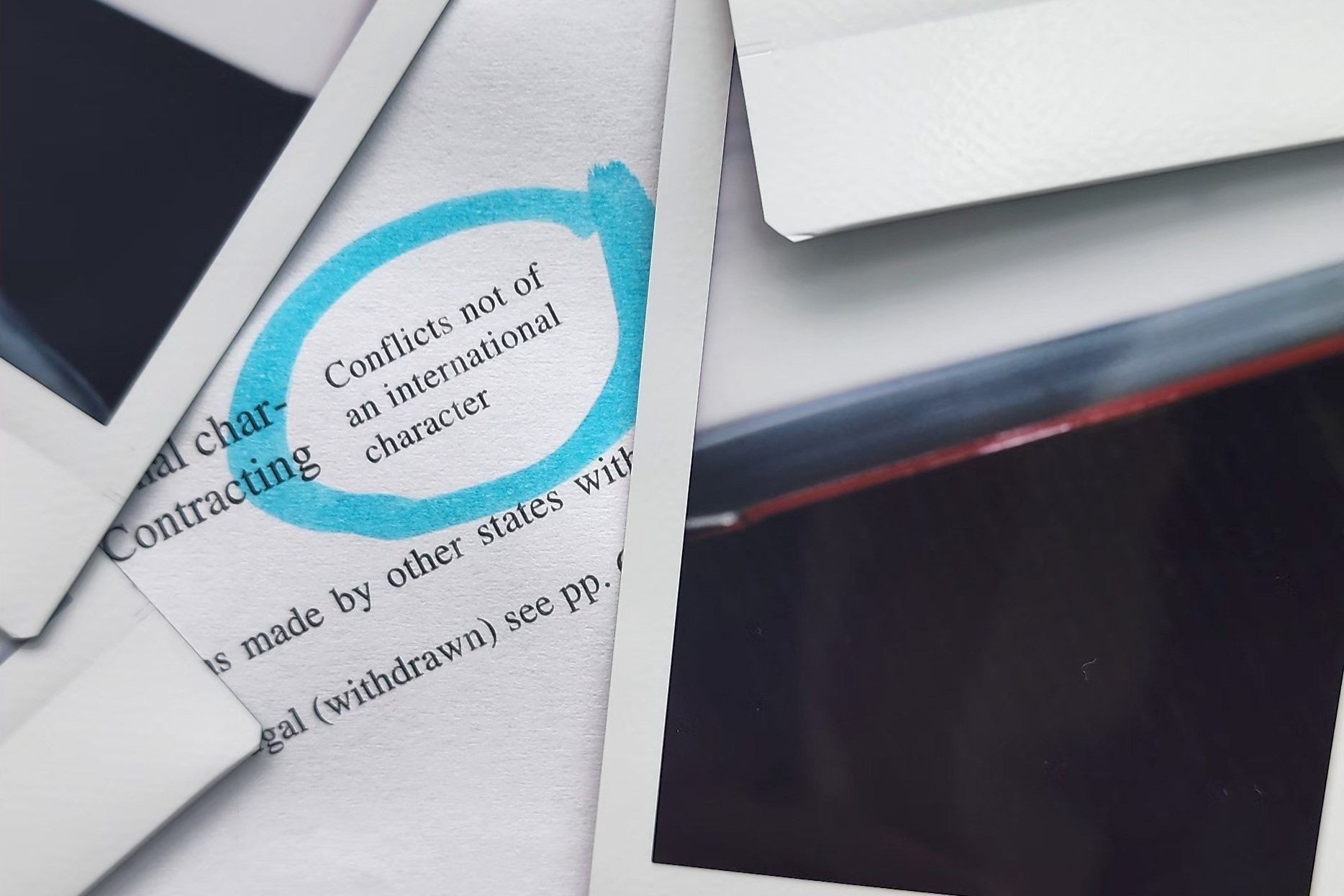
Figure 1. Title of Common Article 3: Photocopy of the original text from 1949.
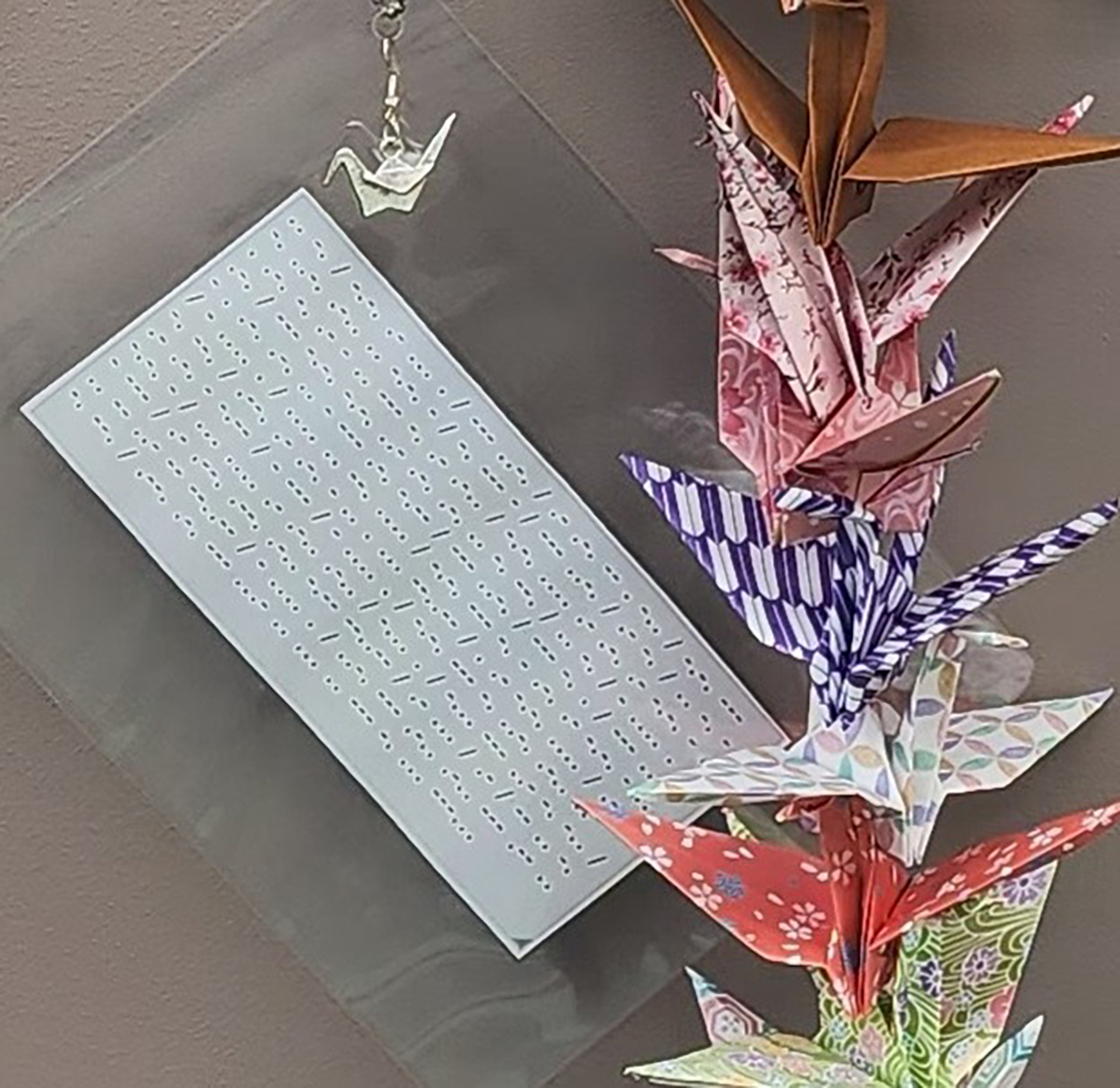
Figure 2. First paragraph of Common Article 3: Morse code.
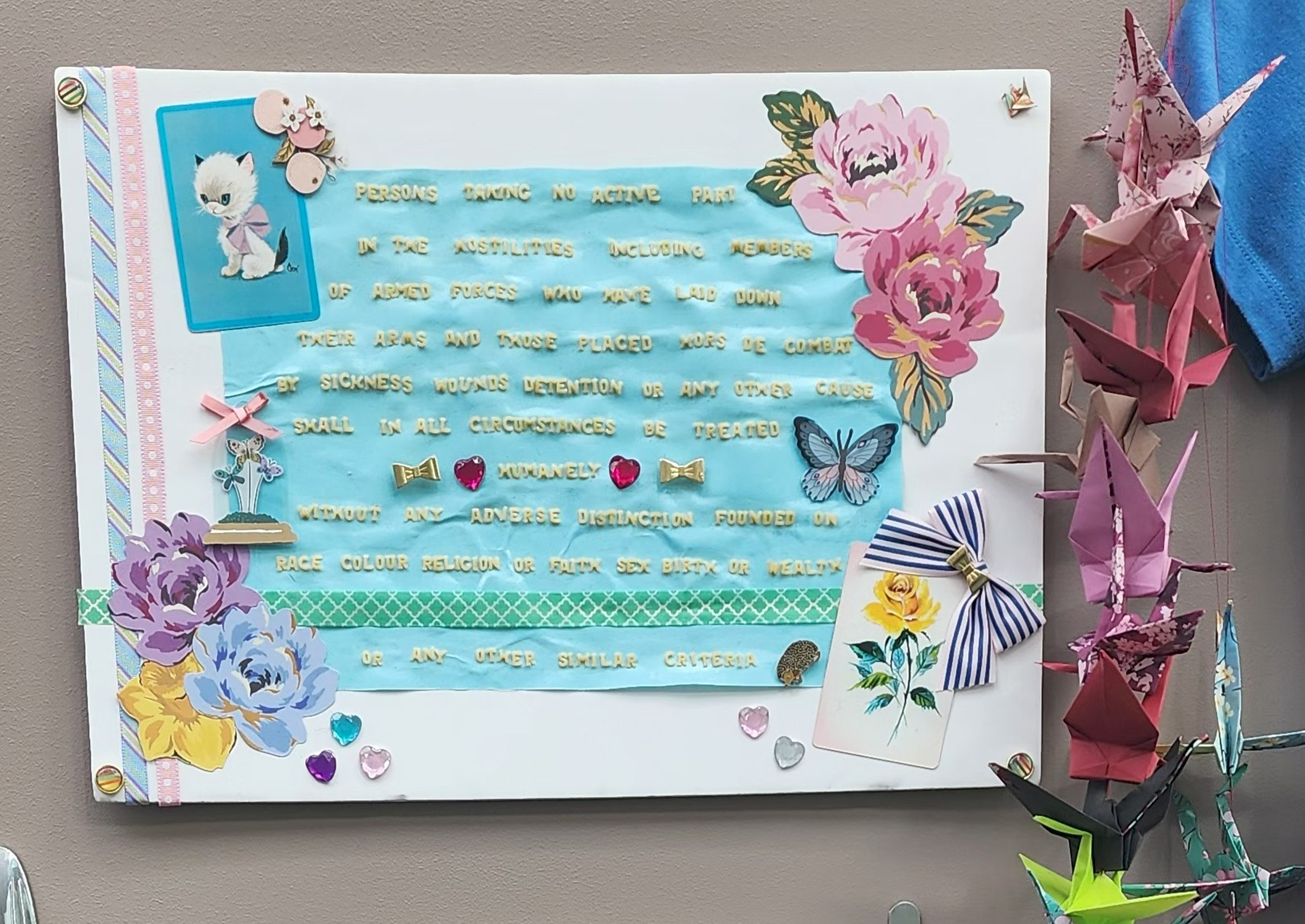
Figure 3. Second paragraph of Common Article 3: Alphabet pasta.
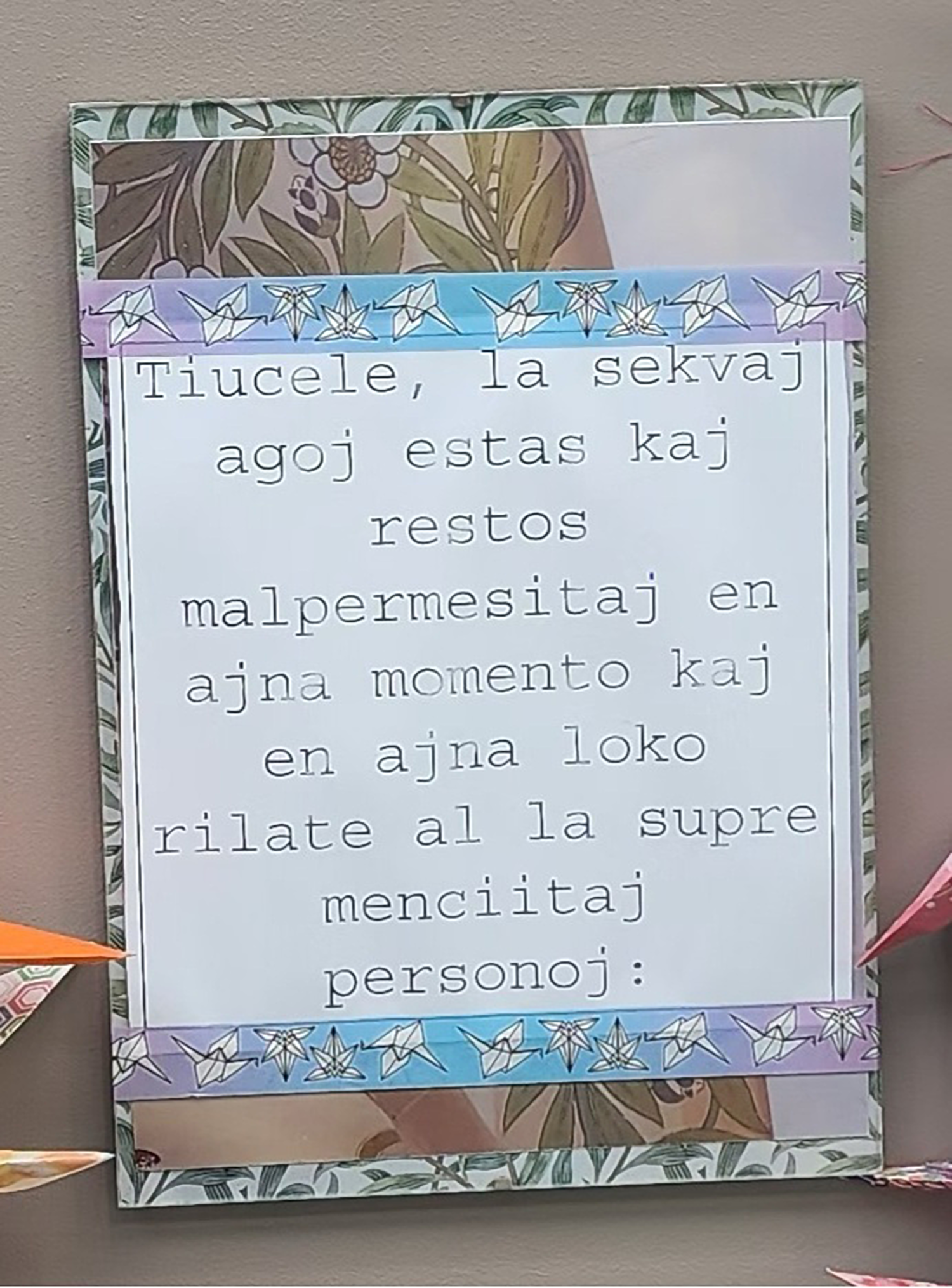
Figure 4. Third paragraph of Common Article 3: Esperanto.
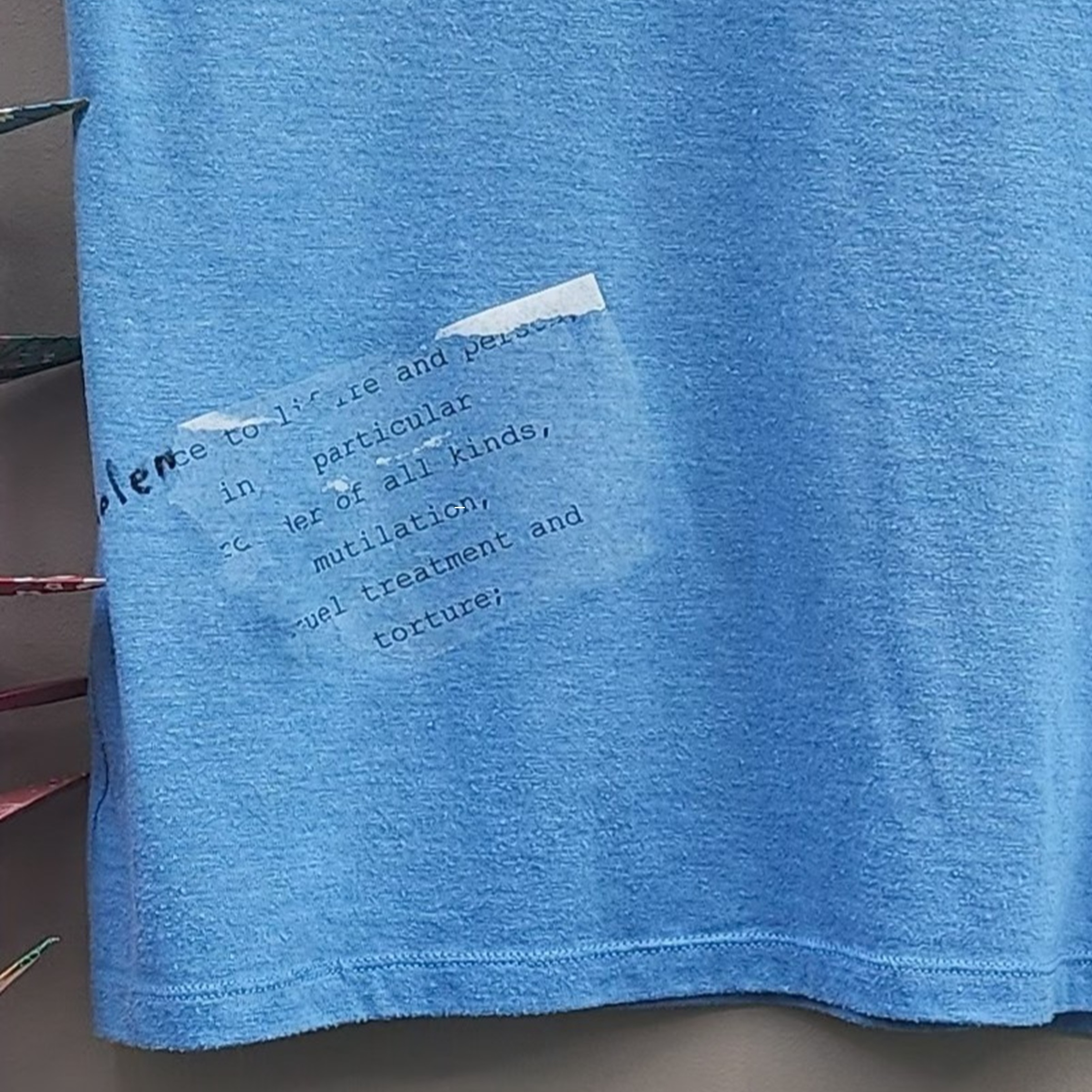
Figure 5. Third paragraph, sub-article (a) of Common Article 3: Iron-on transfer, partially torn, on UN blue colored t-shirt.
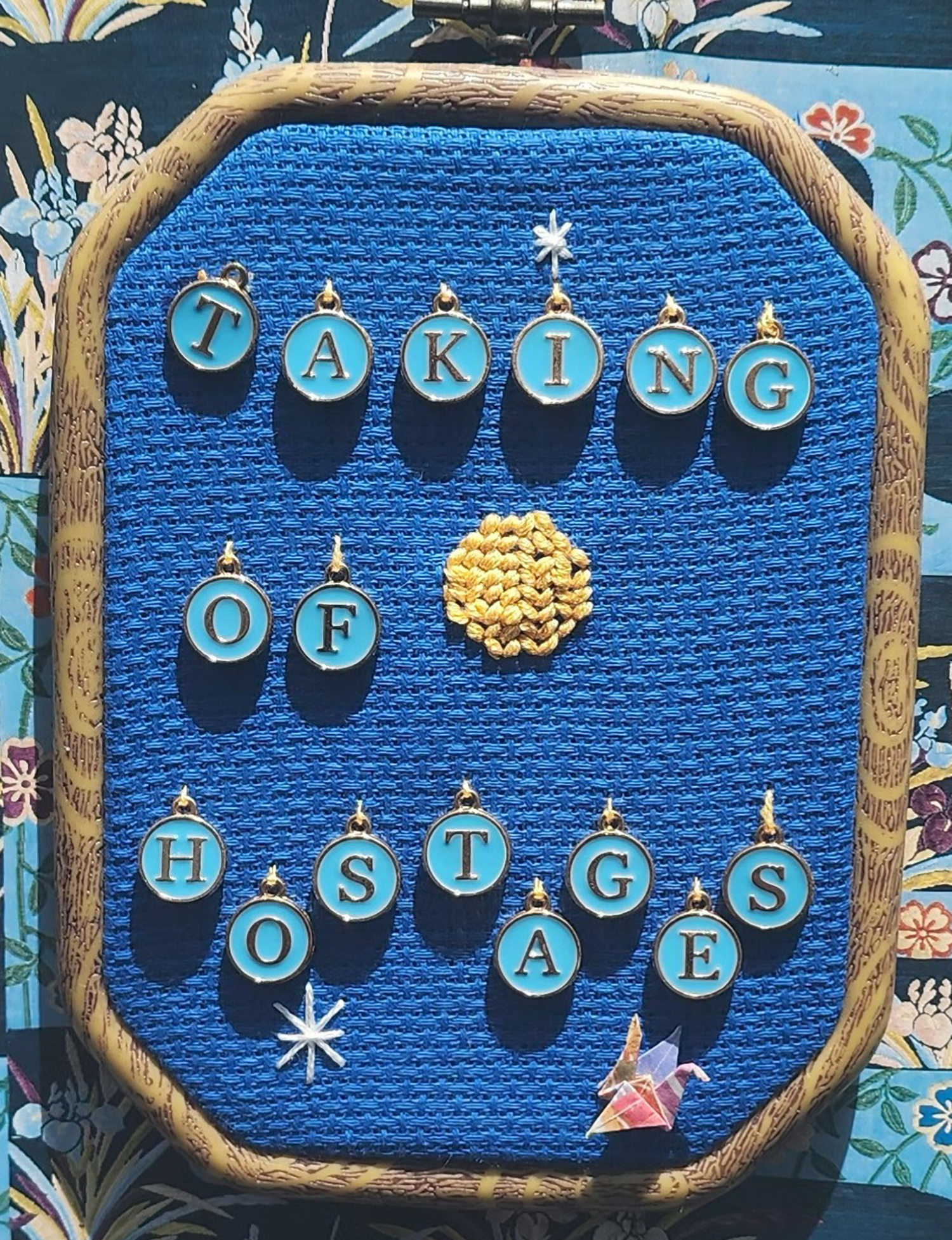
Figure 6. Third paragraph, sub-article (b) of Common Article 3: Needlepoint and alphabet charms.
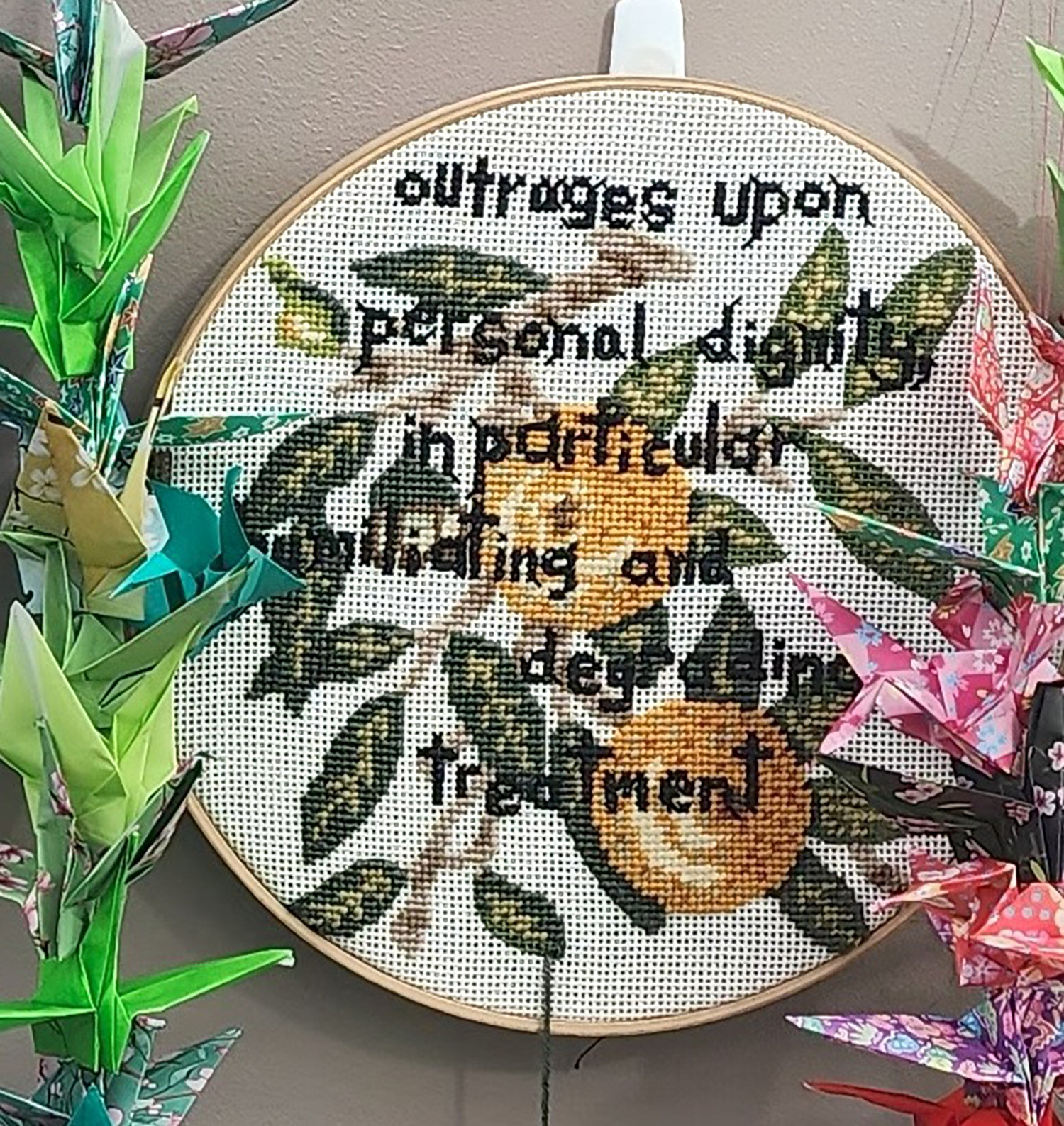
Figure 7. Third paragraph, sub-article (c) of Common Article 3: Needlepoint.
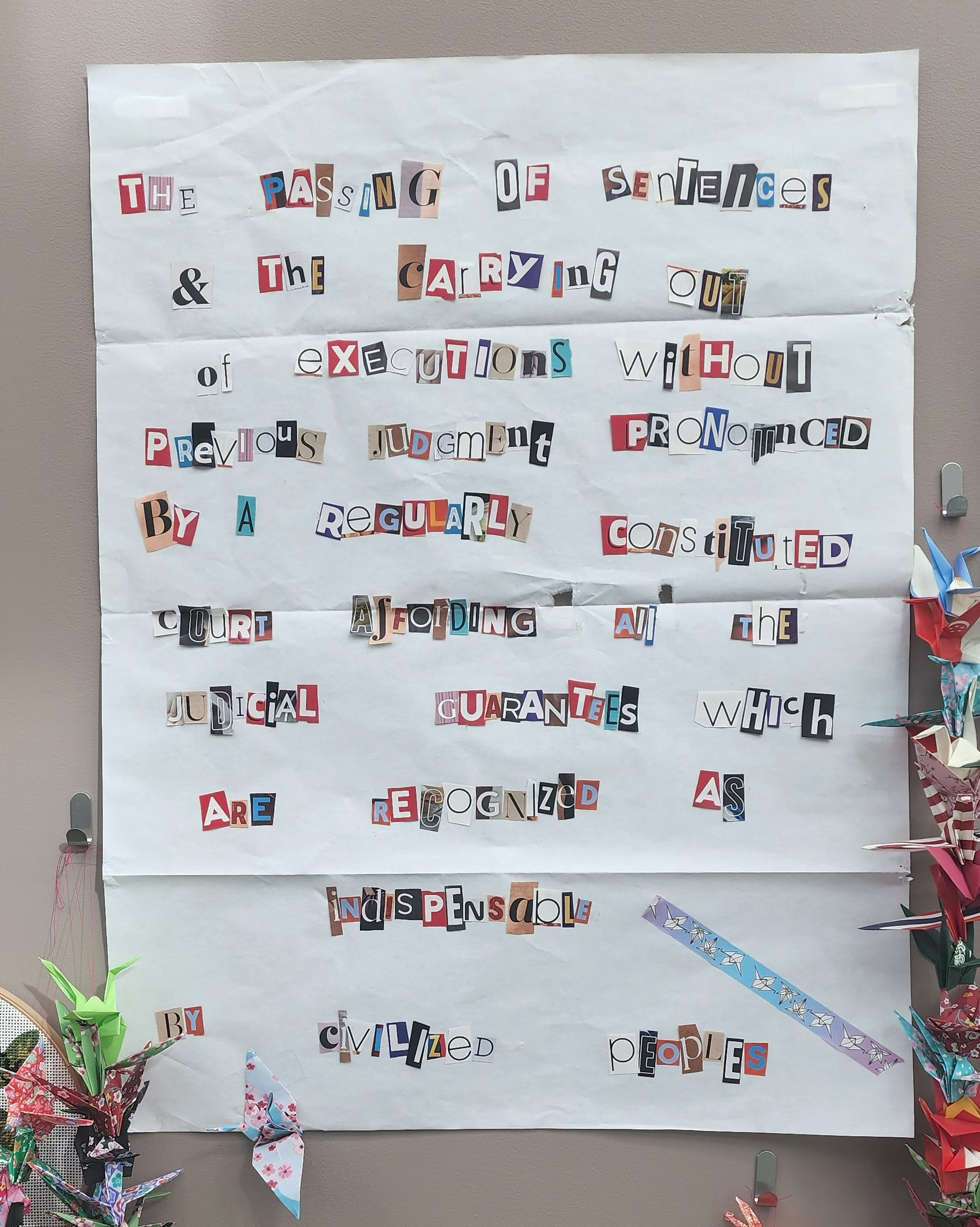
Figure 8. Third paragraph, sub-article (d) of Common Article 3: Cut-out letters from magazines, in the style of a ransom note.
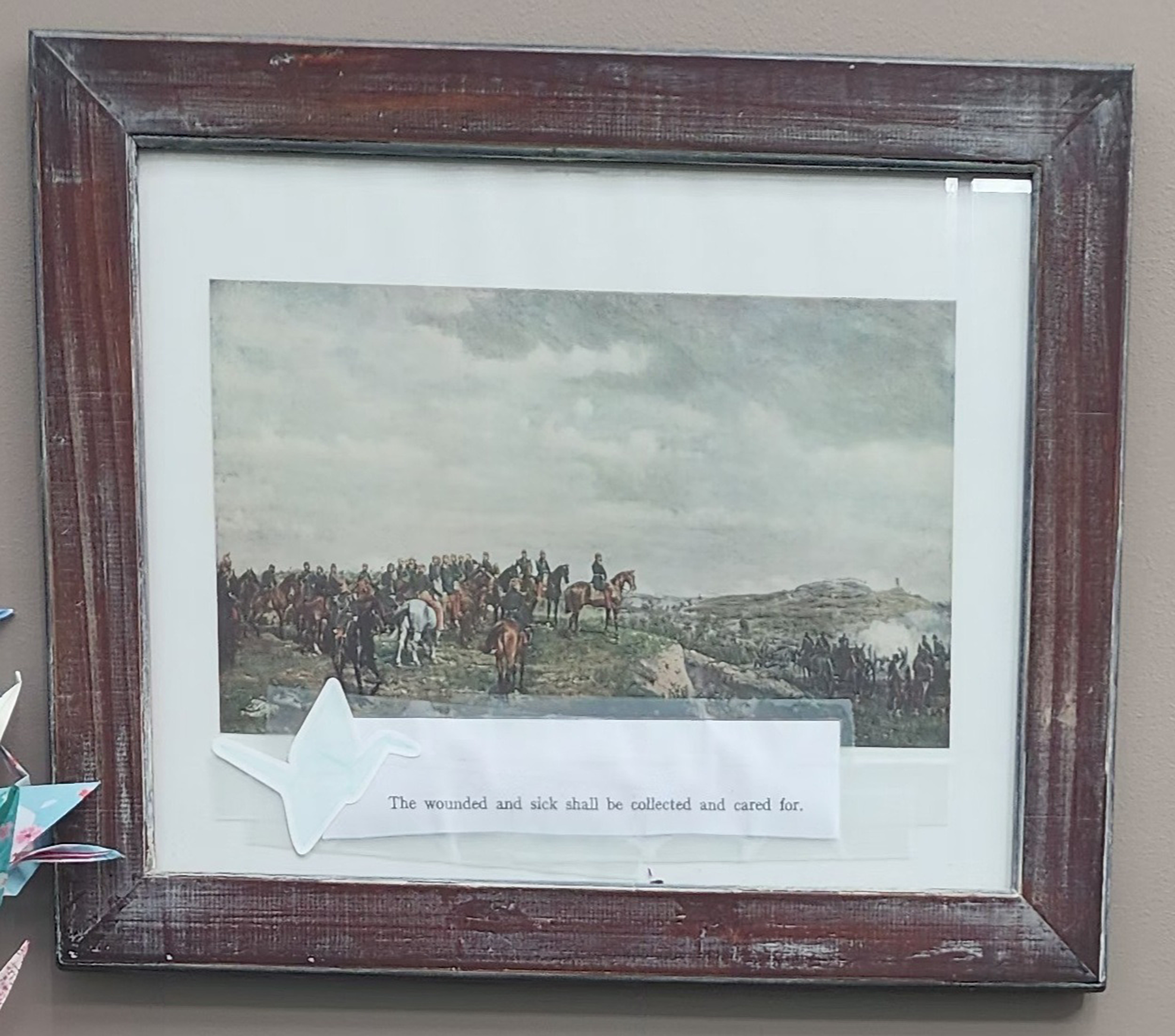
Figure 9. Fourth paragraph of Common Article 3: Photocopy of original text, over public domain image of Battle of Solferino.
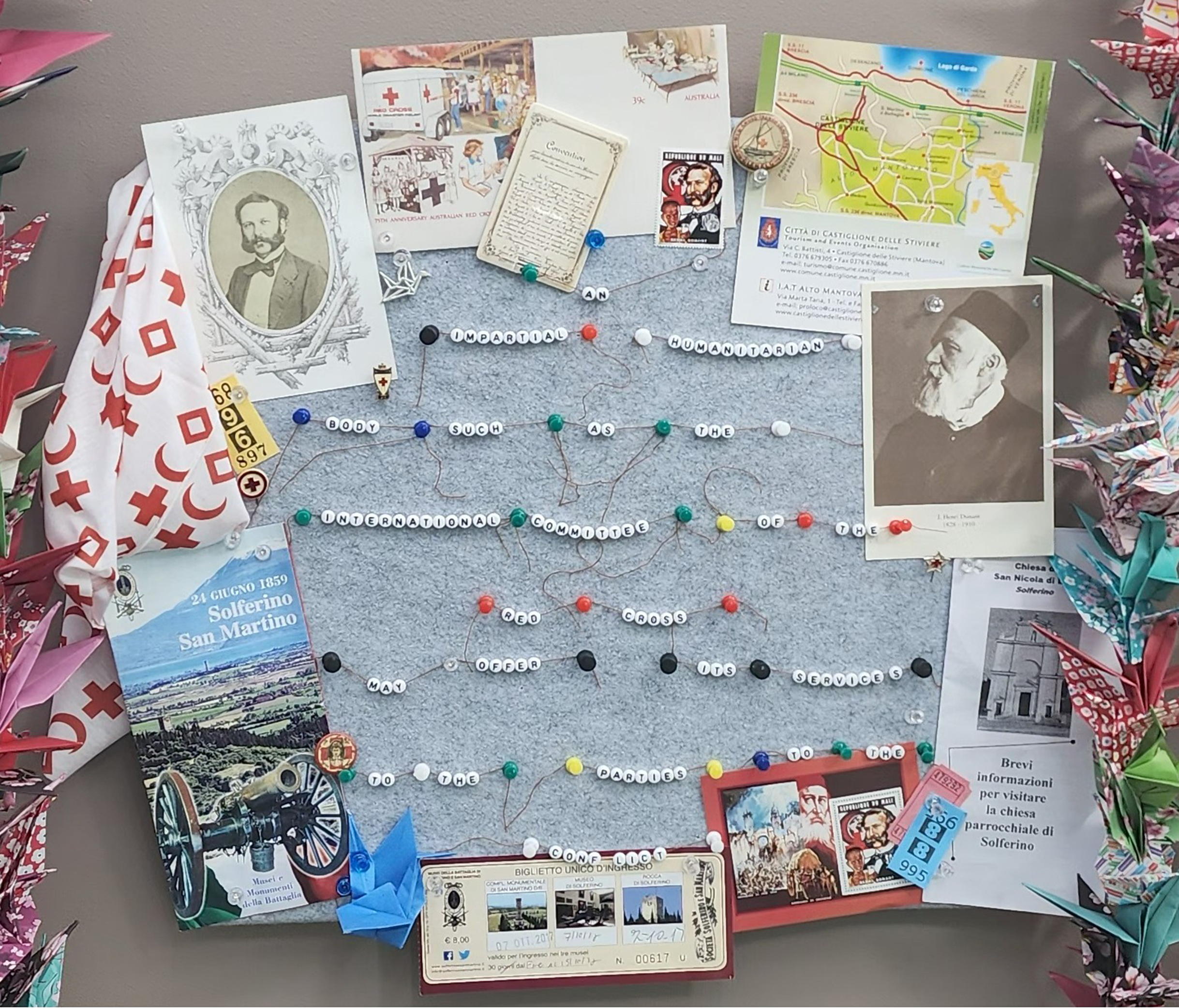
Figure 10. Fifth paragraph of Common Article 3: Mixed media of leaflets from Solferino and Castiglione, friendship bracelets, metal pins, fabric bandana.
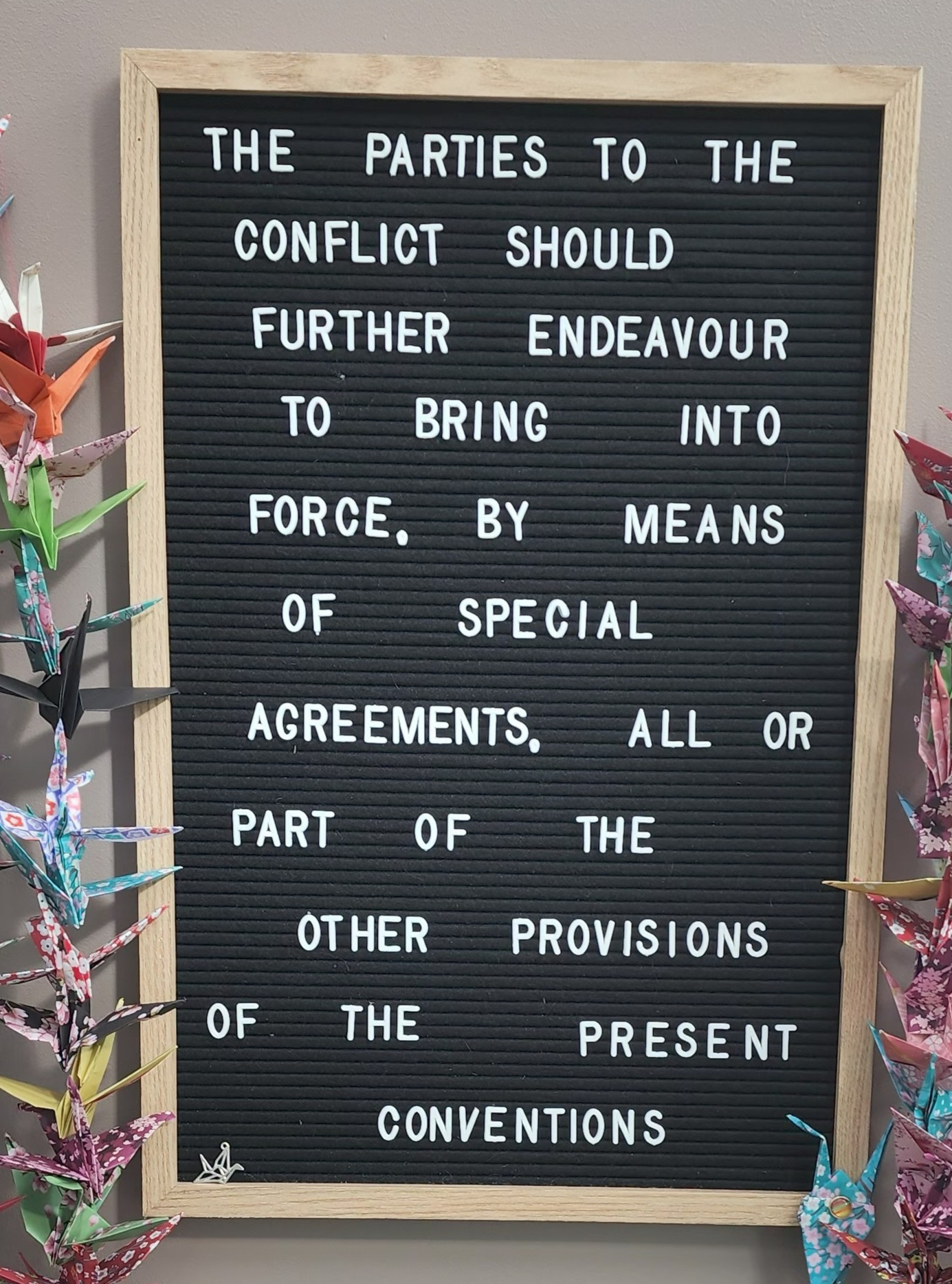
Figure 11. Sixth paragraph of Common Article 3: Felt peg board with plastic letters.
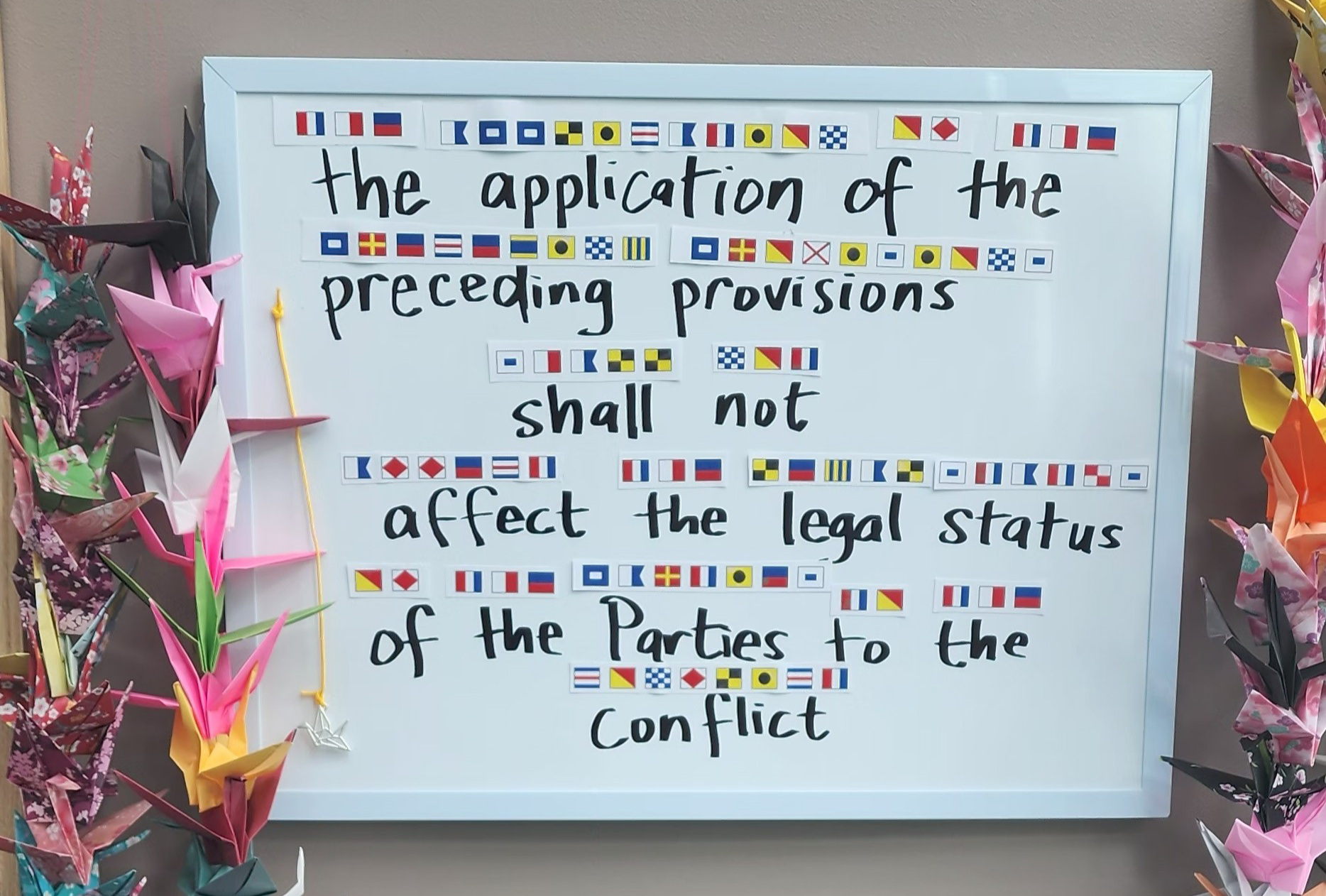
Figure 12. Seventh paragraph of Common Article 3: Permanent marker on whiteboard, with naval flags.
 You have
Access
 Open access
This artwork is a reflection on Common Article 3 of the Geneva Conventions of 1949. The article has often been called a ‘convention in miniature’, designed to ensure that the essence, if not the totality, of the hundreds of provisions contained in the Geneva Conventions (to protect the wounded, sick, shipwrecked, prisoners of war, and civilians in times of armed conflict) would apply to previously unregulated non-international armed conflicts. In the 80 years since the adoption of Common Article 3, the article has had to be both flexible and durable, and open to expansive interpretation in order to ensure its aim of affording protections to the previously unprotected could be met.
In recreating the text of Common Article 3 in a variety of media, I wanted to reflect (and to implore the viewer to reflect) on how an article of only 269 words has had such power and resonance for so long, and how it has had to be ‘all things to all people’. For this I chose a variety of media to recreate the text, including military forms of communication (Morse code, naval signal flags), forms of communication traditionally associated with fraught security environments (ransom notes), methods most associated with highly domestic-coded, even childlike forms of art (friendship bracelets, needlepoint, alphabet pasta) and media and forms of communication deeply connected to international law (Esperanto, material dyed in United Nations blue). Woven throughout the work is the image of the paper crane – one thousand origami paper cranes were created to hang alongside the recreated text – this was done to hearken to the Japanese legend of the crane as a symbol of peace and to contrast the centrality and gravity of the protections contained within Common Article 3 with unusual, whimsical, even incongruous methods of recreating the text. By contrasting military forms of communication with symbols of peace and recreating harsh legal text in childlike and domestic-coded forms of expression, the work prompts the viewer to reflect on the incongruity of attempting to regulate violence, and the underlying hope of all international law – that of creating lasting peace.
Title of Common Article 3: Photocopy of the original text from 1949.
First paragraph of Common Article 3: Morse code.
Second paragraph of Common Article 3: Alphabet pasta.
Third paragraph of Common Article 3: Esperanto.
Third paragraph, sub-article (a) of Common Article 3: Iron-on transfer, partially torn, on UN blue colored t-shirt.
Third paragraph, sub-article (b) of Common Article 3: Needlepoint and alphabet charms.
Third paragraph, sub-article (c) of Common Article 3: Needlepoint.
Third paragraph, sub-article (d) of Common Article 3: Cut-out letters from magazines, in the style of a ransom note.
Fourth paragraph of Common Article 3: Photocopy of original text, over public domain image of Battle of Solferino.
Fifth paragraph of Common Article 3: Mixed media of leaflets from Solferino and Castiglione, friendship bracelets, metal pins, fabric bandana.
Sixth paragraph of Common Article 3: Felt peg board with plastic letters.
Seventh paragraph of Common Article 3: Permanent marker on whiteboard, with naval flags.