Introduction
Since AMS techniques were first used to date the black charcoal paintings of Palaeolithic cave art, the results and their limitations have been discussed extensively (Clottes & Valladas Reference Clottes and Valladas2003; Pettitt & Bahn Reference Pettitt and Bahn2003; Valladas et al. Reference Valladas, Tisnérat-Laborde, Cachier, Arnold, Bernaldo de Quirós, Cabrera-Valdés, Clottes, Courtin, Fortea-Pérez, González-Sainz and Moure-Romanillo2005, Reference Valladas, Genty, Kaltnecker, Quiles, Tisnérat-Laborde, Arnold, Delqué-Količ, Moreau, Baffier, Cleyet Merle, Clottes, Girard, Monney, Montes, Sainz, Sanchidrian and Simonnet2013; Pettitt & Pike Reference Pettitt and Pike2007). More recently, the application of U-series dating to calcite associated with prehistoric motifs has produced a new type of data, providing minimum ages for the production of the motifs (Pike et al. Reference Pike, Hoffmann, García-Diez, Pettitt, Alcolea, De Balbín, González Sainz, de las Heras, Lasheras, Montes and Zilhao2012, Reference Pike, Hoffmann, Pettitt, García-Diez and Zilhão2017; Aubert et al. Reference Aubert, Brumm, Ramli, Sutikna, Sapromo, Hakim, Morwood, van den Berg, Kinsley and Dosseto2014; García-Diez et al. Reference García-Diez, Garrido, Hoffmann, Pettitt, Pike and Zilhao2015; Hoffmann et al. Reference Hoffmann, Utrilla, Bea, Pike, García-Diez, Zilhão and Domingo2017). This method can be applied to paintings, but also to cases where the calcite is associated with engravings (Pike et al. Reference Pike, Gilmour, Pettitt, Jacobi, Ripoll, Bahn and Muñoz2005).
In addition to the absolute chronologies provided by AMS and U-series dating, methods of relative dating can provide chronological and cultural information (García-Diez & Ochoa Reference García-Diez, Ochoa, García-Diez and Zapata2013). In this context, style can be informative, especially when supported by solid comparisons with mobiliary art found in well-dated strata at sites that have been well-characterised archaeologically and that are in close geographic proximity to one another.
The rock art in Grotta di Cala dei Genovesi, off the western coast of Sicily, was discovered nearly 70 years ago, and several attempts have been made to determine the age and archaeological context of its production (Breuil Reference Breuil1952; Graziosi Reference Graziosi1962, Reference Graziosi1973; Leroi-Gourhan et al. Reference Leroi-Gourhan, Delluc and Delluc1995; Vigliardi Reference Vigliardi, Beltrán and Vigliardi1996; Martini et al. Reference Martini, Lo Vetro, Colonese, De Curtis, Di Giuseppe, Locatelli, Sala and Martini2007; Martini Reference Martini2012; Tusa et al. Reference Tusa, di Maida, Pastoors, Piezonka, Weniger and Terberger2013). These have been based on the characterisation and comparison of different styles found within Palaeolithic rock art traditions in Spain and France, and with those mobiliary art objects found in stratified deposits at the cave's entrance. Our new study characterises the style, date and stratigraphic position of the mobiliary art; the style and date of the parietal art (relative to the accepted chronology of comparable traditions in Western Europe); and discusses whether this information suggests stylistic synchronicity or diachronicity between the mobiliary art and the parietal art at the Grotta di Cala dei Genovesi.
The site of Grotta di Cala dei Genovesi
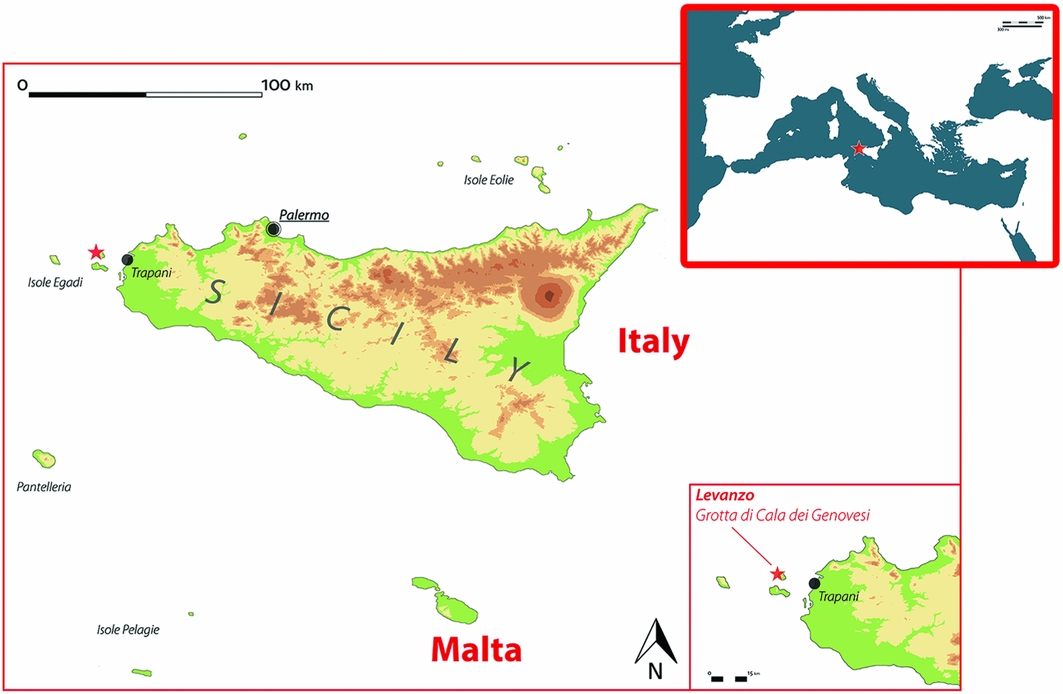
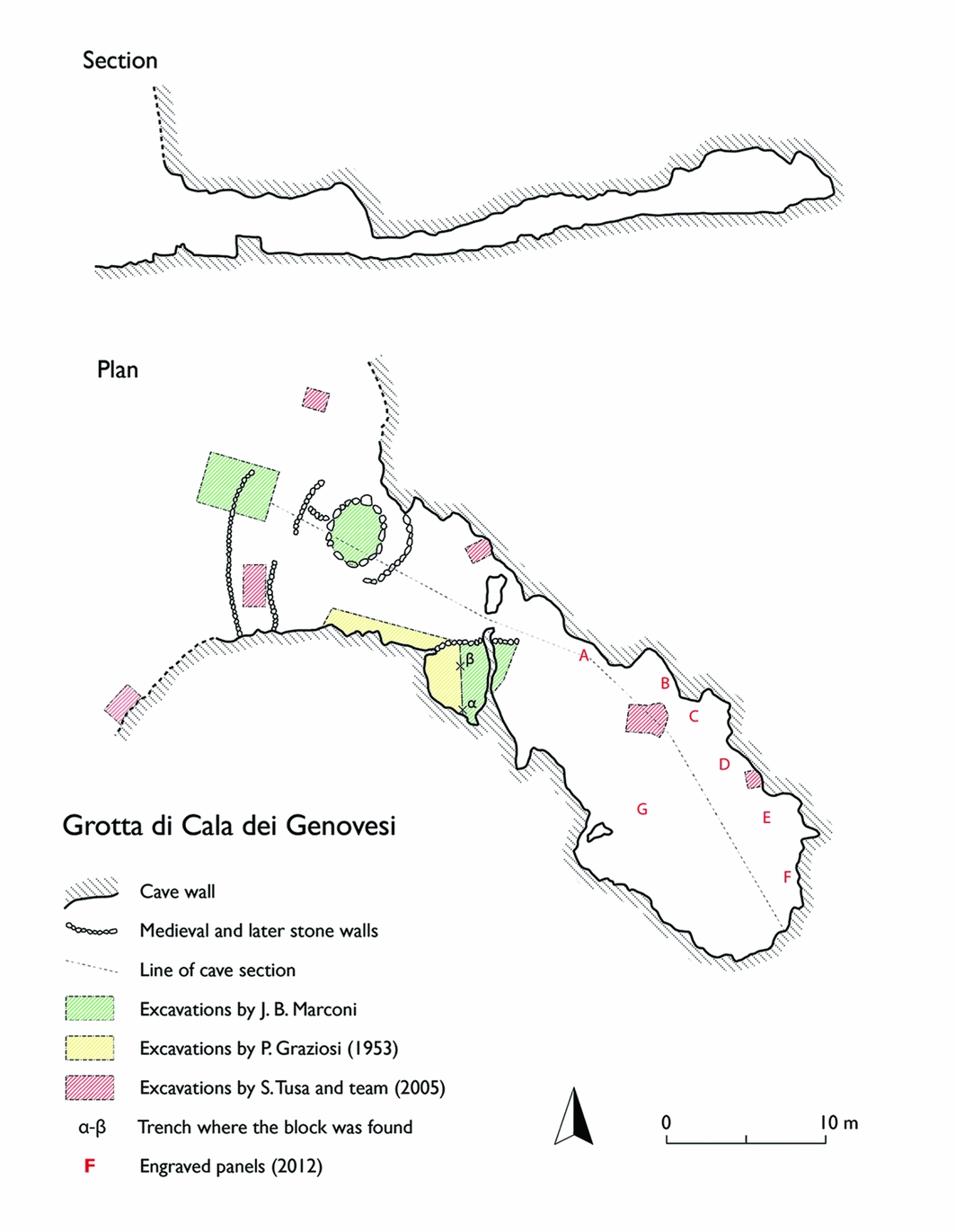
The Grotta di Cala dei Genovesi is situated 30m above modern sea level on the north-western coast of the island of Levanzo (Figure 1). The entrance to the cave takes the form of a rockshelter or antechamber approximately 18m wide with a level floor suitable for prehistoric occupation. This area has been disturbed by modern structures. At around 10m inside the entrance, the antechamber narrows. At this point, two small openings give access to the inner part of the cave: a straight passage around 28m long (Figure 2).
Map showing the location of the island of Levanzo and Grotta di Cala dei Genovesi relative to Sicily and the broader Mediterranean region.

Section and plan of Grotta di Cala dei Genovesi showing the location of the excavations, the engraved block and engraved panels (redrawn after Vigliardi Reference Vigliardi1982).

Human occupations
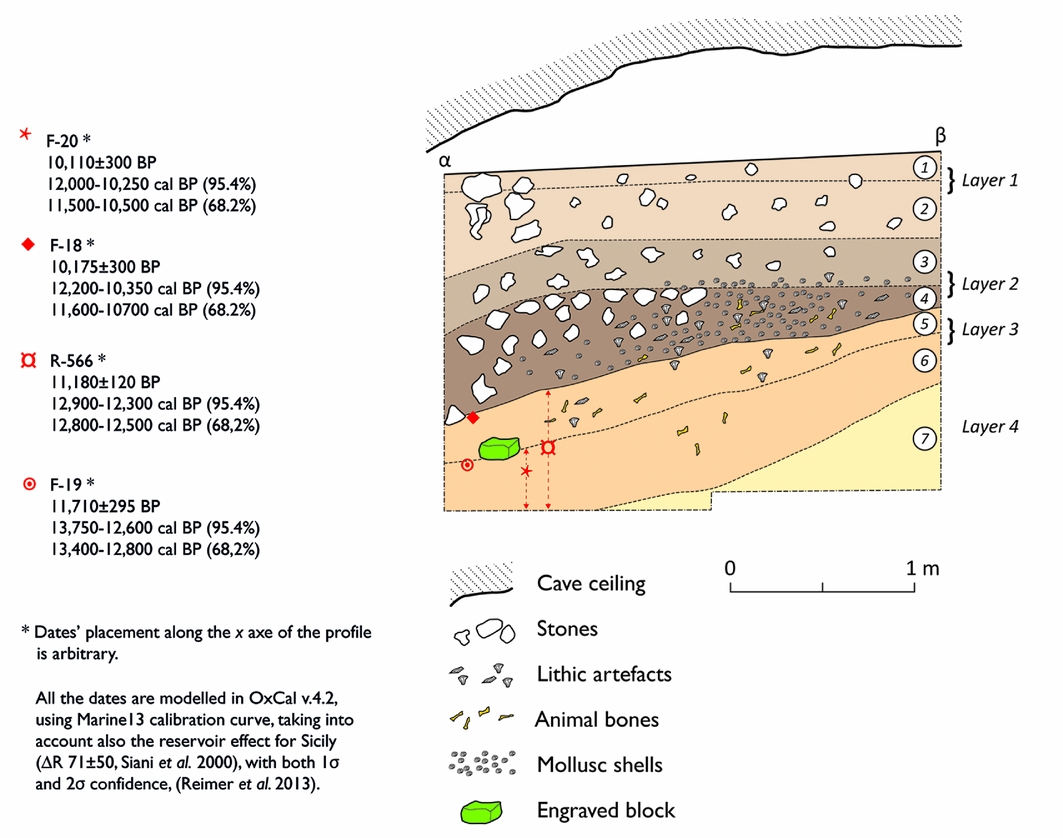
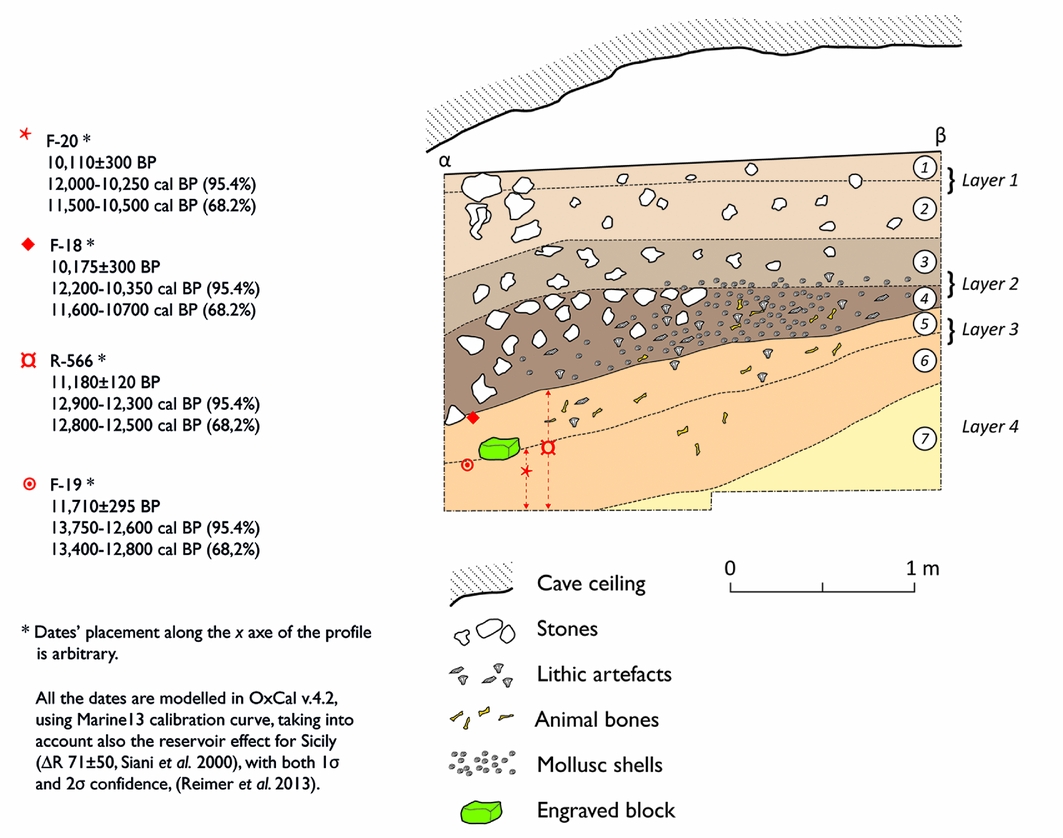
Analysis of the stratigraphy, lithics and osteological material from the Late Upper Palaeolithic to Mesolithic layers recorded during Graziosi's 1953 excavation of the site was presented by Vigliardi (Reference Vigliardi1982), who had participated in the excavations. The section recorded in Graziosi's trench in the niche on the right-hand side of the antechamber, just before the opening to the inner cave, provides a good impression of the stratigraphic situation (Figure 3). During the excavation, three archaeological layers (layers 1–3) and one sterile layer (layer 4) were identified, each encompassing two spits (tagli from 1–6) except for layer 4, which comprised just one (taglio 7). The natural bedrock was not reached in this trench. The uppermost deposit, layer 1 (tagli 1–2), contained archaeological material from various historic and prehistoric periods. Layer 2 (tagli 3–4) consisted of two sub-layers that coincided with the spits; taglio 3 was associated with Neolithic pottery and obsidian, as well as flint artefacts, whereas the underlying taglio 4 showed significant evidence for burning and contained large amounts of terrestrial and marine mollusc shells together with a Mesolithic flint industry. The oldest artefact-bearing stratum, layer 3 (tagli 5–6), was assigned to the final Epigravettian. Its upper portion (taglio 5) contained larger quantities of both flint artefacts and faunal remains, while in taglio 6, fewer finds were present, although the overall assemblage composition remained similar. Layer 4 (taglio 7) contained faunal remains and coprolites, and probably pre-dates the human presence in the cave; a few stone artefacts found in this layer are thought to have been displaced from upper levels.
Profile of the 1953 Graziosi excavation with additional indication of the stratigraphic position of the 14C dates (redrawn after Vigliardi Reference Vigliardi1982).
Over the course of new researches in 2005 and 2006 (Tufano et al. Reference Tufano, Tusa, Mannino and Thomas2012), a re-investigation of the material coming from the earlier 1950 Bovio Marconi excavation campaigns (Bovio Marconi Reference Bovio Marconi1952) and a new series of test trenches in the cave interior and in the outer area have been performed, in order to obtain more detailed stratigraphic information and new data on Late Glacial environmental changes. The integrity of the stratigraphy previously described was confirmed, and a new series of radiocarbon determinations enabled the dating of layer 3: the Palaeolithic deposit. These are detailed below.
Cave art
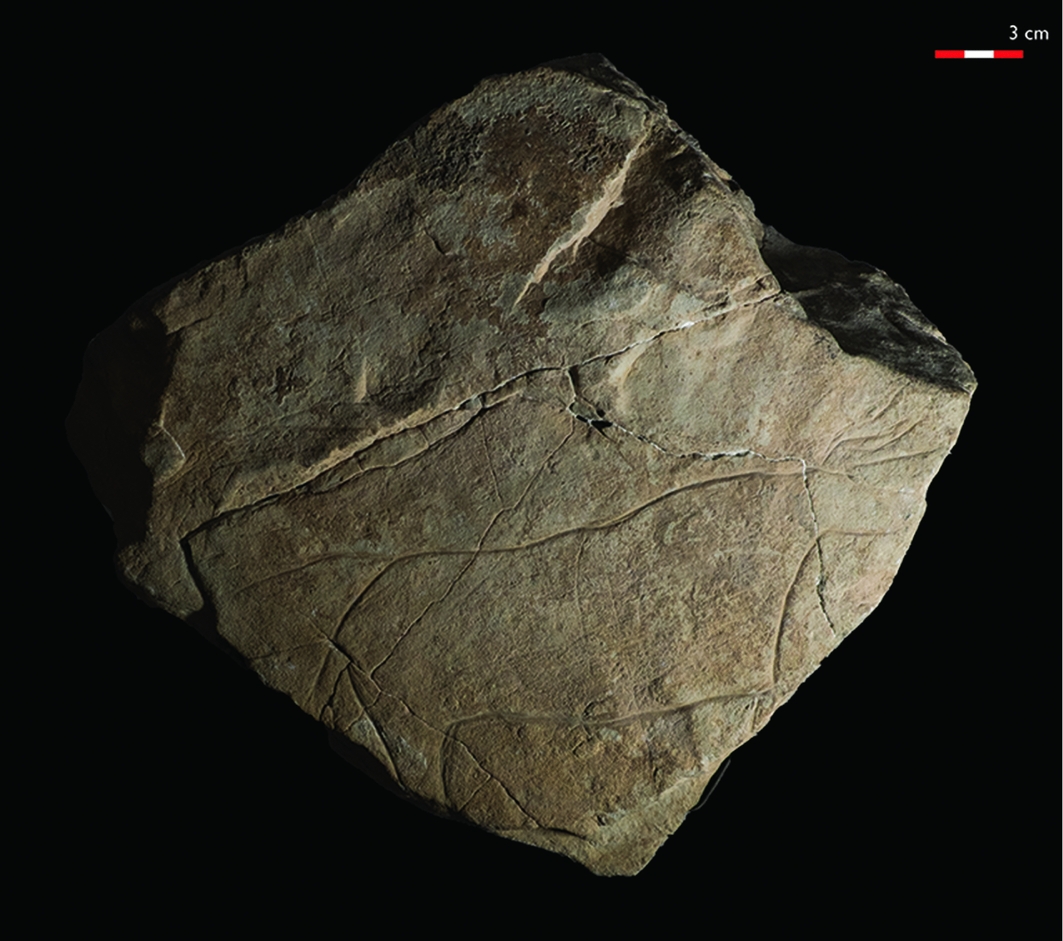
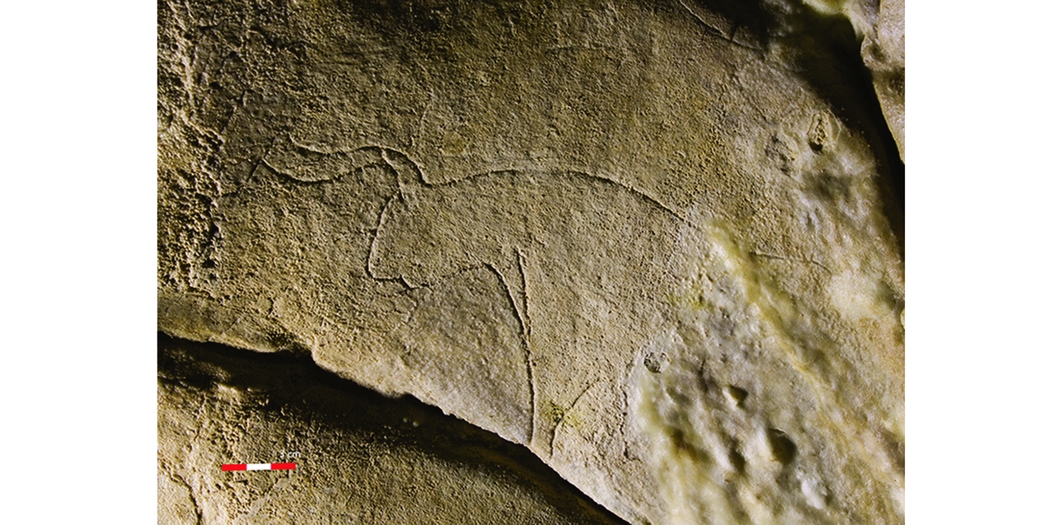
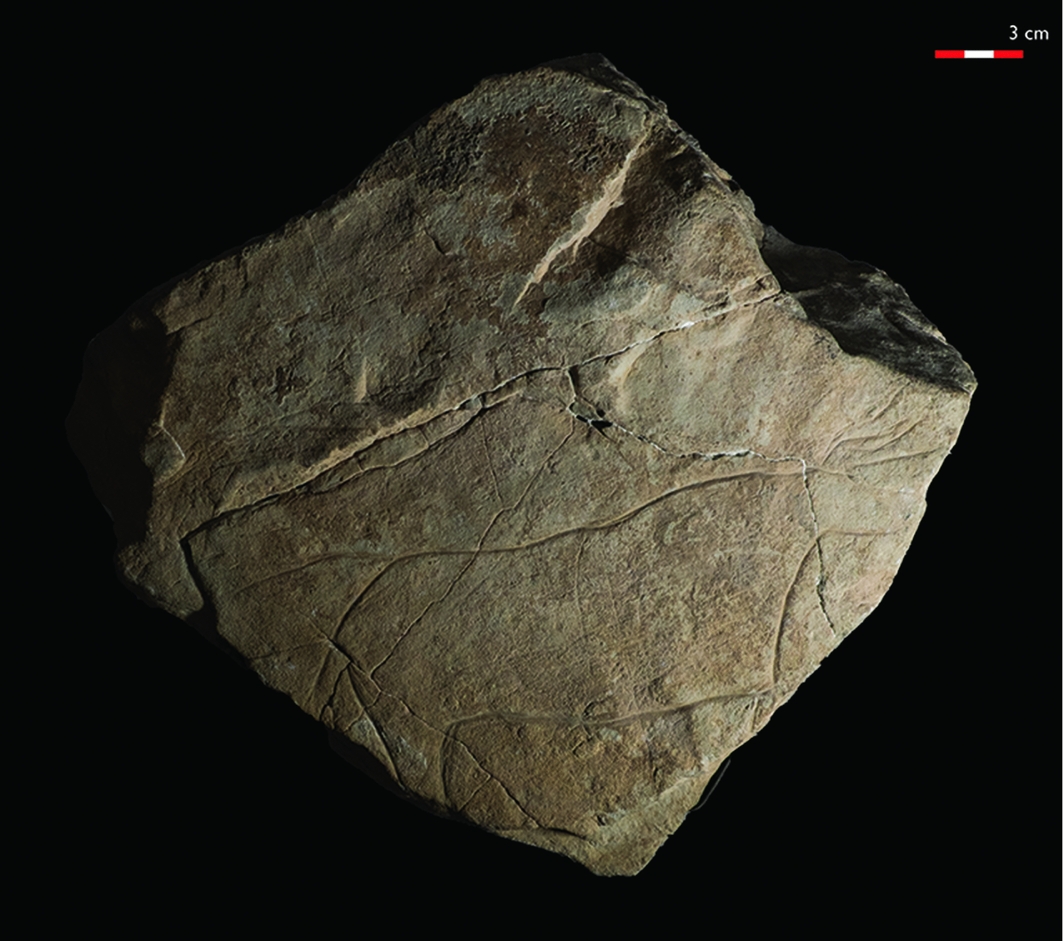
Grotta di Cala dei Genovesi contains one of the most important ensembles of Late Glacial art in Italy, and certainly the most prominent in Sicily. There are several reasons for this, including the exceptional nature of the artistic record (in both quality and quantity), and the extent of investigations carried out by Graziosi, which culminated in his 1962 publication. The latter is still the main point of reference for anyone wishing to study the rock art of Levanzo, and it was actually Grotta di Cala dei Genovesi that led to Graziosi's definition of the ‘Mediterranean province’, which he proposed in opposition to the style seen in the Franco-Cantabrian region. This scheme has, for a very long time, constituted the only real interpretation of Late Glacial art in southern Italy (for a recent criticism of this approach, see Bicho et al. Reference Bicho, Carvalho, González-Sainz, Sanchidrián, Villaverde Bonilla and Straus2007). Additionally, the discovery by Graziosi in 1953 of an engraved block (Figure 4) provides a rare opportunity to narrow the chronological range of a mobiliary art object while potentially corroborating the dating of the engravings inside the cave.
The engraved block depicting an aurochs, retrieved during the 1953 excavation campaign by Graziosi and his team (photograph: G. di Maida).
The cave has recently been the subject of a pilot study intended to test the potential of 3D recording for the study of rock art (Tusa et al. Reference Tusa, di Maida, Pastoors, Piezonka, Weniger and Terberger2013; di Maida Reference di Maida2016a). Despite its limited scope, this study succeeded in discovering new engravings and in changing the previously accepted interpretation of the engraved cave walls. It also represents the first step in a wider ongoing research project (the main part of which is the PhD of author G.dM.) that aims to provide a complete catalogue of Late Glacial and periglacial Sicilian parietal and mobiliary art, along with an updated chronological and stylistic framework (di Maida Reference di Maida2016b), and digital documentation (di Maida Reference di Maida2016a; di Maida & Mussi Reference di Maida, Mussi, Wojtczak, Najjar, Jagher, Elsuede, Wegmüller and Otte2017).
Dating the mobiliary art: stratigraphy, chronology and style
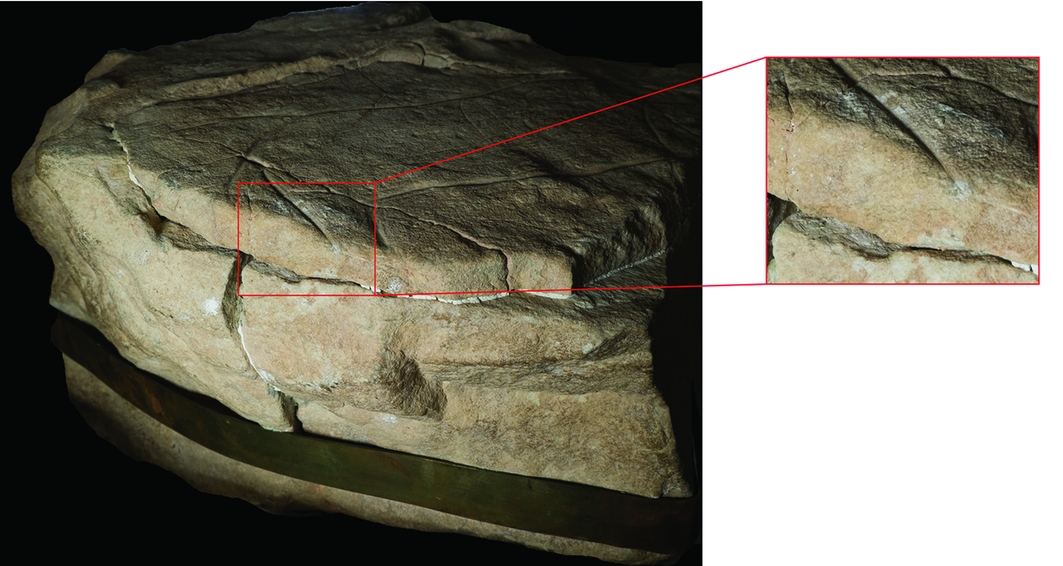
On 26 June 1953, excavations in the innermost part of the antechamber and a sounding against the southern wall of the cave revealed a limestone fragment (0.21 × 0.23 × 0.18m in size), bearing the engraving of an aurochs (Graziosi Reference Graziosi1954). The fragment had been engraved after it had broken off the cave wall, as the outline of the hind leg continues a little beyond the edge of the fracture onto another surface (Graziosi Reference Graziosi1954, Reference Graziosi1973). This can be seen in Figure 5: one of the two lines representing the profile of the hind leg of the bovid overlaps the point of fracture, proving that the block was already a detached stone when the incision was made.
Detail of the border of the engraved block from Grotta di Cala dei Genovesi showing the continuation of the figure over the fracture surface (photograph: G. di Maida).

The block is too heavy to have been transported very far (weighing around 21.5kg), meaning its definition as ‘mobiliary’ art must be understood in opposition to parietal art, and does not, in all probability, imply transportation more than a few metres. It was reportedly found near the middle of layer 3, 1.2m below floor level and 0.5m above layer 4 at the base of the fill (Graziosi Reference Graziosi1954: 80–82). Its depth was therefore somewhere between 1.2–1.3m. The monograph by Vigliardi (Reference Vigliardi1982: 82, 106, 122–23, fig. 2) gives a more precise position, in ‘sector II’ in the sounding, which corresponds to a position 0.2m below the top of layer 3, either in the transition between tagli 5 and 6 (Vigliardi Reference Vigliardi1982: 82), or at the base of taglio 5 (Vigliardi Reference Vigliardi1982: 106 & 122), at a depth of between 1.45 and 1.56m below floor level and a maximum distance of 1.8m from the cave wall. The inconsistency in the depths for the artefact (1.2–1.3m or 1.45–1.56m) given in these two reports cannot be resolved, but its attribution to taglio 5 in layer 3 is at least beyond question, as this began at a depth of 1.2m.
Layer 3 was some 0.75m thick, of which taglio 5 corresponded to the first 0.25m and was described as a ‘yellow-reddish clayey deposit’ (“terreno giallo-rossiccio argilloso”; Vigliardi Reference Vigliardi1982: 81). Vigliardi (Reference Vigliardi1982: 106) attributed it to the most recent phase of the Late Epigravettian, dated between 12000 and 10000 BP (14000–11500 cal BP).
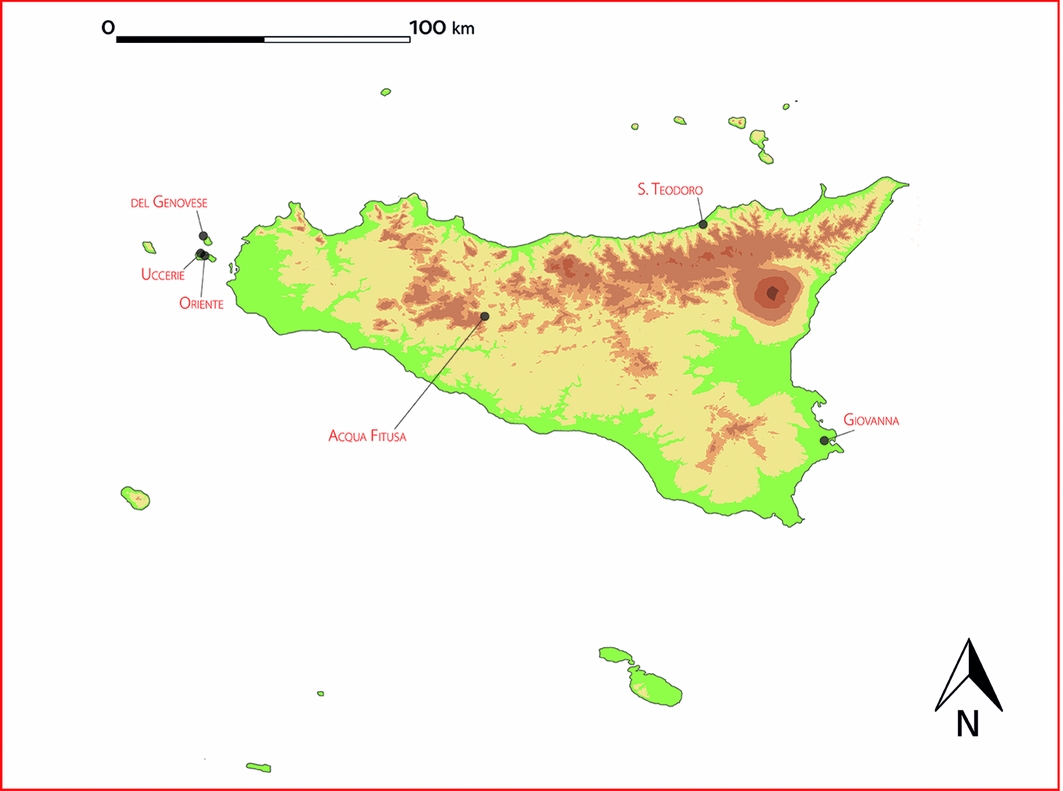
The most up-to-date synthesis of lithic assemblages (Martini et al. Reference Martini, Lo Vetro, Colonese, De Curtis, Di Giuseppe, Locatelli, Sala and Martini2007: tab. 2) proposes a new periodisation of the final Epigravettian of Sicily into three techno-typological phases and four sub-groups: 1, 2a, 2b and 3. The guide-sites for the given phases are: Grotta Uccerie layer 4 for group 1; Grotta Giovanna and Grotta Oriente for group 2a, and Grotta dell'Acqua Fitusa for 2b; and finally, Grotta di Cala dei Genovesi layer 3 and Grotta di S. Teodoro upper layer for group 3 (Figure 6). According to this periodisation, Grotta di Cala dei Genovesi taglio 5 in layer 3 appears to amplify some of the characteristics already noted in phase 2b at Grotta dell'Acqua Fitusa (Agrigento), starting with the sharp decline in geometric pieces from the preceding taglio 6 (0.1 per cent—only 1 piece—at Grotta di S. Teodoro, and absent at Genovesi), and with the still significant number of backed points. At Grotta di Cala dei Genovesi, a large increase in the frequency of scrapers (about 18.2 per cent of the overall tools) should also be noted as a possible technological development not present at S. Teodoro. The overall quantity of the blades displays a declining trend. These characteristics are representative of phase 3, the most recent phase of the final Epigravettian, dated to between 12000–10000 BP (14000–11500 cal BP) at Grotta di Cala dei Genovesi. As the authors acknowledge (Martini et al. Reference Martini, Lo Vetro, Colonese, De Curtis, Di Giuseppe, Locatelli, Sala and Martini2007: 221), however, the dates on which this suggested chronology relies are few and old (many of them are pre-AMS). By way of example, we might mention the numerous doubts expressed about phase 2a or those regarding the excavation techniques occasionally used in past fieldwork, and the dismemberment of the Grotta di Cala dei Genovesi collections. There are too eight sites that simply do not fit the proposed sequence for the Final Epigravettian in Sicily (Martini et al. Reference Martini, Lo Vetro, Colonese, De Curtis, Di Giuseppe, Locatelli, Sala and Martini2007: 225–29). More research will be needed to investigate these assumptions thoroughly together with further excavation and new absolute dates.
The Epigravettian sites cited in the text, used by Martini et al. Reference Martini, Lo Vetro, Colonese, De Curtis, Di Giuseppe, Locatelli, Sala and Martini2007 to build a chrono-typological sequence of the Sicilian lithic industries.

The faunal remains from layer 3 of Grotta di Cala dei Genovesi consisted primarily of red deer (Cervus elaphus), together with a lesser presence of aurochs (Bos primigenius), European ass (Equus hydruntinus) and wild boar (Sus scrofa ferus), and a few remains of birds, leporids and carnivores. Many of these remains display evidence of having been broken and burned by humans (Cassoli & Tagliacozzo Reference Cassoli and Tagliacozzo1982).
The radiocarbon dates available for layer 3 (Ferrara et al. Reference Ferrara, Fornaca-Rinaldi and Tongiorgi1961; Alessio et al. Reference Alessio, Bella, Improta, Belluomini, Cortesi and Turi1970; Azzi et al. Reference Azzi, Bigliocca and Piovan1973) in Graziosi's excavations provide a time frame for the production of the engraving. There are four dates, all on marine shell samples (Figure 3): one of them, 10175±300 BP (F-18: 12200–10350 cal BP), is from the upper part of taglio 5 (marked with the letter ‘a’); a second from the upper part of taglio 6, 11710±295 BP (F-19: 13750–12600 cal BP); a third generically described as taglio 6, 10110±300 BP (F-20: 12000–10250 cal BP); and a fourth generically described as layer 3, 11180±120 BP (R-566: 12900–12 300 cal BP). All of the above four, as well as the calibrated dates below, are given at 95.4% probability (Reimer et al. Reference Reimer, Bard, Bayliss, Beck, Blackwell, Bronk Ramsey, Buck, Cheng, Lawrence Edwards, Friedrich, Grootes, Guilderson, Haflidason, Hajdas, Hatté, Heaton, Hoffmann, Hogg, Hughen, Felix Kaiser, Kromer, Manning, Niu, Reamer, Richards, Marian Scott, Southon, Staff, Turney and van der Plicht2013) and modelled in OxCal v.4.2, using the Marine13 calibration curve, taking into account also the reservoir effect for Sicily (ΔR 71±50; Siani et al. Reference Siani, Paterne, Arnold, Bard, Métivier, Tisnerat and Bassinot2000).
The generic date for taglio 6 is very similar to that for taglio 5. If both dates are accepted as correct, two hypotheses can be proposed: either i) the depositional process between the end of taglio 6 and the formation of taglio 5 was very rapid; or ii) the depositional process was of a nature that makes differentiation of tagli 5–6 unclear, meaning that the date attributed to taglio 6 may in fact pertain to taglio 5. We consider the second hypothesis to be the most probable, as Vigliardi admits that the main difference between the two layers was artefact density rather than sedimentation: “Taglio 6 showed the same characteristics of taglio 5, except for a marked rarefaction of the findings” (“Il taglio 6 presentava le stesse caratteristiche del 5, salvo una accentuata rarefazione dei reperti”; Vigliardi Reference Vigliardi1982: 83).
In addition, the above-mentioned recent study on the marine molluscs from the 1950 Bovio Marconi trenches has been able to obtain AMS dates at Grotta di Cala dei Genovesi for the first time (Tufano et al. Reference Tufano, Tusa, Mannino and Thomas2012). Layers 10 and 12, which correspond to the Late Glacial layers (and to layer 3 of Graziosi's Reference Graziosi1953 fieldwork), have been dated to 11200±45 BP (OxA-14259: 12800–12500 cal BP) and 10750±45 (OxA-14258: 12400–11700 cal BP) respectively. Precise correlation between the two stratigraphic sequences is not possible. This means that the use of dates from one trench to narrow the chronology of an object found in another involves a certain degree of arbitrariness. Even though these dates can neither be precisely nor directly related to the tagli of Graziosi's excavation and the recovery of the engraved block, they are, nevertheless, much more reliable, being AMS dates. By returning a date range close to the results of the original dates, we are assured about the reliability of those very same dates that eventually help narrow down the chronology of the art record.
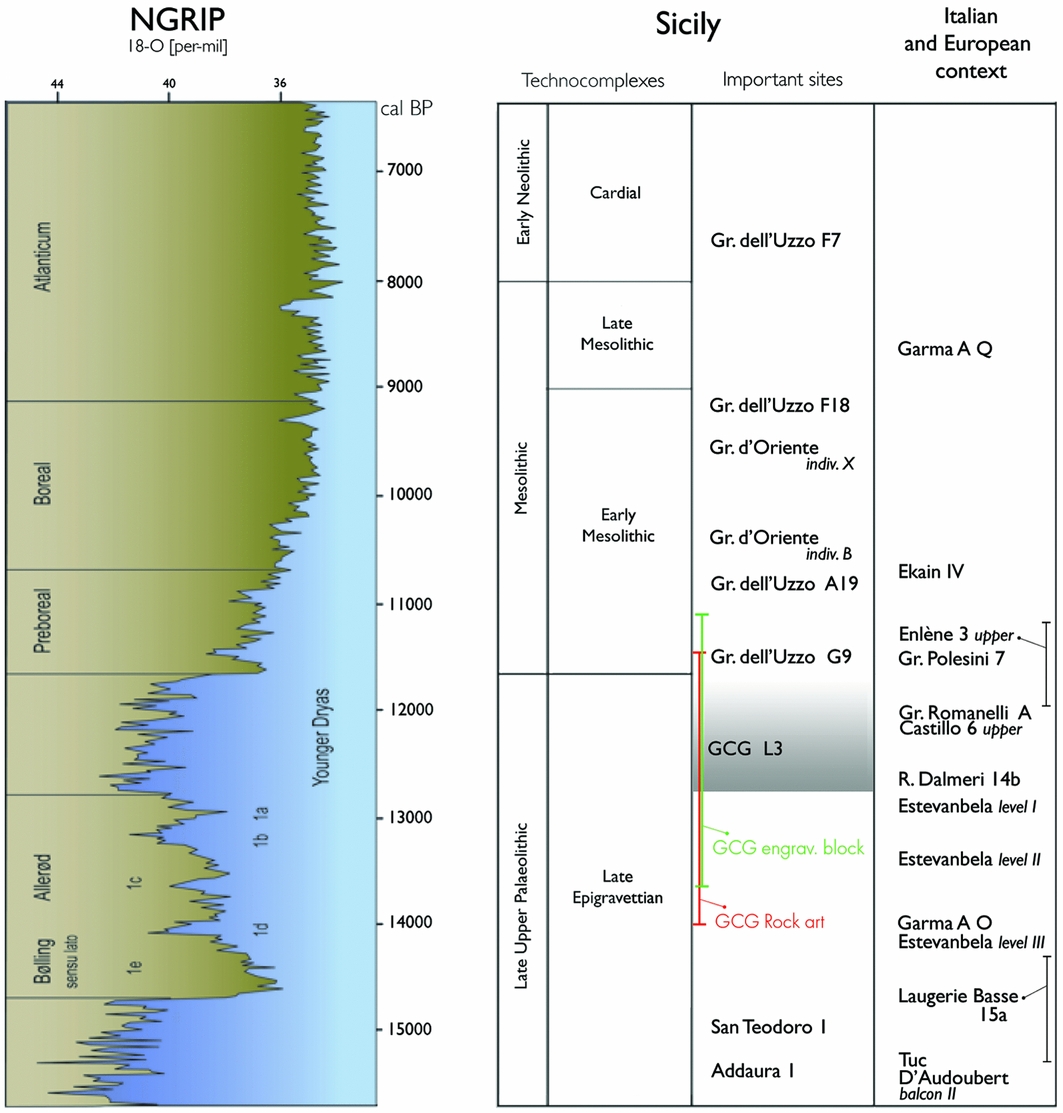
In conclusion, the engraving on the stone block must have been produced between 13750 and 10250 cal BP (or according to the AMS dates from the Marconi layers, between 12800 and 11700 cal BP). The engraving therefore probably dates to the period of the Younger Dryas (Greenland Stadial 1, GS-1, according to the Greenland Ice Core Project, GRIP, stratigraphy; Asioli et al. Reference Asioli, Trincardi, Lowe and Oldfield1999; Rasmussen et al. Reference Rasmussen, Andersen, Svensson, Steffensen, Vinther, Clausen, Siggaard-Andersen, Johnsen, Larsen, Dahl-Jensen, Bigler, Röthlisberger, Fischer, Goto-Azuma, Hansson and Ruth2006, Reference Rasmussen, Vinther, Clausen and Andersen2007, Reference Rasmussen, Seierstad, Andersen, Bigler, Dahl-Jensen and Johnsen2008).
The morphology and style of the engraved aurochs is characteristic of Leroi-Gourhan's ‘schematic figurative stage’ (Reference Leroi-Gourhan1980), based on the absence of modulation in the outline, the secondary anatomical details and internal dividing lines, and the rigid straight line connections between anatomic regions. The figure greatly resembles an engraved stone from Grotta del Cavallo (stone 6, Martini & Frediani Reference Martini and Frediani1997: 248 & 273, fig. 10) in its subject, form, format and general style. That stone was found in a disturbed deposit not associated with a specific layer, while other blocks were found in layers attributed to the Romanellian, but without any absolute dates.
Cave art: a stylistic chronology
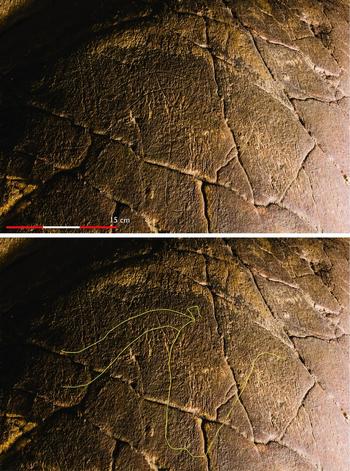
Since its discovery, the iconography of the parietal art at Grotta di Cala dei Genovesi has been attributed to both Palaeolithic and post-Palaeolithic periods (Graziosi Reference Graziosi1962, Reference Graziosi1973). This dual chronology is justified by various stylistic and technical criteria (Graziosi Reference Graziosi1950, Reference Graziosi1953). The Palaeolithic depictions are considered to be naturalistic and engraved (Figures 7–8), while the post-Palaeolithic figures are stylised or schematic, and are painted in black. Despite this distinction, a few schematic engraved human figures were attributed to the Palaeolithic, and a few relatively naturalistic black animal figures to the post-Palaeolithic periods. This shows the major importance given to the technical aspects rather than to the formal or stylistic traits in Graziosi's assessment of the art record of Grotta di Cala dei Genovesi. The only adjustment he made in his interpretation concerned a red, stylised or schematic human figure: in his first publication he assigned it to a post-Palaeolithic phase (Graziosi Reference Graziosi1950), but later reassigned it to the Palaeolithic (Graziosi Reference Graziosi1953, Reference Graziosi1973), as other authors have also subsequently done (Martini et al. Reference Martini, Lo Vetro, Colonese, De Curtis, Di Giuseppe, Locatelli, Sala and Martini2007: 243; Martini Reference Martini2012).
A bovid engraved on a wall inside the cave, panel E, highlighted for clarity in the lower picture (photograph: G. di Maida).

A bovid engraved on a wall inside the cave, panel G (photograph: G. di Maida).

The Palaeolithic attribution of the figures was based on a comparison with Franco-Cantabrian cave art (Graziosi Reference Graziosi1950, Reference Graziosi1973). To date them more precisely, Graziosi proposed a comparison between the faunal remains in the Epigravettian layers and the parietal art, as Equus asinus hydruntinus had been identified in both (Graziosi Reference Graziosi1973: 50). Consequently, the art was attributed to the Epigravettian through this association, although stylistically it was compared to the middle or upper Magdalenian of the Franco-Cantabrian tradition (c. 14800–12000 BP; c. 18000–14000 cal BP: Villaverde Bonilla et al. Reference Villaverde Bonilla, Romań, Peŕez Ripoll, Mercè Bergadà and Real2012; see Figure 9).
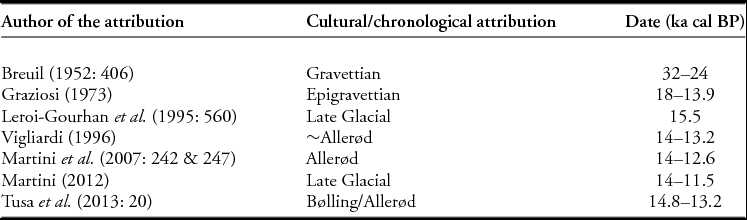
From Graziosi onwards, the Epigravettian attribution has been generally accepted, although many different chronologies have been proposed within this time frame (Table 1).
Late Glacial to Early Holocene chronostratigraphy of Sicily, including relevant sites and significant parallels from Italy and Western Europe.

The chronological attributions of Grotta di Cala dei Genovesi rock art.

Leaving aside the red-painted human figure, the latest study of the Palaeolithic motifs at Grotta di Cala dei Genovesi (Tusa et al. Reference Tusa, di Maida, Pastoors, Piezonka, Weniger and Terberger2013) identified 37 figures (their tab. 2 on p. 18 mistakenly reports 38), including 32 animals, 4 human figures and 1 indeterminate form. As we saw, the engraved human figures have been attributed to the Upper Palaeolithic, based on the fact that, as with the animalistic figures, they are engraved, thereby basing this attribution on a technological parameter; but their morphological and stylistic attributes might also associate them with a later time period. The animals are identified as bovids (13 aurochs), equids (12 horses) and cervids (5 hinds, 1 stag and 1 young male). Alternative interpretations have also been offered for two of the cervids, with one (the only figure on panel A: di Maida Reference di Maida2016a) suggested to be an equid, and the other (the figure on the left of panel E) interpreted as a possible male caprid.
The animal figures have the following morphological and stylistic characteristics:
-
• Their anatomy is at least half complete. Incomplete figures tend mostly to comprise well-depicted forequarters with a clear representation of the head.
-
• They are basic in form, with limited expression of anatomical detail and outline.
-
• Secondary internal anatomical features are nearly all absent, except for a short inflection and line in the nasal-frontal area to indicate the mouth.
-
• There is an absence of filling and dividing lines inside the figures.
-
• Modulating outlines allow for differentiated representation of the primary anatomical regions (e.g. maxillary line, nasal-frontal line, cervical-dorsal line, hoof, horns and the like).
-
• Connections between anatomical regions are of a curved, sometimes angular, nature.
-
• Anatomical regions are generally represented in proportion to one another; there are, however, two aurochs figures in which the bodies have clearly been elongated.
-
• Use of credible and varied representations of perspective.
-
• A sense of depth is provided by the positioning and arrangement of the four limbs in such a way that suggests an element of three-dimensionality.
-
• The positions of the limbs, and sometimes the head, are also used to create the impression of movement.
-
• The depictions are naturalistic, meaning that they fall within Leroi-Gourhan's analytic figurative stage (Reference Leroi-Gourhan1980). Despite the absence of interior details and secondary anatomy, they are still to be considered as ‘analytic’.
These characteristics of the parietal art at Grotta di Cala dei Genovesi are comparable with the naturalistic mobiliary art of the last Ice Age hunter-gatherers. Research over many years has determined that the development of a naturalistic conception of the figure, using a modulated and realistic definition of the outline with a detailed depiction of internal and secondary anatomical features, began at about 14000 BP (c. 17000 cal BP) (Lorblanchet Reference Lorblanchet1989; Lorblanchet & Welte Reference Lorblanchet, Welte and Clottes1990; Villaverde Bonilla Reference Villaverde Bonilla1994; d'Errico Reference d'Errico, Beltrán and Vigliardi1996; Vigliardi Reference Vigliardi, Beltrán and Vigliardi1996; d'Errico & Possenti Reference d'Errico, Possenti and Sacchi1999; Plonka Reference Plonka2003; García-Diez & Vaquero Reference García-Diez and Vaquero2006; Martini Reference Martini2012; García-Diez & Cacho Reference García-Diez and Cacho2015). The shift to schematic figurative art, characterised by a geometric approach to anatomy, began at about 12000/11500 BP (14000/13500 cal BP) and lasted until 9500/9000 BP (11000/10500 cal BP). Within a progressive evolutionary perspective, the identification of elements of both of these two stylistic conceptions, which were linked in their origin and development, would define an intermediate stylistic phase defined by simplified anatomical representation, a more geometrical rendition and by distorted proportions.
Stylistically, the parietal art at Grotta di Cala dei Genovesi belongs in the middle of this evolution towards formal simplification, but tending more towards the analytic rather than the schematic, that is to say, through the simplification of the figure by the reduction of anatomic detail. This intermediate phase can be dated in relative and general terms between 12000 and 10500 BP (c. 14000–12500 cal BP).
Defining the relationship between ‘mobiliary’ and ‘parietal’ art: a diachronic or synchronic chronology?
The comparison between the mobiliary and parietal art of Grotta di Cala dei Genovesi reveals some divergences. A direct comparison of the aurochs representation shows that the outlines are generally modulated in the parietal figures, but not in the mobiliary motif. The use of rigid, straight-line connections in the latter contrasts with the flexible and curved lines of the parietal aurochs; the tendency for proportional anatomical representation in most of the parietal figures differs from the slight tendency for elongation in the mobiliary example. Thus, the mobiliary figure represents the schematic phase, whereas the parietal figures display more characteristics of the analytic phase.
These differences may be explained either as: i) graphic variation due to a difference in date; or ii) a degree of synchronic variability. Given the information provided by the cave, and in the absence of direct chronological data, the first hypothesis is the more parsimonious. If synchronic variability were the case, the formal and stylistic resemblances would be expected to extend beyond a generic convergence in the basic conception of the aurochs figure outlines. When all the other parietal representations are considered, not only the aurochs, the overall variability is very small, and they clearly conform to an analytic conception of simplified anatomy that is different from that of the mobiliary example. A chronological gap probably existed between the production of the parietal and mobiliary depictions at Grotta di Cala dei Genovesi, but it is probable that both were produced in the period 12000–10500 BP (c. 14000–12500 cal BP), which correspond to Greenland Interstadial (GI) 1c–a and the early phase of Greenland Stadial (GS) 1 (Younger Dryas).
Conclusion
Reappraisal of the stratigraphic position and date of the decorated mobiliary object along with new models of stylistic evolution among mobiliary art in Europe indicates that the parietal and mobiliary motifs from Grotta di Cala dei Genovesi must have been produced at different times. Their attribution to two separate phases probably explains the different forms of representation seen in the rock art and the engraved fragment. It is possible, of course, that for the makers of the mobiliary art, the already existing parietal art may have been of symbolic significance.
Although both representations belong to the same trend of gradual simplification, schematisation and increasingly geometric style associated with the last Pleistocene hunter-gatherer-fisher groups, the parietal assemblage was probably produced before the mobiliary image: the cave art between the late Bølling (GI-1e) and Allerød (GI-1c), and the mobiliary art between the Allerød or the Early Holocene. Only new dates can confirm and better define this conclusion, however, and the current interpretation remains reliant upon an assessment of the relative chronology.
Grotta di Cala dei Genovesi is an important site for understanding the figurative expression of the hunter-gatherer groups that occupied the cave and created the Palaeolithic art. Thanks to the chronology proposed here, it can now be more precisely contextualised within the broader Upper Palaeolithic art tradition of Western and Central Europe (Figure 8). This demonstrates the existence of a common symbolism over a large area of the continent during the period of the last forager societies, which in turn reflects the existence of similar social links within those groups: whether or not this was the effect of direct connection between them is a difficult aspect to identify with our present knowledge.