INTRODUCTION
Despite effective antiretroviral treatment, as many as 30–50% of individuals with HIV infection experience some degree of cognitive impairment, which may adversely impact the instrumental activities of daily living (Gorman, Foley, Ettenhofer, Hinkin, & van Gorp, Reference Gorman, Foley, Ettenhofer, Hinkin and van Gorp2009; Heaton et al., Reference Heaton, Clifford, Franklin, Woods, Ake, Vaida and Group2010) including medication adherence (Becker, Thames, Castellon, & Hinkin, Reference Becker, Thames, Castellon and Hinkin2011; Patton et al., Reference Patton, Woods, Franklin, Cattie, Heaton, Collier and Grant2012), driving (Foley et al., Reference Foley, Gooding, Thames, Ettenhofer, Kim, Castellon and Hinkin2013; Vance, Wadley, Crowe, Raper, & Ball, Reference Vance, Wadley, Crowe, Raper and Ball2011), employment, and financial management (Vance et al., Reference Vance, Wadley, Crowe, Raper and Ball2011). It may also influence health-related quality of life (Tozzi et al., Reference Tozzi, Balestra, Galgani, Murri, Bellagamba, Narciso and Costa2003; Vance et al., Reference Vance, Cody, Nicholson, McManus, Stavrinos, Hoenig and Fazeli2016) and contribute to accelerated mortality (Vivithanaporn et al., Reference Vivithanaporn, Heo, Gamble, Krentz, Hoke, Gill and Power2010).
Could people living with HIV somehow protect themselves from cognitive impairment? Cognitive reserve is conceived of as a potential buffer against the impact of brain pathology on cognitive performance. Cognitive reserve, built up through cognitively enriching experiences over the lifespan, is thought to explain, at least in part, the disparity between a given degree of brain pathology and its clinical manifestations (Stern, Arenaza-Urquijo, & Bartrés-Faz, Reference Stern, Arenaza-Urquijo and Bartrés-Faz2018). Although mainly studied in relation to aging and Alzheimer’s disease, cognitive reserve has been proposed as relevant in HIV (Milanini et al., Reference Milanini, Ciccarelli, Fabbiani, Limiti, Grima, Rossetti and Di Giambenedetto2016). It is hypothesized to mediate the relationship between neuropathology and cognitive performance (Isobel et al., Reference Isobel, David, Fiona, Robert, Carol and Linda2018; Kaur, Dendukuri, Fellows, Brouillette, & Mayo, Reference Kaur, Dendukuri, Fellows, Brouillette and Mayo2019; Richards & Deary, Reference Richards and Deary2005; Stern, Reference Stern2002) rather than having a strong direct effect on cognition per se. In turn, cognitive performance affects outcomes related to functioning in everyday life (Vance et al., Reference Vance, Wadley, Crowe, Raper and Ball2011).
While in the neuroHIV literature, cognitive reserve has most commonly been operationalized using conventional indicators: education, occupation, and IQ (Kaur et al., Reference Kaur, Dendukuri, Fellows, Brouillette and Mayo2019), there is some evidence in the aging literature that physical, social, and intellectual activities often done as part of leisure and recreation may also contribute to cognitive reserve (Richards & Deary, Reference Richards and Deary2005; Sobral & Paúl, Reference Sobral and Paúl2013; Sposito, Neri, & Yassuda, Reference Sposito, Neri and Yassuda2015; Stern et al., Reference Stern, Arenaza-Urquijo and Bartrés-Faz2018). These are of particular interest as they are more amenable to change in adulthood, offering the potential for intervention.
A broader view of indicators of cognitive reserve may be relevant, but there are measurement and statistical challenges in quantifying cognitive reserve using multiple indicators (Jones et al., Reference Jones, Manly, Glymour, Rentz, Jefferson and Stern2011). Combining all the potential indicators, i.e. education, occupation, IQ, and leisure activities, into one quantity, is not straightforward. Different statistical methods have been applied to create total scores including principal component analysis, item response theory, and summation of standardized scores (Leon, Garcia-Garcia, & Roldan-Tapia, Reference Leon, Garcia-Garcia and Roldan-Tapia2014; Nucci, Mapelli, & Mondini, Reference Nucci, Mapelli and Mondini2012; Sobral, Pestana, & Paúl, Reference Sobral and Pestana2014; Valenzuela & Sachdev, Reference Valenzuela and Sachdev2007). An alternative method involves application of weights based on the influence that each potential indicator has on a relevant outcome (here, cognitive performance). Impact weights have been used to generate indices of cardiovascular and stroke risk (D’Agostino et al., Reference D’Agostino, Vasan, Pencina, Wolf, Cobain, Massaro and Kannel2008; Nobel, Mayo, Hanley, Nadeau, & Daskalopoulou, Reference Nobel, Mayo, Hanley, Nadeau and Daskalopoulou2014). Likewise, comorbidity indices have been developed based on the impact on mortality and length of hospital stay (Deyo, Cherkin, & Ciol, Reference Deyo, Cherkin and Ciol1992) and recovery from stroke (Tessier, Finch, Daskalopoulou, & Mayo, Reference Tessier, Finch, Daskalopoulou and Mayo2008). Here, for the first time, we apply this approach to develop an index of cognitive reserve in HIV.
The primary aim of this study was to develop an index of cognitive reserve for people living with HIV based on combining multiple indicators of cognitive stimulating lifetime experiences into a single value. A secondary aim was to estimate the extent to which the Cognitive Reserve Index in HIV (CRI-HIV) was associated with concurrent values of cognitive performance and everyday functioning and predicted future values for these outcomes. The specific hypotheses were that the CRI-HIV scores would be related moderately to cognition and less strongly with the more distal outcomes of everyday functioning concurrently and would predict future values on these outcomes.
METHODS
The data for this study were acquired from the Positive Brain Health Now (+BHN) cohort (N. Mayo, Brouillette, Fellows, & Investigators, Reference Mayo, Brouillette, Fellows and Investigators2016). HIV+ men and women diagnosed for at least 1 year, age ≥35, able to communicate adequately in either French or English, and able to give written informed consent were recruited. Excluded were people who had dementia [operationalized as a Memorial Sloan Kettering (MSK) rating stage 3 or more – cognitive component only (Price & Brew, Reference Price and Brew1988)] or had a non-HIV-related neurological disorder, active CNS opportunistic infection, known psychotic disorder, substance dependence, or abuse within the past 12 months or life expectancy of < 3 years as judged by the treating physician. The cohort composed of 856 HIV-positive participants recruited from five clinics in four Canadian cities: Montreal, Toronto, Hamilton, and Vancouver. The study procedures were in accordance with the ethical standards of the participating institutional research boards.
A computerized battery testing various cognitive domains, that are affected by HIV and are essential for everyday functioning, including executive functions, memory, attention, and processing speed, was administered at study enrollment and every 9 months over 27 months of follow-up (Brouillette et al., Reference Brouillette, Fellows, Palladini, Finch, Thomas and Mayo2015; N. E. Mayo et al., Reference Mayo, Brouillette, Scott, Harris, Smaill, Smith and Fellows2020). The battery composed of the following tasks: Corsi block task (forward and backward), mini Trail-Making Test B, Eriksen flanker task, phonemic fluency, and recall of a list of 8 words. Using Rasch methodology, all of these tests were combined to create a unidimensional measure of cognitive performance (Brief Cognitive Ability Measure B-CAM©) with linearized units. Extensive work has been done previously for the development of the B-CAM (Brouillette et al., Reference Brouillette, Fellows, Palladini, Finch, Thomas and Mayo2015; Koski et al., Reference Koski, Brouillette, Lalonde, Hello, Wong, Tsuchida and Fellows2011). It takes under 40 minutes for the administration and scoring of the B-CAM. It was designed specifically to minimize practice effects and avoid conducting analyses test by test which creates problems with multiple comparisons (Brouillette, Fellows, Finch, Thomas, & Mayo, Reference Brouillette, Fellows, Finch, Thomas and Mayo2019).
We used the B-CAM values at the study entry and at the last follow-up., i.e., the last available B-CAM scores for each participant. This approach was taken to ensure the longest possible follow-up of cognitive performance. Previous work on the CNS HIV Anti-Retroviral Therapy Effect Research (CHARTER) data set has shown that more than 80% of the HIV+ participants without any cognitive intervention remained stable in their cognition over 36 months using the group-based trajectory method (Brouillette et al., Reference Brouillette, Yuen, Fellows, Cysique, Heaton and Mayo2016).
The B-CAM score was transformed into a binary variable (high/not high) with individuals scoring at or above the 75th percentile (≥ 23) considered to have high cognitive performance. Sociodemographic and clinical variables including years since HIV diagnosis, nadir CD4 cell count, and percentage of participants with nadir CD4 count <200 cells/µL were also obtained from the +BHN data set.
Self-reported cognitive difficulties and work productivity were ascertained using the Perceived Deficits Questionnaire (PDQ) (Sullivan, Edgley, & Dehoux, Reference Sullivan, Edgley and Dehoux1990) and Stanford Presenteeism Scale (SPS), (Turpin et al., Reference Turpin, Ozminkowski, Sharda, Collins, Berger, Billotti and Nicholson2004) both deemed to be indicators of everyday functioning. The PDQ is composed of 20 items and asks participants to report on their cognitive functioning within the previous 4 weeks. The response options range from 0 (never) to 4 (almost always). This measure taps into attention, retrospective memory, prospective memory, and planning and organization. It yields a total score ranging from 0 to 80, with a higher score indicating the presence of more cognitive difficulties. A score of 40 on the PDQ indicates cognitive impairment. The SPS assesses work productivity among employed individuals (n = 443), with higher scores indicating better work productivity; it has a total score of 50. The total score is the sum of responses to ten items scored on a 5-point ordinal scale for the frequency in the past 4 weeks the individual experiences work challenges due to HIV. Higher scores indicate better work productivity.
Indicators of cognitive reserve measured in the +BHN data set included education, occupation, social resources, number of languages spoken, and engagement in six other cognitively engaging activities. These six activities are most often identified in the literature as contributing to cognitive reserve (Leon et al., Reference Leon, Garcia-Garcia and Roldan-Tapia2014; Nucci et al., Reference Nucci, Mapelli and Mondini2012; Sobral et al., Reference Sobral and Pestana2014; Valenzuela & Sachdev, Reference Valenzuela and Sachdev2007), but have not been studied in HIV (Kaur et al., Reference Kaur, Dendukuri, Fellows, Brouillette and Mayo2019). Education was categorized into primary, high school, collegiate diploma programs, bachelor’s degree, or graduate degrees including medicine and law. Work was classified as professional/executive (CEO, MD, university professor, lawyer, judge, surgeon, chartered accountant, engineer), administrative/highly-skilled (nurse, electrician, plumber, IT specialist, teacher, administrative assistant), or clerical/service position (sales representative, cashier, taxi driver, call center operator, day laborer). The other cognitively engaging experiences included visual arts (such as painting, drawing, photography), music, performance/literary arts, sports, travel, and games. The level of engagement ranged from professional, amateur, personal enjoyment to none in the first four activities. For traveling, the lowest level of engagement was indicated by travel within a province, and the highest level of engagement was indicated by travel to more than two continents outside North America. For games, the level of engagement was classified into four categories: competitive games, complex games (e.g., virtual reality), simple card/board games, or none. Social resources were elicited with the first three items of the Older Americans Resources and Services Social Resources Scale (OARS) (Fillenbaum, Reference Fillenbaum1990). All participants were taking combined antiretroviral therapy. The PDQ, SPS, and OARS items are presented in the supplementary material.
Statistical Analysis
Polychoric correlations were computed for the association between all the indicators of cognitive reserve (as these were ordinal variables). Logistic regression was used to identify the extent to which each indicator was associated with the performance of having a high B-CAM (score ≥ 23). All indicators were categorical, and the reference category was the lowest level for each. Regression parameters, odds ratios (ORs), and 95% confidence intervals (CIs) were estimated for each indicator. The lowest regression coefficient (β) associated with an OR that excluded the null value (1.0) was taken as the cutoff for inclusion of that category in the index. This corresponded to a β of 0.4 and an OR of 1.5. All variables with at least one category with β≥ 0.4 were included whether or not their associated 95% CI excluded 1.0. This was done to avoid basing relevance on sample size. Nondifferent levels in each categorical indicator were combined and the models were reevaluated. Weights were assigned to the levels of each indicator by multiplying the regression coefficient (β) by 10. A weighted index (CRI-HIV) score was derived by summing the βx10. The odds ratios were not used for this purpose as it is only the regression coefficients that are additive (Harrell, Reference Harrell1996; Mehta, Mehta, Girman, Adhikari, & Johnson, Reference Mehta, Mehta, Girman, Adhikari and Johnson2016).
For the evidence of interpretability with respect to the concurrent measures, B-CAM, PDQ, and SPS scores at the study entry were regressed on the weighted index score, controlling for age and sex. For the evidence of interpretability to predict future values, each of the measures (B-CAM, PDQ and SPS) at the last visit was regressed on the weighted index score adjusted for age and sex. Corresponding regression coefficients and 95% CI were presented for each. Effect sizes were estimated for each predictor using t-values (i.e., the ratio of β to its standard error) (Cohen, Reference Cohen1988). All statistical analyses were carried using SAS version 9.4 for Windows (SAS Institute, 100 SAS Campus Dr, Cary, NC, USA).
RESULTS
Table 1 shows the characteristics of the full sample at study entry and at the last follow-up visit. As there was attrition over time, also shown are the values at study entry for those with follow-up in the middle column. At study entry, the mean age of the entry sample was 53.0 years (SD: 8.3), and there were more men (84%) than women (16%). There were 73 participants who did not have any follow-up data. Among those with follow-up, the mean age was very similar (53.4 years; SD: 8.3). This similarity between values for the entry sample and those with follow-up was observed for the other measures. The mean time between the study entry and the last follow-up assessment was 25.9 months (SD = 7.21).
Characteristics of the sample.

*Characteristics of those with the follow-up data that were included in the analysis.
B-CAM, Brief Cognitive Ability Measure; higher scores are better.
PDQ, Perceived Deficits Questionnaire; ≥40 indicates cognitive impairment.
SPS, Stanford Presenteeism Scale; higher scores are better.
Only a few pairwise correlations were greater than 0.4: education and work (polychoric r = 0.46); music and performance arts (polychoric r = 0.42); visual arts and performance arts (polychoric r = 0.41); and all social resource variables (polychoric r ranged from 0.45 to 0.50). The pairwise correlations have been presented in the Supplementary Table 1.
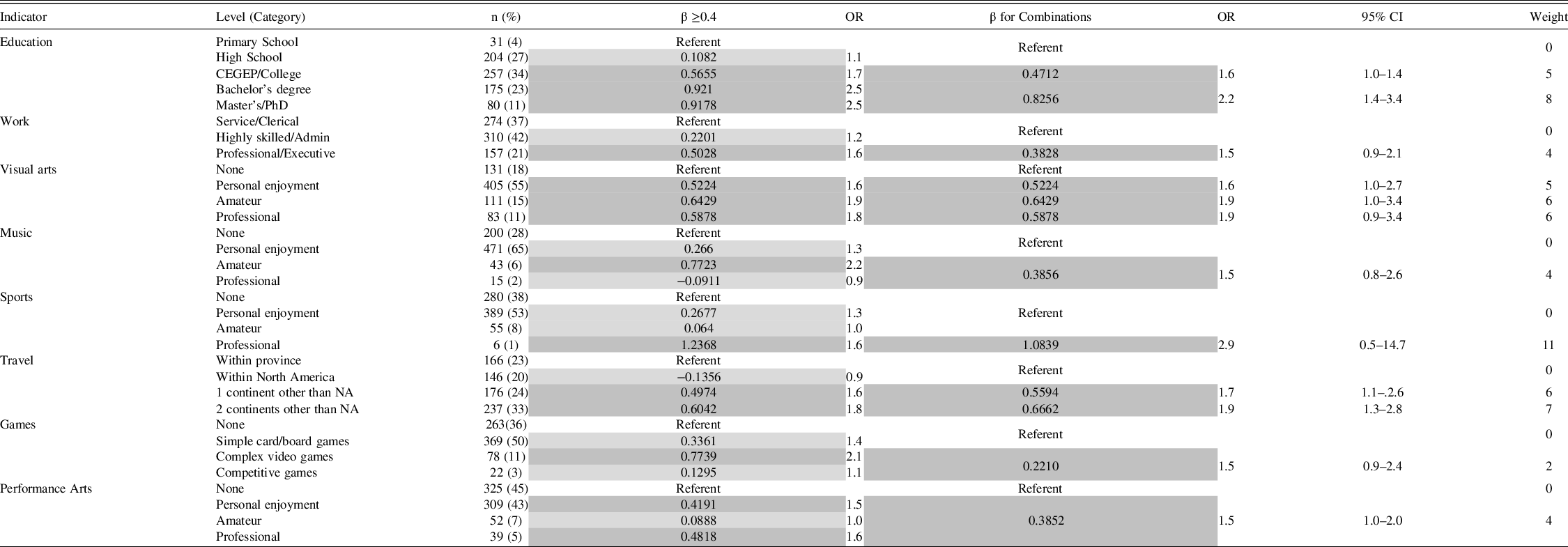
Table 2 shows the methods for creating the scoring algorithm to derive CRI-HIV score based on those variables with at least one category meeting our criterion for inclusion (β: 0.4; OR: 1.5).
Frequency distribution of cognitive reserve indicators and outcomes of the key steps involved in the development of Cognitive Reserve Index in HIV (CRI-HIV)

Column 4 presents the regression coefficients (β) for each of the categories of the included indicators, and column 5 lists the ORs. The categories with dark gray highlighting fulfilled the criteria for inclusion (β: 0.4 or OR: 1.5) in the index, those with light gray highlighting did not and were combined as shown in column 6 (combinations). Columns 7 and 8 show the ORs and corresponding 95% CI, respectively. Column 9 shows the weights (β for combinations x 10) assigned to these specific category indicators that made to the index.
β, regression coefficient; OR, odds ratio; CIs, confidence intervals.
Column 1 presents the indicator and column 2 gives the categories within each indicator. Column 3 presents the frequency distribution across indicator-categories. For education, the modal category was college education (34%) and only 11% of the sample had a master’s or doctoral degree. Across the other cognitively engaging activities, the most frequent level of engagement was for “personal enjoyment”. Higher levels of engagement were rare: visual arts, 26%; performance arts, 12%; games, 14%; sports, 9%; and music, 8%. Travel outside of North America was common (57%). Men had higher values for engagement in visual arts, performance arts and travel, but the study was neither designed nor powered for testing these differences. Only 37 % of the sample were monolingual but no category of multilingualism met our criterion for inclusion (β: 0.4; OR: 1.5). This was also true for variables relating to social resources.
Column 4 presents the βs for each of the categories of the included indicator variables and column 5 gives corresponding ORs. The categories with dark gray highlighting fulfilled the criteria for inclusion, those with light gray highlighting did not and were combined as shown in column 6. For example, for work, as service/clerical and highly skilled or administrative jobs did not differ, they were combined and served as the referent category for the professional/executive level. For visual arts, each category was unique. For all other activities, only one category was retained. The ORs and corresponding 95% CI intervals for the category-indicators, which contributed to the index, are presented in columns 7 and 8, respectively. Column 9 shows the weights assigned to these specific category indicators. Professional sports received the highest points (15), whereas bachelor’s degree, master’s, and doctorate level education received the second highest points (8). Personal level of enjoyment was awarded points only for visual and performance arts.
The maximum possible score of the index is 68. In this sample, the highest achieved score was 37. The mean score was 13.4 (SD: 7).
Table 3 shows adjusted regression parameters and 95% CI for the validation measures: B-CAM (cognitive performance), PDQ (self-reported cognitive deficits), and SPS (work productivity) at the study entry and at the last visit. As expected, the CRI-HIV showed an association with B-CAM at the study entry. People who differed on CRI-HIV by one unit differed on the B-CAM by 0.19 (β) units; people who differed by 1SD on CRI-HIV differed by 0.19*4.7 units, where 4.7 is the SD on the B-CAM at the study entry. The effect size (t-statistic) for this association was highest (β/SE = 8.0). The CRI-HIV also showed associations with the other concurrent measures: PDQ (β = −0.39; 95% CI: −0.58 to −0.19; t-value = −4.0) and SPS (β = 0.09; 95% CI: 0.008 to 0.8; t-value = 2.2). The effects of CRI-HIV on the last follow-up visit were closely similar to those at the study entry.
Linear regression parameters for cognitive ability and measures of everyday functioning*

*Adjusted for age and sex.
**Effect size.
B-CAM is Brief Cognitive Ability Measure; higher scores are better, PDQ is Perceived Deficits Questionnaire; higher scores are worse, and SPS is Stanford Presenteeism Scale; higher scores are better; β, regression coefficient.
There were significant age and sex effects for B-CAM with women and older people scoring lower at the study entry. However, there was no interaction with cognitive reserve and sex indicating that the effect of CRI-HIV on B-CAM did not depend on sex (although power was low for this comparison). For age, the interaction was significant (β = −0.005; 95% CI: −0.008 to −0.001; t = −2.21) indicating that effects of CRI-HIV on B-CAM depended on age with the effects attenuating with older age. For PDQ there was a similar age effect (older age reported more deficits), but no interaction with CRI-HIV scores (β = 0.006; 95% CI: −0.015 to 0.027; t = −0.57). For SPS, there was neither an age nor sex effect.
DISCUSSION
In this study, various contributors of cognitive reserve were combined into an index of cognitive reserve (CRI-HIV) based on their impact on a measure of cognitive performance in older people living with HIV. The CRI-HIV score behaved as hypothesized in relation to concurrent measures of cognitive performance and everyday functioning and predicted these outcomes at the last follow-up visit (see Table 3). Cognitive reserve could help maintain the cognitive performance in people with HIV over time.
There is a consensus that leisure or recreational activities are important in building cognitive reserve, in addition to education and occupation in the non-HIV literature (Cheng, Reference Cheng2016; Helzner, Scarmeas, Cosentino, Portet, & Stern, Reference Helzner, Scarmeas, Cosentino, Portet and Stern2007; Sobral & Paúl, Reference Sobral and Paúl2013; Stern, Reference Stern2002; Wang et al., Reference Wang, Jin, Hendrie, Liang, Yang, Cheng and Murrell2012). These activities form the backbone of the principle of neuroplasticity (i.e., the ability of the human brain to adapt according to environmental stimuli or even after experiencing neurological damage) (Bosch et al., Reference Bosch, Bartrés-Faz, Rami, Arenaza-Urquijo, Fernández-Espejo, Junqué and Molinuevo2010; Wolf et al., Reference Wolf, Kronenberg, Lehmann, Blankenship, Overall, Staufenbiel and Kempermann2006) in the aging populations. One of the unique features of this study is the demonstration of the relative benefit of engaging in specific cognitively stimulating life experiences for those living with HIV. A recent white paper on cognitive reserve highlights the need for such measures to improve upon the current summary approach (Stern et al., Reference Stern, Arenaza-Urquijo and Bartrés-Faz2018). To our knowledge, the present study was the first attempt to tease out the relative contributions of specific life experiences of people with HIV on cognitive performance.
This study showed that cognitively stimulating activities such as visual and performance arts (any level of engagement), professional/amateur music, complex video gaming and competitive games, travel outside North America, and professional sports were associated higher cognitive functioning in people with HIV. Conceptually, cognitive reserve is believed to be a dynamic entity that can be enhanced through engagement in cognitively stimulating activities across the lifespan (Stern et al., Reference Stern, Arenaza-Urquijo and Bartrés-Faz2018). Our work suggests that those who did not have the opportunity to acquire a high level of education could benefit from recreational activities, especially visual arts and performance arts as even when these activities were done for personal enjoyment, they were associated with higher cognitive functioning in this data set.
Socioeconomic status is seen as a contributor to cognitive reserve (Jefferson et al., Reference Jefferson, Gibbons, Rentz, Carvalho, Manly, Bennett and Jones2011). Our findings showed extensive travel seems to have a cognitively nurturing effect, but it may not be a pragmatic option to boost reserve, given the expense involved. That said, the correlation between travel and other indicators of high socioeconomic status (education and occupation) was only 0.29 (see Supplementary Table 1), considered weak under the assumption that they are part of the same latent construct. It is likely that income may correlate strongly with travel and may also be a gateway to healthier lifestyle and behavior including access to cognitively stimulating activities including participation in reading clubs, art, etc., which could potentially build cognitive reserve (Cadar et al., Reference Cadar, Lassale, Davies, Llewellyn, Batty and Steptoe2018). Keeping this mind, it might be advisable that lifestyle interventions should target individuals who are socioeconomically disadvantaged as they might be particularly vulnerable to cognitive deficits caused by poor health behaviors and reserve-building activities. Future studies should also explore whether there are any cognitively stimulating activities that might be less influenced by socioeconomic status.
The CRI-HIV was based on a formative measurement model as various indicators (such as education, occupation, and lifestyle pursuits) form the construct of cognitive reserve. The direction of the relationship is from the items to the construct in a formative model. This is in contrast to reflective models where the construct is a feature of the person and is reflected in many different factors, measured and unmeasured (Edwards & Bagozzi, Reference Edwards and Bagozzi2000). This index can be applied in research settings to adjust for the effect of multiple indicators such as education, occupation, and other cognitively engaging pursuits in a parsimonious manner. This might be particularly useful in clinical trials, e.g. of cognitive training or rehabilitation programs, as participants may respond to interventions based on their cognitive reserve. The index also avoids the statistical challenges (interpretation, collinearity, reduced power) associated with the common practice of accounting for the effects of each indicator individually (Arbogast & Ray, Reference Arbogast and Ray2011; Biondi-Zoccai et al., Reference Biondi-Zoccai, Romagnoli, Agostoni, Capodanno, Castagno, D’Ascenzo and Modena2011). Moreover, the index may aid clinical interpretation of the scores from neuropsychological tests.
A variety of cognitive reserve indices and questionnaires have been developed among diverse populations (Leon et al., Reference Leon, Garcia-Garcia and Roldan-Tapia2014; Nucci et al., Reference Nucci, Mapelli and Mondini2012; Sobral et al., Reference Sobral and Pestana2014; Valenzuela & Sachdev, Reference Valenzuela and Sachdev2007). Overall, these measures vary in the type of cognitively engaging pursuits covered, their number, frequency, and timeframe. The CRI-HIV is to date the only index based on a scoring algorithm which takes impact weights, of each contributing indicator, into consideration to quantify cognitive reserve in HIV.
Employment status may fluctuate during the lifetime of an individual (Vance, Cody, Yoo-Jeong, & Nicholson, Reference Vance, Cody, Yoo-Jeong and Nicholson2015). Therefore, participants in this study were asked to choose their level of engagement in a job based on their longest job instead of their current or last job. This study showed a relationship between the CRI-HIV scores and work productivity in HIV. Work productivity has not been extensively studied in HIV. Most studies focus on employment status and its relationship with neurocognitive abilities and everyday functioning among people living with HIV and have suggested that employment may be a way of preserving cognition (Blackstone et al., Reference Blackstone, Moore, Heaton, Franklin, Woods and Clifford2012; Vance et al., Reference Vance, Cody, Nicholson, McManus, Stavrinos, Hoenig and Fazeli2016). The present study found that higher cognitive reserve was associated with higher work productivity in people with HIV who had a paid job (n = 443).
Social support was not incorporated into the CRI-HIV as the association between B-CAM and the social resources (Arbogast & Ray, Reference Arbogast and Ray2011) variables available in this study was weak. Concordant with this finding, a 2018 meta-analysis (n = 30,037) also revealed a weak association between social network and measures of cognitive performance (r = 0.072) (Isobel et al., Reference Isobel, David, Fiona, Robert, Carol and Linda2018) in healthy older adults. Although bilingualism has been proposed to foster cognitive reserve, bi-or- plurilingualism did not contribute to the index in our sample. There are mixed findings from studies examining the relationship between bilingualism and cognitive reserve among people with Alzheimer’s disease (Calvo, García, Manoiloff, & Ibáńez, Reference Calvo, García, Manoiloff and Ibáńez2015). The disparity across studies could have arisen due to the differences in the paths to plurilingualism (voluntary learning versus necessity), sampling procedures, and outcome measures used to investigate this area (Valian, Reference Valian2015).
It is important to underline that the evidence for the cognitive reserve hypothesis is mostly observational: causal evidence for its potential protective effect on cognition is needed. Clinical trials have shown that interventions, e.g., a 12-week cognitive music training (N = 35) (Biasutti & Mangiacotti, Reference Biasutti and Mangiacotti2018) or a 14-week “productive engagement” in learning digital photography alone or in combination with learning to quilt (N = 259) (Park et al., Reference Park, Lodi-Smith, Drew, Haber, Hebrank, Bischof and Aamodt2014) rendered benefits to specific cognitive processes (assessed using neuropsychological tests) among older adults. Rigorous randomized controlled trials of the contributors to cognitive reserve are needed to strongly recommend interventions that can promote cognitive performance in HIV. While awaiting such evidence, it seems worthwhile to encourage participation in cognitively stimulating activities as these are unlikely to do harm.
Limitations
All longitudinal observational studies have limitations based on the constitution of the cohort and losses to follow-up. We have previously published on the potential for selection bias in this cohort owing to the selective exclusion of those people with HIV who were too busy to enter owing to work responsibilities (Nancy E. Mayo, Brouillette, & Fellows, Reference Mayo, Brouillette and Fellows2018). This group also reported fewer cognitive difficulties. Thus, our cohort includes people with a greater degree of cognitive challenge. We also did not have follow-up data on 73 participants (˜8%), but those included in the analyses were similar to the full cohort (see Table 1).
Our choice of indicators was limited to the ones available in the data set. For example, engagement in learning activities post-formal education was not captured. Also, we did not have data on IQ available to include in the CRI- HIV, although it is traditionally considered in the mix of indicators of cognitive reserve. Cognitive reserve and IQ could be correlated, but they also seem to be distinct concepts. Nucci and colleagues excluded IQ from their index of cognitive reserve and suggested that IQ relates to intellectual performance, whereas cognitive reserve is based on an accumulation of resources acquired through a lifetime of cognitively engaging pursuits (Nucci et al., Reference Nucci, Mapelli and Mondini2012). Other scales and questionnaires of cognitive reserve in non-HIV populations also do not include IQ (Leon et al., Reference Leon, Garcia-Garcia and Roldan-Tapia2014; Sobral et al., Reference Sobral and Pestana2014; Valenzuela & Sachdev, Reference Valenzuela and Sachdev2007).
All the indicators of cognitive reserve could have been affected by recall (Sackett, Reference Sackett1979), mood, and social desirability. While it is always possible to conduct reliability tests on data fields in questionnaires, the content queried is part of the person’s life course and is likely as reliable as any other personal sociodemographic information collected. We did not verify the veracity of the information provided.
Also, everyday functioning was captured using self-report measures, which can be inaccurate (Blackstone et al., Reference Blackstone, Moore, Heaton, Franklin, Woods and Clifford2012). Proxy reporting of cognitive difficulties was not done nor was work productivity employer confirmed. Such data would involve additional ethics considerations and were beyond the scope of the cohort study.
In this work, the criteria used for inclusion of indicators in the CRI-HIV, i.e., β = 0.4 and OR = 1.5, were data driven and not based on any precedent or theory. The threshold was chosen to allow every indicator to have the same criterion to enter the index regardless of the degree of statistical significance associated with the regression parameter. The measure of cognitive ability (B-CAM) employed in this study did not have any published cutoff points for discrimination between high and low cognitive performance. Instead, the highest quartile was used to define people who are likely to have a high level of cognitive performance. This approach facilitated the estimation of regression weights and also ensured we had sufficient numbers for stable estimates.
CONCLUSION
This study documented the development of an index of cognitive reserve in older people living with well-controlled HIV infection. The CRI-HIV was associated with cognitive performance and measures of everyday functioning at study entry and also predicted these outcomes at the last follow-up visit. The index developed here might also apply to clinical groups other than people living with HIV; further work would be needed to test its generalizability. The index can serve as an efficient research tool to quantify and account for the effect of cognitive reserve. Lifestyle-modifying intervention strategies should integrate avenues for ‘reserve-building’ pursuits, especially for those who may not have had the opportunity to acquire extensive education or achieve high occupational complexity. Such reserve-building strategies need to be tested in randomized trials, to provide the causal evidence that remains scarce in work on cognitive reserve.
SUPPLEMENTARY MATERIAL
To view supplementary material for this article, please visit https://doi.org/10.1017/S1355617721000461
FINANCIAL SUPPORT
This project was supported by a grant from the Canadian Institutes of Health Research (grant number CIHR-TCO-125272).
CONFLICTS OF INTEREST
The authors have no conflicts of interest to declare.