The recognition of the role of culture in normal and abnormal development has gradually increased over the years, to the point that the Society for Research in Child Development (SRCD) and the National Institute of Mental Health (NIMH) strategic plans explicitly promote its integration into all scientific endeavors. In particular, the SRCD (2005) plan advocates for increasing cultural and contextual diversity in all aspects of the organization, activities, and membership, while the NIMH (2008) plan calls for enhancing our comprehension of how cultural diversity may influence the developmental trajectories of mental illness, and for the explication of cultural and ethnic factors that may be involved in risk, resilience, recovery, and promotion of health and well-being. In addition, researchers in the field have recently outlined new avenues for the conversion of culture and developmental sciences (Jensen, Reference Jensen2012).
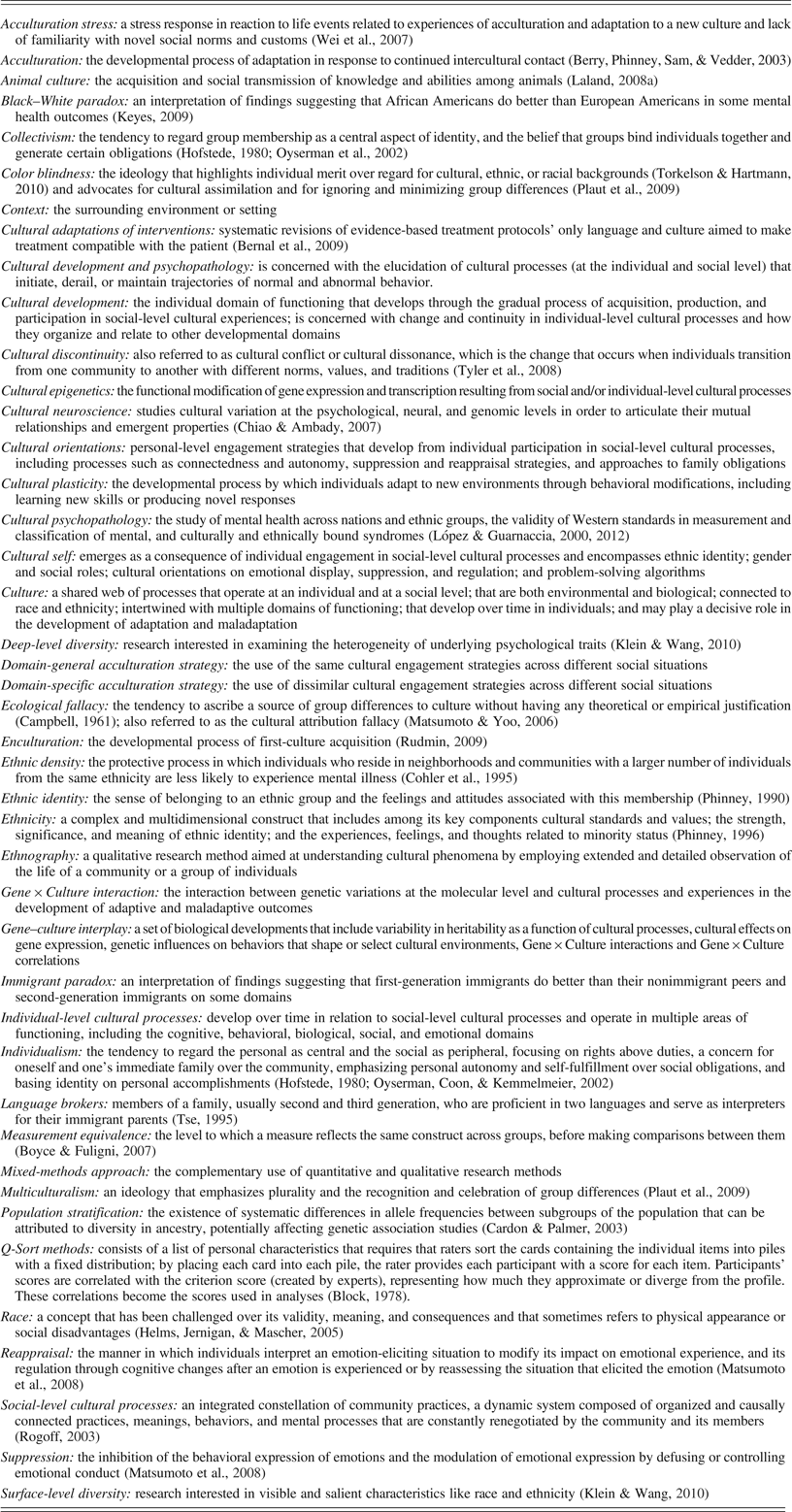
Despite these new initiatives, it is critical to recognize that culture has not been a prominent theme in the history of developmental psychopathology. Progenitors of the field were more engaged in emphasizing the necessity of infusing medicine and biology into developmental psychology, than in contemplating the importance of culture (e.g., Gottesman, Reference Gottesman and Pick1974; Santostefano, Reference Santostefano and Santostefano1978; Waddington, Reference Waddington1957). This is comprehensible because at that time there was a paucity of empirical evidence as well as theoretical models accounting for the relationship between culture and mental health. Given current empirical and theoretical improvements on research on cultural processes (e.g., Rogoff, Reference Rogoff2003), more work needs to be done to integrate culture into developmental psychopathology. For instance, although the examination of multiple levels of analysis has been defined as a hallmark of the field (Cicchetti & Dawson, Reference Cicchetti and Dawson2002), in reality the cultural level continues to receive less attention than the biological level. It is important that researchers in the field have consistently underlined the role of culture as the context that defines what is normal and what is not (Cicchetti, Reference Cicchetti1993; Cohler, Stott, & Musick, Reference Cohler, Stott, Musick, Cicchetti and Cohen1995; Hinshaw & Cicchetti, Reference Hinshaw and Cicchetti2000; Santostefano, Reference Santostefano and Santostefano1978; Sroufe & Rutter, Reference Sroufe and Rutter1984). Even if conceptualizations about the relevance of culture in normal and abnormal development have increased in sophistication and empirical support (e.g., Cicchetti & Toth, Reference Cicchetti and Toth2009; García Coll, Akerman, & Cicchetti, Reference García Coll, Akerman and Cicchetti2000; García Coll et al., Reference García Coll, Lamberty, Jenkins, McAdoo, Crnic and Wasik1996; Masten, Reference Masten2006; Serafica & Vargas, Reference Serafica, Vargas, Cicchetti and Cohen2006), most authors have persisted in pondering culture almost exclusively in terms of environmental influences or contexts of development. Moreover, most studies on culture and psychopathology examine culture in nondevelopmental terms, as a fixed property of individuals and as something that only minorities and foreigners possess, as is the case of research examining culturally (or ethnically) bound syndromes (e.g., ataque de nervios). Table 1 provides a glossary that defines all of the concepts that are in bold text type.
Glossary

In this paper, I argue that in order to successfully integrate culture into developmental psychopathology it is necessary to (a) conceptualize culture in developmental terms, (b) consider both individual-level and social-level cultural processes, (c) address the interplay between culture and biology in the development of adaptation and maladaptation, and (d) promote improved and direct cultural assessment. I support these ideas with current and innovative empirical evidence on the role of culture that challenges the way it is typically addressed within the field of developmental psychopathology. For each of these considerations, I propose pursuing new lines of research. I conclude by discussing the necessity for continuing efforts to promote culturally informed developmental psychopathology research and the changes required to accomplish this goal. I hope this integration will allow culture to become an important level of analysis to consider and, conversely, make cultural research informed within the basic principles of developmental psychopathology. It is not the goal of this paper to review how different DSM disorders vary across cultures nor to examine empirical evidence on culturally bound syndromes, primarily because this has already been done successfully in the past (see López & Guarnaccia, Reference López and Guarnaccia2000, Reference López, Guarnaccia, Maddux and Winstead2012; Serafica & Vargas, Reference Serafica, Vargas, Cicchetti and Cohen2006). Rather, the objective of this paper is to critically review different elements in conceptualization, assessment, and research that have become obstacles in the culture–developmental psychopathology integration, and suggest alternatives to overcome them. In this sense, this paper is unique and different from previous efforts.
Intersections among Culture, Development, and Psychopathology
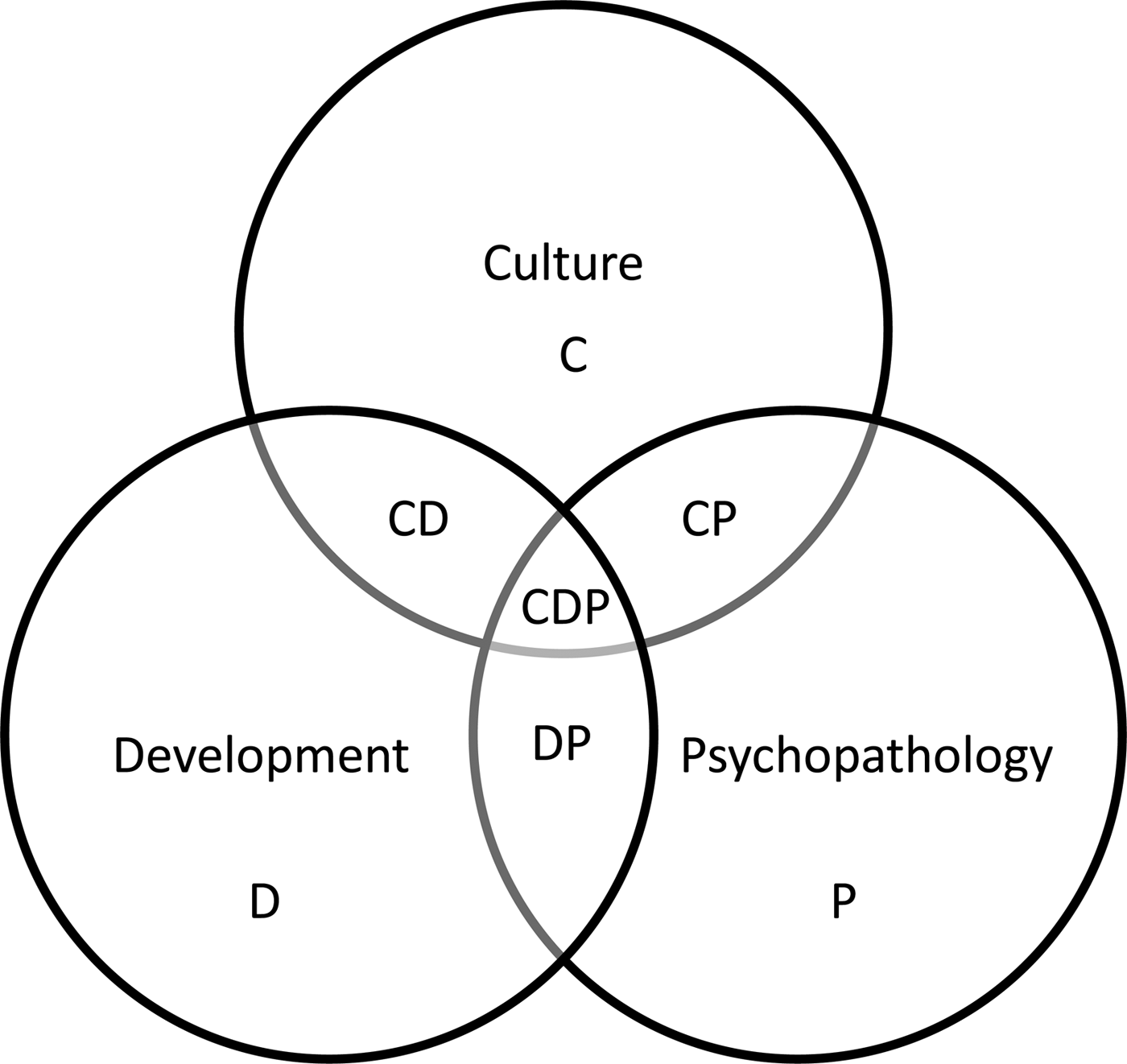
To better assess the state of the integration of culture into developmental psychopathology, it is useful to consider how their different components may intersect (see Figure 1). The figure includes three circles, culture, development, and psychopathology, and their intersections: culture and development, culture and psychopathology, development and psychopathology, and cultural development and psychopathology. The figure is aimed to (artificially) represent the interrelation of cultural processes. Because this figure is a graphical approximation aimed at depicting these relationships, it is a work in progress. Moreover, the area of each circle and intersection does not necessarily reflect actual space, but it is aimed at conveying a set of ideas. Here, the map does not represent the territory, but the relationships among its features. For example, the area of culture may not necessarily be greater than culture and development + culture and psychopathology + cultural development and psychopathology, although it appears so in the figure. In this paper, I will focus primarily on examining culture, culture and development, and cultural development and psychopathology. Nevertheless, culture and psychopathology and development and psychopathology will be covered briefly.
The intersections of culture (C), development (D), and psychopathology (P); CD, culture and development; CP, culture and psychopathology; CDP, cultural development and psychopathology; DP, development and psychopathology.
What Is Culture?
Because culture as a concept is both polysemic and contentious, defining it at the beginning of any discussion on culture has become a standard practice in the field. Characterizing culture can be problematic because it consists of multiple components, including material culture (e.g., tools of culture), subjective culture (e.g., ideas, values), and social culture (e.g., community practices, social conduct; Cohen, Reference Cohen2009). In addition, as important as defining what culture is, it is crucial to discuss what culture is not. Notably, what differentiates cultural processes from those that are purely idiosyncratic of each person is their supraindividual nature, the idea that they are shared, constructed, and transmitted by a community (Kitayama & Uskul, Reference Kitayama and Uskul2011). Culture is more than a collection of personal behaviors and traits, or a list of fixed and static categorical properties of individuals (Rogoff, Reference Rogoff2003), but it encompasses the symbolic and behavioral inheritances that community members share and coconstruct (Shweder et al., Reference Shweder, Goodnow, Hatano, LeVine, Markus, Miller, Damon and Lerner2006).
Culture operates at both a social and a personal level, although these two are inextricably associated. For instance, ethnicity and race function at both levels. Although some authors have argued in favor of separating culture from ethnicity and race (see Quintana et al., Reference Quintana, Aboud, Chao, Contreras-Gray, Cross and Hurdley2006), in reality both are critical components of both levels of cultural functioning. Ethnicity and race shape identity, condition intergroup relationships, and guide community participation. While extricating ethnicity from culture may be informative for statistical purposes, this may distort our appreciation of ethnicity and race as inseparable components of more general cultural and social processes, including relationships between minority and majority groups. However, it is important to maintain the distinction between individual-level culture (e.g., acculturation, ethnic identity, cultural orientations regarding emotional suppression and social interactions) and social-level culture (e.g., ethnic density, shared constellations of practices and values) when defining culture, conducting research, and formulating conceptualizations.
Social-level culture consists of an integrated constellation of community practices, a dynamic system composed of organized and causally connected practices, meanings, behaviors, and mental processes that are constantly renegotiated by the community and its members (Rogoff, Reference Rogoff2003). It is a socially transmitted and/or constructed organization of competencies, ideas, scripts, symbols, values, norms, institutions, goals, rules, and tools (Fiske, Reference Fiske2002). For the purpose of this paper, I will examine how cultural processes at the social and at the personal level develop over time and may play a decisive role in the emergence of normal and abnormal behavior. However, most attention will be given to personal-level cultural processes, although I will review some studies that examine the effects of social-level culture in nations, communities, neighborhoods, and families on individual adaptation and maladaptation.
Individual-level culture operates in multiple areas of functioning, including the cognitive, behavioral, biological, social, and emotional domain. For example, cultural socialization can increase the prevalence of specific patterns of behavior that, through repeated occurrences, can trigger systematic neural changes in the brain, which in turn, can increase the likelihood of behaving in culturally scripted manners (Kitayama & Uskul, Reference Kitayama and Uskul2011). Because of this multifaceted nature, social- and individual-level culture may require the use of quantitative and qualitative assessment methods to capture them reliably.
What Is Cultural Development?
The idea that individuals develop culture over time has received increasing attention and empirical support, as scholars have pressed for the inclusion of culture in developmental psychology (Jensen, Reference Jensen2012). Culture can shape prenatal development through socialization (Hepper, Reference Hepper1996), because as children are subjected to a cultural immersion that informs their diet, behavioral restrictions, and language acquisition before birth. Evidence shows that a maternal carrot juice diet during pregnancy augmented infants' enjoyment of that flavor in solid foods during weaning, illuminating the role of cultural processes in the transmission of food preferences and ethnic culinary differences (Mennella, Jagnow, & Beauchamp, Reference Mennella, Jagnow and Beauchamp2001). In addition, a recent study conducted in Sweden and the United States found that exposure to their native language in utero influences individual phonetic perception soon after birth (Moon, Lagercrantz, & Kuhl, Reference Moon, Lagercrantz and Kuhl2013). Even though some have questioned the validity of the Whorfian hypothesis that language shapes cognition (Chiu, Leung, & Kwan, Reference Chiu, Leung, Kwan, Kitayama and Cohen2007), Moon and colleagues (Reference Moon, Lagercrantz and Kuhl2013) findings suggest that experiences early in life may indeed influence language preferences and potentially favor specific trajectories of cultural development.
Culture impacts how long the baby will be nursed, the language(s) in which the child will be socialized, the type of activities that are allowed or prohibited, as well as segregation from or inclusion in adult activities (Rogoff, Reference Rogoff2003). Ultimately, caregivers act as cultural agents, configuring children's environment, providing guidance, and selecting their activities in ways that are in synchrony with their own cultural communities (Rogoff, Reference Rogoff1990). To an even greater extent, social-level cultural processes exert their influence not only through the vertical processes of adult–child enculturation and acculturation but also later through peer relationships (Chen, Reference Chen and Jensen2011), social networks, and romantic relationships. Furthermore, evidence suggests that cultural experiences at the social level can improve recognition memory for faces of individuals from one's own racial group compared to individuals of another race within the first year of life (Anzures et al., Reference Anzures, Quinn, Pascalis, Slater, Tanaka and Lee2013).
It is central to the discussion of cultural development to acknowledge that (a) social-level cultural processes are associated with important changes in multiple domains of development (e.g., cognitive, emotional, social, biological, psychopathology), and (b) personal engagement in such social processes can be considered a developmental domain in its own right (e.g., cultural development). Research conducted with nonclinical samples has shown how individuals submerged in a community acquire culture-specific ways of thinking (Rogoff, Reference Rogoff1990, Reference Rogoff2003; Rogoff & Angelillo, Reference Rogoff and Angelillo2002). In her landmark book, The Cultural Nature of Human Development, Barbara Rogoff (Reference Rogoff2003) examines evidence on how, through the process of community participation, social-level cultural processes shape cognition and learning, gender roles, social relationships, and ultimately, developmental goals and life stages. Her ideas inform a view on culture as more than a trait or situational factor and suggest that culture can act as an organizing influence in development. Because the essence of developmental psychopathology is the consideration of normal and abnormal behavior together (Sroufe, Reference Sroufe1990), research on cultural development with nonclinical samples is fundamental in the culture–developmental psychopathology integration.
An organizational perspective on development provides a productive framework to account for change and continuity (Sroufe, Reference Sroufe1979; Sroufe & Waters, Reference Sroufe and Waters1977; Werner & Kaplan, Reference Werner and Kaplan1963) and can be applied to the study of cultural development. The organizational perspective on development posits that the meaning of a behavior depends on how it is coordinated with other behaviors in a social scenario (Sroufe, Egeland, Carlson, & Collins, Reference Sroufe, Egeland, Carlson and Collins2005). For example, acculturation among immigrant adolescents can be better understood by considering behavior in different settings, such as the use of English at home (Hahm & Lahiff, Reference Hahm and Lahiff2006) and the proportion of friends at school from other ethnic groups (Simpkins, O'Donnell, Delgado, & Becnel, Reference Simpkins, O'Donnell, Delgado and Becnel2011), as well as its consequences (e.g., acculturation stress), instead of simply considering one behavior in isolation.
Another organizational principle poses that models of the self and others starting early in life are tied to behavioral patterns that extend to adolescence and adulthood (Sroufe & Fleeson, Reference Sroufe, Fleeson, Hartup and Rubin1986). For instance, the enculturation process that takes place early in development within parent–child relationships can become a working model of social behavior and cognition that will influence future development. In other words, early cultural experiences can become the prototype of later personal-level cultural functioning. Finally, the organizational perspective accounts for the processes wherein experiences in early childhood and later in life have a cumulative effect in adaptation and maladaptation (Carlson, Sroufe, & Egeland, Reference Carlson, Sroufe and Egeland2004). For instance, as discussed in later sections, cultural promotive, protective, and risk factors experienced in infancy and childhood may work together to reduce or exacerbate the likelihood of psychopathology in adolescence and adulthood.
One of the consequences of individual engagement in social-level cultural processes is the emergence of a cultural self that is subject to change and continuity over time. This domain of functioning (i.e., integrating and organizing other domains) is what I refer to as cultural development. However, there may be some obstacles in the recognition of this organizing constellation of processes as another legitimate realm of development. One of the most significant may be the idea that cultural development is not normative but exceptional, as it only takes place among minority (e.g., Latinos, Native Americans, African Americans, or Asian Americans) or foreign individuals. This is most noticeable in the tendency to explain variation in normal and abnormal development as a function of culture for these groups but rarely for European American samples. This is understandable because evidence suggest that culture is often more salient for individuals belonging to minority groups than for individuals belonging to majority groups, as is the case for ethnic identity (Fuligni, Witkow, & García, Reference Fuligni, Witkow and García2005). For most, White ethnicity is not often recognized as a salient or important part of an individual's identity (Phinney, Reference Phinney1996; Phinney, Cantu, & Kurtz, Reference Phinney, Cantu and Kurtz1997), as persons in this group frequently do not consider themselves “ethnic” (Alba, Reference Alba1990). In spite of this, European Americans are also submerged in a web of social-level cultural processes that leads to the advent of individual-level cultural dynamics that operate as an organizational influence and, eventually, lead to the emergence of a cultural self. Therefore, in order to recognize cultural development as another legitimate domain of functioning, it is important to acknowledge it as a normative process among individuals of all ethnic groups.
It is arguable that cross-cultural psychology may have played a role in reinforcing the nondevelopmental approach to culture because this discipline has traditionally inferred culture based on ethnicity and nationality, an idea examined with more detail in the next sections. Furthermore, cross-national comparisons might be a more appropriate label when comparing findings from different countries without having measured culture directly (e.g., Causadias & Posada, Reference Causadias and Posada2013).
What Is Cultural Psychopathology?
The intersection of culture and psychopathology is represented by a well-established tradition of theory and research. Cultural psychopathology (López & Guarnaccia, Reference López and Guarnaccia2000, Reference López, Guarnaccia, Maddux and Winstead2012) has evolved from pioneer efforts in formulated in the 1970s to integrate issues of culture, ethnicity, and mental illness thorough the fields of transcultural psychiatry (Singer, Reference Singer1975), cross-cultural psychiatry (Kleinman, Reference Kleinman1977), and cultural psychiatry (Lewis-Fernández & Kleinman, Reference Lewis-Fernández and Kleinman1995). These fields have underlined the importance of unpacking culture into its components, going beyond attributing a unique expression of anxiety to an ethnic group (e.g., differences in stress), and examining particular cultural strategies ethnic groups share and employ in dealing with anxiety (López & Guarnaccia, Reference López, Guarnaccia, Maddux and Winstead2012).
It is important that transcultural psychiatry, cross-cultural psychiatry, cultural psychiatry, and cultural psychopathology differ in their scope, methods, and aims. Yet, most of these disciplines share an interest in (a) the question of universality versus specificity of abnormal behavior, syndromes, and symptoms across nations and ethnic groups; (b) the application of anthropological and ethnographic approaches to problems in psychiatry and clinical psychology; (c) the validity of Western standards in measurement, classification, and treatment of mental illness (Kleinman, Reference Kleinman2012); (d) the study of culturally and ethnically bound syndromes (e.g., ataque de nervios; Guarnaccia et al., Reference Guarnaccia, Lewis-Fernandez, Pincay, Shrout, Guo and Torres2010); (e) indicators of maladaptation without a systematic regard for markers of adaptation; and (f) the relative absence of developmental approaches to research questions and measurement. This latter characteristic is somewhat shared by a significant number of studies in developmental psychopathology that focus on culture, because these studies rarely examine individual cultural development (for exceptions, see Chen, Cen, Li, & He, Reference Chen, Cen, Li and He2005; García Coll et al., Reference García Coll, Akerman and Cicchetti2000).
What Is Development and Psychopathology?
The intersection of development and psychopathology is represented by research in the field of developmental psychopathology: the study of the interplay among multiple domains of functioning (e.g., emotional, cognitive, genetic, physical, social, neurological) in the emergence of adaptive and maladaptive responses to the challenges of every age, leading to normal and abnormal development. Developmental psychopathology shares with developmental sciences its concern for the processes that account for the way individuals change and/or remain the same across their life span (Sroufe, Reference Sroufe and Masten2007). However, it differs from developmental sciences in its emphasis on the study of multiple levels of analysis (Cicchetti, & Dawson, Reference Cicchetti and Dawson2002) and its simultaneous attention to adaptive and maladaptive functioning (Sroufe, Reference Sroufe1990). For example, developmental psychopathologists have investigated how experiences of maltreatment in childhood interact with genetic variations to predict trajectories of depression among adolescents of low socioeconomic status (Cicchetti, Rogosch, & Sturge-Apple, Reference Cicchetti, Rogosch and Sturge-Apple2007).
What Is Cultural Development and Psychopathology?
The intersection of culture, development, and psychopathology is a relatively unexplored niche for theory, research, and intervention. Cultural development and psychopathology is concerned with the elucidation of cultural processes at the individual and social level that initiate, contribute, and maintain trajectories of normal and abnormal behavior. Its foremost goal is to successfully integrate culture and developmental psychopathology in a meaningful manner that contributes to our understanding of adaptation and maladaptation. Cultural development and psychopathology integrates core aspects of cultural, developmental, psychopathological, cultural development, developmental psychopathology, and cultural psychopathology research to pursue a better understanding of human development.
Cultural development and psychopathology shares with cultural research its drive to understand how different communities, societies, and nations share or differ in their systems of meanings and practices; with developmental sciences its focus on the study of the processes that account for continuity and change, as well in uncovering the mechanisms and outcomes associated with the resolution of stage-salient developmental tasks; with psychopathological research its emphasis on the etiology, expression, course, remission, or persistence of mental illness; with cultural development its attention to the social and personal-level cultural processes that shape normal functioning; with cultural psychopathology its regard for the validity of Western standards of measurement, classification, and treatment of mental illness, as well as for the question of universality versus specificity of abnormal behavior; and with developmental psychopathology the way it pursues a multilevel empirical and conceptual strategy, its focus on how multiple domains interact in the etiology of normal and abnormal behavior, and the processes involved in risk and resilience. However, cultural development and psychopathology departs from some of these fields in certain aspects. It diverges from cultural research because it also focuses on individual-level cultural processes, from developmental sciences in its emphasis of social- and individual-level cultural processes as organizing forces in development, and from psychopathology and cultural psychopathology research in its attention to development and its joint consideration of normal and abnormal behavior.
Some empirical studies exemplify this approach. For instance, social-level cultural experiences can shape emotional coping strategies, which in turn affect the likelihood of experiencing internalizing and externalizing behavior problems at the personal level in the face of adversity and social rejection. A study conducted by Brittian, Toomey, Gonzales, and Dumka (Reference Brittian, Toomey, Gonzales and Dumka2013), using a sample of 189 adolescents, assessed the influence of experiences of discrimination and coping strategies on the development of internalizing and externalizing behavior problems of Mexican American adolescents and examined the moderating role of cultural orientation. The relationship between discrimination (social-level process) and externalizing behaviors was only buffered by social-support seeking for those adolescents that were low on Mexican cultural orientation (individual-level process). In addition, the link between experiences of discrimination and internalizing problems was only buffered by distraction coping among youths who were low on Anglo-cultural orientation but not among those high on Anglo-cultural orientation (Brittian et al., Reference Brittian, Toomey, Gonzales and Dumka2013). Moreover, cultural protective, promotive, and risk factors interrelate to facilitate changes in the family system that shape individual trajectories of normal and abnormal behavior. A longitudinal study on early experience of discrimination and subsequent risky sexual conduct, using a sample of 745 African American youths, found that increased racial discrimination at age 10 or 11 was associated with more sexual risk taking at age 18 or 19 (Roberts et al., Reference Roberts, Gibbons, Gerrard, Weng, Murry and Simons2012). It is interesting that youth deviant peer affiliations at age 10 or 11 triggered increased parental attentiveness, which, conversely, predicted youth deviant affiliations at age 15 or 16 (Roberts et al., Reference Roberts, Gibbons, Gerrard, Weng, Murry and Simons2012).
The dynamic and complex interplay of social- and individual-level cultural processes exerts meaningful contributions to the development of normal and abnormal behavior. Both behavioral enculturation and values acculturation have been related to improved mental health in a sample of 296 Asian American college students (Miller, Yang, Hui, Choi, & Lim, Reference Miller, Yang, Hui, Choi and Lim2011). Asian Americans might adhere more to their culture of origin and less to the second culture in the values domain (e.g., embracing deference to authority) and might adhere more to the second culture and less to their culture of origin in the behavioral domain (e.g., preference for the use of English language at home; Miller & Lim, Reference Miller, Lim, Liu, Chae and Iwamoto2010). Moreover, Miller and colleagues (Reference Miller, Yang, Lim, Hui, Choi and Fan2013) conducted a study with three independent samples and reported that two thirds of all participants used a domain-specific acculturation strategy across behavior and values, while the remaining third employed a domain-general acculturation strategy. Moreover, these relationships develop over time, as newly arrived immigrants might first prefer their culture of origin to the host culture but over time employ a bicultural strategy (Berry, Phinney, Sam, & Vedder, Reference Berry, Phinney, Sam and Vedder2006). Further research is necessary to examine the developmental interplay of change and continuity in the use of individual cultural engagement strategies and psychopathology.
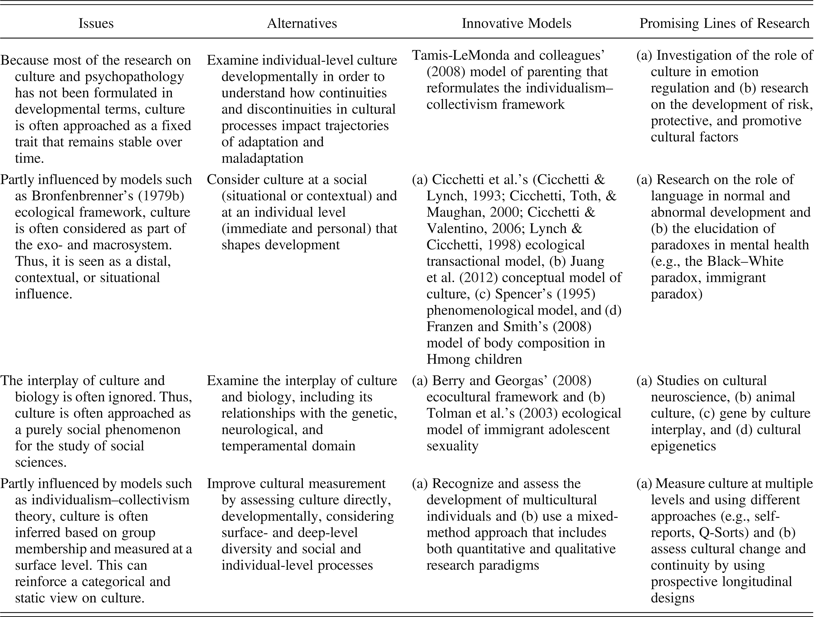
To successfully launch the field of cultural development and psychopathology and promote the integration of culture in developmental psychopathology, it is essential to (a) examine individual cultural development, (b) take into account both social-level and individual-level cultural processes, (c) study the interplay of culture and biology in the development of adaptation and maladaptation, and (d) promote improved and direct cultural assessment. In the next section, I elaborate on these four guidelines and suggest lines of research that could play a major role in the future of cultural developmental and psychopathology. A summary of these points is provided in Table 2.
Guidelines for the integration of culture into developmental psychopathology
Examining cultural development
Attention to individual cultural development entails addressing how children develop a cultural self that encompasses ethnic identity; gender and social roles; cultural orientations on emotional display, suppression, and regulation; and problem-solving algorithms. For example, evidence suggests multifinality in healthy ethnic identity development among African Americans during adolescence, indicating that racial socialization accounts for different trajectories in identity exploration and commitment (Seaton, Yip, Morgan-López, & Sellers, Reference Seaton, Yip, Morgan-López and Sellers2012). In addition, continuities and discontinuities in individual cultural development can potentially impact trajectories of adaptation. For instance, the transition from an individual's home and community social-level cultural experiences to classroom-based cultural experiences can favor individual-level cultural discontinuity, which can in turn lead to academic difficulties (Tyler et al., Reference Tyler, Uqdah, Dillihunt, Beatty-Hazelbaker, Conner and Gadson2008).
In order to further our understanding of individual cultural development it is useful to critically examine some classic theoretical models and pursue the formulation of new ones. One of these classic models is Hofstede's individualism–collectivism approach (Reference Hofstede1980). Hofstede's framework has made major contributions to behavioral sciences, is theoretically parsimonious, and has generated copious research. Its focus on specific dimensions of culture offers a valuable understanding of individual differences contingent on nationality. Furthermore, by proposing these two dimensions, the individualism–collectivism model facilitates our comprehension of the behavioral and social repercussions of cultural processes. Still, the individualism–collectivism model has some limitations and has been criticized because of the way culture is portrayed, the methodology used to arrive to its conclusions, the basic suppositions that it makes, the idiosyncrasies of the samples upon which it has gathered empirical support, its overreliance in self-reports, and its overall validity as a theory (Kagitcibasi, Reference Kagitcibasi, Kim, Triandis, Kagitcibasi, Choi and Yoon1994; Kitayama, Reference Kitayama2002; Matsumoto & Yoo, Reference Matsumoto and Yoo2006; McSweeney, Reference McSweeney2002; Schwartz, Reference Schwartz1990; Triandis, Reference Triandis1995). Notably, the individualism–collectivism model may promote a nondevelopmental and static entity view of culture.
However, by conserving its strengths and correcting some of its weaknesses, conceptual refining of the individualism–collectivism model can be a valuable tool for examining individual cultural development. A valuable adaptation of an existing model has been put forward by Tamis-LeMonda and colleagues' reformulation of the individualism–collectivism model. Their model preserves theoretically meaningful aspects of the individualism–collectivism approach while overcoming some of the limitations related to a polarized, static, and membership-inferred view of culture (Tamis-LeMonda et al., Reference Tamis-LeMonda, Way, Hughes, Yoshikawa, Kalman and Niwa2008). This model conveys the dynamic co-occurrence of cultural value systems (at the macrolevel) and parents' developmental goals (at the microlevel). It is important that Tamis-LeMonda and colleagues (Reference Tamis-LeMonda, Way, Hughes, Yoshikawa, Kalman and Niwa2008) challenged the notion that cultural values and developmental goals are exclusively polar opposites and proposed that cultural values and developmental goals may also be regarded as conflicting, additive, or functionally dependent. For example, parents from different cultures may differ in how they perceive autonomy in conflict with relatedness as goals in the development of their offspring; they may support both or see relatedness as the pathway to autonomy or vice versa (Tamis-LeMonda et al., Reference Tamis-LeMonda, Way, Hughes, Yoshikawa, Kalman and Niwa2008). This model is useful for examining the emergence of psychopathological syndromes, such as depression, among adolescents in which cultural conflict with parents plays an important role, as is the case with some first-generation immigrant parents and their second-generation daughters and sons.
Another strategy to further our comprehension on individual cultural development is the formulation of new lines of research, including the study of the role of culture in the development of emotion regulation; risk, protective, and promotive cultural factors in the development of adaptation and maladaptation; and cultural processes related to resilient functioning. It has been argued that social-level cultural processes can regulate emotions by fostering personal-level emotional appraisals and responses (Mesquita & Albert, Reference Mesquita, Albert and Gross2007). In some cases, individual differences in emotion regulation patterns can be understood as evidence of the consistent and systematic influence that social-level culture has on emotional development (Kitayama, Mesquita, & Karasawa, Reference Kitayama, Mesquita and Karasawa2006). Moreover, evidence suggests that the social consequences of emotion suppression are culture specific. Higher levels of habitual suppression appeared to be problematic for women with more European values, while the reverse was true for women with more Asian values (Butler, Lee & Gross, Reference Butler, Lee and Gross2007).
Social-level cultural processes affect many other individual-level emotional domains, including emotional interpretation, by acting as a moderator of the effectiveness of perceived emotional support (Uchida, Kitayama, Mesquita, Reyes, & Morling, Reference Uchida, Kitayama, Mesquita, Reyes and Morling2008). The significance of culture in emotion regulation underscores the sociological dimension of affect modulation, a process that develops within relationships, families, communities, and societies. Cultures generate guidelines, rules, and norms concerning affective modulation because emotions have critical social functions and repercussions (Matsumoto, Yoo, & Nakagawa, Reference Matsumoto, Yoo and Nakagawa2008). For instance, participating in a religious community can simultaneously provide a social support network and foster the development of unique strategies to cope with anxiety, such as praying and meditation.
Matsumoto and colleagues (Reference Matsumoto, Yoo and Nakagawa2008) examined differences across 23 countries on two dimensions of emotion regulation: reappraisal and suppression. They found that individuals from cultures that valued the maintenance of social order, hierarchy, and power differences were more likely to display higher emotional suppression, and they obtained positive correlations of reappraisal and suppression; whereas individuals from cultures that minimized the importance of social order and valued equality and autonomy tended to display lower emotional suppression, and they obtained negative correlations of reappraisal and suppression (Matsumoto et al., Reference Matsumoto, Yoo and Nakagawa2008).
Another line of research informed by a developmental view of culture and aimed for culture–developmental psychopathology integration is the study of social- and individual-level cultural processes as risk, protective, and promotive factors. Risk factors are the processes that increase the likelihood of initiating or maintaining maladaptive developmental trajectories, for example: racism, prejudice, and residential segregation experienced by Latino children (García Coll et al., Reference García Coll, Lamberty, Jenkins, McAdoo, Crnic and Wasik1996). As discussed with more detail below, protective factors are those that buffer the effects of negative experiences, such as the processes involved in resilient functioning among maltreated and nonmaltreated Latino children (Flores, Cicchetti, & Rogosch, Reference Flores, Cicchetti and Rogosch2005). In contrast, promotive factors differ from protective factors because they go beyond a safeguarding function against adversity to have the positive effect of increasing the probability of developing competent behavior (Causadias, Salvatore, & Sroufe, Reference Causadias, Salvatore and Sroufe2012). For example, some family obligations, positive parenting, community practices, and bicultural capital that are idiosyncratic of many Latino cultures may promote competent development (Fuller & García Coll, Reference Fuller and García Coll2010). The protective and promotive effects of Latino cultural capital might offer a plausible explanation for why Latinos have significant lower lifetime prevalence rates of any mental health disorder compared to non-Latino Whites (Alegría, Canino et al., Reference Alegría, Canino, Shrout, Woo, Duan and Vila2008), although more longitudinal research is indispensable to test this hypothesis. In addition, learning through keen observation and “listening in” among some indigenous American communities in Guatemala can act as promotive cultural factors for cognitive development. This is in contrast to the age-segregated assembly-line instruction models of learning among urbanized Mexican and American communities (Rogoff, Paradise, Arauz, Correa-Chavez, & Angelillo, Reference Rogoff, Paradise, Arauz, Correa-Chavez and Angelillo2003). Finally, considering promotive factors together with risk and protective factors can enhance our understanding of the development of health, which has been defined as a complete state of social, physical, and mental well-being, not just the absence of illness (World Health Organization, 2006). Considering promotive factors can expand the goals of developmental psychopathology from the joint study of normal and abnormal development (Sroufe, Reference Sroufe1990), to the examination of normal, psychopathological, and healthy development (Causadias & Carlson, in press).
The study of the cultural processes related to resilient functioning is another area of inquiry that has picked up momentum in the past years and warrants further examination. For instance, evidence should clarify how cultural processes contribute to the development of resilience in the face of adversity. Tinsley and Spencer (Reference Tinsley and Spencer2010) conducted a study with a sample of 502, predominantly African American, public school students ranging from 10 to 12 years, and found that perceptions of fairness were negatively associated with educational expectations but only for younger children. Moreover, educational expectations were associated with positive teacher expectations for older children, while overall school climate was a more decisive influence for younger children (Tinsley & Spencer, Reference Tinsley and Spencer2010). Further longitudinal research is necessary to elucidate if and how generational or maturational effects drive these processes and how they might protect against the development of internalizing and/or externalizing symptoms. In addition, evidence suggests that gender may play a role in the development of resilience among minority youth. In a study of adaptive coping employing a sample of 562 African American adolescents, maternal education and academic self-esteem emerged as significant predictors of academic performance for males, while mother's education, parental life dissatisfaction, adolescents' perception of family conflict, and academic self-esteem predicted scholarly performance among females (Spencer, Cole, DuPree, Glymph, & Pierre, Reference Spencer, Cole, DuPree, Glymph and Pierre1993). These findings suggest that there may be gender-specific developmental pathways of resilient functioning among African American youths (Spencer et al., Reference Spencer, Cole, DuPree, Glymph and Pierre1993).
Furthermore, patterns of family support to a family member with schizophrenia (and the likelihood of relapse) are conditioned by cultural patterns of expressed emotion and social desirability. In one study, Mexican American patients and relatives reported lower rates of high-expressed emotion (hostility and criticism) than did European American participants (Kopelowicz et al., Reference Kopelowicz, Zarate, Gonzalez, Lopez, Ortega and Obregon2002). Furthermore, high-expressed emotion predicted relapse across measures for European American participants but did not predict relapse for Mexican Americans. In addition, Mexican Americans suffering from schizophrenia found family warmth as a meaningful protective factor, whereas European Americans found family criticism as a significant risk factor, suggesting that culturally influenced family coping strategies may condition the developmental course and relapse likelihood of schizophrenia (López et al., Reference López, Hipke, Polo, Jenkins, Karno and Vaughn2004). It is important that other studies have supported and expanded these findings (Aguilera, López, Breitborde, Kopelowicz, & Zarate, Reference Aguilera, López, Breitborde, Kopelowicz and Zarate2010; Breitborde, López, & Nuechterlein, Reference Breitborde, López and Nuechterlein2009; Breitborde, López, Wickens, Jenkins, & Karno, Reference Breitborde, López, Wickens, Jenkins and Karno2007). In a study following 385 Mexican American adolescents for 14 consecutive days, family obligation values emerged as a significant cultural protective factor against substance use, partially as a result of diminished antisocial peer association and improved adolescent disclosure (Telzer, Gonzales, & Fuligni, Reference Telzer, Gonzales and Fuligni2013). These studies exemplify the need for further research on social- and individual-level cultural processes as risk, protective, and promotive factors.
In sum, these proposed strategies would facilitate a developmental view on culture and its integration with developmental psychopathology. Next, I will examine the significance of contemplating culture at different planes.
Considering social-level and individual-level cultural processes
The joint contemplation of social-level and individual-level cultural processes is important for the integration of culture and developmental psychopathology in the field of cultural development and psychopathology. Yet historically, developmental psychopathology has focused on social-level cultural influences as part of “the context.” Conceptualizations of culture as part of context have derived from different models, including Cole's formulation of cultural contexts of learning and thinking (Cole, Gay, Glick, & Sharp, Reference Cole, Gay, Glick and Sharp1971). However, no theorization of culture as a part of social context has been more influential than Bronfenbrenner's ecological framework, summarized in the idea that “it all depends” on the context (Cole, Reference Cole and Bronfenbrenner1979).
Bronfenbrenner (Reference Bronfenbrenner1979b) formulated his ecological model to include a series of systems. He described the microsystem as the immediate physical surroundings of the individual (e.g., family, school), the mesosystem as the associations between microsystems, the exosystem as the social structures and institutions (e.g., neighborhood, government agencies), and the macrosystem as the “overarching institutions of the culture or the subculture” that carry information and ideology that influence exosystems (Bronfenbrenner, Reference Bronfenbrenner1976). Later, he defined the macrosystem as the coherence observed within a given culture or subculture in the form and content of its constituent systems (micro-, meso, and exo-), as well as the underlying ideologies contributing to this coherence (Bronfenbrenner, Reference Bronfenbrenner1979b).
The way in which Bronfenbrenner conceptualized cultural processes may have reinforced a view of cultural processes as exclusively contextual and social. Bronfenbrenner (Reference Bronfenbrenner1979b) recognized that the exosystem and the macrosystem can exert a profound influence on individual development within the microsystem; however, he frequently conceptualized these influences as adverse events, detrimental social conditions, and dynamics that are limited to minorities but not as permanent processes that affect all individuals. Furthermore, the relevance of culture seemed to lose importance as he advanced his theory, as he did not explicitly define cultural processes in his reformulation of the components of the exosystem: parents' workplace and social networks and the community influences on family functioning (Bronfenbrenner, Reference Bronfenbrenner1986).
Moreover, the ecological system's topographic representation may be partly accountable for an implicit hierarchy of “proximal” influences that are more determinant and important than “distal” factors, a view that is customary in psychological research (Rogler, Cortés, & Malgady, Reference Rogler, Cortés and Malgady1991). Although Bronfenbrenner (Reference Bronfenbrenner1979b) repeatedly recognized that exo- and macrosystems could have important effects in development, he argues that only microsystems, under certain characteristics, can be considered the “primary setting” (p. 285). He also made the distinction between primary developmental contexts, in which the child can participate directly with adult guidance, and secondary developmental contexts, in which the child can put into practice what was learned in the primary context but without guidance (Bronfenbrenner, Reference Bronfenbrenner1979a). Both the exo- and the macrosystem were thought to represent sources of higher order effects from remote and distal environmental regions. Bronfenbrenner (Reference Bronfenbrenner1977) stated that “their place and purpose is essentially heuristic: to alert researchers to aspects of the larger environment that may be critical for the purpose of making human beings human.” Culture also was not considered as part of the influential proximal processes in Bronfenbrenner's later bioecological paradigm of human development (Bronfenbrenner, Reference Bronfenbrenner and Vasta1989, Reference Bronfenbrenner, Wozniak and Fischer1993, Reference Bronfenbrenner, Husten and Postlethwaite1994, Reference Bronfenbrenner, Moen, Elder and Luscher1995; Bronfenbrenner & Ceci, Reference Bronfenbrenner and Ceci1994).
Bronfenbrenner's ecological model has been significantly useful in motivating not only developmental psychopathologists but also other behavioral and social scientists to further their perspectives from individual processes to consider a broader set of social and cultural factors in their studies. However, the main problem with Bronfenbrenner's ecological model is that it may provide a rationale for considering culture only as part of a distal broader context, which in turn can diminish the relevance of the analysis of the proximal effect of social-level cultural processes in the development of psychopathology.
Empirical evidence suggests that the effects of social-level cultural processes, which are conceptualized as part of the exo- and the macrosystems, can more accurately be conceptualized as proximal in terms of the magnitude of their impact on mental health. Using multilevel path analysis, a recent study examined how neighborhoods (via social support and perceptions of neighborhood cohesion) impact internalizing symptoms in a sample of 571 urban African American adolescents (Hurd, Stoddard, & Zimmerman, Reference Hurd, Stoddard and Zimmerman2013). Higher neighborhood poverty and unemployment rates predicted higher rates of internalizing symptoms through lower social support and perceptions of neighborhood cohesion. Furthermore, higher African American ethnic density and residential stability in adolescents' neighborhoods was associated with less internalizing behavior problems among adolescent residents, again through cumulative social support and perceptions of neighborhood cohesion (Hurd et al., Reference Hurd, Stoddard and Zimmerman2013). These findings not only underscore the complex relationships between community processes and adolescents' mental health but also offer unique opportunities for further inquiry. Future studies should address if these effects are unique to African Americans or if they extend to other groups, whether these neighborhood processes shape adaptation during other developmental periods, what the individual factors are that potentiate resilience or exacerbate risk of internalizing symptoms, and how these effects hold over time when these adolescents transition into other ethnic communities (e.g., European American dominated academic institutions).
Not only are the effects of social cultural processes proximal, but they also covary with individual-level cultural processes. Thus, we would embrace a false dichotomy if we had to choose between a “culture as social” and a “culture as individual” approach. In reality, culture operates at both levels, although in developmental psychopathology it has mostly been investigated in the former sense. The potential controversy between these two perspectives may reflect an older tension in psychology: the debate on whether behavior is more influenced by social or individual factors (Lilienfeld, Reference Lilienfeld2012). A meta-analysis of more than 25,000 studies conducted in the first century of psychology shows that both social and personal factors make meaningful contributions to behavior, with an average effect size of r = .22 in over 17,000 estimates of social effects and a mean effect of r = .19 in over 16,000 estimates of personal effects (Richard, Bond, & Stokes-Zoota, Reference Richard, Bond and Stokes-Zoota2003).
Moreover, research suggests that individuals mobilize their personal cultural repertoire in response to different social and cultural environments. For example, Miller and colleagues (Reference Miller, Yang, Lim, Hui, Choi and Fan2013) found support for the idea that individuals might use different acculturation strategies across different domains of behavior and values. Using three different samples of Asian American participants, they reported that individuals in the separated-values group reported significantly poorer mental health levels than did those in the bicultural-values and assimilated-values group (Miller et al., Reference Miller, Yang, Lim, Hui, Choi and Fan2013). These findings are consistent with the cultural maintenance hypothesis, which suggests that the benefits of a particular cultural strategy (e.g., coping style) may depend on cultural fit or how they are aligned with social expectations (Noh, Beiser, Kaspar, Hou, & Rummens, Reference Noh, Beiser, Kaspar, Hou and Rummens1999). Therefore, these cultural strategies have important implications on mental health. In sum, culture operates both at a social and individual level. An organizational perspective on culture suggests that early socialization leads to the progressive consolidation of a cultural self, becoming an important dispositional force that, together with situational cultural processes, requires further consideration.
In order to approach culture at a social and individual level, and hence facilitate the culture–developmental psychopathology integration, we should pursue the formulation of new conceptual models or the adaptation of current ones and develop new lines of research. Three valuable new models have been articulated to include both the social/contextual perspective of culture elaborated by Bronfenbrenner (Reference Bronfenbrenner1979b) and the individual aspect of culture that has been traditionally neglected. First, Cicchetti and colleagues' ecological–transactional model was formulated to account for community violence and child maltreatment (Cicchetti & Lynch, Reference Cicchetti and Lynch1993; Cicchetti, Toth, & Maughan, Reference Cicchetti, Toth, Maughan, Sameroff, Lewis and Miller2000; Cicchetti & Valentino, Reference Cicchetti, Valentino, Cicchetti and Cohen2006; Lynch & Cicchetti, Reference Lynch and Cicchetti1998). In this model, multiple environments influence each other as well as children's development and functioning (Cicchetti & Valentino, Reference Cicchetti, Valentino, Cicchetti and Cohen2006), as the model dissects how aggression and cultural attitudes regarding violence in families and communities impact children's competence and adaptation (Cicchetti & Lynch, Reference Cicchetti and Lynch1993). Integrating ecological theory with a probabilistic and transactional framework, this model examines how potentiating factors increase the likelihood of violence at different levels (e.g., individual, family, neighborhood), while compensatory factors act to reduce the risk of violence (Cicchetti & Lynch, Reference Cicchetti and Lynch1993).
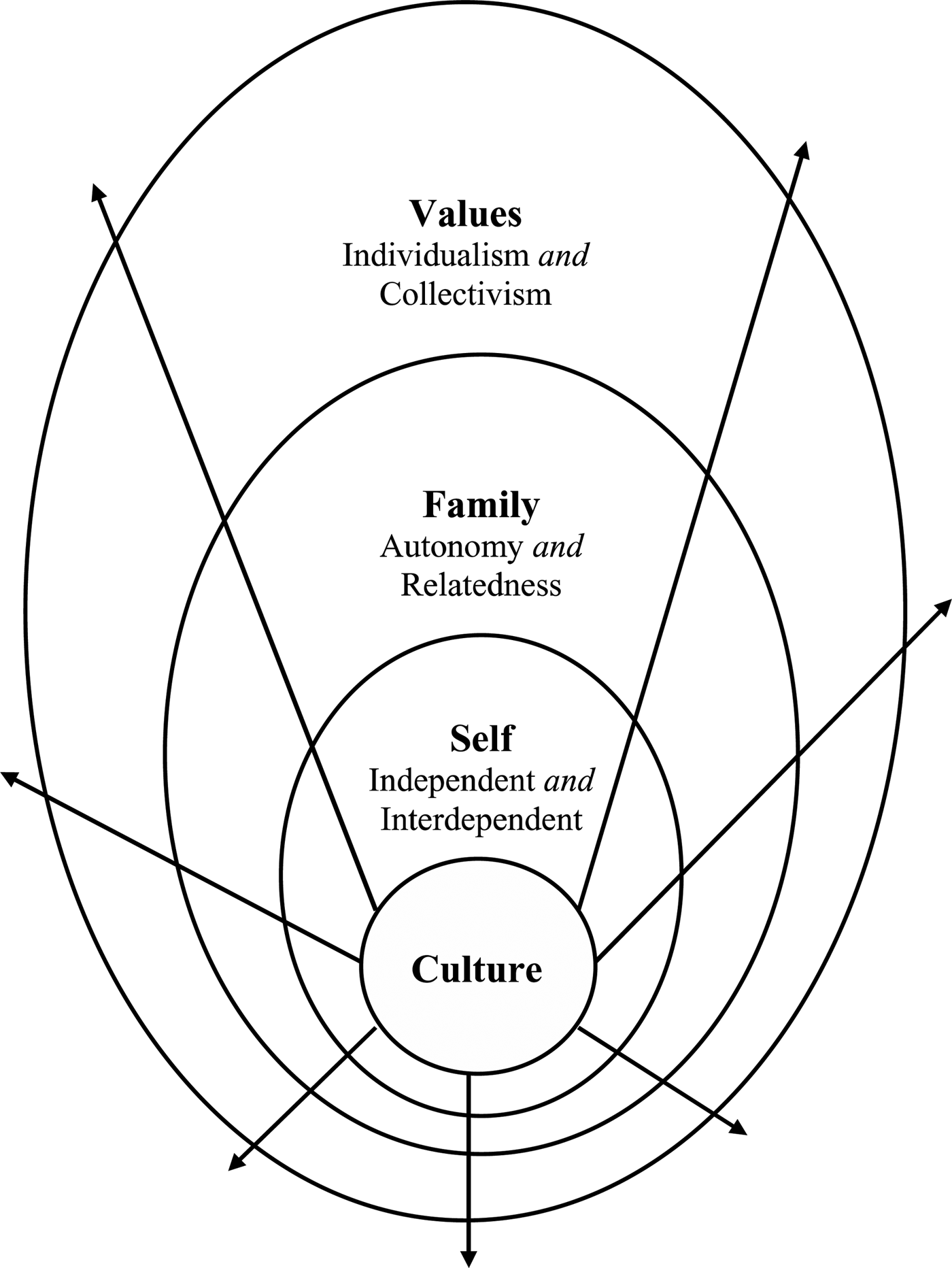
Second, Juang and colleagues' model of culture in relation to self, family, and value systems integrates social- and individual-level influences (see Figure 2). They flipped the graphic version of Bronfenbrenner model to portray the system inside out so culture is in the center and exerts its influence on all other systems (Juang, Syed, Cookston, Wang, & Kim, Reference Juang, Syed, Cookston, Wang and Kim2012). This would underscore how the processes hypothesized as proximal are themselves cultural by definition (Juang et al., Reference Juang, Syed, Cookston, Wang and Kim2012).
The Juang et al. (Reference Juang, Syed, Cookston, Wang and Kim2012) model of culture in relation to self, family, and values. Reprinted from “Everyday and Acculturation-Based Family Conflict Among Chinese American Parents and Adolescents,” by L. Juang, M. Syed, J. Cookston, Y. Wang, and S. Y. Kim, Reference Juang, Syed, Cookston, Wang and Kim2012, New Directions in Child and Adolescent Development, 135, 13–34. Copyright 2012 by John Wiley & Sons. Reprinted with permission.
Third, Spencer's phenomenological variant of ecological systems theory integrates a phenomenological perspective with Bronfenbrenner's ecological systems theory in an attempt to connect issues of perception, context, coping, and identity into a developmental framework (Spencer, Reference Spencer and Taylor1995). This model consists of five components interrelated by bidirectional processes: risk contributors, net stress engagement, reactive coping methods, emergent identities, and life-stage-specific coping outcomes (Spencer, Reference Spencer and Taylor1995).
Moreover, there are promising new models that represent the role of cultural, social, and situational processes in the development of health that have not been inspired by Bronfenbrenner. Displayed in Figure 3, Franzen and Smith's model of processes involved in the body composition of Hmong children was inspired by Bandura's (Reference Bandura1977) social cognitive theory and takes into account social- and individual-level cultural factors in the development of body composition of Hmong immigrant children (Franzen & Smith, Reference Franzen and Smith2009).
(Color online) The Franzen and Smith (Reference Franzen and Smith2009) model of the interplay between individual and environmental factors in the body composition of Hmong children. Reprinted from “Differences in Stature, BMI, and Dietary Practices Between US Born and Newly Immigrated Hmong Children,” by L. Franzen and C. Smith, Reference Franzen and Smith2009, Social Science & Medicine, 69, 442–450. Copyright 2009 by Elsevier. Reprinted with permission.
New lines of research that account for culture at the social and individual levels include the investigation of the role of language in normal and abnormal development and the elucidation of paradoxes in mental health. Language operates at the individual level because it shapes cognitive development and functions at a social level because it originates and is transmitted in a society, and it conditions access to community participation. The personal dimension of language is reflected in its contribution to the development of the cultural self. Proficiency and use of language has been considered a key aspect of ethnic identity (Phinney & Ong, Reference Phinney and Ong2007). For immigrants, proficiency in their maternal language can act as a symbol of ethnic identity and cultural solidarity because its use reminds the group about its cultural heritage and facilitates the transmission of community attitudes (Giles, Bourhis, & Taylor, Reference Giles, Bourhis, Taylor and Giles1977). Maintenance of the language of one's cultural community can be seen as a cultural resource (Portes & Schauffler, Reference Portes and Schauffler1994) and has been found to have a positive impact on ethnic identity among adolescents across a sample of Armenian, Vietnamese, and Mexican immigrants (Phinney, Romero, Nava, & Huang, Reference Phinney, Romero, Nava and Huang2001). Employing a second language at home may increase the odds that biracial children will adopt an ethnic identity other than White, supporting the idea that language maintenance is crucial in ethnic identity formation (Portes & Rumbaut, Reference Portes and Rumbaut2001).
Command of the language of the host culture can have important effects for adaptation and maladaptation. For example, acquiring English has been assumed to be crucial for the integration of immigrants into American society (Phinney et al., Reference Phinney, Romero, Nava and Huang2001). Language can play an important role in the family dynamics of immigrants. Children who are proficient in two languages and serve as interpreters for their immigrant parents, also known as language brokers (Tse, Reference Tse1995), can influence the content and nature of the message they transmit, thus changing power dynamics within their families (Buriel, Pérez, De Ment, Chávez, & Moran, Reference Buriel, Pérez, De Ment, Chávez and Moran1998). Evidence also suggests that changes in social networks are associated with acculturation and may lead to variations in risk and resilience. Using a sample of 296 eighth-grade students, a study identified Spanish language-sensitive individual and social network characteristics associated with drug use in Latino adolescents (Allen et al., Reference Allen, Elliott, Fuligni, Morales, Hambarsoomian and Schuster2008). Greater density of family members in the network, greater parental monitoring, and lower drug use among network members emerged as protective Spanish language-sensitive attributes (Allen et al., Reference Allen, Elliott, Fuligni, Morales, Hambarsoomian and Schuster2008).
Language can be related to the development of psychopathology and adaptation in several ways. Parental depression can impair language development in children (Paulson, Keefe, & Leiferman, Reference Paulson, Keefe and Leiferman2009), thus increasing the risk of academic difficulties. Bilingualism can act as a promotive factor for competence and well-being, since evidence suggests that bilinguals can exhibit enhanced executive functioning in comparison with monolinguals (Carlson & Meltzoff, Reference Carlson and Meltzoff2008). At the same time, it can function as a risk factor for maladaptation because bilinguals tend to have lower proficiency and vocabulary than monolinguals in their dominant language (Bialystok & Craik, Reference Bialystok and Craik2010). It is important that language skills can play a role in the development of emotion regulation in early childhood, as evidence shows that toddlers with superior language skills that improve over time appeared less angry at 48 months and their anger diminished more over time (Roben, Cole & Armstrong, Reference Roben, Cole and Armstrong2013).
Another chief line of research to be examined with the goal of bridging culture and developmental psychopathology, by considering social and individual cultural processes, is the elucidation of ethnic and social paradoxes in adaptive and maladaptive development, including the “Black–White paradox” and the “immigrant paradox.” First, some evidence suggests that African Americans seem to do better than European Americans in some mental health outcomes, even in the face of experiences of discrimination and social disadvantage, leading some researchers to describe this as the Black–White paradox (Keyes, Reference Keyes2009). For instance, a study found that African Americans from ages 9 to 17 exhibit lower prevalence of depressive disorders compared to Whites (Angold et al., Reference Angold, Erkanli, Farmer, Fairbank, Burns and Keeler2002). It has been argued that cultural protective and promotive factors unique to African American cultures may account for this resilient functioning, including the tendency to develop strong family ties, intergenerational continuity in the transmission of culture, higher ethnic identification, and participation in religious community networks (Anderson & Mayes, Reference Anderson and Mayes2010; Choi, Reference Choi2002; Choi & Gi Park, Reference Choi and Gi Park2006; Keyes, Reference Keyes2009).
Second, another puzzle that requires further research is the immigrant paradox. Research suggests that first-generation immigrants report better mental health than do their US-born peers (Takeuchi, Hong, Gile, & Alegría, Reference Takeuchi, Hong, Gile and Alegría2007; Williams et al., Reference Williams, Haile, Gonzalez, Neighbors, Baser and Jackson2007). Moreover, evidence also suggest that first-generation immigrants adapt more competently to developmental challenges than do second-generation immigrants (García Coll & Marks, Reference García Coll and Marks2011). These findings have been encapsulated under the concept of immigrant paradox because these results run counter to the expected direction of the effects: first-generation immigrants are “outsiders” exposed to the pressures of acclimatizing to a new social environment (e.g., learning a new language and new social norms), thus more likely to have difficulties in their adaptation, while locals or second-generation immigrants are “insiders” who are more culturally fluent and thus expected to do better. Moreover, according to Guarini, Marks, Patton, and García Coll (Reference Guarini, Marks, Patton and García Coll2011), it is paradoxical because unidimensional models of acculturation (e.g., classic assimilation theory) predict that immigrants that spend more time in a country would gain social capital, improve their proficiency in the majority language, and gain access to different resources (Alba, Logan, & Stults, Reference Alba, Logan and Stults2000; Alba & Nee, Reference Alba and Nee1997). In consequence, these processes would predict improved health outcomes; surprisingly, evidence has shown exactly the contrary (Guarini et al., Reference Guarini, Marks, Patton and García Coll2011). For instance, Guarini and collegues (Reference Guarini, Marks, Patton and García Coll2011) found that first-generation adolescents demonstrated the lowest levels of high-risk sexual behavior in adolescence and early adulthood, compared to their acculturated peers. Because most evidence on the immigrant paradox comes from educational outcomes (García Coll & Marks, Reference García Coll and Marks2011), more research is required to clarify its effect on the development of psychopathology and social competence.
In conclusion, these models and research lines would facilitate the consideration of culture at a social and at an individual level. However, more research is needed to establish the role of language in the development of abnormal behavior and the validity of the aforementioned paradoxes. Next, I will examine the interplay of culture and biology.
Studying the interplay of culture with biology
In order to fruitfully integrate culture into developmental psychopathology, it is crucial to investigate the ways in which cultural processes relate to other dimensions of development, including cognition, emotions, social, and biological development. Although several researchers have enhanced our understanding of the relationships of culture and cognition (e.g., Rogoff, Reference Rogoff2003), peer relationships (e.g., Chen, Reference Chen and Jensen2011), and emotions (Matsumoto et al., Reference Matsumoto, Yoo and Nakagawa2008), less is known about the relationship between culture and biology.
Examining the interplay of culture and biology is one promising avenue for the culture–developmental psychopathology integration into the field of cultural development and psychopathology. The conversion of these fields would allow us to better understand human development in all its complexity, but it is worthwhile to recognize that the traditional segregation of culture and biology is due to several factors. The nature versus nurture debate has placed culture and biology at opposite poles of a hypothetical spectrum, contributing to the idea that if a trait, process, or characteristic is cultural, then it is not biological and vice versa (Rogoff, Reference Rogoff2003). In addition, culture is often exclusively approached as a social phenomenon that is the object of study of social sciences. In consequence, most of the cultural research has been produced with little or no collaboration with biological sciences, leading developmental psychopathologists to consider the effects of culture in development as limited to social scenarios. However, culture is deeply ingrained with biology because humans are biologically cultural and have evolved to be predisposed to develop cultural skills (Rogoff, Reference Rogoff2003). For example, through natural selection, we have developed the innate predisposition to learn language (Pinker, Reference Pinker1994). In addition, evolution has favored participation in cultural communities through cooperation (Tomasello, Reference Tomasello1999).
Culture and biology are in a constant interplay at the genetic, neurological, and temperamental level. At the genetic level, evidence supports the idea that genes and culture coevolve and that this coevolution is, possibly, the dominant mechanism of evolutionary adaptation in humans (Laland, Reference Laland2008b). If it is true, as Wilson (Reference Wilson1978) proposed, that “genes hold culture on a leash” (p. 172), culture can (and has) strongly shaped the genome (Laland, Reference Laland2008b). At a personal level, discovery of one's ancestry through genotyping can prompt a reformulation of cultural and ethnic identity and can favor participation in a different community from one's own (Hirschman & Panther-Yates, Reference Hirschman and Panther-Yates2008).
At a neurological level, a growing body of evidence indicates that culture is intimately related to neuroplasticity. Research suggests that there is a sensitive period for acculturation, the process of cultural adaptation that takes place when individuals transition from their heritage culture to a host culture (Cheung, Chudek, & Heine, Reference Cheung, Chudek and Heine2011). A recent study found that Hong Kong immigrants who moved to Vancouver identified more rapidly with Canadian culture if they migrated at an early age, even after controlling for English proficiency (Cheung et al., Reference Cheung, Chudek and Heine2011). Recent models of neuroculture interaction based on empirical evidence illustrate how the brain collects cultural experience and how neural connections may be altered by sustained cultural practices (Kitayama & Uskul, Reference Kitayama and Uskul2011). It has been reported that social-level cultural experiences may be responsible for differences in developmental pathways of autonomic nervous system functioning between European Americans and African Americans (Fuller-Rowell et al., Reference Fuller-Rowell, Williams, Love, McKinley, Sloan and Ryff2013).
In a functional magnetic resonance imaging study with 48 adolescents, individual-level cultural processes were significantly associated with brain activation; adolescents reporting higher levels of family obligation values showed reduced activation in the ventral striatum when receiving rewards and showed enlarged dorsolateral prefrontal cortex (PFC) activation during behavioral inhibition tasks (Telzer, Fuligni, Lieberman, & Galván, Reference Telzer, Fuligni, Lieberman and Galván2013). Reduced real-life risk-taking behavior was related to diminished ventral striatum activation, suggesting that family obligation values may lessen reward sensitivity and potentiate cognitive control, thus curtailing high-risk behavior in adolescence (Telzer, Fuligni et al., Reference Telzer, Fuligni, Lieberman and Galván2013). In addition, researchers have examined the intimate relationship between culture and temperament (Chen, Yang, & Fu, Reference Chen, Yang, Fu, Zentner and Shiner2012). For example, cultural processes largely condition parental responses to children's temperament and peer responses to children and adolescent's temperament; trajectories of adaptive and maladaptive behavior; and social and coping strategies including shyness, inhibition, and anxiety (Chen et al., Reference Chen, Yang, Fu, Zentner and Shiner2012).
Furthermore, research suggests that the interplay between culture and biology can impact mental and general health outcomes. A recent study found that Hmong children born in Thailand or Laos were significantly shorter and leaner when compared to those born in the United States (Franzen & Smith, Reference Franzen and Smith2009). In contrast, Hmong children born in the United States displayed elevated acculturation levels in the use of language, social connections, and gender-oriented behavior when compared to those born in Southeast Asia. These findings suggest that acculturation, years living in America, and place of birth may play a central role in height and body mass index, eating, food preparation knowledge, and physical activity habits (Franzen & Smith, Reference Franzen and Smith2009).
In order to examine the interplay between culture and biology and facilitate the culture–developmental psychopathology integration, we should pursue the formulation of new conceptual models or the adaptation of current ones. We should also engage in new lines of research, including the study of animal culture as well as investigation of the interplay of culture, neurologic, and genetic processes in humans.
Berry and colleagues' ecocultural framework coherently integrates social, cultural, and biological processes (Berry & Georgas, 2009). In an attempt to account for psychological diversity in humans at the individual and social level, the model considers ecological and sociopolitical influences and cultural and biological characteristics as adaptations to these influences. According to this model, population variability is transmitted through enculturation, socialization, acculturation, and genetic transmission. In addition, Tolman, Striepe, and Hamon's (Reference Tolman, Striepe and Harmon2003) ecological model of immigrant adolescent sexuality is similar to Bronfenbrenner's, but it includes the proximal influence of cultural values and biological processes, such as puberty, in individual behavior. In addition, this model conceptualizes the sexuality of adolescent immigrants by considering processes within the dating/romantic relationship system (e.g., ethnicity of the partner, power dynamics), the social relationship system (e.g., peer and family relationships), and the sociocultural system (e.g., ethnic media, ethnic community, access to health services). This model, although not informed by developmental psychopathology, has been useful for examining high-risk sexual behavior among Asian and Latino adolescent immigrants (Raffaelli, Kang, & Guarini, Reference Raffaelli, Kang, Guarini, García Coll and Marks2012).
Another conceptual model is represented in the field of cultural neuroscience: the inquiry of cultural variation at the psychological, neural, and genomic levels aimed to articulate their mutual relationships and emergent properties (Chiao & Ambady, Reference Chiao, Ambady, Kitayama and Cohen2007). Recent studies using functional magnetic resonance imaging illuminate the association of culture with neural systems. For instance, Japanese in Japan and Whites in the United States exhibited greater amygdala activation to fear expressed by members of their own cultural group (Chiao et al., Reference Chiao, Iidaka, Gordon, Nogawa, Bar and Aminoff2008). Another study found that individuals who endorse individualistic cultural values showed greater neural activity within the medial PFC to general self-descriptions, whereas those who endorsed collectivistic cultural values showed greater medial PFC activation to contextual self-descriptions, suggesting that cultural values can shape neural representations (Chiao et al., Reference Chiao, Harada, Komeda, Li, Mano and Saito2009).
Research on animal culture can advance our understanding of the interplay of culture, development, and psychopathology the same way animal models have enriched our understanding of other domains in developmental psychopathology, including attachment (Insel & Young, Reference Insel and Young2001). It is contentious whether animals can develop culture in the sense of rich symbolic systems (Laland & Janik, Reference Laland and Janik2006). However, Laland (Reference Laland2008a) posited that when culture is not framed strictly in anthropocentric terms but, rather, broadly as the “learning and social transmission of knowledge and skills” (p. 366), we can properly consider the existence of animal culture. For example, a recent study found that neither genetic nor environmental differences but cultural plasticity accounted for geographic behavioral differences among orangutan populations (Krutzen, Willems, & van Schaik, Reference Krutzen, Willems and van Schaik2011). Research on animal culture can be useful in theorizing the relationship of genetics and culture because it has generated a number of models to account for it, including the development of cultural traits using neutral genetic drift models (Bentley, Hahn, & Shennan, Reference Bentley, Hahn and Shennan2004), phylogenetic models to explain diverse cultural traits (Gray & Jordan, Reference Gray and Jordan2000), and reaction–diffusion models of behavioral innovation and cultural diversity (Kandler & Laland, Reference Kandler and Laland2009). The complex way in which these models conceptualize cultural, genetic, and geographical dimensions in animals may be useful in examining cultural development and psychopathology in humans.
Attention to gene–culture interplay is another promising avenue of inquiry, as it has produced important models and findings. New models have been employed to examine gene–culture coevolution, cultural niche construction, and the relationship between cultural transmission and natural selection (Laland, Reference Laland2008b). More recently, Gene × Environment (G × E) studies in humans have contributed to our comprehension of the ways in which genetic variability and cultural processes lead to different behavioral outcomes. For instance, evidence suggest that individuals from 29 nations identified as collectivistic are significantly more likely to carry the short allele of the serotonin transporter linked polymorphic region gene and that population frequency of short allele carriers predicts diminished prevalence of anxiety and mood disorders globally due to increased collectivistic values (Chiao & Blizinsky, Reference Chiao and Blizinsky2010). In addition, long-allelic versions of the dopamine receptor D4 gene are related with sensation seeking, high-intensity pleasure, and impulsivity only for the children exposed to low-quality parenting, which may suggest moderating cultural effects (Sheese, Voelker, Rothbart, & Posner, Reference Sheese, Voelker, Rothbart and Posner2007). Genes related to plasticity and flexibility in response to social demands may allow the social environment to affect fundamental aspects of child development and could serve as a general mechanism by which culture shapes behavior (Sheese et al., Reference Sheese, Voelker, Rothbart and Posner2007).
Another study looked at the interplay of oxytocin receptor polymorphism (OXTR) rs53576, a genetic variation that has been related to emotional sensitivity, with cultural norms in the use of emotional suppression (Kim et al., Reference Kim, Sherman, Mojaverian, Sasaki, Park and Suh2011). The authors found that Americans with the GG genotype used less emotional suppression than did Americans with the AA genotype; whereas Koreans showed the opposite pattern, suggesting that OXTR rs53576 is sensitive to enculturation on emotion regulation norms and that culture may operate as a moderator that influences emotional behavior associated with OXTR genotypes. Furthermore, a longitudinal study in urban Brazil found a Gene × Culture interaction in the development of depressive symptoms (Dressler, Balieiro, Ribeiro, & Santos, Reference Dressler, Balieiro, Ribeiro and Santos2008). The authors uncovered a significant interaction between the −1438G/A polymorphism in the 2A serotonin receptor and cultural consonance in family life (i.e., how perceptions of one's own family corresponds with the cultural model of family life) in predicting depressive symptoms in a 2-year period (Dressler et al., Reference Dressler, Balieiro, Ribeiro and Santos2008). More research is needed to address how different cultural processes are moderated by genetic variations and how these can impact adaptive and maladaptive development.
However, as promising as Gene × Culture studies are, it is more convenient to conceptualize the relationships between genes and culture in terms of gene by culture interplay for two reasons. First, the idea of interplay is more inclusive than mere interaction because it covers several different relationships, including population variability in heritability, environmental effects on gene expression, genetic influences on exposure to specific environments, synergistic gene–environment interactions, and gene–environment correlations (Rutter, Reference Rutter2006). Applied to the integration of culture and developmental psychopathology, it entails studying variability in heritability as a function of cultural processes, cultural effects on gene expression (cultural epigenetics), genetic influences on behaviors that would serve to shape or select cultural environments, gene–culture interactions, and gene–culture correlations. Second, conceptualizing gene–culture interplay instead of merely interaction, avoids reducing gene–environment interactions to statistical terms when, in fact, they occur at a biological level (Rutter, Reference Rutter2006). Evidence suggests that detecting significant interactions is contingent to the scale and type of statistical analysis employed and does not necessarily reflect biological interaction, which requires more stringent tests that (a) confirm the effects of the presumed biological interaction on physiological responses to stress, and discard the (b) effects of other polymorphisms with parallel frequencies, (c) interactions with related outcomes, and (c) gene–environment correlations (Rutter, Reference Rutter2006). Furthermore, a broader gene–culture interplay approach is necessary because G × E interaction models have several limitations (Duncan & Keller, Reference Duncan and Keller2011).
Another approach in the examination of the interplay of culture and genetics is the study of cultural epigenetics: the ways in which cultural experiences shape gene expression. Future studies should inquire how experiences of immigration and/or acculturation could initiate epigenetic modifications (e.g., methylation, histone acetylation and deacetylation) through stress, changes in eating habits, and different cognitive demands (e.g., learning a new language), and how these experiences can make individuals more or less prone to initiate or continue trajectories of maladaptation. Recent evidence suggesting that epigenetic changes can be inherited by the offspring (Franklin et al., Reference Franklin, Russig, Weiss, Gräff, Linder and Michalon2010; Meaney, Reference Meaney2001; Weaver et al., Reference Weaver, Cervoni, Champagne, D'Alessio, Sharma and Seckl2004) trigger important questions regarding the role of cultural adaptation to novel environments in genetic drift and therefore in sensitivity, plasticity, and vulnerability to mental health and illness.
Finally, pursuing research that examines the culture–biology interplay requires special attention to sample diversity. For instance, many association studies have tackled the issue of population stratification by restricting sampling to one ethnic group, which has lead to underrepresentation of non-European American groups in genetic repositories for the study of psychiatric disorders (Oquendo, Canino, Lehner, & Licinio, Reference Oquendo, Canino, Lehner and Licinio2010), which can seriously compromise the external validity of findings. For instance, a recent meta-analysis of studies with children and adolescents (n = 9,361) found that the serotonin transporter linked polymorphic region gene might be an indicator of differential susceptibility only among individuals of European ancestry but not for other groups (van IJzendoorn, Belsky, & Bakermans-Kranenburg, Reference van IJzendoorn, Belsky and Bakermans-Kranenburg2012). Future studies using more diverse samples would allow a better understanding of the universality or specificity of G × E interactions and the disambiguation of the role of ancestry and/or culture in these differences.
In sum, these models and research lines are true opportunities to integrate culture and developmental psychopathology through the examination of the culture–biology interplay. Finally, I will address the issue of measurement.
Promoting improved and direct cultural assessment
The lack of consensus in the definition of culture, as well as its complexity—functioning as an individual and supraindividual level, developing over time, in a dynamic interplay with other developmental dimensions—has made personal-level cultural measurement a challenging task. As a result, researchers have developed a series of strategies, including inferring individual-level cultural processes based on ethnicity or nationality. Although this strategy was a first step in the culture–developmental psychopathology integration, it is not without limitations. Studies that infer culture based on group membership may have important challenges regarding the validity of their findings. This is especially true for studies using the individualism–collectivism theoretical framework because they frequently assume that individualistic and collectivistic values are equivalent to nationality or ethnicity. This may be problematic because most nations and ethnic groups are multicultural, and cultures and ethnicities are often multinational. For example, some Latino immigrants in the United States may share an Afro-Caribbean culture, but they can come from different countries like Cuba, Dominican Republic, or Panama. Moreover, Latinos can have different races and religions.
There are important implications for the individualism–collectivism theory's reliance on the assumption that nationality implies subscribing to a particular set of cultural values and practices (McSweeney, Reference McSweeney2002). Researchers tend to ascribe the source of group differences to culture without having any theoretical or empirical justification, resulting in an error of inferential interpretation, also referred to as the ecological fallacy (Campbell, Reference Campbell and Hsu1961). This approach assumes that Chinese nationals will carry a unique and permanent national culture, failing to recognize the changeable and dynamic nature of culture, and intranational differences in language and ethnicity. In similar fashion, inferring culture based on group membership favors a view of culture as an independent variable, isolated from social circumstances (Kitayama, Reference Kitayama2002).
Furthermore, inferring culture based on group membership fails to differentiate intranational or intraethnic heterogeneity (McSweeney, Reference McSweeney2002). For example, differences in individualism and collectivism have been identified between Northerners and Southerners of the same ethnicity in the United States and in Japan (Cohen, Reference Cohen2009). One solution to the assumption of culture as territorially unique is to address individualism and collectivism as personal orientations that can be assessed in individuals regardless of their nationality. Steps forward in this direction are the alternative conceptualizations of independence and interdependence (Markus & Kitayama, Reference Markus and Kitayama1991), and connectedness and autonomy (Kagitcibasi, Reference Kagitcibasi2005), as self-orientations. These advances have risen from pioneer efforts in cross-cultural psychology to approach personal-level culture as a trait or self-construal (Triandis, Reference Triandis1995).
A major goal in developmental psychopathology research is to assemble diverse samples in order to increase the generalizability of results, but equating group membership with culture may thwart this goal because it leads to an understanding of diversity at the surface level, focusing on visible and salient characteristics like race, ethnicity, and gender (Klein & Wang, Reference Klein and Wang2010). Surface-level diversity is of great importance because these qualities are infused with cultural significance and may have important social repercussions, like stereotyping, prejudice, and discrimination (Eagly & Chin, Reference Eagly and Chin2010). Nevertheless, surface-level diversity should be considered alongside the assessment of deep-level diversity, which entails examining the heterogeneity of underlying psychological traits (Klein & Wang, Reference Klein and Wang2010).
Bronfenbrenner (Reference Bronfenbrenner1979b, Reference Bronfenbrenner1986) examined social address models that focused on comparing the developmental outcomes of individuals from different ethnic or socioeconomic backgrounds, or of individuals residing in different communities (e.g., urban vs. rural) or countries, without scrutinizing family processes. He concluded that these models are somewhat useful because of their conceptual and operational simplicity and because they provide valuable descriptive information of unexplored topics. Nonetheless, these models are often implemented without much reflection or conceptualization. Bronfenbrener and Crouter (Reference Bronfenbrenner, Crouter, Mussen and Kessen1983) articulated that “No explicit consideration is given . . . to intervening structures or processes through which the environment might affect the course of development. One looks only at the social address, that is, the environmental label, with no attention to what the environment is like, what people are living there, what they are doing, or how the activities taking place could affect the child” (p. 361). Studies that infer culture solely based on group membership share the same problems with other studies that employ nationally representative samples and use demographic variables (e.g., language) as proxies for culture (Quintana et al., Reference Quintana, Aboud, Chao, Contreras-Gray, Cross and Hurdley2006). First, the relationship between the proxy variable and culture may be spurious and confounded with a third variable. Second, proxies cannot establish with certainty which particular processes are related with an outcome, resulting in a low explanatory power (Quintana et al., Reference Quintana, Aboud, Chao, Contreras-Gray, Cross and Hurdley2006).
For these reasons, improved and direct individual-level cultural measurement is indispensable to facilitate further elucidation of the role of culture in the development of psychopathology and resilient functioning. For instance, although two studies reported that life stress and parental alcoholism were not as meaningfully related to distress for Latino adolescents as they were for European American adolescents (Barrera, Li, & Chassin, Reference Barrera, Li and Chassin1993, Reference Barrera, Li and Chassin1995), a third exposed some limitations related to the measurement of stress and sample homogeneity (Barrera, Hageman, & Gonzales, Reference Barrera, Hageman and Gonzales2004). By employing a novel measure of uncontrollable stressors and a more diverse sample, the researchers did not find that Mexican American adolescents were more resilient to parental problem drinking or life stress than were European American adolescents but that life stress was associated to adolescents' and parental reports of adolescents' psychological distress above the effects of ethnicity and socioeconomic status (Barrera et al., Reference Barrera, Hageman and Gonzales2004). Furthermore, some scholars have discussed conceptual and methodological issues regarding individual–cultural measurement, emphasizing the importance of developing culturally informed psychological assessment (López, Reference López2002) and using assessment tools that have empirically demonstrated measurement equivalence (Boyce & Fuligni, Reference Boyce and Fuligni2007). Often researchers are not equipped to include culturally specific measures for all the cultural groups they assess, and “what is lost by limiting or by eliminating culturally specific measures relevant to health disparities is unknown” (Boyce & Fuligni, Reference Boyce and Fuligni2007, p. 7).
Refined conceptualization and measurement of cultural processes is fundamental in order to determine whether these processes exert a meaningful effect on the development of psychopathology (Cohler et al., Reference Cohler, Stott, Musick, Cicchetti and Cohen1995). In order to advance validity and reliability in the measurement of culture, we should develop paradigms to assess multicultural individuals, measure culture at multiple levels and developmentally, and use both quantitative and qualitative methods. It is crucial for the future of developmental psychopathology to go beyond models that approach individuals as monocultural, monoracial, and monoethnic. Most studies in the field examine between-group differences, for example, emotion regulation and behavior problems among European and African American children (Supplee, Skuban, Shaw, & Prout, Reference Supplee, Skuban, Shaw and Prout2009), while others center on within-group characteristics, for instance, examining resilience among maltreated and nonmaltreated Latinos (Flores et al., Reference Flores, Cicchetti and Rogosch2005). As stated before, however, rapid demographic changes in the United States suggest that a growing part of the population is multiethnic, multiracial, and multicultural. Although the vast majority of Americans self-identify as monoracial (Humes, Jones, & Ramírez, Reference Humes, Jones and Ramírez2011), the population of mixed-race children increased to 4.2 million from 2000 to 2010, approximately a 50% increase, making them the fastest growing youth group in the nation (Saulny, Reference Saulny2011). The number of those who identified as both Black and White augmented by 124%, reaching 1.8 million (Saulny, Reference Saulny2011). These changes might be explained not only by the increase in the rates of ethnic intermarriage over the last decades but also by the increase in the Latino immigrant population, who often identify as multiracial (Lee & Bean, Reference Lee and Bean2004).
Being mixed race might be considered a risk factor because these individuals encounter many challenges in their identity development (Townsend, Markus, & Bergsieker, Reference Townsend, Markus and Bergsieker2009). Multiracial individuals are often encouraged to select only one racial or ethnic identity, which can limit their identity consolidation, which can in turn affect self-esteem, motivation, and anxiety (Townsend et al., Reference Townsend, Markus and Bergsieker2009). It has been argued that most individuals often participate and develop within different communities and are exposed to different cultures through media, social relationships, and shared activities, resulting in a diffusion of the traditional boundaries between cultural groups (Rogoff, Reference Rogoff2003). As a result, adjustments in how these processes are empirically addressed become urgent, and the inadequacy of categorical portrayals of culture and ethnicity become evident. This issue echoes similar categorical conundrums facing developmental psychopathologists, such as the problem of comorbidity (e.g., Angold, Costello, & Erkanli, Reference Angold, Costello and Erkanli1999; Widom, DuMont, & Czaja, Reference Widom, DuMont and Czaja2007; Youngstrom, Arnold, & Frazier, Reference Youngstrom, Arnold and Frazier2010). Also, as social network sites, such as Facebook, progressively shape interpersonal relationships and the nature of intimacy (Manago, Taylor, & Greenfield, Reference Manago, Taylor and Greenfield2012), we ought to inquire how participation in various virtual communities impact normal and abnormal development.
Therefore, we should adjust how we address culture, race, and ethnicity to reflect social changes. Traditional assumptions of cultural and ethnic homogeneity expressed in the placement of individuals in a single categorical compartment should transition into more liquid models of research in which participation in different cultural communities or multiethnic identities is directly assessed in terms of continuous variables. As multiethnic and multicultural populations increase, it becomes a threat to the external validity of studies in developmental psychopathology that rely solely on monoethnic and monocultural samples.
An organizational perspective on culture informs a multilevel approach to measurement. Studies could employ multiple-informant approaches to elucidate cultural processes by using self-reports, behavioral Q-sort methods and checklists, focus groups, and experiments. Self-reports are another option for examining individual-level cultural development, though they are not without problems. First, self-reports may not be suitable for assessing cultural development in young children. Although some scholars have argued that adults, not children, should be the focus of culturally infused developmental psychology (Jensen, Reference Jensen2012), it is crucial to examine early cultural development to shed light on the probabilistic pathways that lead to adaptation and maladaptation. Second, self-reports may not be valid ways to assess individual cultural development because what individuals think and report is not always congruent with how they behave (Wilson & Gilbert, Reference Wilson, Gilbert and Zanna2003). Research on decision making has revealed that hypothetical decisions do not match actual ones in a reliable manner (Baumeister, Vohs, & Funder, Reference Baumeister, Vohs and Funder2007). Self-reports may be inadequate in their coverage or depth and can be distorting because the individual under assessment may be purposely dishonest, unintentionally defensive, or insufficiently introspective (Block, Reference Block2008).
For these reasons, we should pursue the formulation of new methods to assess individual-level culture that could rely on observations in naturalistic settings as well as research-friendly coding schemes. Since the majority of measures are centered on cultural cognitions (e.g., self-reports on ethnic identity), it is necessary to invest in measures of other domains of culture, including cultural behaviors. For example, Q-sort methods are a viable alternative as they provide a convenient way of objectifying the impressions and conjectures of observers (Block, Reference Block1978), and they can potentially capture cultural behaviors. This would be more consistent with a multiple level of analysis perspective that advocates for cultural processes to be addressed at the cognitive and the behavioral level. Measuring culture developmentally is also important. For instance, in prospective longitudinal studies in developmental psychopathology, instead of collecting one measure of culture it would be more convenient to take multiple measures of individual cultural processes to examine developmental trajectories. Likewise, we can tap the cultural organization of the individual by studying a constellation of cultural process and how they operate jointly.
In addition, García Coll and colleagues (Reference García Coll, Akerman and Cicchetti2000) advocated for a mixed-method approach, the joint use of qualitative and quantitative methods, in the study of culture to advance understanding of normal and abnormal development. In order for this to happen, we should overcome the widely shared disregard of qualitative methods as nonscientific, subjective, and purely descriptive. Qualitative methods, in concert with quantitative, can provide a more ample multimethod matrix to test hypotheses and can help initiate new research lines or illuminate research findings. Qualitative methods are especially relevant in the study of culture because they allow for the exploration of concrete, specific, and local processes that may not be approached or measured reliably by standardized and ethnocentric measurement instruments (Karasz & Singelis, Reference Karasz and Singelis2009). For instance, Syed (Reference Syed2010) employed a mixed-method approach to study ethnic identity development by assessing participants with open-ended questions, followed by a semistructured interview. Responses were coded and transformed into quantitative data. Qualitative information informed and clarified quantitative results, as paragraphs reporting the findings were followed by extracts from interviews. This approach allowed clarification of quantitative findings, providing a broader understanding of the implications of the study.
A discussion of the importance of direct and improved cultural assessment would be incomplete if it only covered measurement at the individual level. Thus, it is also vital to formulate or adapt strategies that tap into social-level cultural processes. In this particular case, the goal of integrating disciplines concerned with social-level culture (e.g., economy, anthropology, sociology, political sciences) and developmental psychopathology is complicated by the fact that these fields have not only relatively separated theoretical traditions but also divergent methods in inquiry. Whereas the gold standard in developmental research is the longitudinal design, ethnographic studies are regarded as the ultimate approach to study social-level culture. Silva, Correa-Chávez, and Rogoff (Reference Silva, Correa-Chávez and Rogoff2010) used ethnographic research to examine how indigenous communities of the Americas learn through observation of and participation in ongoing community activities. They found that children from indigenous communities of Mexico are more prone to learn by observing ongoing events, while Mexican children whose families have extensive experience with schooling are more likely to learn through passive memorization of contents.
Some studies have employed self-reports to examine social-level culture. For instance, a study has been conducted to test the effects of two different cultural orientations at an organizational level: color-blindness and multiculturalism (Plaut, Thomas, & Goren, Reference Plaut, Thomas and Goren2009). These researchers tested if European American multiculturalism is associated with higher minority engagement and that European American color blindness is associated with lower minority engagement, using a diversity climate survey in a sample of 4,915 individuals (Plaut et al., Reference Plaut, Thomas and Goren2009). They found that the cultural beliefs of dominant-group members regarding diversity had substantial repercussions in minority colleagues' psychological engagement, showing that color-blindness may convey bias while multiculturalism may promote inclusion and equality (Plaut et al., Reference Plaut, Thomas and Goren2009).
Improved cultural assessment necessarily involves issues of statistical analysis. Although a detailed examination of the nuances of analyzing cultural data is out of the reach of this paper, it is important to notice that in order to bring together culture and developmental psychopathology it is crucial to go beyond the treatment of cultural processes solely as covariates or confounding variables and to consider them in more meaningful and creative statistical ways that recognize their hierarchy among other developmental domains. For example, contemplation of measurement equivalence may have important statistical repercussions, as is the case for multiple group confirmatory factor analyses. Multiple group confirmatory factor analyses has been used to test measurement invariance, and while it addresses measurement equivalence across groups, noninvariance implies that the measure may reflect dissimilar constructs for each of the groups (Boyce & Fuligni, Reference Boyce and Fuligni2007). Consequently, unless a measure shows an optimal level of invariance, it is not suitable to make comparisons across cultural groups (Boyce & Fuligni, Reference Boyce and Fuligni2007). Therefore, there are no simple solutions to the complex issues that arise with the enhancement of cultural assessment and analyses (Boyce & Fuligni, Reference Boyce and Fuligni2007).
In conclusion, improved and direct cultural assessment, as well as refined statistical analyses, offers unique prospects to integrate culture and developmental psychopathology in the emergent field of cultural development and psychopathology.
Conclusions and Future Directions
Organizations like SRCD and NIMH have emphasized the critical role of culture in development and mental health by making its investigation part of their strategic priorities. These efforts have been paralleled by recommendations for the incorporation of culture into developmental psychology (Jensen, Reference Jensen2012) and into developmental psychopathology (Cicchetti & Toth, Reference Cicchetti and Toth2009). Although these efforts represent important advances in the field, many challenges remain: numerous studies conceptualize culture nondevelopmentally only in terms of environmental influences or contexts of development, fail to inquire the interplay of culture and biology in the emergence of adaptation and maladaptation, and infer culture from group membership. I suggest that we could advance the integration of culture and developmental psychopathology by examining how individuals develop culture over time, approaching culture as both social and individual sets of processes, investigating the interplay of culture and biology, and improving direct cultural assessment.
Cicchetti and Richters (Reference Cicchetti and Richters1997) wrote:
As researchers, we are socialized through training and practice into very specialized subcultures, not infrequently narrowly defined by established values, priorities, assumptions, and ways of thinking about important issues. Accordingly, the phenomena we study, the manner in which they are conceptualized, the research methods we employ, and the ways we analyze and interpret our data commonly seem to be the obvious choices. In fact, it is often difficult to recognize that consequential choices are even being made. (p. 190)
for the successful integration of culture into developmental psychopathology to take place, graduate and postgraduate training programs should update the manner by which culture in conceptualized and assessed. Hopefully, these guidelines would help advance our knowledge on how culture is key in the development of adaptation and, conversely, would show that the tenets and methods of developmental psychopathology are useful in the study of culture.
Integrating culture in developmental psychopathology research would also entail the promotion of international studies to increase opportunities to pursue external validation of theories, findings, and interventions made in the United States (Jensen, Reference Jensen2012). This challenge is faced not only by developmental psychopathology but by psychology in general (Arnett, Reference Arnett2008; Sue, Reference Sue1999). The importance of internationalizing research on cultural development and psychopathology is particularly imperative because processes that take place globally can influence those that affect individuals locally. For instance, the study of the development of first-generation immigrants may be incomplete unless research is conducted to enlighten cultural and developmental dynamics prior to immigration. Likewise, the creation of research partnerships and networks could potentiate collaboration between American and international scholars (e.g., Causadias, Sroufe, & Herreros, Reference Causadias, Sroufe and Herreros2011).
Translational research is fundamental for the advance of the field of developmental psychopathology (Cicchetti & Toth, Reference Cicchetti and Toth2006; Toth & Cicchetti, Reference Toth and Cicchetti2011), as it provides an opportunity to validate conceptualizations and findings and to generate new hypotheses. The integration of culture and developmental psychopathology demands attention to translation and interventions aimed to reduced maladaptation and promote mental health; thus, future research should approach issues such as cultural adaptation, access, and effectiveness of interventions. Cultural adaptation of interventions is a promising future direction for the integration of culture and developmental psychopathology. Cultural adaptations employ a deep-level approach that attempts to make interventions compatible with the cultural patterns, meanings, and values of the client and, thus, are more substantial than a surface-level approach of merely translating treatment protocols (Bernal, Jiménez-Chafey, & Domenech-Rodríguez, Reference Bernal, Jiménez-Chafey and Domenech-Rodríguez2009). For example, Leong and Lee's cultural accommodation model was formulated to provide an improved theoretical comprehension of the process of adapting treatments and interventions for the needs of culturally diverse populations (Leong & Lee, Reference Leong and Lee2006). This model underscores the relevance of ascertaining cultural gaps in conventional Western treatments of diverse patients, correcting these gaps by pinpointing cultural concepts that can increase the validity of the theory or model, and assessing the effectiveness of the improved model in comparison with the standard treatment (Leong & Lee, Reference Leong and Lee2006). However, evidence on cultural adaptations of mainstream, standardized treatments has produced mixed results. For instance, versions adapted to Latinos, African Americans, Asians, and Native Americans of the Strengthening Families Program, a 14-session family skill intervention, has shown an increased retention to 40% compared to the mainstream version but also reduced positive outcomes (Kumpfer, Alvarado, Smith, & Bellamy, Reference Kumpfer, Alvarado, Smith and Bellamy2002). Hence, more research on cultural adaptation of treatments, as well as generation of culture-specific programs, is needed.
In addition to cultural adaptations, intervention access and effectiveness is another potential avenue for culture–developmental psychopathology integration. There are important disparities in access to mental health services among certain ethnic groups that require further investigation. For example, around 60% of Latinos, Asians, and African Americans with depression in the past year did not access any treatment, significantly differing from the 40% of non-Latino Whites, suggesting unique barriers to quality care among minority groups (Alegría, Chatterji, et al., Reference Alegría, Chatterji, Wells, Cao, Chen and Takeuchi2008). Differential rates of access have also been conceptualized in terms of mental health disparities, the difference between majority and minority groups in having any visit for mental health services and total mental health care expenses, including patient care, emergency services, and prescription costs (Cook, McGuire, & Miranda, Reference Cook, McGuire and Miranda2007). Evidence suggests that there has been an increase in mental health disparities for Latinos in the last decade, even when controlling for socioeconomic status and mental health differences (Cook et al., Reference Cook, McGuire and Miranda2007). Because most of the studies on treatment access and mental health disparities are descriptive and not longitudinal in nature (López, Barrio, Kopelowicz, & Vega, Reference López, Barrio, Kopelowicz and Vega2012), developmental psychopathology informed studies are required in order to further elucidate these issues.
This roadmap for the integration of culture into developmental psychopathology is not without limitations. First, the problem of universal versus local processes was not examined thoroughly (for a recent discussion, see Bernal et al., Reference Bernal, Jiménez-Chafey and Domenech-Rodríguez2009; Jensen, Reference Jensen2012), which may diminish the depth of the analysis on the role of culture in adaptation and maladaptation. Second, only a handful of models that could be useful in bringing together culture and developmental psychopathology were discussed, excluding groundbreaking frameworks such as García Coll and colleagues' integrative model for the study of developmental competencies in minority children (García Coll et al., Reference García Coll, Lamberty, Jenkins, McAdoo, Crnic and Wasik1996), Goodnow's reconceptualization of Bronfenbrenner's model (Goodnow, Reference Goodnow and Jensen2011), and Jensen's template model of moral reasoning (Jensen, Reference Jensen and Jensen2011). Third, some of the studies cited represent new findings that demand further replication, empirical support, and validation. Thus, caution is necessary when the arguments made throughout this paper are considered in light of these studies.
Despite these limitations, this roadmap offers an opportunity to approach culture in a more meaningful way. I hope the directions suggested in this paper will contribute to the emerging field of cultural development and psychopathology, which centers on the elucidation of the cultural processes that initiate, contribute, and derail trajectories of normal and abnormal behavior. In addition, through this novel approach, we can expand our current state of knowledge on what accounts for change and continuity in development and what is the role of culture, in interplay with other domains such as biology, in the development of individual adaptation and maladaptation.