Fiordilatte is the Italian high moisture traditional mozzarella obtained by stretching acidified curd complemented or not, by the addition of lactic acid bacteria (LAB). The curd is obtained after coagulation of milk by rennet and/or coagulant enzymes (Kindstedt, Reference Kindstedt2004). Fiordilatte cheese shows up to 60% humidity, pH between 5·1 and 5·3 when obtained by acidification with LAB and between 5·6 and 5·8 when produced by chemical acidification (Faccia et al. Reference Faccia, Trani and Di Luccia2009), high fat content (>45% of dry matter; Salvadori del Prato, 2001), and maximum 2% salt (Anon, 1997). Fiordilatte cheese is packaged in traditional brine mainly composed of tap water, brine and whey that preserves the soft-springy texture and the high amounts of expressible serum in freshly produced Fiordilatte during storage. However, packaging in traditional brine can increase microbial loads and turbidity over the storage time reducing the overall quality of Fiordilatte. For this reason, Fiordilatte cheese has a very short shelf life of about three or 4 d (Cantoni et al. Reference Cantoni, Iacumin and Comi2003; Parisi, Reference Parisi2003).
Extending the shelf life of Fiordilatte cheese is an important issue for the dairy industry due to the high interest in extending the distribution of the traditional product beyond the market borders. The improvement of microbiological quality of milk and the procedures adopted during milking and the use of suitable storage and processing conditions are the main approaches to maintain the food product quality (de Ruig & van den Berg, Reference de Ruig and van den Berg1985; Farkye et al. Reference Farkye, Kiely, Allshouse and Kindstedt1991; Kindstedt, Reference Kindstedt1993; Brody, Reference Brody2001).
The potential of MAP and active packaging to extend the shelf life of different dairy products has been demonstrated (Floros et al. Reference Floros, Nielsen and Farkas2000; Pantaleao et al. Reference Pantaleao, Pintado and Pocas2007; Papaioannou et al. Reference Papaioannou, Chouliara, Karatapanis, Kontominas and Savvaidis2007). MAP reduces physiological changes, respiration rates, oxidation reactions and microbial growth, by changing the level of gases that surround the product. To the best of our knowledge, no work about the use of modified atmosphere packaging (MAP) on Fiordilatte cheese packaged in traditional brine has been found in literature. Alginates are known as potential biopolymer film or coating components due to their unique and well studied colloidal properties, which include thickening, stabilising, suspending, film forming, gel producing, and emulsion stabilising agent (King, Reference King1983). The use of edible coatings for a wide range of food products has received increased interest, because coatings can serve as a carrier for a wide range of food additives, including anti-browning agents, colourants, flavours, nutrients, spices and various antimicrobials that can extend product shelf life and reduce the risk of pathogen growth on the food surface (Cagri et al. Reference Cagri, Uspunol and Ryser2004; Pranoto et al. Reference Pranoto, Salokhe and Rakshit2005; Conte et al. Reference Conte, Gammariello, Di Giulio, Attanasio and Del Nobile2009; Del Nobile et al. Reference Del Nobile, Gammariello, Conte and Attanasio2009a; Aloui et al. Reference Aloui, Khwaldia, Licciardello, Mazzaglia, Muratore, Hamdi and Restuccia2014). However, not much information is available on edible coatings applied to cheese (Conte et al. Reference Conte, Gammariello, Di Giulio, Attanasio and Del Nobile2009; Del Nobile et al. Reference Del Nobile, Gammariello, Conte and Attanasio2009a, Reference Del Nobile, Gammariello, Di Giulio and Conteb).
Among the substances with antimicrobial and antioxidant properties, potassium sorbate is a chemical agent widely used in the food industry for its strong antimicrobial activity. In food, it is effective in the concentration range 0·05–0·3 g/100 g by weight (Vodjani & Torres, Reference Vodjani and Torres1989). Potassium sorbate is used to preserve cheese, cakes and syrups also at very low concentration accounting for 0·2% (Sofos & Busta, Reference Sofos and Busta1981). Moreover, sorbic acid and its potassium salts are generally recognised as safe (GRAS) compounds to inhibit growth of yeasts, moulds, and some bacteria, without compromising product taste and odour (Thomas, Reference Thomas, Robinson, Batt and Patel2000; Karabulut et al. Reference Karabulut, Lurie and Droby2001).
Considering the above, the aim of this work was to evaluate the effect of MAP combined with active coating on the shelf life of Fiordilatte cheese stored at 8 °C. Specifically, the quality decay was assessed by monitoring the microbiological and sensorial sub-indices of the product stored at 8 °C.
Materials and methods
First trial: Fiordilatte under MAP
Fiordilatte samples (150 g) were kindly provided by a local cheese factory ‘Capurso Azienda Casearia S.p.A.’ (Gioia del Colle, Bari, Italy) and brought to our laboratory under refrigerated conditions (4 °C). Samples were aseptically removed from their packages and packaged in polypropylene trays (two pieces) with pot water as covering liquid in air (CNTR) and modified atmosphere. The top film was a PET/12 + CAST/50 with an Oxygen Transmission Rate (OTR) of 190·32 cc/(m2·day) and Carbon Dioxide Transmission Rate (CDTR) of 707·94 cc/(m2·day). The samples were sealed by means of a thermosealer ORVED Mod. VGP (ORVED S.p.A. Musile di Piave, Italy). The gas combinations used were the following: MAP1 20% CO2, 80% N2, MAP2 50% CO2, 50% N2, MAP3 80% CO2, 20%N2. All samples were stored at 8 ± 1 °C.
Second trial: Fiordilatte with coating and MAP
Fiordilatte samples (150 g) were dipped into a sodium alginate solution prepared by dissolving sodium alginic acid powder (2% w/v) in sterile distilled water tempered to 50 °C (Lucera et al. Reference Lucera, Mastromatteo, Conte, Zambrini, Faccia and Del Nobile2014). A crosslinking solution of calcium chloride (5% w/v) was used to promote the alginate gel forming process by dipping the product for 1 min. After the treatment the coated Fiordilatte samples (COAT) were air-dried for 2 min. Then, the coated Fiordilatte samples were packaged in polypropylene trays (two pieces) with the covering liquid in MAP with the same gas combinations used in the first trial. Uncoated samples were used as control (CNTR) and packaged in air. All samples were stored at 8 ± 1 °C.
Third trial: Fiordilatte with active coating and MAP
Fiordilatte samples (150 g) were dipped into a sodium alginate solution prepared by dissolving sodium alginic acid powder (2% w/v) and potassium sorbate (3% w/v) in sterile distilled water tempered to 50 °C (Lucera et al. Reference Lucera, Mastromatteo, Conte, Zambrini, Faccia and Del Nobile2014). A crosslinking solution of calcium chloride (5% w/v) was used to promote the alginate gel forming process by dipping the product for 1 min. After the treatment the coated Fiordilatte samples (COAT_PS) were air-dried for 2 min. Then, the coated samples were packaged in polypropylene trays (two pieces) with the covering liquid in air (COAT-PS_air) and MAP3 (COAT-PS_MAP3). The MAP3 was chosen as the best among the atmospheres tested in the previous trial. The Fiordilatte samples coated with sodium alginate solution without potassium sorbate were also packaged in air and MAP3 (COAT_air, COAT_MAP3). Moreover, uncoated samples were used as control and packaged in air (CNTR). All samples were stored at 8 ± 1 °C.
Microbiological analyses
Microbiological analyses for Total Viable Count (TVC), Pseudomonas spp., Enterobacteriaceae, lactic acid bacteria, lactococci were performed according to the International Standard ISO 8261:2001. Media and conditions used for the enumerations were as follows: Plate Count Agar (PCA, Oxoid, Milan, Italy) incubated at 30 °C for 24–48 h for TVC; Pseudomonas Agar Base (PAB, Oxoid), with added CFC selective supplement, incubated at 25 °C for 48 h for Pseudomonas spp. count; for Enterobacteriaceae, Violet Red Bile Glucose Agar (VRBGA, Oxoid) incubated at 37 °C for 18–24 h; de Man Rogosa Sharpe agar (MRS, Oxoid) incubated anaerobically in the jars HP 11 (Oxoid) at 37 °C for 2–4 d for LAB; M17 agar (Oxoid) incubated anaerobically in the jars HP 11 (Oxoid) at 37 °C for 48 h for lactococci. The microbiological analyses were carried out twice on two different batches.
To determine the effectiveness of the packaging strategy the microbial acceptability limit (MAL), defined as the storage time at which microbial counts of selected spoilage group reached the threshold value permitted, was calculated as reported by Del Nobile et al. (Reference Del Nobile, Gammariello, Conte and Attanasio2009a). The microbiological limit was fixed at 106 cfu/g for Pseudomonas spp. (Bishop & White, Reference Bishop and White1986).
Sensory analysis
Fiordilatte samples were subjected to sensory analysis by a panel consisting of seven trained evaluators. The panel was selected and trained according to ISO 8586-1993. Panellists were trained how to evaluate colour, odour, taste and firmness attributes of Fiordilatte. Fiordilatte samples were presented to panellists with and without coating. The coated samples were presented to evaluate the appearance of the Fiordilatte with the film layer. Whilst, in order to assess the influence of the coating on the sensory characteristics, colour, odour and firmness attributes of the uncoated samples were evaluated. Panellists were asked to describe differences between samples by using a scale from 1 to 7 (Corradini & Innocente, Reference Corradini and Innocente2002). Panellists were asked to base their decision on the sample ‘overall quality’ only taking into account colour, odour and firmness. Therefore, the samples ‘overall quality’ has to be considered as an average of the above-mentioned sensory attributes as weighted by the panellist (Del Nobile et al. Reference Del Nobile, Gammariello, Conte and Attanasio2009a). A score of 4 was the minimum threshold value for cheese acceptability. The sensory acceptability limit (SALOQ) (i.e., the storage time at which the sensory attribute reaches the threshold) was calculated as reported by Del Nobile et al. (Reference Del Nobile, Gammariello, Conte and Attanasio2009a).
Headspace gas composition
Before opening the Fiordilatte boxes, headspace O2 and CO2 composition was determined using a Checkmate 9900 gas analyser (PBI Dansensor, Ringsyed, Denmark). To avoid modifications in the headspace gas composition due to gas sampling, each package was used only for a single measurement. Two boxes were used for each test.
Statistical analysis
Experimental data of all tested samples were compared by one-way Anova analysis. A Duncan's multiple range test, with the option of homogeneous groups (P < 0·05), was used to determine significance among treatments. To this aim, Statistica 7.1 for Windows (StatSoft Inc., Tulsa, OK, USA) was used.
Results and discussion
The work is divided into three parts that contributed to the final result. The first trial attempts to investigate the effect of MAP on the overall quality of Fiordilatte cheese. Then, in the second trial the combined effect of the selected MAP and edible coating on the shelf life of the cheese was investigated. Finally, in the third trial the coating was loaded with potassium sorbate and its combined effect with MAP on the shelf life of Fiordilatte was studied.
It is worth noting that cheese production was carried out three time in 1 month (March), thus a variable microbial cell load of Fiordilatte in the three trial was expected. Therefore, to overcome this problem, the shelf life values of tested samples were compared with the related control samples prepared in the same experimental trial.
Headspace gas composition
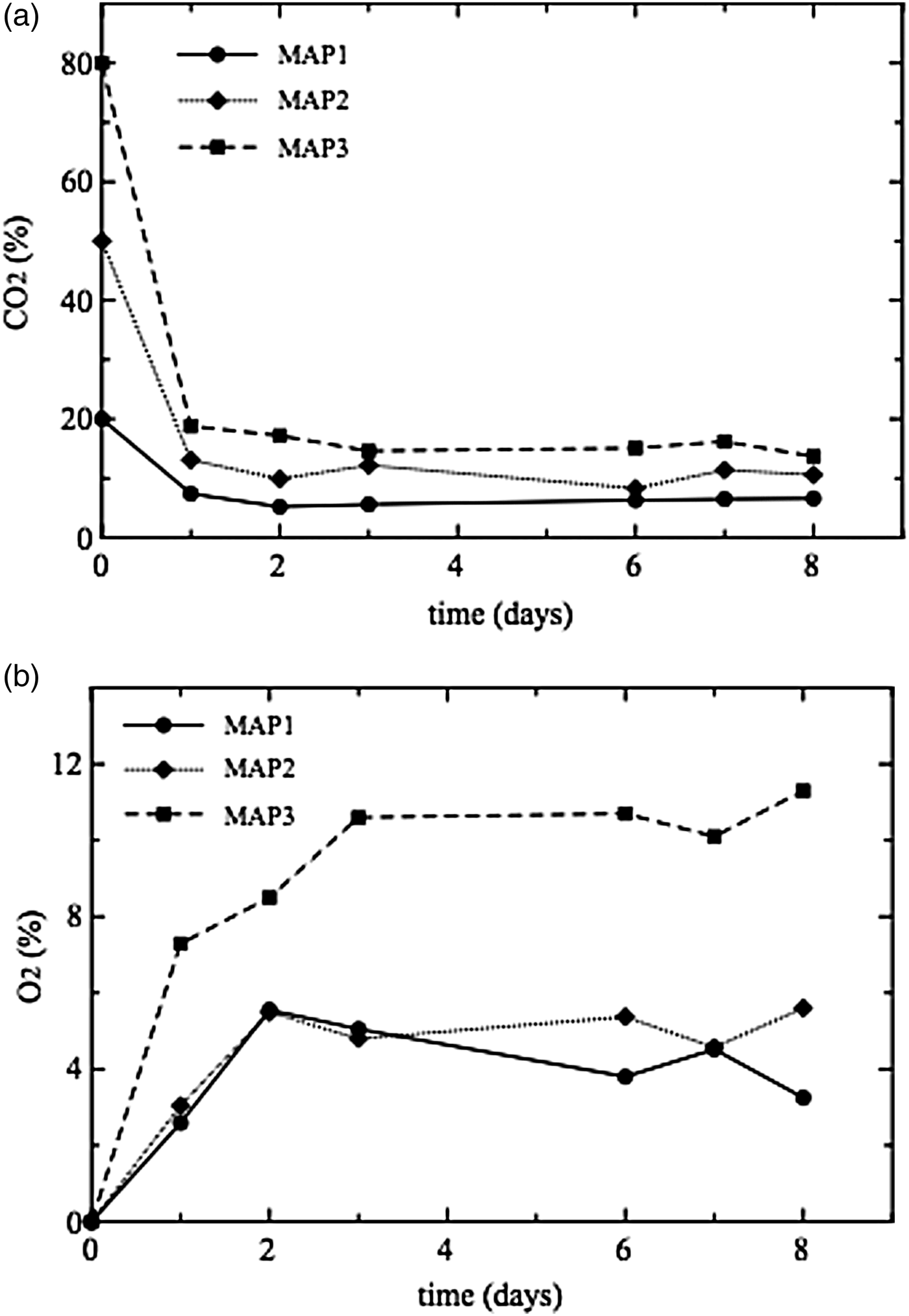
Figure 1 highlights the evolution of headspace gas composition of Fiordilatte packaged in MAP. As can be inferred from the figure, the Fiordilatte samples packaged under MAP show a quick decrease of the CO2 concentration (Fig. 1a). This behaviour was probably due to the gradual solubilization of the CO2 in the covering liquid. Specifically, the Fiordilatte packaged with the highest CO2 concentration (MAP3) presented a CO2 level that decreased down to 20% after the first day of storage. Likewise, the CO2 concentration reached a value of about 13% for the MAP2 and 7% for MAP1. Moreover, the oxygen concentration increased in all samples due to the film permeability until it reached a steady-state after about 3 d of storage (Fig. 1b). In particular, a value of about 11% for MAP3 and 5 and 4% for MAP2 and MAP1, respectively, was observed. It is worth noting that the headspace gas composition for the second and third trial did not show differences compared with the first trial (data not shown).
Evolution of the (a) CO2 and (b) O2 concentration in the headspace composition of the Fiordilatte samples.

Microbiological analyses
Fresh dairy products are ready-to-eat foods easily contaminated by undesirable microorganisms. Some of them are spoilage microorganisms which may produce unwanted visual appearance and diminish the commercial value of cheese, others are pathogens that affect product safety.
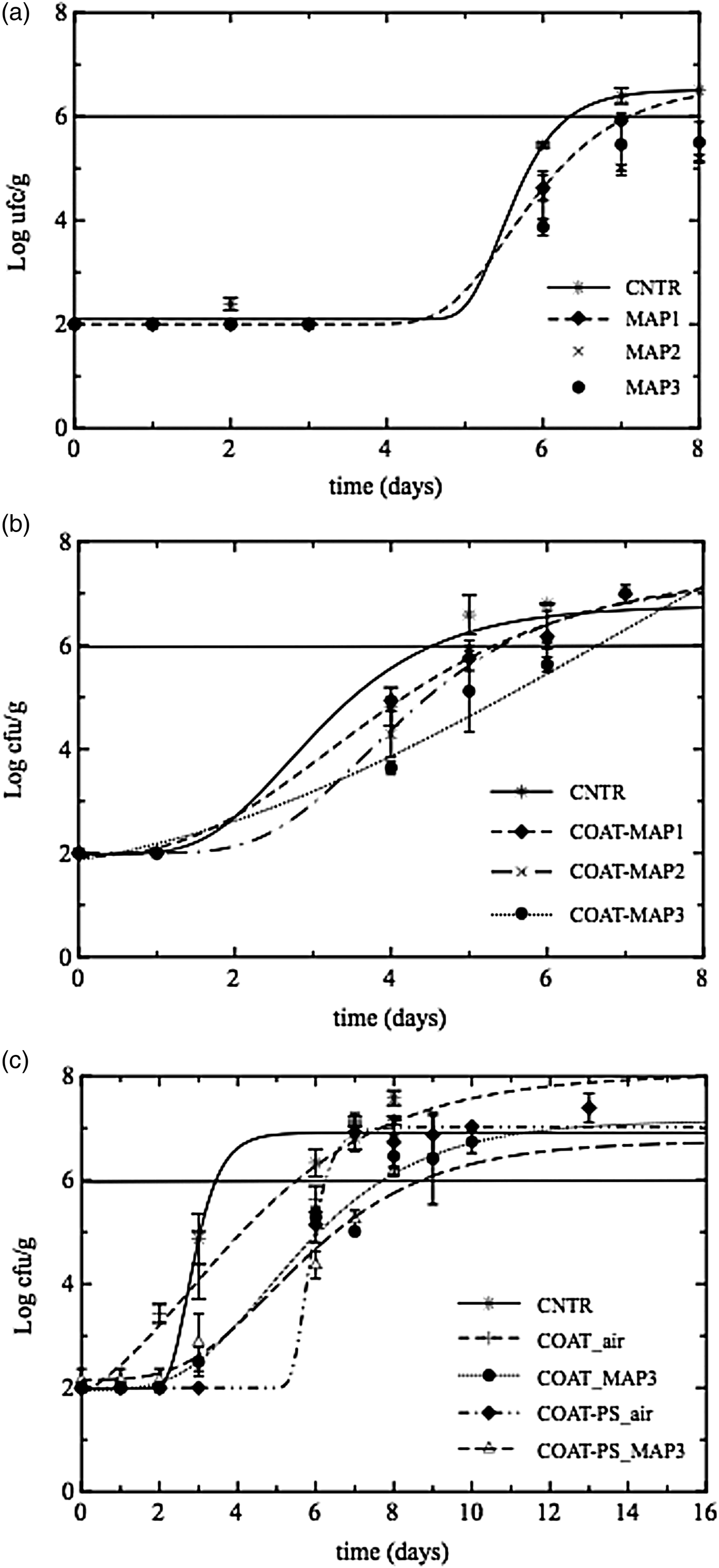
Figure 2 show the evolution of Pseudomonas spp. cell load plotted as a function of storage time for the Fiordilatte cheese samples. The horizontal solid line marks the microbiological threshold value. Concerning the first trial, the packaging of Fiordilatte under MAP with high carbon dioxide concentration (MAP2 and MAP3) was able to keep the Pseudomonas spp. cell load below the microbiological limit for the entire storage period (Fig. 2a). This was probably due to the specific effect of CO2 as confirmed in previous studies (Eliot et al. Reference Eliot, Vuillemard and Emond1998). The lowest CO2 concentration (MAP1) resulted only in a slight delay in reaching the threshold value with respect to the control samples. The evolution of Pseudomonas spp. for the second trial highlighted that the CNTR samples reached first the threshold value followed by the coated samples packaged in MAP1 and MAP2 (Fig. 2b). The presence of high CO2 concentration (MAP3) in the headspace gas composition determined a slower growth of the Pseudomonas spp. that reached the microbiological limit at about 7 d storage. Finally, the effect of active coating and MAP on the growth of Pseudomonas spp. is shown in Fig. 2c. As can be seen, the CNTR samples quickly reached the microbiological limit with respect to the other samples. The coated samples packaged in air with (COAT-PS_air) and without active compound (COAT_air) reached the threshold value at the same time. However, the potassium sorbate loaded in the coating prolonged the lag phase of the Pseudomonas spp. of about 5 d. Potassium sorbate is widely used in many types of foods ranging from cheese and yogurt to dried fruit and meat. When added to water, potassium sorbate breaks down into sorbic acid (sorbate) and ionic potassium (K). It is the sorbic acid that is active as an anti-microbial (Ricke, Reference Ricke2003). The antimicrobial effect of the potassium sorbate on spoilage bacteria such as Pseudomonas flourescens in soft cheese is well documented (Stanojevic et al. Reference Stanojevic, Comic, Stefanovic and Solujc-Sukdolak2009; Azza & Ahmed, Reference Azza and Ahmed2010). Authors stated a per cent reduction of P. fluorescens count at the end of storage period by about 94–99% for cheese containing potassium sorbate at the increasing concentrations (0·02–0·2%). The antimicrobial effect is based on the increase in proton concentration thereby lowering the external pH. Organic acid such as sorbic acid may affect the integrity of microbial cell membrane or cell macromolecules or interfere with nutrient transport and energy metabolism, causing bactericidal effect (Ricke, Reference Ricke2003). The packaging under MAP combined with active coating (COAT-PS_MAP3) slowed down the growth of the Pseudomonas spp. that reached the threshold limit a day after the samples without potassium sorbate (COAT_MAP3). Results confirm literature data on the effect of active coating in combination with MAP on the spoilage microorganisms of dairy product (Conte et al. Reference Conte, Gammariello, Di Giulio, Attanasio and Del Nobile2009; Del Nobile et al. Reference Del Nobile, Gammariello, Conte and Attanasio2009a, Reference Del Nobile, Gammariello, Di Giulio and Conteb). Some studies have recorded the efficacy of natural compounds, alone or in combination with other preservation methods, when directly applied to milk (Cava et al. Reference Cava, Nowak, Taboada and Marin-Iniesta2007) or to cheese by spraying, immersing, or dusting the products. Antimicrobials may also be spread onto the packaging materials that come in contact with the cheese or incorporated into the plastic films used for packaging (Conte et al. Reference Conte, Scrocco, Sinigaglia and Del Nobile2007).
Evolution of Pseudomonas spp. cell load of Fiordilatte of the (a) first, (b) second and (c) third experimental phase.
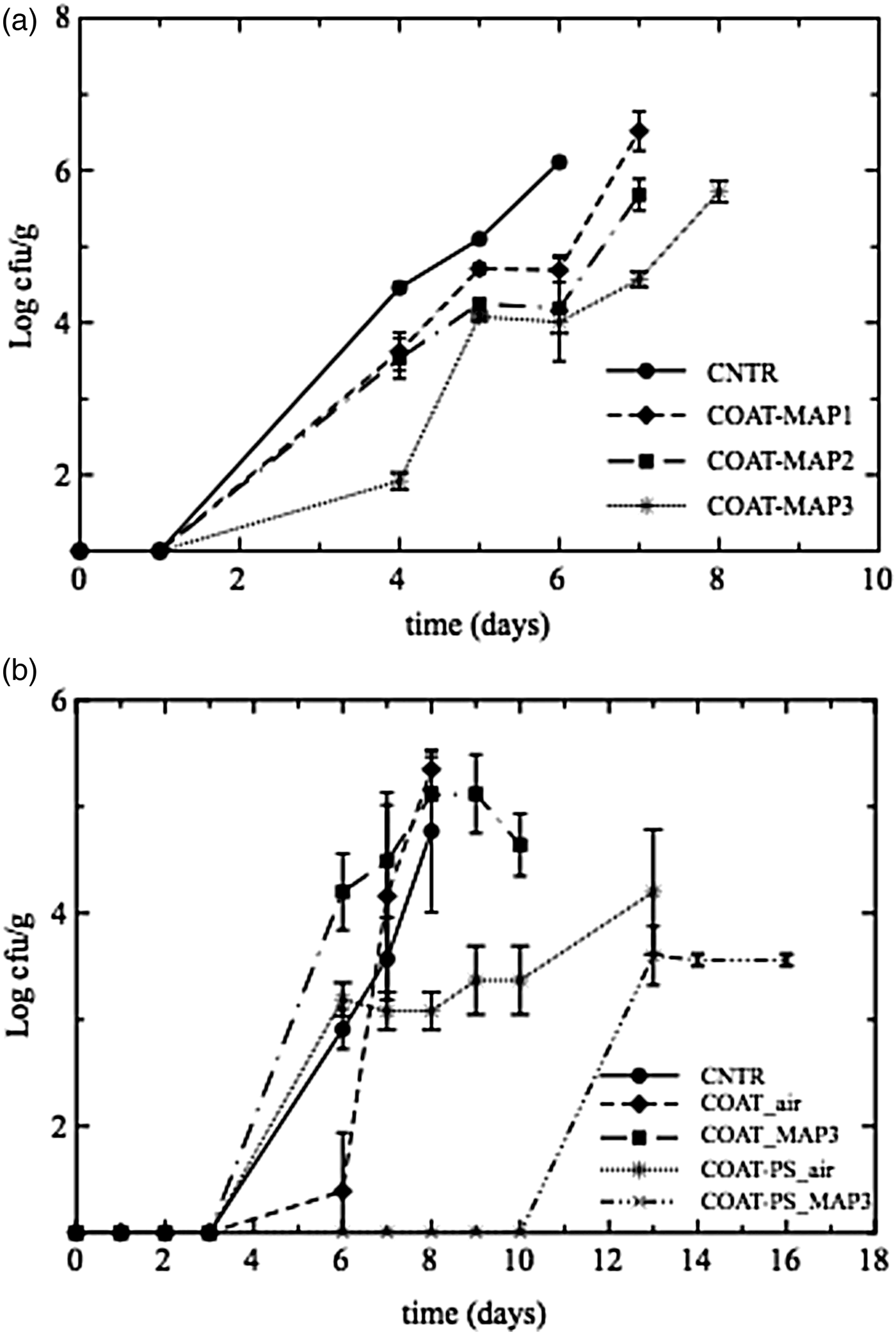
Regarding the other microbial groups investigated in the first trial, the modified atmosphere packaging at the highest CO2 levels (MAP3) affected the growth of total viable count. In particular, at the end of storage the final cell load of MAP3 sample were about 2 log cycle lower (4 log cfu/g) compared with the control and the other MAP sample (6 log cfu/g) (data not shown). The Enterobacteriaceae cell load remained below the detection limit for the entire storage period (data not shown). The most important gas from a microbiological point of view is CO2, used alone or in a mixture with N2 and/or O2, which inhibit the growth of many microorganisms including spoilage bacteria (Daniels et al. Reference Daniels, Krishnamurthi and Rizvi1985). The absence of O2 from the package headspace and the bacteriostatic properties of CO2 may explain this observation. Gammariello et al. (Reference Gammariello, Conte, Attanasio and Del Nobile2009a, Reference Gammariello, Conte, Di Giulio, Attanasio and Del Nobileb) explained that the gas mixture of 95% CO2/5% N2 for Apulian fresh cheeses and 75% CO2/25% N2 for Stracciatella, respectively, were the most effective for the inhibition of spoilage microorganisms. This supported the results obtained in Gonzales-Fandos et al. (Reference Gonzales-Fandos, Sanz and Olarte2000), which showed that CO2 had an inhibitory effect on coliforms on Cameros cheese. The effect of high CO2 levels (MAP3) on the total viable count was confirmed also in the second trial in which the Fiordilatte with coating was packaged under MAP (data not shown). The Enterobacteriaceae cell load was greatly influenced by the MAP conditions. Particularly, the microbial growth decreased with the increase of the CO2 concentration (Fig. 3a).
Evolution of Enterobacteriaceae cell load of Fiordilatte of the (a) second and (b) third experimental phase.
Finally, in the third trial the active coating in combination with MAP was able to slow down the growth of the total viable count more than the MAP alone (data not shown). This effect was more evident on the Enterobacteriaceae cell load (Fig. 3b). It is worth noting that for the COAT-PS_MAP3 sample an extension of the lag phase of about 10 d was observed. After this period an increase of the enterobacteria cell load was detected but the final concentration did not exceed 4 log cfu/g. For the sample with active coating packaged in air (COAT-PS_air) no extension of the lag phase was observed. In this case, the effect of the active coating was highlighted by a lower growth of the Enterobacteriaceae that remained below 4 log cfu/g until 10 d and then increased at 13 d. Literature data reported the antimicrobial effects of potassium sorbate on the same microorganisms (Stanojevic et al. Reference Stanojevic, Comic, Stefanovic and Solujc-Sukdolak2009). The Fiordilatte with the coating alone in air and MAP3 did not lead to a slow down in the growth of Enterobacteriaceae. In most fresh or processed foods, microbial contamination occurs at a higher intensity on the food surface, thus requiring an effective microbial growth control (Padgett et al. Reference Padgett, Han and Dawson1998). Edible antimicrobial films and coatings have been shown to be an efficient alternative in controlling food contamination (Debeaufort et al. Reference Debeaufort, Quezada-Gallo, Voilley and Risch1998). Several natural substances are suitable to develop an active packaging. Conte et al. (Reference Conte, Scrocco, Sinigaglia and Del Nobile2007) successfully tested the effectiveness of a lemon extract release system on Mozzarella cheese. Moreover, the substitution of brine with a natural hydrogel or a bio-based coating could represent another interesting strategy for fresh cheese preservation (Laurienzo et al. Reference Laurienzo, Malinconico, Pizzano, Manzo, Piciocchi, Sorrentino and Volpe2006, Reference Laurienzo, Malinconico, Mazzarella, Petitto, Piciocchi, Stefanile and Volpe2008; Del Nobile et al. Reference Del Nobile, Gammariello, Di Giulio and Conte2010). Relevant results were achieved when an active coating was applied to the product prior to packaging under MAP (Conte et al. Reference Conte, Gammariello, Di Giulio, Attanasio and Del Nobile2009).
The typical dairy microorganisms play an important role in food fermentations, allowing the desired flavour changes to occur and exerting preservative effects on the product. In this study, the applied strategies in all the experimental phases did not affect the growth of typical dairy microorganisms. In particular, the microbial cell load of lactococci and lactic acid bacteria did not differ significantly between control and treated samples (data not shown).
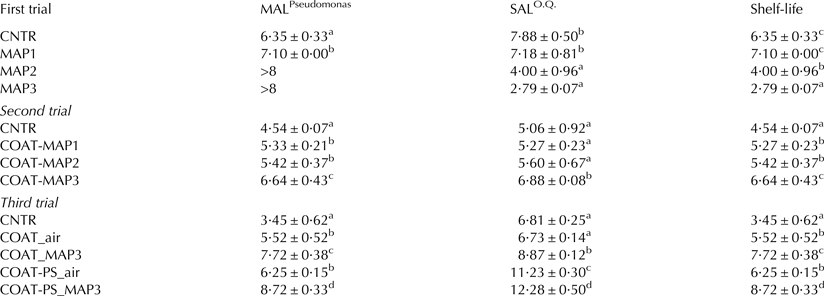
The MALPseudomonas values for the three experimental phases are listed in Table 1. In the first trial, the MALPseudomonas value for the CNTR and MAP1 samples was about 6 and 7 d, respectively. Whilst, the microbial acceptability limit for the MAP2 and MAP3 samples was higher than the monitored period. In the second trial, the Fiordilatte packaged with the highest CO2 level (COAT-MAP3) showed the highest MALPseudomonas value (~6·6 d). No difference for the MALPseudomonas values between the packaging with 20 and 50% of CO2 (MAP1 and MAP2) was observed. In the third trial the packaging under MAP reached the highest value of the microbial acceptability limit. In particular, a value of about 8 and 9 d for coating (COAT_MAP3) and active coating (COAT-PS_MAP3), respectively, was observed. Under air conditions, the presence of active compound in the coating did not affect the microbial acceptability that showed a value of about 6 d.
Microbial (MALPseudomonas), sensorial acceptability limit (SALO.Q.) and shelf life value of the Fiordilatte samples
a–d Data in the same column with different superscript letters are significantly different (P < 0·05)
MAP1: 20% CO2, 80%N2; MAP2: 50% CO2, 50%N2; MAP3: 80% CO2, 20%N2
Sensory analysis
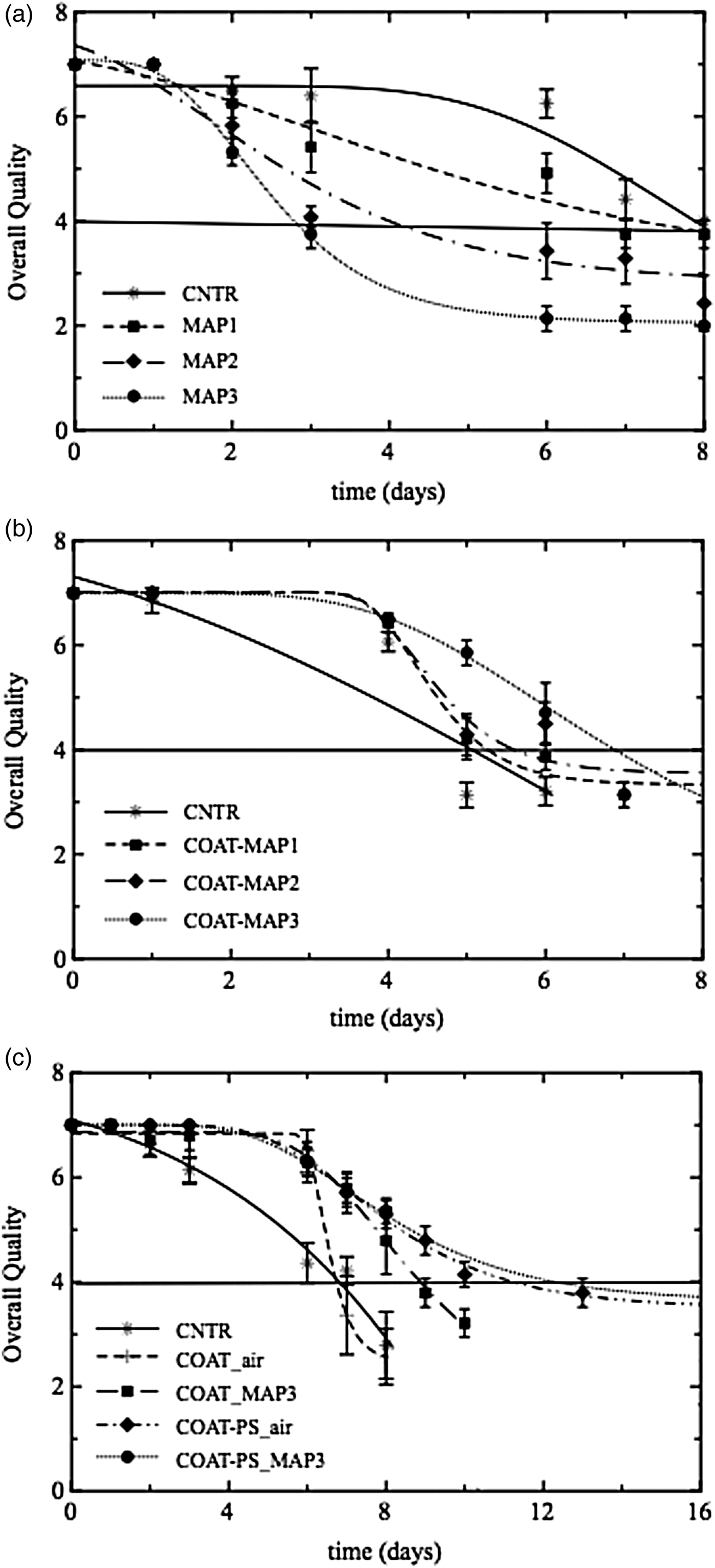
The evolution of overall quality of Fiordilatte samples is shown in Fig. 4. The solid horizontal line in the figure represents the overall quality threshold value. In the first trial, the packaging of Fiordilatte under MAP caused a faster decrease of the overall quality probably due to the gradual solubilisation of the CO2 in the covering liquid (Fig. 4a). Particularly, the development of carbonic acid in the covering liquid negatively affected the texture of Fiordilatte. The overall quality decreased more rapidly with the increasing of the CO2 concentration in the package. In particular, for the CNTR and MAP1 samples a SALOQ value of about 8 d was obtained, whereas at higher CO2 levels in the package (MAP2 and MAP3) a SALOQ value of 3–4 d was recorded (Table 1). The MAP technique has a number of advantages such as quality retention of fresh products, image improvement of the product, extension of shelf life and minimum use of additives and preservatives (Garabal et al. Reference Garabal, Rodríguez-Alonso, Franco and Centeno2010). However, the use of carbon dioxide presents some disadvantages related to the sensorial characteristics such as flavour-related problems. The presence of CO2 is expected to result in a pH drop, which is thought to be associated with the formation of carbonic acid, acidic amino acids and free fatty acid production during proteolysis and lipolysis, respectively (Dermiki et al. Reference Dermiki, Ntzimani, Badeka, Savvaidis and Kontominas2008).
Evolution of overall quality of Fiordilatte of the (a) first, (b) second and (c) third experimental phase.
The presence of the coating on the Fiordilatte surface reduced the damage due to the solubilisation of the CO2 in the covering liquid (Fig. 4b). In fact, in this case the texture did not represent the factor limiting the overall quality that was compromised by the odour attribute. In particular, the overall quality for the CNTR samples rapidly decreased, whereas the MAP1 and MAP2 samples had a high score until 4 d of refrigerated storage and then the score suddenly decreased. The Fiordilatte packaged with high CO2 concentration (COAT-MAP3) reached later the sensorial acceptability limit. A SALOQ value for this samples of about 7 d compared with 5 d for CNTR and samples under low CO2 concentration (COAT-MAP1 and COAT-MAP2) was achieved (Table 1).
Finally, the Fig. 4c shows the evolution of the overall quality of the third trial of Fiordilatte. As can be seen the CNTR and COAT_air samples were first to reach the SALOQ (7 d) followed by the COAT-MAP3 samples (9 d). Then, the active coating both in air and MAP (COAT-PS_air and COAT-PS_MAP3) improved the overall quality of Fiordilatte samples that remained above the threshold value up to 10 d. The factor limiting the overall quality for the third trial was the odour attribute (Table 1).
Shelf life
The shelf life of the Fiordilatte for the three experimental phases was calculated as the lowest value among MALPseudomonas and SALOQ (Table 1). It is worth noting that the CNTR samples for the three trials showed a different shelf life value due to the variability of the Fiordilatte cheese making. Fiordilatte cheese, recognised in Italy as a Guaranteed Traditional Speciality, is manufactured by means of the chemical acidification of the curd or using commercial or natural whey starter cultures (Faccia et al. Reference Faccia, Gammariello, Conte and Del Nobile2013). As can be seen, in the first trial the factor that limited the shelf life of Fiordilatte was the microbial quality for CNTR and MAP1 samples and the sensorial quality for MAP2 and MAP3 samples. The antimicrobial effect of MAP with high CO2 concentrations on the shelf life of dairy products was widely demonstrated (Hotchkiss et al. Reference Hotchkiss, Werner and Lee2006; Conte et al. Reference Conte, Gammariello, Di Giulio, Attanasio and Del Nobile2009; Del Nobile et al. Reference Del Nobile, Gammariello, Conte and Attanasio2009a; Gammariello et al. Reference Gammariello, Conte, Attanasio and Del Nobile2009a). Researchers have reported that different dairy products were well protected from undesirable microorganisms attack and gas formation using high concentrations of CO2 that represents the most important gas from a microbiological point of view (Alves et al. Reference Alves, De Luca, Grigoli, Van Dender and De Assis1996; Eliot et al. Reference Eliot, Vuillemard and Emond1998). However, the use of MAP for packaging of Fiordilatte in traditional brine is limited due to its detrimental effect on the product surface. For this reason, no work concerning the application of the MAP on the Fiordilatte cheese in brine has been made to the best of our knowledge. In the second trial, in order to protect the surface of Fiordilatte from the damage of the CO2 solubilisation, the cheese was covered with coating before packaging in MAP. This approach significantly improved the sensorial acceptability. In particular, the shelf life of Fiordilatte samples was compromised by the microbial quality except for the COAT-MAP1 sample. Edible coatings have properties that make them suitable for increasing food shelf-life. Coatings are mainly employed to extend the shelf life of fresh food improving the structural integrity of the product, reducing modifications in colour, flavour and taste (Volpe et al. Reference Volpe, Malinconico, Varricchio and Paolucci2010). Moreover, the semi-permeable barrier provided by edible coatings is aimed to extend shelf life by reducing moisture and solute migration, gas exchange and oxidative reaction rates.
Finally, in the last experimental phase the microbial quality was the factor that limited the shelf life of the Fiordilatte. It is worth noting that the combined use of active coating and MAP (COAT-PS_MAP3) was able to prolong the shelf life by 157%. Valid synergistic effects between lysozyme/Na2EDTA carried to the product surface by the coating and modified atmosphere packaging on Fiordilatte cheese were demonstrated (Conte et al. Reference Conte, Gammariello, Di Giulio, Attanasio and Del Nobile2009). Moreover, the silver-nanoparticles loaded into the edible coating in combination with MAP were able to control the spoilage bacteria proliferation on Fiordilatte cheese (Gammariello et al. Reference Gammariello, Conte, Buonocore and Del Nobile2011).
Several antimicrobial coatings have been developed to minimise growth of spoilage microorganisms that may contaminate the surface of fresh product (Conte et al. Reference Conte, Gammariello, Di Giulio, Attanasio and Del Nobile2009; Del Nobile et al. Reference Del Nobile, Gammariello, Conte and Attanasio2009a, Reference Del Nobile, Gammariello, Di Giulio and Conteb; Volpe et al. Reference Volpe, Malinconico, Varricchio and Paolucci2010; Aloui et al. Reference Aloui, Khwaldia, Licciardello, Mazzaglia, Muratore, Hamdi and Restuccia2014). However, the combined strategies used in this study highlighted the possibility of extending the shelf life of Fiordilatte in the covering liquid by means a pre-packaging with the purpose of protecting the product surface and carrying the antimicrobial compounds.
Conclusion
The active coating combined with modified atmosphere packaging was used to prolong the shelf life of Fiordilatte cheese. Microbial and sensorial parameters were monitored to determine the quality loss during storage at 8 °C. Results highlight that the packaging at high CO2 levels was able to control the growth of Pseudomonas spp., even though it compromised the sensorial quality of the investigated cheese. The presence of the coating protected the Fiordilatte surface from the damage caused by the solubilisation of the CO2 in the covering liquid. The use of active compounds, such as potassium sorbate, loaded with coating combined with MAP reduced physiological changes and microbial growth. In fact, the antimicrobial effect of the potassium sorbate against spoilage bacteria was able to increase the shelf life of the product. Moreover, the combined use of active coating and modified atmosphere packaging was able to prolong the product shelf life of about 157%.
This work was financially supported by Ministero dell'Economia e delle Finanze, Ministero dell'Istruzione, dell'Università e della Ricerca Scientifica e Tecnologica e l'Assessorato Bilancio e Programmazione Regione Puglia by the programme PON 01_00851 – ‘Bioinnovazioni per produzioni lattiero casearie ad elevato contenuto salutistico’.