Introduction
Older adults with dementia suffer from high rates of medical comorbidities (Alzheimer’s Association, 2019) and are thus exposed to a greater burden of medications. Roughly half of persons with dementia receive five or more concurrent medications, which could be defined as polypharmacy (Leelakanok and D’Cunha, Reference Leelakanok and D’Cunha2019; Masnoon et al., Reference Masnoon, Shakib, Kalisch-Ellett and Caughey2017). In epidemiological studies, the prevalence of general polypharmacy ranges from 43% to 63% in the community, nursing homes (NHs), and hospital settings with no major differences dependent on the site of care (Clague et al., Reference Clague, Mercer, McLean, Reynish and Guthrie2017; Fereshtehnejad et al., Reference Fereshtehnejad, Johnell and Eriksdotter2014; Kristensen et al., Reference Kristensen, Nørgaard, Jensen-Dahm, Gasse, Wimberley and Waldemar2018; Mizokami et al., Reference Mizokami, Koide, Noro and Furuta2012; Vetrano et al., Reference Vetrano2013). Additionally, NH residents are exposed to a greater burden of potentially inappropriate medications – many being psychotropics – in comparison to their community-dwelling counterparts (Morin et al., Reference Morin, Laroche, Texier and Johnell2016; Shah et al., Reference Shah, Carey, Harris, DeWilde and Cook2012). Psychotropic polypharmacy can be defined as taking several psychotropic medications concurrently. The prevalence of psychotropic polypharmacy in community-dwelling or hospital-based samples (Breining et al., Reference Breining2017; Jacquin-Piques et al., Reference Jacquin-Piques2016; Oesterhus et al., Reference Oesterhus, Aarsland, Soennesyn, Rongve, Selbæk and Kjosavik2017; Orsel et al., Reference Orsel2018; Walsh et al., Reference Walsh, O’Regan, Byrne, Browne, Meagher and Timmons2016) is relatively low in comparison to NHs. NHs vary widely from 17% (Thapa et al., Reference Thapa, Gideon, Fought and Ray1995) to 71% (Simpson et al., Reference Simpson, Richards, Enderlin, O’Sullivan and Koehn2006) when defining psychotropic polypharmacy as two-or-more medications, and from 4% (Eggermont et al., Reference Eggermont, de Vries and Scherder2009) to 47% (Massot Mesquida et al., Reference Massot Mesquida, Tristany Casas, Franzi Siso, Garcia Munoz, Hernandez Vian and Toran Monserrat2019) when defining psychotropic polypharmacy as three-or-more medications.
Several large, epidemiological, studies examined the prevalence of psychotropic polypharmacy in NH residents. In Canada, Iaboni and colleagues (Reference Iaboni2016) found that 80% of those prescribed a benzodiazepine had at least one other psychotropic medication in a sample of 84,210 residents in 2013 in comparison to 65% in 2002. Vasudev and colleagues (Reference Vasudev2015) found that 50% of NH residents with dementia were prescribed at least two psychotropic medications in a sample of 59,785 residents. In Denmark, Nørgaard and colleagues (Reference Nørgaard, Jensen-Dahm, Gasse, Hansen and Waldemar2017) estimated this prevalence to be 31% in a sample of 17,080 residents. Other European countries have estimated the prevalence to be 48% (Jacquin-Piques et al., Reference Jacquin-Piques2016) in a French sample of 4,500 residents and 41% (Gulla et al., Reference Gulla, Selbæk, Flo, Kjome, Kirkevold and Husebo2016) in a Norwegian sample of 4,739 residents.
Given this heterogeneity, we had two goals: (1) to pool the point prevalence estimates of psychotropic polypharmacy from the existing literature using meta-analyses and (2) to examine potentially influential factors that are related to a higher or lower point prevalence using meta-regression. Previous work suggests that younger age and female sex may be associated with greater psychotropic prescribing in NH residents (Nørgaard et al., Reference Nørgaard, Jensen-Dahm, Gasse, Hansen and Waldemar2017; Olsson et al., Reference Olsson2010; Ruths et al., Reference Ruths2013). Additionally, psychotropic polypharmacy prescribing may change over time or vary by country due to cultural differences in prescribing patterns and policies (Gulla et al., Reference Gulla, Selbæk, Flo, Kjome, Kirkevold and Husebo2016; Nygaard et al., Reference Nygaard, Ruths, Straand and Naik2004; Ruths et al., Reference Ruths2013; Schjøtt and Aßmus, Reference Schjøtt and Aßmus2019; Vasudev et al., Reference Vasudev2015). In order to better understand how these contextual factors impact the pooled prevalence of psychotropic polypharmacy, we examined: the percentage of the sample who were male, mean age of the sample, geographic region (continent), sample size to measure small-sample bias, and study year to index the effect of time and medication-related policies. Because psychotropic polypharmacy can be defined as two-or-more or three-or-more concurrent psychotropic medications, we provide estimates for both definitions. Although this manuscript does not seek to evaluate the appropriateness of the medications or adverse effects, we do report such data if presented in the cited articles. This is the first meta-analysis that specifically focuses on psychotropic polypharmacy in NH residents with dementia.
Methods
Relevant articles were searched for using PubMed and PsycINFO, with the following search terms: ([psychotropic OR psychoactive OR “psychiatric drug” OR “psychiatric medication”] AND [“AD” OR “ADRD” OR Alzheimer* OR dement* OR cogniti* OR neurocogniti*] AND [“nursing home” OR “nursing homes” OR “care home” OR “care homes” OR “care facility” OR “care facilities” OR “assisted care” OR “skilled nursing facility” OR “skilled nursing facilities” OR “skilled nursing home” OR “skilled nursing homes” OR “long term care” OR “long-term care” OR “homes for the aged” OR “aged care” OR “intermediate care facility” OR “intermediate care facilities” OR “residential facility” OR “residential facilities” OR “residential care facility” OR “residential care facilities” OR “old age home” OR “old age homes” OR “institutional care”]). Search terms were compiled using Medical Subject Heading (MeSH) trees in PubMed and adjusted with the assistance of an information and library science expert. Each search encompassed all fields (e.g. title, abstract, keywords, MeSH terms, full-text) given that some articles only mention utilization of psychotropic polypharmacy in the body of the text.
Inclusion criteria
Articles were included if they were published in peer-reviewed journals until November 04, 2020, published in or translated into English, and used human subjects. Inclusion criteria required that studies: (1) reported the point prevalence of psychotropic use by two-or-more or three-or-more medications (or reported sufficient data to calculate a prevalence by hand), (2) did not restrict combinations of psychotropics (e.g. studies only reporting on residents who were prescribed an antipsychotic were excluded), (3) were collected for NH residents, and (4) exclusively examined residents with dementia or implied serious cognitive impairment (e.g. through a Mini-Mental State Exam). Case studies, reviews, and meta-analyses were excluded. If the study was longitudinal, data from the most recent wave were extracted. If the study was a controlled trial or other intervention, data from the baseline were extracted.
Search results
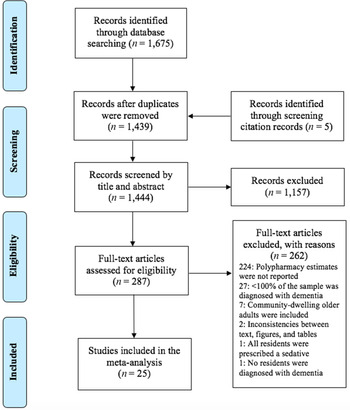
The initial search identified 1,675 articles between the two databases, and 236 were removed because they were duplicate publications. Citation records were screened and five additional articles were found, leaving 1,444 titles and abstracts to be assessed for potential inclusion. Of the 1,444 titles and abstracts, 1,157 were excluded and 287 articles underwent full-text screening. From the 287 articles, 262 were excluded for the following reasons: 224 reported no estimate of psychotropic polypharmacy, 27 included NH residents without dementia, 7 studies included community-dwelling older adults, 2 studies had inconsistencies between text, figures, and tables that made data extraction problematic, one study examined psychotropic polypharmacy only in NH residents who received at least one sedative medication, and one study included residents without dementia. This left 25 articles for meta-analysis (Bartels et al., Reference Bartels2003; Bellelli et al., Reference Bellelli1998; Eggermont et al., Reference Eggermont, de Vries and Scherder2009; Gerridzen and Coossensen, Reference Gerridzen and Coossensen2014; Gustafsson et al., Reference Gustafsson, Karlsson, Gustafson and Lövheim2013; Jacquin-Piques et al., Reference Jacquin-Piques2016; Kim and Whall, Reference Kim and Whall2006; Lippert et al., Reference Lippert2020; Massot Mesquida et al., Reference Massot Mesquida, Tristany Casas, Franzi Siso, Garcia Munoz, Hernandez Vian and Toran Monserrat2019; McMaster et al., Reference McMaster, Fielding, Lim, Moyle and Beattie2018; Midlöv et al., Reference Midlöv, Andersson, Östgren and Mölstad2014; Mjørud et al., Reference Mjørud, Kirkevold, Røsvik, Selbæk and Engedal2014a; Mjørud et al., Reference Mjørud, Røsvik, Rokstad, Kirkevold and Engedal2014b; Moyle et al., Reference Moyle2017; Mulders et al., Reference Mulders, Zuidema, Leeuwis, Bor, Verhey and Koopmans2019; Nijk et al., Reference Nijk, Zuidema and Koopmans2009; Nørgaard et al., Reference Nørgaard, Jensen-Dahm, Gasse, Hansen and Waldemar2017; Ozaki et al., Reference Ozaki, Katsumata and Arai2017; Pasina et al., Reference Pasina, Novella, Cortesi, Nobili, Tettamanti and Ianes2020; Resnick et al., Reference Resnick2019; Rolland et al., Reference Rolland, Andrieu, Crochard, Goni, Hein and Vellas2012; Ryden et al., Reference Ryden1999; Simpson et al., Reference Simpson, Richards, Enderlin, O’Sullivan and Koehn2006; Vasudev et al., Reference Vasudev2015; Wetzels et al., Reference Wetzels, Zuidema, de Jonghe, Verhey and Koopmans2011). Figure 1 shows a Preferred Reporting Items for Systematic Reviews and Meta-Analyses (PRISMA) flowchart that highlights the screening methodology. Excluded studies are available upon request.
PRISMA chart describing the method of article exclusion.
Note. PRISMA = Preferred Reporting Items for Systematic Reviews and Meta-Analyses. The online databases PubMed and PsychInfo were used. The following search terms were applied: [(psychotropic OR psychoactive OR “psychiatric drug” OR “psychiatric medication”) AND (“AD” OR “ADRD” OR Alzheimer* OR dement* OR cogniti* OR neurocogniti*) AND (“nursing home” OR “nursing homes” OR “care home” OR “care homes” OR “care facility” OR “care facilities” OR “assisted care” OR “skilled nursing facility” OR “skilled nursing facilities” OR “skilled nursing home” OR “skilled nursing homes” OR “long term care” OR “long-term care” OR “homes for the aged” OR “aged care” OR “intermediate care facility” OR “intermediate care facilities” OR “residential facility” OR “residential facilities” OR “residential care facility” OR “residential care facilities” OR “old age home” OR “old age homes” OR “institutional care”)].

Meta-analysis
Due to the differences in study methodology and geography, random-effects models were used. Models separately examined the proportion of residents in the NH who received two-or-more psychotropic medications and three-or-more psychotropic medications. This was due to the lack of consensus of “psychotropic polypharmacy” in the literature. An inverse variance method was used to estimate the random-effects model and a simple approximation interval was used to estimate the confidence intervals.
Between-study variance was measured with τ2, with larger values suggesting greater between-study variance. The percentage of between-study heterogeneity not solely caused by sampling error was reported as I 2 . The statistical significance of the between-study heterogeneity was estimated with Cochran’s Q (p < 0.05 suggests statistically relevant between-study heterogeneity). Publication bias was examined visually with a funnel plot and statistically with Egger’s Test of the Intercept (p < 0.05 indicates asymmetry and concern of publication bias). For significant publication bias, models were re-analyzed using a trim-and-fill method to adjust for funnel plot asymmetry as sensitivity analyses.
Meta-regression was conducted with the main dependent variable being the proportion of residents receiving psychotropic polypharmacy. For studies that did not directly report these values, approximations were made with the available data (e.g. if a study did not report the number of residents affected, the proportion found within the article was multiplied by the sample size and rounded). The independent variables were sample size (to examine for small-sample bias), geographic region (continent was used in lieu of country due to few estimates for most countries), percentage of the sample who were male (sex differences), mean age of the sample (age differences), and study year (effect of policies and prescribing culture over time). For studies that provided age or sex by group, a weighted average was extracted. Both univariate (unadjusted) and multivariate (adjusted) models were examined. Estimates were exponentiated and reported as odds ratios (ORs) with 95% confidence intervals. Restricted maximum likelihood estimation was used. Meta-analyses and meta-regressions were conducted using R 3.6.1 (“meta” package).
Results
Characteristics of the included studies
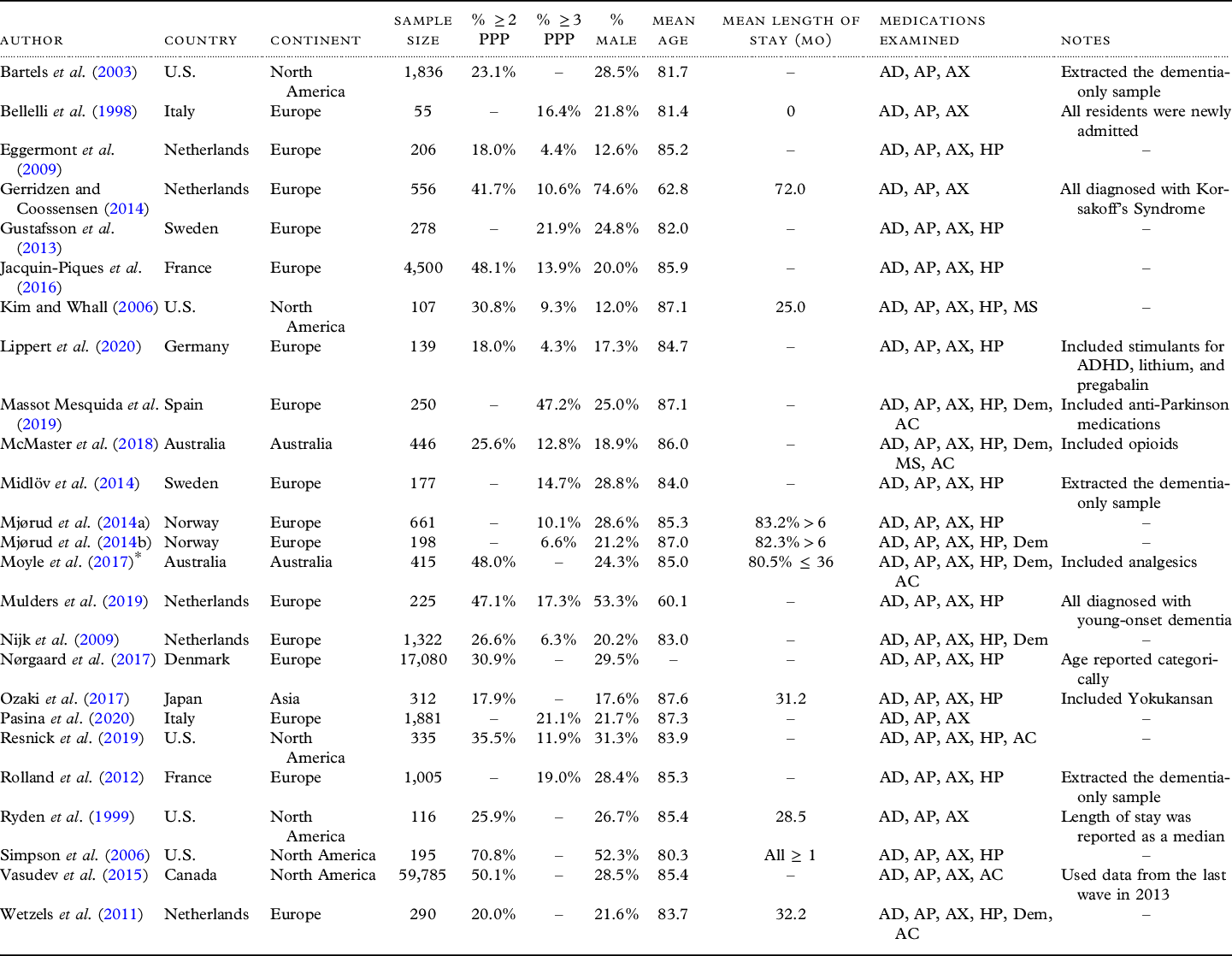
In total, 25 unique articles were included comprising medications data from 92,370 NH residents. Of the 25 studies, 17 provided an estimate of psychotropic polypharmacy that encompassed two-or-more medications and 17 provided an estimate of psychotropic polypharmacy that encompassed three-or-more medications (see Table 1). Twelve countries were sampled: Australia (n = 2; McMaster et al., Reference McMaster, Fielding, Lim, Moyle and Beattie2018; Moyle et al., Reference Moyle2017), Canada (n = 1; Vasudev et al., Reference Vasudev2015), Denmark (n = 1; Nørgaard et al., Reference Nørgaard, Jensen-Dahm, Gasse, Hansen and Waldemar2017), France (n = 2; Jacquin-Piques et al., Reference Jacquin-Piques2016; Rolland et al., Reference Rolland, Andrieu, Crochard, Goni, Hein and Vellas2012), Germany (n = 1; Lippert et al., Reference Lippert2020), Italy (n = 2; Bellelli et al., Reference Bellelli1998; Pasina et al., Reference Pasina, Novella, Cortesi, Nobili, Tettamanti and Ianes2020), Japan (n = 1; Ozaki et al., Reference Ozaki, Katsumata and Arai2017), Netherlands (n = 5; Eggermont et al., Reference Eggermont, de Vries and Scherder2009; Gerridzen and Coossensen, Reference Gerridzen and Coossensen2014; Mulders et al., Reference Mulders, Zuidema, Leeuwis, Bor, Verhey and Koopmans2019; Nijk et al., Reference Nijk, Zuidema and Koopmans2009; Wetzels et al., Reference Wetzels, Zuidema, de Jonghe, Verhey and Koopmans2011), Norway (n = 2; Mjørud et al., Reference Mjørud, Kirkevold, Røsvik, Selbæk and Engedal2014a; Mjørud et al., Reference Mjørud, Røsvik, Rokstad, Kirkevold and Engedal2014b), Spain (n = 1; Massot Mesquida et al., Reference Massot Mesquida, Tristany Casas, Franzi Siso, Garcia Munoz, Hernandez Vian and Toran Monserrat2019), Sweden (n = 2; Gustafsson et al., Reference Gustafsson, Karlsson, Gustafson and Lövheim2013; Midlöv et al., Reference Midlöv, Andersson, Östgren and Mölstad2014), and the United States (n = 5; Bartels et al., Reference Bartels2003; Kim and Whall, Reference Kim and Whall2006; Resnick et al., Reference Resnick2019; Ryden et al., Reference Ryden1999; Simpson et al., Reference Simpson, Richards, Enderlin, O’Sullivan and Koehn2006). Included studies were published as early as 1998, though 72.0% (n = 18) were published since 2010. Sample sizes ranged from 55 to 59,785 with a median of 312 residents. One study examined early-onset dementia (Mulders et al., Reference Mulders, Zuidema, Leeuwis, Bor, Verhey and Koopmans2019) and another study examined residents with Korsakoff’s Syndrome (Gerridzen and Coossensen, Reference Gerridzen and Coossensen2014). The mean percentage of male residents was 27.6% and ranged from 12.0% to 74.6%. Resident samples were 82.8 years old on average and ranged from 60.1 to 87.6 years. Length of stay was only reported in 40.0% (n = 10) of the studies, despite 96.0% of the studies sampling from established residents (i.e. not newly-admitted).
Characteristics of the 25 included studies

Notes. Due to differences in reporting by authors, some values were estimated with data found within the full-text. ADHD = Attention Deficit Hyperactive Disorder, AC = Anticonvulsant, AD = Antidepressant, AP = Antipsychotic, AX = Anxiolytic, Dem = Anti-dementia, HP = Sedative–Hypnotic, MS = Mood stabilizer, PPP = Psychotropic Polypharmacy. If length of stay was reported in days, it was converted to months by a factor of 30.4375 (365.25/12) days to 1 month. “*” The prevalence reported by Moyle et al. (Reference Moyle2017) is stated as “more than one CNS medication” in the Results section of the manuscript, but the table suggets greater than or equal to one medication. It is retained in the analyses despite the descrepancy.
Defining psychotropic medications
Studies also varied in their definition of psychotropic medications. Nearly half (44.0%, n = 11) of the studies defined psychotropics as: antipsychotics, antidepressants, anxiolytics, and sedative-hypnotics. However, some included anti-dementia medications (24.0%, n = 6), anticonvulsants (24.0%, n = 6), mood stabilizers (8.0%, n = 2), analgesics/opioids (8.0%, n = 2), anti-Parkinson medications (4.0%, n = 1), stimulants for the treatment of attention deficit hyperactive disorder (4.0%, n = 1), pregabalin (4.0%, n = 1), lithium without other mood stabilizers (4.0%, n = 1), or the Eastern medicine Yokukansan (4.0%, n = 1).
Prevalence of psychotropic polypharmacy
Two-or-more psychotropic medications
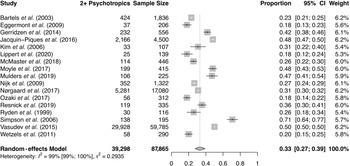
Pooled effects comprised 87,865 NH residents from 8 countries and 17 studies. The random-effects model estimated the prevalence of psychotropic polypharmacy to be 33.0% (95% CI: 27.5%, 39.1%) (see Figure 2). This prevalence was highly variable across studies (Q = 2,844.38, p < 0.001; I 2 = 99.4% [99.3%, 99.5%]; τ2 = 0.29 [0.14, 1.12]), though no substantial concern of publication bias was found (see Figure S1 in Supplementary material; p = 0.12). Univariate meta-regression revealed a statistically significant effect of a higher proportion of male residents on the prevalence of psychotropic polypharmacy (Unadjusted OR = 1.02 [95% CI: 1.01, 1.04], p = 0.006). In the fully-adjusted model (i.e. controlling for mean age of the sample, geographic region, sample size, and study year), the proportion of male residents was no longer statistically significant (Adjusted OR = 1.04, [95% CI: 1.00, 1.09], p = 0.07; R 2 = 21.2%, Test for Residual Heterogeneity: p < 0.001, Test of Moderators: p = 0.14). All other covariates were not statistically significant in the unadjusted or adjusted models.
Forest plot pooling the prevalence of psychotropic polypharmacy (2+ medications).

Prescribing patterns
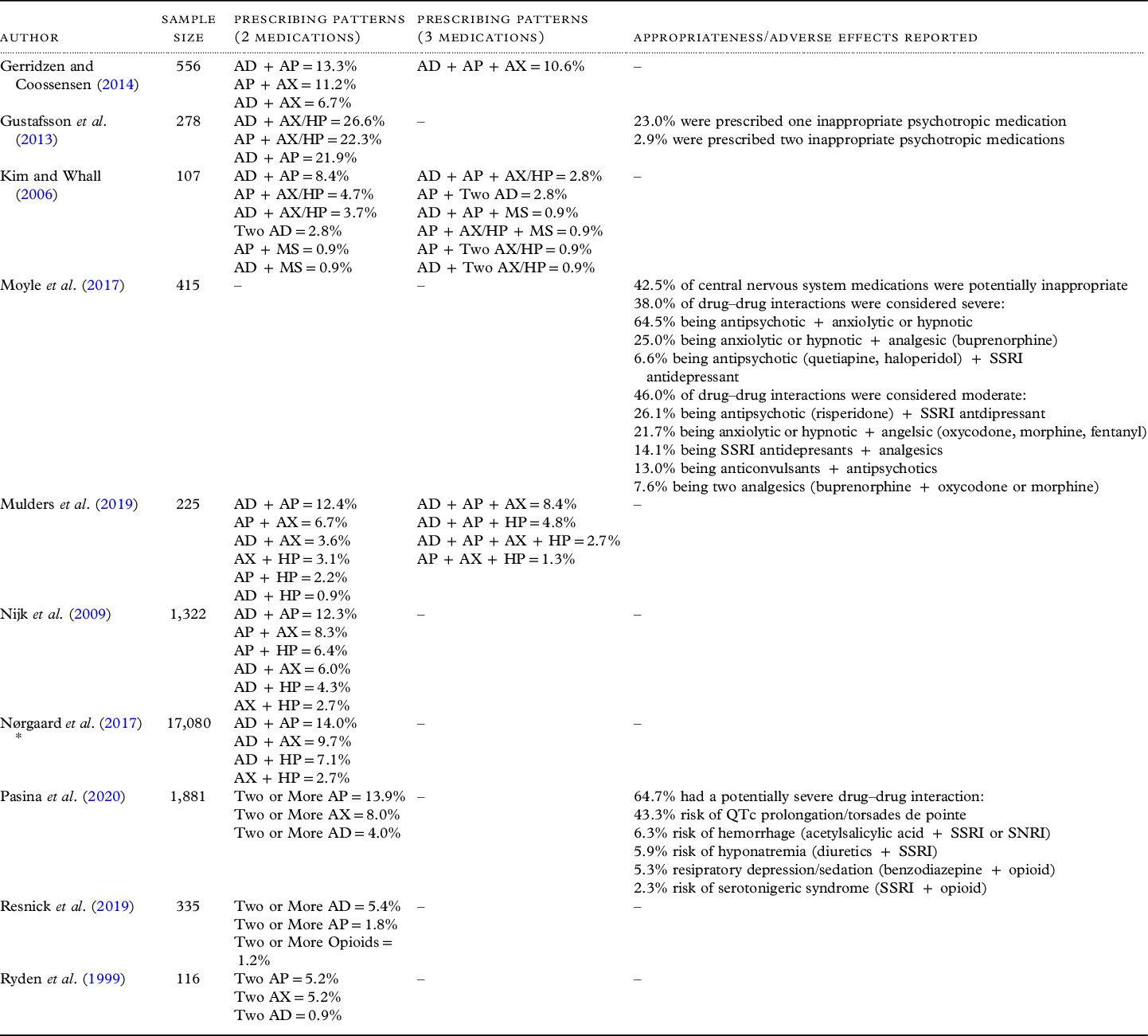
See Table 2 for studies reporting prescribing patterns for two concurrent medications. Antipsychotics were most often prescribed in conjunction with another medication, whether that was an antidepressant (Md: 12.9%; Range: 8.4%–21.9%), an anxiolytic (Md: 8.3%; Range: 6.7%–11.2%), or a sedative-hypnotic (Md: 4.3%; Range: 2.2%–6.4%). Two studies reported the prevalence of an antipsychotic with either an anxiolytic or sedative-hypnotic at 4.7% (Kim and Whall, Reference Kim and Whall2006) and 22.3% (Gustafsson et al., Reference Gustafsson, Karlsson, Gustafson and Lövheim2013). Antidepressants were prescribed less often with an anxiolytic (Md: 6.4%; Range: 3.6%–9.7%) or sedative-hypnotic (Md: 4.3%; Range: 0.9%–7.1%). Two studies reported the prevalence of an antidepressant with either an anxiolytic or sedative-hypnotic at 3.7% (Kim and Whall, Reference Kim and Whall2006) and 26.6% (Gustafsson et al., Reference Gustafsson, Karlsson, Gustafson and Lövheim2013). Anxiolytic and sedative–hypnotic combination therapy was less common (Md: 2.7%; Range: 2.7%–3.1%). Others reported duplicate therapy (i.e. two of the same psychotropic therapeutic class). Duplicate antidepressant therapy was provided most often by studies (Md: 3.4%; Range: 0.9%–5.4%) followed by duplicate antipsychotic therapy (Md: 5.2%, Range: 1.8%–13.9%). Two studies reported duplicate anxiolytic therapy at 8.0% (Pasina et al., Reference Pasina, Novella, Cortesi, Nobili, Tettamanti and Ianes2020) and 5.2% (Ryden et al., Reference Ryden1999).
Psychotropic prescribing combinations, appropriateness of the medications, and adverse effects

Notes. AD = Antidepressant, AP = Antipsychotic, AX = Anxiolytic, Dem = Anti-dementia, HP = Sedative–Hypnotic, MS = Mood stabilizer, SSRI = Selective Serotonin Reuptake Inhibitor, SNRI = Serotonin–norepinephrine reuptake inhibitor. “*” Nørgaard and colleauges (Reference Nørgaard, Jensen-Dahm, Gasse, Hansen and Waldemar2017) report psychotropic polypharmacy prescribing patterns in the full sample of 34,553 adults, which includes 17,473 community-dwelling and 17,080 nursing home residents. Estimates exclusive for nursing home residents were not reported.
Three-or-more psychotropic medications
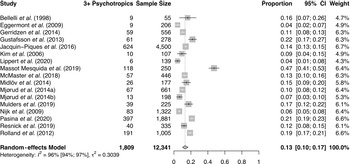
Pooled effects comprised 12,341 NH residents from 9 countries and 17 studies. The random-effects model estimated the prevalence of psychotropic polypharmacy to be 13.1% (95% CI: 10.2%, 16.7%) (see Figure 3). This prevalence was highly variable across studies (Q = 379.54, p < 0.001; I 2 = 95.8% [94.4%, 96.8%]; τ2 = 0.30 [0.20, 1.10]), and concern of publication bias was found (see Figure S2 in Supplementary mterial; p = 0.03). Meta-regression revealed no statistically significant contribution of the percentage of the sample who were male, mean age of the sample, geographic region, sample size, and study year on the prevalence in both unadjusted and adjusted models (all p > 0.05, R 2 = 0%, Test for Residual Heterogeneity: p < 0.001, Test of Moderators: p = 0.96).
Forest plot pooling the prevalence of psychotropic polypharmacy (3+ medications).

Prescribing patterns
See Table 2 for studies reporting prescribing patterns for three concurrent medications. Gerridzen and Coossensen (Reference Gerridzen and Coossensen2014) reported that 10.6% of residents received an antipsychotic, an antidepressant, and an anxiolytic. Mulders and colleagues (Reference Mulders, Zuidema, Leeuwis, Bor, Verhey and Koopmans2019) found this rate to be 8.4%, but also listed other combinations such as antipsychotic, antidepressant, and a sedative–hypnotic (4.8%), antipsychotic, anxiolytic, and a sedative–hypnotic (1.3%), or receiving all four psychotropic classes (2.7%). Kim and Whall (Reference Kim and Whall2006) found that 2.8% of residents received an antipsychotic, an antidepressant, and an anxiolytic or sedative–hypnotic. Regarding duplicate therapy, Kim and Whall (Reference Kim and Whall2006) also found duplicate antidepressants paired with an antipsychotic (2.8%), and duplicate anxiolytics or sedative-hypnotics paired with an antidepressant (0.9%) or an antipsychotic (0.9%).
Appropriateness and adverse effects
See Table 2 for studies that analyzed the appropriateness of prescribing or adverse outcomes. Gustafsson and colleagues (Reference Gustafsson, Karlsson, Gustafson and Lövheim2013) estimated that 23.0% of residents were prescribed one inappropriate psychotropic medication and 2.9% were prescribed two inappropriate psychotropic medications concurrently. Moyle and colleagues (Reference Moyle2017) found that 42.5% of the prescriptions were potentially inappropriate and also examined 200 potential drug–drug interactions. Interactions were assessed for their suspected severity, with 46.0% being considered moderate and 38.0% being considered severe. Of the potential moderate interactions, antipsychotic–antidepressant combination therapy was the most common (26.1%) when risperidone was paired with a selective serotonin reuptake inhibitor (SSRI) antidepressant, followed by an anxiolytic or sedative–hypnotic paired with an analgesic (21.7%). Of the potential severe interactions, 64.5% were when an antipsychotic was paired with an anxiolytic or sedative–hypnotic, 25.0% were an anxiolytic or sedative–hypnotic paired with the analgesic buprenorphine, and 6.6% were an antipsychotic–antidepressant combination therapy when quetiapine or haloperidol was prescribed alongside a SSRI antidepressant. Pasina and colleagues (Reference Pasina, Novella, Cortesi, Nobili, Tettamanti and Ianes2020) found that 64.7% of residents had a potentially severe drug–drug interaction. Residents had an increased risk of QTc prolongation and torsades de pointe (43.3%), haemorrhage (6.3%), hyponatremia (5.9%), respiratory depression and sedation (5.3%), and serotoninergic syndrome (2.3%). These potential adverse effects were mostly due to SSRIs in combination with other medications (e.g. acetylsalicylic acid, diuretics, opioids) or benzodiazepines prescribed alongside opioids (Pasina et al., Reference Pasina, Novella, Cortesi, Nobili, Tettamanti and Ianes2020).
Sensitivity analyses
Among studies that defined psychotropics as antipsychotics, antidepressants, anxiolytics, and sedative–hypnotics (i.e. excluding studies that included anti-dementia medications, anticonvulsants, mood stabilizers, analgesics/opioids, anti-Parkinson medications, stimulants, pregabalin, lithium, or Yokukansan), pooled prevalence estimates were consistent. After correcting for funnel plot asymmetry and reducing publication bias with the trim-and-fill method, the random-effects model estimated the pooled prevalence of psychotropic polypharmacy to be 16.9% (95% CI: 13.3%, 21.1%) for three-or-more medications. The adjusted prevalence of 16.9% was statistically higher than the original prevalence of 13.1% (Z = 2.08, p = 0.04), suggesting that publication bias may have affected the prevalence reported in the literature.
Discussion
Using meta-analysis, we pooled data from 25 studies comprised of 92,370 residents and 12 countries. One-in-three (33%) NH residents with dementia received two-or-more psychotropic medications concurrently, and one-in-eight (13%) received three-or-more psychotropic medications concurrently. Although we were unable to determine the appropriateness of psychotropic medication combinations, such heavy medication usage is cause for concern, particularly with this frail NH population with dementia who frequently also take multiple non-psychotropic medications. Substantial between-study variability was found in both models (two-or-more medications range: 18%–71%; three-or-more medications range: 4%–47%), suggesting that sampling error alone could not explain the differences between prevalence estimates.
Seeing this, we examined the effects of the percentage of the sample who were male, mean age of the sample, geographic region (continent), sample size, and study year using meta-regression. In unadjusted models, a larger proportion of male residents was associated with a higher prevalence of psychotropic polypharmacy if defined as two-or-more medications. After controlling for other study-level demographics, geographic region, sample size, and study year, this effect approached marginal significance (p = 0.07), and the model explained 21% of the variability in the pooled prevalence estimate. However, this was not found when defining psychotropic polypharmacy as three-or-more medications, as that model explained 0% of the variance in the pooled prevalence estimate. It may be that unmeasured individual-level factors (e.g. prescribing culture) or society-level factors (e.g. accessibility of consulting pharmacists or geriatric psychiatrists, laws and regulations) may be driving prescribing patterns for three-or-more psychotropics.
Previous work suggests that younger age and female sex are associated with greater psychotropic prescribing in NH residents (Nørgaard et al., Reference Nørgaard, Jensen-Dahm, Gasse, Hansen and Waldemar2017; Olsson et al., Reference Olsson2010; Ruths et al., Reference Ruths2013), though it may be that when psychotropics are prescribed in combination, men disproportionally receive this prescribing pattern. Sex differences may also be related to behavioral symptoms of dementia. Bartels and colleagues (Reference Bartels2003) found that the rate of psychotropic polypharamcy was significantly higher in residents with dementia who expressed agitation alone (26%), depression alone (29%), and agitation with depression (47%) in comparison to those with dementia but without agitation or depression (10%). Although Bartels and colleagues (Reference Bartels2003) did not find sex differences between these psychiatric phenotypes, other studies do suggest that males with dementia may express more behavioral symptoms (Brodaty et al., Reference Brodaty, Connors, Xu, Woodward and Ames2015; Lövheim et al., Reference Lövheim, Sandman, Karlsson and Gustafson2009). Others have found that a higher neuropsychiatric inventory score is associated with psychotropic polypharmacy, including affective symptoms, agitation, and psychosis, but not apathy (Gulla et al., Reference Gulla, Selbæk, Flo, Kjome, Kirkevold and Husebo2016). The complex relationship between male sex and psychotropic polypharamcy should be examined furthur.
Health concerns of psychotropic polypharmacy
NH residents with dementia have high levels of psychiatric and medical comorbidity, often requiring combinations of medications to control symptoms; therefore, we are unable to definitively say whether psychotropic polypharmacy is warranted. However, considering that most psychotropic prescriptions are persistent in NH settings (Helvik et al., Reference Helvik, Saltyte Benth, Wu, Engedal and Selbæk2017) and cannot fully be explained by high utilization before entry to the NH (Maguire et al., Reference Maguire, Hughes, Cardwell and O’Reilly2013), appropriate utilization of medications must be assured. Research suggests that the vast majority of psychotropics prescribed for neuropsychiatric symptoms of dementia may be inappropriate (van der Spek et al., Reference van der Spek2016), though appropriateness is related to the severity of the symptoms (van der Spek et al., Reference van der Spek2018). Alternatively, psychotropic medications might not be used for neuropsychiatric symptoms of dementia but for comorbid psychiatric disorders, and therefore may be appropriate (e.g. depressive, anxiety, bipolar, and schizophrenia-spectrum disorders). This nuance should be investigated further in the context of psychotropic polypharmacy for NH residents with dementia.
Brimelow and colleagues (Reference Brimelow, Wollin, Byrne and Dissanayaka2019), Gustafsson and colleagues (Reference Gustafsson, Karlsson, Gustafson and Lövheim2013), and Moyle and colleagues (Reference Moyle2017) all found high rates of potentially inappropriate psychotropic medications in their samples, ranging from 23% to 54%. Regarding adverse effects, falls may result when medications cause excessive sedation (Sterke et al., Reference Sterke, Verhagen, van Beeck and van der Cammen2008). Thapa and colleagues (Reference Thapa, Gideon, Fought and Ray1995) found an increased risk of incident falls in NH residents taking several psychotropic medications. Additionally, Sterke and colleagues (Reference Sterke2012) found a dose–response relationship between psychotropic dose in all classes and falls in NH residents with dementia, as well as an increased effect for psychotropic polypharmacy. Both the overall number of medications and taking one or more psychotropic medication were independently associated with falls in a sample from the U. K. (Izza et al., Reference Izza, Lunt, Gordon, Gladman, Armstrong and Logan2020). In addition to falls, others have reported an increased risk of hospitalization (Johnell et al., Reference Johnell, Jonasdottir Bergman, Fastbom, Danielsson, Borg and Salmi2017; Zerah et al., Reference Zerah2017) and mortality (Johnell et al., Reference Johnell, Jonasdottir Bergman, Fastbom, Danielsson, Borg and Salmi2017) in community-dwelling samples receiving several psychotropic medications concurrently. In comparison to a sole antipsychotic prescription, antipsychotic–antidepressant–benzodiazepine combination therapy was associated with a 41% increased risk of mortality, and antipsychotic–benzodiazepine combination therapy was associated with a 119% increased risk of mortality in a registry-based sample (Nørgaard et al., Reference Nørgaard, Jensen-Dahm, Gasse, Wimberley, Hansen and Waldemar2020). Moreover, psychotropic polypharmacy has also been associated with cognitive and mobility impairment in community-dwelling adults without dementia (Loggia et al., Reference Loggia2020). To our knowledge, adverse effects of receiving psychotropic polypharmacy have yet to be examined in NH residents with dementia. Future work is needed to better understand if these adverse effects are more pronounced in the frailer NH population, and which combination of psychotropic classes or medications most increase these risks.
Drug–drug interactions
Moyle and colleagues (Reference Moyle2017) found that 38% of the 200 potential drug–drug interactions in their study were considered severe; Schjøtt and Aßmus (Reference Schjøtt and Aßmus2019) found that 44% of drug–drug interactions in their study were potentially severe; Pasina and colleagues (Reference Pasina, Novella, Cortesi, Nobili, Tettamanti and Ianes2020) found that 65% of residents had a potentially severe drug–drug interaction. Antipsychotic–antidepressant combination therapy where an atypical antipsychotic was paired with a SSRI antidepressant accounted for 7% of the severe and 26% of the moderate drug–drug interactions in Moyle and colleagues’ (Reference Moyle2017) sample. Atypical antipsychotics may be used to augment the effectiveness of an antidepressant, which is generally considered to be appropriate for treatment-resistant depression. However, the incidence of adverse effects for antipsychotic–antidepressant therapy suggests that this combination is difficult to tolerate (Maust et al., Reference Maust, Oslin and Thase2013; Nelson and Papakostas, Reference Nelson and Papakostas2009).
Lustenberger and colleagues (Reference Lustenberger, Schupbach, von Gunten and Mosimann2011) found that in Swiss facilities, antipsychotic–antidepressant combination therapy was more than twice as common in NH residents with dementia than in those without dementia (9% vs. 4%). However, this rate appeared higher on average in our included studies (Md: 13%; Range: 8%–22%) and in studies not exclusively examining residents with dementia (Gulla et al., Reference Gulla, Selbæk, Flo, Kjome, Kirkevold and Husebo2016; Schjøtt and Aßmus, Reference Schjøtt and Aßmus2019). We also found evidence of antipsychotic–antidepressant combination therapy in the presence of a third psychotropic medication such as an anxiolytic (Gerridzen and Coossensen, Reference Gerridzen and Coossensen2014; Kim and Whall, Reference Kim and Whall2006; Mulders et al., Reference Mulders, Zuidema, Leeuwis, Bor, Verhey and Koopmans2019), all of which may contribute to excessive sedation. Moreover, certain pairings of atypical antipsychotics with SSRI antidepressants may lead to torsades de pointe (e.g. quetiapine or haloperidol + SSRI) or additive QTc prolongation or serotonin-related effects (e.g. risperidone + SSRI) (Moyle et al., Reference Moyle2017; Pasina et al., Reference Pasina, Novella, Cortesi, Nobili, Tettamanti and Ianes2020). In addition, SSRI antidepressants are associated with an increased risk of hemorrhage if paired with acetylsalicylic acid, an increased risk of hyponatremia if paired with diuretics, and an increased risk of serotoninergic syndrome if paired with opioids (Pasina et al., Reference Pasina, Novella, Cortesi, Nobili, Tettamanti and Ianes2020).
Prescribing cascades
Given that the rate of psychotropic polypharmacy increases after a diagnosis of dementia (Orsel et al., Reference Orsel2018) and that psychotropic prescribing increases after admission to a NH (Atramont et al., Reference Atramont, Bonnet-Zamponi, Bourdel-Marchasson, Tangre, Fagot-Campagna and Tuppin2018; Callegari et al., Reference Callegari, Benth, Selbæk, Grønnerød and Bergh2020), it begs the question whether a dementia diagnosis and/or admission to a NH triggers psychotropic prescribing cascades (Rochon and Gurwitz, Reference Rochon and Gurwitz1997; Rochon and Gurwitz, Reference Rochon and Gurwitz2017). As shown by Gill and colleagues (Reference Gill2005), prescription of cholinesterase inhibitors among older adults with dementia was associated with subsequent prescription of anticholinergic medications to manage the initial adverse effects of the cholinesterase inhibitors (e.g. urinary incontinence). As a clinical example, a resident with dementia may appear apathetic or depressed to family or to clinical staff if they are prescribed a highly-sedating medication such as an antipsychotic or sedative–hypnotic. In turn, the resident may be prescribed an antidepressant to improve mood. Adjustment of the initial prescription could be overlooked, culminating in a psychotropic prescribing cascade. Further work is needed to quantify the incidence and antecedents of psychotropic prescribing cascades in NHs.
Temporal trends in prescribing
One salient concern of policies intended to reduce specific psychotropic medications in NHs is the possibility of substitution with multiple medications that are not subject to the same quality metric criticism (e.g. antidepressants vs. antipsychotics). For example, in Canada, the rate of NH residents with dementia who receive two-or-more psychotropic medications increased from 2004 (42%) to 2013 (50%) even though the rate of antipsychotics decreased (Vasudev et al., Reference Vasudev2015). This might be partially explained by the increase in antidepressants (Vasudev et al., Reference Vasudev2015). In Norway, the rate of psychotropic polypharmacy among all NH residents increased from 1997 to 2009 for two-or-more and three-or-more psychotropic medications while the rate of antipsychotics decreased (Ruths et al., Reference Ruths2013). Specifically, antidepressants alone and in combination with another psychotropic, sedative–hypnotics paired with another psychotropic, and anxiolytics paired with another psychotropic increased over time, but antipsychotics paired with another psychotropic did not increase (Ruths et al., Reference Ruths2013). In the U.S., similar substitution effects appeared for mood-stabilizers among the general NH population while antipsychotics decreased (Maust et al., Reference Maust, Kim, Chiang and Kales2018). In combination, these studies provide preliminary support that targeting antipsychotics may have led to a greater utilization of non-antipsychotic psychotropic polypharmacy in NH residents. Future work is needed to better understand the causality of this association and the contextual factors that led to increases among other psychotropics.
Limitations
While this study sought to examine rates of psychotropic polypharmacy, it is inevitable that some studies within the literature were missed. We attempted to remedy this by searching through citation records and expanding the search to all fields rather than just title and abstract. Pooling point prevalence estimates from multiple countries and from varying definitions of psychotropic polypharmacy may be considered a limitation, though this meta-analysis is the first to present these “big picture” data. Future work will be needed to update these analyses as investigators more closely examine prescribing practices and definitions of psychotropic polypharmacy become uniform. Statistical power was likely poor for the adjusted meta-regression models and should be revisited in the future. This manuscript was predominantly focused on psychotropic medications, though studies occasionally included analgesics or other central nervous system medications. Prior work suggests that analgesic and opioid prescriptions often co-occur with psychotropic medications and may be contributing to an increased burden of central nervous system polypharmacy among older adults in outpatient (Gerlach et al., Reference Gerlach, Olfson, Kales and Maust2017; Maust et al., Reference Maust, Gerlach, Gibson, Kales, Blow and Olfson2017) and long-term care settings (Roitto et al., Reference Roitto, Kautiainen, Aalto, Ohman, Laurila and Pitkala2019). Future meta-analyses should consider examining central nervous system polypharmacy in NH residents with dementia to better understand the role of analgesics and opioids, anticonvulsants, anti-Parkinson agents, and cholinesterase inhibitors in addition to general psychotropic burden. This study was limited in its ability to provide strong conclusions regarding the appropriateness of psychotropic combination therapy in older adults with dementia. Moreover, few overall studies reported the prevalence of specific combinations of psychotropic medications. Although some studies included anti-dementia medications, anticonvulsants, and analgesics, no study reported which combination of these medications was used with psychotropics. This nuance will be integral to better understanding of the potential health effects – if any – of psychotropic polypharmacy in NH residents with dementia.
Summary
Several studies over the past decade sought to understand psychotropic prescribing patterns in NH residents with dementia (Eggermont et al., Reference Eggermont, de Vries and Scherder2009; Gerridzen and Coossensen, Reference Gerridzen and Coossensen2014; McMaster et al., Reference McMaster, Fielding, Lim, Moyle and Beattie2018; Midlöv et al., Reference Midlöv, Andersson, Östgren and Mölstad2014; Nijk et al., Reference Nijk, Zuidema and Koopmans2009; Wetzels et al., Reference Wetzels, Zuidema, de Jonghe, Verhey and Koopmans2011) and the effects of psychotropic polypharmacy on the health of older adults (Brimelow et al., Reference Brimelow, Wollin, Byrne and Dissanayaka2019; Johnell et al., Reference Johnell, Jonasdottir Bergman, Fastbom, Danielsson, Borg and Salmi2017; Sterke et al., Reference Sterke, Verhagen, van Beeck and van der Cammen2008; Zerah et al., Reference Zerah2017). This meta-analysis provided pooled estimates to better understand the scope of psychotropic polypharmacy in NH residents with dementia. The finding that NHs with more male residents had a higher rate of psychotropic polypharmacy is contrary to what is typically reported in the literature and deserves greater examination. Finally, we offered suggestions on the implications of prescribing cascades and the potential unintended consequence of policies to reduce antipsychotics.
Conclusion
NH residents with dementia are often frail with multiple psychiatric and medical comorbidities. Given that one-in-three residents with dementia receive two-or-more psychotropics and one-in-eight receive three-or-more psychotropics, future work is urgently needed to more fully examine potential adverse effects and the appropriateness of the medications. Psychotropic polypharmacy does not necessarily translate to poor prescribing practices, but needs to be monitored closely at resident, prescriber, NH, and overall systemic levels. As NHs continue to monitor psychotropic prescriptions, federal entities must recognize the unintended consequences of reducing one specific class of medications.
Conflict of interest
None.
Description of authors’ roles
DJJ contributed to the study concept and design, acquisition of data, analysis and interpretation of data, and preparation of the manuscript. VM contributed to the study concept/design, clinical interpretation, and preparation of the manuscript. JCZ contributed to the study concept/design, clinical interpretation, and preparation of the manuscript. LV contributed to the study concept/design, clinical interpretation, and preparation of the manuscript.
Supplementary material
To view supplementary material for this article, please visit https://doi.org/10.1017/S1041610220004032