Introduction
The Japanese Gerridae (Hemiptera) fauna is currently represented by 26 species in three subfamilies: one species of Rhagadotarsinae, 17 species of Gerrinae, and eight species of Halobatinae (Hayashi and Miyamoto Reference Hayashi and Miyamoto2005; Hayashi and Usui Reference Hayashi and Usui2016). Although a presumed undescribed species affiliated with Gerris (Macrogerris) insularis (Motsculsky) has been found from northern Japan (Muraji Reference Muraji2001, based on morphological and molecular analyses), almost all the taxa of Japanese gerrids are considered to have covered in the comprehensive work of Miyamoto (Reference Miyamoto1958).
In 2016, as a part of the Super Science High School (supported by the Japan Science and Technology Agency) programmes improving biology education and research, we initiated a project to survey detailed distributional patterns and ecology of coastal marine water striders; namely Asclepios shiranui (Esaki), Halobates japonicus Esaki, and Halobates matsumurai Esaki (Gerridae: Halobatinae); and the riffle bug Halovelia septentrionalis Esaki (Hemiptera: Veliidae: Haloveliinae). These are all designated as endangered or vulnerable by the national and/or local governments (Ikawa and Nakazawa Reference Ikawa and Nakazawa2015), but our observations suggested that these species were exceptionally abundant within Omura Bay and its adjacent coastline. The fauna of the marine water strider and riffle bug in the bay was previously reported by Hayashi and Miyamoto (Reference Hayashi and Miyamoto2003), who confirmed Asclepios shiranui and Halovelia septentrionalis at only one locality (site 4).
The gerrid genus Aquarius Schellenberg (Hemiptera: Gerridae: Gerrinae) is composed of 16 species that are known mainly from the northern hemisphere (Andersen Reference Andersen1990; Zettel and Ruiz Reference Zettel and Ruiz2003; Damgaard and Christiansen Reference Damgaard and Christiansen2007). All the congeners predominantly inhabit freshwater. To our knowledge, no previous work has documented any marine Aquarius species. Nonetheless, we recently confirmed a great number of Aquarius species that inhabit and propagate on brackish waters with high salinity within Omura Bay, Nagasaki, southwestern Japan. In our fieldwork we observed the unexpected halophilic Aquarius species at 32 sites. At these sites, the adult and all instars frequently co-occur with any of the four typical marine Hemiptera mentioned above, which shows novel interspecific relationships.
The purpose of this paper is to describe a new species of halophilous Aquarius. We distinguish the new species from A. paludum (Fabricius), a similar species both morphologically and ecologically that occurs in freshwater. The presumed endemism of the new species to the Omura Bay and the unique ecological adaptation to mixohaline environments are also discussed. In addition, a key to the three Japanese species (and a subspecies) of Aquarius is provided. Aquarius paludum amamiensis (Miyamoto), known only from the Ryukyu islands, is rediagnosed, with taxonomic remarks on its isolated, allopatric distribution pattern and diagnostic characters.
Material and methods
The type specimens of the new species were all collected by the authors and members of NWHB, and are deposited in the following collections:
AMNH – American Museum of Natural History, New York, New York, United States of America
CNC – Canadian National Collection of Insects, Ottawa, Ontario, Canada
NIAES – Division of Informatics and Inventory, Institute of Agro-Environmental Sciences, Tsukuba, Ibaraki, Japan
NWHB – Nagasaki West High School, Biology Laboratory, Nagasaki, Japan
TKPM – Tokushima Prefectural Museum, Tokushima, Japan
TUAK – Laboratory of Entomology, Faculty of Agriculture, Tokyo University of Agriculture, Atsugi, Kanagawa, Japan
TYCN – T. Yasunaga collection, Nagasaki, Japan
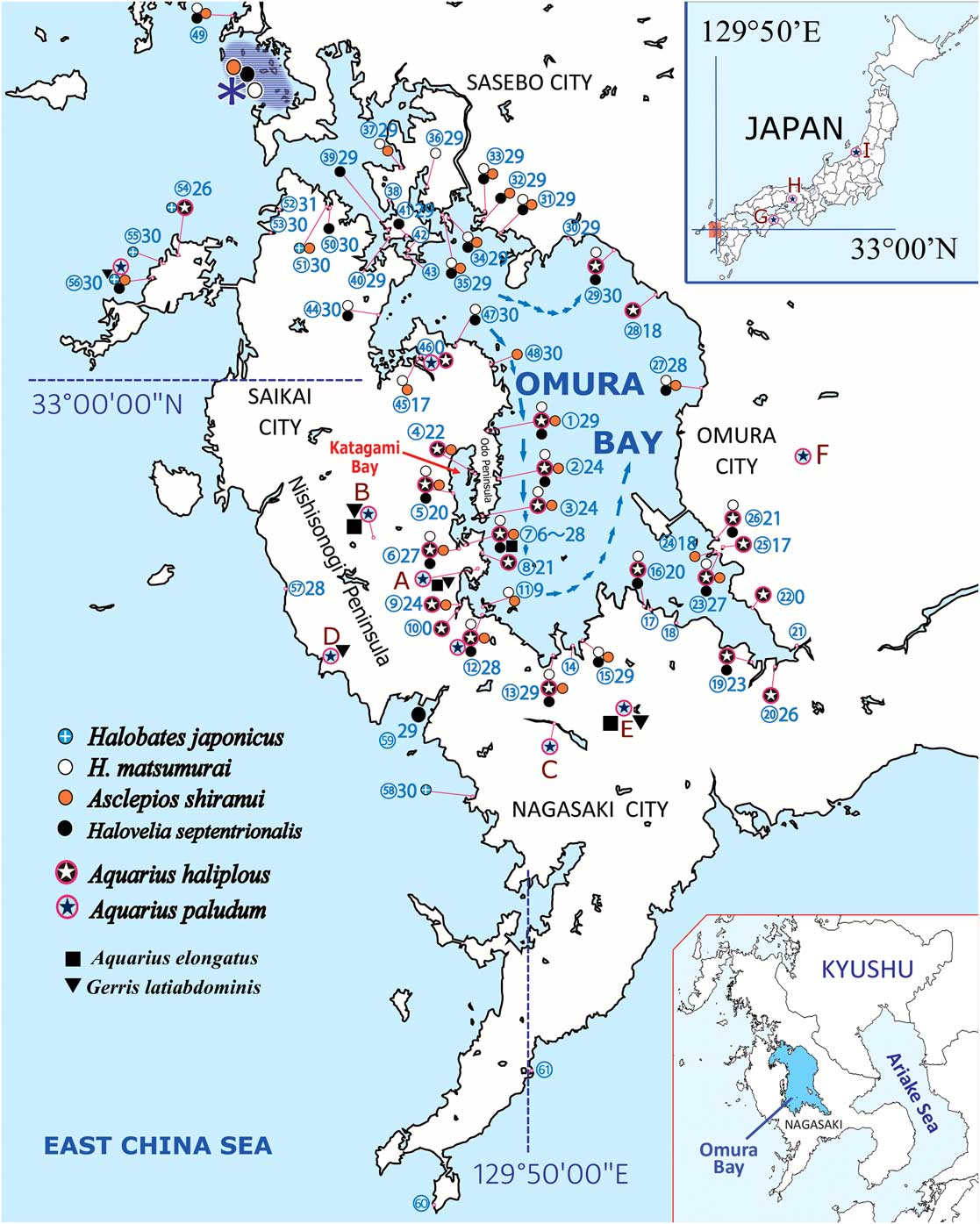
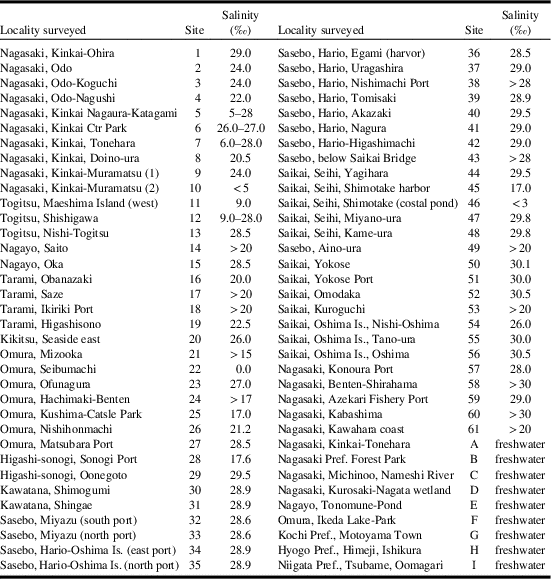
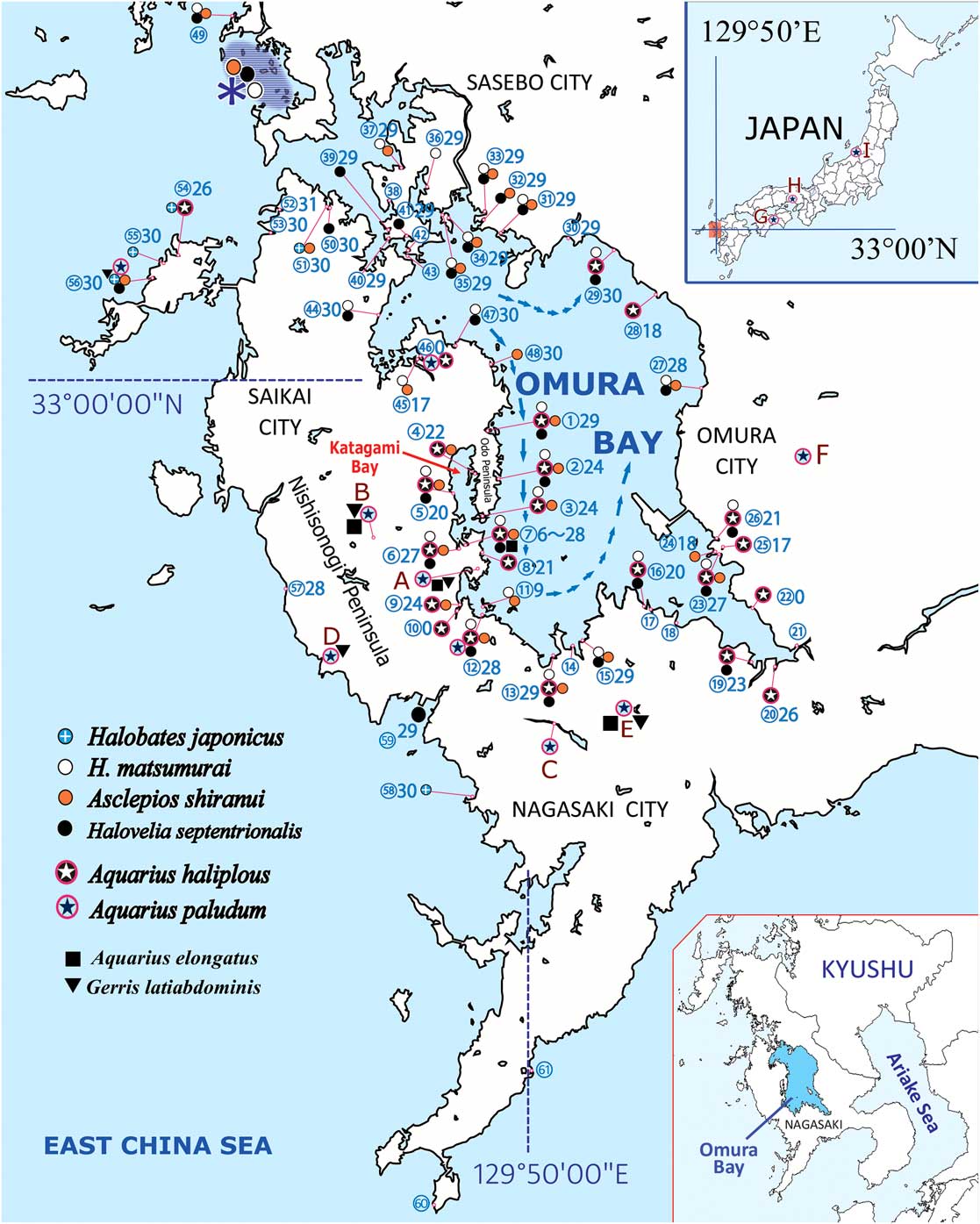
Sites surveyed are summarised in Figure 1 and Table 1. Almost of all the sites (48 out of 61) were coastline or small local ports within Omura Bay, some of which are officially designated by Japanese government as “Ecologically or Biologically Significant Marine Areas”, because of known occurrences of endangered and vulnerable marine organisms (mostly vertebrates) (areas 15 406–15 408 in http://www.env.go.jp/en/nature/biodic/kaiyo-hozen/kaiiki/documents/Coastal5.pdf). The bay extends ~30 km (from north to south) and 11 km (from east to west), but with a total coastline of ~360 km, due to the deeply indented, complex topography. The bay is generally shallow, with an average depth 14.8 m and max depth 54 m near two very narrow straights, Hario-Seto (230 m wide) and Haiki-Seto (100 m), at the northwestern corner (Hatae Reference Hatae1976; Matsuoka Reference Matsuoka2004).
Map showing investigation sites with occurrences of Gerridae and a Veliidae (six different circles). Numbers showing salinity concentration (‰) and circled numbers corresponding to localities in Table 1. Blue arrows indicating two major (rising) tidal currents within the Bay (from Matsuoka Reference Matsuoka2004). *: Based on investigation by Ikawa et al. (Reference Ikawa, Nozoe, Yamashita, Nishimura, Ohnoki and Yusa2012).
List of localities surveyed with salinity concentration; sites corresponding to those in Fig. 1.

Fieldwork was performed between 11 July and 10 October 2016 and between 11 June and 29 December 2017. Sampling of the protected species Asclepios shiranui was carried out with official permission from the Nagasaki Prefectural Government (Natural Environment 29–128) to confirm identification.
All measurements were made with an ocular micrometer in the eyepiece of a binocular stereoscopic microscope (Nikon SMZ800, Nikon, Tokyo, Japan) and are given in mm; e.g., total body length=distance between anterior apex of clypeus and apices of connexival spines and maximum width=distance across mesoacetabulae (see Fig. 3). Principal terminology follows Matsuda (Reference Matsuda1960), Schuh and Slater (Reference Schuh and Slater1995), Damgaard and Zettel (Reference Damgaard and Zettel2003), Zettel and Ruiz (Reference Zettel and Ruiz2003), Damgaard and Christiansen (Reference Damgaard and Christiansen2007), and Han and Jablonski (Reference Han and Jablonski2009). In the synonymic lists for known taxa, only selected references are cited because comprehensive catalogues are now available (Aukema and Rieger Reference Aukema and Rieger1995; Hayashi and Usui Reference Hayashi and Usui2016). Salinity concentration (herein shown in parts per thousand=permil: ‰) was measured using Tetra Hydrometer (Spectrum Brand Japan, Kanagawa, Japan). Habitus images of live gerrids were taken with either a Canon EOS Kiss X50 camera body+100 mm/F2.8 macro lens (Canon, Tokyo, Japan) or Olympus E-M5 Mark II+M. Zuiko Digital ED 60 mm/F2.8 macro lens (Olympus, Tokyo, Japan). Scanning electron micrographs were taken with Hitachi Tabletop Microscope TM3030, through a courtesy of Hitachi High-Technologies Corporation, Tokyo, Japan.
Aquarius haliplous dorsal and left lateral habitae of brachypterous form: 2, holotype male (from site 7); 3, female, with measured parts.

Aquarius haliplous Yasunaga, Asanabe, and Nagashima, new species
Figures 1–5, 8–10, 13–15, 18–25, 33–37, 42–43, 45–46, 48, 51, 54, 56, 60–61, 64–67, 72–74.
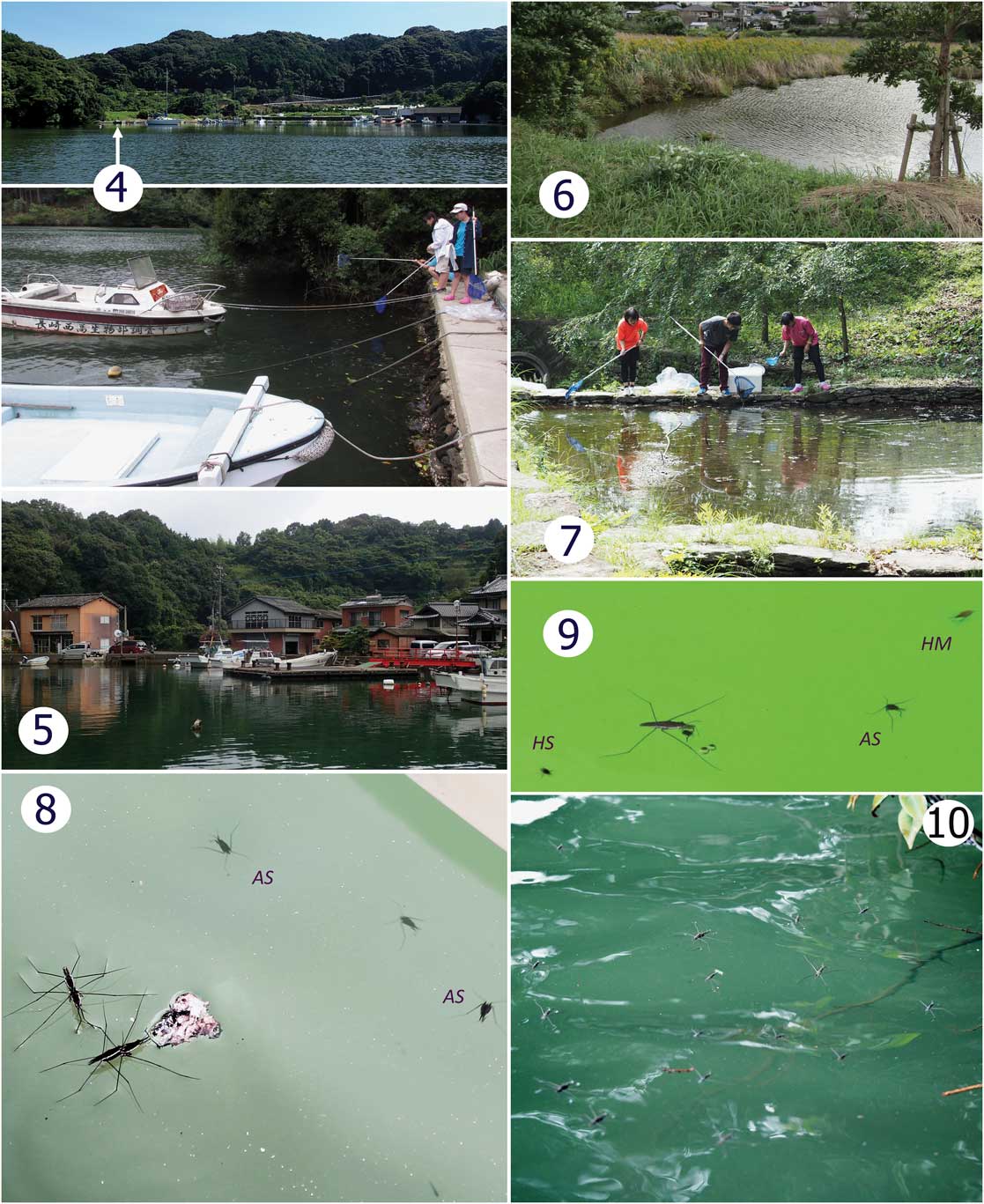
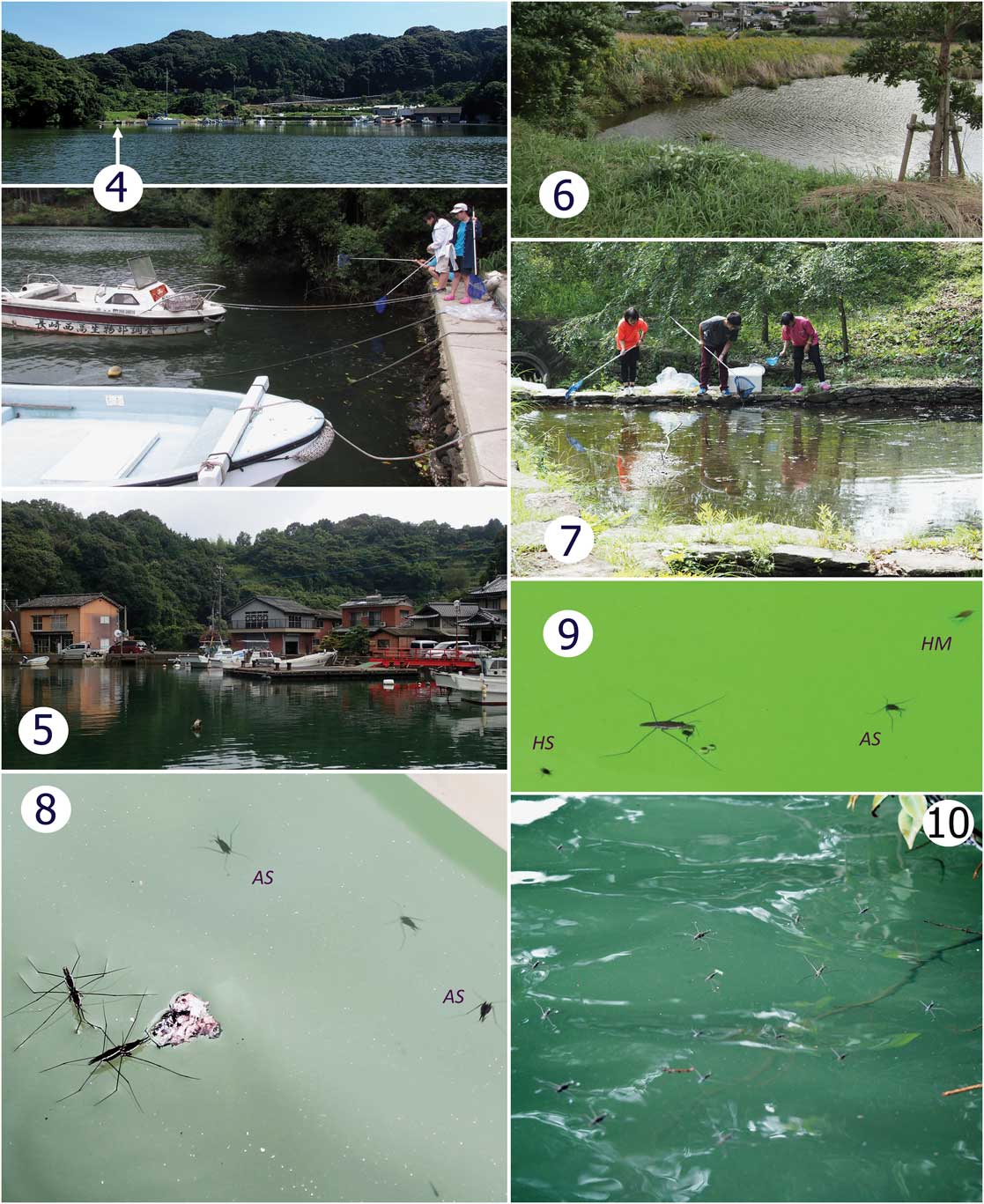
Habitats of Aquarius haliplous (4–5) and A. paludum (6–7): 4, type locality (site 7), abundant in marine water striders; 5, Koguchi Port of Odo Peninsula (site 24); 6, typical lentic freshwater environment (site D, preserved wetland); 7, same (site B, artificial pond); 8, mating pairs with Asclepios shiranui (AS) beside a boat (site 6); 9, a female preying on Halovelia septentrionalis (HS), co-occurring with Asclepios shiranui (AS) and Halobates matsumurai (HM) (site 13); 10, gregarious adults and late instars on wavy sea surface (site 7).
Live individuals of water striders inhabiting Omura Bay; 11, Halobates matsumurai, adult female (left) and Asclepios shiranui, adults (male lower right); 12, Halovelia septentrionalis, adult females; 13, Aquarius haliplous, macropterous male; 14, A. haliplous, macropterous female; 15, A. haliplous, brachypterous female diving and ovipositing on a stone; 16, A. haliplous, male mounting female; 17, A. paludum, mating brachypterous forms: 18, female of A. haliplous struggling to disengage from mounting A. paludum (laboratory test).

Type material. Holotype [brachypterous] male (Fig. 2), labelled “JAPAN: Kyushu/Nagasaki Pref., Omura Bay/Kinkai-Tonehara Port (site 7)/N32.90 E129.79 (water temp ca 30 °C, salinity 21‰)/collected from a boat/27.viii.2017/T. Yasunaga et al. (AMNH_PBI 00380595)” (AMNH).
Paratypes (six specimens from five different localities with unique specimen identifier labels (AMNH_PBI 00380596–00380600)). Japan, Nagasaki Prefecture, Omura Bay, Kinkai-Tonehara Port (site 7), 32.90°N, 129.79°E, water temperature 24.5–36.2 °C, salinity 6.0–28.0‰, 2.vii–14.x.2017, T. Yasunaga et al., 55 brachypterous males (1 CNC, 1 NIAES, 29 NWHB, 2 TUAK, 22 TYCN), 45 brachypterous females (1 CNC, 1 NIAES, 31 NWHB, 2 TUAK, 10 TYCN), 21 macropterous males (1 CNC, 1 NIAES, 11 NWHB, 1 TUAK, 7 TYCN), and 17 macropterous females (1 CNC, 1 NIAES, 9 NWHB, 6 TYCN); Japan, Nagasaki Prefecture, Kinkai-Tone, Kinkai Central Park (site 6), water temp 30.0–36.2 °C, salinity 26.3–27.0‰, 30.vii– 11.xi.2017, 13 brachypterous males, five brachypterous females, 11 macropterous males, and 9 macropterous females (NWHB); Japan, Nagasaki Prefecture, Kinkai-Muramatsu (site 9, Nishiumi Town), salinity 24.0‰, 13–16.viii.2017, T. Yasunaga, four brachypterous males (NWHB), four brachypterous females (NWHB), two macropterous males (1 NWHB, 1 TYCN), and two macropterous females (1 NWHB, 1 TYCN); Japan, Nagasaki Prefecture, Kinkai-Odo, Nagushi Port (site 4), water temp 28.5 °C, salinity 22.0‰, 14.viii.2017, T. Yasunaga et al., four brachypterous males, four brachypterous females, two macropterous males, and two macropterous females (TYCN); Japan, Nagasaki Prefecture, Kinkai-Odo, Nagushi Port (site 4), water temp 23.9 °C, salinity 22.0‰, 11.ix.2017, T. Yasunaga et al., three brachypterous females, two macropterous males, and one macropterous female (NWHB); Japan, Nagasaki Prefecture, Odo, Koguchi Port (site 3), water temp 29.6 °C, salinity 24.0‰, 14.viii.2017, T. Yasunaga and T. Nagashima, two brachypterous males, three brachypterous females, and one macropterous male (TYCN); Japan, Nagasaki Prefecture, Higashi-sonogi, Sonogi Port (site 28), water temp 32 °C, salinity 17.8‰, 12.viii.2017, T. Yasunaga et al., two macropterous males, one brachypterous female and one macropterous female (TYCN); Japan, Nagasaki Prefecture, Nishisonogi, Togitsu, Shishigawa Port (site 12), water temp 32.3–32.8 °C, salinity 9.0–28.0‰, 27.vii.2017 and 27.viii.2017, NWHB Biology Club, five brachypterous males, two brachypterous females and six macropterous females (NWHB); Japan, Nagasaki Prefecture, Nishisonogi, Togitsu, Nishi-Togitsu (site 15), water temp 30.6 °C, salinity 29‰, 30.vii.2017, NWHB Biology Club, one brachypterous male (TYCN); Japan, Nagasaki Prefecture, Isahaya City, Tarami, Higashisono (site 19), water temp 30.6 °C, salinity 22.0‰, 20.viii.2017, T. Yasunaga et al., two brachypterous males, two brachypterous females, four macropterous males, and one macropterous females (TYCN); Japan, Nagasaki Prefecture, Isahaya City, Tarami, Ikiriki–Saze (site 18–19), salinity >22.0‰, 13.viii.2017, T. Yasunaga and T. Nagashima, three brachypterous males, one brachypterous female, and two macropterous males (TYCN); Japan, Nagasaki Prefecture, Omura City, Kushima-Catsle Park (site 25), water temp 32.5 °C, salinity 17.0‰, on 13.viii.2017 and 22.x.2017, NWHB Biology Club, eight brachypterous males and six brachypterous females (TYCN); Japan, Nagasaki Prefecture, Omura City, Kushima-Catsle Park (site 25), 22.x.2017, NWHB Biology Club, 41 brachypterous males (2 AMNH, 2 CNC, 2 NIAES, 35 NWHB), 16 brachypterous females (2 AMNH, 2 CNC, 2 NIAES, 10 NWHB), four macropterous males (4 NWHB), and one macropterous female (1 NWHB).
Specimens with the unique specimen identifier codes (e.g., AMNH_PBI 0012345) were digitised on the Arthropod Easy Capture database maintained by the American Museum of Natural History, New York, New York, United States of America and are searchable on the Heteroptera Species Pages (http://research.amnh.org/pbi/heteropteraspeciespage).
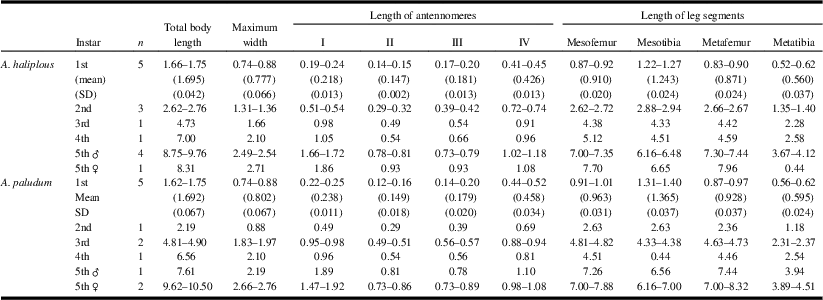
Diagnosis. Most similar to A. paludum, but distinct in having a longer male antennomere IV (obviously longer than II); shorter legs (femora and tibiae of mesothoracic and metathoracic legs in particular); a rather sharpened apex of the paramere; a well-developed, thicker apical process of the female ovipositor (gonapophysis I); and different immature forms (e.g., enlarged chorionic processes or toughened surface structure of the egg, generally darker late instars and shorter legs of the first instar). The new species also can be distinguished readily from A. paludum amamiensis (Miyamoto), currently known only from the subtropical Ryukyu islands, by the proportion of antennomeres (antennomere II equal to or shorter than IV, in A. paludum amamiensis, antennomere II longer than IV) and smaller male abdominal segment VIII. The sclerites of the aedeagus in A. haliplous are generally similar in shape to those of both subspecies of A. paludum, but different in some structures as described below.
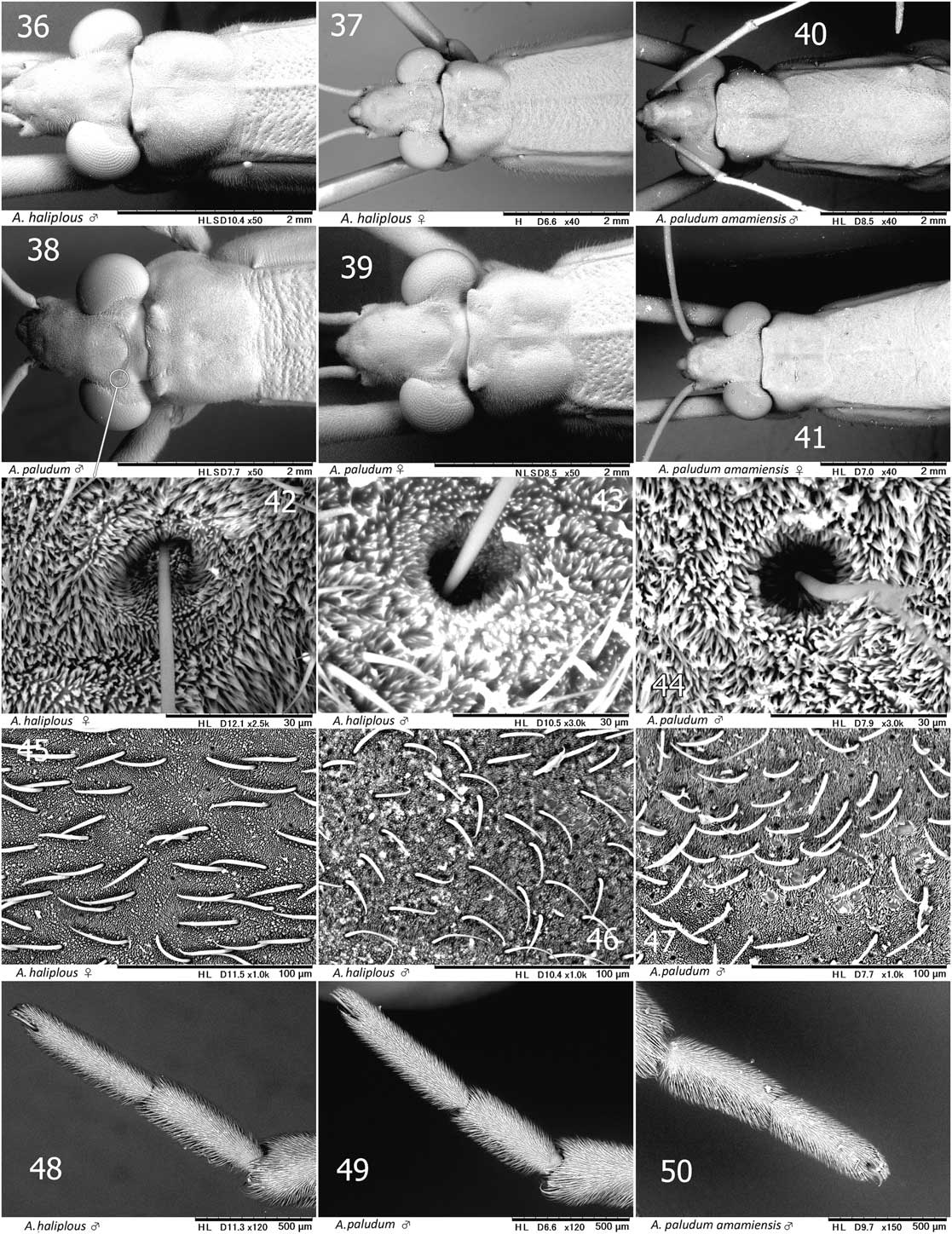
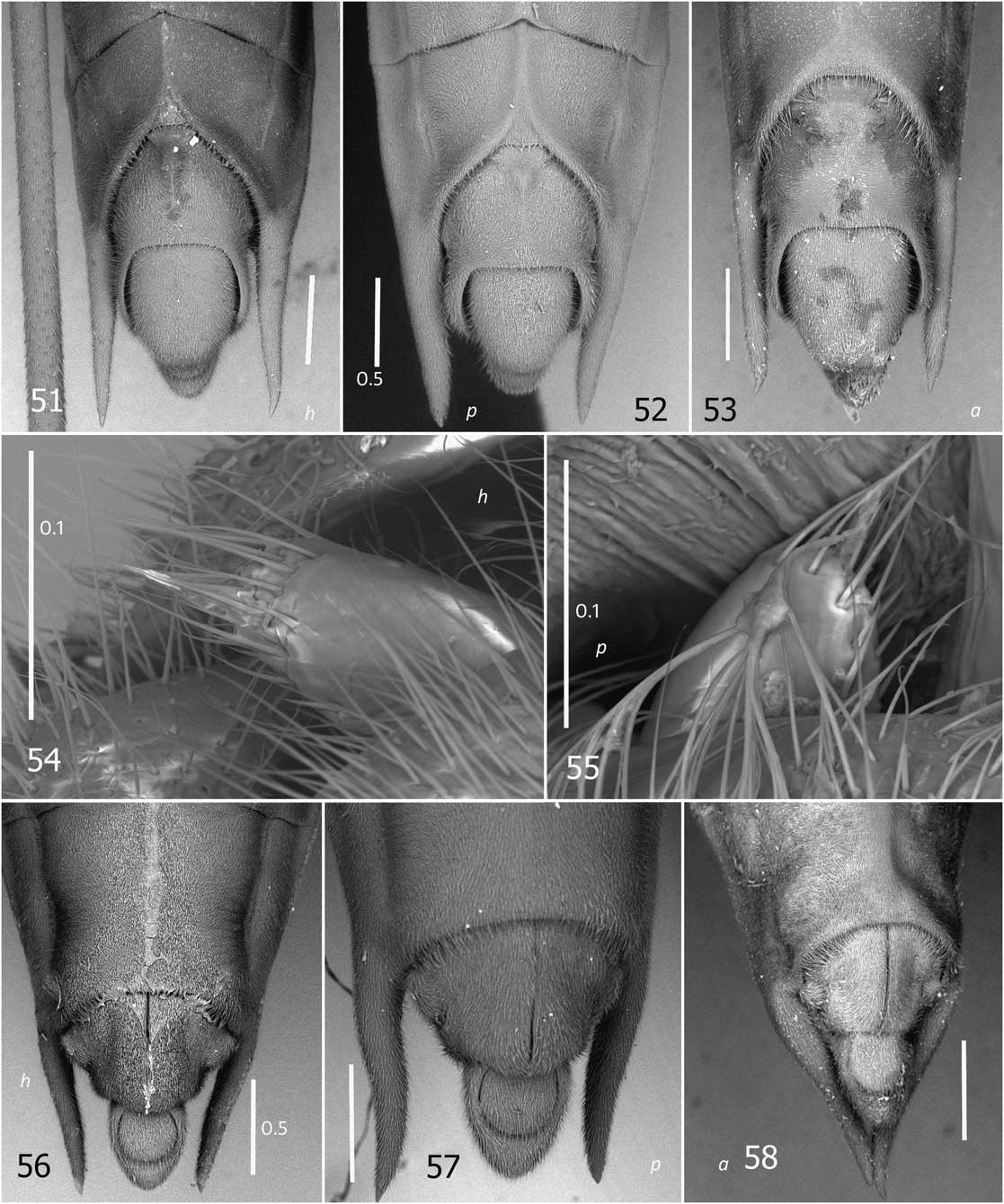
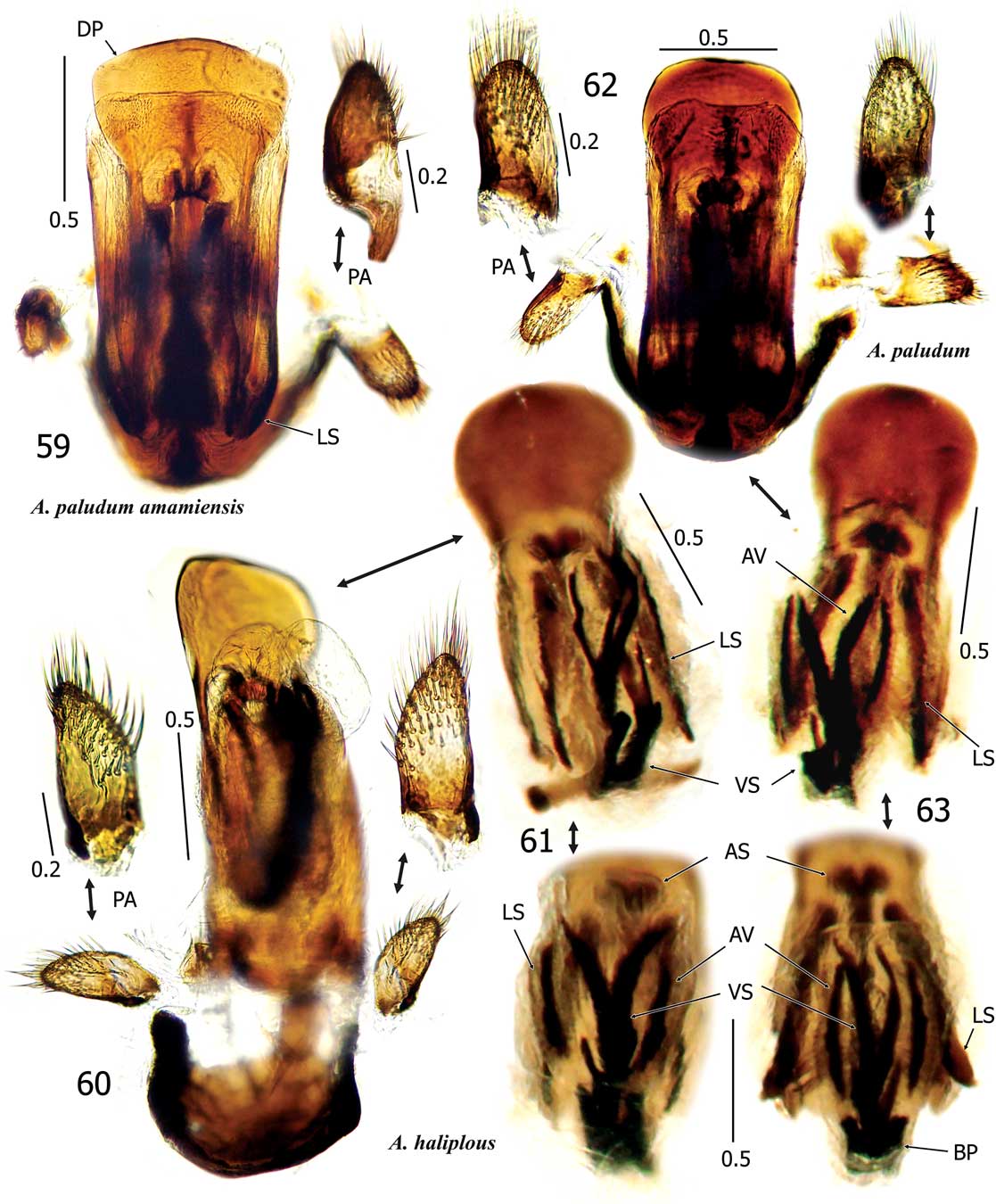
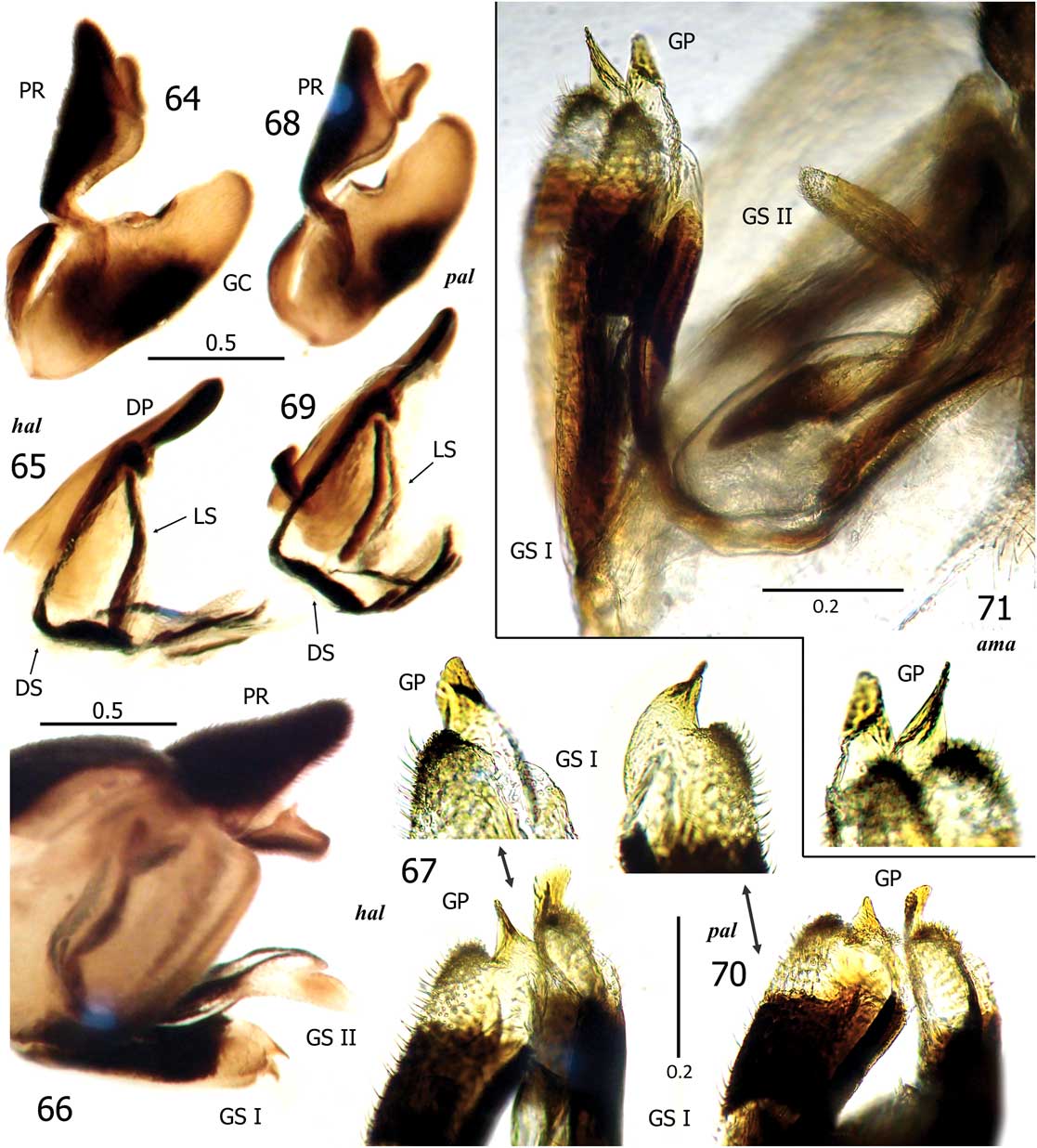
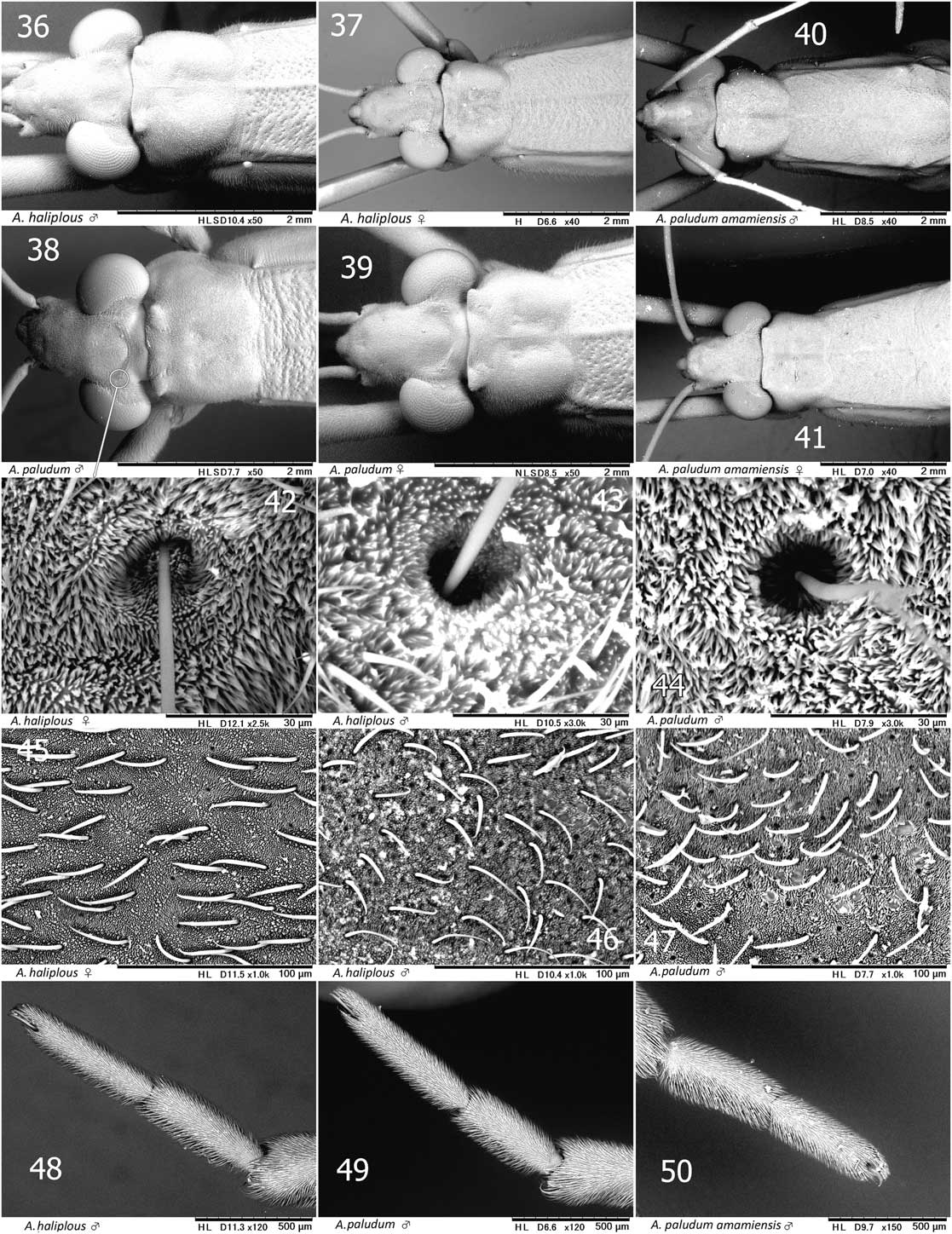
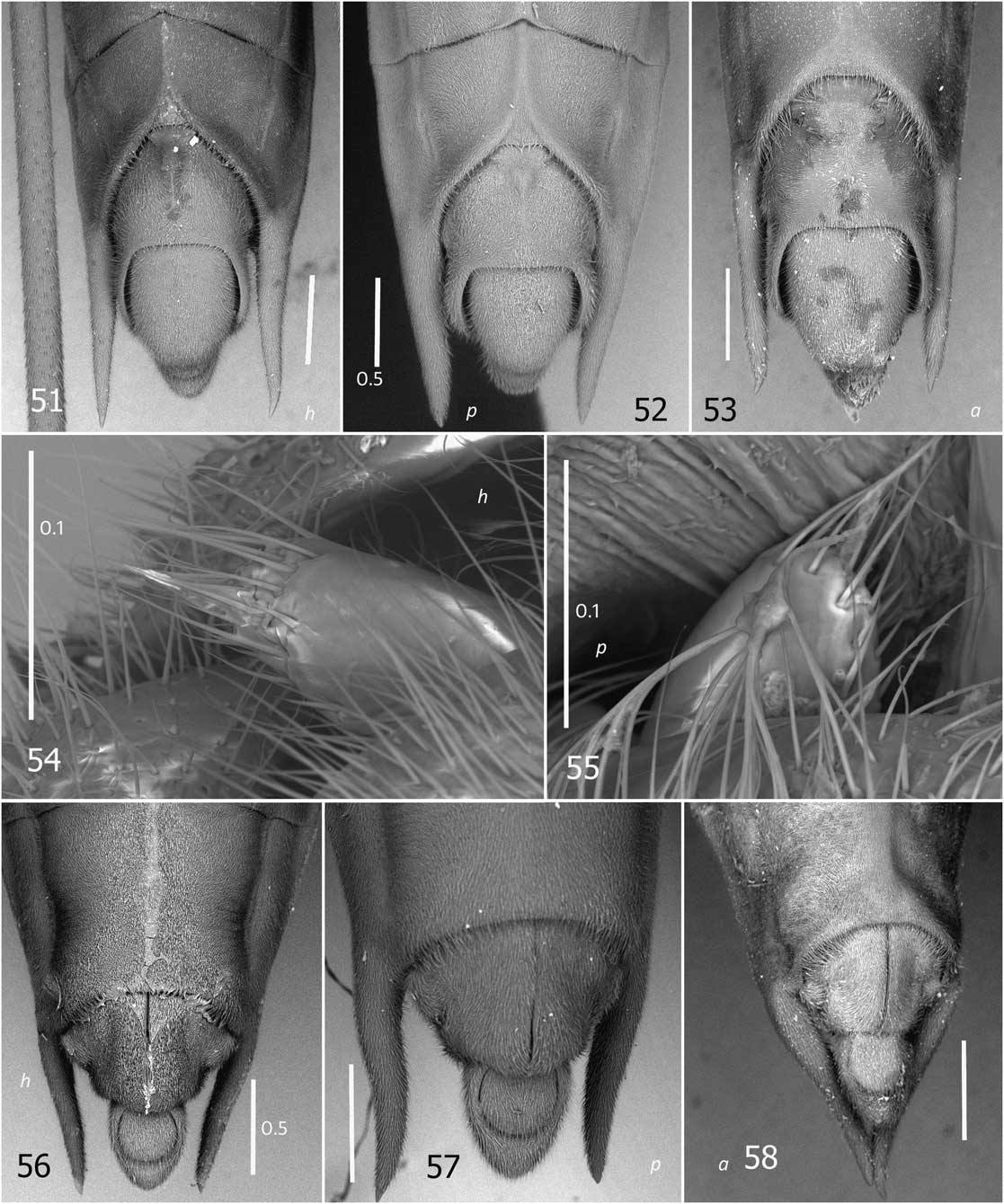
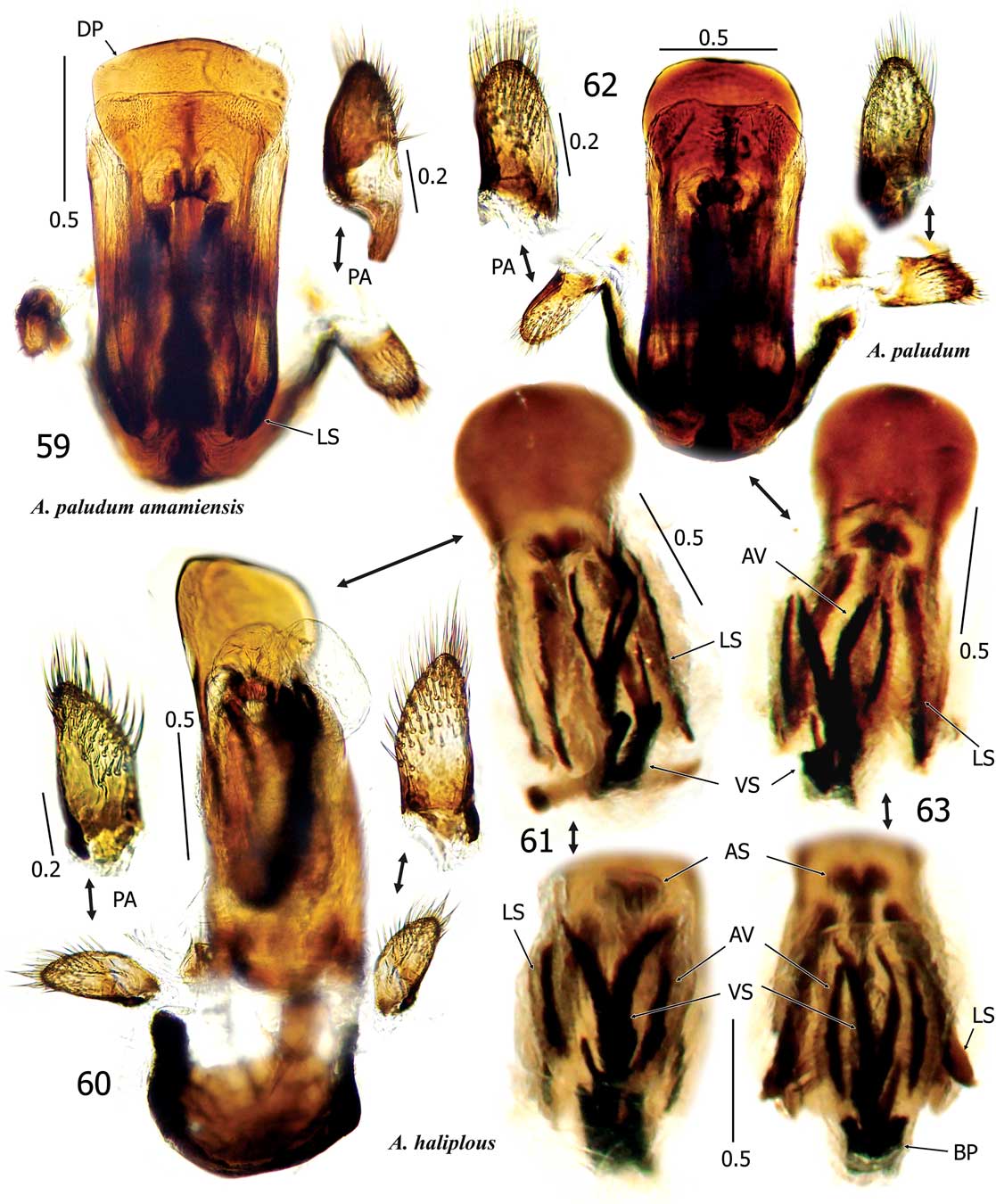
Description. Brachypterous male (Figs. 2, 16): Body elongate, parallel sided; dorsal surface generally chocolate to blackish brown, matte, somewhat tinged with blue in fresh specimen; ventral surface silvery grey, densely pubescent, often somber-coloured or faded to smoky brown in dry-preserved specimen. Head: Dark brown, shorter than width across eyes in dorsal view; posterior margin of vertex usually with a visible, yellow, chevron-shaped mark that is sometimes brown or indistinct, shallowly and symmetrically depressed at middle. Antenna: Smoky brown, relatively short; antennomere I usually shorter than mesotarsomere I; antennomeres II–III weakly tinged with yellow-grey; antennomere IV longer than antennomere II. Labium: Shiny fuscous, reaching but not exceeding procoxa; two proximal segments more-or-less yellow. Thorax: Pronotum long, irregularly and shallowly punctate; with a narrow, longitudinal, mesal keel and a pair of humeral processes on posterior lobe; lateral margin usually yellow but partly interrupted or obliterated in some specimens; anterior lobe with a yellow, mesal stripe and a pair of processes behind eyes; vestiture on posterior lobe composed of rather sparsely distributed, simple, semierect setae and short, minute setae (Figs. 45–46). Thoracic pleura with densely distributed, silvery, reclining setae, except on lateral part of metacetabula. Forewing coffee brown, matte, reaching abdominal tergite VI; venation distinct, furnished with golden, short setae. Legs: Uniformly dark brown; mesofemur longer than metafemur; tarsi somewhat grey. Abdomen: Tergites dark brown, rather polished; connexivum yellowish brown; posterior margin of male abdominal segment VIII thin rimmed (Fig. 51); connexival spines rather long, usually exceeding level of proctiger tip, with tapered apex (Figs. 2, 51). Male genitalia (Figs. 54, 60–61, 64–65): Genital capsule weakly concave ventrally (Fig. 60); paramere relatively long, tapered apically, with densely distributed, long sensory setae (Figs. 54, 60); dorsal endosomal plate rather wide, rounded apically (Fig. 61); endosomal spines generally long (Figs. 61, 65).
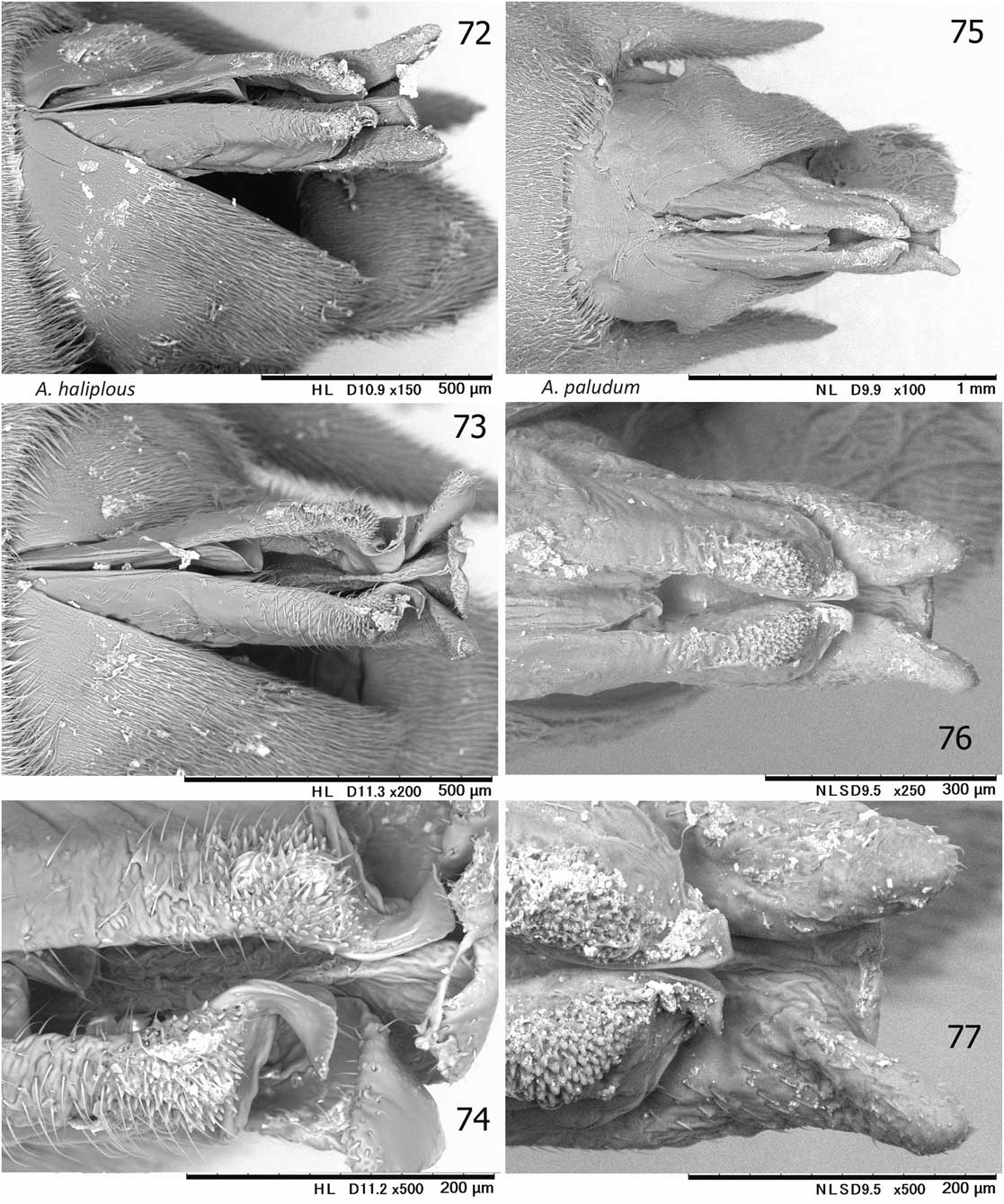
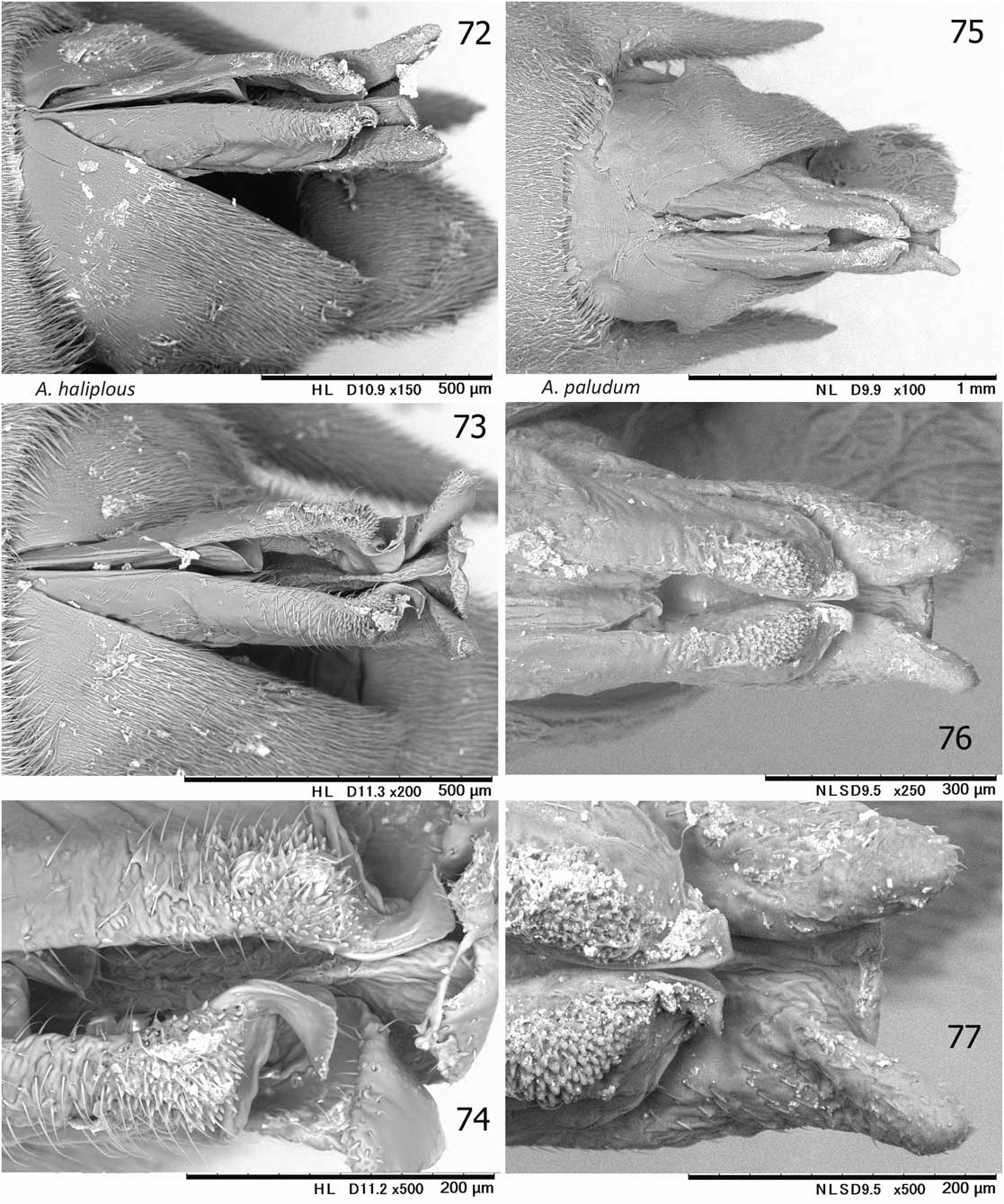
Brachypterous female (Figs. 3, 15): Similar in general appearance to brachypterous male, but body larger and more elongate; antennomere II as long as or slightly shorter than antennomere IV; and legs generally longer. Female genitalia (Figs. 66–67, 72–74): Ovipositors relatively developed (Fig. 74); gonapophysis I (ovipositor) with densely distributed, long setae on apical half and broad, large, hooked apical process (Figs. 67, 73–74).
Macropterous male (Fig. 13): Similar to brachypterous male in most respects. Forewing dark brown, matte, extending to base of proctiger, with golden, short setae along veins. Male genitalia as in brachypterous form.
Macropterous female (Fig. 14): Similar to brachypterous female in most respects. Forewing as in macropterous male. Female genitalia as in brachypterous form.
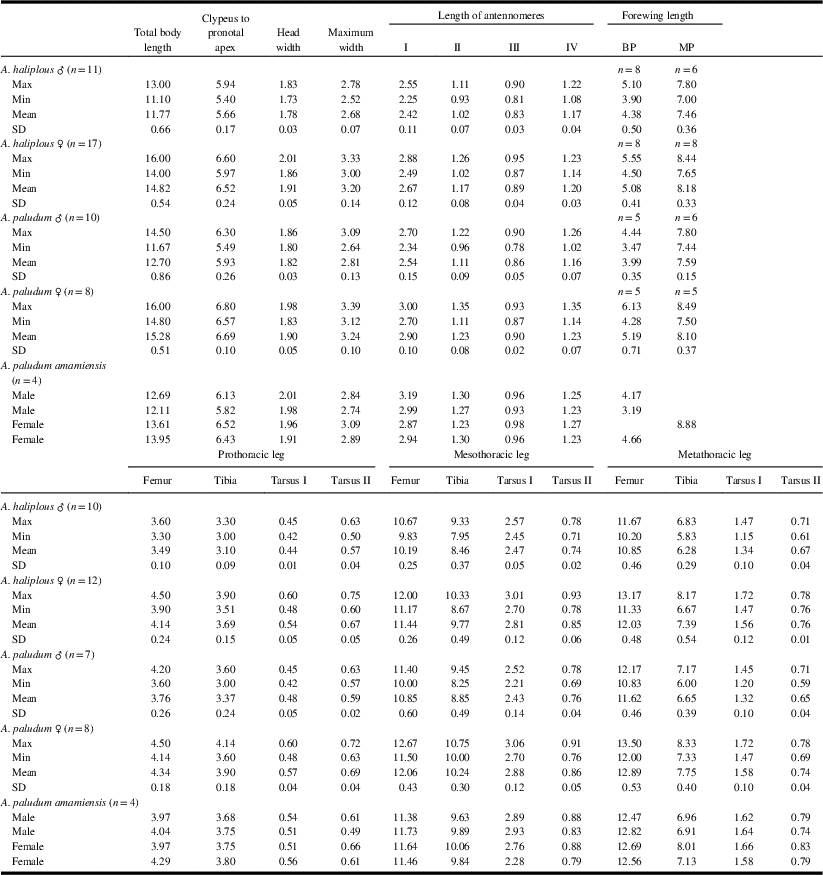
Measurements. See Table 2 (holotype male: total body length 11.83 mm; length from clypeus to posterior apex of pronotum 5.67 mm head width across eyes 1.80 mm; maximum width across mesoacetabulae 2.67 mm; length of antennomere I 2.55 mm, antennomere II 1.02 mm, antennomere III 0.81 mm, antennomere IV 1.20 mm).
Measurements for two Japanese species and a subspecies of Aquarius. SD, standard deviation.

BP, brachypterous; MP, macropterous wing forms; SD, standard deviation.
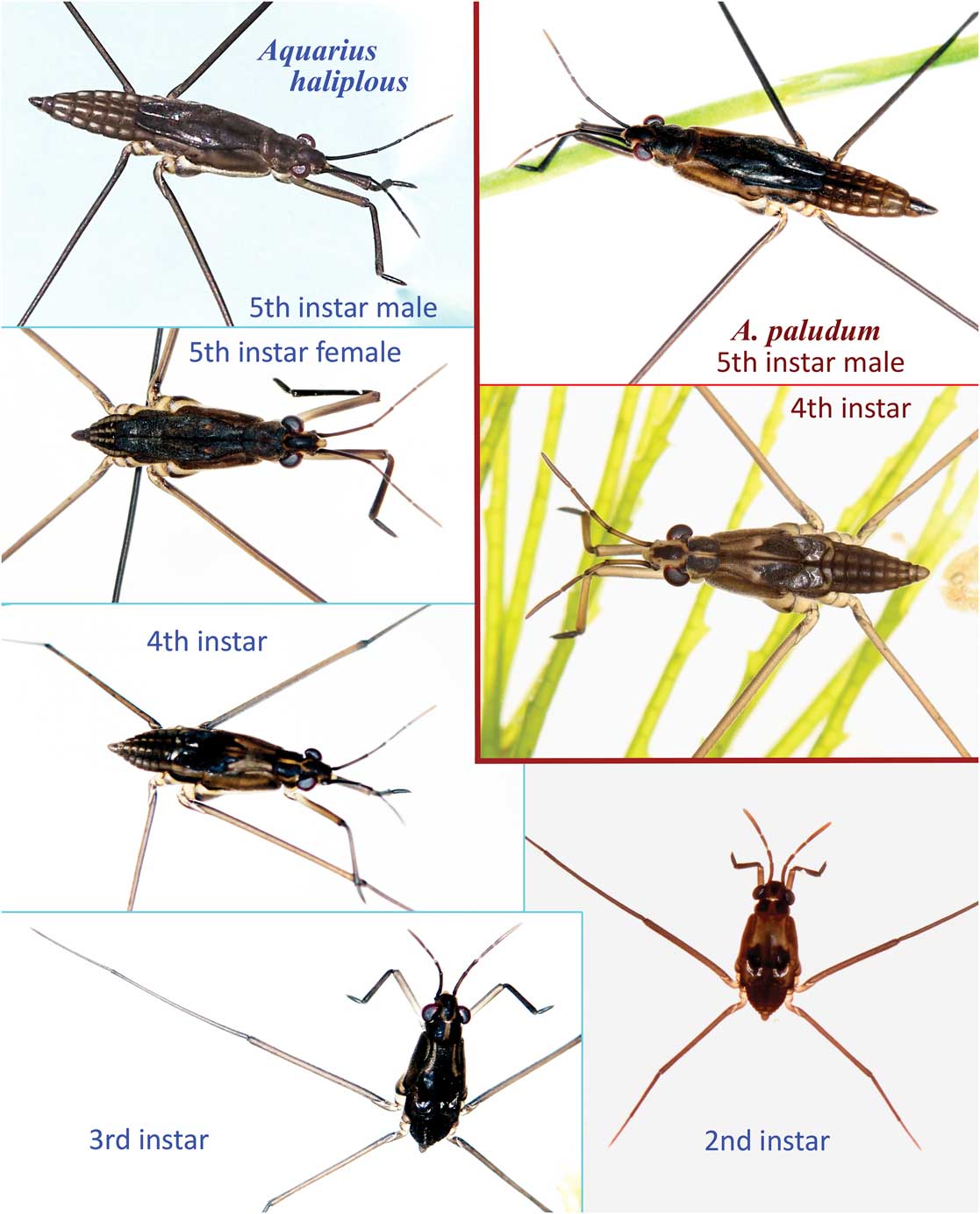
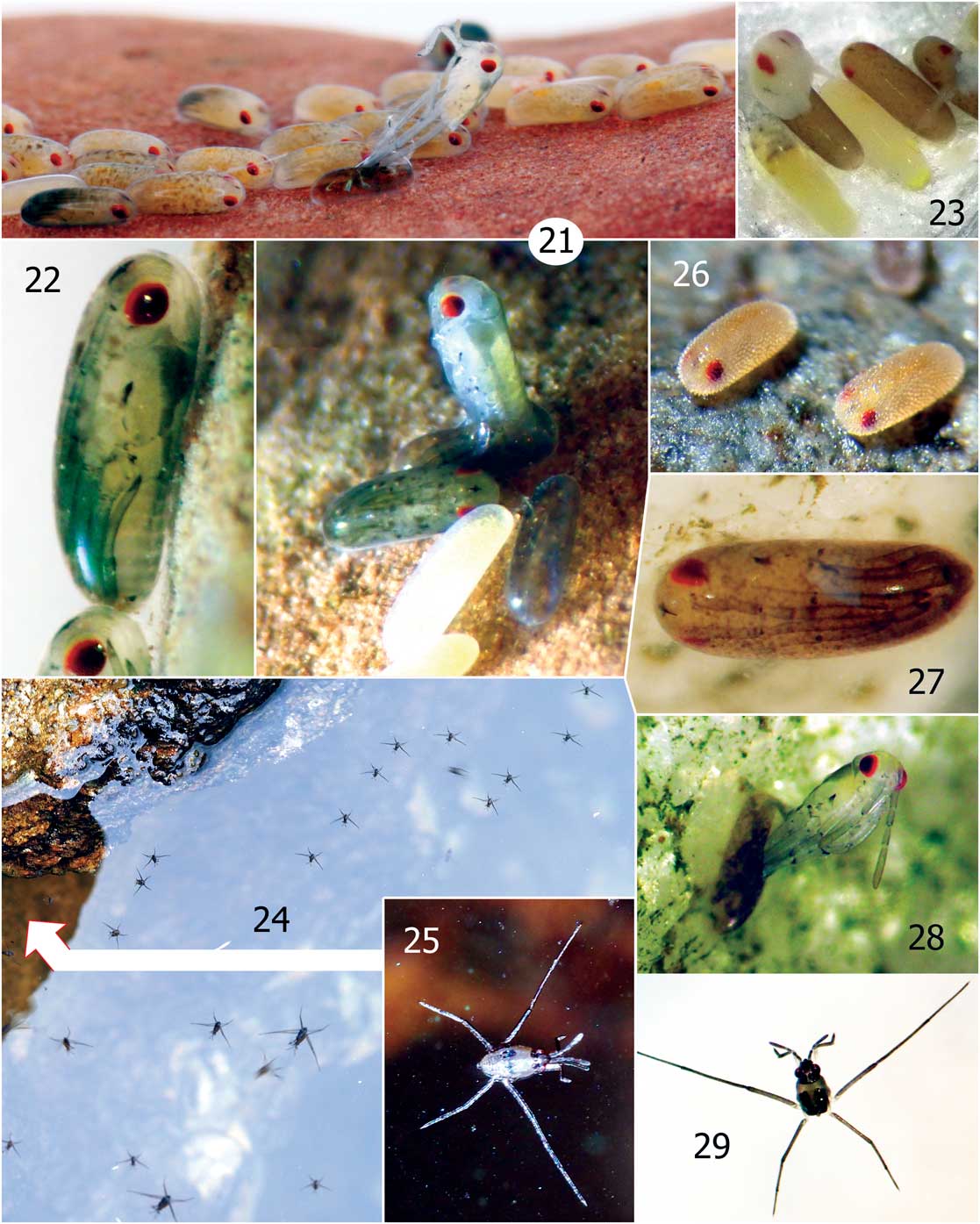
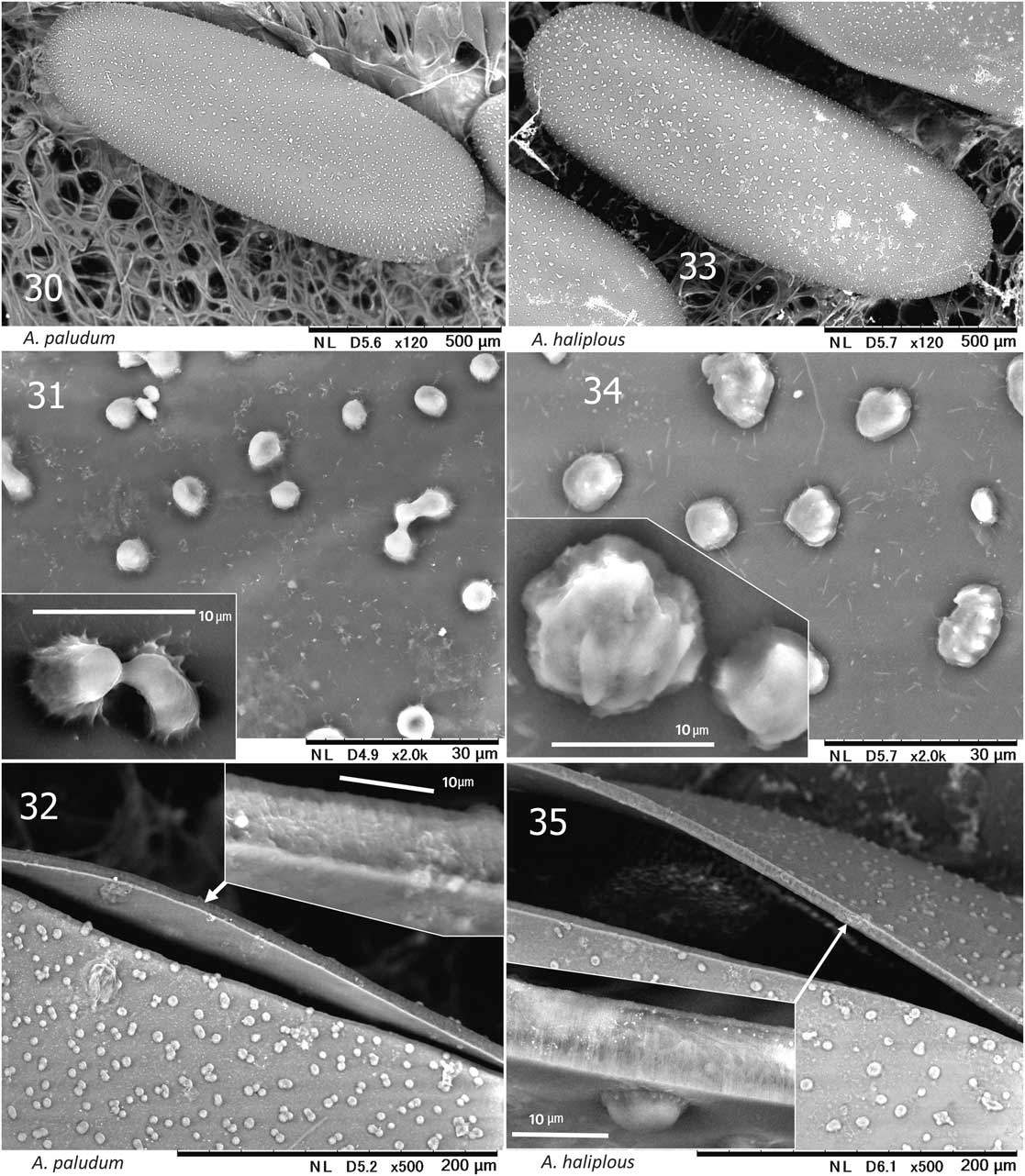
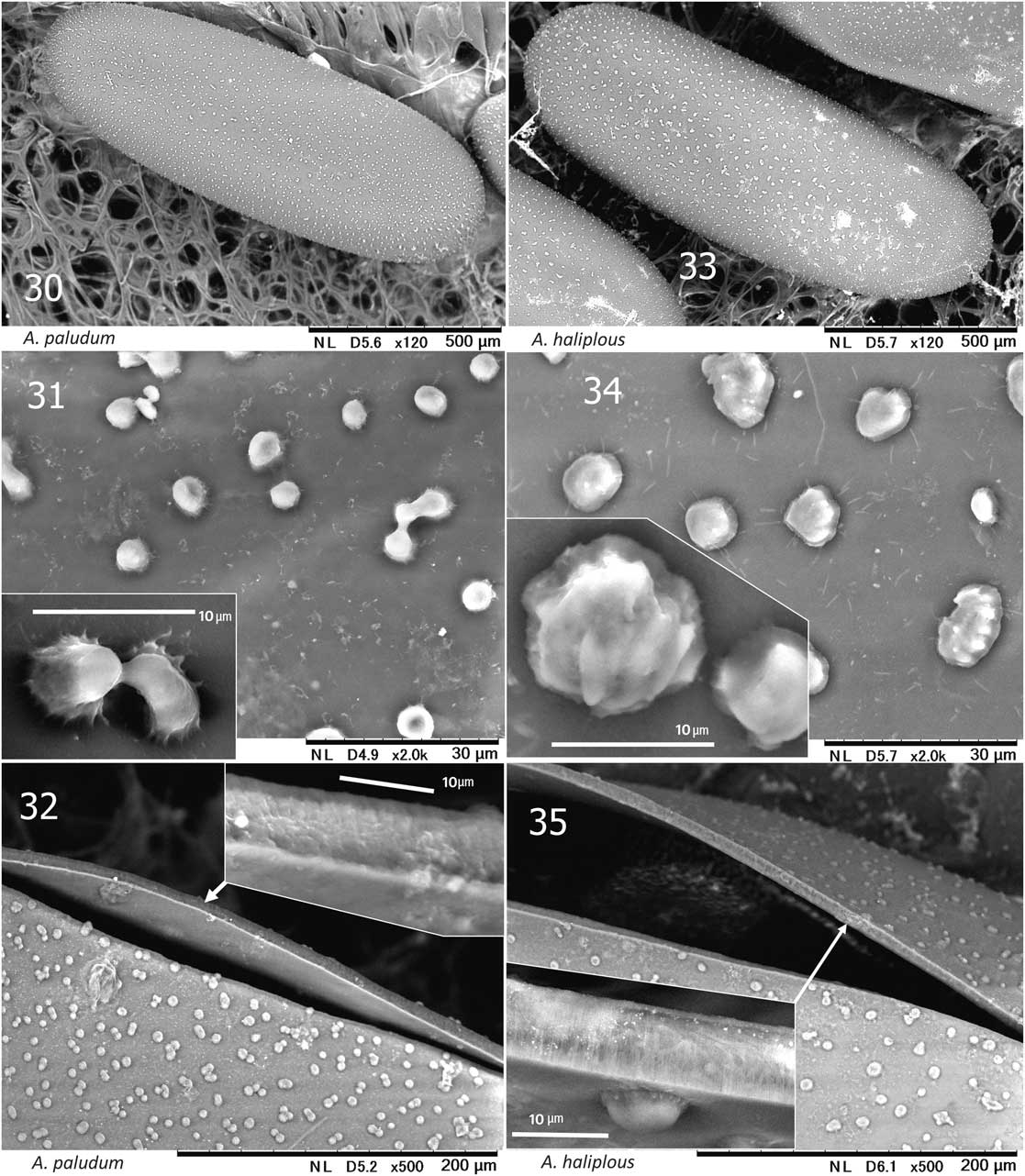
Immature forms. Egg (Figs. 21–23, 30–32): Elongate ovate; basic colouration usually pale brown to brown; chorionic surface uniformly furnished with various-shaped, reticular processes that are about three times as large as those of A. paludum (Fig. 31). First instar (Figs. 19, 25): Ovoid and somewhat flattened; basic colouration pale castaneous; head chestnut brown, with a pale, narrow, Y-shaped streak mesally; antennae smoky brown, with base of antennomere III narrowly pale; pronotum with a pair of chestnut brown, large marks; posterior half of mesonotum with a pair of chestnut brown, somewhat squared marks extending to metanotum; most parts of coxae and trochanters pale; legs somber brown; base of profemur white; ventral surface widely pale. Second instar (Figs. 19–20): Elongate oval, spindle shaped; dorsum, antennae, and legs chestnut brown, with a pairs of dark spots each on anterior lobe of pronotum and posterior pronotum across mesonotum; rudimental wingpad with white posterior margin; coxae and trochanters pale; legs dark brown, except for femora white; ventral surface white, partly darkened as in Figure 19. Third instar (Figs. 19–20): Spindle shaped, but more elongate than second instar; dorsum dark bluish brown, rather shiny; head with a white, U-shaped mark; pronotum with paired, white, mesal stripe; rudiment of wingpad silvery white; basal half of mesocetabulae and mesacetabulae pale; legs dark brown, except for femora white; ventral surface white. Fourth instar (Figs. 19–20): Distinctly elongate; dorsum dark bluish brown; head with yellow, Y-shaped mark continuing to mesal stripe on anterior lobe of pronotum that also has a pair of stripes laterally; posterior lobe of pronotum brown with two or three pairs of yellow stripes; short wingpads partly white; basal parts of mesoacetabulae and mesacetabulae widely pale dorsally; legs pale greyish brown; each femur with dark stripe dorsally; dorsal surface of abdomen with two pairs of rows of white spots. Fifth (final) instar (Figs. 19–20): Similar in general appearance to fourth instar, but body more dark and elongate, and sexually dimorphic in shape; wingpads slightly exceeding posterior margin of abdominal tergite II. Measurements for every instar as in Table 3.
Every instar of Aquarius haliplous and A. paludum in ventral view.

Second to final instars of Aquarius haliplous and fourth and fifth instars of A. paludum, dorsal habitae images.

Measurements for nymphs of two Aquarius species (all from Nagasaki, Japan).

SD, standard deviation.
Etymology. From Greek, haliplous (=sailing the sea, seaman), referring to this new water strider that nimbly skates on the sea.
Distribution. Japan (Nagasaki: Omura Bay and Sakito-Oshima Island, see Fig. 1).
Natural history. General: Aquarius haliplous has at least three generations per year and hibernates in the adult stage. Late instars of the first generation appear in early June, and the gregarious adults and all instars are found from early June to late September. In mid-summer, the adults and late instars (often together with Asclepios shiranui and Halobates matsumurai) prefer to aggregate under overhanging branches of the coastal forest and even beside floating objects (e.g., boats, small piers), which afford shade (Fig. 8). The early instars usually occur close to water margins (Figs. 24–25), along with Halovelia septentrionalis and young nymphs of the two halobatine gerrids. Judging from highest hatchability and survival rate of the first and second instars in the laboratory, the suitable NaCl concentration for A. haliplous early developmental stages is currently estimated to be 5–15‰ (but 6–28‰ at confirmed breeding sites). A series of trials on NaCl resistance in A. paludum proved that all developmental stages of that species could survive under 9‰ NaCl concentration (Kishi et al. Reference Kishi, Fujisaki and Harada2006, Reference Kishi, Harada and Fujisaki2007, Reference Kishi, Harada and Fujisaki2009).
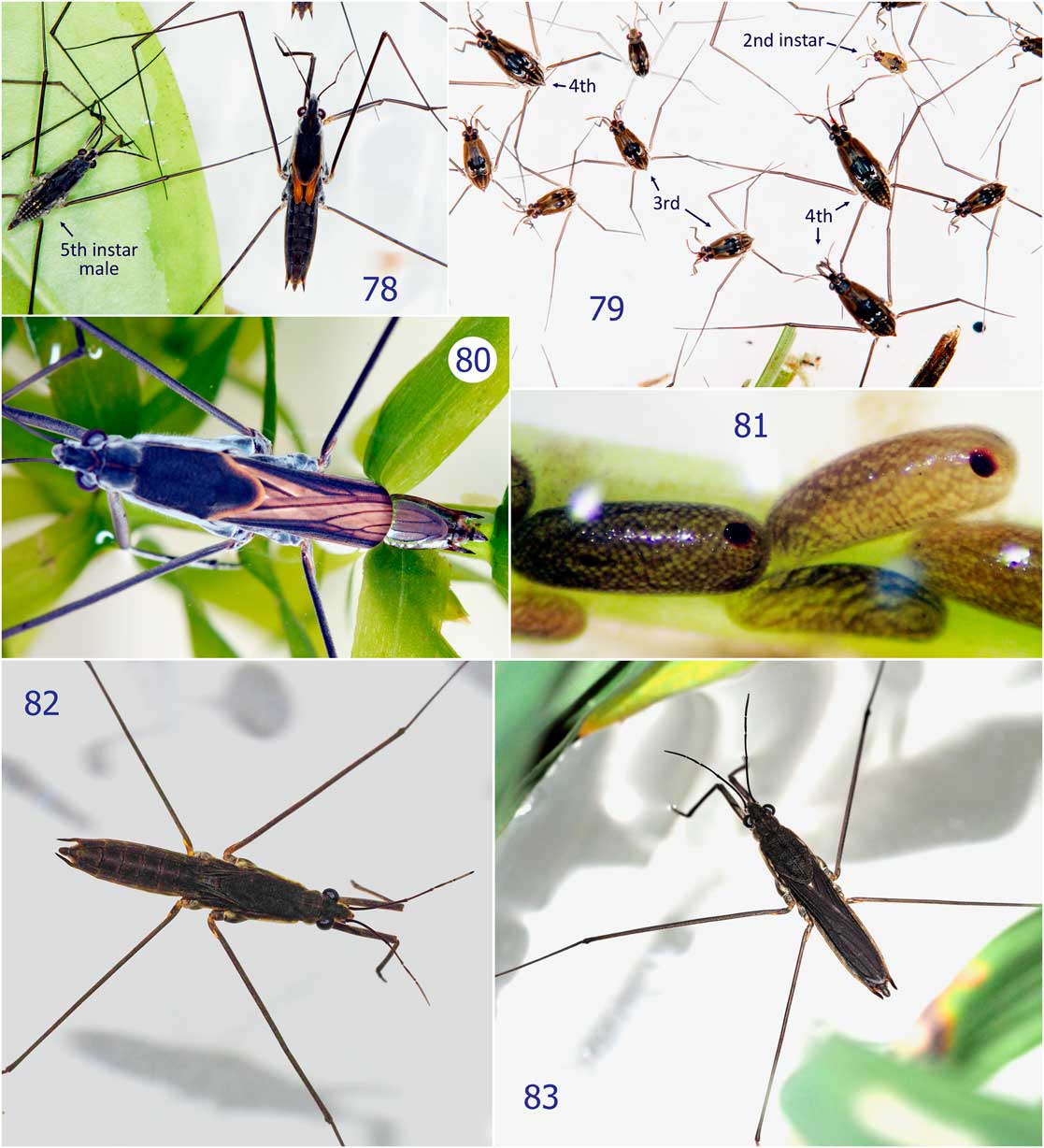
Oviposition and eggs: The females were observed to submerge below the water surface to lay eggs (Fig. 15), differing from those of A. paludum and A. adelaidis, which oviposit with the terminalia dipped shallowly (Fig. 80). In laboratory test, the eggs of A. haliplous were laid predominantly on the underside centre of floating polystyrene form seats (~12×12×3 cm), which implies the females have to be submerged with ventral side up during oviposition. The eggs were found to be extremely tough, possibly owing to the enlarged chorionic processes on the surface (Figs. 33–34) and structure of the layer (Fig. 35). Even after observation using a tabletop scanning electron microscope (put under high-vacuum state for 1.0–1.5 hours), the eggs of A. haliplous successfully developed and eclose (Fig. 23), whereas those of A. paludum were soon dead (deflated to half width resulting from rapid change in air pressure).
Feeding habit: Almost all insects that fall on the water can serve as the diet for A. haliplous. Many individuals sometimes gregariously feed on the floating cadavers of excessively large-sized insects (e.g., cicadas (Hemiptera: Cicadidae), hornets (Hymenoptera: Vespidae), hawk moths (Lepidoptera: Sphingidae)) and dead vertebrates (e.g., fish, reptiles, amphibians). After heavy rain, both adults and late instars of A. haliplous were observed aggregating at a river estuary, facing the upper stream, presumably to obtain food items more easily. For rearing, we gave small-sized (5–20 mm), dry Sergestidae (Decapoda) shrimp (sterilised using a microwave oven for 20–30 seconds) every day.
Interspecific relationships with the marine Hemiptera: This unique species of Aquarius usually co-occurs with any of the four typical marine bugs. At an exceptional site (55), outside of the Omura Bay, six adults and two final instars of A. haliplous were found together with a few pelagic Halobates japonicus. But all other habitats of A. haliplous are located within the Omura Bay itself and it coexists with Asclepios shiranui, Halobates matsumurai (Fig. 11), and/or Halovelia septentrionalis (Fig. 12). Their coexistence seems tenuous, as we observed them occasionally attacking each other. Owing to its large size, however, A. haliplous (late instar and adult) appears to have an advantage over the other species (see Fig. 9). However, larger individuals of Asclepios shiranui and Halobates matsumurai sometimes prey on early instars of Aquarius haliplous. Cannibalism was frequently observed on A. haliplous in the laboratory; newly hatched or moulted, soft-bodied individuals are liable to be the victims, as mentioned by Stonedahl and Lattin (Reference Stonedahl and Lattin1982). Nonetheless, we have not observed cannibalism in A. haliplous during field investigations.
Discussion. In the laboratory, the females of this gerrid species tended to oviposit on underside of the polystyrene form sheets, whereas those of A. paludum and A. adelaidis were observed to lay eggs without diving nor submerging, mostly on sides of the sheets near the water margins. The eggs of the latter two species are, under natural condition, usually found on aquatic angiosperms (see Fig. 81), floating tree branches, or stones (Figs. 26–27) at relatively shallow depth in lentic freshwater environments, where exposure to sudden drawdown or drought is unusual. In contrast, A. haliplous always inhabits less stable habitats, because of the tidal ebb and flow. The tidal range in the Omura Bay was reported as 0.54 m in average, only about 1/4–1/3 of the range of the west coast of Nishisonogi Peninsula (e.g., sites 52–59 in Fig. 1) (Hatae Reference Hatae1976; Iizuka and Min Reference Iizuka and Min1989). This condition is probably beneficial for the gerrid eggs. As newly hatched nymphs are found on narrow pockets of water under or between rocks or rough masonry revetments (Figs. 24–25, arrowed), eggs at the breeding sites are presumed to be laid on underside of rocks or stones as deep as possible, to avoid sunshine and desiccation.
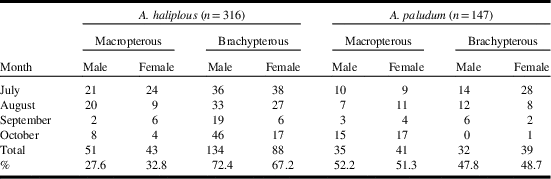
The macropterous individuals of A. paludum evidently increase from October onward for migrating to overwintering site, whereas the brachypterous form of A. haliplous continuously predominates over the macropterous form throughout the season we investigated (Table 4). This tendency implies that aerial dispersal may be unnecessary for A. haliplous, as also seen in marine halobatines that are uniformly apterous. The climate of the coastal zone is also milder than that of inland freshwater ecosystems in winter (minimum surface temperature in the Omura Bay>10 °C). In addition, because of the indented, complex coastline, there are numerous small lentic harbours that may provide shelter, particularly within the Katagami Bay (Fig. 1) where the largest population of A. haliplous was found.
Numbers of long-winged and short-winged forms collected by months.

Aquarius haliplous usually prefers lentic habitats, where the water surface ruffles occasionally, and this species probably cannot tolerate large waves, which precludes living on the open sea. Nonetheless, A. haliplous does not appear to be disturbed by at least small waves (Fig. 10). Incidentally, A. haliplous was not found to be sensitive to the wave signals induced by prey, probably as a result of adaptation to the marine habitat. The motions of struggling prey always produce concentric waves on the water surface, and the adults of A. paludum paludum, A. paludum amamiensis, and A. adelaidis (and A. elongates (Uhler) in particular) quickly approach these concentric wave centres. Therefore, A. haliplous may possibly be considered as an ambush predator.
As pointed out by Kishi et al. (Reference Kishi, Fujisaki and Harada2006), some aquatic and semi-aquatic Hemiptera were found to be occasionally conveyed by excess flow during rainy season to the Omura Bay, with more than 50 rivers and streams flowing into the bay (Matsuoka Reference Matsuoka2004). We have confirmed that not only A. paludum (sites 28, 30) but also A. elongatus, Gerris latiabdominis Miyamoto (site 9), and Anisops ogasawarensis Matsumura (Hemiptera: Notonectidae) (site 7) were transported in this manner. By contrast, several adults of A. haliplous were found among an A. paludum aggregation at a freshwater pond beside a sluice between the pond and the sea (site 46); presumably, A. haliplous individuals were accidentally locked out there. In such cases, hybridisation is likely to happen. However, in laboratory tests (both A. haliplous male+A. paludum female and A. haliplous female+A. paludum male), the males of both species sometimes attempted to mount the females, but both of the mounted females always wallowed repeatedly on the water surface (Fig. 18) and finally disengaged in a few seconds. Basically, natural habitats of the two closely related gerrids, A. haliplous and A. paludum, are clearly isolated from each other, in salty and freshwater, respectively.
The Omura Bay doubtlessly provides the last paradise for Japanese coastal marine water striders. We believe the largest populations in the world of Asclepios shiranui and Halobates matsumurai also exist there. These two species are presently endangered or already extirpated in many previously known habitats, which have been seriously degraded by reclamation, concrete seawalls, and/or pollution (Hayashi and Miyamoto Reference Hayashi and Miyamoto2003; Ikawa et al. Reference Ikawa, Nozoe, Yamashita, Nishimura, Ohnoki and Yusa2012). Nonetheless, for the vulnerable, costal marine water striders as well as for Aquarius haliplous, Omura Bay appears to provide ideal habitats with the waveless, tranquil water surface surrounded by deeply indented coastline rich in flora. However, we have observed recent environmental degradation (reclamation in particular, e.g., coasts between sites 12 and 13, 26 and 27 in Fig. 1) evidently threatening the water striders within the bay, which therefore requires proper conservation policies maintaining the vulnerable ecosystem and biodiversity.
Aquarius paludum paludum (Fabricius)
(Figs. 19–20, 27–29, 33–35, 38–39, 44, 47, 49, 52, 55, 57, 68–70, 75–77)
Eggs and early immature forms of Aquarius haliplous (21–25), A. elongatus (26), and A. paludum (27–29): 21–22, developed eggs and hatching first instars; 23, eggs surviving after observation using a tabletop scanning electron microscope (kept in high-vacuum state for more than one hour); 24, preferable habitat for early instars (at site 7); 25, fresh first instar; 26, egg (from site B); 27, matured egg; 28, hatching first instar; 29, fresh first instar.

Scanning electron micrographs of chorionic surface structure: 30–32, Aquarius paludum; 33–35, A. haliplous.
Gerris paludum Fabricius, Reference Fabricius1794: 188.
Aquarius paludum paludum: Aukema and Rieger Reference Aukema and Rieger1995: 98 (catalogue); Hayashi and Miyamoto Reference Hayashi and Miyamoto2005: 133, 137 (diagnosis, key); Aukema et al. Reference Aukema, Rieger and Wolfgang2013: 41 (catalogue); Hayashi and Usui Reference Hayashi and Usui2016: 137 (catalogue).
Diagnosis. Distinguished from other Asian congeners by the characters mentioned in the key, and the following features exhibited in the male and female genitalia: parameres rounded apically, relatively short; ventral margin of male genital capsule roundly excavated (Fig. 68); endosoma with ventral sclerite narrowed (Fig. 63) and lateral sclerite short (Fig. 69); female abdominal segment VIII usually shorter than sternum VI; and gonapophysis I with rather sparsely distributed setae and small apical process (Figs. 70, 75–77).
Distribution. Known in most part of temperate climate zones in Japan including some islands, and widely in the Palaearctic and Oriental regions (see Hayashi and Usui Reference Hayashi and Usui2016 for further information); populations in the Ryukyus are currently classified as A. paludum amamiensis (see below).
Remarks. This common, widespread freshwater inhabitant is presumed to have several lineages in eastern Asia, and presence of some additional unknown or cryptic species is also indicated by molecular systematics (Damgaard and Zettel Reference Damgaard and Zettel2003). The populations in the northern cold temperate climate zone (Hokkaido and northern Honshu in Japan) are usually smaller in size than southwestern populations. Taiwanese populations classified as A. paludum also need further verification.
Aquarius paludum amamiensis (Miyamoto)
(Figs. 40–41, 50, 53, 58–59, 71, 82–83)
Scanning electron micrographs for Aquarius haliplous (36–37, 42–43, 45–46, 48), A. paludum paludum (38–39, 44, 47, 49), and A. paludum amamiensis (40–41, 50): 36–41, anterior body, dorsal view; 42–44, (inner eye) trichobothria; 45–47, vestiture on pronotal posterior lobe; 48–50, protarsus.
Scanning electron micrographs for Aquarius haliplous (51, 54, 56), A. paludum paludum (52, 55, 57), and A. paludum amamiensis (53, 58): 51–53, male terminalia in ventral view; 54–55, paramere in left lateral view; 56–57, female terminalia in ventral view. a, A. paludum amamiensis; h, A. haliplous; p, A. paludum paludum.
Male genitalia of Aquarius paludum amamiensis (59), A. haliplous (60–61), and A. paludum paludum (62–63). AS, apical sclerite; AV, accessory sclerite of ventral sclerite; BP, basal plate; DP, dorsal endosomal plate; LS, lateral sclerite; PA, paramere; and VS, ventral sclerite.
Male (64–65, 68–69) and female (66–67, 70–71) genitalia of Aquarius haliplous (64–67), A. paludum paludum (68–70), and A. paludum amamiensis (71). DS, dorsal sclerite; GS, gonapophysis (ovipositor); GP, apical process of gonapophysis I; LS, lateral sclerite; PR, proctiger; ama, A. paludum amamiensis; hal, A. haliplous; pal, A. paludum paludum.

Scanning electron micrographs of female genitalia in ventral view: 72–74, Aquarius haliplous; 75–77, A. paludum.
Live individuals of Aquarius species and subspecies; 78, A. adelaidis, brachypterous female and final instar (from Prasat, Surin, Thailand); 79, A. adelaidis, aggregation of second to third instars; 80, A. adelaidis, oviposition of macropterous female; 81, A. adelaidis, eggs laid on Egeria densa Planchon (Hydrocharitaceae); 82, A. paludum amamiensis, brachypterous female (from Kasari, Amami-Oshima Island); 83, A. paludum amamiensis, macropterous male.

Gerris paludum amamiensis Miyamoto, Reference Miyamoto1958: 118, plate 17.
Aquarius paludum amamiensis: Aukema and Rieger Reference Aukema and Rieger1995: 99 (catalogue); Hayashi and Miyamoto Reference Hayashi and Miyamoto2005: 133, 137 (diagnosis, key); Hayashi and Usui Reference Hayashi and Usui2016: 137 (catalogue).
Diagnosis. Similar in general appearance to the nominotypical subspecies and A. haliplous, from which it can be distinguished readily by its broad male abdominal segment VIII with rather thin posterior margin (Fig. 53); bulbous, stout male genital segments; rather shortened, apically rounded parameres (Fig. 59); broad endosomal plate with rather squared apical corner; and developed, finely upturned, minutely notched apical process of gonapophysis I (ovipositor) (Fig. 71), in addition to the characters mentioned in the key and isolated distribution on the Ryukyus. In the brachypterous form (microptery sensu Andersen Reference Andersen1990), the forewings are tiny and the posterior apex does not reach the abdominal tergum III (Fig. 82).
Distribution. Currently restricted to Japanese Ryukyu (Southwest) islands (30 subtropical islands from Amami-Oshima to Yaeyama-group, see Hayashi and Usui Reference Hayashi and Usui2016).
Remarks. This taxon has been regarded as a subspecies of widespread A. paludum as the original description (Miyamoto Reference Miyamoto1958). Harada et al. (Reference Harada, Ikeda and Ishibashi2010) reported that F15 hybrid progeny of A. paludum amamiensis (from Okinawa Island) and A. paludum paludum (from Kochi, Shikoku) were reproduced without difficulties in the laboratory. According to Zimmermann and Scholl (Reference Zimmermann and Scholl1993), natural hybridisation between Aquarius cinereus (Puton) and A. najas (De Geer), which are sympatric in the Mediterranean region, was assumed to be a rare event, although A. cinereus males tend to breed and hybridise easily with A. najas females and their F2 hybrid progeny were bred under laboratory condition.
Morphologically, males of A. paludum amamiensis has the parameres and endosomal sclerites that are similar to those of the Oriental A. adelaidis (Dohrn) rather than the Japanese populations of A. paludum (see Miyamoto Reference Miyamoto1967), and the apical process of the female gonapophysis is distinctly developed. In brachypterous form of A. paludum amamiensis, the forewings are tiny and do not extend to abdominal tergum III (Fig. 82), similar to A. adelaidis (Dohrn) (Fig. 78), A. lili Polhemus and Polhemus, and A. philippinensis Zettel and Ruiz, all known from the tropical Indo-Pacific region.
Therefore it seems reasonable to treat A. paludum amamiensis as a full species, allopatric from any other congeners of Aquarius, currently without a recognisable zone of hybridisation (hybridisation). However, we herein refrain from a definitive nomenclatorial treatment (upgrading A. paludum amamiensis to species lank), because detailed morphological approach for the various populations known from many (at least 26) islands is still unsatisfactory, and we could access a limited number of specimens only from four (Amami-Oshima, Okinawa, Iriomote, and Yonaguni) islands in the present study.
Damgaard and Zettel (Reference Damgaard and Zettel2003) documented that A. paludum amamiensis does not share its haplotype with Japanese A. paludum paludum, but rather with Chinese and Taiwanese populations. This subspecies on subtropical islands is considered to have been isolated possibly after the Pleistocene when the Ryukyu islands were disjunct from Taiwan and continental China (Kimura Reference Kimura2002). Therefore, A. haliplous has a remote relationship to A. paludum amamiensis in comparison to A. paludum paludum in southwestern Japan. Based on the phylogenetic analysis of Aquarius presented by Andersen (Reference Andersen1990) and additional character set proposed by Polhemus and Polhemus (Reference Polhemus and Polhemus1994), A. paludum amamiensis is separated unequivocally from a lineage (A. haliplous+A. paludum paludum) by the forewing in brachypterous form not exceeding abdominal tergite III (character 41: apomorphic state, see Polhemus and Polhemus Reference Polhemus and Polhemus1994) and posterior margin of the male sternum VIII lacking a triangular median impression (37: plesiomorphic, Andersen Reference Andersen1990). The more demonstrable phylogenetic relationship between A. haliplous and two subspecies of A. paludum will further depend upon much broader survey on characters and the acquisition of DNA sequence data.

Checklist of coastal marine Hemiptera included in this paper
Veliidae: Haloveliinae. Halovelia septentrionalis Esaki (Figs. 9, 12). Distribution: Japan (central Honshu to Ryukyus), Taiwan. Prefectural red-list category: Hiroshima (nearly threatened), Nagasaki (nearly threatened), Yamaguchi (nearly threatened).
Gerridae: Halobatinae. Asclepios shiranui (Esaki): [Japan national Red Data Book category: vulnerable] (Figs. 9, 11–12). Occurring only in Nagasaki, Saga, and Tsushima Island; considered extinct (*) in other known localities Hiroshima* (critically endangered, endangered), Nagasaki (endangered), Saga (vulnerable), Yamaguchi* (endangered).
Halobates japonicus Esaki: Central Honshu to Ryukyus: Hiroshima (critically endangered, endangered), Nagasaki (endangered).
Halobates matsumurai Esaki: [Japan national Red Data Book category: vulnerable] (Figs. 9, 11). Japan (southwestern Honshu, Kyushu), China, Korea, Taiwan; Hiroshima (vulnerable), Nagasaki (endangered), Saga (vulnerable).
Acknowledgements
The authors were much indebted to the following individuals for providing specimens of Aquarius from various localities in Japan, which practically supported our study on comparative morphology: Mr. M. Takai (Kochi, Japan); Dr. Y. Nakatani (NIAES); Dr. T. Ishikawa (TUAK); Mr. S. Nagashima (Itami, Osaka, Japan); and Mr. S.B. Shishido (Himeji, Japan). Dr. D.A. Polhemus (Bishop Museum, Honolulu, United States of America), Mr. M. Takai (Kochi, Japan), Mr. G. Fukagawa (Nagasaki City), and Dr. K. Yamada (TKPM) kindly shared useful information on marine inhabiting gerrids, and Mr. M.S. Oh (Seoul National University, South Korea) helped to obtain some references. Dr. M.D. Schwartz (Agriculture and Agri-Food Canada, Ottawa, Ontario, Canada) was kind enough to support preparation and submission of the manuscript. The authors are grateful to Mr. D. Terada (Corporate Social Responsibility Division, Hitachi High-Technologies Corporation, Tokyo) for generously allowing us to use a tabletop scanning electron microscope and suggesting necessary technique particularly to student members. They thank Ms. N. Rungrueang (Surin, Thailand), Mr. K. Tanaka (Nagasaki North High School), and Mr. Kawashita and students of Nagasaki West High School (N. Ikeda, K. Motomura, and Y. Tagawa) for helping with our fieldwork; and to Mr. S. Serrano Leon (Nagasaki West High School) for checking for grammatical errors. Thanks are extended to two anonymous reviewers and Dr. C. Sheffield (subject editor) for greatly improving the manuscript with valuable comments and suggestions.