Introduction
Family caregivers play an important role in fulfilling the needs of people with dementia and to ensure that they can continue to live in their familiar environment as long as possible. Apart from delaying or preventing high cost-residential care, to stay in one's own familiar environment is seen as an asset by most people with dementia and family caregivers. However, providing care to a relative or friend with dementia may lead to serious mental health problems, such as feelings of burden, depression, and anxiety (Pinquart and Sörensen, Reference Pinquart and Sörensen2003; Schulz and Martire, Reference Schulz and Martire2004; Cuijpers, Reference Cuijpers2005; Cooper et al., Reference Cooper, Balamurali, Selwood and Livingston2007). Therefore, there is a strong plea to support family caregivers of people with dementia in a cost-effective way to prevent mental health problems, the more so since the number of people with dementia is rapidly increasing worldwide (WHO, 2012).
In the last decades, a variety of psychological and psychosocial interventions have been developed for family caregivers providing care to a person with dementia in the community with small effect sizes (Olazarán et al., Reference Olazarán2010; Brodaty and Arasaratnam, Reference Brodaty and Arasaratnam2012). Increasingly, the need for matching the intervention components and delivery characteristics of an intervention with the needs of family caregivers is emphasized (e.g. Van‘t Leven et al., Reference Van‘t Leven, Prick, Groenewoud, Roelofs, de Lange and Pot2013). For example, it seems reasonable that a psycho-educational course will increase the knowledge on dementia, but it is less obvious that it will decrease depression (Zarit and Femia, Reference Zarit and Femia2008).
Another point of attention with regard to the current interventions for family caregivers is that they are usually offered after the person with dementia has been diagnosed, often in a relatively late stage of the disease (WHO, 2012), when the caregiving role has often already become very time-consuming and burdensome. And even then there may be barriers to uptake, such as a lack of awareness of services and a lack of understanding or stigma attached to the syndrome (WHO, 2012). Often, family caregivers do not see themselves as the ones who need help, and to turn to a mental healthcare institute asking for support, is often seen as stigmatizing and a bridge too far.
Several meta-analysis of randomized controlled trials for other, non-caregiving, target populations showed the effectiveness of Internet interventions aimed at reducing depression or anxiety (Andersson and Cuijpers, Reference Andersson and Cuijpers2009; Andrews et al., Reference Andrews, Cuijpers, Craske, McEvoy and Titov2010; Van Ballegooijen et al., Reference Van Ballegooijen2014). A recent systematic review among family caregivers of people with dementia suggests that Internet interventions can also improve caregiver well-being, including depression and self-efficacy (Boots et al., Reference Boots, de Vugt, van Knippenberg, Kempen and Verhey2014). Although evidence on the cost-effectiveness of Internet-based interventions is still scarce, first results are cautiously positive (Hedman et al., Reference Hedman, Andersson, Lindefors, Andersson, Rück and Ljótsson2012; Arnberg et al., Reference Arnberg, Linton, Hultcranz, Heinz and Jonsson2014).
Internet interventions may offer chances to improve the acceptability of interventions to support family caregivers (Mann-Poll et al., Reference Mann-Poll, de Lange and Pot2007). For example, this might be the case for caregivers who experience a lack of time due to providing care, have transportation difficulties, do not want to leave the person with dementia unattended, or are unwilling to visit a mental healthcare institute because they are not the ones who need help in their view. It might also be easier to adjust Internet interventions to caregivers’ preferences as compared to face-to-face interventions, by providing the opportunity to participate on their own time, at their own pace and adjusted to the demands of their own caregiving situation and the behavior of the person with dementia they care for. The relative privacy of an Internet intervention may also be attractive for some caregivers.
A first review showed that a broad group of computer-mediated interventions seems to be generally acceptable among caregivers (McKechnie et al., Reference McKechnie, Barker and Stott2014). Since Internet interventions for family caregivers of people with dementia are relatively new, caregivers’ acceptability of this type of interventions needs to be further substantiated. The focus of this paper is twofold: (1) to describe the development and content, and; (2) to describe the acceptability, in terms of reach, adherence and user evaluation, of a guided self-help Internet intervention for family caregivers, called MoD. This Internet intervention is aimed at decreasing psychological distress of family caregivers of people with dementia, especially depressive symptoms and symptoms of anxiety.
Methods
Description of development and content of “mastery over dementia”
Development
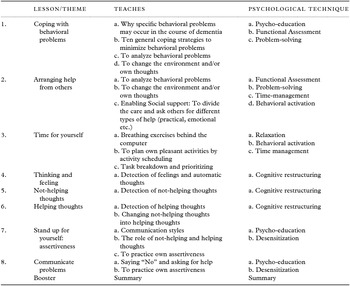
Most of the lessons of the Internet intervention MoD consists of cognitive behavioral therapeutic techniques including, functional assessment, cognitive restructuring, behavioral activation, desensitization, relaxation, and time-management, added with psycho-education, problem-solving, and time-management especially in the first lessons (see Table 1). The selection of these techniques has been based on evidence on the caregiving stress process and effective components of face-to-face interventions to reduce caregivers’ psychological distress. The bottom-line of the caregiving stress process is that behavioral problems of the person with dementia and care problems may lead to psychological distress of the family caregiver, due to the way the caregiver appraises these problems. Using adequate coping strategies and receiving social support may diminish psychological distress (Pot, Reference Pot, Jones and Miesen2004). Effective components of face-to-face interventions that have been found to reduce psychological distress of family caregivers of people with dementia are: cognitive behavioral therapy (CBT), interactive psycho-education, management of behavioral problems, and coping, social support and problem-solving techniques (Pinquart and Sörensen, Reference Pinquart and Sörensen2006; Selwood et al., Reference Selwood, Johnston, Katona, Lyketsos and Livingston2007; Olazarán et al., Reference Olazarán2010).
Overview of lessons of “mastery over dementia”: themes, content, psychological techniques

For the actual design of the lessons of MoD, we used the Internet intervention “Colour your Life” as a starting point, since this self-help CBT intervention was already found to be effective to reduce depressive symptoms of people aged 55 years or older (Spek et al., Reference Spek2007). Several psychological techniques – i.e. functional assessment, cognitive restructuring, behavioral activation and relaxation – were already included in “Colour your Life” and were modified for the target group of caregivers. The number of lessons (eight in total) was chosen in line with the number of sessions of earlier Internet interventions found to be effective (Andrews et al., Reference Andrews, Cuijpers, Craske, McEvoy and Titov2010). In addition, MoD used the interaction with a coach, because the therapeutic relationship is an important ingredient of face-to-face therapy and at that time seemed to be promising in Internet interventions as well, as was also shown in a recent review (Boots et al., Reference Boots, de Vugt, van Knippenberg, Kempen and Verhey2014). The content of the lessons could be tailored to the needs and preferences of the caregivers, for example by choosing to focus on specific behavioral problems but not on others, or to do or do not extra exercises in a specific area. However, the fixed number of lessons could only be followed in a fixed order.
The use of a focus group of end-users consisting of family caregivers of people with dementia and an expert panel consisting of experienced healthcare professionals like psychologists, case-managers, and nurses, was crucial for the development of MoD. They shared their insights on content and lay-out (“look and feel”), tried the online intervention and reached conclusions and recommendations for improvement based on consensus. It, for example, resulted in using neutral terms like “lessons” and “coach”, instead of “sessions” and “therapist”.
Components
Public and private domain:
The website of MoD is public domain, however, for participating in the intervention one needs a login. The public domain contains information for caregivers on dementia, caregiving, asking for help, and facts and figures. It also contains information on the intervention, costs, privacy, and how to register, and it shows a demo, self-test, and two short films of people who finished the intervention.
Lessons and homework:
MoD consists of eight lessons and a booster session with a summary of what has been taught. Each lesson consists of the same structure: (1) an introduction; (2) questions about the previous lesson (not in the first lesson); (3) theory; (4) assignments, that always include filling out a care diary, and; (5) an evaluation of the current lesson including a summary of what has been taught. The themes of the lessons and the underlying psychological techniques used in these lessons, are described in Table 1. Caregivers are advised to take one lesson per week in order to have enough time to practise and do the homework exercises. Reminders to login are sent by email when the caregiver does not login for three weeks. Access to the booster session is provided four weeks after finishing the eighth session.
Coach:
MoD is a so-called guided self-help intervention, i.e. feedback is provided by a coach, because in face-to-face interventions this is an important ingredient. All correspondence between caregiver and coach takes place within the secured, closed environment. There is no email exchange or telephone contact between them during the intervention. After each lesson the caregiver is asked to send the finished homework exercises to the coach. If required, there is room to send a personal note as well. The coach provides feedback within three working days. In MoD the coach is a psychologist with a training in CBT and experience with family caregivers of people with dementia. Before opening a next lesson, the caregiver is asked to read the coach's feedback first. Only after opening and presumably reading the feedback, the caregiver gets access to the next lesson.
Care diary:
Caregivers are asked to fill out the care diary after each session. In the care diary the caregiver describes the most striking event of the day, for example difficult behavior of the person with dementia, conflicts in the family about the care provided, or the inability to get professional support. The caregiver describes the situation and his or her thoughts at that moment, and scores the situation according to his/her sense of being in control of the situation varying from 0 (not being in control at all) to 10 (being in complete control). By filling in the care diary for a number of days the caregiver gains insight in his or her sense of the degree to which he or she is in control in various situations. The care diary is also an important source for the feedback of the coach to guide the intervention.
Acceptability of “mastery over dementia”
Sample
Data were used from a pragmatic randomized controlled trial (RCT) on the effectiveness and cost-effectiveness of MoD (Blom et al., Reference Blom, Bosman, Cuijpers, Zarit and Pot2013). All participants included in the experimental group of the RCT (N = 149) were included in this study. Participants were spouses, family members or friends providing care to the person with dementia. Family caregivers of people with dementia were recruited via the website “Mastery over Dementia”, the monthly digital newsletter of the Alzheimer's Society, leaflets at Alzheimer Cafe meetings (meetings for people with dementia, their caregivers and other interested people) and information letters to memory clinics and other relevant care institutes. After expressing interest in participating, caregivers were sent an information letter with more details on the study. They were asked to complete and sign a written informed consent form and return it by mail. Family caregivers having at baseline a score > 4 on the Center for Epidemiological Studies – Depression scale (CES-D), or a score > 3 on the HADS-A, or a minimum score of 6 on a one item burden scale ranging from 0 to 10 were included (for a description of these scales: see measurement instruments). Caregivers with high scores on the CES-D and the HADS-A or having suicidal thoughts, were first contacted by an elderly care physician to ensure that their mental health problem did not warrant immediate medical attention (for more details on the design of the RCT, see Blom et al., Reference Blom, Bosman, Cuijpers, Zarit and Pot2013).
Measurement instruments
The following data were collected online and reported by the caregivers, at baseline (reach) or during the intervention (adherence and user evaluation):
Reach:
Characteristics of family caregivers and the people with dementia they cared for were measured, including: type of relationship with the person with dementia, sex, age, living together or not with the person with dementia, having children, number of children, education, nationality – and of people with dementia – sex, age, living independently or in a long term care home. In addition, the diagnosis of dementia was checked and the time since diagnosis. Cognitive decline of the people with dementia was measured with the Informant Questionnaire on Cognitive Decline in the Elderly (IQCODE), to be filled out by the caregivers (Jorm, Reference Jorm2004). It consists of 16 items to be scored on a 5-point scale, with a cut-off of 3.38 to help identifying people with dementia. For measuring psychological distress of the family caregivers, the CES-D was used to measure depressive symptoms (Radloff, Reference Radloff1977). It consists of 20 items, for which the frequency during the past week has to be rated on a 4-point scale. The cut-off used to identify individuals at risk for clinical depression is 16. The 7-item anxiety subscale of the Hospital Anxiety and Depression Scale was used to measure the severity of anxiety symptoms and to be rated on a 4-point scale, with a cut-off of 8 used to help with identifying people with an anxiety disorder (Zigmond and Snaith, Reference Zigmond and Snaith1983). In addition, a 1-item scale to rate feelings of burden was used with scores ranging from 0 to 10.
Adherence:
The number of lessons that were opened by the caregivers, were tracked digitally. Reasons for not completing the entire intervention were registered with an open-ended question, and answers categorized as intervention-related (not fitting the need of the caregiver, too complex), care receiver related (death, institutionalized or ill), caregiver related (not enough time, overburdened, health problems or major life events), and other reasons (other help available or impossible to reach). Caregivers were divided in two groups: completers – those who completed the intervention by taking eight lessons with or without the booster lesson – and non-completers – those who stopped before lesson eight.
User evaluation:
After each lesson, caregivers were asked to score the comprehensibility and usefulness of the lesson on a 5-point scale ranging from (1) “not easy at all to understand” to (5) “very easy” and from (1) “not useful at all” to (5) “very useful”. Before the start of a new lesson, caregivers were asked to score the comprehensibility and usefulness of the feedback from the coach. The mean scores per lesson for each caregiver were calculated on these items. In addition, caregivers were asked how much time they spent on the lesson and the homework of the previous lesson. The response categories were: (1) less than ½ hour, (2) ½ to 1 hour, (3) 1 to 1½ hours, (4) 1½ to 2 hours, (5) more than 2 hours. The percentage of lessons and homework that took more than 1½ hours was calculated for each caregiver.
Data analysis
Descriptive statistics (frequencies, means, and distributions) were used to describe the characteristics of caregivers that were interested to take MoD (reach), the adherence and user evaluation. χ2tests and T-tests were used to study differences between baseline characteristics of completers and non-completers and to describe differences in caregivers’ evaluation of the intervention for completers and non-completers and for subgroups of completers regarding: relationship (spouses vs. children/children in law), sex (male vs. female caregivers), age of caregiver (< 75 years vs. > = 75 years), education (< Bachelor degree vs. > = Bachelor degree), living situation (independently or in a residential home). The scores on depression, anxiety and burden were divided into two categories based on the median, resulting in groups of caregivers with a CES-D score of <16 or > = 16, a HADS-A score of <9 or > = 9 and a burden score of <6 or > = 6. To analyze the data, we used SPSS for Windows, Version 19.
Results
Reach: baseline characteristics of caregivers and people with dementia starting the intervention
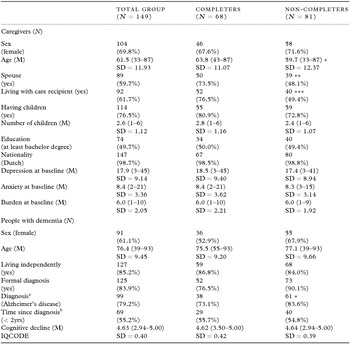
As Table 2 shows, caregivers who participated in the Internet intervention (N = 149) were mostly females (N = 104; 69.8%), spouse of the person with dementia (N = 89; 59.7%) and living in the same household as the person with dementia (N = 92; 61.7%). Their mean age was 61.5 (range 33–87). Half of them had at least a bachelor degree or higher (N = 74; 49.7%). Most caregivers had children (N = 114; 76.5%), ranging from 1 to 6 children, with a mean of 2.6. Except two caregivers who came from the Flemish part of Belgium, they all had the Dutch nationality (98.7%). The mean level of depressive symptoms of the caregivers was above the cut-off of the CES-D (17.9; range 3–45). The mean level of anxiety symptoms was also fairly high and reached the cut-off of the HADS-A (8.4; range 2–21). The average score on the 1 item burden-scale, was 7.2 (range 0–9).
Characteristics of participating family caregivers and the people with dementia they care for: total group, completers and non-completers

*p < 0.05; **p < 0.01; ***p < 0.001.
aPercentages of people with dementia with Alzheimer's disease are calculated with regard to the total number of people with dementia with a formal diagnosis within each group.
bPercentages of people with dementia with time since diagnosis less than 2 years are calculated with regard to the total number of people with dementia with a formal diagnosis within each group.
Characteristics of the people with dementia cared for by the family caregivers showed that clearly more than half of the care recipients were females (N = 91; 61.1%), with an age of 76.4 years ranging from 39 to 93 years, and were living in the community (N = 127; 85.2%). More than 80% had a formal diagnosis of dementia (N = 125; 83.9%), which was mostly Alzheimer's disease (N = 99; 66.4%). For the majority of the people with dementia, the diagnosis was known for a period of 2 years or less (N = 69; 55.2%). The average score on the IQCODE was well beyond the cut-off for detecting dementia (M = 4.63).
Adherence: caregivers’ completion of the intervention and differences between completers and non-completers
Of the 149 caregivers who were assigned to the experimental group, 68 caregivers (45.6%) completed all lessons within six months, with booster session (N = 58) or without (N = 10). Eighty-one caregivers did not finish all lessons. Six participants (4.0%) did not start at all, while 75 (50.3%) stopped during the intervention: not finishing lesson 1 (10.1%), lesson 2 (12.8%), lesson 3 (10.7%), lesson 4 (8.7%), lesson 5 (1.3%), lesson 6 (2.7%), lesson 7 (1.3%) or lesson 8 (2.7%). We were able to collect the reason for not completing the intervention from 54 of the 75 caregivers. Reasons given were: intervention related for example not fitting one needs (N = 13; 24.1%), care receiver related including death and nursing home placement (N = 15; 27.8%), caregiver related such as too much burden (N = 13; 24.1%) or other help available or needed (N = 13; 24.1%). No significant differences were found between these subgroups and the number of lessons finished.
Comparison of the caregivers who finished all the eight lessons (completers) with caregivers who took fewer than eight lessons (non-completers) yields some differences (Table 2). Among the completers, were significantly more spouses (73.5% vs. 48.1%, p = 0.002), caregivers living in the same household (76.5% vs. 49.4%, p = 0.001), and the age of caregivers was higher (63.8 vs. 59.7, p = 0.037). Within the non-completers there were significantly more caregivers caring for somebody with a formal diagnosis of dementia (90.1% vs. 76.5%, p = 0.027) and caregivers caring for a person with dementia having a diagnosis of Alzheimer's disease (83.6% vs. 73.1%, p = 0.015). There were no differences between both groups on all other baseline characteristics, including their scores on psychological distress as measured with the CES-D, HADS-A and the one item burden.
User evaluation: completers’ evaluation of the usefulness, comprehensibility and the time invested
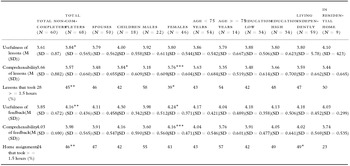
Table 3 shows that on a scale from 1 to 5, completers had a mean score of 3.84 for usefulness of the lessons and 3.57 for comprehensibility. On average, 45% of the lessons took them 1.5 hours or more. Regarding the feedback provided by the coach, the mean score for usefulness was 4.16, whereas the comprehensibility had a mean score of 3.98. On average, 46% of the home assignments took them 1.5 hours or more. Non-completers scored significantly lower on usefulness of the lessons (3.62, p = 0.039), lessons that took them 1.5 hours or more (28%, p = 0.005), usefulness of the feedback of the coach (3.85, p = 0.009) and home assignments that took them 1.5 hours or more (24%, p = 0.002). There were no statistical significant differences found on comprehensibility of the lessons or feedback of the coach.
Caregivers evaluation of the intervention “mastery over dementia”

*p < 0.05; **p < 0.01; ***p < 0.001.
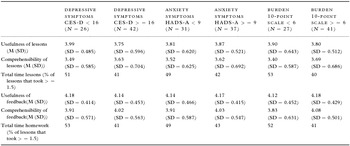
For completers, differences in user evaluation were found for some of the baseline characteristics. Female completers rated the comprehensibility of the lessons (3.76 vs. 3.18; p = 0.000) and the feedback by the coach higher (4.16 vs. 3.60; p = 0.000), they also rated the usefulness of the feedback higher (4.24 vs. 3.98; p = 0.038) and indicated that a lower percentage of the lessons took them 1.5 hours or more (39% vs. 58%; p = 0.016) than male completers. In addition, children rated the comprehensibility of the lessons higher than spouses (3.84 vs. 3.48; p = 0.041) and a lower percentage of completers whose relative with dementia was institutionalized spent 1.5 hours or more on the home assignments (23% vs. 49%; p = 0.034). No differences in caregivers’ evaluation were found on any of the other baseline characteristics, including the scores on symptoms of depression and anxiety, and feelings of burden (Table 4).
Caregivers participation in and evaluation of the intervention “mastery over dementia” (N = 68)

*p < 0.05; **p < 0.01; ***p < 0.001.
Discussion
This study describes the acceptability of the guided self-help Internet intervention “mastery over dementia” (MoD), which is aimed at decreasing psychological distress of family caregivers of people with dementia, especially depressive symptoms. The intervention consists of eight lessons and a booster lesson. Most of the lessons of the Internet intervention MoD consists of cognitive behavioral therapeutic techniques including functional assessment, cognitive restructuring, behavioral activation, desensitization, and relaxation, added with psycho-education, problem-solving, and time-management.
The Internet intervention had a broad reach in terms of caregivers with different sex, age, relationship to the person with dementia, household, and number of children. Almost all caregivers who participated in MoD had a high educational level, as is known for participating in therapy in general (Wierzbicki and Pekarik, Reference Wierzbicki and Pekarik1993). MoD seemed to reach the group of caregivers for whom it was developed: caregivers with a clinically relevant level of psychological distress. More than half of the participants had high levels of symptoms of depression and anxiety above the cut-off of scales used, suggestive of the presence of a psychiatric disorder.
A noteworthy finding is that even family caregivers of 75 years or older participated in the intervention, with the oldest caregiver being 87 years old. Till now, this old age group has not been involved in intervention trials to decrease psychological distress via the Internet. In most studies, participants are not over 65 years (Choi et al., Reference Choi, Kong and Jung2012). Only in a few studies a maximum age of 75 or 80 years has been used (f.i. Proudfoot et al., Reference Proudfoot2004; Spek et al., Reference Spek2007). Knowing that at least part of the current people aged 75 years or older can already be reached via the Internet for teaching psychological techniques is important for clinical practice.
A second relevant finding is that about two-thirds of the caregivers participated in the intervention before or within two years after their care recipients had received a formal diagnosis of dementia. Since the mean score on the IQCODE of people with dementia was well beyond the cut-off for detecting dementia, it is very unlikely that caregivers of people who did not have dementia participated in the intervention. These results once again show, that even in a country such as the Netherlands people still receive a formal diagnosis of dementia in a late stage or not at all. However, an Internet intervention like MoD has the potential to reach family caregivers caring for people in different stages of the dementia process, also within a short time after diagnosis.
Family caregivers of people with dementia who were already living in a residential or nursing home also took part in the intervention. Since the number of people with dementia is increasing as is the pressure on family members to care for their relatives, not only at home but also after institutionalization, this is another promising finding (WHO, 2012). Unfortunately, the attrition rate is rather high in this study (55.7%), although it is within the range of other Internet therapies varying from roughly 0% to 75% (f.i. Waller and Gilbody, Reference Waller and Gilbody2009; Andrews et al., Reference Andrews, Cuijpers, Craske, McEvoy and Titov2010) but higher as compared to Internet-based CBT for adult depression (Van Ballegooijen et al., Reference Van Ballegooijen2014) and also higher than face to face CBT (Wilson et al., Reference Wilson, Mottram and Vassilas2008). Attrition is one of the major barriers of Internet interventions (Waller and Gilbody, Reference Waller and Gilbody2009). There were different reasons for not completing the intervention, not only related to the functioning of the person with dementia and the caregiver, but also to aspects of the intervention as perceived by the caregiver. The total number of eight lessons and a booster session makes MoD one of the longest compared to other Internet interventions (Andrews et al., Reference Andrews, Cuijpers, Craske, McEvoy and Titov2010: range of lessons is 5–9) and it might be worthwhile to shorten MoD.
Regarding the intensity of MoD, it is remarkable that almost half of the caregivers who signed up for the intervention took all lessons, given their high-level of psychological distress. This especially holds for spouses, and self-evidently thus for caregivers living in the same household and older caregivers, and caregivers of people with another formal diagnosis than Alzheimer's disease. This underlines the seemingly great need among these caregivers for information and training how to deal with the person with dementia and the caregiving situation. It might also show that people clearly found deeper understanding of their situation and felt supported by participated in the intervention.
Caregivers’ evaluation of the intervention seemed satisfactory for those who completed the intervention (N = 66; 44.2%). They evaluated the lessons and the feedback they received from the coach at the top end of the scale. Self-evidently, carefulness is required when interpreting these absolute values without any norms. Moreover, they do show room for improvement, especially for male caregivers, since female caregivers scored relatively higher on the comprehensibility of the lessons and feedback and spent less time on the lessons. Caregivers of institutionalized people with dementia spent less time on the home assignments. Their need to practice might be lower due to spending less time with the person with dementia. User evaluation of non-completers was less positive on the usefulness of both the lessons and the feedback provided by the coach. Not surprisingly, they spent less time on lessons and home assignments. Better assignment of the intervention or better addressing the needs of some of the non-completers might improve completion rates and user evaluations.
An encouraging finding was that adherence and user evaluation was not found to be different for caregivers with a relatively high- or low-level of psychological distress, nor for those with a high-educational (at least a Bachelor degree) or lower-educational level. This is in line with studies on Internet interventions for other target groups, showing that educational-level do not have an impact on adherence (Christensen et al., Reference Christensen, Griffiths and Farrer2009).
There are some methodological aspects of this study that need to be taken into account. The data were collected in the context of a pragmatic RCT. Thus, even though caregivers in clinical practice were selected, they did not sign up for MoD, but for a study on the effectiveness of Internet help. When caregivers would have been asked to sign up for MoD, and would have received more detailed information on the intervention before the start, this might have changed the composition of the participating caregivers, and might have had a positive impact on completion and user evaluation.
The jury is still out whether or not to include the support of a coach. In MoD a psychologist is intensively involved to provide feedback on the homework exercises of the participants, though we did not measure his time investment exactly. On average, caregivers reported that the feedback of the coach was useful and easy to understand, although the comprehensibility was somewhat lower for the male caregivers as compared to females. Earlier research shows ambiguous results regarding the role of a coach or therapist in Internet interventions. Apart from studies that show that guided self-help is more effective than self-help without guidance (f.i. Kelders et al., Reference Kelders, Kok, Ossebaard and van Gemert-Pijnen2012), there are also studies revealing that Internet CBT with no or brief therapist support show substantial results comparable to face-to-face therapy (f.i. Andrews et al., Reference Andrews, Cuijpers, Craske, McEvoy and Titov2010).
Peck (Reference Peck2010) claims that the therapeutic relationship must be viewed as a vehicle or channel that facilitates or hinders the true working components of a therapy instead of a working component itself. This alternative formulation of the role of the therapeutic relationship has clinical implications, also for the development of Internet interventions. Peck (Reference Peck2010) made several suggestions to improve the content of Internet interventions in the absence of a therapist. For example, to focus more on enhancing the credibility of the treatment method, the need to develop new problem solving skills and on the importance of accepting oneself. We need to know more on the trade-off between costs and outcomes of Internet interventions regarding different durations (brief vs. enhanced) and modalities (administrator vs. clinician; phone, face-to-face or written text) as has also been emphasized by Cuijpers and colleagues (Reference Cuijpers, Marks, van Straten, Cavanagh, Gega and Andersson2009).
More knowledge is also needed regarding the tailoring of the lessons and the order of the lessons in Internet interventions like MoD. In MoD the content of the lessons could be tailored to the needs and preferences of the caregivers, but all lessons needed to be followed in a fixed order. Caregivers could not proceed when they had not finished the previous lesson and at least opened the feedback of the coach. An Internet intervention offers the opportunity to tailor (components of) the lessons and the order to the needs and preferences of the caregivers as well. For example: If a caregiver is related to a person with dementia who is living in a care home some intervention components might be less relevant than for caregivers of people living in the community and vice versa, or; If a caregiver does not have much time, it might be better to offer a shortened version of the intervention including some core lessons. Research is needed to develop the right algorithms for tailoring intervention components to the needs and preferences of caregivers of people with dementia.
This study shows that a guided self-help Internet intervention like MoD is acceptable for a broad range of family caregivers of people with dementia in terms of reach, adherence and user evaluation, although the relatively high attrition rate shows room for improvement. The results are promising with regard to the near future in which most parts of the world will be confronted with a large increase in the number of people with dementia and the pressure on family members to take care of these people at home as long as possible will substantially increase. The further development of Internet interventions for family caregivers to prevent their psychological distress seems to have high potential in this respect. Self-evidently, the next step is to substantiate the (cost)effectiveness of Internet interventions for this target group. Timely effective support for caregivers is relevant in order not to solve one problem – the provision of care to people with dementia – and create another – mental health problems of their family caregivers.
Conflict of interest
None.
Description of authors’ roles
Anne Margriet Pot was responsible for the design of the Internet intervention and the study, was involved in the data-analysis and wrote the paper. Bernadette M. Willemse was involved in the development of the Internet intervention and together with Marco M. Blom also involved in data-analysis and writing.
Acknowledgments
Mastery over Dementia has been developed by the Netherlands Institute of Mental Health and Addiction (a research and implementation institute), in collaboration with Foundation Geriant (a healthcare provider), the Dutch Alzheimer's Society and end-users (family caregivers of people with dementia). In 2010, MoD received an award from Alzheimer Disease International and Fondation Mederic Alzheimer in the category “Most promising evidence-based psychosocial research”. For an English demo: www.masteryoverdementia.com.
We are grateful for the financial contribution of Foundation Geriant, the Dutch Alzheimer's Society, the VU University and the Netherlands Institute on Mental Health and Addiction (Trimbos-institute) for the financial and in-kind contributions to enable the development of Mastery over Dementia and the study on its acceptability and (cost)effectiveness.