Introduction
Bean is an important grain legume in the smallholder systems of sub-Saharan Africa (SSA). However, SSA smallholders often operate in risky production environments characterized by a variety of constraints. Increased population pressure has resulted in decreased land sizes and intensive cultivation of the available cropland with limited use of fertilizers. This has resulted in soil degradation and a decrease in crop yield (Drechsel et al., Reference Drechsel, Gyiele, Kunze and Cofie2001; Conelly and Chaiken, Reference Conelly and Chaiken2000). The situation is exacerbated by erratic rainfall and continuous cropping of few bean varieties with insufficient levels of tolerance to the major pests and diseases. A large number of field pests (Abate and Ampofo, Reference Abate and Ampofo1996), and fungal, bacterial, and viral diseases (Beebe et al., Reference Beebe, Ramírez, Jarvis, Rao, Mosquera, Bueno, Blair, Yadav, Redden, Hatfield, Lotze-Campen and Hall2011; Schwartz and Corrales, Reference Schwartz and Corrales1989) constrain the production of common bean in smallholder systems of eastern Africa, particularly in western Kenya. In addition, moisture stress is becoming an important common bean production constraint, especially with climate change. High temperatures during the reproductive growth stage of common bean result in a reduction in pod and seed set due to enhanced abscission of flower buds, flowers, and pods (Ahmed et al., Reference Ahmed, Hall and DeMason1992).
The pressure on bean plants caused by biotic and abiotic constraints varies with location, farm, and season, thus posing uncertainty to bean production and contributing to food insecurity, widespread poverty, and malnutrition, especially among resource-poor farmers who heavily rely on bean to meet their nutritional requirements and household income (Wortmann et al., Reference Wortmann, Kirkby, Aledu and Allen1998). Increasing crop genetic diversity is a useful strategy for managing pests and diseases (Hajjar et al., Reference Hajjar, Jarvis and Gemmill-Herren2008), which are among the important production risks in smallholder systems. Resource-constrained smallholder farmers often operate in risky production environments and are generally more concerned with yield stability and therefore seek to maximize stability of performance rather than productivity per se (Schwartz and Corrales, Reference Schwartz and Corrales1989). Bean is a major grain legume in SSA farming systems and an important source of protein for many households, but it is also one of the crops most vulnerable to production risks such as drought, diseases, and pests. This study was therefore conducted to investigate whether growing multiple-bean varieties with different attributes instead of a single variety can enable farmers enhance yield stability over seasons and ensure food security.
Materials and Methods
Site description
The study was conducted at Kapkerer in Nandi County, western Kenya (00o00’31.9”N, 34o 48’14.6”E, 1530 m a.s.l.). The site receives bimodal rainfall with an annual average of 1200 mm. Long rains are experienced from March to August, while short rains occur from September to January. Temperatures are fairly constant throughout the year with an annual mean of 21 °C. Mean daily minimum and maximum temperatures are 17 and 29 °C, respectively. Soils are predominantly dark red, well-drained, sandy to sandy loam texture, and classified as Nitisols (Jaetzold et al., Reference Jaetzold, Schmidt, Hornetz and Shisanya2007). Mixed farming is practiced, with crops coexisting with livestock on the same farm, and maize and beans are the staple crops.
Experimental design
The data used in this study were obtained from trials screening new bean varieties for adaptability to biophysical (rainfall, pests, and diseases) and socioeconomic (grain color, grain size, taste, etc.) conditions in smallholder systems at Kapkerer, western Kenya. The trials were conducted between 2011 and 2016. In 2011, three improved bean (Phaseolus vulgaris L.) varieties KK15, KK071, and KK072 were screened for adaptability in three farms (Table S1 in Supplementary Material); each variety was replicated three times in each farm. These varieties were bred for root rot tolerance but they also have other desirable attributes such as grain color, grain size, and taste. In 2012, the trial was repeated with one additional variety (KK8). In 2013, a local variety (Punda) commonly grown by farmers in the region was included in the trial. In 2014, slight changes were made on the design of the trial and the five varieties mentioned above were planted in nine farms with a single replicate in each farm. The number of farms was increased to 15 with one replicate per farm in 2015 and 2016 (Table S1 in Supplementary Material). The trial was conducted twice each year, i.e., during the long-rain and short-rain seasons. Planting was done at the onset of rains each season. Spacing was 50-cm inter-row and 10-cm intra-row, with plots measuring 4 m2. Triple superphosphate fertilizer was applied at planting (30 kg P ha−1). All plots were weeded twice during the growing season. The first and the second weeding operations were performed 21 and 42 days after planting, respectively. No pesticides or fungicides were applied to control pests and diseases.
Data collection, processing, and analysis
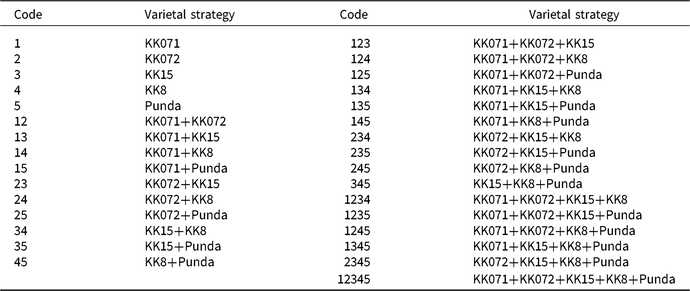
Daily rainfall, bean diseases, crop maturity, and grain yield were evaluated. Bean common mosaic virus (BCMV) and common bacterial blight (CBB) were scored on a scale of 1–5, where 1 represents least diseased and 5 represents most diseased. Maturity was assessed based on days to 50% flowering. At the end of each season, grain yield was determined at 13% moisture content. The five varieties were combined in all possible ways to create 31 single- and multiple-bean production strategies (Table 1). The yield of each strategy at each farm was determined by averaging the grain yields of the constituent varieties. Therefore, the observations are yijk, being the plot-level yields from farm i in season j for variety k. From these, we estimated the yield per hectare of a farmer growing strategy m of v varieties as follows:
 $${Y_{mij}} = \left(\sum\nolimits_{k\,in\,m}^v {{y_{ijk}}} \right)/v$$
(1)
We then modeled farm-to-farm and season-to-season variation in Xmij using a linear mixed model. When looking at variation over seasons within farms, the model was as follows:
 $${X_{mij}} = {c_m} + {f_i} + {s_{ij}} + {\varepsilon _{ij}}$$
(2)
where cm is the overall mean for strategy m, and f, s, and ε are random effects, uncorrelated with zero mean and variances:
 $$\eqalign{ \cr Var(f) = \sigma _f^2, \cr Var(s) = \sigma _{s|f}^2, \cr Var(\varepsilon ) = \sigma _{ij}^2/v \cr} $$
Here,
 $\sigma _{ij}^2$
is the residual plot to plot variance with farm in season j. This can only be estimated when there was within-farm replication from 2011 to 2013 (Table S1 in Supplementary Material). Examination of data from these seasons showed that the assumption of a constant coefficient of variance (cv) over farms and seasons is reasonable. Hence, we estimated the cv by fitting a constant cv model to the early seasons, giving an estimate cv of 0.32. When fitting model (1), we used the following equation:
 $$\sigma _{ij}^2 = cv\left(\sum\nolimits_{k = 1 \ldots {n_{ij}}} {{y_{ijk}}} \right)/{n_{ij}}$$
(3)
where nij is the number of plots on farm i in season j.
Bean varietal strategies created and used in the analysis of performance stability.

Model (2) was then estimated using Bayesian methods of the brms library in R. For estimation of variation between farms within seasons, model (2) was modified to
 $${X_{mij}} = {c_m} + {s_i} + {f_{ij}} + {\varepsilon _{ij}}$$
(4)
To determine the performance stability across seasons, the mean yield across seasons was plotted against the standard deviation across seasons, while for performance stability across farms, the mean yield across farms was plotted against the corresponding standard deviation.
The probability of a farmer not reaching the set yield target is calculated as follows (Schweigman and Joosten Reference Schweigman and Joosten1985):
 $$q = {\rm{p[z}} < (T - \mu )/\sigma {\rm{],}}$$
(5)
where T is the target yield, µ is the average yield, and σ is the standard deviation (variance across seasons). The value of z can be read from tables of standardized normal (z) distribution in order to establish the value of q. Hence, the probability of exceeding the set yield target was computed as (1 − q). The probability curves for five different strategies (p3, p34, p234, p1234, and p5) that showed clear differences were plotted. Correlation analysis was also performed to determine the performance relationship between grain yield and foliar diseases (BCMV and CBB combined), and root rot. The mean BCMV and CBB scores for each variety were calculated and the performance of the varieties against the two diseases compared by plotting the mean BCMV and CBB scores against the seasons. For the rainfall data collected over the duration of the trial, plots of daily rainfall were made to show the distribution in each growing season.
Results and Discussion
Grain yield performance
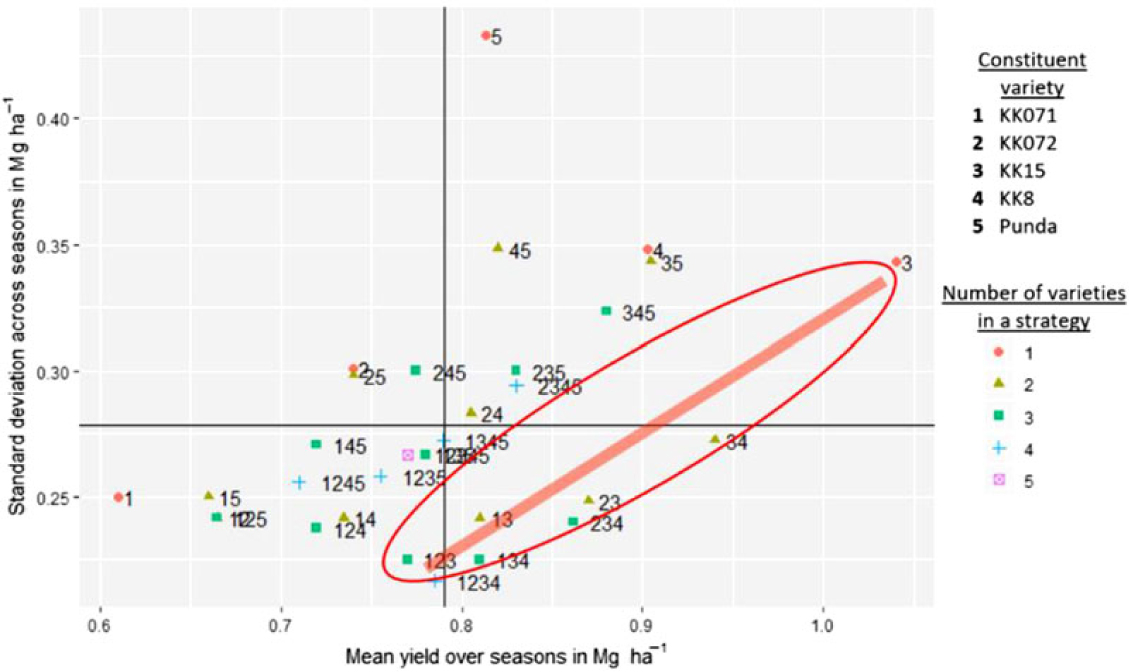
The different strategies had variable grain yield performance across seasons within farm (Figure 1). Over seasons, there was a large difference in the average yield of the different strategies, which ranged from 0.6 Mg ha−1 for strategy 1 to more than 1.0 Mg ha−1 for strategy 3 (Figure 1). There was also high season-to-season standard deviation of the strategies within farm and pooled across farms (Figure 1). Strategy 1234 had the lowest standard deviation of 0.22 Mg ha−1, while strategy 5 had the highest of 0.43 Mg ha−1. Standard deviation is an indicator of performance stability. Strategies with lower standard deviation are by definition more stable in performance. For example, strategies 5 and 13 have the same mean grain yield of 0.81 Mg ha−1 but different standard deviations (Figure 1). The standard deviation of strategy 5 was 0.43, which was almost double that of strategy 13 (0.24).
Grain yield performance (Mg ha−1) of bean varietal strategies across seasons within farm based on overall standard deviation (x-axis) and overall mean (y-axis). The vertical line shows the overall mean grain yield (Mg ha−1) and the horizontal line shows the overall standard deviation of grain yield. The line over oval shape (diagonal) exemplifies the relationship between the grain yield and standard deviation (standard deviation increases with grain yield).
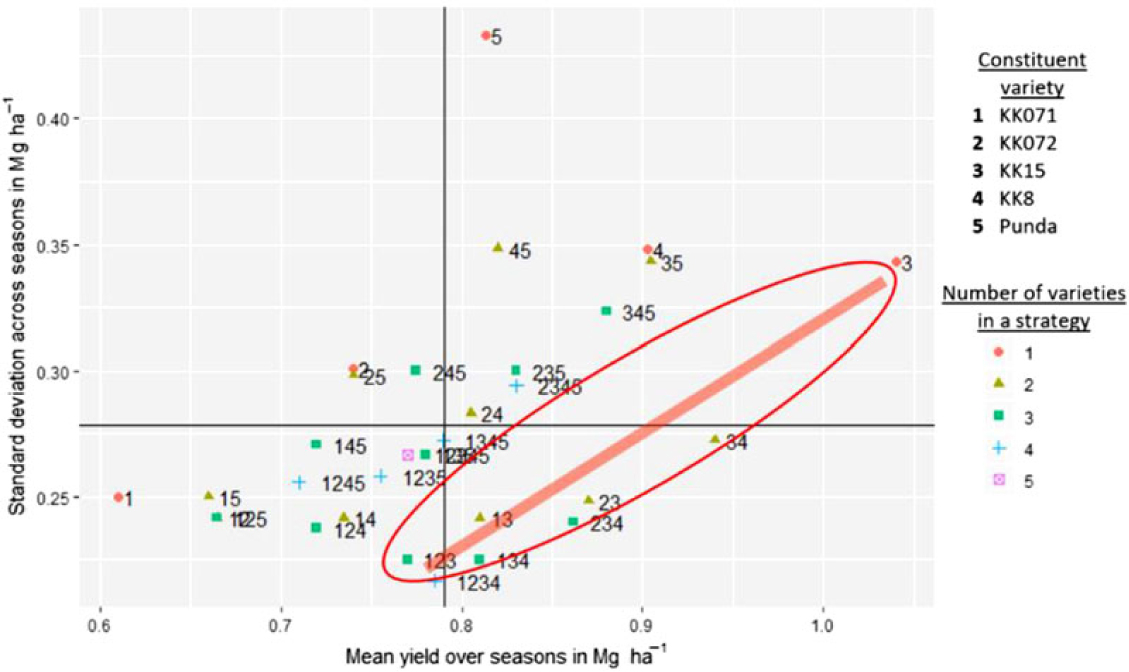
There was a positive correlation between mean grain yield and standard deviation, meaning that the high-performing strategies tended to have higher standard deviations (Figure 1). Farmers will therefore have to trade off higher grain yield performance for grain yield stability. For example, strategy 3 has a relatively higher grain yield than strategies 23, 34, and 234, but its standard deviation is also much higher meaning that its grain yield is likely to fluctuate more over the seasons (lower stability), although this strategy is better than the other single strategies and some of the multiple strategies. The good performance of strategy 3 can be attributed to its earliness, tolerance to foliar diseases such as BCMV, and root rot, which are among the major constraints to bean production in western Kenya smallholder systems. For smallholder farmers operating in risk prone environments, yield stability is as important as yield potential (Sinebo, Reference Sinebo2005) and these farmers would find strategies 23, 34, and 234 appealing. Adopting such strategies would enable them minimize biophysical risks (drought, pests, diseases, etc.) and to improve bean yield stability across seasons.
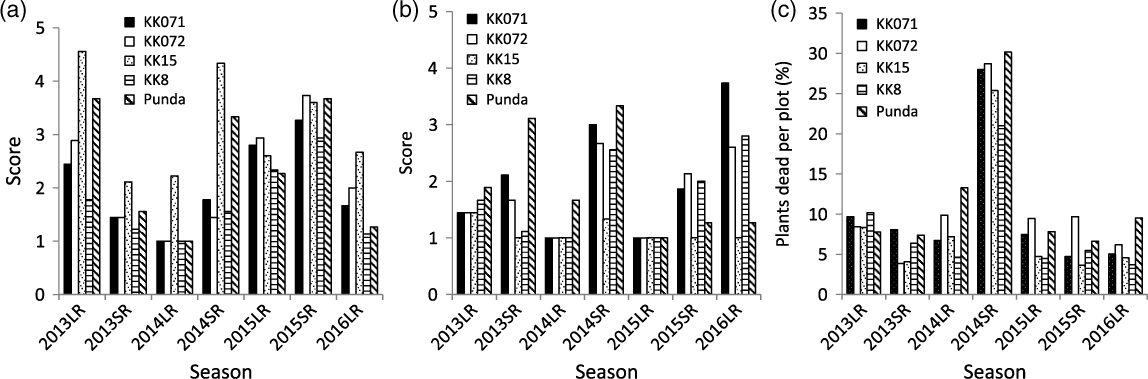
The number and the choice of bean varieties in a strategy have an effect on both grain yield performance and yield stability (Figure 1). For example, strategies 13, 23, 34, 134, and 234 appear on the lower right section of the figure. This section denotes high grain yield performance and high stability. None of the five single-variety strategies appear in this section, indicating low-yield stability even if grain yield is high. Most of the single-variety strategies (3, 4, and 5) lie in the upper right section of the figure, denoting lower yield stability, which makes them much riskier choices. Particularly, strategy 5 (variety Punda) has the highest standard deviation making it the most unstable. Consequently, strategies that incorporate Punda are also relatively unstable. Punda is a farmer bean variety with relatively late maturation and susceptible to root rot based on observation over seven seasons of screening (see Figure 2c). This is demonstrated by the fact that none of the strategies in the lower right section of the figure (most stable) contains variety Punda. Similarly, strategy 1 (variety KK071) has low mean grain yield; therefore, any strategy with variety KK071 has relatively low yield, and any strategy containing variety KK15 has a high mean grain yield for similar reasons.
Severity of (a) CBB, (b) BCMV, and (c) Root rot on bean varieties at Kapkerer site for 7 growing seasons between 2013 and 2016 long rains.

Smallholder farmers generally operate in environments characterized by biophysical and socioeconomic heterogeneity (Ojiem et al., Reference Ojiem, De Ridder, Vanlauwe and Giller2006). In risky production environments, minimizing risk can be an important aspect of the smallholder production strategy. Oppenheimer et al. (Reference Oppenheimer, Campos, Warren, Birkmann, Luber, O’Neill, Takahashi, Field C., Barros, Dokken, Mach, Mastrandrea, Bilir, Chatterjee, Ebi, Estrada, Genova, Girma, Kissel, Levy, MacCracken, Mastrandrea and White2014) defined three terms related to risk management. These are hazard, exposure, and vulnerability. Hazard refers to a natural or human-induced physical event that may cause loss of life, injury, or other impacts on health, ecosystems, and environmental resources. Exposure is the presence of people, livelihoods, ecosystems, or resources in places and settings that could be adversely affected, while vulnerability is the propensity or predisposition to be adversely affected. Pest and disease incidences (Abate and Ampofo, Reference Abate and Ampofo1996; Beebe et al., Reference Beebe, Ramírez, Jarvis, Rao, Mosquera, Bueno, Blair, Yadav, Redden, Hatfield, Lotze-Campen and Hall2011; Schwartz and Corrales, Reference Schwartz and Corrales1989), drought (Ahmed et al., Reference Ahmed, Hall and DeMason1992), and soil fertility degradation (Drechsel et al., Reference Drechsel, Gyiele, Kunze and Cofie2001; Conelly and Chaiken, Reference Conelly and Chaiken2000) are among the major biophysical factors (hazards) that influence bean productivity in smallholder systems. Occurrence of pests, diseases, and drought, during the season the bean variety strategies are in the field, will lead to exposure to these hazards. Given that bean varieties have different attributes, levels of vulnerability to the hazards will differ.
Severity of root rot, BCMV, and CBB were variable from season to season (Figure 2). CBB pressure was relatively high during the long-rain season 2013 and strategies 3 (variety KK15) and 5 (variety Punda) showed more vulnerability to CBB during that season (Figure 2a). Generally, variety Punda is more susceptible to CBB than KK15 (Figure 2a). However, in the short-rain season 2013, BCMV pressure was relatively high and strategies 1 (variety KK071) and 5 (variety Punda) were the most vulnerable (Figure 2b). Strategies 5 (variety Punda), 2 (variety KK072), and 1 (variety KK071) were the most vulnerable (in that order) to the high root rot pressure recorded during the short-rain season of 2014 (Figure 2c). In fact, these varieties normally perform poorly in growing seasons with high root rot pressure (Figure 2c). There was a significant negative correlation between grain yield and foliar diseases (BCMV and CBB combined) (p = 0.03) and root rot (p < 0.001) and significant interaction between diseases and rainfall was found. For example, a negative correlation was also found between BCMV and rainfall (p < 0.001). BCMV is a vector-borne disease spread by aphids, and aphids’ population generally reduces with increasing rainfall. Therefore, growing of these vulnerable single varieties would lead to low yields (Figure 1), resulting in household food insecurity. In contrast to strategies that showed vulnerability in different seasons, some strategies showed consistently good performance across diverse seasons. One example of this is strategy 4 (variety KK8).
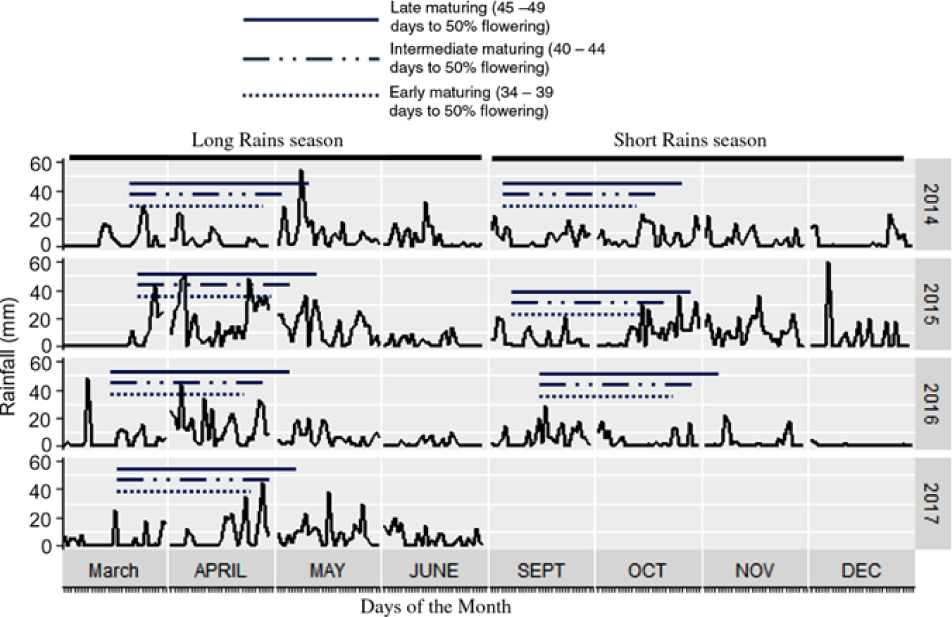
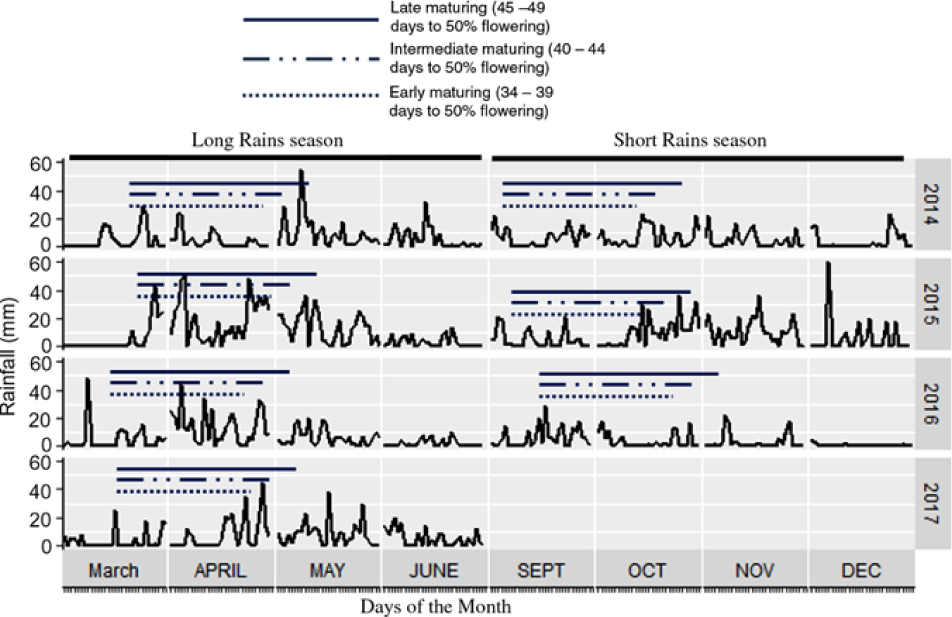
Bean production is possible in regions where rainfall is at least 400 mm during the growing season (Liebenberg, Reference Liebenberg2002). Even in regions receiving much more than the minimum rainfall requirement as Nandi County, western Kenya, where this study was conducted, the distribution of rainfall over the growing seasons is quite critical. Poor distribution of rainfall during the growing season can lead to moisture stress, which could coincide with flowering and grain filling growth stages of bean (Rao, Reference Rao and Pessarakli2001). The single-variety bean strategies 1–5 fall in different maturity categories: Strategy 3 is early, strategies 1 and 2 are intermediate, and strategies 4 and 5 are late maturing. Therefore, strategies that contain different selection of varieties may have their components reaching 50% flowering at different dates, thus affecting the risk of yield being negatively affected by rainfall conditions. For example, in the long-rain season of 2014, there was a dry spell lasting more than a week during the flowering period for the early-maturing varieties (Figure 3), leading to low productivity. In contrast, the intermediate varieties benefited from the moderate rainfall received during flowering and pod formation in the same season, leading to high production. Similarly, during the long- and short-rain seasons in 2015, there was excessive rainfall during the flowering period for the late-maturing varieties, which caused higher flower abortion compared to the intermediate varieties. In the study site, heavy rainfall is occasionally accompanied by hailstones, which shreds leaves and abort flowers leading to poor yields.
Daily rainfall (mm) received at Kapkerer for six growing seasons between 2014 and 2016.
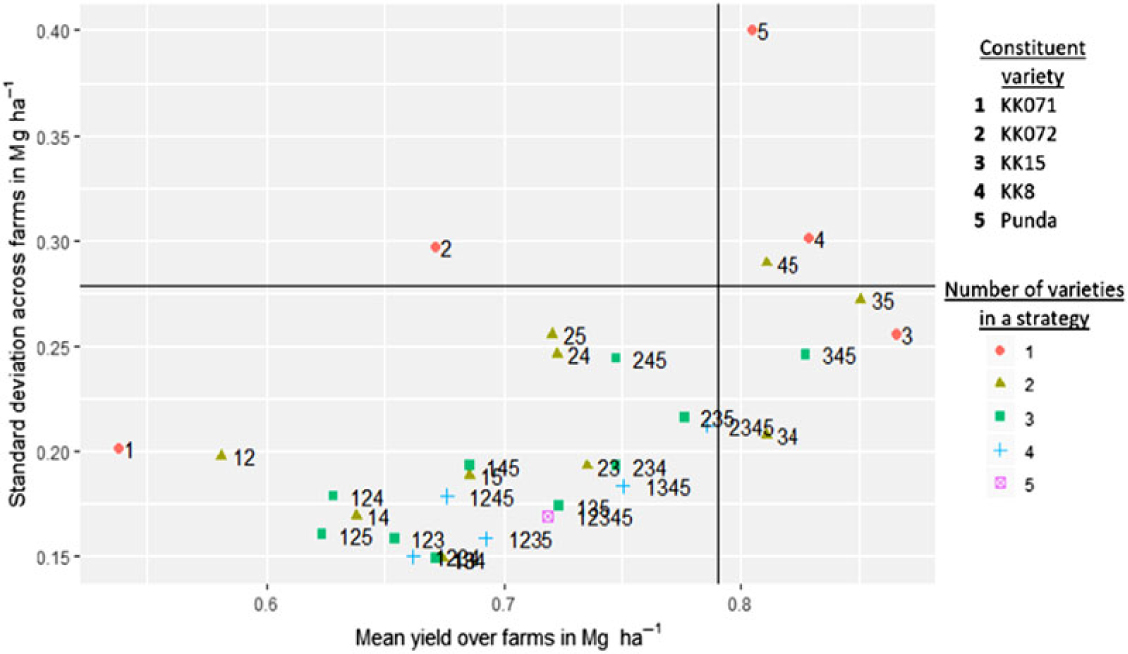
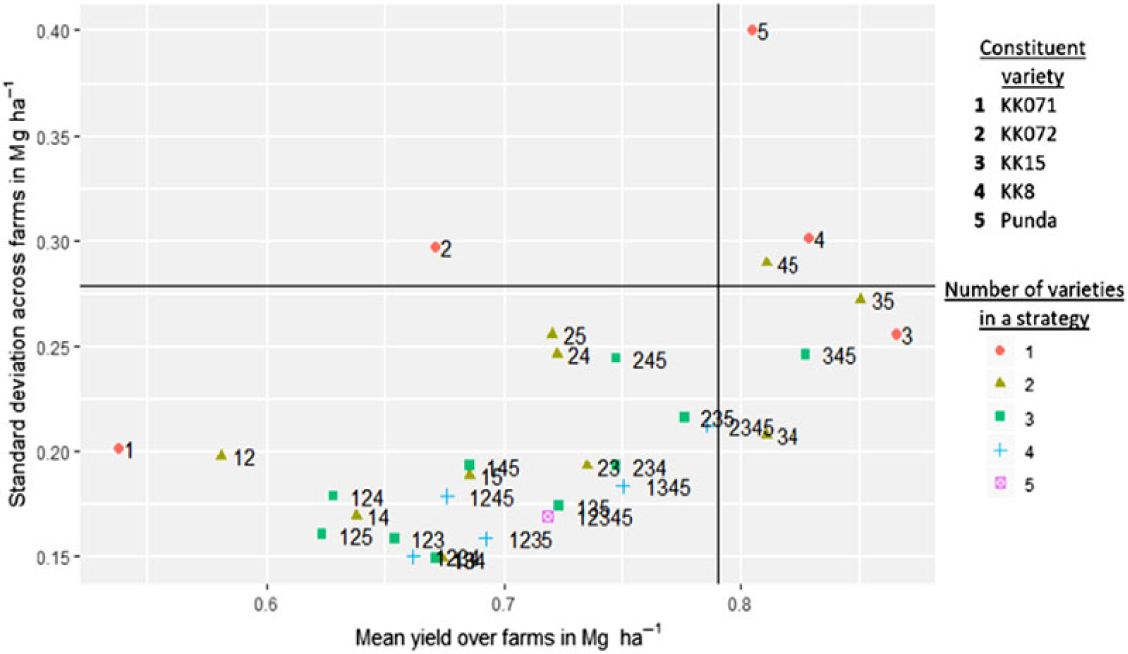
An analysis of grain yield performance and yield stability across farms within season is important for identifying the bean strategies suitable for recommendation across the farms and those that cannot be recommended without putting some farmers at high risk of getting poor results. For example, the grain yield performance for strategies 5 and 2345 is almost the same (a difference of 0.03 Mg ha−1) but the standard deviation of strategy 5 is 0.4, which is nearly double that of strategy 2345 (Figure 4). Thus, strategy 5 is relatively much more unstable and is likely to perform very well in farms where biophysical and socioeconomic conditions are favorable and very poorly in farms where such conditions are less favorable. Recommending strategy 5 across farms would put some farmers at higher risk of obtaining very poor results. Single-bean varietal strategies 3 and 4, with their high grain yields and relatively low standard deviations (Figure 4), are good candidates for recommendation across farms. But when they are grown together (strategy 34), the standard deviation is even much lower, meaning that yield stability across farms increases greatly. This suggests that many farmers would greatly benefit from this multiple-variety strategy.
Grain yield performance (Mg ha−1) of bean varietal strategies across farms within season based on overall standard deviation (horizontal line) and overall mean (vertical line).
Risk management
According to Schweigman and Joosten (Reference Schweigman and Joosten1985), risk can be defined as the probability of not meeting a set target. Let us consider, for illustration purposes, that a smallholder farmer growing bean somewhere in western Kenya has a certain yield expectation (target yield) and strives to achieve it. Variation among seasons due to diseases (Figure 2) and rainfall (Figure 3) will impact farmer’s production decisions. Then, decisions may include how much land to put under production, whether to apply fertilizer or not, should an early-maturing but low-yielding variety be grown or a late-maturing one with high-yield potential, etc.
Strategies that lower production risks associated with such uncertainties are likely to appeal more to the farmer than those that promise high yield but may be risky. The objective of the farmer is to reduce the probability (q) of not meeting the target yield (T) and the variety choices made will determine whether or not this objective is met. Therefore, depending on the magnitude of the difference between µ and T, and the value of σ (refer to Equation 5), the risk of not meeting the target can either be high or low. Since smallholder farmers can be risk averse, the risk of making a particular production decision by choosing a certain bean strategy can be illustrated by the following scenario analysis. Assuming household size of four, and a per capita bean consumption of 60 kg year−1 (Beebe et al., Reference Beebe, Rao, Blair and Acosta2013; Broughton et al., Reference Broughton, Hernandez, Blair, Beebe, Gepts and Vanderleyden2003), the amount of bean that would be required by this household in a year is 240 kg. However, bean is also a major source of household income for resource-poor smallholder farmers. Therefore, assuming that this household needs to sell about 180 kg of bean in a year to meet household needs, the total amount of bean required would be 420 kg (210 kg per growing season). The bean yield target for this household under ideal situation (ideal yield target) would have to be 840 kg ha−1 in order to produce the 210 kg per season in an area of 0.25 ha, which is the mean area normally devoted to bean production in western Kenya (Onyango et al., Reference Onyango, Otieno, Nyikal and Ojiem2016). According to the probabilities given in Table S2 in Supplementary Material, this household stands the best chance of meeting the target bean yield with strategies 3, 34, 23, and 234.
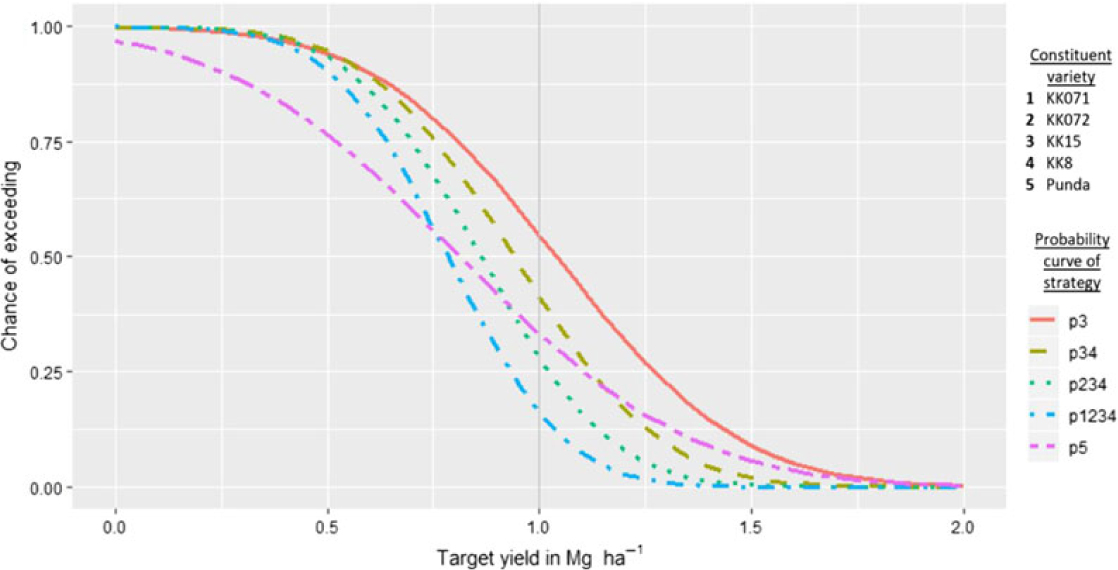
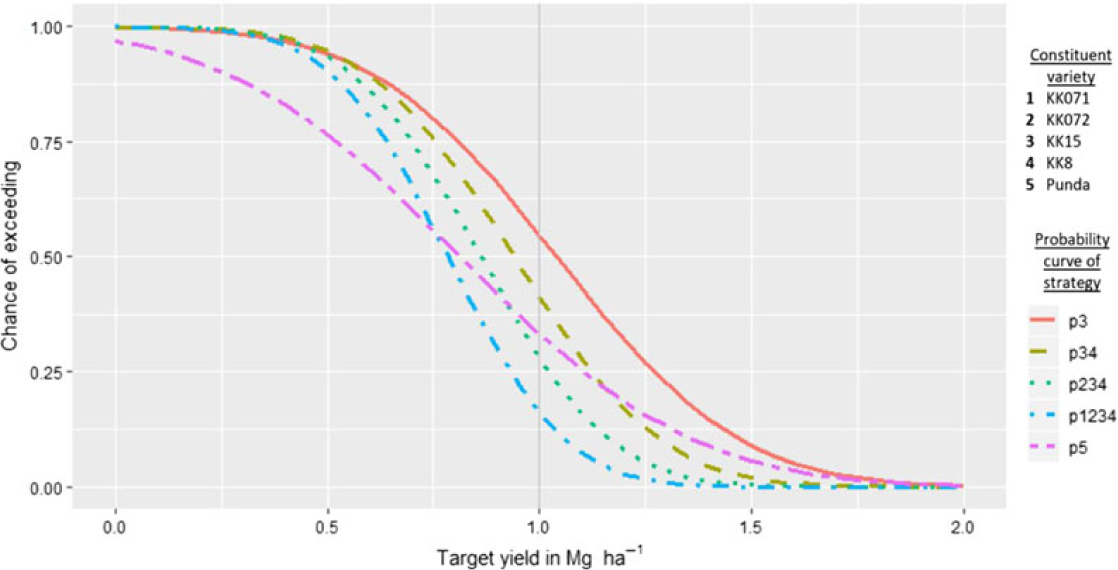
Taking this analysis further and looking at different expected yield scenarios (Figure 5), the probability of exceeding target yield with a given bean strategy reduces as the target yield increases, making it riskier. Consider a scenario where we have two categories of farmers, resource-poor and resource-endowed, with different capacities to invest in resources for bean production. Assuming that resource-poor farmers generally have a real yield target (based on resource limitations) of 0.75 Mg ha−1, and resource-endowed farmers have a real yield target of 1.25 Mg ha−1, the bean strategies in order of decreasing probability of exceeding the target yield are 3, 34, 234, 1234, and 5 for the resource-poor farmers, while for resource-endowed farmers, the order is 3, 5, 34, 234, and 1234 (Figure 5). This shows that the multiple-variety strategies are generally more appropriate for production by resource-poor farmers who operate in risky environments, while the single-variety strategies are appropriate for production by resource-endowed farmers who have enough resources to invest in production.
Probability of exceeding targeted grain yield (Mg ha−1) with given varietal options and their combinations.
However, farmers’ decision to adopt a variety is likely to be influenced by additional factors, including production orientation, preferences, and specific varietal attributes. Mukankusi et al. (Reference Mukankusi, Nkalubo, Katungi, Awio, Luyima, Radeny and Kinyangi2015) found that seed size and color (which determines market value) and yield were important determinants of bean variety selection by farmers. This means that a well-adapted variety may still be rejected by farmers for multiple other reasons. Farmers, especially the resource-poor ones, tend to be more vulnerable to the risks posed by the hazards, as discussed above. As it is often difficult to predict the occurrence of these hazards, adoption of multiple-bean variety strategies can be a useful risk management option.
Conclusions
Bean yield stability can be greatly improved if farmers adopted the practice of cropping multiple varieties (multiple-variety strategy) in smallholder farming systems characterized by high production risks. Although the study also indicates that some bean varieties cropped single show remarkable grain yield performance and yield stability and therefore would be suitable for production in diverse environments, this does not negate the need for cropping multiple varieties as a risk management strategy because farmer varietal preferences is also important for making decisions. According to our results, the single- and multiple-bean cropping strategies can be categorized into (i) high yielding but low grain yield stability, (ii) relatively high yielding and high grain yield stability, and (iii) relatively low yielding but high grain yield stability. Most of the single-bean variety strategies were in the high grain yield but low-stability category, making them less appropriate for resource-poor smallholders who are risk averse. However, single-bean variety strategies 3 (KK15) and 4 (KK8) were high yielding and somewhat moderate in yield stability, making them more appropriate for production by farmers operating in risky environments that are not risk averse. For farmers with relatively low-yield targets, the probability of exceeding these targets is highest with cropping of multiple-bean varieties with relatively low yields but high grain yield stability. In the heterogeneous smallholder environments characterized by seasonal variations, a trade-off between grain yields for yield stability might be an important aspect for minimizing bean production risks.
Supplementary Materials
For supplementary material for this article, please visit https://doi.org/10.1017/S0014479719000085.
Acknowledgments
We thank the Director General, Kenya Agricultural & Livestock Research Organization for additional facilitation and support. We sincerely thank the smallholder farmers of Nandi County, western Kenya, for hosting the trials, and for their active participation in the research process. The support and valuable insights given by Ric Coe in data analysis are highly acknowledged. This work was funded by The McKnight Foundation through the Collaborative Crop Research Program (CCRP) [grant number 10-473], [grant number 14-306].
Author Contributions
Conceptualization: John O. Ojiem, Hannington O. Ochieng, and Joyce C. Mutai. Methodology: Hannington O. Ochieng, John O. Ojiem, Simon M. Kamwana, and Joyce C. Mutai. Software: Hannington O. Ochieng. Validation: Hannington. O. Ochieng, John O. Ojiem, and Joyce C. Mutai. Formal analysis: Hannington O. Ochieng. Investigation: John. O. Ojiem, Simon M. Kamwana, and James W. Nyongesa. Resources: John. O. Ojiem. Data curation: Hannington O. Ochieng and Simon M. Kamwana. Writing––original draft preparation: Hannington O. Ochieng, John O. Ojiem, Joyce C. Mutai, Simon M. Kamwana, and James W. Nyongesa. Writing––review & editing: Hannington O. Ochieng, John O. Ojiem, and Joyce C. Mutai. Visualization: Hannington O. Ochieng and John. O. Ojiem. Supervision: John. O. Ojiem. Project administration: Hannington O. Ochieng. Funding acquisition: John. O. Ojiem.
Conflicts of Interest
The authors declare no conflict of interest. The founding sponsors had no role in the design of the study; in the collection, analyses, or interpretation of data; in the writing of the manuscript; and in the decision to publish the results.
Financial Support
None