1. Introduction
Southern Africa experienced one of its driest cropping seasons in 2015, which coincided with the most intense period of the El Niño Southern Oscillation (El Niño). Most of the region received only 50–70 per cent rain compared to regular rainfall between October 2015 and February 2016, which caused crops to fail shortly after planting and resulted in region-wide food deficit warnings (Rembold et al., Reference Rembold, Meroni, Atzberger, Ham, Fillol and Thenkabail2016). In Zambia, the effects of El Niño were classified as the most severe in the last fifty years (ZVAC, 2016).
There is emerging consensus among climate scientists that extreme weather events such as El Niño are expected to become more frequent and intense, especially in Africa and South-East Asia (IPCC, 2014, table 21.7). There is, therefore, urgent need to identify agricultural practices and livelihood strategies that build the resilience of food production systems and farmers’ livelihoods to these events. As such, improving the agricultural productivity and incomes of the rural poor in the context of climate change is a national policy priority in Zambia. This includes many initiatives to support the adoption of agricultural practices and livelihood diversification strategies designed to reduce climate vulnerability among smallholders, which we analyse in this paper. Understanding the impact of climate related shocks on smallholder systems, and relative effectiveness of climate adaption practices, is therefore critical for guiding agricultural policy in Zambia and elsewhere in the region.
The main objective of this paper is to analyse the impacts of the 2015/16 El Niño induced drought on maize productivity and incomes in rural Zambia. More specially, this paper examines the extent to which key types of sustainable land management (SLM) practices (i.e., minimum soil disturbance (MSD), crop rotation, residue retention and agroforestry),Footnote 1 soil erosion control measures, and livelihood diversification strategies influenced the productivity of maize and the effects on welfare from the El Niño-related drought. The present analysis provides insights that can help guide policies to increase smallholder resilience to climatic shocks in Zambia.
Data in this paper come from a unique and dedicated household survey called the El Niño Impact Assessment Survey (ENIAS), which is a follow up to the 2015 wave of the Rural Agricultural Livelihoods Surveys (RALS) that covers the 2013/14 season specifically conducted to assess the effects of El Niño. To this purpose ENIAS was designed to cover a sub-sample of RALS households distinguishing among two groups of households: those representative of residents in areas severely affected by El Niño and those representative of residents in not affected areas. The two groups of households were selected through a propensity score matching (PSM) procedure using observable socio-economic, agro-ecological and infrastructure variables. The data set so constructed was thereafter combined with the RALS 2015, as well as high resolution rainfall data from the Africa Rainfall Climatology version 2 (ARC2). The data set represents an opportunity to analyse the impacts of shocks like El Niño, and to provide evidence on the extent to which agricultural practices and livelihood strategies can buffer household production and welfare, attenuating the negative impacts of severe climatic conditions.
Our paper contributes to the expanding literature on climate change and vulnerability for smallholder households in two different ways, setting it apart from other analyses that make use of existing cross-sectional and panel data. First, we analyse whether selected SLM practices and diversification strategies can provide higher benefits to maize yield and household income of farmers living in areas hit by the El Niño shock. Our analysis adds to the recent literature testing the response of households to adverse weather conditions in a panel setting (Taraz, Reference Taraz2018; Michler et al., Reference Michler, Baylis, Arends-Kuenning and Mazvimavi2019). Second, the availability of a panel data set allows us to control for time-invariant unobserved heterogeneity using correlated random effects models, and identify risk management and coping mechanisms that help households to respond to and deal with weather shocks. The use of fixed effects models as robustness checks bring our study in line with recent articles that consider panel data approach with fixed effects as the preferred method to analyse the effect of climate events on agricultural production and household income (Burke et al., Reference Burke, Hsiang and Miguel2015; Blanc and Schlenker, Reference Blanc and Schlenker2017).
The rest of the article is organized as follows. In section 2, we provide a brief review of two strands of literature relevant for our paper: climate change and vulnerability literature, and the literature on SLM practices and diversification strategies. We introduce our conceptual framework and empirical methodology in section 3, provide detailed descriptive statistics in section 4 and present our results in section 5. We offer concluding remarks and policy recommendations in section 6.
2. Literature review
2.1 Climate change and vulnerability
Farm households throughout Sub-Saharan Africa are particularly exposed to weather induced risks, due to the preponderance of rain-fed production and imperfect market conditions. Climate change exacerbates these risks by increasing the probability and severity of adverse weather conditions. Furthermore, severe climatic events such as droughts, floods, and heat waves are expected to increase in frequency and intensity over time (Nelson and van der Mensbrugghe, Reference Nelson and van der Mensbrugghe2013; IPCC, 2014). In the absence of measures to reduce the vulnerability of farmers to these events, significant negative impacts on food security are expected (Roy et al., Reference Roy, Tschakert, Waisman, Abdul Halim, Antwi-Agyei, Dasgupta, Hayward, Kanninen, Liverman, Okereke, Pinho, Riahi and Suarez Rodriguez2018). Hence, climate change not only represents a threat to incomes today, but also makes them less predictable by changing the probability distributions in ways that are difficult for households to incorporate into decision making (Thornton and Lipper, Reference Thornton and Lipper2014).
In most cases, extreme weather events increase vulnerability of rural households through their effects on crop production and income (Banerjee, Reference Banerjee2007; Dercon and Christiaensen, Reference Dercon and Christiaensen2007; Mueller and Quisumbing, Reference Mueller and Quisumbing2010; Wineman et al., Reference Wineman, Mason, Ochieng and Kirimi2017; Hill and Fuje, Reference Hill and Fuje2018; McCarthy et al., Reference McCarthy, Kilic, de la Fuente and Brubaker2018; Michler et al., Reference Michler, Baylis, Arends-Kuenning and Mazvimavi2019). Although limited, empirical evidence suggests that households subject to severe climate events often experience increasing levels of vulnerability related to large losses in agricultural income.
Households can adopt risk management practices – such as SLM practices that moderate negative impacts of weather extremes on crop yields (FAO, 2001, 2007). They can also implement risk-coping strategies ex post, such as labour reallocation, sales of durables and livestock, and access to transfers from friends and relatives. Yet, despite adoption of risk management and coping strategies, the empirical evidence suggests that these mechanisms are never more than partial, and that consumption shortfalls remain high when rural households face extreme shocks (Alderman and Paxson, Reference Alderman, Paxson and Bacha1994; Dercon, Reference Dercon2005; Baez and Mason, Reference Baez and Mason2008).
2.2 Sustainable land management practices and diversification strategies
In Zambia, maize is both the primary crop grown by small-scale producers and the national staple food. As both a cause and a consequence, agricultural policy in the recent past has focused predominantly on the maize sector. This includes significant public expenditure on output market and input subsidies, as well as frequent use of maize trade restrictions to affect prices (Sitko et al., Reference Sitko, Chamberlin, Cunguara, Muyanga and Mangisoni2017).
Large efforts, advocacy and investments have been made in the country to promote the adoption of farming practices such as conservation farming,Footnote 2 which is a set of SLM practices, agroforestry and improved fallows in order to improve and stabilize maize yield while offering income benefits through diversification (Chidumayo, Reference Chidumayo1987; Umar et al., Reference Umar, Aune, Johnsen and Lungu2011; Arslan et al., Reference Arslan, McCarthy, Lipper, Asfaw and Cattaneo2014). SLM practices incorporating MSD, crop rotation, intercropping, residue management, agroforestry, and soil and water conservation structures, are meant to generate climate adaptation benefits through impacts on improved water retention capacity and soil nutrients, and reduce erosion. For instance, the Zambia National Farmers Union started promoting Conservation Agriculture (CA) in 1995 through the Conservation Farming Unit. In 2004, CA became a national priority and this focus was echoed by a number of initiatives and projects supported and implemented by various NGOs, as well as international agencies and organizations including the Food and Agriculture Organization (FAO) and the World Bank, among others (Arslan et al., Reference Arslan, McCarthy, Lipper, Asfaw and Cattaneo2014).
Several studies show that CF, when implemented fully on experimental plots, has the potential to mitigate the negative effects of climatic shocks by increasing water productivity, water infiltration and soil moisture buffering capacity (Giller et al., Reference Giller, Witter, Corbeels and Tittonell2009; Chikowo, Reference Chikowo2011). Despite these benefits, disadoption of these practices at the household level is common (Arslan et al., Reference Arslan, McCarthy, Lipper, Asfaw and Cattaneo2014), although aggregate adoption levels are reportedly increasing over time (Baudron et al., Reference Baudron, Mwanza, Triomphe and Bwalya2007; Umar et al., Reference Umar, Aune, Johnsen and Lungu2011). The stubbornly low, partial and volatile adoption levels are related to multiple constraints, including the time it takes until positive returns are obtained in low productivity settings (up to 10 years), competition from livestock, labour constraints as well as cessation of other incentives (input support) provided by some promoters (Giller et al., Reference Giller, Witter, Corbeels and Tittonell2009; Nkala et al., Reference Nkala, Mango, Corbeels, Veldwisch and Huising2011).
In addition to these practices, diversification strategies in terms of crop, income and livestock are considered important measures to diversify and manage risks on income. Diversification can be adopted by agricultural households ex ante as a risk-management and income smoothing strategy (Smit and Wandel, Reference Smit and Wandel2006), as well as after a shock (i.e., ex post) to cope with the negative effects it generates (Davies, Reference Davies1993; Murdoch, Reference Murdoch1995). Climate change not only decreases incomes when weather shocks occur, but also makes them less predictable in ways that are difficult for households to incorporate into their decision making (Thornton and Lipper, Reference Thornton and Lipper2014). Empirical evidence shows that diversification may help farmers deal with droughts and other weather shocks (Di Falco and Chavas, Reference Di Falco and Chavas2009; Cavatassi et al., Reference Cavatassi, Lipper and Narloch2011; Macours et al., Reference Macours, Premand and Vakis2012; Arslan et al., Reference Arslan, Cavatassi, Alfani, McCarthy, Lipper and Kokwe2018). Analyses to test the effects of diversification under extreme weather events such as El Niño, however, are rare, with the exception of Maggio and Sitko (Reference Maggio and Sitko2019), who use the ENIAS data to assess the adoption of adaptive cropping strategies in response to seasonal forecast information.
3. Sampling frame and empirical strategy
3.1 Sampling frame
This study was conceived while Zambia was in the midst of the El Niño crisis, and the sampling frame and the empirical strategy were designed to assess the direct impacts of El Niño on smallholders’ maize yields and total incomes, as well as to identify relevant interventions to guide policy in the wake of such crises. These features set this study apart from others in the literature that rely on pre-existing data to identify shocks, which are hard to predict and hence difficult to mobilize in the midst of an unfolding crisis to establish panel data.
The starting point for this analysis is the nationally representative household data from the 2015 wave of the RALS collected by the Central Statistics Office (CSO, 2015) in collaboration with Michigan State University and the Indaba Agricultural Policy Research Institute (IAPRI). The survey is designed to be representative of rural farm households at national and province levels and covers a sample of 7,934 households.Footnote 3 RALS includes detailed information on agricultural (crop and livestock) production and sales, off-farm activities and other income sources, along with household demographic characteristics and social capital indicators.Footnote 4
RALS 2015 provided a rich background for the design of the ENIAS sample and questionnaire, which was initiated in response to the delayed onset of the rainy season due to the El Niño at the beginning of the 2015–2016 rainy season. The FAO-EPIC programme of work, in collaboration with FAO Zambia office and IAPRI, implemented the ENIAS to analyse the impacts of El Niño on maize yields, and to identify agricultural and livelihood strategies that successfully improve farmers’ resilience to droughts, as well as to investigate the types of policies and institutions needed to improve resilience to such shocks.
The sampling frame for ENIAS was defined by using PSM at the Standard Enumeration Area (SEA) level in order to match severely affected areas in the RALS 2015 data with those that were not severely affected to ensure that the sample has enough households in both areas for analysis. The definition of ‘severely affected areas’ was based on the most recent Zambia Vulnerability Assessment Committee (ZVAC) Situation Report at the time, which was released in January 2016.
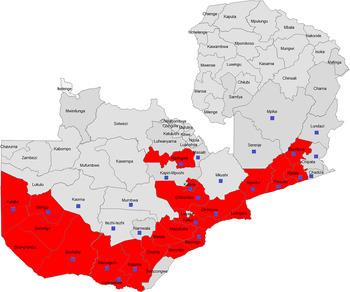
Given the fact that the northern parts of the country were experiencing normal or above normal rainfall, all of Luapula, Northern and North-Western and most of Copperbelt and Muchinga provinces were excluded from the sampling frame. This choice was also driven by the significant differences between the agro-ecological and cropping systems of the excluded areas and the severely affected areas, meaning they provide limited opportunities for matching. Out of the 35 severely affected districts, 22 that were covered in the RALS 2015 surveys were used to create a sampling frame for ENIAS using PSM. From these districts, 149 SEAs were selected comprised of 60 severely affected (treatment) and 89 not severely affected (control) SEAs, and a random sample of 9–10 households from the RALS 2015 roster was interviewed in each SEA, yielding a final sample of 1,311 households.Footnote 5 Figure 1 shows the 35 severely affected districts (in red) as reported in the ZVAC (2016) report together with the 28 districts included in the ENIAS sample, which are marked with blue squares.Footnote 6

The distribution of the households in the final sample across provinces is provided in table 1.
Distribution of interviewed households by province and sample type

Note: Given that the RALS sample was much larger than the ENIAS sample, a randomly selected list of replacement households were provided to enumerators for each selected SEAs. In cases of no response/contact after three trials, households from this list were interviewed.
Source: Authors’ elaboration.
The resulting household panel data are merged with rainfall information at the ward level using geo-referenced ward boundaries (there are 136 wards in the final sample).Footnote 7 Rainfall data are from ARC2 of the National Oceanic and Atmospheric Administration's Climate Prediction Center for the period of 1983–2016. ARC2 data are available on a daily basis and have a spatial resolution of 0.1 degrees (~10 km).Footnote 8 We use these data to construct our shock variable, which is defined as a dummy variable that identifies wards in which rainfall between November 2015 and February 2016 fell below the minimum of long-run average rainfall of this period.Footnote 9
We created other rainfall variables to trace historical trends in rainfall variation that are closely linked with agricultural production as well as the adoption of livelihood strategies with implications for vulnerability and welfare of small farmers. This novel dataset provides a unique opportunity to understand the impacts of shocks like El Niño that are expected to become more frequent and severe in Zambia using a robust empirical methodology detailed in the next section. It also facilitates a thorough understanding of the agricultural practices and livelihood strategies that can buffer household production and welfare from the impacts of such shocks to drive policy recommendations.
3.2 Empirical strategy
In order to identify direct impacts of El Niño on smallholders, we define two estimating equations, one for maize yield and one for total gross income per capita, as follows:

where ${Y_{it}}$ is the outcome variable (maize yield in kg/ha, or the value of total gross income per capita, both in logarithms) for the $i\textrm{th}$
 household $(i = 1, \ldots ,n)$
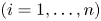 at time t (t = 2015, 2016); EN represents the El Niño drought shock which is equal to 1 if between November 2015 and February 2016, total rainfall in each ward was below the minimum of long-run average rainfall; ${R_{kt}}$
 are the rainfall variables at the ward levelFootnote 10 (k = 1,…,136); ${X_{it}}$
 is a vector of household level variables including socio-demographic characteristics, wealth and social capital indicators at time t; ${P_{it}}$
 are practice, diversification and policy variables that capture the potential ex ante measures, diversification strategies and relevant policies that are expected to ameliorate the impact of the shock on the outcomes; and the ${P_{it}}\mathrm{\ast }E{N_{i16}}$
 are interaction terms between these variables and the shock indicator.Footnote 11 The error term ${\varepsilon _{it}}$
 is composed of a normally distributed term independent of the regressors $({u_{it}})$
 , and time-invariant unobserved effects ${\nu _i}$
 .
We use the Hausman test to assess whether fixed effects (FE) or random effects (RE) should be used to model time-invariant heterogeneity (Wooldridge, Reference Wooldridge2002, Reference Wooldridge2009). We reject the hypothesis that RE models, which consider unobservables as a random variable (uncorrelated with covariates) whose probability distribution can be estimated from data, are consistent. Because FE models prevent the use of time-invariant variables, some of which are critical for our model, we use the correlated random effects (CRE) model, also referred to as the quasi-FE model. The CRE controls for possible additional correlations between time-varying explanatory variables and RE by including the means of the time-varying characteristics as regressors in the analysis, parameterizing the distribution of ${\nu _i}$ and allowing the ${X_{it}}$
 and ${P_{it}}$
 to be correlated with ${\nu _i}$
 (Mundlak, Reference Mundlak1978; Chamberlain, Reference Chamberlain, Griliches and Intriligator1984; Wooldridge, Reference Wooldridge2002, ch. 16; Wooldridge, Reference Wooldridge2009).Footnote 12
In addition to analysing the average impact of the El Niño shock on yields and incomes, we test the following hypotheses to guide future policies:
(i) Agricultural practices adopted have no effect on maize productivity under average shock exposure conditions ($\hat{\varphi }$
 = 0).
(ii) These practices do not have a different effect on productivity under extreme shock conditions posed by El Niño ($\hat{\vartheta }$
= 0).


Mathematically, the same hypotheses are tested in income models, where the main focus is on the average effect of diversification and policy variables, and their interactions with the El Niño shock. We cluster the error terms at the ward level for all models to control for potential correlation across households in the same ward.
4. Descriptive analysis
Given the central importance of the delayed onset of rainfall that occurred in most of the regions of Zambia in 2016 for our analysis, we first present the distribution of the observed amount of rainfall in our data. The seasonal forecast provided by the Government for the 2015/2016 season projected that, after a period of below normal rainfall, the seasonal rainfall would reach normal levels in most of the country except in the south, however low rainfall conditions persisted until late into the season particularly within the ‘shocked’ areas in our data (Maggio and Sitko, Reference Maggio and Sitko2019). Figure 2 shows a comparison of total rainfall registered between November and February during the 2013/14 and 2015/16 cropping seasons.Footnote 13 There is a clear and dramatic decrease in the amount of rainfall during these critical months, underlining the severity of the shock identified by our indicator.
Distribution of total rainfall between November and February during the 2013/2014 and 2015/2016 seasons.
Source: Authors’ elaboration.

Figure 3 plots the distributions of maize yields and household incomes in 2013/14 versus 2015/16. We observe that maize yields were consistently lower in the El Niño affected season, however, the shift in the yield distribution is much less pronounced than that for total rainfall. The latter is consistent with the observation that maize yields are relatively robust to small deviations in rainfall, so that yield losses are experienced only after relatively large deviations. The right panel in figure 3 shows a similar shift towards lower incomes across all income levels in 2015/2016 season, but the shift in income distributions is even less pronounced than maize yields, indicating that households were able to partially absorb lost maize crop income.
Distributions of maize productivity and household income (RALS 2015 – ENIAS 2016).

Descriptive statistics of control variables used in the analyses are presented in table 2 for ENIAS and RALS. Forty-eight per cent of farmers are in our shocked group, which experienced a total rainfall between November 2015 and February 2016 that was below the long-term minimum of the same period in their ward. No households received such a damaging shock during the 2013/14 season. While the shock variable controls for potential non-linear impacts of rainfall on yields and income, we also include the percentage deviation of total rainfall in the season from the long-term (1983–2016) average to capture linear impacts of rainfall deviations. We expect that deviations from expected rainfall will have a negative impact on yields and incomes, and that the drought shock will also have negative impacts. Finally, we include the coefficient of variation of long-term rainfall (CoV). Many empirical studies have shown that climate variability significantly influences farmers’ choices, including choosing crops and varieties that provide lower, but more stable yields and making fewer investments in land improvements with the potential exception of risk-reducing investments (e.g., Mano and Nhemachena, Reference Mano and Nhemachena2006; Seo and Mendelsohn, Reference Seo and Mendelsohn2007; Benhin, Reference Benhin2008; Arslan et al., Reference Arslan, McCarthy, Lipper, Asfaw, Cattaneo and Kokwe2015). We thus expect that higher CoV will have a negative impact on yields and incomes.
Descriptive statistics of selected control variables

a Rainfall deviation is calculated as the absolute value of the total rainfall deviation between November and February from the long-term average (in percentage terms). Descriptive statistics are based on the maize productivity and income sample used for the analyses.
Source: Authors’ elaboration.
The variables on household demographics include characteristics of the household head such as age, educational level, and gender as well as number of adult household members and the dependency ratio. The average age of the head, capturing farming experience, is 49 years in 2014 and 51 years in 2016, whereas the number of years of schooling is 8.1 and 8.6 in 2014 and 2016, respectively. Regarding education, some studies have shown that schooling has positive effects on agricultural productivity due to the skills that more educated farmers acquire to gather and analyse information relevant to farm decisions (Feder et al., Reference Feder, Just and Zilberman1985; Appleton and Balihuta, Reference Appleton and Balihuta1996; Asadullah and Rahman, Reference Asadullah and Rahman2005; Reimers and Klasen, Reference Reimers and Klasen2012). However, other studies have found limited impacts on agricultural productivity, as more educated rural people tend to allocate more time to more remunerative off-farm activities (Moock, Reference Moock1981; Appleton and Balihuta, Reference Appleton and Balihuta1996; Hasnah and Coelli, Reference Hasnah and Coelli2004). Around 20 per cent of households are female headed in both years. A fair amount of empirical evidence suggests that female-headed households have lower yields because women face more constraints than men, such as less education, inadequate access to land, difference in access to inputs such as improved seeds, fertilizer and productive assets, as well as limited access to information and extension services (Udry et al., Reference Udry, Hoddinott, Alderman and Haddad1995; Udry, Reference Udry1996; De Groote and Coulibaly, Reference De Groote and Coulibaly1998; Akresh, Reference Akresh2008).
We include the number of adult household members and the dependency ratio to control for time constraints. In our sample, the average number of adult members per household are 3.7 and 4.3 in 2014/15 and 2015/16 respectively, while the dependency ratio is 1.13 and 1.07, respectively. We expect the households with more adults and a lower dependency ratio to have greater labour available for both on- and off-farm work, and thus higher yields and income (Croppenstedt et al., Reference Croppenstedt, Demeke and Meschi2003; Deressa et al., Reference Deressa, Hassan, Ringler, Alemu and Yesuf2009). On the other hand, other researchers have argued that large households may be more likely to have members who engage in off-farm activities (Yirga, Reference Yirga2007). A larger number of adults may allow for greater income diversification, and it can also paradoxically lead to reduced farm labour availability and thus lower yields if diversification is purely an insurance mechanism and off-farm income sources are relatively stable (Yirga, Reference Yirga2007). We expect that income per capita will be negatively related to the number of adults, reflecting diminishing returns, and also to the dependency ratio as this should tighten the labour constraint. Finally, in the income per capita equation, we include a dummy for whether an adult member has moved to an urban area in the past 12 months. Migration is an income diversification strategy, hence this variable should proxy for the ability to secure remittances from family members in times of need.
The average wealth index decreased between the two waves from 0.29 in 2015 to 0.19 in 2016, as did the agriculture implement index,Footnote 14 which declined from 0.14 to −0.04. Wealthier farmers are expected to be more capable of coping with shocks, hence have lower livelihood vulnerability (De Janvry et al., Reference De Janvry, Fafchamps and Sadoulet1991; Kinsey et al., Reference Kinsey, Burger and Gunning1998), as well as to be more able to afford the purchase of agricultural inputs, such as chemical fertilizer and improved seeds (Arslan et al., Reference Arslan, McCarthy, Lipper, Asfaw and Cattaneo2014). Higher ownership of major agricultural implements should increase land productivity and thus lead to higher yields and overall incomes through crop production. We also include the size of landholdings. In rural Zambia, very few households have shifted from predominantly labour-based farming to even moderately mechanized farming, and fewer still to highly mechanized farming. Thus, we expect landholdings to be negatively correlated with maize yields, consistent with diminishing returns to land, and positively correlated with income per capita.
For the maize yield equations, we include whether the maize seed used is hybrid, as well as the use of inorganic fertilizers. We capture the adoption of SLM practices using a set of dummy variables. The percentage of farmers adopting MSD defined as practicing zero tillage, planting basins (potholes) or ripping on at least one plot is quite stable over time, although figures show a slight increase (from 16 to 18 per cent) between the two waves.Footnote 15 The crop rotation variable exhibits a slight decrease from 71 to 70 per cent of households. Residue retention, defined as the use of crop residues as surface mulch rather than removing or burning them, is relatively low, at 3 and 4 per cent in 2015 and 2016, respectively. Finally, we also include a dummy for whether the household had any type of erosion control structures on their fields, such as bunds and drainage ditches. We expect higher amounts (or use of) traditional inputs and SLM practices to increase maize production. Furthermore, we hypothesize that the SLM practices will give higher relative benefits in areas subject to weather shocks. In other words, we expect a positive coefficient on the interaction between SLM adoption and the weather shock.
Market access and social capital may positively affect agricultural production and overall incomes due to the opportunity that households have of sharing information and knowledge in groups or in markets that act as main information hubs (Cavatassi et al., Reference Cavatassi, Lipper and Winters2012). Access to markets is also found to be positively correlated with the adoption of drought tolerant crops in the ENIAS sample (Maggio and Sitko, Reference Maggio and Sitko2019). In this study, we use the share of households selling maize to the Food Reserve Agency (FRA) within the SEA as a proxy for market access. In particular, the FRA buys maize from farmers at above market prices, aiming to take some of the price risk away from farmers. By making maize incomes less risky, it increases incentives to grow maize, and hence may be expected to increase maize production. Figures show that 11 and 2 per cent (in 2015 and 2016, respectively) of households in the SEA have sold maize to the FRA. As the office of Zambia's Auditor General reported, the enormous decrease in the amount of maize sold was due to the fact that in 2016, although considerable funding (corresponding to US$100 million) was allocated to the FRA for maize purchases in the national budget, only half of it was used for that purpose. We use the share of households that participate in groups such as farmer cooperatives, women's groups or savings and loan societies within a SEA as a proxy for social capital. In our sample, around 63 per cent (65 per cent) of households participate in any of the groups mentioned above in an average SEA in 2015 (2016). We also include access to credit which should also facilitate participation in markets, while noting that the level of households that have access to credit from formal sources in the country is extremely low.
Finally, for the income per capita equations, we include three variables to capture crop, livestock and income diversification. We chose to use a simple count for each of these variables, noting here that more sophisticated, weighted indices did not perform as well in terms of explanatory power and significance as the simple count. We expect diversification to be particularly beneficial for incomes under the drought shock.
5. Results
We present the results of the empirical analysis first for maize yields and then for household income per capita in what follows.
5.1 Determinants of maize productivity
Results on the determinants of maize productivity are presented in table 3. We report results from the CRE model obtained through the Mundlak (Reference Mundlak1978) correction.Footnote 16
Determinants of maize productivity (correlated random effects model)

Notes: Standard errors are clustered at the ward level. Significance level: *p < 0.10; **p < 0.05; ***p < 0.01.
Source: Authors’ elaboration.
Results of the CRE model show that having suffered the El Niño shock significantly affects maize productivity in a negative way, resulting in a 46 per cent decrease in yield.Footnote 17 The absolute rainfall deviation variable which captures the continuous effect of the deviations from the long-run average is not significant, consistent with the hypothesis that only more extreme shocks reduce yields. Long-term exposure to shocks, measured by the coefficient of variation, has the expected negative impact on maize yields. This suggests that farmers in areas with highly variable seasonal rainfall are not able to shield their production from extreme weather events, as they may be less likely to innovate, try riskier cropping patterns or invest on farm.
In terms of traditional inputs, both quantity of maize seeds and use of inorganic fertilizer have a positive effect on yields. The indicator of having used hybrid maize seeds is not significant, which agrees with previous literature establishing that hybrid seeds are complementary with water availability and are likely to fail to provide significant yield benefits under various climatic shocks (Arslan et al., Reference Arslan, McCarthy, Lipper, Asfaw, Cattaneo and Kokwe2015).
With respect to SLM practices, we note that only residue retention has a positive impact on maize productivity with an average rise in yields of 37 per cent when farmers decide to adopt this specific practice. This is in line with several studies on SLM suggesting that such management practices help farmers achieve agronomic benefits in water-limited and/or water-stressed regions (Pittelkow et al., Reference Pittelkow, Liang, Linquist, van Groenigen, Lee, Lundy, van Gestel, Six, Venterea and van Kessel2015). Other agricultural practices, such as MSD, crop rotation, agroforestry and erosion control measures do not have statistically significant effects on maize yields on average in our sample.
The interaction terms between shock and SLM indicators help investigate whether the impacts of these practices are mediated by shock exposure, hence non-linear and cannot be picked up by the shock variable alone. Results show that having erosion control structures is the only practice providing positive benefits to farmers even under bad rainfall conditions as indicated by the coefficient of the interaction term. Soil and water conservation measures have been shown to have significant yield benefits under various climatic shocks in a similar setting in Tanzania by Arslan et al. (Reference Arslan, Belotti and Lipper2017).
Among other indicators, higher wealth is correlated with higher yields, whereas not holding a land title is correlated with 24 per cent lower maize yields. As an indicator of social capital, the group membership (in cooperatives, farmers’, women's or savings and loan groups in the SEA) variable shows significant coefficients in both specifications, suggesting that belonging to these groups helps to achieve better results potentially due to better access to information, informal credit and input as well as risk sharing mechanisms and coping strategy opportunities.
Overall, households facing drought conditions suffered large maize yield declines, and the long-term measure of rainfall variability indicates that these households are not able to adopt practices or make investments that enable them to realize higher and more stable yields. This means that rural households in Zambia remain critically exposed to even greater frequency of extreme weather events arising from climate change. Additionally, while among the SLM practices considered, crop residue retention had positive impacts on average maize yields, only the adoption of erosion control structures provided some protection during the drought. Much more work remains to be done to understand what specific types of practices, or their combination, and what type and amount of investments would actually protect farmers from large crop losses under similar extreme weather events, and whether such practices and investments are cost-effective for farmers.
Results for maize productivity using the FE model are robust in terms of direction and magnitude of coefficients for variables related to household demographics, agricultural practices and household wealth. Differently from CRE results, the coefficients of the El Niño shock variable and its interaction with erosion control structures are not significant, although they have the same directions.
5.2 Determinants of household income
Table 4 presents the results from the CRE estimates of the determinants of household income per capita (in logarithms), specifically focusing on the role of livelihood diversification strategies, among other control variables. Results show that being exposed to the El Niño shock negatively and significantly affected the level of welfare, resulting in a decrease in income per capita of around 28 per cent. This finding is consistent with the expectations based on rainfall, maize yield and income per capita (figures 2 and 3), where the downward shift in the distribution of maize yields was greater than that for income per capita. At the same time, an almost one-third reduction for already relatively poor households in rural Zambia can have severe and long-lasting impacts, through negative nutritional impacts on children, and through distress sales of assets.Footnote 18
Determinants of household income per capita (correlated random effects model)

Notes: Standard errors are clustered at the ward level. Significance levels: *p < 0.10; ***p < 0.01.
Source: Authors’ elaboration.
Nevertheless, farmers who have adopted income diversification have been able to compensate for part of the loss. The average impact of crop diversification on incomes is positive, while the livestock diversification coefficient is not statistically significant. The coefficient on income diversification is positive and statistically larger than crop diversification. Looking next at the interaction terms between the El Niño shock and indicators of diversification, we note that only the coefficient on livestock diversity is positive and significant, indicating that livestock diversification is successful at minimizing income losses due to drought shocks. This finding gets even stronger in the FE specification, underlining its robustness. On the other hand, the crop and income diversification interaction coefficients are not significant, indicating that households were not able to increase diversification of crop and income in response to the drought shock ex post. Rather these diversification strategies are a more important ex ante strategy to increase incomes and manage income risks.
In line with other findings from the literature, socio-demographic characteristics such as household composition and education of the head tend to significantly explain the variation in welfare measured by income. In particular, larger households with a higher number of adult members and more dependents tend to have lower incomes per capita, whereas households with more educated heads have significantly higher incomes. Furthermore, as expected, household wealth indicators, such as land owned and wealth indices, have a significant effect on income per capita.
Social capital and market access variables have very limited impacts on income per capita. Interaction terms between drought shock and the FRA and cash from safety net programmes are both insignificant. We note here that selling to the FRA was very low in 2016, as was access to cash safety nets. Limited variability in these variables suggests caution in interpretation.
6. Conclusions and policy recommendations
Rural households in Zambia are very vulnerable to extreme weather events, which are expected to increase in frequency and intensity due to the effects of climate change. Households adopt various ex ante risk management strategies to prevent and mitigate the negative impacts of climatic and other shocks including the adoption of SLM practices as well as diversification of their crops, livestock and income sources. Although the SLM practices mostly adopted in Zambia and the focus of the present analysis are intended to increase water retention capacity and soil nutrients to help protect yields from shocks, their positive average yield impacts mostly disappear when households are exposed to a severe shock like El Niño. The one exception is that related to mechanical erosion control measures, whose direct impact on maize yields is not significant on average, but its role in mitigating impact under shock conditions is positive and significant. These measures are soil and water conservation techniques, which have been shown to have similar shock buffering impacts in rural Tanzania (Arslan et al., Reference Arslan, Belotti and Lipper2017).
Among the practices that do not provide such mitigating impacts (based on non-significant interaction terms) are the components of CF. The agronomy literature stresses the fact that to improve soil quality and water retention capacity, most practices need to be implemented continuously for a number of years before benefits can be gathered. As highlighted in the literature (Nkala et al., Reference Nkala, Mango, Corbeels, Veldwisch and Huising2011; Arslan et al., Reference Arslan, McCarthy, Lipper, Asfaw and Cattaneo2014), many households are only partial adopters of these practices and frequently disadopt through time, because adoption is often related to projects promoting these kinds of agricultural practices. Thus, our results may reflect that households have not practiced these measures long enough to realize expected benefits. Overall, however, our findings suggest that currently available and promoted SLM practices are not widely adopted, and when adopted, are not able to provide resilience benefits – especially when faced with extreme weather events like El Niño.
On the other hand, results reported here show that diversification strategies can help households deal with such shocks. Results indicated that incomes decreased to a lower extent than maize yields as households were partially able to cover losses to income per capita using such strategies. We have evidence to suggest that crop diversification reduces the risk of income decrease under average climatic conditions, but in the case of households located in drought areas, this strategy does not seem to provide additional protection for incomes. Social capital and market access as captured in our data also play a limited role in helping households respond to weather shocks. We find that livestock diversification has a positive and significant effect on income for households located in areas that were exposed to the shock.
The analysis conducted and reported here suggests three main policy recommendations. The first is that mechanical erosion control measures and livestock-crop integration strategies need to be better promoted as part of climate resilience initiatives in rural Zambia, as they are the only measures found to shield maize yields and reduce income losses under severe rainfall shocks.
Second, households need access to better risk-coping mechanisms. Evidence from other countries suggests that being able to re-allocate labour off-farm is an effective mechanism to help households cope with risk. Our results suggest that there is wide scope to increase the ability of households to shift labour off-farm in response to weather shocks. While livestock diversification is an effective risk-coping mechanism, it was not enough to protect incomes from the shock experienced during the El Niño season. We find group membership to be an ineffective coping mechanism in this study, but participation in farmers’ groups and savings and loan societies has been found to be effective in other contexts. The development of innovative group-based initiatives, potentially combined with interventions to promote crop-livestock integration, might represent a viable policy option, especially in rural areas of the country. These efforts might be complemented with efforts to expand access to financial institutions, which remains very low (Subakanya et al., Reference Subakanya, Hichaambwa, Chapoto, Kangasniemi and Knowles2018) – including the potentially important role of mobile banking – to enable household investments in resilient livelihoods.
Third, in addition to household-based risk coping mechanisms, there is clearly a role for social safety nets to play. We documented the very scant (and ineffective) existence of social safety nets in our analysis. Safety net programmes can be designed to operate flexibly and be harmonized with disaster risk management activities, so that more resources can be made available to households in response to severe weather shocks to prevent the significant negative effects documented in this paper. Along these lines, future analyses should examine whether the implementation of multi-sectoral approaches aimed at identifying and prioritizing key policy actions, investments and knowledge gaps in the country, really contributed to support farmers in coping with and adapting to extreme weather events.
We identified the impacts of the El Niño drought using a dummy variable that cannot take into account potential variations in impact by intensity, which can be especially severe in the most affected areas. Our research framework does not allow an investigation of such effects, which is an area of research for future studies with a specific focus on intensity of such shocks.
Finally, potential future research might explore the implementation of spatial autocorrelation models to assess whether and how main outcome variables can be affected by the characteristics of the same places in the more or less distant past (Kelly, Reference Kelly2019).
Supplementary material
The supplementary material for this article can be found at https://doi.org/10.1017/S1355770X21000097
Acknowledgments
Funding from the Flanders International Cooperation Agency (FICA) within the project ‘Strengthening Integrated Adaption Planning and Implementation in Southern African’ has enabled the data collection following the unforeseen El Niño drought, for which we are grateful. We wish to thank the Indaba Agricultural Policy Research Institute (IAPRI) for their collaboration in the collection of ENIAS data; Misael Kokwe for very useful comments on this version of the work; and the FAO Zambia office for their continuing support for the Economic and Policy Innovations for Climate-Smart Agriculture (EPIC) programme of work in creating evidence to support food security under climate change in the country. The work for this paper was initiated when all authors except the last author were part of the FAO-EPIC team. We are also grateful to Agata Elia for her support in compiling all GIS data used in this paper. We thank two peer reviewers and the editor for recommendations that helped improve this paper.