Introduction
22q11.2 Deletion Syndrome (22q11.2DS) is a genetic disorder characterised by a hemizygous deletion of ~50 genes on the long arm of chromosome 22 (Swillen and McDonald-McGinn Reference Swillen and McDonald-McGinn2015) and is one of the strongest known biological risk factors for development of schizophrenia (Monks et al., Reference Monks, Niarchou, Davies, Walters, Williams, Owen, van den Bree and Murphy2014; Schneider et al., Reference Schneider, Debbané, Bassett, Chow, Fung, van den Bree, Owen, Murphy, Niarchou, Kates, Antshel, Fremont, McDonald-McGinn, Gur, Zackai, Vorstman, Duijff, Klaassen, Swillen, Gothelf, Green, Weizman, Van Amelsvoort, Evers, Boot, Shashi, Hooper, Bearden, Jalbrzikowski, Armando, Vicari, Murphy, Ousley, Campbell, Simon and Eliez2014). It is associated with congenital physical abnormalities (e.g. heart defect, cleft palate) (McDonald-McGinn et al., Reference McDonald-McGinn, Tonnesen, Laufer-Cahana, Finucane, Driscoll, Emanuel and Zackai2001) and a range of neurodevelopmental problems (Schneider et al., Reference Schneider, Debbané, Bassett, Chow, Fung, van den Bree, Owen, Murphy, Niarchou, Kates, Antshel, Fremont, McDonald-McGinn, Gur, Zackai, Vorstman, Duijff, Klaassen, Swillen, Gothelf, Green, Weizman, Van Amelsvoort, Evers, Boot, Shashi, Hooper, Bearden, Jalbrzikowski, Armando, Vicari, Murphy, Ousley, Campbell, Simon and Eliez2014; Niarchou et al., Reference Niarchou, Zammit, van Goozen, Thapar, Tierling, Owen and van den Bree2014; Chawner et al., Reference Chawner, Doherty, Moss, Niarchou, Walters, Owen and van den Bree2017; Cunningham et al., Reference Cunningham, Delport, Cumines, Busse, Linden, Hall, Owen and van den Bree2017) including an increased risk of ADHD (12–68%), anxiety disorders (in 40–76%), oppositional defiant disorder (ODD) (in 9–43%), autism spectrum disorder (ASD) (in 14–50%) (Schneider et al., Reference Schneider, Debbané, Bassett, Chow, Fung, van den Bree, Owen, Murphy, Niarchou, Kates, Antshel, Fremont, McDonald-McGinn, Gur, Zackai, Vorstman, Duijff, Klaassen, Swillen, Gothelf, Green, Weizman, Van Amelsvoort, Evers, Boot, Shashi, Hooper, Bearden, Jalbrzikowski, Armando, Vicari, Murphy, Ousley, Campbell, Simon and Eliez2014) and motor coordination problems (>80%) (Cunningham et al., Reference Cunningham, Delport, Cumines, Busse, Linden, Hall, Owen and van den Bree2017) of young people with 22q11.2DS. Comorbid psychiatric presentation is common in individuals with 22q11.2DS, with 54% of children with 22q11.2DS reported to meet diagnostic criteria for one or more DSM-IV-TR psychiatric disorders (Niarchou et al., Reference Niarchou, Zammit, van Goozen, Thapar, Tierling, Owen and van den Bree2014) and a recent large-scale study has documented evidence of widespread structural brain abnormalities (Sun et al., Reference Sun, Ching, Lin, Forsyth, Kushan, Vajdi, Jalbrzikowski, Hansen, Villalon-Reina, Qu, Jonas, van Amelsvoort, Bakker, Kates, Antshel, Fremont, Campbell, McCabe, Daly, Gudbrandsen, Murphy, Murphy, Craig, Vorstman, Fiksinski, Koops, Ruparel, Roalf, Gur, Schmitt, Simon, Goodrich-Hunsaker, Durdle, Bassett, Chow, Butcher, Vila-Rodriguez, Doherty, Cunningham, van den Bree, Linden, Moss, Owen, Murphy, McDonald-McGinn, Emanuel, van Erp, Turner, Thompson and Bearden2018). In addition, the average IQ is ~30 IQ points lower than in typically developing children (Niarchou et al., Reference Niarchou, Zammit, van Goozen, Thapar, Tierling, Owen and van den Bree2014) and a range of deficits in specific cognitive functions have also been reported, including reaction time, sustained attention, processing speed, spatial working memory and executive function (Hooper et al., Reference Hooper, Curtiss, Schoch, Keshavan, Allen and Shashi2013; Niarchou et al., Reference Niarchou, Zammit, van Goozen, Thapar, Tierling, Owen and van den Bree2014).
Sleep problems have yet to be formally acknowledged as part of the 22q11.2DS phenotype despite anecdotal reports of their presence. The limited evidence of sleep problems that is available in 22q11.2DS has focused on sleep-related breathing disorders that arise from airway obstruction caused by craniofacial dysmorphia of the syndrome (Heike et al., Reference Heike, Avellino, Mirza, Kifle, Perkins, Sze, Egbert and Hing2007; Crockett et al., Reference Crockett, Goudy, Chinnadurai and Wootten2014; Kennedy et al., Reference Kennedy, Mudd, Maguire, Souders, McDonald-McGinn, Marcus, Zackai, Solot, Mason, Jackson and Elden2014). These small-scale studies and case reports have shown evidence for obstructive sleep apnoea in an estimated 10% of young people with 22q11.2DS, compared to only 2–4% in typically developing children (Chang and Chae, Reference Chang and Chae2010; Kennedy et al., Reference Kennedy, Mudd, Maguire, Souders, McDonald-McGinn, Marcus, Zackai, Solot, Mason, Jackson and Elden2014). Furthermore, neurodevelopmental disorders (NDD) such as ADHD and Studies not specifically focussing on 22q11.2DS have provided evidence of elevated rates of sleep problems in individuals with neurodevelopmental disorders (NDD) such as ADHD and ASD, with reported rates as high as 86% (Wiggs, Reference Wiggs2001; Robinson-Shelton and Malow, Reference Robinson-Shelton and Malow2016). Rates of sleep problems between 40% and 80% have been reported in individuals with ASD (Souders et al., Reference Souders, Mason, Valladares, Bucan, Levy, Mandell, Weaver, Pinto-Martin, Hargrave, Smith and Gibson2009), 25% and 50% in individuals with ADHD (Corkum et al., Reference Corkum, Tannock and Moldofsky1998; Spruyt and Gozal, Reference Spruyt and Gozal2011) and 88% of those with anxiety disorders (88%) (Staner, Reference Staner2003). These findings suggest that sleep problems could be prominent in individuals with 22q11.2DS.
To our knowledge, this is the first study to address the prevalence and nature of sleep problems and their links with psychopathology and cognitive function in 22q11.2DS.
Specifically, we aimed to address the gap in the literature by: (1) quantifying the prevalence of sleep problems in a cohort of young people with 22q11.2DS compared to sibling controls; (2) describing the patterns of sleep problems in young people with 22q11.2DS and (3) investigating the links between sleep problems and neurodevelopmental and cognitive outcomes in young people with 22q11.2DS.
Methodology
Participants
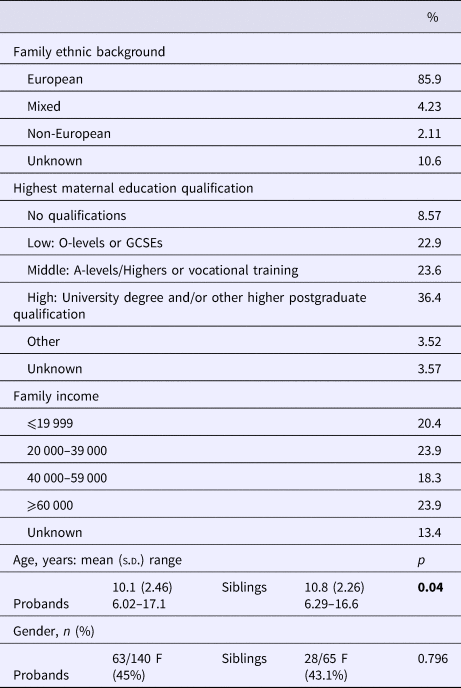
Participants were part of the ongoing Experiences of Children with cOpy number variants (ECHO) study (https://www.cardiff.ac.uk/mrc-centre-neuropsychiatric-genetics-genomics/research/themes/developmental-disorders/echo-study-cnv-research). Young people with 22q11.2DS were recruited through NHS Medical Genetics clinics in the UK, British 22q11.2DS charities (Max Appeal! 22qCrew and Unique), social media and family networks. Where available, a sibling without the deletion (sibling control) closest in age to the child with 22q11.2DS was also invited to take part in the ECHO study. The availability of this sibling control sample enabled us to conduct comparisons with a typically developing sample to quantify the extent of sleep problems in 22q11.2DS as well as to conduct pairwise comparisons between case-control sibling pairs, therefore considering shared genetic background and family environmental factors. Carriers of the deletion and sibling controls were aged 6 or older and the presence (in carriers) or absence (in sibling controls) of the deletion was confirmed by a Medical Genetics laboratory and/or microarray analysis in the MRC Centre for Neuropsychiatric Genetics and Genomics laboratory at Cardiff University. The current study focussed on 140 young people with 22q11.2DS (x̅ age = 10.1, range = 6 years 3 month–17 years 1 month, s.d. = 2.45, 45.0% females) and 65 age-matched sibling controls (x̅ age = 10.8, range = 6 years 1 month–16 years 7 months, s.d. = 2.26, 43.1% females). Family income information was obtained from questionnaires completed by the primary carer and can be found together with information of the age and gender of the participants in Table 1.
Demographic information on participating families

Bold text refers to calculated p-values that show significant differences.
Of the participants with 22q11.2DS 17 were taking melatonin for sleep problems; one used antipsychotic medication aripiprazole for psychotic experiences; one risperidone for mood disorder and none were using ADHD medication. Parents reported a diagnosis of epilepsy in 10.7% (15/140) of participants with 22q11.2DS. Two children with 22q11.2DS were using sodium valproate for epilepsy. Prior to recruitment, primary carers consented for all participants and additional consent was obtained from participants aged ⩾16 years with capacity. The protocols used in this study were approved by the NHS South East Wales Research Ethics Committee.
Assessments
Psychopathology and neurodevelopmental assessment
The semi-structured Child and Adolescent Psychiatric Assessment (CAPA) (Angold et al., Reference Angold, Prendergast, Cox, Harrington, Simonoff and Rutter1995) was conducted with the primary carer, and young people with capacity were themselves interviewed about their mood, anxiety and psychotic experiences with the child CAPA. All interviews were conducted by trained psychologists and taped for monitoring and the scoring of symptoms. Attribution of diagnoses according to the Diagnostic and Statistical Manual of Mental Disorders (DSM-IV TR) was discussed in consensus meetings led by child and adolescent psychiatrists.
The anxiety disorder symptom score included symptoms of generalised anxiety disorder, social phobia, specific phobia, separation anxiety and panic disorder with and without agoraphobia, agoraphobia and obsessive-compulsive disorder. ADHD symptoms included the subscales of hyperactivity and impulsivity and inattention, ODD symptoms the subscales oppositional behaviour and deception, and conduct disorder (CD) symptoms the subscales of acts involving violence and violence against persons.
ASD symptoms were screened for with the Social Communication Questionnaire (SCQ) (Rutter et al., Reference Rutter, Bailey and Lord2003) completed by the primary carer (referred to as indicative ASD from here onwards). The total indicative ASD score comprised of three subscales: social interaction, communication, and restrictive and repetitive traits. SCQ total scores were available for a subsample of 128 young people with 22q11.2DS.
Symptom scores of psychopathologies were calculated by summing individual scores ranging from 0 to 26 for anxiety disorder, 0 to 16 for ADHD, 0 to 6 for ODD, 0 to 4 for CD and 0 to 34 for indicative ASD as in previous studies (Niarchou et al., Reference Niarchou, Zammit, van Goozen, Thapar, Tierling, Owen and van den Bree2014; Chawner et al., Reference Chawner, Doherty, Moss, Niarchou, Walters, Owen and van den Bree2017; Cunningham et al., Reference Cunningham, Delport, Cumines, Busse, Linden, Hall, Owen and van den Bree2017). A symptom score of ⩾15 on the SCQ is considered to be indicative of ASD (Berument et al., Reference Berument, Rutter, Lord, Pickles and Bailey1999).
Sleep problems
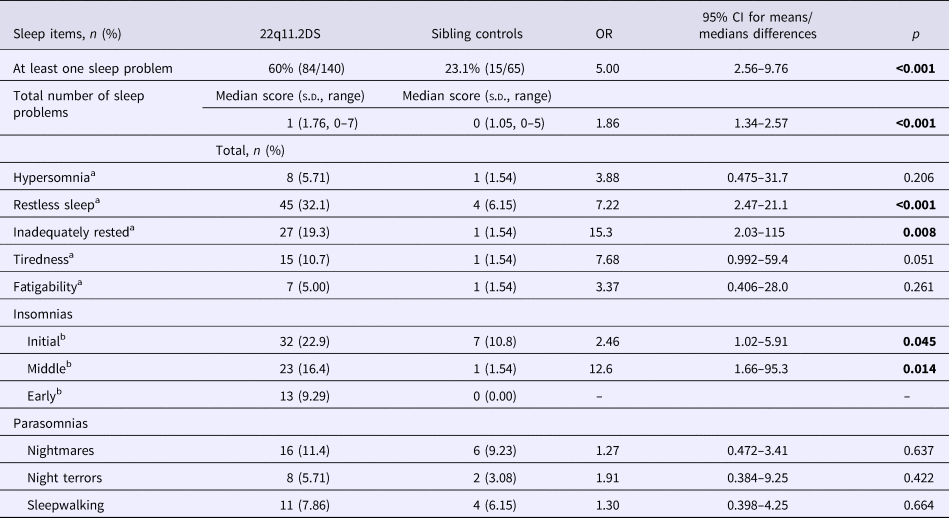
Sleep problems over the preceding three months were established by interview with the primary carer using the sleep section of the CAPA. This section includes 11 questions (see Table 2): insomnias (trouble initiating sleep, trouble maintaining sleep and early morning awakening without being able to return to sleep); hypersomnia (excessive daytime sleepiness, extended sleep duration); restless sleep (inability to get comfortable and feel rested for the night); inadequately rested sleep (lack of restorative and maintained sleep); fatigue and tiredness (feelings of being tired at least half the time, and becoming tired or ‘worn out’ more easily than usual) and parasomnias (nightmares, night terrors and sleepwalking). This CAPA section screens for the presence of sleep problems but does not provide a sleep disorder diagnosis, which would require additional assessments including polysomnography conducted by clinicians. Items were coded ‘0 = absent’ or ‘1 = present’ and positive scores of the 11 items were summed to obtain an overall sleep problem score (Table 2) ranging from 0 to 7.
Prevalence of sleep problems items in young people with 22q11.2DS and sibling controls

Age was included as a covariate in the regression analyses.
a Sleep problems indexing restless sleep/tiredness sleep pattern.
b Sleep problems indexing insomnia pattern (see aim two).
Developmental coordination problems
Indicative Developmental Coordination Disorder (DCD) was established using the DCD Questionnaire (DCDQ) (Wilson et al., Reference Wilson, Kaplan, Crawford, Campbell and Dewey2009) completed by the primary carer. The DCDQ screens for motor coordination impairments with scores ranging from 15 to 75. Lower scores indicate greater coordination problems with discrimination thresholds based on age (Cunningham et al., Reference Cunningham, Delport, Cumines, Busse, Linden, Hall, Owen and van den Bree2017). We introduced this measure later in our study and therefore have available information from 97 young people with 22q11.2DS.
IQ
The Wechsler Abbreviated Scale of Intelligence (WASI) (Wechsler, Reference Wechsler1999) was used to assess full-scale IQ (FSIQ), performance IQ (PIQ) and verbal IQ (VIQ).
Cognitive performance
The Cambridge Neuropsychological Test Automated Battery (CANTAB) (Cambridge Cognition Ltd, 2006) was used to assess the following cognitive performances: spatial working memory [number of errors on the spatial working memory (SWM) task]; spatial planning [number of problems solved on the Stockings of Cambridge (SOC) task]; processing speed [reaction time in milliseconds on the Five-choice reaction time (RTI) task]; visual attention [number of correct items on the Match-to-Sample Visual Search (MTS) task] and sustained attention [ability to distinguish the target stimuli from the distractor stimuli during the Rapid Visual Processing (RVP) task]. All CANTAB scores were age-except for MTS where no CANTAB norms are available and raw scores were used. The Wisconsin Card Sorting Test (WCST) (Heaton et al., Reference Heaton, Chelune, Talley, Kay and Curtiss1993) was used to measure the outcomes of perseverative (set-shifting) and non-perseverative (random) errors.
All measures in this study were selected because they are well-established and appropriate across the range of abilities of the participants (young people with 22q11.2DS and control siblings). Previous use of these instruments in similar contexts to the study sample is further outlined in the Supplementary Materials (see online Supplementary Table S2).
Statistical analysis
Statistical analyses were conducted using STATA (version 13.1) (https://www.stata.com/stata-news/news28-4/stata13.1) and R (version 3.5.0) (R: The R Project for Statistical Computing, 2018).
To address aim one, χ2 tests and t tests were used to determine any differences in the age and gender between the two groups. Where non-significant, we did not include these two variables as covariates in further analyses. Logistic regression analysis was used to establish whether group status (child with 22q11.2DS or control sibling) predicted total sleep problem score (the sum of positively endorsed sleep items of the CAPA) with age and family relatedness (to indicate that a child with 22q11.2DS and their sibling came from the same family) as covariates.
To address aim two, we first constructed two-by-two tables for each combination of the 11 sleep items in young people with 22q11.2DS, followed by tetrachoric correlation analysis (Pearson, Reference Pearson1900), which is suitable for dichotomous variables and assumes an underlying normal distribution (Ledesma et al., Reference Ledesma, Macbeth and Valero-Mora2011). The 2 × 2 tables indicated that for several combinations of items the cell count for positive endorsement on both items (yes/yes) was zero and that therefore a correlation coefficient could not be calculated. This was the case for combinations between parasomnia items and several other items: night terrors and hypersomnia, sleepwalking and hypersomnia; night terrors and tiredness; night terrors and fatigability; nightmares and fatigability; and sleepwalking and fatigability. Furthermore, some 2 × 2 tables had very low yes/yes cell counts, resulting in low correlations and this involved several combinations with the parasomnia item sleepwalking, i.e. sleepwalking with initial insomnia (r = −0.036); sleepwalking with early insomnia (r = −0.002); as well as fatigability with middle insomnia (r = −0.01). The parasomnia items were furthermore found not to correlate well (sleepwalking with nightmares) (r = 0.06, p = 0.620); sleepwalking with night terrors (r = 0.04, p = 0.490), except for nightmares and night terrors (r = 0.400, p < 0.001). The parasomnia items also did not differ significantly between young people with 22q11.2DS and control siblings (Table 2), indicating that they do not represent sleep problems that are specific to young people with the deletion. We therefore removed the parasomnia items from the analysis. The items hypersomnia, tiredness and fatigability correlated quite strongly (hypersomnia with tiredness r = 0.510; hypersomnia with fatigability r = 0.370; tiredness with fatigability r = .560) and we combined these items into a single score capturing tiredness-related sleep problems. Similarly, the items early and middle insomnia also correlated quite strongly (r = 0.522, p < 0.001) and were combined (into an item capturing mid/early insomnia). Doing so addressed the almost zero correlation between middle insomnia and fatigability. Item combination was as follows: a dichotomous variable was created where a positive score on any of the items translated into a positive score on the combined variable. Figure 1 provides a visualisation of the item combination procedure followed. This produced a 5-item tetrachoric correlation matrix (see online Supplementary Table S3), which was the basis for exploratory factor analysis (EFA) (Conway and Huffcutt, Reference Conway and Huffcutt2003) to determine the patterns of sleep problems in young people with 22q11.2DS (see Table 2). Statistically, combining items that represent a single underlying construct is important because it reduces the number of comparisons that would be conducted if each individual item was analysed separately and enhances the robustness of the measured concept. Clinically, it is important to understand whether sleep problems cluster patterns and have different associations with other outcomes such as psychopathology as this can have implications for interventions. We decided on the number of factors to be retained from the EFA based on the scree plot of eigenvalues (values ⩾0.6) (presented in online Supplementary Fig. S2) and interpretation of meaningful patterns (Gorsuch, Reference Gorsuch1983). The factor solution was rotated using an oblique solution to maximise interpretation. The rotated factors were not normally distributed, determined by looking at the distribution plots and testing using Shapiro–Wilk test for normality and assessing skewness of data. We subsequently calculated the sleep patterns by summing the binary sleep problem items that loaded on each factor (‘1’ = ⩾1 positive item; ‘0’ = no positive items) for use in further analysis. Spearman correlation analysis was used to determine the interrelationship between the resulting patterns of sleep problems.
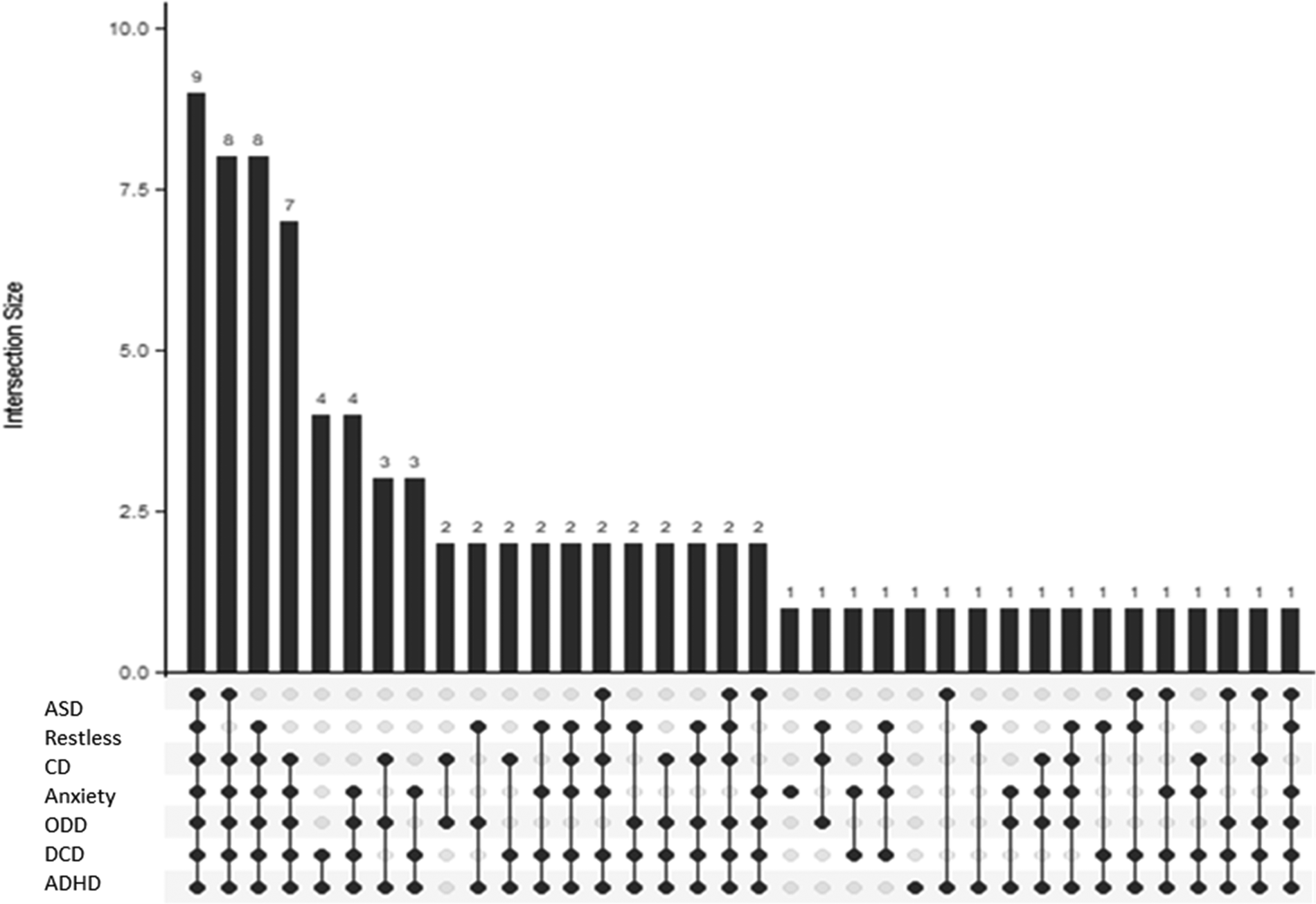
The UpSetR diagram based on the combined presentation of symptoms across the restless sleep pattern (restless sleep) and attention-deficit hyperactivity disorder (ADHD); indicative autism spectrum disorder (ASD); conduct disorder (CD); anxiety disorder (anxiety); oppositional defiant disorder (ODD); and indicative developmental coordination disorder (DCD). The filled black circles represent the presence of symptoms for each domain and empty circles show the absence of symptomology. This diagram includes n = 88 young people with 22q11.2DS because of missingness in the SCQ (n = 12) and DCDQ (which was introduced later on in our study; n = 43).

For aim three, hierarchical logistic regression analyses were used to examine the links between the patterns of sleep problems (presence or absence of a pattern) in young people with 22q11.2DS, taking age into account (step 1), with subsequent addition of psychiatric disorder symptoms (ADHD, anxiety CD, ODD and ASD), motor coordination problems (DCDQ) and cognitive performance (IQ, spatial working memory, sustained and visual attention, spatial planning and executive function) each individually (step 2).
We conducted sensitivity analyses to determine whether relevant factors could explain these associations. We examined the links between the sleep patterns (presence or absence) and: maternal education level and the children's melatonin use; epilepsy diagnosis, and physical health problems using logistic regression analyses. For the analyses of the sleep patterns and anxiety disorder symptoms, we also removed the sleep-related anxiety symptoms (i.e. ‘unable to sleep alone’ and ‘separation nightmares’) from the total anxiety symptom score to establish if this changed the findings. Other potential confounders (e.g. other medication use) were not evaluated because of low prevalence within the sample.
To correct the analyses for multiple comparisons, we used a Benjamini–Hochberg false discovery rate (FDR) rate of 10% (Benjamini and Hochberg, Reference Benjamini and Hochberg1995). The Benjamini–Hochberg method ranks the individual p-values from smallest to largest, with the smallest p-value ranking as 1. By comparing each individual p-value to the Benjamini–Hochberg critical value [(rank/total number of tests) × FDR (i.e. 10%)], if the largest p-value in our analyses before correction is smaller than its critical value, it is considered significant. Any p-values smaller than the largest p-value are also interpreted to be significant.
Results
Sociodemographic information is presented in Table 1. Individuals with 22q11.2DS were younger than sibling controls (t = 2.09, p = 0.040) but there was no difference in gender proportions (χ2 = 0.125, p = 0.724) but there were differences in age (t = 2.09, p = 0.04).
Prevalence of sleep problems in 22q11.2DS (aim one)
In total, 60% of young people with 22q11.2DS had experienced at least one sleep problem [22q11.2DS median = 1 (range 0–7)] during the past 3 months, compared to 23.1% of sibling controls [controls median = 0 (range 0–5)] (OR 5.00 p⩽0.001) (Table 2). A paired t test in the subsample of children with 22q11.2DS with a participating control sibling (n = 63) showed a higher report of sleep problems in young people with 22q11.2DS compared to their siblings (t = 4.56, p < 0.001).
Analysis of the 11 individual CAPA items showed that compared with sibling controls young people with 22q11.2DS had higher rates of insomnias, restless and inadequately rested sleep, with a borderline trend for tiredness. There were no differences for hypersomnia, fatigability and the parasomnia items (nightmares, night terrors and sleepwalking) (Table 2).
Patterns of sleep problems in 22q11.2DS (aim two)
Exploratory factor analysis indicated that sleep problems in young people with 22q11.2DS were captured best by two patterns: restless sleep (see footnote ‘a’ in Table 2) and insomnia (see footnote ‘b’ in Table 2). The two factors deviated from normality [for restless sleep z = 6.39, p < 0.001 and p < 0.001 (skewness); for insomnia z = 3.53, p = 0.0002 and p = 0.03 (skewness)] and therefore were dichotomised. These patterns correlated (r = 0.252, p = 0.003), reflecting that children can have problems in both domains.
In total, 54.3% (76/140) of young people with 22q11.2DS scored on at least one sleep pattern. Of these 76 individuals, 44.7% (34/76) scored positive for the restless sleep pattern only; 21.1% (16/76) on the insomnia sleep pattern only and 34.2% (26/76) on both patterns. Neither pattern was associated with age (OR 1.01, p = 0.912 for restless pattern; OR 0.865, p = 0.069 for insomnia pattern), or gender (OR 0.751, p = 0.406 for restless pattern; OR 1.12, p = 0.767 for insomnia pattern).
Links between sleep patterns and psychiatric symptoms, developmental coordination and cognitive function (aim three)
Young people with 22q11.2DS who scored positive for the restless sleep pattern compared to those with negative responses had higher rates of any psychiatric disorder, ADHD, anxiety disorder and ODD diagnoses (online Supplementary Table S1; n = 0 young people reported CD diagnosis). No differences were found in the rates of diagnosis in those who scored positively on the insomnia sleep pattern compared to those who did not (online Supplementary Table S1).
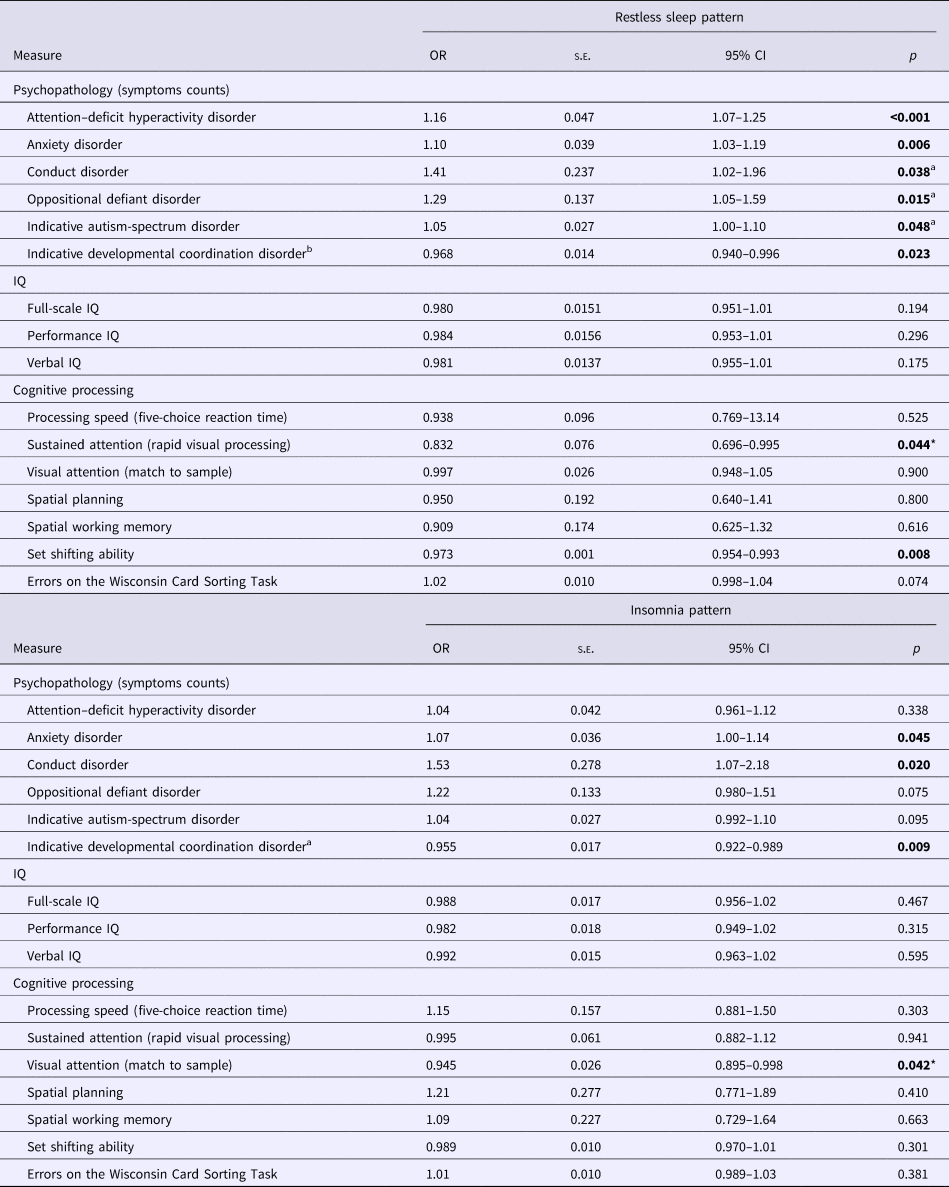
The restless sleep pattern was associated with increased symptoms of ADHD, anxiety disorder, ODD, CD, indicative ASD and indicative DCD, as well as poorer performance on the sustained attention and set shifting ability (perseverative errors on the WCST) tasks (see Table 3) following FDR correction (denoted by * in Table 3).
Associations between patterns of sleep problems, symptom counts of psychopathology, IQ and cognitive performance in young people with 22q11.2DS

a Associations were lost following sensitivity analyses.
b Developmental coordination disorder is reversed scored.
*Associations were lost following correcting FDR correction for multiple testing.
Post-hoc analysis of ADHD symptoms showed an association with the inattentive (OR 4.95, p < 0.001), but not the hyperactive (OR 6.81, p = 0.104) or combined (OR 1.76, p = 0.307) subtypes.
The insomnia sleep pattern showed association with increased symptoms of anxiety disorder, CD and indicative DCD as well as impaired performance on the visual attention task (Table 3). The associations between the restless sleep pattern and sustained attention and the insomnia pattern and visual attention disappeared following FDR correction (denoted by * in Table 3).
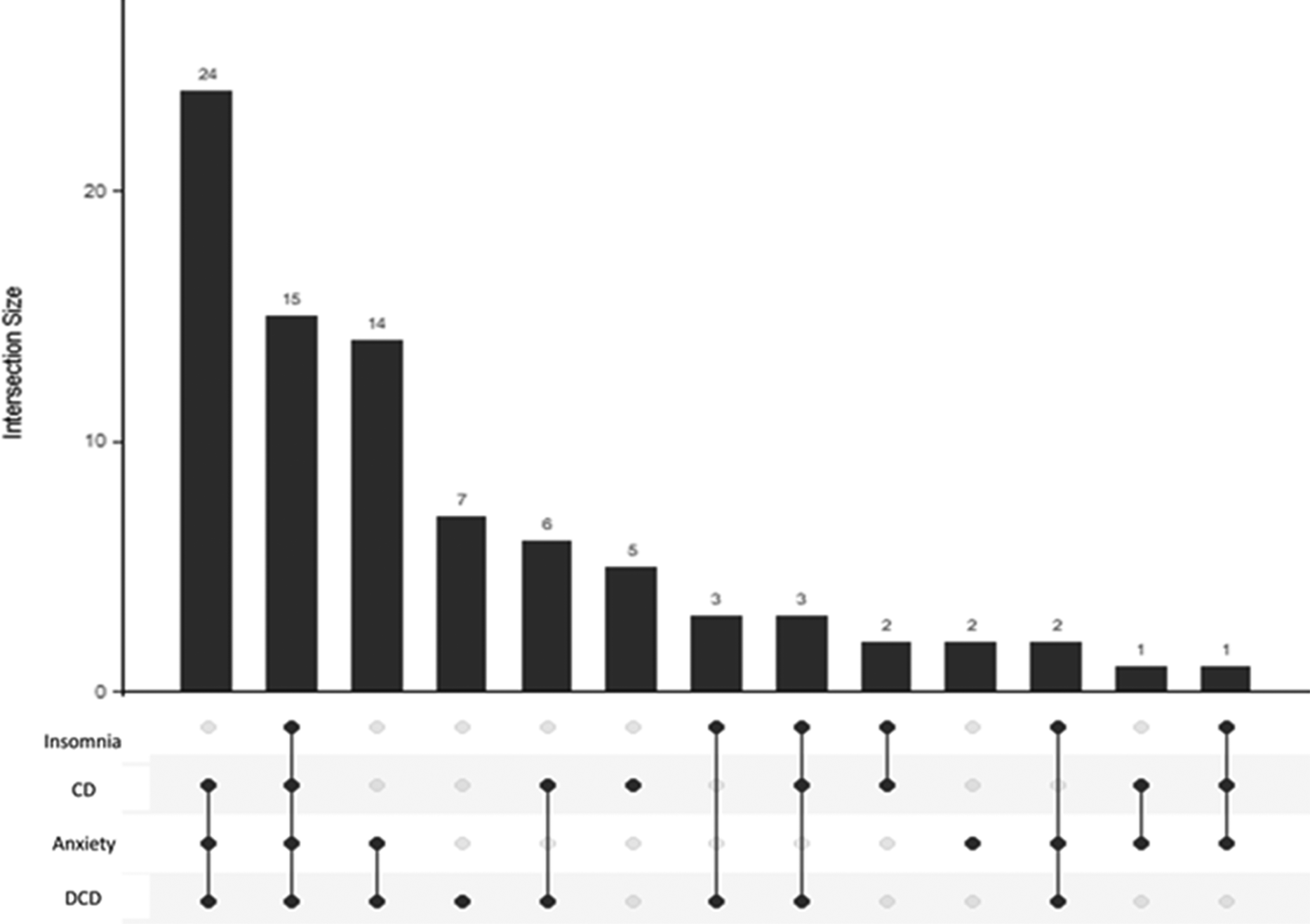
Comorbid presentation of both sleep patterns with psychiatric symptoms was high (see Figs 1 and 2). Of the 60 young people who scored on the restless sleep pattern, 86.7% (52/60) had at least one comorbidity as did 52.4% (22/42) of the young people scoring on the insomnia sleep pattern. The most common comorbid presentation for the restless sleep pattern (found in 18.6% scoring positive on this pattern) was in combination with symptoms of ADHD, anxiety disorder, CD, ODD and indicative DCD and the most common comorbid presentation for the insomnia sleep pattern (35.7%) was in combination with anxiety, CD and DCD.
The UpSetR based on the combined presentation of symptoms across the insomnia sleep pattern and conduct disorder (CD); anxiety disorder and indicative developmental coordination disorder (DCD). The filled black circles represent the presence of symptoms for each domain and empty circles show the absence of symptomology. This diagram includes n = 97 young people with 22q11.2DS because of missingness in the DCDQ (which was introduced later on in our study).

Sensitivity analyses
Neither sleep patterns were associated with family income (OR 0.929, p = 0.418 for restless pattern; OR 0.925, p = 0.432 for insomnia pattern).
Higher maternal education was associated with reduced risk of a positive score on the restless sleep pattern for young people with 22q11.2DS (OR 0.729, p = 0.011), but not insomnia pattern (OR 0.979, p = 0.866). Including maternal education as a covariate in regression analyses, the associations between restless sleep and indicative ASD (OR 1.04, p = 0.101), conduct symptoms (OR 1.30, p = 0.139) and oppositional symptoms were lost (OR 1.15, p = 0.178) (see footnote ‘b’ in Table 3).
In total, 12% (17/140) of young people with 22q11.2DS were using melatonin at the time of assessment and 94.1% (16/17) of these reported sleep problems. 68.8% (11/16) scored on both patterns; 18.8% (3/16) on the restless sleep pattern and 12.5% (2/16) on the insomnia pattern only. Children using melatonin had higher levels of sleep problems (x̅ = 3.12) compared to those not using melatonin (x̅ = 1.23) with elevated rates of restless sleep (OR 5.26, p = 0.006) and insomnia (OR 15.8, p < 0.001). The young people using melatonin for their sleep problems did not appear to have reported fewer sleep problems than young people not taking melatonin. Sleep problems were reported despite the melatonin use and furthermore, melatonin use appeared to be a proxy for sleep problem severity in our sample (where correcting for it would reduce the severity of sleep problems in the sample), we did not include it in our analysis as a covariate.
An epilepsy diagnosis (current or lifetime) was present in 10.7% (15/140) of participants with 22q11.2DS but was not found to be associated with sleep problems (restless; OR 1.38, p = 0.457, and insomnia; OR 1.32, p = 0.555).
Physical health problems did not associate with sleep problems: cardiac problems with restless sleep (OR 1.82, p = 0.094) and insomnia (OR 1.13, p = 0.748); respiratory problems with restless sleep (OR 1.10, p = 0.807 and insomnia OR 0.765, p = 0.536) and, skeletal problems with restless sleep (OR 1.46, p = 0.295) and insomnia (OR 0.899, p = 0.786).
Medication use in the young people with 22q11.2DS included antipsychotic medication aripiprazole (n = 1) for psychotic experiences; risperidone for mood disorder (n = 1); and sodium valproate for epilepsy (n = 2). None were using ADHD medication. These prevalence's were too low to consider in sensitivity analysis.
Removal of the sleep-related anxiety symptoms did not change the findings for the links between either sleep pattern and anxiety disorder symptoms.
Discussion
This is the first study to systematically investigate the prevalence and nature of sleep problems in 22q11.2DS and establishing the links with psychopathology, motor and cognitive function. We find high rates of sleep problems affecting around two-thirds of young people with 22q11.2DS compared to around a quarter of sibling controls. Two patterns of sleep problems were found in 22q11.2DS: restless sleep and insomnia, which occurred at rates of 43% and 30%. Both patterns of sleep problems were associated with elevated symptoms of anxiety disorder and indicative DCD. The restless sleep pattern was also associated with increased ADHD symptoms and impaired executive function (set-shifting ability), and the insomnia sleep pattern with conduct disorder symptoms.
Prevalence of sleep problems in 22q11.2DS
Young people with 22q11.2DS showed a higher prevalence of sleep problems at 60% than reported for young people in the general population (Owens and Mindell, Reference Owens and Mindell2011). Our findings add to scarce literature of sleep problems in young people with genetic syndromes (De Leersnyder et al., Reference De Leersnyder, de Blois, Claustrat, Romana, Albrecht, Von Kleist-Retzow, Delobel, Viot, Lyonnet, Vekemans and Munnich2001; Williams et al., Reference Williams, Beaudet, Clayton-Smith, Knoll, Kyllerman, Laan, Magenis, Moncla, Schinzel, Summers, Clayton-Smith, Knoll, Kyllerman, Laan, Magenis, Moncla, Schinzel, Summers and Wagstaff2006; Trickett et al., Reference Trickett, Heald, Oliver and Richards2018). In total, 23% of sibling controls reported sleep problems which are comparable to rates in neurotypical childhood of 25–50% (Owens and Mindell, Reference Owens and Mindell2011). Paired analysis in a subsample of the young people with 22q11.2DS with a participating sibling showed no association between their sleep problems. This is consistent with sleep problems in 22q11.2DS being specific to the syndrome and may suggest that environmental factors contributing to risk of sleep problems could specifically affect young people with 22q11.2DS with the same effect not shared by siblings. However, these hypotheses need to be evaluated in more detail.
Patterns of sleep problems in 22q11.2DS
Restless sleep and insomnia were identified as the two patterns of sleep problems in 22q11.2DS, with a subset of individuals scoring on both patterns. It is important to understand the particular sleep problems an individual is affected by for effective treatment. Young people whose sleep problems manifest around tiredness could be treated differently to those experiencing delays in sleep onset (Kotagal and Pianosi, Reference Kotagal and Pianosi2006; Malow et al., Reference Malow, Katz, Reynolds, Shui, Carno, Connolly, Coury and Bennett2016).
Links between sleep patterns and psychiatric symptoms, developmental coordination problems and cognitive performance
ADHD symptoms were linked to increased likelihood of scoring on the restless sleep pattern. This results is in line with previous studies of idiopathic (Lycett et al., Reference Lycett, Sciberras, Mensah and Hiscock2015) young people with ADHD showing that sleep problems including sleep-related breathing disorders (Chervin et al., Reference Chervin, Dillon, Bassetti, Ganoczy and Pituch1997; Gozal et al., Reference Gozal, Shata, Nakayama and Spruyt2011) and restless legs syndrome (Chervin et al., Reference Chervin, Archbold, Dillon, Pituch, Panahi, Dahl and Guilleminault2002) are common in this population. We have previously reported a higher incidence of the inattentive ADHD subtype in 22q11.2DS compared to young people with idiopathic ADHD (Niarchou et al., Reference Niarchou, Calkins, Moore, Tang, McDonald-McGinn, Zackai, Emanuel, Gur and Gur2018) and are now finding that the link between ADHD symptoms and restless sleep is driven by inattentive ADHD. These results should be interpreted with caution as only three individuals in our 22q11.2DS sample had the hyperactive ADHD subtype.
Anxiety symptoms were associated with both the restless and insomnia sleep patterns and these links remained in sensitivity analysis removing sleep-related anxiety symptoms from the total symptom score. There are reports of links between sleep problems and anxiety symptoms in young people with other genetic syndromes (Bassell et al., Reference Bassell, Phan, Leu, Kronk and Visootsak2015) as well as in idiopathic samples. Insomnia is a common complaint in anxiety disorders (Vriend and Corkum, Reference Vriend and Corkum2011) as is fatigue (Chorney et al., Reference Chorney, Detweiler, Morris and Kuhn2007) and prior studies have identified links between limb movements during sleep and generalised anxiety (Saletu et al., Reference Saletu, Anderer, Saletu, Hauer, Lindeck-Pozza and Saletu-Zyhlarz2002; Staner, Reference Staner2003). Our findings are cross-sectional and cannot resolve whether anxiety symptoms preceded sleep problems, however they do highlight the need for increased awareness of sleep problems in this population and may be coupled with findings that early interventions may prevent sleep problems from continuing into later life (Benca et al., Reference Benca, Okawa, Uchiyama, Ozaki, Nakajima, Shibui and Obermeyer1997; Staner, Reference Staner2003; Turnbull et al., Reference Turnbull, Reid and Morton2013).
CD and ODD symptoms were associated with the restless sleep pattern (Eastabrook et al., Reference Eastabrook, Krupa, Horgan, Gerber, Grant, Mayo, Leeder and Stiemerling2003) and CD symptoms also with the insomnia pattern. Children with CD and ODD are reported to have more sleep problems than typically developing children including increased nocturnal awakenings and delayed sleep onset, and conduct problems have also been reported to show particular links with sleep-related breathing disorders and periodic limb movements (Eastabrook et al., Reference Eastabrook, Krupa, Horgan, Gerber, Grant, Mayo, Leeder and Stiemerling2003). The associations between restless sleep pattern and symptoms of CD and ODD were lost considering the effects of maternal education.
22q11.2DS represents one of the strongest risk factors for the development of psychotic disorder and schizophrenia (Monks et al., Reference Monks, Niarchou, Davies, Walters, Williams, Owen, van den Bree and Murphy2014; Schneider et al., Reference Schneider, Debbané, Bassett, Chow, Fung, van den Bree, Owen, Murphy, Niarchou, Kates, Antshel, Fremont, McDonald-McGinn, Gur, Zackai, Vorstman, Duijff, Klaassen, Swillen, Gothelf, Green, Weizman, Van Amelsvoort, Evers, Boot, Shashi, Hooper, Bearden, Jalbrzikowski, Armando, Vicari, Murphy, Ousley, Campbell, Simon and Eliez2014). The current sample is too young to study how sleep problems relate to risk of psychosis and schizophrenia, however, this is an important topic for future research, including longitudinal studies (Ferrarelli et al., Reference Ferrarelli, Huber, Peterson, Massimini, Murphy, Riedner, Watson, Bria and Tononi2007; Pritchett et al., Reference Pritchett, Wulff, Oliver, Bannerman, Davies, Harrison, Peirson and Foster2012; Wulff et al., Reference Wulff, Dijk, Middleton, Foster and Joyce2012).
Elevated indicative ASD symptoms were associated with the restless sleep pattern. This is in line with previous reports of sleep problems being common in idiopathic samples of children with ASD (Reynolds and Malow, Reference Reynolds and Malow2011; Cohen et al., Reference Cohen, Conduit, Lockley, Rajaratnam and Cornish2014; Robinson-Shelton and Malow, Reference Robinson-Shelton and Malow2016), including parasomnias, bedtime resistance, insomnia and daytime sleepiness (Johnson and Malow, Reference Johnson and Malow2008; Souders et al., Reference Souders, Mason, Valladares, Bucan, Levy, Mandell, Weaver, Pinto-Martin, Hargrave, Smith and Gibson2009). The association we found was lost in sensitivity analyses considering the effects of maternal education.
As we have previously reported, the rate of motor coordination problems in 22q11.2DS is very high (80%) (Cunningham et al., Reference Cunningham, Delport, Cumines, Busse, Linden, Hall, Owen and van den Bree2017). We now find that indicative DCD is associated with both restless and insomnia sleep patterns. There are few studies reporting sleep problems in DCD in general, with the exception of a few reports in children of disturbed sleep patterns (Wiggs et al., Reference Wiggs, Sparrowhawk and Barnett2016) including bedtime resistance and daytime sleepiness (Barnett and Wiggs, Reference Barnett and Wiggs2012) and impaired sleep quality (Wiggs et al., Reference Wiggs, Montgomery and Stores2005). Distinguishing these associations is important for improved understanding of the mechanisms that could link motor coordination with sleep.
The restless sleep pattern was associated with impairments in executive function and sustained attention and the insomnia pattern with impairment in visual attention. Only the link between the restless pattern and poor executive function remained after correction for multiple testing. Cognitive flexibility and engagement of the frontal cortex are necessary for efficient executive function with studies observing a detrimental impact of sleep deprivation on set-shifting ability using the same test we used (WCST) in idiopathic samples (Maddox et al., Reference Maddox, Glass, Wolosin, Savarie, Bowen, Matthews and Schnyer2009). Anatomical brain changes in 22q11.2DS (Sun et al., Reference Sun, Ching, Lin, Forsyth, Kushan, Vajdi, Jalbrzikowski, Hansen, Villalon-Reina, Qu, Jonas, van Amelsvoort, Bakker, Kates, Antshel, Fremont, Campbell, McCabe, Daly, Gudbrandsen, Murphy, Murphy, Craig, Vorstman, Fiksinski, Koops, Ruparel, Roalf, Gur, Schmitt, Simon, Goodrich-Hunsaker, Durdle, Bassett, Chow, Butcher, Vila-Rodriguez, Doherty, Cunningham, van den Bree, Linden, Moss, Owen, Murphy, McDonald-McGinn, Emanuel, van Erp, Turner, Thompson and Bearden2018) could affect normative frontal cortical engagement and potentially contribute to atypical sleep neurophysiology (Muzur et al., Reference Muzur, Pace-Schott and Hobson2002).
Sensitivity analyses
Highest maternal education associated with reduced risk for restless sleep pattern
Higher maternal education level was associated with reduced risk of scoring on the restless sleep pattern. There is some evidence that parents with higher education attainment may be better informed on practices that can improve the quality of a child's sleep, with specific evidence of long-lasting effects in children with NDDs (Hiscock et al., Reference Hiscock, Sciberras, Mensah, Gerner, Efron, Khano and Oberklaid2015; Papadopoulos et al., Reference Papadopoulos, Sciberras, Hiscock, Mulraney, McGillivray and Rinehart2015) including ASD (Trickett et al., Reference Trickett, Alba, Richards and Oliver2017). There is clear evidence for higher maternal education to be linked to fewer childhood ODD (Rydell, Reference Rydell2010) and CD symptoms (Etherington et al., Reference Etherington, McDougall, DeWit and Wright2016). Capitalising on improving parental sleep education and family involvement to improve behaviour more generally but particularly sleep behaviours and hygiene in children with 22q11.2DS could help lessen sleep problems.
Melatonin use in 22q11.2DS
Melatonin is commonly prescribed in young people with insomnia-related problems as it mimics endogenous melatonin release, thought to positively influence sleep onset (Ivanenko et al., Reference Ivanenko, Crabtree, Tauman and Gozal2003). Of the individuals in our cohort on melatonin, all but one reported sleep problems. Sleep problems were higher in those on melatonin compared to those who were not, suggesting that individuals used melatonin with more severe problems and where sleep problems persist.
Sleep-related anxiety symptoms
Although a link between sleep problems and anxiety has been reported in genetic syndromes (Bassell et al., Reference Bassell, Phan, Leu, Kronk and Visootsak2015) as well as idiopathic populations (Bélanger et al., Reference Bélanger, Morin, Langlois and Ladouceur2004), it was unclear to what extent the association is driven by sleep-related anxieties. We found the association between the restless pattern of sleep problems and symptoms of anxiety remained after excluding the anxiety-related sleep problem items, suggesting that sleep problems may not be driven by anxieties relating specifically to sleep such as co-sleeping and bedtime resistance.
Epilepsy diagnosis did not explain associations with patterns of sleep problems
An association between the patterns of sleep problems and an epilepsy diagnosis was not evident, suggesting that the sleep problems reported in this study population might not manifest directly from neurological problems attributable to epilepsy. However, the association between epilepsy and sleep problems is reported in some studies of neurodevelopmental disorders, suggesting that a high prevalence of sleep problems can associate with seizure-related activity especially during sleep onset and waking (Accardo and Malow, Reference Accardo and Malow2014).
Strengths and limitations
To our knowledge, this is the first study to systematically investigate sleep problems in 22q11.2DS. Our sample is large, including a valuable sibling control group, which allowed us to quantify the extent to which sleep problems are increased in 22q11.2DS and to conduct pairwise comparisons between sleep problems in young people with the deletion and their siblings, considering background genetic and environmental factors shared by family members. Available demographic and medication data allowed us to conduct sensitivity analyses to gain further insights into the nature of the relationships.
The measures we used, despite being gold-standard research diagnostic psychiatric tools, did not include objective monitoring of sleep problems or the young persons’ own accounts of sleep problems. Parents might not be able to accurately report on all night-time activities and behaviours, particularly in older children, so using objective measures such as sleep electroencephalography (EEG) and cardio-respiratory polygraphy would help to further explore sleep problems in 22q11.2DS. We did not include assessments of craniofacial abnormalities or sleep apnoea in this study and can therefore not account for the effect of these variables on our findings.
The current study established the rates of sleep problems in 22q11.2DS and the links with other problems these young people frequently face, but further research is now needed to elucidate the underlying causes. One or more of the genes within the deleted region may increase risk. It is also possible that structural brain abnormalities and atypical brain physiology (Flahault et al., Reference Flahault, Schaer, Ottet, Debbané and Eliez2012; Andrade et al., Reference Andrade, Krings, Chow, Kiehl and Bassett2013; Scott et al., Reference Scott, Goodrich-Hunsaker, Kalish, Lee, Hunsaker, Schumann, Carmichael and Simon2016; Sun et al., Reference Sun, Ching, Lin, Forsyth, Kushan, Vajdi, Jalbrzikowski, Hansen, Villalon-Reina, Qu, Jonas, van Amelsvoort, Bakker, Kates, Antshel, Fremont, Campbell, McCabe, Daly, Gudbrandsen, Murphy, Murphy, Craig, Vorstman, Fiksinski, Koops, Ruparel, Roalf, Gur, Schmitt, Simon, Goodrich-Hunsaker, Durdle, Bassett, Chow, Butcher, Vila-Rodriguez, Doherty, Cunningham, van den Bree, Linden, Moss, Owen, Murphy, McDonald-McGinn, Emanuel, van Erp, Turner, Thompson and Bearden2018) contribute to risk of sleep problems either directly, or indirectly through the consequences of psychiatric and cognitive deficits. Future genetic, longitudinal and brain studies (imaging, EEG) may shed light on these questions.
Clinical implications and future research directions
Clinicians should be aware of the high rates of sleep problems in young people with 22q11.2DS and that these index several psychiatric, motor and cognitive problems. A sleep history could make it clearer which sleep problem a child has and could provide insights into the other problems they may experience. The restless sleep pattern may also explain to a degree the high rates of fatigue reported by other researchers in 22q11.2DS (Vergaelen et al., Reference Vergaelen, Claes, Kempke and Swillen2017).
Our findings have implications for better understanding of sleep problems and the relationship with psychopathology in young people in non-high-risk samples. A dedicated sleep study examining 22q11.2DS neurophysiology during sleep would help contribute to understanding the origin of sleep problems and could inform better sleep interventions in this cohort.
Supplementary material
The supplementary material for this article can be found at https://doi.org/10.1017/S0033291719001119
Author ORCIDs
H. A. Moulding, 0000-0002-1277-4404; U. Bartsch, 0000-0002-2213-8989; J. Hall, 0000-0002-0403-3278; M. W. Jones, 0000-0001-5396-3108; D. E. Linden, 0000-0002-5638-9292; M. J. Owen, 0000-0003-4798-0862; M. B. M. van den Bree, 0000-0002-4426-3254
Acknowledgements
We are extremely grateful to all the families that participated in this study as well as to support charities Max Appeal, The 22Crew and Unique for their help and support. This project was supported by the National Centre for Mental Health (NCMH). We thank the core laboratory team of the Division of Psychological Medicine and Clinical Neurosciences laboratory for DNA sample management and genotyping. We also thank the National Centre for Mental Health, a collaboration between Cardiff, Swansea and Bangor Universities, for their support. We would also like to thank the following people for their contributions to the study: Sinéad Morrison, Adam Cunningham, Sarah Law, Matthew Sopp, Aimée Challenger, Samuel Chawner, Jo Doherty, Alister Baird, Jacqueline Smith, Andrew Cuthbert, Christopher Eaton, Poppy Sloane, Alice Walsh, Keziah Fish, Amy Ilsley, Stephen Naughton, Rachel Tompkins, Ciara Walker, Nadia Pantouw, Samantha Bowen, Hannah Pendlebury, Chloe Sheldon, Emily Green, Umaya Prasad, Joshua Roberts and Jessica Townsend for their roles in data collection. We would like to especially thank Hayley Moss for research management support.
Financial support
This research was funded by a Medical Research Council Doctoral Training Grant to HAM (MR/K501347/1), the National Institute of Mental Health (NIMH 5UO1MH101724; MvdB), a Wellcome Trust Institutional Strategic Support Fund (ISSF) award (MvdB), the Waterloo Foundation (918-1234; MvdB), the Baily Thomas Charitable Fund (2315/1; MvdB), MRC grant Intellectual Disability and Mental Health: Assessing Genomic Impact on Neurodevelopment (IMAGINE) (MR/L011166/1; JH, MvdB and MO), Wellcome Trust Strategic Award ‘Defining Endophenotypes From Integrated Neurosciences’ Wellcome Trust (100202/Z/12/Z MO, DEL, JH and 503147; MvdB) and a Lilly Innovation Fellowship Award (UB). The views and opinions expressed are those of the author(s), and not necessarily those of the NHS, the NIHR or the Department of Health funders.
Conflict of interest
UB was a full-time employee of Lilly UK during this study.
Ethical standards
The authors assert that all procedures contributing to this work comply with the ethical standards of the relevant national and institutional committees on human experimentation and with the Helsinki Declaration of 1975, as revised in 2008.