Introduction
In the context of post-Soviet transformations, fish became the primary food and income source for many people in Evenki villages. However, the importance of fishing to local people's survival was not sufficiently reflected in either official documents or in most ethnographic sources. After the collapse of the Soviet system, fishing became more reliable than hunting because it did not require a large investment of capital. Small-scale illegal fishing is common practice nowadays in the northern Baikal region. However, members of the local community do not consider such illegal fishing to be improper. They rather perceive contemporary fishery regulations as illegitimate. In order to analyse the tension between the official law and the local moral rules, I employ the term ‘free spaces’ (Martis Reference Martis, Mcllwraith and Muller2001: 160–162; Morris Reference Morris, Hill and Jones1993: 27), which means that people can sustain a certain freedom of action, even though some activities are prohibited by the official authorities. I approach ‘free spaces’ as containing rules and codes that exist in parallel with those of the official authorities. This does not mean, however, that the official law is not operative in the northern Baikal region. Rather, the local community develops its own mechanisms for the control of local resources that are in parallel to official law.
The purpose of this article is to describe a case of ‘free spaces’ in the post-Soviet period in the context of a native Evenki village in the northern Baikal, with particular focus upon compliance with fishery regulations. Overall, fishermen are excellent subjects for the study of compliance because ‘they are subject to numerous regulations that constrain their opportunities to earn income, and temptations and opportunities for offending repeatedly occur’ (Kuperan and Sutinen Reference Kuperan and Sutinen1998: 10). Many publications concentrate on non-compliant behaviour in fisheries and its economic effects, for example Hønneland (Reference Hønneland1999), Hatcher and others (Reference Hatcher, Jaffry, Thébaud and Bennett2000), Nielsen and Mathiesen (Reference Nielsen and Mathiesen2003), Hatcher (Reference Hatcher2005) and Akpalu (Reference Akpalu2009). However, very few sources analyse the social roots of these non-compliant actions in Siberia. Interest in the topic of non-compliance in fisheries has grown among social scientists in the 1980–1990s (Charles and others Reference Charles, Mazany and Cross1999; Sutinen and Hennessey Reference Sutinen, Hennessey, Miles, Pealy and Stokes1986). Even though a wealth of literature regarding fisheries compliance has emerged over the past two decades and researchers have made a strong attempt to conceptualise appropriate responses to non-compliance (Hauck Reference Hauck, Pomeroy and Andrew2011: 196), the illegal behaviour of Siberian fishermen remains among the least studied subjects (Gerkey Reference Gerkey2011). This article tries to investigate the reasons for, and the social mechanisms guiding, non-compliant behaviour in the northern Baikal area. It argues that non-compliance with fishery regulations should be interpreted in a broader context, one that involves local mechanisms of social control, market relations and cooperation. Therefore I will begin with a description of how fishery became one of the most important elements of the northern Baikal Evenkis’ economy and the context in which this happened.
A brief history of northern Baikal Evenki fisherman and their greater context
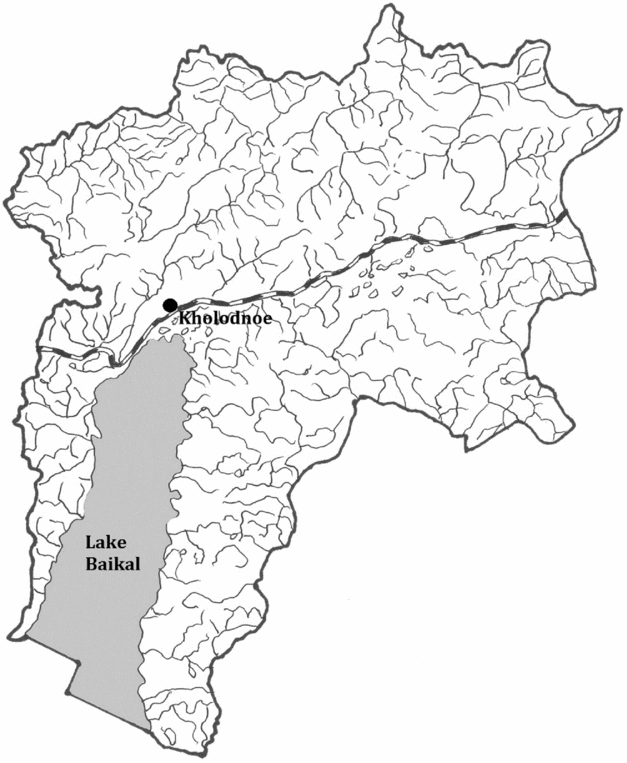
The ethnographic material was collected in the village of Kholodnoe Evenkiiskoe in the Severobaikal’skii district of the Republic of Buriatiia from 2007 to 2013 (Fig. 1). As this paper contains information about fishery in violation of official regulations, I do not provide the names of my informants for the sake of confidentiality. The village of Kholodnoe [in Evenki Niandarakan] was created by Soviet administrators at the end of the 1920s and was a part of the project of ‘sedentarisation’ [osedlenie] of Kindigir Evenkis (Zabelin Reference Zabelin1930: 55). This settlement is located eighteen km northeast of Lake Baikal and one km from the Baikal-Amur Railway (BAM), which is one of the most famous state megaprojects of the late Soviet era. This project attracted a new population of newcomers [bamovtsy] to the region between 1976 and 1984. At the beginning of August 2012, the population of Kholodnoe was 436 people, including 183 Evenkis, 21 Kyrgyzes, 10 Buriats, 6 Ukranians, 3 Maries, 1 Bashkir, 1 Kazakh, 1 Komi, 1 Tatar and 1 Mansi.
Map of the Severobaikal’skii district, the Republic of Buriatiia, Russia. The village of Kholodnoe Evenkiiskoe (Latitude 55°52’51 N, Longitude 109°45’47 E).

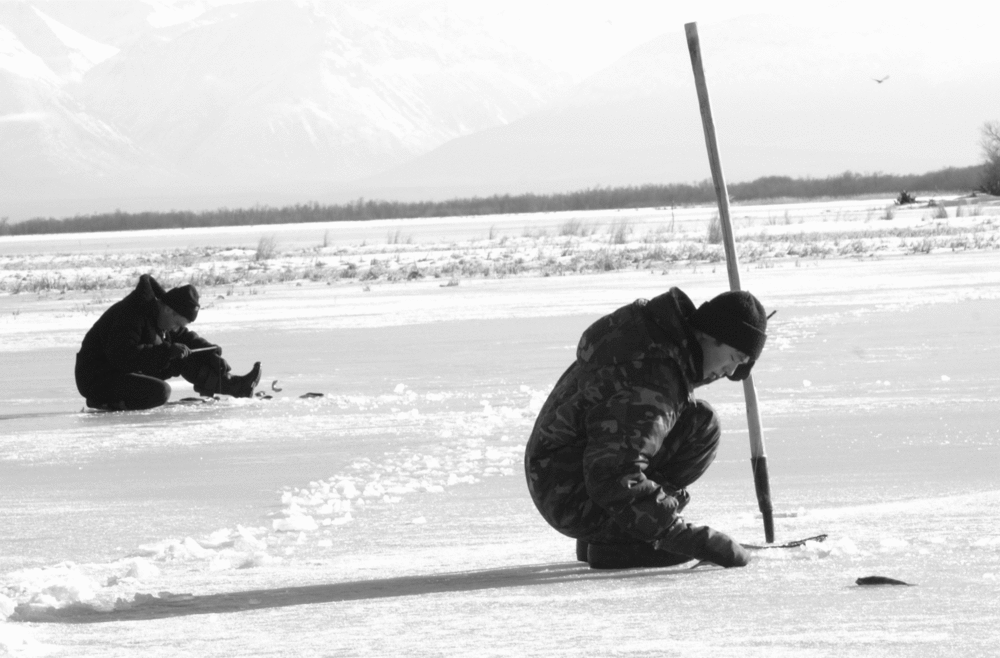
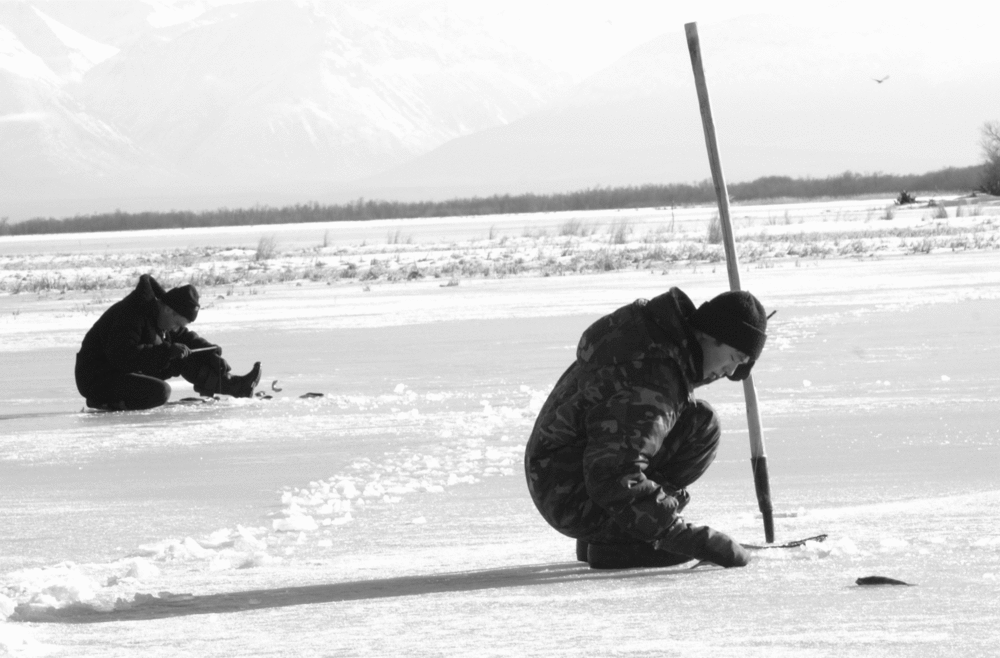
A group of young fishermen from Kholodnaia. November 2007. Photo by the author.
Both Russian ethnographers and administrators have described Evenkis as mostly hunters and reindeer herders. However, fishing has also played an important role in their economy throughout history. According to informants from Kholodnaia, the unofficial name of the village, fishing has always been the primary occupation for some Evenkis. Those who did not possess reindeer and who were engaged mostly in fishing called themselves lamucheny [Evenki], a word that derives from the Evenki word for ‘sea’, lamu. According to N. Spafarii (Reference Spafarii1882 [1675]: 119), Evenkis who lived near Lake Baikal ‘fed themselves primarily from fishing’. Later Georgi (Reference Georgi1777) stated that the fishery was seasonal, because Evenkis primarily fished during summer and hunted during winter. According to him, the fishery in Baikal was especially intense in autumn (Georgi Reference Georgi1777: 44). It was one of the main reasons for the Evenkis’ periodic return to the shores of Lake Baikal and the Verkhniaia Angara River. In other words, their engagement in seasonal fishing became one of the main reasons for their movements. Orlov was the first to describe how northern Baikal Evenkis adapted their practices to the yearly rhythms and movements of animals, birds and fish (Orlov Reference Orlov1857). Even though the Evenkis spent most of the year hunting and herding in the mountainous taiga, they always returned to lower places and to the shores of Lake Baikal where they could fish.
According to a number of historical sources, arctic cisco (Coregonus autumnalis) fishing played an important role in the economy of northern Baikal Evenkis in the 18th and 19th centuries (Georgi Reference Georgi1777: 42–43; Spasskii Reference Spasskii1822: 60–63; Michi Reference Michi1868: 163–166; Elizov Reference Elizov1873; Kirilov Reference Kirilov1886). Shchukin (Reference Shchukin1848: 383) even called Lake Baikal the ‘fish store of Siberia’ [rybnyi magazin Sibiri]. Fishing allowed Evenkis to become involved in intensive economic relations with newcomers. For example, Spasskii (Reference Spasskii1822: 60–63) wrote that Evenki fishermen established long-term contracts with fish dealers [skupshchiki]. Also, Parshin (Reference Parshin1844: 29) stated that at the beginning of the 1830s Evenkis earned money by selling salted fish.
In the Soviet period, fishing remained an important occupation for northern Baikal Evenkis. The collective farm, or kolkhoz in Kholodnaia, which was established in the beginning of the 1930s, employed not only hunters and reindeer herders but also fishermen. According to Humphrey (Reference Humphrey, Burawoy and Verdery1999: 31), the Soviet regime introduced a powerful administrative hierarchy that involved ‘departmentalisation combined with territorialisation’. Various forms of activities required the creation of small work-units [brigady] centred on certain forms of labour in particular geographic locations. At the end of the 1930s, strong debates about the future development of the kolkhoz took place in Kholodnaia (Danilov Reference Danilov1940). A group of fishermen wanted fishing to be the primary activity in the kolkhoz. In contrast, a group of hunters, who were supported by the accountant of the kolkhoz, wanted to structure the tasks around hunting and even discharged a leader of fishermen. Subsequently, the kolkhoz's fishing plan was not completed, because ‘the fishermen were taken from fishing and sent hunting’ (Danilov Reference Danilov1940: 2). However, hunters did not ultimately succeed in their campaign and fishermen remained in the kolkhoz. As a result of the restructuring of the working force, fishing, hunting, animal husbandry and agricultural brigades appeared in the kolkhoz in 1940 (Krasnyi Baikalets (Nizhneangarsk) 2 June 1940). I heard from my informants that kolkhoz administrators discussed the possibility of sending a brigade to the mountainous lakes in order to fish loach (Salvelinus alpinus, Evenki davatchan). In 1957, the kolkhoz consisted of three permanent hunting brigades, two fishing brigades, one agricultural brigade and a reindeer farm (Dokolev Reference Dokolev1957: 16). Thus, in the 20th century, fishing became incorporated into the tasks of Evenki kolkhozes. Therefore, we can see that the history of Evenki fishing in the Baikal region is rather long. This long history lays the groundwork for the non-compliant behaviour of present day Evenki fishermen, who interpret fishery as their traditional occupation and perceive fish as their traditional food. During both pre-Soviet and Soviet periods, people had open access to fish and fishing places, and particular quotas and administrative borders did not restrict their actions. Rather, the state tried to encourage Evenkis to increase their fishing productivity.
The situation changed dramatically in the 1990s, however. The collapse of the Soviet economic system resulted in the transformation of local people's economic practices, as people had to adapt to the market economy. Most people in the village lost their jobs, and new occupations were not created. In the 1990s, people in Russia experienced the withdrawal of state surveillance and the collapse of the social and economic institutions to which they had grown accustomed (Humphrey and Mandel Reference Humphrey, Mandel, Mandel and Humphrey2002: 3). People from Kholodnaia say that the first years after the collapse of the Soviet Union were a tough time for them. The ‘Severnyi’ sovkhoz [state farm], which employed people from Kholodnaia, Uoian and Kumora villages, was shrinking and eventually closed at the end of the 1990s. Consequently, many people in Kholodnaia became unemployed. Even though some villagers continued to work in the school, the kindergarten, the library, the first-aid post, the central heating plant and the rural administration, work in these state organisations and enterprises became a ‘less reliable source of income’, because people were not paid on time and often waited for their salaries for many months (Bloch Reference Bloch2004: 62). For instance, in the summer of 2007, according to data from the rural administration, the official unemployment rate in Kholodnaia was 51%. Even though some people tried to find seasonal work in larger settlements, most villagers started to search for ways to earn income by exploiting local resources. As the unemployment rate among villagers grew, many turned to fishing as a way to earn money. Therefore, in the post-Soviet period, fishing became especially important for the survival of Kholodnintsy (people of Kholodnaia village) and can be seen as an adaptive strategy on their part (Vorob’ev Reference Vorob’ev2004). As an informant from Kholodnaia said, ‘We survived in the 1990s only due to fishing!’
Non-compliance with fishery regulations and social control in ‘free spaces’
The fishery in the northern Baikal area is limited by quotas and time periods. People are supposed to fish during particular seasons and to follow official guidelines, but many people in Kholodnaia ignore these regulations. Evenkis, as a small-numbered indigenous people, have larger quotas, which local Russians and Buriats cannot use. However, Evenkis usually exceed them. Even though it is prohibited to fish during particular periods, people continue to do so regardless, as fishing is their primary source of income.
Legitimacy is one of the key factors influencing fishery compliance (Hauck Reference Hauck, Pomeroy and Andrew2011: 206). If people perceive state policy and official rules as illegitimate, they often chose to act out of compliance with those rules (Nakhshina Reference Nakhshina, Carothers, Criddle, Chambers, Cullenberg, Fall, Himes-Cornell, Johnsen, Kimball, Menzies and Springer2012b: 239). For instance, Nakhshina (Reference Nakhshina2012a: 137) has shown, in her research of salmon fishery on Terskii Coast in the northwest of Russia, that post-Soviet fishermen often appeal to the fact that ‘the state has neglected them and deprived them of legitimate ways to make a living’. Furthermore, people often complained that officials imposed regulations that were inadequate for the local context (Nakhshina Reference Nakhshina2012a: 136). Kholodnintsy justified their non-complaint behaviour in a similar way: they often spoke of how, during the Soviet period, the state provided them with transport and nets as they were officially employed, and how, in the post-Soviet period, the state has left them alone, forcing them to violate the law in order to survive. Regardless, they do not perceive themselves as offenders, explaining that they ‘have to feed themselves and the members of their families’ and complaining that ‘the administration and government are real criminals’. As Jagers and others (Reference Jagers, Berlin and Jentoft2012: 970) stated there is the possibility that fishermen ‘do not trust the government as a rule-maker’. In this case, economic necessity is considered more legitimate than formal laws, a condition that results in the wide-spread acceptance of non-compliance as a ‘means to support one's family’ (Hauck Reference Hauck, Pomeroy and Andrew2011: 202). Fishermen perceive breaking official regulations as acceptable, because they have morally appropriate reasons to do so (Gezelius Reference Gezelius2002).
People usually choose whether or not to comply with official rules in the context of other informal rules. Malinowski (Reference Malinowski1918) was a pioneer in the discussion of informal regulations in fisheries. There is generally a difference between the official law and local moral rules that can be described as the difference between de jure and de facto rules (Gluckman Reference Gluckman1955). This causes a tension between the law, which governs society broadly, and the moral rules that govern local communities on the small scale. Even though the use and administration of natural resources are expected to be regulated from outside, ‘people's everyday practices are shaped by their own rules and moral codes’ (Wilson Reference Wilson and Kasten2002: 150). As an informant emphasised: ‘We are local people [mestnye]; we live according to our own rules [my zhivem po svoim pravilam]. This situation can be seen as legal pluralism, which assumes that ‘the state is not the only legislator’, and that ‘traditional’ or ‘folk’ law exists in the absence of, or in parallel to, state law (Jentoft Reference Jentoft, Bavinck, Johnson and Thomson2009: 28).
Official law never covers all areas of human activities and leaves ‘free spaces’ in the gaps between the law and local moral rules. Evans and Boyte (Reference Evans and Boyte1986: 17) define ‘free spaces’ as ‘settings between private lives and large-scale institutions where ordinary citizens can act with dignity, independence and vision’. These spaces can be thought of as certain institutions and practices that people can control autonomously without elite control (Evans and Boyte Reference Evans and Boyte1986: 188).
In the Evenki village in the northern Baikal, local people's control over the knowledge and use of the landscape can be considered in the context of ‘free spaces’, as a way in which they demonstrate a certain freedom of action. I find this spatial metaphor especially relevant to fishing, because this activity requires both intensive movement and the use of territories that are not equally controlled by fishing officers. In this sense, the term ‘free spaces’ does indicate that one is free to do whatever one wants.
‘Free spaces’ are embedded in the routine practices of local people, and their presence means that people in Kholodnaia have developed their own mechanisms of social control. One of such mechanisms is seen to operate through the narratives that they tell. Many industrial development projects brought numerous waves of newcomers to the region. These newcomers started to use the same places and resources that local people had previously used. This often led to local people's resistance to external control. For instance, I documented a narrative about a fisherman from Kholodnaia. One day this fisherman and his friend were fishing several kilometres from Kholodnaia on the shore of the Kichera Lake. Everything was going well, until the BAM newcomers [bamovtsy] arrived. They came either by car or motorboat and started bathing in the lake. Things became very noisy, as the newcomers began to scream and squeal. As a result, the bamovtsy ruined the fishing for the fisherman and his friend. Eventually, the fisherman came up to the group of the newcomers, slowly entering the water until it reached his knees. The fisherman was rather thin, and he wore black, over-sized trunks out of which his ‘thin and curved legs stuck out’. He also had ‘specific paintings’ or tattoos on his body, which he had made during a stay in prison. As Kholodnintsy say, it was not ‘a view for people with weak nerves’. In order to impress the newcomers, the Evenki fisherman continued bathing silently. As a result of his presence, the newcomers stopped speaking loudly and became scared of the fisherman and his friend. Subsequently, ‘the motors roared’, the bamovtsy left the place, and the ‘fishing continued peacefully’. This narrative describes an example of contact between Kholodnintsy and newcomers during the first years of the implementation of the BAM project in the 1970s. In it, the ‘tattooed body in large black trunks’ became an instrument of resistance to the bamovtsy. The local Evenki fisherman represented through body politics the symbolism of imprisonment. By showing his prisoner's tattoo, he intended to contrast his indigenousness with the occasional and undesirable visitors. This story brings particular attention to the competition over the use of valued locations between Kholodnintsy and newcomers from neighbouring settlements, and retelling of the story is a means by which the Kholodnintsy express an idea of the local social control. Moreover, this narrative shows how local people utilize the power of images to control fishing places.
Another significant mechanism of social control in Siberian villages is gossip (Ventsel Reference Ventsel, Benda–Beckmann and Pirie2007: 44–47). According to Gluckman (Reference Gluckman1963: 313, 314), gossip unites a group within a larger society and supports community life. I will provide an example: One day, a young fisherman approached me on the street and told me a story about how he and his friend were returning from the fishery through the small forest near the Marikta River by motorbike and had accidentally knocked a bear down and killed it by striking it heavily on its head with a sledgehammer. Some people were not sure if it was true. Others likely pretended to believe it, while some seemed to genuinely believe the fishermen. However, experienced hunters said it would not have been possible for him to kill the bear in that way. I was later told by a hunter that he had asked this fisherman to make up the story, because he himself had shot the bear with an unregistered shotgun [drobovik] and brought it home outside of the official hunting season. People had been expecting the police to visit the village that day, and so the story was fabricated in case a policeman was to accidentally see the dead bear in the yard and search for the shotgun's owner. In this situation, the gossip operated in substitution of state control and its purpose was to conceal a violation of arms regulations and to obscure the fact that somebody had brought home prey outside the hunting season. The above story is a perfect example of how people maintain ‘free spaces’ by trying to avoid de jure rules and controlling knowledge. As a matter of fact, local people use the same types of stories in the context of the fishery. Many times, I witnessed local fishermen attempting to exaggerate the number of fishery officers monitoring the shores of the rivers. Some fishermen even said, in autumn 2007, that more than 200 officers with guns had come to the north of Buriatia from the Irkutskaia oblast to prevent poaching. By exaggerating the story in this manner, they were attempting to create an image of danger for the purpose of decreasing competition on the river.
‘Free spaces’ in Kholodnaia have a temporal structure. For instance, a person's ability to avoid the official fishing law often depends on the season. Local fishermen consider that it is more difficult to fish illegally during some seasons than it is in others. Therefore, some periods of the year are considered to be especially unacceptable for fishing. The most ‘dangerous’ time for fishing is during the spawning season from September to October because fishing is officially prohibited. During these months, fishing officers [rybookhrana] frequently visit the banks of the Kichera River. The length of the fishing seasons vary from year to year, and they are defined by fishing officers who usually publish their decisions in the raion newspaper. From locals, I heard stories of how people were rounded up and detained by fishing officers. If the officers took the case to the court, fishermen usually received fines based upon the amount of fish they had caught and the time period during which they had been detained. In 2007, One Evenki fisherman was fined 38,000 roubles for having been caught with a sack of arctic cisco. Unluckily for him, he had been caught right in the middle of the spawning season when fishing was strictly prohibited. This man had still not paid his fine when he died accidentally in spring 2008. Even though fishermen continued to be fined, they continued their fishing by searching for ‘less dangerous’ places where they would be ‘invisible’ to the fishing officers. As a local fisherman said, he could understand the behaviour of officers because ‘they have a plan and they have to catch someone to fulfil it. However, no one wants to be caught’.
For fishing, villagers usually use territories that are located at a distance from four to 30 km from Kholodnaia and often employ temporary dwellings for short stays while they are there. During arctic-cisco season in the autumn, people use mobile conical lodges called iurty in order to stay near fish migration routes and increase their yield. Iurty are thus used nowadays as temporary lodges where people stay for only short periods of time. Usually, villagers live in them for only several weeks out of the year. Local people say that an iurta is more reliable when fishing on small and narrow islands than other types of structures, because it can be easily moved to a new place. First of all, particular fishing practices and the use of mobile architecture resonates with the mobility of fish. Local people usually build iurty close to fish migration routes. However, the use of these structures is shaped not only by fish movement, but also by the necessity for spaces that are not easily accessible to fishing officers. Because many people from Kholodnaia usually exceed fishing quotas as well as fish outside officially established seasons, it is necessary to have a base of operations that can be easily concealed. In this sense, mobile structures are used because of their internal characteristics. They allow people to use a number of places and to move freely between them. It is also possible to use stationary structures such as zimov’ia [small log winter houses], and people have constructed zimov’ia on the Iarki Island that separates Lake Baikal from the lakes of the basin of the Verkhniaia Angara River. However, these dwellings are not as desirable as iurty, as they are well known by fishing officers and are regularly visited by them during periods when fishing is officially prohibited.
Many seasonal practices such as arctic-cisco and pike (Esox lucius) fishing are only possible within ‘free spaces’. The maintenance of ‘free spaces’ is achievable through a dialogue between the local population and representatives of the official law. This dialogue results in many cases of law violation concerning landscape use not being registered in official documents. Regardless, people still often try to regulate such landscape use locally. State authorities are aware that local people exceed fishing quotas. However, they do not intensify their controls over these subsistence activities, as the existence of such ‘free spaces’ is known to be extremely important for the officially unemployed.
At the same time, the idea of legality is not a frozen one and is constructed in constant dialogue with official authorities. Legal systems are permeable and dynamic; they are never closed (Jentoft and others Reference Jentoft, Bavinck, Johnson and Thomson2009: 30). Moreover, as Guillet (Reference Guillet1998: 44) pointed out, local legal systems ‘exist in a dialectical, mutually constructive, relation with the state law’. Thus, in the northern Baikal area, some once illegal practices have become formally legalised. For instance, members of the indigenous community lobbied successfully for an increase in the official fishing quotas and for the right to fish with 30 m long nets, a practice that was strongly prohibited between 2007 and 2010. However, this created a disproportion between the quotas allowed to the indigenous people and those allowed to non-indigenous populations. Therefore, local Russians and Buriats often fish together with their Evenki neighbours who have an official right to use nets. This is an example of the moral rules governing ‘free spaces’ intersecting with the rules that govern society at large. In this case people who do not have the permission to use nets employ an image of compliant behaviour and appeal to the formal law in order to ‘hide’ non-compliance with official fishery regulations. Generally, some of the recent law violations by Evenkis are connected with the use of fishing nets of illegal length and the use of nets during the spawning period.
Non-compliance with fishery quotas in the context of the local black market
I argue that the local black market plays a very important role in local people's non-compliance with fishing quota demands, and that it also serves as a ‘free space’ in which local people can sell their illegal catch. After the collapse of the Soviet Union, fish became a part of economic exchange in the village. The existence of an opportunity to earn money creates a very strong temptation for local people to fish beyond quotas and to use illegal fishing technologies. Overall, fishing in the post-Soviet epoch was a most reliable source of income because it required a minimum of store-bought equipment, and many tools could be produced at home. By comparison, hunting requires a variety of tools such as rifles, traps and cartridges that are industrially produced and cannot be made by an individual. Usually people buy only fish hooks and materials for fishing nets in the shop. Everything else they produce themselves, particularly nets. For nets, they use stones or pieces of brick as weights and prepare floats with foam plastic or birch bark. People usually prepare fishing nets the night before they are going to use them. They attach one end of the net to the wall or door frame and weave it with quick movements. Every fisherman has his own methods of net weaving. People say that they never formally studied techniques for net weaving, but rather learned the craft ‘through life’ [zhizn'nauchila]. Fishing nets are valuable commodities in the village, and they can be easily exchanged for money. Some people prefer to use self-made fishing rods [udochki] and elongated winter fishing reels [kondachki] instead. This is the cheapest way to prepare for fishing, as a person only needs to obtain fish hooks and a line in order to make one. This type of fishing is considered safer than using nets when fishing out of season. As local people say, fishing authorities usually do not pay attention to someone fishing with a rod or kondachki, even if that person does not have a licence.
Fishing beyond quota limits became one of the main sources of income for some families in Kholodnaia. During the period between 1990 and the 2000s, people relied heavily on selling fish. The busiest period for villagers nowadays is the arctic-cisco fishing season in autumn. Local people consider this period, when fishing is officially forbidden, to be the best opportunity for ‘making money’.
In this situation, some people became middlemen, purchasing illegally-caught arctic cisco and pike from villagers and then reselling it. Historical examples show that middlemen [perekupshchiki] connected local fishermen to the wider market at the beginning of the 19th century as well (Spasskii Reference Spasskii1822: 62). During the Soviet period, the role of middleman was played by state organisations. People brought fish to the village and received official salaries. After the collapse of the Soviet system, fishermen needed to find new channels of selling fish. These days, the local market is controlled by entrepreneurs who resell hunting and fishing products and do not pay official taxes in larger settlements like Kichera and Nizhneangarsk and in the cities of Severobaikal’sk and Bratsk. One local female entrepreneur became one such agent of the post-socialist market, as she knew ‘how to move goods and how to find buyers’ (Anderson Reference Anderson and Hann1998: 77), a trait that helped her to monopolise the fish trade in Kholodnaia. She established the purchasing price for fish in the village. This entrepreneur and her husband owned a minibus which they used to transport fish purchased in Kholodnaia. For some people it was the only opportunity available to get money for their catch.
In the post-Soviet period, fish became a reliable source of income for villagers, even though it was sold at a relatively cheap price. Some villagers, being ready to sell fish more cheaply than others, caused this reduction. For instance, in the autumn of 2007, a kilo of pike sold for 35 roubles and a kilo of ide (Leuciscus idus) for 15 roubles. In the summer of 2012, the price remained largely unchanged, with a kilo of pike costing between 35 and 40 roubles. Local entrepreneurs resold the fish in Severobaikal’sk and Bratsk. In 2007, one kilo of pike at the market of Severobaikal’sk cost between 70 and 80 roubles and one kilo of ide cost between 30 and 35 roubles, double the price in Kholodnaia. As already mentioned, people engaged in fishing activities usually profited best during the autumn arctic-cisco season [omulevka]. As a result, many people do not even want to be employed in local organisations. Several young unemployed Kholodnintsy told me, ‘we can earn more money during the omulevka than if we had a permanent job!’ This phrase is suggestive of local people's optimism in the face of unstable employment. Some villagers manage to earn so much money during the omulevka season that they can purchase sidecar motorcycles, a common means of transport in the region. Kholodnintsy use these motorcycles for transport when they are travelling to neighbouring villages as well as to fishing camps.
I occasionally witnessed entrepreneurs purchasing fish from villagers, because fish was relatively expensive in the towns of Severobaikal’sk and Nizhneangarsk as compared to the small villages. Hence, people from these towns sometimes visited Evenki villages in order to buy fish or meat for their own consumption. I was asked several times by visitors from Severobaikal’sk if I had fish for sale. One day these ‘newcomers’ [zaletnye pokupateli] offered a higher price for fish in Kholodnaia than the female entrepreneur and her husband that I mentioned previously usually did. As a result, some families chose to sell their catch to the ‘newcomers’. Later in the evening that same day, the female entrepreneur came to the village in her minibus to buy fish and discovered that many had already sold their catch. She then told people that if this happened again, she would stop any economic relations with the village. The price she offered to buy fish at was rather small, but she reliably bought fish from the people. Even though the ‘newcomers’ offered a better price, they purchased fish only occasionally. Some villagers, such as school teachers who did not fish themselves, also bought fish from their neighbours for their own consumption. But they usually made such purchases in small amounts, which meant that fishermen always had to search for multiple external buyers for their fish. For this reason, people who usually sold fish to this entrepreneur preferred the constant and stable partnership that she offered. During winter, villagers sell pike [shchuka], ide [iaz’] and burbot (Lota lota) [nalim] to her. According to local people, she has continually purchased fish in Kholodnaia for more than ten years. The stability of the relationship, in this case, has created a regularity to non-compliant behaviour.
Non-compliance as collective activity and moral obligation
Hatcher and others (Reference Hatcher, Jaffry, Thébaud and Bennett2000) argue that models of regulatory compliance in fisheries are not complete. They rely too heavily upon instrumental determination of individual behaviour, in which the decision to comply or to affect compliance with quota restrictions depends primarily on the expected monetary costs and benefits, and should instead be expanded to include non-monetary factors such as social influence, moral values, and the perceived legitimacy of regulations and the regulatory authority. These authors’ research reveals that it is possible that violators would like to think that ‘they are not in a minority in exceeding quota restrictions’ and may formulate their views accordingly (Hatcher and others Reference Hatcher, Jaffry, Thébaud and Bennett2000: 459). The same happens in northern Baikal, when people say that ‘all local fishermen exceed their quotas, and fishery officers catch only a small number of them’. Evenki fishermen often complained that indigenous quotas were too small to provide enough fish for all members of their families and that a person who adhered to those quotas would never be able to survive. People also say that during the Soviet period many resources were distributed by the state. When the state collapsed, people had to rely on themselves to sustain their own distribution system wherein hunters and fishermen shared food with other villagers. The importance of social factors in compliance with regulations was stressed also by Sutinen and others (Reference Sutinen, Rieser and Gauvin1990), Kuperan and Sutinen (Reference Kuperan and Sutinen1998), and Sutinen and Kuperan (Reference Sutinen and Kuperan1999). For instance, Kuperan and Sutinen (Reference Kuperan and Sutinen1998: 330) concluded that in cases in which moral obligation and social influence are weakened, the non-compliant behaviour of some fishermen might influence others into non-compliance. I argue that non-compliance with quota limits is not just a fact of life on the river; it is the result of the entangling of social bonds and mutual moral obligations. The informal moral economy of fishing exists parallel to state legislation (Nakhshina Reference Nakhshina2012a; Reference Nakhshina, Carothers, Criddle, Chambers, Cullenberg, Fall, Himes-Cornell, Johnsen, Kimball, Menzies and Springer2012b). Therefore, in order to understand the motivation for people's non-compliance with fishery regulations, we should analyse their daily practices and social relations.
Non-compliance with fishing regulations is a collective activity. Boonsta and Bach Dang (Reference Boonstra and Dang2010) interpret non-compliance as a collective propensity. They stressed the role of informal networks of trust and mistrust in fishery regulation and argued that patterns of non-compliance are social phenomena that exist semi-independent of individual decision making and action (Boonsta and Bach Dang Reference Boonstra and Dang2010). Jagers and others (Reference Jagers, Berlin and Jentoft2012) researched what motivates fishers in either breaking or following rules and demonstrated that peer group solidarity is a very important factor in compliance. Moreover, fishers do not willingly inform on or take direct action against their peers who violate the law (Jagers and others Reference Jagers, Berlin and Jentoft2012: 970) and usually do not inform authorities of infringements they witness (Nøstbakken Reference Nøstbakken2008: 293).
Participation in illegal fishing in the northern Baikal area often necessitates cooperation with other villagers, in which people build solidarity on the basis of certain work tasks. Task-based solidarity is connected with the use of many places around the village, and it can be seen as one of the lasting contributions of Soviet labour management. During the Soviet period, local people shared this particular form of solidarity, working in task-oriented collectives such as brigades (Anderson Reference Anderson2000: 60). This task orientation of small groups became one of the main features of local people's landscape use.
Contemporary villagers are free to fish individually as well as in small groups; yet, people often prefer to go to the river and lakes in a team. This type of collaboration is based on the investment of every participant in increasing the catch and reducing the risk of being caught by fishery officers. However, this form of collaboration is different than in the Soviet period, as there is no centralised management of the labour and of the use of rivers and lakes. In other words, villagers now organise their tasks themselves.
Kholodnaia's small groups of fishermen are based on kinship, proximity of co-residence and age. At the same time, nationality never serves as a unifying factor, and these groups may include both Russians and Evenkis. Very often, these work-units consist of people from one generation. For example, one group of fishermen included five men who were 39 to 44 years old. The second group consisted of six male fishermen from 17 to 23 years old. The third group included men from 20 to 28 years old. Finally, the fourth group consisted of people belonging to different age groups and included three women aged 17, 30 and 32 and one man aged 55. I often saw how both relatives and neighbours visited rivers or lakes together. Relatives in these task-based groups were usually cousins and second cousins. Sometimes these groups also included brothers-in-law. One group consisted of a mother, a daughter, the mother's sister and their neighbour. However, I have observed that brothers very seldom participate in these collaborative groups together. Even though they sometimes planned to visit the river at the same time, they usually joined different groups. As people explain, it is because eldest brothers may try to take leadership in such a small group, while younger brothers usually want to be independent of this kind of ‘patronage’.
The coordination of people's tasks during fishing was often done by a group leader, who was usually the owner of a vehicle, fishing equipment or tools. Thus, a leader in one of these groups had the same function as a brigadier who would coordinate the work of other people in a kolkhoz production team (Humphrey Reference Humphrey1998: 4). Moreover, the leader also decided how the catch should be shared among workers. During a number of collective and individual fishing trips to nearby rivers and lakes, I witnessed people who had sold their nets and rods to other villagers joining a person who possessed those tools. In this context, the possession of fishing equipment served as a resource for achieving power for the owner.
This form of collaboration resembles those that existed at the beginning of the 20th century before the establishment of the Soviet regime, when rich Evenkis supported their less affluent relatives by hiring them as temporary workers [polovinshchiki] (Shubin Reference Shubin2001: 43, 78). Soviet administrators called this sort of patron-client relationship the ‘exploitation’ of Evenki labourers. These were the types of social relations the Soviet authorities were fighting against. Nevertheless, this did not mean that this sort of relationship completely disappeared during the Soviet period. Formally, it was eliminated through the creation of organisations such as arteli (production teams) and kolkhozes, which became the owners of the equipment, and through the campaign against rich Evenkis [kulaki]. However, kolkhoz directors and production team leaders [brigadiry] performed the same function as affluent Evenkis had before the Soviet regime. Their main task was the coordination of people's activities concerning the use of surrounding territories.
During the Soviet period, people were supplied with tools and vehicles by the state. Property relations changed after the collapse of the Soviet Union to resemble those before the Soviet Union. However, these changes did not entail a complete reversion to pre-Soviet forms. Rather, these changes entailed an adaptation of private property relations to the market economy. The overall social and economic function of collective labour, however, has remained the same throughout these three historical periods. I observed in the field that collective work usually increased catch as compared to the catch gained through individual labour. In the post-Soviet period, collective labour provides villagers who do not possess fishing tools with an opportunity to gain individually. In fishing, particular equipment and vehicles such as nets, rods, boats and motorbikes are essential but not all villagers own them. By sharing equipment and vehicles through fishing trips, fishermen can benefit from collective activity.
Fishing can also be performed by two persons. For example, I observed that one man regularly fished together with his wife. At the same time, some fishers walked to the river alone. This usually happens when people cannot find a person with a means of transport or when they do not have petrol for their motorbikes. In these situations, hunters and fishers travel on foot. People often meet other villagers on the way to the river and at the river. In winter, people can often deduce whom they will potentially meet at the river by observing tracks in the snow. If they see motorbike tracks, they expect that they might be able to return to the village with the vehicle's owner.
People who do not have their own fishing tools can join up with a person who does own fishing tools. Such relationships are mutually beneficial, because working with others can help an owner to increase their fish catch. The owner of the tools shares the catch with his companions immediately upon return from the river, or else he sells it to local entrepreneurs and then divides the money between himself and his companions. Every participant usually gets an equal part of the catch. The shares are always equal when villagers make their own contribution to the collaborative unit by providing equipment or transport. This situation can be seen as a relationship of reciprocity, wherein sharable objects are not only represented by the catch but also by the means of transportation and the fishing tools. However, in cases when a member of a collaborative group cannot reciprocate in the future, by organising a trip to the river or by providing others with transport and tools, the owner of the equipment may claim a larger part of the catch. In this context, sharing is a part of collective activity often connected with non-compliance to official fishery regulations. Gezelius (Reference Gezelius2004) demonstrated that the economy of natural resource harvesters includes two different moral spheres. The first is linked to subsistence, small-scale operations and local exchange, and it is perceived as morally safe. The second sphere is connected with money, large-scale operations, and exchange with strangers, and is usually seen as morally perilous (Gezelius Reference Gezelius2004). Local people perceive sharing as a moral obligation. The informants often said that they have to violate the official fishery laws in order to bring food to their relatives. However, they do not perceive it as a crime, as it is a situation where ‘everyone violates the law’.
People often share the catch in the village rather than directly near the rivers or lakes. A group of fishers usually uses one or two motorbikes to bring fish to the village. If they travel on foot, they can share fish on the way back, just near the village. In this case the owner of the fishing tools usually does not participate in the fish transportation and receives his part of the catch in the village. Fish is also shared directly onshore as a cooked meal. In this situation, fishers take some fish from the common catch, cook it and share the food. These places along the river banks, where people share and cook food as well as stay overnight, are called tabora in Evenki.
Kinship and neighbourhood are two main principles organising reciprocity relations in Kholodnaia. Food sharing always played a very important role in the adaptation of indigenous people to their environment (Berkes Reference Berkes2008: 178; Ziker Reference Ziker1998, Reference Ziker2002b, Reference Ziker and Hann2003; Krupnik Reference Krupnik1993; Damas Reference Damas1972). Kholodnintsy share food with both relatives and neighbours. Generally, people reference a group of relatives by surname; yet, such groups may include several families. People who belong to a particular kin group are usually involved in a reciprocal relationship to other members of that group. In Kholodnaia, these relationships of solidarity also exist in a geographical sense, as I have also observed fishermen sharing catch with neighbours who merely lived on the same part of a street.
The strategy of sharing depends on the generation. I witnessed a situation where two brothers, 21 and 22 years old respectively, shared their catch mostly with their matrilateral relatives. Middle-aged hunters shared food with their sisters’ and nephews’ and nieces’ families, as well as with neighbours. They also shared with their wives’ sisters and brothers. Sometimes food sharing took the form of barter exchange of meat for fish. Those who returned from hunting shared meat with the families of people engaged in fishing, and fishers shared fish with the families of those who engaged in hunting.
At the end of fishing trips, I was always encouraged to take ‘my part of the catch’, which usually included two to four pikes or ides. I was not expected to give something in exchange at the moment; however, they accepted any contribution I made later such as fish, vegetables, bread, candies or help in repairing a personal computer. This sharing system can be seen as ‘delayed reciprocity’ wherein all participants are supposed to make their ‘contribution’ in the future (Sahlins Reference Sahlins and Banton1965). For example, an informant said, ‘I always have a full fridge of meat and fish. I can just take it out and cook. That is why I help people with welding. Hence, people are always thankful to me!’ In this case meat and fish are given in exchange for the welding.
When people share fish, they can also choose to give a person more than an equal share. This indicates to the person receiving that they are supposed to share this resource with other people. Once, a fisher gave me more fish than I would be able to eat, and I tried to refuse him. I asked: ‘What should I do with this amount?’ The fisher just smiled and answered, ‘This is not my problem!’ [Eto ne moia zabota!]. Then I understood what he meant. I took the fish and shared it with a neighbour. This neighbour was not surprised that I had brought fish to him, because it was common practice for villagers to share meat and fish if they have more than they needed. When people are given food, they usually accept it, even though they do not always need it. In such cases, they share it later on. This kind of mutual assistance is one of the main characteristics of social relations in Kholodnaia.
These kinds of relations involve reciprocal altruism (Trivers Reference Trivers1971; Kaplan and Hill Reference Kaplan and Hill1985; Gurven Reference Gurven2004) that ‘makes no prediction about the genealogical relatedness of the cooperators’ (Ziker and Schnegg Reference Ziker and Schnegg2005: 183). Moreover, in most cases food is given voluntarily (Ziker Reference Ziker and Hann2003: 384). These relations imply common esteem. John Ziker (Reference Ziker and Kasten2002a, Reference Ziker and Hann2003: 384–385) provided data from his fieldwork where those hunters who had large surpluses usually shared food with those persons who were in need. Similar support practices were common for Kholodnaia, as fishermen often gave fish to those people who were not able to work on the river. In particular, neighbours always supported elderly people and single mothers by giving fish to them. Between 2007 and 2008, I witnessed local fishermen giving fish to elderly people while not expecting anything in return. In this sense, people have moral obligations toward other people that override their civic sensibilities and cause them to perceive fishing beyond quota limits as not a crime. Thus, illegally caught fish form part of an institutionalised system of local exchange. In this context, the existence of ‘free spaces’ allows local people to bring fish to the village and distribute it among those who need it.
Conclusion
The ethnographic examples from the northern Baikal show that non-compliance with quota limits is embedded in daily practices and should be researched in a broader social context. I concur with Hauck (Reference Hauck2008: 640) that there is a need to rethink our approach to compliance in small-scale fisheries and to understand compliance more broadly by considering the social, economic, political and institutional challenges of fishing (Hauck Reference Hauck, Pomeroy and Andrew2011: 197). Although it is popular in economic literature, the idea of the instrumental determination of individual behaviour does not work well in the Siberian context. Hønneland (Reference Hønneland1999) analysed how fishers make decisions concerning compliant versus non-compliant behaviour and concluded that such decisions cannot be explained by one factor alone: ‘different sources and mechanisms are activated in different situations and sometimes operate simultaneously’ (Hønneland Reference Hønneland1999: 713). In this paper I show how social control, the local post-Soviet market, cooperation and moral obligations affect compliance, or non-compliance with fishery regulations in the northern Baikal.
To sum up, during the post-Soviet period, the use of rivers and lakes became especially important for villagers’ survival, because they started relying mostly on local resources. The fishers’ catch directly depended on their ability to move, as well as on their knowledge and skills. In the post-Soviet situation, local people's movements became structured by the demands of the local black market. Fishing became one of the most reliable sources of income for unemployed people. They cooperated with other villagers in fishing and established long-term contracts with fish resellers who usually paid them the same day in cash. Nevertheless, most people were not able to amass any savings and usually spent all of their cash the same day they earned it. This type of economy became possible only due to local people's knowledge of the landscape and their ability to maintain ‘free spaces’ outside the influence of external control. At the same time ‘free spaces’ are not wholly excluded from official rules. Rather they serve as a regulatory mechanism in parallel to official rules. They create a situation of legal pluralism in which local people are able to control the use of their landscape internally, following their own law rather than official regulations. ‘Free spaces’ have made non-compliance with regulations possible. Even though fishery officers established certain fines for exceeding fishing quotas, local people largely ignore them, instead preferring to police themselves through their own codes of sharing and reciprocity. Overall, during the post-Soviet period, people continued to remain involved in collective labour for the purpose of bringing fish to the village to be distributed among relatives and neighbors, as well as sold on the black market. Therefore, the existence of ‘free spaces’ in fishery allows people to maintain their own rigorous mechanisms of social control and reciprocity, even though these mechanisms operated outside of compliance with official fishery regulations.
Acknowledgements
I want to express my sincere gratitude to Prof. David Anderson and Dr. Alex King who supervised my fieldwork in the northern Baikal area. I am thankful to the European Research Council (ADG 295458 Arctic Domus) which supported two months of fieldwork in the northern Baikal region in 2012. I owe much to the fishermen that I worked and lived with during my fieldwork. I am eternally grateful to Dr. Maria Nakhshina and Dr. Franz Krause for their comments on earlier drafts of this paper and for giving me the opportunity to present the results of my research at the IASSA conference. I would also like to thank anonymous reviewers for their detailed and constructive comments.