The crash of the New York Stock Exchange, which began in October 1929, propelled great turmoil and dramatic changes in many parts of the world during the 1930s. Malaya was no exception to this general rule and the ensuing Great Depression negatively affected its export-based economy for many years. The relatively large groups of Chinese and Indian migrants who had come to the Peninsula during the previous decades were hit particularly hard by retrenchment and subsequent repatriation (which was voluntary at government expense). Malays may have suffered less from the economic crisis because the British had given them special status in order to protect the community from the onslaught of much more aggressive immigrant groups and to train them for the country's administration. The macroeconomic crisis, and the pressure felt from immigrant groups, stirred up strong sentiments in Malay communities and served as a catalyst for the development of ideas of political emancipation for a group that was envisioned to assume political power from the British.
Although the crisis affected many branches of the economy, some economic sectors thrived during the 1930s.Footnote 2 One example was the publishing and popular entertainment industries. A host of new periodicals were published during the decade, while entertainment in the form of music performances, social dances, movies, radio, gramophone music, theatre plays, boxing and other sports events, all became readily available through amusement parks set up in urban centres throughout the Peninsula. This article will explore the seemingly paradoxical relationship between a diminishing economy and the upsurge in the entertainment and publishing industries by focusing on Malay-language periodicals from the early 1930s, especially the first years of the newspaper Majlis.Footnote 3 The article will also seek to establish the impact that a burgeoning popular culture had on these socio-political developments in view of the fact that many periodicals were owned by Muslim reformists. The argumentation will be supported with materials from the sources which also show an increase in advertisements introducing products to a Malay-speaking audience that ostensibly needed them to lead a modern lifestyle. It will be argued that despite the economic downturn and in addition to the social, religious and political issues discussed in mass media, members of the Malay community, the main target of the periodicals, were introduced to the ‘art of consumerism’, which taught them to put some money aside to pay for the next instalment of their insurance policy, take the family out to an ice cream parlour or buy a packet of cigarettes that could win a fancy motorcycle or a flashy car.
The goal of much of this ideology was the creation of a Malay entrepreneurial class. Thus, preferably, it would be Malays who traded or even produced these products, so that they could counter the alien Chinese and Indian dominance of the domestic economy and would develop a strong entrepreneurial spirit themselves. Cultural products were also important in this process of political emancipation, in which culturally specific practices were considered for incorporation (or not) into the complex of Malay culture which was being redefined in the public space of periodicals, clubs and social gatherings. Before turning to a discussion of these issues in Malaya, however, this paper will look briefly into the role of popular culture and its interactions with consumerism in the United States.
Popular culture and Malaya
‘Popular culture’ as used in this article may be understood in the sense of a number of newly developed cultural practices that are produced with commercial objectives and are ‘suspended’ in a field of cultural tension between ‘resistance to’ and ‘incorporation in’ the culture of the dominant groups of a society. In a model that Antonio Gramsci has called ‘compromise equilibrium’, cultural forms may move between the different categories.Footnote 4 An interesting example is bangsawan, an extremely popular variety of theatre in Malaya during the first half of the twentieth century, which moved from a modern urban form imported and popularised by immigrant groups to a localised Malay form and then on to a national Malay theatrical form by the 1950s.Footnote 5 In other words, bangsawan entered into the category of dominant culture, whereas forms that were less fortunate – such as perhaps ronggeng, a social dance in which hostesses dance with male guests – seems to have made a movement in the opposite direction, although in recent years there have been efforts to incorporate ronggeng into the national culture of Malaysia.Footnote 6 For a discussion about popular cultural forms in 1930s Malaya, it may be instructive to take a brief look at some developments that took place in the United States. The entertainment industry in the United States has been the topic of numerous studies, some of which also have investigated the apparent paradox of the Great Depression and the blossoming of the industry.Footnote 7 Some of these studies will be used here as a backdrop for analysing developments in Malaya with a focus on Malay-language periodicals.
Around the turn of the twentieth century, American urban popular culture was very much influenced, if not dominated, by immigrants who had flocked to the United States to make their future in the New World. For example, between 1880 and 1920, 23 million immigrants entered America, and 40 per cent of New York's population in 1920 was of foreign extraction.Footnote 8 Many of these immigrants maintained links to their respective communities and forged an identity by producing cultural products such as newspapers in their own language. During the first decades of the twentieth century, technological innovations – motorcars, cinemas (nickelodeons), radios, phonographs, and even electric washing machines – increasingly dominated American culture and lifestyle, becoming part of everyday life. Through the popular entertainment industry many of these ‘immigrant’ groups helped to forge a new American culture that was rapidly disseminated through its channels, thus contributing to the standardisation of the way of life nationwide.
The economic slump of the 1930s should have severely affected the consumption of entertainment. However, by implementing strategies such as the cutting the price of records, showing two movies for the price of one, reducing the quality of the paper for magazines and newspapers, and introducing technological innovations such as the jukebox, the entertainment industry managed to stay afloat, and some branches even expanded during the Great Depression. The movie industry is of special interest because at the time of the stock market crash, the new technology of talking pictures (or ‘sound film’) had been developed and required large-scale investment in cinema facilities. As a result thousands of cinemas were forced to close their doors, while ticket sales in 1932 dropped to almost half of the level of 1930.Footnote 9 Eventually new popular genres such as crime movies helped the film industry to scramble back on its feet. Sound films greatly expanded the artistic possibilities for filmmakers who started to produce dramatic war movies and, of course, the epitome of the film industry, the dance movies with Fred Astaire and Ginger Rogers that made their first appearance in the late 1930s.
Nor did the largest disseminator of mass culture, the radio, escape unharmed. Radio networks had been established and gradually expanded in the 1920s in the United States, but during the Depression the networks lost money and radio sellers had to close down their shops, although the number of radio owners rose due to a reduction in prices.Footnote 10 Even more paradoxical is that the network companies more than tripled their revenues from advertising during the years 1928–34, when the economic crisis was at its peak.Footnote 11 This enormous increase in radio commercials is a telling example of a strategic shift from an emphasis on the production of goods to their consumption:
The bourgeoisie knew how to make the people work, but it also narrowly escaped destruction in 1929 because it did not know how to make them consume. … the crisis in 1929 marked the point of asphyxiation: the problem was no longer one of production but one of circulation. Consumption became the strategic element; the people were henceforth mobilized as consumers; their ‘needs’ became as essential as their labor power. By this operation, the system assured its economic survival at a fantastically expanding level.Footnote 12
During the first decades of the twentieth century the American people were taught to believe in consumerism through advertisements that encouraged them to think that the goods were within their reach and part of a proper way of life. Only personal failure would keep someone from enjoying such goods.Footnote 13
These advertisements were disseminated through the popular media of newspapers, magazines, radio programmes, films and sporting events and conveyed the ideological message that the people were in a state of transition from a period of deprivation to a culture of abundance. The ‘G-men’ (government agents) in the pulps, musical films with happy endings, and serialised women's shows on the radio led the nation to a better future, to ‘the comfort, mobility and pleasure promised by “the dime-store dream parade” of commodities’.Footnote 14 Ironically perhaps, many immigrants found employment in the popular entertainment business, which forged a shared culture quite different from what genteel America had envisaged.Footnote 15
It may be tempting to use an ‘American model’ to analyse the social phenomena in Malaya, but this seems quite wrong as the scale of the industry with its immense output and the circumstances it operated under in the United States were totally different from the situation in Malaya. Still, some of the American developments reflect some general characteristics of popular culture that were not limited to the United States alone. We also should be aware of the impact the American industry had (and increasingly has) on budding cultural forms in other parts of the world. Surely, the scale is different and it may hardly seem credible to speak of ‘mass culture’ if we talk about a single periodical such as Majlis with a print run of 2,000 copies, but certain phenomena may be comparable.Footnote 16
One of the obvious similarities between the situation in the United States and Malaya is that immigrants represented a large portion of the total population. In 1931 only 44.7 per cent of that population was classified as Malay, while Chinese with 39 and Indian with 14.2 per cent came second and third in a total population of 4.385 million people.Footnote 17 However, in colonial Malaya the immigrant groups were separated from ‘indigenous’ Malays in many sectors of the socio-economic structure, so that there was not any ‘cultural upheaval from the nation's margins’ spawned by immigrant groups as in the United States.Footnote 18 The colonial government treated the immigrants as foreign workers and traders who would stay temporarily in the Peninsula; after their job was done, they would be repatriated to their home countries, which in the Depression functioned as a ‘safety valve’ to relieve Malaya's economy from unemployed workers. There was little or no incentive to create a ‘shared culture’, except for communities of foreign extraction that had been in the Peninsula for centuries, such as Straits-born Chinese and Indians.
Although many Malays were townspeople, the majority of Malays comprised farmers and small plantation owners, whose standard of living was affected but seldom to the point of serious deprivation.Footnote 19 However, as Joel Kahn has pointed out in his recent study, many of these Malays were of foreign extraction, having migrated from regions in Indonesia since the 1900s; they made a living as cash croppers, merchants, land speculators, smallholders of rubber and coconut plantations, and other entrepreneurial activities.Footnote 20 These ‘foreign-born Malays’ did not display the same degree of attachment to the land, being more migratory compared to the indigenous inhabitants, and inevitably also caused problems with these local inhabitants. Therefore, the colonial government's programmes to expand irrigation projects and rice cultivation, meant to reduce Malaya's dependency on rice imports from Burma and Thailand, also had the side effect of tying peripatetic cultivators more strongly to the lands they were cultivating.Footnote 21 These programmes were also meant to protect Malays who, as the literary topos went, were under severe duress from the aggressive immigrant groups.Footnote 22 Their protected status was further enhanced through affirmative action, which was implemented to encourage Malays to enter into government employment. In addition, in order to address a certain imbalance with other groups, education for Malays was free.
During the first decades of the twentieth century, as immigration accelerated, Indian and Chinese immigrants increasingly vented their anger against the discrimination they encountered, while Malay groups expressed their frustrations towards the domination of the immigrant groups over the local economy and voiced their demands for more political rights. In an atmosphere of economic contraction, with people increasingly taking issue with ethnic separation and colonial policies, a number of Malay newspapers appeared which addressed these issues. These newspapers were adamant about developing more political awareness among Malays by urging them to educate themselves, be vigilant and develop entrepreneurship to ward off the attacks of the ‘aliens’ (orang asing) who, many articles argued, were taking over all walks of life. Not only did this theme perpetuate the familiar trope of backward Malays who were under alien threat, it may also have been part of the commercial strategies of these periodicals.
Majlis, political emancipation and entrepreneurship
In his seminal work on Malay nationalism William Roff fleshed out the political developments that were taking place in colonial Malaya based on an extensive reading of the newspapers and close friendship with some of its key players. He observed a change in the vernacular press at the end of the 1920s, when the relatively few publications by Islamic reformists and Malay associations were joined by the products of a growing number of Malay-Muslim ‘businessmen who saw in periodical publication a potential source of return on capital’.Footnote 23 The publication of the weekly Saudara in 1928 by Syed Syekh Al-Hadi as a more secular periodical than his much more religiously inclined Al-Ikhwan, forms the prelude to a commercialisation of the press in the 1930s. In addition to the eight dailies or twice- and thrice-weeklies identified by Roff in his Bibliography of Malay and Arabic periodicals, the publishing scene was also augmented by a welter of other periodicals. During the 1930s a total of 72 Malay magazines were published, 59 per cent of the total for the first four decades of the twentieth century; about one-third of these were published in the first half of the 1930s.Footnote 24 According to Roff, until the end of the previous decade there had been hardly any Malay-speaking audience for ‘literary frivolity’ or popular culture, but with growing urbanisation and the expansion of literacy in the course of the 1930s there gradually developed a market for Malay-language periodicals containing a touch of ‘frivolity’, and even for a few journals of entertainment, which would lead to the publication of the magazine Film Melayu in 1941.Footnote 25 The establishment of these numerous publications and the developing entrepreneurial spirit mutually reinforced each other in the 1930s.
This burgeoning popular culture in Malaya is also of interest as it was infused with a reformist Islamic discourse. One of the most telling examples of this conflation of popular culture with reformist Islam is Syed Syekh Al-Hadi, who published a number of highly erotic tales with a reformist message, such as his Hikayat Faridah Hanom, atau Setia Asyik Kepada Ma'syuknya (Romance of Faridah Hanom or the Loyalty of a Lover to her Loved One, 1925–26) and his Hikayat Taman Cinta Berahi atau Hikayat Mahir Afandi dengan Iqbal Hanom (Romance in the Erotic Love Garden or Romance of Mahir Afandi and Iqbal Hanom, 1928) published in instalments in a series entitled ‘The Moral Trainer’, in combination with more serious Islamic tracts about themes he also dealt with in his novels.Footnote 26 Syed Syekh's example was followed by several others.
In the beginning of the decade two new Malay-language papers joined Syed Syekh's Saudara in enlightening Malays and stirring up nationalist feelings within the community. The first of these was Warta Malaya, which was established in Singapore in 1930 as one of the businesses of the Arab Alsagoff family. The second was Majlis, first published in December 1931 in Kuala Lumpur. Mohd Amin bin Mohd Yusoff, a well-known local Malay businessman who had ventured into the printing business and landed property, established the newspaper.Footnote 27 For the first three years the editor of Majlis was Abdul Rahim Kajai, ‘the most brilliant of all Malay journalists’, who had transferred from Saudara in Penang and secured a wide readership with his always witty and pointed writings.Footnote 28 After an apparent conflict with the newspaper's owner in 1935, Kajai left to take up a position in Warta Malaya, and his editorship at Majlis was continued by Othman Kalam for the next four years. In 1939 the rather controversial political activist Ibrahim Yaakob was appointed as chief editor. Ibrahim held this position until 1941, the year he is reported to have purchased Warta Malaya with Japanese funds. In the first year of the Japanese occupation Majlis temporarily changed its name to ‘Perubahan Baru’, but it soon reverted to ‘Majlis’ and continued its daily publication until 1955, when it folded.Footnote 29
Judging from its general content in the early 1930s, Majlis was certainly not aimed at providing ‘objective’ news. Kajai made it perfectly clear that the paper was striving for the wellbeing and progress of Malays, and Malays alone, at the expense of immigrant groups. In the editorial to the first issue of 17 December 1931, Kajai outlines the intentions and thrust of the periodical:
The meaning [of this paper] may be summed up by the letters M[E]LAYU, the most prominent word of our nation (bangsa) that may unite the people in the Peninsula, and the word MELAYU will enhance our position in the politics and economy of our country. In other words, with the oneness of the word MELAYU we are going to push aside the aliens that have flocked to our country and with it we will demand and defend our rights. … Our hope, intentions and ideals by publishing Majlis are to redeem part of our obligations in connection to MELAYU and our homeland (watan) that we just mentioned. It is not only limited to that because they [Melayu and Watan] are inextricably connected with our religion Islam…
Again we call on the congregation of our people in the broadest sense to welcome this first and later issues of Majlis in name of the Malay nation, home country and religion and to make it into their own national newspaper that will strive for the good of the nation, home country and religion without delay.Footnote 30
Many articles in Majlis painted an extremely grim picture of Malays, who reportedly were lagging behind in every aspect of socio-economic life in the Peninsula. A good example of this can be found in a rebuttal of criticism about the negative tone of voice used by a journalist who often signed his contributions with ‘Abhi’. In his response, Abhi states that the negative characteristics of the Malay community, such as poverty and backwardness, are only too obvious to the aliens; to try to hide them would be like carrying out the impossible action of covering a dead elephant with a flat basket (bangkai gajah tak akan boleh ditudung dengan nyiru). He goes on to proclaim that all calls and advice for Malays to unite and do away with internal differences, envy and spite are of no avail; Malays are still asleep. Instead of changing, they would rather become like ‘Red Indians’ (Orang Melayu lebih suka jadi bangsa Red Indian), who have forsaken their rights to a homeland to a people that only came into being in the eighteenth century — a people originating from a mixture of different Europeans who used English as a common language.
Now Malays must be aware [sedar]! A Malayan nation will be established in the Peninsula, where Chinese will be used as everyday language of communication. Would Malays like that? Yes if we look at Singapore, it is obvious that there is no place anymore for Malays, the island has been taken over by others. The Malays are destitute…Footnote 31
Abhi's solution to this issue was for Malays to start a socio-political movement, as the ubiquitous word ‘pergerakan’ suggests. It was ostensibly still too early for the organisation of a Malay ‘conference’ or ‘congress’, however; Malays would rather leave it to the traditional leaders and rulers to guard their interests and improve their situation.Footnote 32 The Malay representatives in the Federal Council had stated that affirmative action would be implemented, resulting in the government employing more Malays. However, the realisation of this scheme, it was argued in another article, should be monitored and certain extra measures taken to ensure that the positions were indeed filled by Malays.Footnote 33 Earlier, for example, it had been announced that the railway company had employed 150 Malay youngsters in early 1932. These youngsters were exhorted to be grateful and show patience, dexterity and loyalty, so that it would become clear to the government and aliens alike that Malays were capable of any work that was previously done by immigrants.Footnote 34 The latter topic was one of the most frequently raised issues in Malay-language newspapers during the 1930s; Malays had to develop their economic abilities and efforts before they could even think of entering into competition with the immigrant groups or establish political organisations. This, however, led to a dilemma.
Although Malaya was in the midst of the Great Depression, which affected the numerous small Malay rubber plantations, many of which had only recently been converted from rice fields in the 1920s when rubber prices were high, there were many other factors that influenced this feeling of economic backwardness or dilemma.Footnote 35 The entire economic infrastructure of Malaya was in alien hands, and it was frequently argued in newspapers that Malays had to change their attitude towards trade and begin establishing small businesses that other Malays should patronise. Some articles attributed the lack of economic activity to a sort of cultural defect that made Malays prefer a career in salaried employment rather than venture into business.Footnote 36 Others tried to convince readers that there were many opportunities with excellent prospects and little risk; of equal importance was the fact that one would help the entire Malay community by seizing these opportunities.Footnote 37 For instance, if a Malay rubber planter sold his rubber to a Malay dealer and, with the money he had received, bought his provisions at a Malay store, Malays would benefit at each point.Footnote 38 Unfortunately, as the author pointed out, this was still an exception to the general rule, especially in the towns where Chinese and Indians dominated the economy, as even Malay Muslim food was sold in their restaurants.Footnote 39
In such an atmosphere newly established Malay businesses were given ample attention in newspapers. A new restaurant in Batu Road in Kuala Lumpur serving drinks that were not prohibited by Islam; a poultry company which provided a European hotel in Penang with its eggs; and Malay bookstores, printers and laundry companies were all hailed in Majlis as proof that Malays were progressing economically in the Peninsula.Footnote 40 Two editorials strongly emphasised the importance of entrepreneurship in their descriptions of how Malays who opened businesses in a time of economic depression relied upon the community to keep them going, while also providing work for unemployed individuals. Again we see this modern urban-based type of business described in relation to the overall picture of building a Malay economic network and the development of socio-political awareness:
If we investigate further we find that the three new Malay laundry companies in Kampung Baru, Gombak and Batu can be viewed as a laundry school that will educate fellow Malays the ‘knowledge of laundering’ [ilmu mendobi]. People who are able to see beyond the end of their nose will at least realise its educational use. To establish a laundry school will be a big burden for our people, but if we prioritise such a school it will be established and produce pupils who will be able to open up their own laundry shop. … These laundry workers will not only spawn a laundry business but also soap factories as they need a lot of soap. Increasing Malay laundry businesses will increase the use of soap and certainly will result in the establishment of a Malay soap factory.Footnote 41
These ‘communal’ soap factories will play the role of schools and generate other factories, the article continues. This in turn will stimulate coconut oil producers as the soap manufacturers will need more oil, which will then be for the benefit of Malay plantation owners. Indeed, soap manufacturing was also a new line of business into which Malays would soon venture. Two new businesses were established in Kampung Baru and Batu 6, Gombak, in close proximity to the laundry shops, while a third one set up in Singapore offered soap that did not contain any substances prohibited by Islamic law, according to the short news item/advertisement.Footnote 42
Another editorial about a newly established laundry company had a similar story emphasising the number of Malay workers that might be employed by such businesses. The other laundry shop owned by Mr Ahmad at Batu 6, Gombak had already attracted the attention of Malays interested in opening their own shop and learning the ‘secrets of laundering’ (rahsia dobi).Footnote 43 This laundry company in Kampung Baru was owned by Mr Hanif, a famous football player who had not only opened the shop but also managed it, as he boasted in an advertisement in Majlis for his Electric Laundry Dry Cleaning Company.Footnote 44
Advertisements
Quite understandably, in the first year of publication Majlis managed to contract with only a few advertisers.Footnote 45 The number of advertisements increased steadily, however, and by the second year of its publication a growing number of large British companies used Majlis to target a Malay audience. Alongside these advertisements there was always space for a number of announcements for Malay rubber-buyers, cooperatives, printers, bookshops and restaurants. The more commercial outlook of the paper was clearly expressed in its masthead in early January 1933, which contained the phrase ‘Best advertising medium for the information of Malay Public’, next to small ads for Caxton Press and big department stores such as Robinson and Whiteway Laidlaw and Company.
In an effort to promote Malay interests, however, Majlis specifically called for Malay businesses to market their products in its pages.Footnote 46 Although Majlis was not reluctant to advertise for Malay companies and their products through short news items, and claimed that all advertised goods in its columns were of excellent quality, the newspaper also promoted the sale of advertisements out of a need for revenue.Footnote 47 The editors urged readers to mention that they had read about the product they would buy in Majlis, so that advertisers would appreciate its role in their purchases.Footnote 48
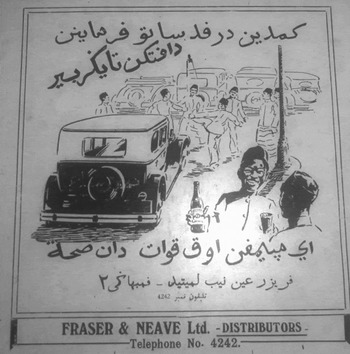
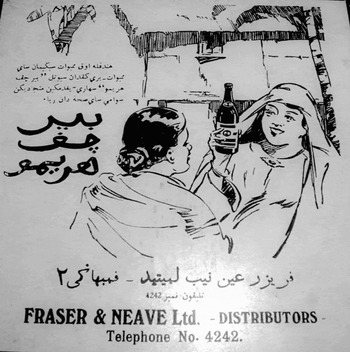
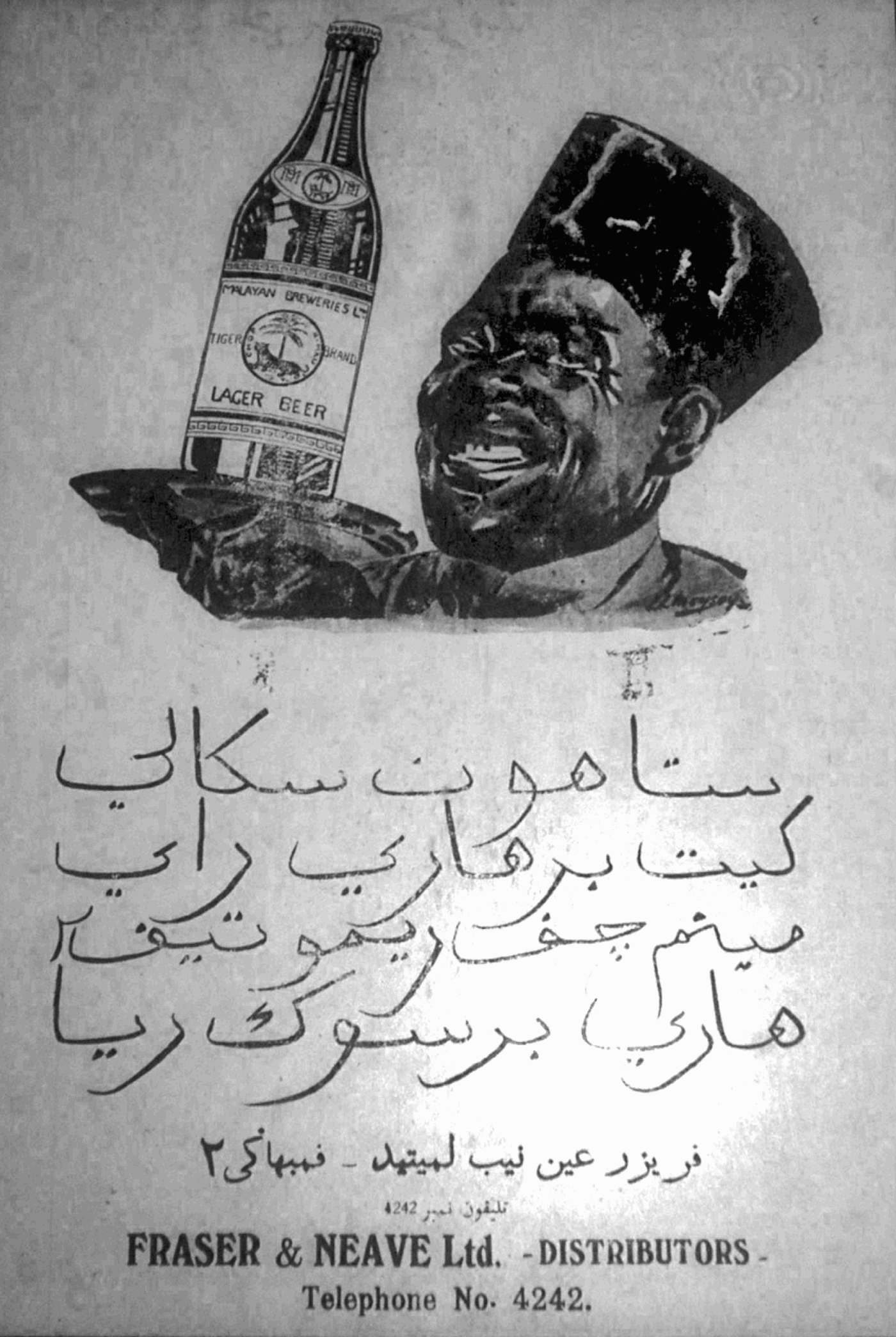
In these commercial messages we see not only the ambiguity of the development of consumerism amid an ongoing slump, but also the ambiguity of ‘modernity’ in the methods of promoting (potentially) controversial products to the public. For example, in mid-1933 the Singapore-based Fraser and Neave Company launched a loud campaign promoting Tiger Beer in the columns of Majlis. Fraser and Neave presented a considerable number of illustrated advertisements, which – inconceivable today – unambiguously depicted Malays buying or consuming beer while praising the beneficial effects of its consumption with texts such as ‘That's the one; my father drinks it and his body grows bigger and stronger.’Footnote 49 A similar text emphasising the imagined wholesome effect of drinking beer can be found in a drawing of Malay men playing a game of what seems to be sepak raga, a pastime closely identified with Malays, while two others enjoy a beer in the foreground (see Illustration 1). Another example from this campaign depicts two (Malay) women talking, one of whom is holding a beer and proclaims the positive effects of her husband's beer-drinking: ‘Do what I do: give him a bottle of Tiger Beer every day, and he will be healthy and happy’ (Illustration 2).
‘Take a Tiger Beer after a game, it will make you strong and healthy’ (Kemudian daripada satu permainan dapatkan Tiger Beer. Ia menyimpan awak kuat dan sehat)

‘You should do what I do – give him a Tiger Beer every day – that makes my husband healthy and happy’ (Hendaklah awak membuat sebagaimana saya membuat – beri kepadanya sebotol “bir cap harimau” sehari – yang demikian menjadikan suami saya sehat dan ria)

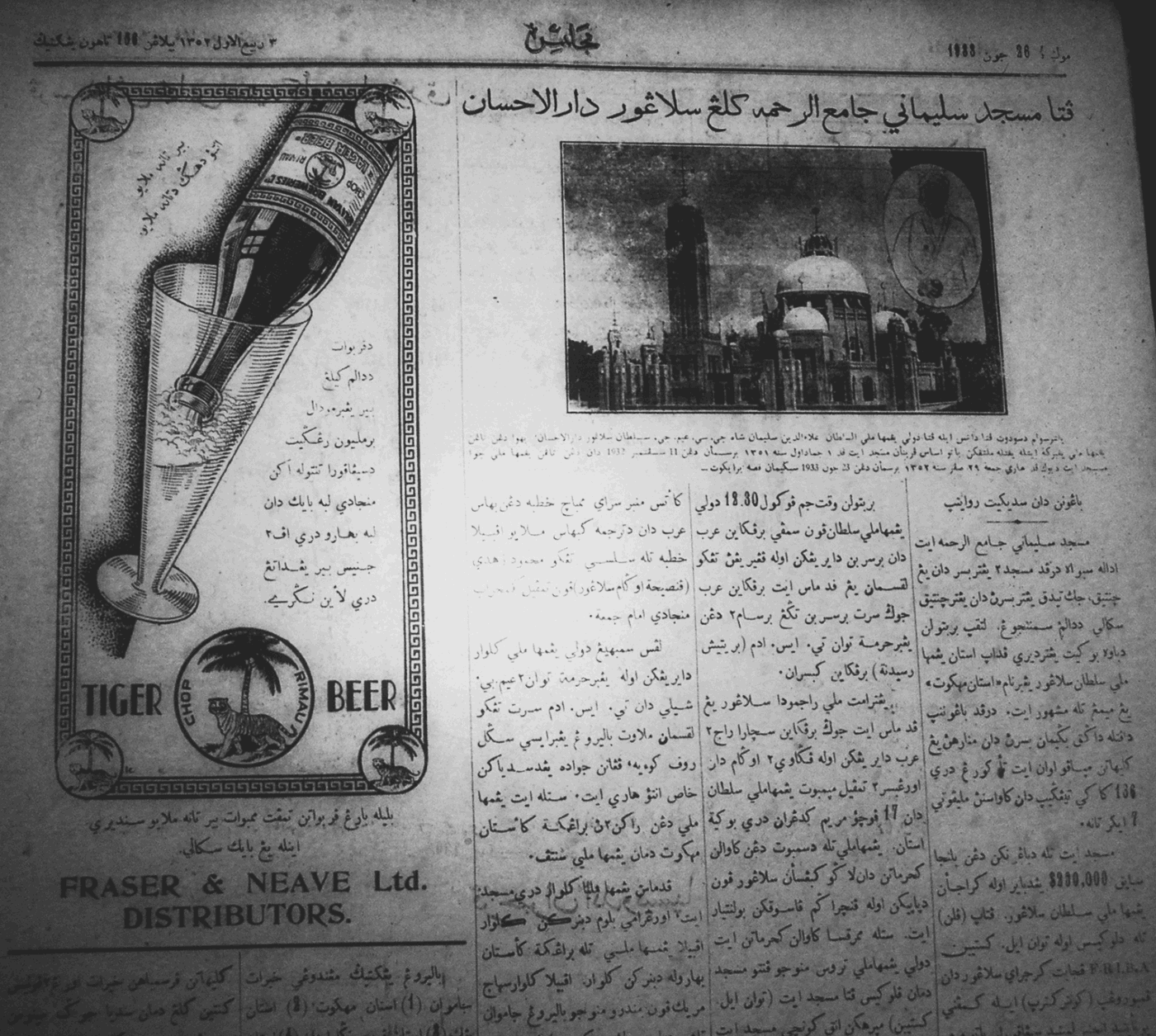
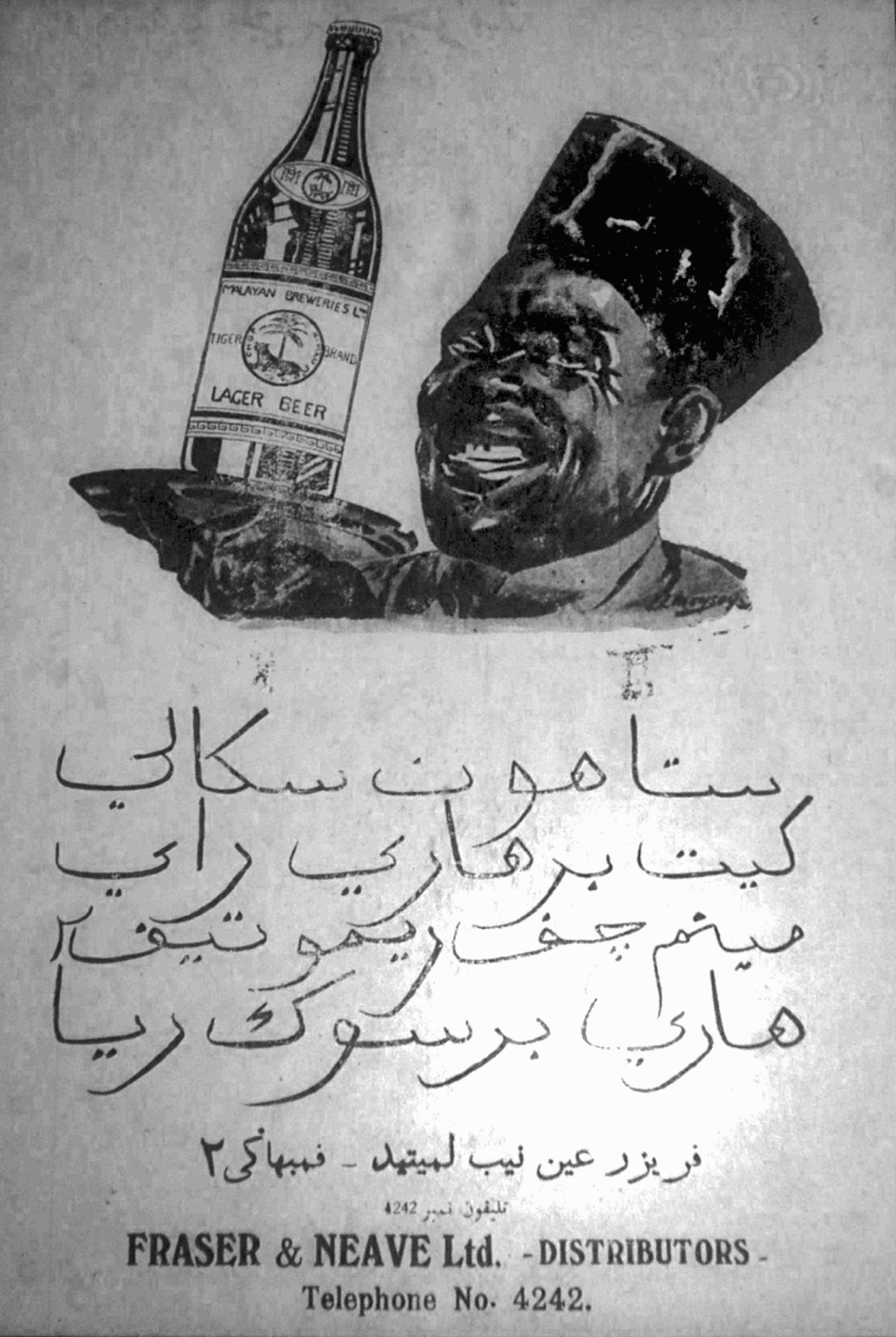
It is interesting to note here that in contrast with the other advertisement, the text of the latter does not mention the word kuat (‘strong’), which would have sexual connotations if a woman were to use it with reference to a man. This absence may indicate that public morality in this respect was being preserved. On the other hand, the campaign – and the editor of Majlis, for that matter – had few qualms about courting controversy with Islam by placing one of the Tiger ads next to a picture of the Sulaimani Mosque in Klang (Illustration 3), or including a text (Illustration 4) with reference to the religious feast at the end of the Islamic fasting month or the feast of sacrifice on the tenth day of Zulhijjah, both of which are referred to in Malay as Hari Raya (‘celebration day’). The actual meaning of the text is quite ambiguous, as it may be inferred that one may celebrate Hari Raya with a Tiger Beer, or else refrain from drinking on Hari Raya but drink all that one wants on other days. Clearly neither of these interpretations has ever conformed to the regulations of Islam.
Tiger beer ad next to the Sulaimani mosque in Klang

‘[Only] once a year we celebrate a feast. Drink Tiger Beer every day you are having fun’ (Setahun sekali kita berhari raya. Minum Cap Rimau tiap2 hari bersuka ria)
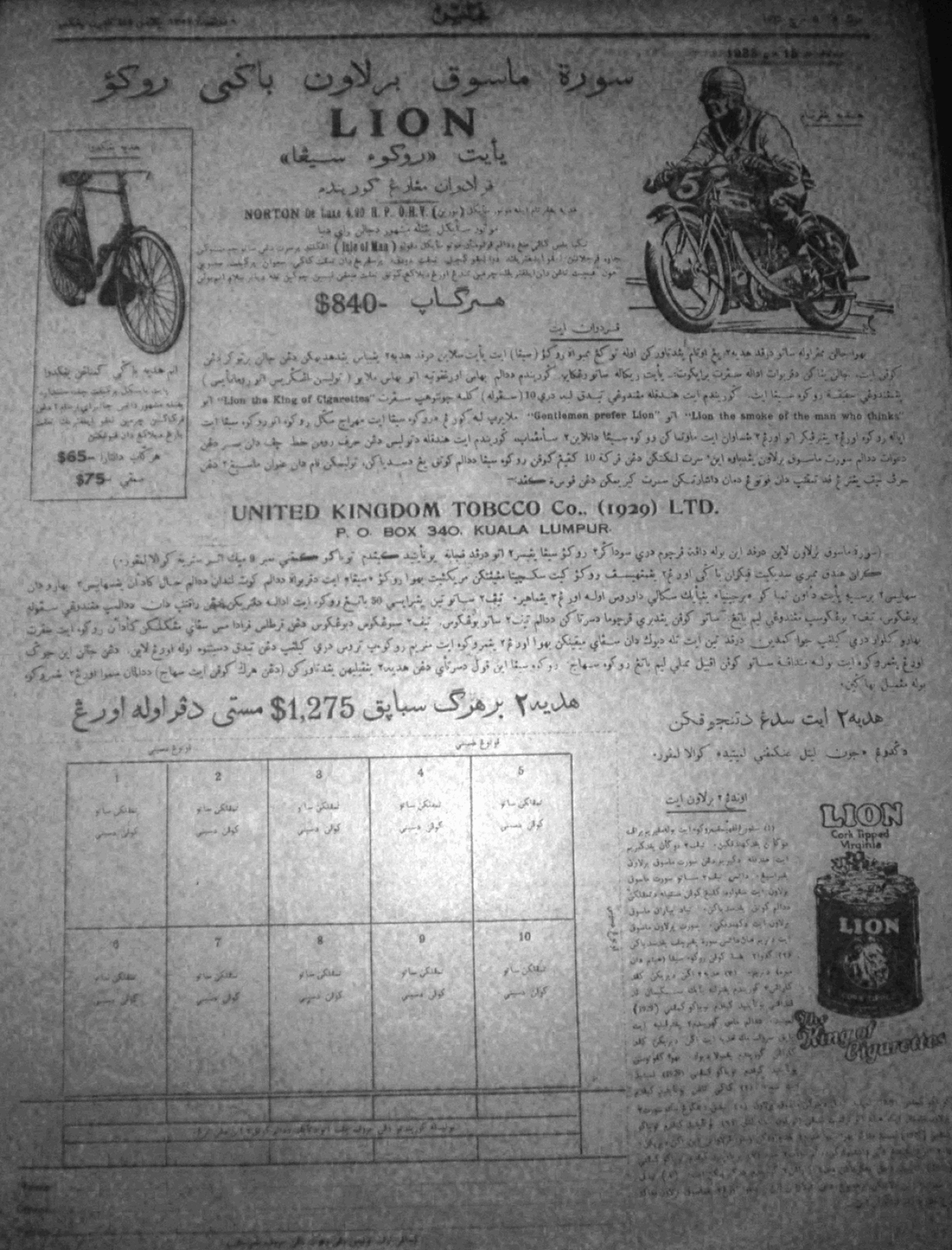
Through the advertisements published in Majlis and the other periodicals, Malays were also introduced to modern life insurance, which promised surviving relatives of a deceased person enough money to perform the pilgrimage to Mecca, buy a house and take care of children and grandchildren. All they would have to do was to set aside a little money every month and entrust it to Mr Mohamed M. Deen in Chowkit Road.Footnote 50 In a campaign to promote Lion cigarettes, they could register to win a draw for the latest model Norton motorcycle worth 840 Malayan Dollars or a Fort Saloon motorcar valued at 1,450 Malayan Dollars if only they could come up with the right catch phrase (gurindam).Footnote 51 Or, if they could guess the star football player of the Malaya league, they could win a trip to England for a four-month stay during which the winner would attend major football games and meet the stars of the English division, fully organised and paid for by Fraser and Neave on behalf of Tiger Beer.Footnote 52
These were the most eye-catching campaigns in Majlis during the early 1930s, but of course more day-to-day products were promoted to the readers as well, supposedly coming within the reach of the members of the Malay community. The commercial appeal quoted at the start of this article reflects the same message: Malays formed a community that should be targeted and exploited by companies to sell their products. They seemed to be catching up in the ‘art of consumerism’ and could experience the pleasures and conveniences of ‘modern’ life if only they would try.
Popular entertainment in urban centres
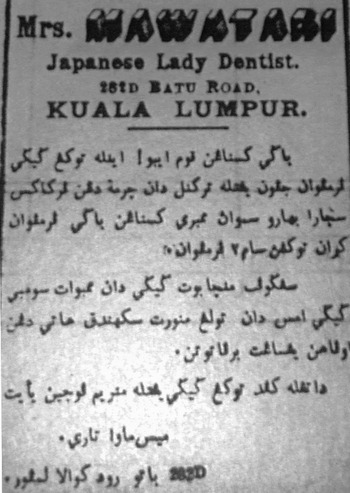
While a wide array of companies offered services and articles ranging from Chinese contractors who could build Malay houses to Japanese female dentists (see Illustration 5) to stimulants like Tiger Beer and Lion cigarettes (see Illustration 6), an increasing number of advertisements informed people about the possibilities for personal entertainment, such as having dinner at a restaurant, watching a movie in a cinema, attending performances by bangsawan troupes or purchasing a new badminton racket at Lall Singh and Company. One of the most emblematic items of personal entertainment during this period was the gramophone, which had become cheaper in the early 1930s with the development of portable models. A cursory look at a few contemporary English-language newspapers in Kuala Lumpur and Penang indicates that advertisements for gramophones were a common feature in the 1920–30s. The front page of Malay Mail, an English daily published in Kuala Lumpur, for 2 January 1930 contains five advertisements: two are promoting gramophones, a third offering radio accumulators (batteries), a fourth advertising model railway material and the fifth an advertisement for Borneo Motors. Inside the paper we find ads for the luxurious Brunswick panatrope ($175), gramophones on sale in Robinsons, and one for Decca portable models, while a Malay company in Klang is offering gramophone needles. This dominance of the gramophone in the ads indicates that it was a hot item, already on its way to becoming an ordinary piece of furniture among the European and indigenous elite who would read the Malay Mail. Watching movies also seems to have been part and parcel of these English-speaking elite groups, as the film advertisements for seven theatres in Kuala Lumpur, Seremban and Klang suggest.Footnote 53
One of the most popular advertisements in the first year of Majlis: Mrs Mawatari, the Lady Dentist of Batu Road, KL.

A one-page advertisement detailing the regulations and prizes of the contest to write the best catch phrase for Lion cogarettes (Majlis, beginning of March, p. 4)

Advertisements offering gramophones to a Malay-speaking audience only began appearing in the columns of Majlis in 1934.Footnote 54 Moreover, the prominence of personal entertainment and luxury goods in Malay Mail in 1930 is in sharp contrast with what can be found in Majlis in 1932. In the first full year of its publication, the newspaper contained hardly any messages promoting such items related to popular entertainment; the advertisements and major campaigns of British companies only began the following year. This may have been due to a complex of converging factors, among which were a more commercial attitude of the paper's management and an imagined slackening of the slump's intensity. Still, it is telling that only by 1933 were the readers of Majlis increasingly exposed to products of a modern (elitist) lifestyle, which included a need for popular entertainment. Not until late January 1933 were there regular announcements for films that were shown at Empire Talkie Theatre on Pudu Road, which for a certain period appears to have reverted to silent movies when all other cinemas had installed equipment to show sound films.Footnote 55 The other cinemas in Kuala Lumpur, notably The Coliseum, Prince's Theatre and Town Hall, did not care to advertise in Majlis in the first part of this decade, which may suggest that these cinemas were targeting the English-educated elite.Footnote 56
Individualistic entertainment became part of consumption; cultural forms were turned into a commodity that people consumed on their own.Footnote 57 This process of commodifying entertainment and leisure developed despite the difficult economic situation in which Malays found themselves; new everyday needs were created and somehow money was set aside to ‘treat’ oneself and family to small pleasures.Footnote 58 However, such developments were also met with critical scorn by at least one reporter in the Malay-language press:
This season is slump time as the whites say or misery as the Malays have it, but all the talkie theatres are not bothered by the slump and are always cramped with spectators. Malays do not lag behind when it comes to joining this rat race, even though they have to pay their debts afterwards, as long as their passions get satisfied. When they return home, they will find an empty rice bowl and have to go out for food at the Chinese or Indian stalls. If there are one or two Malay stalls, there is always something wrong, like the food doesn't taste right, the service is no good, et cetera.Footnote 59
The epitome of the modern patterns of consumption and commodification of entertainment was the amusement park, which mushroomed in the Peninsula during the 1930s. These parks were centres where a wide array of entertainment – cabaret, ballroom dancing, taxi dancing, movies, musical shows or operas (Chinese, Indian and Malay), eateries, fairground attractions, magic shows, music performances, gramophone music, radio broadcasts, badminton tournaments, lottery raffles, and much more – converged, enticing people to visit for a small entrance fee. These parks occupied extensive areas where indoor stages for movie screenings and dance shows alternated with outdoor venues or tents for other shows and attractions, all demanding extra payment to enter. The most famous of these centres were the three ‘Worlds’ – New (1923), Great (1931) and Happy (1937) – in Singapore, although other parks soon sprouted in urban centres throughout the Peninsula. The parks were places where different ethnic groups and social classes converged and in interviews with people who visited the parks, it is emphasised that the parks were the only place where one could have fun in town.Footnote 60
In September 1932 the Great Eastern Company launched its plans to build a park in the vicinity of its hotel on Ampang Road, Kuala Lumpur. The grounds of the park were situated between two rivers, so that aquatic facilities could be included along with other forms of entertainment. There were no housing estates in the vicinity, so no neighbours would be bothered by the loud music and the noise of the performances, and there was ample space for people to park their cars. The park was to open in November that year, according to the initial announcement.Footnote 61 Eventually the park opened on 1 April 1933, and provided the following entertainment forms: movies, Chinese dancing girls, Hailam (Hainanese) opera, bangsawan (Sri Zainab), Cantonese opera, orchestra music, ronggeng, songs from the radio, and Indian opera (Ali Arjuna). Admission cost 10 cents, and parking was free. Soon the attractions expanded with performances by Miss Riboet and a rocking boat (perahu melayang).Footnote 62 People could also visit a shadow play (wayang kulit) and a magic show (wayang silap mata).Footnote 63 On 31 May a night of boxing was staged with tickets up to three dollars, while watching from the ‘goat stands’ (tangga kambing) only cost 50 cents.Footnote 64
We see here the wide range of different entertainment forms being staged with an emphasis on the so-called operas, or indigenous musicals, of which bangsawan was the Malay variant. Bangsawan theatre was an eclectic theatrical form which had developed from a form introduced into the Malay World by itinerant Parsi theatre groups at the end of the nineteenth century. Local groups soon adopted the form and expanded the repertoire with local Malay and Javanese stories. Studies about bangsawan clearly demonstrate the commercial and eclectic characteristics of this form, which introduced a multi-ethnic community of the urban centres in the Peninsula to a variety of Western and Asian stories, dances, songs and music styles.Footnote 65Bangsawan troupes in the early twentieth century were able to adapt to the configuration of the audience and context of the event, playing Chinese stories to a predominantly Chinese audience, or even staging a Western story for an official British event. For these performances the language was Malay, and it may be surmised that the urban community was sufficiently proficient in the language to enjoy the simple stories with the jokes and songs.
During the 1930s Malay cultural-political ‘activists’, increasingly appropriated bangsawan, claiming that it was a ‘Malay’ form and using it to enhance nationalist feelings by promoting Malay stories in its repertoire. Tan Sooi Beng suggests that this process began in the early 1930s, citing advertisements in the Straits Echo announcing the bangsawan plays Laksamana Bentan, Hang Tuah, Datuk Laksamana Sekam and Kris Melayu.Footnote 66 Moreover, the sets, costumes, music and songs were given a more distinctively Malay character than before: a gradual Malayisation of bangsawan had begun. Again it is telling that it was in the midst of the Great Depression that this process was initiated or became more obvious. Malays were defining what Malayness entailed, appropriating and ‘expropriating’ certain cultural practices in the process.
Bangsawan was selected to become part of this cultural constellation of Malayness, as the plays could present a positive image of Malay culture and history. This positive image is suggested in ads for the famous Dean's Opera of Singapore, which emphasised that the group specialised in performing educational and moral plays and frequently staged shows at charity events — praiseworthy activities that tallied with the promotion of a positive image of Malay-ness.Footnote 67 More explicitly we find this appropriation of bangsawan as a Malay form in an extensive front-page article in Majlis written by Ibn Mas‘ud al-Gombak. In this article, entitled ‘Malay Opera’, Ibn Mas‘ud grandiloquently calls bangsawan the ‘mother of all Malay plays’ (ibu segala permainan Melayu). He then continues with an etymology of the form's name and proposes certain innovations that would improve the value of the plays for the Malay people because of the possible advice and lessons contained in them.Footnote 68
If we look and understand the original name given by the Malays, namely Bangsawan, it leaves no doubt that the plays were originally performed by highborn Malays bearing the [royal] title of ‘wan’ (bangsa cik wan). Therefore we can assume that high-born Malays performed these plays only for collective entertainment, just like Westerners perform their dances in clubs … in the period until now this form has been played by us Malays of common stock, while one also finds two or three non-Malays who have made a living out of performing. Bangsawan performances are very popular, especially with the Malays. Therefore it does not seem out of place if the different companies arrange for modern stage equipment, and appropriate costumes for each play. The text needs to be well-expressed and meaningful; the play must be proper, cultivated and decent; the story must be imaginable based on things taking place in this world, not in a dream world (the abode of the gods) and no nonsensical stories such as Jula Juli Bintang Tujuh and others that are of no use or benefit, except to fill the players' pockets.Footnote 69
The author concludes with a call to bangsawan managers to follow his advice and the suggestions made in the newspaper Saudara in the previous year, so that the plays may carry lessons and similes that are useful for ‘our people’ (kaum dan bangsa kita). Clearly there was a future for bangsawan in Malay culture as envisioned by intellectuals, if only the plays would be more realistic and contain moral lessons that would benefit the Malay people.
Quite different was the opinion about another cultural form that had made its way to the stages of the amusement parks: ronggeng. This was a very contested – but also highly popular – form of dance performed by female dancers in front of a male audience, which originated in Java and had been introduced in the Peninsula sometime in the past. In the early twentieth century R.J. Wilkinson qualified it as a degraded form, thereby referring to and agreeing with the opinion of Muslim conservatives who found that it was improper for Malays to take part in such a form of entertainment.Footnote 70 The almost total repudiation of this form among Malay commentators does not come as a big surprise as it involves girls who dance in close proximity with males, quite often being intoxicated with liquor. Not uncommonly, the dancing girls were considered prostitutes who earned extra money after the dances were finished.
In a period during which reformist Islam was one of the forces helping to reconfigure Malay-ness, it stands to reason that ‘immoral’ dances were to be expropriated from the Malay domain. Apparently the vehemence of one of the critics earned him a fine of 1,000 dollars, while another devoted a long article published in two instalments to an exposé about the wrongs and vices of the ronggeng. According to the author of the article, Baba Chinese males organised ronggeng parties where the Malay girls had to sit and dance with these heathen people, drinking and smoking, while afterwards they would be invited for extramarital activities which would produce bastard children. These ronggeng girls, and especially their managers, brought shame to the Malay nation (mempermalukan sama sebangsa) and this had to be repaired:
Hey my sisters of the ronggeng groups, why do you bring shame to your people? Is it appropriate that you have the women of your people dancing with aliens (heathens) and leave the girls with them? Doesn't that destroy their dignity and the nation by those indecent and vile actions? Is there no other work that could feed you? … Hey Islamic advisors! Why do you sit still and close your eyes and don't you pay attention to your sisters who have fallen into the evil abyss?Footnote 71
It is clear that ‘modernity’ and the commodification of cultural practices caused tensions within the Malay community. The ‘packaging’ of an already controversial cultural form and its presentation to a mass audience in amusement parks, severed from its socio-cultural context, made it even more urgent to examine and decide whether the form was fit to be representative of Malay culture that the different groups in the community wanted to construct in these modern times when forces were at work to undermine the Malay nation. Ronggeng may have had a role in (traditional) Malay wedding celebrations, but reformist Islamic groups targeted such practices because of the exuberant expenses of the ceremonies and the un-Islamic traditions being observed.Footnote 72 Moreover, the dance parties often led to more than just dancing, and therefore the form's reputation deteriorated rapidly in the early twentieth century.
By the 1930s ronggeng had become part and parcel of a thriving colonial club and party culture and it was therefore inconceivable that it would be tolerated in the reconfiguration of Malay culture. Nevertheless, the combination of ‘Malay’ and ‘ronggeng’ was ubiquitous in the announcements for entertainment at anniversaries, meetings and sports events. The force of the commodification process was strong, and it took at least another three decades before ronggeng – by then better known as joget moden – was eradicated with the demise of the big amusement parks. By then there were other modern forms that would trigger controversies, such as pop yeh-yeh and disco music, but these could be given the safe label of ‘Western’; they were not forms that had been practiced in the Malay world for centuries like ronggeng and joget.Footnote 73
In the background of the ideological formation of popular culture with the contestation of cultural products, their commodification and the process of reconfigurating Malay culture was the overarching depiction of the dichotomy between urban centres and countryside. The focus of this depiction was the pervasive alien domination of the economy in the urban centres, where Malays also lost out in demographic terms to the immigrant groups. It was in the cities and towns that money was made and cultural forms were offered to a ‘mass audience’.Footnote 74 The countryside was the Malay power base, where the pace was slower, the traditions purer and life still in concordance with the rhythm of nature and the five daily calls for prayer.Footnote 75 In the newspapers, however, the general purport of the argument was that Malays in the countryside somehow should change and develop to become comfortable with a more modern and intellectual lifestyle. The newspapers were best suited to educate the masses, introduce them to modern knowledge and technology, and make them aware of a nation comprising the entire peninsula. Of course, the quality of the newspapers should be improved and Malays should pay more attention to the periodicals, as was often exhorted in their columns. It was also argued that more all-Malay companies, such as the Electric Rice Mill in Kajang, should be established in Malaya.Footnote 76
Yet there was another solution to help develop the Malay mind and energise the Malay people: sports and organisations. Roff has pointed out how pervasive the presence of football clubs was in the urban centres and how these were a bone of contention for the reformist press in the early twentieth century. He has also expounded on the crucial role of the clubs and societies in the development of Malay nationalism.Footnote 77 The sport columns took up a lot of space in Majlis, which may be taken as an indication of its popularity with the readers. Advertisements for sports equipment increased quite considerably after 1933, but these were limited to the urban centres, more or less suggesting that sports were only part of an urban modern lifestyle.
This urban bias and concern for the development of the Malays in the countryside seems to have moved a Malay journalist with the alias Pemuda Melayu (Young Malay) to propose a plan to introduce organised sports in the villages. This plan is reminiscent of the ‘playground movement’ in early twentieth-century United States that brought basketball to the city streets and improved the general image of sports.Footnote 78 ‘Pemuda Melayu’ was concerned about the youths in the villages because they lacked facilities for sports or other ways to distract their minds. Despite his contention that during the previous two years many new badminton fields had been laid out in villages, many more fields and clubs were needed, so that the young would learn how to socialise and make friends through sports. The investments involved would not be substantial, and the realisation of the plan would be quite simple. As he explained:
A good way for us to gather to play, I think, is for the village head to invite the people to build a clubhouse. If they all agree, he then can ask for permission from the government and upon receiving it appoint the club's officers, decide on the membership fee, invite people to join, buy the equipment and stimulate people to come and play. He could also buy newspapers to expand the villager's horizon a little. … If the youngsters do not have these facilities, they become dull-witted and don't know where to go. Therefore they pass their afternoons doing nothing while they could play a game. In the towns it is different; there the Malay youths can become member of a club or just gather with friends, but this is impossible for the youngsters in the village.Footnote 79
Commodified cultural practices such as sports and popular entertainment gradually became part of a modern lifestyle that was promoted by newspapers and other periodicals. The paradox for the Malays was that this lifestyle developed in urban centres, the domain of the immigrant groups, while those in the countryside had to be mobilised to adopt the new ways and prepare better to stop the alien encroachment.
Concluding remarks
The Great Depression is usually imagined as a severe downturn in the Malayan economy that affected all sectors of the economy and all groups in the society. Although this vision was revised by scholars in the 1970s, no attempt so far has been made to analyse how it is possible that popular culture and mass media developed steadily while the people suffered from the effects of the depression. The Great Depression served as catalyst for an intensification of consumerism and a proliferation of popular culture in the process. This process was closely connected to the rise of Malay nationalism, which was therefore also fanned by the malaise. The colonised people became aware of the fallibility of their masters and needed to prepare for the future.
In conjunction with the advent of popular media in Malay, newspapers and magazines in particular, and their proliferation, companies increasingly targeted the Malay community to buy their goods and services. Malays were introduced to the art of consumerism and started to learn that it was an integral part of modern life, which despite the economic downturn was affordable for everyone if only one put in the effort. The machine of this heightened consumerism was the commercial, disseminated through a variety of rapidly expanding mass media which were mainly financed by these advertisements. Mass media was booming and provided employment for workers retrenched from their previous job or graduates from the schools. The media needed materials to be distributed through their channels, which sparked off the production of new and the adaptation of old material. The newspapers reported specifically about the successes Malays had in their business ventures and what the members of the community should do to ward off the socio-economic dominance of the two major immigrant groups.
A budding political awareness and changing cultural practices forced Malay intellectuals to reconfigure Malay-ness in ways which would give the people a sense of belonging to one community and would be strong enough to withstand attacks from the outside. The community had to develop in all fields to try catch up with other nations. One of the fields under attack was the arts, commodified in urban culture to be presented in new contexts dominated by the ‘aliens’. Leading figures in the Malay community felt that the artistic forms should be regulated and innovated so that they would be for the benefit of the Malay people. Bangsawan was considered a good medium to teach the people how to lead their lives in agreement with modern demands and Islamic practices. By contrast, the ubiquitous dance parties where Malay ronggeng would entertain the men until ‘the small hours of the morning’ could not be brought into agreement with Islam and therefore should be abandoned. However, these popular forms were part of a developing urban culture, while the Malays predominantly lived in the countryside. An imagined dichotomy between town and countryside and Islam and modernity would haunt Malay progress for many generations to come.