The iconic portrait
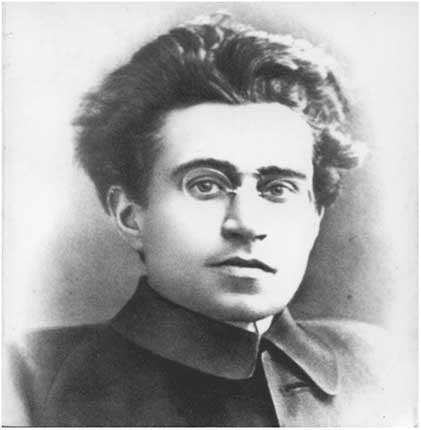
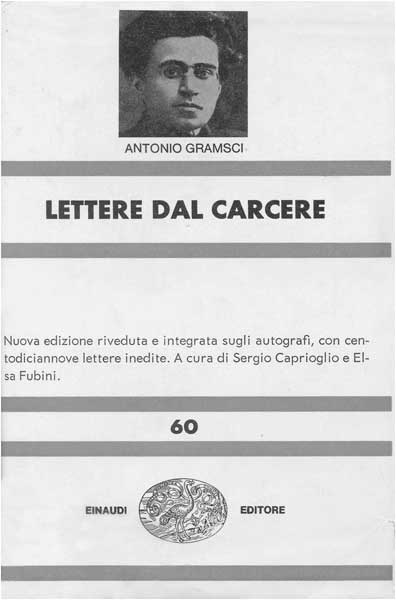
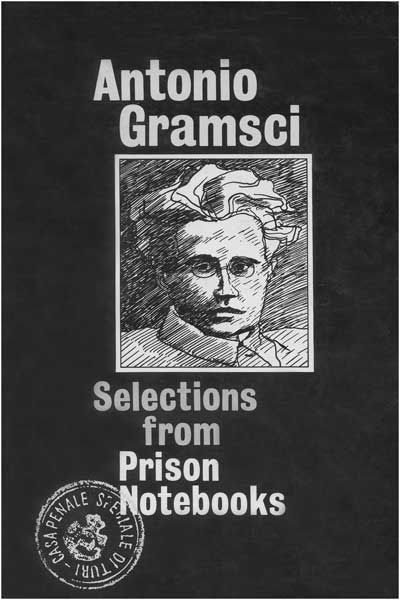
One photograph of Antonio Gramsci is iconic: a full-face portrait, probably taken in 1922 when he was in Moscow as a delegate to the Communist International (Figure 1). He looks straight into the camera through a pince-nez with circular rimless lenses. His hair is brushed upwards and he has a dark paletot buttoned up to the neck with the lapels turned down. The picture is iconic in the contemporary sense of being so familiar as to be instantly recognisable, at any rate within the political and intellectual circles where Gramsci’s name is familiar. It is the image that appears on the covers of most editions of his writings, both in Italy and abroad, and on posters publicising discussions of his ideas. It is sometimes reproduced unmodified as a black and white image (Figure 2) but often it is colourised or graphically altered in some other way (Figure 3, for example).
Figure 1.

Figure 2.

Figure 3.

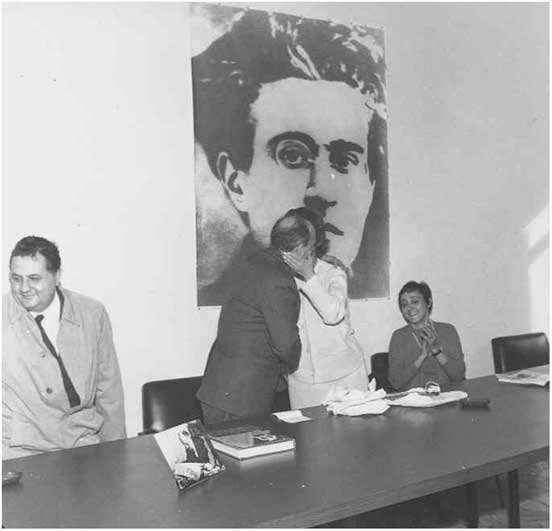
In the not-so-distant past this photograph was, within the subculture of Italian communism, something like an icon also in the older sense: an image of a person who is the object of reverence and devotion. It was this picture of Gramsci, always this one, that once hung on the walls of every branch and federation of the Italian Communist Party (PCI), as well as in the Istituto Gramsci in Rome and the regional Gramsci institutes, and it thereby acquired the status of the official portrait (Figure 4). It was of course not literally worshipped within the PCI, in the way the icons of Christ or the saints had been in the Eastern Church, but it did have the function, like the portraits of communist leaders in other countries, of presiding silently over proceedings, acting as a reminder of the party’s intellectual and political heritage and eliciting respect and loyalty, which may be considered secular forms of reverence and devotion. The respect was enhanced in Gramsci’s case by the fact that he had been held in detention for eight years under the Fascist government and had died in 1937, aged 46, and was therefore one of several people, both in Italy and abroad, who were commemorated as anti-fascist martyrs after 1945. An analogous case was that of Ernst Thälmann, general secretary of the German Communist Party, whom the Nazis had arrested in 1933, kept in solitary confinement for eleven years and then murdered at Buchenwald in 1944.
Meeting at PCI branch, Padua, 1960s

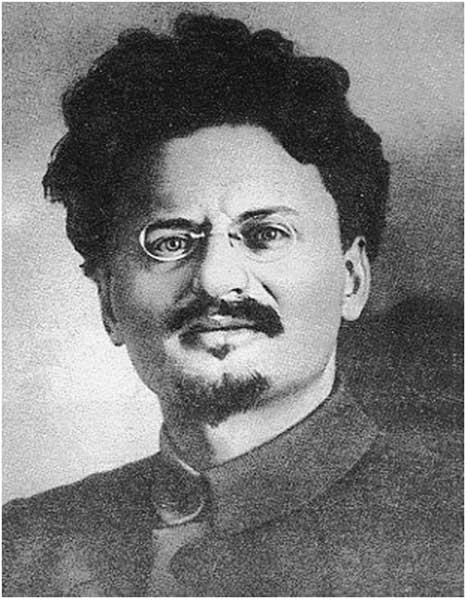
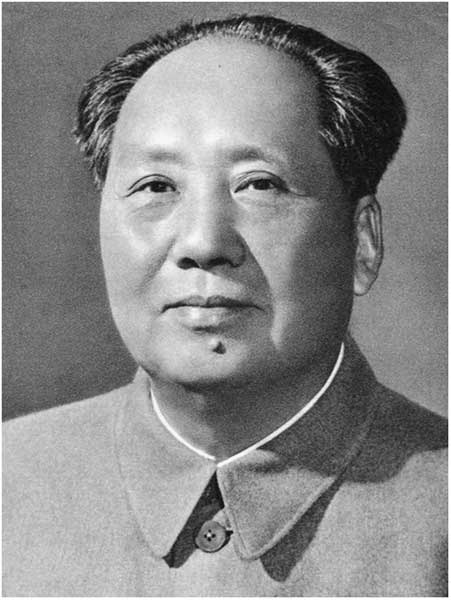
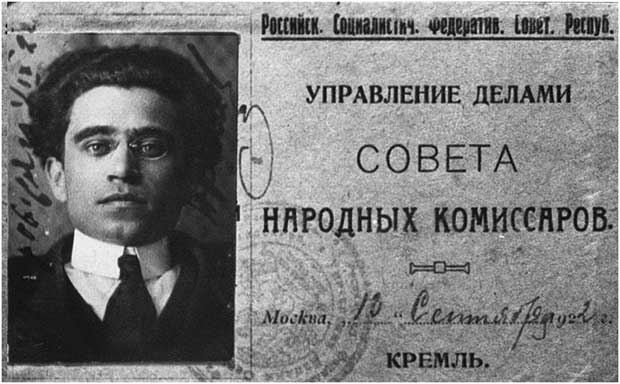
Gramsci’s face in this portrait happened also to conform to a type of picture of the leader or the activist that was widespread in communist circles in the twentieth century. A photograph of Trotsky, taken in 1919, shows him similarly with upswept hair and pince-nez. The collar of his military-style coat is like Gramsci’s, suggesting that Gramsci may have adopted this style of dress in Moscow (Figure 5). The coat buttoned up to the neck, in brown, grey or olive green, had both military and anti-bourgeois connotations. It is recurrent in the iconic photographs of prominent communists, including Mao Zedong (Figure 6) and Ho Chi Minh. Given these connotations, it is not surprising that another photograph of Gramsci, taken at around the same time, has been reproduced less often. It is the one used in the Kremlin pass issued to him in 1922 (Figure 7). His appearance is similar to that in the iconic portrait – same pince-nez, same hair – but he wears a tie and stiff shirt collar. These give him a slight double chin and make him appear less fresh-faced. They also make him look more like a bourgeois civilian.
Figure 5.

Figure 6.

Figure 7.

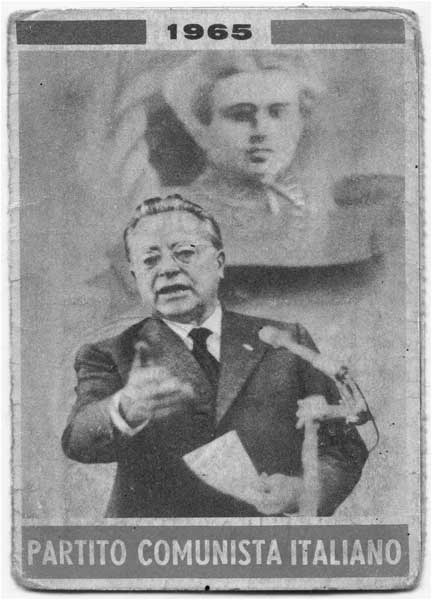
The iconic photograph of Gramsci was also combined with other images to form an implied political genealogy. Just as Soviet iconography of the 1930s and 1940s paired Marx with Engels and Lenin with Stalin, so PCI iconography in the 1950s and early 1960s paired Gramsci with Palmiro Togliatti, his former comrade and his successor as party general secretary (Figure 8). The pairing suggested a line of direct descent from the small party founded in 1921 through the years of clandestinity and exile under Fascism to the new mass party that came out of the Resistance, with over two million paid-up members between 1946 and 1956 and over 1.5 million thereafter. The pairing of Gramsci and Togliatti was a visual condensation of this narrative: one man had been martyred for his actions and beliefs but his legacy lived on in the other and in all those who had survived Fascism and the Second World War and who were now seeking, inspired in part by his ideas, to build an Italian road to socialism in the new Republic.
Figure 8.

The prisoner and the PCI
Already in the 1960s the elisions and falsifications of this narrative were visible to many people outside the PCI and some within it. Accusations, launched particularly by intellectuals of the new left, began to circulate that Togliatti and his comrades had manipulated Gramsci’s legacy to suit their own purposes. The party leadership and the intellectuals close to it had, it was alleged, appropriated his posthumous texts and edited them in tendentious ways. It was well known that Togliatti had expurgated the first edition of the prison letters (1947), removing letters in which Gramsci alluded to differences of opinion within the party leadership or referred warmly to Amedeo Bordiga, the leader of the party’s defeated left wing. A more ample selection of the letters was published in the second edition (Gramsci Reference Gramsci1965), prepared under Togliatti’s supervision and published a year after the latter’s death, but several ‘difficult’ letters were still omitted and the accusations of Cold War manipulation stuck. There were also criticisms from the left (Asor Rosa Reference Asor Rosa1965, 210; Telò Reference Telò1976) of the way the PCI drew selectively on Gramsci’s prison notebooks to legitimate its post-war strategy of broad class alliances and the way it promoted his prison texts over his earlier writings on the factory councils as revolutionary instruments and nuclei of a future communist society, writings that became particularly attractive to the new left in the late 1960s and early 70s (Williams Reference Williams1975, Maione Reference Maione1975).
In the years since then, criticisms of the continuity narrative have multiplied as more information has become available about Gramsci’s disagreement with some of the positions taken by Togliatti and the party leadership after 1926. In October 1926 Togliatti refused to pass on to the Communist Party of the Soviet Union (CPSU) a letter from Gramsci expressing his grave concern about their handling of their differences with Trotsky and its possible deleterious consequences. Gramsci also disagreed with the Comintern’s ‘turn’ of 1930, when it declared revolution to be imminent in the West, whereas Togliatti and the Italian party leadership in exile formally accepted the turn, after having been pressured by the Comintern, and they expelled three leading party members who did not accept it.
These differences, and the evidence for them, were not denied by Communist intellectuals. Indeed, it was the Communist historian Paolo Spriano who first made them public in his study of Gramsci’s relationship with the party leadership during his imprisonment (Spriano Reference Spriano1977). However, the explanation they gave was that Togliatti in Moscow had to make compromises with Stalinism, whereas Gramsci in prison was ‘out of circulation’ and thus had greater political and intellectual independence. Yet the tensions between Gramsci and others in the party leadership went beyond divergences of political opinion. Spriano also discussed Gramsci’s belief that a letter sent to him by a leading comrade, Ruggero Grieco, from Paris in February 1928, while he was awaiting trial in Milan, clearly identifying him and others as being in charge of party strategy, was responsible for a severe aggravation of his sentence – he was given 20 years for conspiracy against the state rather than the lesser charge of sedition. Since the 1960s much attention has been paid by scholars to Gramsci’s reactions to Grieco’s ‘strange letter’, as he called it, as well as to the claims by those who met or knew him in prison that he felt increasingly isolated and abandoned, even betrayed, by his comrades in exile.
More recently, and in particular over the last 20 years, starting with an important article by Claudio Natoli (Reference Natoli1995), more information has come to light, particularly from archival sources, about the various attempts to get Gramsci, in poor health for much of his confinement and seriously ill at the end, released by means of either a clemency appeal or an exchange with Italian prisoners held in the USSR and allowed to join his companion Julia and their two children in Moscow. Some scholars suggested that these attempts were deliberately sabotaged by Togliatti and the PCI leadership in exile because his political views had diverged so far from theirs that it was expedient to keep him in prison. This argument has been put most strongly by Franco Lo Piparo and Mauro Canali and it is summed up in the respective titles of their books, which translate as Gramsci’s Two Prisons: The Fascist Prison and the Communist Labyrinth (Lo Piparo Reference Lo Piparo2012) and The Betrayal: Gramsci, Togliatti and the Truths Denied (Canali 2013). Other scholars, looking at the same evidence, have been more circumspect in their conclusions (Canfora Reference Canfora2014a, Reference Canfora2014b, Fabre 2015) or have reminded their readers that Togliatti was involved in some of those efforts to get Gramsci released (Vacca Reference Vacca2012, Agosti and Albetaro Reference Agosti and Albetaro2014). However one interprets the evidence, though, there were clearly significant differences between Gramsci and Togliatti after 1926, so the narrative of a simple and direct political continuity from him to the post-war PCI has become indefensible. As a result, the iconic photograph has now become detached from the context of that narrative and its implied meanings have changed.
Distortions and elisions
But the problem with the iconic photograph is not just with the way it was combined with other images or hitched to that narrative of continuity. There is something wrong with the image itself, with what it implies when we see it on its own, and this has to do both with the way it shows Gramsci and with the way it does not show him.
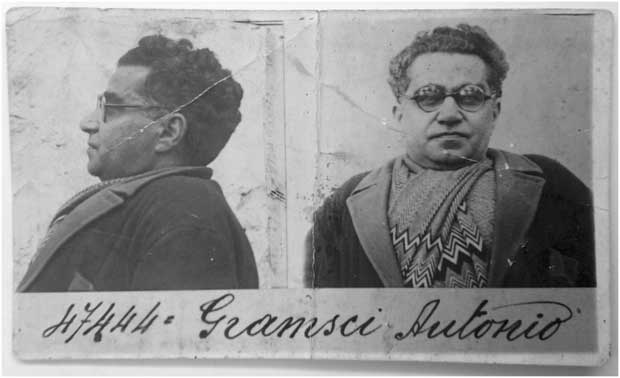
The way it shows him is at the peak of his political activism, when he was about 30, rather than in the years between 1928 and 1937, when he was in jail or under guard in a clinic in Formia and when he wrote and revised the prison notebooks. Thus, when we see that image on the cover of editions of his prison writings, we are not seeing him as he looked when he wrote them. In the identification photographs taken when he was admitted to prison in Turi near Bari in 1928 (Figure 9) his hair is still brushed upwards, but it is shorter and has patches of grey, he now wears glasses with large frames and his face is much fuller, suggesting that he has put on weight, probably because of poor diet and lack of exercise since his arrest. For all these reasons, these photographs are less attractive than the iconic one, but they are more truthful images of Gramsci the political prisoner.
Figure 9.

The way it does not show him is as a man with a disability. Gramsci was of small stature, under five feet tall, and he had curvature of the spine, which caused the middle of his back to be arched inwards, his shoulders thrust back and his chest pushed forward, as one sees in Figure 9. According to a family legend, reported in the biography by Giuseppe Fiori (Reference Fiori1966, 17–18; English translation Reference Fiori1970, 16–17) and widely reproduced in other published accounts of Gramsci’s early life, including some recent ones (for instance Berger Reference Berger2013: 6–7), these physical characteristics were the result of a fall at home when he was a small child, either on the stairs or – in another version – when he was accidentally dropped by a domestic helper. A more plausible explanation, now generally accepted, is that Gramsci as a child had spinal tuberculosis, otherwise known as Pott’s Disease, one of the forms of tuberculosis that infects areas outside the lungs, particularly the vertebrae. The disease was fairly common in children and adolescents in western Europe until the early twentieth century and is still common today in some developing countries. It is likely that Giacomo Leopardi, whose small stature and curved spine were traditionally attributed to rickets, also had Pott’s Disease.
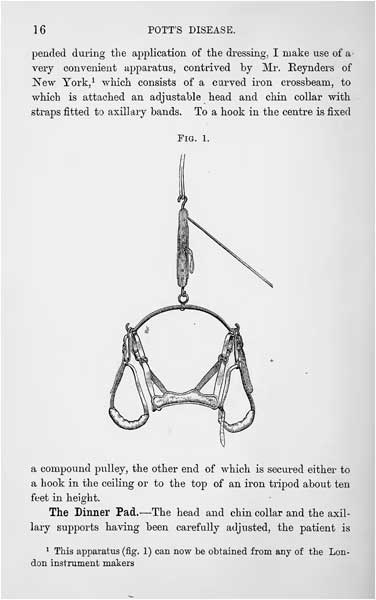
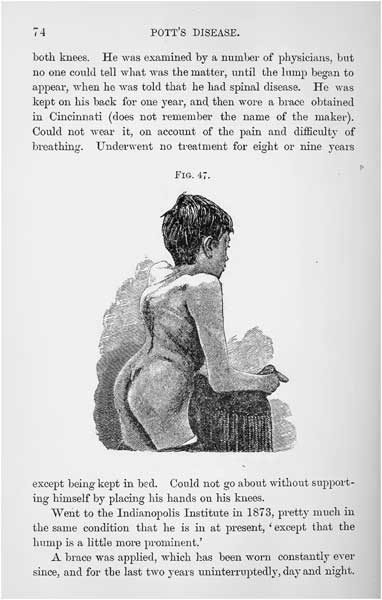
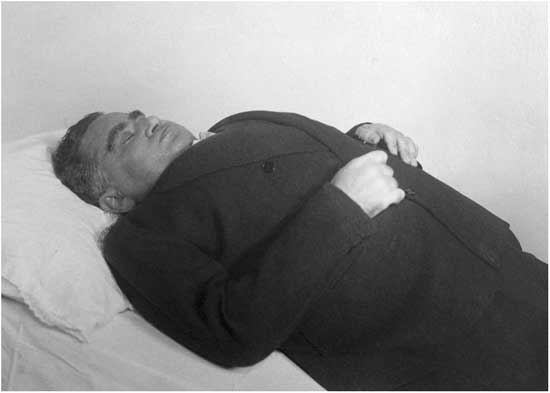
Gramsci makes several references in his letters to his serious illness as a child. He recalled that the doctor who treated him when he was four expected him to die and his parents had a small coffin ready for him. His family members recalled the orthopaedic treatment a doctor had prescribed, which was recommended at the time in the medical community (see Figure 10), namely suspending him from the ceiling. They have also recalled that Gramsci used two stones like dumbbells to strengthen his upper body (these stones are now in the Casa Museo Gramsci in Ghilarza). Photographs and drawings of young patients affected by Pott’s Disease show a similar skeletal structure to the full body photographs of Gramsci (Figure 11). The iconic portrait was printed by the photographic studio with a masking process that makes the shape of Gramsci’s chest barely visible, and most reproductions, like this one, in any case crop the image just below the neck. By contrast, the chest is clearly visible in the one photograph taken shortly after Gramsci’s death, on the morning of 27 April 1937, by a photographer fetched by his brother Carlo. In other respects, though, this photograph too is a misrepresentation since, like many corpses prepared to be visited, the body has been laid out in a smart suit and a dignified pose, with eyes and mouth closed and arms crossed over his chest. The picture therefore erases all the signs of the illness and physical decay that characterised the last years and months of his life (Figure 12).
Illustrations from Lewis A. Sayre, Spinal Disease and Spinal Curvature: Their Treatment by Suspension and the Use of Plaster of Paris Bandage, London: Smith, Elder, & Co., 1877.

Illustrations from Lewis A. Sayre, Spinal Disease and Spinal Curvature: Their Treatment by Suspension and the Use of Plaster of Paris Bandage, London: Smith, Elder, & Co., 1877.

Figure 12.

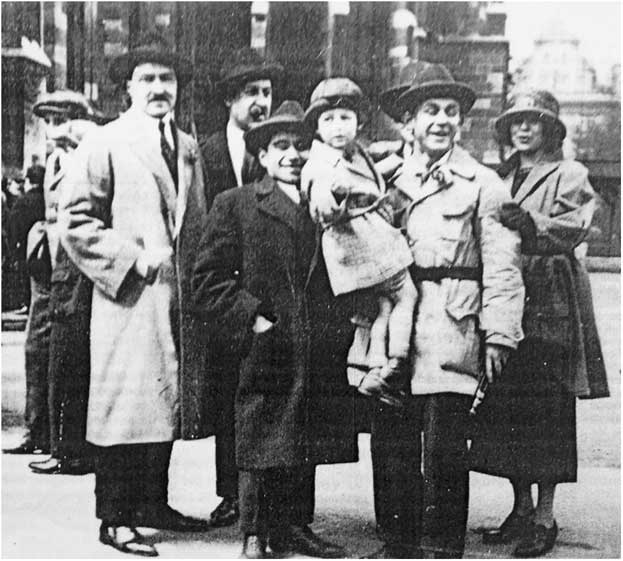
Gramsci’s appearance and condition are mentioned in several recollections of people who knew or met him. Vittorio De Biasi, who worked with him at l’Ordine Nuovo in Turin, said: ‘His physical build, which we all know, was certainly not imposing; what made him imposing was the clarity of his ideas’ (Paulesu Quercioli Reference Paulesu Quercioli1977, 58). Tina Odolini, who met him in 1925 when she was working in the Milan office of L’Unità, recalled his ‘wonderful blue eyes, incredibly lively, which spoke to you’ and his thick dark curly hair. ‘Unfortunately’, she added, ‘he was of small stature, physically ruined, I believe, by a severe childhood illness, and I don’t think his health was good’ (Paulesu Quercioli Reference Paulesu Quercioli1977, 157). Antonio Pescarzoli, a political prisoner who met Gramsci briefly in Naples in 1927 when he was being transferred from Ustica to Milan to stand trial at the Special Tribunal, described him as short with ‘a frail and irregular frame – irregular in, to use a noble adjective, a Leopardian way’ (Bermani, Reference Bermani1987, 153). Lina Corigliano, a fellow patient at the Clinica Quisisana where he spent his last months, said ‘Gramsci was ugly, deformed, but he had wonderful grey eyes’ (Bermani Reference Bermani1987, 181). Victor Serge, who met him in Vienna in 1924 (Serge, in a light-coloured overcoat, stands to the left of Gramsci in Figure 13) wrote in his memoirs:
His head was heavy, his brow high and broad, his lips thin; the whole carried on a puny, square-shouldered, weak-chested, humpbacked body. There was grace in the movement of his fine, lanky hands. Gramsci fitted awkwardly into the humdrum of daily existence, losing his way at night in familiar streets, taking the wrong train, indifferent to the comfort of his lodgings and the quality of his meals – but intellectually, he was absolutely alive. Trained intuitively in the dialectic, quick to uncover falsehood and transfix it with the sting of irony, he viewed the world with an exceptional clarity ... When the crisis in Russia began to worsen, Gramsci did not want to be broken in the process, so he had himself sent back to Italy by his Party: he, who was identifiable at the first glance because of his deformity and his great forehead. (Serge Reference Serge2012, 218–219)
Vienna, 1924. Left to right: Victor Serge (in light overcoat), Robert Petit (with pipe), Gramsci, Vladimir Kibalchich (Serge’s son) held by unidentified man, Ljubov Kibalchich (Serge’s wife and Vladimir’s mother).

Gramsci himself referred to the surprise people sometimes had on first seeing him. In a letter of 19 February 1927 sent to Tatiana Schucht he recounted how in Palermo, during the transfer from Ustica, he was introduced by an arrested activist from Turin to a Sicilian: ‘the other fellow stared at me for a long time, then he asked: “Gramsci, Antonio?”. Yes, Antonio! I answered. “That can’t be”, he retorted, “because Antonio Gramsci must be a giant and not such a small man”’ (Gramsci Reference Gramsci1994, 74; in Italian Reference Gramsci1965, 50). Gramsci added that the carabiniere officer in command of the transfer ‘told me that he had always pictured my person as “Cyclopic” and from that point of view he was very disappointed’ (Gramsci Reference Gramsci1994, 74; Reference Gramsci1965, 51).
Why insist on the fact of Gramsci’s bodily condition and see its absence from the iconic photograph as a problem? One might want to object that it is irrelevant to what is important about him, that the political impact he made in his lifetime and his legacy after his death are to do not with his body but with his mind, his ideas. Indeed, this has been the view taken by most people who have commented on his appearance, including those in the passages quoted above who mention his height or his curved back but immediately afterwards talk about his lively eyes or his intellectual acuity. In fact, one might argue that this view is consistent with the position taken today by some advocates of the rights of persons with disabilities who say that one should look beyond the disability to the person, or see the whole person and not just the disabled person. As a public service video produced in Jordan in 2010 put it, ‘Look at Me, Not My Disability’ (http://www.unesco.org/archives/multimedia/?s=films_details&pg=33&id=1745). One might even want to argue that in this respect the iconic photograph shows the real essence of Gramsci as an influential political activist and thinker, whereas those other full-body photographs deflect our attention towards a merely superficial aspect of who he was, relevant only to his private or personal life, namely his body and his outward appearance.
There is some force in this argument, but there are three problems with it. First, it involves an abstract, disembodied idea of personhood. The appeal to look beyond the disability to the person is reminiscent of early anti-racist appeals to look beneath the skin to the person or nineteenth-century feminist arguments to look beyond the gendered body to the person. What all these appeals ignore is that persons in reality are embodied and their bodies are an important part of how they see themselves, how others see them and how they interact with others. Those who remarked on Gramsci’s body shape but then suggested it was irrelevant seem to have been in a hurry to compensate for having noticed it. The ‘but’ in Victor Serge’s ‘but intellectually, he was absolutely alive’ or Lina Corigliano’s ‘but he had wonderful grey eyes’ is the mark of this compensatory move. It tells us as much about their awkwardness in reacting to Gramsci as it does about him.
The second problem is that by singling out Gramsci’s intelligence (‘what made him imposing was the clarity of his ideas’; ‘but intellectually, he was absolutely alive’) the argument tends to marginalise people with disabilities who do not have exceptional intellects and who cannot easily ‘rise above’ their bodies, including those with intellectual disabilities, who are the first to get left behind when someone’s brilliant mind is praised. Gramsci was certainly aware of his exceptional intellectual abilities, and he was able to use them both to gain command of different areas of knowledge and as a polemical weapon against his adversaries. His mind also seems to have instilled fear in others – one may recall the remark attributed to the Public Prosecutor Michele Isgrò when his sentence was passed in 1928: ‘For 20 years we must stop this brain from functioning.’ But it is unlikely that Gramsci would have approved of a cult-like elevation of his intellect, since politically he was committed to building an inclusive mass movement, of which the concept of hegemony was the pivot, and he had little patience with intellectuals who liked to remain within their own closed circle.
The third problem with the argument is that it implicitly upholds a traditional separation between public and personal life and judges the former to be more important, at least in the case of a political thinker. Yet this separation has long been challenged, both by feminists and by those in the disability movement who argue that one’s personal and public life are necessarily intertwined, and that one cannot have a public life unless one has access to public space, employment and an active role in society, access that is difficult to get for many women and many people with disabilities. Gramsci did manage to gain prominence in public space, but he was unusual in this respect among people with a disability.
The body and discipline
There are several pieces of evidence in Gramsci’s own writings, and in others’ recollections of him, that there were connections between his experience of living in his body and the personality he developed as well as some of his recurrent arguments and ideas. Two pieces of evidence are worth highlighting in particular. The first are his recollections, which he confided in a letter of 13 February 1923 to one of the Schucht sisters (possibly Julia, his future companion, but more probably her older sister Evgenia, for whom it appears he had a strong attachment) of having felt, when he was a child, that he was a burden on his family. ‘I convinced myself I was someone they had to put up with, an intruder in my own family. These are things one does not easily forget, that leave much deeper marks than one can imagine. All my feelings are poisoned a little by this deep-rooted habit of thinking.’ It was because of this, he writes, that ‘for many, many years I have truly been used to thinking of the absolute impossibility, almost a decree of fate, that I might be loved by someone’ (Gramsci Reference Gramsci2014, 132; in Italian Reference Gramsci1992, 108). In an earlier letter to the same addressee he wrote that his life before meeting her had been ‘a spent flame, a desert’ (‘una fiamma fredda, uno sterpeto’) and that recently ‘the sewer of my past brought things back up that for some time left me poisoned’ (2014, 131; 1992, 111).
We would be incautious to speculate too far, with the few pieces of information we have, about what those ‘deeper marks’ may have been, but there are some aspects of Gramsci’s recorded behaviour that might be connected to this sense of being unwanted or rejected. One of these was his reserve in public. Several people remarked that while he listened attentively to others at political meetings he spoke little, and that, although he was a brilliant writer, he was not particularly effective as a public speaker. Andrea Viglongo compared him with Angelo Tasca when they were both in the Italian Socialist Party youth movement: ‘Tasca was general secretary of the Alleanza Cooperativa, a local councillor, an official. Gramsci was the little man [ometto] who hid away in the furthest corner of a hall. He wasn’t the least bit interested in being seen. He was much more interested in being able to observe the comrades and workers who were there’ (Paulesu Quercioli Reference Paulesu Quercioli1977, 120). As for his sense of being a ‘spent flame’, there are signs of this in the acerbic and even cruel way in which he sometimes treated those close to him, an aspect of his behaviour that is difficult to disentangle from his strong resolve and resilience, which he demonstrated in prison. As well as writing lovingly to Julia he could be very curt with her, upbraiding her for not writing to him often enough, telling her off for her over-careful Italian prose when she used that as an excuse for not writing more, criticising the way she was raising their two children and being unsympathetic to her depression. He could be equally harsh with her sister Tatiana, who was the person who remained closest to him during his incarceration and who was the go-between in his indirect correspondence with Piero Sraffa, who played an essential role in supporting Gramsci intellectually and materially while he was in detention (Sraffa Reference Sraffa1991).
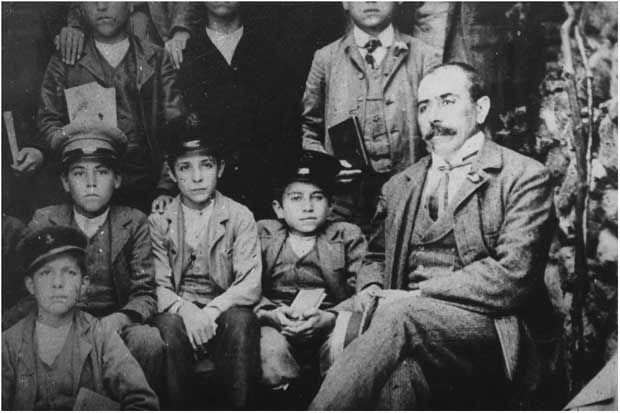
The other piece of evidence that suggests a close connection between Gramsci’s embodied experience and his ideas are the repeated references in his writings to the importance of self-discipline and the need for hard work, processes in which he placed considerable emphasis on the body. His exercises with the weights as a child in Ghilarza to strengthen his arms and torso were an early example of his determination to succeed but also of a connection between physical and intellectual effort. When the family’s straitened circumstances forced him to interrupt his education at age twelve, he worked for two years in the local land registry, carrying heavy ledgers, until he was able to resume his schooling in Santu Lussurgiu (Figure 14) and then go on to liceo in Cagliari. Many people who knew him at different stages of his life remarked on his tenacity in study and intellectual work, which involved an ability to overcome the physical hardship of his environment. A schoolfriend in Cagliari, Renato Figari, said that Gramsci’s ability to live and study at that time in his dark, damp room in a cheap pensione was ‘a miracle that only his strength of will could perform’ (Paulesu Quercioli Reference Paulesu Quercioli1977, 23). In his writings on education in the prison notebooks Gramsci, it is well known, was dismissive of liberal approaches to education that centred on the child’s freedom to develop and explore, since he argued that these would benefit only children from wealthier homes who were already culturally enmeshed with the school system and would disadvantage working-class children. What has been less often observed is that the educational discipline he advocated was closely bound up with a disciplining of the body:
In education one is dealing with children in whom one has to inculcate various habits of diligence, precision, poise (even physical poise), ability to concentrate on specific subjects, which cannot be acquired without the mechanical repetition of disciplined and methodical acts. Would a scholar at the age of forty be able to sit for sixteen hours on end at his work-table if he had not, as a child, compulsorily, through mechanical coercion, acquired the appropriate psycho-physical habits? (Gramsci Reference Gramsci1971, 37; in Italian Reference Gramsci1975, 1544).
Figure 14.

The note may be self-referential. Gramsci was around 40 when he wrote it and ever since he had managed to obtain a cell on his own he had read and written methodically for several hours most days. Between 1928 and 1935 he wrote, in neat small handwriting, the equivalent of 4,000 typed pages of notebooks (Platone Reference Platone1946, 81) and more than 300 letters. Later in the same note he writes:
[I]t will always be an effort to learn physical self-discipline and self-control; the pupil has, in effect, to undergo a psycho-physical training. Many people have to be persuaded that studying too is a job, and a very tiring one, with its own particular apprenticeship – involving muscles and nerves as well as intellect. It is a process of adaptation, a habit acquired with effort, tedium and even suffering. (1971, 42; 1975, 1549).
In Notebook 22, ‘Americanism and Fordism’, Gramsci echoes these passages when he discusses the formation of a new kind of industrial worker, one whose labour requires a ‘psycho-physical nexus of a new type’. In describing this new nexus he considers the conditions that had emerged in and after the First World War: the forced repression of soldiers’ sexual instincts, the continuation of repression in the discipline of the Fordist factory with its strict time and motion regime, the extension by the company of control over the workers beyond the factory and into a disciplining of their private lives, through prohibition and the moral regulation of family life and sexual behaviour. In these notes one can see the emergence in Gramsci of biopolitical thinking 40 years before Foucault gave it that name. It seems entirely plausible that this understanding on Gramsci’s part of an intimate nexus between body and mind in both education and industrial labour involved, in part, a projection of his own embodied experience. It is worth adding that the First World War, which left millions of ex-combatants with disabilities, was also a watershed in the public visibility of disability in Italy, as in the rest of Europe, and it led to the first voluntary associations for people with disabilities, of which Gramsci would have been well aware. The Lega proletaria mutilati invalidi reduci orfani e vedove di guerra, active from 1918 to 1924, was one of several organisations formed at this time and it became close to the Communist Party (Isola Reference Isola1990; see also Schianchi Reference Schianchi2014).
Social barriers and personal resilience
Gramsci’s disability did not consist, however, simply of a bodily condition. As advocates of the social model of disability have argued, a person may have a physical or intellectual impairment but he or she is disabled not (as the medical model maintains) by that impairment but by the barriers erected in society that prevent him or her from full, active participation on an equal basis with others. These barriers typically include – depending on the type of impairment – physical obstacles to moving around freely, to getting access to buildings and parts of buildings, but also the negative attitudes of others: prejudices, reduced expectations about a person’s ability or independence, incomprehension and fear, which can lead to bullying or ostracism. Gramsci did not have significant problems of mobility until the last years of his life, when he was severely debilitated by illness, and, as we have seen, he was able, like a number of people with disabilities with unusual intellectual abilities, to use those abilities to circumvent and indeed overcome some of the prejudices that he otherwise might have encountered. But, as I have suggested, there is evidence to support the view that his particular kind of resilience, his tenacity in keeping to a rigorous work regime, both before and during his imprisonment, developed at least in part in reaction to the obstacles he encountered and as personal ways of overcoming them.
If Gramsci’s disability still goes largely unnoticed by many people who read and cite him, thanks to the distortion of his image made possible by the iconic portrait and its wide dissemination, several disabled theorists and activists, by contrast, have drawn inspiration from his work and his life. In Britain, Michael Oliver, one of the leading advocates of the social model of disability, used Gramsci’s concept of hegemony to explain the prevalence of an individualising and medicalising model of disability in capitalist societies and his notion of civil society to indicate where it could be challenged by a new social movement of disabled people (Oliver Reference Oliver1990, 123–125). Tom Shakespeare chose Gramsci for his contribution to BBC Radio 4’s Great Lives series (2014a) and wrote in his blog that, among a historical pantheon of disabled revolutionaries that also includes Marat, Georges Couthon and Che Guevara, he finds Gramsci ‘especially admirable, not just because of his heroism in the face of repression and ill health, but also because of his humanity’ (2014b). In the United States, Anne Finger published in 1996 a fantasy scenario of an impossible meeting in 1912 between Gramsci and Rosa Luxemburg, who like Gramsci had had a childhood illness that left her permanently impaired, in her case with a limp. The two revolutionaries swap notes on how their disability has affected others’ perceptions of them and their political careers. Luxemburg speculates that while her disability ‘de-gendered’ her within the socialist movement she also found there ‘the place where her strength of mind, of character, could overcome her physical flaw, allow her to be desired. She only lets herself know that she felt freedom here, a freedom she couldn’t feel anywhere else’ (Finger Reference Finger1996, 78). The text implies that something similar was true of Gramsci too.
If photographs used in a certain way, as this case shows, can be unreliable as information about what someone was actually like, fictional texts like Finger’s allow speculations and hunches about them to circulate uninhibited by the need to be checked against factual proofs. In this way they may actually help us recover something of what the official record has erased. In another fictional scene involving Gramsci, in Penelope Fitzgerald’s novel Innocence (1986), one of the central characters, Salvatore Rossi, recalls being taken, when he was a child, by his father to visit the dying Gramsci in the Clinica Quisisana. Fitzgerald’s scene, like Finger’s story, is pure invention, and the depiction of Gramsci in it is grotesque, even cruel. His ‘thick mouth… opened darkly, like a toad’s, without a single tooth in sight. The tiny crippled body could no longer make any pretence of fitting into his ordinary clothes, which hung on him, as they would have done on a circus animal.’ (Fitzgerald Reference Fitzgerald1986, 39). Yet the episode as a whole is effective precisely because it uses the child’s naïve and unfiltered focalisation to put Gramsci’s intelligence and strength of will, demonstrated in his conversation with Salvatore’s father, back into a body that, as Fitzgerald knew, was impaired and had long been ill, and to show that body in terminal decline. In this way, Fitzgerald’s fictional picture of Gramsci ends up being closer to the truth than the familiar photographic image with which he has become almost universally identified. It is an image well summed up in Anne Finger’s acerbic description of it as a ‘head without a body’. The phrase comes in a passage of her text that starts by imagining him appearing before the Fascist Special Tribunal in 1928:
[H]e will limp in dirty, unshaven, feeling like a wounded, crawling animal: a ferret, perhaps, slithering and predatory; he will feel a sense of physical shame, and understand again a sentence he will have written years before, when the Turin workers’ councils failed: the bourgeoisie lies in ambush in the hearts of the proletariat; on his way to becoming the great mind, the Gramsci who floats, a head without a body, on fading posters thumbtacked to apartment walls in Madison, Wisconsin, and Berkeley, California. (Finger Reference Finger1996, 77)
Acknowledgements
For permission to reproduce photographs in the possession of the Gramsci and Paulesu families I should like to thank Luca Paulesu and Antonio Gramsci junior. For assistance in tracing copyright holders I thank Giovanna Bosman at the Fondazione Istituto Gramsci in Rome, Alessandra Marchi at the GramsciLab of the University of Cagliari, Raimondo Marchi, and Antonella Sanna at the Associazione Casa Gramsci in Ghilarza. The photographs of Trotsky and Mao reproduced here are in the public domain. I am grateful to Giampiero Griffo of the World Council of Disabled People’s International and to Tom Shakespeare, Professor of Disability Research at Norwich Medical School, for their comments on an earlier draft of this article.
Notes on contributor
David Forgacs holds the Guido and Mariuccia Zerilli Marimò Chair of Contemporary Italian Studies at New York University. He is editor of The Antonio Gramsci Reader: Selected Writings 1916–1935 (London: Lawrence and Wishart and New York: NYU Press, 2000) and, with Geoffrey Nowell-Smith, of Antonio Gramsci, Selections from Cultural Writings (London: Lawrence and Wishart and Cambridge, MA: Harvard University Press, 1985). His most recent book is Italy’s Margins: Social Exclusion and Nation Formation since 1861 (Cambridge University Press, 2014, Italian edition Margini d’Italia. L’esclusione sociale dall’Unità a oggi, Rome and Bari: Laterza, 2015).