Introduction
The purpose of the United Nations Convention on the Rights of Persons with Disabilities (UNCRPD) is to ‘promote, protect and ensure the full and equal enjoyment of all human rights and fundamental freedoms by all persons with disabilities, and to promote respect for their inherent dignity’ (United Nations General Assembly, 2007). Article 19 of the Convention outlines the right of people with disability to choose where they live and have access to support to enable them to live in the community. As one of the original member states to sign and ratify the UNCRPD, Australia has accepted an obligation to recognise the choice and preferences of persons with disabilities in relation to their living situations and to provide appropriate support to enact those choices.
Despite these international obligations, many young people with high and complex support needs continue to have little choice about where they live. Recent figures indicate that over 6000 young people under the age of 65 years are living in residential aged care (RAC) in Australia (Australian Institute of Health and Welfare, 2016). A significant number of young people admitted to RAC have an acquired neurological disability (Cameron, Pirozzo, & Tooth, Reference Cameron, Pirozzo and Tooth2001; Colantanio, Hsueh, Petgrave, Hirdes, & Berg, Reference Colantonio, Hsueh, Petgrave, Hirdes and Berg2015; Fries et al., Reference Fries, Wodchis, Blaum, Buttar, Drabek and Morris2005; Winkler, Farnworth, & Sloan, Reference Winkler, Farnworth and Sloan2006). In a survey of 105 people under the age of 50 years living in RAC in Australia, Winkler, Sloan and Callaway (Reference Winkler, Sloan and Callaway2007) identified that the majority (58%) of participants had an acquired brain injury (ABI) and a further 21% of participants had a progressive neurological disability, such as multiple sclerosis or Huntington's disease.
The placement of young people in RAC is not a problem unique to Australia (Colantonio, Howse, & Patel, Reference Colantonio, Howse and Patel2010; McMillan & Lawrie, Reference McMillan and Laurie2004; Persson & Ostwald, Reference Persson and Ostwald2009). Evidence from both North America and Europe demonstrates that the admission of young people with neurological disability to aged care environments occurs across a range of jurisdictions. Both national and international research has consistently demonstrated that living in RAC has negative consequences for young people. In particular, findings indicate that young people in RAC are socially isolated and have few opportunities to participate in the community, are unable to access appropriate rehabilitation and support services, do not have their health and medical needs reviewed on a regular basis, and have few opportunities to exercise choice and control in their lives (McMillan & Laurie, Reference McMillan and Laurie2004; Smith, Reference Smith2004; Winkler et al., Reference Winkler, Farnworth and Sloan2006; Winkler, Callaway, Sloan, & Holgate, Reference Winkler, Callaway, Sloan and Holgate2015).
In recognition of the inappropriate nature of and negative consequences associated with life in RAC, the Australian government has initiated several policy responses to reduce the number of young people living in RAC. In 2006, the Council of Australian Governments funded and established the $244 million Young People in Residential Aged Care (YPIRAC) Program. This program aimed to reduce the number of young people living in aged care and provide those remaining in RAC with greater access to specialist support services. Over the course of the five-year YPIRAC program, which particularly focused on individuals aged under 50 years, evidence suggested that there was significant benefit to those who participated (Winkler, Farnworth, Sloan, & Brown, Reference Winkler, Farnworth, Sloan and Brown2011; Winkler, Holgate, Sloan, & Callaway, Reference Winkler, Holgate, Sloan and Callaway2012). Specifically, there was a reduction in the number of individuals under 50 living in RAC and an increase in the number of disability accommodation options designed to meet the needs of this group. However, these changes have not led to a sustained reduction in the number of young people in RAC (Australian Institute of Health and Welfare, 2016).
One of the objectives of the National Disability Insurance Scheme (NDIS), currently being rolled out across Australia, is to give effect to Australia's obligations under the UNCRPD. The NDIS intends to provide an opportunity for young people in RAC to move into more appropriate accommodation through the provision of additional funding for specialist disability accommodation and skill development. Nonetheless, a range of barriers to living in the community remains for young people living in or at risk of entering RAC. These include a lack of suitable housing options, a lack of dedicated support to access the scheme, ongoing gaps in service provision between the disability, health and housing systems, and a crisis-driven and service-determined approach to vacancy allocation in specialist disability accommodation (Foster, Allen, & Fleming, Reference Foster, Allen and Fleming2015; Summer Foundation, 2017; Wright, Muenchberger, & Whitty, Reference Wright, Muenchberger and Whitty2015).
In order to maximise potential opportunities presented by the NDIS and ensure that young people with acquired neurological disability are able to exercise their right to community living, it is important to gain an understanding of the process that results in entry to RAC for young people with an acquired neurological disability. Although a growing body of qualitative research has described life in RAC, previous research has primarily focused on the experience of living in and moving out of RAC for young people and their families, and the perspectives of service providers working with young people in RAC (Cameron et al., Reference Cameron, Pirozzo and Tooth2001; Colantonio et al., Reference Colantonio, Howse, Kirsh, Chiu, Zulla and Levy2010). Findings from this research contribute to the evidence base demonstrating the need for systemic change, but there remains limited understanding of the process experienced by young people entering RAC and their families. Effective practice and policy solutions that adequately reflect the rights of persons with disability must be underpinned by an understanding of how individuals experience and make sense of this process. The aim of this research was therefore to understand the lived experience of entering RAC for young people with an acquired neurological disability and their families and gain insight into their needs during this process to develop recommendations for policy and practice.
Method
Research Strategy
A qualitative research design underpinned by a constructivist paradigm and hermeneutic approach was adopted for this study (Crotty, Reference Crotty1998; Van Manen, Reference Van Manen2016). Hermeneutics provides a theoretical framework to understand how people interpret and make sense of their life experiences (Appleton & King, Reference Appleton and King1997; Liamputtong, Reference Liamputtong2009; Patton, Reference Patton2002). As such, this research aimed to develop an understanding of the experience of entering RAC from the perspective of individuals with acquired neurological disability and their family members, and the meanings assigned to those experiences. The design incorporated the analysis of publically available textual documents, which provided a rich insight into participants’ construction of this experience and provided for ready application of these insights to practice.
Data Generation
Data was drawn from public submissions made to the Senate Inquiry into the adequacy of existing residential care arrangements available for young people with severe physical, mental or intellectual disabilities in Australia. Data included both written submissions and transcripts of the Community Affairs References Committee's public hearings held in capital cities around Australia in 2015. Submissions were publically available on the website of the Community Affairs Reference Committee (http://www.aph.gov.au/Parliamentary_Business/Committees/Senate/Community_Affairs/Young_people_in_aged_care).
A total of 167 written submissions and the transcripts of 29 public hearing sessions (involving 140 members of the public) were screened. Given the purpose of this research, screening was undertaken to identify submissions that presented the direct experience of individuals with an acquired neurological disability who had lived in RAC and/or their family members. Submissions representing other perspectives such as service providers and industry bodies were excluded. After screening, 26 submissions reflecting the experiences of young people who had lived in RAC and 38 submissions from family members of young people were retained (64 submissions in total).
Participants
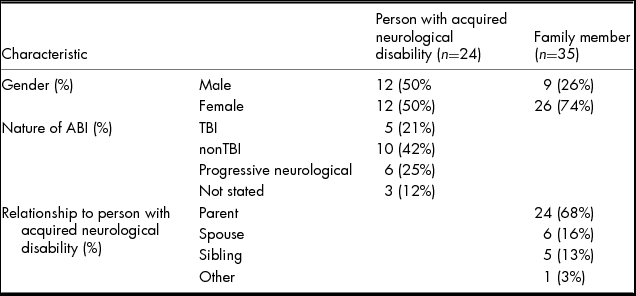
Submissions captured the experiences of both young people who had lived or were living in RAC, and the experiences of their family members. In total, the perspectives of 59 unique individuals were captured in the submissions, including 24 young people with acquired disability (two participants made both written and verbal submissions) and 35 family members (six individuals made both written and verbal submissions; three submissions were made by two people). Parents made the majority of submissions from family members but there were also submissions from siblings, spouses and one from a more distant relation (cousin's son). Where included in submissions, the demographic details of young people and their family members were noted, and are presented in Table 1.
Characteristics of Respondents

Data Analysis
Given the aim of the research, an inductive thematic analysis approach was used. Thematic analysis is ‘a method for identifying, analysing, and reporting patterns (themes) within the data’ (Braun & Clarke, Reference Braun and Clarke2006, p. 79). We followed the process outlined by Braun and Clarke (Reference Braun and Clarke2006). This process involves six phases, which take place in a recursive, rather than a linear, fashion: (1) data familiarisation; (2) initial code generation; (3) searching for themes; (4) thematic revision; (5) defining and naming themes; and (6) producing the report. All three members of the research team reviewed and familiarised themselves with each of the submissions. The first two authors then independently coded the transcripts on a word-by-word and line-by-line basis. Rather than using a pre-determined coding framework, we adopted an inductive approach to analysis and actively engaged with the data in order to identify and develop codes and themes (Braun & Clarke, Reference Braun and Clarke2006; Patton, Reference Patton2002). Constant comparative methods were used to compare codes within and between submissions. Themes were further developed, refined and revised through an ongoing process of discussion in regular meetings involving all members of the research team. Diagramming and memoing were utilised throughout this process to clarify the nature and content of themes and the relationships between them.
Research Quality
A range of strategies can be employed by researchers to enhance the quality and credibility of their research (Creswell & Miller, Reference Creswell and Miller2000; Lincoln & Guba, Reference Lincoln and Guba1985; Mays & Pope, Reference Mays and Pope2000). In this study, strategies to increase rigour included: (1) the inclusion of illustrative quotes to demonstrate that the findings reflect participants’ experiences; (2) identification and consideration of divergent views in the data; (3) regular meetings of the research team throughout the research process and (4) formal and informal discussion of preliminary findings with brain injury rehabilitation clinicians, researchers and professionals working with young people in RAC, which indicated that the process described in this manuscript resonated with their own experiences and represented the experiences of clients they had worked with who had entered RAC. Additionally, all members of the research team were experienced qualitative researchers with significant clinical expertise (in speech pathology, neuropsychology and case management) working with adults with severe, chronic acquired neurological disabilities living in a range of different environments.
Findings
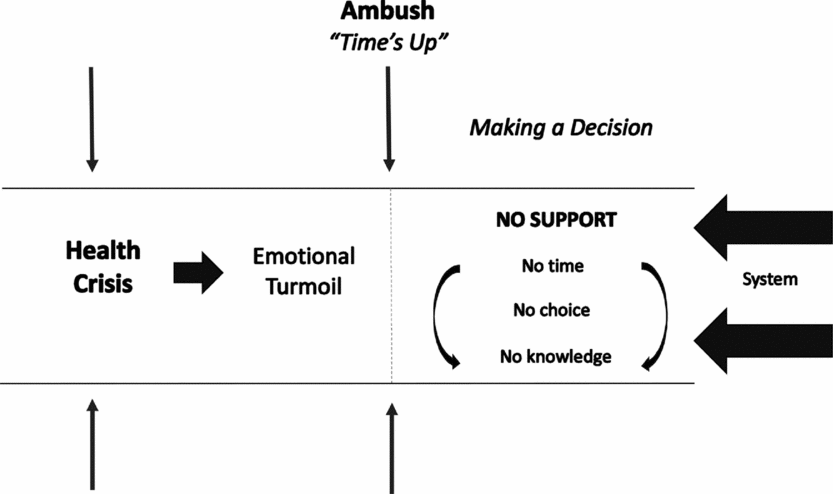
Analysis of the data identified that participants with acquired neurological disability and their family members experienced making the decision to reside in RAC as a complex process involving three key events (see Figure 1). Typically, the process commenced with respondents being confronted by a major health crisis. This health crisis triggered significant emotional turmoil as respondents struggled to make sense of their changed situation. During this period of extreme emotional turmoil, respondents reported feeling ambushed when told that the young person's time in hospital was ‘up’ and they were required to move to an alternative environment. Respondents were then faced with a decision to enter RAC. This decision was made under enormous time pressure, in the absence of adequate knowledge, with limited support from health professionals, and with few viable alternatives. Throughout this process, respondents described the system as working against them rather than facilitating the best possible outcome. Once a decision to enter RAC had been made, respondents described feeling no sense of relief. Rather, they experienced a strong sense of helplessness and hopelessness as they imagined a limited future for themselves or their loved one living in RAC.
The experience of entering residential aged care for young people with acquired neurological disorders and their families.

Experiencing a Health Crisis
The process of entering RAC commenced with a health crisis. For the majority of respondents, the health crisis was a catastrophic event such as a stroke or a brain injury following an accident. For some, the health crisis was a sudden change in a pre-existing condition, such as further injury sustained following a fall. For a smaller group of respondents, the crisis reflected an inability of their current support system to continue to provide care and support, necessitating the need for alternative support arrangements. Regardless of the nature of the crisis, this change in health status was experienced as a shock: ‘You think you are in a nightmare. . . We're still trying to comprehend and deal with what had happened to [my daughter] - this horrible injury’ (verbal submission 1103b, mother). Few respondents had previously considered the possibility of entering RAC, even though they found this outcome was presented to them as a foregone conclusion: ‘When [my husband] regained consciousness, the doctors diagnosed him as having a severe ABI. They said he would need high-level care that was only provided in a nursing home’ (submission 8, wife).
Their experience of the health crisis threw respondents into emotional turmoil. They described feeling shocked, bewildered, overwhelmed, confused and frightened as they tried to make sense of their new reality. Many described a feeling of exhaustion in entering the situation: ‘[we] had no choice, we were both mentally and physically exhausted’ (submission 88, husband) and in coming to terms with new roles and responsibilities thrust upon them, often over a prolonged period of time: ‘This continued for approximately four months and was exhausting and very disappointing’ (submission 99, mother). In this context, respondents were then ambushed by a decision that the young person's time in hospital was ‘up’, and were facing a new and imminent reality that entry to RAC was likely.
Being Ambushed: Time's Up?
Time's up described a transition point when the young person with acquired disability was deemed to be medically stable and therefore ready for discharge from the healthcare setting. Despite their medical stability, family members described their loved ones as unwell and highly vulnerable, as captured in the following quotes by a mother: ‘Then we got this letter in high dependency to say, “[Your daughter] has done so many days, and your time's up’ Well what did that mean? I did not even know that that existed. Time's up? Time is up for what? She was still very sick’ (verbal submission, 1103b), and wife of a young person: ‘Once they are medically stable, they kick them out of hospital: ‘You're medically stable, so therefore we don't want to deal with you anymore’ (verbal submission 1103g, wife). Other respondents reported that they were informed that time was up during involvement with subacute rehabilitation services: ‘The rehabilitation centre said that they had gone as far as they possibly could with [her]’ (verbal submission 1902i, sibling).
Making a Decision: No Time, No Knowledge, and No Choice
While still making sense of the health crisis, respondents were forced to make a decision about the young person's future. During this time, respondents experienced a lack of effective support, characterised by three main factors: no time, no knowledge, and no choice. The factor of time had several dimensions including the speed of onset of the health crisis, time as pressure and time to prove oneself. No knowledge was further defined by difficulty accessing knowledge and difficulty absorbing knowledge. No choice reflected a lack of viable alternatives to RAC being offered or available. Together, these three factors interacted and exerted influence over each other in an emotionally laden context during the process of making a decision to enter RAC.
No Time
Time featured extensively in the experiences of respondents. It was represented in the suddenness with which respondents were confronted with the situation of having to decide where to reside. It was also perceived as pressure to make a decision quickly. Finally, limited time was experienced as a barrier to enabling sufficient recovery in order to prevent entry to RAC.
A sudden event
Many respondents found themselves forced to make an unanticipated decision about the young person's future accommodation needs in the context of sudden change. Respondents described previously having given little thought to the possibility of entry to RAC. For a small group, entry into RAC followed a slow escalation of difficulties living at home or caring for their family members with acquired neurological disability until, ultimately, the demands became too great. While this group had acknowledged a need to consider future accommodation options, they still reported high levels of stress associated with making the final decision.
Time as pressure
Once patients were assessed to be medically stable, respondents perceived time pressure from the healthcare system to make a decision about the person's discharge destination quickly. Alternative accommodation needed to be identified and secured promptly. Even those who transitioned from the acute hospital to a rehabilitation facility perceived pressure to secure post rehabilitation accommodation as rehabilitation services were time limited: ‘I had to leave rehabilitation. I was told that ‘I couldn't take up a bed any longer’ (submission 14, young person).
Faced with few options, respondents felt pressured by health professionals to make a decision to enter RAC. Respondents described that they were led to believe that offers of accommodation within RAC were scarce: ‘We were under a great deal of pressure and I had the feeling there was no choice available to us, and we just had to take the first place that presented a vacancy’ (submission 88, husband). As a result, individuals and their families felt they would miss their opportunity for access to accommodation if they did not accept an offer of vacancy.
For respondents, the pressure of limited time contributed to a feeling of poor decision making and of deferring to the advice provided by health professionals rather than being able to carefully consider their own family's needs. They reported that they did not fully understand the nature of aged care, and made the decision without having time to appreciate the impact of that decision: ‘we had no real understanding of what (aged care) meant. We assumed this was a ‘well trotted path’. . .when I got there I knew it was the biggest mistake of my life’ (submission 31, young person). Limited time to make a decision and understand its wider implications was also perceived by individuals as a barrier to being able to adjust to the decision: ‘I had no time to adjust to the idea to going into the [nursing] home and leaving my family’ (submission 25, young person).
Time to prove oneself
Respondents also perceived a lack of time to be an obstacle to realising an appropriate and sustainable living situation. For some, there was insufficient time to show their potential to live independently before discharge: ‘I didn't warrant a hospital bed. But I was not (yet) well enough to live independently’ (submission 19, young person). For others, they perceived there was insufficient time for their family member to demonstrate their capacity to benefit from rehabilitation: ‘How could the system totally give up on a 19-year-old after two months of a traumatic brain injury? She was only two months in and they had given up on her already. How could she be denied the opportunity and support of a rehab program?’ (verbal submission 1103b, mother). Additionally, rehabilitation programmes were often considered inappropriate for the nature and severity of participants’ injuries, as they did not account for participants’ potential to make slow and sustained gains over a longer timeframe. Given access to and sufficient time in rehabilitation, some respondents believed that admission to RAC may have been avoided altogether.
In the context of having limited time to prove oneself, respondents described few mechanisms to monitor and review progress and the appropriateness of living in RAC: ‘That was my worry. I did not want her to go into that facility and then be forgotten, because it happens all the time’ (verbal submission 1702b, mother). Confronted with the decision of where to live, young people and their families sought information to make an informed decision.
No Knowledge
Respondents described that acquiring the appropriate knowledge to make a well-considered decision was of paramount importance. However, most reported feeling that they had limited knowledge of the health, disability, aged care and social support systems. Even when they were provided information, respondents reported that they experienced difficulty processing and integrating it. Under these circumstances, respondents relied heavily on the expertise and advice of health professionals to guide them through the decision-making process.
Access to knowledge
Family members felt ill prepared to make the decision about where their loved one was to live upon discharge. The acquisition of information was often difficult: ‘Information is difficult to obtain. It's like trying to find your way around an intricate maze’ (submission 99, mother). Several reported limited understanding of the nature of recovery and long-term consequences of their family member's injury or condition: ‘I didn't know what an acquired brain injury was. . . I didn't know what it would lead to or what would happen’ (submission 1103b, mother). Family members also lacked knowledge about the availability of and eligibility criteria for rehabilitation and support. Further, respondents reported that they had limited time to research the information they needed to make an informed decision and relied on professional expertise and advice to guide them: ‘my family accepted that direction and advice from health care professionals that a nursing home was the best place for me to move to’ (submission 31, young person).
The nature and delivery of information by health professionals to young people and their families was perceived as incomplete and unplanned. Family members trusted health professionals to provide a comprehensive explanation of the different options for the person's care but felt, in hindsight, that this was not necessarily the case: ‘I trusted that everything that needed to be done had been done, and didn't ask too many questions - I know better now’ (submission 44, wife). In fact, many described frustration that they had to fight the system to be more proactive and forthcoming in exploring alternatives, as described by both a young person: ‘Why weren't my family and I made aware of alternatives to nursing home while I was in hospital?’ (submission 31, young person), and his father: ‘I wish they could have given it to me straight. It felt like everyone around us knew what was going on. . . except for us’ (submission 31, father). Many respondents reported that information was provided verbally at sporadic times and they subsequently felt they had limited time to process and respond to this information. For other respondents, despite receiving information, the capacity to integrate and understand it was problematic without the support of an advocate with detailed knowledge of the complex systems involved.
Difficulty absorbing knowledge
Even when information was available, respondents described difficulty absorbing this information due to the enormous stress they were experiencing: ‘I felt overwhelmed, scared and alone. I was focussed on remaining strong for [my husband] and our girls that I didn't really absorb conversations’ (submission 44, wife). Further, they described lacking a basic framework within which to integrate and make sense of the information that they were given: ‘You are just living on every word that the health professionals tell you, but none of it makes sense’ (verbal submission 1103b, mother). Respondents described that this lack of information and guidance heightened the feelings that they had made a poor decision that they later regretted: ‘You need someone to tell you what to do, and you have no one. You are left on your own to figure it out what is going on’ (verbal submission 1103f, sister).
No Choice
Respondents perceived that there were few viable alternatives to RAC. As such, respondents described that their decision was made in absence of any other choices, as described by a young person: ‘Alternative accommodation choices consisted of nothing. The rehabilitation staff did not provide any choices or options at all’ (submission 10, young person) and mother: ‘I was absolutely shocked to discover that a nursing home was the only option for accommodation and care for young people who require a high level of care. . .with no other choice, we were forced to decide on a nursing home’ (verbal submission 1103b, mother). Some family members reported that they were given the option of caring for their family member at home but the care demands, without substantial in-home support, prohibited this as a viable alternative:’[My wife] and I had no choice. . . the proposals made were totally inadequate for our needs at the time’ (submission 88, husband).
Others reported that they simply desired the alternative of having more time to recover so that they could return to previous living arrangements. Rehabilitation was a choice that most respondents wanted to access. However, many reported being denied rehabilitation within their local communities due to the narrow admission criteria governing access as described by the wife of a young person: ‘He was finally discharged from hospital, medically stable but in a minimal conscious state. When the time came to discuss what to do next, rehabilitation wasn't an option’ (submission 44, wife). On the rare occasions that respondents were accepted into a rehabilitation programme, it was often judged as inappropriate or inadequate to meet their own or their family member's needs: ‘I do not think that the rehab[ilitation] I received was adequate or enough’ (verbal submission 1902a, young person). Some respondents identified a service gap between intensive rehabilitation at one end and RAC with extremely limited or no rehabilitation support at the other. In addition, services to reassess an individual's situation over time were observed as significantly lacking: ‘The hospital has got her stable and comfortable, and then it is just passed on to aged care and left there. That was my worry. I did not want her to go into that facility and then be forgotten, because it happens all the time. There is not a lot of follow-up. There is a gap in the middle that is missing’ (verbal submission 1702b, mother).
Respondents reported that they wanted choices that brought them hope for the future. They wanted themselves or their family member to come home with appropriate and adequate support, to be with family, friends and within their local communities, and to have access to rehabilitation services that would support them to reach their full potential. However, these options were rarely presented. Instead, they were often presented a future with little hope for a happy and fulfilling life for their loved one: ‘The early assessment from a range of health professionals. . .was that, if he lived, [my son] would spend the remainder of his life in a bed in a nursing home with no potential to communicate, to eat or drink, or to use his limbs in any purposeful way’ (submission 23, father). As such, respondents reported little relief in having made the decision to enter RAC. Many were left traumatised by the decision: ‘I thought I'd curl up and die that day [when my sister entered the RAC]. . . (we) were all gutted’ (submission 114, sibling). Some described the decision as a burden they carry with them indefinitely, as captured in quotes from this husband: ‘I feel it is something I will struggle with for the rest of my life’ (submission 88, husband), and mother: ‘These images [of visiting my daughter in a nursing home] still haunt me today’ (verbal submission 1103b, mother).
Discussion
Article 19 of the UNCRPD outlines the right of adults with disability to live in the community in a place of their choice with the support they require (United Nations General Assembly, 2007). Despite this, there is national and international evidence that many young people with acquired neurological impairment continue to live in inappropriate living environments, including in aged care settings (Cameron et al., Reference Cameron, Pirozzo and Tooth2001; Colantanio et al. Reference Colantonio, Hsueh, Petgrave, Hirdes and Berg2015; Fries et al., Reference Fries, Wodchis, Blaum, Buttar, Drabek and Morris2005; Winkler et al., Reference Winkler, Farnworth and Sloan2006). In an Australian context, both an ongoing shortage of appropriate housing for young people with complex support needs and rationed access to rehabilitation services that may prevent the entry of young people to RAC continue to contribute to this situation (Knox & Douglas, Reference Knox and Douglas2018; Productivity Commission, 2011). In order to inform effective policy and practice solutions preventing the entry of young people with acquired neurological disability to RAC, the findings of this research captured the experiences of young people who have entered aged care and their family members.
In addition to the lack of appropriate alternative accommodation, the findings of this research highlight several key areas of unmet need for young people entering (or at risk of entering) RAC and their family members. Respondents described that the support and information provided to them throughout this process did not meet their needs. In particular, respondents had unmet information needs in relation to the nature and consequences of the injury, its likely course over time, and the full range of discharge options available. In response, they reported that they made the decision to enter RAC without knowledge of alternatives for the young person (either in the short or long term). These findings align with recent Australian research exploring the experiences of young people with severe ABI and their families who described their choices being limited by not knowing what services and supports were available (Harrington, Foster, & Fleming, Reference Harrington, Foster and Fleming2015). Combined with their experience that there were few options other than institutional care for adults with complex support needs, participants reported a sense of disempowerment. Respondents in the current research also described their emotional needs not being adequately addressed, and experienced the process of entering RAC with turmoil, despair and despondency. Given their distress and lack of knowledge, respondents described being dependent on the advice of those around them to determine the best course of action. This finding provides support for the role and importance of independent advocacy services that can offer informed support and guidance throughout this process. Finally, there was a clear need for greater support for planning and goal setting beyond the hospital doors for individuals who enter RAC. Respondents described limited monitoring of progress in RAC and little flexibility to have RAC placement reviewed. The findings of this research suggest several implications for policy and practice.
Implications for Policy
The findings of this research highlight the vulnerability, exhaustion and confusion experienced by young people with acquired disability and their family members following the onset of the health crisis leading to eventual placement in RAC. Although they are overwhelmed by the event's sudden and catastrophic impact, family members described that they were required to make significant decisions within short timeframes in an unknown and unfamiliar situation. Previous research has identified, that for adults with severe ABI and their families, an overwhelming sense of pressure in the context of rationed access to services can limit their feelings of support (Harrington et al., Reference Harrington, Foster and Fleming2015). The experiences of respondents in this study highlight a gap in the effective provision of practical, emotional and informational support during this initial period, and align with previous research that individuals with ABI and their families want greater access to information, advocacy and counselling during this time (Colantonio et al., Reference Colantonio, Howse, Kirsh, Chiu, Zulla and Levy2010; Leith, Phillips, & Sample, Reference Leith, Phillips and Sample2004; McIntyre, Fleming, Foster, & Tweedy, Reference McIntyre, Fleming, Foster and Tweedy2016). Formal independent advocacy has the potential to assist individuals and their families to understand and navigate the systems involved, negotiate the range of decisions required, and enable them to experience greater autonomy and empowerment. Beyond the acute care admission, advocacy could also enable support with navigation of the multiple, complex and disparate service systems and support individuals and families to make informed decisions throughout the person's recovery. However, the future of funding for disability advocacy in Australia is currently uncertain, and its provision within an acute care setting is compromised within current structures that force the identification of unnecessary distinctions between health and disability service system responsibilities. The findings of this research provide support for the role of advocacy in enhancing the capability of individuals with acquired neurological disability and their families to make decisions that support positive long-term outcomes, and highlight the importance of timely access to such services within an acute healthcare setting. Given this, there is a need for policy responses that account for the role of specialist and skilled advocacy in avoiding RAC entry.
Research has suggested that people with complex care needs who require high levels of daily support have few housing and support options to meet their needs (Ryan, Lopata, & Yeomans, Reference Ryan, Lopata and Yeomans2010; Winkler et al., Reference Winkler, Sloan and Callaway2007, Reference Winkler, Callaway, Sloan and Holgate2015). In this study, it was clear that many individuals and their families had made the decision to move to RAC because they had few viable alternatives. Despite this, most respondents would have preferred to continue living within their local communities, either with family with adequately funded in-home support or in community housing with specialist healthcare and disability support. It has been observed that a longstanding disconnection between disability and housing policy and practice has contributed to the lack of suitable, long-term residential options for people with complex care needs (Wright et al., Reference Wright, Muenchberger and Whitty2015; Wright, Zeeman, & Whitty, Reference Wright, Zeeman and Whitty2017). The findings of this research therefore strengthen the call for disability and housing policy that supports the development of innovative housing alternatives that account for individual preferences and have the potential to strengthen individual health, wellbeing and participation.
Data highlighted that respondents also wanted the person with acquired neurological disability to have access to extended rehabilitation programmes to maximise their recovery. Many described that these services did not exist or were not available within their local communities, and that the services that existed were not designed to meet the specific needs of young people with very severe neurological disability. Evidence from a comprehensive review of the effectiveness of rehabilitation following ABI identified that there is strong evidence that individuals with very severe ABI can benefit from specialist inpatient rehabilitation but require longer and more intensive intervention (Turner-Stokes, Reference Turner-Stokes2008). In addition, a recent review demonstrated that extended specialised rehabilitation can support individuals with very severe ABI to live more independently in the community and contribute towards significant savings in their lifetime care costs (Knox & Douglas, Reference Knox and Douglas2018). These findings emphasise the critical need to ensure that young people with complex support needs have access to effective, individualised and extended rehabilitation programmes. Policy responses must therefore include mechanisms that ensure that individuals with complex needs are not lost in the interface between the health, disability and aged care systems.
Although it is clear that the health system should aim to avoid RAC entry for young people with complex needs, respondents described that the absence of reliable review mechanisms within the aged care system had exacerbated the emotional distress associated with their decision. In particular, respondents reported that once the person had entered RAC, there appeared to be few opportunities to be reassessed for rehabilitation and/or community living. This finding echoes experiences reported previously (O'Reilly & Pryor, Reference O'Reilly and Pryor2002), and highlights the need for greater flexibility and responsiveness in individual care pathways to provide increased opportunity for movement between RAC, rehabilitation and community living. Many of the challenges and potential solutions for supporting people with neurological disability to live a lifestyle of choice have been highlighted by Winkler et al. (Reference Winkler, Sloan and Callaway2007), suggesting the need for a better integrated service system. Such a system would enable opportunities to better overcome issues around complexity of governance, policy and funding arrangements for health, aged care and disability support services that vary across levels of government, communication between responsible agencies, and eligibility and funding criteria which limit access for individuals whose support needs cut across several sectors. The introduction of the NDIS has been accompanied by further changes in the funding and governance of disability services. Improving service access for young people at risk of entering RAC will require continued collaboration across agencies at all levels of government and a proactive approach that prioritises access to the scheme for young people in hospital at risk of entering aged care.
Implications for Practice
Previous research has identified the relational nature of decision making after ABI, and the burden family members feel when being charged with making decisions for the person with neurological disability (Knox, Douglas, & Bigby, Reference Knox, Douglas and Bigby2013, Reference Knox, Douglas and Bigby2015). Given these findings and the significant emotional distress experienced by adults with acquired disability and their families, easy access to comprehensive, consistent written information from the time of injury is important. The findings of this research suggest that this information is often delivered to individuals and their families on admission to the acute hospital verbally and in an ad hoc manner. The provision of complete and accurate information, including case studies of young people who have avoided RAC entry, may support young people and their families to make informed decisions at the time of transition from the acute setting and over the longer term. In particular, information concerning the availability of and eligibility for rehabilitation, pathways and funding to support future transition from RAC and individual advocacy was required once individuals had transitioned in to RAC. Information provided in a written and accessible format best supports families to revisit information at times of transition beyond discharge from the acute hospital.
Some respondents described that their early encounters with health professionals failed to provide a sense of hope that the individual with severe disability could be supported to have a meaningful and positive life. In this context, respondents felt that the advice they received from health professionals was driven by the needs and timeframes of the healthcare system, rather than by a longer term goal of supporting the young person to live a good life and actively participate in their community. Previous research has suggested that the maintenance of hope is viewed as an imperative by both people with severe acquired disability and their family members to counter the sense of uncertainty that they are experiencing about the person's prognosis (Dorsett, Reference Dorsett2010; Schutz, Coats, Engelberg, Curtis, & Creutzfeldt, Reference Schutz, Coats, Engelberg, Curtis and Creutzfeldt2017). In contrast, clinicians report concern about delivering false hope to the family (Schutz et al., Reference Schutz, Coats, Engelberg, Curtis and Creutzfeldt2017). As such, they may rely on a range of prognostic models and tools to predict a person's likely functional outcome and to guide intervention and discharge planning (Cuthbert et al., Reference Cuthbert, Corrigan, Harrison-Felix, Coronado, Dijkers, Heinemann and Whiteneck2011; MRC CRASH Trial Collaborators, 2008). Where uncertainty exists, it has been suggested that realistic hope can be fostered through empathetic communication that includes discussion of a range of potential outcomes, including both best and worst case scenarios. In order to do so effectively, there is a need for acute care professionals to understand and be able to discuss the full range of possibilities for young people with severe acquired neurological disability, and to adopt a practice philosophy that positions the young person as a unique individual and contributor, rather than a passive service user (Muenchberger, Sunderland, Kendall, & Quinn, Reference Muenchberger, Sunderland, Kendall and Quinn2011).
Methodological Considerations and Future Directions
The findings of this study should be considered within its limitations. Data was drawn from an inquiry into the appropriateness of current accommodation arrangements for young people with complex needs. Although the data provided rich insights into the experience of entering RAC as a young person, it could be assumed that for some the desire to participate in the inquiry was driven by their negative experience. Future research could seek to understand the perspectives of those who have avoided RAC entry in order to provide an additional, important perspective. In addition, there is a need to better understand how current discharge criteria and post-acute care availability contribute to the decision to avoid or enter RAC. Although respondents’ submissions reflected their experience entering and living in (and, in some cases, leaving) RAC, we elected to focus on the experiences of entering RAC in this study in order to identify opportunities for policy and practice change. Understanding participants’ experiences across this continuum may assist to identify additional opportunities for policy and practice change.
Conclusion
The UNCRPD, to which Australia is a signatory, underpins the right of people with disability to choose where they live and be supported to live in the community. The NDIS provides an opportunity for Australia to better meet these international obligations, through a newly developed supported disability accommodation framework. Despite this promise, historical evidence suggests that targeted and coordinated action is required to achieve a long-lasting reduction in the number of young people with high and complex care needs living in aged care. Based on an analysis of first-hand accounts of young people and their families, this research has revealed that entry to RAC is experienced as a complex process involving an unexpected health crisis, an ambush reflecting that the person's time is up and they are to be discharged from the healthcare setting imminently, and the consequent need to make a decision about how their ongoing accommodation and support needs will be met. Against a backdrop of shock, confusion and grief, individuals with acquired neurological disability and their family members experience a lack of support that hampers their ability to make an informed decision.
The process elucidated through this research provides an insight into the current limitations in the healthcare system that cause young people with complex care needs to enter RAC. These insights suggest that there are both immediate practice changes and longer term policy responses that can support the health and disability systems to better uphold the rights of people with acquired disability to choose where and how they will live their lives and be active members of their community.
Financial Support
This research received no specific grant from any funding agency, commercial or not-for-profit sectors.
Conflict of Interest
None.
Ethical Standards
The authors assert that all procedures contributing to this work comply with the ethical standards of the relevant national and institutional committees on human experimentation and with the Helsinki Declaration of 1975, as revised in 2008.