Introduction
Information on the structure and dynamics of lichen populations is fundamental to the improvement of conservation effectiveness (Scheidegger & Werth Reference Scheidegger and Werth2009; Ellis Reference Ellis2012; Spitale & Nascimbene Reference Spitale and Nascimbene2012), environmental monitoring techniques (Armstrong & Bradwell Reference Armstrong and Bradwell2010; Giordani & Brunialti Reference Giordani and Brunialti2015) and the management of cultural heritage (Gazzano et al. Reference Gazzano, Favero-Longo, Matteucci, Roccardi and Piervittori2009). Dispersal limitations and establishment constraints have been addressed with a view to explaining the dynamics of lichen populations (Scheidegger & Werth Reference Scheidegger and Werth2009; Ellis Reference Ellis2012; Schei et al. Reference Schei, Blom, Gjerde, Grytnes, Heegaard and Sætersdal2012) while interactions between morphological and reproductive traits of different lichen species and micro-environmental conditions, including physical and chemical properties of substrata, microclimate and biotic features (Seaward Reference Seaward1977; Lawrey Reference Lawrey1991; McIlroy de la Rosa et al. Reference McIlroy de la Rosa, Porcel and Warke2013; Nascimbene & Marini Reference Nascimbene and Marini2015) are thought to shape lichen spatial distribution patterns (Ellis & Coppins Reference Ellis and Coppins2007; Spitale & Nascimbene Reference Spitale and Nascimbene2012; Giordani et al. Reference Giordani, Incerti, Rizzi, Rellini, Nimis and Modenesi2014). However, dispersal and establishment patterns, and their significance for structuring species distributions, have only recently begun to be properly explored, with a focus on epiphytic lichens (Scheidegger & Werth Reference Scheidegger and Werth2009; Ellis Reference Ellis2012; Leavitt & Lumbsch Reference Leavitt and Lumbsch2016).
Events in long-distance dispersal favouring colonization of distant sites and short-distance dispersal supporting a more local population expansion were shown to explain the patchy lichen colonization in a former treeless landscape (Gjerde et al. Reference Gjerde, Blom, Heegaard and Sætersdal2015). The production of large asexual diaspores (isidia, soredia) and small sexually-generated meiospores are thought to be related to local and long distance dispersal, respectively (Hedenås et al. Reference Hedenås, Bolyukh and Jonsson2003; Leavitt & Lumbsch Reference Leavitt and Lumbsch2016). At the landscape scale, inferences from genetic population studies and spatial pattern analyses have mostly supported this view, suggesting a trade-off between a higher dispersal of meiospores, effective in landscapes with lower connectivity, and a higher establishment effectiveness of asexual diaspores in continuous landscapes (Ellis Reference Ellis2012). In-field measurements of lichen diaspore dispersal generally show short-distance dispersal capabilities, but evidence on distributional ranges and phylogenetic studies have suggested they are also able to effectively disperse and successfully establish over larger distances (Leavitt & Lumbsch Reference Leavitt and Lumbsch2016). Propagule size was shown not to be a good predictor of population genetic structures in species of Lobaria, either at local or regional spatial scales (Werth et al. Reference Werth, Cheenacharoen and Scheidegger2014).
In comparison to investigations on epiphytic lichens, experimental data on the colonization potential of saxicolous species are scarce, despite their relevance to lichenometric applications (Loso & Doak Reference Loso and Doak2006). Inferential analyses indicated an inconsistent relationship between the size of sexual meiospores and regional distribution of saxicolous lichens on gravestones (Leger & Forister Reference Leger and Forister2009). However, Spitale & Nascimbene (Reference Spitale and Nascimbene2012) found a spatially structured pattern of lichen assemblages on calcareous boulders that could be partly influenced by dispersal effectiveness, even in the case of sexually-reproducing lichens. Moreover, spatial patterns at the local scale were considered mostly for mature saxicolous communities in terms of relationships between microhabitat requirements and competition dynamics (John & Dale Reference John and Dale1991; Jettestuen et al. Reference Jettestuen, Nermoen, Hestmark, Timdal and Mathiesen2010), but have been rather neglected with reference to dispersal and establishment dynamics.
Meiospore dispersal by saxicolous lichens has been studied mainly in controlled conditions in terms of rate, mode and distance of discharge (Pyatt Reference Pyatt1973; Bailey Reference Bailey1976; Clayden Reference Clayden1997). Recently, on the basis of an aerobiological approach, the dispersal of meiospores attributable to saxicolous lichens was quantified in the mycoaerosol of an alpine site (Favero-Longo et al. Reference Favero-Longo, Sandrone, Matteucci, Appolonia and Piervittori2014). However, the relationship between the monitored meiospore dispersal and the local population structures was not analyzed.
The present study aims to test the hypothesis that the spatial structure of saxicolous lichen populations is affected by limitations in propagule dispersal. Investigations were carried out in the courtyard of a medieval castle in north-west Italy where lichens are well established on both natural rock outcrops and the perimeter walls. We combined aerobiological monitoring data with the analysis of local distribution patterns of two selected species. In particular, we examined the dispersal patterns of two lichens with recognizable meiospores (Rhizocarpon geographicum (L.) DC. and Caloplaca crenulatella (Nyl.) H. Olivier) under field conditions and evaluated whether or not these patterns were reflected in contrasting spatial population structures. Rates of meiospore discharge and dispersal, at both short and long distances, were also examined in controlled laboratory conditions. We considered how species-related establishment factors, for example lithological preference, could combine with dispersal limitations in driving spatial colonization patterns. We expected that potential diffe;rences in the dispersal effectiveness of the two species would be reflected in different distribution patterns on the walls, lower and higher dispersal being reflected in aggregated and random distributions, respectively.
Material and Methods
Study site and lichens
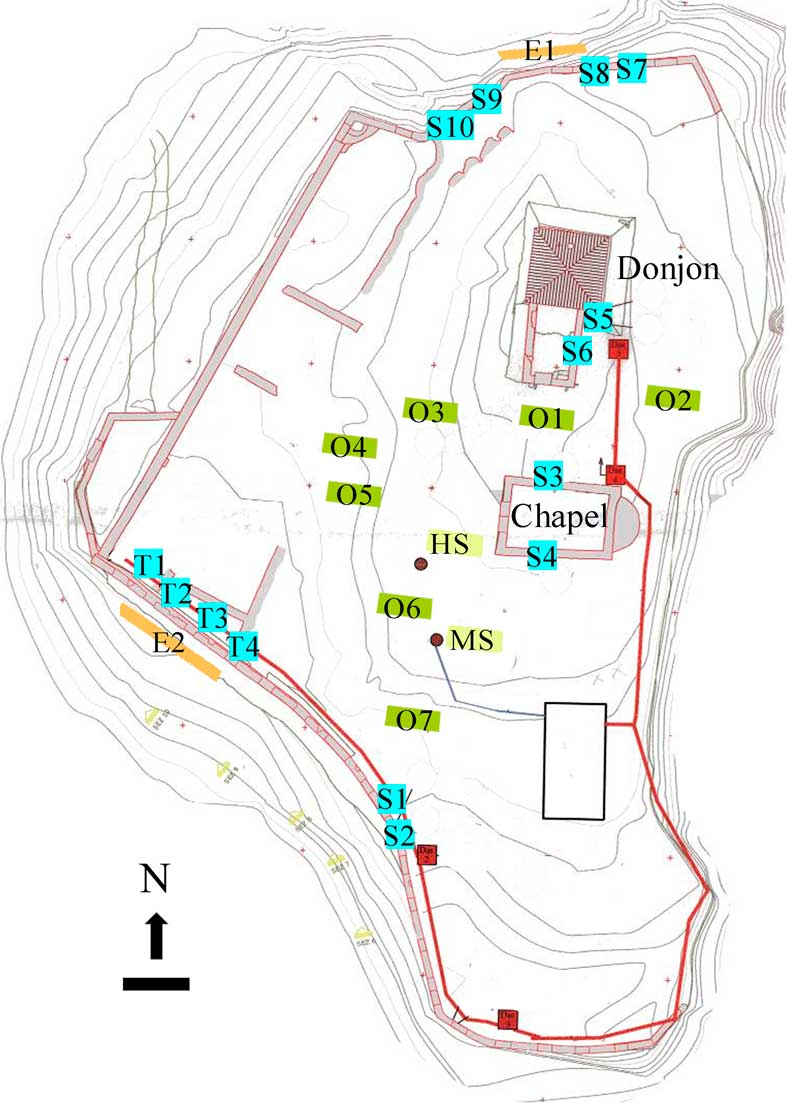
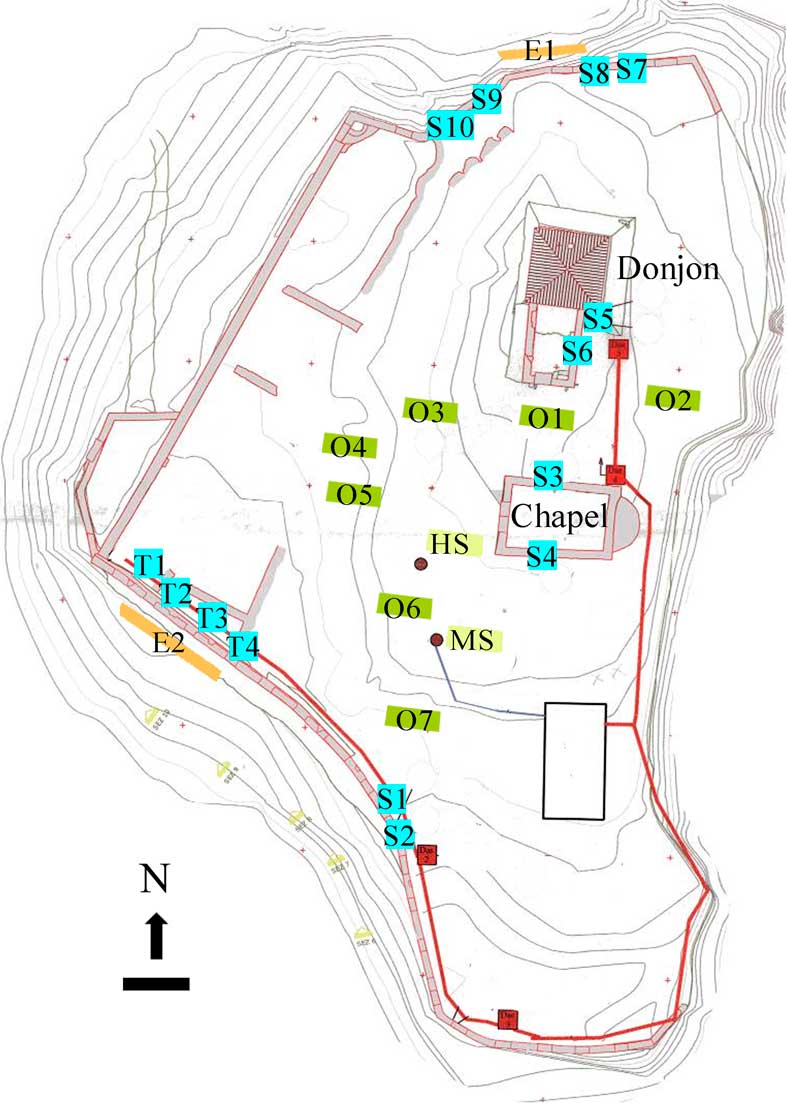
Field investigations were carried out at the medieval Graines Castle (UTM ED50, 45°44·300′N, 7°45·260′E; 1367 m a.s.l.; Brusson, Aosta Valley), in an alpine area of north-west Italy with a fairly dry climate regime (Verger Reference Verger1992). The castle walls, c. 250 m long and 10 m high, are located along the top of a steep relief and surround ruined buildings, discontinuous stands of grassland and natural outcrops of base-rich siliceous rocks, mostly chloritoschists. The walls, built in four phases beginning in the Middle Ages (XII, XV, XVI, XVII centuries), consist of irregularly shaped blocks of the chloritoschist bedrock and other local lithologies, bound with mortar (Sartorio Reference Sartorio2012). A xerophytic lichen flora of 53 species has been described for the site (Piervittori et al. Reference Piervittori, Laccisaglia, Appolonia and Gallo1991). The basiphilous species Caloplaca crenulatella (Nyl.) H. Olivier and the acidophilous Rhizocarpon geographicum (L.) DC., widely occurring on both the natural outcrops and the walls and producing unequivocally recognizable small (12–16×6–7 μm) polar-diblastic and larger (22–40×10–19 μm) muriform spores, respectively, were considered for aerobiological and population analyses. Moreover, their general distribution on the site was surveyed in plots (40×60 cm) randomly defined on the main rock outcrops (O1–O7) within the courtyard (n=70 plots, 10 plots per outcrop) and on differently oriented wall transects (S1–S10) facing the courtyard (n=56, 5–7 plots per transect) (Fig. 1). For each plot, abundance of the two species and of other species of the genus Caloplaca were estimated as percentage cover. Remote observations of the inaccessible external side of the walls were also randomly conducted from embrasures (E1) and a temporary scaffolding (E2).
Topography of Graines Castle, NW Italy, and location of lichen surveys as follows: O1–O7=main rock outcrops within the walls; S1–S10 & T1–T4=wall transects; E1 & E2=external areas. HS=position of Hirst volumetric sampler; MS=meteorological station, including the sonic anemometer. Scale=5 m. In colour online.
Aerobiological monitoring
The airborne concentrations of meiospores of R. geographicum and C. crenulatella were measured at Graines Castle during a two-year monitoring programme between June 2011 and June 2013. Air samples were continuously collected (10 l min−1) during one week per month using a 7-day recording Hirst-type volumetric sampler VPPS 2010, suitable for particles in the range 5–100 µm (Lanzoni, Bologna, Italy), located at 1·5 m above ground level in the castle courtyard (Fig. 1) where the speed and direction of wind were monitored using a Sonic Young 81000 anemometer (RM Young, Traverse City, MI, USA). Airborne particles which had stuck to the adhesive tape were examined according to UNI 11108:2004 (see Travaglini et al. Reference Travaglini, Albertini and Zieger2009) and the spore concentration calculated for 6 days in a month. Polar-diblastic spores of C. crenulatella were distinguished from those of other local Teloschistaceae based on morphology (length×width and septum thickness; see Favero-Longo et al. Reference Favero-Longo, Sandrone, Matteucci, Appolonia and Piervittori2014 for additional details).
The spore dispersal pathways of the two lichen species were also examined in controlled conditions using a microcosm to estimate discharge and short- and long-range dispersal (Favero-Longo et al. Reference Favero-Longo, Sandrone, Matteucci, Appolonia and Piervittori2014). To estimate spore discharge, 10 rocks colonized by R. geographicum (mean total cover per rock=5·4 cm2 of thalli with diameters of 5–15 mm; mean apothecia per cm2=24±10 1SD) and five colonized by C. crenulatella (mean total cover per rock=0·2 cm2 of thalli with diameters of 2–4 mm; mean apothecia per cm2=47±5 1SD) were immersed for 15 min in deionized water and incubated for 6 h, covered with Petri dishes containing agar medium (Petri diameter=5·5 cm; agar surface 6 mm above the thalli), within a perspex box (120×70×60 cm) including a fan moving the air at c. 4 m s−1 on the rock surfaces and at about 20 oC. To estimate spore dispersal, four groups of rocks colonized by R. geographicum (total cover on the first and second rock groups=60 and 200 cm2, respectively, with thalli of diameters 5–15 mm) and C. crenulatella (total cover on the third and fourth rock groups=40 cm2 each with thalli of diameters 2–18 mm), were immersed for 15 min in deionized water and incubated for three days within the perspex box with the fan on together with 10 Petri dishes (diameter=5·5 cm) containing agar medium and the VPPS sampler. The Petri dishes, encircling the rocks at a distance of 5–15 cm from the colonized surfaces, were used as passive traps to estimate short-range dispersed meiospores. Meiospore dispersion in the air volume was examined with the VPPS suction nozzle located at 40 cm above the box floor and at 50–70 cm from the colonized rock surfaces; spore take-off and entrance to the turbulent air were considered a requisite for long-range dispersal. Meiospores that settled on the agar surfaces and on the VPPS adhesive tape were counted at ×400 magnification according to Favero-Longo et al. (Reference Favero-Longo, Sandrone, Matteucci, Appolonia and Piervittori2014).
Population structure survey and analysis
The spatial structures of C. crenulatella and R. geographicum populations on the walls were surveyed along four vertical transects (w×h=2·5×10 m), positioned at 15–25 m from the aerobiological monitoring point on the north-facing inner side of the castle. This was notable for its lichen cover and the four transects were accessed using temporary scaffolding and shared similar microclimatic conditions. The frequency (number of blocks) and abundance (% cover) of the two species were measured on 1593 stone blocks in the vertical transects. The stone blocks were classified on the basis of their lithology as follows: base-rich siliceous (chloritoschists, with subordinate serpentinites and metabasites: 86%), acid siliceous (amphibolic gneisses: 13%) and basic calcareous (calcschists: 1%). Each rock type displayed a homogeneous spatial distribution. Lichen abundance was estimated according to ordinal cover scales for R. geographicum (where 4 >50%, 3=26–50%, 2=3–25%, 1 <3% and 0=no cover) and for C. crenulatella (where 4 >30%, 3=11–30%, 2=1–10%, 1 <1% and 0=no cover). The diameter of the largest R. geographicum thallus was measured on 108 randomly selected blocks with cover values higher than 3% and distributed among the four different building phases according to available annotations on the wall perspective drawings. Comparable measurements were not performed on C. crenulatella because of difficulties in reliably recognizing large individual thalli from coalescent ones, particularly in cases of high % cover. The presence of apothecia and mature spores inside asci was determined in 12 thalli of C. crenulatella. In the case of R. geographicum, thalli were divided into four classes for this purpose: diameter <3 mm (n=12), 4–6 mm (n=8), 10–12 mm (n=6), 13–17 mm (n=5). All the spatial information together with that for lithotype of blocks and their colonization by the two species was mapped and analyzed using GIS 9.3 (ESRI, Redlands, CA, USA).
We tested the relationship between lichen distribution and rock substratum by using the univariate and bivariate pair correlation function (g12), a second order statistic closely related to Ripley’s function (K). Unlike K, the g12 function is non-cumulative; this means that it uses only points separated by a certain distance r allowing, in this way, specific scales to be identified where significant point-point interactions occur (Wiegand et al. Reference Wiegand, Gunatilleke, Gunatilleke and Okuda2007). The selection of the correct null model represents a key step for the unbiased interpretation of results. Here we applied the random labelling null model or the antecedent condition in the case of bivariate analysis in order to consider the rock type distribution fixed before the arrival of the lichens (Aakala et al. Reference Aakala, Fraver, Palik and D’Amato2012; Wiegand & Moloney Reference Wiegand and Moloney2013). In practice, we contrasted the presence/absence data of the two species with the corresponding rock type of the wall. In this analysis, we considered only the two most common rock types (base-rich siliceous and acid siliceous).
In all the analyses, significant departure from the null models was evaluated based on 95% simulation envelopes which were calculated from the 5th-lowest and 5th-highest values of 99 Monte Carlo simulations. A distribution is classified as clumped, random or regular for univariate analysis when the value is located above, equal to or below the 95% confidence intervals, respectively. Similarly, for bivariate analysis, two populations are significantly positively correlated (attraction), spatially independent or significantly negatively correlated (repulsion) when the value is located above, equal to or less than the 95% confidence intervals, respectively.
All univariate and bivariate point pattern analyses were performed using the grid-based software Programita and a distance class of 0·5 m was applied (Wiegand & Moloney Reference Wiegand and Moloney2004, Reference Wiegand and Moloney2013). We conducted the spatial analyses by considering the four plots as replicates since we were interested in the mean spatial pattern (Raventós et al. Reference Raventós, Wiegand and De Luis2010). Results from the four plots have thus been combined in one mean graphic function, using the ‘combine replicates tool’ included in the Programita software (Wiegand & Moloney Reference Wiegand and Moloney2004, Reference Wiegand and Moloney2013).
The global coefficient Moran’s I (Moran Reference Moran1950), a product-moment like coefficient computing autocorrelation between variables as a function of distance lags, was used to evaluate whether or not the two species are distributed according to a clustered spatial structure. Moran’s I values were transformed to z-scores according to Arbia (Reference Arbia2001), to ease both comparisons among correlograms and assessments of significance levels. The global significance of the resultant correlogram was evaluated at the significance level α′= α/ν according to the Bonferroni criterion to correct for multiple tests.
The spatial structure of the lichen populations was further analyzed with Local *Gi statistics that calculate the similarity of each point to its neighbours in a specified radius d including the target point in the computation. The graphical representation of Local *Gi can locate hot spots and gaps in lichen distribution (Getis & Ord Reference Getis and Ord1992, Reference Getis and Ord1996). Global and local autocorrelations were computed with the Excel Add-Inn RookCase (Sawada Reference Sawada1999).
Results
Lichen distribution at the study site
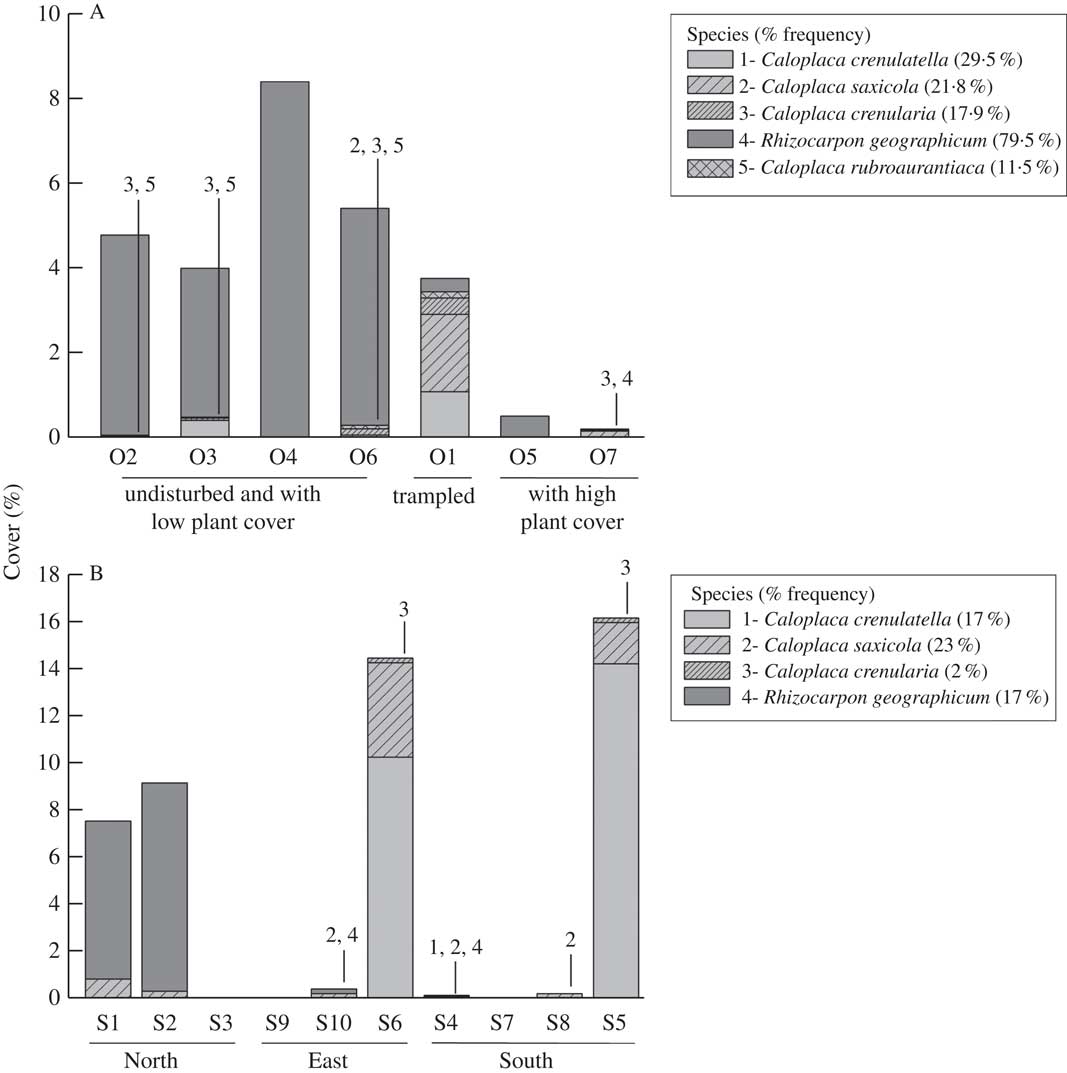
Outcrops within the courtyard had a mean lichen cover of c. 80%, dominated by xerophytic silicicolous crustose species (e.g. Aspicilia caesiocinerea (Malbr.) Arnold, Rhizocarpon geographicum (L.) DC., Lecidella carpathica Körb. and Candelariella vitellina (Hoffm.) Müll. Arg.). Rhizocarpon geographicum occurred commonly, showing relatively high cover values (4–8%) on undisturbed outcrops (O2, O3, O4, O6), with low cover (<1%) on frequently trampled surfaces (O1) and where bryophytes and vascular plants were abundant (O5, O7) (Fig. 2A; Supplementary Material Figure S1, available online). Caloplaca crenulatella, C. crenularia (With.) J. R. Laundon, C. saxicola gr. and C. rubroaurantiaca B. de Lesd. also characterized the lichen flora, showing a higher frequency and abundance in the trampled plot (O1).
Distribution of Rhizocarpon geographicum, Caloplaca crenulatella and other Caloplaca species in the study site. A, cover and frequencies on the rock outcrops within the courtyard; plant cover includes both vascular plants and bryophytes. B, cover and frequencies on wall transects at the cardinal points. Numbers indicating the species are added when cover values are very low. Location of rock outcrops and wall transects is mapped in Fig. 1.
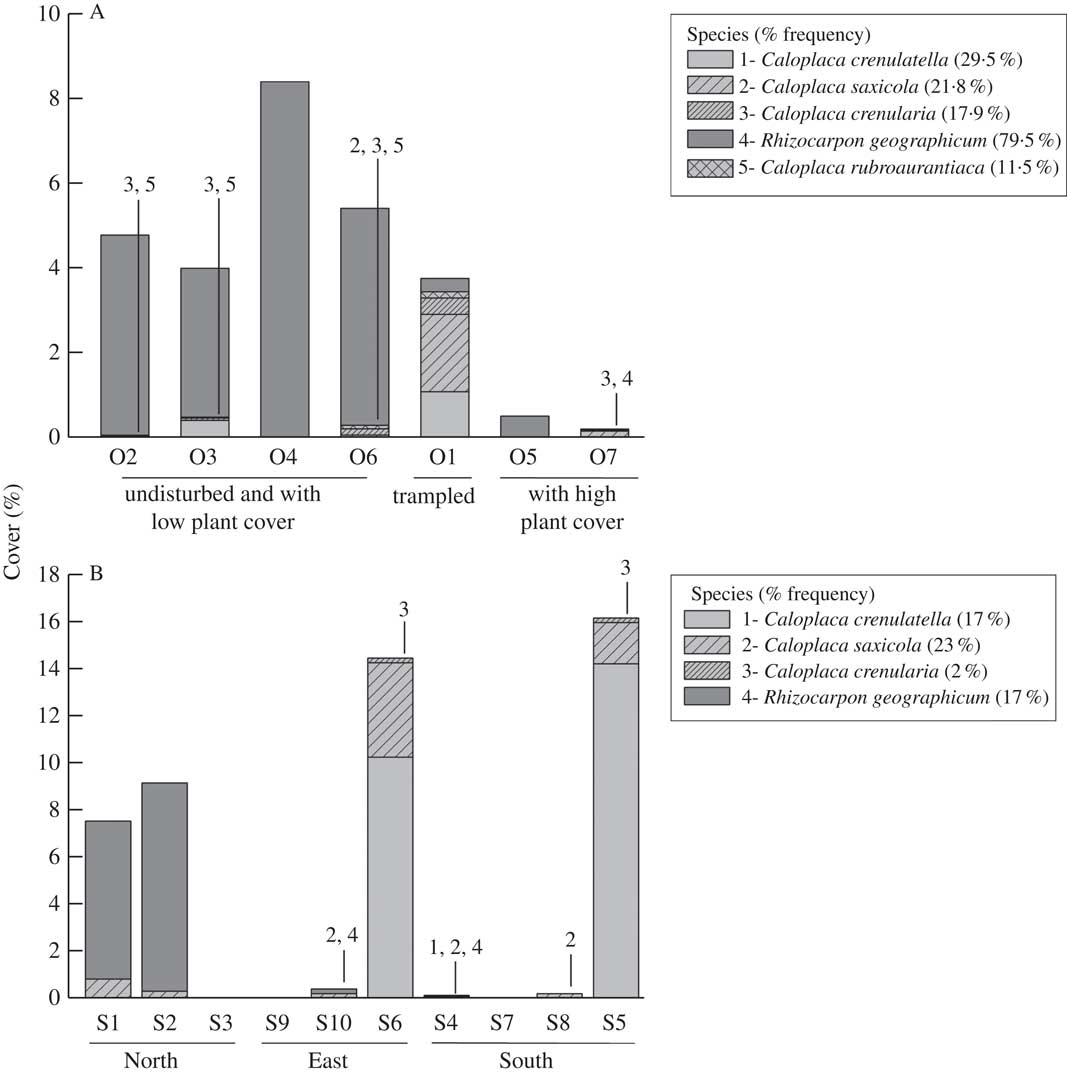
Lichens were also present on the buildings and the walls facing the courtyard (Fig. 2B). Colonization was relatively abundant on the north-facing walls (S1 & S2), where R. geographicum had its highest % cover. Caloplaca saxicola and C. crenulatella were dominant on building walls where soil and plants filled the cracks between the rock blocks (S5 & S6). By contrast, lichens were almost absent on south- (S7 & S8) and east- (S9 & S10) facing walls and on the recently restored chapel walls (S3 & S4).
Qualitative observations on the external side of the walls also showed high lichen % cover including R. geographicum occurrence on the north-facing surfaces (E1), while lower lichen abundance was found on the south-facing surfaces (E2) (see Supplementary Material Fig. S1, available online)
Meiospore dispersal
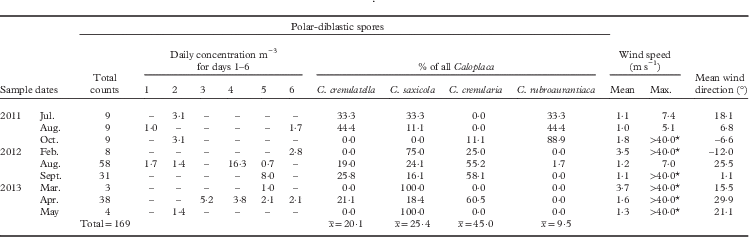
A total of 169 polar-diblastic Teloschistaceae spores were found in the mycoaerosol sampled at Graines Castle (Table 1). Their detection was not evenly distributed during the two-year monitoring period but was concentrated in 12·5% of the monitored days, distributed over 9 months. There was a positive relationship between the presence of polar-diblastic spores in the air spora and the occurrence of rainfall events in the preceding 24 h (see Supplementary Material Table S1, available online). During the two years of monitoring, the wind was predominantly from the north-west quadrant with a mean speed of 2·1 m s−1 but with recurrent gusts of wind (at least one gust event >40 m s−1 in 6 out of the 9 months during which the polar-diblastic spores were observed; Table 1D). However, wind speed was not significantly correlated with the occurrence of polar-diblastic spores in the mycoaerosol (see Supplementary Material Table S1, available online).
Polar-diblastic spores of Caloplaca species in the mycoaerosol of Graines Castle, NW Italy (June 2011–June 2013)
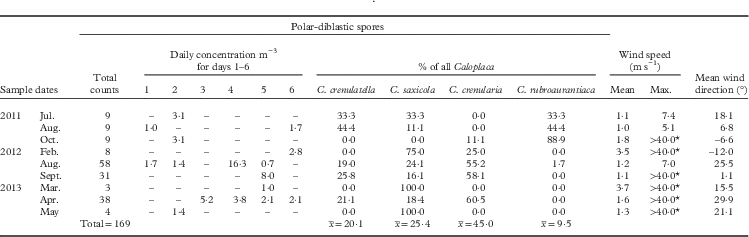
* =beyond limit of anemometer; – =absence of spores
The daily concentrations of polar-diblastic spores ranged between 0·3 and 16·3 spores m−3 (Table 1), but in all cases they represented a minimal part of the total airborne spores (mean 1372 spores m−3, as calculated during the first monitoring year). Twenty percent of the polar-diblastic spores detected were attributable to C. crenulatella, captured in 7·6% of the monitored days, while the others could be assigned to the other Teloschistaceae occurring in the castle courtyard: C. crenularia (45%), C. saxicola gr. or Xanthoria elegans (Link.) Th. Fr. (25%) and C. rubroaurantiaca (10%) (Table 1). Muriform spores attributable to R. geographicum were never detected in the mycoaerosol during the whole monitoring period.
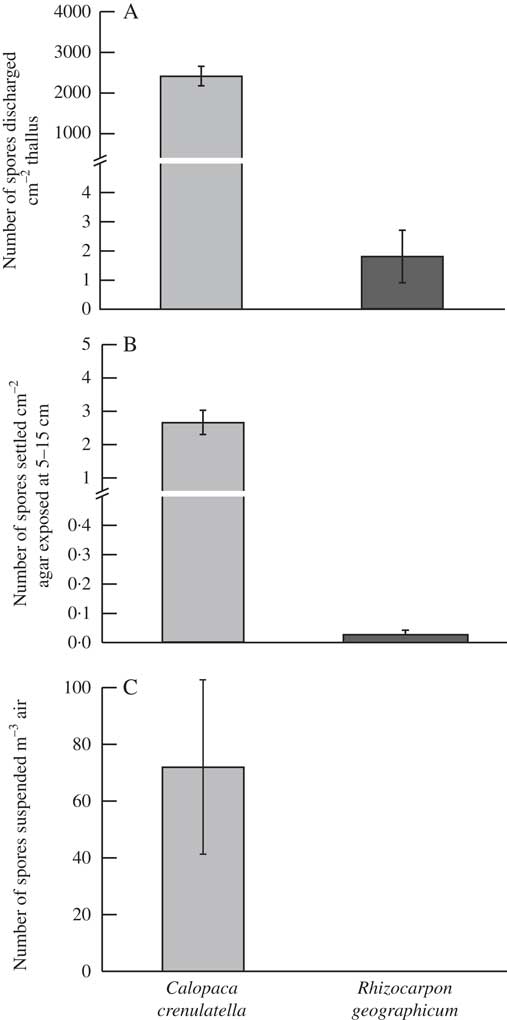
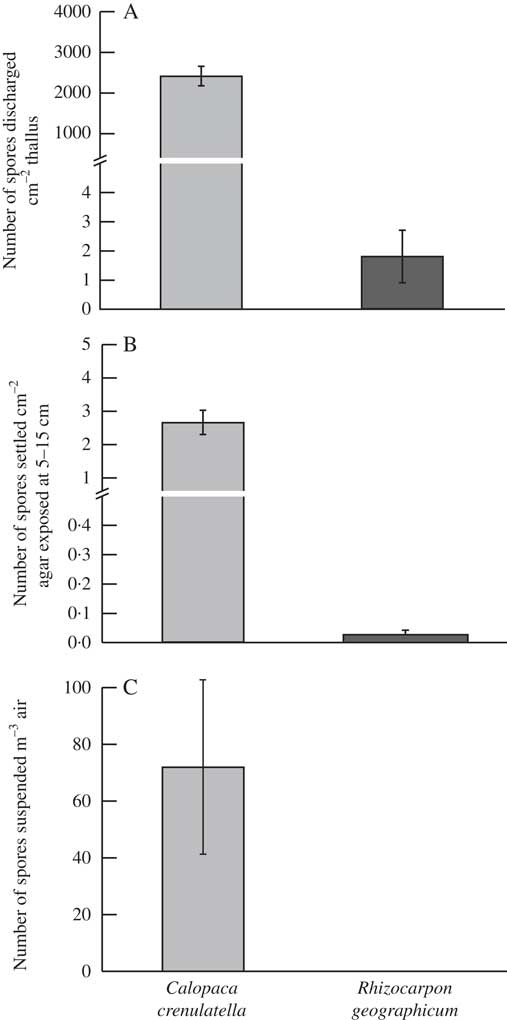
Similarly, spore dispersal experiments in controlled conditions showed different patterns for thalli of C. crenulatella and R. geographicum with apothecia bearing mature spores (Fig. 3). In the monitored microcosm, the polar-diblastic spores of C. crenulatella were abundantly discharged (2411±243 spores released per cm2 of thallus, equal to c. 50 spores per apothecium; Fig. 3A). They were found on the agar surfaces at a short distance from the colonized rocks (mean 2·7 spores per cm2 of agar exposed at 5–15 cm, equal to a mean total of 621 spores collected on 10 agar plates; Fig. 3B) in an amount which is estimated to be equal to 0·6% of the total spores released from the C. crenulatella thalli on the basis of the discharge analysis (i.e. c. 96000 spores from 40 cm2 of thalli). Caloplaca crenulatella spores were also detected in the air collected by the volumetric sampler (mean 72 spores m−3, equal to a mean total of 3110 spores collected during the monitoring period; Fig. 3C) in a quantity estimated to be 3·2% of the total spores discharged from the C. crenulatella thalli on the basis of the discharge analysis. Most of the spores observed on the agar surfaces were still organized in groups of 5–8 spores, while those collected by the Hirst-type sampler impacted singly on the adhesive tape. By contrast, the large muriform spores of R. geographicum were poorly discharged (mean 1·8 spores released per cm2 of thallus, equal to c. 0·1 spores per apothecium; Fig. 3A). Accordingly, they were sporadically detected on the agar surfaces exposed around the thalli (mean 0·03 spores cm−2 of agar exposed at 5–15 cm, equal to a mean total of 6 spores collected on 10 agar plates; Fig. 3B), in a quantity which is estimated to be equal to 2·6% of the total spores discharged from the R. geographicum thalli on the basis of the discharge analysis (c. 230 spores from mean 130 cm2 of thalli). Moreover, R. geographicum spores were never collected by the volumetric sampler (Fig. 3C).
Spore dispersal by Caloplaca crenulatella and Rhizocarpon geographicum in laboratory tests. A, spore discharge; B, spores collected on agar surfaces exposed 5–15 cm from rock blocks colonized by the two species (short-range dispersal); C, spores suspended by the air-flow and collected by the Hirst-type volumetric sampler (long-range dispersal).
Population spatial structure
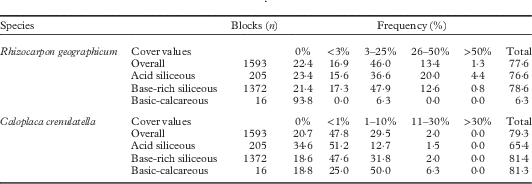
The frequency of north-facing castle wall blocks colonized by C. crenulatella and those for R. geographicum were broadly comparable (c. 80%) (Table 2). Rhizocarpon geographicum frequently had cover values higher than 25% (14% of blocks), with thalli distributed over the whole surface of the block. By contrast, C. crenulatella mostly colonized the block margins in the proximity of mortar (and the mortar itself), rarely covering more than 10% (2% of blocks). Rhizocarpon geographicum thalli tended to be small and homogeneous in size, with those blocks with the highest cover having thalli of 7·9±3·2 mm diameter at most, with no significant difference between the blocks from different building phases. The largest diameters observed were between 15–17 mm (5·5% of the surveyed pool of largest thalli). While apothecia were present in thalli with a diameter <3 mm, fertile spores were observed only in higher diameter classes, with the highest abundance of spores being observed in the largest thalli. Thalli of C. crenulatella, from extremely small (c. 1 mm) to relatively large diameter (>10–15 mm), were covered abundantly by fertile apothecia.
Frequency and abundance of Rhizocarpon geographicum and Caloplaca crenulatella on the different block lithologies of Graines Castle walls. The % frequency is given for each of the ordinal scaled cover values for each species.
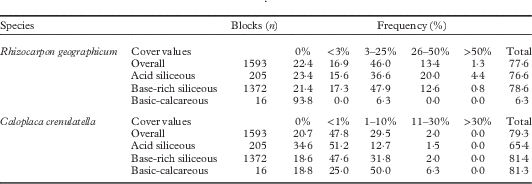
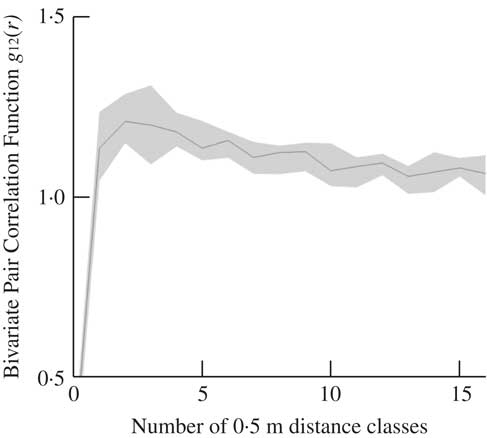
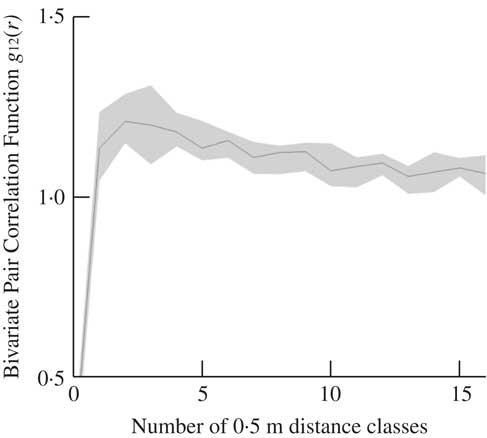
The frequency of R. geographicum was similar on the acid-siliceous and base-rich siliceous blocks (77% and 79%, respectively), but high cover values mostly characterized acid-siliceous blocks (cover values >25% on 24% of acid-siliceous blocks versus 13% of base-rich siliceous blocks). By contrast, C. crenulatella frequency and abundance were higher on the base-rich siliceous blocks. However, the random distribution depicted by the pair correlation function indicated that the presence of the two species in the wall transects was not significantly influenced by block lithology (Fig. 4).
Bivariate spatial point pattern analysis with the pair correlation function (g12). The presence of the species (either Caloplaca crenulatella or Rhizocarpon geographicum) along the wall transects of Graines Castle, NW Italy, was not significantly influenced by the block lithology indicated by the resulting function (black line) consistently falling within the 95% confidence envelope defining the random distribution area. Since the plots obtained for the two species on the four vertical transects on the wall are similar, we report only one of the eight plots here.
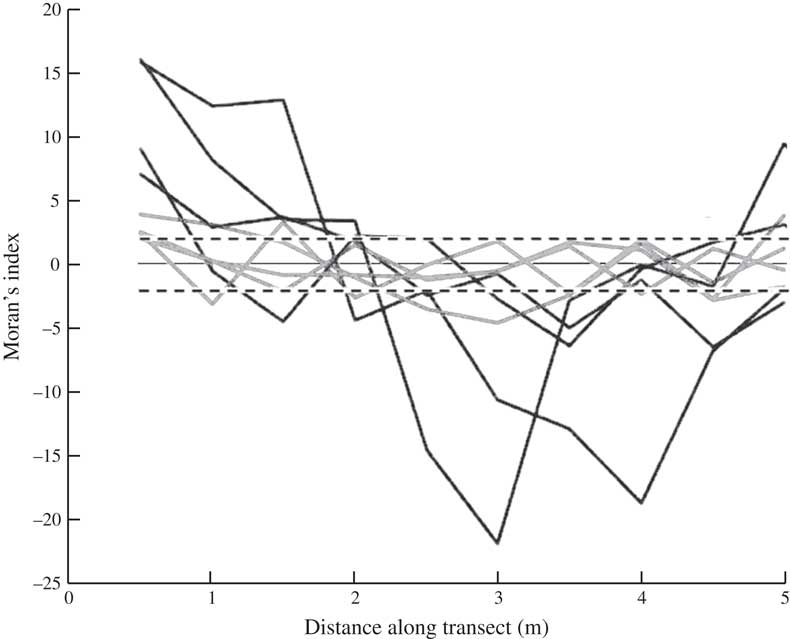
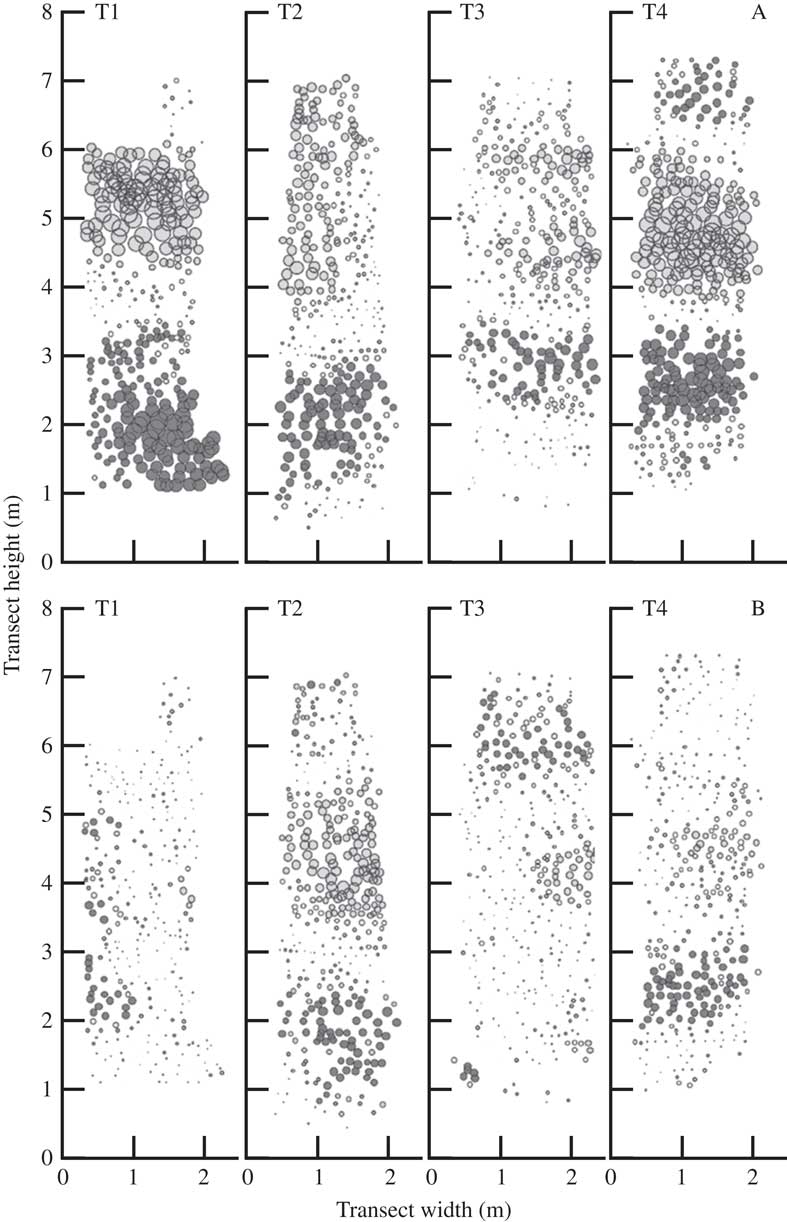
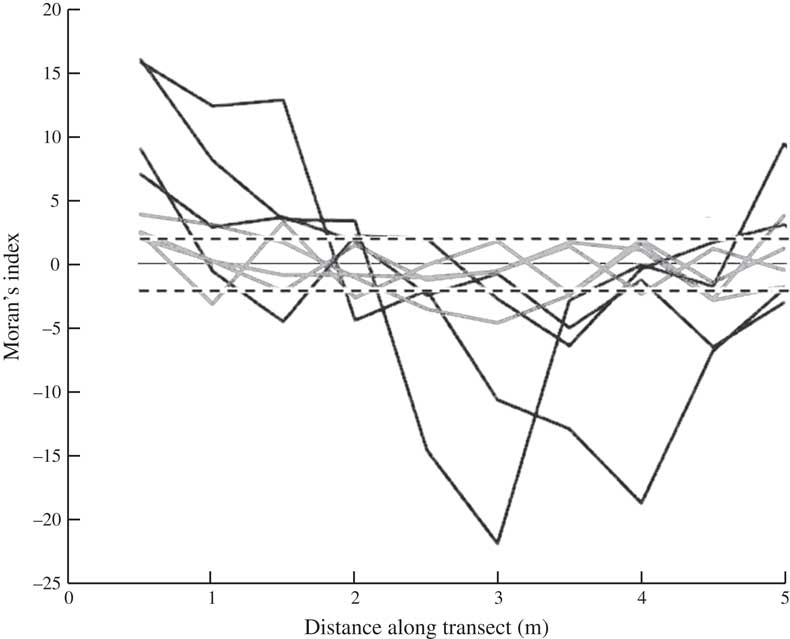
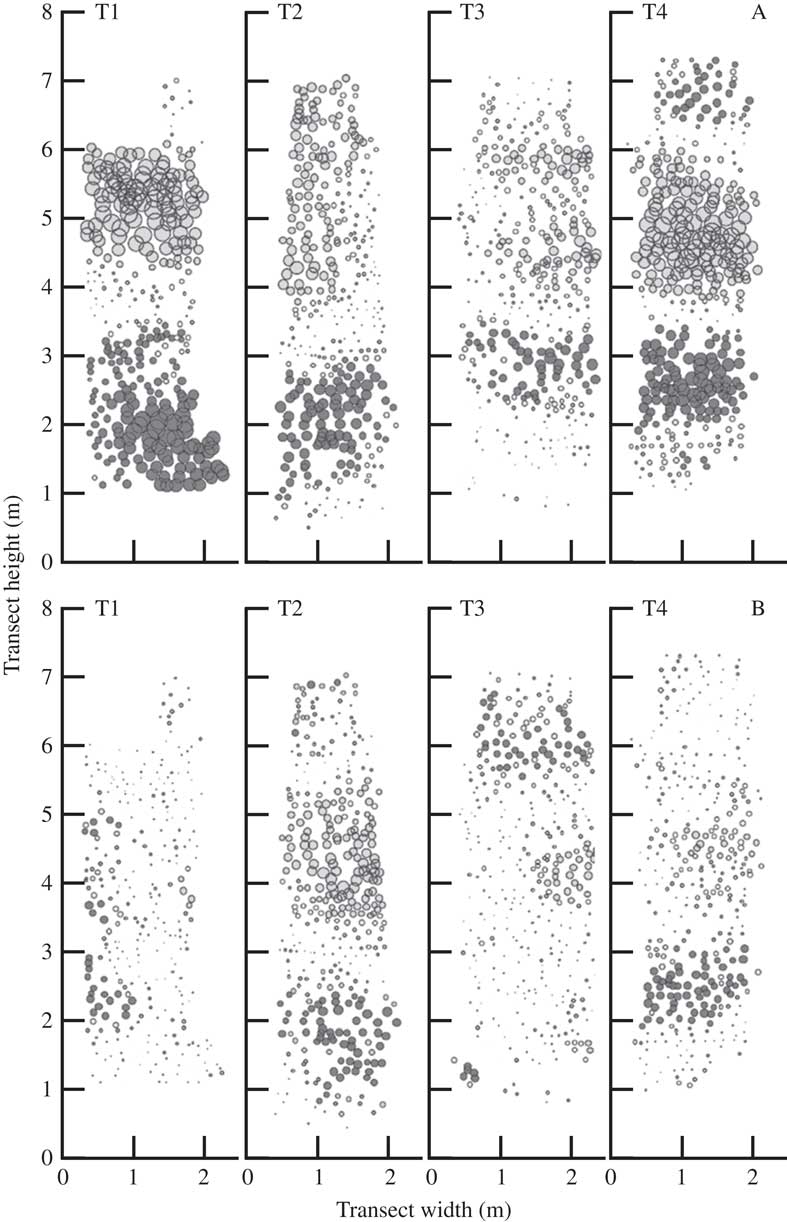
Conversely, analysis of spatial community structure, computed as Moran’s index, showed contrasting distribution patterns between the two species (Fig. 5). Moran’s index for R. geographicum gave significant values ranging between +15 and −20, indicating a trend for thalli to form clusters (scale 1 m) separated by uncolonized areas (c. 2 m). On the other hand, Moran’s index values for C. crenulatella were almost below the threshold of significance, indicating a randomly dispersed rather than aggregated distribution of thalli. In addition, Local *Gi statistics showed that blocks having % cover values higher than the mean for R. geographicum were generally aggregated (Fig. 6A), while C. crenulatella presented a more dispersed, random distribution (Fig. 6B). Moreover, the densest colonies of R. geographicum were generally concentrated in the lower part of the wall.
Moran’s I correlogram for Rhizocarpon geographicum (dark grey lines) and Caloplaca crenulatella (light grey lines) surveyed on stones along four vertical transects on the walls of Graines Castle, NW Italy. Dashed black lines indicate significance levels (P<0·05).
Local *Gi bubble plots for A, Rhizocarpon geographicum and B, Caloplaca crenulatella on stones along four vertical transects on the walls of Graines Castle, NW Italy. Bubble size is proportional to the intensity of autocorrelation at a given location. Dark grey bubbles=abundance is higher than the mean values; light grey bubbles=abundance is lower than the mean values; white bubbles=abundance is not significantly different from the mean values. T1–T4=wall transects as shown in Fig. 1.
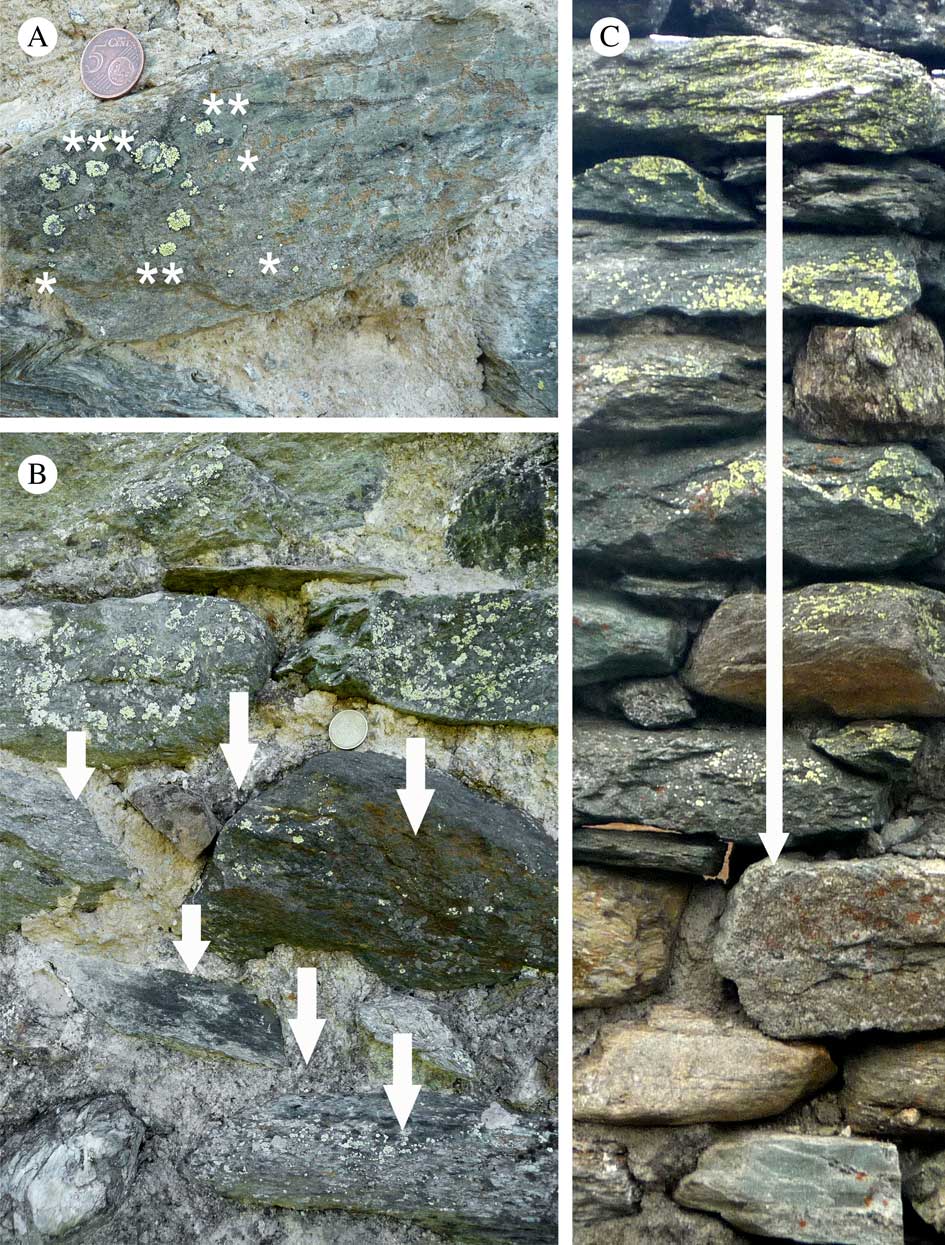
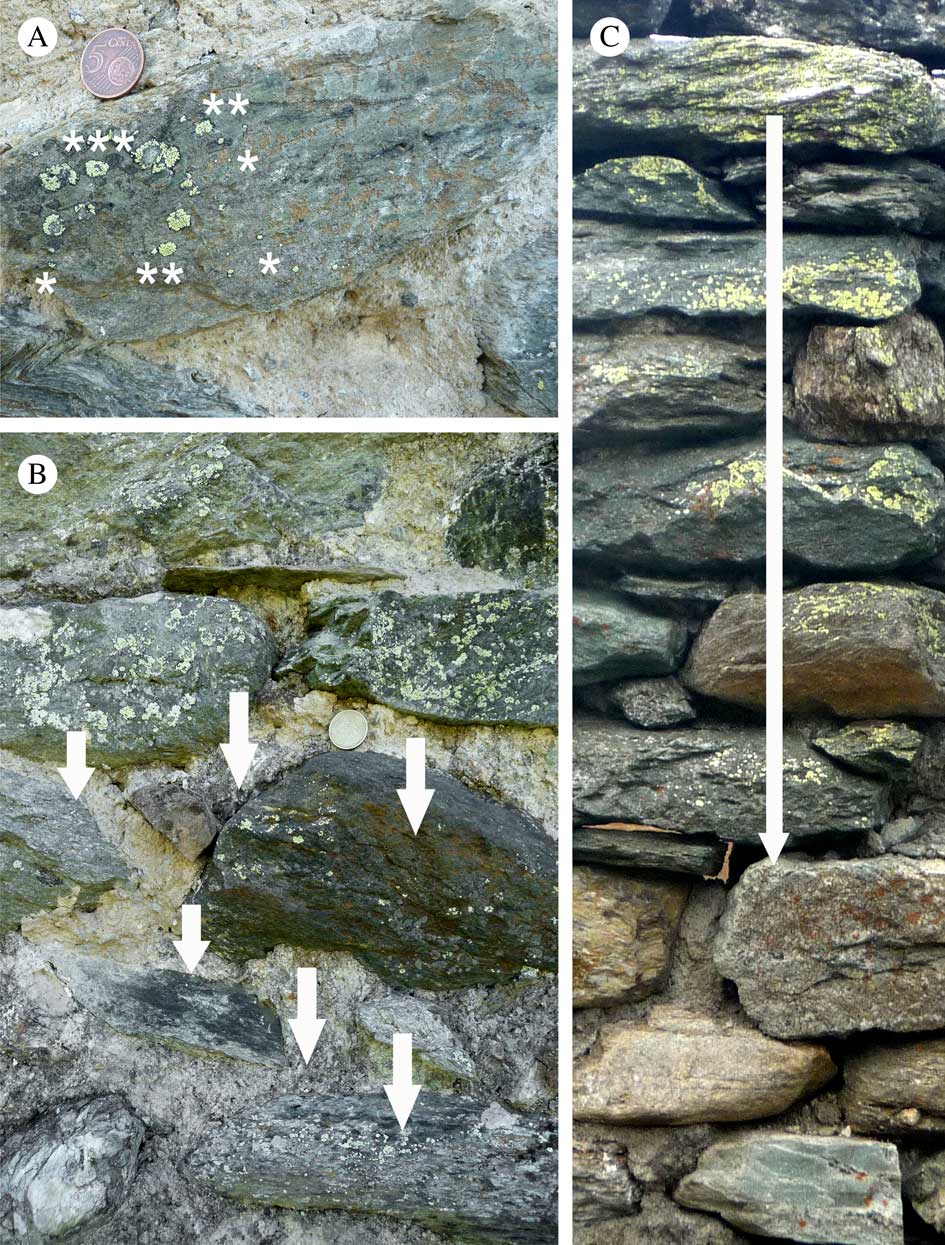
In some cases, a small number of distinct large thalli (diameter >1 cm) of R. geographicum were surrounded on the same block or on neighbouring blocks by several thalli of lower diameter classes (Fig. 7A). In several other cases, rocks or rock groups with a high % cover of R. geographicum but with poorly distinguishable individuals were located above other rocks with lower covers and easily recognizable, distinct thalli of lower diameter classes (Fig. 7B & C). Similar patterns of aggregation were not observed for C. crenulatella.
Small-scale spatial distribution of Rhizocarpon geographicum. A, thalli with larger diameter (***=c. 10 mm) are surrounded by putative progeny thalli of smaller dimensions (**=c. 6 mm and *=<2 mm); B & C, R. geographicum cover and thallus dimensions decrease with increasing distance from larger thalli above, as shown by arrows. In colour online.
Discussion
To our knowledge, this is the first study that has combined analyses of the population spatial structure of saxicolous lichens with experimental evidence on meiospore dispersal patterns obtained with an aerobiological approach. Results confirm our main expectations, indicating that differences in specific dispersal patterns are reflected in different lichen distribution patterns. The occasional detection of Caloplaca crenulatella meiospores in the mycoaerosol (Table 1) is reflected by a random distribution pattern of the species (Figs. 5 & 6B). On the other hand, Rhizocarpon geographicum, which exhibited a clustered distribution pattern, is likely affected by dispersal limitation as suggested by the absence of meiospores in the examined mycoaerosol. However, this difference does not reflect the relative abundance of the two species in the study site since R. geographicum had similar frequencies and higher cover values than C. crenulatella on the wall blocks and was also more abundant on the natural rock outcrops (Fig. 2) (Favero-Longo et al. Reference Favero-Longo, Sandrone, Matteucci, Appolonia and Piervittori2014). This suggests that, on the wall examined, the richer pool of dispersed meiospores of C. crenulatella might experience greater establishment limitations than that of R. geographicum. The effects of intrinsic and extrinsic factors on the dispersal and establishment of R. geographicum and C. crenulatella, and their influence on the population structure of these lichens, are discussed in the following sections. It is worth noting here that the relatively small size of the largest R. geographicum thalli, compatible with a mean age in the order of decades (Armstrong & Bradwell Reference Armstrong and Bradwell2010), indicated an early stage of lichen colonization. This suggests a “modern age” recolonization phase after the restorations ended in the 1910s and 1960s (Sergi Reference Sergi2012). Accordingly, the parts of the walls attributable to the different building phases of the XII–XVII centuries host R. geographicum thalli of comparable size.
Dispersal limitations
The dispersal of a sufficiently large propagule pool is the precondition to establish and expand new lichen populations (Scheidegger & Werth Reference Scheidegger and Werth2009). Although research has mainly focused on dispersal distances and their influence on species distribution and population structures (Johansson et al. Reference Johansson, Ranius and Snäll2012; Werth et al. Reference Werth, Cheenacharoen and Scheidegger2014; Gjerde et al. Reference Gjerde, Blom, Heegaard and Sætersdal2015; Leavitt & Lumbsch Reference Leavitt and Lumbsch2016), successful dispersal depends on the whole aerobiological pathway, including propagule discharge, take-off, transport (dispersal sensu stricto) and deposition (Lacey Reference Lacey1996; Magyar et al. Reference Magyar, Vass and Li2016).
In the laboratory experiments, spore discharge in R. geographicum was found to be three orders of magnitude lower (as spores released per cm2 of thallus) than that in C. crenulatella (Fig.3A). Thus, R. geographicum clearly suffers from more limited dispersal success. Ascocarp occurrence for the two species was relatively similar (only twice as high in C. crenulatella) and fertile ascocarps were abundant in very young R. geographicum thalli (diameters of 4–6 mm). However, microscopical observations suggested that spore production was generally much higher in the C. crenulatella ascoscarps (data not shown). Ejection defects have already been reported in R. geographicum (Bailey & Garrett Reference Bailey and Garrett1968; Crittenden et al. Reference Crittenden, David, Hawksworth and Campbell1995) which differs from C. crenulatella in ascus anatomy and dehiscence type (Bellemère & Letrouit-Galinou Reference Bellemère and Letrouit-Galinou1988); this might contribute to the differences in spore discharge rate between the two species.
In addition, R. geographicum has larger meiospores than C. crenulatella. Although R. geographicum spores are not as large as vegetative diaspores or certain “mega” meiospores (such as those of Pertusaria), size differences of this magnitude have been suggested to influence dispersal patterns and to explain specific metapopulation dynamics in lichen epiphytes (Johansson et al. Reference Johansson, Ranius and Snäll2012).
The results of previous studies have suggested that in the absence of air movement, inter-species differences in the distance and rate of lichen meiospore horizontal discharge were not clearly related to spore size (Bailey & Garrett Reference Bailey and Garrett1968), although packages of spores are generally better dispersed than single spores (Garrett Reference Garrett1971). However, spore discharge in natural environments exposes spores to air turbulence (wind) which influences the behaviour of particles in the atmosphere (De Nuntiis et al. Reference De Nuntiis, Maggi, Mandrioli, Ranalli and Sorlini2003). In our laboratory experiment, spore packages of C. crenulatella and relatively large spores of R. geographicum were discharged but did not remain suspended in the air and settled at a short distance from their source (Fig. 3B). By contrast, the collection of the single spores of C. crenulatella by the volumetric sampler (Fig. 3C) indicated their take-off and dispersal throughout the entire whole volume of the chamber. If discharged spores of R. geographicum had been suspended and captured at the same rate as those of C. crenulatella (3·2% of putatively discharged spores captured by the volumetric sampler), we would have expected to have caught between 5 and 10 spores. However, no R. geographicum spores were collected by the volumetric sampler either in the laboratory experiment or during the field monitoring, when the polar-diblastic spores of Caloplaca species were periodically found (8% of monitored days, related to rainfall events, Table 1 & Supplementary Material Table S1, available online). This suggests that factors other than poor discharge might contribute to limiting the dispersal of R. geographicum. Depending on different sizes and consequent settling velocities, a four times lower lifetime in the atmosphere is expected for single spores in the size range of R. geographicum, or for the large packages of C. crenulatella spores, compared to that of single spores of C. crenulatella (De Nuntiis et al. Reference De Nuntiis, Maggi, Mandrioli, Ranalli and Sorlini2003). Models of spore trajectories suggest that settling velocity values expected for the spore size ranges of C. crenulatella (c. 0·004–0·008 ms−1 for diameters of 12–16 µm) and R. geographicum (c.0·03–0·05 ms−1 for diameters of 30–40 µm) (De Nuntiis et al. Reference De Nuntiis, Maggi, Mandrioli, Ranalli and Sorlini2003) should not significantly influence the dispersal distance once the spores are airborne (Kuparinen et al. Reference Kuparinen, Markkanen, Riikonen and Vesala2007). On the other hand, spore size may be related to take-off velocity since different lift forces may be required to exceed the particle mass and adhesive properties holding the particle down (Descamps et al. Reference Descamps, Harion and Baudoin2005). However, take-off velocity has been poorly investigated in aerobiology, particularly for fungal spores (Noblin et al. Reference Noblin, Yang and Dumais2009), so it is only possible to speculate about its effect on dispersal limitation in R. geographicum.
Whatever the limiting factors and their combined effects, C. crenulatella has the potential for both short-range dispersal of spore packages and occasionally long-range dispersal of small single spores, while the potential dispersal of R. geographicum seems limited to short range. Caloplaca crenulatella thus exhibits a behaviour similar to that of some epiphytic lichens, for which events of long- and short-range dispersal were shown to contribute in parallel to both colonization of distant sites and more local population expansions, respectively (Gjerde et al. Reference Gjerde, Blom, Heegaard and Sætersdal2015). Such an efficient dispersal pattern is consistent with the homogeneous distribution of the species throughout the north-facing wall examined (Figs 5 & 6B). By contrast, the patchy distribution of R. geographicum (Figs 5 & 6A) and observations of its putative progeny surrounding the largest thalli on more colonized blocks (Fig. 7) suggest that scattered founder thalli were established on the wall after rare/exceptional events of effective long-distance dispersal, promoting colonization in their proximity (short-distance dispersal) after reaching reproductive maturity. Armstrong (Reference Armstrong1981) considers that at the patch level, run-off water may also significantly contribute to meiospore short-distance dispersal.
Interestingly, dispersal limitations for vegetative diaspores of some epiphytic lichens, with dimensions up to twice the size of those of R. geographicum, have been estimated in the order of tenths of metres on the basis of indirect evidence (Ellis Reference Ellis2012) but the frequency of dispersal events is unknown. Notably, the only aerobiological assessment of soredia dispersal was for the saxicolous communities of the maritime Antarctic (Marshall Reference Marshall1996) exposed to extreme windy conditions compared with those of the present study site. However, vegetative diaspore and meiospore dispersal are apparently dependent upon conflicting conditions in that meiospore dispersal was found to follow rainfall events (Favero-Longo et al. Reference Favero-Longo, Sandrone, Matteucci, Appolonia and Piervittori2014) while vegetative diaspore release was related to low relative humidity (Marshall Reference Marshall1996).
Establishment limitations
Meiospores of other Caloplaca species colonizing the outcrops in the courtyard (Favero-Longo et al. Reference Favero-Longo, Sandrone, Matteucci, Appolonia and Piervittori2014) were found in the mycoaerosol in comparable amounts to those of C. crenulatella (Table 1). However, only C. saxicola was occasionally found on the wall transects, while C. crenularia occurred on walls of different exposure and C. rubroaurantiaca was not found at all (Piervittori et al. Reference Piervittori, Laccisaglia, Appolonia and Gallo1991; Favero-Longo et al. Reference Favero-Longo, Sandrone, Matteucci, Appolonia and Piervittori2014). Factors other than dispersal limitation would appear to affect the establishment step (i.e. the effective dispersal) (Scheidegger & Werth Reference Scheidegger and Werth2009).
Substratum preference (Brodo Reference Brodo1973; Spitale & Nascimbene Reference Spitale and Nascimbene2012) should not exclude the other Caloplaca species from the wall since they colonize the chloritoschist on the outcrops. Moreover, the random labelling null model indicates that block lithology does not significantly affect the presence-absence distribution on the wall blocks of either the acidophytic R. geographicum or the basiphytic C. crenulatella (Fig. 4). However, the block-scale distribution of C. crenulatella at the block margins is consistent with a positive influence of the mortar proximity on its establishment success. Limited establishment limitation far from the block margins probably accounts for the generally poor cover values of C. crenulatella, apparently contrasting with the high rates of spore dispersal. In contrast, high cover by R. geographicum around putative founder individuals develops on the whole surface of the siliceous rock blocks (Fig. 7), mostly on those that are acid-siliceous (Table 2), suggesting a high establishment success in the low number of larger dispersed propagules. This might be consistent with a higher survivorship of reproductive propagules with higher mass, but such a pattern for lichen meiospores still needs to be verified (Werth et al. Reference Werth, Cheenacharoen and Scheidegger2014).
Higher lichen colonization on the north-facing side of the walls corresponds to the dominant wind direction from the north-west quadrant. This might support the assertion that spore transport from the outcrops within the courtyard has occurred. The greater abundance of C. crenulatella on the east- and south-facing walls where there is higher vascular plant cover suggests that other factors such as light, moisture and nitrogen availability might affect the establishment step in these lichens (Prieto et al. Reference Prieto, Rivas and Silva1999).
The concentration of R. geographicum on the lower parts of the wall transects (Fig. 6A) might be related to the height of dispersal trajectories of spores dispersed from the rock outcrops (Kuparinen et al. Reference Kuparinen, Markkanen, Riikonen and Vesala2007). Ground dwelling animal dispersal should also be considered but there is little experimental support for this process being important (Lawrey Reference Lawrey1984; Scheidegger & Werth Reference Scheidegger and Werth2009; Boch et al. Reference Boch, Prati, Werth, Rüetschi and Fischer2011). Higher humidity in the lower part of the wall might increase the likelihood of meiospores encountering free-living photobionts, yet another limiting factor for successful lichen establishment (Scheidegger & Werth Reference Scheidegger and Werth2009; Sanders Reference Sanders2014; Belinchón et al. Reference Belinchón, Yahr and Ellis2015), and might also facilitate the motility of algal zoospores involved in the formation of primary areolae of R. geographicum thalli (Armstrong & Bradwell Reference Armstrong and Bradwell2010).
Concluding remarks
Our results suggest that contrasting patterns of spore dispersal influence lichen spatial distribution during the early stages of colonization. Species poorly dispersed because of limitations in meiospore discharge, take-off and/or transport are expected to have an aggregated distribution, while species more effectively dispersed are expected to have a random distribution pattern. Although other extrinsic and intrinsic factors might pose establishment limitations and affect colonization dynamics and patterns, this result should be considered with regard to the consequences of habitat disturbance/loss or when strategies to promote (Smith Reference Smith2014) or inhibit (Seaward Reference Seaward2015) lichen occurrence on natural or cultural heritage are planned. Species behaving as C. crenulatella are likely to rapidly and diffusely (re-)colonize suitable substrata if fertile thalli persist in the nearby areas or are reintroduced. Species with these traits should better tolerate local and/or temporary disturbance (e.g. forest management) and their transplantation could represent a suitable approach to restore their populations in previously damaged habitats. Additionally, their removal from monuments is not expected to be particularly effective in the long term if populations still occur in the nearby area. On the contrary, species behaving like R. geographicum, although displaying a relatively efficient local population expansion, need longer periods to spread far from already established thalli. Consequently, the temporary and/or local disturbance of their habitat and its fragmentation may have a greater impact on their distribution, and transplanted thalli may be less effective in re-establishing lost populations. These species could be more easily controlled on monuments even if populations still occur in the surroundings.
This work was carried out with the financial support of the Interreg Program Alcotra 2007–2013, Project ‘Anciens vestiges en Ruines (AVER) - Des Montagnes des Châteux’. MM is a recipient of a PhD fellowship funded by INPS (Istituto Nazionale di Previdenza Sociale). The authors are grateful to the editor and two anonymous reviewers for helpful and constructive comments, to G. Sartorio and S. Migliorini (Soprintendenza per i beni e le attività culturali, Regione Autonoma Valle d’Aosta), to D. Blisa (University of Torino) and to the personnel of F.T. Studio S.r.l. (Torino) and Tecno.el. s.r.l. (Roma) for their assistance during fieldwork.
Supplementary Material
For supplementary material accompanying this paper visit https://doi.org/10.1017/S0024282917000184