





1 Introduction
Let G be a group and
$\text {Aut}(G)$
 be the group of automorphisms of G. The concept of conjugacy in G can be naturally generalised to the so-called twisted conjugacy: given
$\varphi \in \text {Aut}(G)$
 , two elements
$x,y\in G$
 are called
$\varphi $
 -conjugate if there exists
$g\in G$
 such that
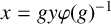
$x=gy\varphi (g)^{-1}$
 . We define the Reidemeister number
$R(\varphi )$
 of
$\varphi $
 as the number of equivalence classes with respect to this relation. Note that
$R(\varphi )\in \mathbb {N}_0\cup \{\infty \}$
 . Also, we define the Reidemeister spectrum of G to be
$\text {Spec}_R(G)=\{R(\varphi ) \mid \varphi \in \text { Aut}(G)\}$
 . If
$\text {Spec}_R(G)=\{\infty \}$
 , we say that G has the
$R_{\infty }$
 -property.
Twisted conjugacy arises naturally in Nielsen fixed-point theory (see, for example, [Reference Jiang12]), but there is also a strong algebraic interest in its study, in particular, in the study of the
$R_{\infty }$
 -property (see, for example, [Reference Dekimpe and Senden5, Reference Fel’shtyn, Luchnikov and Troitsky8, Reference Fel’shtyn and Troitsky9, Reference Springer15]). For many groups, either partial or full information is known about their Reidemeister spectrum. It has either been proven that they have the
$R_{\infty }$
 -property (such as Baumslag–Solitar groups [Reference Fel’shtyn and Gonçalves7] or Thompson’s group [Reference Bleak, Fel’shtyn and Gonçalves1]) or that they do not (such as certain groups of exponential growth [Reference Gonçalves and Wong10] or free groups of infinite rank [Reference Dekimpe and Gonçalves3]), and for some groups, even the complete Reidemeister spectrum has been determined (such as low-dimensional crystallographic groups [Reference Dekimpe, Kaiser and Tertooy4] or finite abelian groups [Reference Senden14]).
The starting point for our discussion is the paper [Reference Senden13], where the Reidemeister spectrum has been determined for split metacyclic groups of the form
$(C_n\times C_{p^m})\rtimes C_p$
 where p is prime, m and n are nonnegative integers, and n is coprime with p. In what follows, we will deal with ZM-groups, that is, finite groups with all Sylow subgroups cyclic. By [Reference Huppert11, Ch. IV, Satz 2.11], such a group is of type

where the triple
$(m,n,r)$
 satisfies the conditions

Throughout the paper, for a finite number of positive integers
$a_1$
 ,
$a_2$
 , …,
$a_n$
 , we denote by
$(a_1,a_2,\ldots ,a_n)$
 their greatest common divisor. It is clear that
$|\text {ZM}(m,n,r)|=mn$
 and
$Z(\text {ZM}(m,n,r))=\langle b^{o_m(r)}\rangle $
 , where

is the multiplicative order of r modulo m. For simplicity of notation, throughout the paper, we will use d instead of
$o_m(r)$
 . For every nonnegative integer u, we define

Our main result is stated as follows.
Theorem 1.1. We have

Example 1.2. For the dicyclic group
$\text {Dic}_3=\text {ZM}(3,4,2)=\text {SmallGroup}(12,1)$
 , we have
$d=2$
 and the above formula leads to
$\text {Spec}_R(\text {Dic}_3)=\{4,6\}.$

The following is a particular case of Theorem 1.1.
Corollary 1.3. If n is prime, then

where

Example 1.4. For
$n=2$
 and
$r=m-1$
 , we have
$\text {ZM}(m,n,r)\cong D_{2m}$
 , the dihedral group of order
$2m$
 . Then,
$S=m+1$
 and so the formula in Corollary 1.3 becomes

We remark that a split metacyclic group
$(C_n\times C_{p^m})\rtimes C_p$
 becomes a ZM-group for
$m=0$
 and so Theorem 1.1 extends the results obtained in [Reference Senden13] in this particular case.
Our approach uses some basic tools of group action theory, such as Burnside’s lemma, and modular arithmetic.
Burnside’s lemma. Let G be a finite group acting on a finite set X and let

Then, the number of distinct orbits is

Most of our notation is standard and will not be repeated here. Basic definitions and results on group theory can be found in [Reference Huppert11].
2 Proofs of the main results
The general form of automorphisms of a metacyclic group has been determined in the main result of [Reference Chen, Xiong and Zhu2]. For ZM-groups, we obtained the following result in [Reference Fasolă and Tărnăuceanu6].
Theorem 2.1. Each automorphism of
$\mathrm {ZM}(m,n,r)$
 is given by

for a unique triple of integers
$(x_1,x_2,y)$
 such that

In particular,

In what follows, we will denote by
$f_{(x_1,x_2,y)}$
 the automorphism of
$\text {ZM}(m,n,r)$
 determined by a triple
$(x_1,x_2,y)$
 satisfying (2.1).
We are now able to prove our results.
Proof of Theorem 1.1.
Let
$f=f_{(x_1,x_2,y)}\in \text {Aut}(\text {ZM}(m,n,r))$
 . To compute
$R(f)$
 , we will apply Burnside’s lemma to the action of
$\text {ZM}(m,n,r)$
 on
$\text {ZM}(m,n,r)$
 given by

Let
$g=b^ua^v$
 and
$x=b^{\alpha }a^{\beta }$
 , where
$0\leq u,\alpha <n$
 and
$0\leq v,\beta <m$
 . From Theorem 2.1,

We have

and

For fixed
$u,v$
 and
$\alpha $
 , the last congruence has solutions
$\beta $
 if and only if

Moreover, if it has solutions, then there are exactly
$(m,[u]_r)$
 solutions. We also remark that (2.2) is equivalent to

and (2.3) has the same number of solutions
$\alpha $
 as

that is, as

To simplify the notation, we write
$w=o_{{(m,[u]_r)}/{(m,[u]_r,v)}}(r)$
 . Obviously, (2.4) has
$n/w$
 solutions and so

as desired.
Proof of Corollary 1.2.
If n is prime, then we have
$d=n$
 , and so the conditions
$0\leq y<n$
 and
$y\equiv 1\, (\text {mod}\, d)$
 imply
$y=1$
 for any
$f=f_{(x_1,x_2,y)}\in \text {Aut}(\text {ZM}(m,n,r))$
 . Thus, again writing
$w=o_{{(m,[u]_r)}/{(m,[u]_r,v)}}(r)$
 , we have

Since w is a divisor of n, either
$w=1$
 or
$w=n$
 . We remark that

It follows that

completing the proof.
Acknowledgement
The author is grateful to the reviewer for remarks which improved the previous version of the paper.



