Introduction
Cardiac surgeries are always high-risk surgeries requiring post-operative mechanical ventilation, inotropic support, central venous line, arterial line, multiple chest tube drainage, monitoring of urine output, and, at times, the need for open sternum, thereby contributing to multiple septic foci. Cardiac surgery itself provokes vigorous inflammatory response leading to clinical and physiological changes, the severity of which is increased with cardiopulmonary bypass. Cardiopulmonary bypass activates the immune system via leucocyte interactions with foreign surfaces of the cardiopulmonary bypass circuit. The early identification of sepsis in post-cardiac surgery patients becomes challenging, resulting in a delay in upgrading antibiotics, potentially increasing the morbidity and mortality. In contrast, unnecessary upscaling of antibiotics also predisposes patients towards antibiotic resistance, thereby increasing morbidity and mortality. Reference Evans, Rhodes and Alhazzani1
In our study, we aimed to evaluate which clinical, imaging, and laboratory parameters best differentiated patients with and without sepsis in the post-operative period. The magnitude of adverse effects of cardiopulmonary bypass amplifies manifolds in paediatric patients. Reference McGuinness, Bouchier-Hayes and Redmond2,Reference Bakshi, Vaidyanathan and Sundaram3 Hence, there is a need to conduct a prospective comparative study for the identification of early markers of sepsis in paediatric patients with prolonged cardiopulmonary bypass.
Materials and methods
This prospective observational cross-sectional study was done at our institute, from January 2022 to June 2023, after obtaining institutional ethical committee clearance and obtaining consent from legal guardian of each patient. Patients who were less than 12 years of age undergoing cardiac surgery with a cardiopulmonary bypass time exceeding 100 minutes were included in our study. Patients with established pre-operative sepsis were excluded. Routine antimicrobial prophylaxis with cefuroxime was initiated in all patients at 30 mg/kg body weight twice daily intravenously. In the cardiac surgery ICU, comprehensive clinical assessments were conducted, encompassing vital signs, core and peripheral body temperature monitoring, and regular urine output measurement. Chest X-rays were performed daily and arterial blood gas analysis was performed at six-hour intervals or as required.
All the laboratory investigations, including total leucocyte count, absolute neutrophil count, platelet count, serum albumin levels, chest X-ray, blood culture sensitivity, urine culture sensitivity, tracheal culture and sensitivity, lactate >2.5 mmol/l, along with novel biomarkers procalcitonin, C-reactive protein, and clinical parameters of sepsis including fever, hypotension, tachycardia, were performed as a standard of practice in the participating patients. Sepsis was suspected when patients showed that two or more clinical parameters were positive, which allowed us to start close monitoring and treatment early. We confirmed sepsis only if laboratory cultures from blood, urine, or tracheal samples tested positive for bacteria or other organisms. Furthermore, we compared two groups: those in whom sepsis was suspected based on clinical parameters and those with positive culture results. This comparison helped us evaluate the effectiveness of early clinical indicators in predicting confirmed infections.
Hypotension and tachycardia were defined as per the American College of Critical Care Medicine Clinical Practice Parameters for Hemodynamic Support of Paediatric and Neonatal Septic Shock guidelines. Reference Davis, Carcillo and Aneja4 Statistical analyses were performed using SPSS, version 26 for Windows (SPSS Inc., Chicago, IL). Area under receiver operating characteristic (AUROC) analysis was done to identify the validity of the test and to further calculate the cutoff values of the significant markers. The test was considered acceptable if area under curve was 0.7–0.8, excellent if area under curve was 0.8–0.9, and outstanding if area under curve was >0.9.
Normal laboratory values that are followed at our institute
Total leucocyte count 4000–11,000 / ml
Absolute neutrophil count 1800–7700 /m L
Platelet count 150,000–450,000/ ml
S. Albumin 3.8–4.8 g/dL
Results
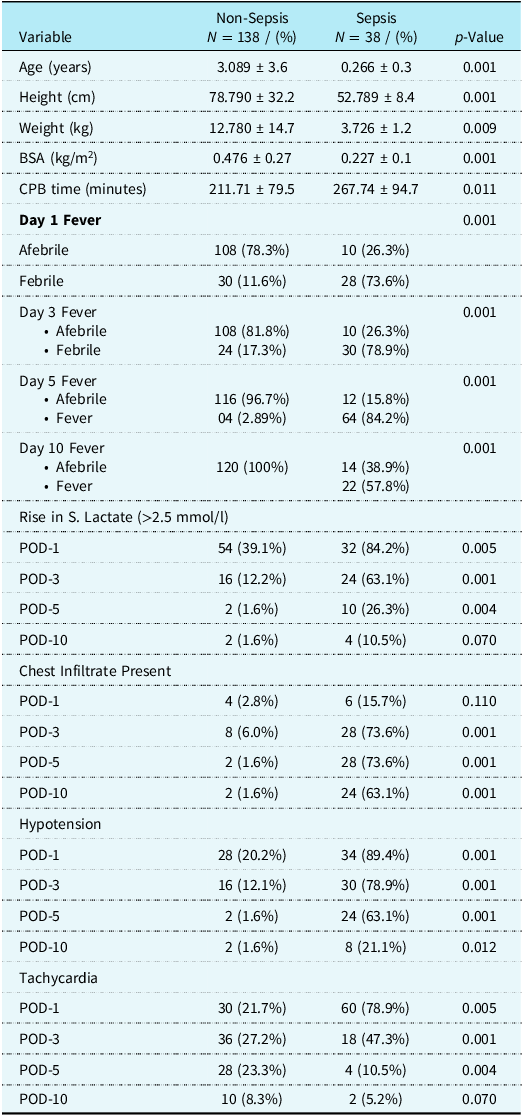
A total of 232 patients were considered for the study out of which 54 patients were excluded due to preoperative sepsis and 2 patients did not consent for the study. One hundred and seventy-six patients were finally included in our study of which 116 were males and 60 were females. Amongst the non-sepsis group (N = 138) and the sepsis group (N = 38), the mean age in the non-sepsis group was 3.089 ± 3.6 years, whereas in the sepsis group, the mean age was significantly lower at 0.266 ± 0.3 years (p = 0.001). The body surface area (BSA) was also found to differ significantly between the non-sepsis group (mean BSA 0.476 ± 0.27 m2) and the sepsis group (mean BSA of 0.227 ± 0.1 m2) (p = 0.001).
The laboratory parameters and clinical parameters mentioned above were compared between these two groups at multiple time points: post-op day 1, post-op day 3, post-op day 5, and post-op day 10 (Table 1).
Demographic and clinical parameters compared between non-sepsis group and sepsis group; POD- post-operative day.

The p-values calculated for all days, comparing the occurrence of fever between the sepsis and non-sepsis groups, were found to be statistically significant. There is a significant association between the rise in serum lactate levels >2.5 mmol/L and the occurrence of sepsis, on POD-1, POD-3, and POD-5. The comparison of chest infiltrate between the sepsis and non-sepsis groups also revealed statistically significant findings on post-op day 3, 5, and 10. However, no significant difference was observed on post-op day 1. The comparison of hypotension and tachycardia was also significant between the two groups from POD-1 onwards.
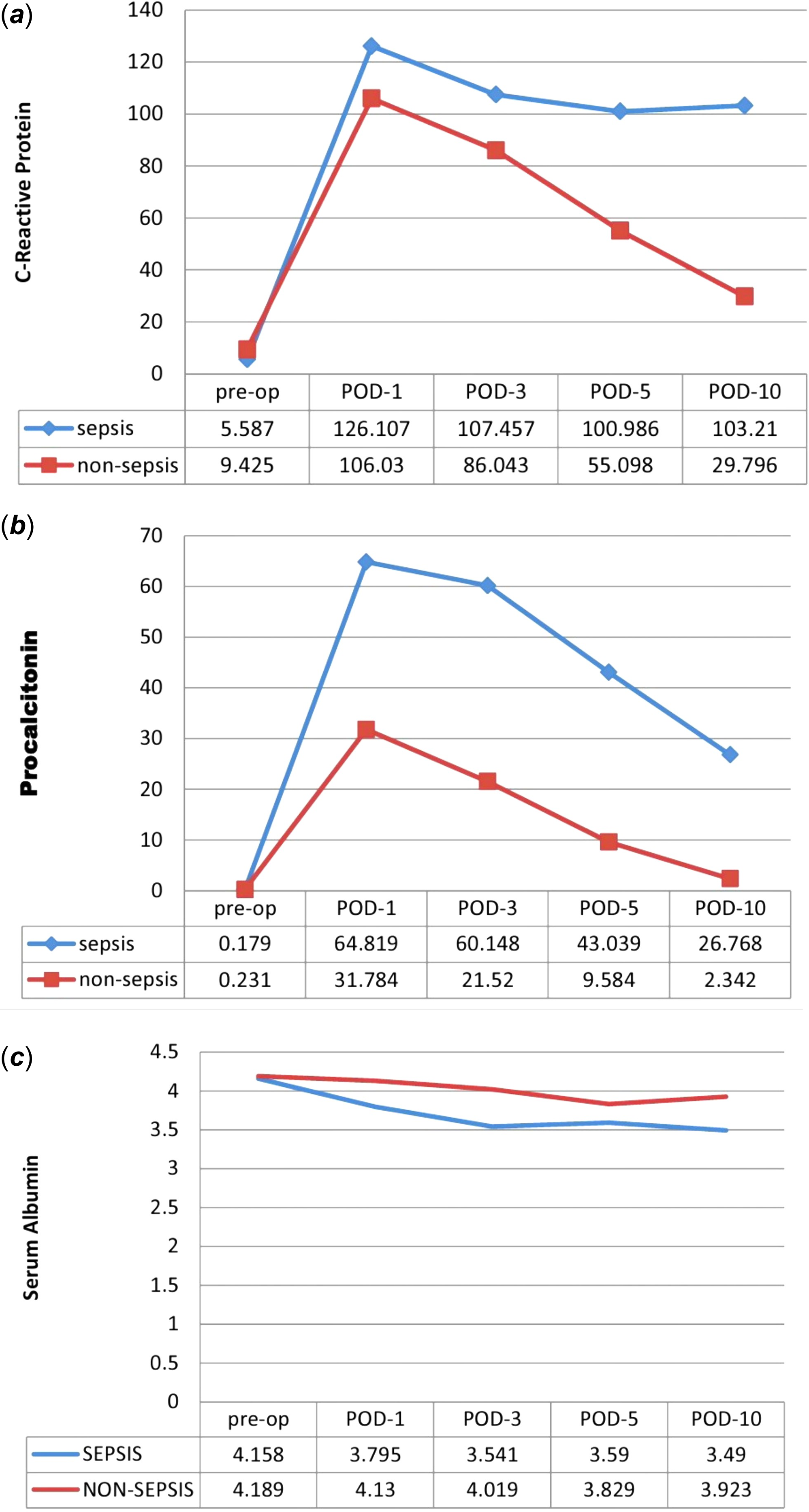
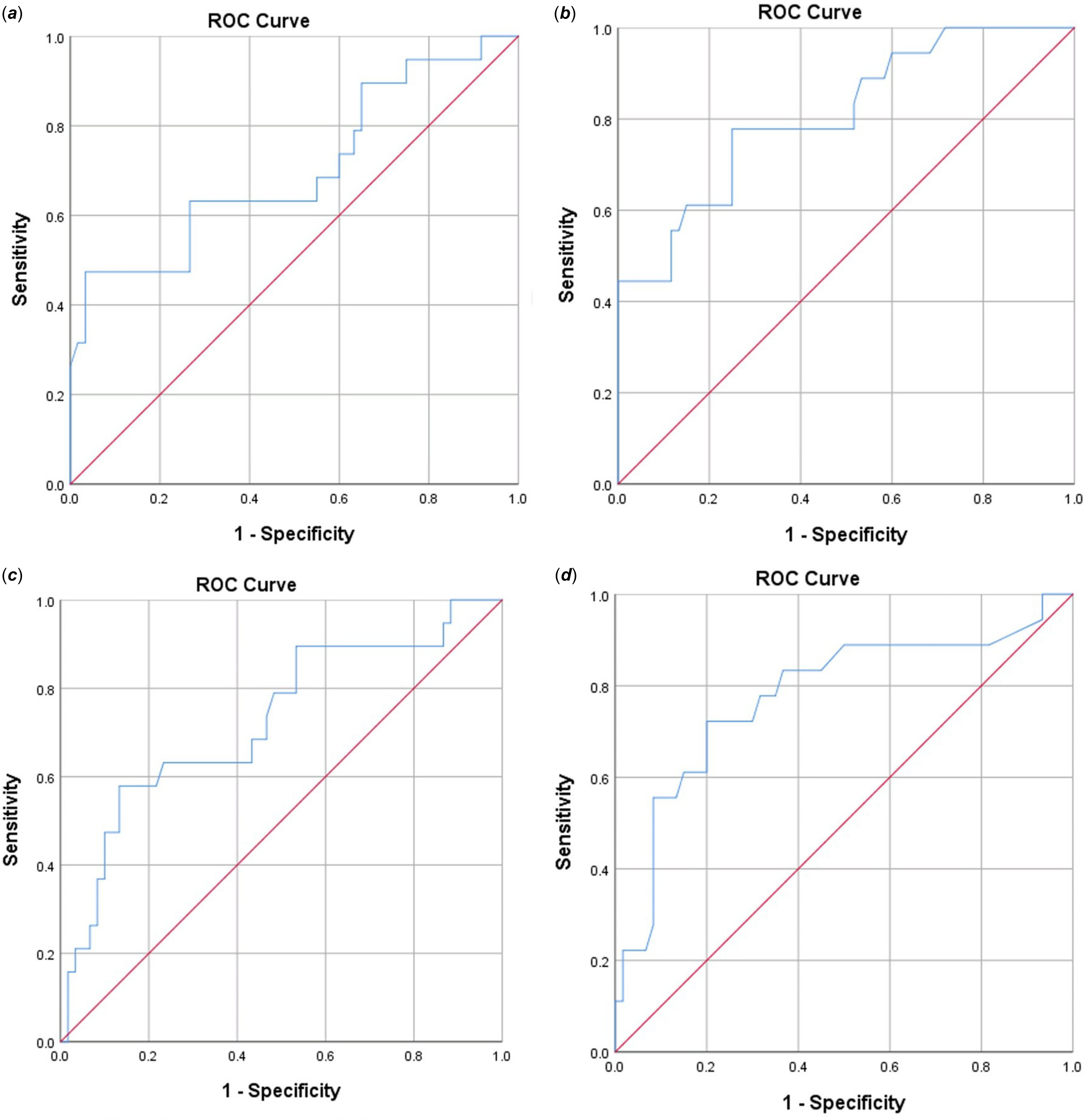
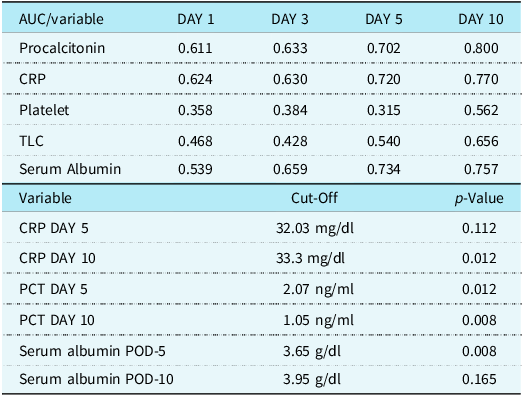
For laboratory parameters and biomarkers, trends of mean values between the two groups were noted, as highlighted in Figure 1 and subsequently receiver operating characteristic curve analysis was done, and area under curve was calculated. Though C-reactive protein and procalcitonin levels were elevated in sepsis patients from day 1, area under curve analysis of C-reactive protein, procalcitonin, and serum albumin was found to be acceptable only from day 5 (Figure 2). Based on the receiver operating characteristic curve analysis, cut-off values for C-reactive protein, procalcitonin, and serum albumin were calculated on day 5 and day 10 to determine the optimal thresholds for predicting sepsis (Table 2).
Trends - ( a ) C-reactive Protein, ( b ) Procalcitonin, ( c ) Serum Albumin preoperatively, POD-1, POD-3, POD-5 and POD-10 (POD = Post-Operative Day).

AUROC curve ( a ) PCT POD-5, ( b ) PCT POD-10, ( c ) CRP POD-5, ( d ) CRP POD-10 (AUROC- Area Under receiver operator Characteristics, PCT = Procalcitonin, CRP = C-Reactive protein, POD = Post-Operative Day).

Area under curve of procalcitonin, CRP, platelets, total leucocyte count, serum albumin levels along with cutoff of procalcitonin, CRP, and serum albumin levels along with p-value. CRP – C-reactive protein, TLC – total leucocyte count.

The calculated cut-off values are as follows:
Procalcitonin
– Day 5: Cut-off value = 2.07 ng/ml
– Day 10: Cut-off value = 1.05 ng/ml
C-reactive protein
– Day 5: Cut-off value = 32.03 mg/dl
– Day 10: Cut-off value = 33.3 mg/dl
Serum albumin
Day 5: Cut-off value = 3.95 g/dl
Day 10: Cut-off value = 3.65 g/dl
These cut-off values represent the threshold values above which the respective biomarker (C-reactive protein or procalcitonin) is considered indicative of a greater likelihood of sepsis development, while for serum albumin, levels below the cut-off were considered.
The statistical analysis revealed that procalcitonin levels on both day 5 and day 10 were found to be statistically significant in relation to sepsis development. On the other hand, the analysis showed that the C-reactive protein levels on day 10 were statistically significant in predicting sepsis development. However, the C-reactive protein levels on day 5 did not reach statistical significance. The analysis of serum albumin reflected the test to be statistically significant on POD-5.
Blood culture
In the study, blood cultures were obtained on different post-operative PODs (POD-1, POD-3, POD-5, and POD-10) to assess the presence of bacterial or fungal pathogens. One patient on POD-1 had a positive blood culture for the organism E. coli.
On POD-3, the following bacterial species were identified:
-
Acinetobacter baumannii in one patient
-
E. coli in two patients
-
K. pneumonia in three patients
-
Enterococcus in three patients
On POD-5, K. pneumonia was found in two patients, Enterococcus in three patients, Escherichia coli in one patient, and yeast in one patient, and Staphylococcus aureus was identified in one patient. On POD-10, all blood cultures were sterile.
Tracheal culture
Tracheal cultures were obtained on different post-operative PODs (POD-1, POD-3, POD-5, and POD-10) to assess the presence of microorganisms in the respiratory tract. The results revealed the following findings:
On POD-1, tracheal culture showed the presence of A. baumannii in one patient.
On POD-3, Enterococcus was found in three patients, and A. baumannii was present in five patients.
On POD-5, A. baumannii was identified in eight patients, K. pneumonia in two patients, and Stenotrophomonas in one patient.
On POD-10, A. baumannii was present in two patients, and one patient showed the presence of Chryseobacterium.
Urine culture
On POD-3, one patient showed the presence of E. coli. On POD-5, the patient showed the presence of yeast. For the rest of the days, the urine culture was sterile.
Discussion
Early identification of sepsis in cardiac surgery patients is crucial, as it directly influences post-operative outcomes by enabling prompt intervention with antibiotics and haemodynamic support to control infection and prevent sepsis progression. Given the inflammatory response that cardiac surgery, especially with cardiopulmonary bypass, triggers, the ability to discern routine post-operative inflammatory markers from early signs of sepsis becomes indispensable for effective management and timely intervention. Early identification enables timely interventions: targeted antibiotics and haemodynamic support control infection and prevent sepsis progression. This study’s data and analysis underscore the importance of accurately interpreting clinical signs and markers to differentiate between standard post-surgical inflammatory responses, cardiopulmonary bypass-induced inflammation, and genuine sepsis. Vigilant patient monitoring and timely recognition of signs of sepsis permit early interventions, potentially mitigating infection escalation and optimising post-operative outcomes. Reference Grover5,Reference Font, Thyagarajan and Khanna6
The findings of this research provide valuable insights into the association between sepsis and demographic variables. Our study reveals a notable trend of sepsis occurring in the younger age group with lower body weight and smaller BSA. It is worth noting that these results align with a similar study conducted by Skrak et al, Reference Skrak, Kovacikova and Kunovsky7 where they also found significant differences in age, height, and weight between the sepsis and non-sepsis groups.
The results of our study revealed a significant difference in cardiopulmonary bypass time between the non-sepsis and sepsis groups, indicating a potential association between cardiopulmonary bypass duration and the development of sepsis in patients undergoing cardiac surgery (211.71 ± 79.5 minutes versus 267.74 ± 94.7 minutes; p-value 0.011). These findings are consistent with previous research conducted by Jamil et al., Reference Jamil, Baram and Saqat8 Davidson et al., Reference Davidson, Tong, Hauck, Lawson, da Cruz and Kaufman9 and Farias et al., Reference Farias, Villarreal, Dhargalkar, Kleinhans, Flores and Loomba10 all of which reported similar associations between prolonged cardiopulmonary bypass time and an increased risk of sepsis. This finding supports the notion that extended cardiopulmonary bypass contributes to a more intense inflammatory response, potentially overwhelming the immune system and increasing infection risk. Cardiopulmonary bypass duration, alongside clinical signs and biomarker patterns, offers an additional stratification tool to gauge the risk of sepsis more accurately in post-operative cardiac patients. Additionally, longer cardiopulmonary bypass time has been linked to coagulopathy and increased blood transfusions, which can further compromise the immune response and potentially lead to infections.
Our findings demonstrate that clinical parameters such as fever, tachycardia, and hypotension provide valuable information when continuously monitored and assessed in the context of timing, duration, and intensity. For instance, while post-operative fever may be expected as a general inflammatory response, persistently high fever beyond typical post-operative days or fever accompanied by significant hypotension and tachycardia raises a stronger suspicion for sepsis. This consistent pattern provides a clinical pathway to guide early suspicions of sepsis versus benign post-operative fever.
Fever
Fever was a significant marker from day 1. It is also an important component of inflammation in all sick patients because a large number of both the cell-derived and plasma-derived inflammatory mediators are pyrogenic. Low cardiac output syndrome (LOCS) patients tend to develop cool peripheries. In such a subset of patients, peripheral and rectal temperatures were monitored, and if rectal temperature was more than 38˚C, it was found to be significant. Still, LOCS acts as a confounding factor.
Tachycardia
Tachycardia again was a significant indicator of sepsis from day 1. Arrhythmias are also a common cause of post-cardiac surgery morbidity, sometimes appearing as tachyarrhythmias, Reference Peretto, Durante, Limite and Cianflone11 which could potentially complicate our results. It is important to recognise that patients with existing structural cardiac defects, a subset that our study involved, are more prone to arrhythmias, underscoring the necessity for careful consideration. Patients can become dehydrated due to aggressive diuresis, which can also cause tachycardia. However, this can be detected from CVP. Reference Watso and Farquhar12 Patients with LOCS can have compensatory tachycardia, acting as a confounding factor.
Hypotension
Hypotension, as defined by the study protocol, was found to be significant from day 1 in patients with sepsis.
Low cardiac output syndrome and sepsis
LOCS is commonly defined as a cardiac output index decreased to <2.2 L/min/m2 and a systolic blood pressure of <90 mmHg, accompanied by indicators of tissue malperfusion, such as cold periphery, clammy skin, confusion, oliguria, and elevated lactate levels, all in the absence of hypovolemia. Although hypotension emerged as a significant factor between the two groups, there are certain confounding factors. The presence of LOCS is seen in approximately 25% of patients following complex congenital cardiac surgery, manifested as hypotension. Intra-operative myocardial injury and adverse effects related to cardiopulmonary bypass also contribute to LOCS. The systemic and regional inflammatory response that occurs with cardiopulmonary bypass and reperfusion injury increases total body oxygen demand while impairing oxygenation, cardiac output, and systemic oxygen delivery. Reference Chandler and Kirsch13 ECHO was done frequently to rule out LOCS.
Procalcitonin and C- reactive protein
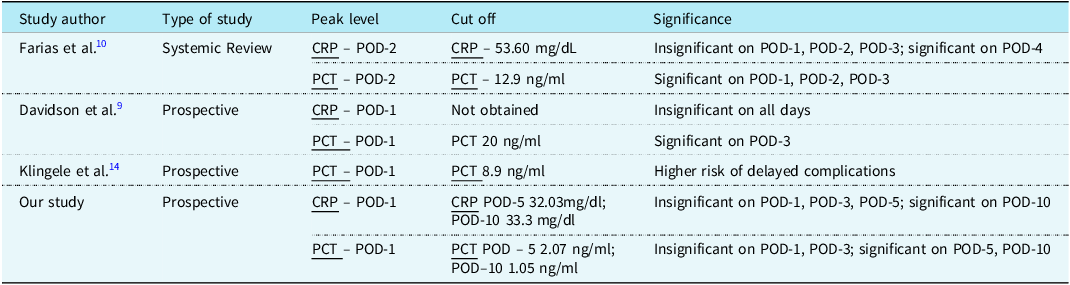
The significance of biomarkers such as procalcitonin and C-reactive protein is particularly noteworthy. Procalcitonin levels on POD-5 showed early clinical utility, emerging as a valuable marker for distinguishing sepsis when fever and other clinical signs alone might be inconclusive. Although these findings did not coincide with the findings by Klingele et al. Reference Klingele, Bomberg, Schuster, Schäfers and Groesdonk14 and Farias et al., Reference Farias, Villarreal, Dhargalkar, Kleinhans, Flores and Loomba10 wherein the studies showed significant differences between procalcitonin levels starting from post-operative day 1.
In contrast, C-reactive protein levels, which showed no significance on POD-5, became significant on POD-10. This delayed rise in C-reactive protein suggests it may be more suitable for monitoring infection resolution rather than early sepsis detection. The findings of the study collaborated with the study by Farias et al., Reference Farias, Villarreal, Dhargalkar, Kleinhans, Flores and Loomba10 wherein the results were insignificant till POD-3. The CRP values increased significantly after POD-4 in the concluded study. The progressive analysis of procalcitonin and C-reactive protein alongside clinical markers thus provides a clearer timeline of inflammation patterns, helping to differentiate sepsis from the sterile inflammatory responses common after cardiopulmonary bypass (Table 3).
Various studies on sepsis markers in cardiac surgical patients.

Laboratory parameters
Our analysis also highlights the value of continuous assessments of laboratory markers like total leucocyte count, platelet count, and absolute neutrophil count, although they showed limited predictive power for sepsis, with area under curve values below 0.7 on all PODs. Yet, evaluating these alongside clinical parameters allows for a holistic view, particularly in ruling out sepsis when these counts remain normal amidst other concerning signs. Our findings offer a unique perspective compared to the study by Farak et al., Reference Farkas15 which identified thrombocytopenia as the earliest marker distinguishing sepsis from SIRS.
Chest infiltrate
Chest X-rays can serve as a valuable tool for response assessment and early identification of sepsis after cardiac surgery. This was in concordance with a study by Carrilo-Bayona et al., Reference Carrillo-Bayona and Arias-Alvarez17 wherein they defined various features of chest X-rays that were consistent with different types of pneumonia. In the article published by Blumenthal et al., Reference Blumenthal, Miller and Kotloff18 it was established that the most common cause of pulmonary infiltrates was pneumonia.
Rise in serum lactate
Serum lactate levels were compared and were found to be statistically significant on POD-1, POD-3, and POD-5 but was insignificant on POD-10. There are many confounding factors, as described by Jonathon Minton et al., Reference Minton and Sidebotham19 inadequate oxygen delivery during cardiopulmonary bypass, severe anaemia or haemodilution, excessive inotropic support, non-occlusive mesenteric ischaemia, and hepatic ischaemia. Hence, while assessing for sepsis, these factors must be considered.
So far, no prospective study in the existing literature compares all the above markers to differentiate sepsis in the post-operative period after cardiac surgery with prolonged cardiopulmonary bypass effects in any age group. The index study is the first to compare clinical parameters along with laboratory markers and biomarkers in the early identification of sepsis in paediatric cardiac surgical patients.
Conclusion
Our study underscores the importance of a comprehensive clinical assessment in the early identification of sepsis, as compared to relying exclusively on laboratory tests and biomarkers such as C-reactive protein and procalcitonin. Since laboratory results can be delayed, real-time clinical signs should be closely monitored, with any changes seen as early indicators of sepsis. Given the high-risk nature of paediatric cardiac surgery, any clinical deterioration should prompt immediate investigations, including cultures, blood tests, and chest X-rays. We recommend prioritising clinical evaluation over laboratory results alone for sepsis detection. While post-operative fever and inflammation can mimic sepsis, consistent monitoring of fever patterns, hypotension, tachycardia, and biomarkers like procalcitonin and C-reactive protein at specific post-operative days can help differentiate between normal post-surgical responses and sepsis. This comprehensive approach allows for early detection and intervention, improving patient outcomes and reducing the risk of complications in paediatric cardiac surgery patients.
Supplementary material
The supplementary material for this article can be found at https://doi.org/10.1017/S1047951125101005.
Financial support
No funding was received.
Competing interests
The author declares no conflict of interest.
Ethical standard
In accordance with the principles of the Helsinki Declaration, this research respects the rights, dignity, and well-being of human participants, ensuring informed consent, confidentiality, and the ability to withdraw without consequence. No animals were included in the study. Institutional Ethical Committee clearance was taken for the study.