1. Introduction
Severe health and environmental issues can stem from improper treatment of solid waste and wastewater. Initially, waste which is not properly disposed of can seep into soil, air and water, causing pollution and environmental damage. Human beings breathe the contaminated air and ingest water, plants and animal products which have been exposed to the pollution. Tomatis (Reference Tomatis1990) and Viel et al. (Reference Viel, Arveux, Baverel and Cahn2000) show that many forms of cancer can be attributed to the environmental pollution caused by solid waste and wastewater mismanagement. Other health problems such as low birth weight, cardiovascular, gastrointestinal, respiratory and infectious diseases have been shown to correlate with solid waste build-up (Elliott et al., Reference Elliott, Briggs, Morris, de Hoogh, Hurt, Jensen, Maitland, Richardson, Wakefield and Jarup2001; Boadi and Kuitunen, Reference Boadi and Kuitunen2005). Wastewater can also pollute rivers, streams and lakes. Beaches and coral reefs become damaged (Rakodi et al., Reference Rakodi, Gatabaki-Kamau and Devas2000) and many countries and regions have seen decreased property values (Hussain et al., Reference Hussain, Raschid, Hanjra, Marikar and van der Hoek2001) and negative impacts on tourism (Henry et al., Reference Henry, Yongsheng and Jun2006) due to environmental degradation. Global issues such as climate change have also been partially attributed to increases in solid waste and wastewater as populations have grown and consolidated into urban areas (Satterthwaite, Reference Satterthwaite2009).
Extreme risks such as these have caused international agencies to put forth mandates to protect the health, prosperity, equality and environment of all nations across the globe. For example, clean water and proper sanitation practices hold prominent positions among the United Nations' Sustainable Development Goals (SDGs) (United Nations, 2019). Specifically, Goal 6 ‘Clean Water and Sanitation’ and Goal 12 ‘Responsible Consumption and Production’ state that by 2,030 countries should work to decrease untreated wastewater by half of the current proportion, increase recycling, and decrease pollution related to solid waste.
However, achieving these goals will be particularly challenging for developing countries where sanitation services are still far from being universal. For instance, residential solid waste collection rates in low income countries are below 50 per cent. Conversely, in high income countries, collection rates exceed 90 per cent of all residences (Hoornweg and Bhada-Tata, Reference Hoornweg and Bhada-Tata2012). With more than 1.3 billion metric tons of solid waste generated each year, and projected population growth rates set to increase this global total by as much as 70 per cent by 2025 (Hoornweg and Bhada-Tata, Reference Hoornweg and Bhada-Tata2012), solid waste management issues may soon be pushed to the forefront of municipal budgetary planning agendas in both developed and developing countries. Coupled with the solid waste generation is the additional generation and mismanagement of wastewater. Roughly, 330 km3 of wastewater are generated globally each year. Although high-income countries treat and properly dispose of wastewater for more than 75 per cent of businesses and households, some low-income countries treat less than 1 per cent of their wastewater (Mateo-Sagasta et al., Reference Mateo-Sagasta, Raschid-Sally, Thebo, Drechsel, Qadir and Wichelns2015).
Guatemala represents an example of a developing country where substantial efforts will be needed in order to achieve the SDG of sanitation for all. In its final report on the Millennium Development Goals (MDGs), the Presidential Secretariat for Planning and Programming (SEGEPLAN) indicates that as of 2014 only 53.3 per cent of Guatemalans had access to an adequate facility for safe disposal of excreta, which was the official MDG indicator on improved sanitation (SEGEPLAN, 2015). Moreover, Uytewaal (Reference Uytewaal2016) estimates that only 5 per cent of the wastewater produced in the country is treated before final discharge. Solid waste management is as precarious as wastewater disposal services. The National Institute of Statistics (INE, for its initials in Spanish) indicates that only 41.5 per cent of the municipalities have landfills (INE, Reference INE2015). Years of improper disposal of solid waste, such as burying, burning, and littering of trash, as well as diverting wastewater into precious waterways, have caused considerable environmental degradation in Guatemala (Schadwinkel, Reference Schadwinkel2012). This represents a latent risk for the health of Guatemalans.
Public investments in wastewater and solid waste services are crucial to prevent further environmental contamination and related health consequences. However, in many developing countries, public investments in the sanitation sector are relatively low, presumably because other competing needs (e.g., education, water and health care) take priority. Out of 189 countries that ratified the MDGs, 94 countries – including Guatemala – did not reach the sanitation target, which can be considered as a demonstration of low prioritization of the sector in public investment decisions worldwide (United Nations, 2015). Guatemala did not invest enough resources to achieve the MDG target of extending improved sanitation to 65.5 per cent of residents, falling short of that goal by more than 12 percentage points (SEGEPLAN, 2015). Under these circumstances, it is imperative to demonstrate the benefits that citizens derive from having access to improved sanitation services, i.e., wastewater and solid waste disposal. The economic value that households assign to sanitation services provides a monetary estimate of those benefits, which may inform official investment decisions in the sanitation sector.
The objective of this study is to provide estimates of the value that Guatemalan residents assign to improved sanitation services in the form of solid waste removal services and connections to a sewer system. Specifically, we employ a revealed preference technique, the hedonic price method, to examine how rental prices vary between homes with and without access to sanitation services. This modeling approach allows us to derive an average implicit price for each service. Results suggest that the studied group of residents is willing to pay higher rents for both wastewater and solid waste removal amenities. We analyze these estimation results in light of the institutional framework of the sanitation sector in Guatemala and provide policy recommendations to help Guatemala achieve better sanitation services for all citizens as well as meet international sanitation goals.
2. Willingness to pay for sanitation services: a literature review
Existing evidence suggests that there is a latent demand for improved sanitation services in developed and developing countries alike. While some researchers have gone on to examine the next steps for waste management and diverse recycling programs in developed countries such as the United States (Park and Berry, Reference Park and Berry2013; Li et al., Reference Li, Espínola-Arredondo and McCluskey2016), Poland (Czajkowski et al., Reference Czajkowski, Kądziela and Hanley2014), Italy (Basili et al., Reference Basili, Matteo and Ferrini2006), and Australia (Gillespie and Bennett, Reference Gillespie and Bennett2013), other authors continue to examine the value that consumers place on simple solid waste collection services in countries such as Lithuania (Bluffstone and Deshazo, Reference Bluffstone and DeShazo2003), Taiwan (Huang and Ho, Reference Huang and Ho2005), Nigeria (Ichoku et al., Reference Ichoku, Fonta and Kedir2009), Bangladesh (Afroz et al., Reference Afroz, Hanaki and Hasegawa-Kurisu2009) and China (Wang et al., Reference Wang, He, Kim and Kamata2014). Each of those studies has assessed the value of solid waste removal and disposal services through the use of contingent valuation surveys. Combined, the results of these studies suggest that residents of developing countries are willing to pay between 0.1 and 1.8 per cent of their annual income to improve their municipal solid waste management systems.Footnote 1 Additional stated preference studies suggest that individuals in low income countries also value improved wastewater services (Birol and Das, Reference Birol and Das2010; Ndunda and Mungatana, Reference Ndunda and Mungatana2013; Hall et al., Reference Hall, Vance, Van Houweline and Huang2015; Laré-Dondarini, Reference Laré-Dondarini2015) and are willing to pay up to as much as 2 per cent of their annual incomes for connections to wastewater management systems (Seraj, Reference Seraj2008).
While many studies have estimated the willingness to pay for sanitation services, they have done so using stated preference methods (e.g., contingent valuation). There are many benefits to this approach. First, stated preference methods, such as contingent valuation, allow individuals to express both use and non-use value in their responses to valuing non-market goods. Another benefit is the flexibility of the methodology. The researcher has more control over the types of questions that survey respondents answer and can gain insight into nuanced specificities of a particular study (Kroes and Sheldon, Reference Kroes and Sheldon1988). However, it has also been shown that estimates based on stated preference methods may be biased due to anchoring or sequencing of the survey questions (Carson and Mitchell, Reference Carson and Mitchell1989), hypothetical bias (Neill et al., Reference Neill, Cummings, Ganderton, Harrison and McGuckin1994), extent of the information provided on the survey (Bergstrom and Stoll, Reference Bergstrom and Stoll1990), and strategic responses (Carson and Mitchell, Reference Carson and Mitchell1989). A choice experiment in which respondents are asked to choose between a number of scenarios in which characteristics vary, but are clearly defined, has helped to alleviate some of the problems with survey methods (Boxall et al., Reference Boxall, Adamowicz, Swait, Williams and Louviere1996).
The alternatives to stated preference methods are revealed preference studies in which consumer behavior is used to predict respondents' willingness to pay for amenities not sold in markets. For example, the hedonic price method allows for the estimation of marginal willingness to pay for amenities whose value may be embedded in the price of a particular property. These values are often viewed as superior estimates of willingness to pay because they are based on observed behavior rather than on hypothetical scenarios (Louviere et al., Reference Louviere, Hensher and Swait2000; Cameron et al., Reference Cameron, Poe, Ethier and Schulze2002). However, this methodology is not without issues. For example, hedonic models do not capture non-use values. In addition, potential econometric problems, including lack of variation in the studied sample and correlation between variables in the regression models, can make the marginal willingness to pay values difficult to estimate precisely (Kroes and Sheldon, Reference Kroes and Sheldon1988; Adamowicz et al., Reference Adamowicz, Louviere and Williams1994). Although these issues are not direct violations of underlying assumptions of the regression models, they can be partially alleviated by adding more data and providing robustness checks on the results (Chay and Greenstone, Reference Chay and Greenstone2005). Finally, hedonic models may suffer from omitted variable bias. However, some studies have shown that when particular housing or location variables are not available, the inclusion of fixed effects can help alleviate this issue (e.g., Kuminoff et al., Reference Kuminoff, Parmeter and Pope2010; Boyle et al., Reference Boyle, Barrilleaux and Scheller2014; Tuttle and Heintzelman, Reference Tuttle and Heintzelman2015).
The hedonic pricing method has been widely used to value amenities which have the potential to affect home prices, such as proximity to open or undeveloped space (Cheshire and Sheppard, Reference Cheshire and Sheppard2002; McConnell and Walls, Reference McConnell and Walls2005; Gibbons et al., Reference Gibbons, Mourato and Resende2014), clean air (Palmquist, Reference Palmquist1982; Yusuf and Resosudarmo, Reference Yusuf and Resosudarmo2009), clean water (Leggett and Bockstael, Reference Leggett and Bockstael2000; Walsh et al., Reference Walsh, Milon and Scrogin2011), and noise (Day et al., Reference Day, Bateman and Lake2007). However, only a limited number of studies have applied it to estimate values for sanitation services in developing country contexts, perhaps because housing transaction data is limited in those countries. For instance, Knight et al. (Reference Knight, Herrin and Balihuta2004) estimated the value of having a flush toilet and latrines in Uganda. Gulyani et al. (Reference Gulyani, Bassett and Talukdar2012) compared rental price differentials between housing units with and without reasonable access to sanitation, defined as sharing a toilet with less than 10 households in Kenya and five households in Senegal. Choumert et al. (Reference Choumert, Stage and Uwera2014) estimated values for having a toilet in Rwanda, and Vásquez (Reference Vásquez2013a) provided estimates on the value of having a connection to a drainage system in Guatemala. Those studies demonstrated that having access to improved sanitation increases rental prices in developing countries.
It is worth noting, however, that these prior hedonic studies did not estimate the value of having access to solid waste collection services. Few hedonic studies have actually done so. Among the exceptions, Yusuf and Koundouri (Reference Yusuf and Koundouri2005) used imputed rental prices and found positive values for solid waste collection services in Indonesia. Yet, the validity of those estimates may be challenged due to the hypothetical nature of imputed rental prices.Footnote 2 This study, in contrast, utilizes actual rental prices to estimate the implicit price of having access to municipal solid waste disposal services, as well as the value that home renters assign to sewerage systems.
3. Sanitation services in Guatemala
3.1 Institutional framework
The National Constitution of Guatemala (Articles 93 and 97) mandates that the government, municipalities and citizens must prevent environmental pollution and maintain an ecological equilibrium for sustained health of the population. Based on these constitutional rights and obligations, the government is responsible for providing sanitation services to all residents. The Municipal Code (Articles 67 and 68a), as well as other regulations, explicitly decentralizes the responsibility of providing sanitation services to municipal governments. Municipal governments are also granted the right to delegate the provision of sanitation services to private companies if necessary. The Ministry of Health and Public Assistance (MSPAS, for its initials in Spanish) is mandated to promote universal coverage of sanitation services, design and enforce proper regulations, and provide technical assistance to municipalities in their role of providers of sanitation services (Health Code, Articles 92-108). The Ministry of Environment and Natural Resources (MARN, for its initials in Spanish) is also mandated to play an important role in coordinating and enforcing regulations and policies aimed at environmental protection and improvements (Governmental Agreement 281-2015).
While fragmented, the legal framework seems to clearly assign responsibilities to municipal governments, MSPAS and MARN. However, in practice, there is a lack of coordination among those agencies. For instance, in compliance with Governmental Agreement No. 281-2015, MARN has developed the capacity to provide municipal governments with managerial and technical training for wastewater and solid waste treatment. Yet MARN is not proactive in reaching out to municipalities, but rather expects municipal governments to request its assistance, which rarely happens (MARN, personal communication, 2018). Coupled with the lack of institutional coordination, there are no incentives or enforcement mechanisms to hold central government agencies and municipal governments accountable for implementing national waste management policies. As a result, municipalities tend to independently supply sanitation services, if any.
The institutional underdevelopment of the sanitation sector is also noticeable at the local level. Municipal governments do not have incentives to install wastewater treatment plants, and the few that have installed them lack the technical knowledge to adequately operate and maintain the infrastructure. Consequently, less than 1 per cent of the wastewater is properly treated before its disposal into water bodies (MARN, personal communication, 2018). In addition, several municipal governments are not willing to provide or not capable of providing solid waste collection services. Alternatively, some of those municipalities have granted the provision of solid waste services to private entities. In other municipalities, small private solid waste collectors have informally emerged without proper supervision of municipal governments. The involvement of the private sector is usually limited to solid waste collection. Waste is then dumped in municipal landfills (when they exist), or in clandestine sites. Municipal landfills tend to be precarious, causing considerable environmental pollution.
Municipal governments argue that they do not have enough financial resources to provide sanitation services (National Association of Municipalities, personal communication, 2018). In Guatemala, municipalities primarily depend on transfers from the central government to fund their operations and services. Although they are legally allowed to generate their own revenue through local taxes (e.g., property taxes) and service fees, municipal governments avoid charging fees for their services due to the elevated political cost of that measure (Vásquez, Reference Vásquez2011). Wastewater service fees are assumed to be included in the water bill, which is often insufficient to recover water supply costs (Vásquez, Reference Vásquez2011). Likewise, most municipalities that collect solid waste either subsidize the service in its totality using central government transfers and property taxes, or charge a minimal fixed fee for the service that is not enough to cover costs.
3.2 Coverage of sanitation services
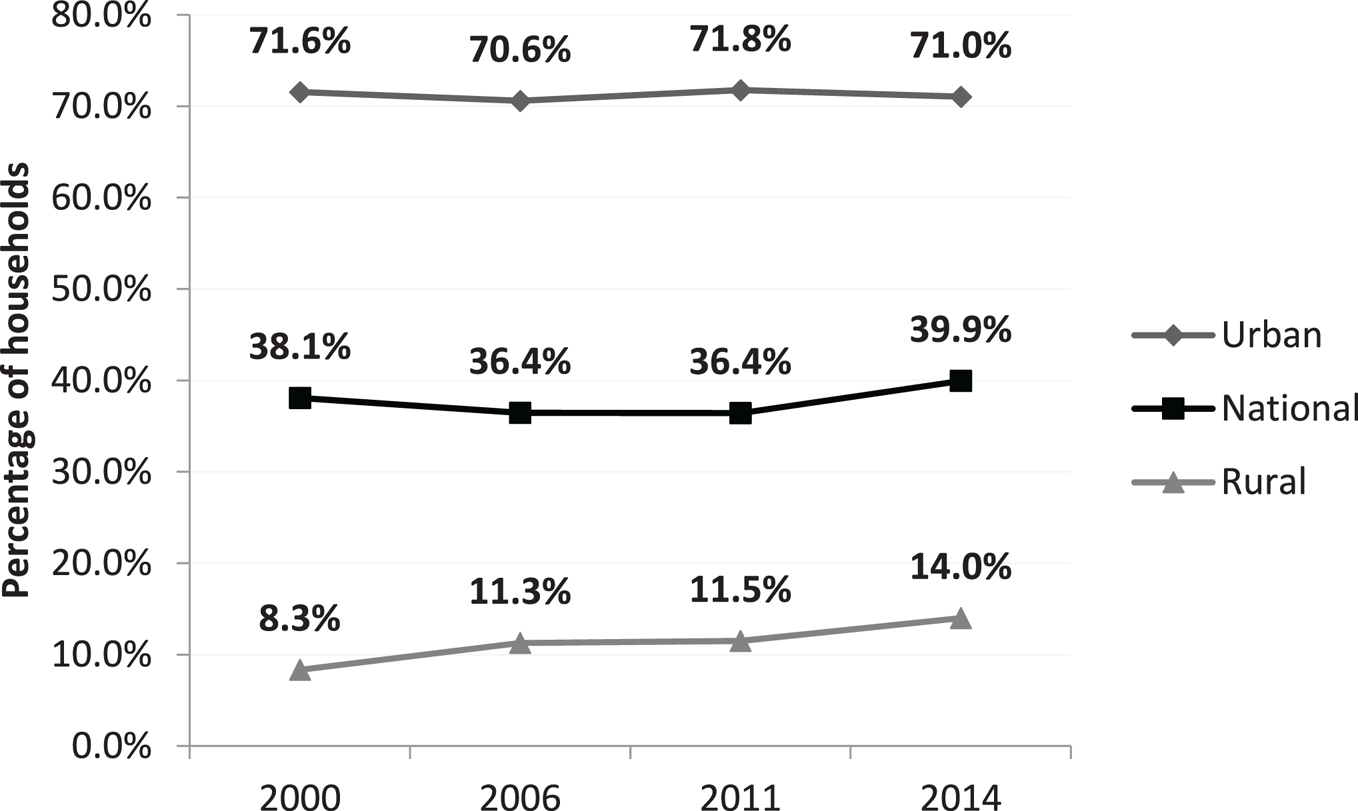
Coverage of sanitation services is scarce in Guatemala. As shown in figure 1, the national percentage of households connected to sewage infrastructure has barely increased since 2000 and remains below 40 per cent. While the urban connection rate is higher, around 70 per cent, any expansion has only been enough to keep up with the urban population growth while it seems that most of the infrastructure expansion has taken place in rural areas over the past several years.
Household connections to a sewer system by area of residence.

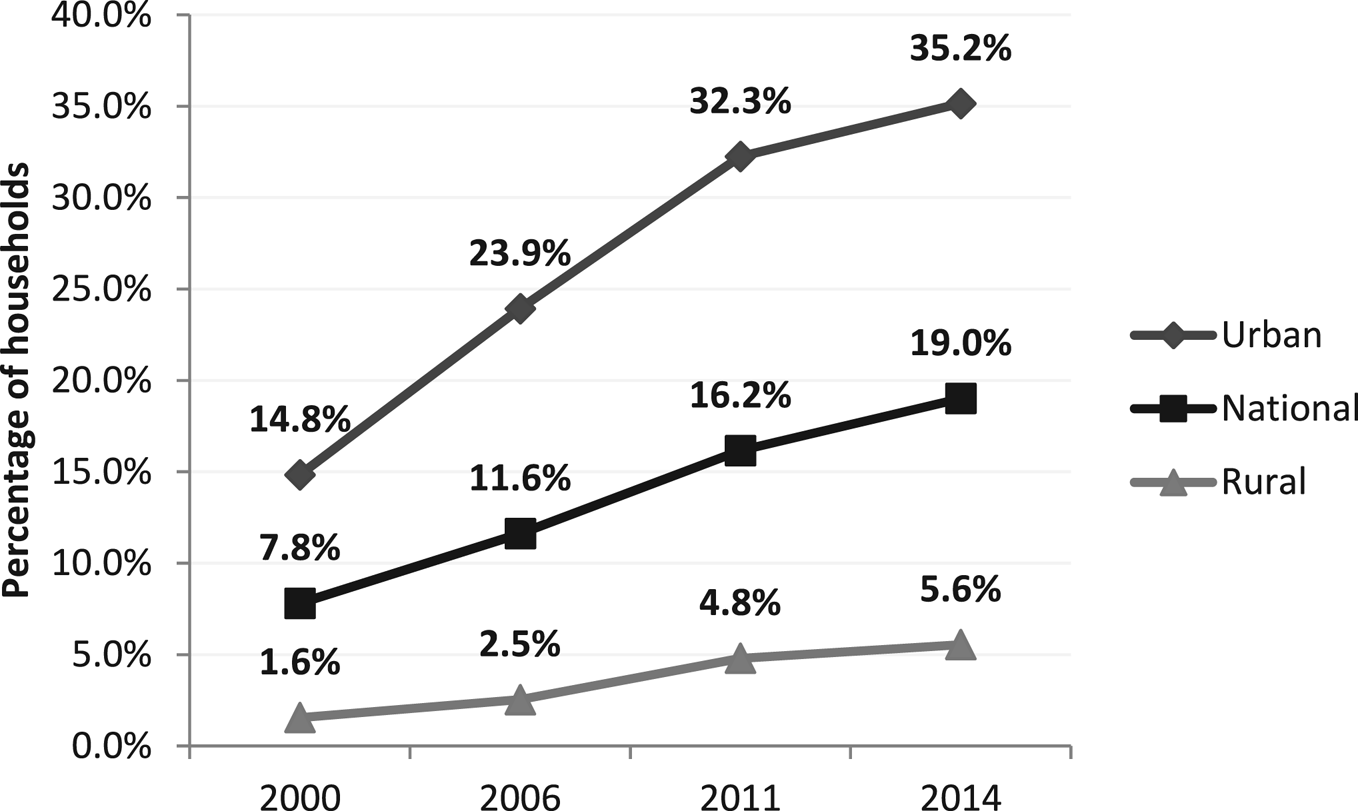
Compared to sewage infrastructure, municipal solid waste collection services reach a lower percentage of Guatemalans despite steady coverage increases in the last 15 years, as shown in figure 2. At the national level, municipal governments provide solid waste collection services to 19 per cent of households. Contrary to sewage infrastructure, which has been extended primarily to rural areas, municipal governments have favored urban centers over rural areas with expansion in solid waste collection services. As a result, the urban-rural gap increased from 13 percentage points in 2000 to almost 30 percentage points in 2014.
Coverage of municipal solid waste collection services by area of residence.

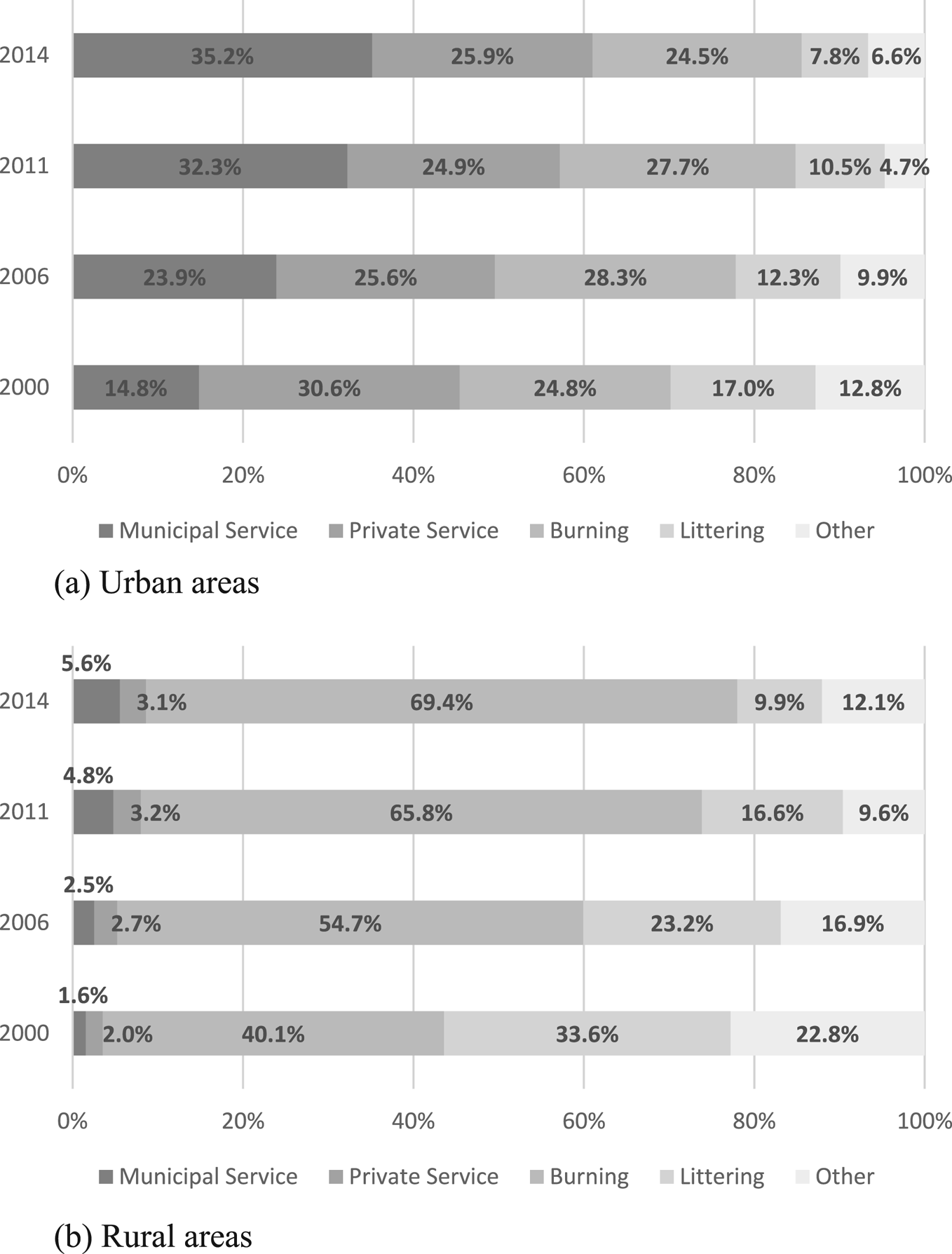
Figure 3 shows how households dispose of their solid waste. In urban areas, the private sector provided solid waste collection services to a larger percentage of households than municipal governments before 2006. However, since 2011, municipal coverage has surpassed the private coverage rate, as an indication that some municipal governments have undertaken their legal mandate of providing sanitation services to their constituents. Yet almost 39 per cent of urban households continue to dispose of solid waste using environmentally unfriendly practices such as burning and littering. In rural areas, solid waste collection services are almost nonexistent, reaching less than 6 per cent of rural households as of 2014. The percentage of rural households that practice littering as their primary way of disposing of solid waste has decreased over time, presumably due to effective enforcement of legislation that prohibits using clandestine landfills. In contrast, the percentage of households that burn solid waste has increased. Public investments in solid waste management are clearly needed in both urban and rural areas.
Solid waste disposal practices at the household level. (a) Urban areas. (b) Rural areas.

3.3 Investment in sanitation services
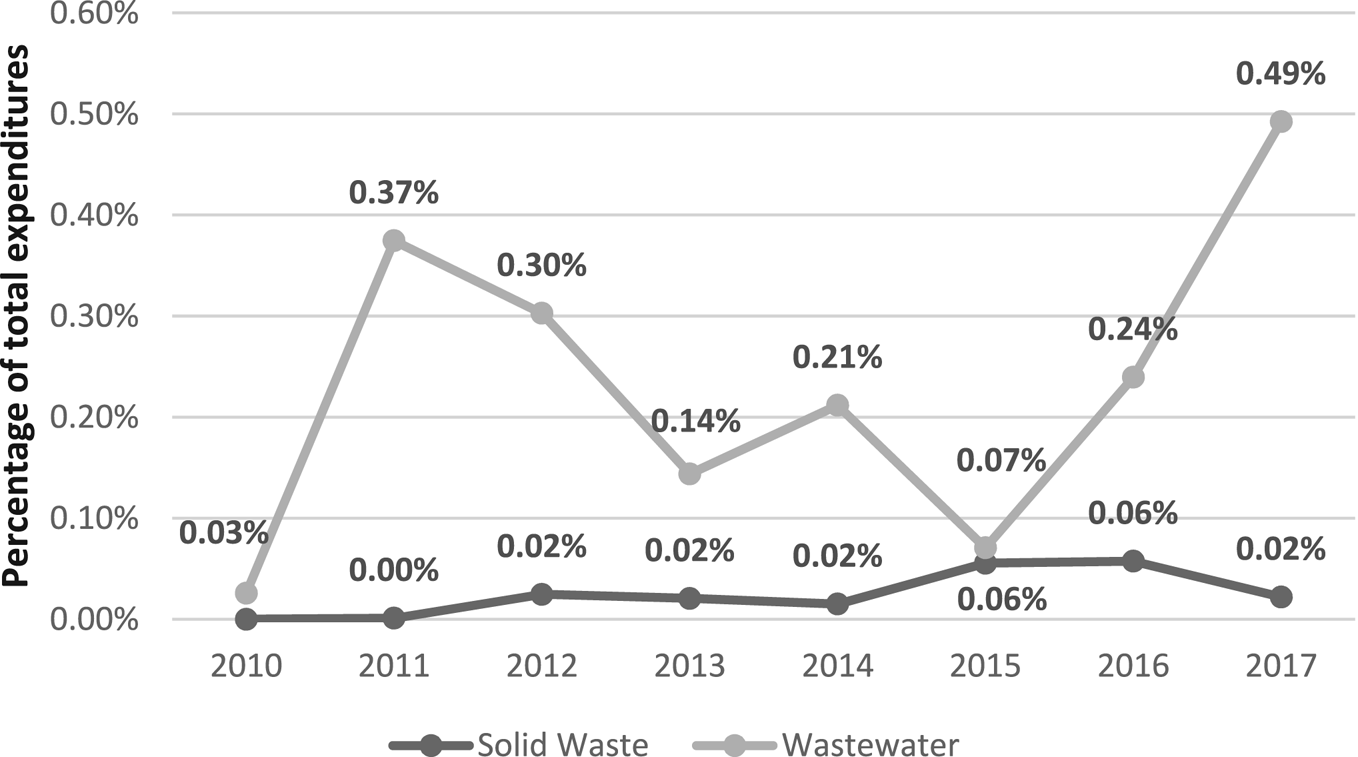
Low investment in sanitation services is a pressing issue in Guatemala. Since 2010, the central government has invested less than 0.5 per cent of its budget in the sanitation sector. Figure 4 shows that, despite a considerable temporary increase to 0.06 per cent in 2015 and 2016 (less than 30 million 2010 quetzals or US$3.75 million), public investments in solid waste management have remained particularly low. On the other hand, the share of the central government's budget invested in wastewater infrastructure has fluctuated in the last years with a substantial decline between 2011 and 2015, from 196.1 million 2010 quetzals (US$24.5 million) to 36.3 million 2010 quetzals (US$4.5 million). In 2017, Guatemala made a record investment of 261.6 million 2010 quetzals (US$32.7 million), equivalent to almost 0.5 per cent of the central government's budget.
Central government expenditures on sanitation.

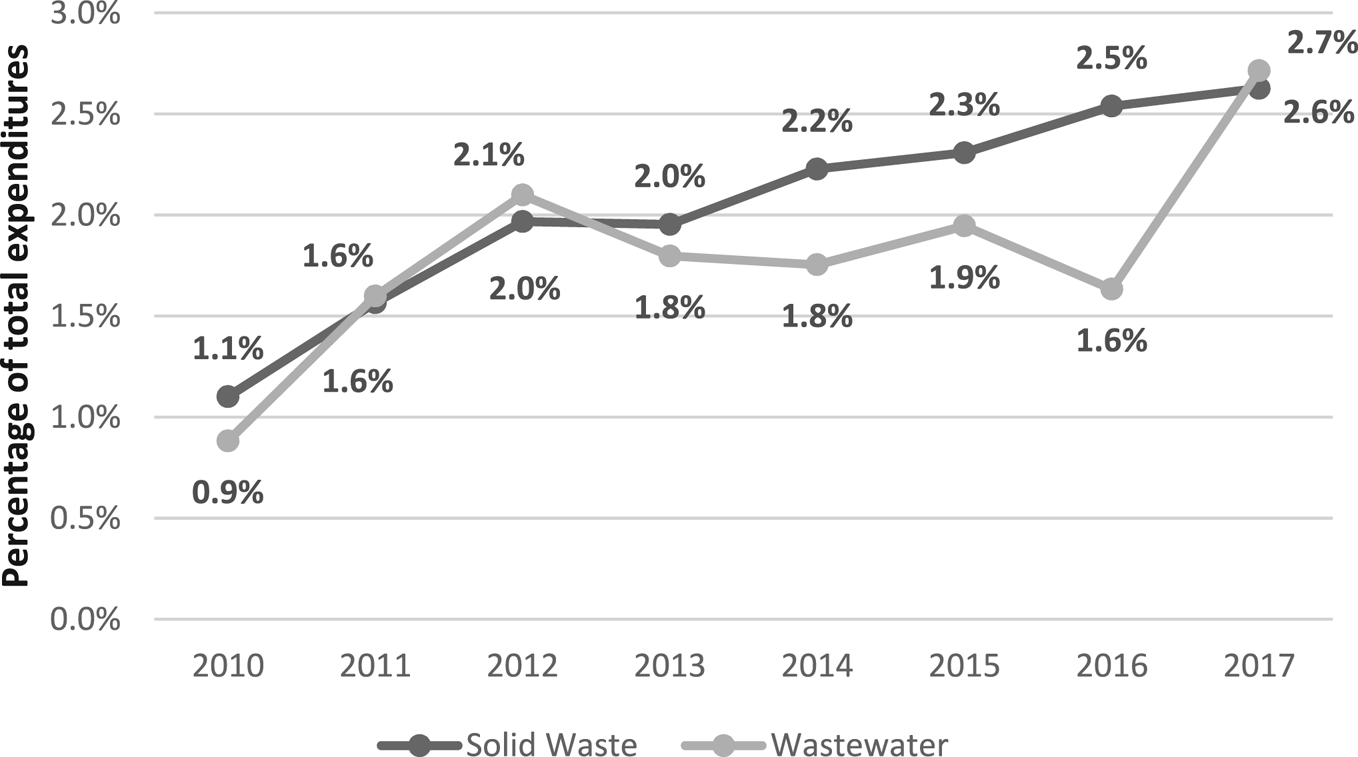
Based on the current legislation, it can be argued that municipal governments rather than the central government are responsible for investing in sanitation. Figure 5 shows that municipal governments have been paying more attention to the sanitation sector over time, with an increase in the share of their budget spent on wastewater and solid waste management from 2 per cent in 2010 to more than 5 per cent in 2017. With the exception of 2012, when the central government started decreasing its investments in wastewater infrastructure, municipal governments spent more on solid waste management than on wastewater infrastructure. Increases in municipal investments are consistent with the rapid increase in coverage of municipal solid waste collection services, particularly in urban centers.
Municipal expenditures on sanitation.

Against this backdrop, a better understanding of household preferences for sanitation services may be useful for the central and local governments to plan investment projects. Additionally, willingness-to-pay estimates may inform demand-side policies (e.g., price and subsidy structures) aimed at motivating households to substitute sanitation services for less expensive forms of waste disposal. This is particularly relevant in Guatemala where burning and littering are primary forms of solid waste disposal. Therefore, this study provides valuable insights for policies aimed at correcting potential health and environmental externalities of household behaviors regarding wastewater and solid waste disposal.
4. Data and econometric modeling
The Guatemalan Institute of Statistics (INE) implemented four Living Standards Measurement Surveys, referred to as Encuesta Nacional de Condiciones de Vida (ENCOVI), in 2000, 2006, 2011, and 2014. With the exception of ENCOVI 2000, which is representative at the national level only, the last three iterations of ENCOVI are representative of urban and rural areas at the department level.Footnote 3 ENCOVI followed a two-stage stratified cluster sampling design. The country was initially divided into rural and urban areas in 22 departments for a total of 44 sampling areas. In the first stage, indicators on unsatisfied basic needs were used to stratify primary sampling units (PSUs) in each sampling area. In the second stage, two clusters of households were selected. The first cluster was randomly selected. The second cluster was systematically selected. Based on this strategy, a total of 13,686 households were interviewed in 2006, 13,482 households in 2011, and 11,536 households in 2014.
This study utilizes data reported by urban home renters in ENCOVI 2006, 2011, and 2014 due the comparability in sampling strategy and survey questionnaire across those surveys. Out of the 16,635 urban households included in the pooled data, 13.9 per cent rented a (formal) house and reported their monthly rental payment. Renters of rooms, improvised houses, and apartments were excluded from the analysis because of their low representativeness in several departments.Footnote 4 Hence, hedonic models were estimated using the subsample of 2,318 urban households that rented formal houses. Table A1 in the online appendix shows the distribution of sampled home renters across departments and time of survey implementation.
Following previous studies which have employed the hedonic model in developing country contexts (Yusuf and Resosudarmo, Reference Yusuf and Resosudarmo2009; Gulyani et al., Reference Gulyani, Bassett and Talukdar2012; Vásquez, Reference Vásquez2013a), we conduct a hedonic analysis of rental prices to estimate the value that urban households assign to sanitation services in the form of sewage disposal and solid waste collection. Assuming a log-linear model specification,Footnote 5 the inflation-adjusted rental price (LNRENT) for home i located in department j at time t can be represented as:

where H represents a vector of housing characteristics including sanitation services, D and Y represent department and time fixed effects, respectively, and e represents the idiosyncratic error. β is the vector of parameters to be estimated in order to depict marginal values of corresponding housing characteristics. Given that the hedonic models are estimated in a log-linear form, estimated coefficients represent semi-elasticities or proportions of the average rental price.
ENCOVI does not include information about location attributes to investigate how rental prices respond to local amenities beyond home characteristics (e.g., public transportation, schools and recreational amenities). Kuminoff et al. (Reference Kuminoff, Parmeter and Pope2010) showed that hedonic models can be accurately estimated when geographical characteristics are not observed by including fixed effects. Previous applications of the hedonic price model have employed fixed effects to capture heterogeneity across geographical locations (e.g., Boyle et al., Reference Boyle, Barrilleaux and Scheller2014; Tuttle and Heintzelman, Reference Tuttle and Heintzelman2015). Following those studies, we included binary location indicators to depict fixed effects at the department level (δ).Footnote 6 Additionally, given that the data at hand was collected in different years, we included binary indicators to depict time fixed effects on rentals prices (γ).
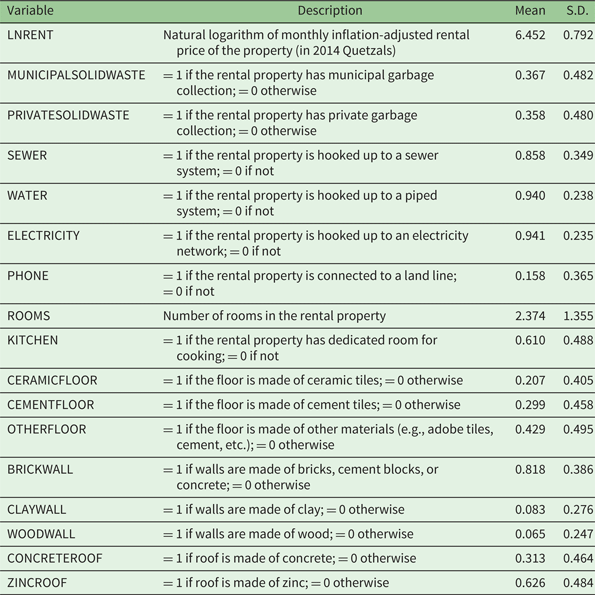
Table 1 presents the definition of housing attributes used to estimate the hedonic models of rental prices. Two binary indicators, MUNICIPALSOLIDWASTE and PRIVATESOLIDWASTE, are included to estimate the percentage change in rental prices due to having access to municipal and private solid waste collection services, respectively. Given that the base of comparison is not having access to collection services, in which case households have to dispose of their solid waste themselves, having access to collection services is expected to increase rental prices (i.e., β MUNICIPALSOLIDWASTE > 0 and β PRIVATESOLIDWASTE > 0). Also related to sanitation, the indicator SEWER takes the value of one if the home is connected to a sewerage system, and zero if the home has an alternative type of excreta disposal facility (e.g., latrines or septic tanks). The connection to a sewerage system is expected to have a positive impact on prices of rental properties given the associated environmental and health benefits, as well as the convenience of having access to sewerage infrastructure (i.e., β SEWER > 0).
Variables' definition and descriptive statistics (n = 2,318)

We control for access to other services including piped water, electricity and land-line communication services for each home. Home size is depicted by the number of rooms in the housing unit (ROOMS),Footnote 7 while the indicator KITCHEN represents the existence of a dedicated room for the kitchen. Rental prices are expected to increase with access to public utility services, the number of rooms and a dedicated kitchen. Additionally, covariates were included to control for the type of floor, wall and roof materials. Dirt floor is used as a base of comparison, while binary indicators CERAMICFLOOR, CEMENTFLOOR and OTHERFLOOR represent floor materials of better quality. Similarly, binary indicators BRICKWALL, CLAYWALL and WOODWALL represent improved wall materials to be compared against low quality wall materials (e.g., metal sheets and bahareque, among others). Binary indicators CONCRETEROOF and ZINCROOF identify homes with roofs made of concrete and metal sheets, respectively, which are considered to be better than roofs made of other materials (e.g., asbestos, clay and palms). Given that materials of the lowest quality are used as a base of comparison, indicators to control for the quality of floors, walls and roof are expected to have a positive coefficient.
Equation (1) is usually estimated using the ordinary least squares (OLS) method. However, in this case, the OLS method can yield biased estimates due to the nonrandom selection of our sample of renters. To correct for potential selectivity bias, we estimated Heckman's selection model where the probability of renting a home (i.e., being in our sample) is specified as:

where Φ represents the cumulative distribution function of the standard normal distribution, and α is the vector of parameters to be estimated. X is a vector of variables related to the decision of renting a house, which includes the variables used in the outcome equation (1) (i.e., H, D, Y) and a set of identifying variables. Equations (1) and (2) are simultaneously estimated using a maximum likelihood estimation approach.
Table A2 in the online appendix presents the definition and descriptive statistics of the variables used to identify home renters: NONPOOR, HHSIZE, AGE, FEMALE, INDIGENOUS and EDUCATED. Those indicators represent attributes of the household and household head that are expected to influence the decision to rent a home. In contrast, it is very unlikely that rental prices are affected by respondent and household characteristics, unless there is some sort of price discrimination in rental markets. This study assumes that such discrimination is minimal (if any) and that household and household head characteristics are valid instruments. This assumption is consistent with the theoretical grounds of the hedonic price method (Tauchen and Witte, Reference Tauchen and Witte2001).
5. Estimation results
The summary statistics presented in table 1 describe the housing units included in this study. The average rental price is 840 quetzals (US$110).Footnote 8 Among the municipal sanitation services available to renters, municipal garbage collection is lowest with only 36.7 per cent of the rental population receiving these services. However, sewer connections reach 85.8 per cent of the sample of urban renters. Approximately 94 per cent of the sampled households have access to piped water and electricity. Phone service is low, with only 15.8 per cent of the homes having the service.Footnote 9 The average home has 2.4 rooms. In addition, 61 per cent of the sample has a dedicated kitchen for cooking meals and most rental properties have high quality materials for floor, wall and roof structures.
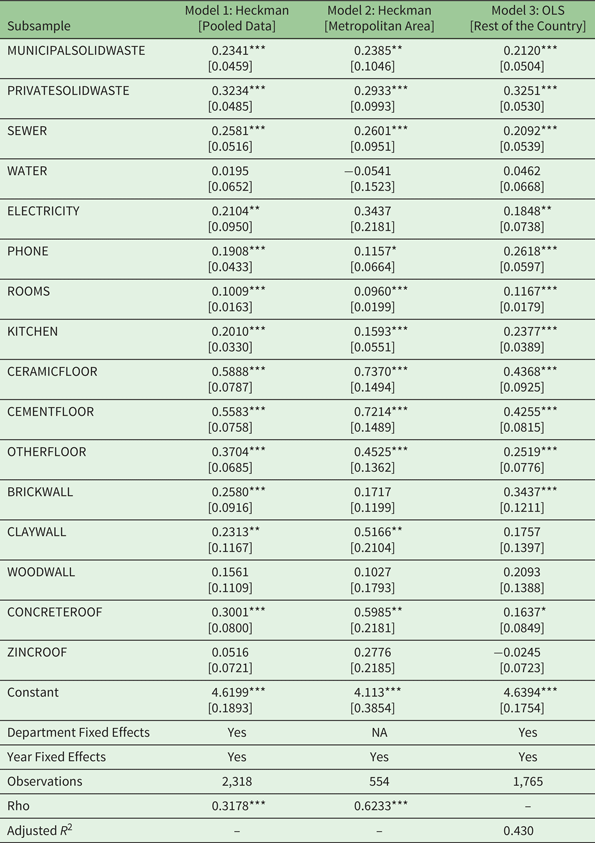
Table 2 presents the estimation results of three hedonic models. Model 1 is estimated using the pooled sample of urban renters.Footnote 10 Then, to investigate potential geographical heterogeneity in the value that urban households assign to sanitation services, we split the sample of urban renters in two groups: (1) homes located in the metropolitan area, and (2) homes in the rest of the country.Footnote 11 Model 2 is estimated for using rental prices in the metropolitan area, and Model 3 utilizes rental prices from the rest of the country. Initially we estimated Heckman selection models for each of those samples. The Rho estimates are statistically significant for Models 1 and 2, suggesting that the Heckman selection model is appropriate to correct for selectivity bias in our estimates.Footnote 12 In contrast, in Model 3, the Rho estimate is statistically insignificant. This indicates that the hedonic price model for homes in regions other than the metropolitan area can be estimate using the OLS method.
Hedonic models of rental prices

Notes: ***, **, * imply significance at 1 per cent, 5 per cent, and 10 per cent levels respectively. Robust standard errors are reported in brackets. Sampling weights were used to estimate the hedonic models.
Estimated coefficients on MUNICIPALSOLIDWASTE and PRIVATESOLIDWASTE are consistently significant across all models. These results suggest that residents are willing to pay for solid waste collection services. These findings are consistent with existing evidence based on stated preferences elicitation methods that suggest that households are willing to pay for improved solid waste management services in developing countries (e.g., Wang et al., Reference Wang, He, Kim and Kamata2014; Challcharoenwattana and Pharino, Reference Challcharoenwattana and Pharino2016). Based on the estimates presented in Model 1, rental prices increase approximately 23 per cent when municipal solid waste services are available, and 32 per cent when there is access to private collection services. Similarly, estimated coefficients on SEWER are positive and significant suggesting that households have strong preferences for wastewater services. A private connection to sewer infrastructure may increase the average rental price by almost 26 per cent. Vásquez (Reference Vásquez2013a) found comparable semi-elasticities for sanitation in urban Guatemala. Other studies in developing countries also found similar implications of improved sanitations services (Knight et al., Reference Knight, Herrin and Balihuta2004; Gulyani et al., Reference Gulyani, Bassett and Talukdar2012; Choumert et al., Reference Choumert, Stage and Uwera2014).
Beyond the sanitation services, access to electricity is statistically significant in Models 1 and 3, suggesting that this service is highly valued, particularly in regions other than the metropolitan area. In Model 2, ELECTRICITY is statistically insignificant indicating that rental prices are unrelated to having access to electricity in the metropolitan area. Phone services are estimated to be consistently significant and highly valued by renters. In contrast, estimated coefficients on water services are insignificant across all models, presumably because there is little variation in that indicator. Rental prices are also related to housing characteristics. Estimated coefficients on ROOMS are positive and statistically significant, suggesting that rental prices increase with the number of rooms. In addition, estimation results indicate that renters would pay a premium for having a dedicated room for the kitchen.
Consistent with past studies (e.g., Vásquez, Reference Vásquez2013a), estimated coefficients on floor indicators are significant and positive, suggesting that renters will pay more for properties with flooring than for homes with dirt floors. Moreover, ceramic tiles are the most preferred type of floor material. In terms of wall materials, results indicate that bricks, cement blocks and concrete are preferred over metal sheets, bahareque, wood and other materials of low quality. Findings also indicate that homes with concrete roofs have higher rental prices than homes with roofs built with metal sheets, asbestos, clay tiles and other low quality materials. Combined, these results suggest that rental prices increase with the quality of building materials.
Given the log-linear specification of estimated models, the marginal values of sanitation services can be estimated by multiplying the average rental price by $( {\exp ( {{{\hat \beta}_{Service}}} ) - 1} )$ , where ${\hat \beta _{Service}}$
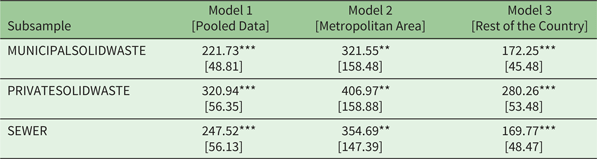
 is the estimated coefficient of the service in the hedonic price model. Table 3 presents the average willingness to pay (in local currency) for renters to gain access to municipal and private solid waste collection services and connection to a sewer system. All estimates are positive and statistically significant, which indicates that the rental prices of homes with access to sanitation services are higher than for homes without access to those services. The values for municipal services are highly consistent suggesting that, on average, consumers are willing to pay about the same for both sanitation services if provided by municipal governments. On the other hand, in areas other than the metropolitan one, rental prices are higher for homes with private garbage collection services relative to homes with municipal services, with a difference of 108 quetzals (about US$14) in the rest of the country. This may be partially attributed to household perceptions that private services are more reliable than municipal ones. In the metropolitan area, the value differential between private and municipal services is statistically insignificant. It is also worth noting that estimated values for all sanitation services are higher in the metropolitan area than in the rest of the country.
Marginal values of access to sanitation services (in quetzals)

Notes: *** and ** imply significance at 1 per cent and 5 per cent levels respectively. Robust standard errors are reported in brackets.
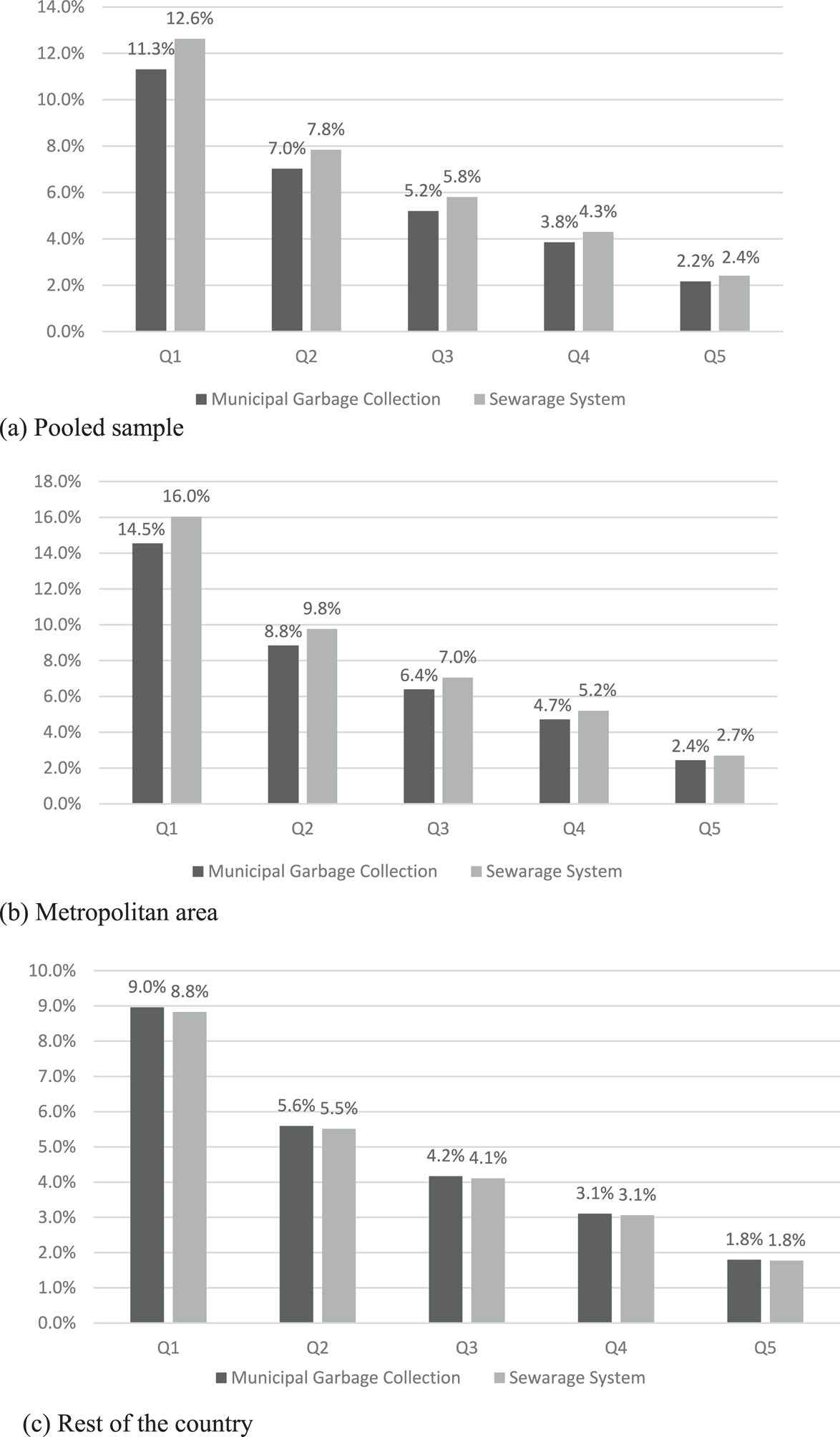
Figure 6 compares the estimated implicit prices of both types of municipal sanitation services with each quintile of the monthly expenditure of the average urban household sampled in ENCOVI 2014 estimated at 5,080 quetzals (US$669) at the national level, 6,165 quetzals (US$811) for the metropolitan area, and 4,851 quetzals (US$638) for the rest of the country. On average, the estimated values for solid waste and wastewater removal services are equivalent to 4.4 and 4.9 per cent of the monthly urban household expenditure, respectively. The average implicit prices of solid waste collection services and sewerage systems are below an affordability threshold of 3 per cent of the household expenditure on water and sanitation services for the highest quintile only.Footnote 13 This may represent a financial challenge for poorer households.
Marginal value of access to municipal sanitation services relative to household expenditures; (a) Pooled sample, (b) Metropolitan area, (c) Rest of the country.

6. Discussion and policy implications
We have estimated hedonic models of rental prices to investigate the value that households assign to the sanitation services of solid waste removal and connections to sewerage systems in Guatemala. While some hedonic studies conducted in developing country contexts have estimated values for access to toilets and wastewater removal services (e.g., Knight et al., Reference Knight, Herrin and Balihuta2004; Gulyani et al., Reference Gulyani, Bassett and Talukdar2012; Vásquez, Reference Vásquez2013a; Choumert et al., Reference Choumert, Stage and Uwera2014), we considered solid waste collection services as another determinant of rental prices. Our findings indicate that both sewer connections and solid waste collection services are highly valued.
The central and municipal governments in Guatemala could potentially take advantage of strong household preferences for improved sanitation services to recover some of the service supply costs. Given that Guatemalan households significantly value sanitation services, municipalities may be able to increase the charge of these services by a nominal amount; this is something they have been reluctant to do in the past, presumably because of affordability concerns and political pressures (Vásquez, Reference Vásquez2011). However, increasing fees for solid waste and waste water removal services up to the average values estimated here may be difficult in practice because the average estimate is high relative to household expenditures, particularly for households in the poorest quintiles. Our estimates may assist in balancing affordability and cost recovery in sanitation service fee schemes.
Additionally, our value estimates can be used to assess the economic viability of public investments in sanitation infrastructure. This is policy relevant in Guatemala because the coverage of sanitation services remains relatively low and public investments will be required to achieve the SDGs of sanitation by 2030. Out estimates represent a monetary measure of benefits that households would derive from having access to solid waste removal services and connections to sewerage systems. Hence, they can be compared to the cost of extending those services to determine the level of cost recovery or, in some cases, the need for subsidies. Estimating the cost of extending sanitation services would be a logical extension to our study.
Although this study focuses on Guatemala, many other developing countries likely face similar challenges when considering the United Nation's Sustainable Development Goals. Understanding the value which households place on sanitation services such as solid waste collection and sewer connections may help other governments in planning the investments necessary for achieving less waste and pollution and enhanced environmental and health outcomes for its citizens. As the availability of housing transactions data becomes more available in developing countries, researchers will continue to be able to assess the value of sanitation services and develop reliable policy recommendations with additional analyses to determine the efficient cost structure to be placed on these services to offset investments. This study hopefully provides motivation for others to use the newly available data to further explore these important issues.
Supplementary material
The supplementary material for this article can be found at https://doi.org/10.1017/S1355770X19000469