Summation
-
∙ Few studies have explicitly explored the relationship between cannabis use and abnormal salience processing. However, the outcomes of some cognitive studies may be used to infer aspects of salience, as reported here.
-
∙ Impaired salience processing as a result of acute cannabis intake, particularly in relation to threatening facial emotions, for example, fear and anger, was most consistently reported.
-
∙ Long-term cannabis use did not result in impaired salience processing. However, these performances were associated with reduced activity in regions strongly related to cognitive control and salience/reward processing – a reduction which also appeared to be mediated by cannabis abstinence.
Considerations
-
∙ Due to the paucity of research on the topic, it is difficult to bring absolute clarity to the relationship between abnormal salience processing and cannabis use.
-
∙ Adding to this is the heterogeneity of methods used, and outcomes from which salience was inferred for this review. Direct exploration of this relationship is not impossible, however, and may be achieved in future research.
Introduction
The endocannabinoid system and cognitive dysfunction
Though cannabis is one of the most widely used illicit drugs in the western world (Reference Burns1), its use is also recognised as one of the most preventable risk factors for onset, and relapse, of psychotic disorders (Reference Di Forti, Marconi and Carra2–Reference Schoeler, Petros and Di Forti7). The relationship between cannabis use and schizophrenia symptomology – for example, disturbances in behaviours, thoughts, and perceptions – is widely accepted. However, the neural mechanisms underlying this relationship in schizophrenia, and the relationship between cannabis use and psychotic like symptoms and cognitive dysfunction in healthy populations, remain unclear.
Studies show that the effects of delta-9-tetrahydrocannabinol (THC), the main psychoactive ingredient in cannabis, are mediated through the central cannabinoid (CB1) receptors in the brain (Reference Pamplona and Takahashi8), which are components of what is known as the ‘endocannabinoid system’ (eCB) (Reference Pamplona and Takahashi8,Reference Mechoulam and Parker9). The endocannabinoid system is comprised of endogenous cannabinoid receptors, their ligands (known as endocannabinoids), and enzymes, involved in the degradation of these ligands. Its primary functions include maintaining homeostasis in the central nervous system (CNS), cognition and memory processes, and control of motor function and signs of analgaesia, through reactions on the CB1 receptors, and modulation of immune responses, through the activation of CB2 receptors, expressed largely throughout the peripheral nervous system, and to a lesser extent in the CNS and other tissues (Reference Pamplona and Takahashi8,Reference Mechoulam and Parker9). Mounting evidence, reviewed in Appiah-Kusi et al., shows this system to be dysregulated in schizophrenia – for example, abnormal levels of cannabinoid receptors and endocannabinoids both in vivo and postmortem (Reference Leweke, Giuffrida, Wurster, Emrich and Piomelli10,Reference Appiah-Kusi, Leyden, Parmar, Mondelli, McGuire and Bhattacharyya11); thus highlighting the importance of the endocannabinoid system as a potential target for schizophrenia treatment – and, more immediately, the importance of further elucidating the role of the eCB system in the symptomology of schizophrenia (Reference Bossong, Jansma, Bhattacharyya and Ramsey12).
Cannabis and symptoms of schizophrenia
Both positive and negative symptoms of schizophrenia can be induced by cannabis intake (Reference Stefanis, Delespaul, Henquet, Bakoula, Stefanis and Van13–Reference Bhattacharyya, Atakan and Martin-Santos17), with these induced psychotic effects being linked to modulation of prefrontal, medial temporal, and striatal functioning (Reference Bhattacharyya, Crippa and Allen15). There is also evidence that a range of cognitive deficits observed in schizophrenia can be induced in healthy populations by acute THC administration – aberrant salience processing being of greatest interest here (Reference Bhattacharyya, Crippa and Allen15,Reference Bhattacharyya, Falkenberg and Martin-Santos18). Specifically, abnormal salience processing and attribution is widely thought to underlie much of the psychotic symptoms observed in schizophrenia (Reference Kapur19), and is thus of particular interest in relation to research exploring the psychosis-like effects of cannabis.
Salience attribution and different types of saliencies
In salience attribution literature, a stimulus that is more prominent or noticeable than others around it is said to be salient; with the appropriate detection of this saliency playing a key role in the allocation of cognitive resources, such as attention. For this review, we focussed on the most prominent categories of saliency, described as follows. Incentive/motivational salience (Reference Charboneau, Dietrich and Park20–Reference Wolfling, Flor and Grusser22) refers to the ‘wanting’ individuals feel when confronted with reward-related stimuli. Incentive or motivational salience is influenced by inputs like learning and memory, but also by neurobiological factors, such as dopamine expression, and states such as drug and appetite states (as demonstrated by the cannabis cue tasks) (Reference Berridge23). Emotional/affective salience (Reference Metrik, Aston, Kahler, Rohsenow, McGeary and Knopik24–Reference Somaini, Manfredini and Amore27) is closely related to incentive salience, and assigns importance to a stimulus based on the appraisal of potential pleasant or unpleasant outcomes (as demonstrated in the emotional evaluation tasks) (Reference Niu, Todd and Anderson28). Attentional salience (Reference Bhattacharyya, Crippa and Allen15,Reference Hooker and Jones29–Reference Eldreth, Matochik, Cadet and Bolla33) assigns attentional resources to a stimulus or an environmental event, in some cases interrupting ongoing processes, or selectively focusses on an event while filtering out other stimuli (as seen in the Stroop test), resulting in attention and the associated cognitive resources being directed to the salient event (Reference Shinn-Cunningham34,Reference Bowman, Su, Wyble and Barnard35). All three aspects of salience are closely related, and through a combined effort they enable the processing and assignment of appropriate cognitive resources to salient and non-salient stimuli in everyday life.
The aberrant salience hypothesis of schizophrenia
The aberrant salience hypothesis of schizophrenia posits that dysregulated dopamine levels in the dopamine receptor-rich salience network result in the inappropriate processing of external and internal stimuli, which in turn induces psychotic symptoms through the aberrant attribution of salience to everyday experiences and stimuli (Reference Kapur19). Regions of the brain involved in salience attribution are implicated in a range of social cognition processes, including empathy for pain (Reference Singer, Seymour, O’Doherty, Kaube, Dolan and Frith36), emotional and attentional dimensions of pain (Reference Peyron, Laurent and Garcia-Larrea37), hunger, metabolic status, pleasurable touch (Reference Craig38), identifying faces of loved ones or allies (Reference Bartels and Zeki39), and social rejection (Reference Eisenberger, Lieberman and Williams40). Given the range of cognitive processes that also involve brain regions implicated in salience processing, it follows that the extent of aberrant attribution of salience to everyday experiences and stimuli in those with psychosis is also thought to be closely correlated with severity of psychotic symptoms (Reference Jensen and Kapur41).
Brain regions involved in salience processing
Prior studies describe a salience network consisting primarily of several regions in the brain. Core nodes of the salience network include the dorsal anterior cingulate cortex (dACC), and the anterior insula – thought to be involved in the integration of external sensory input, and interoceptive autonomic processing; though its broader functions also rely on the amygdala, ventral striatum, and the substantia nigra/ventral tegmental area – central components of the reward pathway neuro circuitry (Reference Wylie and Tregellas42,Reference Menon43). These regions are often co-activated alongside the lateral prefrontal cortex and parietal regions, and are thus likely also involved in attention, working memory, and response selection (Reference Seeley, Menon and Schatzberg44). These regions also express high levels of both dopamine receptors – as reviewed by Winton-Brown et al. (Reference Winton-Brown, Fusar-Poli, Ungless and Howes45) in the context of the aberrant salience hypothesis of schizophrenia – and endogenous CB1 receptors, to which THC binds – with a simultaneous high expression of both being found in the dorsal and ventral striatum, and the substantia nigra (Reference Pertwee46,Reference Beaulieu and Gainetdinov47).
Functional abnormalities of the salience network in psychosis
Reduced functional connectivity of brain regions including the striatum, cingulate cortex, and insula are said to relate to aberrant salience processing in psychosis (Reference White, Joseph, Francis and Liddle48). It is thought that this functional dysconnectivity may disrupt appropriate switching between contextually relevant functional brain states (Reference Menon49,Reference Manoliu, Riedl and Zherdin50), leading to further cognitive impairment. At the neurochemical level, abnormalities within the dopaminergic system, which are characteristic of schizophrenia, are thought to contribute to the aberrant salience processing within the disorder (Reference Kapur19). Increased striatal dopamine levels during aberrant salience processing have been recorded in people with psychotic illnesses, and in healthy individuals following THC challenge, during aberrant salience processing (Reference Winton-Brown, Fusar-Poli, Ungless and Howes45,Reference Bossong, van Berckel and Boellaard51). Experimental analyses by Boehme et al. (Reference Boehme, Deserno and Gleich52) also found aberrant salience processing to be positively correlated with striatal dopamine levels in healthy individuals, with no intervention. However, direct experimental evidence of any relationships between the three is still needed.
Cannabis and salience
The extent and mechanisms underlying the modulatory effect of cannabis on aberrant salience in those with psychotic illness, and following acute and chronic use in healthy individuals, remain unclear. As mentioned previously, acute THC administration in healthy samples can induce transient psychosis like symptoms, including impaired salience processing (Reference Bhattacharyya, Crippa and Allen15). Other studies show a reduced stress response to environmental stimuli resulting from cannabinoid ingestion – an effect also potentially related to impaired reward processing, and cannabis abuse (Reference Ballard, Bedi and de Wit25,Reference Gardner and Vorel53). Indeed, THC has been shown to increase dopamine release in the nucleus accumbens and ventral tegmental area in both rats and humans, which may also contribute to abnormalities in salience processing (Reference Bossong, van Berckel and Boellaard51,Reference Chen, Paredes, Li, Smith, Lowinson and Gardner54), though human evidence regarding the effects of THC/cannabis use on the dopaminergic system is equivocal (Reference Sami, Rabiner and Bhattacharyya55).
Aims of the study
The aim of this article was to systematically review current findings on the effects of acute and chronic cannabis use/THC on salience processing. The studies reviewed included both behavioural and imaging research in humans, and also included both observational and interventional methodologies. By consolidating current literature on the topic, we hope to bring clarity and insight to the role of the endocannabinoid system in the pathophysiology of aberrant salience processing, and schizophrenia.
Methods
In accordance with the evidence-based principles of the PICO (population, intervention, comparison, outcome) structure (Reference Boudin, Nie and Dawes56), the review question employed was ‘Is there a relationship between cannabis or its main psychoactive ingredient, Δ9-THC, and salience processing?’
Search strategy and selection criteria
Following recommended guidelines for systematic reviews (Reference Higgins and Green57), a systematic search strategy was used to identify all relevant studies. Searches were conducted in the Medline, EMBASE, and PsychInfo databases; employing the OvidSP platform; and using the following combination of Boolean and medical subject headings (MeSH) search terms (where available) describing cannabis use or cannabinoids, and salience processing: (cannab* OR hashish OR marij* OR marih* OR tetrahydrocannabinol OR THC OR cannabidiol OR CBD) AND (salience OR salient) were used. As there are currently no specific MeSH terms referring to salience processing, the standard PubMed author keyword of ‘salience’ and its variant ‘salient’ were used. Further searches using the same search terms were undertaken on the Cochrane Clinical Trials Database. All human studies published in English up to and including the search date of 20 November 2015, and indexed in the above databases, were assessed. A further search of PubMed on 7 July 2016, using the same search terms as before, identified no additional studies. All identified relevant studies, reviews, and conference abstracts were hand-searched for any additional relevant publications. Inclusion criteria for the studies required that they were as follows: (1) studies of healthy humans; (2) investigating the acute or long-term effects of cannabis use, or effects of acute administration of THC; (3) measuring salience processing; (4) magnetic resonance imaging (MRI) studies. Exclusion criteria were as follows: (1) studies where cannabis/THC exposure was not investigated; (2) studies where effect on salience of stimuli/salience processing was not reported; (3) studies including any clinical participant groups (i.e. any patient groups); (4) animal studies.
Study selection
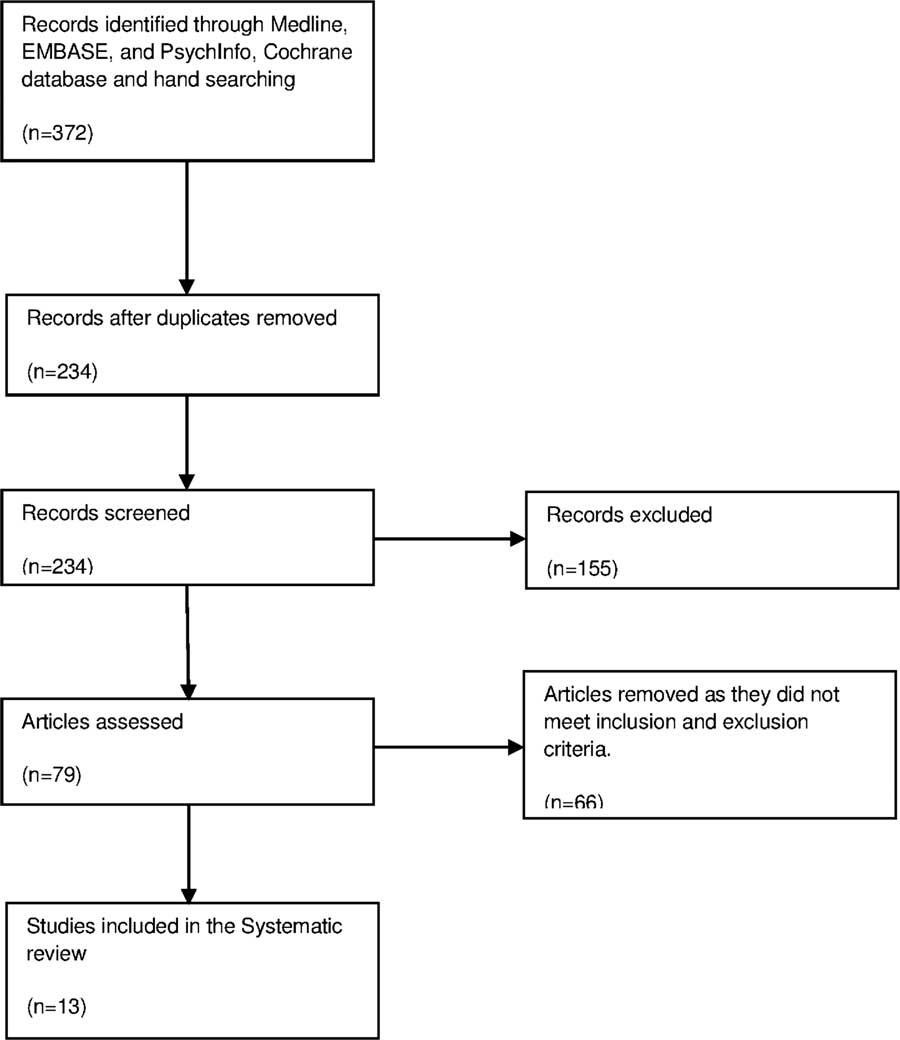
Initially, 372 studies were identified for review. These were primarily screened by one reviewer, assisted by a second reviewer. Any disagreements between the reviewers were resolved through discussion, or with a third reviewer (S.B.). After excluding irrelevant or duplicate studies and those not satisfying our inclusion criteria, a total of 13 studies were included in the final review (Fig. 1).
Flow chart describing the number of studies excluded at each stage of the study selection process.

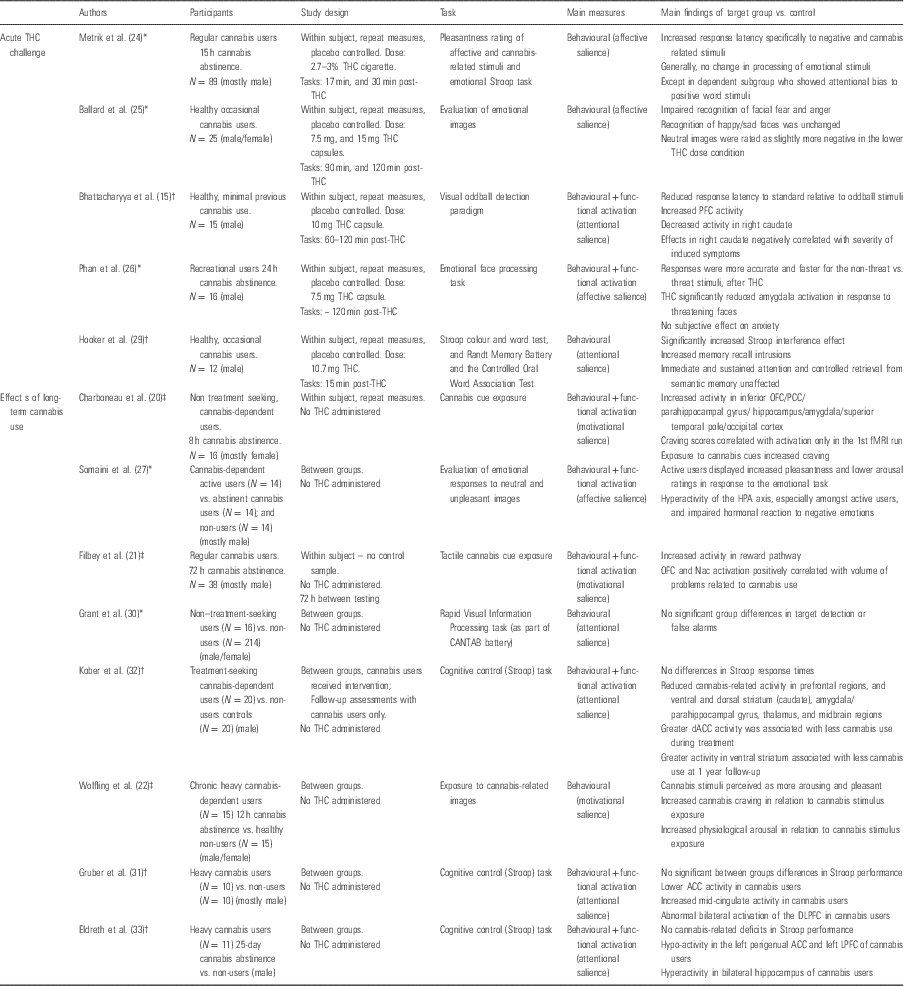
Of the 13 studies included, five reported only behavioural effects, and the remaining eight reported neuroimaging (functional MRI; fMRI) results, in addition to the results of the behavioural tasks. Five (three behavioural, and two functional and behavioural) of the 13 studies reported the effects of acute administration of THC in individuals who were occasional cannabis users or minimally exposed to the drug; whereas the remaining eight studies investigated the long-term effects of cannabis use in individuals with varying duration of exposure to cannabis (two behavioural, and six functional and behavioural) (see Table 1).
Summary of the studies and findings included in the review

Summarising the findings of the studies included in the review.
dACC, dorsal anterior cingulate cortex; DLPFC/LPFC=dorsolateral prefrontal cortex/lateral; HPA axis, hypothalamic–pituitary–adrenal axis; Nac, nucleus accumbens; OFC, orbitofrontal cortex; PCC=posterior cingulate cortex; PFC=prefrontal cortex; THC, tetrahydrocannabinol.
* affective salience.
† attentional salience.
‡ motivational salience.
As the results of our search for relevant research shows, few studies have directly investigated the effects of acute/chronic cannabis use on salience processing. Consequently, not all the studies included in the review assessed these effects specifically. As the salience network is not task specific, it can be assessed indirectly by measuring a range of cognitive processes – including pain, attention, working memory, uncertainty, and other homeostatic changes. Therefore, the outcomes of specific tasks used in these studies, though not specific to salience, were used to infer various aspects of salience, via related cognitive processes. The findings, and also the limitations of using such an approach, will be discussed in detail here.
Data extraction
For each selected study, demographic and methodological variables and outcome data were extracted, and conflicts resolved, in the same manner as the study screening. As the review included a small number of studies, data were not coded, and instead was summarised and included in the attached tables. Given the potential breadth, and yet, lack of definition in current salience processing research, the data extraction outcome was not strictly decided in advance. The primary outcomes of interest that were established in advance were the effects of cannabis on different measures that could be related to attentional, affective, or motivational salience. In the acute experimental studies, the effects of cannabis or THC were compared with those of a placebo, using a repeated, within-subject design. Those studies examining the effects of long-term cannabis use involved either a non-cannabis using control group for comparison, or employed a within-subject design. The studies were first separated according to their assessment of either acute administration in non-users, or assessment of regular cannabis users; then further separated into studies investigating behavioural effects of cannabis use, and studies investigating both behavioural effects and functional neuroimaging findings related to cannabis use. None of the relevant studies identified involved structural MRI techniques.
Risk of bias
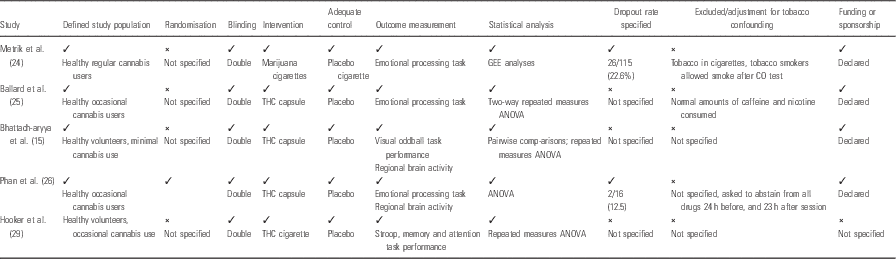
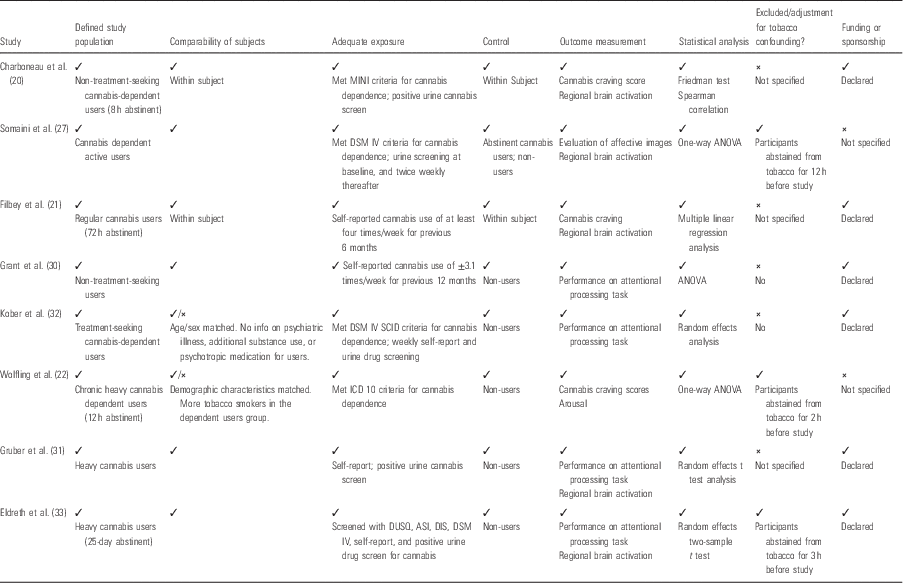
As the methodologies of the included studies were largely heterogeneous, a suitably flexible and inclusive approach to the risk of bias and quality assessment was needed. To ensure this, criteria for interventional and observational trials were adapted as appropriate from the Agency for Healthcare Research and Quality guidelines for rating the strength of scientific evidence were used (Reference West, King and Carey58) (see Tables 2 and 3).
Methodological quality of studies of effect of acute tetrahydrocannabinol (THC) challenge on salience processing

Occasional use refers to exposure more the 10x in their lives, but not using daily. Regular use refers to use at least 2 days a week in the past month, at least weekly the previous 6 months. Minimal use <15 times/lifetime. ANOVA, analysis of variance.
Methodological quality of studies of effect of chronic cannabis use on salience processing

ANOVA, analysis of variance; ASI, Addiction Severity Index; DIS, Diagnostic Interview Schedule; DSM IV, Diagnostic and Statistical Manual of Mental Disorders; DUSQ, Drug Use Survey Questionnaire; ICD 10, International Statistical Classification of Diseases and Related Health Problems; SCID, Structured Clinical Interview for DSM Disorders.
Results
Behavioural findings
Regarding the effects of acute THC administration on attentional salience-related behaviours, Bhattacharyya et al. (Reference Bhattacharyya, Crippa and Allen15) found that, using a visual oddball paradigm, response times to all stimuli were reduced in the THC group, compared with placebo. In particular, reaction times to the standard stimuli were significantly reduced compared with the oddball stimuli, in the THC condition. The authors also reported that THC caused a significant increase in the severity of psychotic symptoms (Reference Bhattacharyya, Crippa and Allen15). There was no relationship between the effect of THC on response latency to the standard stimuli, and its effect on the severity of psychotic symptoms (Reference Bhattacharyya, Crippa and Allen15). In an early study by Hooker et al. (Reference Hooker and Jones29), acute marijuana ingestion resulted in an increased Stroop interference effect and increased memory intrusions during a free recall task. Immediate sustained attention and controlled retrieval from semantic memory were unaffected.
Studies investigating the influence of acute THC administration on affective salience suggest an effect dependent on stimulus type. Both Ballard et al. (Reference Ballard, Bedi and de Wit25) and Phan et al. (Reference Phan, Angstadt, Golden, Onyewuenyi, Popovska and de Wit26) reported a pronounced impairment in recognition of threat-related facial emotions (e.g. fear and anger) . For the Ballard et al. study, recognition of happiness and sadness remained relatively unaffected, and there was no consistent effect on the ‘valence or arousal’ of images of emotional scenes, with neutral pictures being rated as slightly more negative and arousing under the lower dose of THC (Reference Ballard, Bedi and de Wit25). The participants of the Phan et al. study did not report a decrease in subjective anxiety (Reference Phan, Angstadt, Golden, Onyewuenyi, Popovska and de Wit26). A separate study reported increased response latency in relation to negative stimuli and cannabis stimuli (vs. neutral stimuli) after acute THC administration, and an attentional bias towards positive word stimuli specifically amongst a subgroup who were cannabis dependent (Reference Metrik, Aston, Kahler, Rohsenow, McGeary and Knopik24).
The studies exploring the effects of long-term cannabis use on motivational and attentional salience-processing behaviours were also reasonably consistent. Of the studies included, three investigated effects on motivational salience processing in relation to cannabis cues in long-term users. All three reported increases in drug craving, following exposure to cannabis cues versus neutral stimuli (Reference Charboneau, Dietrich and Park20–Reference Wolfling, Flor and Grusser22). Wolfling et al. (Reference Wolfling, Flor and Grusser22) also reported increases in physiological arousal (via skin conductance and electroencephalogram - EEG - readings) in the cannabis group, in response to the cannabis cues. The same group also rated the cannabis-associated stimuli as significantly more pleasant and more arousing than other stimuli (Reference Wolfling, Flor and Grusser22).
Both Kober et al. and Gruber et al. observed a strong Stroop effect across all groups. However, there was no significant difference between the cannabis-dependent individuals and the controls in terms of response times, magnitude of Stroop effect, or number of errors made (Reference Gruber and Yurgelun-Todd31,Reference Kober, DeVito, DeLeone, Carroll and Potenza32). Eldreth et al. (Reference Eldreth, Matochik, Cadet and Bolla33) reported the same finding for users after 25 days of cannabis abstinence. Similarly, Grant et al. (Reference Grant, Chamberlain, Schreiber and Odlaug30) reported no differences in error detection or false alarm scores in the Rapid Visual Information Processing task, between healthy long-term cannabis users and non-users.
Regarding affective salience processing in long-term users, Somaini et al. (Reference Somaini, Manfredini and Amore27) found higher pleasantness ratings and lower arousal ratings during induced negative emotional states in current cannabis users, compared with participants who were 6 months abstinent, and healthy controls.
Neuroimaging findings
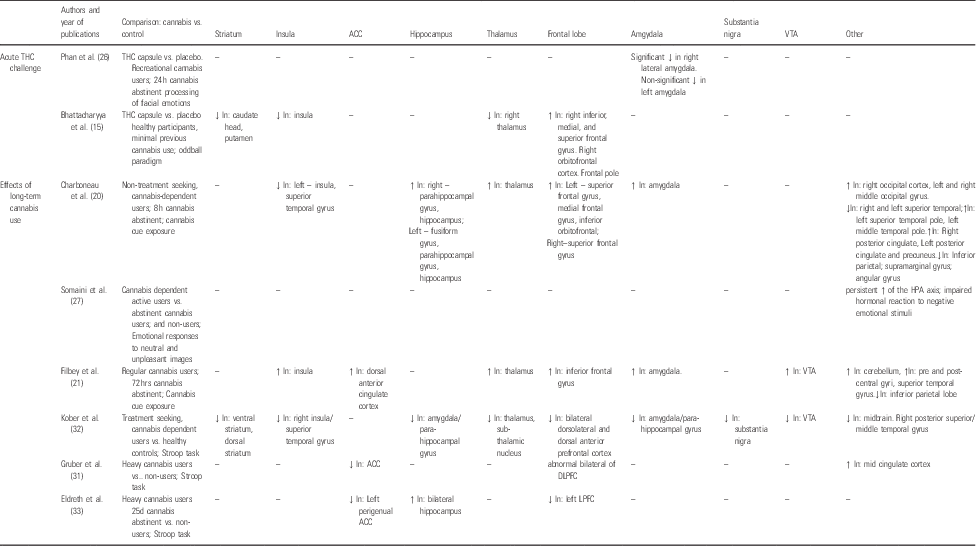
Eight of the included studies incorporated analysis of functional MRI data, and reported on brain regions involved in salience processing that were affected by cannabis or THC intake. Two of these investigations were in the acute THC setting, whereas the others examined the long-term effects of cannabis use on dependant, regular, and recreational users. Table 4 shows a summary of the regions that displayed abnormal activity during salience processing, under either the acute THC or long-term cannabis use conditions.
Summary of the regions displaying abnormal activity during salience processing, under either the acute tetrahydrocannabinol (THC) or long-term cannabis use conditions

Summarising the regions displaying abnormal activity either under the acute THC or long-term cannabis use conditions, during salience processing.
↑, increase in activation; ↓, decrease in activation; ACC=anterior cingulate cortex; DLPFC/LPFC=dorsolateral prefrontal cortex/lateral; VTA=ventral tegmental area.
Acute effects of cannabis on functional brain activity in non-using healthy volunteers, during salience processing
Healthy volunteers who were administered THC acutely showed a decreased BOLD signal in the caudate head, putamen, insula, and thalamus during oddball relative to standard stimuli conditions (attentional salience processing) (Reference Bhattacharyya, Crippa and Allen15). The authors also reported an augmented BOLD response in the frontal brain region, including the inferior frontal gyrus, medial frontal gyrus, superior frontal gyrus, orbitofrontal gyrus, and the frontal pole – when compared with placebo. Reduced activity in the caudate while viewing oddball relative to standard stimuli was negatively correlated with the severity of psychotic symptoms, and with the significantly greater reduction in response latency for standard stimuli under the THC condition (Reference Bhattacharyya, Crippa and Allen15). In response to processing of threat-related facial emotions (affective salience processing), THC significantly attenuated activity in the right lateral amygdala of recreational cannabis users, whereas a non-significant reduction was seen in the right amygdala of the same group. (Reference Phan, Angstadt, Golden, Onyewuenyi, Popovska and de Wit26)
Non-acute effects of recreational, regular, and dependent cannabis use on functional brain activity, during salience processing
Charboneau et al. and Filbey et al. investigated the effects of visual and tactile cannabis cues, respectively, on drug craving – a behaviour related to motivational salience. Both studies reported similar findings in the midbrain, temporal, frontal, and occipital regions; however, differing effects were seen in the insula, and some parietal regions (Reference Charboneau, Dietrich and Park20,Reference Filbey, Schacht, Myers, Chavez and Hutchison21). Charboneau et al. reported increased activity in the frontal, limbic (amygdala and hippocampus), occipital and temporal regions, and the posterior cingulate cortex. They also found decreased activity in the parietal and insula regions (Reference Charboneau, Dietrich and Park20). Filbey et al. reported a greater BOLD activation in the ventral tegmental area, dACC, cerebellum, thalamus, pre- and post-central gyri, thalamus, amygdala, fusiform gyrus, pre–post-central gyri, and superior temporal gyrus (Reference Filbey, Schacht, Myers, Chavez and Hutchison21). However, unlike Charboneau et al., activation was also recorded in the inferior frontal gyrus/insula, and inferior parietal lobe (Reference Filbey, Schacht, Myers, Chavez and Hutchison21). In the Charboneau et al. study, craving scores were significantly correlated with activation in the limbic, paralimbic, and visual regions for the first fMRI task run, but not for the later runs (Reference Charboneau, Dietrich and Park20).
Using the Stroop colour word interference task to explore cognitive control – related to attentional salience – in cannabis users before, and at two time-points after addiction intervention, Kober et al. (Reference Kober, DeVito, DeLeone, Carroll and Potenza32) found diminished activation in several prefrontal regions, including the bilateral dorsolateral and dorsal anterior prefrontal cortex – findings echoed by the Gruber et al. (Reference Gruber and Yurgelun-Todd31) and Eldreth et al. (Reference Eldreth, Matochik, Cadet and Bolla33) studies. Decreased activation was also reported for the ventral and dorsal striatum, amygdala/parahippocampal gyrus, thalamus, and midbrain regions, including the ventral tegmental area and substantia nigra, right insula/superior temporal gyrus, and right posterior superior/middle temporal gyrus in cannabis-dependent users of the Kober et al. (Reference Kober, DeVito, DeLeone, Carroll and Potenza32) study. The authors found greater activation in the dACC, and ventral striatum in participants who used less cannabis during treatment, and who used less cannabis in the year following the intervention (respectively) (Reference Kober, DeVito, DeLeone, Carroll and Potenza32). This is in keeping with the findings of decreased ACC activity in current heavy users, which persists in heavy users after 25 days of abstinence, in the Gruber et al. (Reference Gruber and Yurgelun-Todd31) and Eldreth et al. (Reference Eldreth, Matochik, Cadet and Bolla33) studies, respectively.
Finally, abnormal persistent hyperactivity of the hypothalamic–pituitary–adrenal axis (HPA axis) was observed in previous (6 months abstinent) cannabis users, with a stronger effect observed in current cannabis users (Reference Somaini, Manfredini and Amore27). In addition, an impaired hormonal reaction to unpleasant images was observed in the group of active users (Reference Somaini, Manfredini and Amore27).
Discussion
The aim of this paper was to systematically review the recent cannabis and cognition research, with a view to summarising the existing findings about the effects of cannabis on salience processing – based on both behavioural observations, and functional neuroimaging findings. To the best of our knowledge, this is the first systematic review to specifically explore this topic.
As is its nature, salience can be inferred and measured through many different direct and indirect means. As a result, cautious comparisons must be made between the different study designs, given the different methods used, and the different aspects of salience being elicited. For the purpose of this review, studies were included if they measured – directly or indirectly – at least one aspect of the three categories of salience processing described earlier (e.g. attentional, affective, or motivational salience). The designs investigated both acute administration, and long-term use; and either behavioural changes, or changes in both behaviours and functional activation.
Regarding the behavioural findings, all the acute THC administration studies demonstrated significant effects on salience processing. For the oddball task, acute THC administration decreased response times, especially for the standard stimuli. The authors suggest that this is a result of inappropriate attribution of attentional salience to the standard stimuli, and that this may give insight into the development of psychotic symptoms, through a similar inappropriate salience response to non-salient elements (Reference Bhattacharyya, Crippa and Allen15). It is important to note that no direct relationship was observed between the effect of THC on response times, and its effect on severity of psychotic symptoms. The acute THC Stroop study also reported an increased Stroop interference effect after marijuana ingestion; however, no difference was observed in immediate and sustained attention, controlled retrieval from semantic memory, and speed of reading and naming colours (Reference Hooker and Jones29). These findings suggest an initial impairment in immediate attribution of attentional salience that is less evident in memory recall and other cognitive processes. In the behavioural studies of the long-term effects of cannabis use, a similar effect on attentional salience was not observed. Stroop task performance of long-term cannabis users was within the normal range, compared with healthy controls, for all the relevant studies (Reference Gruber and Yurgelun-Todd31–Reference Eldreth, Matochik, Cadet and Bolla33). The same was found in the Rapid Visual Information Processing task (Reference Grant, Chamberlain, Schreiber and Odlaug30). Investigating the consequences of acute THC administration in long-term cannabis users, focussing on whether effects on attentional salience are attenuated with prolonged exposure to cannabis, may benefit future research, as it is well accepted that tolerance to the effects of THC can develop in regular users (Reference D’Souza, Ranganathan and Braley59). Though no significant performance effects were observed for the long-term users in the Rapid Visual Information Processing task or the Stroop test, reduced activity in regions strongly related to cognitive control and salience/reward processing were noted in all the Stroop task studies (Reference Gruber and Yurgelun-Todd31–Reference Eldreth, Matochik, Cadet and Bolla33). This could indicate greater demand on cognitive control mechanisms during cognitive control processes and salience detection in cannabis users (Reference Kober, DeVito, DeLeone, Carroll and Potenza32). It may also reflect a change in neural strategy to meet the cognitive demands of the task, or some other form of neural inefficiency, as an earlier review of the effect of cannabis use on different cognitive functions suggested (Reference Bossong, Jager, Bhattacharyya and Allen60). Alternatively, this could simply be the result of the studies in chronic users being sufficiently powered to detect differences in neurophysiology, but not powered to detect changes at the behavioural level. Nevertheless, the finding of increased ACC activity associated with cannabis abstinence may also hold strong value in terms of future intervention plans – as treatments focussing on cognitive control and attentional salience attribution, as well as abstinence, may improve cessation outcomes (Reference Kober, DeVito, DeLeone, Carroll and Potenza32).
The findings of the acute THC studies focussing on emotion processing introduce another aspect to this discussion. When tasked with more emotive stimuli, the acute THC challenge resulted in impaired recognition of facial threat stimuli (e.g. fear and anger) (Reference Ballard, Bedi and de Wit25,Reference Phan, Angstadt, Golden, Onyewuenyi, Popovska and de Wit26). This impairment was not reflected in the processing of sad or happy faces, nor was there a consistent effect on the processing of emotional scenes (Reference Metrik, Aston, Kahler, Rohsenow, McGeary and Knopik24,Reference Ballard, Bedi and de Wit25). This suggests that though general affective salience may remain reasonably intact, acute THC administration results in abnormalities in the perception of threat cues, possibly due to a dysregulated allocation of affective salience in relation to particular emotive stimuli.
Regarding the neuroimaging findings relating to acute THC administration, Bhattacharyya et al. (Reference Bhattacharyya, Crippa and Allen15) reported an attenuation of striatal activity, specifically in the caudate, but found an augmentation of activity in the prefrontal cortex, in participants performing the oddball task. These regions are strongly functionally connected, and their roles in salience processing are thought to be highly interconnected (Reference Jung, Jang and Park61). In a secondary analysis of their data, Bhattacharyya et al. found attenuated fronto-striatal connectivity under THC, which was related to its effect on task performance, whereas this connectivity was augmented under the influence of cannabidiol, a cannabinoid with opposing effects to that of THC (Reference Bhattacharyya, Falkenberg and Martin-Santos18). Thus, an alteration of activity in these regions could result in the abnormal attentional salience processing observed during the oddball task. Phan et al. reported a THC-related decrease in amygdala activation during the processing of threat-related facial stimuli specifically, which is consistent with the pivotal role the amygdala is thought to play in the processing of affective facial stimuli, and stress responses (Reference Phan, Angstadt, Golden, Onyewuenyi, Popovska and de Wit26,Reference Liberzon, Phan, Decker and Taylor62) – though a debate still exists as to whether the processing role of the amygdala is less specific and applies to facial stimuli in general, regardless of the stimulus being affective/non-affective (Reference Santos, Mier, Kirsch and Meyer-Lindenberg63). However, no associated reduction in anxiety was reported (Reference Phan, Angstadt, Golden, Onyewuenyi, Popovska and de Wit26). The study by Somaini et al. (Reference Somaini, Manfredini and Amore27) also reported abnormal functioning of the innate hormonal stress system – the HPA axis – particularly in reaction to negative emotions and threat. Given the importance of the amygdala in regulating activation of HPA axis responses (Reference Appiah-Kusi, Leyden, Parmar, Mondelli, McGuire and Bhattacharyya11,Reference Smith and Vale64), it is possible that the abnormal functioning of the amygdala and HPA axis may have a combined effect, resulting in the specific aberrant processing of threat stimuli observed after acute THC challenge.
The effects of cannabis use on motivational and incentive salience are harder to decipher. It is clear that long-term cannabis users experience increases in craving after exposure to cannabis cues. However, this effect is also reported in studies of other drug dependencies (Reference Epstein, Willner-Reid, Vahabzadeh, Mezghanni, Lin and Preston65), suggesting that it is not a direct effect of chronic cannabis use, but an effect of chronic drug dependency on attribution of incentive salience related to drug cue exposure. Indeed, both the Filbey et al. (Reference Filbey, Schacht, Myers, Chavez and Hutchison21) and the Charboneau et al. (Reference Charboneau, Dietrich and Park20) studies reported increased activity in regions forming part of the neural reward circuitry in relation to cannabis cues, which may also mediate visually cued aspects of drug craving, or alternatively, other aspects of cues including affective memory. The findings of the two studies did differ in relation to activation in the insula and some parietal regions, though this could be related to differences in the study sample, that is, non-treatment-seeking cannabis-dependent individuals, versus regular cannabis users. Charboneau et al. (Reference Charboneau, Dietrich and Park20) found that the correlation between craving scores and neural activation was not repeated in the limbic, paralimbic, and visual regions after the first task time-point. It was suggested that this was the result of initial involvement of the visual salience regions in cue-associated craving being inhibited by higher brain regions, after prolonged exposure (Reference Charboneau, Dietrich and Park20). If a direct effect exists for chronic cannabis use on visual salience and cue-induced craving, it is likely that this is a conditioned response, related to the effect of overall drug dependency on the reward pathway.
Indeed, it is important to note that, as salience processing was not explicitly measured in the majority of the studies included, the direct neural effects of cannabis use on salience processing should be interpreted cautiously, as the influence of other variables, such as craving, may be misleading.
That being said, it is possible that those effects on salience processing that are attributable to THC may be a consequence of its actions in the endocannabinoid system, and the resultant modulation of dopamine expression. Though direct human experimental evidence demonstrating dopamine release with THC administration is still equivocal (Reference Sami, Rabiner and Bhattacharyya55), there is considerable evidence from animal studies in support of this (Reference Chen, Paredes, Li, Smith, Lowinson and Gardner54,Reference Cheer, Wassum, Heien, Phillips and Wightman66,Reference Malone and Taylor67). THC is an agonist of the endocannabinoid system, and activation of the endocannabinoid system can modulate the expression of various neurotransmitters, including dopamine, via direct and indirect methods (Reference Appiah-Kusi, Leyden, Parmar, Mondelli, McGuire and Bhattacharyya11,Reference Pertwee46). Given the high expression of both dopamine and endocannabinoid receptors in the striatum and substantia nigra – critical regions implicated in salience processing – and some studies suggesting altered dopamine release following acute THC administration in those genetically predisposed or at risk of psychosis (Reference Sami, Rabiner and Bhattacharyya55), a role for both the dopaminergic and endocannabinoid systems in the context of aberrant salience processing, at least in psychosis, may be hypothesised. In chronic users, however, evidence exists suggesting a blunting of dopamine synthesis as well as release capacity over time, as identified in a review by Sami et al. (Reference Sami, Rabiner and Bhattacharyya55,Reference D’Souza, Ranganathan and Braley59,Reference Bloomfield, Morgan, Egerton, Kapur, Curran and Howes68,Reference Mizrahi, Kenk and Suridjan69). Hence, the precise nature of the relationship between acute and chronic exposure to cannabis and THC and dopaminergic alterations are unclear. Additional studies exploring this are still required – particularly in relation to acute versus chronic cannabis use.
Several limitations of this review impede the development of decisive conclusions based on the findings; the overarching limitation being the lack of research investigating the effects of cannabis use on salience processing, specifically. Thus, the papers included here involved a variety of tasks and measures, from which varieties of salience were inferred. Additional limitations include the analysis of different types of cannabis use – specifically, the administration of acute THC, and the effects of long-term cannabis use on dependent and regular users. Given the shallow pool of research on the topic, it was necessary to gather as much information as possible. Lack of adequate control elements was a methodological limitation of some of the included studies. The study by Grant et al. did not include an equally matched control group, whereas neither the Filbey et al. nor the Charboneau et al. studies included a control group. As discussed earlier, salience processing was not directly measured in the majority of studies, and thus it is possible that the results have been influenced by other cognitive processes, particularly in the cannabis cues/craving studies.
Although there are many studies linking cannabis use to psychosis, and aberrant salience has been strongly linked to the generation of psychotic symptoms, ew studies have investigated what cannabis does to salience processing acutely, or following regular use. Acutely, THC appears to have a significant effect on the perception of salience; whereas following long-term use, normal salience performance appears to be underpinned by abnormal neural processes. Overall, more studies need to be carried out specifically looking at salience processing as the main outcome measure related to cannabis intake, to allow a better understanding of the neurocognitive mechanisms underlying the increased risk of development of psychosis associated with cannabis use.
Acknowledgement
The authors acknowledge infrastructure support from King’s College London.
Authors’ Contributions: S.B.W. and A.O. contributed equally to the manuscript. S.B.W. contributed to the conception and design of the study, undertook the original systematic review, and produced an early draft of the manuscript; A.O. updated the systematic review, analysed and interpreted the data, and revised the manuscript; S.B. contributed to the conception and design of the study, and gave final approval of the version to be published.
Financial Support
S.B. has received support from the NIHR (NIHR Clinician Scientist Award; NIHR CS-11-001), and the UK MRC (MR/J012149/1), and from the NIHR Mental Health Biomedical Research Centre at South London and Maudsley NHS Foundation Trust and King’s College London. All other authors report no biomedical financial interests or potential conflicts of interest.
Conflicts of Interest
None.