Natural disasters, man-made disasters, and epidemics cause large-scale morbidity and mortality in the general public, impact health care infrastructure and supply lines, and can significantly impact health care worker morbidity and mortality as well. In addition to the immediate impact of the disaster, secondary effects of disasters such as infrastructure damage, lack of sanitation, impact on health care workforce, distribution of resources, and increased psychosocial needs have been shown to impact public health and health care utilization in the aftermath of a disaster. 1 , Reference Brolin Ribacke, Saulnier, Eriksson and von Schreeb 2 A number of studies have documented the increased risk of communicable diseases,Reference Karmakar, Rathore, Kadri, Dutt, Khare and Lal 3 , Reference Jafari, Shahsanai, Memarzadeh and Loghmani 4 the psychosocial impact related to disasters (increased alcohol abuse, anxiety, post-traumatic stress disorder, and depression),Reference Fergusson, Horwood, Boden and Mulder 5 - Reference Nordlokken, Pape and Heir 7 increased chronic health exacerbations such as chronic obstructive pulmonary disease (COPD), Reference Duclos, Sanderson and Lipsett 8 - Reference Kobayashi, Hanagama and Yamanda 10 and decreased facility utilization for operative procedures and deliveries as well as decreased health care utilization for HIV, malaria, and other infectious diseases (ID).Reference Brolin Ribacke, Saulnier, Eriksson and von Schreeb 2
Few studies have evaluated the impact that disasters have had on health care utilization in the months and years following a disaster.Reference Brolin Ribacke, Saulnier, Eriksson and von Schreeb 2 , Reference Kobayashi, Hanagama and Yamanda 10 - Reference Aoki, Takahashi and Fukumoto 12 Additionally, there is very little literature evaluating the impact of disasters on emergency department (ED) utilization, especially in resource-limited settings, in the short-, medium-, or long-term aftermath of a disaster. Such studies may give broader insight into the impact of disasters, public health care needs, and perceptions toward health care in the wake of such an event.
Nepal suffered one of its biggest natural disasters in the history of the country on April 25, 2015 when a 7.8 magnitude earthquake struck near the Kathmandu Valley. The immediate impact resulted in many traumatic injuries with nearly 9000 people killed, 22,000 injured, and over 3.5 million people left homeless. 13 - 15 Health care facilities were also impacted with 503 health facilities destroyed and 406 facilities partially damaged, requiring many facilities to operate outside in fields and tents. 13 The subsequent impact on non-traumatic health conditions and health care utilization in Nepal has not been well documented.
The objective of this study is to compare ED utilization in a large hospital in Kathmandu, Nepal for a period of months after the Nepal earthquake and a similar period before the earthquake. This information has the potential to uncover public health needs in the post-disaster period, describe utilization in the ED post-disaster, and impact hospital-based disaster preparedness and planning.
Methods
We conducted a retrospective study of visit records in the Patan Hospital Emergency Department in Kathmandu, Nepal. Patan Hospital is a 450-bed teaching hospital located in Kathmandu and is associated with Patan Academy of Health Sciences. Patan Hospital serves a population of nearly 500,000 people in the Lalitpur district in the Kathmandu Valley and also receives referrals from every district in Nepal. The ED receives ~35,000 visits each year. The study was approved by the Nepal Health Research Council Ethical Review Board.
We obtained patient demographics and total number of patients seen in the ED from the computer records, which are recorded when patients check in for evaluation. The computer records contain some patient information, including demographics, but do not record information regarding the specific patient visit. We obtained data regarding presenting chief complaint or diagnoses from hand-written registers used during shift changeover, which record all patients present in the ED at the time of shift change. These registers are the only hospital documents that record patient chief complaint or diagnosis in the ED and miss patients that are discharged before shift changeover. We examined these shift registers for 4 months following the earthquake and the same 4 months the year before to control for any seasonal variation in visits. We recorded total number of each condition reported in the register at the time of changeover for each month. We ensured each patient was counted only once as some patients may be in the ED for more than one shift and therefore may be recorded in multiple changeovers. The records were maintained by the on-duty residents and consisted of the standing diagnosis of the patients at the time.
We then categorized patient diagnoses according to the World Health Organization International Classification of Diseases and Related Health Problems, 10th edition and compared data collected post-earthquake to the previous year. Comparison of cases pre- and post-disaster was done using Poisson rate comparison to evaluate for any statistical difference.
Results
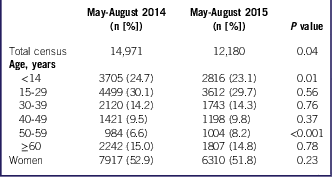
After the 2015 Nepal earthquake, 12,180 patients were seen in the ED. This was a significant decrease in patient volume compared with the 14,971 patients seen during the same months in 2014 (P=0.04) (Table 1). This decrease in patient volume was primarily seen in May and June following the earthquake, with 2507 and 2668 patients seen, respectively. The ED saw 3723 and 3740 during those same respective months the year before the earthquake. Controlling for the change in volume, there was a significant decrease in the proportion of children seen post-earthquake (P=0.01) and an increase in adults aged 50-59 (P<0.001).
Patient Demographics

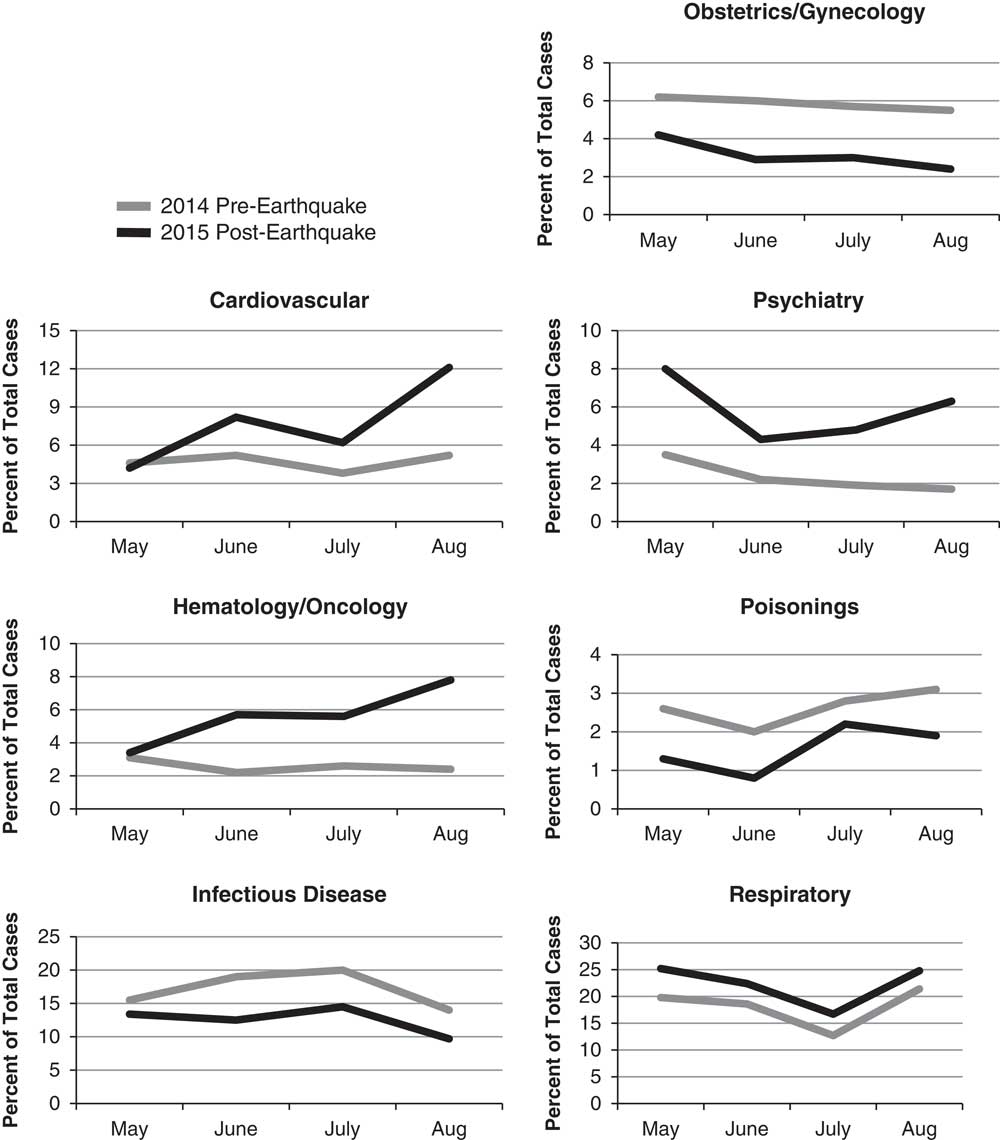
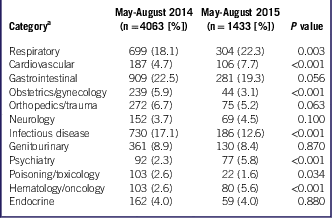
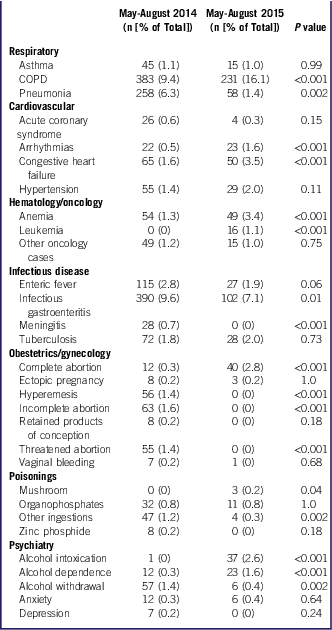
Of the total number of cases, 5496 (4093 pre-disaster and 1433 post-disaster) patients were recorded during these months in the changeover registers. Comparing cases recorded after the earthquake with the same months the previous year, there was a statistically significant decrease in obstetrics/gynecology (OB/GYN), ID, and poisoning cases (Figure 1, Table 2). The rate of OB/GYN cases presenting in the ED reduced from 5.9% in May through August 2014 to 3.1% in 2015 (P<0.001). Poisoning cases also decreased from 2.6% in 2014 to 1.6% (P=0.03) in 2015. The incidence of ID cases decreased from 17.1% to 12.6% (P<0.001) in 2015. The most significant changes were a decline in enteric fever and gastroenteritis (Table 3).
Statistically Significant Pre- and Post-Earthquake International Classification of Diseases Category Monthly Changes.

Comparison of Categories According to Same Months Pre- and Post-Earthquake

a Other categories (ie, dermatology, signs/symptoms) that categorize a small percentage (<1%) not included in chart.
Change in Diseases From Categories With Significant Change Post-Disaster

In addition, the ED saw a statistically significant increase in psychiatric, cardiovascular, respiratory, and hematologic conditions (Figure 1, Table 2). Psychiatry cases increased to 5.8% from 2.3% (P<0.001) in 2014 (Table 2). Specifically, there was an increase in cases related to alcohol use and abuse (Table 3), though this effect peaked in the month immediately following the earthquake (Figure 1). Cardiovascular cases increased from 4.7% to 7.7% (P<0.001) with the majority of cases related to arrhythmias and congestive heart failure. Respiratory cases also increased (P=0.003), primarily due to increased visits for COPD. Hematology cases increased in 2015 to 5.6% versus 2.6% (P<0.05) in 2014, primarily due to an increase in patients diagnosed with anemia (Table 3).
Discussion
Our study found a significant decrease in the number of patients presenting to the ED after the earthquake. Patan Hospital was not structurally damaged and the health care workforce at the hospital was at normal capacity, if not increased due to volunteers. Although the hospital was structurally sound, much of the hospital operated in tents on hospital grounds for 1 month after the earthquake due to ongoing aftershocks and patient fear. The ED was an exception and operated inside as normal; however, the outpatient clinics shifted to the tents. Spatially, when entering the hospital grounds, the outpatient tent clinics were encountered before the ED entrance. This may have contributed to an initial decrease in ED encounters if patients siphoned off to the tent clinics instead. This may have also had an impact on the acuity of the patients presenting to the ED.
Additionally, in the immediate post-earthquake period, high volumes of trauma patients were evaluated and treated with minimal documentation. This may account for the absence of an expected increase in orthopedic and trauma cases seen post-earthquake. Beyond the initial trauma, however, one would not expect an ongoing increase in these types of cases, which is consistent with our findings.
Although the hospital was functioning normally inside the facility by the end of May, volumes remained low for another month in the ED. As in other disasters, decreased health care utilization post-event is likely multifactorial. Brolin Ribacke et al also found a decrease in health care utilization after the Ebola epidemic in 2014; however, this was largely related to lack of available resources along with fear and stigma associated with facilities.Reference Brolin Ribacke, Saulnier, Eriksson and von Schreeb 2 Greenstein et alReference Greenstein, Chacko, Ardolic and Berwald 9 and Platz et alReference Platz, Cooper, Silvestri and Siebert 16 also found an impact of hurricanes causing decreased ED utilization due to weather conditions. In the months following the Nepal earthquake, many families remained living outside and were engaged in active community recovery, which may have made immediate health care needs a lower priority. Additionally, municipal infrastructure and roadways were widely damaged in the Kathmandu Valley, affecting patient access to health care facilities and likely limiting referrals to Patan Hospital from smaller regional facilities. 13
This study did find a statistically significant increase in the number of patients presenting to the ED post-disaster with cardiovascular (mostly arrhythmias and congestive heart failure) and respiratory (primarily COPD) complaints. Increases in exacerbations of chronic health conditions, including COPD, pneumonia, and acute and chronic kidney disease, have been reported in other post-disaster situations.Reference Duclos, Sanderson and Lipsett 8 - Reference Kobayashi, Hanagama and Yamanda 10 , Reference Jiao, Kakoulides and Moscona 11 , Reference Aoki, Takahashi and Fukumoto 12 , Reference Daito, Suzuki and Shiihara 17 - Reference Chan, Elliott and Troughton 19 In some cases, this may be related to weather patterns or patterns of injury, such as crush injury leading to worsening renal function. In this study, contributing factors to worsening chronic issues likely include lack of access to medications, lack of access to primary care or outpatient clinics, increased psychosocial stressors, and poorer living conditions in the months following the disaster. This emphasizes the need for clinicians in disaster-prone areas to discuss disaster plans with patients who have chronic medical conditions.
We also found a significant rise in psychiatric cases presenting to the ED, mostly cases of alcohol intoxication and abuse post-disaster, which is consistent with anecdotal reports from ED workers at the time. Kato et alReference Kato, Mikami and Kimoto 20 found a similar increase in psychiatric illness after the Japan earthquake, with a particular increase in alcohol intake and suicide attempts. Other studies have found increases in hospital visits for substance abuse, anxiety, and psychotic disorders.Reference Cerda, Vlahov, Tracy and Galea 6 , Reference Aoki, Takahashi and Fukumoto 12 , Reference Conrad and Lavigne 21 Although substance abuse and suicide attempts have been found to be increased post-disaster, there are no studies evaluating specific ingestions.Reference Cerda, Vlahov, Tracy and Galea 6 , Reference Kato, Mikami and Kimoto 20 , Reference Conrad and Lavigne 21 At Patan Hospital, while there was an increase in psychiatric-related visits, we found a decrease in the poisoning cases, typically medication overdoses, post-earthquake. Again this is likely due to inability to access medications while people were living outside due to aftershocks and damaged housing. Despite the decrease in poisoning cases, the rise in alcohol-related complaints and other psychiatric disorders and the increased psychosocial stressors argue for the need for including psychiatric care in post-disaster planning.
Infectious disease cases were also decreased after the Nepal earthquake. The Kathmandu Valley typically sees a seasonal increase in gastroenteritis, including cholera-related diseases, during the summer or monsoon months.Reference Rohwerder 22 This was the case for 2014 and 2016; however, in the months following the earthquake, there was no outbreak in cholera and a significant drop in infectious gastroenteritis cases seen in our ED.Reference Poudel 23 , Reference Nelson, Andrews, Maples, Barry and Clemens 24 Other studies have shown increases in ID post-disaster due to contaminated water sources, displacement, and over-crowding.Reference Karmakar, Rathore, Kadri, Dutt, Khare and Lal 3 , Reference Campanella 25 However, disaster preparedness and anticipation of post-event outbreaks in this case led to an increased hygiene awareness and distribution of clean water and water treatment equipment, likely preventing a typical seasonal outbreak. 15 , Reference Nelson, Andrews, Maples, Barry and Clemens 24 This notably demonstrates the significant impact that disaster preparedness can play in public health operations.
This study also found an increase in hematology cases, specifically anemia of uncertain etiology or significance. The timeframe of the study makes it unlikely that this increase in cases of anemia is due to acute blood loss or due to chronic malnutrition. Patan Hospital is one of the few tertiary hospitals specializing in treatment of hematological disorders; and this is likely a coincidental correlation related to increased referral from other centers or missed appointments with outpatient clinics.
The other finding included a decrease in the obstetrics and gynecology cases, particularly hyperemesis as well as threatened, incomplete, and complete abortions. Although there were no changes in ED operations for obstetric cases, these cases may have been referred or triaged immediately to the obstetrics department. Also because women are placed in a private room for OB/GYN complaints, their visit may not have been recorded in changeover since the entire team does not enter the room, leading to incorrect data in this particular area.
We recognize the significant limitations to this study. The primary limitation is a lack of reliable data from inconsistent record keeping processes. The cases included in the disease category analysis were cases present in the ED upon handover; however, cases that were discharged quickly were not recorded. Although we attempted to collect all data available, there was still a significant amount of missing data, which may have led to confounding results. In addition, because of lost records, the study could only be done for 4 months post-earthquake, making it difficult to assess any ongoing effects the earthquake may have had on health. Second, the retrospective nature of this study places several limitations on the results and conclusions. This emphasizes the need for a registry to collect information for all patients presenting to the ED and plans for collecting this data during a disaster to ensure reliable data collection. Additionally, this study was performed in only one hospital and may not reflect the same trends seen throughout areas affected by the earthquake in Nepal. Another limitation may be related to cases being categorized according to the ED diagnosis rather than the final diagnosis. Although, the final diagnosis may have been different in some cases, we believe these would not have made many changes to the results. Finally, this study only compares the months post-earthquake with the year prior. Therefore, differences could be related to annual variations; however, experientially, the data from the year prior accurately reflects our typical distribution of cases seen during these months.
Conclusions
To our knowledge this is the first retrospective study to compare the incidence of ED presentation trends pre- and post-disaster following the Nepal Earthquake in 2015. Understanding the impact on conditions seen in the ED after the earthquake has the potential to give further insight into how to improve disaster preparedness, mitigation, and recovery plans for health care facilities as well as for governmental organizations. Improved general awareness, better health facilities, and disaster preparedness play a pivotal role in minimizing the incidence of diseases post-disaster as evidenced by the decrease in infectious disease cases post-earthquake in Nepal. Significantly, improved record keeping is an essential part of disaster preparedness and response that would have enhanced this study and should serve as a lesson for other resource-constrained institutions preparing for future disaster situations.
Funding
None.
Authors’ Contribution
J.M. developed the idea for this study in Nepal with D.R.H. All authors helped with development of the protocol. M.T., S.D., A.S., and D.R.H. supervised the conduct of the study, managed data collection, and analyzed the data. M.T. wrote manuscript with S.D., A.S., J.M., and D.R.H. providing significant contribution to editing and approval of final draft. D.R.H. takes responsibility of the paper as a whole.