Introduction
The Global Terrorism Database (GTD) is an open-source database that includes a compilation of data on international terrorist attacks that have occurred since 1970. It is managed by the Center for Terrorism and Intelligence Studies and the University of Maryland National Consortium for the Study of Terrorism and Responses to Terrorism (START; College Park, Maryland USA), a US Department of Homeland Security Center of Excellence. The Centers of Excellence network is an extended consortium of hundreds of universities conducting research to address homeland security challenges.
The GTD was established in an effort to increase understanding of terrorist violence so it can be more readily defeated. The consortium reviews media reports to determine if an incident meets pre-specified eligibility criteria. 1 The database includes information on more than 150,000 terrorist attacks, with data on 45-120 variables for each incident. It is currently the most comprehensive, unclassified database on terrorist events in the world. 1 Further details regarding GTD methodology and coding can be found in the codebook available on the consortium’s website. 2
A chemical weapon is defined by the GTD as a weapon produced from toxic chemicals that is contained in a delivery system and dispersed as a liquid, vapor, or aerosol. This category includes chemical weapons delivered via explosive device. A chemical explosive is a chemical weapon that is dispersed via an explosive device. The GTD classifies incidents into 13 categories based on the type of weapon used: biological agents; chemicals; explosives/bombs/dynamite; fake weapons; firearms; incendiary devices; melee; nuclear weapons; other; radiological agents; sabotage equipment; unknown; and vehicle (ie, not to include vehicle-borne explosives/car or truck bombs).
To date, no published studies have used this database to characterize chemical terrorism incidents and their associated morbidity and mortality. The objective was to characterize chemical terrorism incidents reported to the GTD from 1970 through 2015 to increase understanding of the kinds of chemical agents used, the associated morbidity and mortality, the geography of incidents, and the intended targets.
Methods
Using the GTD website, all the incidents categorized as “chemical” in the weapon category were identified using an advanced search function. A keyword search to identify all terrorism incidents with the term “chemical weapon” in the incident description was done. 1 All other incidents were excluded. The dataset was exported and analyzed using Microsoft Excel (Microsoft Corp.; Redmond, Washington USA). Each incident was reviewed in detail; duplicate incidents and incidents that did not involve a chemical terrorism agent were excluded. For example, an incident in which terrorists used guns as the weapon to injure police guards in a police station located near a chemical plant was excluded.
The variables of interest were date, chemical category, injury, fatality, region, and target. 1 The GTD uses standardized definitions for region and target, as explained at the end of this section.
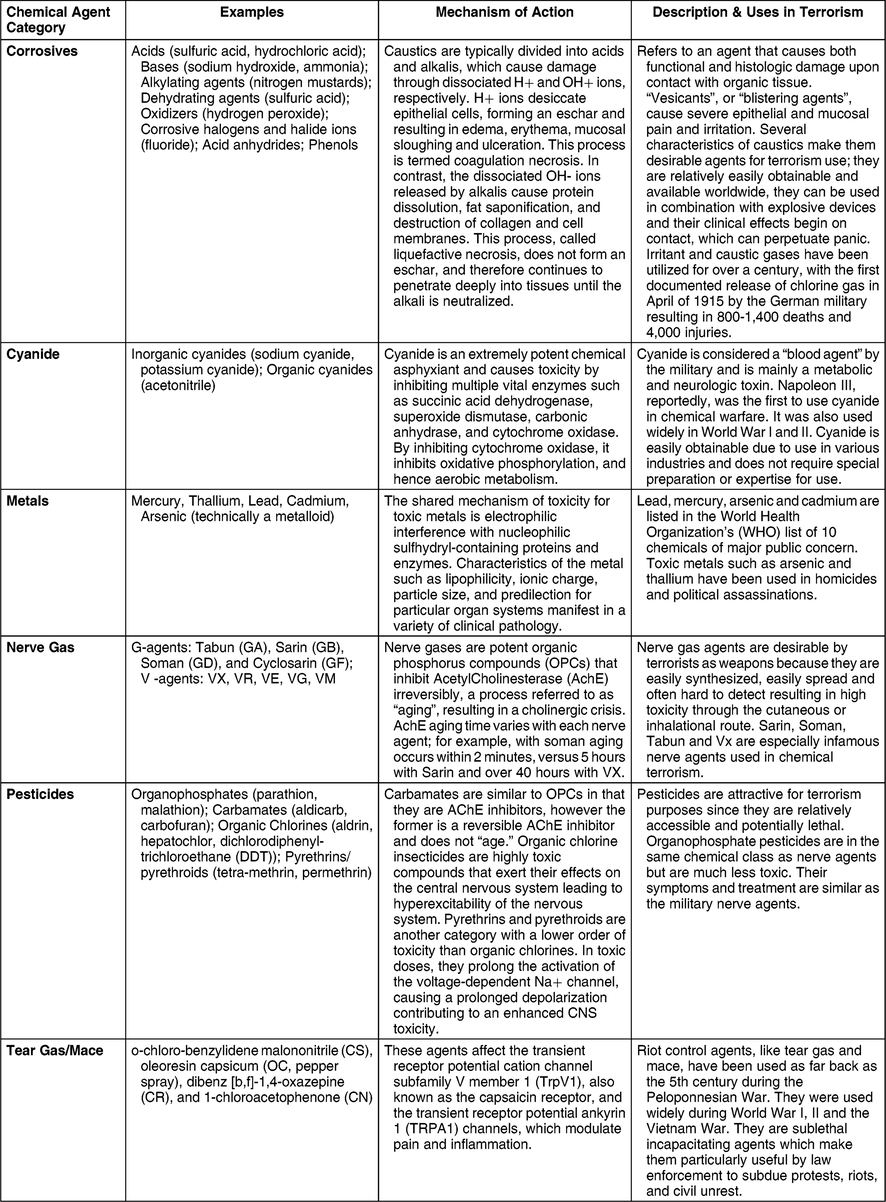
The frequency of chemical terrorism incidents by year was determined. The number of chemical terrorism incidents that involved incendiary or explosive devices as the method of dispersion was calculated. Chemical agent categories were created to classify chemical type, and the details of every incident were reviewed to determine the best category for each. The eight chemical agent categories were: corrosives; cyanide; metals; nerve gas; pesticides; tear gas/mace; gas (unspecified); and unknown chemical (Table 1 Reference Hoffman 3 ). The frequency of different chemical agents and the mean number of injuries and fatalities for all chemical incidents combined and by chemical agent category were calculated.
Chemical Agent Categories
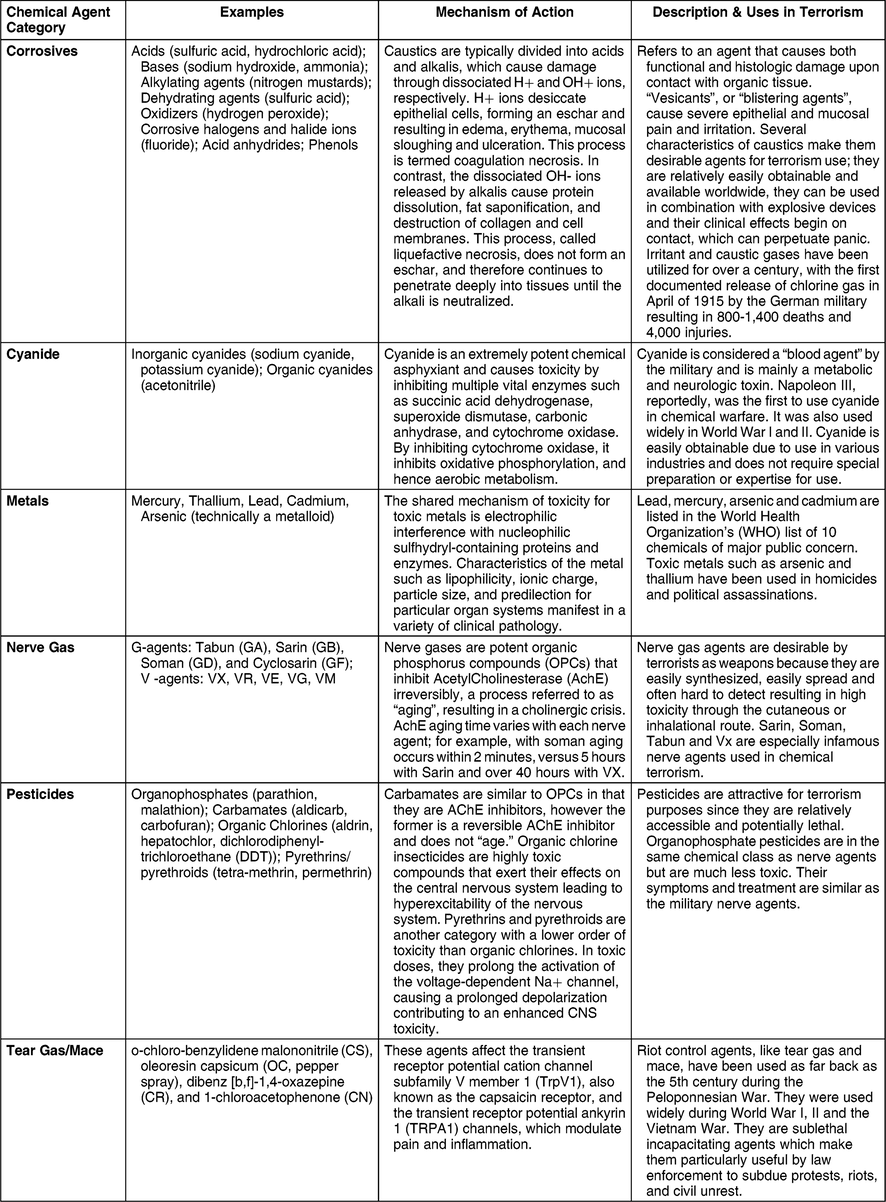
Note: From Hoffman RS, et al. Goldfrank’s Toxicologic Emergencies. Tenth edition. New York USA: McGraw-Hill Education; 2015.Reference Hoffman 3
In addition, chemical terrorism events were analyzed by region. The National Consortium for START uses standardized definitions for 12 geographic regions: North America; Central America and the Caribbean; South America; East Asia; Southeast Asia; South Asia; Central Asia; Western Europe; Eastern Europe; Middle East and North Africa; Sub-Saharan Africa; and Australia and Oceania (Supplemental Table 1; available online only).
The incident frequency by target as reported in the GTD was also determined. The GTD uses the following categories for targets: abortion-related (eg, abortion clinics); airports/aircraft; business; educational institution; food/water supply; government/diplomatic figure/agency; journalist/media outlet; military figure/organization; nongovernmental organizations (NGOs); police; private citizens; religious figures/institutions; non-state militia; transport; violent political party; and unknown targets. The study authors did not originally intend to analyze by target gender as a primary outcome measure since GTD did not include a gender category for targets. However, the study authors decided to include analysis by gender, because in reviewing individual chemical terrorism incidents, the primary investigator noticed a disproportionate number of incidents that specifically targeted women or school-aged girls.
Results
General Results
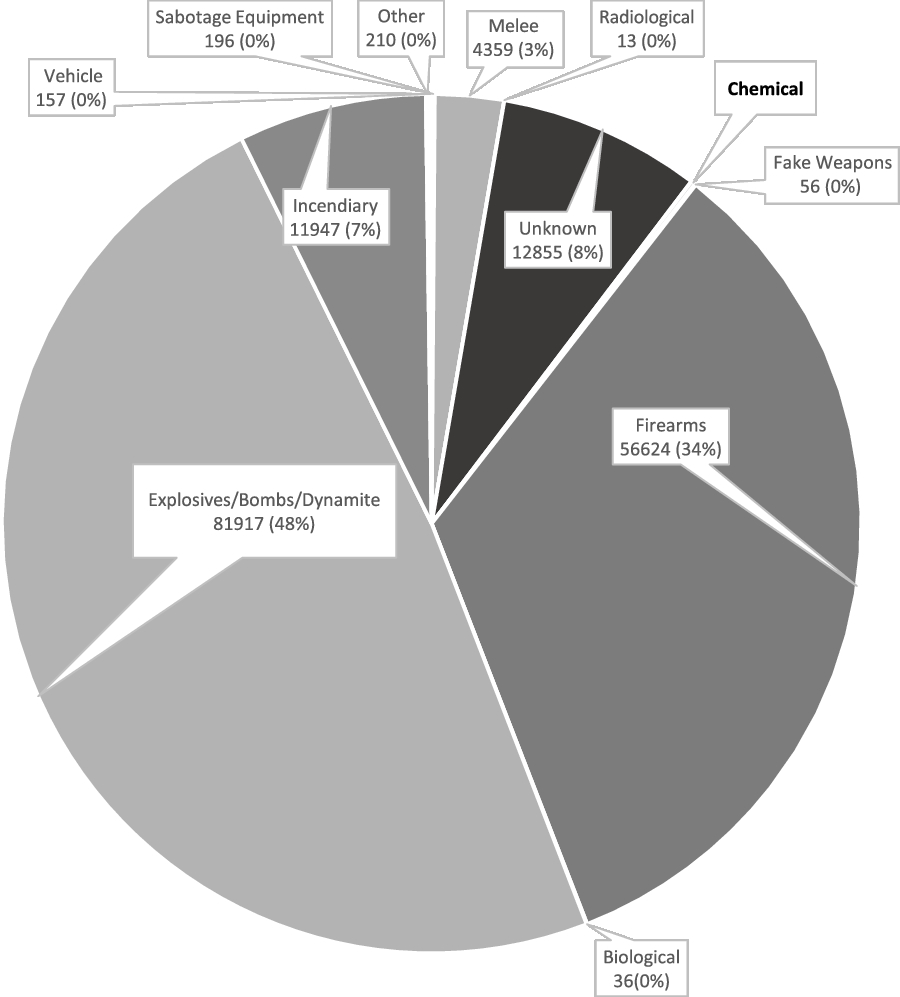
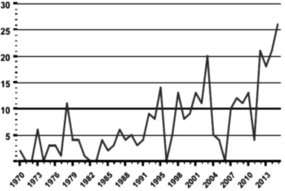
From 1970 through 2015, 156,772 terrorism incidents were reported to the GTD. A total of 321 incidents (0.2%) were reviewed, of which 310 incidents were found using the advanced search function for “chemical” in weapons category and 11 incidents were found when searching for the keyword “chemical weapon” in the incident description (Figure 1). Of these, 29 (9.0%) incidents were excluded because they were either duplicate entries or did not involve a chemical terrorism agent, leaving 292 (91.0%) incidents that met the inclusion criteria for analysis. Since 1970, the frequency of chemical terrorism incidents has increased from two to more than 25 incidents per year (Figure 2). Chemical explosives and incendiary devices were used as a mode of dispersal in 51 (17.5%) incidents.
Frequency of Terrorism Weapon Types Used in Terrorism Incidents (n=156,772), Global Terrorism Database, 1970-2015.

Frequency of Chemical Terrorism Incidents (n=292) over Time, Global Terrorism Database, 1970-2015.

Chemical Agent Category
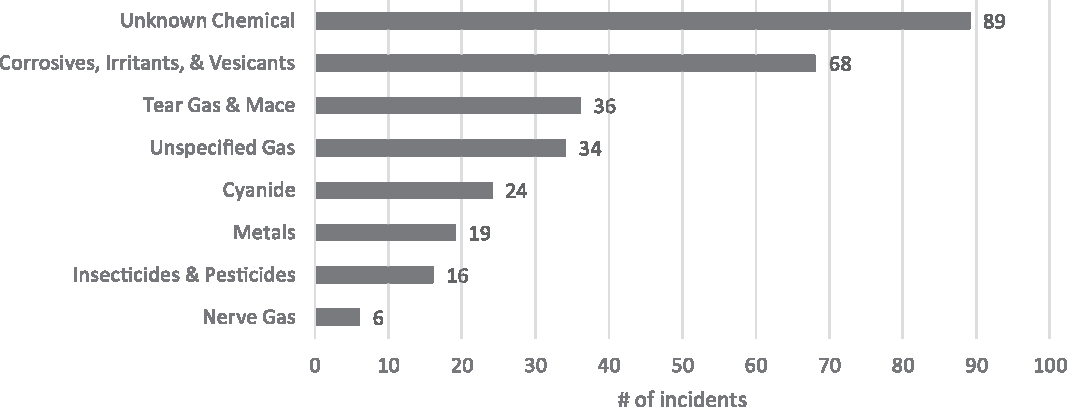
The most commonly reported chemical agent category was “unknown” (n = 89; 30.5%) and the most common known chemical agent category was corrosives (n = 68; 23.3%), followed by tear gas/mace (n = 36; 12.3%), unspecified gas (n = 34; 11.6%), and cyanide (n = 24; 8.2%). Nerve gas agents (n = 6; 2.1%) were the least commonly reported chemical agent category to be used (Figure 3).
Frequency of Chemical Agent Categories for Chemical Terrorism Incidents (n=292), Global Terrorism Database, 1970-2015.

Injuries and Fatalities
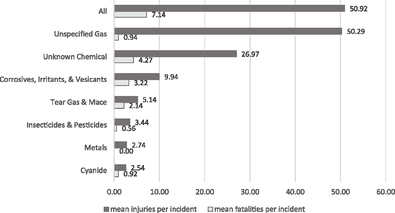
Overall, chemical terrorism incidents in this dataset resulted in an average of 51 injuries (mean range across agents: 2.5-1,622.0) and seven fatalities (mean range across agents: 0.0-224.3) per incident. Nerve gases (n = 6; 2.1%) had the highest reported mean number of injuries (n = 1,622) and mean number of fatalities (n = 224) per incident. The incident sources attributed nearly all of the injuries and fatalities to the nerve agent itself, not the blast injury from the incendiary/explosive device. Corrosives ranked second behind nerve agents in mean number of injuries (10) and mean number of fatalities (3), while tear gas ranked third for injury (5) and fatality (2) among the known chemical agents (Figure 4). Chemical explosive device incidents (n = 51) resulted in a total of 1,046 injuries (average of 91 injuries per incident) and 487 fatalities (average of 35 fatalities per incident).
Mean Number of Fatalities and Injuries per Chemical Terrorism Incident by Chemical Agent Category, Global Terrorism Database, 1970-2015.

Region
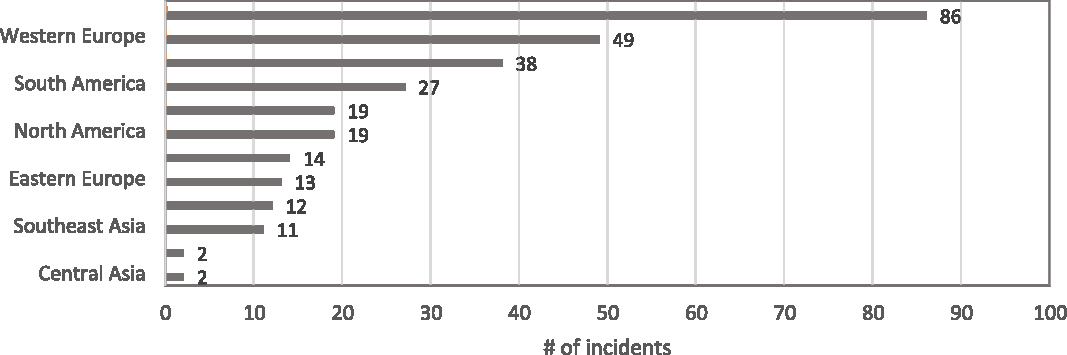
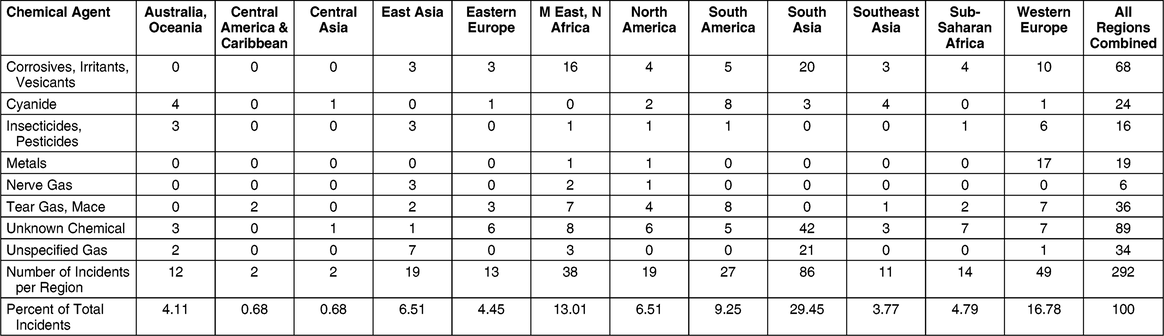
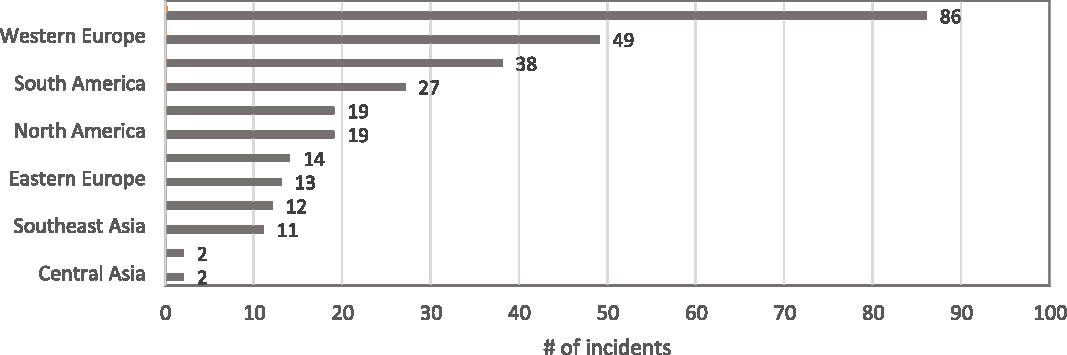
The highest number of reported chemical terrorism incidents occurred in the following regions: South Asia (n = 86; 29.5%); Western Europe (n = 49; 16.8%); Middle East/North Africa (n = 38; 13.0%); and South America (n = 27; 9.3%; Figure 5). In South Asia, unspecified gas (n = 21; 24.4%) and corrosives (n = 20; 23.3 %) were the most common chemical agent categories. In Western Europe, the most common were metals (n = 17; 34.7%) and corrosives (n = 10; 20.4%). In Middle East/North Africa, the most common were corrosives (n = 16; 42.1%) and tear gas/mace (n = 8; 29.6%). In South America, the most common was cyanide (n = 8; 29.6%; Table 2). Middle East/North Africa (n = 22; 44.0%) was the region with the most incidents of incendiary/explosive chemical agents.
Frequency of Chemical Terrorism Incidents by Geographic Region, Global Terrorism Database, 1970-2015.
Frequencies of Chemical Agent Categories Across Geographic Regions, Global Terrorism Database, 1970-2015
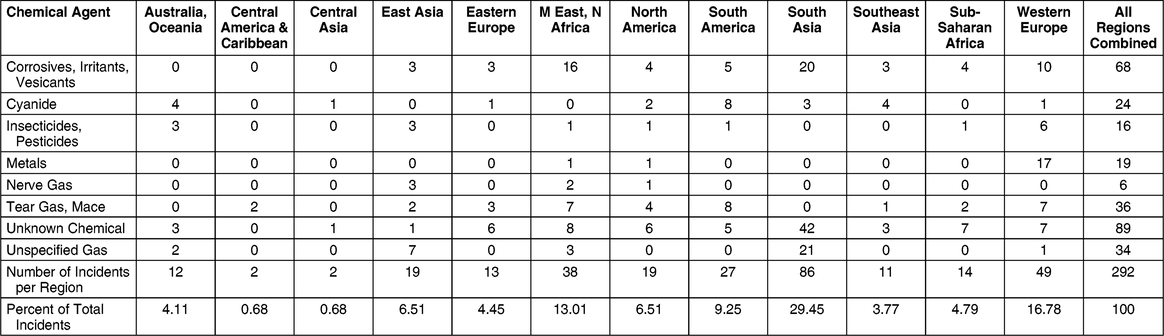
Note: In South Asia, unspecified gas (n=21, 24.4%) and corrosives (n=20, 23.3%) were the most common chemical agent category. In other regions, the following categories were most common: metals (n=17, 34.7%) and corrosives (n=10, 20.4%) in Western Europe, corrosives (n=16, 42.1%) in Middle East/North Africa, and tear gas/mace (n=8, 29.6%) and cyanide (n=8, 29.6%) in South America.
Target
The most common targets of chemical terrorism incidents were private citizens (n = 57; 19.5%), government/diplomatic figures or agencies (n = 46; 15.8%), and educational institutions (n = 43; 14.7%). Other reported targets were police (n = 37; 12.7%), military (n = 22; 7.5%), business (n = 20; 6.8%), transport (n = 15; 5.1%), food/water supply (n = 12; 4.1%), journalist/media related (n = 9; 3.1%), violent political party (n = 8; 2.7%), abortion-related locations (n = 3; 1.0%), airports/aircraft (n = 3; 1.0%), NGOs (n = 2; 0.7%), non-state militia (n = 1; 0.3%), and unknown targets (n = 1; 0.3%). Thirteen of the 57 (22.8%) incidents targeting private citizens specifically targeted female groups. Of the attacks on female groups, 12 of the 13 (92.3%) incidents occurred in South Asia. Twenty-five of the 43 (58.1%) incidents targeting educational institutions specifically targeted schools for girls. Of the attacks on female students or teachers, 24 of the 25 (96.0%) attacks occurred in South Asia.
Discussion
The study revealed several key findings. First, explosive devices were found to be a common method for dispersing chemical agents. Nearly one-in-five chemical terrorism incidents used explosive devices as the method to disperse the chemical agent. This finding is reflective of the trends in overall terrorism events: explosives, bombs, and dynamite were implicated in nearly one-half. 1 Counter-terrorism defenses might benefit from enhanced training on responding to chemical explosive devices. Disaster preparedness strategies on prevention/mitigation, preparedness, response, and recovery of chemical explosives could be beneficial in regions with a reportedly higher use of chemical explosives. Data suggest that the Middle East/North Africa area might be one of these regions.
Second, mace and tear gas resulted in higher morbidity and mortality than expected. Because tear gas is considered a non-lethal incapacitating agent, the authors expected to find very little to no mortality associated with tear gas events. Most of the mortality associated with tear gas occurred during a single incident. Sixty-five fatalities occurred on December 12, 1999 when a naval base and police barracks were attacked by tear gas grenades in Jurado, Colombia by the Revolutionary Armed Forces of Colombia (FARC). 1 However, it is unclear why this incident involving tear gas was more lethal than would be expected. Since tear gas and mace can be readily acquired and can result in significant injury and even death, increased surveillance of the manufacturing, storage, and purchasing of these agents may be prudent. In addition, health care responders should be educated on proper decontamination and initial supportive care when dealing with these agents.
Third, the results re-affirm that although nerve agents are among the most rarely used, they are the most lethal chemical agents. An example is the Sarin attack in Damascus, Syria that occurred on August 21, 2013 resulting in an estimated 1,300 fatalities and 3,600 injuries, all of whom were private citizens. 1 Although not yet included in the GTD dataset at the time of study, the April 4, 2017 chemical agent attack in Syria, which is also thought to be Sarin, killed an estimated 86 persons. 4 Sarin has a history of use in terrorism incidents. Members of Aum Shinrikyo, the Japanese doomsday cult, used Sarin in the terrorist attacks on the Japanese cities of Matsumoto (1994) and Tokyo (1995), resulting in a total of 21 fatalities and 6,000 injuries. Cult members have also used the nerve agent VX in their assassinations. 1 In the 1995 Tokyo subway Sarin incident, miosis, headache, dyspnea, nausea, eye pain, blurred vision, dim vision, and weakness were the most common symptoms reported.Reference Masuda, Takatsu, Morinari and Ozawa 5 – Reference Okumura, Takasu and Ishimatsu 7 Hospital personnel and emergency medical technicians sustained secondary exposures in both the Tokyo and Matsumoto terrorist Sarin releases, as the nerve agent evaporated from the victims’ clothing.Reference Masuda, Takatsu, Morinari and Ozawa 5 , Reference Ohbu, Yamashina and Takasu 8 Nearly all the fatalities and injuries from these incidents were the result of the nerve agent itself, and not from blast injuries. Although explosive devices were used in Syria, the victims’ predominant symptoms were consistent with nerve agent poisoning. Both the Tokyo and Matsumoto attacks did not involve chemical explosives. In the Tokyo incident, the nerve agent diffused from a plastic bag wrapped in newspaper. The Matsumoto incident involved the use of a converted refrigerator truck and fans to release the Sarin gas.Reference Olson 9 In their media statement, Médecins Sans Frontières (MSF; Geneva, Switzerland) said that at least 3,600 patients displayed neurotoxic symptoms and were treated using MSF-supplied atropine after the Tokyo incident. 10 These nerve gas incidents demonstrate the profound lethality associated with these agents. The study results depicted a possible regional trend in the category of chemical terrorism agent used. Because of these regional trends, governmental counter-terrorism agencies within each region might benefit from disaster preparation activities that focus on the most common chemical agents likely to be used for that region based on historical data available (eg, GTD). However, unknown agents were the most common chemical agent category identified using GTD data. Therefore, disaster preparedness personnel need to be familiar with the basic principles of managing illness due to all chemical agent categories.
Finally, the most common targets of chemical terrorism incidents were private citizens, followed by government/diplomatic figures or agencies, and educational institutions. An unexpected finding was that groups of women were the specific target in almost one-quarter of the incidents targeting private citizens. Similarly, over one-half of the incidents targeting educational institutions specifically targeted female students or teachers. The vast majority of incidents targeting females occurred in South Asia. One notable example occurred in Afghanistan on May 30, 2012 when assailants sprayed the Aahan Dara Girls School with toxic chemicals. At least 160 students were hospitalized after complaining of headaches, vomiting, and dizziness. No group claimed responsibility. 1 Increased awareness of these events and increased prevention efforts to protect women and girls from being specifically targeted may be needed in this region.
Limitations
The study is subject to several limitations. One important limitation is that the GTD relies on media reports as sources for incident data. Media reports can be inaccurate and biased. Therefore, the media entries included in the GTD may be subject to selection and publication bias. For example, incidents involving large numbers of casualties may receive more media attention and be subject to over-estimates of fatality and injury counts. Similarly, incidents involving controversial perpetrators or notable targets may be over-published. Conversely, smaller incidents may not have received as much media attention and may not have been included in the GTD. Additionally, multiple reports for the same incident were found in the GTD, especially for large casualty incidents. To avoid repetitive entries, each incident was analyzed for uniqueness and duplicate entries were omitted.
Conclusions
Chemical terrorism incidents are extremely rare occurrences and contribute to less than one percent of all terrorist events. Over one-third of the chemical terrorism events used unknown agents, which suggests a lack of reliable sources. These data suggest that morbidity and mortality vary by chemical agent and that the reported chemical agent used for chemical terrorism differs by region. Corrosives were the most commonly used chemical terrorism agent and were used the most in South Asia and the Middle East/North Africa. While nerve agents were the least commonly used, they resulted in by far the most fatalities and were used in East Asia and Middle East/North Africa. Western Europe had the second highest frequency of chemical terrorism incidents, after South Asia, and metals were the most common chemical agent used in this region. Private citizens were the most common targets of chemical terrorism incidents. Groups of females and all-female educational institutions were commonly targeted in South Asia.
The wide variety of chemical agents used suggests that a broad education for preparedness may be needed for health care workers and disaster responders. Based on the large number of chemical agents available, health care workers who respond to chemical terrorism incidents would likely benefit from additional education about the unique health risks associated with chemical agents. However, some regional trends appear to exist in patterns of chemical weapon use in terrorism incidents as reported by the GTD. Increased awareness and increased prevention efforts to protect women and girls from being specifically targeted may be needed in certain regions. Information from the GTD and other local sources (if available) can be used by public health authorities to help guide local or regional chemical terrorism response planning efforts. The study findings may be helpful in developing and fine-tuning regional chemical terrorism preparedness activities.
Conflicts of interest/funding
None of the authors have any affiliations with or involvement in any organization or entity with any financial interest (such as honoraria; educational grants; participation in speakers’ bureaus; membership, employment, consultancies, stock ownership, or other equity interest; and expert testimony or patent-licensing arrangements), or non-financial interest (such as personal or professional relationships, affiliations, knowledge or beliefs) in the subject matter or materials discussed in this manuscript. Funding was received from the Centers for Disease Control and Prevention (Atlanta, Georgia USA), salary support, and editorial services.
Author Contributions
The corresponding and primary author, Cynthia Santos, did most of the study design, analysis, figures/tables, and draft of the manuscript. The secondary author, Tharwat El Zahran, also contributed to much of the draft of the manuscript and assisted in the editorial and clearance process. All authors discussed the results and implications and commented on the manuscript at all stages. All authors contributed extensively to the work presented in this paper.
Supplementary Materials
To view supplementary material for this article, please visit https://doi.org/10.1017/S1049023X19004539