Cardiac catheterisation is one of the main diagnostic and interventional tools in paediatric cardiology. However, despite increasing experience with cardiac catheterisation, there remains a risk of morbidity and mortality with increasing complexity of patients. In most instances of cardiac catheterisation, regular post-procedure care is provided in a recovery room or regular ward with possible discharge on the same day. In some patients, a planned admission to critical care is anticipated either by anaesthesia or by cardiology prior to the intervention. There remains a third group of patients whose admission to the critical care setting is unanticipated.
Unanticipated admission to a higher level of care is an unintended complication which can result in the prolongation of hospital stay, regardless of whether it is caused by healthcare management or the patient’s disease. Unplanned intensive care admission is a validated clinical quality indicator in surgery. Unplanned admissions include all patients admitted unexpectedly to the intensive care unit from a lower level of care and has been recommended as a measure of patient safety and effectiveness of care.Reference Landry, Gabriel, Beutler, Dutton and Urman 1 , Reference Haller, Myles, Langley, Stoelwinder and McNeil 2 Tracking unplanned intensive care admissions can detect patients who may have suffered an iatrogenic complication.Reference Haller, Myles, Langley, Stoelwinder and McNeil 2 – 7 Unplanned admissions negatively impact administrative and clinical workflow, and make facilitating bed space availability more difficult. To our knowledge, unanticipated admission has not been studied as a quality indicator in paediatric cardiac catheterisation.
It is largely unknown in the current literature which children are admitted unexpectedly to the critical care unit after a cardiac catheterisation and which factors during the procedure are associated with the admission to the cardiac critical care unit (CCCU). A child experiencing a complication is at higher risk for admission to the CCCU. Age <1 year has been found to be a risk factor for complications in some studies,Reference Yılmazer, Üstyol and Guven 8 – Reference Mehta, Lee, Chaturvedi and Benson 11 but findings are inconsistent. Lower body weight, having cyanotic or complex CHD, higher technical challenge, critical clinical condition and operator in training have also been identified as risk factors for complications.Reference O’Byrne, Glatz and Shinohara 12 , Reference Mori, Takahashi and Nakanishi 13 Interventional procedures have been associated with increased risk compared to diagnostic procedures in some studies,Reference Vitiello, Mccrindle, Nykanen, Freedom and Benson 9 , Reference Mehta, Lee, Chaturvedi and Benson 11 , Reference Mori, Takahashi and Nakanishi 13 but findings are again inconsistent.Reference Tavli, Kayhan, Okur, Kirman and Tekdoğan 10 , Reference Phillips, Cabalka, Hagler, Bailey and Cetta 14
Determination of this cohort of patients may help with risk-stratification, and the avoidance of unplanned intensive care admissions. The objectives of this study were to explore the characteristics of children admitted unexpectedly to the paediatric CCCU after cardiac catheterisation over a 10-year period and evaluate the usefulness of tracking unplanned intensive care admissions in this patient population. We hypothesise that unplanned intensive care admissions will be a useful quality indicator for paediatric cardiac catheterisation.
Material and methods
All procedures were performed at the Hospital for Sick Children in Toronto, Ontario, Canada, which is a quaternary care centre with the largest paediatric cardiac catheterisation centre in Canada and carried out by senior cardiologists with a previous additional training and focus on cardiac catheterisation and attended by cardiac anaesthetists. Cardiology fellows were not involved in the primary performance of these procedures. The retrospective study was approved by the local research ethics board.
Databases from both the Division of Cardiology and Department of Critical Care Medicine were searched to identify all children (birth to 18 years) who were admitted to the CCCU after cardiac catheterisation between 1 January, 2003 and 30 April, 2013. An admission was considered unanticipated if there was not a CCCU bed pre-booked or there was no mention of possible critical care admission in the anaesthesia record. There were no standardised criteria for planned CCCU admission – the decision to pre-book a bed was at the discretion of the attending anaesthetist and cardiologist. Exclusion criteria included children who went from the CCCU or operating room to the catheterisation laboratory and then returned to the CCCU, as these patients would be expected to be re-admitted to the CCCU. Children who underwent electrophysiology studies or a Fontan completion procedure in the catheterisation lab were also excluded. Children who underwent a balloon atrial septostomy in the catheterisation lab were excluded as these are routinely done at the bedside in the CCCU. Only patients transferred from the catheterisation lab directly to the CCCU were included – patients who were transferred to the cardiac ward or another ward and then admitted to the CCCU within 24–48 hours were not tracked. Patients who underwent multiple procedures had each encounter treated as a discrete event. Patients who went to the catheterisation lab for non-cardiac procedures were also excluded. Medical records were reviewed for demographic data, underlying cardiac diagnosis, past medical history distinct from the underlying cardiac diagnosis (e.g. chromosomal disorders, malignancy, congenital diaphragmatic hernia and prematurity), the planned procedure, procedural complication (i.e. anaesthesia related or procedure related), management in the CCCU, length of stay in the CCCU, total hospital stay and survival to hospital discharge.
SPSS software, version 23 (IBM Corporation, Armonk, NY, United States of America) was used for statistical analysis. Mann–Whitney U-tests and chi-square tests were used to examine relations between continuous and categorical variables, respectively; p-values <0.05 were considered statistically significant.
Results
A total of 10,797 procedures were recorded in the cardiac catheterisation laboratory database during the study period. Excluded cases are summarised in Fig 1. Of the 9336 cardiac catheterisations, 146 (1.6%) were admitted from the catheterisation laboratory to the CCCU and met inclusion criteria. Of these 146 patients, 117 (1.3%) met criteria for unexpected admission and 29 (0.3%) were planned admissions.
Exclusion and inclusion of patients

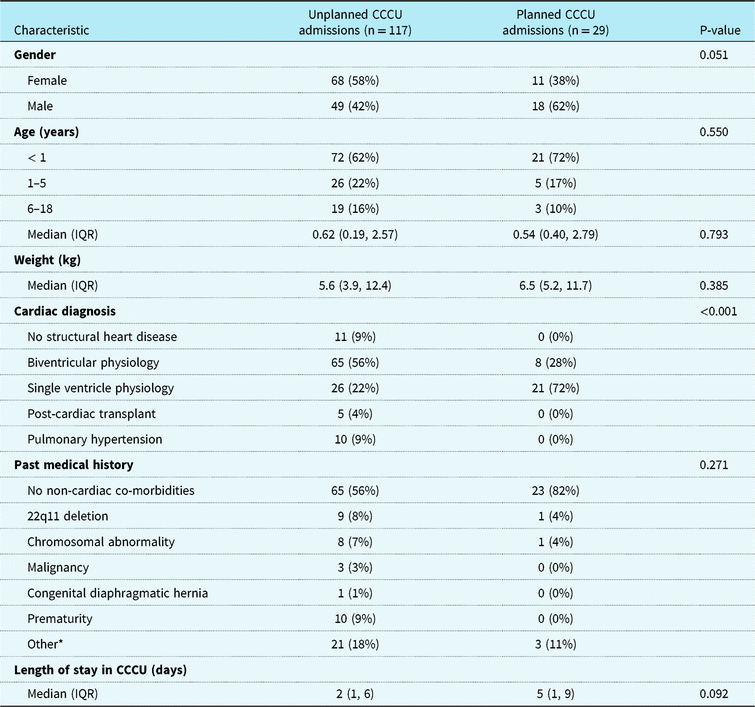
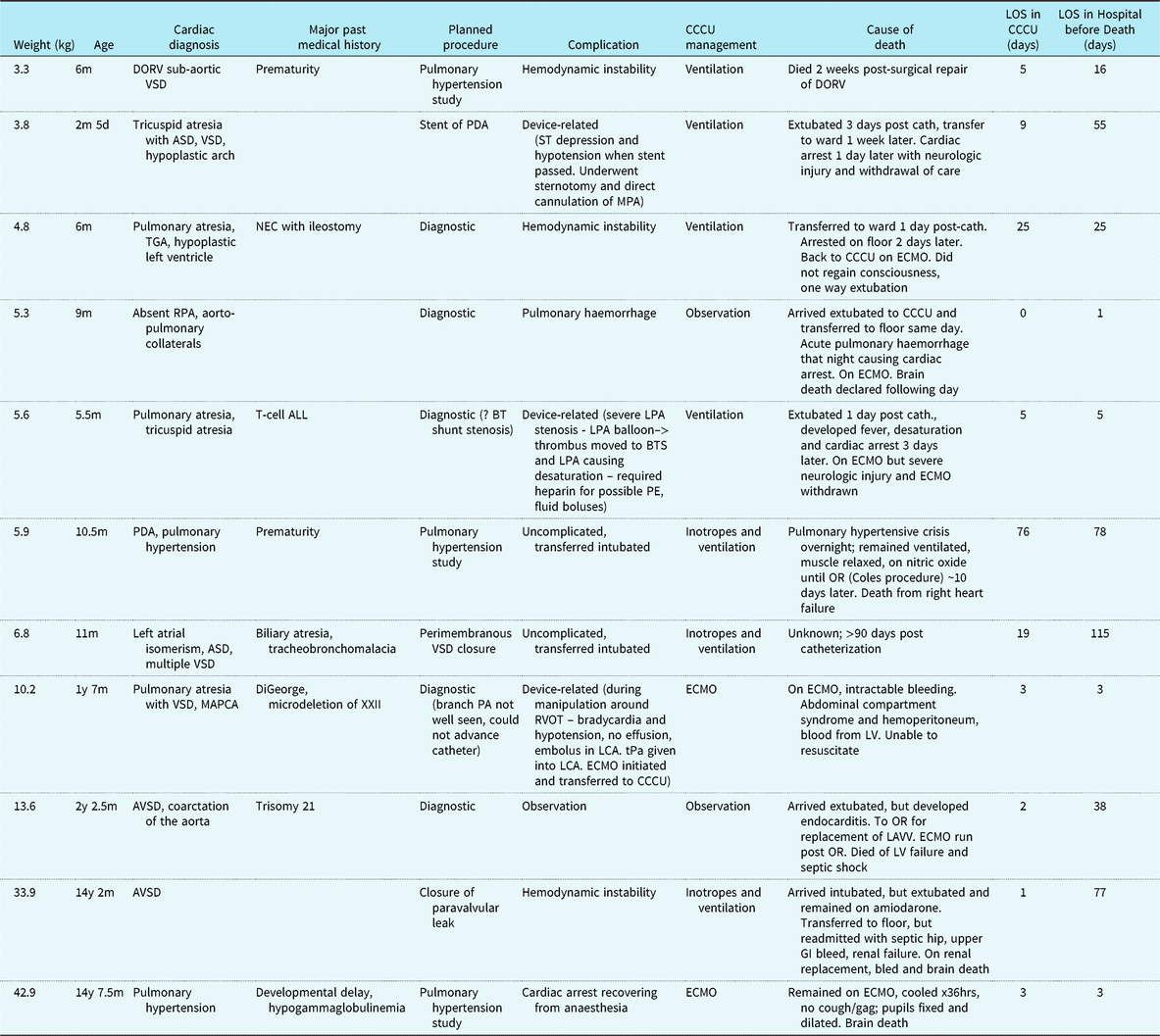
Demographic and diagnostic data of planned and unplanned CCCU admissions are presented in Table 1. There were no significant differences in gender, age or weight for unplanned versus planned admissions. Children ranged in age from 7 days old to 18 years old (median 7.4 months) for unplanned admissions and between 9 days of age and 17 years of age (median 6.5 months) for planned admissions. Weight ranged from 2.07 kg to 102.8 kg for unplanned admissions (median 5.6 kg) and 2.8 kg to 100.6 kg (median 6.5 kg) for planned admissions. Significantly more patients with planned admissions had single ventricle physiology (p<0.001). Length of stay in the CCCU did not differ significantly between the two groups of patients. Eleven (9.4%) patients with unplanned admissions did not survive to hospital discharge. The median interquartile range (IQR) weight of these patients was 5.9 kg (4.8, 13.6), and the median (IQR) age was 325 days (181, 809) (Table 2). All patients with a planned admission survived, but there was no statistically significant difference in survival compared to patients with unplanned admission to the CCCU.
Demographic data of planned and unplanned CCCU admissions post-cardiac catheterisation

CCCU = cardiac critical care unit; IQR = interquartile range; SD = standard deviation.
* Other past medical history = biliary atresia, developmental delay, autism, tuberculosis, gastroesophageal reflux, asthma, intra-uterine growth restriction, congenital cystic adenomatoid malformation, tracheobronchomalacia, vesicoureteral reflux, necrotising enterocolitis, Alagille syndrome, Doose syndrome, hypogammaglobulinemia, G-tube feeds, asplenia, chronic renal failure, cystic fibrosis, omphalocele, subglottic stenosis.
Characteristics of patients admitted to CCCU who did not survive to hospital discharge

ASD = atrial septal defect; AVSD = atrioventricular septal defect; CCCU = cardiac critical care unit; CPR = cardiopulmonary resuscitation; d = day; DORV = double outlet right ventricle; ECMO = extracorporeal membrane oxygenation; LOS = length of stay; MAPCA = major aorto-pulmonary collateral artery; ; m = month; PDA = patent ductus arteriosus; PS = pulmonary stenosis; RPA = right pulmonary artery; TGA = transposition of the great arteries; VSD = ventricular septal defect; Wt. = weight; y = year.
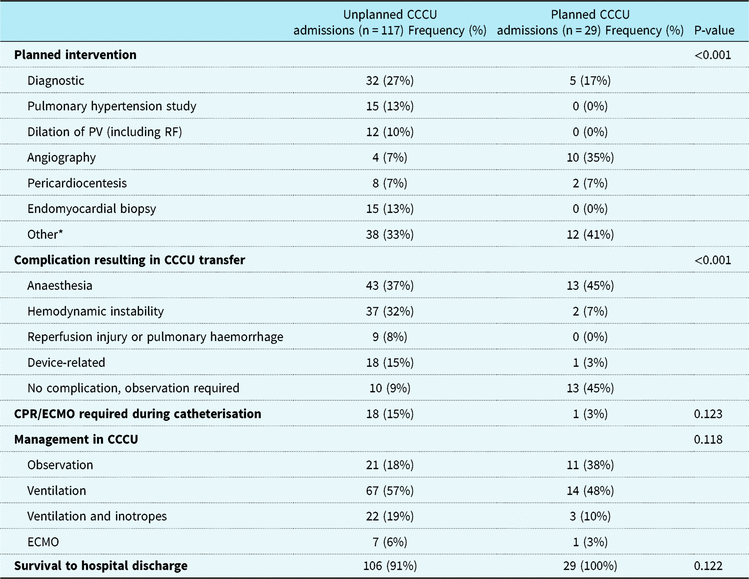
Procedural outcome data are summarised in Table 3. The majority of admissions to the CCU, both planned and unplanned, followed interventional catheterisations. All patients with a planned admission were intubated for the catheterisation; about 114 of the 117 unplanned admissions were intubated. Three patients undergoing pericardiocentesis were given local anaesthetic. Significantly more patients in the planned cohort were undergoing angiography; there were otherwise no differences in the planned procedure. There were 43 (37%) anaesthesia-related complications resulting in unplanned CCCU admission; about 37 (86%) of these were caused by complications with extubation. All patients with planned admissions who had anaesthesia complications had problems with extubation and were transferred intubated; there were no complications with induction in this group. Hemodynamic instability during the catheterisation was the most frequent procedure-related complication for unplanned admissions, and this was significantly more common than in planned admissions (p=0.007). Patients were transferred without complication for observation in the CCCU significantly more often in the planned versus unplanned admission group (p<0.001). It was not clearly documented in the medical record why observation in the CCCU was necessary. The database did not contain information on whether the complications were considered avoidable or not.
Procedural outcome data

CCCU = cardiac critical care unit; CPR = cardiopulmonary resuscitation; ECMO = extracorporeal membrane oxygenation; PV = pulmonary valve; RF = radiofrequency.
* Other = stenting, dilation, occlusion, embolisation.
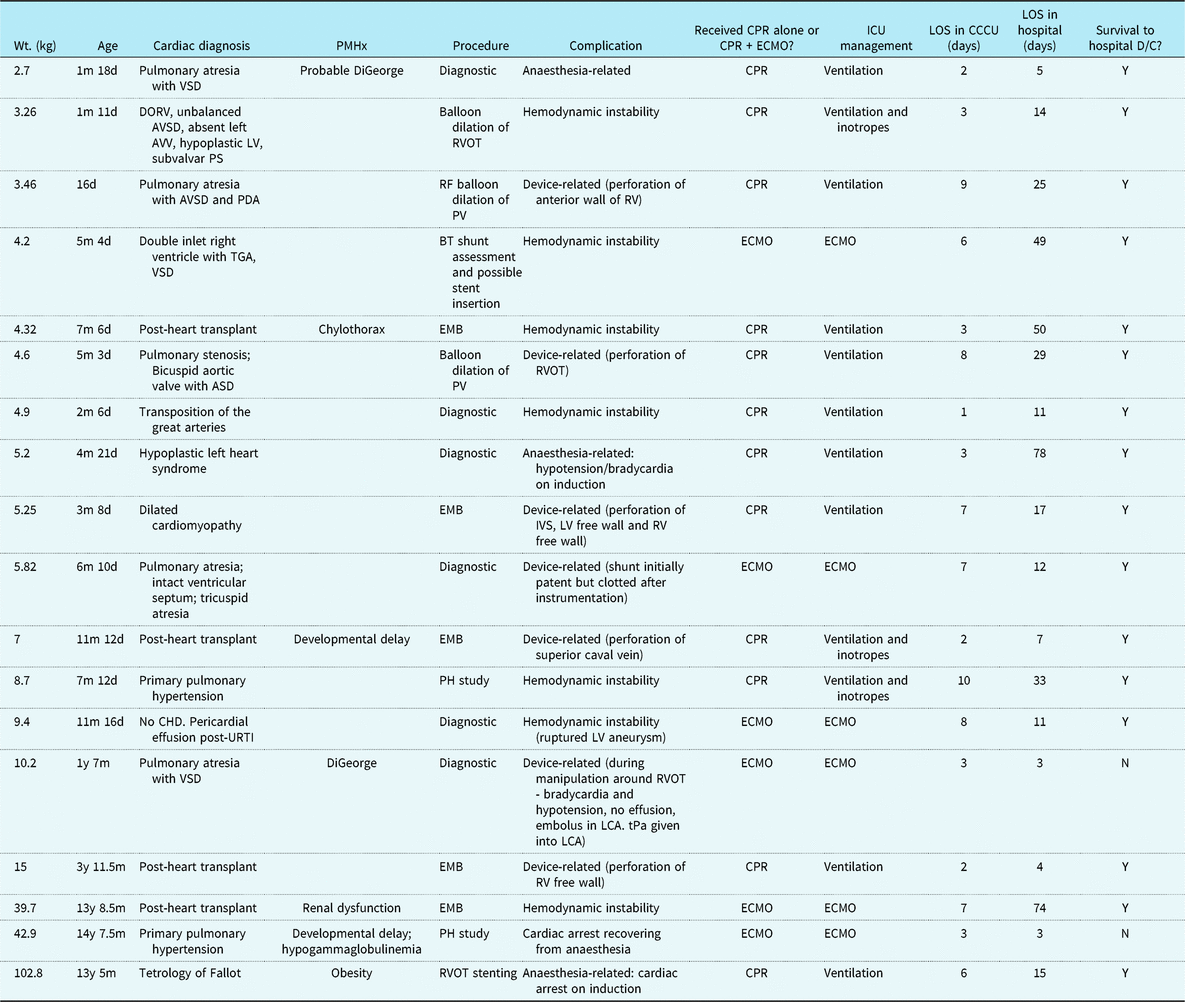
Eighteen patients with unanticipated admissions received cardiopulmonary resuscitation or extracorporeal membrane oxygenation during the procedure. The median (IQR) weight of these patients was 5.5 kg (4.3, 11.4), and the median (IQR) age was 206 days (90.8, 796) (Table 4). One patient with a planned admission received extracorporeal membrane oxygenation; this was not statistically significant from unplanned admissions. The patient who received extracorporeal membrane oxygenation in the planned admission group was a 5-month-old, 5 kg baby with hypoplastic left heart syndrome undergoing a hemodynamic study. A stent was placed in the RV-PA conduit; however, this failed and the child received extracorporeal membrane oxygenation and then proceeded to a Blalock-Taussig shunt. Most patients receiving extracorporeal membrane oxygenation or cardiopulmonary resuscitation did not have additional co-morbidities in addition to their cardiac disease.
Patients who received CPR or ECMO during cardiac catheterization

ASD = atrial septal defect; AVSD = atrioventricular septal defect; AVV = atrioventricular valve; CCCU = cardiac critical care unit; CPR = cardiopulmonary resuscitation; d = day; DORV = Double outlet right ventricle; ECMO = extracorporeal membrane oxygenation; EMB = endomyocardial biopsy; IVS = intact ventricular septum; LOS = length of stay; LV = left ventricle; m = month; PDA = patent ductus arteriosus; PS = pulmonary stenosis; TGA = transposition of the great arteries; VSD = ventricular septal defect; Wt. = weight; y = year.
Discussion
To our knowledge, this is the first report on unanticipated admissions to the critical care setting after cardiac catheterisation in children. In our experience, admissions to the CCCU were uncommon, and most of these admissions were unplanned. The majority of admissions (planned and unplanned) occurred in children who were under 1 year of age, with no medical comorbidity in addition to their cardiac disease. Genetic syndromes were present in 17 patients with unplanned admissions, with 9 patients having 22q11 deletion. The only significant difference between unplanned and planned patients was that more patients with planned admissions had single ventricle physiology. There were no significant differences in length of stay in the CCCU, and need for cardiopulmonary resuscitation or extracorporeal membrane oxygenation during the procedure or survival to hospital discharge in planned admissions versus unplanned admissions.
Our results indicate that there is a cohort of children whose admission is unexpected, and that tracking this cohort is an achievable target. Unanticipated admissions to an intensive care area should be avoided where possible. CCCU clinicians and leaders prefer to know about admissions in advance to ensure bed space availability and resource planning. Planned CCCU admissions also allow the clinical team to review patient data beforehand.
Risk stratification is an ongoing and quickly developing area of research in paediatric cardiac catheterisation, as clinicians attempt to delineate which patients are at increased risk for serious adverse events, which can potentially lead to CCCU admission. The Congenital Cardiac Catheterization Project on Outcomes (C3PO) Improving Paediatric and Adult Congenital Treatment (IMPACT) and the Congenital Cardiac Interventional Study Consortium (CCISC) registries are recent attempts to develop risk stratification scores.Reference Bergersen, Marshall and Gauvreau 15 – Reference Nykanen, Forbes and Du 17 Data from the C3PO registry showed that procedure-type risk group, hemodynamic indicators, age below 1 year and weight under 5 kg were associated with increased risk of high-severity adverse events.Reference Bergersen, Marshall and Gauvreau 15 , Reference Bergersen, Gauvreau and Marshall 18 – Reference Backes, Cua and Kreutzer 20 These data were used to develop the Catheterization for Congenital Heart Disease Adjustment for Risk Method (CHARM). CHARM was developed to adjust for varying case complexities and allow the comparison of adverse events among sites.Reference Bergersen, Gauvreau and Foerster 21 The IMPACT registry identified patient age, renal insufficiency, single ventricle physiology, procedure-type risk group and hemodynamic indicators as important variables for risk stratification.Reference Jayaram, Beekman and Benson 22 The CCISC registry data were analysed to develop the Catheterization Risk Score for Pediatrics (CRISP), with the goal of predicting which individual patients were at risk for a serious adverse event. A higher score was indicative of a higher-risk category. Age, weight, need for inotropic support, uncontrolled or multi-organ failure, physiologic category, pre-catheterisation diagnosis, procedural category and type were all found to be predictive of a serious adverse event.Reference Nykanen, Forbes and Du 17
Our results are in keeping the risk stratification models developed in studies mentioned earlier. The majority of our unplanned admissions were under 1 year of age, approximately 5 kg in weight and without serious co-morbid conditions. The majority of planned admissions had no non-cardiac comorbidities; thus, other pre-existing medical conditions were not a determining factor in pre-booking a CCCU bed in our study. We did not collect measures of physiologic data in detail (pre-catheterisation oxygen saturation, haemoglobin, etc.). The majority of patients in our cohort who received extracorporeal membrane oxygenation or cardiopulmonary resuscitation were also under 1 year of age, although median weight was slightly greater than 5 kg. Using CRISP scoring, the majority of patients who received extracorporeal membrane oxygenation or cardiopulmonary resuscitation were risk category 2 (medium risk) for pre-catheterisation diagnosis, and risk category 1 for procedural categoryReference Nykanen, Forbes and Du 17 (lower risk). A useful quality indicator may be to track unplanned intensive care admissions going forward as scoring tools such as CRISP become more widespread. Because the CRISP scoring tool was released after our data collection was completed, we did not collect all elements of the scoring system. Future studies that assess the correlation between elevated CRISP score and unplanned intensive care admissions may help facilitate future efforts to reduce these unplanned admissions.
There were 11 deaths (9.4%) among the cohort of patients admitted unexpectedly to the CCCU. Three of these patients died within 48 hours of the catheterisation, but deaths may not have been directly related to the procedure. Published death rates due to cardiac catheterisation are low (ranging from 0.29 to 1.6%); however, our cohort is not directly comparable to these results as we looked only at unexpected admissions to the CCCU.Reference Yılmazer, Üstyol and Guven 8 , Reference Bergersen, Marshall and Gauvreau 15 , Reference Agnoletti, Bonnet and Boudjemline 23 , Reference Bennett, Marcus and Stokes 24
Limitations of this study included its retrospective nature, single-centre design and observational methods. Thus, we were unable to comment on causality and were limited by a small sample size. As well, given the single-centre design, the generalisability of the findings to other centres is limited. We were dependent on written records to determine unplanned intensive care admissions and therefore may have included patients where the decision to admit was planned, but not recorded. As well, as there were no clinical criteria in place to determine whether a CCCU bed should be pre-booked, and given the small sample size, our comparison of planned and unplanned admissions was limited. We did not collect physiologic data, such as ejection fraction and pre-catheterisation saturation, limiting our ability to comment on the overall health of patients. We were limited to commenting on whether they had other co-morbidities in addition to their cardiac diagnosis, which may not be representative of their actual state of health. Our study population focused on children admitted to the CCCU post-cardiac catheterisation, and the sample size was in keeping with other published studies.Reference Bergersen, Marshall and Gauvreau 15 , Reference Bergersen, Gauvreau, Jenkins and Lock 25
Conclusions
Unanticipated admissions to the CCCU in our setting were uncommon, and most of these were unscheduled. Outcomes did not differ between patients who had scheduled and unscheduled admissions. The majority of children did not have other co-morbidities in addition to their cardiac diagnosis. Children who had a planned admission to the CCCU were more likely to have single ventricle physiology and to be transferred for observation compared to children with unplanned admission. About 90.6 % of children admitted unexpectedly to the CCCU after catheterisation survived to hospital discharge, with only three deaths within 48 hours of the procedure. Stratification tools such as IMPACT and CRISP should allow more accurate predictions of patients at risk for serious adverse events. Further study using these robust scoring tools will determine if unanticipated admissions to the CCCU after cardiac catheterisation should be considered as part of a quality indicator to ensure accurate risk stratification and high quality of care. Minimising unplanned CCCU admissions may help to optimise workflow and resource allocation in the CCCU.
Acknowledtement
None
Conflicts of Interest
None
Financial Support
This research received no specific grant from any funding agency, commercial, or not-for-profit sectors.
Ethical Standards
The authors assert that all procedures contributing to this work comply with the ethical standards of the relevant national guidelines on human experimentation and with the Helsinki Declaration of 1975, as revised in 2008, and has been approved by the Institutional Review Board.