In many countries, the first twenty years of the AIDS epidemic has been a period of intense controversy regarding how powers and competencies are shared among the different actors involved. In this sense, the epidemic has indeed been political (Epstein Reference Epstein1996; Pinell et al. Reference Pinell, Broqua, Busscher, Jauffret and Thiaudière2002; Siplon Reference Siplon2002; Dodier Reference Dodier2003). The controversies have related not just to the standard areas of public action – the development of preventive policies and the allocation of resources for patient care – but also to questions which had for a long time remained the sole prerogative of scientific and medical experts, such as the conditions for experimenting on the drugs and their manufacture and use. The mobilization around AIDS treatments has thus been the subject of many debates in which doctors, people who are HIV+, patient associations, politicians, administrators, pharmaceutical companies, and journalists have all given their judgments (frequently differing) on the utility of new molecules and ethical problems relating to their development and/or the conditions under which they receive market approval. A real area of mobilization has thus developed around AIDS treatments, marked by a complex series of oppositions and alliances between the various actors.
Several works have stressed the roles played by patient associations in both France and the United States (see in particular Epstein Reference Epstein1996; Barbot Reference Barbot2002; Dalgalarrondo Reference Dalgalarrondo2004). In this article we study the controversies surrounding treatments in France in order to analyze more broadly the dynamic of changes that marked this area of mobilization in the 1980s and 1990s. We will show how, above and beyond AIDS, this dynamic reflects changes in contemporary medicine in general over a long term. The controversies surrounding treatments for AIDS have involved relatively technical questions concerning the development of drugs. Should placebos be used? Should a given molecule be registered more quickly or more slowly? How long should clinical trials last? Above and beyond their technical nature, these and other questions expose deep fractures within the medical world. Indeed, through these controversies we can pinpoint the political operators of the period, i.e. the main set of problems that led to the principle of differentiation and opposition within the space of mobilization. Two operators deserve particular attention in relation to AIDS: how to regulate patient autonomy and how to construct objectivity in medical decisions.
After presenting the framework of analysis in which this notion of political operator is set (§I), we will look at how, in the case of AIDS, the two political operators mentioned above have helped to structure the mobilization of treatments. We will stress the emergence of the actors and the confrontation among the generations of actors (both doctors and patient associations) who, over the first twenty years of AIDS in France, have developed very different conceptions of the autonomy that patients should be allowed (in both care and research), and the objectivity of medical decisions (§II). Finally, we look at how a diagram built around the intersection of objectivity and autonomy might help us to understand contemporary changes in the medical world beyond AIDS (§III).
I. Analytical Framework and Hypothesis
a. Questioning the legitimacy of the powers
The aim of this research is to look at the way in which actors who are involved in the development of AIDS treatments question the nature and legitimacy of the powers conferred upon the authorities concerned.Footnote 1 How much room for manoeuvre should be granted to clinicians for their experiments? What role should patients play in choosing their medicines? How much freedom should companies and researchers be allowed when identifying molecules that are likely to be tested on human beings? These are just some of the questions that form the substance of this work on the powers surrounding AIDS. Sometimes actors legitimize the powers already in place; sometimes they question them or develop new ones. This work on powers took place in a splintered context that favored controversy. In relation to AIDS, we first of all saw major differences regarding the concept of what is ethical in medical practice. In order to study this splintering we seriously looked at the positions of all the actors involved in the controversies and attempted to reconstruct the coherence of each position. But this splintering of positions also concerned the cognitive dimension of practices, in particular the way people decide what is truly scientific. In order to understand epistemic controversies, we chose an approach based on pluralist epistemology.Footnote 2
Every controversy about AIDS treatments (AZT, 3TC, indinavir, ritonavir, etc.) causes new actors to emerge and helps to render new entities pertinent. When we follow the different controversies surrounding AIDS treatments, we must therefore remain very open-minded with regard to the changing nature of the networks of actors and their arguments (cf. Callon Reference Callon, Callon, Law and Rip1986; Latour Reference Latour1987; Law and Hassard Reference Law and Hassard1999). We nevertheless wish to go beyond this localism, and use the notion of space of mobilization to identify the overall dynamic that links a series of controversies together.Footnote 3 Two hypotheses helped us to identify the changes in this space of mobilization. By identifying generations, the first hypothesis relates to the map of actors present in this space. The second, via the notion of political operator, relates to the map of argumentations.
b. The different generations of actors among doctors and patient associations
The complexity of a space of mobilization usually stems from the fact that the fracture lines do not simply run between actors who are identified by their position in the production/treatment chain (researchers, clinical trials organizers, patient associations, pharmaceutical laboratories, etc.). There are also major conflicts within each position, for example among research doctors themselves and among associations. We therefore maintain that it is important to consider the existence of different generations of actors within each position. By generation we mean all of the people who have been molded through the same experiences and who have learned lasting lessons. It is through such experiences that people establish their level of confidence in the various authorities involved in the drug approval process, and that they have an idea of how much power can be legitimately conferred on them. These experiences can have varied timelines. Some of them are sudden events – short in time, but overwhelming.Footnote 4 Others take place following a series of micro events that gradually mold a person's attitudes.Footnote 5 By looking at generations of actors in terms of the significant experiences they have shared, we seek to understand the permanence and plasticity of their dispositions. On the one hand we are aware of the capacity of certain past experiences to influence, in a very stable way, the dispositions of people involved in fighting AIDS. On the other hand, we are trying to see how new experiences have led actors to reassess the legitimacy of the powers they previously conferred upon each of the authorities.Footnote 6 Within this analytical framework, this article will focus on a series of conflicts regarding AIDS treatments to examine how and to what extent distinct and successive generations of actors have developed around certain crucial controversial topics.
c. Two main political operators
When we seek to understand the emergence of different generations of actors and their confrontations, we return to the notion of political operators and the idea whereby a space of mobilization is built around several essential controversial topics that are not immediately visible. First we find highly diverse sources of controversy relating to the organization of clinical trials, the fight against parallel medicines, the publicity given to new molecules, the behavior of patient associations in international conferences, etc. It is only gradually – by examining the entire corpus – that we have been able, beyond this diversity, to uncover the political operators that most influenced structuring.
Our hypothesis is that two major topics are at the core of the controversies surrounding AIDS treatments that place the epidemic within a political history of medicine over a longer term. The first concerns making specialized decisions that can be recognized as “objective” both on a cognitive level (how to give concrete expression to medicines and use them within a framework that allows for “objectively” assessing their effectiveness) and on an ethical level (how to “objectively” conform to a certain number of ethical criteria). This question basically opposes two poles of actors. The first pole supports objectivity that is gained “in proximity to the patients” and thus the doctors' authority with regard to their own patients. This pole is based on the heritage of a type of objectivity that has been influential since the nineteenth century and was still very prevalent among the first AIDS doctors in France in the 1980s. We will call it the clinical tradition.Footnote 7 Michel Foucault (Reference Foucault1973) demonstrated how, at the cusp of the eighteenth and nineteenth centuries, the objectivity proper to what he called “the clinic” was constructed. Within the framework of this clinic, emphasis was then (and for a long time) placed upon the positive aspect of proximity, on the irreplaceable nature of knowledge based upon the experience of doctors with their own patients, even with regard to the construction of scientific knowledge. The doctors rely on fine descriptions of the cases they have seen – descriptions that developments in medical statistics and biology laboratories will help to reorientate throughout the nineteenth century, albeit without disturbing expectations (Weisz Reference Weisz1995 and idem 2005). The clinical tradition also relates to the overall authority of the doctor-clinician when it comes to assessing ethics. This authority is based upon a dual valorization of proximity. Valorization, first, of a specific practice regarding patients that allows medical values to be gradually inculcated with the personal professional experience necessary to develop an ethical opinion. Valorization, too, of the proximity to a given patient, taken in its clinical singularity, by a specialist who deals with the patient through the practice of medicine. Doctor-clinicians are thus broadly considered to be those who (at least with regard to their own patients) are best qualified to make a decision in all conscience on the problems encountered during the course of medical practice.Footnote 8
During the AIDS epidemic, a whole series of actors strongly opposed the clinical tradition, attacking what they considered to be the dangers of this valorization of proximity; instead, they defended an objectivity that promotes distancing oneself (sometimes radically) from the patient, shifting power away from doctors into the hands of new authorities. At a cognitive level, and in line with forms that we will set out later, this set of actors tried to instate, within the AIDS arena, all of the medical experimentation, assessment, and marketing mechanisms relating to the development of controlled trials (Marks Reference Marks1997). These new devices were unevenly distributed throughout the various professional segments of the French medical system in the 1980s. Nevertheless, certain doctor-clinicians succeeded in imposing their views on the main medical and scientific institutions dealing with AIDS. This new form of objectivity valorizes the respect of legal procedures and established protocols prior to the implementation of treatments, by authorities that do not have a day-to-day commitment to patients (ethical committees, independent committees in charge of monitoring trials, administrative agencies, etc.).Footnote 9 Once again, above and beyond the cognitive aspects of medicine, we will see that it is also the objectivity of ethical opinions that are developed at a distance from the patients. We have used the term therapeutic modernity to label this new form of objectivity that is gradually imposing itself in relation to AIDS treatments, at the intersection of evidence-based medicine and new procedures of ethics.
These “battles of objectivity” fought between the pole of proximity and the pole of distance are at the heart of numerous AIDS controversies but are insufficient to describe the main lines of opposition found in the major AIDS controversies. There are also arguments over a second question that is also at the core of the political dimension of the AIDS epidemic: how to regulate the nature of the initiatives granted to patients, individually and jointly, in the development and distribution of treatments? Once again, these “battles of autonomy” are part of a longer history of medicine. Throughout the history of medicine, two poles were in regular conflict. The first defends one of the many types of medical paternalism, and looks to restrict patient autonomy. The other looks to increase patient autonomy, encouraging increased patient participation. In a way, the AIDS epidemic is just one more episode in this long series of battles that have helped to regulate – sometimes in a highly complex manner – the distribution of powers between patients and doctors.Footnote 10 But with AIDS they immediately take on considerable intensity, mainly due to the profile of the patients affected – homosexuals who even before the arrival of AIDS were already involved in battles to extend their rights, including battles against medical institutions. The confrontation between the defense of a more “active” patient, and the opposite or reactive standpoints from actors wanting to protect patients against the mistakes or illusions associated with these demands, is also very much a part of the history of AIDS.
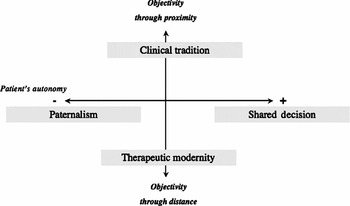
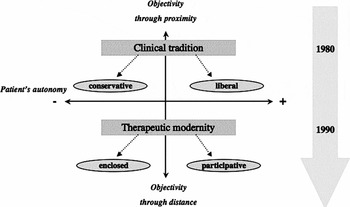
We still need to know how the battles of objectivity interfere with the battles of autonomy. Are we talking about the same forms of autonomization, whatever the form of objectivity in question? Are the actors who defend increased autonomization also partisans of therapeutic modernity, or are they split between clinical tradition and therapeutic modernity? Has the question of objectivity introduced new and problematical fracture lines among the partisans of limited (or high) autonomy? All these questions must be carefully examined in relation to a specific case that can demonstrate, by looking closely at the controversies, the stances simultaneously taken by successive generations of actors on objectivity and autonomy. This should give us a better understanding of the path taken by the AIDS epidemic on the objectivity/autonomy diagram, which we believe to be a tool that enables us, over the long term, to reclassify medical controversies (see fig. 1).
Forms of objectivity/autonomy.

II. Changes in the space of mobilization surrounding AIDS treatments
We have proposed four stages in the dynamic which, in the history of AIDS, led to the battles of objectivity and autonomy. This article will concentrate on doctors and AIDS associations, but at each stage we will also look at the way the controversies intersect with changes in the pharmaceutical industry.
a. Two figures of the clinical tradition during the first years of AIDS
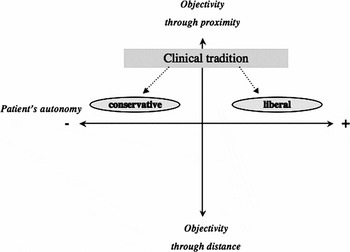
The first years of AIDS in France were characterized by important differences with regard to patient autonomy, within a context dominated by a single form of objectivity that was related to the clinical tradition. First and foremost it is important to note that the first AIDS doctors in France were all perfect representatives of the clinical tradition. But while some of them adopted a highly paternalistic version of the clinical tradition (its conservative version), others wished to give patients (especially in relation to their sexuality) far greater scope for initiative (the liberal version of the clinical tradition) (see fig. 2).
The two figures of clinical traditions during the first years of AIDS (1980s).

Among the hospital doctors who mobilized to deal with the first cases of AIDS in France, some saw themselves as defenders of a clinical tradition that might be qualified as conservative. They believed that doctor-clinicians were best qualified to make a decision on most of the questions (both cognitive and moral) facing AIDS patients. They felt the model of a clinical tradition to be, first and foremost, the best model with which to face new problems created by the clinical emergency surrounding AIDS patients. These doctors – mostly heads of departments with varying specialities (cancerology, dermatology, pneumology, virology) – had often (even before the AIDS epidemic) made known their criticisms of the progression of evidence-based medicine in their particular fields. In this sense they represented an old guard made up of original and devoted personalities. They rapidly became involved in experiments on new molecules that were often already on the market for other pathologies. They tested these molecules on their AIDS patients without using any placebos or randomization.Footnote 11 With their conception of authority that was both scientific and moral, incarnated by clinicians, some of them also took part in the public debate on questions that related to homosexual behavior in the AIDS era. In particular, they backed a return to morality as a way to end the epidemic.Footnote 12
Parallel to these defenders of the conservative clinical tradition, who would remain memorable but relatively isolated personalities on the French public scene, there were some young hospital doctors who began to develop a more liberal version of the clinical tradition. Along with the first AIDS associations they constituted another generation of clinicians, and were particularly active in promoting a new model for managing the epidemic. Mobilized right from the start – some of them had even been the ones to sound the alarm when the first cases of AIDS appeared in France – they were highly critical of health administrations and medical institutions, attacking them for being slow to react to AIDS.Footnote 13 In their opinion, this slow reaction was due to bureaucracy and to the fact that administrations and institutions were far removed from the reality of the field. In this sense, they defended an objectivity of proximity typical of traditional clinicians. But they also criticized the people who had trained most of them, who they referred to as “hospital mandarins” for both their excessive authoritarianism with regard to the initiatives taken by doctors in their departments, and their lack of involvement in an epidemic that affected mainly marginalized populations.Footnote 14 Like the previous group, these doctors defended a specific form of knowledge that from the epistemic point of view put clinicians in regular contact with their patients and allowed them to deal with unexpected problems that arise from clinical practice related to emerging pathologies. They too became involved in experiments on molecules, using protocols that left them considerable room for manoeuvre far removed from the requirements for controlled trials.Footnote 15 This generation of doctors had been affected by the student cause in the 1970s, and from a moral standpoint showed themselves to be highly committed to the gay community's fight against stigmatization. With regard to sexuality, their attitude differed from the conservative clinical tradition. They took part in the public debate on this question, not so much on the basis of a certain number of precepts to be imposed upon the populations at risk, but more with an attitude of flexible experts wanting to advise those who were HIV+ while at the same time supporting their decision-making authority.Footnote 16 Strong synergies were to develop between these young doctors and the first AIDS associations that were created in the middle of the 1980s.
A first generation of associations (Aides, Arcat-sida, Vaincre Le Sida), despite their differences, held a common position with regard to a series of questions that clearly distinguished them from associations that were to emerge in the late 1980s and early 1990s (Barbot Reference Barbot1999 and idem 2006). Generally speaking, we can say that they initially left it to the specialists to develop treatments in a scientific and ethical manner, while at the same time promoting moderate ways of making patients more autonomous when it came to using the treatments. At the start of the epidemic, these first associations were defenders or mediators between patients, society, and the various professionals involved in one way or another in taking care of patients.Footnote 17 It was a case of developing the most appropriate devices with which to manage the epidemic in a rational manner, and refusing to accept that patients might be excluded rather than treated, as they had been in the past. They felt that because the epidemic was affecting marginalized populations, this risk was even greater. These associations had three roots: 1) activists for the homosexual cause, recommending the keen vigilance of medical institutions, which had, let it not be forgotten, classified homosexuality as a social scourge; 2) promotion, in line with Michel Foucault's explicit ideas, of the intellectual who defends people facing the power of institutions in different fields: prisons, healthcare, psychiatry, etc.;Footnote 18 and 3) a conception of medicine endorsed by classic associations dealing with chronic illnesses that is built around two simultaneous faces: on the one hand delegating scientific knowledge to specialists; on the other hand claiming competency with regard to the psychosocial aspects of the illness.Footnote 19 This was the basis upon which a strong alliance developed for several years between this generation of associations and the liberal fringe of hospital doctors. In biomedical research this led to regular informal discussions from which emerged convergent criticism of controlled clinical trials.Footnote 20
During the first years of AIDS, pharmaceutical companies invested relatively little in AIDS research in France. What research there was, was done by doctors belonging to the clinical tradition, in accordance with research protocols that were not monitored to any great extent by third parties, but were discretely developed as part of the direct relationships between clinician-researchers and pharmaceutical firms. Numerous research projects concerned molecules already on the market (particularly in relation to the opportunist infections of AIDS), which made it easier for clinicians to take the initiative and to carry out experiments on molecules that were readily available. The organization of the first antiviral trials in France (HPA23 for example) is a good illustration of this encounter between the freedom of experimental researchers, in the clinical tradition sense of the term, and a pharmaceutical industry that was subject to little regulation.Footnote 21
b. The overthrow of the clinical tradition and the rise of enclosed therapeutic modernity
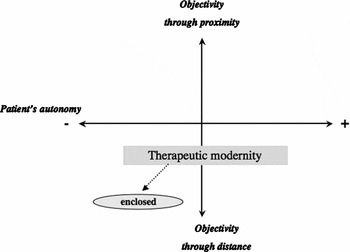
The second stage in the history of AIDS was marked by the emergence of a category of doctors who combined strong criticism of the clinical tradition with the desire to significantly restrict patient autonomy with regard to the scientific core of knowledge and medical practices. Due to various important events in the epidemic's trajectory, the clinical tradition (be it liberal or conservative) was gradually called into question. A second generation of doctors came to the fore and developed a very different conception of scientific and ethical objectivity, along with a new way of thinking about the role of patients and their associations in clinical trials. Therapeutic modernity was to enter the AIDS arena in what we will call an enclosed form (see fig. 3).
The rise of enclosed therapeutic modernity (end of 1980s).

Among the important events that provoked strong reaction from public authorities and brought a new profile of doctors into the fray, the cyclosporine affair and the marketing of AZT in the United States are of major importance. In a context where everyone favored the clinical tradition, there had been little public debate surrounding clinical trials in France, until 1985 when Philippe Even and Jean-Marie Andrieu – both doctors from Laennec Hospital and themselves fervent defenders of the clinical tradition – held a press conference to give the preliminary results of their experiments with cyclosporine on AIDS patients.Footnote 22 Their announcement and the validity of the results provoked a strong reaction. The Laennec doctors defended (in the natural course of events as far as they were concerned) both the objectivity of an assessment carried out in proximity (with no control group and involving only a few patients) and the ethics of decisions they had made “in all conscience” as clinicians.Footnote 23 They also felt – before their results had been validated by international review committees – that their assessment offered all necessary guarantees to justify rapid distribution of their findings to their colleagues and to the general public – especially given the context of such a health emergency.Footnote 24 Criticism of this initiative marked the emergence of a group of actors who stressed the need to break away from what they considered to be simple clinical opinions that were not very scientific, not very transposable, and, in any case, insufficient to make decisions based on facts – even for such a health emergency. The Laennec doctors were attacked on several points. The capacity of the clinical tradition to cope with urgent health crises was called into question. Colleagues criticized the fact that they had not submitted their protocol to any ethical committee.Footnote 25 In France there is not yet any obligation to make such a submission. An ethical committee was formed in 1974 at the Institut National de la Santé et de la Recherche Médicale (INSERM), to which other teams working on AIDS had already made submissions. The creation of an official national consulting committee on ethics, for the purpose of handing down general opinions within the field of biomedicine, is recent. Generally speaking, since the beginning of the 1980s an increasingly broad range of actors had been mobilizing in France to fill the legal framework for medical research at an ethical level (Memmi Reference Memmi1996). The cyclosporine affair is typical of these arguments, with a third-party institution now being called upon to hand down a “remote” ethical judgment. The Laennec doctors' confidence in objectivity through proximity was also undermined, at a time when biomedical research was using an increasing number of tools to deliver judgments that were free of field pressures. Finally, they were criticized for having departed from the rule of peer review by making the results public before they had been validated by reviewing committees from international scientific reviews.Footnote 26 In order to put an end to the controversy, INSERM was approached by political and administrative bodies to carry out a randomized trial on cyclosporine.Footnote 27
A few months after the cyclosporine affair, mobilization for AIDS research was marked by a second major event: the license to market AZT in the United States. While several first generation doctors demanded that AZT be made immediately available for French patients and clinicians to carry out experiments, the health authorities were reticent. Above all, they felt that the American license for the molecule had been granted more through pressure from patient groups than from any rigorous scientific evaluation. They also felt that the fact that the Wellcome Institute in England had not contacted French clinicians showed that the doctors were encountering difficulties positioning themselves within international research and conforming to international standards. As a result of these two affairs, certain heads of research institutions, who were also involved in the political arena, decided it was necessary to break away from the first generation of doctors and develop a new doctor-researcher profile for AIDS.Footnote 28 A second generation of AIDS doctors was thus mobilized. They were initially hospital doctors who were already (pre-AIDS) highly critical of the clinical tradition in their own fields of specialization (haematology, clinical immunology, diabetology, and internal medicine). From an epistemic level, these doctors were at the forefront of the development of evidence-based medicine in France. Some of them held positions of responsibility not only in hospitals, but also in public research organizations – as directors of INSERM units in particular. Others were their students. While they fought to call into question traditional medical institutions and hospitals and the authority of the “mandarins,” just as the first generation of AIDS doctors had done, it was for different reasons. They were basing their authority not upon the return to objectivity of proximity favored by clinicians more able to integrate the latest results from biological research (or even to contribute towards them), but upon the development of a centralized organization that would be able to coordinate implementation of huge multicentric controlled trials.Footnote 29
These second-generation doctors wanted to develop a scientific field that would be autonomous, i.e. separate from all outside pressure, be it from clinicians, patients, associations, or the media. They were thus defending the establishment of an enclosed therapeutic modernity. They were modernistsFootnote 30 who believed in a society in which science develops away from lay people, so that it can then be reinvested outside specialist circles once the facts have been scientifically established. From a moral point of view, like doctors from the liberal clinical tradition, they were careful to avoid stigmatizing homosexuals. But they went about it in a modernist manner, by trying to promote a form of rationality led by scientific institutions. They believed that the more scientists based their judgments upon methodologies that were subject to as little outside influence as possible, the less the public space would be subject to irrational excess (and hence stigmatization). The fact that these doctors (and statisticians) held positions of responsibility within public research organizations was largely due to their epistemic convergences with the parties of the political left, who came into power in the early 1980sFootnote 31 and who were themselves broadly “modernist” (Boy Reference Boy1999). At the same time as this generation of doctors was emerging, pharmaceutical companies were beginning to invest in France in the improvement of antiviral drugs developed during controlled trials. With regard to pharmaceutical companies, these doctors campaigned for a strong State, linked to scientific organizations that would be able (when faced with profit-motivated companies) to ensure the highest possible degree of objectivity when assessing medicines. They also wanted the State to introduce an active therapeutic trial policy to make up for the lack of corporate investment in important but unprofitable areas of public health.Footnote 32 So this new doctor profile had a particular position at the crossroads of our two political operators. As far as objectivity was concerned, these doctors defended maximum distance, based on both randomized controlled trials and on preserving the independence of scientific institutions. Regarding autonomy, they granted patients very little initiative concerning the way in which biomedical research was carried out. Appointed to key positions in the Agence Nationale de Recherche sur le Sida (ANRS) that was created in 1989, they wanted to teach and distribute tools and skills relating to controlled trials, in a version that was even stricter by virtue of it being a pathology that was subject to outside pressures.Footnote 33 Such a position of course created major tensions with both first-generation doctors and associations.
Faced with the rise of this enclosed therapeutic modernity, the first-generation doctors initially demonstrated their refusal to accept even the principle of controlled trials and challenged the cognitive and ethical validity of the clinicians' evaluation. Within the context of a health emergency, they tried to stress the importance of fast clinical assessments of new treatments.Footnote 34 There were two reasons why AIDS associations then mobilized as well, to defend a liberal clinical tradition: 1) Due to its enclosed nature, therapeutic modernity broke with the model of confronting knowledge and experience set up between associations and the first generation doctors, but without yet developing any true basis for real dialogue with the new institutions. 2) With evidence-based medicine, these associations found themselves facing a new way of carrying out research, in which experimentation and treatment were totally separate. Tools for building a “remote” objectivity – randomization, double blind, and the use of placebos – changed the condition of patients involved in clinical trials. As far as these associations were concerned, keeping patients in the dark about the molecule with which they were being treated and allocating the molecule by drawing lots without considering the singularity inherent to each individual, was totally disrespectful to the patients taking part in the trials.Footnote 35 Yet this first-generation opposition to the trials remained weak. While the AIDES association issued warnings – in a highly Foucauldian manner – of the possibility of researchers abusing their power, and of patients being reduced to mere “objects of science,” it was still very much imbued with a model that delegated the construction of biomedical knowledge to the specialists. It also had a favorable attitude towards the French government's commitment – deemed to be a late one – to create institutions dedicated specifically to AIDS (Pinell et al. Reference Pinell, Broqua, Busscher, Jauffret and Thiaudière2002). This opposition only really took shape with the emergence of a second generation of associations at the end of the 1980s and beginning of the 1990s.
Unlike their forebears, the associations created at the end of the 1980s publicly declared themselves to be groups of patients or homosexuals directly affected by AIDS, rather than mediators between patients and society. Act Up-Paris is the best known second-generation association, created in 1989 using the Act Up-New York association as a model.Footnote 36 Like its American counterpart, Act Up-Paris used the media as a prime arena for political action (Gamson Reference Gamson1989; Barbot Reference Barbot2002) and radically questioned the delegation model that had up until then underpinned the relationships between associations and the medical world. Act Up-Paris was part of a new wave; it preferred a dramatic version of the fight against discrimination, where the public display of the stigmatization clashed with the principle of discretion recommended by the first-generation associations (Broqua Reference Broqua2005). Defiance of medical power was strengthened by the failures of the fight at a health level, and by the contaminated blood affair at the beginning of the 1990s (Setbon Reference Setbon1993; Fillion Reference Fillion2003). Via Act Up patients wanted to take action for themselves. Patient groups also appeared at this time, and while they were more discrete in the media, they were just as aggressive in the domain of research: Positifs (created in 1989) and Actions Traitements (1991) were self-help groups for consumers of medical products, and offered an approach to medical consumerism which was not yet very developed in France. Despite their differences, all of these associations wanted greater consideration for the “patient's point of view” in medical research (Barbot Reference Barbot2006) and opted for virulent overall criticism of the methodology used in controlled trials, and of the use of placebos in particular. They were therefore opposed on both fronts (objectivity and autonomy) to the new generation of modernist doctor-researchers.
c. Converting opponents to therapeutic modernity
The third stage of the AIDS epidemic was marked by a new form of objectivity. Doctors and associations who had been reluctant initially gradually drew closer to the devices of therapeutic modernity. Some even became converted. By making therapeutic modernity the reference in AIDS research, second-generation doctors based their position on a groundswell that went well beyond the AIDS epidemic and which has continued to grow over the last twenty years. During the 1980s this form of objectivity gained support in France and benefited from new legal frameworks for medical ethics (in particular, in 1988, the Huriet-Sérusclat law on the protection of people involved in biomedical research). It also benefited from the arrival (among senior management at the Ministry of Health, and then at the Agence du Médicament) of a new generation of civil servants trained in statistics and controlled trials (Urfalino Reference Urfalino2001). By developing partnerships with international pharmaceutical companies in order to carry out major multicentric trials – Wellcome's European “Concorde” trial in 1989, Bristol Meyer Squibb's European “Delta” trial in 1992, the Roche's international saquinavir trial in 1994 – ANRS management worked with actors who were already used to the requirements for controlled trials, the gold standard for earning a license for drugs in the United States. A network of AIDS clinicians thus gradually developed, trained in trials by the ANRS, who had already worked with international companies (with or without the ANRS) to develop their molecules in France.
The change in institutional devices of objectivity from proximity to distance led initially to severe tensions between doctors from the two generations; however, by the beginning of the 1990s the vast majority of the defenders of the liberal clinical tradition converted to controlled trials. These trials became obligatory, both in order to receive funding and equipment from the ANRS and in order to gain rapid access to the latest molecules being tested by the pharmaceutical companies. The first-generation doctors nevertheless tried to develop a more flexible philosophy for trials, preferring shorter trials, with fewer patients, in partnership with statisticians who were convinced of the need for new and inventive methodologies that were more open to the requirements of clinicians (Dodier and Barbot Reference Dodier and Barbot2000).Footnote 37 Within therapeutic modernity, they wanted to build a new style of clinical work that was more open to the notion of proximity than the style that was being promoted by representatives of enclosed therapeutic modernity.Footnote 38
The conversion of AIDS associations happened differently. They moved into line with the public agency for different reasons. They had been obliged to increasingly distance themselves from alternative forms of research – research in which they had initially shown a great deal of interest. These experiments were of short duration, used no placebos and were considered to be real alternatives to the methodology of the controlled trials recommended by the ANRS.Footnote 39 Yet the hope that the associations had placed in such research was gradually dashed. The media gave full coverage to a whole series of affairs that demonstrated a new form of charlatanism based on exploiting patient distress.Footnote 40 With a view to protecting patients from such charlatans and from the dangerous initiatives of crank researchers, these associations alerted public authorities and attacked healthcare or experimental practices that were verging on the illegal. This growing mistrust of parallel circuits led many of them to move closer in line with institutions that were considered, from this point of view, to provide safeguards: government bodies (the ANRS in particular) and major actors in the drug market such as the pharmaceutical companies who submitted their products to administrative procedures for approval. This movement was further helped by the associations' desire for the ANRS to play a major role in the distribution of information on AIDS, and in particular with regard to the decisions on research and access to new molecules. The demand for “transparency” was strengthened by the fact that their members – some of whom came from the homosexual movement – had been saying for a long time that it was vital to monitor the activities of researchers and healthcare authorities who might be inclined towards homophobia. It was also strengthened in France by the contaminated blood scandal that broke out in 1991. In order to avoid creating any climate of suspicion, the ANRS allowed regular information meetings to be organized. It was during these meetings that the associations – initially in a disorganized manner – decided to join together in an inter-association group for the purpose of representing patients in their dealings with public institutions of therapeutic modernity. This inter-association group – TRT5 – initially united five of the best-known AIDS groups: Aides, Arcat, and Vaincre le Sida (first-generation associations); Act Up and Actions Traitements (second-generation associations).
Lines of alliance and opposition within the space of mobilization were considerably redrawn. Some associations, such as Positifs, continued to refuse therapeutic modernity, and in taking the road of parallel research found themselves on the fringe.Footnote 41 Some of the doctors who sided with the liberal clinical tradition aligned themselves with critics outside this “trial system” which closely linked the government, medicine, science, and capitalism, thus giving a new lease of life to their criticism of the 1970s.Footnote 42 They came up with a new form of radical criticism of medical institutions, adapted to the changes in medicine, and continued to defend uncontrolled trials as being the only ethical basis for research. They sometimes succeeded in “pulling a stunt” in order to gain rapid approval for the results of tests on molecules delivered by pharmaceutical companies as part of initial uncontrolled trialsFootnote 43 and were often criticized by both medical institutions and patient associations for their “loose” interpretation of legal obligations.Footnote 44 Indeed, these doctors declared themselves to be disappointed by the associations; they had expected them to be among the first to criticize the “clinical trial system,” yet now found them to be among its strongest supporters.
As far as pharmaceutical companies were concerned, this third stage of the epidemic established the growth of a pharmaceutical industry that would become one of the most effective supports of controlled trials in the medical world. Well before the outbreak of the AIDS epidemic, the major pharmaceutical companies had in their own way adopted, modified, and developed the framework for controlled trials that had been imposed by the American federal administration as the standard method for assessing drugs (Marks Reference Marks1997). The conversion of most AIDS actors to therapeutic modernity is thus related to the development of a new age of pharmaceutical capitalism. The fact that these companies developed drugs within the framework of the gold standard played an important part in converting doctors and associations, one of the reasons for this conversion being the possibility of accessing new molecules created through close partnerships between companies immediately from the experimental stage. Over this period, criticism of the pharmaceutical industry came only from actors (doctors, scientists, associations) marginalized for their attachment to conceptions of objectivity which had become virtually illegal.
d. The development of a participative therapeutic modernity
The major AIDS associations that embraced therapeutic modernity both required and simultaneously contributed to a change in the way modernist doctors conceived the initiatives conferred upon patients and their associations. In this fourth stage of the epidemic, we can see feedback from the new regime of objectivity on the way patient autonomy was conceived. New arenas of information and consultation quickly opened up between associations and the ANRS with regard to this new boundary object (Star and Griesemer Reference Star and Griesemer1989) that was the controlled trial. Faced with this new situation the modernist doctors initially adopted a pedagogical policy: they wanted to instill in the associations the rules for trial methodology. This pedagogical policy was thus a way of meeting the associations' demand for transparency from an enclosed therapeutic-modernity standpoint. Yet we see – and this is a vital point in the political dynamic surrounding the trials – this pedagogical relationship being subverted by the associations themselves; far from adopting a role of “good pupils” and “vectors of transmission,” the associations began to seriously negotiate protocols. This process was especially marked among the second-generation associations, which – within the TRT5 group – were both the main force behind the subversion and the ones whose conversion to therapeutic modernity had most struck the modernist doctors.
The subversion of the pedagogical policy of the modernist doctors was the result of different types of apprenticeship. On the one hand, certain associations – mainly second-generation associations such as Act Up and Actions Traitements – gradually developed their own epistemic option which proved to be very different from that of ANRS. The activists attended ANRS meetings while at the same time felt that the agency did not have the one and only valid opinion on research matters. From their point of view such an opinion did not exist, and as activists they had to develop their own standpoint by comparing sources of information that were, by nature, highly varied or even downright contradictory: scientific congresses, the American associative press, international medical reviews, informal discussions with various doctors, patients' opinions on treatments, etc.Footnote 45 Because they were often ill or HIV+ themselves, these activists believed this stance to be a process of self-teaching which, for some of them, in the period of AIDS, was a major aspect of gay pride (Lestrade Reference Lestrade2000). In this sense the homosexual fight thus gained a new claim on autonomy within the world of scientific research itself. Furthermore, all associations of all generations (due to the inter-association grouping) now shared common experiences and skills gained from their different forms of involvement in the fight against AIDS.
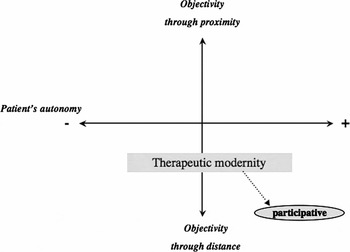
Regular consultation on trials had enabled them to gradually gain a foothold from which to better assess the negotiable nature of trials. As trials came and went, activists gradually learned to examine supposedly scientific announcements and identify what were in fact technical or financial constraints that could be challenged (frequency of biological examinations, the moment chosen to analyze intermediate results, obligations imposed upon patients, etc.). Trial after trial, the image that the modernist doctors had conjured up of activists changed. Despite their initial fears, they felt that – through their ability to integrate tools of therapeutic modernity – associations had become research partners capable of improving the acceptability and feasibility of protocols.Footnote 46 This subversion/recognition dynamic led to a more stable distribution of power. The associations had replaced a global and remote criticism of trials with a more circumstantial criticism, within the framework of introducing what we might refer to as therapeutic modernity of a participative type (see fig. 4). The emergence of this new space for relationships between doctors and patient associations echoes that which David Hess identified, in relation to cancer research, as a process of “medical modernization” (Hess Reference Hess2004).
The development of a participative therapeutic modernity (mid-1990s and after).

The emergence of this participative therapeutic modernity interfered with deep-rooted changes in the pharmaceutical industry. In the area of AIDS, the new convergence in relation to controlled trials between health administrations, doctors, corporate entities, and the major patient associations generated new forms of commitment and new actor profiles. First of all, it led to a dominant profile of doctors involved in regular but confidential negotiations with pharmaceutical companies (Dalgalarrondo Reference Dalgalarrondo2004). In the sphere of controlled trials, strong interdependencies grew between doctors and pharmaceutical companies. The companies needed to mobilize doctors in order to organize trials, and to make the results public in congresses and reviews in order to develop their products. They were forced to invest heavily in a policy of training doctors and providing incentives and structure for them. The doctors needed the companies in order to have access to new molecules, to be trained in their use, and to make them available to patients as quickly as possible. They needed the firms to publish the results of trials in leading scientific reviews. As far as AIDS was concerned, such dependency meant that these doctors – involved in a therapeutic modernity which was itself closely tied to pharmaceutical industry – could not in any way publicly criticize corporate strategy in the drug market.
In the end it was AIDS activists who came up with a new type of criticism, one that was more circumstantial and based upon the construction of a participative pharmaceutical capitalism. This participative aspect had not yet been found to any great extent in France, where companies were generally less open to discussions with patient associations; so the associations' demand for more openness was weak and doctors were often seen as the only legitimate representatives of treatment consumers. With regard to AIDS, and faced with the demands for transparency emanating from the second-generation associations, private companies at first responded in the same way as the public authorities, with a pedagogical approach.Footnote 47 In the middle of the 1990s a subversion/recognition movement was born between pharmaceutical companies and patient associations, very similar to that described above regarding public authorities. In a context where doctors rarely discussed corporate strategies in public, criticism was essentially based on the work done by patient associations. Given their expertise in trial procedures, and the fact that they were careful to challenge the way drugs were put on the market, these associations publicly denounced corporate strategies, and tried to influence certain specific aspects: setting the quantity of molecules released for the market; interpreting trial results; identifying the categories of patients by drug approval; and setting up temporary authorizations for use.Footnote 48
The few doctors who did not convert to controlled trials were among the rare actors who radically criticized the domination exerted by pharmaceutical companies – within the framework of the “trial system” – on medical research on AIDS. They regretted that the domination of pharmaceutical capitalism was even more accepted, because as long as patient associations were working with the laboratories, the latter could boast that they were promoting participative capitalism. They were relatively present in the media, although marginalized within institutions, publicly attacking the strategy of pharmaceutical firms and also criticizing patient association involvement in research.Footnote 49 Through their reformative attitude, patient associations in fact proved to be subtle supporters of the doctors who were committed to the new pharmaceutical capitalism.
III. Conclusion. Beyond AIDS: the intersecting dynamics of medical objectivity and patient autonomy
Among the works at the meeting point of sociology and history that have examined global changes within the world of medicine, two lines of research are of special interest. The first has concentrated on the changes at an epistemic level, illustrating considerable changes to the dominant model of objectivity. The authors agree generally on the hypothesis of a massive change in regime, above and beyond the discussions that took place with regard to how the new regime should be qualified: evidence-based medicine, rationalized medicine, regulatory objectivity, etc. (Berg and Timmermans Reference Berg and Timmermans2003; Cambrosio et al. Reference Cambrosio, Keating, Schlich and Weisz2006; Marks Reference Marks1997; Weisz Reference Weisz, Jorland, Opinel and Weisz2005). The second has concentrated on the emergence of a new patient status. It attempts to qualify the new models of relationship between specialists and laymen that have developed in the medical world, particularly with regard to the different conceptions of autonomy. These two lines of research (on regimes of objectivity and on patient status) have drawn attention to important changes in the world of medicine globally over the long term. This gives rise to two questions. Firstly, above and beyond this succession of models, how are we to understand the precise dynamics of the convergences, confrontations, and compromises that have developed between the various actors involved in these changes (doctors, patient associations, companies, administrations, etc.)? Secondly, how can these two lines of evolution be simultaneously entertained? Given the breadth of the questions being asked and the nature of the theoretical frameworks brought into play, these two lines of change have until now been examined separately. Consequently, the different interferences between these two fronts of change remain hard to grasp, as if there were two different spaces that do not involve the same actors. This question has only just begun to be addressed in a certain number of works that look at the new challenges that the health social movements have presented for medical research (Epstein Reference Epstein1996; Hess 2003; Rabeharisoa Reference Rabeharisoa2006).
In order to follow this pathway, we chose two strategies. First of all, a theoretical strategy; we brought to the forefront of our investigation the different ways of thinking about the legitimacy and distribution of powers (in this case surrounding experimentation and the availability of AIDS treatments). In this frame we were able to identify a veritable space of mobilization and complex intersecting lines, the appearance and movement of which are closely linked to the confrontation between successive generations of actors. As in the works mentioned above, we were able to identify the ruptures between the main models of organization of powers. The move from the clinical tradition to therapeutic modernity thus plays a vital role in our work. But at the same time, we wished to report on the recurring plurality of the political options that coexist within the same space of mobilization, and the dynamic that constantly germinates from their confrontations. We also chose a methodological strategy that involved an in-depth study of a case (the AIDS epidemic) chosen for its political pertinence and, more especially, for the breadth of the controversy it caused in relation to the legitimacy of powers. We felt it was necessary, as a first step, to focus on a single case in order to be able to systematically delimit the changes of a precisely defined space of mobilization.
We aimed in this way to reveal the overall movement of political changes in the field of AIDS, at the intersection of two issues which have been of central importance to actors: the construction of objective opinions on treatments (on both the cognitive and ethical levels), and the level of autonomy granted to patients and their representatives. We can portray this dynamic in an objectivity/autonomy diagram (see fig. 5). By allowing us to visualize the pathways of controversy on a map, a diagram of this type can help us to more accurately position our case within the broader world of medicine and to see what we can learn from this study. The history we have described is clearly very French. Generally speaking, France is characterized by a strong clinical tradition that persisted longer than in other countries (the United States and Great Britain for example). At the beginning of the 1980s in France, in the field of AIDS, we find hospital doctors who are involved in medical research and who, although firmly attached to a clinical tradition, are nevertheless not marginalized. This was not the case in the United States, where in the same period, doctors working with AIDS were already very much involved in therapeutic modernity.Footnote 50 In the United States, the doctors who opposed randomized clinical trials were general practitioners with ties to the gay community, or else researchers keeping their distance from research institutions.
Objectivity/modernity diagram.

What the controversy surrounding AIDS treatments demonstrates is not just how countries chose to focus, but also the focus of specialities on the objectivity axis. In the 1980s in France, infectiology was still dominated by a clinical tradition. Randomized clinical trials were uncommon (it was mainly a question of phase-4 trials after product release). On the other hand, diabetology, cancerology, haematology, and clinical immunology were approached on the basis of therapeutic modernity (Löwy Reference Löwy1996). The clash between the two generations of doctors that we examined in this article, was thus in part an epistemic clash between specialities. But that is not all, there are many doctor-researchers in France who are highly critical of controlled trials be it in the field of immunology or cancerology. The high epistemic tension surrounding AIDS in France up to the beginning of the 1990s thus stems in part from the fact that this emerging pathology is, in France, at the junction of specialities located at one or other of the objectivity poles. Yet once the second generation of doctors in France had won their epistemic victory, AIDS fell firmly within therapeutic modernity – undoubtedly because it was a new pathology that was less deeply rooted in any lengthy history.
Let us now consider the autonomy axis. Once again we must consider the effects of national contexts and those relating to pathology. First of all, pathology. The controversies surrounding AIDS treatments were very much influenced by the profile of those affected by the virus: gay people who, as part of their mobilization, used political devices, associations and “repertoires” (Tilly Reference Tilly2004) that already existed within the gay movement. As we have already shown in this article, those fighting AIDS have developed very close links with the gay movement, via successive generations of associations who have come up with contrasting options with regard to patient autonomy. But AIDS has to be added to the list of pathologies where the drive towards patient autonomization is strong and very closely linked to the struggles of minorities to gain recognition of their rights.Footnote 51
That said, national contexts are also at the root of great differences in AIDS treatments. Gay activists in the United States were very quick to take action regarding AIDS, publicly calling themselves patients and homosexuals. Some of them rapidly became involved in research protocols. Both with regard to their conception of autonomy and their conception of scientific objectivity, they showed similarities with what was in France to become the second generation of patient associations. What was specific to the first generation of gay activists in France was, on the one hand, their desire to develop a “discreet” position in relation to homosexuality. They wished to fight AIDS without making any public display of homosexual identity. On the other hand, they had the particularity of having delegated to their first-generation medical allies the responsibility for organizing clinical trials (restricted conception of autonomy). This is where the specificities met, at the junction of the two axes. Unlike what happened in the United States, where placing oneself outside of the framework of controlled trials was immediately considered to be typical of an alternative or parallel research linked to a “community” medicine that was itself closely related to a gay community that wanted to put pressure on the content of research, this was a mainstream alliance between hospital doctors and first-generation associations with regard to a liberal clinical tradition. The struggle of second-generation doctors against the clinical tradition was therefore initially a struggle against the strength of this alliance. There were two simultaneous fronts, that of objectivity and that of autonomy (protecting medical science from the pressures exerted by patient associations). The fight on the autonomy front was even more intense and contagious inasmuch as in France it was based on the “modernist” mold used to characterize the French scientific and political elite. Finally, it should be noted that this struggle benefited – in a way which is once again specific to France – from the fight against the irrationalism demonstrated (as far as these scientists were concerned) by the increasing popularity of the far right. The softening of this stance, and the development of “participative” therapeutic modernity only came about when the associations themselves converted to therapeutic modernity.
So while with regard to objectivity and autonomy the case in hand presents certain specificities, the intersection of political operators with regard to AIDS allows us to emphasize a dynamic that is probably generally true throughout the world of medicine: the move towards a new form of objectivity changes the arguments surrounding autonomy. In relation to AIDS, we have shown how new room for negotiation opened up with pharmaceutical companies and public authorities as soon as the leading AIDS associations converted to therapeutic modernity. On the one hand, we can see that the new regime of objectivity offered patients weapons for negotiation that they never had with the clinical tradition, where the authority of specialist opinions was guaranteed by that which the clinician had interiorized in terms of knowledge and ethics. In certain situations, for example, once they had accepted the principle, controlled trial protocols proved to be boundary objects between the different actors. They could try to give it shape by each putting forward his own point of view. The move to therapeutic modernity thus offers new forms of patient autonomization, giving patients the opportunity to affect these new boundary objects. These new possibilities for action are likely to attract certain patient groups.Footnote 52 But this move towards therapeutic modernity also has a selective effect on which conceptions of autonomy are now acceptable. The new regime of objectivity excludes patients or patient representatives who wish to follow a conception of medicine that is not in line with the new regime. We thus find new lines being shared between legitimate and illegitimate patient representatives. Those who can legitimately consider new autonomies are thus chosen on the basis of their affiliation with certain concepts of objectivity. Patient associations that have not made the move towards therapeutic modernity in respect of AIDS (Positifs for example) have been left totally marginalized. Some conceptions of autonomization, intrinsically linked with clinical tradition, can thus become obsolete.Footnote 53
In conclusion, here are a few comments regarding the general direction of changes in the medical world. The movements most commonly observed nowadays in social sciences run from proximity to distance on the objectivity axis, and towards efforts in favor of autonomization on the autonomy axis (in line with conceptions of autonomization which are furthermore very different). As we have seen, the global movement of controversy on AIDS affects this evolution. But the avenues of this movement are potentially highly different from one country to another, and from one speciality to another. Indeed, it is a requirement of the diagram that we pay attention to movements that may be opposite this “global movement.” These might give us an idea of changes to come. We can find situations like this on the objectivity axis, with the emergence of a doctor profile that we might label new clinician. These are doctors who, trained in EBM (evidence-based medicine) or converted to EBM, nevertheless intend to commit to clinical medicine in a different way. Their general characteristic is to criticize EBM from the inside: they do not want a return to the clinical tradition, but they invent tools that would enable them to react to existing or potential problems with EBM. We have seen it in this article, in doctors who, within therapeutic modernity, favor a “flexible philosophy” for controlled trials in the field of AIDS. In particular, as clinicians, these doctors want to be able to rapidly see the effect of new molecules. So they want shorter trials that are more open to the exercise of clinical judgment, especially in areas where pharmaceutical innovations (which are numerous) require rapid reaction.Footnote 54 By valorizing certain forms of collegial medicine, they also wish to distance themselves from the figure of the solitary clinician of the clinical tradition (who makes decisions in all conscience) whilst at the same time maintaining the advantages of opinions which are made through proximity with the cases they encounter. This return to a type of objectivity in proximity, at the very heart of therapeutic modernity, is characteristic of the ordinary practices of these doctors who on a day-to-day basis juggle the multiple heterogeneous criteria provided by EBM.Footnote 55 The diagram built around medical objectivity and patient autonomy is not an attempt to suggest any linear evolution in the medical world; it offers a map with which to think about frameworks within which the question of legitimacy of powers is currently developing.