Introduction
The separators play a key role in lithium-ion battery. It isolates the positive and negative electrodes and allows Li+ ions to pass quickly during charge and discharge [Reference Arora and Zhang1]. The separators are insulated and have low electrical resistance, good dimensional stability, mechanical strength, good lyophilicity, and small thickness, etc. [Reference Arora and Zhang1, Reference Li, Zhang, Lin, Yang, Zhao and Wang2, Reference Peng, Wang and Ji3]. Nowadays, the Celgard separators are usually adopted in commercial lithium-ion batteries due to their chemical stability and mechanical property. However, the Celgard separator shows poor liquid absorption rate, liquid retention rate, and thermal stability [Reference Li, Zhang, Lin, Yang, Zhao and Wang2, Reference Peng, Wang and Ji3, Reference Zhang, Wang, Xiang, Shi and Wang4]. When the battery is overcharged or misused, it is easy to get out of control and cause a safety accident [Reference Sato5, Reference Wang, Ping, Zhao, Chu and Sun6]. Herein, improving the safety of lithium-ion battery is becoming a hot topic. Ji et al. modified the electrolyte to improve the safety of battery, and the results reveal that the modified electrolyte allows the battery to have enough time to release heat and avoid thermal runaway of the battery [Reference Ji, Wang, Qian, Cao, Ai and Yang7, Reference Li, Ji, Cao, Zhan, Yang and Ai8]. Liu et al. fabricated a composite membrane (SiO2@PI/PE/PI@SiO2) containing a high melting point phase and a low melting point phase [Reference Liu, Liu, Yang, Ren, Li and Huang9]. When the temperature reached 135 °C, the middle polyethylene (PE) layer melted and closed the micropores to isolate cathode and anode, and the top and bottom polyimide (PI) have good thermal stability to maintain the mechanical integrity of the membrane; thus, the multilayer structure ensures the safety of battery. Wu et al. prepared a PI/PVDF/PI sandwich interlayer separator (thickness of 50 μm) by electrospinning and found a sandwich polyvinylidene fluoride (PVDF) membrane, which melted the self-closing pore at 170 °C, then the porous membrane became a porous-free membrane. The morphology of the PI membranes at this temperature remains unchanged [Reference Wu, Shi, Huang, Qiu, Wang, Zhan, Zhang, Zhao, Sun and Lin10]. However, these complicated structures of separators hinder the electrochemical performance of the batteries. Lower specific capacities could be observed in the batteries with these two separators. In recent years, researchers have devoted their efforts to the breakthrough of lithium-ion battery technology [Reference Wu and Hu11, Reference Waterloo12, Reference Cao, An, Xu and Huang13], and the separator is one of the most important part in the batteries has attracted more and more attentions, even though no perfect membrane to meet all the requirements of the battery under any conditions [Reference Peng, Wang and Ji3]. Therefore, when developing new membranes, it is necessary to improve the safety and electrochemical performance of the battery.
Electrospinning can be used to prepare fibers with diameter of less than a few micrometers. And the membrane has a large specific surface area, a high porosity, and good affinity with the electrolyte [Reference Chen, Zhang and Zhang14, Reference Boriboon, Vongsetskul, Limthongkul, Kobsiriphat and Tammawat15, Reference Cho, Sakai, Tanase, Kimura, Kondo and Tanaka16]. Polyacrylonitrile (PAN) is commonly used in electrospinning to prepare separators for lithium-ion battery [Reference Cho, Sakai, Tanase, Kimura, Kondo and Tanaka16, Reference Raghavan, Manuel, Zhao, Kim and Ahn17] for excellent spinnability, chemical stability, and electrode compatibility. The as-prepared PAN separator exhibited good thermal stability and pore size range from 0.25 to 0.35 μm, which is close to the commercial Celgard separator [Reference Cho, Sakai, Tanase, Kimura, Kondo and Tanaka16]. Moreover, the porous PAN separator can absorb more liquid electrolyte and improved the ionic conductivity and the retention of the electrode electrolyte. And the ionic resistance of the porous PAN separator is smaller than that of the PE and polypropylene (PP) separators at a high rate and the batteries has good cycle performance [Reference Cho, Sakai, Tanase, Kimura, Kondo and Tanaka16]. Raghavan et al. [Reference Raghavan, Manuel, Zhao, Kim and Ahn17] used electrospun PAN separators for gel electrolyte lithium-ion battery, which exhibited excellent electrochemical performance. PI, also known as “golden material,” has attracted wide attention due to its excellent thermal stability, chemical resistance, ultra-low dielectric constant, high glass transition temperature, and mechanical properties that can be applied to various fields [Reference Ding, Kong, Li and Yang18, Reference Wu, Wu, Qi, Zhang, Cai, Zhang, Zhang and Jin19]. The high porosity and excellent heat resistance of the PI nanofiber membrane can improve the ion conductivity and solve the safety problem of the lithium-ion battery [Reference Ding, Kong, Li and Yang18]. Ding et al. found that the PI/Polyethylene terephthalate (PET) composite separator (thickness 40 μm) has good mechanical properties, and the heat shrinkage is 2% after heat treatment at 180 °C, which is 1/16 of the Celgard heat shrinkage under the same conditions. Moreover, the discharge capacity of battery with the composite separator at 10 C still holds 88.3% of the initial capacity at 1 C [Reference Ding, Kong, Li and Yang18]. DuPont Co. (Wilmington, Delaware) used nanofiber and PI, which is resistant to high temperature and chemicals, to prepare composite membranes for hybrid and electric vehicles, increasing the efficiency of batteries by 15–30% [Reference Bo20]. Researchers [Reference Hou, Jang, Kim, Kim and Byun21, Reference Miao, Zhu, Hou, Xia and Liu22, Reference Wang, Wang, Fang, Ding and Wang23] have developed a PI nanofiber battery separator, which is expected to solve the problems of poor safety, low charging speed, small temperature range, and short service life of current automotive power batteries or battery packs, making electric cars safer, reliable, and comfortable.
However, the electrospun PAN separator has better porosity and liquid absorption property than the commercial Celgard separator, and its mechanical properties are not good enough to meet the performance requirements of high-performance lithium-ion batteries, which will limit its application in lithium-ion batteries. The PI membrane prepared by electrospinning method can maintain the mechanical properties of 10 MPa under the premise of stable electrochemical performance [Reference Ding, Kong, Li and Yang18] and the compatibility with PAN is also good. Herein, we prepared a PAN/PI composite membrane by electrospinning and explored the comprehensive performance of the membrane by changing the mass fraction of PI. Combining the advantages and disadvantages of the two materials, the composite membrane takes a long complement in performance and produces a synergistic effect, resulting in superior performance, such as better liquid absorption rate, porosity, and ionic conductivity.
Results and discussion
Scanning electron microscopy analysis
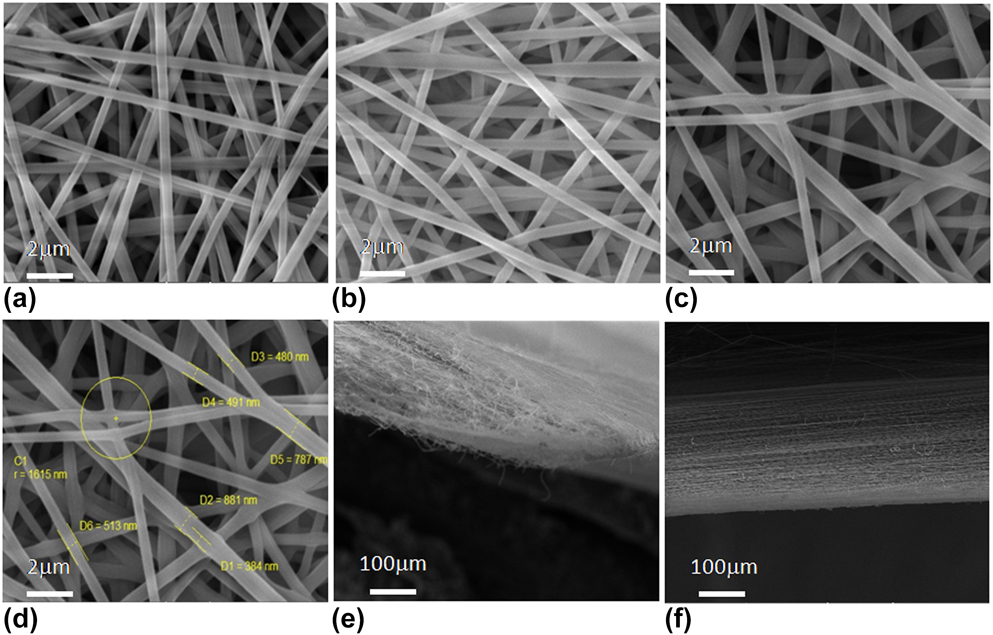
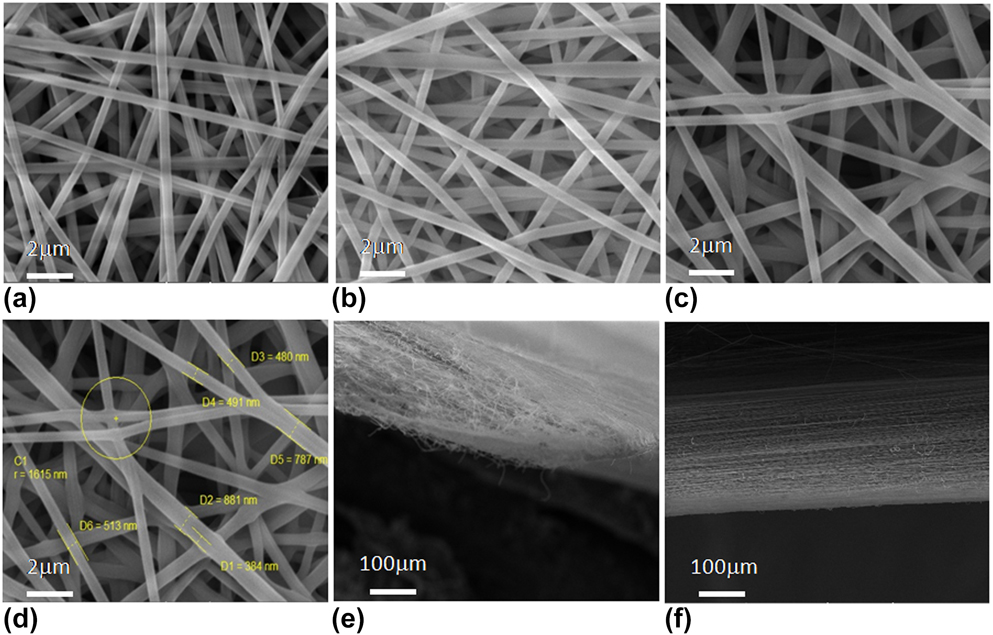
To study the morphology of electrospun nonwoven nanofiber membranes, the surface and cross-section were observed by scanning electron microscopy (SEM). Figure 1 shows SEM images of PAN and doped different PI composite separators. It has been found that the fibers of the pure PAN and PAN/PI composite separators are uniformly distributed, the surface of the fibers are smooth, and separators exhibited a similar porous and nanofiber network structure. The formation of nanofibers is due to the good stretching of the polymer solution under electrostatic forces [Reference Li, Zhang, Lin, Yang, Zhao and Wang2]. Figure 1(a) is a pure PAN separator with a relatively uniform fiber thickness, but there are also a small amount of coarser fibers. Figures 1(b)–1(d) are the surface and fiber morphology of the PAN/PI composite separator. When the ratio of PAN:PI is 8:2, the diameter of the separator fiber is not uniform, and the fiber diameter increased from 300–400 to 380–880 nm and the adhesion among the fibers is more obvious. In Fig. 1(b), the fiber diameter and pores in the membranes are more uniform, which will provide a better channel for lithium-ion shuttle. And its random, multi-layered pores effectively prevent lithium ions from forming lithium branches during the process of extraction and embedding [Reference Peng, Wang and Ji3, Reference Ma, Kolla, Yang, Zhao, Zhao, Smirnova and Fong24, Reference Li, Zhong, Yao, Bi, Zhou, Guo, Wu, Feng and Xiang25, Reference Abada, Marlair, Lecocq, Petit, Sauvant-Moynot and Huet26], avoiding direct contact between the positive and negative electrodes of the battery and ensuring the safety performance of the lithium-ion battery to a certain extent. It can be seen from Fig. 1(e) that the electrospun membrane has a fluffy cross-section when it is not heat treated, and it can be clearly seen from the cross-section that the nanofibers are randomly stacked layer by layer, forming a lot of random pores between the fibers and the connection. It is a feature of electrospinning for the preparation of nanofiber membranes with large specific surface area, porous and non-through pores. Figure 1(f) shows a heat-treated electrospun membrane. From the cross-section, it can be found that the originally loose fibers are compacted at a high temperature, and the inner connection between the fibers becomes tight, which increases the mutual binding force. Thus, the mechanical properties of the membranes are improved. Moreover, the heat treatment does not change the morphology of the fiber, without melts, remains nano-sized, and has a high specific surface area.
The surface and cross-section SEM images of different PAN/PI composite membranes. (a) The surface SEM image of pure PAN separator; (b) the surface SEM image of PAN/PI separator with 9:1; (c and d) the surface SEM image of PAN/PI separator with 8:2; (e) the cross-section SEM image of electrospun membrane with no heat treatment; and (f) the cross-section SEM image of electrospun membrane with heat treated.
Thermal stability analysis
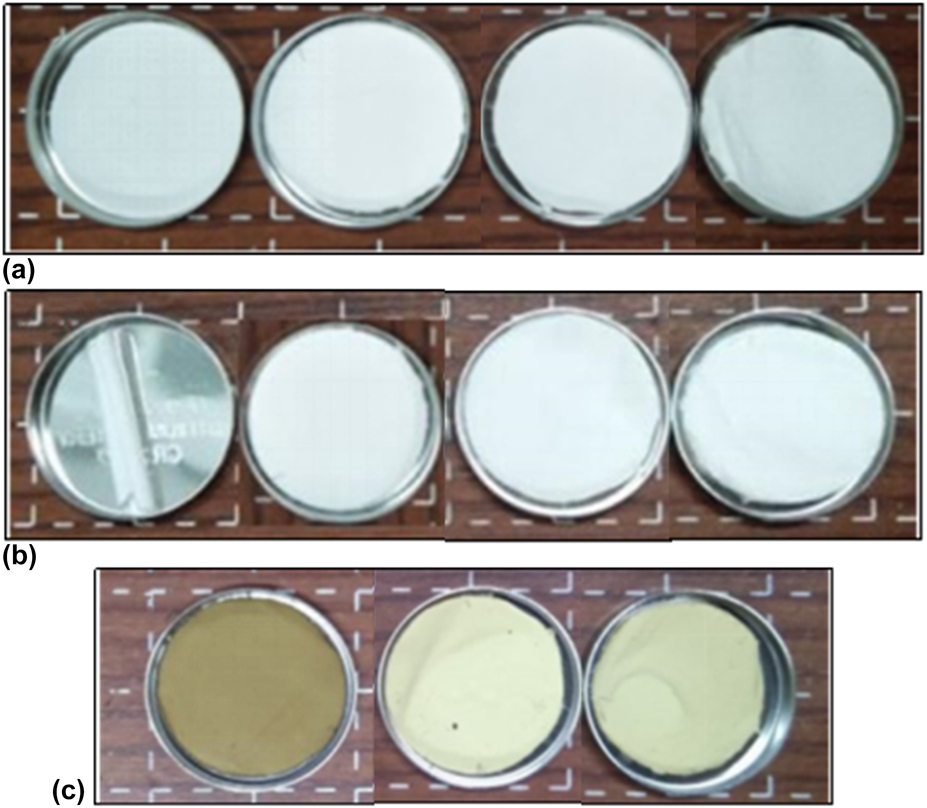
Thermal stability is an important parameter of battery separators. Separators with poor dimensional stability at high temperatures can cause safety problems of the battery, such as short circuits or explosions [Reference Yu, Lau, Lei, Liu, Qin, Yang, Li, Curtiss, Zhai and Kang27]. Thermal stability analysis of commercial Celgard (Charlotte, North Carolina), PAN and composite membranes with different proportions of PAN to PI was carried out under the same time and temperature [Figs. 2(a) and 2(b), from left to right: commercial Celgard 2400, PAN, PAN:PI = 9:1, and PAN:PI = 8:2; Fig. 2(c), from left to right: PAN, PAN:PI = 9:1, and PAN:PI = 8.0:2.0]. Figure 2(a) shows the shapes of the four membranes at room temperature. From the Fig. 2(a), we can see that these membranes are white at room temperature and the morphology is stable. Figure 2(b) shows the state of the four separators after heat treatment at 120 °C for 2 h. It can be seen from the figure that the commercial Celgard 2400 separator has a significant curl at 120 °C and the area is reduced by 80%, which means the thermal stability of the commercial Celgard 2400 separator is not good. It will curl along the stretch direction at high temperature, thus the segment movement of the polymer material is relaxed after heating and the transition from the straight state to the curl state has happened. The separator is de-oriented and therefore has a significant curl at high temperatures. At 120 °C, the commercial Celgard 2400 separator only undergoes thermal motion of the segment and does not break the material structure. So the color of the separator does not change. However, the morphology of other composite materials did not change significantly, because the separator prepared by electrospinning did not have a single-direction stretching during the molding process, and the polymer segment was not in a highly tight state. Therefore, their morphology did not change significantly at high temperatures. Figure 2(c) shows the thermal stability of PAN separator and different proportions of PAN/PI composite separator at 200 °C. It can be seen that the color of PAN separator is obviously yellow, and the color of the composite membrane doped with PI also changes, but the change of color is not deeper than that of PAN separator, indicating that the membrane after doping with PI is more resistant to heat.
Thermal stability separator of different PAN/PI composite membranes. (a)–(c) From left to right: Commercial Celgard 2400, PAN, PAN:PI = 9:1, and PAN:PI = 8:2. (a) The state at room temperature, (b) the state at 120 °C, and (c) the state at 200 °C.
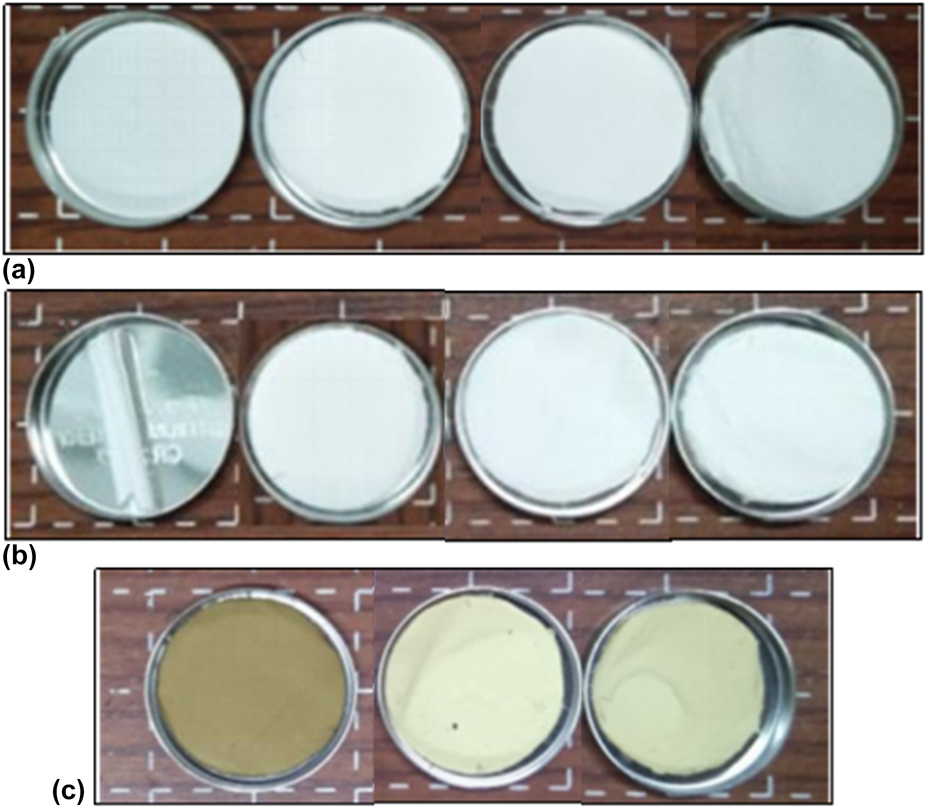
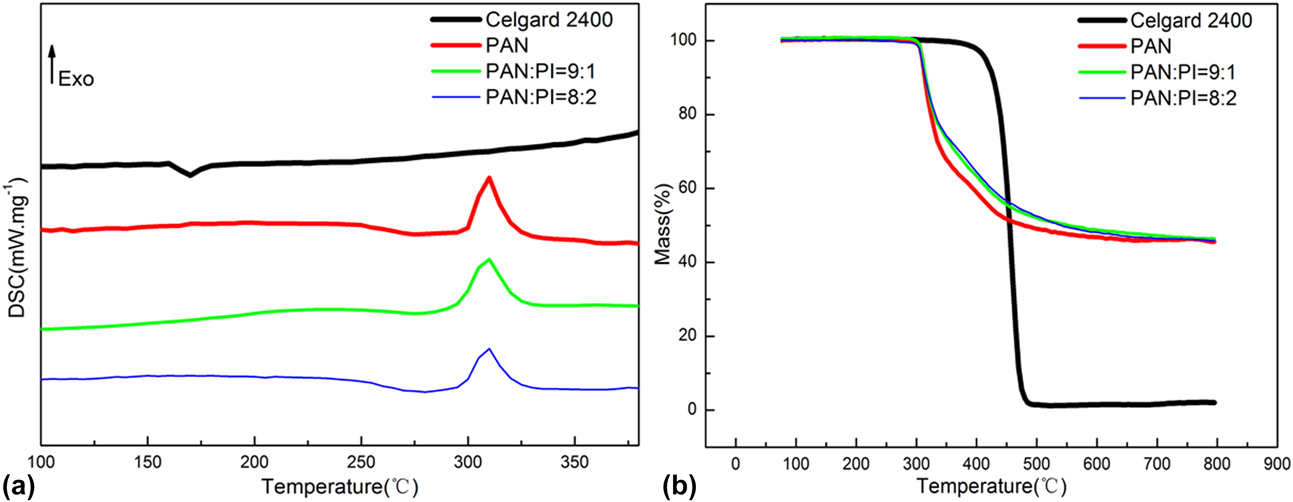
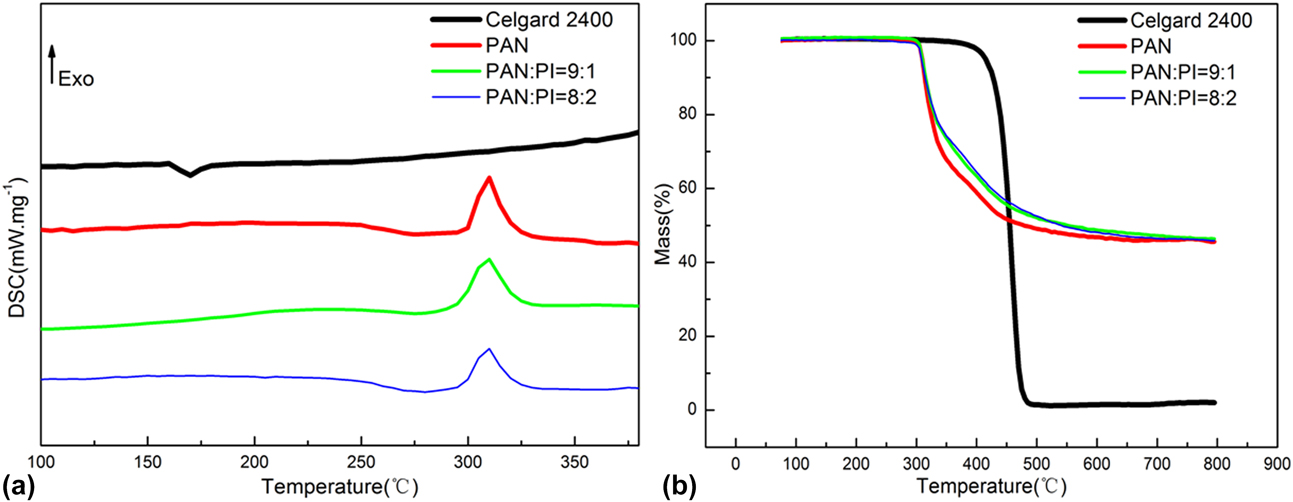
Figure 3 shows the thermal analysis of several separators. As shown in differential scanning calorimetric (DSC) patterns, we can find that the commercial Celgard 2400 separator has an endothermic peak at around 167 °C, corresponding to its melting temperature. The thermal analysis charts of the PAN and PAN/PI composite separators were almost the same, and an exothermic peak appeared at around 310 °C due to stabilization of the PAN polymer [Reference Ma, Kolla, Yang, Zhao, Zhao, Smirnova and Fong24, Reference Zhu, Wei, Dan, Neel and David28]. The results show that the electrospun membrane has better stability than the commercial Celgard membrane and can maintain its morphology better at the temperature below 300 °C [Reference Cho, Sakai, Tanase, Kimura, Kondo and Tanaka16, Reference Ma, Kolla, Yang, Zhao, Zhao, Smirnova and Fong24]. Figure 3(a), shows that the commercial Celgard 2400 separator will not have a mass reduction before 400 °C and the PAN and PAN/PI composite separators will not have a mass change before 300 °C. Studies have shown that the temperature of common electronic products is between 20 and 60 °C, and the temperature of high-performance power batteries is between −30 and 300 °C [Reference Chen and Jiao29]. Batteries possessing standard materials may indeed work at elevated temperatures; nevertheless, they are not safe. Size is an overarching issue when dealing with cooling systems [Reference Lin, Salari, Arava, Ajayanc and Grinstaff30]. Commercial separators undergo de-orientation at 120 °C due to the process characteristics of their stretch forming, resulting in large-area shrinkage of the separator. Poor dimensional stability at high temperatures does not guarantee a complete mechanical isolation of the positive and negative electrodes at high temperatures. PAN separator has no obvious shrinkage at 200 °C due to its unique molding process, and its dimensional thermal stability is better than that of commercial separators. Moreover, there is no mass loss before 300 °C. So, the positive and negative electrodes of the battery can be mechanically isolated at a high temperature to ensure the safety of the battery. Therefore, the PAN-based separator can be expected to be employed in the power battery. Although the commercial Celgard 2400 separator does not have a mass reduction before 400 °C, its disadvantage of being easily curled at high temperatures is indeed a safety hazard for lithium-ion batteries.
Thermal analysis of different PAN/PI composite membranes. (a) The DSC of different separators. (b) The Thermogravimetric (TG) analysis of different separators.
Analysis of porosity and electrolyte uptake rate
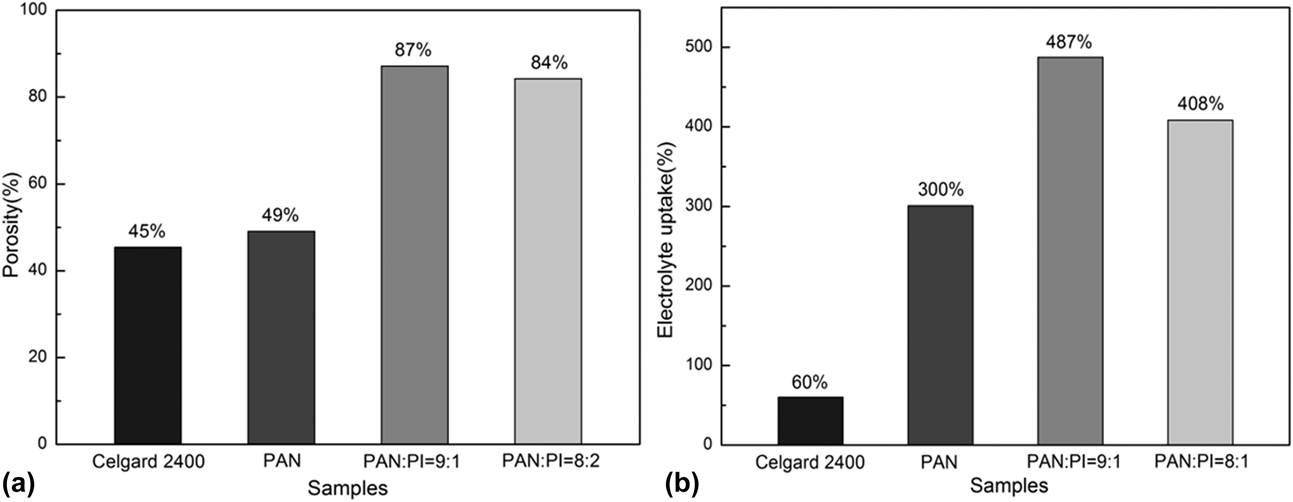
The electrospun nanofiber membrane has a high porosity and a large specific surface area. The fibers are randomly stacked to form a nonwoven fabric during the electrospinning process [Reference Li, Zhong, Yao, Bi, Zhou, Guo, Wu, Feng and Xiang25], so the separator has a high porosity. The porosity and the percentage of electrolyte uptake of the membrane directly affect the performance of the battery [Reference Miao, Zhu, Hou, Xia and Liu22, Reference Chen and Jiao29]. Figure 4 shows the comparison of porosity and electrolyte uptake rate for different PAN/PI composite membranes and commercial membranes. It can be clearly seen that the PAN/PI separators of different ratios have higher porosity and electrolyte uptake rate than commercial PP separators. It is indicated that the membrane composited by PAN/PI has better electrolyte uptake and electrolyte retention rate and is more conducive to the shuttle of lithium ions. When the amount of PAN:PI is 9:1, the electrolyte uptake rate and porosity of the separator are the best. However, when the amount of PAN:PI is 8:2, the electrolyte uptake rate and porosity decrease, which is closely related to the electrospinning effect of the composite solution. It is clear from Fig. 1(c), the addition of excessive amount of PI makes the pores of the separator uneven, and the fiber diameter is uneven. To some extent, it affects the free shuttle of lithium ions, resulting in a PAN/PI composite separator whose electrolyte uptake rate and porosity are slightly lower than those of the separator of PI/PAN (9:1). Even if the small amount of PI added, it will affect the performance of the composite separator to some extent. However, the overall performance of PAN/PI is better than the commercial Celgard 2400 separator and pristine PAN separator, because the affinity of PI with electrolyte is better than that of commercial separator and PAN, which is more conducive to the free extraction and embedding of lithium ions.
(a) Porosity and (b) electrolyte uptake rate of different PAN/PI composite membranes and Celgard 2400 membranes.

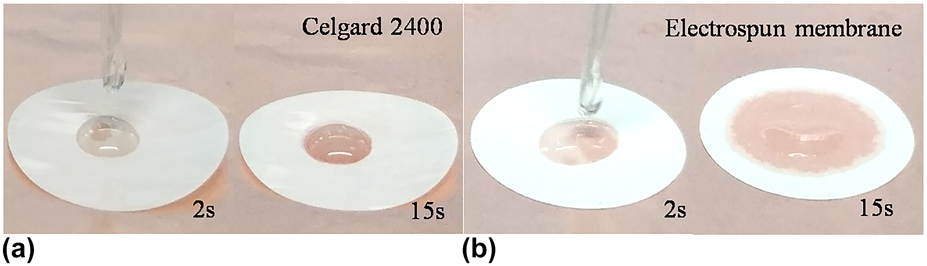
The liquid absorption and holding capacity of the membrane directly affect the performance of the battery and also limit its applications. For example, in the power battery and energy storage system, the membrane is required to be quickly and uniformly infiltrated by the electrolyte [Reference Peng, Wang and Ji3]. As shown in Fig. 5, the state of the electrolyte droplets on the surface of the commercial separator at 2 and 15 s is almost unchanged, indicating that the diffusion rate of the electrolyte on the commercial Celgard membranes is very slow and the liquid-absorbing ability of the commercial separator is weak. The plausible reason is that the surface of the commercial separator is less hydrophilic and has relatively low porosity, causing the low electrolyte uptake. In contrast, the electrospun membrane has an obviously high absorbing capacity due to its unique spinning process. From 2 to 15 s, the electrolyte droplets can be adsorbed completely in just 13 s. The contact angle of the droplets at 15 s was significantly smaller than that at 2 s.
Infiltration behavior of (a) Celgard 2400 membrane and (b) electrospun membrane electrolyte.

Flexibility and mechanical properties
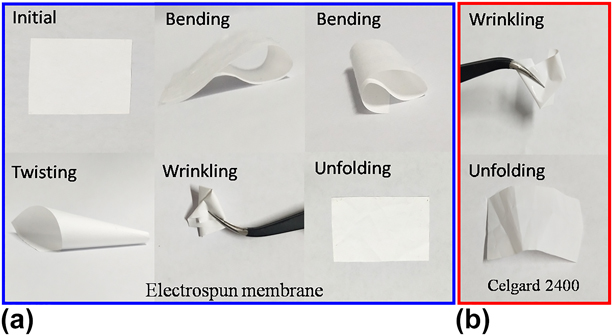
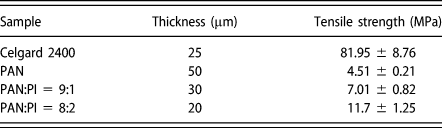
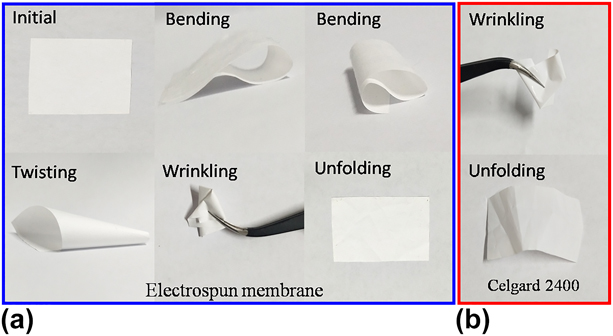
Commercial separators are usually formed by wet or dry stretching, which have good longitudinal tensile strength and a slightly weaker transverse tensile strength. The lithium-ion battery separator prepared by electrospinning has a good porosity and electrolyte uptake rate. The fibers are randomly stacked and the interaction between them is weak. Therefore, the mechanical properties of the electrospun membrane have always been a breakthrough point, and it is also the research goal of many researchers. The experiment uses PAN and PI for mixed spinning and utilizes the flexibility of PAN and excellent spinnability, combined with the high strength of PI to break through the defects of mechanical properties while maintaining other excellent performance. As shown in Fig. 6, after bending/twisting/wrinkling, the electrospun membranes can fully recover to its initial state without any wrinkles, indicating excellent mechanical flexibility, while commercial Celgard 2400 membrane shows some wrinkles and curls after folding into small size. The longitudinal mechanical properties of the commercial Celgard 2400 separator after uniaxial stretching can reach about 80 MPa, but the transverse mechanical properties are usually between 10 and 20 MPa (Table I). Because the commercial separator is subjected to stretching treatment, the mechanical properties in the horizontal and vertical directions are quite different, so it is easy to curl at high temperatures and the shape is unstable, which is a safety hazard for the lithium-ion battery. Although the tensile strength of pure PAN is about 4.5 MPa, it has excellent thermal stability, electrolyte uptake rate, and electrolyte retention rate, making it is the darling of electrospinning. After adding PI, the mechanical properties of the composite membrane are improved. The mechanical properties of the composite membrane with PAN:PI = 9:1 can reach 7 MPa, which is 55.4% higher than that of pure PAN separator. When PAN:PI = 8:2, the mechanical properties of the composite membrane can reach 11.7 MPa, which is 159.4% higher than that of the pure PAN separator. It can be seen that although there is still a big gap between the PAN/PI composite membrane and the commercial Celgard 2400 membrane, the excellent thermal stability and improved mechanical properties of the composite membrane ensure the safety performance of the lithium-ion battery to a certain extent.
The flexibility test of (a) electrospun membranes and (b) Celgard 2400 membranes.
Mechanical properties of different separators.

Ionic conductivity analysis
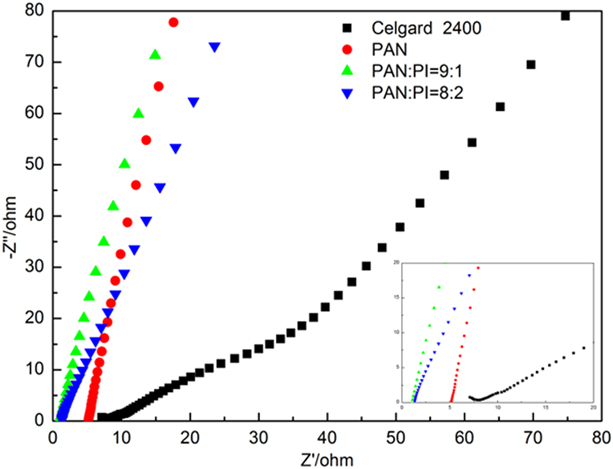
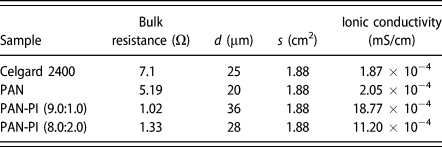
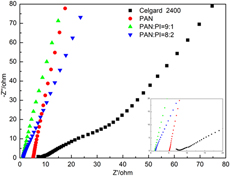
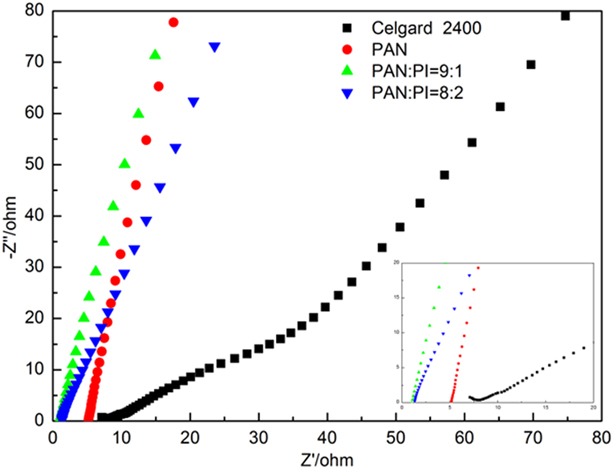
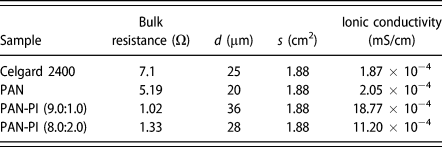
As shown in Fig. 7, after adding PI to PAN, the resistance of the separator is significantly smaller than that of the commercial Celgard 2400 separator (7.1 Ω), while the ionic conductivity increases from 1.87 × 10⁻⁴ to 18.77 × 10⁻⁴ mS/cm. Composite membranes with different PI additions have different electrical resistances. The resistance of the separator does not have a linear relationship with the amount of PI added, but there is an optimum value. As shown in the Fig. 7, when the PI content is 1/9 of PAN, the composite membrane’s resistance is the smallest, and when it is increased to 2/8, the membrane’s resistance is increased. It shows that the synergistic effect of PI and PAN follows the internal relationship of its own structure and does not increase with the increase in the added amount. The resistance of the membrane directly affects the free shuttle of lithium ions through the membrane. As shown in Table II, the resistance of the commercial Celgard 2400 separator is 1 times that of the pure PAN separator and 7 times that of the PAN/PI (9:1) composite separator. The ionic conductivity of PAN is 1.0 times that of the commercial Celgard 2400 separator; the ionic conductivity of the PAN/PI (9:1) composite separator is 10.0 times that of the commercial Celgard 2400 separator. It can be seen that the smaller resistance, electrolyte uptake rate, and porosity are prerequisites for ensuring the lithium-ion conductivity of the lithium-ion battery. It also shows that the separator containing PI has better Li+ penetration than pure PAN and commercial Celgard 2400 separator. At the same time, it was also verified that the porosity and the electrolyte uptake rate of the PI-containing PAN separator were greatly improved.
Ionic conductivity of different separators (the inset picture is the enlarged picture of the outside picture).
Ionic conductivity of different separators.
Electrochemical performance of batteries assembled with different separators
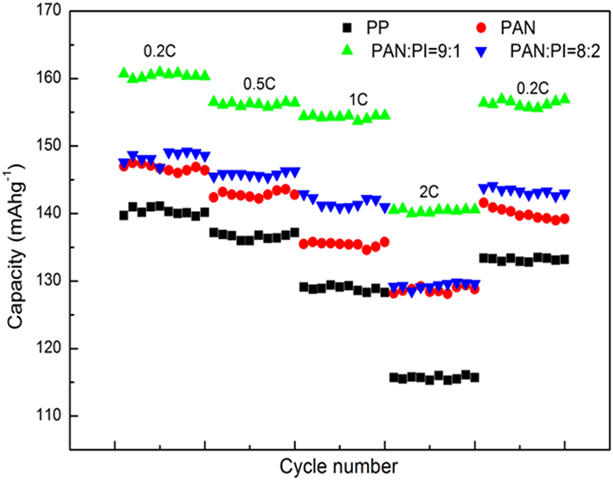
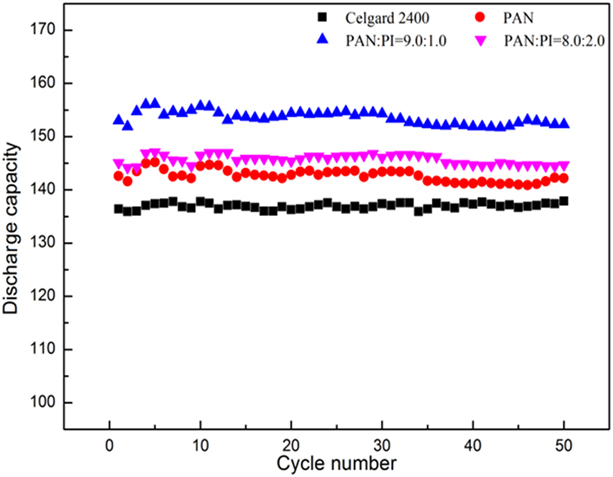
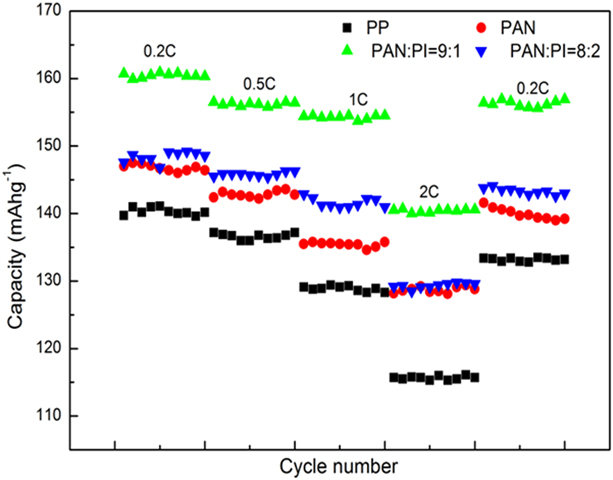
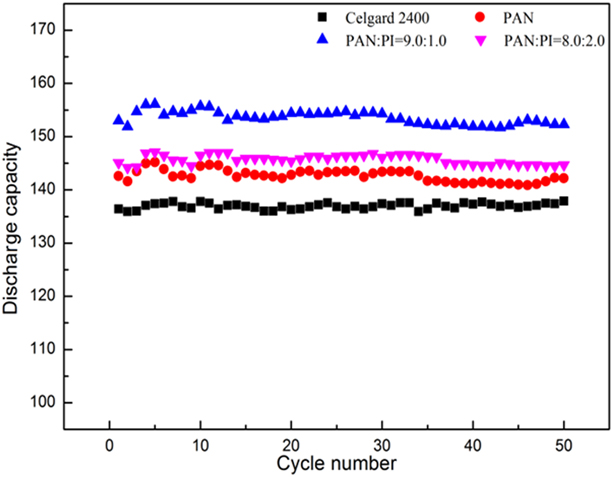
The charge and discharge performance of the battery is closely related to the porosity and the electrolyte uptake rate of the separator. At the same time, the advantages and disadvantages of the electrode sheet directly affect the cycle performance of the battery. The pores of the commercial Celgard 2400 separator are uniform, but the commercial Celgard 2400 separator has good stability only at normal temperature and is easy to shrink at high temperatures. And the surface is hydrophobic and has poor wettability to the electrolyte. The electrospun membrane not only has high porosity and liquid absorption rate, but also overlaps the layers of staggered pores. Figure 8 shows the discharge specific capacity of batteries with different separators cycled at 0.2 C, 0.5 C, 1 C, and 2 C. The electrospun membrane obtained better cycle performance due to higher porosity and liquid absorption rate. The PAN and PAN/PI composite separators exhibited a specific capacity of 147 mA h/g, 160 mA h/g, and 147.6 mA h/g at 0.2 C, respectively, which is significantly higher than that of the commercial Celgard 2400 separator (139.7 mA h/g). After cycling at 2 Crates and returning back into 0.2 C, the batteries with electrospun membrane of PAN and PAN:PI = 9:1 still maintained 96.33 and 97.43% of the initial discharge capacity. The PI introduced to the separator contains a polar group and has a good affinity with the electrolyte, thus the capacitance of the composite separator is superior to that of the pure PAN separator. However, the cycle performance of PAN:PI = 8:2 is not much higher than that of pure PAN separator, because when the amount of PI added increases, the mutual solubility of the composite solution is not good and the spinnability becomes difficult. After spinning, the separator affects ion penetration and thus does not achieve good cycle performance. Figure 9 shows the specific discharge capacity of several separators after 50 circles at 0.5 C. It can be seen that the cycle performance of the two composite membranes is relatively stable, and the cycle ability of the PAN:PI = 9:1 composite membrane is the best. The commercial Celgard 2400 separator has the lowest specific capacity, and the other two electrospun membranes have a better specific capacity but are slightly lower than that of the PAN:PI = 9:1 composite separator. It shows that the addition of PI does improve the performance of pure PAN electrospun membrane but the amount of addition is limited and cannot be increased indefinitely.
Rate capability of batteries with different separators.
Discharge specific capacity of different separators at a rate of 0.5 C.
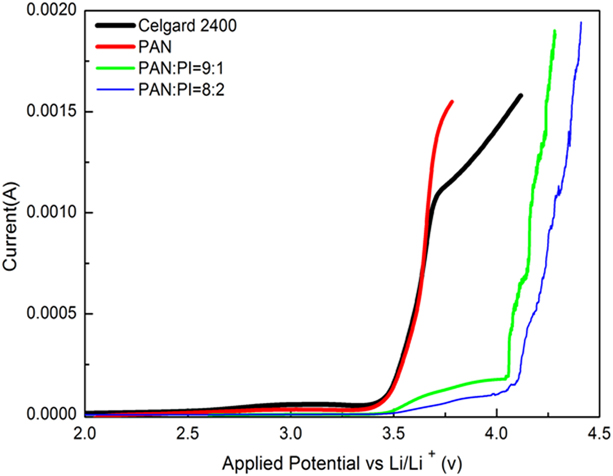
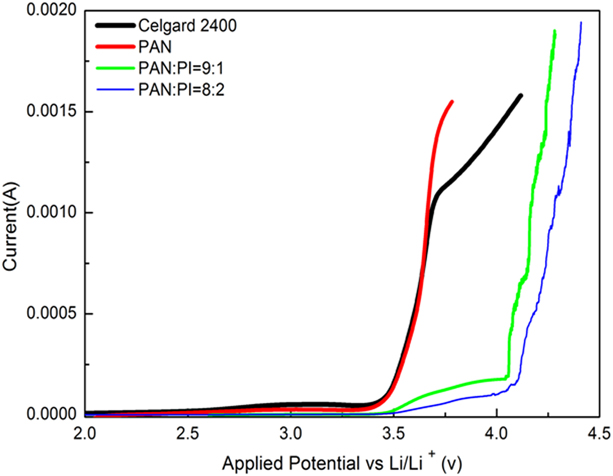
Electrochemically stable windows of several membranes were evaluated using linear sweep voltammograms. Electrochemical stability refers to the voltage limitation when the electrolyte can be stably present. It can be clearly seen from Fig. 10 that the PAN/PI composite separators has the highest limiting voltage. The voltage windows for PAN/PI (9:1) and PAN/PI (8:2) can reach 4.05 V and 4.10 V, respectively, which are significantly higher than 3.41 V for commercial Celgard separators and pure PAN separators. This indicates that the PI-added electrospun PAN membrane possesses better electrochemical stability and has good interfacial compatibility with both the electrode and electrolyte, which can fully meet its practical application in lithium-ion batteries.
Linear sweep voltammograms test of batteries with different separators at 1.0 mV/s with the voltage range from 2 to 6 V.
Conclusion
The introduction of PI to PAN enhances the affinity of the membrane for electrolyte, ionic conductivity, and mechanical properties. The thermal stability of the PAN/PI composite membranes is extraordinary, with no obvious crimping and shrinkage at 200 °C, while the commercial Celgard 2400 separator undergoes 80% thermal deformation at 120 °C. At the same time, the composite membrane has excellent rate and cycle performance. The discharge capacity of PAN/PI (9:1) composite separator at 0.5 C rate is 1.3 times higher than that of commercial Celgard 2400 separator, and the discharge specific capacity is still 153 mA h/g after 50 cycles. The addition amount of PI has a direct influence on the performance of the composite membrane. However, too much addition of PI causes difficulties in forming uniform fibers and pore structures, which will decrease electrical performance of the composite membrane.
Experimental section
Experimental materials
PAN (K30) (M w = 200,000; BASF Co., Ludwigshafen, Germany) and PI (Zigong Zhong Tiansheng New Material Technology Co., Ltd., Zigong, China) were vacuum dried at 70 °C for 12 h before use. N,N-dimethylformamide (AR grade) was purchased from Chengdu Kelong Chemical Reagents Co. (Chengdu, China). Electrolyte (LBC305-01; Shenzhen New Main Bond Technology Ltd., Shengzhen, China) and Celgard 2400 separator were purchased from commercial sources.
Preparation of PAN electrospun membrane
A pure spinning solution of 13 wt% PAN and PAN/PI blend solution with different PI contents were prepared (addition ratio was PAN:PI = 9:1 and 8:2). To eliminate the bubbles, the spinning solutions were stirred at 60 °C for 8 h, then transferred to a syringe. The solutions in the syringe were stabilized a certain time, then the spinning was carried out under high pressure. The spinning parameters were as follows: temperature at 38–42 °C, humidity at 36–38.5%, fixed voltage at 28 kV, receiving interval at 20 cm, pushed rate at 1.5 μL/min, and membrane thickness in 20–50 μm.
After that, the electrospun membrane was dried in a vacuum oven at 60 °C for 12 h. After the solvent was completely evaporated, the trimmed edge was taken out and placed between two glass plates for hot-pressing treatment under an external force of 24.5 N at 130 °C for 4 h in a vacuum oven. Hot pressing can reinforce the adhesion between the fibers and weakening the electrostatic force of the separator.
Test and characterization of the membrane
SEM scanning
First, the electrospun membrane was coated with gold and then the microstructure of pure PAN and composite membranes with different ratios of PAN:PI was examined by SEM (VECA 3 SBU; TESAN).
Thermal stability test
First, the electrospun membrane was cut into a circle (r = 0.98 cm) and then treated in a vacuum oven at 120 °C and 200 °C for 2 h, and the morphology before and after the heat treatment was compared. Second, the thermal characterization of the composite membrane and the commercial Celgard 2400 membrane was measured using DSC (DSC200F3; Netzsch Co., Selb, Germany) under the N2 protection at a rate of 10 °C/min. The temperature range was 50–800 °C.
Electrolyte uptake test
The separator was cut into a circle (r = 0.98 cm) and dried in a vacuum oven at 60 °C for 12 h and then immersed in LiPF6 electrolyte for 4 h. Moreover, the initial mass (W 0) of each separator should be weighed separately before impregnation and the separator mass (W 1) should be weighed after immersion. Measured at least 5 groups per sample was tested and average values were used for further evaluation. The electrolyte uptake rate was calculated using the following equation:
 $${\rm{EU}} = {{\left( {{W_1} - {W_0}} \right)} / {{W_0} \times 100\% }}\quad .$$
Porosity
The separator was cut into a circle and dried with the same procedure as in the section Electrolyte uptake test. The thickness of the separator was measured, then the separator was soaked and weighed membrane in n-butanol for 3 h. Also weighed the separator before and after impregnation (W 0, W d), measured at least 5 groups per sample, and averaged them. The porosity was calculated using the following equation:
 $$P\% = {{\left( {{W_{\rm{d}}} - {W_0}} \right)} / {\left( {\rho \times \nu } \right)}} \times 100\% \quad ,$$
where ρ is the density of n-butanol and ν is the volume of the entire membrane.
Mechanical properties test
The separator was cut into strips of a certain shape (width 10 mm, length 50 mm), and mechanical properties tests were carried out by using a BLJ-B machine at a rate of 30 mm/min. Each membrane was measured at least 5 groups and the average was calculated.
Ionic conductivity test
The ionic conductivity of PAN and doped PI separator was measured by CHI660D electrochemical workstation. The test parameters were as follows: AC perturbation amplitude was of 5 mV, frequency range in 105–0.01 Hz, and equilibrium time of 2 s. The ionic conductivity is calculated using the following formula:
 $$\sigma = {d / {R \times S}}\quad ,$$
where σ, ionic conductivity of the separator (S/cm); d, thickness of the membrane (cm); S, area of the stainless steel electrode (cm2); R, bulk resistance (Ω) of the diaphragm: the intersection of the straight line and the horizontal axis on the measured impedance map.
Battery charge and discharge performance test
Lithium iron phosphate (LiFePO4), LA132, and Super P were mixed at a ratio of 8:1:1 to prepare a positive electrode. A button battery was assembled in a glove box protected by a nitrogen atmosphere. Electrochemical performance was tested under the battery test system (CT2001A), cycling 50 circles at 0.2 C, 0.5 C, 1 C, and 2 C.
Acknowledgments
This work was supported by the National Natural Science Foundation of China (51572177) and the National Natural Science Foundation of China (51072125). All authors read and commented on the manuscript.