Leukemias, like lymphomas and multiple myeloma, are hematological malignancies of the blood-forming organs. The four major types of leukemia are acute lymphocytic leukemia (ALL), acute myeloid leukemia (AML), chronic myeloid leukemia (CML), and chronic lymphocytic leukemia (CLL). The distinction between acute and chronic is based on the characteristics of the malignant cells: acute leukemias are characterized by more immature cells and chronic leukemias by more mature cells, which affect the rate of disease progression.
Leukemia is currently the eighth most common type of cancer in women and the tenth most common in men. The worldwide incidence of leukemia in 2002 was estimated to almost 300,000 cases, with an incidence rate of 4.9/100,000 individuals/year (20). The mean hospital costs per leukemia patient in the United States was estimated to $30,000 in 2002 based on U.S. nationwide hospital use, which makes leukemia the fifth most expensive condition in terms of acute hospital care per patient (24).
Leukemia is the most common form of cancer in children. ALL accounts for by far the majority of leukemia cases in children, and two thirds of patients diagnosed with ALL are children. Nevertheless, most leukemia patients are elderly. In 1998–2002, the median age at diagnosis for any kind of leukemia in the United States was 67 years of age; the median age at diagnosis for ALL was 11 years of age, for AML 68 years, for CML 66 years, and for CLL 72 years. In 1995–2001, the overall 5-year relative survival rate of leukemia in the United States was 48 percent. The overall 5-year relative survival rates for the four major types of leukemia were nearly 75 percent and 65 percent for CLL and ALL, respectively, 40 percent for CML, and 20 percent for AML (53).
An important advance in leukemia treatment in recent years has been the introduction of imatinib, a biological response modifier for the treatment of CML. From a more long-term perspective, hematopoietic stem cell transplants have increased fivefold during the past decade (22) and are considered the best treatment option for many hematological malignancies in patients who are eligible.
Several new treatment options for leukemia are currently under development and new therapies are expected to be introduced in the near future. New treatments often come at high costs, and economic evaluations comparing the costs and health outcomes will, therefore, be necessary to establish the value for money and the optimal use of the treatments. On this background, we find it valuable to comprehensively review the literature on economic evaluations of leukemia diseases. The objective of this study was, therefore, to review and analyze the existing literature on economic evaluations of the different types of leukemia.
IDENTIFICATION AND SELECTION OF STUDIES FOR THE REVIEW
A systematic literature search was conducted in PubMed and National Health Service Economic Evaluation Database/Health Technology Assessment (NHS EED/HTA) Database (46) to identify published cost analyses and economic evaluations of leukemia. The databases were searched using the following key words: leukemia AND (cost OR costs OR economic).
Articles were not considered relevant if they fulfilled any of the following exclusion criteria: studies focused on clinical benefits, studies focused of quality of life, studies covering various hematological cancers where only a minor part of patients were leukemia patients, case studies/clinical management analyses or articles written in any other language than English. Analyses of treatments that currently are irrelevant due to clinical advances and analyses focusing on side effects of leukemia are only briefly presented.
OVERVIEW OF LEUKEMIA TREATMENT
The disease progression of the acute leukemias is very rapid without treatment. If left untreated, acute leukemia usually leads to death within a few months from diagnosis (68). Acute leukemia are often diagnosed upon presentation of physical symptoms. Chronic leukemias are frequently diagnosed on routine blood testing before the appearance of symptoms. The disease progression of untreated CML from diagnosis to accelerated phases is 3–5 years. CLL disease progression is slow; approximately one third of patients have a normal life span and will not require therapy (1). Principal symptoms of leukemia are anemia, bleeding, and severe infections, caused by the disturbed production of red blood cells, blood platelets, and white blood cells, respectively. The need of supportive care is considerable, including blood and platelet transfusions to reduce symptoms caused by anemia and risk of serious bleeding, and antibiotics and other drugs to help protect from infections.
Acute Lymphocytic Leukemia
Treatment for ALL is divided into stages: remission induction, consolidation or intensification, and maintenance (continuation) therapy. A three-drug therapy with vincristine, prednisone/dexamethasone, and L-asparagine (in combination with intrathecal chemotherapy) is often recommended as induction therapy. For patients with risk features, hematopoietic stem cell transplantation (HSCT) from a human leukocyte antigen (HLA)-matched sibling donor is considered during first remission. After complete remission has been achieved, additional maintenance or continuation therapy is given. Central nervous system prophylaxis, intrathecal chemotherapy, is generally provided at each stage to prevent extramedullary disease in the central nervous system (42).
Acute Myeloid Leukemia
AML is not a single disease but a group of related diseases. AML is classified into eight different subtypes, depending on the type of leukemia cells involved. AML treatment is divided into induction and consolidation/postremission therapy. Induction therapy recommendations for patients with good risk features are chemotherapy, cytarabine, in combination with an anthracycline or an anthracenedione. Because the toxicity of high-dose cytarabine during induction therapy is considerable, even with contemporary treatment strategies many patients ultimately die either from the disease or from complications of treatment (14). HSCT from HLA-identical sibling may be performed if the physical condition of the patient allows it. Relapsing patients are more likely to be candidates for allogeneic or autologous HSCT in subsequent remission. The immunotoxin gemtuzumab ozogamicin, may also be given to some elderly relapsing patients not considered to tolerate the side effects of conventional chemotherapy (43).
Chronic Myeloid Leukemia
The three phases of CML, chronic, accelerated, and blast crisis phase, are diagnosed based on the percentage of blasts in blood and marrow. Recommended primary treatment for CML is HSCT or imatinib. Imatinib is a signal transductase (tyrosine kinase) inhibitor that has proved to be effective in treating the early stages of CML (47). Interferon-alpha (IFNα), cytarabine hydroxyurea, and busulphan are other treatments that may be considered as symptomatic treatments or for patients that do not respond to/tolerate imatinib. Treatment recommendations for patients that have reached the blast crisis phase are ALL-type or AML-type induction chemotherapy, depending on type of blasts (44).
Chronic Lymphocytic Leukemia
CLL is by some definitions considered the same disease as small lymphocytic lymphoma (SLL), which is one of the subtypes of non-Hodgkin's lymphoma. CLL and SLL are differentiated by how they present in the body, CLL mainly involves the bone marrow and peripheral blood, whereas SLL involves the lymph nodes or lymphoid tissues. CLL patients with localized disease are often not treated initially but remain under observation. In patient with more aggressive disease, first-line therapy is chemotherapy such as chlorambucil, fludarabine, or cyclophosphamide, as single-drug therapy or in an alkylating-agent based combination regimen. Second-line therapy may be further chemotherapy, or the monoclonal antibody alemtuzumab, approved for the therapy of relapsed and refractory CLL. Radiation therapy may be given as palliative treatment (45).
RESULTS OF LITERATURE REVIEW
The PubMed search resulted in 1,141 hits. The NHS EED/HTA search resulted in 116 hits. After duplicates and irrelevant studies had been excluded, ninety-three articles were retrieved for further analysis. After a second thorough review, sixty articles were considered as relevant for the purpose of the study. Studies included were cost-effectiveness analyses, cost-minimization analyses, cost analyses, and in some cases analyses of cost drivers in the treatment of leukemia.
The identified studies were published after 1990, with a few exceptions. The division was as follows: ALL, seven studies; AML, seventeen studies; CML, eleven studies; CLL, six studies; HSCT, eight studies; and granulocyte colony-stimulating factors, eleven studies. Stem cell transplantations and treatments against side effects from chemotherapy are presented briefly and separately, as many of these evaluations include a mix of patients with various hematological malignancies.
Acute Lymphocytic Leukemia
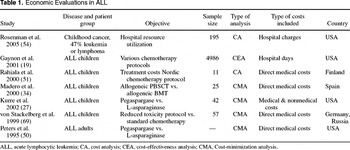
Table 1 summarizes the identified economic evaluations in ALL.

Cost of ALL
Two cost studies, estimating hospital costs/charges in Finland and in the United States, were identified. Rahiala et al. (51) estimated the average total direct cost per ALL patient, from diagnosis until end of treatment, to be $103,250 at Kuopio hospital in Finland. Laboratory tests and radiology accounted for 18 percent of all direct costs, chemotherapy for 13 percent, and infections for 18 percent. Rosenman et al. (54) assessed hospital charges over the first 3 years from diagnosis to approximately $100,000 in a cohort of U.S. children with cancer where 47 percent had hematological cancers. The group with lymphoid malignancies (including ALL and lymphoma) had mean charges of approximately $73,000.
Economic Evaluations in ALL
Two of the cost-minimization analyses compared pegaspargase with asparaginase in the United States. Kurre et al. (27) concluded that pegaspargase is less costly to payers and Peters et al. (50) that pegaspargase costs 1.8 percent more from the payer's perspective. Another cost-minimization analysis (from a Russian perspective, but using German costs) compared a conventional chemotherapy regimen with a less toxic variant of chemotherapy proposed as a treatment option for countries with lack of clinical resources (69). The old protocol (BFM) had 1.73 times higher costs than the new Russian protocol (MB). Madero et al. (34) compared allogeneic peripheral blood progenitor cell transplantation (PBPCT) and bone marrow transplantation (BMT) and concluded that PBPCT was less expensive and equally effective.
The only cost-effectiveness analysis identified that was specific for ALL compared the cost-effectiveness of different types of chemotherapy in relation to current treatment at first relapse in the United States (19). The study included 4,986 children from the Children's Cancer Group (CCG) trials between 1988 and 1995. Several treatments were compared for patients in various risk groups. The cost-effectiveness ratio used was hospital days per additional event-free survivor at 5 years. The study concluded that (double) delayed intensification, augmented therapy, and dexamethasone-based therapy were all cost-effective compared with current treatment at first relapse.
Two additional cost-effectiveness analyses included both AML and ALL patients in the analysis. Barr et al. (2) compared BMT with standard treatment in ALL and AML patients, and concluded that the costs and outcomes were similar. Vicent et al. (67) compared PBPCT and BMT in children with ALL and AML. The incremental cost-effectiveness ratio for ALL was reported to be estimated at $40,047 per life-years gained the first year and at $137,215 per life-years gained the fifth year.
Acute Myeloid Leukemia
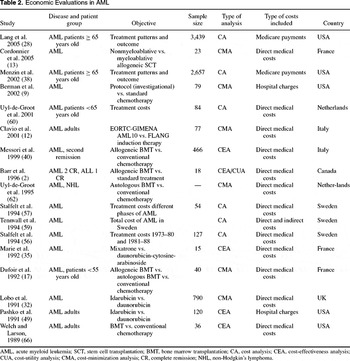
Table 2 summarizes the identified economic evaluations in AML.

Cost of AML
The cost studies identified in the present review were limited to direct medical costs, although one study, by Tennvall et al. (59), estimated the overall burden of AML from a national societal perspective. The total costs of AML in Sweden in 1992 was estimated to SEK 461 million annually. The study estimated various costs and concluded that direct and indirect costs were of the same magnitude.
Two studies analyzed treatment patterns and outcome for AML patients older than 65 years in the United States based on Medicare data (28;38). The studies concluded that among the elderly, AML is associated with poor prognosis and high costs. One of the two studies included 2,657 patients diagnosed between 1991 and 1996. The median survival was estimated to 2 months and the mean total Medicare payment was $41,594. The second study included 3,439 patients diagnosed between 1991 and 2001. Median survival was estimated to 2.4 months and mean total costs to $51,888.
Uyl-de-Groot et al. (60) studied the costs of different treatment phases of AML in patients below 65 years and calculated a weighted average cost for the Netherlands by relating their study to treatment statistics of the whole country. They estimated the cost of AML treatment in the Netherlands from diagnosis, including HSCT in relevant cases, and treatment of eventual relapse to $104,386 based on costs of 1995. Stalfelt et al. calculated costs of different phases of AML in Sweden (57). Weekly costs of $2,935, $314, and $1,782 for the induction phase, remission phase, and relapse phase, respectively, were estimated. Another study by Stalfelt et al. estimated costs of AML patients treated in the 1970s and the 1980s to $35,726 and $60,391, respectively (56).
Economic Evaluations in AML
Five studies were identified comparing different chemotherapy agents in AML. Pashko et al. (49) (in the United States) and Lobo et al. (32) (in the United Kingdom) compared idarubicin and daunorubicin. Both studies concluded that idarubicin was more effective (in terms of survival and remission rate) and also cost-effective. Pashko found both treatments equally costly, whereas Lobo concluded that idarubicin was less costly. Clavio et al. (12) in Italy compared costs of two different AML chemotherapy protocols. The average costs of the two treatments were $9,269 and $12,424 for FLANG and AML10, respectively. The authors concluded that FLANG was as effective, and less costly, than AML10. Marie et al. (35) simulated costs of daunorubicin and mitoxantrone treatments. The results showed that daunorubicin had a better remission rate and was also less costly than mitoxantrone-based treatment. Berman et al. (9) in the United States compared costs for patients receiving protocol treatment (i.e., in a clinical study) and patients receiving standard therapy and found charges for protocol patients to be lower.
Five studies compared stem cell transplantation (HSCT) with conventional chemotherapy treatment in AML, in first complete remission, second complete remission, or as a second BMT, respectively, and found allogeneic BMT to be more costly but with better outcome that conventional chemotherapy. Welch and Larson (66) found a 42 percent higher treatment cost of BMT compared with conventional chemotherapy with an incremental cost-effectiveness ratio of $59,300 per life-year gained. Barr et al. (2) studied AML and ALL patients and estimated an incremental cost per life-year gained of CA$29,200 or CA$63,400 per quality-adjusted life-year (QALY) gained with BMT compared with conventional chemotherapy for AML patients. Messori et al. (40) estimated the cost-effectiveness ratio of a second BMT compared with conventional chemotherapy to $52,215 per life-year gained. Dufoir et al. (17) estimated a cost per life-year gained of FF122,421 for BMT versus chemotherapy. Uyl-de-Groot et al. (62) calculated the costs of introducing autologous BMT in the treatment of AML in The Netherlands to $2.22 million, based on cost estimations of conventional treatment to approximately $11,040 and of autologous BMT to $55,440, including a follow-up period of 2 years. An additional study, by Vicent et al. (67) compared PBPCT and BMT in children with ALL and AML. The cost per QALY gained for PBPCT versus BMT for AML patients was estimated to $69,814. One study by Cordonnier et al. (13) compared myeloblative with nonmyeoblative HSCT and concluded that mean 1-year total cost did not differ significantly between the two groups.
Chronic Myeloid Leukemia
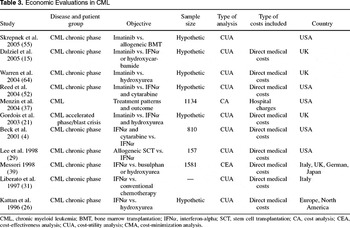
Table 3 summarizes the identified economic evaluations in CML.

Cost of CML
There is currently little evidence available of the cost of CML. Menzin et al. (37) conducted a study on treatment patterns for elderly CML patients older than 65 years in the United States, diagnosed between 1991 and 1993. The Medicare claims for the patients were compared with those for matched controls without CML. They estimated the average Medicare payments over a period of 5 years from diagnosis or until death to $35,785 for CML patients and to $21,161 for control subjects.
Economic Evaluations in CML
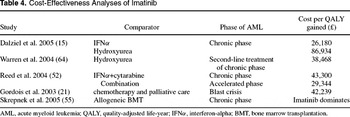
Since the introduction of imatinib mesylate for the treatment of CML, several cost-effectiveness analyses have been conducted during the past couple of years comparing imatinib with previous first line treatment. Table 4 shows the results from five economic evaluations of imatinib. The evaluations all used different comparators, and the results vary from dominating results (versus matched unrelated donors) to incremental costs of £87,000 per QALY gained (versus hydroxicarbamide).

There are a few economic evaluations assessing other treatments than imatinib in CML patients. Kattan et al. compared IFNα and hydroxyurea as initial treatment for CML patients and estimated a cost per QALY gained of $34,800 (26). Liberato et al. (31) compared IFNα and conventional chemotherapy and estimated cost-effectiveness ratios of $63,500 and $89,500 per QALY gained, respectively, with modeling for two different IFNα treatment strategies. Beck et al. (4) compared addition or no addition of cytarabine to IFNα and estimated a cost per QALY gained between $7,000 and $35,000. Lee et al. (29) compared unrelated donor BMT with IFNα in patients with chronic phase CML and estimated a cost per QALY gained of $51,800 within 1 year after transplantation.
Chronic Lymphocytic Leukemia
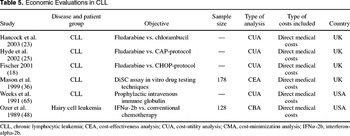
Table 5 summarizes the identified economic evaluations in CLL.

Cost of CLL
Hyde et al. (25) estimated the annual cost of fludarabine administration for all CLL patients covered by the National Health Service of England and Wales to be £5.5 million. Their evaluation was based on a review of other economic evaluations.
Economic Evaluations in CLL
Hancock et al. (23) estimated a cost per QALY of £48,000 for fludarabine compared with chlorambucil as first-line therapy for chronic lymphocytic leukemia. Hyde et al. (25) estimated a cost-effectiveness ratio of £10,588 for fludarabine relative to CHOP-treatment (cyclophosphamide, doxorubicin, vincristine, and prednisone) as second-line therapy for B-cell CLL, yet conclude that the estimation is based on limited evidence. In both cases, cost estimations were taken from reports from NICE in the United Kingdom. Fischer et al. (18) estimated, in an annex to the NICE guidance on the use of fludarabine for B-cell chronic lymphocytic leukemia, the incremental cost-effectiveness ratio of intravenous fludarabine compared with CHOP to £10,600 and the incremental cost-effectiveness ratio of oral fludarabine compared with CHOP to £2,681.
Weeks et al. (65) estimated the cost-effectiveness of prophylactic administration of intravenous immunoglobulin to reduce the rate of bacterial infections in CLL patients to be high, $6 million per life-year gained.
Ozer et al. (48) assessed the annual direct medical costs per patient for hairy cell leukemia patients (a rare form of CLL) receiving IFNα-2b to be 2.8-fold lower than costs for control patients receiving conventional chemotherapy. Indirect costs were estimated to be 13.3-fold lower than for IFNα-2b–treated patients.
Mason et al. (36) estimated the incremental cost-effectiveness of using the DiSC (differential staining cytotoxicity) array to guide treatment strategies for CLL patients to £1,470 per life-year gained. The DiSC array allows in vitro testing of different drugs against patient tumor cells to identify optimal therapy.
Hematopoietic Stem Cell Transplantation
HSCT involves the administration of high doses of chemotherapy and/or radiation therapy for the purpose of killing cancer cells, followed by the infusion of stem cells to “rescue” or restore bone marrow blood cell production. Blood-forming stem cells, hematopoietic stem cells, are mostly found in the bone marrow, but some hematopoietic stem cells, peripheral blood stem cells (PBSCs), are found in the bloodstream. To reach adequate sample sizes for analysis, many economic evaluations of HSCT include patients with various hematological malignancies. Such studies have been included in this overview when a significant number of patients were leukemia patients.
The majority of identified studies are cost analyses or cost-minimization analyses. The direct medical costs of a BMT procedure were estimated to range from $50,000 (10) to (in most cases) around $100,000 (8;13;30;41;63) with follow-up of cost between 100 days and up to 2 years posttransplantation. PBSC transplantation (PBSCT) was estimated to be slightly less expensive, approximately 80–85 percent the cost of BMT, in two studies with 100 and 180 days, respectively, of posttransplant follow-up (8;10) but equivalent in cost to BMT in a study with a 2-year follow-up period (63). Several of the economic evaluations of HSCT compare BMT with either PBSCT or with conventional chemotherapy (2;17;29;34;40;66;67). Most studies focus on AML and ALL patients, and generally include patients from both these treatment groups.
Side Effects of Chemotherapy
Among leukemia patients, sepsis and pneumonia are the most common causes of early death after induction chemotherapy. The risk of infection increases with the degree and duration of neutropenia. Granulocyte colony-stimulating factors (G-CSF) have showed to reduce the duration of neutropenia (6). Several economic evaluations on the administration of G-CSF in relation to chemotherapy treatment for acute leukemia patients were identified in the search (3;5;7;8;16;33;58;61;70). Several of the studies indicate that costs were reduced in the patient cohorts receiving G-CSF due to quicker recovery and shorter period of neutropenia.
DISCUSSION
This study identified sixty published economic evaluations of leukemia, considered relevant for the review. Many of the studies were, however, published some 10–15 years ago.
The methodological approach to evaluate leukemia is different for the acute diseases (ALL and AML) and the chronic diseases (CML and CLL). Due to the short-term nature of ALL and AML, clinical trials may have sufficient follow-up time to capture all relevant consequences of the disease and may, therefore, be used without extrapolation of the results. The available economic evaluations in ALL and AML were, therefore, either based on nonrandomized/retrospective data collections or on randomized/prospective data collections, rather then modeling studies. Only two of the identified studies in AML or ALL performed a full economic evaluation and calculate incremental cost-effectiveness ratios. One of the studies (19) used hospital days per event-free survivor and the other (2) cost per life-years and QALYs gained as cost-effectiveness ratio.
The long-term progressive nature of the chronic diseases makes them suitable to be evaluated using simulation models, for example of Markov type. The currently published models are all structured in a similar way. The main limitation of the available models is, as usual, the robustness of data included. Five identified modeling studies evaluated the cost-effectiveness of imatinib. They all used different comparators, and the results vary from dominating results (versus matched unrelated donors) to incremental costs of £87,000 per QALY gained (versus hydroxicarbamid).
Many of the available economic evaluations may be defined as cost-minimization analyses, where only the costs of different treatment strategies are compared. However, it should be noted that the interpretation of results from a cost-minimization analysis may be complicated, because exclusion of the health consequences from an economic evaluation may lead to difficulties in fully assessing the uncertainty of the cost-effectiveness (11).
Few of the available economic evaluations include quality of life aspects and use QALYs as outcome measure. The use of this outcome measure is important to take all consequences into account and to be able to compare results across different subtypes of leukemia and even other disease areas. Most of the previous economic evaluations have also not included indirect costs in the analyses. Indirect costs for patients and caregivers may be important considerations in leukemia diseases. A Swedish cost study in AML, for example, estimated the indirect costs to be slightly higher than the direct.
The introduction of new therapies for leukemia will stress the need for new economic evaluations in this group of diseases, which will create to a need to collect relevant data to support these evaluations. The prognosis and costs for leukemia patients changes rapidly as new treatments are introduced. It is, therefore, critical that an economic evaluation of the disease is based on relevant data and data reflecting the current treatment practice. The present study indicates the need for further up-to-date studies to better capture the long-term development of leukemia in general and its health economic consequences on total costs (i.e., also including indirect costs) and the patients' quality of life. This is particularly important for the subtypes of leukemia that are chronic (chronic myeloid leukemia and chronic lymphocytic leukemia).
POLICY IMPLICATIONS
The review indicates that there is a shortage of cost-effectiveness information in leukemia. The introduction of new therapies will stress the need for new economic evaluations in these diseases. More information about the total costs, that is, including indirect costs, and quality of life effects in future evaluations in leukemia would be valuable and should be requested by decision makers who value these aspects.
CONTACT INFORMATION
Frida Kasteng, MSc (frida.k@healtheconomics.se), European Health Economics, Vasagatan 38, Stockholm 111 20, Sweden
Patrik Sobocki, MSc (patrik.s@healtheconomics.se), Medical Management Centre, Karolinska Institute, Stockholm 171 77, Sweden; European Health Economics, Vasagatan 38, Stockholm 111 20, Sweden
Christer Svedman, MD (christer.svedman@karolinska.se), Department of Oncology, Radiumhemmet, Karolinska Hospital, Stockholm 171 76, Sweden
Jonas Lundkvist, PhD (jonas.l@healtheconomics.se), Medical Management Centre, Karolinska Institute, Stockholm 171 77, Sweden; European Health Economics, Vasagatan 38, Stockholm 111 20, Sweden
We thank Merck & Co., USA, for unrestricted financial support.