Implications
Consumer’s perception of meat is a critical issue for the beef industry because it impacts directly on the durability and profitability of the sector. For beef consumers, tenderness, juiciness and flavour remain the most sought sensory qualities. However, beef qualities are subject to variations. After meat ageing, background toughness is partially explained by major components of connective tissue. In this study, the assumption was that modifications in some minor extracellular matrix molecules of connective tissue could contribute to variations of beef qualities not explained to date.
Introduction
Extracellular matrix (ECM) is the ground substance of connective tissue (CT), which is structured, by perimysium that bundles muscle fibres and by endomysium that surrounds individual skeletal muscle fibres. ECM is a dynamic network of molecules mainly composed of structural collagens but also of many other minor components. Among them, we can mention collagen XIV, a minor collagen, decorin, a proteoglycan (PG) and tenascin-X, a non-collagenic glycoprotein (Velleman, Reference Velleman2002). They interact with structural collagens and each other (Font et al., Reference Font, Eichenberger, Rosenberg and Van der Rest1993; Weber et al., Reference Weber, Harrison and Iozzo1996; Elefteriou et al., Reference Elefteriou, Exposito, Garrone and Lethias2001; Lethias et al., Reference Lethias, Elefteriou, Parsiegla, Exposito and Garrone2006) and are co-localized in perimysium (Listrat). These interactions might have important biological implications on building of extracellular networks, alter flexibility of the ECM and, as a result, its mechanical properties (Nishiyama et al., Reference Nishiyama, McDonough, Bruns and Burgeson1994). This is confirmed by in vivo studies in mice showing that the inactivation of the decorin or tenascin-X genes leads to a weakness of CT (Danielson et al., Reference Danielson, Baribault, Holmes, Graham, Kadler and Iozzo1997; Mao et al., Reference Mao, Taylor, Dean, Wagner, Afzal, Lotz, Rubin and Bristow2002) and by in vitro studies showing that addition of tenascin-X or collagen XIV to collagen gels modify the mechanical properties of these gels (Nishiyama et al., Reference Nishiyama, McDonough, Bruns and Burgeson1994; Margaron et al., Reference Margaron, Bostan, Exposito, Malbouyres, Trunfio-Sfarghiu, Berthier and Lethias2010). From this, we have hypothesized that decorin, tenascin-X and collagen XIV might, in association with structural collagens, play a role on mechanical properties of CT and thereby on meat beef quality traits.
Beef meat tenderness is generally attributed to structural collagen (generally referred to as total collagen), to its cross-links (CLs) and to its structural parameters. However, these parameters explain only a small part of changes in tenderness. This may be due to the fact that variations of texture would depend not only of the quantity of total collagen and of its CLs, but also of interactions between structural collagens and some minor components present in the ECM, such as those cited above.
In spite of hypothetical roles of ECM molecules in mechanical properties and in juiciness of poultry meat (Velleman, Reference Velleman2002), no direct relationship between ECM molecules and beef sensory quality has been reported.
The aim of this study was to analyze: (i) the muscle variations on decorin, tenascin-X and collagen XIV relative abundances, (ii) the relationships between these three molecules, perimysium and endomysium characteristics, collagen amount (total and insoluble contents) and its CLs and total PGs and (iii) to precise the effects of these ECM molecules on mechanical and sensory properties of beef meat.
Material and methods
The study was carried out in compliance with the French recommendations and those of the Animal Care and Use Committee of the National Institute for Agricultural Research (INRA, Institut National de la Recherche Agronomique) of Clermont-Ferrand/Theix, France for the use of experimental animals including animal welfare.
Beef production and muscle sampling
The experiment was performed on young bulls of Aberdeen Angus (n=12) and Blond d’Aquitaine (n=14) pure breeds. The former are early maturing breed (Cuvelier et al., Reference Cuvelier, Cabaraux, Dufrasne, Clinquart, Hocquette, Istasse and Hornick2006) whereas the latter are late maturing breed (Listrat et al., Reference Listrat, Rakadjiyski, Jurie, Picard, Touraille and Geay2001). Animals were assigned for a 100-day finishing period. The animals were housed in straw pens and individually fed. Diets consisted of concentrate (75%) and straw (25%). Animals were slaughtered, on average, at 17 months and at a final live weight of 665 kg. Longissimus thoracis (LT) muscle was taken from the 9th rib and Biceps femoris (BF) sample was taken from the middle of the muscle. Both were chosen due to their skeletal purpose. LT is a positional muscle and BF a locomotion muscle, LT is more oxidative than BF muscle (Totland and Kryvi, Reference Totland and Kryvi1991), LT has less total and insoluble collagen and CL contents than BF (Dubost et al., Reference Dubost, Micol, Meunier, Lethias and Listrat2013a). These muscles and these breeds had been chosen to create a large variability within samples.
About structural (histology), PG and western blot analysis, muscle samples were taken 15 to 25 mn following exsanguination. For histological analysis, muscle samples of 1.5×1.5×1 cm were taken, fixed on a piece of cork and frozen in isopentane chilled in liquid nitrogen. About PG and western blot analyses, muscle samples (60 to 80 g) were cut up into small pieces, frozen and powdered in liquid nitrogen. The samples were stored at −80°C until analyses.
Carcasses were chilled in a cold dressing room (+2°C) and muscle samples of collagen and CL measurements (about 150 g) were taken up 24 h postmortem. They were cut into pieces of 1 cm cross-section, sealed under vacuum in plastic bags and frozen. Frozen muscle was homogenized in a household cutter, freeze-dried for 48 h, pulverized in a horizontal blade mill and finally stored at +4°C in stopper plastic flasks until analyses. About beef quality traits sensory evaluation, meat samples were aged in vacuum packs at +4°C for 14 days, packed under vacuum and stored at −20°C until Warner-Bratzler shear force measurement and sensory analysis.
Perimysium and endomysium characteristics
Muscle blocks (1.5×1.5×1 cm) were fixed with Tissue-Tek® OCTTM (Sakura Finetek, Villeneuve d’Ascq, France) in a cryostat (HM 500M; Microm Microtech, Francheville, France) maintained at −25°C and cross-sections of 10 µm thick were prepared. The cross-sections were stained according the Picro-Sirius red method previously described by Flint and Pickering (Reference Flint and Pickering1984).
Stained cross-sections were then analyzed by image analysis with two home-made programs developed by our team using Visilog 6.7 Professional Software (Noesis, Gif-sur-Yvette, France): Perimysium Analyzer to study perimysium, and Endomysium Fibre Analyzer to study endomysium, previously described (Dubost et al., Reference Dubost, Micol, Meunier, Lethias and Listrat2013a). About perimysium study, each stained muscle section (1.5×1.5 cm) was scanned entirely in transmission mode using an EPSON (Levallois Perret, France) Expression 10000XL PRO A3 scanner (resolution of 2400 dpi, corresponding to a spatial resolution of 10.58 µm/pixel). For endomysium, stained sections were visualized in bright field mode with an Olympus BX51 microscope (Olympus, Tokyo, Japan) using a 10× objective (NA=0.3). Five images were acquired randomly from the stained sections of 1.5×1.5 cm (the same as used for perimysium study) with a DP-72 colour camera and Cell-D image acquisition software (Olympus Soft Imaging Solutions, Münster, Germany). The resolution was 1360×1024 pixels, representing an 879×662 µm field of view. The resulting spatial resolution was 0.65 µm/pixel.
Perimysium, area (percentage of the total image) and number of branch points per cm² were determined. Only area of endomysium (percentage of the total image) was determined.
Collagen and CL measurements
Total and insoluble collagen were determined according to the procedures of Woessner (Reference Woessner1961) and Hill (Reference Hill1966), previously described and updated by Listrat et al. (Listrat et al., Reference Listrat, Picard, Jailler, Collignon, Peccatte, Micol, Geay and Dozias1999; Listrat and Hocquette, Reference Listrat and Hocquette2004). Both for total and insoluble collagen, each sample was weighed and measured in triplicate and data were expressed in milligrams of collagen per gram of dry matter (mg/g DM), using the factor 7.14 as ratio corresponding to the mean hydroxyproline content of the collagen present in intramuscular CT.
About CLs measurement, 1 ml of acid hydrolysate (in HCl 6 N) from total collagen was centrifuged at 16 000×g for 5 min at +4°C. Then 600 µl of 6 N NaOH and 600 µl of 1 M Tris were added to 600 µl of acid supernatant. Final pH was adjusted between 7 and 8 with a few microliters of 6 N HCl or NaOH. Pyridinoline CLs were determined by the enzyme-linked immunoassay Metra Pyd EIA kit (Quidel Corporation, San Diego, USA) according to the manufacturer. Previous assays had indicated no interfering effect of the 1/10 diluted muscle extract on the pyridinoline CL determination (data not shown). Results were expressed in nanomolar of pyridinoline per gram of dry matter (nM pyr/g DM) and in millimolar of pyridinoline per mole of collagen (mM pyr/M collagen) (assuming that collagen had a molecular weight of 300 000 Da) (Etherington and Sims, Reference Etherington and Sims1981).
Total PG content
Muscle powder was incubated 24 h at +4°C with extraction buffer (6 M Urea, 1 M NaCl, 2% CHAPS and protease inhibitor cocktail (Complete; Roche Diagnostics GmbH, Meylan, France)). The solid-to-liquid ratio was 100 mg of muscle powder to 1 ml of extraction buffer. The next day, samples were centrifuged 40 min at +4°C, 15 000 g. Supernatant (muscle extract) was recovered and used to determine PG content according to a modified (Barbosa et al., Reference Barbosa, Garcia, Barbier-Chassefiere, Caruelle, Martelly and Papy-Garcia2003) Farndale’s method (Farndale et al., Reference Farndale, Sayers and Barrett1982), based on the ability of sulphated glycosaminoglycans (GAGs) to bind the cationic dye 1,9-dimethylmethylene blue. Each sample was measured twice and data were expressed in µg of chondroitin-4-sulphate (C4S)-GAGs per gram of dry matter (µg C4S-GAGs/g DM) and in milligram of GAGs per gram of collagen (mg GAGs/g collagen).
Western blot analyses of decorin, tenascin-X and type XIV collagen
Decorin, tenascin-X and collagen XIV were extracted with radio immunoprecipitation assay lysis buffer (150 mM NaCl, 10 mM Tris-HCl, 1 mM EGTA, 1 mM EDTA, adjusted at pH=7.4 and completed with 100 mM sodium fluoride, 4 mM sodium pyrophosphate and 2 mM orthovanadate, 1% Triton 100×, 0.5% Igepal CA-630 and protease inhibitor cocktail (Complete)). After extraction, protein concentration was determined by spectrophotometry (UVIKON 860, Serlabo Technologies, Entraigues, France) with Bradford assay (Bradford, Reference Bradford1976).
Proteins were separated in denaturing conditions (10% SDS-polyacrylamide and β-mercaptoethanol). Samples were loaded on the gel (stacking gels of 4% and separation gels of 6%) at the rate of 30 µg of proteins for decorin and 50 µg for tenascin-X and collagen XIV. A mix of all samples was deposited (30 µg of proteins for decorin, 50 µg for collagen XIV and tenascin-X) on all the gels for normalization. Gels were run at 80 V for 20 min and then 120 V for 1 h, at +4°C.
Bands were transferred to a polyvinyl difluoride membrane (ref. IPVH00010; Millipore, Saint Quentin en Yvelines, France) at 120 mA for 5 h, at +4°C. Unspecific binding of antibodies to the membranes were blocked with 10% milk T-TBS 1× blocking buffer at 37°C for 20 min. Membranes were washed 3× for 5 min in T-TBS 1× and then incubated overnight at +4°C with the primary antibodies. The three primary antibodies were monoclonal mouse anti-bovine antibodies. Anti-decorin (clone DS1) and anti-type XIV collagen (clone 15B8) were diluted to 1/50 and anti-tenascin-X (clone 8E7) was diluted to 1/25 in T-TBS 1×. Anti-decorin was from Developmental Studies Hybridoma Bank, and anti-collagen XIV and anti-tenascin-X have been characterized by Lethias et al. (Reference Lethias, Carisey, Comte, Cluzel and Exposito1993) and Lethias et al. (Reference Lethias, Descollonges, Garrone and Van Der Rest2001), respectively. Membranes were washed 2× for 10 min in T-TBS 1× and hybridized with the second antibody associated with horseradish peroxidase for chemiluminescence detection (IgG sheep anti-mouse, NA931; Amersham, GE Health Care, Vélizy Villacoublay, France) diluted to 1/5000.
Bands corresponding to the studied molecules were quantified under Image Quant software. Each band was normalized by the mix of the samples deposited on each gel. Quantities of decorin, tenascin-X and collagen XIV were expressed in arbitrary units (AU) or per milligram of total collagen or per microgram PGs in DM.
Meat quality evaluation
About Warner-Bratzler shear force measurement, LT muscle cuts (3 cm thick pieces parallel as possible to the muscle fibres long axis) were grilled up to an internal temperature of 55°C and BF muscle cuts were cooked in a water bath (hermetically sealed in plastic bags) for 1 h to an internal temperature of 70°C. Inside these cuts of 3 cm, 10 test pieces of 1 cm of cross-section shear forces were evaluated perpendicularly to muscle fibres using INSTRON 5944 (Elancourt, France). Forces at rupture were expressed in N/cm².
About sensory analysis, LT steaks of 1.5 cm thickness were grilled up to an internal temperature of 55°C while BF muscle cuts (3 cm thick pieces parallel as possible to the muscle fibres long axis) were cooked in a water bath (hermetically sealed in plastic bags) during 1 h to an internal temperature of 70°C. At each sensory session, 12 panellists evaluated six different samples of the same muscle, randomly selected. Panellists evaluated six quality traits: total tenderness, juiciness, beef flavour (intensity of the beef flavour of the meat), abnormal flavour, residues after chewing and overall liking, on a continuous scale scored from 0 to 10 (0=hard, dry, not tasty up to 10=tender, juicy, tasty) (Dransfield et al., Reference Dransfield, Martin, Bauchart, Abouelkaram, Lepetit, Culioli, Jurie and Picard2003).
Statistical analyses
Structural (perimysium and endomysium characteristics), biochemical (total collagen and its CLs, total PGs, decorin, tenascin-X and collagen XIV) data and the proportions of decorin, tenascin-X and collagen XIV to total collagen or PGs were submitted to ANOVA. We calculated these proportions to determine if for the same quantity of collagen or PGs, the proportion of decorin, tenascin-X and collagen XIV was constant. All results were presented as LS means with appropriate SEM and the level of significance. Differences between the two muscles were claimed significant for P<0.05. The model included also breed effect. The breed effect and the interactions between muscle and breed were not significant, then only muscle effect was presented in this paper. Pooled western blot data from the two muscles, for decorin, tenascin-X and collagen XIV expressed in AU were submitted to Pearson’s correlation analysis, respectively, with structural and biochemical parameters of CT. It was possible to pool data from the two muscles, because both populations were evenly distributed homogeneously. ANOVA and Pearson’s correlations were achieved using XLSTAT-Pro 2012.3.01. The REG procedure of SAS (1990, SAS Institute Inc.; Cary, NC, USA) was used to study the explained variance and regression coefficients of decorin, tenascin-X and collagen XIV relative abundance on beef quality traits from pooled data of the two muscles. In addition, to verify if the ratios of decorin, tenascin-X and collagen XIV to total collagen or PGs could explain quality parameters, Pearson’s correlations were achieved on pooled data of the two muscles.
Results
Muscle effect on ECM characteristics
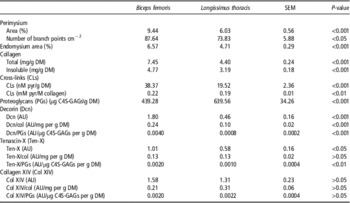
BF and LT muscles were significantly different for all the measured parameters except for collagen XIV for which there was no difference. Parameters relative to perimysium, endomysium, collagen and its CLs, decorin and tenascin-X were significantly higher in BF than in LT muscle. Conversely there was significantly less PGs in BF than in LT muscle. Decorin ratio to total collagen was higher in the BF muscle than in the LT muscle while tenascin-X ratio to total collagen was not different between muscles. Proportions of decorin and tenascin-X to total PGs were higher in the BF muscle than in the LT (Table 1).
Effect of muscle on structural parameters of bovine intramuscular connective tissue and composition of its extracellular matrix

DM=dry matter; AU=arbitrary units; C4S-GAGs=chondroitin-4-sulphate-glycosaminoglycans.
Mean and SEM for all significant parameters are presented. For P<0.05, 0.01 and 0.001, within a row, means differ significantly between the muscles.
Relationships between CT structural and biochemical characteristics and ECM molecules
Table 2 summarized relationships between structural and biochemical characteristics of intramuscular CT and ECM molecules. Decorin and tenascin-X were positively correlated with perimysium area (r=0.52 and 0.34, respectively), branch points of perimysium (r=0.36 and 0.31, respectively) and endomysium area (r=0.57 and 0.35, respectively). Decorin and tenascin-X were also positively correlated with CL content (r=0.58 and 0.31, respectively), total collagen (r=0.65 and 0.36) and with insoluble collagen (r=0.60 and 0.37) content. There was no correlation between tenascin-X and total PGs, but there was a negative one between decorin and total PGs (r=−0.49). Decorin and tenascin-X (expressed in AU) were positively correlated together (r=0.48). No correlation was found between type XIV collagen and the other parameters.
Pearson’s correlation coefficients between decorin, tenascin-X and collagen XIV and structural and biochemical characteristics of bovine intramuscular connective tissue

P=perimysium; E=endomysium; Col=collagen; CLs=cross-links; PGs=proteoglycans.
Correlations were significant for *P<0.05, **P<0.01), ***P<0.001.
Relationships between beef quality traits and ECM characteristics
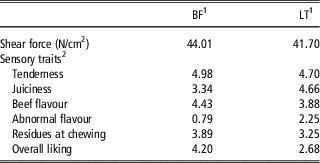
Table 3 summarizes quality traits obtained after cooking of BF and LT muscles. BF and LT muscles have been cooked according two types of cooking in compliance with consumer habits. So we do not compare the results obtained for the two muscles.
Mean of quality traits of bovine Biceps femoris (BF) and Longissimus thoracis (LT) muscles obtained after cooking for all animals

1 BF and LT muscles have been cooked according two types of cooking in compliance with consumer habits. So we do not compare the results obtained for the two muscles.
2 Sensory traits were evaluated by sensory panel on a continuous scale scored from 0 to 10.
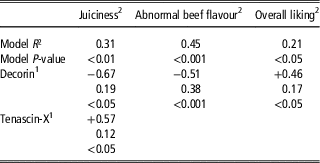
Table 4 summarized multi-regression analysis of meat quality traits with ECM molecules. In this model, neither tenderness, nor shear force variations were explained by the studied ECM molecules. Regression model of juiciness showed that 31% of variation (P<0.01) was due for 19% to decorin and for 12% to tenascin-X (P<0.05, decorin being negatively involved, and tenascin-X being positively involved). Abnormal flavour was explained at 38% by decorin (P<0.001) and at 7% by collagen XIV (P>0.05) (result not shown). A total of 21% of the overall liking variation were explained positively and mainly by decorin (P<0.05).
Multiple-linear regression analysis of beef quality traits with extracellular matrix molecules

1 For decorin and tenascin-X (expressed in arbitrary units) we presented on the first line, the coefficient of the variable in the model, on the second line the partial R² of the variable, on the third line, the P-value of the variable.
2 Beef quality traits were evaluated by sensory panel on a continuous scale scored from 0 to 10.
Table 5 showed Pearson’s correlations between decorin, tenascin-X or collagen XIV ratios to total collagen or PGs and data from meat quality evaluation. No ratio was correlated with shear force; tenascin-X ratio to total collagen was correlated with no meat quality parameter. Tenderness was positively correlated with decorin, tenascin-X and collagen XIV ratio to total PGs (+0.29; +0.31; +0.34, respectively). Juiciness was negatively correlated with decorin ratio to total collagen or PGs (−0.42 and −0.40, respectively). Beef flavour was positively correlated with decorin and collagen XIV ratio to total PGs (+0.40 and +0.38, respectively). Abnormal flavour and overall liking were, respectively, negatively and positively correlated with decorin ratio to total collagen or PGs, to tenascin-X ratio to total PGs and to collagen XIV ratio to total PGs.
Pearson’s correlation coefficients between ratios of decorin, tenascin-X, collagen XIV to total collagen or PGs and quality traits in beef meat

Dcn=decorin; Col=collagen; PGs=proteoglycans; Ten=tenascin.
Correlations were significant for *P<0.05, **P<0.01, ***P<0.001.
Discussion
Endomysium and perimysium, the two subdivision of the meat intramuscular CT (IMCT) are composite networks of collagen embedded in a matrix of PGs. Major collagen types of muscle are fibrillar collagens. In the adult bovine muscle, the fibrillar collagens are linked between each other by different chemical CLs. Three reducible (DHLNL, HLNL and HHMD) and two non-reducible CLs have been highlighted (Ngapo et al., Reference Ngapo, Berge, Culioli and De Smet2002). The reducible CLs concentrations increase from foetal life to about 18 months, after which an exponential decrease is observed. The two non-reducible CLs (pyridinoline and Ehrlich chromogen (EC)) are highly correlated (Lepetit, Reference Lepetit2007). EC increases to a maximum concentration at about 1 year, and thereafter decreases exponentially. In contrast, pyridinoline concentration increases with animal age (Ngapo et al., Reference Ngapo, Berge, Culioli and De Smet2002) and, consequently, is the major CLs of adult skeletal muscle.
Previously we shown (Sifre et al., Reference Sifre, Berge, Engel, Martin, Bonny, Listrat, Taylor and Culioli2005; Dubost et al., Reference Dubost, Micol, Picard, Lethias, Andueza, Bauchart and Listrat2013b) that both IMCT organization, total collagen, pyridinoline and total PGs contents were involved in sensorial and mechanical meat properties but that they were far from explaining all variability measured.
It is now accepted that major collagen types (type I and III), form large multi-protein complexes with on their surface some minor collagens, glycoproteins and some small PGs such as collagen XIV, tenascin-X and decorin, respectively. To our knowledge, any study has attempted to estimate the involvement of these molecules on meat beef qualities.
To do it, two beef muscles are been studied, LT and BF differing in collagen characteristics and meat quality traits. First, we have studied relationships between abundances of collagen XIV, tenascin-X and decorin, and of total and insoluble collagen, of CLs and total PGs and secondly the involvement of collagen XIV, tenascin-X and decorin in beef quality traits.
The results highlighted a muscle effect for decorin and tenascin-X. Decorin and tenascin-X were four and two times, respectively, higher in BF than in LT muscle. For decorin, this result was in accordance with the only study on the subject, that of Pedersen et al. (Reference Pedersen, Kulseth, Kolset, Velleman and Eggen2001), who had also found that Semitendinosus (ST) contained 1.5 times more of decorin that Psoas major (PM) muscle. The ST muscle as the BF muscle had more collagen and a lower PGs ratio to collagen than PM and LT muscles, respectively. To our knowledge, no result of this type is available in the literature regarding tenascin-X. In addition, we have shown a high positive correlation between total collagen and its CLs, decorin, tenascin-X and IMCT area. Tenascin-X mutation leads to CT disorders with primary skin and joint involvement. In skeletal muscle, its mutation results in weakness, atrophy (Voermans et al., Reference Voermans, Altenburg, Hamel, de Haan and van Engelen2007 and Reference Voermans, van Alfen, Pillen, Lammens, Schalkwijk, Zwarts, van Rooij, Hamel and van Engelen2009) and some features of myopathy described in several patients (Penisson-Besnier et al., Reference Penisson-Besnier, Allamand, Beurrier, Martin, Schalkwijk, van Vlijmen-Willems, Gartioux, Malfait, Syx, Macchi, Marcorelles, Arbeille, Croue, De Paepe and Dubas2013) and in tenascin-X deficient mice (Voermans et al., Reference Voermans, Verrijp, Eshuis, Balemans, Egging, Sterrenburg, van Rooij, van der Laak, Schalkwijk, van der Maarel, Lammens and van Engelen2011). Mice with a decorin deficiency display abnormal fibril structure and organization, as well as fragile tissues with decreased strength and stiffness. These data associated to ours suggest that the locomotor muscles such as BF and ST would have a stiffer ECM than postural ones. This stiffness would be due to their higher content in collagen and CLs but also to their higher content in minor molecules. This difference of composition would impact the area occupied by the IMCT.
It has been shown in vitro that decorin and tenascin-X interact with the fibrillar collagens (particularly type I) (Svensson et al., Reference Svensson, Heineg and Oldberg1995; Lethias et al., Reference Lethias, Elefteriou, Parsiegla, Exposito and Garrone2006), and that type XIV collagen interacts with decorin (Font et al., Reference Font, Aubertfoucher, Goldschmidt, Eichenberger and Van der Rest1996; Ehnis et al., Reference Ehnis, Dieterich, Bauer, Kresse and Schuppan1997; Elefteriou et al., Reference Elefteriou, Exposito, Garrone and Lethias2001). Tenascin-X and collagen XIV could modulate the flexibility of the ECM and, as a result, its mechanical properties. Their addition to collagen gels increases compressive resistance of these gels (Nishiyama et al., Reference Nishiyama, McDonough, Bruns and Burgeson1994; Margaron et al., Reference Margaron, Bostan, Exposito, Malbouyres, Trunfio-Sfarghiu, Berthier and Lethias2010). Decorin could also play a role in mechanical properties of tissues, however, its role has not been elucidated (Lewis et al., Reference Lewis, Krawczak, Oegema and Westendorf2010; Dourte et al., Reference Dourte, Pathmanathan, Jawad, Iozzo, Mienaltowski, Birk and Soslowsky2012). Our study shows a high muscle effect on the decorin ratio to collagen or PGs and tenascin-X to PGs. As a matter of fact the decorin ratios to collagen and PGs were 2.4 and two times, respectively, higher in BF than in LT muscle and the tenascin-X ratio to PGs twice higher in BF than in LT muscle. So for each muscle there might be a balance between the different ECM molecules.
In the present study, we failed to show a role of decorin, tenascin-X or collagen XIV in mechanical properties of meat beef; however, their ratios to PGs were positively correlated to tenderness and overall liking in the sensory evaluation. These molecules could have an additive role on mechanical properties and tenderness of meat by increasing the complexity of ECM by the interactions that they develop between them and with the fibrillary collagens and PGs. It would be more the respective proportion of different ECM molecules that would play a role on meat quality than their absolute quantities. They could participate to increase the area of IMCT and then the hardness of meat, since the muscles the richest in collagen are also the hardest (Lepetit, Reference Lepetit2007). As suggested by Nishimura (Reference Nishimura2010) for PGs, during postmortem aging and cooking, they could be degraded, which would facilitate the denaturation of fibrillary collagen.
Negative relationship between decorin and total PG content was pointed out. PGs are divided in two families, aggregating and non-aggregating PGs that have distinct properties. The first have a high molecular weight (core protein >200 kDa) and would participate to maintain tissue hydration through their high anionic charge which generates an osmotic gradient and promotes the retention of water (Velleman, Reference Velleman2002). Decorin belongs to the family of non-aggregating PGs. The role of this PG is to maintain space between collagen fibrils, hence tissue hydration, and movement of water soluble components (Scott, Reference Scott1992). From their properties, Velleman (Reference Velleman2002) has deduced that aggregating and non-aggregating PGs could play a role in juiciness. Dubost et al. (Reference Dubost, Micol, Picard, Lethias, Andueza, Bauchart and Listrat2013b) had shown that total PG content influenced negatively juiciness of cooked meat according to muscle and the cooking mode. In this paper our results showed also a negative involvement of decorin in beef cooked meat juiciness.
The multi-regression analysis showed that tenascin-X would be involved positively in juiciness. Juiciness depends on the amount of water retained in the cooked meat namely water-holding capacity of muscle (Pearce et al., Reference Pearce, Rosenvold, Andersen and Hopkins2011). In our knowledge, previously, no role of tenascin-X on water-holding capacity has been shown.
These preliminary results give new insights on the role of IMCT and its ECM on beef meat. Further investigations would be essential to validate them, both on raw and cooked meat, with a greater number of observations and an experimental design with a higher variability.
Conclusion
Results of this study highlighted a muscle effect on decorin and tenascin-X abundances and their ratio to total collagen or PGs. The originality of this study was to have shown the positive relationship between the relative abundance of these two molecules and some structural parameters of perimysium and endomysium of CT. This supports the role of these molecules on CT organization. In addition, impact of relative abundance of these minor ECM molecules and of their proportions to total collagen or PGs on beef quality traits was highlighted for the first time. These results allow assuming that to understand the role of CT on the meat quality we do not have to consider the molecules that compose it one by one but as a whole.
Acknowledgements
The authors thank the staff of Experimental Unit (UERT) of INRA (Theix) for animal management, slaughtering and Warner-Bratzler shear force measurements, the staff of Amuvi (Animal, Muscle, Viande) team for muscle sampling and Arnaud Delavaud for western blot contribution. The authors also thank the staff and panellists of Experimental Unit of INRA (Le Magneraud) for sensory evaluation.