

The majority of students experience a number of schooling transitions that include home to school, primary school to secondary school, and secondary school to post-school life (Sitlington, Neubert, & Clark, Reference Sitlington, Neubert and Clark2010). Students who have emotional and behavioural disabilities (EBD), however, often experience some other important transitions, such as transitions in and out of special education settings. Unfortunately, there is a limited amount of literature available describing these transitions, particularly transitions from special to general education settings, and what does exist is mostly anecdotal (Inclusive Classrooms Project, 2013; Sharpe & Hawes, Reference Sharpe and Hawes2003). This is problematic, as the transitions in and out of a student's mainstream school have the potential to affect the student and his or her outcomes, and must be planned accordingly (Strnadová & Cumming, Reference Strnadová and Cumming2016).
The nature of schooling in New South Wales (NSW), Australia, has changed through evolving policies that were meant to address the economic and social realities of the state. Although mainstream schools have successfully integrated students with physical disabilities as well as auditory and vision impairments over the last 20 years, students with EBD have posed challenges to the goal of inclusion. Between 1997 and 2001, the number of students diagnosed with emotional disturbance increased by 348% and students with behaviour disorders rose by 585%, which corresponded with the introduction of special schools for students with EBD in 2001 (Vinson, Reference Vinson2002). These special schools typically engage positive, whole school systems for managing behaviour, with a low teacher–student ratio, focused on supporting students to achieve behavioural competencies. A student with EBD is referred to a special school by the mainstream school after an evaluative process demonstrates that despite intervention the student's behaviour interferes with the learning and/or safety of themselves or others. Since that time, although these special schools still exist, the inclusion of students with disabilities has improved immensely, with over 90% of students with disabilities attending mainstream schools (Australian Bureau of Statistics, 2009). Unfortunately, only just over half of students with emotional disturbance attend regular classes in mainstream schools (Australian Bureau of Statistics, 2009).
Special schools for students with EBD in NSW were originally designed to accommodate students only to Year 10, as the school leaving age was 15 at the time of their inception. With the school leaving age being raised to 17 in 2010, it was necessary that the structure of schools and relationships between different providers evolve to meet these changes. As Reid and Young (Reference Reid and Young2012) note, career success in Australia increasingly relies on students to make positive choices in their schooling and post-career lives. This is especially imperative in a climate where young adults will graduate to a post-school environment with a youth unemployment rate that averages around 20% (Brotherhood of St. Laurence, 2015). Educators are thus obligated to work within the community of stakeholders and providers to help students identify life goals and desirable career paths in light of a student's individual circumstances. This is crucial, as it cannot be assumed that all students with EBD have the capacity to manage their own pathways and be aware of the choices that may best suit them.
There is a dearth of literature examining existing models and best practices for transitioning students with EBD from a specialised setting to a mainstream setting, but two models have shown promise (Strnadová & Cumming, Reference Strnadová and Cumming2016). Sharpe and Hawes (Reference Sharpe and Hawes2003) designed the applied collaboration model, which is a collection of collaborative and instructional strategies for general and special educators to apply as a team in a general education classroom. The model also includes a component of collaborative professional development, whereby general and special educators identify mutual goals and negotiate skills to address the needs of students with disabilities. The model suggests (a) communication about the curriculum, (b) discussions of students’ needs and available resources, (c) exploration of accommodations and modifications and responsibility for implementation, (d) delineation of roles, particularly in the area of monitoring and feedback, and (e) evaluation of the student's progress using established criteria.
The Inclusive Classrooms Project (2013) is an online resource for teachers in New York City that also stresses the importance of collaboration when students are transitioning to new service delivery models. The model stresses that special and general education teachers need to focus on both the academic and socioemotional needs of the student transitioning. Proponents of the model suggest that a school-wide plan is made well ahead of the transition, teachers are given time to co-teach and plan together, transitions be gradual to allow for familiarity, and routines and skills of the general education environment should be taught ahead of the transition. Unfortunately, no substantial research evidence could be found to support the use of either of these models.
Flexible Integration Model
The number of subjects that providers in behaviour schools can offer is often restricted due to small staff numbers and limited physical resources on site, and therefore there is a need to move to mainstream schools where a broader range of subject choices are available. However, transitioning to other educational providers may pose challenges, as many students continue to struggle with behaviour problems that mainstream education institutions have difficulty addressing within their current structure (Cheney, Reference Cheney2012). As a result, a more flexible and integrated transition model is necessary for at-risk students.
The flexible integration model was designed and instituted by the school leadership team and teaching staff from a public special school (School A) to achieve three major educational objectives, which were aligned with the central goals of Australian public education policy (Billet et al., Reference Billett, Thomas, Sim, Johnson, Hay and Ryan2010): (a) to improve students’ awareness of post-school options and the relevant requirements with practical hands-on activities, (b) to enhance the retention of at-risk students through more effective engagement in the wider school curriculum, and (c) to increase students’ aspirations for their post-school lives. The theoretical framework underpinning the flexible integration model is person-centred planning (Department for Children, Schools and Families, 2008).
Person-centred planning to support the successful reintegration to mainstream schooling was explored by Corrigan (Reference Corrigan2014), who found that the following elements of person-centred planning were integral to the success of reintegration: (a) eliciting the thoughts and wishes of the student when planning and decision-making, (b) creating shared future goals, (c) identifying student strengths and areas of needed support, (d) building strong collaborations with the community, and (e) developing transition plans with specific accountability and review standards. The results of this study suggested that person-centred planning was useful in facilitating a positive transition to mainstream schooling, and that stakeholders had positive overall perceptions of the process. The need to foster positive relationships with stakeholders from both settings was found to be a crucial area in the planning and implementation of the transition process, particularly in the areas of adaptations, timetabling, and staffing. Corrigan also found a positive impact upon the students’ motivation and achievement socially, emotionally, and academically.
As highlighted by other researchers, a student's involvement in transition planning is essential for successful outcomes (Bhaumik et al., Reference Bhaumik, Watson, Barrett, Raju, Burton and Forte2011; Wagner, Newman, Cameto, Javitz, & Valdes, Reference Wagner, Newman, Cameto, Javitz and Valdes2012). Ramsey, Jolivette, Patterson, and Kennedy (Reference Ramsey, Jolivette, Patterson and Kennedy2010) found that choice-making opportunities had positive effects on decreasing students’ inappropriate behaviour and improving task engagement. One of the important components of the flexible integration model was implementing person-centred planning by providing opportunities for choice-making.
The model was also designed to improve student engagement by linking their career goals and aspirations to subjects in which they have an interest. The focus of the model was to provide students with a choice of different outlets, with hands-on learning activities that could not be provided at special school sites. Integration usually has challenges; enrolment in a behaviour school may impact students’ exposure to positive role models, due to their separation from their mainstream peers. Although special schools for students with EBD support students in developing self-confidence/self-esteem and self-concept, and social skills, these need to be practised and generalised to a broader range of settings (Cook et al., Reference Cook, Gresham, Kern, Barreras, Thornton and Crews2008). Yet returning to their former schools can be a trigger to challenging behaviour for some students, and transitioning to other educational settings, such as TAFE (Technical and Further Education—Australia's largest provider of vocational training), may cause students anxiety and a fear of failure (Cheney, Reference Cheney2012).
To combat this challenge, the leadership team at School A believed that providing students with a new supportive mainstream environment would act as a bridging course for future tertiary education and career opportunities, providing specialised behaviour support along with necessary connections with the community for employment and education opportunities. The opportunity to re-enter mainstream settings would also provide students with positive peer role models, which most have been lacking since being removed from their mainstream peers. Additionally, reintegration would provide students with occasions to practise the social skills learned in School A in a broader range of settings, while developing self-confidence/self-esteem and self-concept. Rather than simply returning students to their former schools, which could trigger inappropriate behaviour, students could start fresh at a new mainstream school.
The flexible integration model was designed around the principles of person-centred planning to allow students to choose a course from a mainstream school that interested them and wasn't offered at School A. Students would then attend the mainstream school for that class while continuing to attend School A for all other courses. The flexible integration model was designed to offer students choices in how they engaged with their education, by linking their career goals and aspirations to subjects in which they had an interest. Students would be provided with hands-on learning activities that could not be provided at School A, while simultaneously building students’ socialisation and generalisation of skills. The leadership team at School A determined that, as part of the model, the school could offer mainstream schools staffing support (to assist with learning, behaviour, and welfare), along with detailed risk assessments and personalised learning and behaviour support plans.
Therefore, the model consisted of the following steps:
-
1. Planning meetings held with the student and staff from School A to discuss the student's goals, plans, desires, strengths, and support needs.
-
2. Designing personalised learning, behaviour support, and transition plans, including a detailed risk assessment.
-
3. Once these have been established, a facilitator initiates contact with mainstream school provider(s) that offer courses that fit into the student's plan.
-
4. A meeting is held with the student and representatives from both schools to discuss logistics in regard to timetables, transportation, staffing, and support needs.
-
5. A reintegration plan is designed. The plan includes an accountability section: who is responsible for what, how communication will be handled, and how and when the plan will be evaluated.
-
6. The plan is implemented.
To pilot the model on a small scale, it was decided that it would be trialled with one student. Planning meetings were held with the student, and it was discovered that he had both interest and skills in metals and engineering, and a desire to learn more. The principal of School A liaised with the principal of a mainstream high school (School B) to describe the flexible integration model and garner support. A meeting was held with the student and principals of both schools, to tailor the implementation of the model in a way that suited all stakeholders. It was decided by all that the student would attend a woodworking class (no metalworking was available, and the student was also interested in woodworking) in School B for an hour on Thursdays and Fridays, accompanied by a student learning support officer from School A. The model was implemented in terms 3 and 4 of the school year. School A also enlisted two researchers from a local university to assist with the design and evaluation of the program.
The following research questions guided the study:
-
1. How effective was the flexible integration model in meeting initial staff expectations of person-centred student support?
-
2. How do school staff members provide support within the model to facilitate a student with EBD to participate in a mainstream environment?
-
3. How does the flexible integration model affect student engagement as evidenced by attendance and school staff perceptions?
-
4. How does the flexible integration model affect student behaviour, as evidenced by school student behaviour records?
Method
Design
An exploratory single case study design (Rowley, Reference Rowley2002) was employed to investigate the effectiveness of the implementation of the flexible integration model. Rowley (Reference Rowley2002) explains that a case study approach is useful when exploring the ‘hows’ of a set of events that the researcher has little or no control over. Further, ‘. . . an important strength of case studies is the ability to undertake an investigation into a phenomenon in its context’ (p. 18). Case study designs typically use two or more qualitative and/or quantitative sources, such as interviews, observations, and documents. Interviews with school staff and an examination of the student's records were undertaken to answer the research questions.
Procedures
Ethical approval
Prior to commencing the project, the researchers applied for and obtained ethical approval from both the University of New South Wales (UNSW) Human Research Ethics Committee (Approval #HC13154) and the NSW Department of Education (SERAP Approval #2013246). The study was funded within the UNSW research grant, ‘Transitions of students with emotional and behavioural disorders: A flexible integration model’.
Settings
School A was a special school for students with EBD. At the time of the study, there were 21 students enrolled in grades 5–12, situated across five classrooms. School A employed a holistic approach to meeting students’ needs, including a whole school system of behavioural support, an emphasis on social and living skills, and the development of academic outcomes with an emphasis on literacy and numeracy. The school had one principal, two deputy principals, five teachers, and five student learning support officers.
School B, the mainstream school, was a large school with a diverse student population, with the majority of students from non-English speaking backgrounds. The school served 1,430 students in grades 8–12. School B offered traditional academics, along with courses in creative, physical, and vocational education. The school had a philosophy of caring and support, offering assistance and support to students in several ways and areas, including an intensive language centre, and four self-contained special education classrooms.
Student
Ian (pseudonym) was a 17-year-old male student in Grade 11, who had been enrolled at School A in Term 1 of the 2014 school year. His home school referred him to the School A due to behavioural issues that included verbal and physical aggression, work refusal, and disruptive behaviour (e.g., calling out and noise-making).
Ian's history of challenging behaviours had created a cycle of exclusion from classes and school, which adversely affected his academic performance, with significant deficits in both literacy and numeracy, both of which were at primary school levels. At the time of the study, his academic goals included improving his literacy and numeracy skills and knowledge, and working towards obtaining his driver's licence. Strategies that proved successful in supporting Ian in achieving his academic and behavioural goals included the use of ICT, subject-specific units of work, and positive behavioural intervention and supports. The individualised education plan (IEP) team, which included Ian, determined that it would be best if his IEP was focused on his transition to post-school settings, namely, to vocational education and a career in metals and engineering.
Ian was selected to pilot the new flexible integration model in terms 3 and 4 because he had shown marked improvement in his behaviour since Term 1, and the IEP team felt that he was ready to begin transitioning to an inclusive environment. Ian demonstrated considerable self-determination skills and was eager to participate in the model. Rather than transition Ian back to his home school to a more traditional schedule of classes, the team agreed that it would be best to capitalise on his interest in pursuing a vocational education in metals fabrication to prepare him for a future career in metals and engineering. He had consistently displayed a willingness to work with staff and other job and educational agencies to pursue vocational studies. For example, Ian had commenced Grade 11 distance education and was working through it consistently and methodically. Ian also applied for a vocational program in metals and engineering and in the past had completed a variety of short courses through TAFE, including electrotechnology.
It was determined that Ian would attend School B for 2 days a week, for a woodworking class. Since School B used a block schedule model, this equated to approximately 4 hours per week. Ian spent his time during class learning woodworking techniques and completing a semester-long independent project: the construction of a side table.
Data Analysis
Data were collected through a total of 10 individual interviews pre- and post-integration with (a) the male principal of the special school for students with EBD (SSPP), (b) the female assistant principal of the special school for students with EBD (SSDP), (c) the female principal of the mainstream high school (MSP), (d) a male teacher of the mainstream high school (MST), and (e) a female student learning support officer of the special school for students with EBD (SLSO). Open-ended questions for the interviews were derived from the special education literature in the areas of (a) transition, (b) integration, and (c) emotional and behavioural disabilities. Due to ethical considerations, the student himself was not interviewed, but his attendance and behavioural records, along with his IEP, were obtained and analysed.
Although the interview protocols varied slightly depending on the role of the interviewee, the questions for the pre-implementation interviews centred on the following topics: (a) what a typical day at school looks like for the interviewee and the students, (b) what achievement looks like for the students, (c) average attendance rate, (d) definition and frequency of severe behaviour at the school, (e) current ways of preventing severe behaviour, (f) description of the flexible integration model, (g) expectations and opinions about the model, and (h) expectations of collaboration with the other school during the implementation of the model.
The post-implementation interview protocols explored changes to the student's behaviour, achievement, and attendance. Interviewees were also asked what they liked and disliked about the model and what they would change. One question dealt with the requirements in regard to collaboration to ensure the success of the model, and lastly, interviewees were asked if they perceived the implementation of the flexible integration model to be a success.
The pre-implementation interviews were conducted at the end of Term 2 of the school year, as Ian would be integrated for terms 3 and 4. The post-integration interviews were conducted at the conclusion of Term 4, after Ian had spent the second half of the school year integrated at School B. All interviews were recorded and transcribed verbatim. Thematic analysis was used to analyse the data gathered in the pre- and post-implementation interviews. Thematic analysis has a degree of theoretical freedom and, as such, ‘provides a flexible and useful research tool, which can potentially provide a rich and detailed, yet complex, account of data’ (Braun & Clarke, Reference Braun and Clarke2006, p. 78). The coding process consisted of six main stages: (a) familiarisation with the data (by reading and rereading the transcribed interviews), (b) analytic coding, (c) searching for themes, (d) reviewing themes, (e) defining and naming themes, and (e) writing up (Clarke & Braun, Reference Clarke and Braun2013). The first author read the transcribed interviews several times and conducted the coding. In the first stage, the first author conducted open coding of all interviews, with a unit of meaning being a unit for analysis. The second author read all analysed interviews, and discussed the fit between the initial codes and data with the first author. Any differences in opinion were resolved in discussions. Then the first author proceeded with the more analytic stage of the coding process, which involved grouping the identified codes under categories, and the identified categories under main themes. The second author read and commented on the results of the coding, suggesting minor revisions to the identified categories and themes. The authors then met several times and discussed the fit between the codes, categories, themes, and the data, and results of the coding. All differences were discussed and resolved, and the main themes were defined and named.
Credibility and accuracy of coding were established in several ways. Credibility was ensured by seeking agreement between the authors throughout the data analysis (Brantlinger Klingner, & Richardson, Reference Brantlinger, Klingner and Richardson2005). This process included (a) ensuring that the coding units were suitable and not too broad or too fragmented, (b) judging the similarities and differences between and within categories, and (c) ensuring that no data were excluded (Graneheim & Lundman, Reference Graneheim and Lundman2004). Furthermore, the authors used peer debriefing when discussing emerging codes and categories with their colleagues in the field (Brantlinger et al., Reference Brantlinger, Klingner and Richardson2005). Both authors engaged in repetitive checks of data analysis and interpretations to ensure that the validity criteria of criticality and integrity were adhered to (Whittemore et al., Reference Whittemore, Chase and Mandle2001).
Content analysis was employed to analyse the data contained in Ian's IEP. This method of analysis has long been an accepted method used to analyse student records (Michnowicz, McConnell, & Peterson, Reference Michnowicz, McConnell, Peterson and Odom1995; Sanches-Ferreira, Lopes-dos-Santos, Alves, Santos, & Silveira-Maia, Reference Sanches-Ferreira, Lopes-dos-Santos, Alves, Santos and Silveira-Maia2013; Sigafoos et al., Reference Sigafoos, Elkins, Couzens, Gunn, Roberts and Kerr1993). The content of the IEP was analysed to determine Ian's current levels of performance and goals in the areas of (a) background, (b) academics, (c) integration, (d) personal traits, and (e) behaviour. His attendance and behaviour records were analysed by graphing the number of absences and behavioural incidents terms 3 and 4, and visually interpreting the graphs (Cooper, Heron, & Heward, Reference Cooper, Heron and Heward2007).
Results
Pre-implementation Interviews
The qualitative data were collected via pre- and post-implementation interviews with five staff members actively involved with implementation of the flexible integration model before and after its implementation. Thematic analysis of the interview transcriptions revealed several key themes: (a) no school day is typical, (b) characteristics of the school, (c) student behaviour, and (d) the flexible integration model.
It was apparent from the interviewees’ responses that a typical day in school varied for both staff and students, subject to the setting (School A or School B), and their role at their school. The principals and deputy principals indicated that there was no such thing as a typical day, as many different situations could arise at any given time: ‘A lot of it's on the job. If an instance arises, we have to deal with them as we go’ (SSPP); ‘There is no typical day!’ (MSP).
The school day for students at School A started with breakfast, and in School B it started with classes. Although students in both settings attended classes as part of a typical day, students in the special school had both more and less freedom; while they were attending classes in a more flexible environment, they were also ‘locked in’ for the day from the time they entered the school grounds. This was explained by one of the deputy principals of School A:
So in that sense, they're locked in, but they know there's some sort of negotiation compared to their home school. I think we're more flexible and I think they sort of work that a lot more, which is a good thing as well, because . . . yeah. We're able to work with them. (SSPDP2)
The participants discussed the characteristics of their schools by citing attendance, the number of students enrolled, and students’ motivation to attend school. The principal of School B stated that at her school students were ‘Almost all in attendance always’. The principal of School A had a more dismal view about attendance at School A, disclosing, ‘At the moment, I think it's about sixty per cent’. School A participants discussed the varying reasons that students were motivated to attend that school. For some, it was because the school was their only option; for others, it was an appreciation for the individual attention and the increased opportunities to build relationships with both adults and peers. Others were attending the special school as a means of working their way back to their home schools:
They've got no other options, so this is their only option, and they know that we'll work with them, regardless what they bring to the setting. Some of them, their parents. Some of them actually form relationships, even with staff, I would say, and also some students, when they come. (SSPDP2)
Staff from School B indicated that students were motivated by a high work ethic, interest in the courses, and a desire to better themselves:
And the other thing is, my students come to Australia, either first-, second-, or third-generation families, with nothing, and they are driven to have something, and the only way for them to do that is education. And they know that, we know that; and the parents know that. (MSP)
Student behaviour was a prominent theme throughout the participants’ responses. Staff from both schools suggested that severe behaviour could be defined as physical aggression, bullying, or any behaviour that put the student or others in danger. Participants from both settings claimed that there were very few incidences of severe behaviour at their schools. In regard to prevention of severe behaviour, staff from School A spoke about communication, knowing the students, and adjusting the environment. The principal of School B suggested that ‘zero tolerance’ restorative measures and modelling were ways the school was proactive in preventing severe behaviour: ‘It means a suspension, or it means a parent interview, or it means detention, or it means in-school timeout’. (MSP)
The flexible integration model was discussed in terms of its definition, implementation, interviewees’ feelings and expectations about the model, and supports necessary to support its use. Participants were cohesive in their definitions of the model; all described it as being flexible, individualised, student-centred, and strengths-based. As explained by one of the deputy principals of School A:
I'd say it looks at the strengths of the students. It looks at their personalised learning plan here, and looks at their strengths, their likes and dislikes, what they're achieving, what they're engaged in, and you sort of negotiate a time where they're best engaged, and subjects and teachers that they're willing to work with, and sort of start that way. (SSPDP1)
Comments about the implementation of the model were focused on the fact that it was so individualised that it would be different for each student. Common elements mentioned were student choice of what subject(s) she or he would be enrolled into, the willingness of School B to collaborate, and that the days/amount of time students spent in the mainstream setting would depend on the student's interests and abilities:
It's not ‘one size fits all’, and I do a lot of that here at the school, anyway. Individual success, individual learning. You don't have to be the same as the person next to you. You have to achieve your personal best. So hopefully, that will be the success. (MSP)
All were enthusiastic about the upcoming implementation, and collaboration between the two schools was viewed as one of the most important elements of implementation. One of the deputy principals of School A spoke of the risks involved if the collaboration does not go well:
The risks are . . . maybe the teachers, the schools, not allowing for that flexibility. Again, you've got to see it from their side. They're mainstream. They have the expectations that everyone in that school is going to be mainstream. They may not be willing to allow the flexibility, and I think the risk is that they may say, ‘Yes, it sounds great in theory’, and then something happens and they go, ‘Right, we're pulling it out’. And again, it leaves a bad taste in the student's mouth where they go, ‘Yep. Typical’. You know. Same old, same old for them, so I think that's a huge risk. (SSPDP1)
Although School A was planning on sending a paraprofessional to School B to support Ian, staff still felt that other supports were necessary. In addition to collaboration between the principals of each school, both principals felt that the teachers at School B would benefit from professional learning and support in integrating Ian successfully into mainstream classes. The principal of School A spoke of his willingness to do this: ‘With that school, I've offered to go and speak to their staff and explain it to them, and they'll most probably take me to a staff meeting’.
Post-implementation interviews
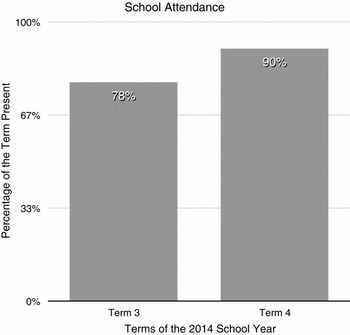
Thematic analysis of the post-implementation interview transcriptions revealed two key themes: changes since the implementation of the flexible integration model, and the flexible integration model. Within the Changes since the implementation of flexible integration model theme, five categories emerged: (a) changes in attendance, (b) changes in behaviour, (c) improved relationships, (d) improved self-concept, and (e) changes in achievement. Responses to the post-implementation interview questions supported Ian's attendance documentation (see Figure 1); his attendance at both settings improved after the implementation of the model, despite being affected by an injury at the end of Term 4. The principals at both schools and the deputy principals at School A all believed that this was due to having the opportunity to participate in mainstream schooling again, studying a course that he was interested in. The principal of School B summed it up: ‘Somewhat, as Ian enjoyed the project. It seemed to motivate him in the beginning; however, towards the end of term, he missed classes and was unable to complete his project’ (MST).
Attendance Across Terms.

The respondents also suggested that Ian's behaviour improved over the course of the project. School A's learning support officer commented: ‘He has continued to improve during and post his participation in the model’ (SLSO). Although the principal of School B recalled one incident where Ian misbehaved, his reaction to being corrected was positive and appropriate:
The deputy, or one of the head teachers had to say something to him, but you know what? Ian just took it. There was no backchat; there was no argument. It was just, ‘OK’. ‘And who are you?’ ‘My name's Ian’. ‘Ian, at our school, we don't do this’. And it wasn't a big deal. He wasn't — nobody shouted, nobody swore, nobody threw anything. It wasn't a big deal. And I think that's really good with Ian. (MSP)
Other comments focused around Ian having more self-control, being calmer, and more focused. There was also notable improvement in the relationships that Ian had with others, particularly the mainstream teacher who was working with him in the woodworking shop. He also improved his relationships with staff at School A, which staff at both schools attributed to the fact that Ian realised that he was being respected by people at both schools, and he was beginning to understand that people were trying to help him. As told by the principal of School A: ‘So he gets what we're doing, and I think that's been one of the — sort of the relationship and communication between us has improved. He sort of understands where we're from, now’ (SSPP).
All participants from School A noted improvements in Ian's achievement at their school. They unanimously attributed this to increases in Ian's effort, determination, and ability to work independently. The paraprofessional, who worked very closely with Ian, commented: ‘Since the implementation of this model, I have noticed changes in this student's achievement’ (SLSO). The principal in School B also noted positive changes in Ian's level of achievement, and used the example of him having a completed product as evidence: ‘He's got a product! (laughs) He's got a side table! He's got something. He can now go and show his family or his friends: “I was integrated, and I got to make this!”’ (MSP).
The theme Flexible integration model yielded five categories: (a) advantages of the flexible integration model, (b) disadvantages of the flexible integration model, (c) what could be changed about the model, (d) collaboration, and (e) next steps. Overall the participants’ comments about the model were positive, and several advantages were mentioned, such as students having the chance to participate in mainstream school settings, and the resulting increases in ‘self-esteem, self-concept, and self-worth’ (SSPP). The SLSO especially appreciated the improvement in Ian's interactions once given the opportunity to participate in a class at School B.
Perhaps one of the most noteworthy advantages mentioned involved a change in the perceptions of the teacher at School B who was teaching the course that Ian was enrolled in. Initially, he was concerned about taking a student from a special school for students with EBD, especially in regard to his own safety and that of the other students in the class. At the time of the post-implementation interviews, the teacher reported, ‘Behaviour was not an issue. There were no incidents to report’ (MST). The principal of School B related the experience through her eyes:
Now, the teacher said to me the other day, ‘Ian is one of the best behaved kids in the class, and he might not get to finish his project’, because we've had swimming carnivals, or we've had Peace Day or something, some of those major events interfere, so the teacher's actually offered Ian some extra classes in the teacher's own time. (MSP)
Another advantage mentioned was increasing the probability that other mainstream schools would be open to participating in the model in the future. Interviewees felt that the success of the model would contribute to its longevity, and other schools would be able to see that
. . . it's also getting people to realise that just because you're in a EBD school doesn't mean — and especially when you get to an age of, like, 15, 16 years of age — that your life is over and you've got no opportunities, you've got no prospects in life. (SSPP)
Other advantages of the model mentioned were its flexibility and the opportunities it affords students.
Although the principal and teacher from School B did not perceive there to be any disadvantages to the flexible integration model, the staff at School A felt differently. The disadvantages they discussed were focused around logistics and resources. The principal of School A spoke about how difficult it was just to get started, as finding a school that was willing to participate that was also geographically convenient took an extended amount of time. He also related the wish that more students could have been involved in the pilot of the model, but, due to the purpose of School A, no mainstream school was willing to take more than one student from School A at a time. The disadvantage that was perhaps the biggest barrier to future use and expansion of the model was staffing. The deputy principal explained:
We try to eliminate them [barriers], but for the most part, yeah, probably just being able to have it all sorted in regards to, OK, they need support. Who are we going to send, and who do we have to employ to make up for that person missing? (SSDP)
These disadvantages were reiterated when participants discussed what could be changed to improve the model, as the only suggestions were to involve more students and for the mainstream school to take on the role of supporting the student without needing personnel from the special school.
When asked about the future of the flexible integration model and what should be the next steps in this regard, participants thought that finding cooperating schools that were geographically closer would enable them to allow more students to benefit from the model. The principal of School A also recommended using the current success to recruit more cooperating schools:
. . . so therefore, next time that we want to go for a school, and tap into their trade program, I'll get them to call the principal [of School B], and so it'll be a high school principal rather than a behaviour school principal trying to sell their kids. (SSPP)
Staff from School A also saw the involvement of more female students as a possible solution to an attendance issue they had been having. Overall, the participants felt that the main thing to remember was to keep the model flexible in order to meet the individual needs of the students. The principal of School B discussed this from the perspective of the mainstream school:
We choose very carefully the teacher. We choose very carefully the subject. We make it become successful. It's not a one-size-fits-all, and I think that's important. No one child is the same as another. (MSP)
Overall, the participants had great hope for the future of the model, with the principal of School A declaring that the ultimate goal should be to ‘. . . see these [behaviour] schools be out of business. That'd be a great goal’ (SSPP).
Analysis of Student Records
Ian's IEP featured summaries in the following areas: (a) background, (b) academics, (c) integration, (d) personal traits, and (e) behaviour. Academically, Ian was significantly below grade level in all areas. His academic goals were to improve his literacy and numeracy skills and knowledge, to acquire his driver's licence, and to pursue vocational education. At the time of the writing of the IEP, Ian was not integrated into mainstream education; instead, he was attending School A to work on his vocational skills and academics via distance education.
The present behavioural levels stated on the IEP indicated that Ian enjoyed working with peers that were of his age group and emotional maturity. He did not like studying or loud noises. When anxious, Ian sometimes demonstrated negative behaviour such as noncompliance, aggression, oppositional defiance, work refusal, verbal aggression, and disruptive behaviour. Although the document stated that Ian was an independent learner and respectful, responsible and safe, he sometimes questioned the relevance and significance of the school work that he was asked to complete. His behavioural goals were to start working within 5 minutes of being given an assignment, to follow instructions, and to work in a respectful, responsible, and safe manner in class. Ian's progress on attaining these goals was monitored through a daily point system, with his daily goal set at him making 80% of the possible points each day.
Attendance and Behaviour
An examination of Ian's attendance records revealed an increase in attendance from 78% of days attended school in Term 3 to 90% in Term 4 (see Figure 1).
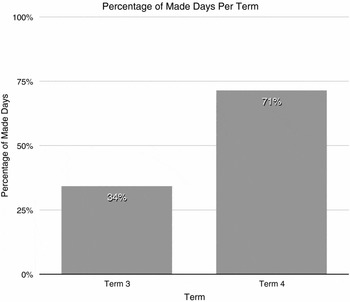
There was also a 50% reduction in unjustified absences from eight in Term 3 to four in Term 4. Ian ‘made his day’ (earned 80% of points possible) 34% of the time in Term 3, but increased this figure to 71% in Term 4 (see Figure 2). This would suggest that the flexible integration model had a positive effect on his behaviour.
Percentage of Days that Ian Earned 80% of his Possible Behaviour Points.

Discussion
In answer to research question one, overall, staff perceived that the flexible integration model met their initial expectations regarding effectiveness. They attributed Ian's increased ability to work independently and determination to his involvement in, and the person-focused nature of, the model. The most appreciated advantages of implementing the flexible integration model were (a) a chance for a student to participate in mainstream school settings, (b) the student's increased self-esteem and relationships, and (c) the changing attitudes and perceptions of mainstream school teachers. The participating school staff also discussed the challenges experienced when implementing this model, such as complications with logistics and increased pressure on the special school in terms of resources. Furthermore, finding a geographically close mainstream school willing to participate in the model proved to be a challenge.
The second research question related to how school staff supports provided within the model facilitated students with EBD to participate in mainstream environments. It appeared that although it put a strain on School A logistically, having a paraprofessional attend School B was the most useful support in helping Ian to participate in the model. This suggests that upskilling teaching and paraprofessional staff to support students who are integrating in the receiving school would be beneficial and lessen the burden on the special school for students with EBD. Second, the relationships between staff and the student were important supports. This is evidenced by the perceptions of the principals of Schools A and B, when they discussed their dealings with Ian. Also, communication between the staff at the two schools was perceived as being crucial to the success of the model. Last, a structured, positively focused school behavioural philosophy (present at both schools) appeared to provide Ian with the consistency and stability he required for successful integration.
The third research question was concerned with how the flexible integration model affected student engagement as evidenced by attendance. Following the examination of Ian's attendance records, his participation in the model seems to have had a positive effect on his engagement. Ian's attendance at both schools improved from the implementation of the flexible integration model to the end of the study, despite an injury that caused him to miss some days at both settings.
The authors also investigated, via the fourth research question, how the flexible integration model affected student behaviour. The data analysis results of student documents suggest that the model had a positive effect on student behaviour. Ian increased the percentage of days that he reached his behavioural goals over the course of the model's implementation. Interviews with staff also indicated that Ian had improved in his relationships with others, engagement, ability to accept consequences, effort, determination, and ability to work independently.
The improvements shown by Ian were likely the result of the model centring on person-focused planning (Wood et al., 2004). Previous research has emphasised the importance of involving the student when planning for any transition. The increase in Ian's levels of engagement and positive behaviour are likely a result of his increased self-determination skills; this supposition would be in line with the results of a study by Ramsey et al. (Reference Ramsey, Jolivette, Patterson and Kennedy2010), which found that the opportunity to make choices improved students’ behaviour, engagement, and on-task behaviours.
Strengths and limitations
The study presented here utilised a variety of qualitative and quantitative research data to evaluate the effectiveness of the flexible integration model for a student with EBD. This allowed for triangulation and in-depth evaluation of the model. Involving various stakeholders (schools principals, deputy principals, teachers, and SLSOs) from diverse school settings (mainstream and special schools) is yet another strength of the study as it allows for diverse perspectives and experiences to be heard.
This study also has several limitations that must be noted. As the sample size for the project was limited to one student, two schools, and five interview participants, it was contextual, small-scale and localised, which is consistent with the nature of case study research, particularly when being used during the exploratory stage of a new strategy or initiative (Rowley, Reference Rowley2002). Future research should include diverse contexts, students, and different ways of implementing the flexible integration model. Implementing the model with a variety of students at different mainstream settings over the course of at least a year would likely yield different results. Future studies should also include the perceptions of the students themselves.
With the exception of the document analysis of student records, the data collected in this study were mostly qualitative and dealt with school staff perceptions of the expectations, implementation, and success of the flexible integration model. To fully test the effectiveness of the model, the addition of more stringent qualitative and quantitative data collection and analysis on student achievement is warranted. Quantitative research designs that examine achievement and behavioural data across a number of students would provide more detailed evidence of the model's efficacy. As the number of participants is likely to be small, this could be best accomplished with a multiple baseline across subjects design.
The importance of supporting students with EBD during their transitions in and out of mainstream settings and to post-school life cannot be overlooked. The current study examined the transition from a special setting to a mainstream setting, and looked at ways the flexible integration model affected the student and the education professionals who were working with him. Although little research exists into best practice for transitioning students from special to mainstream settings (Strnadová & Cumming, Reference Strnadová and Cumming2016), future studies should examine the efficacy of adapting established best practices from school to post-school transitions to other school transitions, including the current one. Models such as the flexible integration model show promise as they are individualised and provide students with the opportunity to exercise their self-determination skills by having a say in their educational programs and transition plans. Despite the limitations of the study, the participants felt that the implementation of the flexible integration model was a success, and plan on continuing to use the model at School A to integrate students into mainstream school settings in preparation for their transitions to post-school life.
Conclusion
The findings of this exploratory single case study contribute to the understanding of the importance of person-centred planning when supporting a student during his transition from a special school for students with EBD to a mainstream setting. The strengths of the flexible integration model include the fact that it is grounded in a person-centred transition planning (Kohler, Reference Kohler1996) and it is strengths-based (a student will likely select a course in a mainstream setting, which she or he enjoys and is good at). The flexible integration model is an important step in the direction of facilitating effective transitions for youth with behaviour and emotional disorders back to mainstream environments in Australia. The findings indicate that when advance planning and appropriate supports in the way of student choice, relationship building, and structure are incorporated into the transition between a special school setting and a mainstream school setting that the student was successful, particularly in the areas of behaviour and engagement.
The exploratory single case study design approach to the study provided the researchers with a way to explore the initial implementation of the creation and implementation of a school-driven model meant to facilitate the integration of a student from a special school back into a mainstream school (Rowley, Reference Rowley2002). Future plans to expand the implementation of the model should include the elements of the current implementation, increase the number of students, locate schools that are geographically closer to School A, and gradually increase the time the students spend at the mainstream school, including attending core academic classes there. Longitudinal studies would be instrumental in measuring the success of the model over time, as students transition to post-school settings.
Acknowledgements
The authors would like to express their sincere gratitude to the leadership and educational teams at both schools for their participation in this study.
This work was supported by a grant from the UNSW School of Education. The funding body has not imposed any restrictions on free access to, or publication of, the research data. There are no author financial and nonfinancial conflicts of interest, such as direct or indirect financial benefit.