Introduction
Phenotypic plasticity is the capacity of organisms to alter their morphology, physiology, biochemistry, behaviour, or a combination of these traits in response to environmental variations, without any modification of their genotype (Bradshaw, Reference Bradshaw1965; DeWitt and Scheiner, Reference DeWitt and Scheiner2004; Fordyce, Reference Fordyce2006). Phenotypic plasticity may be active and physiologically regulated, involving trait changes in response to fluctuating environmental conditions through stress-response pathways, or passive and solely induced by growth-limiting factors such as nutrients and food resources (van Kleunen and Fischer, Reference van Kleunen and Fischer2005). Active plasticity is often adaptive as it can enhance or stabilise fitness (DeWitt et al., Reference DeWitt, Sih and Wilson1998) and determine species response to changing environmental conditions (Ebert, Reference Ebert1996; Mykles et al., Reference Mykles, Ghalambor, Stillman and Tomanek2010; Schwenk et al., Reference Schwenk, Padilla, Bakken and Full2009).
Phenotypic plasticity has gained interest in marine invertebrate studies, most often to understand its role in species interactions and nutrition (Ebert, Reference Ebert1996; Hughes et al., Reference Hughes, Brunner, Cook, Kelly and Wilson2012; Padilla and Savedo, Reference Padilla and Savedo2013). In echinoderms, which are either slow-moving or sessile at the adult stage, the evolution of phenotypic plasticity has been interpreted as an adaptation to heterogeneous and fluctuating environmental conditions (DeWitt and Langerhans, Reference DeWitt, Langerhans, DeWitt and Scheiner2004; Ebert, Reference Ebert1996; Fenaux et al., Reference Fenaux, Strathmann and Strathmann1994; Strathmann et al., Reference Strathmann, Fenaux and Strathmann1992). Plasticity has been investigated through a wide range of phenotypic responses, including behaviour, morphology, and life history traits (Hughes et al., Reference Hughes, Brunner, Cook, Kelly and Wilson2012; Michel et al., Reference Michel, David, Dubois, Lepoint and De Ridder2016; Padilla and Savedo, Reference Padilla and Savedo2013). Most studies focused on experimental or observational data, rather than solely on field observations (Padilla and Savedo, Reference Padilla and Savedo2013).
Sea urchins (Echinoidea) are well-known for their morphological and behavioural plasticity as a response to contrasting habitats or trophic environments (Hughes et al., Reference Hughes, Brunner, Cook, Kelly and Wilson2012), predation (Selden et al., Reference Selden, Johnson and Ellers2009), and food limitation, both in larval and post-larval stages (Ebert, Reference Ebert1996; Fenaux et al., Reference Fenaux, Strathmann and Strathmann1994; Hughes et al., Reference Hughes, Brunner, Cook, Kelly and Wilson2012; Russell, Reference Russell1998; Soars et al., Reference Soars, Prowse and Byrne2009; Strathmann et al., Reference Strathmann, Fenaux and Strathmann1992). Phenotypic plasticity and its evolutionary significance have been mainly investigated in broadcasting echinoid species (species with pelagic larvae) and interpreted as an adaptation to a heterogeneous nutritional environment (Ebert Reference Ebert1996; Fenaux et al., Reference Fenaux, Strathmann and Strathmann1994; Hart and Strathmann, Reference Hart and Strathmann1994; Reitzel and Heyland, Reference Reitzel and Heyland2007; Strathmann et al., Reference Strathmann, Fenaux and Strathmann1992). In adult stages, morphological responses to food limitation may imply changes in test diameter (Ebert, Reference Ebert1996), test thickness (Guillou et al., Reference Guillou, Lumingas and Michel2000), jaw structure (Ebert, Reference Ebert1980, Reference Ebert1996), spine length (Ebert, Reference Ebert1980; Edwards and Ebert, Reference Edwards and Ebert1991), or gonad size (Ebert, Reference Ebert1996; Guillou et al., Reference Guillou, Lumingas and Michel2000; Kelly, Reference Kelly2000; Russell, Reference Russell1998). In contrast, phenotypic plasticity has been seldom studied in direct developing (brooding) echinoids (Michel et al., Reference Michel, David, Dubois, Lepoint and De Ridder2016). Low levels of phenotypic plasticity are usually expected in direct developing species as a consequence of restricted dispersal ability (absence of widely dispersing larvae), favouring high levels of genetic differentiation among populations and local genetic adaptation (Parsons, Reference Parsons1998).
In the present work, we report a significant plasticity in a non-broadcaster, the brooding sub-Antarctic species Ctenocidaris (Eurocidaris) nutrix (Thomson, Reference Thomson1876) (Echinoidea, Cidaridae). The species was initially described from the Kerguelen archipelago, where it is common on both the shoreline and the surrounding oceanic plateau. Formerly considered to be composed of two distinct species or subspecies (David et al., Reference David, Choné, Mooi and De Ridder2005), two morphologies were described regardless of depth or location: the typical short-spined C. nutrix nutrix and the long-spined C. nutrix longispina (Mortensen, Reference Mortensen1928). A recent work revealed that the two forms shared a single COI haplotype in Kerguelen (Saucède et al., Reference Saucède, Jossart, Vandermeeren, Delleuze, Danis and Moreau2024). In the current study, the phenotypic plasticity of the species was investigated through morphological and trophic analyses (using stable isotopes and gut content analyses). Specimens from two close sites (<20 km) contrasting in terms of habitat (swell exposure) were further characterised by their respective tegument, gonad biomass and skeletal biomechanics.
Materials and methods
Studied specimens
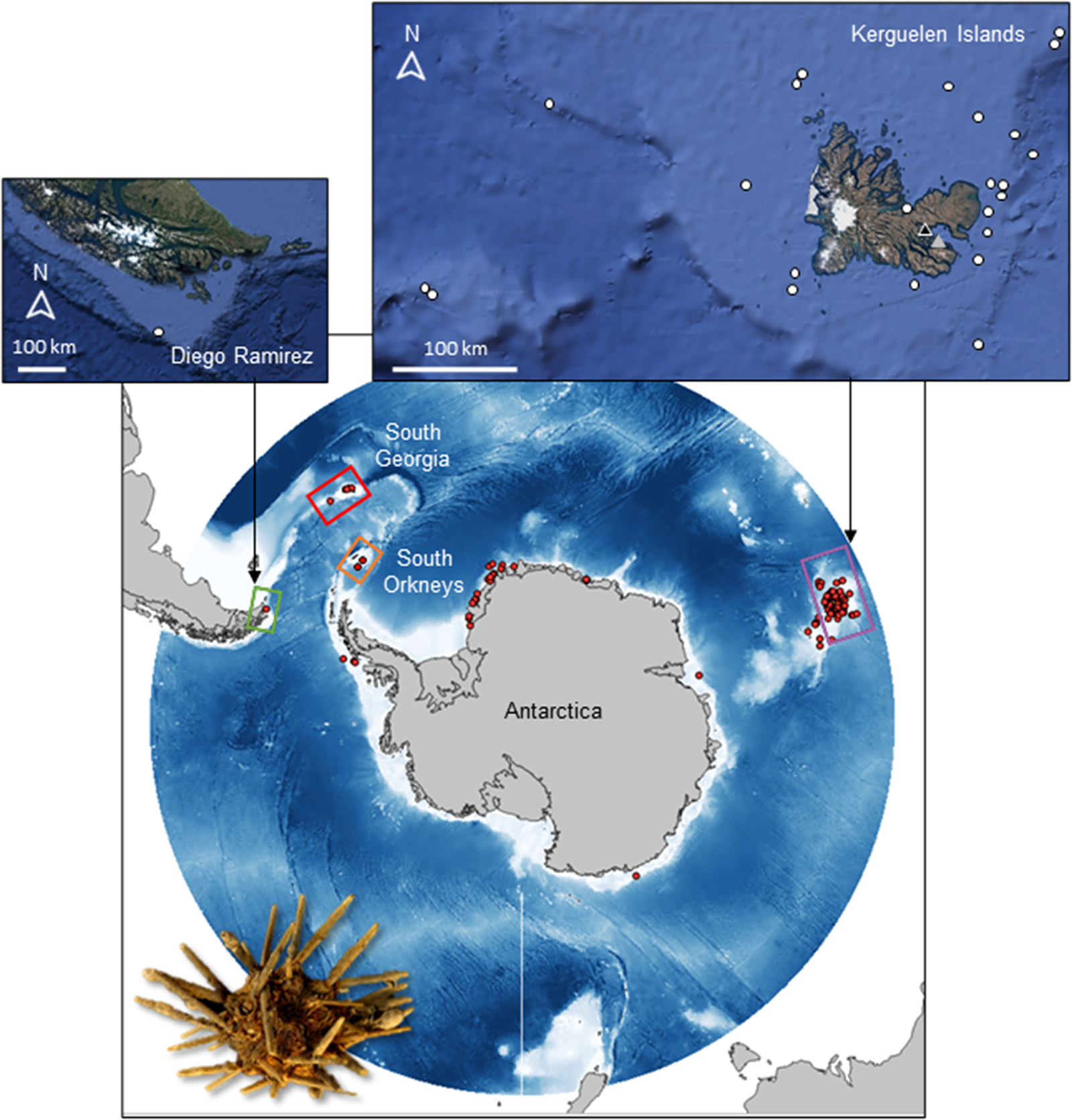
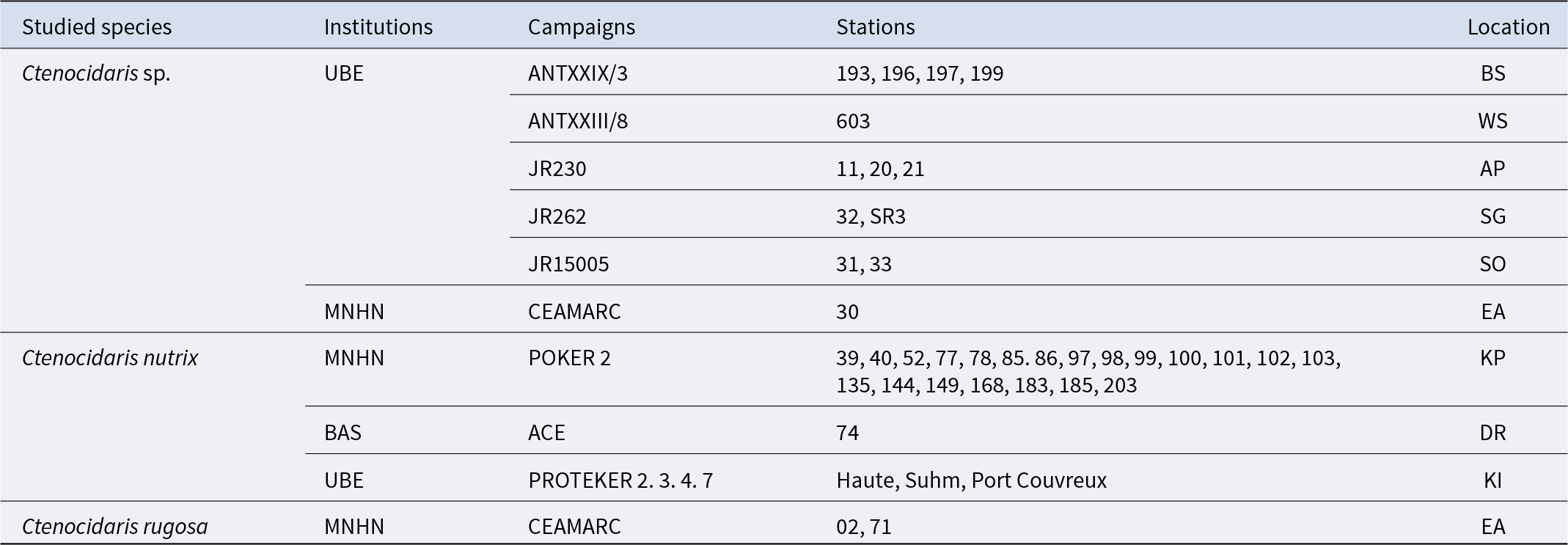
Molecular, trophic, morphological and biomechanical analyses were performed on specimens of Ctenocidaris nutrix from 21 deep sites (from 74 to 327 m depth), and three nearshore shallow sites (6 and 18 m depth; Figure 1, Table 1). Specimens of deep sites were collected off the Kerguelen Islands in 2010 during the POissons de KERguelen (POKER) 2 fish stock assessment survey (Duhamel, Reference Duhamel2011). Specimens from shallow sites (Port Couvreux, Haute and Suhm Islands) were collected between 2013 and 2018 during Proteker campaigns 2, 3, 4, and 7 (Saucède et al., Reference Saucède, Guillaumot, Michel, Fabri-Ruiz, Bazin, Cabessut, García-Berro, Mateos, Mathieu, De Ridder, Dubois, Danis, David, Díaz, Lepoint, Motreuil, Poulin, Féral, Welsford, Dell and Duhamel2019). Whenever possible, the same specimens were investigated for molecular, trophic, morphological, and biomechanical analyses (Tables 1–3). Specimens of the two nearshore, shallow sites of Haute and Suhm Islands (Figure 1), located 20 km apart and contrasting in terms of swell exposure, were collected during the Proteker 4 campaign for further characterisation of their trophic plasticity (gut contents), anatomy (tegument and gonad biomass) and the biomechanics of the skeleton (Tables 2 and 3).
Occurrence data of Ctenocidaris nutrix and Ctenocidaris sp. In the Southern Ocean according to Fabri-Ruiz et al. (Reference Fabri-Ruiz, Saucède, Danis and David2017) (red dots). Sampling sites of studied specimens from Diego Ramirez (Chilean sub-Antarctic Island), the Kerguelen Islands (white dots: Kerguelen plateau, black triangle: Haute Island, grey triangle: Suhm Island), South Georgia, South Orkney Islands, and maritime Antarctica. Of C. nutrix in Diego Ramirez and the Kerguelen Islands (white dots: Kerguelen plateau, black triangle: Haute Island, grey triangle: Suhm Island).

Studied species, sampling campaigns, sampling locations, and curation institutions

AP, Antarctic Peninsula; BS, Bransfield Strait; DR, Diego Ramirez; EA, East Antarctica; KI, Kerguelen Islands (Haute, Suhm, and Port Couvreux); KP, Kerguelen Plateau; SG, South Georgia; SO, South Orkney; WS, Weddell Sea; UBE, Université Bourgogne Europe, Dijon (France); MNHN, Muséum national d’Histoire naturelle, Paris (France); BAS, British Antarctic Survey, Cambridge (UK).
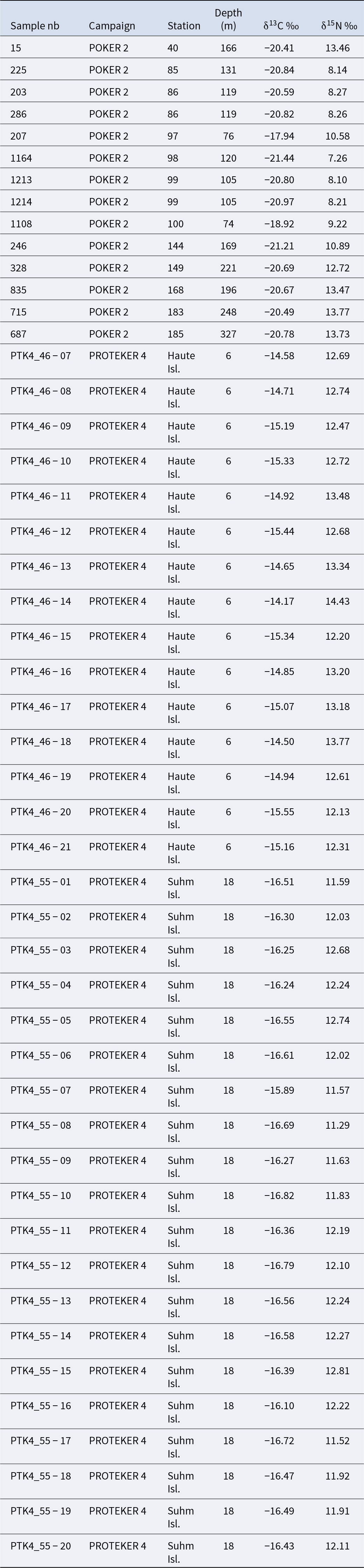
δ13C and δ15N values measured in Aristotle’s lantern muscles from specimens of Ctenocidaris nutrix from the Kerguelen Islands

Morphology and anatomy of Ctenocidaris nutrix

Measurements of echinoid test and Aristotle’s lantern, along with gonads and tegument dry weights.
D, test diameter; H, test height; Ap, apex diameter; Per, peristome diameter; Sp, mean spine length; Pyr, pyramid height; Tth, tooth length; GW, gonad dry weight (F, female; M, male); TW, tegument dry weight; COI, COI successfully sequenced specimen; ISO, analyzed ∂13C and ∂15N isotope values (see Table 2).
In addition to the Kerguelen Islands, the species had also been reported from the west sub-Antarctic Scotia Arc Islands as well as from high Antarctic regions (David et al., Reference David, Choné, Mooi and De Ridder2005; Fabri-Ruiz et al., Reference Fabri-Ruiz, Saucède, Danis and David2017; Saucède et al., Reference Saucède, Pierrat, Danis, David, De Broyer, Koubbi, Griffiths, Raymond and Udekem d’Acoz2014). In the present study, collection specimens sampled during several oceanographic cruises across the Southern Ocean and formerly identified as C. nutrix were also investigated for complementary molecular analyses (Table 1). The analysed samples were collected from the sub-Antarctic Diego Ramirez (ACE campaign), South Georgia (JR262 campaign) and South Orkney (JR15005 campaign) Islands, and from the Antarctic Peninsula (JR 230 campaign), Bransfield Strait (ANTXXIX/3 campaign), Weddell Sea (ANTXXIII/8 campaign), and East Antarctica (CEAMARC campaign).
Molecular analyses
The COI mtDNA was sequenced for a total of 98 specimens from 38 different sites and five bioregions: the Kerguelen Islands, Diego Ramirez, South Georgia, South Orkneys, and the Antarctic (Antarctic Peninsula, Bransfield Strait and East Antarctica). DNA was extracted from one to two spines per individual using the Qiagen DNeasy Blood & Tissue Kit and following the manufacturer’s instructions. For COI amplification, the following PCR mix was used: 6.25 µL Accustart Toughmix (QuantaBio), 4.75 µL sterile water, 0.25 µL (10 µM) of each primer and 1.5 µL of DNA extract. The forward primer was LCOech1aF1 (5’-TTTTTTCTACTAAACACAAGGATATTGG-3’), and the reverse primer was jgHCO2198 (5’-TAIACYTCIGGRTGICCRAARAAYCA-3’; Geller et al., Reference Geller, Meyer, Parker and Hawk2013; Layton et al., Reference Layton, Corstorphine and Hebert2016). The PCR program consisted of an initial denaturation step at 95°C (5 min), followed by 40 cycles: denaturation at 95°C (45 s), annealing at 45°C (45 s), and elongation at 72°C (45 s). A final elongation at 72°C for 3 min was also performed. PCR products were then purified using the ExoCleanUp FAST (VWR®). Sequencing was performed by Macrogen Europe (Netherlands). Sequences editing was done in the software Codoncode Aligner v10.0.2, and the alignment was performed in the same software using the MUSCLE algorithm (Edgar, 2004). Intra and interspecific distances (Kimura 2-parameter mo Kimura, Reference Kimura1980) were calculated using the software MEGA7 (Kumar et al., Reference Kumar, Stecher and Tamura2016). The TCS haplotype network (Clement et al., Reference Clement, Snell, Walker, Posada and Crandall2002) was generated in the software PopART (http://popart.otago.ac.nz). All sequences and collection data are listed in the project CTENU available on the Barcode of Life Data System (https://bench.boldsystems.org/index.php/MAS_Management_DataConsole? codes = CTENU; BOLD, Ratnasingham et al., Reference Ratnasingham, Wei, Chan, Agda, Ballesteros-Mejia, Ait Boutou, El Bastami, Ma, Rea, Ho, Telfer, McKeowan, Rahulan, Steinke, Dorsheimer, Milton and Hebert2024).
Trophic analyses
Trophic analyses of specimens of C. nutrix from the Kerguelen Islands and plateau were performed to characterise the species’ isotopic niche (Table 2) and test for the potential link between nutrition and morphological plasticity. Observation of gut contents was combined with stable isotope analysis of carbon (∂13C) and nitrogen (∂15N). Carbon and nitrogen stable isotope ratios have proven to be one of the most reliable integrative trophic markers, and have become a near-universal tool in ecology as descriptors of consumers’ trophic ecology (Boecklen et al., Reference Boecklen, Yarnes, Cook and James2011; Layman and Allgeier, Reference Layman and Allgeier2012). Carbon stable isotope ratios (13C/12C, most commonly expressed as ∂13C) are conservative tracers that can be used to identify food items supporting a consumer population, either directly or indirectly. Nitrogen stable isotope ratio (15N/14N, most commonly expressed as δ15N) can be used to generate info about both the food sources and the trophic position of consumers (DeNiro and Epstein, Reference DeNiro and Epstein1981; Layman et al., Reference Layman, Araújo, Boucek, Hammerschlag‐Peyer, Harrison, Jud, Matich, Rosenblatt, Vaudo, Yeager, Post and Bearhop2012). Moreover, the isotopic composition of a consumer appeared to be influenced by both habitat and food sources (Flaherty and Ben-David, Reference Flaherty and Ben-David2010; Newsome et al., Reference Newsome, Del Rio, Bearhop and Phillips2007).
The analysed samples included a total of 49 specimens of C. nutrix collected from Haute Island (n = 15, shallow sheltered site), Suhm Island (n = 20, shallow exposed sites), and the Kerguelen plateau (n = 14, deep sites) (Table 2). Specimens from the shallow, sheltered site of Haute Island, and from the deep Kerguelen plateau, presented the C. nutrix longispina form, while specimens from the shallow, exposed site of Suhm Island corresponded to the typical C. nutrix nutrix form. All collected specimens were immediately frozen at −20°C after sampling for further stable isotope analysis. Isotopic measurements were performed on the muscles of the Aristotle’s lantern, a soft, non-metabolically active tissue. After dissection, tissue samples were washed with distilled water, frozen at –80°C for a few hours, and freeze-dried. Then samples were cryo-crushed with liquid nitrogen and decarbonated under HCl (37% v/v) vapours for 24 hours. Isotopic ratios were determined by dry combustion using an elemental analyser (Vario Micro Cube, Elementar) coupled to an isotopic mass spectrometer (Isoprime, Elementar). Analytical reproducibility was 0.15‰ for carbon and 0.2‰ for nitrogen. Isotopic values are reported in parts per thousand (‰) and expressed relative to the conventional standards, Vienna Pee Dee Belemnite (VPDB) for carbon (Craig, Reference Craig1953) and atmospheric N2 for nitrogen (Coplen, Reference Coplen2011; Mariotti, Reference Mariotti1983). Certified USGS40 (δ13C = −26.39‰; δ 15N = −4.5‰) and Caffeine IAEA-600 (δ13C = −27.77‰; δ15N = 1‰) international reference materials were used for the calibration. The Stable Isotope Bayesian Ellipses in R (SIBER) package (Jackson et al., Reference Jackson, Inger, Parnell and Bearhop2011) was used to generate bivariate standard ellipses (SEs). SEs are the bivariate equivalents of standard deviation. They contain only the ‘typical’ members of a population (but may not encompass outlier individuals in isotopic space). For this reason, they have been termed ‘core isotopic niches’, as their area (standard ellipse area [SEA]) can be used as a proxy of resources most commonly used by the population (Layman and Allgeier, Reference Layman and Allgeier2012). In addition to stable isotope analysis, the gut content of freshly collected specimens (Proteker 4 campaign) of the two shallow sites of Haute and Suhm Islands was characterised after dissections using a binocular microscope.
Morphology and biomechanics
Morphological plasticity was characterised in specimens of C. nutrix from the Kerguelen Islands. Measurements were performed using a digital calliper with a resolution of 0.01 mm. Measured parameters include test diameter (D) and height (H), diameter of the apical system (Ap) and of the peristome (Per), and average primary spine length (Sp: mean length of all primary spines in a half interambulacrum). Specimens from Haute and Suhm Islands were further investigated to determine the individual mean height of the Aristotle’s lantern pyramids (Pyr) and tooth length (Tth), as the size of the jaw may change with food availability (Ebert, Reference Ebert1996). After dissecting the lantern and splitting each pyramid using a scalpel, the five pyramids were measured in each individual from the epiphysis junction to the labial tip, not including teeth. Then the five teeth were measured in each individual from the labial tip of the pyramid to the extremity of the tooth. Total gonad (GW) and tegument (TW) dry weights were also measured with a resolution of 0.01 g (Table 3).
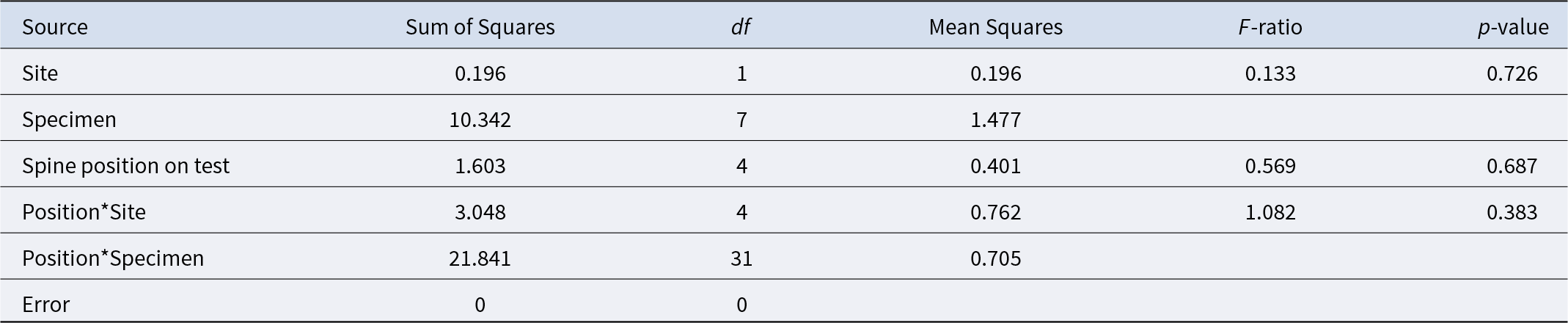
To determine whether phenotypes also differed in the structural properties of the skeleton (Hughes et al., Reference Hughes, Brunner, Cook, Kelly and Wilson2012) between the two sites of Haute and Suhm Islands, five specimens were selected in each site for biomechanical assessment of spine resistance to a two-point bending/breaking test following the methodology of Moureaux et al. (Reference Moureaux, Pérez-Huerta, Compère, Zhu, Leloup, Cusack and Dubois2010). For each individual, four to five primary spines were taken in the same interambulacral column, from the apex to the adoral side, and used for biomechanical assessment. Prior to mechanical testing, primary spines were cleaned using a NaOCl solution, and their total length was measured. Then, the base of the spines was fixed in a resin for the two-point bending test, realised by applying an increasing force perpendicular to the spine extremity using a bench press equipped with a 100 N unit (following Moureaux et al., Reference Moureaux, Pérez-Huerta, Compère, Zhu, Leloup, Cusack and Dubois2010) to determine the breaking force (Fmax). Results were analysed using a 3-way ANOVA, with site, specimen, and spine position on the test used as independent variables, and Fmax as the dependent variable (model 6.3.i of Doncaster and Davey, Reference Doncaster and Davey2007) (Table 4).
Three way ANOVA of biomechanics test realized on primary spines of specimens from Haute and Suhm Islands

Results
Molecular analyses
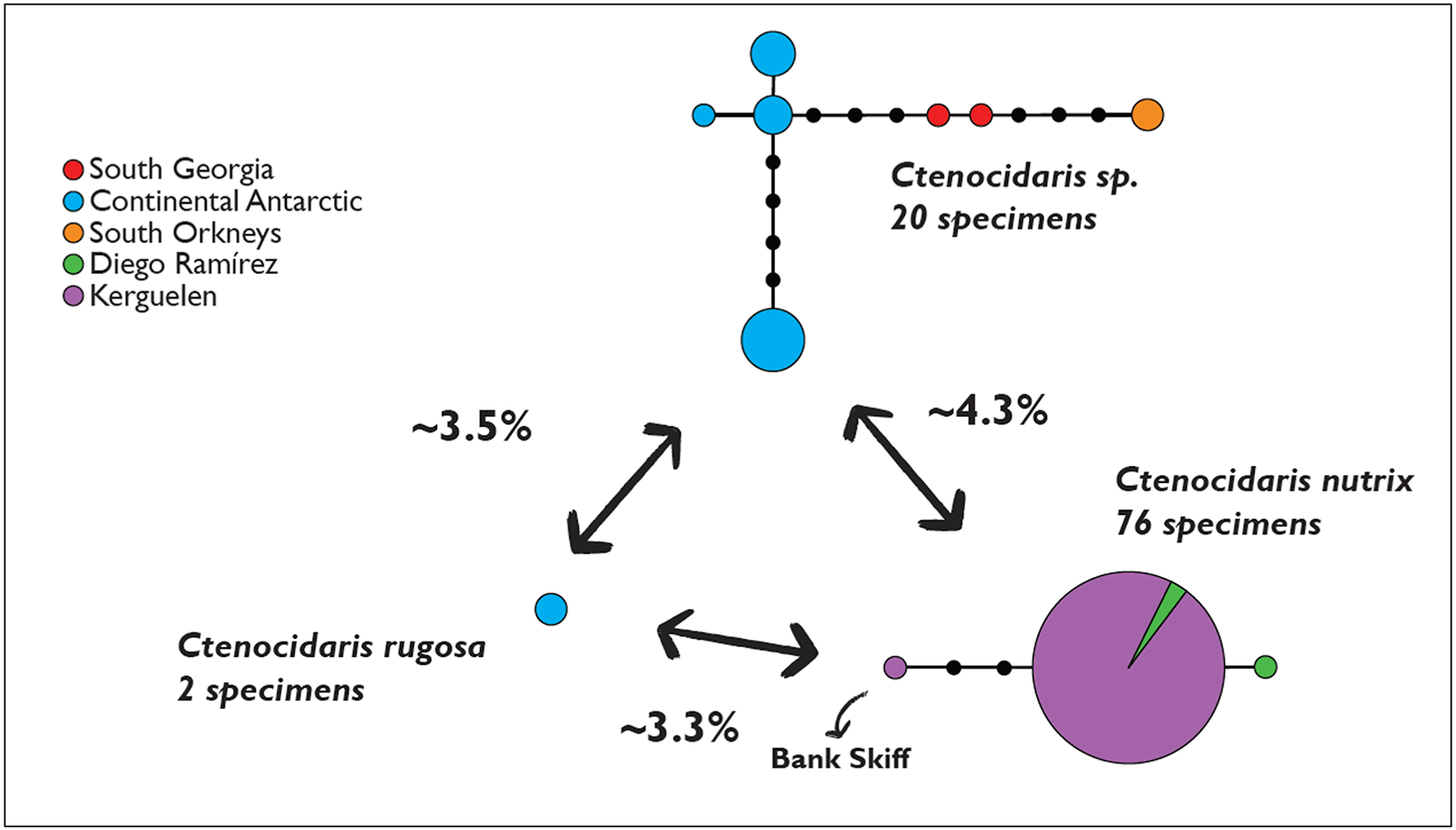
Three close COI mtDNA haplotypes were identified in the 76 sequenced specimens from the Kerguelen and Diego Ramirez Islands (Figure 2). One of these haplotypes was highly frequent, being present in 74 specimens from both nearshore sites and the plateau of Kerguelen, and as far as Diego Ramirez Island. As highlighted by Saucède et al. (Reference Saucède, Jossart, Vandermeeren, Delleuze, Danis and Moreau2024), the two forms of C. nutrix, the typical short-spined C. nutrix nutrix and the long-spined C. nutrix longispina, shared the same COI mtDNA haplotype disregarding of location, water depth and exposure.
Molecular analyses. TCS haplotype network (COI mtDNA) and genetic distances between clades. Different colours denote distinct geographic locations.

In contrast, morphologically close specimens from South Georgia, the South Orkneys and the Antarctic, formerly identified as C. nutrix, belonged to two differentiated entities, with over 3% genetic distance from haplotypes of C. nutrix from Kerguelen and Diego Ramirez Islands. Specimens from the East Antarctic matched with the species Ctenocidaris rugosa. Other Antarctic and sub-Antarctic specimens showed distinct haplotypes of an unknown species here referred to as Ctenocidaris sp. (Figure 2).
Trophic analyses
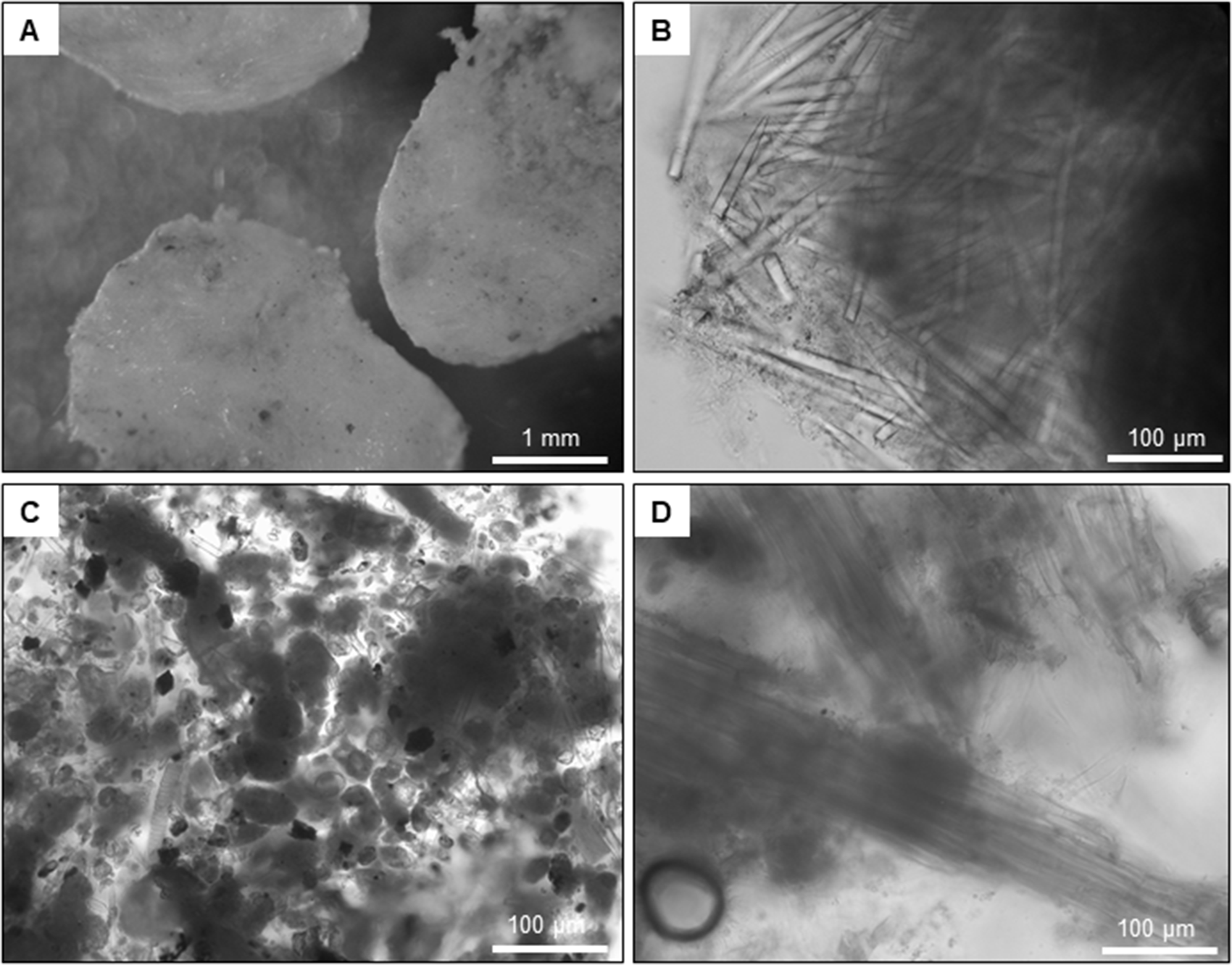
The observation of gut contents in specimens from Haute and Suhm Islands revealed that the main diet of all study C. nutrix individuals is composed of large (3–5 mm wide) bites of fresh and intact sponge pieces from different taxa, according to the different colours and spicules of sponge remains, along with many diatoms. Important differences could, however, be noticed between the two sites. Long-spined specimens from Haute Island only fed on sponges and diatoms, while short-spined specimens from Suhm Island showed a much more varied diet composed of various biological detritus of ascidians, bryozoans, crustaceans, and seaweeds in addition to sponge and diatom remains (Figure 3). These specimens also ingested sedimentary particles.
Biological detritus ingested by specimens of Ctenocidaris nutrix at Haute (A, B) and Suhm (C, D) Islands. (A) Large bites of intact sponges. (B) Detail of sponge spicules. (C) Diverse biological detritus. (D) Remains of macroalgae. Images taken under a stereo (A) and a zoom microscope (B–D).

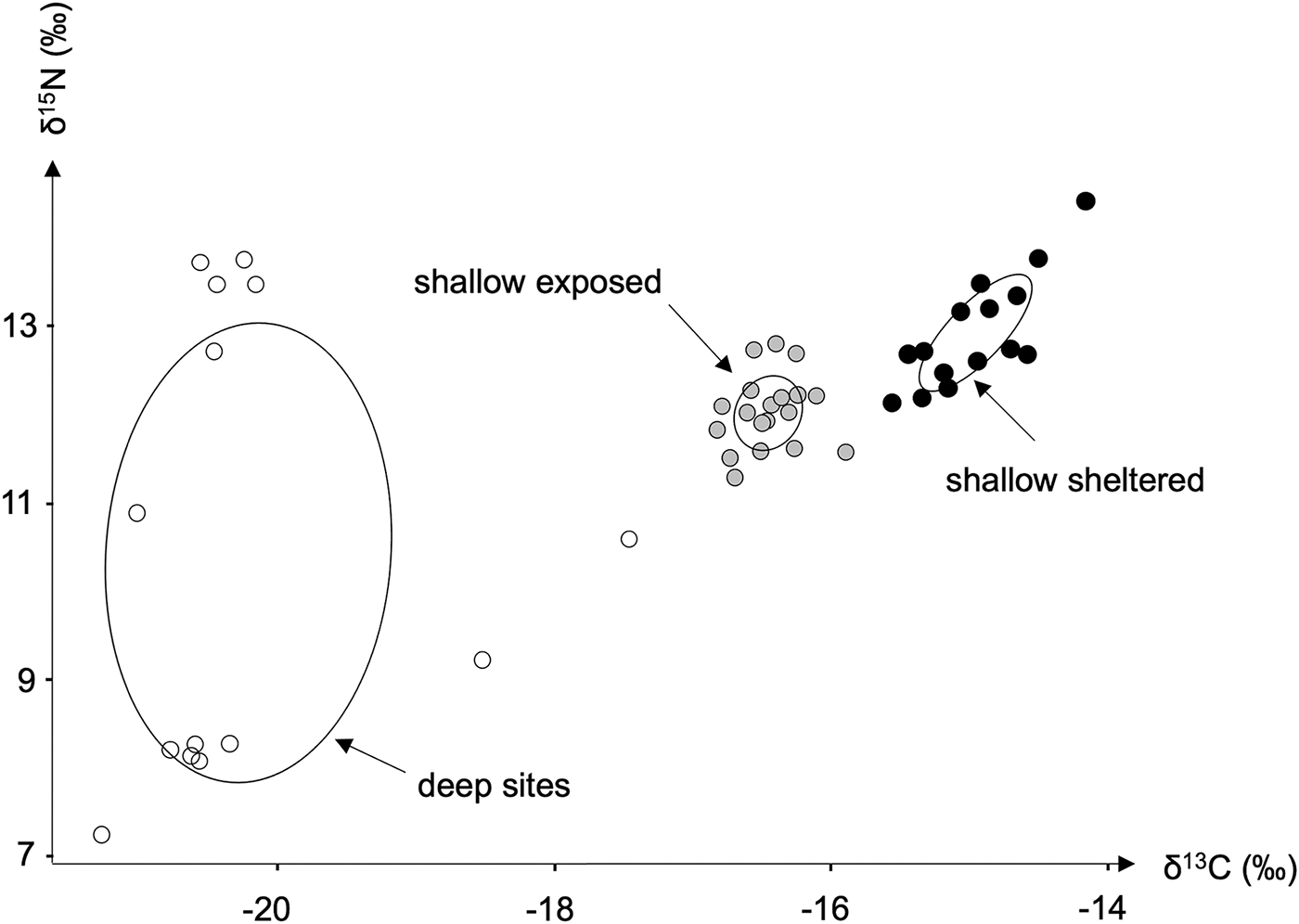
δ13C and δ15N significantly differed between populations of Haute and Suhm Islands (Wilcoxon t-test, p < 0.001), with less negative δ13C, higher δ15N, and more dispersed values at Haute compared to Suhm (Figure 4). SEAs computed for nearshore populations from Haute and Suhm, along with deep samples from the Kerguelen plateau, clearly showed different niche positions for the three populations (Figure 4). Compared to the two nearshore sites, δ13C values from the plateau were significantly more negative and δ15N values were also more dispersed. For these last samples, the dispersion of δ15N is probably partly related to the greater geographical distance between sites.
δ13C and δ15N values of Ctenocidaris nutrix for the shallow sheltered site of Haute Island, shallow exposed site of Suhm Island, and deeper sites of the Kerguelen plateau. Points are individual measurements. Solid lines are standard ellipses.

Morphometry and biomechanical assessment
Morphological and anatomical differences were tested between specimens of Haute and Suhm Islands. Only four characters significantly differed between the two populations (Student’s t-test, p < 0.05): the absolute apex diameter (AD), the relative spine length (SL/H*D), the ratio between spine diameter and length (SD/SL), and the gonad dry weight (GW). Along with relatively shorter and broader spines, specimens from Suhm also showed a narrower apex relative to test diameter and heavier gonads. In contrast, specimens from Haute had lighter gonads, longer and thinner spines, and a wider apex. Biomechanical assessment of spine resistance to breaking showed no significant difference between specimens of the two sites (Table 4).
Discussion
Species identity and distribution range
Studying phenotypic plasticity has practical importance in ecology and evolution, as well as for systematics and taxonomy (Schlichting and Pigliucci, Reference Schlichting and Pigliucci1998; Whitman and Agrawal, Reference Whitman, Agrawal, Whitman and Ananthakrishna2009). In the present study, the obtained COI mtDNA sequences indicated that the two forms of C. nutrix, the typical short-spined C. nutrix nutrix and the long-spined C. nutrix longispina, share the same COI haplotype (100% similarity between samples), which suggests that the two forms are one and a single species restricted to sub-Antarctic waters. Thomson (Reference Thomson1876) first described the species C. nutrix based on one specimen collected in 1874 at the entrance of the Royal Sound of the Kerguelen Islands, between 90 m and 130 m depth. Then Mortensen (Reference Mortensen1928) recognised a distinct variety, and perhaps a separate species (or subspecies in subsequent works), a long-spined form, C. nutrix longispina, based on one specimen collected at 270 m depth (150 fathoms) by the RV Challenger off Heard Island. This long-spined form mainly differs in the length of primary spines, 2–2.5 times the horizontal diameter of the test, against 1–1.5 in the C. nutrix nutrix typical form. The formal distinction between the two forms was challenged by Fell (Reference Fell1976), then by De Ridder et al. (Reference De Ridder, David and Larrain1992), followed by David et al. (Reference David, Choné, Mooi and De Ridder2005), who report distinct biogeographic patterns for the two forms with the typical form distributed in sub-Antarctic waters of the Kerguelen and Heard Islands, and the longispina form off Heard Island, Prydz Bay, and the East Weddell Sea (David et al., Reference David, Choné, Mooi and De Ridder2005). So far, the species C. nutrix was then considered to have a wide and unusual distribution range for a cidaroid echinoid (from the shoreline to 840 m depth, and from the sub-Antarctic Islands to the Antarctic coasts (76°S–47°S) (David et al., Reference David, Choné, Mooi and De Ridder2005; De Ridder et al., Reference De Ridder, David and Larrain1992; Jacob et al., Reference Jacob, Terpstra and Brey2003; Lockhart et al., Reference Lockhart, O’Loughlin, Tutera, David, Guille, Féral and Roux1994). Results of the present study refine our knowledge of the taxonomy and distribution of C. nutrix, which seems, regardless of shape variations, to be restricted to sub-Antarctic coastal waters and offshore areas, from Diego Ramirez Island in the west to the Kerguelen plateau in the east (Figure 1). In echinoid systematics, there are other examples of species differentiated from each other based only on spine length. The echinoids Lytechinus pictus Verrill, 1867 and Lytechinus anamesus Clark, 1912 were formerly thought to be distinct species based on the difference in spine length (Mortensen, Reference Mortensen1943) before the species value of the character was questioned (Clark, Reference Clark1940). L. pictus has short spines and lives in shallow waters, while L. anamesus has long spines and occurs in deep waters (Clark, Reference Clark1940). The two forms are now synonymised under the name L. pictus (Kroh and Mooi, Reference Kroh and Mooi2025).
Trophic ecology
In the present work, the analysis of the carbon and nitrogen stable isotope compositions in the three populations of C. nutrix was comparable to those measured in secondary consumers in Antarctic invertebrates (Le Bourg et al., Reference Le Bourg, Saucède, Charpentier, Lepoint and Michel2022; Michel et al., Reference Michel, David, Dubois, Lepoint and De Ridder2016; Mincks et al., Reference Mincks, Smith, Jeffreys and Sumida2008) and, in particular, in Antarctic cidaroids, which were shown to feed on live invertebrates (mostly sponges), carrions and sediment detritus (Michel et al., Reference Michel, David, Dubois, Lepoint and De Ridder2016). Along with gut content observations, our results confirm that C. nutrix is a carnivore that holds a relatively high position in the food webs (Jacob et al., Reference Jacob, Terpstra and Brey2003; Saucède et al., Reference Saucède, Guillaumot, Michel, Fabri-Ruiz, Bazin, Cabessut, García-Berro, Mateos, Mathieu, De Ridder, Dubois, Danis, David, Díaz, Lepoint, Motreuil, Poulin, Féral, Welsford, Dell and Duhamel2019) and can occasionally feed on biological detritus and sediment particles.
The observation of gut contents and stable isotope compositions provides congruent results showing that the three analysed populations have different diets, suggesting significant trophic plasticity in C. nutrix. This could be influenced by local food availability, but is likely linked with active prey selection by the echinoids. The two nearshore sites of Haute and Suhm Islands are indeed characterised by similar benthic communities and potential food sources, even if exposure differs between the two sites (Féral et al., Reference Féral, Poulin, González-Wevar, Améziane, Guillaumot, Develay, Saucède, Welsford, Dell and Duhamel2019). Our results also showed a high inter-individual variation in the importance of animal-derived material for the nutrition of the species. This was already reported in sub-Antarctic, as well as in Antarctic cidaroid echinoids that can shift their diet from detritus to carnivory and scavenging in relation to spatial changes in environmental conditions and presumably prey availability (Michel et al., Reference Michel, David, Dubois, Lepoint and De Ridder2016; Saucède et al., Reference Saucède, Guillaumot, Michel, Fabri-Ruiz, Bazin, Cabessut, García-Berro, Mateos, Mathieu, De Ridder, Dubois, Danis, David, Díaz, Lepoint, Motreuil, Poulin, Féral, Welsford, Dell and Duhamel2019). Echinoid diet could also differ according to water temperature and depth (Mincks et al., Reference Mincks, Smith, Jeffreys and Sumida2008). This suggests that C. nutrix could have a high trophic plasticity that may be beneficial regarding resilience to environmental changes.
Phenotypic plasticity
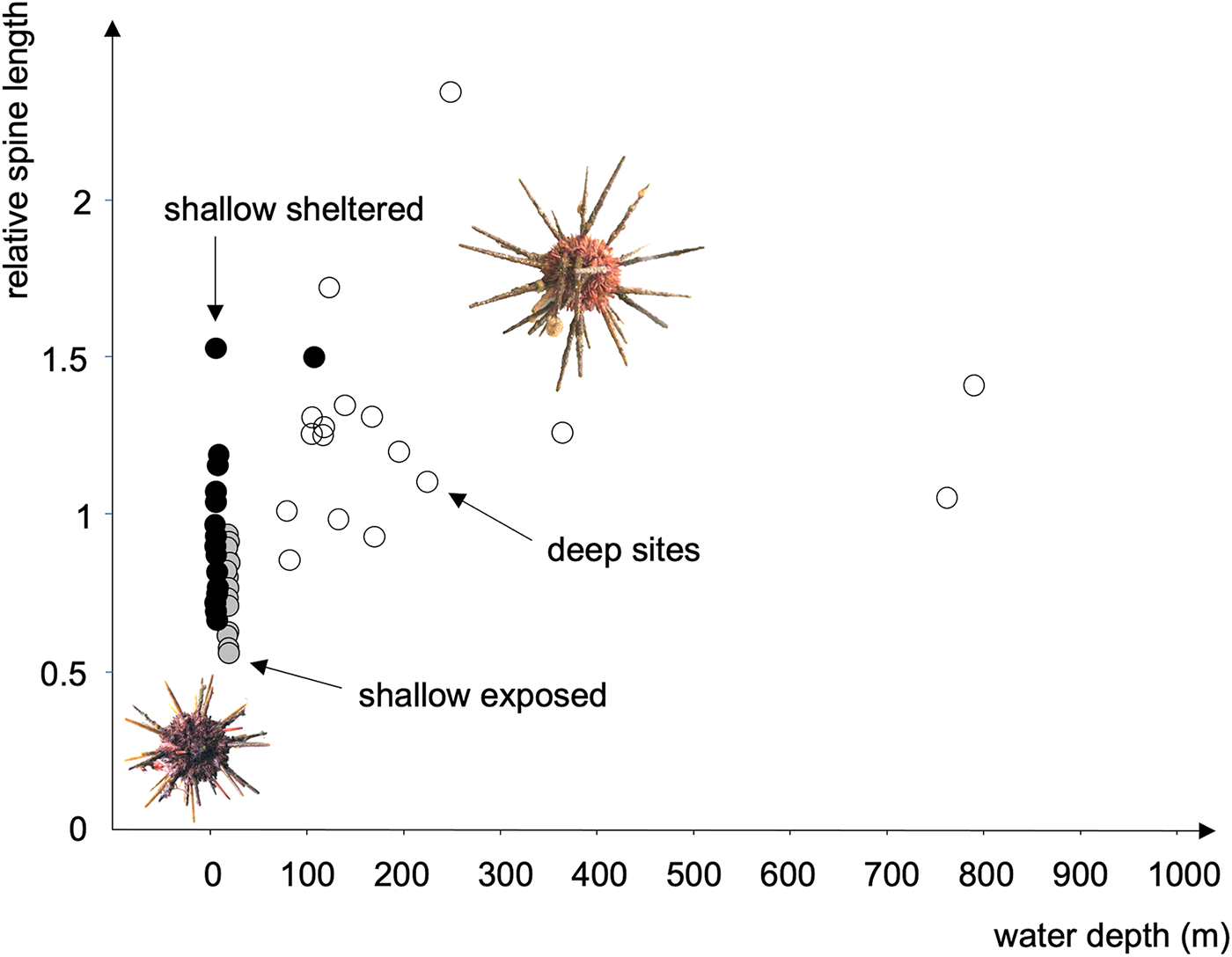
As formerly demonstrated in broadcasting echinoid species (Ebert, Reference Ebert1996; Hughes et al., Reference Hughes, Brunner, Cook, Kelly and Wilson2012), morphological plasticity here appeared to be mainly linked to abiotic environmental parameters, mainly depth and swell exposure, specimens from exposed and shallow sites showing shorter spines and larger apical systems compared to specimens from sheltered or deep sites (Figure 5). The evolution of phenotypic plasticity is usually expected to benefit species with broadcasting larvae as an adaptation to a heterogeneous environment (Ebert, Reference Ebert1996; Parsons, Reference Parsons1998). Here we show that phenotypic plasticity can also occur in a brooding cidaroid echinoid.
Relative spine length (ratio of spine length over test diameter) of Ctenocidaris nutrix as a function of water depth (m) for the shallow sheltered site of Haute Island, shallow exposed site of Suhm Island, and deeper sites of the Kerguelen plateau.

In the studied populations of C. nutrix, variations in the relative length of primary spines and size of the apex (higher in the population from Haute Island) seem to be inversely related to the gonad dry weight (higher in the population from Suhm Island). This situation is usually expected as the reallocation of resources to repair damages (calcification) in populations of exposed sites implies a decrease in the mass of gonads, which are also storage organs after their primary function is involved in reproduction (Ebert, Reference Ebert1996). However, in the present case study, phenotypes with long spines were found in sheltered and deep sites, while short-spined phenotypes with larger gonads were reported in the exposed site. This suggests that in the studied populations, the hypothesis that morphological plasticity is a direct response to changes in the abiotic environment, here represented by depth and swell exposure, is not verified.
In former studies (Ebert, Reference Ebert1996), a decrease in gonad dry weight, and conversely, an increase in the size of the Aristotle’s lantern and spine growth were also shown to be a phenotypic response to variations in food availability. In contrast, other studies argued that morphological plasticity may also be independent of food limitation, but may result from changes in the trophic environment or the prey type (Hughes et al., Reference Hughes, Brunner, Cook, Kelly and Wilson2012). In the studied populations, no significant difference in the size of the Aristotle’s lantern (pyramid and tooth length) was found between habitats, excluding the direct effect of food limitation. However, significant differences in the diet and trophic niche between populations of C. nutrix suggest that the prey type and ingested food diversity (only sponges and diatoms at Haute Island vs. a more diverse diet composed of various detrital remains at Suhm Island) may be a factor promoting distinct phenotypic responses, both in the diet and morphology of echinoids. Phenotypic variation in response to changing trophic environments can increase the species’ niche through the widening of its diet or the variation between individual diet breadth (Hughes et al., Reference Hughes, Brunner, Cook, Kelly and Wilson2012). In the Kerguelen Islands, trophic plasticity in the cidaroid C. nutrix would contribute to increasing its ecological niche.
Acknowledgements
The authors are grateful to the captains, crews and scientists who contributed to the material collected in the field. The authors thank the GISMO platform and its staff (Biogéosciences, Université Bourgogne Europe, UMR CNRS 6282, France). This is a contribution to program no. 1044 Proteker of the French Polar Institute and LTSER Zone ATelier Antarctique (ZATA, France).
Author contributions
T.S., P.D., L.M., C.D.R., C.M., Q.J., and O.M. designed the study, conceived the analyses, and analysed the data. T.S. and S.M. collected the specimens in the field. T.S., C.D.R., M.C., A.L.S., and S.M.Z. performed the observations, the experiments and the analyses. T.S. wrote the paper with input from all authors.
Funding
This work is supported by the French Polar Institute (1044-PROTEKER) and Observatoire des Sciences de l’Univers THETA (SRO).
Competing interests
The authors declare none.
Data availability statement
The data that support the findings of this study are openly available at https://bench.boldsystems.org/index.php/MAS_Management_DataConsole? codes=CTENU; BOLD.