Amino acids (AA) can influence cell growth and milk protein synthesis in dairy cow mammary epithelial cells (DCMECs) (Appuhamy et al., Reference Appuhamy, Knoebel, Nayananjalie, Escobar and Hanigan2012; Arriola Apelo et al., Reference Arriola Apelo, Singer, Ray, Helm, Lin, McGilliard, St-Pierre and Hanigan2014). Studies have shown that the mammalian target of rapamycin complex 1 (mTORC1) pathway is the main pathway regulating AA-mediated cell growth and protein synthesis (Kim et al., Reference Kim, Buel and Blenis2013; Appuhamy et al., Reference Appuhamy, Nayananjalie, England, Gerrard, Akers and Hanigan2014; Castro Marquez et al., Reference Castro Marquez, Arriola Apelo, Appuhamy and Hanigan2016). At present, many studies about the molecular mechanism of AA activating mTORC1 pathway and then promoting cell growth and protein synthesis have been done (Gordon et al., Reference Gordon, Kazi, Coleman, Dennis, Chau, Jefferson and Kimball2014; Khudhair et al., Reference Khudhair, Luo, Khalid, Zhang, Zhang, Ao, Li and Gao2015), but the precise mechanism of this regulation is still poorly understood.
Septin proteins are a family of GTP-binding proteins which have guanosine triphosphatase (GTPase) activity. They are evolutionarily conserved and widely expressed in a variety of tissues (Neubauer and Zieger, Reference Neubauer and Zieger2017). Septin proteins participate in various cell physiological functions such as cell division, cell cycle, protein synthesis and cell apoptosis (Kaplan et al., Reference Kaplan, Steinmann, Zapiorkowska and Ewers2017; McQuilken et al., Reference McQuilken, Jentzsch, Verma, Mehta, Oldenbourg and Gladfelter2017; Senger et al., Reference Senger, Marka, Soller, Sakk, Florian and Geiger2017). Septin6 is an important member of the Septin proteins family, involved in cellular physiological processes including cytokinesis, vesicle trafficking, cell morphology, cell motility and cell cycle (Estey et al., Reference Estey, Di Ciano-Oliveira, Froese, Bejide and Trimble2010; Spiliotis and Gladfelter, Reference Spiliotis and Gladfelter2012). Lu et al.'s report has shown that Septin6 is upregulated in milk synthesis and cell proliferation, and might participate in the secretion of milk protein (Lu et al., Reference Lu, Gao, Li, Huang, Liu and Li2012). Here, we test the hypothesis that Septin6 is a key regulatory factor influencing AA mediated-cell growth and casein synthesis in DCMECs.
Materials and methods
The experimental procedures followed The People's Republic of China Law on Animal Protection and were approved by the Animal Care Committee of the Dalian University.
Cell culture and treatments
The dairy cow mammary epithelial cells (DCMECs) were obtained from our lab (Jiang et al., Reference Jiang, Wang, Yu, Hu, Liu, Gao and Zheng2015a, Reference Jiang, Hu, Liu, Gao and Zheng2015b) and cultured with DMEM/F12 media (11320033, Gibco, California, USA) containing 10% fetal bovine serum (FBS, 16000044, Gibco) as previously report (Tong et al., Reference Tong, Gao, Li, Liu, Li and Wan2011). For the experiment, DCMECs were plated into 6 well plates with 1.0 × 10⁵ cells per well and cultured with DMEM/F12 medium containing 10% FBS at 37 °C with 5% CO2. When cell confluence reached 90%, the medium was discarded and the cells were washed three times with D-hanks buffer (NaCl 8.00 g, KCl 0.4 g, Na2HPO4·H2O 0.06 g, KH2PO4 0.06 g and NaHCO3 0.35 g, dissolved with 1 L ddH2O, pH = 7.0–7.2). The cells were then divided into three groups and cultured with FBS-free DMEM/F12 medium without any AA (AA−), with DMEM/F12 medium with AA restricted to half of the normal amount (AAr) and with DMEM/F12 medium with normal AA content (AA+) for 24 h. The cells were collected and used for subsequent experimental analysis.
Plasmid construction and transfection
The plasmid construction of Septin6 or mTOR gene was performed as previously reported (Jiang et al., Reference Jiang, Wang, Yu, Hu, Liu, Gao and Zheng2015a). The specific primers of Septin6 and mTOR were designed using premier 5.0 software according to the mRNA sequence of Septin6 (GenBank: NM_001035430.2) and mTOR (GenBank: XM_015466778.1), respectively. The sequences of these primers are shown in online Supplementary Table S1. The eukaryotic expression vector used in this study was pCMV-C-Flag (D2632, Beyotime, China). The plasmids will subsequently be referred to as Septin6-Flag and mTOR-Flag, respectively.
The transfection of Septin6 or mTOR gene was performed as previously reported (Luo et al., Reference Luo, Zhao, Zhang, Gao, Wang, Hanigan and Zheng2018). Briefly, DCMECs were plated into 6 well plates, and at about 70% confluence, the medium was changed with FBS-free DMEM/F12 medium. 5 µg DNA plasmid and 10 µl Lipofectamine 2000 transfection reagent for each well were diluted into 250 µl FBS-free DMEM/F12 medium. After incubating for 5 min at room temperature, the diluted DNA plasmid and Lipofectamine 2000 transfection reagent were mixed, and incubated for 20 min at room temperature. Then the mixture was added to wells containing cells. After 6 h, the OPTI-MEM I media were switched to DMEM/12 media containing 10% FBS.
Small interfering RNA transfection
The specific siRNA of Septin6 and mTOR and the negative control siRNA were synthesized (GenePharma, Shanghai, China). The siRNA was transfected using Lipofectamine 2000 transfection reagent according to the manufacturer's instructions. The siRNA sequences used in this study are shown in online Supplementary Table S2.
Western blotting analysis
Protein expression was analyzed by Western blotting (WB) analysis. The WB analysis was performed using standard techniques (Luo et al., Reference Luo, Yin, Gao, Li and Zhang2013). Protein band intensity was analyzed with ImageJ2X software. The primary antibodies used in this study were as follows: anti-CSN2 (1: 1000, bs-0813R, Bioss, China), anti-Septin6 (1: 1000, ab106944, Abcam, USA), anti-β-actin (1: 1000, 4967, Cell Signaling Technology, USA), anti-mTOR (1: 1000, ab2833, ABCAM, USA), anti-p-mTOR (1: 1000, 2974, Cell Signaling Technology, USA), anti-S6K1 (1: 500, sc-230, Santa Cruz, USA), anti-p-S6K1 (1: 500, sc-11759, Santa Cruz, USA).
Cell viability assay
Cell viability was analyzed using a CASY model TT Analyser System (Schärfe System GmbH, Reutlingen, Germany) as previously reported (Li et al., Reference Li, Wang, Li and Gao2012).
Cell growth assay
Cell growth was analyzed with 3-(4,5)-dimethylthiazol(-2-y1)-3,5-di-phenyltetrazoliumbromide (MTT; Sigma, San Francisco, California, USA) as previously reported (Luo et al., Reference Luo, Zhao, Zhang, Gao, Wang, Hanigan and Zheng2018).
Statistical analysis
The results were reported as mean ± sd (n = 3). Data statistics and individual differences between groups were analyzed using the t-test by Sigma Plot 9.0 software, and differences were considered statistically significant at P < 0.05. Grey value of WB results was analyzed by ImageJ2X software. All data were obtained from at least three independent experiments.
Results
Septin6 was regulated by AA in the process of AA-mediated regulation of cell growth and casein synthesis in DCMECs
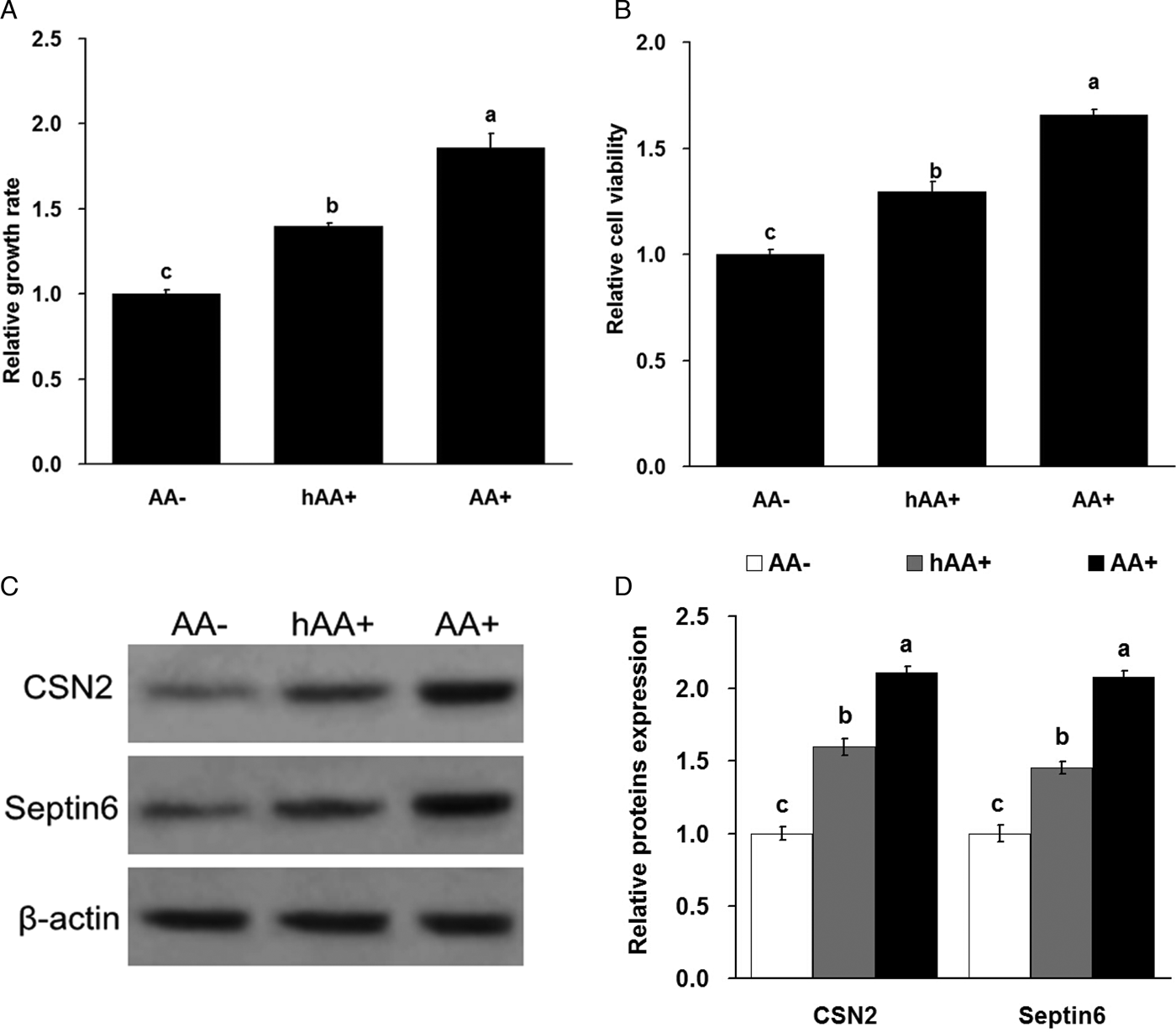
Cells were treated with AA−, AAr and AA+ for 24 h and cell growth, cell viability and expression of CSN2 and Septin6 were tested. The results showed that cell growth (Fig. 1a), cell viability (Fig. 1b) and the expression of CSN2 and Septin6 (Fig. 1c, d) were significantly increased (P < 0.05) in response to AA supply.
Cell growth, expression of casein and Septin6 were regulated by AA. (a, b) Cell growth (a) and cell viability (b) of DCMECs treated with AA−, AAr and AA+ for 24 h were determined. Data of ‘AA− group’ was defined as ‘1’; (c, d) The protein expression of CSN2 and Septin6 in DCMECs treated with AA−, AAr and AA+ for 24 h were determined. The ratio value of ‘AA− group’ was defined as ‘1’. AA−, AAr and AA+: DCMECs cultured with DMEM/F12 medium without all AA, DMEM/F12 medium with all AA but the amount of each AA was half of the normal amount in DMEM/F12 and DMEM/F12 medium with all AA, respectively. Data are presented as means ± sd. In the bar charts, different superscript lowercase letters indicate significant difference (P < 0.05), while the same letters represent no significant difference (P > 0.05).

Septin6 is a positive regulatory factor for AA-mediated cell growth in DCMECs
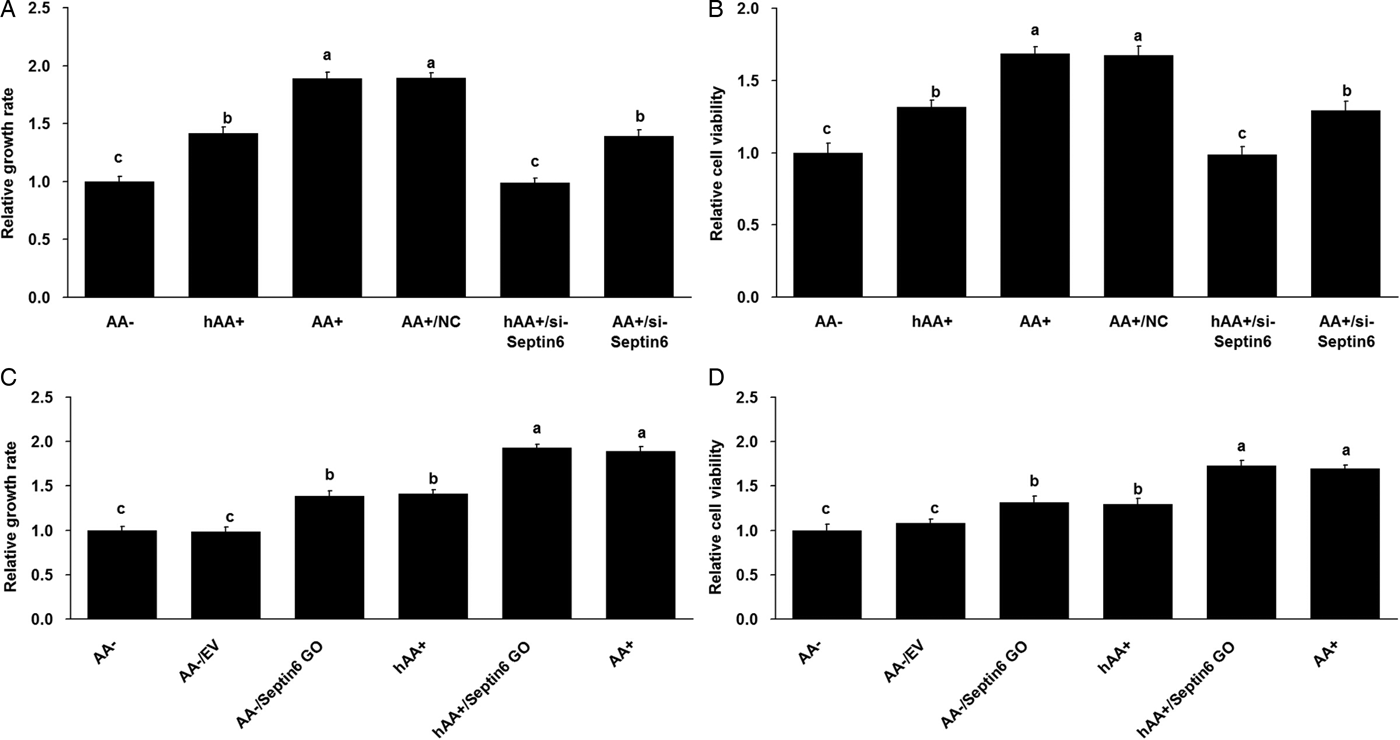
The effect of Septin6 on AA-mediated cell growth and cell viability was analyzed. The results showed that the cell growth (Fig. 2a) and cell viability (Fig. 2b) were significantly increased (P < 0.05) in response to AA supply, but these increases were inhibited by Septin6 inhibition. Cell growth (Fig. 2c) and cell viability (Fig. 2d) were significant decreased (P < 0.05) in response to AA deprivation, but these decreases were restored by Septin6 overexpression. These results suggested that the AA-mediated cell growth was up-regulated by Septin6.
Effect of Septin6 on AA-mediated cell growth. (a, b) Cell growth (a) and cell viability (b) of DCMECs treated with AA−, AAr, AA+, AA+/NC, AAr/si-Septin6 and AA+/si-Septin6 were determined; (c, d) Cell growth (c) and cell viability (d) of DCMECs treated with AA-, AA-/EV, AA-/Septin6 GO, AAr, AAr/Septin6 GO and AA+ were determined. The data of ‘AA- group’ was defined as ‘1’. AA−, AAr and AA+: DCMECs cultured with DMEM/F12 medium without all AA, DMEM/F12 medium with all AA but the amount of each AA was half of the normal amount in DMEM/F12 and DMEM/F12 medium with all AA, respectively; EV, Septin6 GO, NC and si-Septin6: DCMECs were transfected with empty vector, Septin6 overexpression vector, negative control siRNA and si-Septin6, respectively. In the bar charts, different letters represent a significant difference (P < 0.05), while the same letters represent no significant difference (P > 0.05).

Septin6 is a positive regulatory factor for AA-mediated casein synthesis in DCMECs
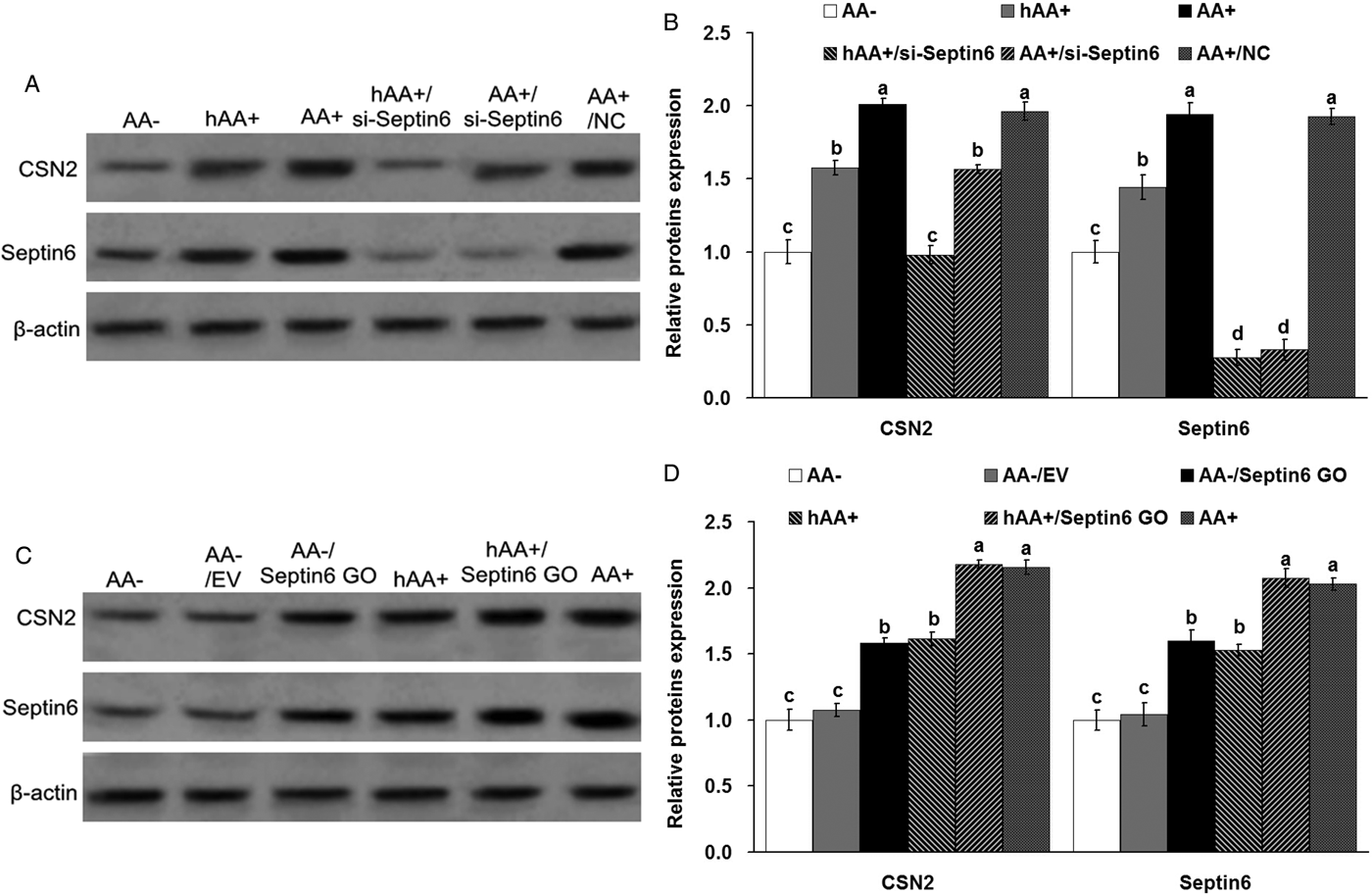
The effect of Septin6 on AA-mediated casein synthesis was analyzed. The results showed that the expression of CSN2 (Fig. 3a, b) was significantly increased (P < 0.05) in response to AA supply, but this increase was inhibited by Septin6 inhibition. In addition, the expression of CSN2 (Fig. 3c, d) was significantly decreased (P < 0.05) in response to AA deprivation, but this decrease was restored by Septin6 overexpression. These results suggested that the AA-mediated casein synthesis was up-regulated by Septin6.
Effect of Septin6 on AA-mediated casein synthesis. (a, b) The expression of CSN2 in protein level in DCMECs treated with AA−, AAr, AA+, AAr/si-Septin6, AA+/si-Septin6 and AA+/si-NC was determined; (c, d) The expression of CSN2 in protein level in DCMECs treated with AA−, AA−/EV, AA−/Septin6 GO, AAr, AAr/Septin6 GO and AA+ was determined. The ratio value of ‘AA- group’ was defined as ‘1’. AA−, AAr and AA+: DCMECs cultured with DMEM/F12 medium without all AA, DMEM/F12 medium with all AA but the amount of each AA was half of the normal amount in DMEM/F12 and DMEM/F12 medium with all AA, respectively; EV, Septin6 GO, NC and si-Septin6: DCMECs were transfected with empty vector, Septin6 overexpression vector, negative control siRNA and si-Septin6, respectively. In the bar charts, different letters represent a significant difference (P < 0.05), while the same letters represent no significant difference (P > 0.05).

Septin6 is a positive regulatory factor for AA-mediated mTORC1 pathway activation in DCMECs
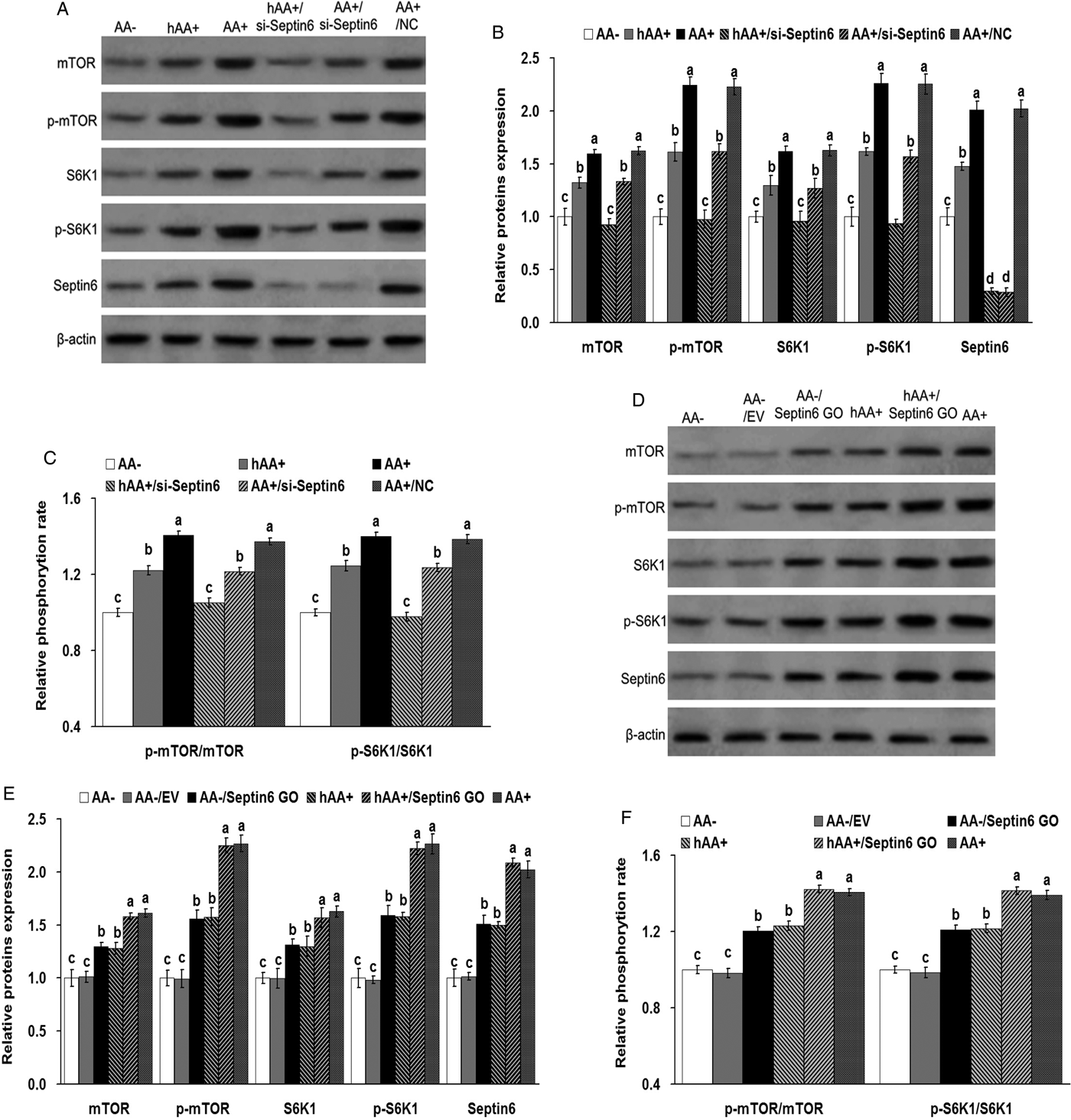
The effect of Septin6 on AA-mediated mTORC1 pathway activation was analyzed. The results showed that the expression of mTOR, S6K1, p-mTOR and p-S6K1, and the ratio of p-S6K1 to S6K1, p-mTOR to mTOR (Fig. 4a–c) were significantly increased (P < 0.05) in response to AA supply, but these increases were inhibited by Septin6 inhibition. All parameters were significantly decreased (P < 0.05, Fig. 4d–f) in response to AA deprivation, but these decreases were restored by Septin6 overexpression. These results suggested that the AA-mediated activation of mTORC1 pathway was up-regulated by Septin6.
Effect of Septin6 on AA-mediated mTORC1 pathway. (a–c) The protein expression of mTOR, S6K1, p-mTOR and p-S6K1, and the ratio of p-S6K1 to S6K1, p-mTOR to mTOR in DCMECs treated with AA−, AAr, AA+, AAr/si-Septin6, AA+/si-Septin6 and AA+/si-NC was determined; (d–f) The protein expression of mTOR, S6K1, p-mTOR and p-S6K1, and the ratio of p-S6K1 to S6K1, p-mTOR to mTOR in DCMECs treated with AA−, AA-/EV, AA−/Septin6 GO, AAr, AAr/Septin6 GO and AA+ was determined. The ratio value of ‘AA- group’ was defined as ‘1’. AA−, AAr and AA+: DCMECs cultured with DMEM/F12 medium without all AA, DMEM/F12 medium with all AA but the amount of each AA was half of the normal amount in DMEM/F12 and DMEM/F12 medium with all AA, respectively; EV, Septin6 GO, NC and si-Septin6: DCMECs were transfected with empty vector, Septin6 overexpression vector, negative control siRNA and si-Septin6, respectively. In the bar charts, different letters represent a significant difference (P < 0.05), while the same letters represent no significant difference (P > 0.05).

Septin6 promotes cell growth and casein synthesis through mTOR pathway
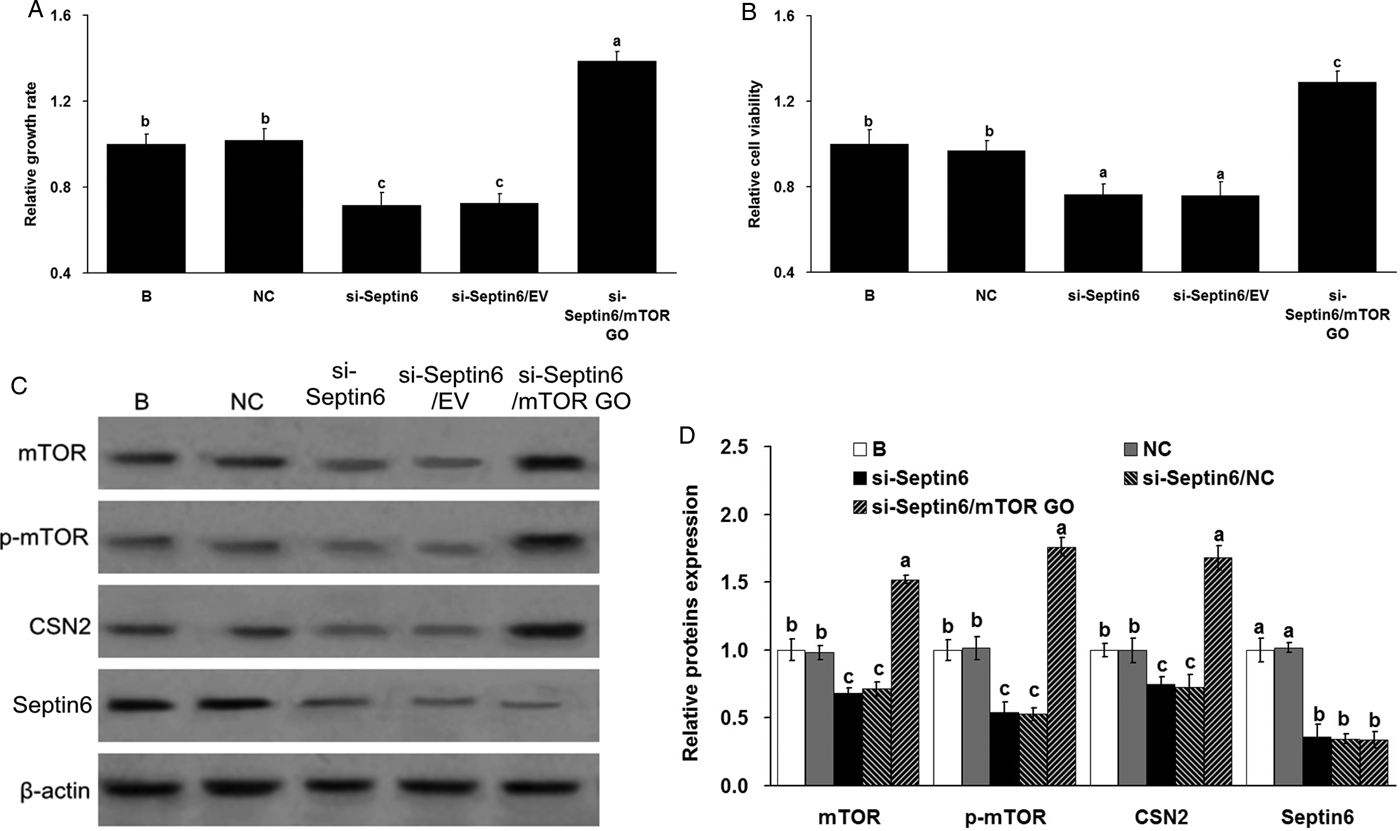
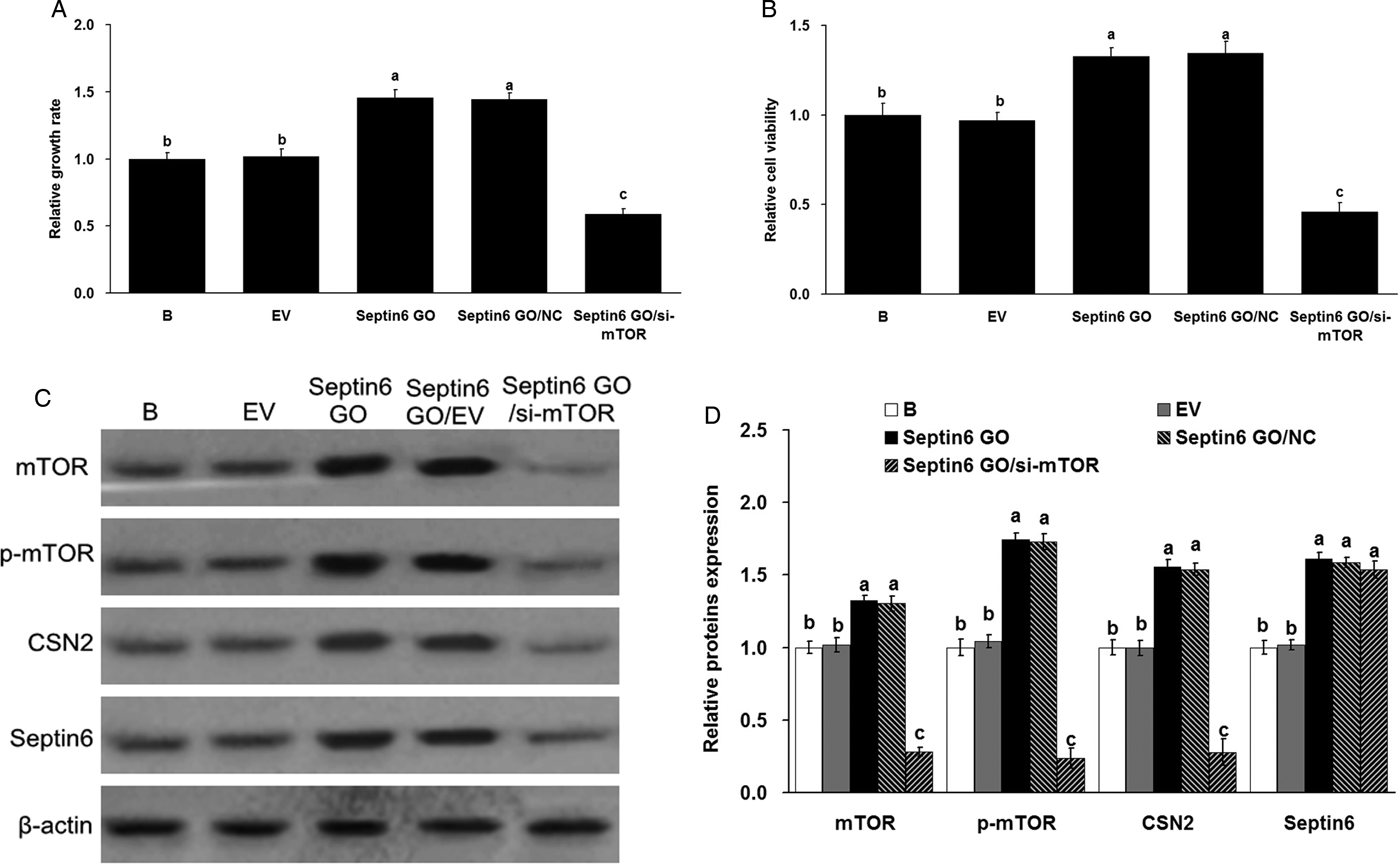
To investigate whether Septin6 regulate cell growth and casein synthesis through mTOR pathway, cells were treated with mTOR GO and si-mTOR, respectively and cell growth, cell viability and the expression of CSN2 were tested. All three parameters were significantly (P < 0.05) decreased in response to Septin6 inhibition (Fig. 5), but these decreases were restored by mTOR overexpression. All three were significantly (P < 0.05) increased (Fig. 6) in response to Septin6 overexpression, but these increases were inhibited by mTOR inhibition. These results suggested that Septin6 promoted cell growth and casein synthesis through mTOR pathway.
Septin6 inhibition suppressed cell growth and casein synthesis through mTOR pathway. (a, b) Cell growth (a) and cell viability (b) of DCMECs treated with si-Septin6 or si-Septin6/mTOR GO were determined; (c, d) The protein expression of CSN2 in DCMECs treated with si-Septin6 or si-Septin6/mTOR GO were determined. The ratio value of ‘B group’ was defined as ‘1’. B, EV, NC, mTOR GO and si-Septin6: DCMECs were no transfected, transfected with empty vector, negative control siRNA, mTOR overexpression vector and si-Septin6, respectively. In the bar charts, different letters represent a significant difference (P < 0.05), while the same letters represent no significant difference (P > 0.05).

Septin6 overexpression promoted cell growth and casein synthesis through mTOR pathway. (a, b) Cell growth (a) and cell viability (b) of DCMECs treated with Septin6 GO or Septin6 GO/si-mTOR were determined; (c, d) The protein expression of CSN2 in DCMECs treated with Septin6 GO or Septin6 GO/si-mTOR were determined. The ratio value of ‘B group’ was defined as ‘1’. B, EV, NC, Septin6 GO and si-mTOR: DCMECs were no transfected, transfected with empty vector, negative control siRNA, Septin6 overexpression vector and si-mTOR, respectively. In the bar charts, different letters represent a significant difference (P < 0.05), while the same letters represent no significant difference (P > 0.05).

Discussion
AA, particularly branched-chain AA, can participate in various cell physiological processes including cell growth, cell differentiation, cell metabolism, cell apoptosis and protein synthesis (Saxton and Sabatini, Reference Saxton and Sabatini2017). In DCMECs, AA are one of the most important regulatory factors for cell growth and lactation (Jiang et al., Reference Jiang, Wang, Yu, Hu, Liu, Gao and Zheng2015a, Reference Jiang, Hu, Liu, Gao and Zheng2015b). In this study, the cells were treated with different concentrations of AA, and the cell growth and casein synthesis were assessed. The results showed that cell growth and casein synthesis were promoted in response to AA supply, which is consistent with previous research. In addition, the expression of Septin6 was increased in response to AA supply, suggesting that Septin6 may be involved in the regulation of AA-mediated cell growth and casein synthesis. This result is also consistent with previous research (Lu et al., Reference Lu, Gao, Li, Huang, Liu and Li2012).
The function of Septin proteins has been studied since the Septin gene family was discovered. Most studies have shown that Septins are likely to be scaffold proteins, participating in the regulation of a series of important physiological processes (Weirich et al., Reference Weirich, Erzberger and Barral2008; Mostowy and Cossart, Reference Mostowy and Cossart2012). In Hela cell, Septin proteins participate in the cell division process (Wloka et al., Reference Wloka, Nishihama, Onishi, Oh, Hanna, Pringle, Krauss and Bi2011; Kim et al., Reference Kim, Froese, Xie and Trimble2012). In our study, cell growth and casein synthesis were up-regulated by Septin6. Additionally, our results showed that the regulation of AA on cell growth and casein synthesis was partly controlled by Septin6.
In DCMECs, one of the most important pathways that regulate cell proliferation and milk synthesis is the mTORC1 pathway (Burgos et al., Reference Burgos, Dai and Cant2010). This pathway can respond to AA and influence cell proliferation and milk synthesis and have shown that mTORC1 is activated by AA, and then mTORC1 activated ribosomal protein S6 kinase 1 (S6K1) and eukaryotic translation initiation factor 4E binding protein 1 (4EBP1) are promoted and participate in the translation process and protein synthesis (Fingar et al., Reference Fingar, Richardson, Tee, Cheatham, Tsou and Blenis2014). In our study, in DCMECs, mTORC1 pathway was activated by AA supply, in agreement with previous research. Importantly, our results also showed that (1) the activation of mTORC1 pathway was up-regulated by Septin6, and (2) the activation of mTORC1 pathway mediated by AA was partly controlled by Septin6. These results suggest that Septin6 is an important regulatory factor promoting activation of the mTORC1 pathway, and AA-mediated activation of the pathway is mediated, at least in part, by Septin6. We can conclude that in DCMECs, Septin6 is an important positive regulatory factor for cell growth and casein synthesis, responding to AA signaling by activating the mTORC1 signaling pathway.
Supplementary material
The supplementary material for this article can be found at https://doi.org/10.1017/S0022029919000268
Acknowledgements
The present study was supported by Tibet Autonomous Region Science and Technology Project (XZ201801NB-11) and Tibet Autonomous Region Finance Special (XZNKY-2018-C-030).