Introduction
Osteopontin (OPN) is a highly phosphorylated glycoprotein (Secreted Phospho-protein 1, SPP1) and is expressed in several tissues (Denhardt and Guo, Reference Denhardt and Guo1993). The protein is found in milk, plasma and urine. Nagatomo et al. (Reference Nagatomo, Ohga, Takada, Nomura, Hikino, Imura, Ohshima and Hara2004) reported that both mRNA and protein levels were highly expressed during lactation and thus seem to have an effect on milk production traits. The OPN has been assigned several roles like binding to the cells via GRGDS, extra-cellular matrix components, regulation of formation and remodeling of mineralized tissue, recruiting and stimulating macrophages in response to infection and interactions with Ca++ ions (Denhardt and Guo, Reference Denhardt and Guo1993). The role of OPN in mammary gland development and lactation has been confirmed using a transgenic mouse model expressing OPN antisense RNA in the mammary gland (Nemir et al., Reference Nemir, Bhattacharyya, Li, Singh, Mukherjee and Mukherjee2000). The presence of OPN in milk and the high expression in mammary gland epithelial cells may account for the proliferation and differentiation of mammary glands (Nagatomo et al., Reference Nagatomo, Ohga, Takada, Nomura, Hikino, Imura, Ohshima and Hara2004). Osteopontin gene exhibits a moderate level of sequence conservation (Crivello and Delvin, Reference Crivello and Delvin1992).
Several whole-genome scans in cattle have identified QTL affecting milk production traits on BTA 6 close to OPN gene location (Zhang et al., Reference Zhang, Boichard, Hoeschele, Ernst, Eggen, Murkve, Pfister-Genskow, Witte, Grignola, Uimari, Thaller and Bishop1998; Nadesalingam et al., Reference Nadesalingam, Plante and Gibson2001; Ron et al., Reference Ron, Kliger, Feldmesser, Seroussi, Ezra and Weller2001; Ashwell et al., Reference Ashwell, Heyen, Sonstegard, Van Tassell, Da, VanRaden, Ron, Weller and Lewin2004; Olsen et al., Reference Olsen, Lien, Svendsen, Nilsen, Roseth, Opsal and Meuwissen2004). Schnabel et al. (Reference Schnabel, Kim, Ashwell, Sonstegard, Tassell, Connor and Taylor2005) reported OPN as a strong candidate gene underlying the QTL region of BTA 6 that harbors the largest number of milk-related QTLs. They provided an evidence for a putative QTN in the upstream regulatory region of bovine OPN with significant effects on milk yield, fat and protein percentage. Similarly, Leonard et al. (Reference Leonard, Khatib, Schutzkus, Chang and Maltecca2005) reported a single nucleotide polymorphism (SNP) in intron 4 (C/T) and C allele was associated with an increase in milk protein percentage and milk fat percentage. Khatib et al. (Reference Khatib, Zaitoun, Wiebelhaus-Finger, Chang and and Rosa2007) confirmed this association in the Holstein population of Wisconsin University.
Cohen et al. (Reference Cohen, Seroussi, Larkin, Loor, Everts-van der, Heon-Lee, Drackley, Band, Hernandez, Shani, Lewin, Weller and Ron2005) suggested ABCG2 as a candidate gene for milk production and Y581S to be a causative mutation for the QTL effect. They suggested OPN_3907 to be a hypervariable region. De Koning (Reference De Koning2006) reviewed the published reports for this QTL region and suggested that both alleles of OPN and ABCG2 are in linkage disequilibrium (LD) with the causative mutation. Olsen et al. (Reference Olsen, Nilsen, Hayes, Berg, Svendsen, Lien and Meuwissen2007) reanalyzed this region with several new SNPs including reported alleles of OPN and ABCG2. They reported that OPN_3907 can be excluded and suggested ABCG2 (Y581S) to be in LD with the causative mutation.
The importance of OPN in milk secretion and its association with milk production traits prompted us to characterize OPN in buffalo (Bubalus bubalis). In this paper, we present the OPN gene sequence from the genomic DNA as well as the sequence obtained from the cDNA of buffalo mammary gland. We also examined the effect of putative variation in the upstream region of the gene for its effect on milk yield in buffalo.
Materials and methods
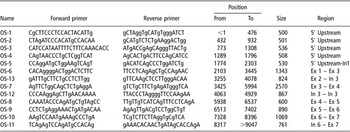
The genomic DNA samples are from 24 animals drawn from six diverse Indian water buffalo breeds (Murrah, Bhadawari, Tarai, Pandharpuri, Marathwada and Mehsana). The Murrah breed is a northern Indian large dairy breed while the Bhadawari and Tarai are small breeds adapted to extensive production systems. The Pandharpuri and Marathwada breeds are medium-sized buffaloes from central India and the Mehsana breed is a western Indian dairy breed. The OPN gene was amplified by PCR using overlapping primer pairs (Table 1). These primers were designed from sequences available in NCBI for Bos taurus AY 878328. We simultaneously utilized cattle genomic DNA as a control. A 25 μl reaction containing 50 ng of sample DNA, 4 pmol of each primer, 0.2 μM of each dNTP, 1 U Taq DNA polymerase (Invitrogen, Carlsbad, CA, USA) with 1X PCR buffer with 1.5 mM MgCl2 was utilized. Amplification reactions were carried out in ABI 9700 GeneAmp (Applied Biosystems, Foster City, CA, USA) with 5 min denaturation at 94°C, 35 cycles of 94°C for 45 s, 57°C for 45 s and extension at 72°C for 45 s followed by a final extension for 10 min. The PCR products were visualized on agarose with 100 bp ladder. The PCR products were purified with Exo_SAP (New England Biolabs, Beverely, MA, USA) enzymatic digestion. Twenty sires of Murrah buffalo breed in the artificial insemination program were genotyped for reported 9T/10T variants in the upstream region (Schnabel et al., Reference Schnabel, Kim, Ashwell, Sonstegard, Tassell, Connor and Taylor2005) and data were analyzed by Harvey (Reference Harvey1990) to study the effect of genotype on milk yield by the regression model with sires’ estimated breeding value as the dependent variable.
Primer pairs used for amplification of genomic DNA

Total RNA was isolated from lactating mammary gland tissue using the TRIzol (Invitrogen, Carlsbad, CA, USA) method. RNA extracted was reverse transcribed using the StrataScript RT-PCR system (Stratagene, La Jolla, CA, USA) in a reaction volume of 50 μl containing: RNase-free water: 35.5 μl; 10 X StrataScript RT buffer: 5.0 μl; Oligo d(T) primer (100 ng/μl): 3.0 μl, dNTP mix (40mM): 5.0 μl. After incubation, at 65°C for 5 min, the reaction mixture was allowed to cool at room temperature and then 2.5 μl of StrataScript RT (20 U/μl) was added and incubated at 42°C for 30 min. The first strand of the cDNA template was amplified using OPN gene-specific primers (Forward 5′-AGGGGACTGGACTCTTCTCG-3′; Reverse 5′-CTCCCACCCTGCTTTAATGTATCC-3′) in reaction containing: cDNA: 2.0 μl; 10X PCR buffer: 2.5 μl; OPN primers: 5 pmol each; 10mM dNTPs: 0.5 μl; Taq DNA polymerase (Bangalore Genei, Bangalore, India): 1.5 U; water to make 25 μl.
Sequencing was carried out with a final volume of 10 μl using ABI BigDye™ chemistry with the manufacturers’ protocol on an ABI 3100 Avant automated DNA sequencer. Each product was sequenced using reverse and forward primer. The sequences were aligned with SeqScape 2.0 (Applied Biosystems) and the consensus sequence of the OPN gene (DQ 899755) and mRNA (DQ 415660) was deposited with NCBI GenBank.
Results and discussion
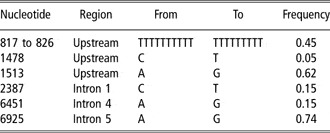
The amplified genomic DNA yielded fragments of expected sizes. The alignment of sequences with B. taurus as reference sequence (AY878328) permitted comparative analysis of the buffalo OPN gene and the presumed protein sequence. The sequence obtained from cDNA of the mammary gland confirmed the predicted mRNA sequence in buffalo. The 24 sequences of OPN obtained from six different breeds of buffalo exhibited polymorphism among themselves. A total of six SNPs were detected, five in intronic and one in the upstream region. The SNPs in the intronic regions were novel (Table 2) and can be used for diversity analysis. The SNP in the upstream region (indel) was the same as reported by Schnabel et al. (Reference Schnabel, Kim, Ashwell, Sonstegard, Tassell, Connor and Taylor2005) in B. taurus. All the SNPs in the intronic region were transitions.
Single nucleotide polymorphisms within buffalo breeds

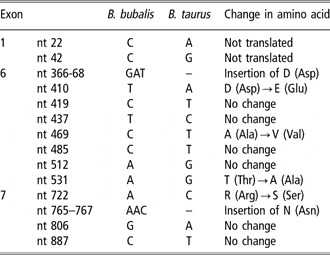
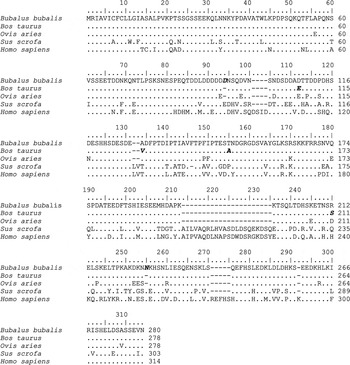
The comparison with taurine OPN revealed 12 nucleotide differences in the exonic region (Table 3). Two nucleotide changes were detected in exon 1, which is not translated. There is complete homology in exons 2–5. There are seven nucleotide differences in exon 6 and 3 in exon 7. Four among the changes were non-synonymous. The bubaline OPN has insertion of two amino acids (Figure 1) at positions 94 (Aspartic acid) and 227 (Asparagine), making a total of 280 amino acids (c.f. 278 in taurine and ovine).
Nucleotide changes in exonic regions

Amino acid sequence of SPP1 protein from Bubalus bubalis (DQ415660) as compared to Bos taurus (NP_776612), Ovis aries (NM001009284), Sus scrofa (NM214023) and Homo sapiens (NM001040060). Amino acids in the other species identical to B. bubalis are indicated by dots, gaps in the sequences are indicated by dashes, and differences between B. bubalis and B. taurus are given in italics.

Schnabel et al. (Reference Schnabel, Kim, Ashwell, Sonstegard, Tassell, Connor and Taylor2005) demonstrated that the Tn motif harboring OPN_3907, which is upstream of the promoter and within a region known to harbor tissue-specific Osteopontin regulatory elements, is moderately conserved among mammals. They also suggested it to be a novel regulatory element and responsible for QTL effect. The corresponding region at nt 826 was also found to be variable in the six studied breeds of buffaloes with a frequency of 0.45 for T9. All the three genotypes (T9/T9, T10/T9 and T10/T10) were observed in buffalo breeds.
Seven sires out of a total of 20 Murrah sires genotyped for this variation (Tn) were homozygous for 9Ts, five were homozygous for 10Ts and the remaining eight were heterozygous (9T/10T). The analysis of the genotypes had no significant effect (P value: 0.1901) on the milk yield in buffaloes. The data on fat and protein percentage were not available for analysis. Cohen et al. (Reference Cohen, Seroussi, Larkin, Loor, Everts-van der, Heon-Lee, Drackley, Band, Hernandez, Shani, Lewin, Weller and Ron2005) also considered this variation and reported this region to be in the hypervariable region in Israeli Holstein. Tantia et al. (Reference Tantia, Vijh, Mishra, Mishra, Bharani Kumar and Sodhi2006) reported fixation of other reported QTNs for milk yield, i.e. DGAT1 (K232A) and ABCG2 (Y581S) in diverse buffalo breeds of India. Presence of all the three genotypes (T9/T9, T10/T9 and T10/T10) of Osteopontin gene in 20 sires of one breed exhibits polymorphism of this allele. The results of this study reveal a high degree of conservation in buffalo Osteopontin compared with taurine cattle and other livestock species.
There was complete transferability of the primer pairs developed in B. taurus to B. bubalis. This is important in terms of reducing the cost and effort of genome analysis in closely related species utilizing comparative genomic tools.