Introduction
The global disaster landscape continues to affect the health and well-being of thousands of lives each year world-wide. Cyclones, floods, and storms account for the majority of socio-natural disaster-related deaths.Reference Ryan, Franklin and Burkle1,Reference Goklany2 In 2018, there were 331 socio-natural disasters recorded, affecting over 68 million people and killing 11,804 people world-wide.3 Heatwaves, floods, earthquakes, storms, volcanic activity, and wildfires contributed to stresses on health systems and the ability for communities to recover from these socio-natural disasters.Reference Ryan, Franklin and Burkle1,Reference Goklany2 This threat is anticipated to continue, with climate change predicted to result in extreme weather events becoming more frequent and severe.4,Reference McMichael, Woodruff and Hales5
Health care systems play an essential role in the delivery of life-saving services far beyond those required within the disaster impact zone. Their continuous function during and after these incidents not only provides emergency health care, but also provides the local community assurance of their safety and well-being.Reference Djalali, Castren and Khankeh6,Reference Rockenschaub and Harbou7
Disaster events expose vulnerabilities in health care facilities, leading to hospital evacuations as an effect of the imminent risk to patients by direct impact damage and/or associated isolation and resupply concerns.Reference Little, Stone and Stone8,Reference Rojek and Little9 The decision to evacuate a hospital is difficult, requiring a whole of health system approach to address significant health, financial, and logistical risks to patients, staff, and the community.Reference Rojek and Little9,Reference Johnson, Hayes and Gray10 Hospital evacuations in Cairns, Australia and Fukushima, Japan highlight the need for strong and robust infrastructure and capacity to support on-going functionality.Reference Little, Stone and Stone8,Reference Rojek and Little9,Reference Tanigawa, Hosoi, Hirohashi, Iwasaki and Kamiya11 In the aftermath of the earthquake and tsunami affecting Fukushima, mandatory patient evacuations from hospitals within the impact zone had resulted in increased mortality rates in the vulnerable patient cohorts.Reference Tanigawa, Hosoi, Hirohashi, Iwasaki and Kamiya11 Evacuation decisions, therefore, must be based on evidence requiring robust evaluations of likely hazards and their potential impact on hospital structural, non-structural (essential utilities and supplies), and functional capacity.
The World Health Organization (WHO; Geneva, Switzerland) and its member nations are cognizant of the need to reduce disaster risks and counter the global effects of disasters to the community. The 2015-2030 Sendai Framework for Disaster Risk Reduction (the Sendai framework)4 provides targets to member nations to address four main priorities to reduce the impact of disaster on a world-wide scale: (1) Understanding disaster risk; (2) Strengthening disaster risk governance to manage disaster risk; (3) Investing in disaster risk reduction for resilience; and (4) Enhancing disaster preparedness for effective response and to “Build Back Better” in recovery, rehabilitation, and reconstruction.4
Health system global targets within the Sendai framework are referenced in four of the seven global targets.4 They advocate the understanding of the risk environment and promotion of resilience within new and existing critical hospital infrastructure. Hospital resilience is critical to community self-sufficiency in the preparation for and aftermath of socio-natural disaster. Local health systems, facilities, and staff must also become resilient to disasters and adopt disaster risk management principles into everyday practice.4,Reference Coles and Buckle12
Hospital infrastructure resilience can be described as the ability of hospitals to resist, absorb, and respond to the shock of disasters while maintaining and surging essential health services and to recover to an original state or adapt to a new one.Reference Zhong, Clark, Hou, Zang and Fitzgerald13,Reference Albanese, Birnbaum and Cannon14 Hospital resilience is far more than the protection of buildings and physical structures. It includes the development and maintenance of systems and processes to ensure the continuation of supply lines and the treatment of patients. Hospital resilience programs should incorporate workforce training and regular exercising of staff and systems to ensure that facilities remain operational during times of disaster.Reference Wulff, Donato and Lurie15,Reference Kruk, Myers, Varpilah and Dahn16
As disaster-related risk increases globally, the resilience of a health facilities post-disaster is heavily dependent on the quality of planning and preparation, including the integration and implementation of business continuity and disaster management fundamentals.Reference Djalali, Castren and Khankeh6,Reference Zhong, Clark, Hou, Zang and Fitzgerald13,Reference Albanese, Birnbaum and Cannon14,Reference Monfared, Jamaly and Keykale17 Inadequate preparation can result in functional short comings and structural damage to the hospital building or local critical services (eg, power, water, and telecommunications) and can render the facility dysfunctional in the aftermath of a disaster leading to further community collapse or population evacuation.
An assessment of hospital vulnerabilities needs to ensure that it encompasses likely effects of all the identified risks and hazards to the hospital infrastructure and resources. The provision of such an assessment can provide managers with evidence of a hospital’s ability to withstand an event or provide an early warning to begin evacuations. The identification of improvement opportunities to strengthen response and recovery redundancies and resources further improves patient care and community confidence in health care systems.Reference Albanese, Birnbaum and Cannon14 However, there remains no global consensus or comprehensive framework to proactively evaluate the effectiveness of current hospital facilities’ ability to remain resilient to socio-natural disasters or other known risks.Reference Zhong, Clark, Hou, Zang and Fitzgerald13,Reference Abbasabadi, Khankeh and Mosadegh18 Researchers have developed their own assessment checklists, and organizations such as the WHO have published various iterations of checklists to provide an understanding of key vulnerabilities, capital infrastructure improvement recommendations, and planning strategies.Reference Djalali, Castren and Khankeh6,Reference Zhong, Clark, Hou, Zang and Fitzgerald13
A focus on hospital facility infrastructure, building structure, and non-structural aspects is required to ensure an overarching functioning and safe health facility during and post-disaster incident. The objectives of this review were to: identify studies directly assessing structural and non-structural aspects of building resilience; identify the various components required in a functional health facility; and to determine if the checklists used were comprehensive and relevant to contemporary health facility functions. The findings presented will help hospital disaster planners and health service managers to understand the requirements for assessment and prioritization of structural and non-structural infrastructure improvements to maintain services and reduce community impacts.
Methods
This is a scoping review undertaken systematically using the Preferred Reporting Items for Systematic Reviews and Meta-Analysis (PRISMA) guidelinesReference Moher, Shamseer and Clarke19 to describe current research papers relating to the resilience of hospital facilities against the impacts of disasters.
The determination of search terms, searching of relevant databases, and applying inclusion and exclusion criteria to assist the identification of relevant papers to the research question were undertaken in line with PRISMA criteria.Reference Moher, Shamseer and Clarke19 The use of disaster or hazard within this review is defined as both a singular and plural term and should be read as such.
The literature search occurred in September 2019. Articles published from January 2000-August 2019 were extracted. A search of CINHAL (EBSCO Information Services; Ipswich, Massachusetts USA), Medline (US National Library of Medicine, National Institutes of Health; Bethesda, Maryland USA), and Scopus (Elsevier; Amsterdam, Netherlands) was undertaken with relevant article reference lists also explored to widen the literature base examined.
The initial search strategy was tested and refined within Medline (Ovid), as this is the primary database used by health sciences and health researchers and practitioners. Search terms selected were: “disaster” and “cyclone,” “flood,” “bushfire,” “fire” or “storm,” and “Resilience,” and “Hospital,” and “assessment.”
Variations of search terms were explored and included:
-
Resilience: “adaptation,” “function,” “recovery/recover,” “preparedness;”
-
Hospital: “ward,” “clinic,” “organization,” or “administration;”
-
Disaster: “Natural Disaster,” “Disaster Planning,” “Disaster Medicine;” and
-
Assessment: “test,” “study,” “checklist.”
The final search strategy used was:
(Disaster OR Natural Disaster OR Disaster Planning) AND (Hospital, OR Hospital Engineering, OR Hospital Building) AND (Resilience, OR Adaptation, OR Function, OR Preparedness) OR (Assessment, Checklist, Test, or Evaluation Study).
An article was considered valid if inclusion criteria were achieved, including discussion of assessment, tool, or study design used to evaluate resilience/preparedness, inclusion of elements relating to facility structure, or non-structural function as defined in the WHO Hospital Safety Index (HIS) tool.20 Articles were selected from peer-reviewed journals that included quantitative or qualitative research, or mixed methods studies. Articles were excluded if they were not available in English full text, or if they did not focus on building structure or non-structural resilience assessment criteria. Literature review articles were excluded, however primary data sources were examined for relevant studies to include.
The evaluation of articles was conducted using thematic analysis of all articles. Data (articles) were saved electronically and were evaluated with notes being kept electronically or by hand with highlighter and pen. A table in Excel (Microsoft Corp.; Redmond, Washington USA) outlining key themes and concepts in each paper was developed and included a description of data type, hospital numbers and descriptions assessed, and assessment checklist used. Data included qualitative and quantitative journal articles, and as such, the McMaster University (Hamilton, Ontario, Canada) guidelines and appraisal forms were used to assess the quality of each article.Reference Law, Stewart, Pollock, Letts, Bosch and Westmorland21
The data descriptions were analyzed to produce an overview of hospital assessment checklist used, the assessment areas relevant to hospital structure and function, the validity of the checklist, and the resulting impacts of assessment on hospital facility resilience.
Results
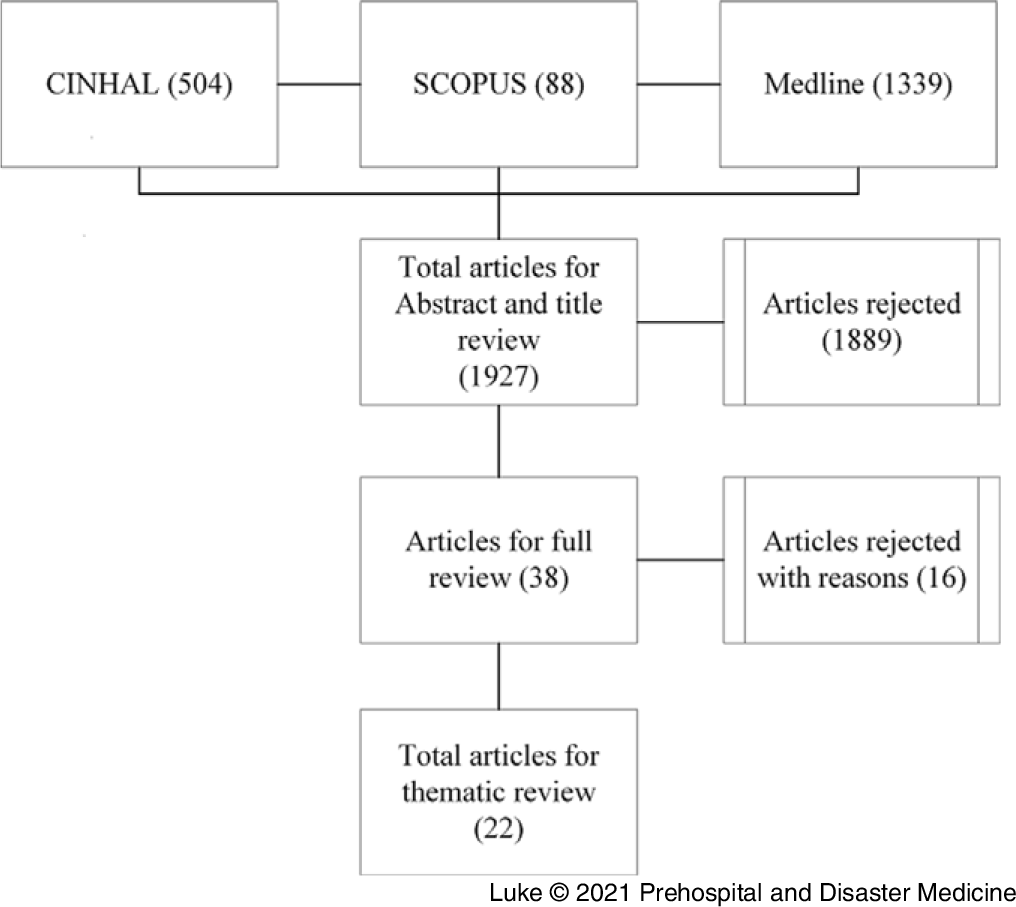
The initial search strategy identified 1,927 potential articles. Of these, 1,889 articles were rejected after reading titles and abstracts. The remaining 38 articles were read in full text, and 16 further articles were discarded as not meeting the required inclusion criteria, leaving 22 articles that satisfied all criteriaReference Achour, Miyajima and Pascale22–Reference Zhong, Clark and Hou43 (Figure 1). The excluded articles included two systematic literature reviewsReference Nekoie-Moghadam, Kurland, Moosazadeh, Ingrassia, Della Corte and Djalali45,Reference Sunindijo, Lestari and Wijaya46 and four articles where a full text was not available.
PRISMA Flow Diagram.

The assessment of hospital preparedness or resilience has been undertaken in many countries, with this review identifying studies in ten countries, with eight studies within Iran.Reference Ahmadi, Foroushani and Tanha23,Reference Ardalan, Keleh and Saberinia25,Reference Asefzadeh, Varyani and Gholami26,Reference Djalali, Ardalan and Ohlen30,Reference Hosseini, Bahadori and Raadabadi32,Reference Janati, Sadeghi-Bazargani and Hasanpoor34,Reference Khazaei Monfared, Jamaly and Safi Keykale35,Reference Sobhani, Khammarnia and Hayati39 In total, 960 facilities were included across the articles (some facilities included twice). There were two articles which represented over one-half the total facilities assessed in selected articles. Ardalan, et alReference Ardalan, Keleh and Saberinia25 assessed 421 facilities across Iran and Der-Martirosian, et alReference Der-Martirosian, Radcliff and Gable29 reviewed 140 Veteran Affairs hospitals using self-designed and tested survey in the United States of America. The mean number of facilities assessed was 11 across all articles reviewed.
The majority (68%; n = 15) of articles reviewed were quantitative analyses of hospital resilience or preparedness.Reference Ahmadi, Foroushani and Tanha23–Reference Bajow and Alkhalil27,Reference Der-Martirosian, Radcliff and Gable29,Reference Djalali, Ardalan and Ohlen30,Reference Hosseini, Bahadori and Raadabadi32–Reference Khazaei Monfared, Jamaly and Safi Keykale35,Reference Naser, Ingrassia and Aladhrae38,Reference Sobhani, Khammarnia and Hayati39,Reference Zhong, Clark and Hou43,Reference Sunindijo, Lestari and Wijaya46 Of the remaining articles, Toner, et alReference Toner, McGinty and Schoch-Spana41 explored hospital resilience through qualitative interviews and assessments, and a further six studies used a mixed methodology.Reference Achour, Miyajima and Pascale22,Reference Baruwal, Gonzalez and Delgado28,Reference Dobalian, Stein and Radcliff31,Reference Labarda, Labarda and Lamberte36,Reference Mulyasari, Inoue and Prashar37,Reference Zhong, Clark and Hou42
The majority (73 %; n = 16) of studies did not reference a specific event as reason for undertaking assessments, while six studies revealed assessments were undertaken directly after a disaster event such as tropical cyclones/typhoons, earthquakes, civil unrest, and flooding.Reference Achour, Miyajima and Pascale22,Reference Aladhrai, Djalali and Della Corte24,Reference Baruwal, Gonzalez and Delgado28,Reference Labarda, Labarda and Lamberte36,Reference Toner, McGinty and Schoch-Spana41,Reference Sunindijo, Lestari and Wijaya46
Study methodology included cross-sectional studies (20 in total)Reference Achour, Miyajima and Pascale22,Reference Ahmadi, Foroushani and Tanha23,Reference Ardalan, Keleh and Saberinia25–Reference Der-Martirosian, Radcliff and Gable29,Reference Dobalian, Stein and Radcliff31–Reference Sobhani, Khammarnia and Hayati39,Reference Toner, McGinty and Schoch-Spana41–Reference Zhong, Clark and Hou43,Reference Sunindijo, Lestari and Wijaya46 and two comparative assessments, including Djalali, et alReference Djalali, Ardalan and Ohlen30 comparing Iran’s hospital preparedness with that of Sweden (Supplementary Table 1; available online only).
This review identified seven checklists categorizing structural and non-structural aspects of building resilience. The WHO authored three separate checklists20,47,Reference Sorensen, Zane, Wante, Rao, Bortolin and Rockenschaub48 and four other checklists were developed by independent researchers.Reference Achour, Miyajima and Pascale22,Reference Dobalian, Stein and Radcliff31,Reference Toner, McGinty and Schoch-Spana41
The evaluation of hospital facilities has been undertaken in a variety of different methodologies, with 64% (n = 14) of studies indicating the evaluations were undertaken by the researchers themselves via interview and/or facility inspection. Hospital management self-evaluation was reported in four articles, and two studies provided training in the tool to managers prior to evaluation. Hospital management self-evaluation followed by researcher independent interview to validate results occurred in three studies,Reference Achour, Miyajima and Pascale22,Reference Aladhrai, Djalali and Della Corte24,Reference Labarda, Labarda and Lamberte36 two of which were researcher developed checklists.
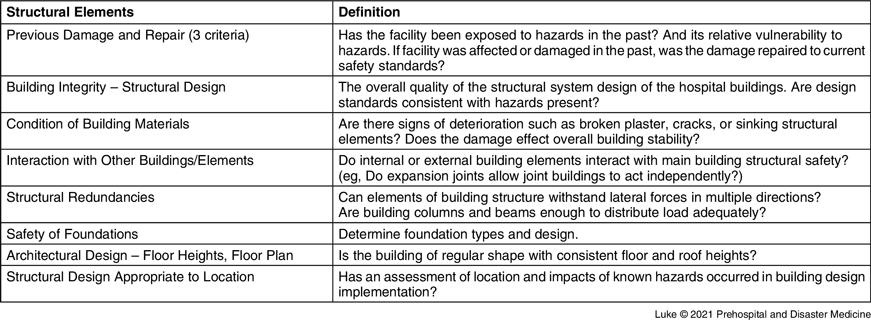
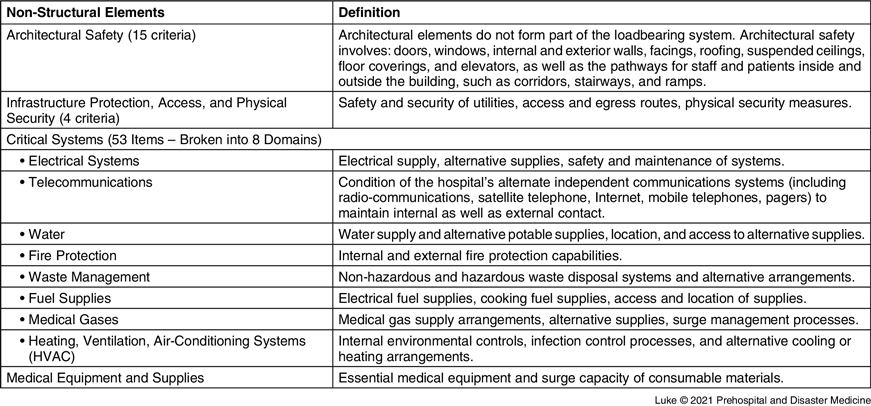
To determine checklists used to assess hospital resilience, this literature review concentrated on studies that included aspects of structural design and safety as well as internal infrastructure safety (Table 1 and Table 2).
Definitions of Structural Safety Elements53

Definitions of Non-Structural Safety Elements53

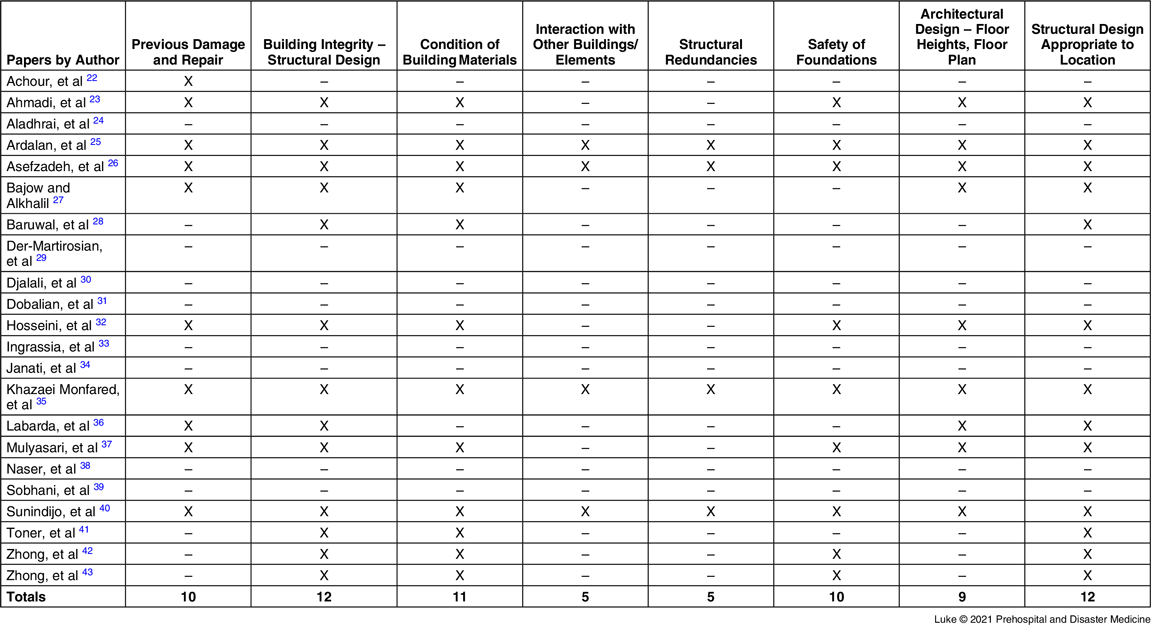
Structural safety and design components of resilience were assessed in 13 studies, with eight differing components identified in the review. The major components of structural resilience were identified as building integrity, building material and design standards, and previous event damages (Table 3).
Structural Safety Elements Evaluated within Each Study Reviewed

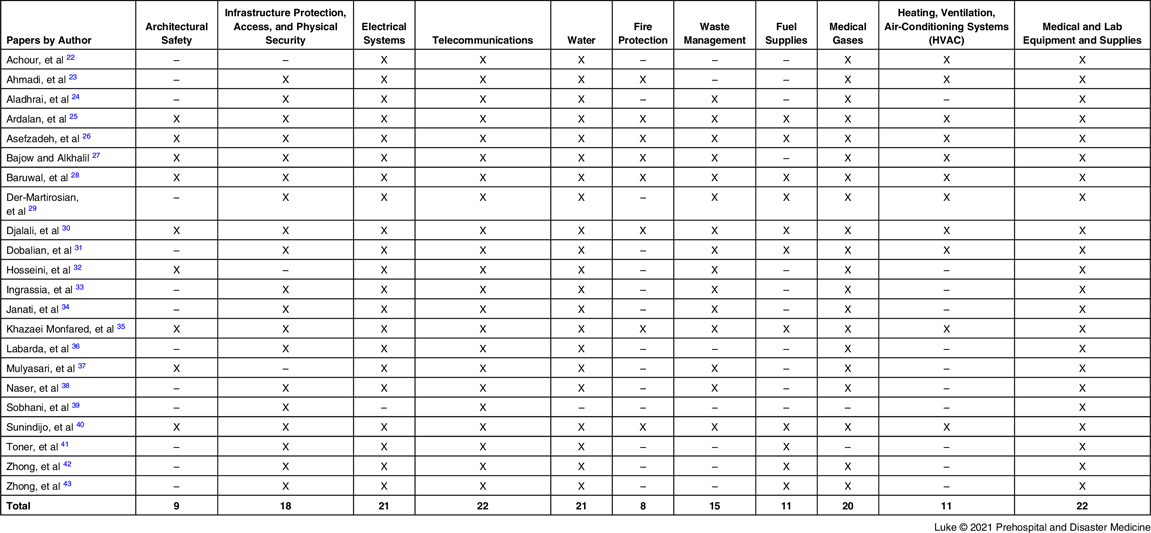
Internal infrastructure safety and resilience elements were identified in all 21 articles, with 11 different domains identified. The major components identified by surveys as important to non-structural or internal infrastructure resilience included the safety of power, water, telecommunication, medical gas supply, and medical equipment resupply systems (Table 4).
Non-Structural Safety Elements Evaluated within Each Study Reviewed

Validated studies were identified in four studies, with one study exploring the validity of the WHO emergency response checklist against the HSI checklist.Reference Baruwal, Gonzalez and Delgado28 Other studies identified self-developed checklists with mixed validation methods. The development of the Veteran Affairs, Comprehensive Emergency Management Program (CEMP) checklist used confirmatory factor analysis in a three-phase program to develop a comprehensive checklist identifying key components of disaster resilience.Reference Dobalian, Stein and Radcliff31
Zhong, et alReference Zhong, Clark and Hou42,Reference Zhong, Clark and Hou43 have published a multi-step process for the development of a comprehensive checklist for disaster resilience. In these studies, an initial 33-member panel participated in a three-round modified Delphi study to develop the framework of the checklist.Reference Zhong, Clark and Hou42 Subsequent studies have reported on the implementation of the checklist in 41 tertiary facilities, with the reliability and construct validity of the framework tested and statistically analysed.Reference Zhong, Clark and Hou43
Discussion
Hospitals are and will continue to be impacted by socio-natural disasters. There is a need for hospitals to be as prepared as possible and to provide for a safe environment in the event of a disaster. Resilient hospitals are built to withstand assault from all hazards; they are unlikely to lose structural integrity.Reference Rockenschaub and Harbou7 As a result, they are likely to continue to function, providing well-organized services to the community, with contingency plans in place and a health workforce trained to keep the network operational.49 This review identified seven checklists used to determine resilience and safety to enable hospital administrators to understand and monitor factors that contribute to their facilities’ vulnerability during an emergency or disaster.
Of the seven assessment checklists identified, five included both structural and non-structural safety assessment elements.20,Reference Mulyasari, Inoue and Prashar37,Reference Zhong, Clark and Hou42,47,Reference Sorensen, Zane, Wante, Rao, Bortolin and Rockenschaub48 Structural elements which are important to evaluate include the building’s location in relation to hazard(s), the design specifications, and safety of building materials used. These elements are essential to determine the likelihood of a building maintaining structural integrity during and after a disaster impacts the facility. These two elements can be further broken down to individual key criteria, including the design and current integrity of the foundations, the columns, the beams, the slabs, the load-bearing walls, the braces, and the trusses. This review has identified the WHO HSI checklist provides a more comprehensive analysis of these structural elements with a total of 18 components across two domains.20
The determination of structural safety and building material integrity is reliably provided by expert engineers to ensure an accurate account of a building’s limitations and strengths.Reference Baruwal, Gonzalez and Delgado28,Reference Khazaei Monfared, Jamaly and Safi Keykale35 Access to expert resources has been identified as a limitation in undertaking assessments across a large number of facilities, especially where engineers are not part of the hospital usual staffing.Reference Baruwal, Gonzalez and Delgado28,Reference Khazaei Monfared, Jamaly and Safi Keykale35
The development, promotion, and enforcement of standards in building design and materials by relevant government departments is also noted as important to improving building resilience. This is particularly relevant when re-developing older buildings or when designing and building new facilities.Reference Hosseini, Bahadori and Raadabadi32,Reference Naser, Ingrassia and Aladhrae38
Non-structural or internal infrastructure elements are distinct, separate to structural elements, as they do not form part of the building’s load bearing structure. Rather, they provide the internal environment and ensure delivery of medical services. This review has highlighted four separate domains:
-
1. Internal architectural safety;
-
2. Infrastructure protection and physical safety elements;
-
3. Safety and maintenance of critical systems (eg, electricity, water supply, waste management, medical gases, heating, and cooling); and
-
4. Medical and office equipment.
All studies identified aspects within three of the four domains, highlighting the importance of security, critical utilities, and the maintenance of medical equipment and supplies to undertake disaster medicine activities. The architectural safety of internal aspects was only highlighted in studies using the WHO HSI or the Mulyasari, et alReference Mulyasari, Inoue and Prashar37 tools. These elements are acknowledged as needing a higher degree of engineering knowledge to assess objectively and therefore may not be a hospital administrator’s priority.Reference Zhong, Clark, Hou, Zang and Fitzgerald13 The inclusion of these elements in a holistic assessment is, however, integral to the safety of the internal structures of the building and their resilience to external forces. It will determine the capacity of a hospital facility to expand to accommodate more patients or staff during the incident.20
The physical structure of the building is complimented by the need for uninterrupted supply of critical utilities. Achour, et alReference Achour, Miyajima and Pascale22 suggest the maintenance of such things as electricity, water, and telecommunications, and the development of sustainable alternatives, is critical to determining the ability of a hospital to maintain services post-disaster. In their study, the ability for a hospital to maintain alternative and sustainable essential services should be mandated by legislation and resilience building codes. This is in a bid to drive resilience building within existing facilities and develop new buildings that are inherently resilient to all hazards.Reference Achour, Miyajima and Pascale22
The validation of checklists provides the user with evidence of the tools’ credibility and utility and gives confidence in the assessment outcomes to hospital managers.Reference Labarda, Labarda and Lamberte36 The true test of a checklist’s validity in the disaster sphere only occurs when facilities are assessed both pre- and post-disaster.
The WHO has a series of checklists, easily accessible on its website, that have been widely used across the globe and results published as indicated in this review.Reference Aladhrai, Djalali and Della Corte24–Reference Bajow and Alkhalil27,Reference Der-Martirosian, Radcliff and Gable29,Reference Dobalian, Stein and Radcliff31,Reference Janati, Sadeghi-Bazargani and Hasanpoor34–Reference Labarda, Labarda and Lamberte36,Reference Sobhani, Khammarnia and Hayati39,Reference Toner, McGinty and Schoch-Spana41 The HSI (2nd edition) is reported to have been used in 3,500-plus hospitals across the globe with expert advice being integrated into the revised edition to supports its application to all socio-natural hazards.20 The widespread use, coupled with the comprehensive 151 elements grouped into four domains, allows this tool to be reliably discerning and accurate in determining the likely safety score of assessed hospitals.20,49 There is, however, limited evidence published in relation to how an assessed hospital has withstood the impact of a socio-natural disaster. Labara, et alReference Labarda, Labarda and Lamberte36 suggest in their exploratory study that the challenges posed by a full technical assessment in a post-disaster setting limits the capacity of the HSI to analyze resilience in the health sector.Reference Labarda, Labarda and Lamberte36
The two independently developed and validated checklists by Zhong, et al and the Veteran Association CEMP have undergone multi-phase development and internal validation processes; however, both identify that further research is required to provide a complete validation and applicability to all hospital facilities.Reference Zhong, Clark, Hou, Zang and Fitzgerald13,Reference Der-Martirosian, Radcliff and Gable29,Reference Zhong, Clark and Hou42,Reference Zhong, Hou and Clark50 The ability to truly validate checklists, both pre- and post-disaster, is limited due to practicalities. Current research suggests more studies with larger cohorts are required to fully determine which checklists are ideal.
This review has identified the need for resilience assessments to be easily implemented by internal management structures or outsourced to independent evaluation teams. Evaluation methods have varied between independent evaluation, self-assessment, or a mix of both and require a checklist that is easy to use and understand. The WHO implementation plans for the use of the HSI includes the delivery of a training program to all evaluators enabling a shared knowledge and in depth understanding of the tool and assessment safety ratings. It is noted that expert knowledge in structural engineering is required for many aspects of this tool; however, the lack of in-house engineering expertise can be mitigated through outsourcing this small component, where required.Reference Ardalan, Keleh and Saberinia25,Reference Djalali, Ardalan and Ohlen30,Reference Khazaei Monfared, Jamaly and Safi Keykale35,51 The integration of external support and use of a self-evaluation method is reported to improve employee disaster literacy and promotion of resilience messaging, important to developing a facility-wide culture of performance and disaster leadership.Reference Ardalan, Keleh and Saberinia25,Reference Der-Martirosian, Radcliff and Gable29,Reference Dobalian, Stein and Radcliff31
Effective disaster management is threatened when disaster management plans are developed in isolation without hospital managers being aware of a facility’s limitations and structural vulnerabilities.Reference Chand and Loosemore52 The application of theoretical knowledge (what the plan states) must be integrated into the structural, non-structural, and staff capacity and capability. Resilience programs at a facility level therefore must be underpinned by a shared knowledge and responsibility for undertaking a collaborative assessment of current safety and vulnerabilities.Reference Labarda, Labarda and Lamberte36,Reference Chand and Loosemore52
The on-going commitment by all levels of facility management and governments to building a disaster risk reduction framework built on leadership, partnerships, public safety, and performance is fundamental to ensuring a resilient health system.
Of the seven checklists identified, the HSI has the most elements for assessment (151) and is the most comprehensive tool for determining facility safety with regard to structural aspects of building design and integrity. The revised edition,20 now published with a comprehensive evaluator’s guide and corresponding training program, allows for a team assessment model requiring the cooperation of clinicians, technical support, and management staff, thus creating opportunities to build and maintain an awareness of and commitment to resilient facility design and systems. The structured and standardized HSI assessment template simplifies facility comparisons and lends itself to the future development of a global hospital resilience database that would itself enable validation of assessments and benchmarking of facilities within and between high- and low-income countries.
On-going resilience programs that initiate an assessment must also develop and deliver an improvement plan or strategy to address vulnerabilities.Reference Janati, Sadeghi-Bazargani and Hasanpoor34,53 The comparative study in Yemen surveying 11 hospitals showed little to no improvements were made in the two years between surveys. Authors concluded that preparedness and resilience building is a slow process requiring significant on-going commitment and effort from all levels of government and hospital administration, with progress to date not providing an appreciable increase in casualty care. They surmise that some of the barriers to improvements include social and cultural anthropology, economics, and political governance.Reference Aladhrai, Djalali and Della Corte24
Other barriers to developing resilience highlighted in literature include the perception of disaster risk management as diverting funds away from front line services, budgetary constraints and differences in maintenance and building allocations, and the lack of collaborative planning and development in the disaster management arena.Reference Achour, Miyajima and Pascale22,Reference Djalali, Ardalan and Ohlen30,Reference Chand and Loosemore52
Improving preparedness of hospitals is a global need requiring governments to provide leadership and hospitals to collaborate to protect and care for the community.Reference Mulyasari, Inoue and Prashar37 The standardization of evaluation assessments is the necessary first step in developing nation-wide guidelines and procedures for disaster resilience in hospital facilities.Reference Ingrassia, Mangini and Azzaretto33
Limitations of Study
Limitations of this research included the narrow focus on tools, checklists, or evaluation methods for disaster resilience of health facilities. This was further limited by direct focus on areas of assessment including structural aspects and non-structural (architectural) safety and critical utilities. This approach was selected due to the interest in the building resilience functions and not the wider health disaster management aspects of planning and exercise management.
The limitations placed on articles published in English, within the past 10 years, and only original research may have narrowed the results further, as noted by the limited number of countries highlighted as undertaking evaluations. It is noted that the WHO checklists identified have been used widely in Europe and in the Americas.
Conclusion
The health impact of hospitals being affected by disasters extends beyond just medical care post-disaster and in recovery. It also affects the long-term recovery and sense of well-being of the community. The resilient hospital will continue to function, providing well-organized services to the community, with contingency plans in place and a health workforce trained to keep the network operational. This review identified seven checklists available to hospital managers that assess a hospital facility’s ability to withstand the impacts of disasters, providing a framework for improvement. Checklists varied in their level of detailed assessment in areas of structural and non-structural safety. The comprehensive nature of structural and non-structure assessments within the WHO HSI checklist when compared with others inspires future investigation into its application and validity in disaster-prone health systems. The HSI is recommended for further evaluation in a wide range of hospital facilities and nations, including its use pre- and post-disaster to ensure its validity. A global database of hospital facility resilience evaluated against the same tool would provide a clearer picture to define projects to remedy the identified gaps.
Conflicts of interest/funding
none
Supplementary Material
To view supplementary material for this article, please visit https://doi.org/10.1017/S1049023X21000650