In recent decades, there has been a steady increase in the frequency and severity of natural disasters, and climatologists predict that this trend will likely continue as the climate continues to warm (Energy Climate Intelligence Unit, 2017). Children may be particularly vulnerable to such events because of their age and reliance on adults. Indeed, children who live through natural disasters experience higher rates of mental health problems even in adulthood, likely from the stress and trauma associated with such events (Maclean, Popovici & French, Reference Maclean, Popovici and French2016).
Stress and neurodevelopment
Mounting evidence suggests that stress can have enduring effects on neural development that may influence subsequent behavioral phenotypes (Masten & Cicchetti, Reference Masten and Cicchetti2010). Most research examining the effect of stress on neural functioning in children and adolescents has focused on very severe forms of early life stress (ELS), including chronic events such as neglect or repeated traumatic events such as abuse. For example, physically abused and institutionally reared children exhibit preferential attention (Briggs-Gowan et al., Reference Briggs-Gowan, Pollak, Grasso, Voss, Mian, Zobel and Pine2015), and increased activation in brain regions involved in threat processing, including the amygdala. anterior cingulate cortex, and dorsolateral prefrontal cortex, compared with children who have not been abused (for a review, see McCrory, Gerin & Viding, Reference McCrory, Gerin and Viding2017). Although hyperresponsiveness to threatening stimuli may be adaptive in unsafe environments, it can also place an individual at risk for developing maladaptive behaviors (e.g., extreme avoidance) characteristic of several anxiety disorders.
Neurocognitive systems supporting reward processing have also been shown to be vulnerable to the effects of stress. For example, compared with typically developing youth, children who experienced severe neglect and were reared in institutions fail to alter their behavioral response to stimuli as a function of reward value and exhibit reduced activation in the ventral striatum during reward anticipation and in response to positive cues (Goff et al., Reference Goff, Gee, Telzer, Humphreys, Gabard-Durnam, Flannery and Tottenham2013). In addition, adolescents with a history of parental neglect have been shown to exhibit reduced reward-related neural activation across a 2-year period (Hanson et al., Reference Hanson, Albert, Iselin, Carré, Dodge and Hariri2015). Reward insensitivity may reduce approach-oriented behaviors and increase the likelihood of survival in an environment fraught with danger; however, reward insensitivity may also lead to the development of particular forms for psychopathology, such as depression and substance use (Baskin-Sommers & Foti, Reference Baskin-Sommers and Foti2015). Taken together, these studies suggest that stress may have an opposing influence on neural systems that support reward and threat processing. Because most of this research has focused on maltreatment, however, the precise cause of neural changes is difficult to pinpoint because they may be influenced by numerous factors working alone or in tandem (e.g., poverty, substance abuse, low educational attainment, family violence, other co-occurring forms of abuse and neglect).
Only a handful of studies have examined neurodevelopment in the context of less severe and repetitive stressful life events (SLEs; e.g., parental divorce, loss of a grandparent). These studies suggest that SLEs during childhood and adolescence may affect neural reactivity to reward and threat in a similar fashion as ELS (e.g., Casement et al., Reference Casement, Guyer, Hipwell, McAloon, Hoffmann, Keenan and Forbes2014). For example, in adolescents, exposure to common SLEs in the prior 12 months was associated with increases in amygdala reactivity to fearful faces over a 2-year period (Swartz et al., Reference Swartz, Williamson and Hariri2015). Other studies suggest that there may be specificity with regard to the timing and type of SLEs and their effect on neurodevelopment. For instance, in adolescents, lifetime self-relevant stressors (events involving physical appearance and academic achievement) were associated with enhanced neural activation to threatening stimuli, but no associations were found with accident-, familial-, and illness-related stressors (Gollier-Briant et al., Reference Gollier-Briant, Paillère-Martinot, Lemaitre, Miranda, Vulser, Goodman and Poustka2016). In a separate investigation, cumulative SLEs across childhood and adolescence were associated with reduced ventral striatal activation to reward in adulthood, although the effects were stronger for early and interpersonal compared to later and physical/nonsocial stressors (Hanson et al., Reference Hanson, Albert, Iselin, Carré, Dodge and Hariri2015).
Most of these SLEs may be at least somewhat dependent on the individual's behavior, making it difficult to draw inferences about causality. In addition, in most studies, neural functioning was examined only after, not before, the stressful events. Thus, it is unclear whether neurobiological differences are an effect of the stressor or a continuation of pre-existing neural functioning. For example, in adults exposed to stress associated with military service, amygdala reactivity measured before exposure and reductions in hippocampal volume following exposure have both been shown to predict posttraumatic stress disorder-related symptoms (Admon et al., Reference Admon, Lubin, Stern, Rosenberg, Sela, Ben-Ami and Hendler2009, Reference Admon, Leykin, Lubin, Engert, Andrews, Pruessner and Hendler2013).
It is also unclear whether the effects of ELS and common life events on neurodevelopment are similar to those of natural disasters. In addition to their increasing effect on youth, research on natural disasters is important because their fateful nature provides a unique opportunity to elucidate the effects of environmental stress on neurodevelopment. Unlike ELS and most common life events, the occurrence of natural disasters are entirely outside participants’ control, eliminating questions about the direction of causality and effects of third variables; however, because of their unforeseeable nature, data on neural structure and function are rarely available before the disaster. In the present study, we had the rare opportunity to build on a pre-existing study of child development in a region that was directly affected by a natural disaster, enabling us to extend our understanding of the association between a discrete and fateful environmental stressor and the development of neural systems associated with threat and reward.
Parenting
Theoretical models (e.g., Bowlby, Reference Bowlby1973) propose that the ways in which an individual is treated by caregivers during childhood produce internal working models of the self, others, and environment, which then guide how they think, feel, and behave in later contexts, particularly stressful ones. Positive parenting (warm, responsive, and instructive) communicates the availability and predictability of resources in the environment, promotes a child's perceived sense of mastery over the environment, and predicts a lower likelihood of youth developing a depressive disorder (Milevsky, Schlechter, Netter & Keehn, Reference Milevsky, Schlechter, Netter and Keehn2007). In contrast, negative parenting (highly critical, punitive, and intrusive) increases children's perceptions of, while also undermining their perceived sense of control over, environmental threats, and predicts high levels of anxiety disorders and avoidance-related behaviors (Hudson & Rapee, Reference Hudson, Rapee, Heimberg, Turk and Mennin2004). Thus, particular parenting styles may serve to exacerbate or buffer against the impact of stressful events, including natural disasters, on the neurodevelopment of threat and reward systems.
Indeed, studies aimed at determining predictors of vulnerability and resilience in children who have been exposed to stress and adversity support the key role of the caregiving environment on child development (Masten, Reference Masten2001; Masten & Narayan, Reference Masten and Narayan2012). More specifically, bio-ecological models of disaster exposure in youth suggest that a child's susceptibility to disaster exposure and its biological correlates is influenced by salient features of the environment, such as parenting (Weems, Reference Weems2015). Empirical studies in this area have focused on child symptom and functioning outcomes rather than effects on neurodevelopment, and contextual measures have tended to focus on parental psychopathology and functioning rather than parenting styles and practices (e.g., Spell et al., Reference Spell, Kelley, Wang, Self-Brown, Davidson, Pellegrin and Baumeister2008). Despite theoretical and empirical evidence that parenting, in comparison to caregiver adjustment, has a more direct influence on child adjustment in the context of stressful life circumstances (DeGarmo, Patterson, & Forgatch, Reference DeGarmo, Patterson and Forgatch2004), surprisingly few studies of the effects of natural disasters on children have focused explicitly on parenting styles and practices. One study found that low levels of parental acceptance and higher levels of firm control were associated with increased anxiety symptoms in children after Hurricane Katrina (Costa, Weems & Pina, Reference Costa, Weems and Pina2009).
Although no studies have examined the effect of parenting behaviors on neurodevelopment in the context of disasters, there is evidence that variation in parental care outside of extreme caregiving scenarios, such as severe deprivation and abuse, influences the neurodevelopment of reward and threat sensitivity. Higher levels of parental warmth have been associated with neural reactivity, suggesting increased reward sensitivity and approach motivation (Bernier, Calkins & Bell, Reference Bernier, Calkins and Bell2016; Euser et al., Reference Euser, Evans, Greaves-Lord, Huizink and Franken2013). In contrast, higher levels of parental hostility and authoritarian parenting prospectively predicted an increased error-related negativity (ERN)—an event-related potential (ERP) indexing error monitoring, sensitivity to threat, and risk for anxiety—in children (Brooker & Buss, Reference Brooker and Buss2014; Meyer et al., Reference Meyer, Proudfit, Bufferd, Kujawa, Laptook, Torpey and Klein2015). These studies suggest that there is some specificity in how parenting influences the neurodevelopment of reward and threat systems, such that positive parenting is more tightly linked to the development of neural reactivity to reward, whereas negative parenting is more closely linked to the development of neural reactivity to threat.
Despite evidence that life stress and the caregiving milieu both influence the development of neural systems underlying reward and threat processing, only a handful of studies have brought together these areas of research to simultaneously examine the effect of stress and parenting on brain development. These studies sampled children from socioeconomically disadvantaged families, and the findings have been mixed. In one study, harsh parenting and greater neighborhood disadvantage had independent effects on distinct aspects of amygdala reactivity to angry, neutral, and fearful expressions (Gard et al., Reference Gard, Waller, Shaw, Forbes, Hariri and Hyde2017), In another study, reductions in hippocampal volume associated with exposure to poverty were mediated by parenting characterized by low support/high hostility (Luby et al., Reference Luby, Belden, Botteron, Marrus, Harms, Babb and Barch2013). In a third study, positive parenting was found to buffer the negative effects of disadvantage on frontal lobe development, suggesting that the caregiving context may influence how and whether stress impacts neurodevelopment (Whittle et al., Reference Whittle, Vijayakumar, Simmons, Dennison, Schwartz, Pantelis and Allen2017). Given the established relationship between poverty and parenting behaviors (Blair et al., Reference Blair, Raver, Granger, Mills-Koonce and Hibel2011), however, it may be necessary to examine stressful events that are relatively independent from parenting to resolve such discrepancies.
The aforementioned studies focused on positive and negative parenting practices in general, rather than parenting that directly promotes reward sensitivity/approach behaviors and threat sensitivity/avoidance behaviors. Promotion-oriented and prevention-oriented parenting styles are types of motivationally based parenting styles that may be instrumental in shaping neural circuitry underlying reward and threat processing because they are characterized by the extent to which behavior is motivated to approach reward or to avoid threat when self-regulation is required (Higgins, Reference Higgins1997). Promotion-oriented parenting focuses on positive and desired outcomes while attempting to avoid the absence of positive opportunities such as unrealized prospects or nongains. Thus, children who receive high levels of promotion parenting may have a more resilient reward system and be less vulnerable in the face of stressful life events. In one study, higher promotion-focused parenting was shown to play protective role for children characterized by a heightened reactivity to negative stimuli during a fear-eliciting task (Kessel et al., Reference Kessel, Huselid, DeCicco and Dennis2013). Prevention-oriented parenting fosters threat sensitivity and focuses on safety and avoiding negative outcomes and losses, and may render a child's neural system supporting threat processing more vulnerable when stressful life events are unavoidable.
The current study
We extended prior research by leveraging an ongoing investigation of child development in a region that was directly affected by Hurricane Sandy, a Category 1 storm system that struck the New York tristate area on October 25, 2012, and was one of the costliest hurricanes in American history. Specifically, using a pre-post design, we examined the relationships of environmental stress and parenting style with changes in neural systems associated with reward and threat processing.
To examine reward and threat sensitivity, we measured the reward-related positivity (RewP) and the ERN (Bress et al., Reference Bress, Meyer and Proudfit2015; Meyer, Bress & Proudfit, Reference Meyer, Bress and Proudfit2014). The RewP is a positive deflection in the ERP signal over frontocentral sites that occurs approximately 300 ms after feedback, indicating monetary gain that is absent or reduced for feedback indicating monetary loss (Gehring & Willoughby, Reference Gehring and Willoughby2002). The RewP is correlated with activation in reward-related brain regions, including ventral striatum and medial prefrontal cortex (Carlson, Foti, Mujica-Parodi, Harmon-Jones, & Hajcak, Reference Carlson, Foti, Mujica-Parodi, Harmon-Jones and Hajcak2011), as well as self-report and behavioral measures of reward sensitivity (Bress & Hajcak, Reference Bress and Hajcak2013).
The ERN is a negative deflection in the ERP signal at frontocentral sites that occurs approximately 50 ms after the commission of an error. There is a general consensus that the ERN indexes the activity of a performance monitoring system that serves to adjust the individual's behavior to meet environmental demands; however, recent conceptualizations also point to the ERN's affective relevance and relationship to threat sensitivity (Proudfit, Inzlicht, & Mennin, Reference Proudfit, Inzlicht and Mennin2013). Because the commission of an error prompts defense system activation (e.g., skin conductance response, pupil dilation, potentiated startle reflex), and the ERN is correlated with these physiological indices as well as with anxiety symptoms and traits, it has been theorized to index threat reactivity (Hajcak, Reference Hajcak2012); however, other theories provide competing explanations of the ERN's functional significance. For example, conflict monitoring theory suggests that the ERN is elicited by the detection and processing of cognitive conflict (Gehring & Fencsik, Reference Gehring and Fencsik2001), and reinforcement learning theory (Holroyd & Coles, Reference Holroyd and Coles2002) suggests that the ERN may have an evaluative function that signals when an event is worse than expected. These perspectives may not be mutually exclusive because the negative affective experience of conflict motivates the immediate initiation of cognitive control (Inzlicht, Bartholow, & Hirsch, Reference Inzlicht, Bartholow and Hirsch2015). Evidence from ERP source localization studies indicates that the ERN originates in the anterior cingulate cortex, a region of the frontostriatal system implicated in numerous complex functions including error and performance monitoring, decision-making, and punishment processing (Carter & van Veen, Reference Carter and van Veen2007). The anterior cingulate cortex comprises two functional subdivisions: the dorsal, or cognitive, part that projects onto the motor cortex and prefrontal cortex, and the rostral, or affective, part that projects onto the amygdala, nucleus accumbens, hypothalamus, and insula (Carlson et al., Reference Carlson, Cha and Mujica-Parodi2013). Although some studies have found that the dorsal anterior cingulate cortex is the principal generator of the ERN, consistent with the notion that the ERN may be linked to more cognitive processes (Ridderinkhof et al., Reference Ridderinkhof, Van Den Wildenberg, Segalowitz and Carter2004), other studies have found the ERN to be generated by the rostral, or more affective, region of the ACC (Taylor et al., Reference Taylor, Stern and Gehring2007), lending support to the view that variation in the ERN may reflect individual differences in the integration of affective and cognitive processes during error detection (Weinberg, Reisel, & Hajcak, Reference Weinberg, Riesel and Hajcak2012).
Both ERP components demonstrate good internal consistency and test-retest reliability and are stable over a 2-year period (Bress et al., Reference Bress, Meyer and Proudfit2015; Levinson et al., Reference Levinson, Speed, Infantolino and Hajcak2017; Meyer, Bress, & Proudfit, Reference Meyer, Bress and Proudfit2014), suggesting that they reflect trait-like differences in reward and threat sensitivity, respectively. At the same time, the RewP and the ERN are also relatively malleable. Environmental influences such as uncertainty have been shown to reduce the RewP (Nelson, Kessel, Jackson, & Proudfit, Reference Nelson, Kessel, Jackson and Hajcak2016). Similarly, punishment (Riesel et al., Reference Riesel, Weinberg, Endrass, Kathmann and Hajcak2012), uncertainty (Jackson, Nelson, & Hajcak, Reference Jackson, Nelson and Proudfit2015), and harsh parenting (Meyer et al., Reference Meyer, Proudfit, Bufferd, Kujawa, Laptook, Torpey and Klein2015) have been shown to enhance the ERN.
We hypothesized that Hurricane Sandy–related stress exposure would alter neural indices of children's reward sensitivity (RewP) and threat sensitivity (ERN). Because parenting behaviors have been shown to influence whether and how stress affects neurodevelopment (Whittle et al., Reference Whittle, Vijayakumar, Simmons, Dennison, Schwartz, Pantelis and Allen2017), and both stress and negative parenting styles enhance threat sensitivity (e.g., Brooker & Buss, Reference Brooker and Buss2014; Meyer et al., Reference Meyer, Proudfit, Bufferd, Kujawa, Laptook, Torpey and Klein2015), whereas stress and the absence of positive parenting styles diminish reward sensitivity (Bernier et al., Reference Bernier, Calkins and Bell2016; Euser et al., Reference Euser, Evans, Greaves-Lord, Huizink and Franken2013), we also hypothesized that promotion and prevention parenting would moderate these associations. Specifically, we predicted that children who were exposed to high levels of hurricane-related stress would show reductions in the RewP, particularly in the context of low promotion-focused parenting, and increases in the ERN, particularly in the context of high prevention-focused parenting.
Method
Participants
The sample was derived from a larger longitudinal, community study of families with a 3-year-old child (N = 609; Olino et al., Reference Olino, Klein, Dyson, Rose and Durbin2010) initially recruited from commercial mailing lists. Children were eligible to participate in the larger study if they did not have a significant medical condition or developmental disability and were living with at least one English-speaking biological parent.
Follow-up assessments are being conducted at 3-year intervals. Hurricane Sandy struck Long Island at the end of the age 9 assessment, allowing us to use it as a pre-disaster baseline. Six weeks after the hurricane, 347 mothers (80.5% of women whose children completed the age 9 assessment before Hurricane Sandy and still resided on Long Island when the hurricane struck) completed a 13-item web-based survey modeled on the impact of Hurricanes Ike (Norris, Sherrieb, & Galea, Reference Norris, Sherrieb and Galea2010) and Katrina (Galea et al., Reference Galea, Brewin, Gruber, Jones, King, King and Kessler2007). The items covered experiences such as evacuation; damage to home; safety threatened; financial hardship; difficulty finding gasoline; difficulty getting food, water, or warmth; loss of power; and school closure. Total scores ranged from 0 to 11 (mean [M] = 2.28, standard deviation [SD] = 2.18), and the scale showed adequate internal consistency (α = .73; see Kopala-Sibley et al., Reference Kopala-Sibley, Kotov, Bromet, Carlson, Danzig, Black and Klein2016, for further details). Questionnaires were completed an average of 8.4 (SD = 1.5) weeks after the hurricane.
Eight to ten months after the hurricane, the 51 children from the lowest and 48 children from the highest ends of the exposure distribution were invited to the laboratory to repeat the pre-Sandy ERP assessments of the RewP and the ERN. The children also competed a questionnaire that retrospectively assessed perceived motivationally relevant parenting styles. Of the 99 children, 16 were excluded from analyses based on the pre-Hurricane Sandy assessment electroencephalogram (EEG) dataFootnote 1 and additional 9 were excluded from analyses based on post-Hurricane Sandy assessment EEG data.Footnote 2 The final analytic sample thus consisted of 74 children, 39 with low levels of stress exposure (M = 1.03, SD = 0.74) and 35 with high levels of stress exposure (M = 5.83, SD = 2.02).
Measures
Parenting
The adolescent version of the Regulatory Focus Questionnaire (Higgins et al., Reference Higgins and Forgas2001; Straumann, Reference Strauman2006) was administered to measure perceived promotion- and prevention-focused parenting over the child's lifetime. Items are rated on a 5-point scale, with 1 = definitely false and 5 = definitely true. Scores on the three-item approach-focused parenting scale (Cronbach α = 0.63) reflect the extent to which parents socialized youth to construe situations in terms of approach goals such as being motivated by accomplishments and rewards. Scores on the four-item avoidance-focused parenting scale (α = 0.71) reflect the extent to which parents socialized children over their lifetime to construe situations in terms of avoidance goals such as being motivated by possible punishment and feeling good about following rules.Footnote 3
Doors task
At the pre- and post-Hurricane Sandy assessments, the RewP was measured using the doors task (for more details, see Foti & Hajcak, Reference Foti and Hajcak2009), which has been shown to elicit a RewP with strong psychometric properties and good concurrent validity (Bress & Hajcak, Reference Bress and Hajcak2013; Carlson et al., Reference Carlson, Foti, Mujica-Parodi, Harmon-Jones and Hajcak2011; Levinson, Speed, Infantilino, & Hajcak, Reference Levinson, Speed, Infantolino and Hajcak2017). Participants were instructed to click either the left or right mouse button when presented with images of two doors to guess which had a monetary prize. They were told they could win $0.50 or lose $0.25 on each trial and win up to $5 total. At the beginning of each trial, participants were presented with images of two doors, which remained on the screen until the participant responded. Next, a fixation mark (+) appeared for 1,000 ms, and feedback was presented for 2,000 ms. A win was indicated by a green “↑”, and a loss by a red “↓”. Thirty win and 30 loss trials were presented in a random order.
Flanker task
At the pre- and post-Hurricane Sandy assessments, youth completed an arrow version of the Eriksen flanker task (Eriksen & Eriksen, Reference Eriksen and Eriksen1974). On each trial, five horizontally aligned arrowheads were presented for 200 ms, followed by an intertrial interval that varied randomly between 2,300 and 2,800 ms. Half of the trials were compatible (“<<<<<” or “>>>>>”) and half were incompatible (“<<><<” or “>><>>”); the order of trials was randomly determined. Participants were told to press the right mouse button if the center arrow was facing to the right and to press the left mouse button if the center arrow was facing to the left. Participants completed 11 blocks of 30 trials (330 trials total) and received feedback based on their performance at the end of each block.
EEG data acquisition and processing
EEG was recorded using a 34-channel Biosemi ActiveTwo system based on the 10/20 system (32-channel cap with Iz and FCz added). Electrooculogram and mastoid activity were also recorded. During acquisition, the common mode sense and the driven right leg electrodes formed the ground electrode. The data were digitized at 24-bit resolution with a least significant bit value of 31.25 nV and a sampling rate of 1,024 Hz, using a low-pass fifth-order sinc filter with -3 dB cutoff points at 208 Hz. Off-line analysis was performed using BrainVision Analyzer (version 2.0.4; GmbH; Munich, Germany; Brain Products). Data were converted to an average mastoid reference and bandpass-filtered with cutoffs of 0.01 and 30 Hz and 0.1 Hz and 30 Hz for the doors and flanker tasks, respectively. The EEG was segmented for each trial for the flanker task beginning 500 ms before the response and continuing for 800 ms after the response and for the doors task beginning 500 ms before feedback onset and continuing for 1,000 ms after onset. The EEG was corrected for eye blinks (Gratton, Coles, & Donchin, 1983). Artifact rejection was completed using semi-automated procedures and the following criteria: a voltage step >50 μV between sample points, a voltage difference of 300 μV within a trial, and a voltage difference <0.50 μV within 100-ms intervals. Visual inspection was used to remove remaining artifacts.
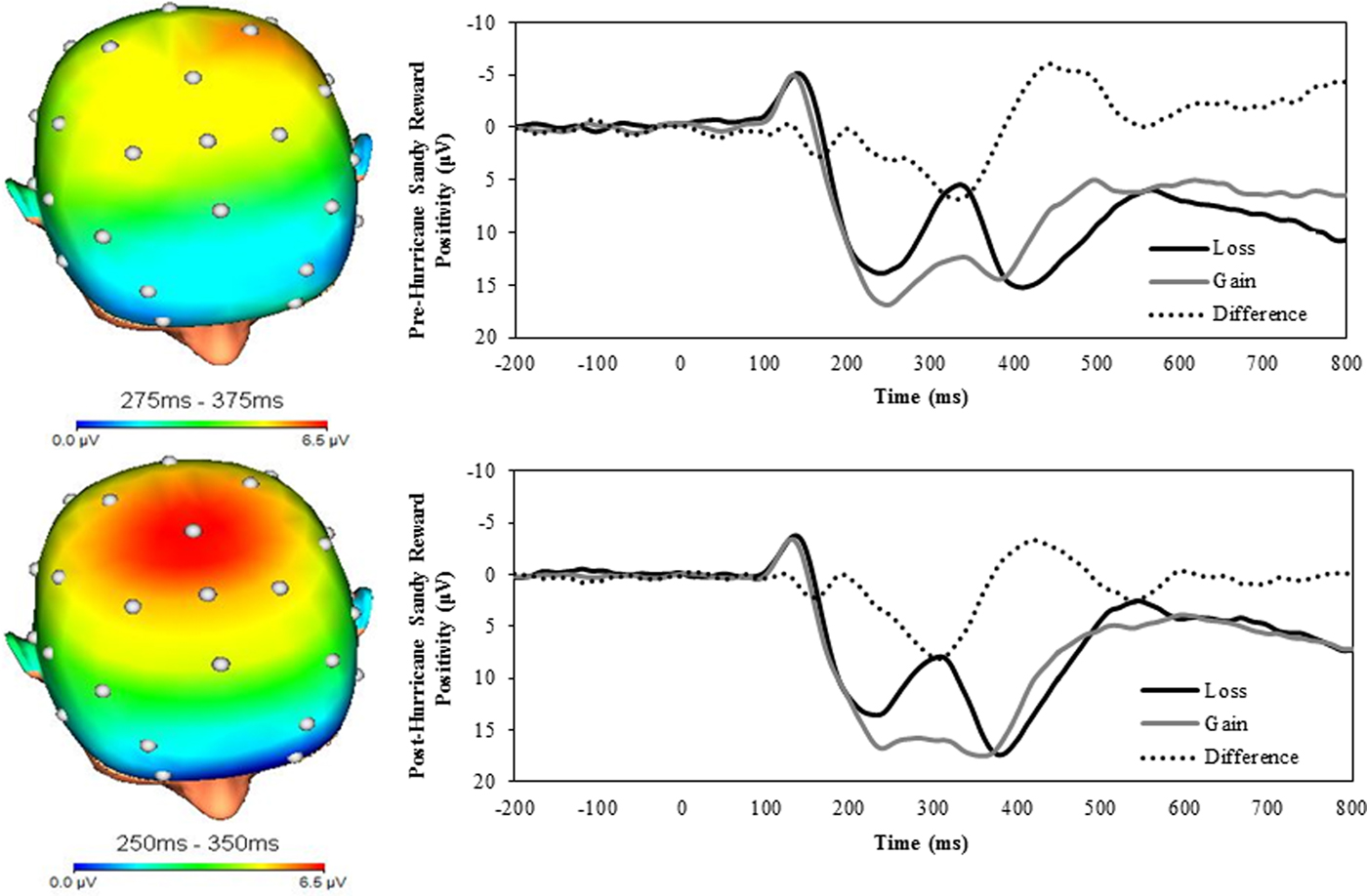
For the doors task, data were baseline-corrected using the average activity in the 500-ms interval prior to feedback. At the pre- and post-Hurricane Sandy assessment, ERPs were separately averaged across gain and loss trials and were scored at a pooling of FCz and Cz between 275 ms and 375 ms and 250 ms and 350 ms following feedback, when the gain minus loss difference waves were maximal at each assessment, respectively. The ΔRewP was calculated by subtracting the difference between the mean amplitude on gain relative to loss trials (Figure 1).
Topographic map of activity of the ΔRewP (gain minus loss) on the left; and stimulus-locked ERP waveforms for gain and loss trials, as well as the difference waves at electrodes FCz and Cz on the right at the pre- (top) and post- (bottom) Hurricane Sandy assessments. ERP = event-related potential.

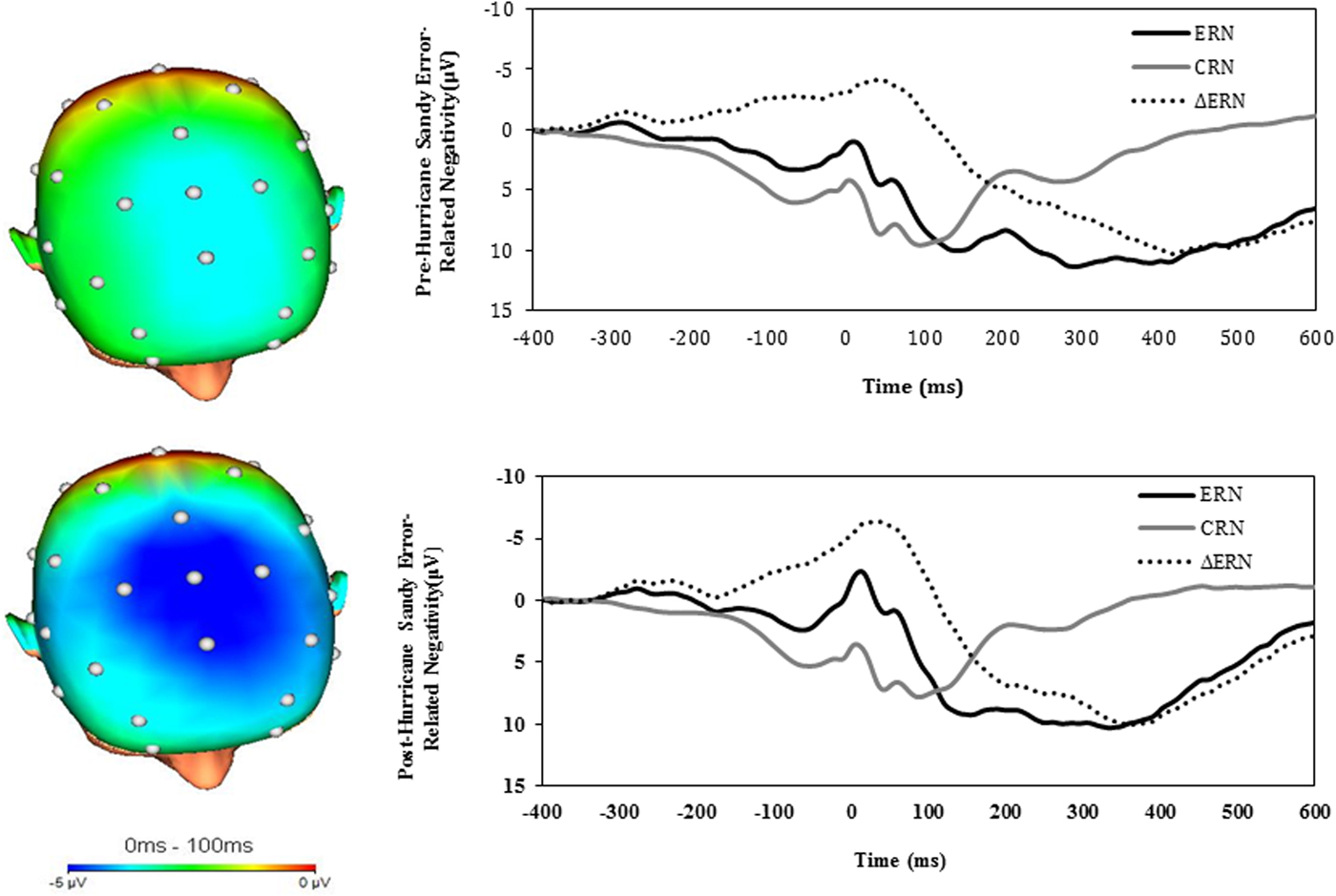
For the flanker task, ERP averages were created for error and correct trials and a baseline average activity from -500 to -300 ms before the response was subtracted from each data point. For both the pre- and post-Hurricane Sandy assessments, the ERN and correct-related negativity (CRN) were scored as the average voltage in the window between 0 ms and 100 ms after response commission on error and correct trials, respectively, where the ERN minus CRN difference wave was maximal. Consistent with the scalp distribution of the difference wave, the CRN and ERN were quantified at a pooling of Fz, FCz, and Cz. The delta ERN (ΔERN), thought to reflect error-specific activity, was calculated by subtracting the CRN from the ERN (Figure 2).
Topographic map of activity of the ΔERN (error minus correct) on the left; and response-locked ERP waveforms for correct and error trials, as well as the difference waves at electrodes Fz, FCz, and Cz on the right at the pre- (top) and post- (bottom) Hurricane Sandy assessments. ERN = error-related negativity.

Data analysis
Hierarchical multiple regression analyses were computed to examine the effects of Hurricane Sandy–related stress exposure, promotion- and prevention-focused parenting, and the interactions between Hurricane Sandy–related stress exposure and parenting style on the ΔRewP and the ΔERN from pre- to post-Hurricane Sandy.Footnote 4
Results
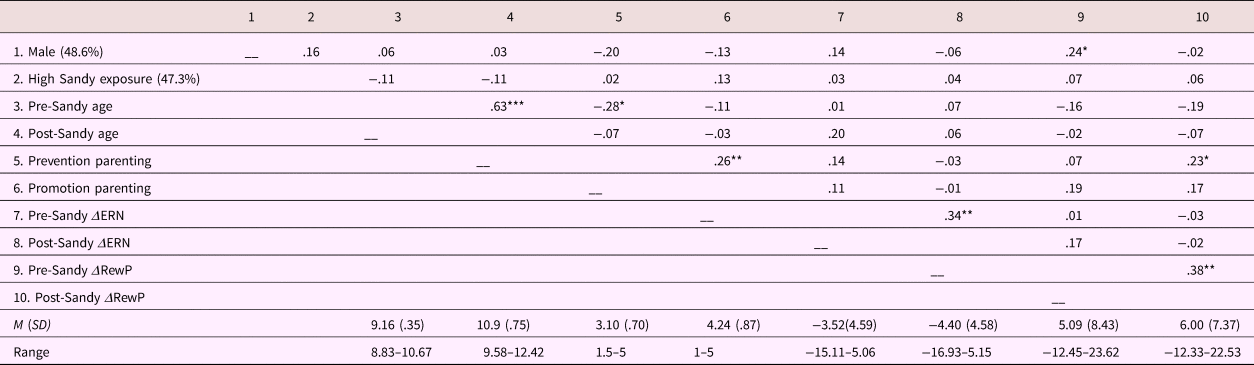
Table 1 displays descriptive statistics and bivariate correlations between all study variables.
Descriptive statistics and Pearson correlations/phi coefficients between variablesa

***p < .001; **p < .01, *p < .05; ERN = error-related negativity; ΔRewP = reward positivity.
a Pearson's correlations were calculated to examine associations involving at least one continuous variable; phi coefficients were calculated to evaluate associations between 2 categorical variables.
Post-hurricane RewP
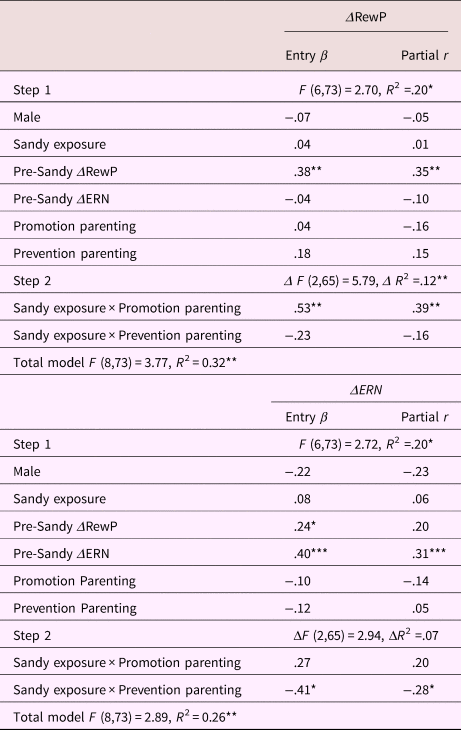
There was a main effect of the pre-Hurricane Sandy ΔRewP, such that a greater (i.e., more positive) ΔRewP before Hurricane Sandy predicted a greater ΔRewP after Hurricane Sandy (Table 2). There were no significant main effects of the pre-Hurricane Sandy ΔERN, Hurricane Sandy–related stress exposure, or promotion- or prevention-focused parenting on the post-Hurricane Sandy ΔRewP. However, the interaction between Hurricane Sandy–related stress exposure and promotion-focused parenting significantly predicted the post-Hurricane Sandy ΔRewP. Among children with high levels of Hurricane Sandy–related stress exposure, reduced promotion-focused parenting was associated with a decreased ΔRewP post-Hurricane Sandy, b = 5.01, standard error = 1.79, t (34) = 2.80, p < .001. However, among children with low levels of Hurricane Sandy-related stress exposure, the association between promotion-focused parenting and the ΔRewP was not significant, b = -1.43, standard error = 1.11, t (38) = 1.28, p = .20. There was no significant interaction between Hurricane Sandy–related stress exposure and prevention-focused parenting in relation to post-Hurricane Sandy ΔRewP (Figure 3).
Significant interactions between hurricane exposure and promotion-focused parenting and prevention-focused parenting in predicting the ΔRewP (top) and ΔERN (bottom) post-Hurricane Sandy. Low and high promotion- and prevention-focused parenting are 1 standard deviation above and below the mean. Hurricane Sandy–related stress exposure is plotted as the moderator variable because it is dichotomous; however, hypotheses focus on promotion and prevention parenting moderating the effects of Hurricane Sandy. ERN = error-related negativity; RewP = reward positivity.

Hierarchical regression analyses regressing Hurricane Sandy–related stress exposure, parenting style and their interaction on the post-Hurricane Sandy ΔRewP and ΔERN

Note: ***p < .001; **p < .01, *p < .05; ΔRewP = reward positivity; ERN = error-related negativity.
Post-hurricane ERN
There was a main effect of the pre-Hurricane Sandy ΔERN, such that an enhanced ΔERN before Hurricane Sandy predicted a larger ΔERN after Hurricane Sandy (Table 2). There were no significant main effects of Hurricane Sandy–related stress exposure or promotion- or prevention-focused parenting on the post-Hurricane Sandy ΔERN; however, the interaction between Hurricane Sandy–related stress exposure and prevention-focused parenting significantly predicted children's post-Hurricane Sandy ΔERN. As shown in Figure 3, among children with high levels of Hurricane Sandy–related stress exposure, greater prevention-focused parenting was associated with an enhanced ΔERN post-Hurricane Sandy, b = -2.00, SE = .99 t (34) = -2.01, p < .05. However, among children with low levels of Hurricane Sandy–related stress exposure, there was no association between avoidance-focused parenting and the ΔERN, b = .31, SE = .89, t (38) = .35, p = .73. There was no significant interaction between Hurricane Sandy exposure and promotion-focused parenting to predict the post-Hurricane Sandy ΔERN.
Discussion
The present study examined whether Hurricane Sandy–related stress exposure interacted with prevention- and promotion-focused parenting styles to influence the development of neural reward and threat processing. Among children with high levels of Hurricane Sandy–related stress, lower levels of promotion-focused, but not prevention-focused, parenting was associated with a decreased ΔRewP after Hurricane Sandy. Moreover, among children with high levels of Hurricane Sandy–related stressors, higher prevention-focused, but not promotion-focused, parenting was associated with an increased ΔERN following the hurricane. In contrast, among children with low levels of Hurricane Sandy–related stress exposure, there were no significant associations between either prevention-focused or promotion-focused parenting with the ΔRewP or the ΔERN, respectively, after Hurricane Sandy.
Previous research has indicated that both exposure to stress (e.g., Hanson et al., Reference Hanson, Albert, Iselin, Carré, Dodge and Hariri2015) and parenting (e.g., Meyer et al., Reference Meyer, Bress and Proudfit2014) practices can have an effect on reward and threat processing; however, this is the first study to examine the joint impact of a fateful life event and parenting style on neural reward and threat processing. In contrast to previous studies, hurricane-related stress and parenting style were not significantly associated with neural reactivity to reward or threat on their own. Rather, the degree to which Hurricane Sandy–related stressors affected the development of neural reward and threat processing was contingent upon motivationally relevant parenting styles. These results are consistent with a bio-ecological model (Weems, Reference Weems2015) that proposes that an individual's susceptibility to stress from natural disasters depends on the social context.
Few studies (e.g., Swartz, Williamson, & Hariri, Reference Swartz, Williamson and Hariri2015) have examined the effect of stress on neural reward and threat processing taking into account prior neural functioning. Moreover, previous studies of ELS and SLEs have examined stressors that could be confounded with participant behavior. By examining a fateful SLE in the context of an ongoing longitudinal study, we were able to both minimize the contribution of preexisting participant characteristics on the occurrence of the stressor and rule out the possibility that the observed effects reflected prior neural functioning. These are particularly timely findings given the paucity of research examining the effects of natural disasters on children's neural functioning (see Weems, Reference Weems2015) and the increasing occurrence and severity of such events.
Consistent with our hypotheses, our results suggest that exposure to high levels of hurricane-related stressors can enhance threat-related neural processes, but only when parents demonstrate high levels of prevention-focused parenting. Such parenting is characterized by behaviors that foster threat sensitivity and emphasize focus on safety and avoiding negative outcomes and losses. Parents who exhibit this parenting style may inadvertently highlight dangerous and threatening aspects of stressors or may have socialized their children in a manner that increases their children's perception of threat associated with stressful events, making them vulnerable to stress-related neural changes that underlie enhanced threat processing.
Our results also suggest that high levels of exposure to hurricane-related stressors may attenuate a normative developmental increase in neural sensitivity to reward (as indicated by the ΔRewP) as the children approach adolescence, but only when parents demonstrate low levels of promotion-focused parenting. Parenting that does not emphasize positive and desired outcomes may hinder children's abilities to detect appetitive and safety cues in the environment that may buffer against pernicious effects of stress. Interestingly, we also found that in the context of high levels of promotion-focused parenting, children who experienced high levels of exposure to hurricane-related stress exhibited an increased ΔRewP following Hurricane Sandy. This suggests that promotion-focused parenting may not only serve as a protective factor but may also bolster resilience in the face of adversity. Emphasizing adventurous, competence-enhancing aspects of stressful situations may make challenges such as the lack of electricity and the suspension of routines such as going to school fun and exciting.
Because the ΔRewP can change in both directions depending on the degree of promotion-focused parenting a child receives in the context of a fateful life event, our findings raise the possibility that the ΔRewP is somewhat plastic, or differentially susceptible (Belsky, Reference Belsky2016), to environmental inputs in a for-better-or-worse-manner. Based on evidence that late childhood is characterized by a global shift in cognition, motivation, and social behavior, DelGiudice (Reference DelGiudice2014) has hypothesized that this shift is accompanied by heightened neural plasticity in which the brain is collecting input from the environment in order to promote development that serves to increase biological fitness within that milieu.
Youth who live through natural disasters experience higher rates of psychiatric problems that can continue into adulthood (Neria & Shultz, Reference Neria and Shultz2012). Altered neural reactivity to reward and threat may be two mechanisms through which disasters lead to adverse outcomes. A blunted ΔRewP and enhanced ΔERN are both prospectively associated with depressive and anxiety disorders in youth (Meyer et al., Reference Meyer, Proudfit, Bufferd, Kujawa, Laptook, Torpey and Klein2015; Nelson, Perlman, Klein, Kotov, & Hajcak, Reference Nelson, Perlman, Klein, Kotov and Hajcak2016) and the ΔERN predicts increases in anxiety-related symptoms in response to stressful and traumatic life events (Meyer et al., Reference Meyer, Danielson, Danzig, Bhatia, Black, Bromet and Klein2017). It remains to be seen whether the present study's observed alterations in the ΔRewP and ΔERN persist, and whether they relate to subsequent psychopathology and functioning. To address these questions, we will continue to study these children to examine the long-term impact of the disaster, parenting, and the role of altered neural reactivity to reward and threat and risk for psychopathology.
A limitation of the current study is that our parenting measure was assessed retrospectively after the hurricane and only through child report. In addition, although hurricane-related stress exposure was unrelated to measures of parenting style, the ΔRewP and the ΔERN, relying solely on parent report of stress exposure could have introduced some individual differences in perception on the assessment of a fateful event. Finally, the sample size is modest and drawn from one region of the United States after a singular disaster. Replication studies using larger samples from other regions experiencing different fateful events are needed to expand our understanding of the complex relationships found in this study.
In sum, the present study provides novel evidence that motivationally relevant parenting styles (children's perceptions of promotion-focused and prevention-focused parenting) and exposure to natural disaster-related stress interact to alter neural reactivity to reward and threat in children. These findings highlight the importance of considering the parenting context when examining the effects of significant events on neural activity. They also point to the possibility that motivationally relevant parenting behaviors may be a potential intervention target to prevent stress-related alterations in reward- and threat-related neural processes in youth exposed to major life events.
Financial support
This work was supported by National Institute of Mental Health grants RO1MH069942 to Daniel N. Klein and F31MH111172 to Ellen M. Kessel.