Introduction
Benign paroxysmal positional vertigo (BPPV) is a common vestibular disorder with a 1-year incidence rate of 0.6 per cent and a lifetime prevalence of 2.4 per cent.Reference VonBrevern, Radtke, Lezius, Feldmann, Ziese and Lempert1 In general, BPPV is more common in women than in men. For individuals who experience BPPV, the initial symptoms usually occur around the age of 50 years. The incidence of BPPV increases with each decade of life: by the age of 80 years, the cumulative incidence is approximately 10 per cent. Regardless of sex or age, BPPV negatively affects an individual's health-related quality of life.Reference Gamiz and Lopez-Escamez2–Reference Roberts, Abrams, Sembach, Lister, Gans and Chisholm8 Several studies have demonstrated impaired static and dynamic postural control in individuals with BPPV.Reference Celebisoy, Bayam, Gulec, Kose and Akyurekli9–Reference Stambolieva and Angov13 These postural control issues mean that older adults with BPPV experience a higher rate of falls compared with those without BPPV.Reference Gananca, Gazzola, Gananca, Caovilla, Gananca and Cruz14, Reference Oghalai, Manolidis, Barth, Stewart and Jenkins15 In addition to the physical impairments associated with BPPV, many individuals with BPPV feel anxious and depressed.Reference Hagr16–Reference Pollak, Segal, Stryjer and Stern19 Most cases of BPPV are idiopathic, and the ageing process is thought to be the primary cause in such cases.Reference Faralli, Ricci, Molini, Bressi, Simoncelli and Frenguelli20 In individuals younger than 50 years, traumatic brain injuries and inner-ear diseases are well-known precipitating factors.Reference Ahn, Jeon, Kim, Park, Hur and Kim21, Reference Lee, Ban, Lee and Kim22 Common BPPV co-morbidities include diabetes, osteoporosis, hyperlipidemia, hypertension, migraines and stroke.Reference VonBrevern, Radtke, Lezius, Feldmann, Ziese and Lempert1, Reference Cohen, Kimball and Stewart23–Reference Vibert, Kompis and Hausler25 Physical inactivity, vitamin D deficiency and oral contraceptive use may also play a role in its development.Reference Pollak, Kushnir and Goldberg26–Reference Giacomini, Napolitano, Alessandrini, DiGirolamo and Magrini29
There are two distinct forms of BPPV. The first, cupulolithiasis, was initially described by Schuknecht in the late 1960s.Reference Schuknecht30 In this condition, otoconia become detached from the utricle, travel into one of the semicircular canals and become attached to the cupula of that semicircular canal. The second form of BPPV, canalolithiasis, was initially described by Hall et al. a decade later.Reference Hall, Ruby and McClure31 Like cupulolithiasis, canalolithiasis is a condition in which otoconia become detached from the utricle and travel into one of the semicircular canals. However, instead of becoming attached to the cupula, the otoconia remain free-floating in the endolymph of that semicircular canal. These two forms of BPPV may affect any one of the semicircular canals. Therefore, the three types of BPPV are known as posterior canal BPPV, anterior canal BPPV and horizontal canal BPPV.
In 1952, Dix and Hallpike encountered an individual who, during subjective evaluation, complained of vertigo whenever he performed a sit to supine transfer, rolled over in bed or looked upward.Reference Dix and Hallpike32 During the objective evaluation, the individual was instructed to assume a long-sitting position with his head rotated 30–45° toward the affected side. He was then rapidly moved into a supine position with his head extended approximately 30° below the height of the support surface. After a latency period of several seconds, the individual demonstrated upbeating torsional nystagmus. This lasted for only a short period and was less pronounced during subsequent administration of this test. Dix and Hallpike called this condition ‘positional nystagmus of the benign paroxysmal type’ (p. 353).Reference Dix and Hallpike32 Today, these signs and symptoms are consistent with a diagnosis of posterior canal BPPV, the most common BPPV type. In addition, the Dix–Hallpike test is now considered to be the ‘gold standard’ diagnostic tool in cases of suspected posterior canal BPPV.Reference Bhattacharyya, Baugh, Orvidas, Barrs, Bronston and Cass33 In the case just described, the transient nature of the nystagmus indicates that the patient probably had posterior canal canalolithiasis.Reference Parnes and Nabi34 In contrast, posterior canal cupulolithiasis is characterised by more persistent nystagmus.
In 1987, Katsarkas described anterior canal BPPV.Reference Katsarkas35 The subjective complaints associated with anterior canal BPPV are very similar to those associated with posterior canal BPPV.Reference Korres, Riga, Balatsouras and Sandris36, Reference Zapala37 In other words, this BPPV type is most frequently elicited when an individual performs a sit to supine transfer, rolls over in bed or looks upward. The latency in nystagmus onset, the evoked nystagmus duration and the nystagmus fatigability upon repeated testing are also similar to those of posterior canal BPPV. However, unlike posterior canal BPPV, anterior canal BPPV is characterised by downbeating torsional nystagmus. Although anterior canal BPPV is the least common BPPV type, a recent study found that it may account for approximately 20 per cent of all cases.Reference Jackson, Morgan, Fletcher and Krueger38
In 1985, McClure described horizontal canal BPPV.Reference McClure39 This BPPV type is similar to posterior canal BPPV and anterior canal BPPV in that it is most often induced when an individual rolls over in bed.Reference Baloh, Jacobson and Honrubia40 However, unlike the other two BPPV types, horizontal canal BPPV is seldom induced when an individual performs a sit to supine transfer or looks upward. In addition, this BPPV type is characterised by horizontal nystagmus that has a shorter latency than that of the other two BPPV types, a longer duration than that of the other two BPPV types and no fatigability upon repeat testing. Although horizontal canal BPPV is less common than posterior canal BPPV, a recent study found that it may account for approximately 35 per cent of cases.Reference Chung, Park, Ko, Jeon, Choi and Cho41
As BPPV is a common vestibular disorder that negatively affects an individual's health-related quality of life,Reference VonBrevern, Radtke, Lezius, Feldmann, Ziese and Lempert1–Reference Roberts, Abrams, Sembach, Lister, Gans and Chisholm8 researchers have sought to develop effective treatment options. There are two basic treatment options for each BPPV type. Liberatory manoeuvres are generally used to treat cupulolithiasis BPPV and canalith repositioning manoeuvres are usually used to treat canalithiasis BPPV.Reference Parnes, Agrawal and Atlas42 Individuals with cupulolithiasis of the posterior canal are most often treated with the Semont liberatory manoeuvre.Reference Semont, Freyss and Vitte43 This manoeuvre is administered as follows. If the right inner ear is affected, the individual begins in a sitting position with the head rotated 45° to the left. The individual is then moved into a right side lying position. Once the elicited nystagmus has subsided, the individual remains in this position for two to three minutes. The individual is then moved up into a sitting position and down into a left side lying position in one continuous motion. Once the elicited nystagmus has subsided, the individual remains in this position for five minutes. The individual then carefully sits up. During the initial study, Semont et al. reported a success rate of almost 84 per cent after one manoeuvre had been administered and nearly 93 per cent after two.Reference Semont, Freyss and Vitte43 The two interventions most often used to treat individuals with posterior canal canalolithiasis are the Epley canalith repositioning manoeuvreReference Epley44 and the Parnes canalith repositioning manoeuvre,Reference Parnes and Price-Jones45 more commonly known as the Parnes particle repositioning manoeuvre.
The Epley canalith repositioning manoeuvre is administered as follows.Reference Epley44 If the right inner ear is affected, the individual begins in a long-sitting position with the head rotated 45° to the right. In step one, the individual is moved into a supine position with the head extended off the end of the treatment table. In step two, the individual's head is rotated to the left. In step three, the individual is moved into a left side lying position. In step four, the individual is moved into a sitting position. Finally, in step five, the individual's head is rotated so that it has 0° of rotation and approximately 20° of flexion. Each of the five positions is maintained until the elicited nystagmus has subsided. If nystagmus is not elicited in one of the positions, then that position is maintained for the amount of time the nystagmus persisted in the previous position. The entire sequence is repeated until no nystagmus is elicited during the last sequence or until no progress is noted over the last two sequences. During the initial study, Epley stated that complete resolution of vertigo and nystagmus occurred in 90 per cent of participants after one treatment.Reference Epley44 The remaining participants experienced an improvement in their condition.
Since the development of the Epley canalith repositioning manoeuvre in the early 1990s, several studies have been specifically designed to examine its effectiveness. However, many of these studies investigated the effectiveness of a modified version of the Epley manoeuvre. Therefore, only those case series and randomised trials in which the original Epley manoeuvre was administered will be described here.
Four case series were specifically designed to examine the effectiveness of the original Epley canalith repositioning manoeuvre.Reference Jose, Rupa and Job46–Reference Smouha49 Between June 1993 and November 1995, Smouha administered the Epley manoeuvre to 27 individuals diagnosed with posterior canal BPPV.Reference Smouha49 After a single treatment session, 56 per cent of these individuals were cured. Individuals who continued to have positive Dix–Hallpike test results were treated at least once more. At the conclusion of the study, only 7 per cent of individuals reported persistence of their symptoms. Between July 1997 and December 1998, Jose et al. administered the Epley manoeuvre to 51 individuals diagnosed with posterior canal BPPV.Reference Jose, Rupa and Job46 After a single treatment session, 57 per cent were cured. Individuals who continued to have positive Dix–Hallpike test results were treated once or twice more. At the conclusion of the study, only 8 per cent of individuals reported persistence of their symptoms. Between August 1995 and August 1997, Mujeeb and Khan administered the Epley manoeuvre to 21 individuals diagnosed with posterior canal BPPV.Reference Mujeeb and Khan47 After a single treatment session, 67 per cent were cured. Individuals who continued to demonstrate a positive Dix–Hallpike test were treated at least once more. At the conclusion of the study, only 5 per cent of individuals reported persistence of their symptoms. Between July 1993 and May 1996, Nunez et al. administered the Epley manoeuvre to 151 individuals diagnosed with posterior canal BPPV.Reference Nunez, Cass and Furman48 After a single treatment session, 87 per cent were cured. Individuals who continued to demonstrate a positive Dix–Hallpike test result were treated once more. At the conclusion of the study, only 9 per cent of individuals reported persistence of their symptoms. Overall, the one-treatment cure rate associated with the Epley canalith repositioning manoeuvre ranged from 56 per cent to 87 per cent.Reference Nunez, Cass and Furman48, Reference Smouha49 In addition, only 5 per cent to 9 per cent of individuals continued to report residual symptoms at the conclusion of their respective studies.Reference Mujeeb and Khan47, Reference Nunez, Cass and Furman48
Three randomised trials compared the effectiveness of the original Epley canalith repositioning manoeuvre with that of a sham manoeuvre.Reference Froehling, Bowen, Mohr, Brey, Beatty and Wollan50–Reference Von Brevern, Seelig, Radtke, Tiel-Wilck, Neuhauser and Lempert52 In one study, 18 individuals diagnosed with posterior canal BPPV were randomly assigned to the Epley group and 15 to a sham group.Reference Lynn, Pool, Rose, Brey and Suman51 The status of all 33 individuals was reassessed 4–5 weeks after a single treatment session. During the reassessment, 89 per cent of individuals in the Epley group were cured, whereas only 27 per cent of individuals in the sham group were symptom free. In another study, 24 individuals diagnosed with posterior canal BPPV were randomly assigned to the Epley group and 26 to a sham group.Reference Froehling, Bowen, Mohr, Brey, Beatty and Wollan50 The status of all 50 individuals was reassessed 1–2 weeks after a single treatment session: 67 per cent of the Epley group were cured, whereas only 38 per cent of the sham group were symptom free. In the third study, 35 individuals diagnosed with posterior canal BPPV were randomly assigned to the Epley group and 31 to a sham group.Reference Von Brevern, Seelig, Radtke, Tiel-Wilck, Neuhauser and Lempert52 The status of all 66 individuals was reassessed 24 hours after a single treatment session: 80 per cent of the Epley group were cured, whereas only 10 per cent of the sham group were symptom free. Overall, the one-treatment cure rate associated with the Epley canalith repositioning manoeuvre ranged from 67 per cent to 89 per cent.Reference Froehling, Bowen, Mohr, Brey, Beatty and Wollan50, Reference Lynn, Pool, Rose, Brey and Suman51 In contrast, the percentage of individuals in the sham group who were symptom free after a single treatment session ranged from 10 per cent to 38 per cent.Reference Froehling, Bowen, Mohr, Brey, Beatty and Wollan50, Reference Von Brevern, Seelig, Radtke, Tiel-Wilck, Neuhauser and Lempert52
In addition to these case series and randomised trials, three systematic reviews,Reference Helminski, Zee, Janssen and Hain53–Reference Texeira and Machado55 two meta-analysesReference White, Savvides, Cherian and Oas56, Reference Woodworth, Gillespie and Lambert57 and two clinical practice guidelinesReference Bhattacharyya, Baugh, Orvidas, Barrs, Bronston and Cass33, Reference Fife, Iverson, Lempert, Furman, Baloh and Tusa58 have been published on this topic. Each of these studies concluded that the Epley canalith repositioning manoeuvre is an effective treatment option for individuals with posterior canal BPPV.
The Parnes particle repositioning manoeuvre is administered as follows.Reference Parnes and Price-Jones45 If the right inner ear is affected, the individual begins by adopting a long-sitting position with the head rotated 45° to the right. The individual is then moved into a supine position with the head extended off the end of the treatment table. Once the elicited nystagmus has subsided, the individual remains in this position for two to three minutes. Then the individual's head is rotated to the left as the individual is moved into a left side lying position in one continuous motion. Once the elicited nystagmus has subsided, the individual remains in this position for one to two minutes. The individual then carefully sits up. In the initial study, Parnes and Price-Jones reported that vertigo and nystagmus completely resolved in approximately 76 per cent of participants after one treatment.Reference Parnes and Price-Jones45 In addition, another 12 per cent of participants experienced an improvement in their condition. Parnes and Robichaud subsequently reported the overall success rate of the Parnes manoeuvre as approximately 90 per cent.Reference Parnes and Robichaud59 However, since the 1990s, the effectiveness of the Parnes particle repositioning manoeuvre has not been comprehensively investigated. Therefore, this study aimed to examine the effectiveness of the Parnes particle repositioning manoeuvre as an intervention for individuals with posterior canal BPPV.
Materials and methods
The study comprised a descriptive case series involving a retrospective chart review. The charts of all patients who had received vestibular rehabilitation treatments at a specific Midwestern out-patient physical therapy practice were stored in a locked filing cabinet. The primary investigator was in sole charge of accessing the charts and managing the data. After the appropriate charts had been located based upon inclusion and exclusion criteria (see below), patients were de-identified and their data were coded. Data were then stored on a password-protected computer. The study ultimately included the de-identified records of 155 individuals treated with the Parnes particle repositioning manoeuvre for the canalolithiasis subtype of posterior canal BPPV. All participants received an initial evaluation, intervention(s) and a final re-evaluation between 1 January 2000 and 31 December 2009. Participant records were obtained with the permission of the clinic's owner, and the study protocol was approved by the institutional review boards of A T Still University, Mesa, Arizona, and Grand Valley State University, Grand Rapids, Michigan, USA, and complied with the Helsinki Declaration of 1975, as revised in 2008.
Inclusion criteria were age 18 years or older with a diagnosis of the canalolithiasis subtype of posterior canal BPPV based upon Dix–Hallpike test findings, treatment with the Parnes particle repositioning manoeuvre as the only intervention, one treatment with the Parnes particle repositioning manoeuvre at a single treatment session, re-evaluation with the Dix–Hallpike test during a subsequent treatment session and attendance at the clinic for final re-evaluation.
Exclusion criteria were age under 18 years, no evidence of nystagmus during an initial evaluation involving the Dix–Hallpike test, a diagnosis of the canalolithiasis subtype of posterior canal, anterior canal BPPV or horizontal canal BPPV, treatment with another intervention instead of or in addition to the Parnes particle repositioning manoeuvre, receipt of more than one Parnes particle repositioning manoeuvre during a single treatment session, re-evaluation with the Dix–Hallpike test during the session in which treatment was administered, and no final re-evaluation.
Data analysis procedures were conducted using IBM SPSS Statistics software version 20.0 (Armonk, New York, USA). Descriptive statistics including frequency and valid per cent were calculated for participants whose nystagmus was resolved with the Parnes particle repositioning manoeuvre. For participants cured of BPPV, the frequency, valid per cent and mean for the number of Parnes manoeuvres need to resolve the nystagmus were calculated.
Results
All participants were diagnosed with the canalolithiasis subtype of posterior canal BPPV and treated with the Parnes particle repositioning manoeuvre. A total of 155 individuals met the inclusion criteria and did not meet the exclusion criteria: 110 women (71 per cent) and 45 men (29 per cent). Participants ranged in age from 33 to 89 years (mean ± standard deviation (SD) 61.92 ± 12.91). In addition, there was no major difference in age between women (mean ± SD, 61.85 ± 12.60) and men (mean ± SD, 62.09 ± 13.79). BPPV was right sided in 78 participants (50.3 per cent) and left sided for 77 (49.7 per cent). A traumatic brain injury accompanied BPPV development for 19 (12.3 per cent) participants; the remaining 136 (87.7 per cent) participants developed BPPV without accompanying traumatic brain injury. The elapsed time between symptom onset and the initiation of intervention ranged from two days to two years (mean 3.24 months).
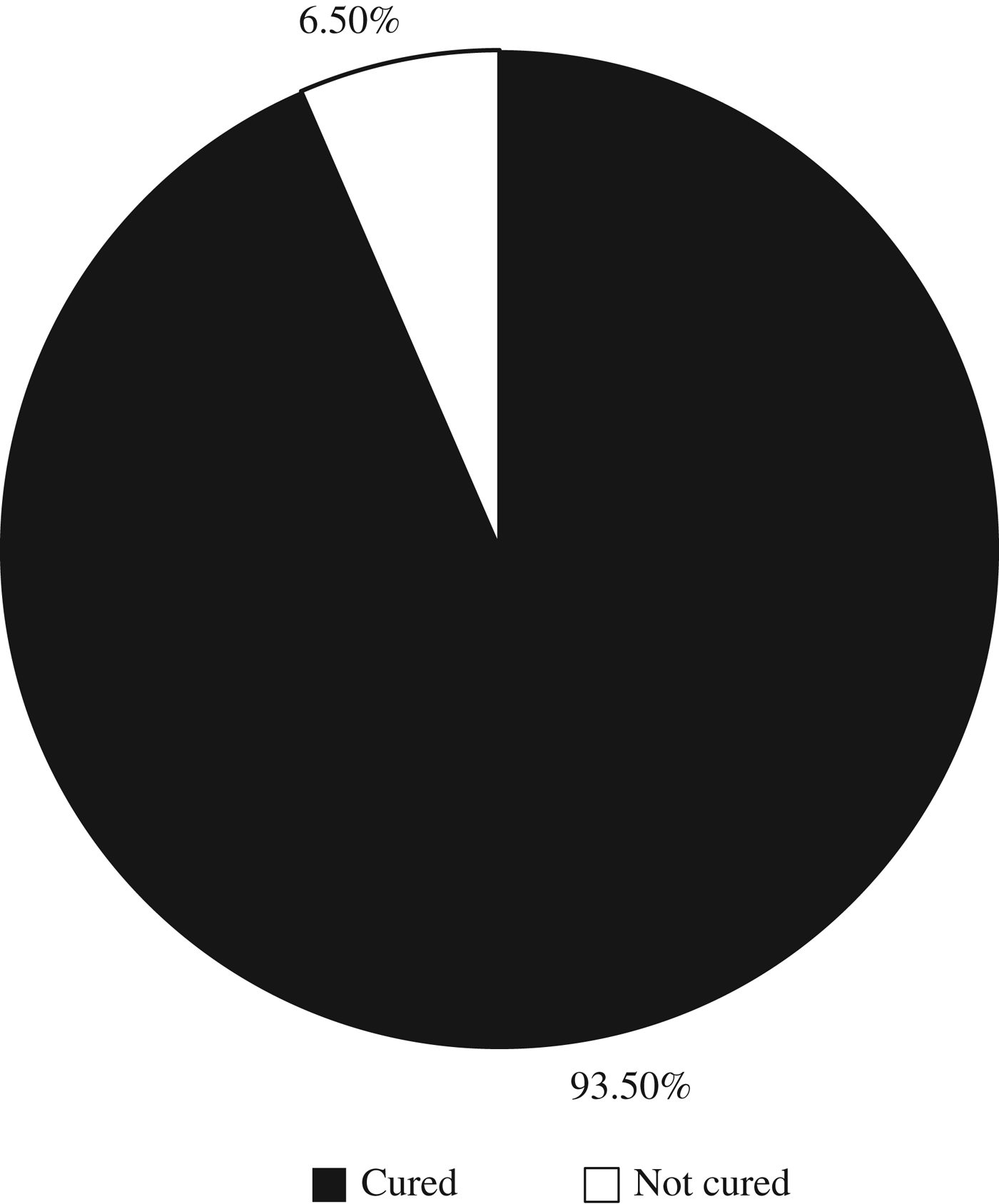
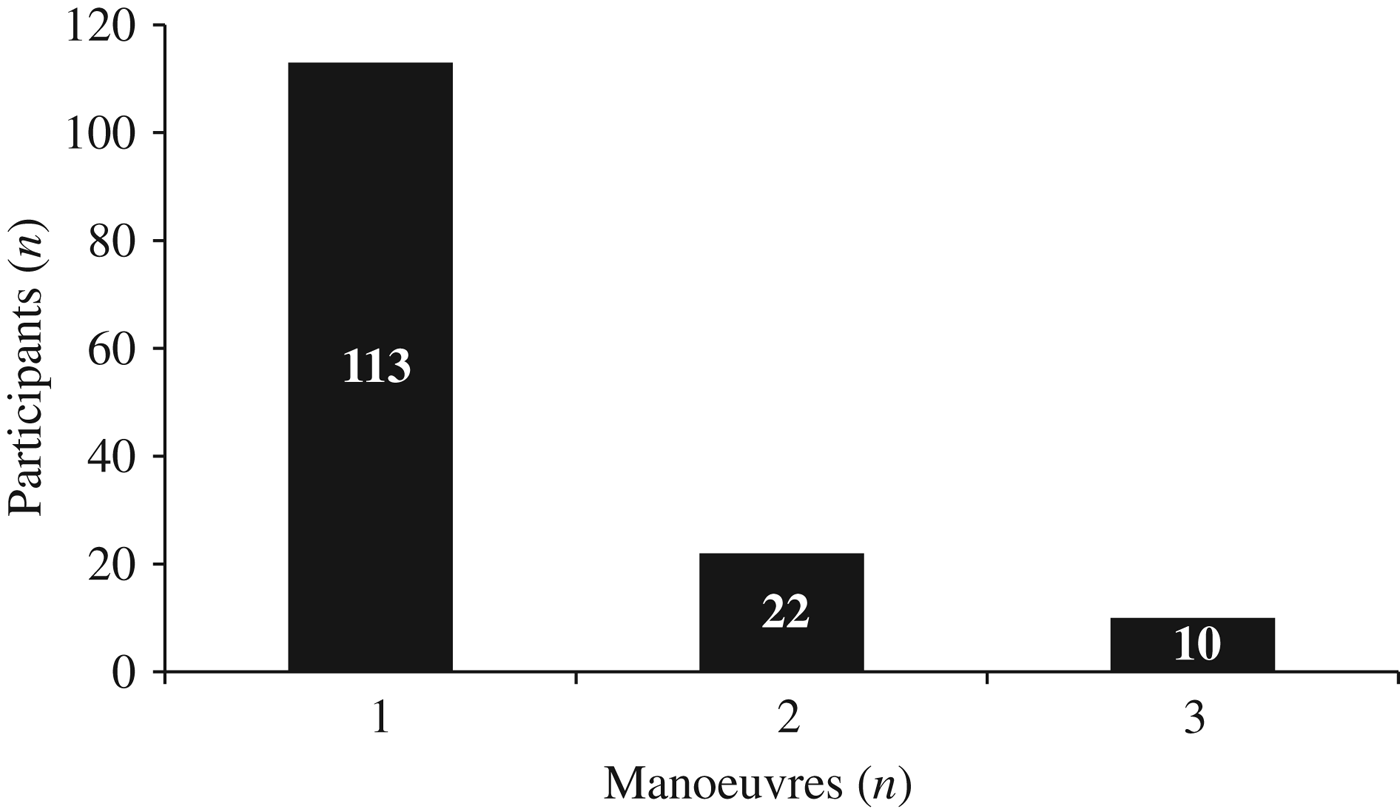
In 145 participants (93.5 per cent), nystagmus was resolved with the Parnes particle repositioning manoeuvre (Figure 1). Of those whose BPPV was cured, 113 (77.9 per cent) required 1 Parnes manoeuvre, 22 (15.2 per cent) required 2 and 10 (6.9 per cent) required 3 (Figure 2). The mean number of manoeuvres needed to resolve the nystagmus was 1.3 (SD 0.6).
Pie chart showing the percentages of participants whose nystagmus was resolved and whose nystagmus was not resolved with the Parnes particle repositioning manoeuvre.

Bar graph showing the number of Parnes manoeuvres required for those whose benign paroxysmal positional vertigo was cured.
Discussion
An important finding of this study is that 145 out of 155 (93.5 per cent) participants diagnosed with the canalolithiasis subtype of posterior canal BPPV were successfully treated with the Parnes particle positioning manoeuvre. This percentage is slightly higher than that found in the two studies performed by Parnes and colleagues in the 1990s: Parnes and Price-Jones reported that 76 per cent of participants had resolution and 12 per cent had an improvement in condition;Reference Parnes and Price-Jones45 and Parnes and Robichaud reported the overall effectiveness of the Parnes manoeuvre as approximately 90 per cent.Reference Parnes and Robichaud59 The overall success rate noted in the current study was similar to that of the four Epley-related case series: nystagmus was completely resolved in 91–95 per cent of participants using the Epley canalith repositioning manoeuvre.Reference Mujeeb and Khan47, Reference Nunez, Cass and Furman48
The one-treatment cure rate of 77.9 per cent found in this study is similar to that found in Parnes’ initial study in which complete resolution of vertigo and nystagmus occurred in 76 per cent of participants after a single treatment.Reference Parnes and Price-Jones45 In addition, the one-treatment cure rate noted in the current study fell within the range of 56 per cent reported in one Epley-related case series and 89 per cent reported in one Epley-related randomised trial.Reference Smouha49, Reference Lynn, Pool, Rose, Brey and Suman51
The primary strength of this study is its demonstration that the Parnes particle repositioning manoeuvre appears to be as effective as the Epley canalith repositioning manoeuvre, currently the most common intervention used to treat individuals with canalolithiasis of the posterior semicircular canal. Therefore, it may be used in place of the Epley manoeuvre or applied if the Epley manoeuvre is unsuccessful. However, there are several limitations. Firstly, some individuals who complained of vertigo characteristic of posterior canal BPPV may have been excluded from the study because they did not demonstrate nystagmus during the initial evaluation when the Dix–Hallpike test was administered. Secondly, some individuals who were effectively treated by the Parnes particle repositioning manoeuvre may have been excluded from the study because they opted to forgo the final re-evaluation. Finally, the physical therapist who provided all of the interventions arbitrarily chose to only administer a total of three failed Parnes particle repositioning manoeuvres before considering the intervention to have been unsuccessful.
• Benign paroxysmal positional vertigo is a common vestibular disorder that reduces an individual's health-related quality of life
• The Epley canalith repositioning manoeuvre is effective for treating posterior canal canalolithiasis
• The Parnes particle repositioning manoeuvre is as effective as the Epley canalith repositioning manoeuvre
Conclusion
The Parnes particle repositioning manoeuvre appears to be as effective as the Epley canalith repositioning manoeuvre, thus providing an alternative intervention if clinicians prefer it or the Epley manoeuvre is unsuccessful. Although the Parnes manoeuvre was successfully used to treat individuals with the canalolithiasis subtype of posterior canal BPPV in this study, future investigations into the manoeuvre should use one or more of the following research designs: a prospective case series, a randomised controlled trial comparing the Parnes manoeuvre to a control or a randomised controlled trial comparing the Parnes manoeuvre to the Epley manoeuvre.