Introduction
We are in the midst of a surge in public interest in the Arctic the likes of which we have not experienced since the days of the cold war with their debates about the role of the Arctic as a favourable theatre of operations for nuclear-powered submarines and manned bombers equipped with long range cruise missiles. Time magazine ran a cover story in October 2007 entitled ‘Who owns the Arctic?’ (Graff Reference Graff2007). Nature, a prominent scientific journal devoted to the dissemination of the results of scientific research, published an article in January 2008 entitled ‘The next land rush’ that emphasises the potential for jurisdictional conflicts over large areas of the seabed in the Arctic (Cressey Reference Cressey2008). The March/April 2008 issue of Foreign Affairs contains an article entitled ‘Arctic meltdown’ that envisages the prospect of armed conflict over energy and mineral resources in the Arctic (Borgerson Reference Borgerson2008). Referring explicitly to this article, the Russian newspaper Nezavisimaya Gazeta [Independent Newspaper] ran a story in its 11 March 2008 edition called ‘A very cold war for energy resources.’ Even the more conservative The Financial Times weighed in on 15 January 2008 with an article entitled ‘Why a warmer Arctic needs new laws’ (Wade Reference Wade2008).Footnote 1
What should we make of this rash of articles, which share the premise, at least implicitly and often explicitly, that we are in for a period of growing conflict in the Arctic driven by the insatiable appetite of industrial economies for oil and gas, fueled by competing jurisdictional claims on the part of Canada, Denmark, Norway, the Russian Federation, and possibly the United States, and possessing the potential to degenerate into armed confrontations? Are these concerns alarming or merely alarmist? In order to respond sensibly to these questions, we need to sort out the sources of this burgeoning interest in the Arctic and evaluate the extent to which the scenarios various authors present are realistic or largely products of fertile imaginations and the familiar desire of editors to capture the attention of readers by sounding the alarm over prospective developments, even when the alarms are not well grounded in the realities of the situation at hand. Only then can we identify the real issues and begin to think in an orderly and innovative manner about the pros and cons of alternative ways to address them.
In this article, I explore these questions from several perspectives, seeking to assess emerging issues in the far north in a realistic fashion, without falling prey to complacency. The thesis is that the fears expressed in recent articles on the subject are substantially exaggerated. But there are nonetheless good reasons to reassess current governance arrangements in and for the Arctic in the light of current developments and to think creatively about ways to strengthen Arctic governance to make it as effective as possible in addressing issues that can be expected to arise during the forthcoming decades. I consider a range of proposals calling for a region wide and legally binding treaty (some envisage a Charter) for the Arctic or at least for the maritime Arctic and find that the rationale supporting such proposals is not compelling. I then proceed to lay out the elements of a tripartite ‘governance complex’ for the Arctic building on the strengths of existing arrangements, crafted to be responsive to the issues on the Arctic agenda, and framed in terms that are likely to prove acceptable to most of the Arctic's major stakeholders. The result is a set of recommendations that are not as neat as the idea of adopting a single treaty for the Arctic but that are likely to prove both more acceptable to key stakeholders and more effective in meeting the evolving demand for governance in this region.
Scary scenarios and sober realities
Since the thawing of the cold war during the late 1980s, a particularly striking feature of the Arctic has been the blossoming of cooperative arrangements, ranging from non-governmental bodies like the International Arctic Science Committee (IASC) through associations of subnational units of government like the Northern Forum and on up to more conventional intergovernmental bodies like the Arctic Council (Young Reference Young1996). Most of us who have been involved in the development of these mechanisms tend to point to Mikhail Gorbachev's well known ‘Arctic zone of peace’ speech in Murmansk in October 1987 as a good marker or indicator of this shift from cold war thinking envisaging the Arctic as a theatre of operation in military terms to new thinking giving rise to a range of initiatives involving environmental protection and, more recently, sustainable development under the conditions prevailing in the Arctic (Scrivener Reference Scrivener1989).
Are we now witnessing another shift in Arctic politics, such that we will look back later to the 1990s and the first years of this century as a cooperative moment separating two periods of geopolitical tension in the Arctic? Affirmative responses to this question typically rest on a (neo)realist perspective on world affairs in which states remain the dominant force, seeking to maximise their control over sectors of the Earth's surface and jockeying with one another for position in a manner that is not guided or governed by widely accepted rules of the game or a significant concern for the common good. As Bogerson, the author of the Foreign Affairs article, puts it in a section entitled ‘The coming anarchy’, ‘[t]he situation is especially dangerous because there are currently no overarching political or legal structures that can provide for the orderly development of the region or mediate political disagreements over Arctic resources or sea-lanes’ (Borgerson Reference Borgerson2008: 71). According to the author of the Time cover story, this may brew up ‘. . . a perfect storm seeded with political opportunism, national pride, military muscle flexing, high energy prices and the arcane exigencies of international law’ (Graff Reference Graff2007: 2).
On this account, we should expect more or less severe disagreements among the Arctic states over jurisdictional claims to areas of the seabed in the Arctic coupled with aggressive efforts to exploit the reserves of oil and gas thought to exist in the Arctic and regarded as attractive due to their location in the Arctic rather than in more or less unstable areas such as the Middle East. High prices for oil should make the extraction of hydrocarbons in the Arctic profitable, while geopolitical considerations make these hydrocarbons appealing to those countries like the United States seeking to decrease their dependence on foreign oil. Following up on this theme, Borgerson asserts that ‘Arctic powers are fast approaching diplomatic gridlock, and that could eventually lead to the sort of armed brinkmanship that plagues other territories . . . where multiple states claim sovereignty but no clear picture of ownership exists’ (Borgerson Reference Borgerson2008: 71). It is a short step from this observation to the conclusion that ‘[d]iplomatic gridlock could lead the Arctic to erupt in an armed mad dash for its resources’ (Borgerson Reference Borgerson2008: 72). Scenarios emanating from this approach to recent developments in the Arctic are indeed scary. But are they realistic or at least plausible enough to be taken seriously by those concerned with Arctic governance? There is always something to be said for considering the possibility of extreme events, regardless of the likelihood of their occurrence; the focus of the media on scary scenarios regarding the future of the Arctic may be healthy. Nonetheless, there is ample reason to regard some elements of these scenarios as far fetched. And it seems important not to allow our thoughts to run wild in this realm in a manner that may trigger self fulfilling prophecies and complicate the development of sensible arrangements to deal with the rising demand for governance in this region.
Lest we allow ourselves to be swept along with this new wave of speculation about conflict in the Arctic, consider the following sober realities. With regard to matters of jurisdiction, the main event deals with coastal state claims under the terms of Article 76 of the UN Law of the Sea Convention (UNCLOS) to control over areas of the continental shelf extending beyond the outer boundaries of their Exclusive Economic Zones (EEZs). All the coastal states in the Arctic have ratified UNCLOS with the exception of the United States and are eligible to make such claims.Footnote 2 Continental shelves are particularly wide in the Eurasian Arctic, so it is not surprising that the Russian Federation filed such claims in 2001 and that Norway followed suit in 2006. It is likely that Canada and Denmark will file claims of their own under the terms of Article 76. Some observers believe that the resultant situation will motivate the United States finally to ratify UNCLOS and become a formal member of a legal arrangement that has been in force since 1994. Under the terms of UNCLOS, a Commission of the Limits of the Continental Shelf (CLCS) will examine these claims and make recommendations regarding their persuasiveness, with the expectation that the relevant coastal states will accept these recommendations and put them into practice.
Does this amount to a new ‘land rush’ in the Arctic? It is worth noting that the actions of Russia and Norway in filing their claims in 2001 and 2006 went largely unnoticed. Although these are certainly significant actions, no one thought to sound a general alarm about ‘who owns the Arctic’ in the wake of these submissions to the CLCS.Footnote 3 Recently, the media have made much of the actions of a Russian team headed by Artur Chilangarov that placed a titanium Russian flag on the sea floor at the North Pole during the summer of 2007. Reading many of the resultant stories would lead one to believe that the Russian Federation is in the process of making a bid for complete control over a huge swath of the Arctic. But the planting of the flag was a private affair; the government of Russia has not articulated any jurisdictional clams based on this attention grabbing action. The development of oil and gas reserves located beneath the continental shelves of the Arctic beyond the limits of the existing EEZs is highly unlikely during the foreseeable future. There are numerous technological and regulatory issues that would arise regarding such activities, and it is a safe bet that efforts to tap offshore oil and gas reserves located in the Arctic will focus on oil and gas fields lying well within the limits of EEZs during the foreseeable future (AMAP 2007).
Other activities are even less likely to depend on the resolution of jurisdictional claims beyond the limits of EEZs in the Arctic. There is evidence that fish stocks are moving north as a consequence of climate change, and this may have important consequences for fisheries management. But it seems likely that we can address issues arising from these (as yet highly uncertain) developments by adapting existing arrangements, such as the North East Atlantic Fisheries Commission in the case of Arctic cod and spring spawning herring in the Norwegian Sea, and developing new arrangements modelled on the 1994 six nation Convention on the Conservation and Management of Pollock Resources in the Central Bering Sea in the case of pollock moving northward into the Chukchi Sea.
With regard to the growth of commercial shipping, which many commentators see as the single most important development in the Arctic, similar words of caution are in order. The most realistic prospects during the foreseeable future involve the development of through shipping using the northwest passage and especially the northern sea route, as ice conditions attributable to climate change open up these passages to commercial shipping for longer parts of the year. But apart from tensions between Canada and the United States regarding the legal status of the northwest passage, there is no basis for expecting commercial shipping to trigger an ‘armed mad dash’ among those interested in the resources of the Arctic. Commercial shipping in the Arctic may not encounter smooth sailing, even after sea ice retreats during the summer months. Navigation under Arctic conditions could well turn out to be far more complex and costly than superficial assessments lead us to believe. In any case, a set of ‘Guidelines for ships operating in Arctic ice-covered waters’ developed under the auspices of the International Maritime Organization (IMO) has been in place since 2002 (PAME 2006; Heubert and Yaeger Reference Huebert and Yaeger2008). These guidelines will need to be updated and made more operational to provide an effective regulatory regime in the event that commercial shipping becomes a significant activity in the Arctic. But it is not far fetched to believe that this is the sort of challenge that existing bodies like the IMO are relatively well prepared to handle.
What can or should we infer from these observations? In my judgment, there is a large gap between reality and the sorts of images conjured up by phrases like ‘Arctic meltdown’, ‘a cold war for energy resources’, or the ‘next land rush’. While such themes may sell newspapers and magazines, they are only loosely grounded in reality. Nevertheless, we are witnessing significant changes in the Arctic, driven largely by the impacts of climate change which are both threatening the welfare of the Arctic's permanent residents and opening up Arctic resources to outsiders interested in extracting natural resources and especially oil and gas. It is therefore timely to consider emerging demands for governance in the far north and to take steps to adjust existing governance systems in a prompt and orderly way so that we can adjust existing arrangements as the need arises and bring new arrangements on-stream when the initiation and growth of new human activities indicate that such changes are needed.
An Arctic treaty?
Many of those who have thought about Arctic governance have reached the conclusion that we need to create a new regime for the Arctic articulated in a legally binding treaty. Some think in terms of a comprehensive treaty covering a range of issues and encompassing the Arctic as a whole. Borgerson, for instance, argues that ‘[t]he ideal way to manage the Arctic would be to develop an overarching treaty that guarantees an orderly and collective approach to extracting the region's wealth’ (Borgerson Reference Borgerson2008: 75). Others think in more limited terms, focusing on the maritime Arctic rather than the circumpolar north as a whole or envisaging a treaty addressing matters of environmental protection in contrast to the broader agenda of sustainable development. Huebert and Yaeger propose a regime based on the idea of ecosystem based management and the precautionary principle (Huebert and Yaeger Reference Huebert and Yaeger2008). Nowlan suggests an ‘Arctic legal regime for environmental protection’ (Nowlan Reference Nowlan2001); and Rayfuse contemplates ‘a comprehensive regime for Arctic Ocean areas beyond national jurisdiction’ (Rayfuse Reference Rayfuse2007: 215). Despite the obvious differences between the two polar regions, many observers find the model of the Antarctic Treaty System (ATS) with its emphasis on demilitarisation and stringent environmental protection appealing. They find it hard to resist the idea that we need a comprehensive legal regime for the Arctic that is comparable in terms of scope and content to the ATS (Nowlan Reference Nowlan2001).
What should we make of this approach to governing the Arctic? The attractions of a legally binding treaty are easy to understand. Above all, such an agreement might increase the visibility of the Arctic in policy circles and lead to the articulation of enforceable regulatory rules covering a variety of anthropogenic activities. But in my judgment, this approach is not only politically infeasible; it is also far from clear whether it would address the major challenges of governance in the Arctic in an effective manner, even if it did turn out to be feasible in political terms.
Significant shifts in the political atmosphere do occur from time to time that alter the willingness of major states to participate in efforts to develop legally binding regimes addressing topics of importance at the international level. Still, there is no basis for expecting either the Russian Federation or the United States to respond favourably to the development of an Arctic treaty any time soon. The situation in the Arctic today does not resemble the situation prevailing in Antarctica during the later 1950s when the Soviet Union and the United States saw demilitarisation as a win-win option and regarded the provisions on jurisdiction in Article 4 of the 1959 treaty as beneficial given their status as non-claimant states (Beck Reference Beck1986; Peterson Reference Peterson1988). The United States, with Russian concurrence, has insisted from the outset that Arctic agreements must exclude coverage of matters of security broadly defined, worked to confine the agenda of Arctic cooperation to issues of environmental protection in contrast to larger questions of sustainable development, and resisted any effort to provide bodies like the Arctic Council with decision making authority of any kind. This is not to say that international cooperation in the Arctic over the last 20 years has produced no significant results. On the contrary, there is a good case to be made for the efficacy, at least in some areas, of the network of cooperative arrangements that has emerged in the circumpolar north. Still, the fact remains that a legally binding Arctic treaty is not likely to become politically feasible within the forseeable future.
A more intriguing question perhaps is whether we would want such an agreement, even if it were feasible in political terms. It is understandable that lawyers and others who think mainly in terms of the ‘rule of law’ are seldom satisfied with governance systems that do not rest on a foundation of legally binding rules.Footnote 4 But under the circumstances prevailing in the Arctic today, there are several important reasons to question this presumption. We may well be better off with looser and less formal arrangements not only as a matter of acknowledging political realities but also as a matter of meeting the actual demands for governance arising in the region today. Consider, in this connection, the following factors.
By definition, legally binding treaties are interstate agreements. National governments enter into such agreements; foreign ministries are lead agencies with regard to decision making under the terms of treaties; day-to-day implementation is often handled by agencies that have little knowledge of local conditions and lack close relations with key stakeholders in the relevant domain. One of the striking features of the transnational cooperation that has developed in the Arctic over the years following the end of the cold war is the emergence of a range of non-state actors as important players and the increased visibility of civil society more generally. Without question, the most striking case in point is the central role that indigenous peoples organisations have played as permanent participants (PPs) in the Arctic Council. For all practical purposes, the role of the PPs is much like that of the member states. But there are other non-state actors that are prominent participants in a range of mechanisms that have become important parts of the landscape of cooperation in the Arctic. These include subnational governments (for example states, counties, oblasts) working through such arrangements as the Northern Forum, national academies of science and other scientific bodies collaborating as participants in the IASC, and institutions of higher education joined together as members of the University of the Arctic. Overall, the roles that non-state actors play constitute important elements in the tapestry of transboundary cooperation in the circumpolar north. Any arrangement that failed to acknowledge and build upon this reality would amount to a step in the wrong direction (Young Reference Young2002).
Equally important are the tradeoffs between the virtues of hard law and the advantages of soft law (Lipson Reference Lipson1991; Abbott and Snidal Reference Abbott and Snidal2000) under the conditions prevailing in the Arctic today. Those who advocate a legally binding treaty for the Arctic as a whole or for the maritime Arctic argue that states take legally binding commitments more seriously, that such obligations are likely to become more deeply embedded in the programmes of responsible agencies, and that legally binding commitments are easier to enforce than the practices that develop under soft-law arrangements. But these virtues must be set against the advantages of soft-law arrangements, especially in rapidly shifting circumstances such as those prevailing in the Arctic today. Arrangements that involve soft-law in the sense that they are not legally binding may contain content that states would not accept in a legally binding instrument, are likely to have an easier time encompassing the activities of a range of non-state actors, and, above all, are ordinarily easier to adjust or even restructure in response to changing circumstances relating to the issues at stake. Given the shifting and hard to forecast circumstances prevailing in the Arctic today, the development of governance arrangements capable of adjusting nimbly and without great political cost to changes in the demand for governance seems particularly important. This observation is especially important with regard to arrangements involving participation on the part of the United States which has extreme difficulty ratifying legally binding agreements that seem relatively uncontroversial (for example the 2001 Stockholm Convention on persistent organic pollutants or POPs) and frequently refuses even to sign legally binding agreements that contain provisions it dislikes (for example the 2000 Biosafety Protocol).
Then, too, there is the fact that many Arctic issues result from the impact of outside forces, so that a legally binding treaty for the Arctic would not be able to address the root causes of the principal issues at stake. This has long been the case for pollutants (for example POPs, Arctic haze) that originate far to the south and migrate through airborne or waterborne processes to take up residence in Arctic sinks. No agreement that fails to note explicitly the links between the outside world and environmental concerns in the Arctic can deal effectively with these matters. That is why those concerned with environmental protection and human welfare in the Arctic invested so much time and attention to crafting the provisions of the 2001 Stockholm Convention (Downie and Fenge Reference Downie and Fenge2003).
Today, the overwhelming challenge concerns actual impacts of climate change on and in the Arctic and the prospects for more severe impacts in the future (ACIA 2004). Some of these changes may seem like good news to certain stakeholders (for example commercial shipping companies interested in the use of Arctic sea lanes), even though they are bad news for others (for example those concerned with protecting communities from coastal storm surges or those responsible for maintaining infrastructure as the depth of the active layer of the permafrost increases). But in all these cases the underlying cause of the problem centres on human actions occurring far to the south and well beyond the sphere of influence of most Arctic stakeholders. The point of these remarks is not to conclude that transboundary cooperation focused on Arctic issues is not worthwhile, Rather, they suggest that we must direct attention to understanding and managing the links between the Arctic and the outside world, if we are to make progress toward achieving environmental protection and, even more to the point, sustainable development in the circumpolar north.
There are also a variety of issues arising in the Arctic today that lend themselves to the development of somewhat specialised regulatory regimes rather than becoming components of an encompassing Arctic agreement. Consider issues like commercial shipping, fishing, and human health as cases in point. Needless to say, commercial shipping may generate environmental impacts; the dangers of large scale oil spills are merely the most prominent cases in point. But the discussion of regulatory measures needed in conjunction with the growth of commercial shipping in the Arctic is already well underway through the medium of the International Maritime Organization. Issues relating to fisheries are likely to be well suited to treatment via the operation of regional fisheries management organisations, whether they already exist as in the case of the efforts of the North East Atlantic Fisheries Commission to address management issues arising in the Norwegian Sea or need to be built up de novo as in the case of a possible arrangement for the Chukchi Sea. For their part, issues relating to human health lend themselves to cooperative initiatives carried out through non-governmental organisations like the International Union on Circumpolar Health (IUCH), operating under broad mandates articulated by the World Health Organization.
Governing the Arctic
What, then, is the way forward with respect to fulfilling the demand for governance in the Arctic during the foreseeable future (Stokke and Honneland Reference Stokke and Honneland2007)? I have argued that there is a significant issue to be addressed here, even though it is not particularly helpful to frame this issue in terms of scary scenarios of an Arctic meltdown, a new land rush, or an armed confrontation over the oil and gas reserves of the region. I have also argued that prescriptions centring on the development of a legally binding Arctic Treaty are not likely to solve the problem of governance in the Arctic, despite the obvious appeal of such an approach to those whose thinking is rooted in mainstream perspectives on world affairs and whose perspectives on polar politics are rooted in the Antarctic experience. Here, I propose a tripartite ‘governance complex’ for the Arctic involving distinct efforts to stabilise jurisdictional claims and boundary issues, to enhance the role of the Arctic Council, and to integrate the contributions of a collection of issue specific regulatory regimes.
With regard to the first of these, stabilising limits and boundaries, most of the Arctic is subject to well defined and widely accepted jurisdictional arrangements (Hoel 2008). No one doubts the legitimacy of the jurisdiction of the Arctic states regarding land areas in the Arctic. Nor is there any real quarrel about the jurisdiction of the Arctic coastal states over EEZs stretching 200 nautical miles from their coastlines into the Arctic basin. To be sure, there are a number of well known and unresolved boundary disputes and jurisdictional claims in the region. The United States and Canada disagree regarding both the status of the northwest passage and the locus of the boundary extending seaward from Alaska and Yukon. Canada and Denmark have yet to resolve the status of Hans Island, a relatively insignificant piece of land lying in the Nares Strait between Greenland and Ellsmere Island. Norway and Russia disagree regarding jurisdictional boundaries in a sizable swath of the Barents Sea. There are even a few extremists around who argue that the United States has a legitimate claim to Wrangel Island located in the Chukchi Sea off the northeast coast of Siberia and regarded by most as belonging to Russia. Even so, this collection of issues regarding jurisdiction in the Arctic is neither unusual by world standards nor particularly alarming. As issues of this sort arise that require some response, it is a fair bet that the countries involved will find practical solutions to them. The pragmatic approach that Norway and Russia devised during the 1970s to manage commercial fishing in the so-called ‘grey zone’ of the Barents Sea and have maintained ever since is a case in point (Stokke and others Reference Stokke, Anderson, Mirovitskaya and Young1999).
The jurisdictional situation in the Arctic thus differs sharply from the parallel situation in Antarctica in which seven claimant states assert (sometimes overlapping) claims, while others (including both Russia and the United States) do not assert claims of this sort and refuse to recognise such claims on the part of others. There is no need to replicate in the Arctic the brilliant stratagem of Article 4 of the 1959 Antarctic Treaty which freezes jurisdictional claims in the south polar region by specifying that no actions taking place under the auspices of the treaty can either strengthen or weaken existing jurisdictional claims or form the basis for new claims throughout the region.
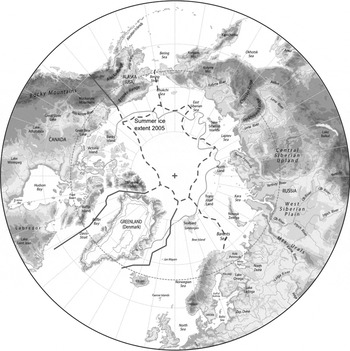
Even so, a sizable area in the central Arctic basin lies beyond the seaward boundaries of the EEZs of the five littoral states and retains its status as high seas. The focus of attention in this realm at present centres on the efforts of individual coastal states to advance persuasive claims to areas of the seabed located beyond the 200 nautical mile scope of EEZs on the grounds that these areas are natural extensions of continental shelves linked to the coastal states in question. It is certainly possible that some Arctic states will decide to advance more inclusive claims covering slices of the Arctic extending all the way to the North Pole and subject to the same legal status as their EEZs. Many western commentators anticipate, or at least imagine, that Russia will make claims of this sort, since the Russian Federation would end up with the largest slice of the Arctic basin under a system in which individual littoral states asserted jurisdiction over areas lying between their coast lines and the North Pole. It is worth emphasising, therefore, that the Russian Federation has not advanced any formal claims of this sort, and that predictions regarding the prospect that such claims will be forthcoming during the foreseeable future are purely speculative at this stage (Fig. 1).
Arctic boundaries. The solid lines are agreed boundaries, the dotted lines indicate boundaries that are not yet settled.

It is also important to remind ourselves that the most significant issues arising in the Arctic during the near future will not lend themselves to solutions based on the extension of coastal state jurisdiction over sectors of the Arctic basin. First and foremost, this applies to the role of the Arctic as a sink for persistent organic pollutants and other contaminants originating far to the south and to the increasingly dramatic consequences of climate change arising from anthropogenic actions that have nothing to do with the Arctic. But similar comments are in order regarding a range of other issues. Commercial shipping in the Arctic would pass through a number of jurisdictions; the challenge would be to devise a cooperative regulatory regime covering shipping rather than to focus on separate regulatory arrangements applicable to a number of distinct jurisdictions. For its part, any offshore oil and gas development in the Arctic during the foreseeable future will almost certainly take place within existing EEZs. The regulatory challenge will be to avoid or contain oil spills, a matter requiring cooperation rather than establishing legal barriers based on the jurisdictional claims of individual states. Even commercial fishing in the Arctic would involve straddling stocks, in the event that it becomes a significant activity. Here, too, the challenge will be to devise cooperative arrangements rather than separate arrangements applicable to individual sectors.
What this brief discussion suggests is that any move to extend the jurisdiction of the Arctic littoral states poleward in a manner that would have the effect of dividing up the Arctic basin into a set of coastal state sectors would be a step in the wrong direction. What we need for the Arctic basin is a set of collaborative arrangements dealing with environmental protection, shipping, and so forth rather than an extension of the classic approach in a states system emphasising the assertion of jurisdictional claims and assigning management authority to the individual states that make up international society.
With regard to the central Arctic basin only, therefore, it may well make sense to apply the precedent of Article 4 of the 1959 Antarctic Treaty and to freeze jurisdictional claims in this area in a manner that neither enhances nor detracts from any existing claims pertaining to the area. What is needed instead is a cooperative arrangement based on concepts of trusteeship or stewardship. There is nothing far fetched either legally or politically about this approach to managing the central Arctic basin. Contrary to the fears that recent accounts in the media project, oil and gas development in this area is not likely to become feasible and profitable any time soon. Both the regulation of commercial shipping and efforts to protect the Arctic from environmental impacts of contaminants originating far to the south would benefit from such a cooperative approach. Nothing in this arrangement need affect the provisions of Article 95 of UNCLOS granting warships (for example nuclear powered submarines) operating in this area ‘complete immunity’ from the jurisdiction of other states. The result of such an initiative to freeze jurisdictional claims to the central Arctic basin may well prove acceptable to all parties concerned.
The second point is renewing and enhancing the role of the Arctic Council. The eight Arctic states created the Arctic Council in 1996 to expand the limited mandate of the pre-existing Arctic Environmental Protection Strategy and to ensure that developments in the Arctic would be driven by the concerns of national governments (Young Reference Young2002; Stokke and Honneland Reference Stokke and Honneland2007). In order to gain acceptance on the part of all eight states, and especially the United States, the member states imposed sharp limits on the Arctic Council, insisting that the declaration establishing the council take the form of soft law, emphasising the refusal to provide the council with any regulatory authority, specifying that any and all issues pertaining to military security are off limits for the council, and refusing to equip the council with a secretariat and material resources of its own. The result is a relatively toothless arrangement characterised in the 1996 Ottawa Declaration establishing the council as a ‘high level forum’ for the discussion of policy issues but derided by many as a body lacking in the authority to make decisions and in the resources needed to initiate and carry out projects of its own.
Under the circumstances, it is worth noting that the Arctic Council has a number of successes to its credit (Young Reference Young2005). Actions carried out under the auspices of the council (for example the preparation of the Arctic Climate Impact Assessment and the Arctic Human Development Report) are playing influential roles in setting the policy agenda in the Arctic and framing issues for consideration at the policy level. A notable example in this regard is the gradual shift in formulating policy issues from the familiar discourse of environmental protection to the emerging discourse of sustainable development with its emphasis on the triple bottom line. The council has proved to be a pioneer in providing opportunities for non-state actors to participate in efforts to address policy issues. This is particularly true of the role accorded to indigenous peoples whose organisations are designated as PPs in the 1996 declaration and are accorded a seat at the table in all the activities of the council. Though they are often frustrated by the constraints imposed on their participation, a variety of ‘permanent observers’ are increasingly visible in the work of the council. What is more, the council has played a high profile role in amplifying the voice of the Arctic in a variety of global settings. A particularly prominent case in point is the acknowledged role of those concerned about pollution in the far north in the process of hammering out the provisions of the 2001 Stockholm Convention on persistent organic pollutants (Downie and Fenge Reference Downie and Fenge2003). Although the issue is larger and more diffuse, Arctic concerns are also prominent in discussions of climate change, especially among those that take up issues of adaptation as well as mitigation.
What, then, is the proper role of the Arctic Council in a renewed and revitalised governance complex for the Arctic and what changes or adjustments in existing arrangements could we and should we make to deal with the challenge of governance in the Arctic in an effective manner? I start from the premise that the council will be highly constrained both with regard to decision making and regulatory authority and with regard to material resources during the near future. An interesting parallel in this connection concerns the role that the North Sea Conferences play in conjunction with the regime dealing with pollution in the North Sea region set up under the 1992 Convention for the Protection of the Marine Environment of the North-East Atlantic (OSPAR) (Skjaerseth Reference Skjaerseth2000). These conferences have no formal authority to make decisions relating to this regime. But because ministerial level policymakers attend these conferences and because they are concerned with policy makng rather than implementation, the North Sea Conferences have played an influential role in the development of the OSPAR regime and in mobilising the political will needed to energise the process of implementation in this domain. There are, of course, obvious and fundamental differences between the North Sea Conferences and the biennial ministerial meetings of the Arctic Council. Nevertheless, the ministerial meetings have provided a forum for initiatives that make it possible to break out of the mundane processes involved in implementing Arctic Council efforts on a day-to-day basis.
There is also room to enhance the effectiveness of the Arctic Council and its various subsidiary bodies in raising the profile of Arctic concerns in broader efforts to address global issues like climate change and the loss of biological diversity. Because exogenous and often global drivers are implicated in so many of the issues on the Arctic agenda today (for example climate change, the impact of globalisation), a governance system that focuses only on regional concerns cannot succeed in achieving environmental protection, much less sustainable development in the Arctic. The Arctic Council has already played this role with some success in cases like efforts to control persistent organic pollutants that originate far to the south but eventually make their way to the circumpolar north that then serves as a sink or a long term repository for the relevant chemicals. In addition to the familiar case of persistent organic pollutants, this process is also in evidence with regard to other pollutants including Arctic haze and especially greenhouse gases. The Arctic Council has no authority over the human actions that give rise to problems like climate change. But in its role as a ‘high level forum’ the council has had some success in drawing the attention of outsiders to the links between the Arctic and various global processes. It can do even more along these lines if the members recognise this role at a conscious level and make a concerted effort to raise the awareness of outsiders regarding the vulnerability of Arctic systems to unintended and often unforeseen stresses arising as by products of human actions occurring far to the south.
To be effective in the next phase, the Arctic Council can and should make some adjustments in its current operating procedures. Above all, there is a need to provide enlarged opportunities for participation on the part of some non-Arctic states and a variety of non-state actors. Given the profound links between the Arctic and the outside world, it makes no sense to relegate outsiders (for example Britain, China, France, Germany, the European Union) to the status of observers who seldom even get to speak at council sessions. Since the actions of these states are critical to efforts to regulate global processes (for example climate change, globalisation) that will affect the Arctic profoundly, any procedure that leaves these actors increasingly frustrated and unhappy in their dealings with the council will be counterproductive. Here, there may be something to be said for making use of the procedure devised for the Antarctic Treaty System under which parties to the regime are separated into consultative parties and non-consultative parties based on the scope and visibility of their activities in the south polar region.Footnote 5 In the Arctic, this distinction would need to be based on some criterion very different from the emphasis in the Antarctic case on levels of scientific activity. But granting non-Arctic states (for example China) and organisations representing coalitions of such states (for example the European Commission) a recognised status in the governance system for the Arctic could go some way toward alleviating the frustration among these actors that is evident today.
A major achievement of the Arctic Council is the role it has accorded to organisations of indigenous peoples. It seems clear that this is a success story that can and will be emulated in other parts of the world. But the council has had less success in finding ways to draw in actors representing lower levels of government (for example states, counties, and so forth), the business community, and elements of civil society (for example environmental NGOs, the scientific community). So long as the Arctic Council remains an intergovernmental body, there will be limits on its capacity to integrate the interests and efforts of non-state actors effectively. This suggests that the question of how to draw in a variety of non-state actors will continue to be a major challenge throughout the foreseeable future. One way forward may be to enhance and regularise opportunities for non-state actors to participate actively and effectively in the work of subsidiary bodies like the Arctic Monitoring and Assessment Programme (AMAP), the Working Group on the Conservation of Arctic Flora and Fauna (CAFF), the Sustainable Development Working Group (SDWG), and so forth. Signs of progress have already emerged in this realm. The Arctic Climate Impact Assessment, for example, took the form of a collaborative effort involving the IASC, a non-state actor, together with AMAP and CAFF. Similar remarks are in order regarding links between the council and the University of the Arctic. Still, there is a long way to go in meeting the challenge of finding just the right formula for encouraging and institutionalising active participation in the council's work on the part of a range of non-state actors.
The third major point is that of integrating issue specific regulatory regimes. Stabilising jurisdictional claims and clarifying and strengthening the role of the Arctic Council are certainly steps in the right direction. But these steps leave out actions needed to manage a variety of human activities that seem likely to loom larger in the foreseeable future and that call for the development of regulatory regimes in the sense of sets of rules designed to govern specific activities and mechanisms for encouraging compliance with these rules. In some cases, this means regulating activities taking place in the Arctic itself, including commercial shipping, the extraction of hydrocarbons, and fishing beyond the limits of EEZs. In other cases, such as Arctic haze, the effects of pollutants reaching the Arctic basin via large northward flowing rivers, the extension of disease vectors to remote areas, the problem is to regulate human actions taking place well outside the boundaries of the Arctic.
From a governance perspective, it makes sense to tackle these matters through issue specific regulatory arrangements, so long as there is room for cooperative or even synergistic interactions between or among these arrangements. A case in point is commercial shipping where the International Maritime Organization (IMO) has already played an active role in the development of ‘Guidelines for ships operating in Arctic ice-covered waters’ and is currently active in the effort to update and expand these guidelines into a legally binding polar code for commercial shipping. But other links of this issue specific sort are easy to imagine and may well become prominent during the near future. An important case in point centres on the dangers associated with oil spills under Arctic conditions and the need to adopt a precautionary approach to offshore oil and gas development in this realm. Here, too, there may be a role for IMO as the organisation that oversees the implementation of the 1973–1978 International Convention for the Prevention of Pollution from Ships (MARPOL), an agreement that has played a role in the worldwide effort to address oil pollution at sea. Similar remarks are in order regarding potential roles for the Food and Agriculture Organization in providing guidance for efforts to regulate fishing in the Arctic, the UN Environment Organisation in addressing airborne and waterborne pollutants reaching the Arctic, and the World Health Organization in combating the spread of diseases over long distances.
It would be a recipe for failure to ask the Arctic Council to deal with matters of this sort. The Council has neither the authority nor the capacity to tackle these regulatory tasks. And it is apparent that many of these concerns involve forces exogenous to the Arctic, a fact that ensures that they cannot be handled effectively by arrangements limited to the Arctic. Even so, there are two important links between these issue-specific regulatory arrangements and the work of the Arctic Council. The council can play a role in ensuring that global bodies like the IMO are well informed about conditions prevailing in the Arctic as they grapple with the development of arrangements like the polar code. IMO has the expertise and regulatory experience needed to deal with issues pertaining to commercial shipping. But bodies operating under the auspices of the Arctic Council, such as AMAP and the Working Group on the Protection of the Arctic Marine Environment, have access to sophisticated and up-to-date knowledge of Arctic systems needed to inform the regulatory arrangements developed by organisations like the IMO.
The Arctic Council, particularly when it convenes at the ministerial level, may also have a role to play in addressing problems arising from interplay between various issue specific regulatory arrangements. If the polar code governing commercial shipping in the Arctic and a regime dealing with the harvesting of fish from stocks that are not confined to the EEZs of individual states interact with one another in a problematic fashion, for example, it is unlikely that the IMO and the FAO or some other counterpart dealing with the regulation of fishing will be able or willing to take steps on their own to iron out these differences. What is required in such cases is a higher level policy forum that can address the relevant issues in comprehensive terms and without any crippling bias that undermines its ability to resolve such problems in a constructive fashion. The relevant skills in such cases are those of a facilitator rather than a regulator, and this is a role that the Arctic Council may well be able to perform, despite its lack of decision making authority and material resources.
Conclusion
Much of the current flap in the media about the importance of the Arctic and the prospect of jurisdictional conflicts and even armed clashes over control of the region's reserves of oil and gas and other non-renewable resources is more alarmist than alarming. From the perspective of governance, fanning the flames of public concern by projecting scary scenarios that are only loosely connected to the realities of the Arctic is not constructive. Still, the Arctic system is dynamic in its own right and tightly coupled to both biophysical and socioeconomic developments unfolding on a global scale. There is much to be said for assessing the performance of the governance arrangements that have developed in the Arctic over the last twenty years and for analysing the pros and cons of new initiatives in this realm that may prove both useful and politically acceptable during the next decade or two.
I have argued that the popular idea of developing a legally binding treaty for the Arctic or at least the maritime Arctic is not only politically infeasible but also, and equally important, not likely to prove effective in addressing the demand for governance emerging in the Arctic today. What is needed is a tripartite governance complex capable of stabilising limits and boundaries, enhancing the role of the Arctic Council, and integrating a number of issue specific regimes. For a number of reasons, the Antarctic Treaty System is not a model to be emulated in the North Polar region. Even so, there are elements of the Antarctic experience that are suggestive in thinking about governance in the Arctic. Most jurisdictional boundaries and limits in the Arctic are well established and widely recognised. But there is much to be said for a strategy of freezing jurisdictional claims in the central Arctic basin in order to stress the idea of stewardship and to direct attention toward issues (for example commercial shipping) that call for the creation of cooperative arrangements. The distinction in the Antarctic regime between consultative and non-consultative parties may prove helpful in renewing and revitalizing the Arctic Council for the coming era. The effort to operationalise the idea of ecosystem based management in the south polar region under the provisions of the 1980 Convention on the Conservation of Antarctic Marine Living Resources is well worth studying with care on the part of those interested in achieving sustainable development in the Arctic. During the period following the winding down of the cold war, the Arctic has become a locus of energetic and often innovative initiatives relating to the governance of human-environment relations. The nature of the demand for governance in the far north is shifting today. But there is no reason to draw pessimistic conclusions from this observation about our ability to adjust and adapt the Arctic's governance complex in a manner conducive to the pursuit of sustainable development.
Acknowledgements
The author is most grateful to Alf Håkon Hoel of the University of Tromsø, Norway for his courtesy in providing the map set out in Fig. 1.