Christian Democracy (DC) was Italy's most prominent political party from the end of the Second World War to the early 1990s. The 1950s were a crucial period in the party's history, from its 1948 election victory over the left, united in the Popular Front, to the end of the decade. During this period Italian history was indelibly marked by two separate but closely connected phenomena: first, the forging of an indissoluble link between the DC, power and government; second, the construction of the DC as the ‘party for the Mezzogiorno’, something more than a mere gatherer and manager of votes on behalf of the Catholic Church. A period of emergence and reconstruction immediately after the war gave way to one of development and profound economic and social change. The party was changing, too. At the Naples congress of 1954, the newly elected party secretary, Amintore Fanfani, argued for a strategy to make it into the director of public intervention in the economy: it must revitalise its local branches and strengthen its autonomy and power to make contracts independently of the Church and of big business, turning itself into a ruling class with its hands firmly on the reins of economic power.
In this article I shall propose interpretations of certain problematic issues. How did the DC establish itself so firmly in 1950s Italian society, particularly in the rural south? What was the nature of the relationship between the DC and southern Italy? Why did the party assume the form it did? The most widespread scholarly interpretation sees the DC as the expression of a particular ideology, the inevitable outcome of a historical process that began at the end of the nineteenth century; rather than a party or political movement, it is seen as an updated version of a governing elite sustained by clientelism. There is some truth in this, but it is not a sufficient explanation of the DC's success. It is time for a new approach to the party's history that abandons teleology in favour of specific investigation of the historical context.
In what follows I shall consider the DC as a dynamic and complex phenomenon, conditioned by circumstances and contingencies rather than by programmatic or ideological assumptions. I shall argue, in particular, that the DC became the ‘party of the Mezzogiorno’ because it was resolved not only to fight communism but also to foster democracy – and because, thanks to its control of the machinery of government, it was able to present itself as the party of labour, in touch with the needs and hopes of ordinary people. In section 1 I shall re-examine some of the less convincing notions in current scholarship. Section 2 will show how certain forces operating on the margins in the 1950s – prefects, party representatives in remoter areas, local administrators and some intellectuals – focused on the centre of political power and ceased to distinguish between the party and the government. In section 3 I shall show how the DC backed up its legislation and public works for the development of the south with organisational reform and propaganda. Section 4 will describe the characteristics of, limitations of and degree of the consensus achieved by the agrarian reforms. The conclusion will suggest some possible directions for further research.
Historians' interpretations of the DC
Until the late 1980s most historians saw the DC as a conservative, clerically dominated force resolved, at some junctures, to create a ‘confessional’ state or a new version of totalitarianism.Footnote 1 More recent contributions have corrected this, pointing out that the DC cannot be seen as a mere cat's paw of the VaticanFootnote 2 and that the Christian democrats, both in Italy and elsewhere in Europe, succeeded because they combined confessional and ideological elements with more material concerns.Footnote 3 Others have stressed the considerable degree of continuity between late nineteenth-century political Catholicism and the Christian democratic parties after the Second World War, particularly in Italy and France.Footnote 4 Stathis N. Kalyvas argues that the essential characteristics of the twentieth-century European Christian democrats were forged during the years leading up to the First World War.Footnote 5 However, this long-term, goal-oriented view glosses over the Italian and international context and the material circumstances that shaped the party's history. While the historical and ideological origins of Christian democracy – and the differences among national parties – should not be overlooked, the success of the movement in Europe must be traced back to the inter-war and immediate post-war period. In Italy, as elsewhere in Europe, it answered a need for stability, security and reconciliation in a society emerging from years of warfare, and accordingly it stressed the importance of the family and of women. It benefited from the importance of the Church and of leading local personalities and elites who had acquired, or regained, importance during the war, moving into the vacuum left by the collapse of national unity and the absence of a universally recognised, stable government. The DC, proclaiming itself the party of labour and reconstruction, took the stresses of post-war material and individual ambitions,Footnote 6 and the aspirations of an electorate anxious for ‘tangible personal rewards’,Footnote 7 and turned them into votes. It was quick to exploit both the changes that the war had made to the relationship between town and country – changes that had tended to marginalise the working class and drive it into the communist camp – and the increasing social pressure emanating from rural and middle-class voters.Footnote 8 It was a perfect symbol of the desire for renewal and yet for stability; the articulation of centuries-old aspirations, like the hope of water to irrigate the parched fields of the south. Moreover, in the collective imagination – particularly the southern imagination - it represented the United States. The tide of immigration in the early twentieth century had fixed the United States in the Italian mind as the kingdom of the future, a realm of liberty and prosperity; the arrival of Allied troops with their largesse in the form of guns, chocolate and chewing gum did the rest.Footnote 9
Political theorists have suggested a range of definitions for the DC – the catch-all party, the faction party, the public-sector or civil servants’ or leading citizens’ party; a party of the elites with the support of the masses; the party of contradictions; the party of moderate democratic conservatismFootnote 10 – but some of these views were proved to be wrong within a few years,Footnote 11 and most have over-simplified a crucial aspect: power. It has been said that the power of the DC was rooted in patronage and clientelism – or worse. Some have argued that the sole aim of the DC – from the pragmatism of its founder Alcide De Gasperi, prime minister of Italy from 1945 to 1953, to the pragmatism of the dorotei Footnote 12 who later came to dominate the party – was to hold on to power. The ferocious internal struggles for power allegedly go back to 1946, when ‘groups formed around the institutional cleavage concerning the choice of republic versus monarchy’.Footnote 13 All in all, the DC is viewed as the predestined party of government, a Moloch whose very essence is power. But this takes no account of the multifarious variety of its founder members: popolari, ‘Guelphs’ of Milan, liberal Catholics, Catholics of the Resistance, Christian trade unionists, all feeding into a new ruling class whose culture, upbringing and ideals were antagonistic to the state and favourable to the encouragement of primary and horizontal social and economic relationships. This removes the intriguing paradox whereby a movement that arose on the periphery, in opposition to the central power, found itself running the country. It also removes the notion of a recently unified country, socially complex, historically and politically decentralised and ravaged by a war that had thrown local communities back on their own resources, where the achievement of consensus had depended on widely differing local political affiliations; on local orientations and traditions; and on the socio-economic circumstances of each territory.Footnote 14 This interpretation depends on hindsight, on backdating subsequent phenomena; it leads to a sociological model that obscures the social and political processes that really gave rise to the DC. It is those processes that I shall attempt to distinguish in what follows.
Letters from the periphery: party and government
The winter of 1955–6 was a harsh one for southern Italy, with adverse weather, plunging agricultural output and prices at record lows. The situation exacerbated social tensions: in Barletta, Apulia, the police shot and killed two farm labourers who, at the head of 3,000 demonstrators, were demanding a fairer distribution of the aid provided by the government and the Vatican.Footnote 15 A parliamentary inquiry, published in 1953, revealed that 85 per cent of the poorest Italian families lived south of Rome;Footnote 16 but the communist Mario Alicata noted that it was the freezing winter, coupled with police brutality, that ‘shed a ray of light on’ the acute poverty and ‘dramatically highlighted the backwardness and inadequacy of the fabric of life’ in the south.Footnote 17
This anxiety was shared by the prefects and police, but they came to different conclusions from the communists and were mainly concerned with the problem of consensus. The carabinieri of Calabria observed that public opinion had responded favourably to the flood defences and forest management instituted by the government after the floods and landslides that had marked that autumn and winter. On the other hand, there was bitter disappointment at the failure of industrialists to do something about unemployment. Owners of medium-sized farms had hoped for a measure of tax relief, while peasants who had received land as a consequence of agrarian reform were unclear about what they actually owned and what strings were attached – egged on by entrenched opposition from the left. Electoral success – both in Calabria and elsewhere – depended on gaining the support of the farming interest, and 27 May, the date set for local elections,Footnote 18 was fast approaching. Bad weather and government paralysis had prompted some suggestions that the elections should be postponed until the autumn; otherwise there was need for a ‘massive propaganda campaign’ backed by ‘concrete measures’ and ‘urgent action’, such as financing the aqueducts that had been promised at the previous elections, speeding up agrarian reform or implementing the special legislation for Calabria – in order to snatch electoral advantage from the parties of the right and left.Footnote 19 Similar appeals came from prefects in the centre and north of the country, particularly the rural areas or wherever the DC was the dominant party. The prefect of Viterbo, for example, wrote on the eve of the 1953 elections that the discontented populace was calling for land improvements, road-building, programmes of public works and party action to push through measures intended to help the unemployed.Footnote 20
In January 1955 the southern Italian provincial secretaries of the DC met at Castelgandolfo (Rome). Various comments and demands were voiced with respect to local and sectoral problems, addressed to whoever might be in a position to take action, whether in the party or in the government, in an institution or an affiliated organisation. The province of Caserta put a question about hemp production to the minister for agriculture; Caltanissetta raised the problem of sulphur mining with the under-secretary of state for industry. The minister for transport received complaints about the railway between Regalbuto and Nicosia in Sicily, and about suburban transport in Rome. Several provinces called attention to the non-existence or inefficiency of affiliated organisations including the Confederation of Italian Trade Unions (CISL), Azione Cattolica, and the Christian Democrat farmers’ association, Coltivatori Diretti. The chairman of the agency that was supposed to be implementing agrarian reform in Sardinia received a warning that the head of a ‘colonisation’ project at Nuoro was a communist and that something needed to be done right away.Footnote 21 The under-secretary for internal affairs was told about ‘poorly performing’ local secretaries in the province of Potenza, the failure of the prefect of Bari to deal with ‘inappropriate’ (i.e. left-wing) elements in local authorities, and the inefficiencies of the prefect and police chief in Foggia. Further complaints rained down on the ministers for finance, the treasury, and public works, the president of the Constitutional Court and the president of the Sicilian region; on party officials responsible for employment, legislation and local agencies; and on party women's and youth groups. All these ministers, under-secretaries and heads of organisations were ready with their responses, clarifications, explanations, interventions and requests for further information.Footnote 22
Apart from the nature of the requests and the promptness of the responses, it is interesting to note how this correspondence between the centre and the periphery blurs the distinction between government and party; in fact they were inextricably linked, as if forms of expression and responses to requests from society at large had shaped the political system itself. The masses were becoming involved in the political life of the republic via the, or a, party. New loyalties and new affinities – which still had a whiff of feudalism about them – were creating a link between ideological or religious convictions and material self-interest. The strengths, weaknesses and sheer inescapability of this process were noted even by the DC regional secretary for the Abruzzo:
In our part of the world, most people – and not merely in general – do not distinguish between the party and the government when assessing the achievements of the DC. Perhaps owing to the way things were under Fascism, or to an insufficient experience of democracy, most people identify the party with the government, and the negative side of this comes out when elections take place at an objectively difficult time. If I add that we owe a great many government initiatives for reconstruction in the Abruzzo and Molise to the tireless activity of leading parliamentarians who, while in government, have shown a truly filial devotion to the interests of their native region, it will be readily understood that when considering all that has been achieved by the government and the party since 1944, there is no need to distinguish between the two; indeed, to do so would be both difficult and pointless.Footnote 23
Even the more advanced elements in southern Italian culture considered that DC action was indispensable. Francesco Compagna argues that doses of democratic medicine – public investment and agrarian reform – helped to break down the stubborn resistance of the rural oligarchies and conservatives, but also slowed the steady increase in left-wing support at the polls. There was no option but to carry on.Footnote 24
Like all Catholic-inspired political parties in the immediate post-war period in western Europe, the DC had been a ‘new political animal’Footnote 25 with no experience of wielding power. In less than ten years the distinction between the party, the government and the state had virtually disappeared. How had this come about? Since 1947 the state and the government – the latter virtually synonymous with the DC – had made colossal investments, improved the infrastructure and tackled age-old problems such as the water supply. One of the most striking pieces of propaganda in support of the Marshall Plan is the film Il miracolo dell'acqua, in which, for the first time ever, an arid, sun-baked hamlet in southern Italy gains access to running water.Footnote 26 It all started in July 1950, when the prime minister, Alcide De Gasperi, visited the impoverished region of BasilicataFootnote 27 and was greeted with demands for ‘Water, water!’ When in 1956 dams in Apulia and Basilicata were formally inaugurated by the then prime minister, Antonio Segni, journalists hailed this as the advent of ‘water and justice’.Footnote 28
This state intervention – unprecedented both in scale and in speed – was not politically neutral: the politicians responsible nailed their Christian Democrat colours firmly to the mast. Although at the centre of government, they either espoused the interests of a certain region – like the youthful Giulio Andreotti, in 1947 already serving as under-secretary to the Council of Ministers, who represented Frosinone in the province of LazioFootnote 29 – or kept up their links with their native regions, as did Fiorentino Sullo with Avellino in Campania.Footnote 30 The DC shaped itself into a federation of local leading men who directed the torrents of public largesse issuing from Rome, and also noted local demands and passed them on to the relevant central authorities. Moreover, the electoral system required a strong local presenceFootnote 31 and encouraged politicians to attend to local priorities rather than forging an overall ideological stance, although the latter existed de facto in the form of anti-communism. As a result, the party representatives – the human face of Christian Democrat powerFootnote 32 – cannot simply be equated with the leading lights of the age of liberalism. Their approach to economic problems and social governance was neither rhetorical nor paternalistic, but based on hands-on experience and new ways of analysing and interpreting local problems. Personal contacts and clientelism did not disappear, but they were combined with more modern political structures and forms of mass patronage: the party, its affiliated organisations and, in the rural areas, the all-powerful farmers’ union, Coldiretti, headed by Paolo Bonomi.Footnote 33 Christian Democrat activity in the south did not take place singly or in isolation: it was part of a wider transformation of the Mezzogiorno conducted – albeit without an overall strategy and amidst quite frequent confusion – by the governing party.
Faith and works
In December 1955 local Christian Democrat leaders met in Bari to assess the legislation and initiatives brought in by the party and government in support of the Mezzogiorno. The working papers for this meeting bear witness to energetic activity in various sectors. Agrarian reform had led to the distribution of 51,978 hectares of land among 11,295 families, along with investment in machinery, irrigation, new buildings and land improvements in accordance with the twelve-year agricultural development plan. In 1952, 6.5 billion lireFootnote 34 were earmarked to develop the highlands, and a health insurance scheme was set up to help 4,277,541 farming families. Between March and October 1955 the Cassa per il Mezzogiorno (see below) contracted for 12.5 million jobs at a cost of 8.6 billion lire, and in the same year the public house-building authority INA constructed 9,000 apartments (44,000 rooms); in 1955–6 the government financed 1,032 construction sites, providing 3,405,000 working days, at a cost of 13.2 billion lire. It also provided 4,000 public libraries totalling a million books, and organised 6,000 re-training courses (with 150,000 participants) and 10,000 courses for 200,000 adults and illiterates. Between 1950 and 1954 consumption increased faster, in percentage terms, in the south than in the centre and north of the country: not only meat (13 per cent in the north and centre, 22 per cent in the south) but also cinema tickets (11 per cent against 31 per cent), cars (103 per cent against 140 per cent), motor cycles (262 per cent against 557 per cent), tractors (101 per cent against 169 per cent) and chemical fertilisers (30 per cent against 60 per cent). Radio subscriptions increased and by 1955 all southern villages had at least one telephone. The contribution of agriculture, forestry and fisheries as a proportion of the national income fell from 44 per cent in 1938 to 40 per cent in 1954, while that of industry, commerce, credit and insurance rose from 28 per cent to 39 per cent over the same period. Industrial wages and bank deposits also increased.Footnote 35
In a seminal article Aldo Moro identified the key features of the ‘party for the Mezzogiorno’ as the hope and confidence which the DC had distilled from ‘the former silent despair’ of Italian southerners, and the now-indissoluble union between the party and the government:
The DC in the Mezzogiorno has cast off ignoble traditions and clogging clientelism and is now a liberated, living, effective instrument of political action that can truly and energetically push forward the renewal of the Italian south. And despite the grave difficulties arising from the uncertain political situation, the government has continued to work efficiently, on both the institutional, economic and structural planes, to remedy the structural deficiencies of the Mezzogiorno and contribute, through uncompromising action and independent of private interests, to the social improvement of the masses and the creation of a genuine political initiative for the south.Footnote 36
But works alone were ‘not enough’, as Pietro Campilli, the minister in charge of the Cassa per il Mezzogiorno, told southern local DC administrators in September 1954.Footnote 37 If faith were needed, it could no longer be Catholicism, which in the south was undergoing a two-pronged attack – from modernity and from the persistence of a primitive, even disturbing, kind of paganism, as explained with incomparable passion and intellectual penetration by the ethnologist Ernesto De Martino.Footnote 38 All in all, policy for the south would be incomplete without the party's ‘guiding hand’,Footnote 39 and the renewal of the Mezzogiorno could not proceed without the creation of a widespread democratic awareness.
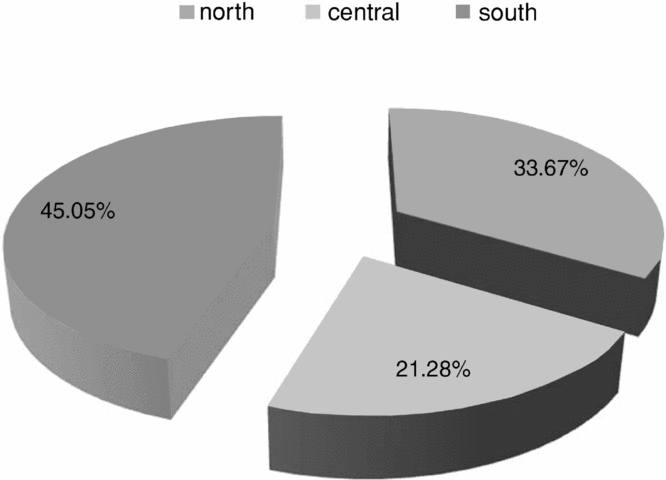
In accordance with a resolution of the Naples congress, a Standing Committee for the Mezzogiorno, chaired by Luigi Sturzo, assumed the task of turning the DC from a cross on a ballot paper into a permanent bridge between the people, the government and the parliament, and of gathering funds and strengthening the party's organisation wherever it was weak and under pressure from opponents.Footnote 40 By early 1956 signs of recovery were everywhere apparent, although complaints were heard in a few provinces –Trapani, Agrigento, Ragusa, Caltanisetta, Salerno, Catanzaro, Cosenza, Livorno, Campobasso – about the persistence of paternalism and clientelism and the lack of properly trained leaders. The party spent over 5 billion lire between summer 1954 and summer 1956 on stimulating activities in 710 regional branches (zone) and 4,631 local branches (sezioni) and on opening or reopening another 2,202 local branches. They inaugurated 18 cultural interest groups, 18 exhibitions, specialised congresses, 65 training courses and 6,760 branch meetings. The party's head office bestowed on the remoter provinces 5,865 flags, 1,576 radios and 373 television sets.Footnote 41 A total of 2,859 initiatives were launched between December 1954 and December 1955, including 1,329 events for shareholders and company directors. Courses of political instruction attracted 2,029 students, and the party press was celebrated at 25 provincial meetings and 195 branch meetings. Time was also found for sporting activities, painting exhibitions, football tournaments, film showings (Marcellino pan y vino), processions of floats and motorcycle parades.Footnote 42 Through 1955 party membership grew from 1,254,732 to 1,341,000, an average increase of 6.87 per cent. Growth was stronger in the centre (11.92 per cent) and south (7.64 per cent) than in the north (2.95 per cent). Party members in the south numbered 604,120 – almost half the total – and included a greater proportion of young people as well as over half the 304,407 new adherents. The number of party members who subscribed to the party's weekly or daily newspapers also grew in the south, although by less than the national average.Footnote 43
All this represented an organisational makeover for the DC, which presented itself at the May 1956 local elections with a claim that it had ‘kept its promises’Footnote 44 and had a ‘policy for employment’Footnote 45 which – as was argued at the hustings in Bari – contrasted with the ‘sterile and self-interested proclamations’ of the Communist Party. Party activists – not to mention party leaders and Catholic clergyFootnote 46 – still attached a great deal of importance to ideological propaganda; the revelations of the true nature of Stalinism that emerged at the Twentieth Congress of the Communist Party of the Soviet Union were a gift to those wishing to conjure up the Communist bogeyman. But a government source reported that the working people of Brindisi took little interest in the ‘problem of Stalin’; ‘urgent social problems’ meant more to them than ideological squabbles.Footnote 47 The party's internal propaganda office, Studi di Propaganda e Stampa (SPES), suggested that the horrors of Stalinism should occupy only the first stage of the electoral campaign; the second should be devoted to ‘purely electoral’ objectives, which meant that anti-communism had to give way to public works, proposed building programmes, agrarian reform and the ‘hopes and deeds’ of DC-led communities.Footnote 48 However, Catholic solidarity is at the heart of Che accade laggiù? (What's going on down there?), a modern drama-documentary full of merciless insights and richly interwoven narrative threads. The protagonist is a northerner with a civil service post, who fulminates against the Cassa per il Mezzogiorno and its habit of showering cash on southern layabouts. He then has a dream which clothes him in the dirty rags of a southern peasant and deprives him of every necessity of life, even the telephone. He awakens with a better understanding of the fact that government improvements to conditions in the south are likely to benefit the whole Italian economy.Footnote 49
DC members by geographical area, 1955

First-time DC members by geographical area, 1955

The DC's slogan, then, was Fatti e speranze – ‘deeds and hopes’. Elections were not history tests: there was no point in telling stories about the past unless they had implications for the future. The electorate were ‘like soldiers’, who could not be expected to fight under an unfamiliar ‘standard’ or for a house that would be occupied by others. The first priority was to ‘kindle new hope’; references to ‘deeds already done’ could then be brought in to strengthen and nourish that hope, so as to create a virtuous circle.Footnote 50 Even agrarian reform must be presented as a hope as well as a reality, or at least that was the message of a DC documentary originally attributed to Dino Risi.Footnote 51 It was hope that would break down stubborn allegiances and make life difficult for the communists. Police files and party publicists never tired of reporting defections from the Italian Communist Party (PCI), applications for inclusion on the electoral roll and new adherents to the DC. A catalogue of individual incidences would be pointless and repetitive, whereas an overview would reveal a very uneven picture. In any case, it would be difficult to discern where ‘hope’ ended and fear of losing, or not getting, a job began. Nonetheless the trend seems clear, and reasons for deserting the communist camp do not appear to be linked to the collapse of the Stalin myth.Footnote 52 At the beginning of 1955 the Catholic sociologist Achille Ardigò offered a lucid explanation of why the strength of reform lay in the future:
[National agencies] can promote new structures and fair, modern economic and social institutions, even if they have to be partial and confined to areas with priority funding. The communists, for their part, can only promise reform tomorrow, or whenever they have taken over power. This difference is of considerable importance, particularly in agricultural areas where land ownership is still the main or sole focus of peasant aspirations. If we make good use of this weapon, in accordance with the law and together with other instruments, to encourage and liberate the poorer peasants and so create a new social class of modern entrepreneurs, today's ‘containment’ may be extended into a veritable conquest.Footnote 53
Reform and the south
The DC's policy for the south was a ‘queer compromise’Footnote 54 between leading and supporting actors, structural trends and short-term factors: US and World Bank initiatives for the reconstruction of Europe and Roosevelt's conviction that well-being was the best antidote to communism;Footnote 55 the ‘southernist’ economists and politicians in and around SVIMEZ (the Association for the Development of Industry in the Mezzogiorno, created in 1946/7);Footnote 56 the Christian ‘solidarist’ faction in the DC, known as dossettiani after their leader Giuseppe Dossetti, committed to creating social equality and meeting collective needs; De Gasperi, a humanist first and a politician second;Footnote 57 rural agitation; the conviction of former resistance parties that the south was the key to strengthening Italian democracy.
The most significant political gesture towards the south was the founding of the Cassa per il Mezzogiorno, a fund for ‘extraordinary public works’ and, in particular, agrarian reform, equating the southern rural experience with that of eastern Europe.Footnote 58 ‘Agrarian reform’ was translated into three laws passed in 1950, after vigorous public and parliamentary debate: the legge Sila for Calabria; the legge stralcio for the rest of the south, the Maremma, between northern Lazio and southern Tuscany, and the Po delta; and the Sicilian regional law to break up the latifundia system of big estates. While this may not have represented the ‘agrarian revolution’Footnote 59 hailed by the Christian Democrats, things certainly did change in the Italian countryside. Viterbo may serve as one example among many – less familiar than some others, notably Calabria.Footnote 60 The province of Viterbo is not, geographically speaking, part of the Mezzogiorno; nevertheless, the cornerstone of its socio-economic structure was a backward agriculture whose yields and productivity were typically ‘southern’, its land distribution and social dynamics based not on sharecropping – a common practice in central Italy – but on latifundia. With reform came the career politicians and the new school of administrators who had come up through affiliated organisations; the party in Viterbo, like the party in the south, was taking on a new face.
While the province's economy remained quintessentially ‘underdeveloped’ right up to the early 1960s – that is, the contribution of agriculture to total output remained above the national average – the numbers employed in agriculture fell from 67,218 (62.9 per cent of the working population) in 1951 to 45,531 (48.4 per cent) in 1961. Workers in industry grew from 17.4 per cent to 24.6 per cent; tertiary-sector employees grew from 19.7 per cent to 27 per cent. The land reform affected 10,478 hectares, more than 70 per cent of it owned by latifundia proprietors, with 36,668 inhabitants. By 30 September 1954, 897 farms (10,638 hectares) and 3,866 smallholdings (13,313 hectares) had been allocated; by the end of 1952, 28,820 hectares had been expropriated. Production and productivity increased. Yields of wheat per hectare, which had averaged 0.9 tonnes in 1941–50, rose to 1.38 tonnes in 1953–4, maize from 0.49 to 2.59 tonnes, beet from 1.55 to 2.62 tonnes. The land reform agency anticipated that the new peasant landowners would be more productive and work in a spirit of competition that would attract private enterprise.Footnote 61 In fact, figures and statistics do not always constitute a sound basis for interpretation, nor do they drive events; rather they reflect those events and derive from them, though they also draw attention to less obvious factors. Contradictory indications of modernity versus socially entrenched political attitudes are perceptible in the rural areas; the stage is set for a richer articulation of society and its underlying values. These were non-linear phenomena, but they emerge almost unconsciously in contemporary literature, filtered through the mechanisms of literary invention. Thus Guido Piovene, a writer and journalist who toured Italy between 1953 and 1956, takes a sideways look at changes in Viterbo and detects a new political dynamic, a new way of living, even a new way of being:
Agrarian reform has advanced rapidly since the last war. Communications, the influx into Viterbo of workers endowed with white collars by the Reform, the rise of the peasants and the colossal expansion of Rome have robbed the province of its status as a place apart. Some traces remain in its character, but it has become the opposite of what it was: a land in transition. Even the lawyers, who used to flourish here, have lost a good deal of their importance now that business is mostly conducted in Rome.Footnote 62
Scholars have been harshly critical of this reform, although it has also been hailed as an instrument of social progressFootnote 63 and lauded for the rapidity with which the expropriation and redistribution were carried out.Footnote 64 The negative elements have always been identified as the mechanisms of state intervention, the proliferation of middlemen and inspectors, the ever more Byzantine complexity of government agencies. It has been alleged that being acquainted with a party bigwig was more important than belonging to a civic or national structure; public authority was gravitating back towards clientelism.Footnote 65
Recently Emanuele Bernardi has studied the dialogue between the DC and the PCI on the subject of these reforms.Footnote 66 He has traced De Gasperi's activities in this areaFootnote 67 and used land reform – meaning the redistributions intended to get rid of latifundia – as a tool for analysing the part played by the DC in the modernisation of the Mezzogiorno.Footnote 68 He sees the reform as a ‘play-off’ between the centralised decision-making of the US Truman administration and representatives of the Italian government, particularly the agriculture minister, Antonio Segni. Bernardi has successfully related the anti-communist element of the reform to the viewpoint of the Marshall Plan – although he has a tendency to assume that arguments among the protagonists are always economically rational and uninfluenced by party politics – and the part played by the United States, although land reform ran counter to the aims of the Plan and the politics of the New Deal. Putting the reform in an international perspective gives a new view of the DC's agrarian policy, and particularly of Segni, who has previously been considered a tool in the hands of the landowners.
However, the results of Bernardi's investigation do little to cast doubt on previous assessments of the outcome of the reform. De Gasperi once told a British journalist that the reform had ‘a social function to fulfil’; it was not a case of ‘smash and grab’, a merely material alteration, but a complete renewal ‘which will turn agricultural labourers into free small farmers’.Footnote 69 Foreign observers had looked closely at the proposals before they became law,Footnote 70 and the ‘policy of moderate reform’ earned De Gasperi the accolade of a ‘benevolent Socialist’.Footnote 71 The measures were seen as ‘an interesting first step toward scientific land reform’ – but ‘a first step only’:
It would deal with the immediate situation in which only the Communist extremists have a complete program, one that would exploit the peasants’ land hunger in order to foist upon them the Soviet system of agriculture with its collective farms and its State farms and its total loss of human liberty. A thorough reform would still be needed. But it can only be achieved if the Christian Democrats and democratic Socialists prepare the way for it by a thoroughgoing educational campaign.Footnote 72
It appears that these expectations were disappointed. The ‘agricultural labourers’ may have become ‘free small farmers’, but many of them also left the land and opened a new, dramatic chapter in Italian history. The ‘southern question’ was not resolved because the reform focused on the land problem; it took no account of the demographic and migratory trends that were an inevitable concomitant of development;Footnote 73 it ignored any idea of an ‘educational campaign’; and it underestimated the social and human cost of the changes.
The only real result of the reform was a political one: the DC took root in the countryside and won its allegiance. The US administration had believed that the electoral impact of the reforms would be negative; so did De Gasperi.Footnote 74 In the early 1950s the DC was everywhere losing the votes it had gained in 1948, and in the south they were escaping rightwards. But the 1948 elections had been something of an exception: the DC had seen off the left after an electoral campaign steeped in the tensions and ambience of the cold war. It was inevitable that the Christian Democrat tide should ebb in the early 1950s because the conditions of 1948 were not going to recur; but this was also a time of consolidation. The DC could no longer count on the entire anti-communist vote – including the monarchists and the fascists – but it was more firmly established at local level and its policies were winning it votes. By the end of the decade the ‘traditionalism of southern voters’ had greatly diminishedFootnote 75 and the DC had recovered the votes it had lost to the right, while the spread of communism among the agricultural labourers seems to have been halted.
This does not appear to have happened immediately, however, nor was it a linear development. Prefectoral analyses of southern voting patterns in the 1956 local elections were contradictory. The communes seized by the DC from the Communists in the province of Catanzato attested to the ‘positive outcome of the reform’ and showed that a ‘political turnaround’ was possible even in a strongly left-wing area.Footnote 76 In Cosenza, however, the Communists’ ‘defamatory’ propaganda had prevented major DC successes.Footnote 77 Before the elections the PCI had bombarded the peasants with propaganda,Footnote 78 and this onslaught on the rural south was a key element in the PCI strategy. Moreover, reform was a difficult instrument to handle and the Communists did not fail to exploit the errors of certain DC politicians who failed to rise to the occasion. Nonetheless, despite Communist hopes that a less-than-perfect reform would drive Catholic and left-wing peasants into the same camp,Footnote 79 the DC held firm. The reform strengthened its power and permanence and bound the party to the rural electorate.Footnote 80
Hence there is not much point in extrapolating the voting pattern in the areas of reform as if it were a laboratory model dissociated from the overall context. The peasant vote in the early years of the Italian Republic largely reflected the general political context, which means that it was unstable, as is shown by studies of electoral patterns in certain communes of Apulia, Basilicata and the Po delta from 1946 to 1953,Footnote 81 or trends in the 1956 local elections in the provinces of Matera (Basilicata), Andria and Cerignola (Apulia), and Crotone (Calabria).Footnote 82
The Mezzogiorno for the DC
In the late 1940s and early 1950s, the Mezzogiorno seemed to be in the opposition camp. Compagna attributed this to the instinctive feelings of the poor, the ‘congenital dissoluteness’ of the uneducated – the bovarisme and absenteeism to which politicians responded with demagogy. Because the DC had chosen to adopt a ‘priestly’ and ‘crusading’ tone, it had inclined towards maximalism and attracted the traditional political animals of the south: ‘municipalists’, transformists. There was no way in which the south could be brought within the ambit of national politics because it was a realm of ‘national fascism’ – meaning political elements opposed to the twofold transition from monarchy to republic and from fascism to democracy, who approached all problems from an immature, ‘Levantine’, ‘Mediterranean’ stance.Footnote 83 Percy Allum argues that the south was still dominated by Gemeinschaft – communities based on kinship and proximity – rather than the more modern and rational Gesellschaft based on a conciliation of interests.Footnote 84 It is true that the anti-systemic right was stronger in the south than elsewhere,Footnote 85 but Compagna's approach, Allum's model and the poetry of Carlo Levi (who was catapulted from a developed world into a society stubbornly resistant to any message from any source, whether human or divine)Footnote 86 were all in danger of tipping over into a-historicism, if not anti-historicism. To talk in terms of ‘amoral familism’ (Edward Banfield) or a lack of ‘civicness’ (Robert Putnam) means fixing the south as a region of perpetual immobility, monolithic, homogeneous and irremediably cut off from the nation at large: a place of cultural inertia and inexorable economic backwardness, bereft of all forms of collective organisation.Footnote 87 In fact the immediate post-war south was indissolubly linked to the history of Italy. The rural Mezzogiorno witnessed the great political struggles of the time, and the peasants were incontestably citizens of the Republic, as they demonstrated not least by their electoral preferences, which – however they may have varied in response to local conditions – were part of a wider dynamic. And the south was part of Italy because it was the DC's main theatre of action, and the DC was the party of Italy.Footnote 88 By the end of the 1950s the Mezzogiorno was no longer in opposition. The party had woven itself into the pattern of local interests, and government action was firmly integrated into the affairs of the region. The centre, instead of listening for pleas from the periphery, was looking to the periphery for answers: in 1957 Fernando Tambroni, the minister for the interior, asked the prefects what measures they would advise the relevant ministers, or the Cassa per il Mezzogiorno, to take in order to swing the expected 1958 elections the DC's way.
Nonetheless, there was a long distance between the article signed ‘Demofilo’ (actually by De Gasperi), entitled ‘Let the Christian Democrats Speak’, which was published in the still-clandestine journal Il Popolo in December 1943, and the party for the Mezzogiorno. And that distance was not traversed without a hitch. Indeed it was a succession of dead ends, changes of direction, discontinuities. The DC did not turn up for its appointment with history with its dossier complete and ready for inspection. The war had opened up enormous uncertainties in the political and institutional system, in people's physical and mental world, and in the symbolic and existential dimensions of the individual. The dichotomy of the cold war stabilised these uncertainties, but only up to a point. The DC, relying on its own flexibility and adaptability, seized the opportunities that came its way and successfully exploited people's fears, hopes and self-interest.Footnote 89 It was dynamic, open to change and able to evolve over time and in accordance with Italy's intricate geography.
In this article I have tried to shift the interest away from programmes and initiatives towards the social dynamics and Italian and international politics of the post-war period, because they were what nourished the DC. I have avoided generalised overviews and teleological narrative in favour of a specific, context-dependent approach. Some things have advanced to centre stage, others dwindled into the background; others may have been undeservedly passed over. It is these last that must be recovered through continuing research, in order to find an efficient interpretive key to the complex, but not inscrutable, phenomenon known as Christian Democracy.