Introduction
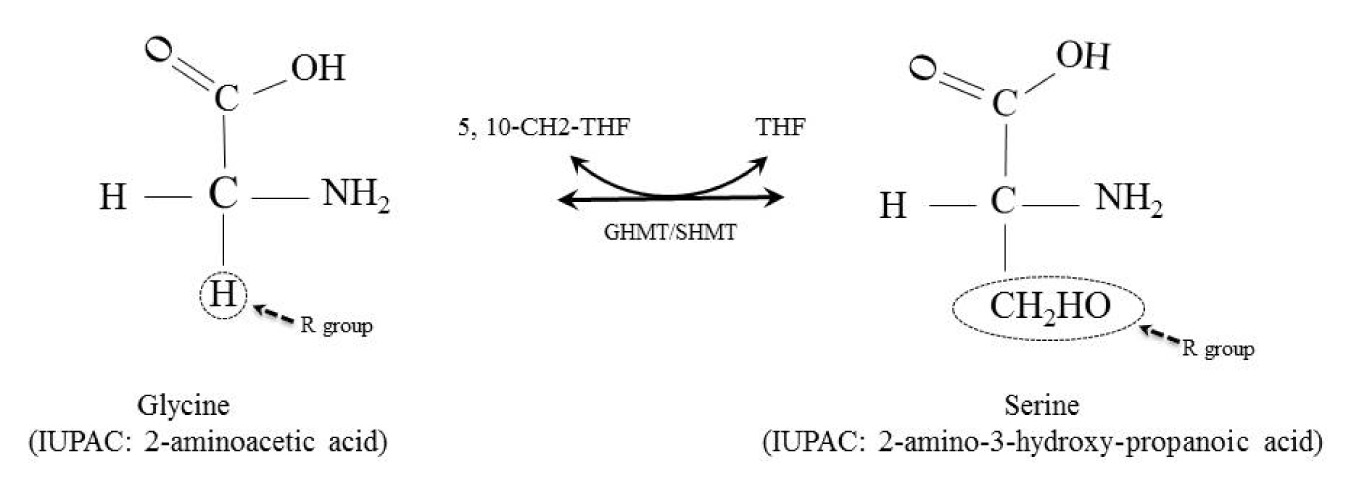
Glycine is the proteinogenic amino acid (AA) of low bulk and has the simplest R group of just one hydrogen atom. It is unique in that it has no isomeric forms. Glycine can be reversibly converted to serine as illustrated in Figure 1.
Glycine - Serine bioconversion (5, 10-CH2-THF, 5,10-methylenetetrahydrofolate; GHMT, Glycine hydroxymethyltransferase; SHMT, Serine hydroxymethyltransferase; THF, Tetrahydrofolate).

Despite its rudimentary structure, glycine is required as a precursor or metabolite in several AA and non-protein nitrogen (N) pathways. A selection of these metabolic utilisations, partly explaining its nutritional requirement is shown in Table 1.
Glycine multi-functionalities in nitrogen, amino acid and energy metabolisma.
aSee: Finkelstein (Reference FINKELSTEIN1998); D‘Mello (Reference D‘MELLO2003); Meléndez-Hevia et al. (Reference MELÉNDEZ-HEVIA, DE PAZ-LUGO, CORNISH-BOWDEN and CÁRDENAS2009)
In non-protein pathways, glycine is used for uric acid synthesis to eliminate nitrogenous wastes and to form blood haem. Glycine involvements in protein/AA anabolism include synthesis of scleroproteins (collagen, keratin, elastin) and gut mucin glycoproteins. These materials contribute to food safety and gut health (later discussed). In addition, glycine participates in the metabolism of arginine, threonine and sulphur AAs (SAAs) - cysteine and methionine. It is striking that only one atom structurally differentiates serine (the main metabolite of glycine) from cysteine - its hydroxyl oxygen is replaced by sulphur to form a thiol in the latter. Interestingly, serine and threonine share structural similarities, the only point of difference is that the R group of threonine possesses a methyl group instead of the extra hydrogen atom in serine.
At whole body level, glycine depleted birds exhibit muscular and nervous maladies, suffer significant deficits in BW as well as retarded feather accretion (Hegsted et al., Reference HEGSTED, BRIGGS, ELVBHJEM and HART1941; Ngo et al., Reference NGO, COON and BEECHER1977). Such birds show inferior hepatic accretion of protein, DNA and RNA, and have poor bone strength (Ngo et al., Reference NGO, COON and BEECHER1977; Yuan et al., Reference YUAN, KARIMI, ZORNES, GOODGAME, MUSSINI, LU and WALDROUP2012). Recent investigations confirmed that birds fed reduced or low crude protein (LCP) diets balanced with methionine, lysine and threonine will perform equally well to standard diets, if further supplemented with glycine (Dean et al., Reference DEAN, BIDNER and SOUTHERN2006). This effect is specific to glycine per se and not to unspecific N (Waguespack et al., Reference WAGUESPACK, POWELL, BIDNER and SOUTHERN2009b).
It is known that practical corn-soya diets respond to additional glycine inclusion. Takahashi et al. (Reference TAKAHASHI, AOKI, TAKIMOTO and AKIBA2008) reported a down-regulation of pro-inflammatory cytokines and improved growth performance in endotoxin challenged broilers fed elevated levels of glycine. These glycine responses and cellular involvements imply that glycine is a metabolically essential AA (EAA), and possibly involved in the manipulation of AA efficiency, animal performance and health. With a focus on broilers, this paper reviews elements of glycine involvements in AA metabolism and their impacts on nutritional efficiency of key individual EAAs and of total protein at low, standard or high dietary density.
Glycine in multifunctional metabolic networks
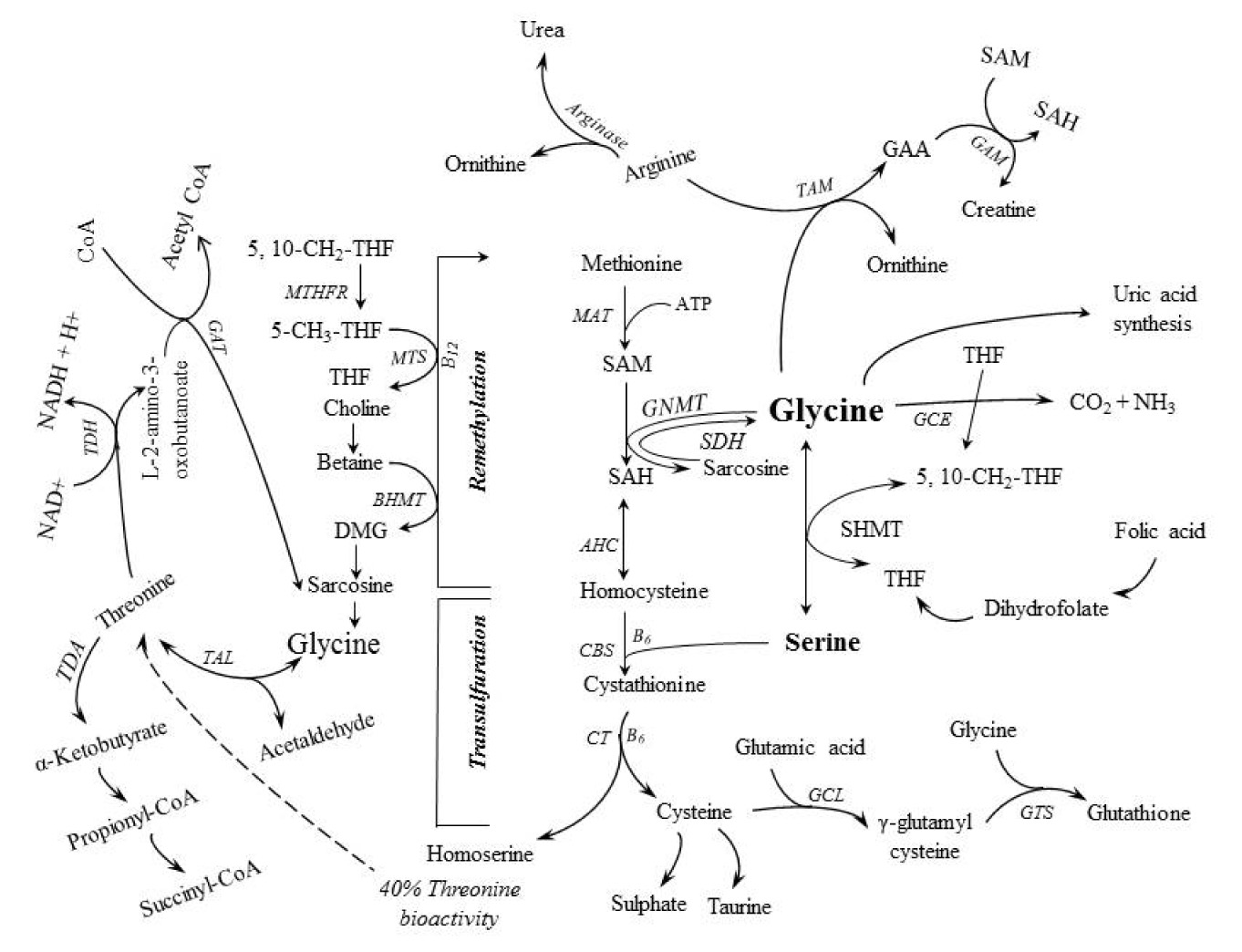
Some of the significant involvements of glycine in AA metabolism are depicted in Figure 2. These include methionine recycling (folate vs. betaine remethylation) and cysteine biosynthesis (transulphuration), creatine synthesis and threonine catabolism. In folate mediated remethylation, serine↔glycine coupling and glycine oxidation produce and transfer methyl groups via folate derivatives. Indeed, the methyl moiety channelled via 5-methyltetrahydrofolate (5-CH3-THF, 5-MTHF) originates from serine. A parallel remethylation path catalysed by betaine homocysteine-methyltransferase (BHMT, EC 2.1.1.5) is serviced by choline/betaine. Betaine is a derivative of glycine, which can be stepwise degraded into dimethylglycine (DMG), sarcosine and finally into glycine. The 1-carbon units produced in these processes may fuel the methyl pool trafficked via folate.
In transulphuration, serine is reacted with homocysteine (HC) to generate cystathionine. Cystathionine in turn is used to produce cysteine and homoserine - shown to have threonine bioactivity (Bryant et al., Reference BRYANT, DILGER, PARSONS and BAKER2009). On the other hand, the precursor glycine and arginine plus methyl group from S-adenosylmethionine (SAM) are the principal metabolites in creatine biosynthesis. While SAM is used as a donor of methyl groups (Baker, Reference BAKER2006), both glycine and serine double as acceptors and donors. The latter is the mechanistic basis why glycine/serine can detoxify excess methionine and regulate its utilisation (Finkelstein, Reference FINKELSTEIN1998; Ohta and Ishibashi, Reference OHTA and ISHIBASHI1995). But other methyl acceptors, like guanidoacetic acid and niacin, are not effective in addressing methionine toxicity (Benevenga and Harper, Reference BENEVENGA and HARPER1967). Methionine toxicity is relevant because synthetic methionine is added to poultry feeds to match SAAs requirements.
Selected glycine pathways in amino acid metabolism with potential bioactivity in animal nutrition (Finkelstein, Reference FINKELSTEIN1998; Meléndez-Hevia et al., Reference MELÉNDEZ-HEVIA, DE PAZ-LUGO, CORNISH-BOWDEN and CÁRDENAS2009).
AHC, Adenosylhomocysteinase (EC 3.3.1.1); B6, Vitamin B6; B12, Vitamin B12; CBS, Cystathionine β-synthase (EC 4.2.1.22); CT, Cystathionase (EC 4.2.1.15); GAM, Guanidinoacetate N-methyltransferase (EC 2.1.1.2); GAT, Glycine C-acetyl transferase (EC 2.3.1.29); GCE, Glycine cleavage system (EC 2.1.2.10, EC 1.4.4.2, EC 1.8.1. 4); GCL, Glutamate cysteine ligase (EC 6.3.2.2); GHMT, Glycine hydroxymethyltransferase (EC 2.1.2.1); GNMT, Glycine N-methyltransferase (EC 2.1.1.20); GTS, Glutathione synthase (EC 6.3.2.3); MAT, Methionine adenosyltransferase (EC 2.5.1.6); MTS, Methionine synthase (EC 2.1.1.13); MTHFR, Methylenetetrahydrofolate reductase (EC 1.5.1.20); 5, 10-CH2-THF, 5,10-methylenetetrahydrofolate; SDH, Sarcosine dehydrogenase (EC 1.5.99.1); SHMT, Serine hydroxymethyltransferase (EC 2.1.2.1); TAL, Threonine aldolase; TDA, Threonine deaminase (or Threonine dehydratase) (EC 4.3.1.19); TAM, Transamidinase (EC 2.1.4.1); TDH, Threonine dehydrogenase (EC 1.1.1.103); THF, Tetrahydrofolate
The need for free methionine supplementation has recently increased due to higher SAAs requirement (NRC (1984) versus Aviagen (2007)), due to genetic progress in broiler breeding. Why and how methionine becomes toxic is not fully defined, but clearly lethal doses of methionine is anorexic, depresses weight gain and affects AA utilisation, mainly threonine (Katz and Baker, Reference KATZ and BAKER1975a; Xie et al., Reference XIE, HOU, HUANG and FAN2007). Most investigators have linked these disturbances to plasma accumulation of the homocysteine fragment (Katz and Baker, Reference KATZ and BAKER1975b). Methionine toxicity may bring about epigenetic modification at genomic level, via hypermethylation of DNA, since SAM provides the methyl units for DNA methylation (Waterland, Reference WATERLAND2006). As illustrated on Figure 2, an example of glycine activity to neutralise excess SAM (methionine) capacity is to be methylated to sarcosine, via the enzyme GNMT (Glycine N-methyltransferase, EC 2.1.1.20). The converse (hypomethylation of DNA) is plausible when excess methionine leads to a negative feedback i.e. blocking homocysteine remethylation (Waterland, Reference WATERLAND2006). In the latter case serine helps in driving the reaction to cystathionine in the presence of cystathionine β-synthase (CBS, EC 4.2.1.22) as the activating enzyme and vitamin B6 (Figure 2). Glycine is linked with threonine as an end point in threonine oxidation. Threonine, like serine, is unique for being uninvolved in transamination nor is it quantitatively de-aminated (Rafelson et al., Reference RAFELSON, BINKLEY and HAYASHI1968). Both arginine (via urea cycle) and glycine (via uric acid) are used in N excretion. Glycine, arginine, cysteine, serine and threonine dominate feather proteins, summing up to 36% of the AA residues (Stilborn et al., Reference STILBORN, GOUS and HARRISON1997).
Glycine supplementation in broilers
A pertinent question is whether or not glycine metabolic linkages are relevant to efficient animal production. Are these glycine dynamics useful to extract more value from highly productive species such as broiler chickens? Efficiency parameters, including optimal and economic deployment of feed resources, with minimal damage to the environment, feed and food safety, low antibiotic application, have become sustainability imperatives in the feed and livestock industries. Glycine responses leveraging these goals particularly in AA nutrition are important at many levels of broiler production.
Glycine fills gaps in sulphur amino acid nutrition
Methionine supplemented practical poultry diets are first limiting in cysteine. Whereas free cysteine is not a commercial additive, crystalline methionine sources are included in excess of requirements to satisfy total SAAs needs. Under defined conditions, glycine can alternatively compensate for this cysteine limitation. This is supportable by five hypotheses:
1. Effects on transulphuration- whether dietary glycine supplementation will increase serine availability for cysteine biosynthesis, and hence efficiency of dietary SAAs may be improved.
2. Effects on remethylation: Firstly, serine provides the methyl group used in folate dependent methylation of HC. Any glycine mediated increase in cellular serine pool could promote methionine re-synthesis. Secondly, folate generating activities of glycine+serine could increase folate availability, thus alleviating competition for folate in dependent methyl metabolism (Herbig et al., Reference HERBIG, CHIANG, LEE, HILLS, SHANE and STOVER2002), which indirectly benefits folate dependent methionine biosynthesis. Thirdly, glycine supplementation could elevate metabolic choline/betaine availability, possibly via a reduction in betaine degradation. Improved betaine availability is known to increase efficiency of folate dependent HC remethylation even more than its parallel betaine route (Pillai et al., Reference PILLAI, FANATICO, BLAIR and EMMERT2006b). Moreover folate path remethylation has greater methionine salvage value than the betaine route (Pillai et al., Reference PILLAI, FANATICO, BLAIR and EMMERT2006a).
3. Effects on methyl metabolism per se as increased glycine intake may improve methyl availability, directly sparing SAM/methionine for obligatory methyl metabolism. Such conditions are favourable during high physiological demands, such as in young birds or during stress periods.
4. Glycine can obviate effects of excess or imbalanced methionine ingestion via increased conversion to cysteine or to excretory uric acid (Ohta and Ishibashi, Reference OHTA and ISHIBASHI1995).
5. Glycine at the interface of nutrition and immunity, as disease or stress induced increases in cysteine/methionine demand may register a replacement value for glycine. Stress related hyper-mucin production can be taken as an example (about 10% of small intestinal mucilaginous AAs are cysteine, while glycine+serine approximate 17%, Lien et al., Reference LIEN, SAUER and FENTON1997), as can immuno-modulation of cysteine metabolites like taurine and glutathione.
Studies clarifying these hypotheses include Lambert et al. (Reference LAMBERT, TITGEMEYER and LOEST2001), who observed that the efficiency of utilisation of L-methionine in abomassally infused mammals under methionine limitation was up-regulated from 27% to 66% in the presence of glycine and B vitamins. Cysteine efficiency for protein deposition was similarly boosted by glycine. The authors believed that extra methyl availability from glycine caused methionine sparing. Powell et al. (Reference POWELL, BIDNER and SOUTHERN2009) challenged published SAAs requirements for broilers, arguing the possibility of it being confounded by glycine+serine. They detected that 2.32% dietary glycine+serine level alleviated marginal and excess dietary total SAAs. The authors attributed these effects to increased cysteine synthesis arising from improved endogenous serine formation, emanating from supplemental glycine. This interpretation is consistent with Powell et al. (Reference POWELL, BIDNER and SOUTHERN2011) who confirmed significantly improved feed efficiency when extra glycine was combined with sub-optimal methionine and cysteine levels but not when cysteine was sufficient or in excess. Conversely, Sohail et al. (Reference SOHAIL, BRYANT and ROLAND2003) reported that 0.05 and 1% supplemental glycine could not ameliorate a 15% down specification of methionine and lysine in broiler chicken rations. This apparent discordance could be because a simultaneous reduction of lysine and methionine created an amino acid imbalance not correctable by glycine. It might seem too that their methionine reduction was too large, thus precipitating methionine deficiency rather than cysteine limitation.
Sparing threonine with glycine
Because threonine is a precursor of glycine, nutritional interactions between them is plausible, but has not been proven Corzo et al. (Reference CORZO, KIDD, DOZIER III and KERR2009). This may be because they used finishing broilers, whereas young birds are likely to be more sensitive. Nevertheless, trends in data show that adequate glycine ingestion under a 14% threonine limitation increased performance by 3-7% (weight or carcass criteria). Provision of threonine seems beneficial in situations of glycine deficiency. Baker et al. (Reference BAKER, HILL and KLEISS1972) reported an almost 200% increase in threonine requirements in chicks fed glycine-free semi-purified diet. However, birds fed a glycine depleted but threonine adequate basal diet responded to supplemental glycine, showing that threonine is unable to replace all of glycine functions. Reverse synthesis of threonine from glycine and acetaldehyde (Figure 2) was concluded to be irrelevant (Baker et al., Reference BAKER, HILL and KLEISS1972) as enzymatic studies have proven that threonine aldolase (the related metabolic enzyme) is almost absent in quails (Akagi et al., Reference AKAGI, SATO and OHMORI2004).
Threonine bioactivity of glycine is indirectly feasible under conditions of sub-optimal threonine utilisation. An example of this is when high CP diets are typical fed to young birds (e.g. broiler and turkey starter feeds). The mechanistic basis is that high N ingestion induces inefficient catabolism of threonine to glycine as a metabolic cost of N (uric acid) excretion. Increased activity of threonine catabolic enzymes under such conditions has been documented (ten Doeschate et al., Reference TEN DOESCHATE, SCHEELE, SCHREURS, BOEKHOLT and BRANDSMA1995; Yuan and Austic, Reference YUAN and AUSTIC2001), and data has been published (Rangel-Lugo et al., Reference RANGEL-LUGO, SU and AUSTIC1994; Ciftci and Ceylan, Reference CIFTCI and CEYLAN2004) showing positive correlations between threonine requirement and N intake which similarly suggests threonine oxidation. Thus supplemental glycine can be proposed as an aid for improving threonine metabolic availability for production gain when high dietary CP is fed. Other conditions limiting threonine utilisation against which glycine may offer alleviation are found during quantitative diversion of absorbed threonine into mucinogenic growths, exacerbated by high dietary fibre intake or stress conditions. The same applies when threonine is used to synthesise immunoglobulins and acute phase proteins during disease/immune-stimulation (Grimble, Reference GRIMBLE1990; Kidd et al., Reference KIDD, BARBER, VIRDEN, DOZIER, CHAMBLEE and WIERNUSZ2003; Le Floc'h et al., Reference LE FLOC'H, MELCHIOR and OBLED2004; Star et al., Reference STAR, ROVERS, CORRENT and VAN DER KLIS2012). More research is needed on the interactions between dietary glycine and threonine on de novo mucinogenesis, immune competence and threonine oxidation.
Glycine affects arginine efficiency
Among EAAs, arginine is the most abundant in practical broiler feeds. The concentration of nitrogen per molecule of arginine (32.16%) is the densest among all proteinogenic AAs. Further improvements in arginine utilisation would benefit both the animal and the environment. To this end, research suggests that glycine has a booster effect on arginine utilisation. Savage and O'Dell (Reference SAVAGE and O'DELL1960) calculated a 7% reduction in dietary arginine optimum in chicks fed a casein basal diet containing 1.8% arginine plus 1.5% free glycine. Moreover 3% of glycine stimulated growth more than 1.5% glycine in arginine marginal diets. These data were corroborated by Waterhouse and Scott (Reference WATERHOUSE and SCOTT1961a), and others (Yuan et al., Reference YUAN, KARIMI, ZORNES, GOODGAME, MUSSINI, LU and WALDROUP2012) have similarly supported these arginine-glycine interactions under LCP conditions (see below).
Two hypotheses explain arginine activity of glycine. Firstly, as a major precursor of creatine, glycine may aid efficient creatine and feather syntheses (Hegsted et al., Reference HEGSTED, BRIGGS, ELVBHJEM and HART1941). This effect is genotype dependent, whereby arginine and glycine deficiencies are better tolerated in slow feathering than fast feathering chicks. The second mechanism is via arginase, an arginine-catabolising urea cycle enzyme existing mainly in the chicken kidney (although poultry is uricotelic). Interestingly, kidney arginase is repressed by glycine (Austic and Nesheim Reference AUSTIC and NESHEIM1970), which may attenuate tissue arginine catabolism, beneficially improving arginine flux in protein and or creatine anabolic pathways (Ball et al., Reference BALL, URSCHEL and PENCHARZ2007).
Glycine improves amino acid efficiency in low and standard protein diets
Amino acid balanced LCP diets are intended to cause less pollution and provide lower cost diets. Although these goals are desirable, their practical application is hindered due to performance reduction. However, there is increasing consensus that glycine supplementation promotes acceptable or even normal bird performance under such conditions (Dean et al., Reference DEAN, BIDNER and SOUTHERN2006). This benefit for LCP is unrelated to increased uric acid synthesis (Waterhouse and Scott, Reference WATERHOUSE and SCOTT1961b), but is linked to decreasing dietary glycine+serine density as protein ingredients become lowered (Yuan et al., Reference YUAN, KARIMI, ZORNES, GOODGAME, MUSSINI, LU and WALDROUP2012); and to elevated demand for glycine in maintenance metabolism including the replacement of intestinal losses (Moughan and Fuller, Reference MOUGHAN and FULLER2003; Moran, Reference MORAN2010). Given the importance of maintenance glycine levels, surprisingly, investigators have largely focused on the total physiological requirement (Corzo et al., Reference CORZO, KIDD, BURNHAM and KERR2004). Studying maintenance components of glycine requirements will provide information on the fundamental dynamics of glycine nutrition, in addition to data for systems that model efficient nutrient supply via the factorial approach (Moughan and Fuller, Reference MOUGHAN and FULLER2003; Akinde, Reference AKINDE2007; Akinde et al., Reference AKINDE, KLUTH and RODEHUTSCORD2010). When studied at intestinal level, such investigations can provide critical data on ileal inevitable endogenous flow (IEF) of glycine for the evaluation of feed levels on standardised ileal digestibility (SID) (Akinde et al., Reference AKINDE, KLUTH and RODEHUTSCORD2011; later discussed under feed evaluation).
Table 2 shows the benefits of glycine supplementation to LCP diets, in comparison to standard CP levels under trial conditions. Under the conditions of the trials, glycine supplementation (to bring total glycine+serine to 2.0%-2.53% of diet) improved the nutritive value of LCP diets (16%-20% CP) to equal those of the standard control diets. In a number of instances the standard diet was in fact surpassed (Table 2). This implies the possibility to deplete CP by 3%-4% from 23% to 23.5% standard CP commonly fed to starting broilers, when glycine plus methionine, lysine and threonine are supplemented. These benefits are explained by improvements in efficiency of AAs utilisation under reduced N load and via increased glycine ingestion. A glycine mediated improvement in efficiency was seen in two studies where arginine levels were 15% and 23% lower relative to control diet, respectively. Relative to the control, dietary arginine in LCP diet in another trial was <5%, while concentrations of valine, and isoleucine (not shown) were marginally deficient too (Waguespack et al., Reference WAGUESPACK, POWELL, BIDNER, PAYNE and SOUTHERN2009a). Glycine supplementation permitted reduced threonine specification in this latter study, considering the threonine level of 0.66% in the LCP diet versus 0.82% reported for the positive control. Dean et al. (Reference DEAN, BIDNER and SOUTHERN2006) documented the efficacy of glycine fortification using a 16% LCP basal diet simulating the AA profile of a typical standard diet but marginal in arginine (and slightly in valine). They observed that glycine significantly (P<0.05) increased feed efficiency by 5% above the standard diet. Interestingly, average daily BW gain (ADG) and average daily feed intake (ADFI) didn't differ to the standard control. Similar responses were seen in three additional studies reported by these authors (Dean et al., Reference DEAN, BIDNER and SOUTHERN2006). These glycine responses have been corroborated. Parr and Summers (Reference PARR and SUMMERS1991) and recently others (Berres et al., Reference BERRES, VIEIRA, DOZIER III, CORTES, DE BARROS, NOGUEIRA and KUTSCHENKO2010; Yuan et al., Reference YUAN, KARIMI, ZORNES, GOODGAME, MUSSINI, LU and WALDROUP2012) have shown that glycine upgraded lysine, valine, isoleucine, arginine, tryptophan or histidine supplemented LCP diets to that of standard CP diets. In laying hens Akinde and Etop (Reference AKINDE and ETOP2014) observed that 5 g CP/kg diet can be spared by 450 mg free glycine. The literature further confirmed that these effects were glycine specific and not attributable to non-essential N (Schutte et al., Reference SCHUTTE, SMINK and PACK1997). It can be concluded that glycine plus methionine, lysine, threonine are the first limiting AAs in LCP, vegetable protein-based diets for young broilers. Glycine positively affects LCP diets by improving efficiency of protein/AA utilisation, resulting in further reduction of certain EAA dietary minimums. Thus, re-evaluation of EAAs requirements in practical LCP glycine supplemented basal diets are recommended.
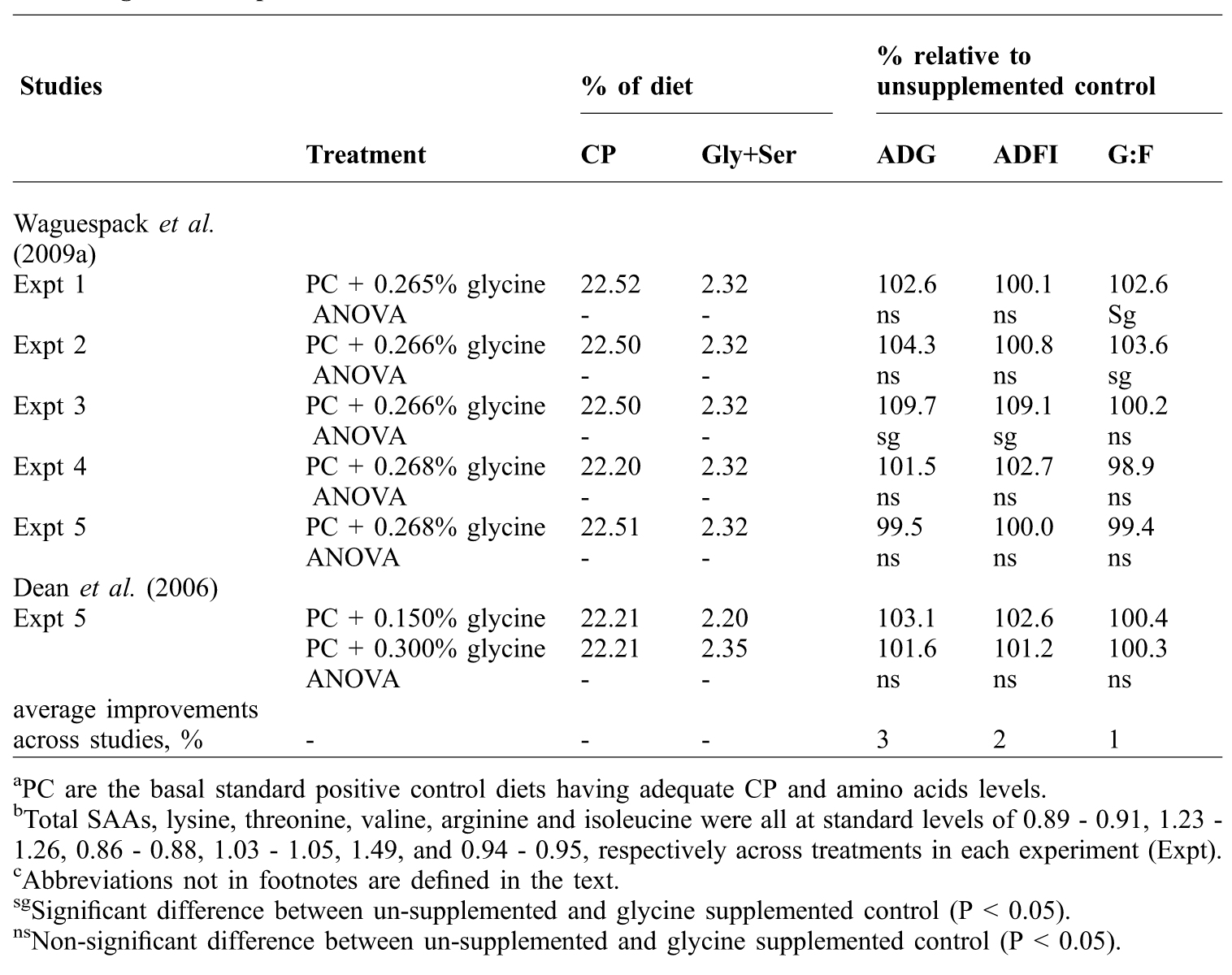
Even more interesting is that glycine promotes zootechnical performance when supplemented to standard CP diets adequate in all EAAs. In this respect, glycine may be regarded as a growth promoter. In chicks fed corn-soya practical diet plus 2% additional glycine, Fisher et al. (Reference FISHER, SCOTT and JOHNSON1955) reported 4% and 9% significant improvements in 28 d feed efficiency and BW, respectively. A selection of recent information showing relative benefits of glycine supplementations on top of control diets is provided on Table 3.
When the calculated relative benefits were averaged across studies, approximately 2.4 g/kg dietary free glycine inclusion improved ADG, ADFI and feed efficiency by 3%, 2% and 1% respectively, in starting birds fed practical corn-soya diets (Table 3). These efficacies could be related to the inability of young birds fed conventional feeds to realise optimum accretions of feathers and tissues, as well as the syntheses of creatine and uric acid (Fisher et al., Reference FISHER, SCOTT and JOHNSON1955). However some investigators could not confirm this growth promoting effect of glycine, for example, Alzawqari et al. (Reference ALZAWQARI, KERMANSHAHI and MOGHADDAM2010) observed no effect of glycine supplementation (0.25 and 0.5% of diet), except for improved fat digestibility, on ADFI, BW gain and FCR in 7-42 d broilers fed corn-soya diets containing 5% animal fat and adequate in all nutrients. Sohail et al. (Reference SOHAIL, BRYANT and ROLAND2003) could not detect any impact on performance up to 42 d in broilers when 0.05% or 0.10% of glycine was added to a practical basal diet. This lack of response to glycine in the latter two studies may be traced to dietary considerations. For one, the 18.3-20.8% dietary CP levels in starter basal diets used by Sohail et al. (Reference SOHAIL, BRYANT and ROLAND2003) are typical of LCP rather than standard CP inclusion. As already discussed, low CP diets require higher glycine concentrations (Dean et al., Reference DEAN, BIDNER and SOUTHERN2006). Thus it is plausible that their basal glycine+serine content of ~1.81% (recalculated) and the supplemented glycine were insufficient to stimulate a response. One could speculate that the high (5%) tallow level used by Alzawqari et al. (Reference ALZAWQARI, KERMANSHAHI and MOGHADDAM2010) could have blunted the effects of glycine. Tallow fat is refractory to luminal nutrient extraction, due to its constituent long chain saturated fatty acids (Krogdahl, Reference KROGDAHL1985). Dahiya et al. (Reference DAHIYA, HOEHLER, VAN KESSEL and DREW2007) demonstrated that, when glycine is encapsulated by fat, its intestinal absorption is inhibited. Based on Waterhouse and Scott (Reference WATERHOUSE and SCOTT1961b), other dietary factors interfering with the animal's response to glycine include differences in AA balance and in CP. Except for the ratio of leucine to lysine, a recalculation of AA balance across all the diets did not show any appreciable difference.
Efficacy of dietary glycine supplementation on performance of 0 - 18 d broilers fed control diets containing standard protein and amino acid levelsa,b,c.
aPC are the basal standard positive control diets having adequate CP and amino acids levels.
bTotal SAAs, lysine, threonine, valine, arginine and isoleucine were all at standard levels of 0.89 - 0.91, 1.23 - 1.26, 0.86 - 0.88, 1.03 - 1.05, 1.49, and 0.94 - 0.95, respectively across treatments in each experiment (Expt).
cAbbreviations not in footnotes are defined in the text.
sgSignificant difference between un-supplemented and glycine supplemented control (P < 0.05).
nsNon-significant difference between un-supplemented and glycine supplemented control (P < 0.05).
Excluding the responses from trials given in Table 3, glycine may as well promote performance via a stimulation of feed intake to benefit nutrient intake. Han and Thacker (Reference HAN and THACKER2011) proved this has the potential to improve egg production and egg weight in layer rations supplemented with 0.05-0.1% additional glycine. This effect may indeed have palatability basis as glycine is sweet, although sense of taste is believed to be weak in poultry. On the other hand, glycine inclusion in poultry diets should be conducted with caution, since excess ingestion of glycine can be detrimental to feed intake. Cave (Reference CAVE1978) showed that this effect starts at 3% inclusion in a practical breeder diet, which the authors considered beneficial to suppress excess feed consumption, obesity and carcass fat accretion in breeders, although double this dose is tolerated in purified broiler diets (Snetsinger and Scott, Reference SNETSINGER and SCOTT1961). It is concluded that glycine promotes performance in birds fed corn-soya standard CP diets, within suitable range of AA balance and typical dietary composition.
Efficacy of glycine in high protein diets
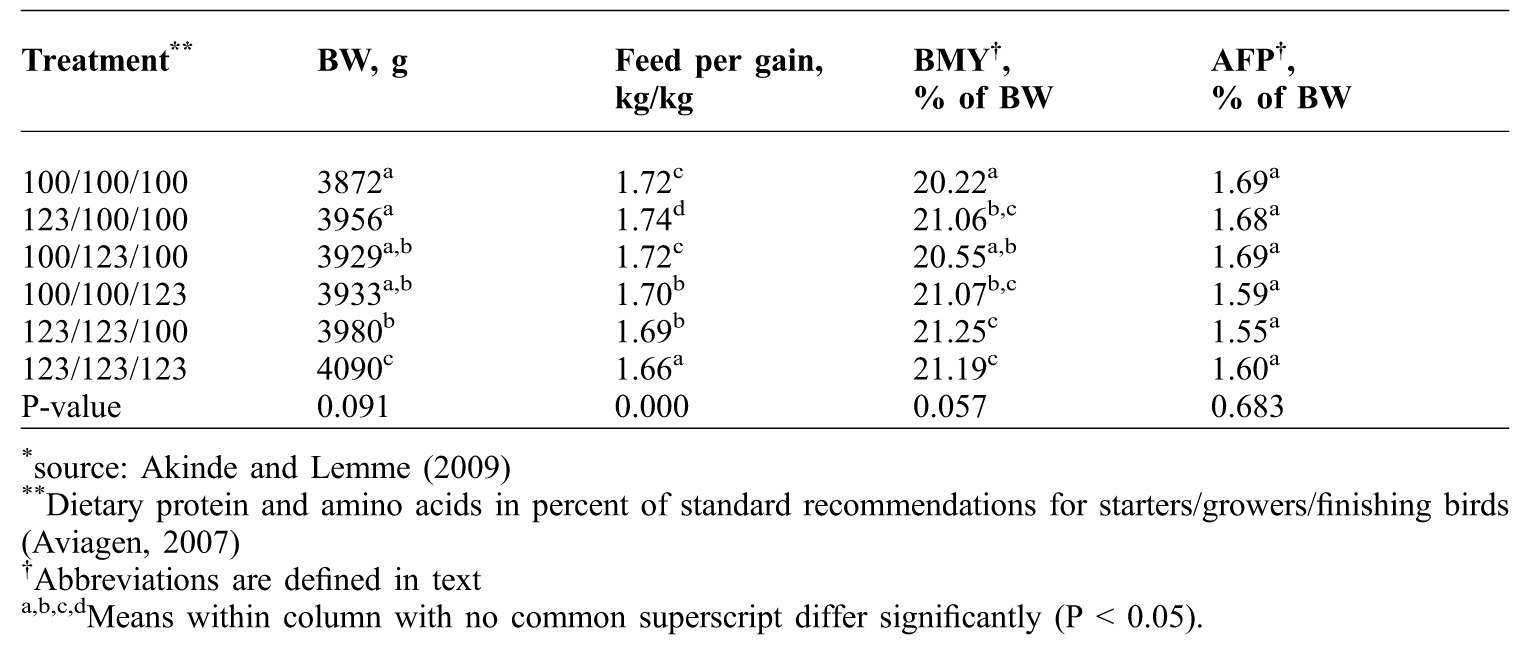
When protein cost is low or when increasing dietary inclusion of available, cheaper unconventional feedstuffs, high CP diets become interesting to nutritionists. Moreover, when balanced for AA, high CP diets can release the full genetic potential of modern highly selected poultry. Akinde and Lemme (Reference AKINDE and LEMME2009) have validated this strategy when they demonstrated that feeding high levels of balanced CP in more than one growth phase can benefit final BW, breast muscle yield (BMY) and abdominal fat pad (AFP) (Table 4). Nevertheless, over-dosing protein leads to diminishing returns, as diminishing efficiency of utilisation occurs as AA or N intake approaches or exceeds metabolic demand. To study this phenomenon, Akinde et al. (Reference AKINDE, KLUTH and RODEHUTSCORD2010) calculated non-linear N accretion curves showing diminishing return to incremental AA ingestion in pekin ducks. They systematically studied N efficiency based on cumulative efficiency (CEf) and marginal efficiency (MEf) response curves in ducklings and adult ducks (Akinde, Reference AKINDE2007).
Response of male Ross 708 broilers to combinations of balance protein in subsequent phases*.
*source: Akinde and Lemme (Reference AKINDE and LEMME2009)
**Dietary protein and amino acids in percent of standard recommendations for starters/growers/finishing birds (Aviagen, 2007)
†Abbreviations are defined in text
a,b,c,dMeans within column with no common superscript differ significantly (P < 0.05).
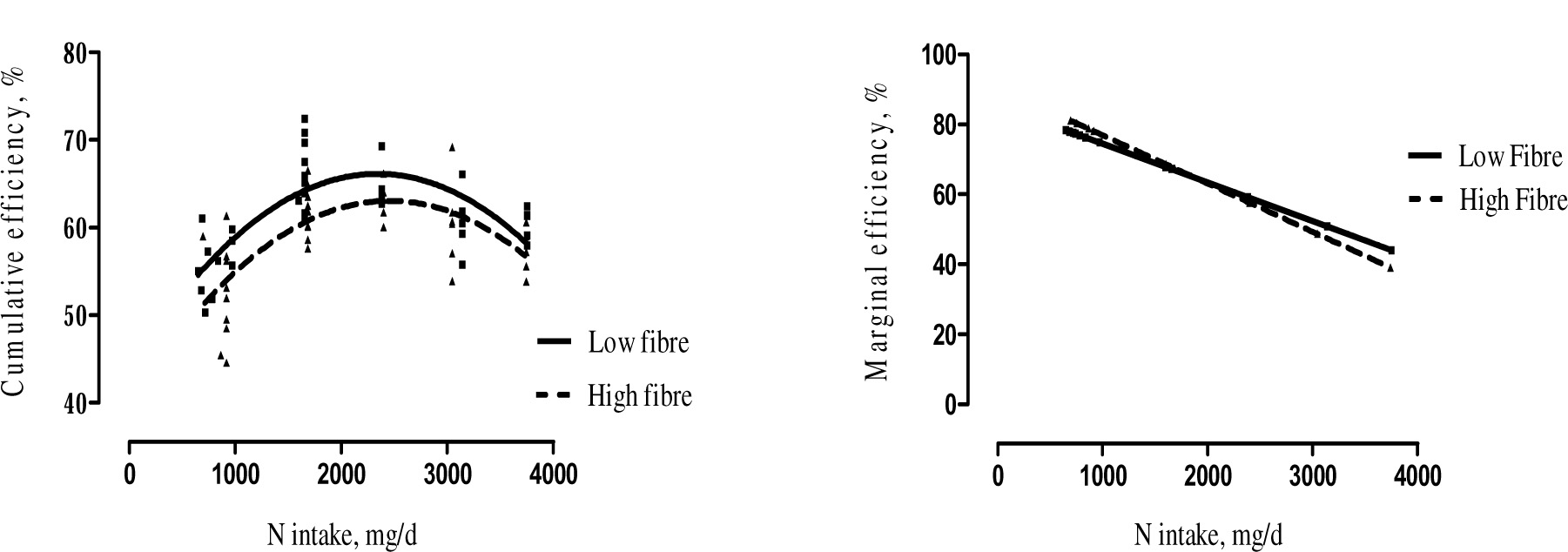
CEf measures N efficiency for both maintenance and body N accretion, while MEf represents the proportion of increments in N intake that was accreted regardless maintenance. These parameters were evaluated at low and high intake of crude fibre (CF), as CF could modify AA efficiency. Results from the ducklings study showed that CEf nonlinearly increased with increasing N intake achieving a plateau (in the region of physiological adequacy) and then decreased. However a constant decrease in MEf of ingested N was observed regardless of dietary supply (Figure 3). In ducklings, the peak CEf decreased from 67% to 63% while the maximum in MEf increased from 78% to 81% in low and high CF diets, respectively. These data confirmed that high N ingestion reduces intermediary utilisation, and that CF is a modulating factor. Similar trends were seen in the adult ducks experiment. Given the role of glycine in N homeostasis, systematic efficiency studies are needed to characterise the shape of glycine modulation of protein utilisation.
Relationship between intake and cumulative efficiency (left panel) or marginal efficiency (right panel) of N in ducklings fed graded CP concentrations at two levels of crude fibre (source: Akinde (Reference AKINDE2007), unpublished).
Conclusions
Glycine promotes the metabolic and nutritional efficiency of essential amino acids (especially sulphur amino acids, cysteine, threonine and arginine) as well as protein utilisation. These efficacies inherently benefit feed resource utilisation, animal health and overall sustainability of animal production. Nevertheless, empirical evaluations to gain insights into routine application of these benefits are lacking. Further research is needed on threonine, arginine and SAAs ratios to glycine+serine, which promotes optimal animal performance across varying dietary and production conditions. Also required are definitive studies clarifying the quantitative benefits that may result on well define parameters when crystalline glycine is supplemented as a growth promoter.
Comparative utilisation of glycine supplemented low crude protein and positive control diets in young broilersa.
aAbbreviations not in footnotes are defined in the text.
*Studies 1, 2, 3 and 4 are based on experiments (Expts) reported by Waguespack et al. (Reference WAGUESPACK, POWELL, BIDNER, PAYNE and SOUTHERN2009a; Reference WAGUESPACK, POWELL, BIDNER and SOUTHERN2009b), Schutte et al. (Reference SCHUTTE, SMINK and PACK1997) and Dean et al. (Reference DEAN, BIDNER and SOUTHERN2006), respectively.
†Studies 1 and 2 used practical basal diets with only free methionine, lysine, threonine and glycine supplementation, but study 3 and 4 used semi-purified diets.
‡LCP are the low crude protein basal diets being compared to standard positive control diets, adequate in all nutrients.
**Gly+Ser levels in positive control diets varied between 1.93% to 2.06%, across studies.
††In the LCP diets, these amino acid levels are inadequate compared to levels in the positive control.
sgSignificant difference between the un-supplemented positive control and glycine supplemented LCPB treatments (P < 0.05)
nsNon-significant difference between the un-supplemented positive control and glycine supplemented LCPB treatments (P <0.05).