CHILDHOOD, EARLY EDUCATION, AND UNIVERSITY

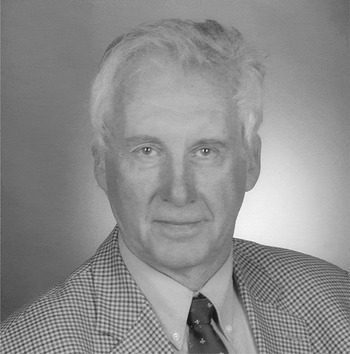
Professor Manfred Deistler
First let me thank you for having agreed to do this interview. I would like to start by asking you about your childhood and your early education.
I was born in 1941, during the Second World War, and started to go to elementary school in 1947, two years after the war had come to an end. At that time Austria was still very much reeling from the war. My hometown, St. Pölten (60 kilometers to the west of Vienna and nowadays the state capital of Lower Austria), belonged to the Russian occupation zone until 1955, when the Allied troops finally pulled out. I still have vivid memories of my first days and weeks in elementary school. A major problem then was that I am left-handed but was forced to write with my right hand, which I had great difficulties with. My parents had a strong influence on me, especially through their nonauthoritarian style and their preference for discourse over command. This was quite unusual at a time when it was considered normal that parents hit their children, something my parents never did. My father was an electrical engineer who had gotten his education in the Austrian imperial navy and who was later on employed by the public utility company of Lower Austria. As was usual at that time, my mother was a housewife and took care of my brother (10 years my senior) and me. My interest in science and scientific thought was aroused by a series of excellent teachers I had during my high school years, especially teachers in chemistry, history, and physics. At the beginning of high school I was a bad student, which—I think—was an aftereffect of being forced to write with my right hand despite being left-handed. As I said, there were a number of very good teachers at my high school to whom I am very grateful, and I believe that I received a very good education in high school.
After graduating from high school in 1959 you moved from your hometown, St. Pölten, to Vienna to study electrical engineering at the University of Technology Vienna, which then was known as the Technische Hochschule Wien. Can you tell us about your experiences at the Hochschule?
I studied electrical engineering at the Technische Hochschule in Vienna from 1959 till 1964. Thinking back, this was certainly not a pleasant experience. The situation at Austrian universities was really bad at that time. For example, the “Grundvorlesung” (i.e., the first basic course) in mathematics for which more than 1,000(!) students had signed up was held in an auditorium that could seat only 300 people. We had no contact with the professors whatsoever. While the education during the “Grundstudium” (first 2 years) was nevertheless solid, the curriculum of the “Hauptstudium” (last 2.5 years) was hopelessly outdated. At a time when every radio you could buy was equipped with transistors, we were still taught about electronic tubes, but transistors were hardly mentioned. There was no compulsory course on computers or programming, but we had to painstakingly produce drawings of power plants and had to calculate characteristics of electric motors using slide rules without end. So, while the curriculum involved some hard work and some aspects were also intellectually challenging, it was certainly not inspiring. The idea that science can be fascinating, which I had gotten in high school, I rather had to preserve and save through this period.
Were there any other—perhaps more positive—influences outside the university that shaped your views during that period?
I have always been very much interested in politics, probably kindled by many discussions in my parental home. Through friends I became a member of the “Katholische Hochschulgemeinde,” an association of Catholic students and intellectuals. This was a very interesting place to be at that time, with lots of discussions on hot political and other topics.
I also got in contact with the subject of economics during my time at the Hochschule, a subject I chose as a “Freigegenstand” (elective course). While the experience I had was not a positive one, let me nevertheless tell you the story: I got the worst possible mark that still allowed me to pass the course. (That is a 4 out of a grade scale from 1 to 5, where 5 is a failing grade.) I still remember the exam very well. We were five students taking the exam, and we sat in a row on a bench. The student first in the row got a 1, the second one a 2, the third one a 3, the fourth one (me!) a 4, and the poor guy to my right failed! So I was quite lucky. By the way, the professor and examiner was some Herr Westphalen, a relative of Jenny von Westphalen, the wife of Karl Marx.
BECOMING AN ECONOMETRICIAN AND THE WANDERJAHRE
What you told us about your time at the Technische Hochschule does not sound too exciting and encouraging to start a career in science and academia. How did this nevertheless come about, and why did you move into econometrics?
After I had finished my “Diplom-Ingenieur” (master's degree) in electrical engineering, a friend of mine told me about a vacancy for an “Assistentenstelle” (a position somewhere between the level of a research assistant and an assistant professor) at one of the mathematics chairs at the Hochschule. At that time I was not sufficiently interested in pure mathematics, and I wanted to work in an applied area. For this reason I took up a position in the research and development division of the then largest Austrian electrical engineering company, ELIN Union, where I worked on control systems. Unfortunately, the job was not challenging, and the career prospects were not good either. I also realized that electrical engineering was not what I wanted to do for the rest of my life. As I always had an interest in economics, I jumped at the opportunity to move to a scholarship position at the economics department of the “Institut für Höhere Studien” (Institute of Advanced Studies Vienna), an institution founded in the 1960s on the initiative of Paul Lazarsfeld and Oskar Morgenstern and initially funded by the Ford Foundation. The aim in founding this institute was to create an institution that would nurture modern research in economics and the social sciences in Austria. Such an institution was badly needed at that time, since economics and the social sciences were in bad shape at Austrian universities after the Second World War.
My move to the institute came in 1966, after 1.5 years at ELIN Union. At the institute I began to study economics and later on econometrics. At the beginning I had no idea what econometrics was all about. The head of the economics department at that time, Helmut Frisch, who later became a professor of economics at the University of Technology Vienna, told me that he and a group of colleagues were about to study Johnston's (1963) book Econometric Methods and asked me if I would want to present a chapter to them. This was my first contact with econometrics. We also had famous visiting professors like Oskar Morgenstern, Peter Schönfeld, Martin Shubik, and Jan Tinbergen at the institute at that time. I think that the time at the institute was of great importance to me in general since I experienced again that science can be interesting and fascinating. I realized that the academic enterprise is an adventure and has little to do with the drill that was so much part of my education at the Technische Hochschule. Another aspect at the institute was that I invariably got in contact with the then really new “Neuen Linken” (“New Left movement”) even before the year 1968, which brought student revolts all over Europe and also elsewhere. I was at the institute from 1966 till 1968. While being from the other political camp so to speak, I found the contact with the New Left to be quite interesting, especially since at this time the New Left was not yet ideologically petrified and was less driven by tactical party line considerations than it was later on. Returning to the scientific aspect of my period at the institute, I should mention that it was through Oskar Morgenstern and Mike Godfrey that I heard about the Princeton Program in Time Series Analysis. This program was initiated by Morgenstern on the advice of John von Neumann and had the purpose of exploring the potential of spectral theory of stationary processes and of spectral estimation in economic research. In particular, Clive Granger and Michio Hatanaka were active in this enterprise, and their joint book, Spectral Analysis of Economic Time Series (Granger and Hatanaka, 1964), flowed from this program.
During the time at the Institute of Advanced Studies Vienna you also began to work on your Ph.D. thesis in the field of spectral analysis. Can you tell us a little bit about that?
Spurred by my interest in the Princeton Program in Time Series Analysis, I began to explore the possibilities of writing a Ph.D. thesis on time series analysis at the Technischen Hochschule in Vienna. One should perhaps note that the conditions for doing a Ph.D. at an Austrian university at that time were very much different from the conditions at an American or a British university. In particular, there was nothing like a Ph.D. program, but basically you were on your own. At this time it was also not easy to find an adviser, especially if your master's degree was in a different field, electrical engineering in my case. Eventually, I wrote my thesis on spectral analysis of time series, and my thesis adviser was Walther Eberl, a professor of statistics at the Hochschule. I am really grateful to Walther Eberl that he took me on as a Ph.D. student, since otherwise my life might have taken another course.
The first books on the subject I read were E.A. Robinson's An Introduction to Infinitely Many Variates (Robinson, 1959) and Spectral Analysis of Economic Time Series by Granger and Hatanaka (1964). My thesis basically consisted of a review of the probabilistic and statistical theory of stationary time series as known at that time together with an application to share prices (Deistler, 1970). In particular, I investigated the capability of leading indicators to predict share prices. This was partly also triggered by the research of Granger and Morgenstern, who had found empirical evidence for the existence of a business cycle in the returns on shares. A natural question, which I considered in my thesis, then concerns the phase relationship between potential leading indicators and returns on shares (at the business cycle frequency band).
Your early career led you to Regensburg in the fall of 1968 and later on to Bonn. Some thoughts on that? Who were the people you interacted with during that time? What were the main issues in your research, and what were the influences that shaped you and your research during this period?
I already had made contact with Peter Schönfeld when he was a visiting professor at the Institute of Advanced Studies Vienna. I believe this was in 1967. At that time Schönfeld was a professor at CORE at the University of Leuven but moved to the University of Regensburg as a professor of econometrics in 1968. Schönfeld was then one of the few internationally recognized econometricians in the German-speaking countries. As my two years on a scholarship at the institute drew to an end, I was looking for an “Assistentenstelle” where I would have peace to continue to learn and to grow scientifically. So I wrote to Schönfeld, and he offered me a position at the University of Regensburg. I moved there in 1968. This position was ideally suited for my needs, because I could study time series analysis and its foundations like probability and measure theory as well as functional analysis in depth and work on my Ph.D. thesis without being distracted. During that time I read a number of important books on stationary processes and time series analysis like the books by Doob (1953) and Rozanov (1967). At the beginning of the 1970s the books by Box and Jenkins (1970), Hannan (1970), and Anderson (1971) were published, which I also studied in detail. This was a period in which time series analysis was quite a lively subject and was developing at a rapid pace. I finally finished my Ph.D. in 1970. Another important advantage of the position in Regensburg was that Schönfeld was writing his two-volume book Methoden der Ökonometrie (Schönfeld, 1969, 1971). From discussing the book with him I learned quite a lot about econometrics in general. It was to a large extent Schönfeld's influence that steered me into theoretical econometrics. Another thing I learned from Schönfeld was the importance of maintaining high standards of mathematical rigor in our field, something that was not a matter of course at this time.
At the beginning of the 1970s I got especially interested in the topic of identifiability of ARMA(X) systems and, more generally, in their structure theory; in general terms, structure theory is concerned with the relation between external characteristics (e.g., population second moments of the observations) and internal characteristics (e.g., system parameters) of ARMA(X) or state space systems. During my period in Regensburg I also began to participate in European Meetings of the Econometric Society, and I attended the 1970 World Congress of the Econometric Society in Cambridge. That's how I got into touch with the econometrics scientific community at large.
Schönfeld moved from Regensburg to Bonn in 1971, and I followed him there, first as an assistant professor, and later on I became associate professor of statistics at Bonn University (in 1973). The economics department at Bonn University was very much dominated by microeconomics at that time as represented, in particular, by Werner Hildenbrand. Some time later Hans Föllmer, a probabilist, joined the department as a chair for statistics, a chair at which I held my associate professor position. Around that time Föllmer started to work on mathematical finance. While I participated in a lot of seminars on mathematical economics and mathematical finance, I never worked in these areas.
What were the dominant themes in econometrics at that time?
In the 1960s and at the beginning of the 1970s large structural econometric models rooted in the Cowles Commission methodology were built for prediction and policy simulation in a number of countries. This also occurred in Austria, which, however, together with the other German-speaking countries, was lagging behind. Econometrics at that time was still very much dominated by the Cowles Commission methodology and its refinements and ramifications. As a consequence, methodological research in econometrics to a large extent concentrated on an array of estimation and testing procedures for linear simultaneous equations systems and their properties. I think it is fair to say that at this time it was possible to put all of econometrics into one single book, something that is unthinkable nowadays only 35 years later.

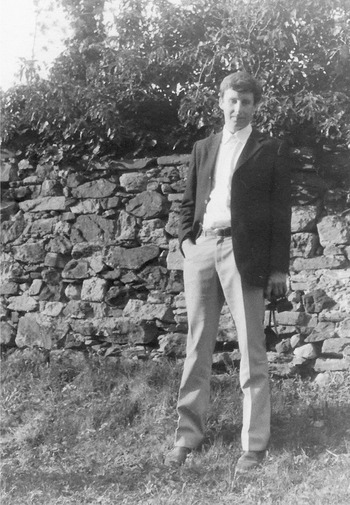
Manfred Deistler in the early 1970s.
An interesting development occurred in the middle of the 1970s, namely, the failure of the big macroeconometric models. This came to the surprise of many of their proponents, I believe. There were some warning signs before, for example, a comparison of predictions and of multipliers derived from competing models for the U.S. economy, which showed that these models behaved very much differently, although they were—to a great extent—estimated from the same data (International Economic Review, 1974, 15(2, 3). The failure eventually became obvious with the grossly incorrect predictions in the wake of the oil crisis of 1974–1975. It was precisely this crisis that spurred the future development of econometrics. In particular, interest in model specification and in consequences of misspecification grew among econometricians, and econometrics branched out into areas like modern time series analysis and nonlinear models. At about the same time, theoretical econometrics started to become a high-tech area as far as statistical and probabilistic tools were concerned; pioneers in this development were among others Takeshi Amemiya, Herman Bierens, Ron Gallant, Christian Gourieroux, Peter Phillips, Peter Robinson, and Halbert White. So econometrics underwent quite a change in the period from 1975 to 1985.
As you said, the dominant theme in econometrics before 1975 was static as well as dynamic simultaneous equations systems (i.e., structural ARX methodology). The question then is what triggered your interest in ARMA and ARMAX systems and, in particular, your interest in identifiability of such systems?
There is a historical as well as a subject matter based answer. Historically it happened that we, that is, Schönfeld and his group, had followed the stream of publications coming from Ted Hannan since the late 1960s, and Schönfeld once mentioned to me that “the question of identifiability in ARMA(X) systems is yet to be solved.” This kindled my interest in that problem. Shortly after that Hannan's Econometrica paper on identifiability in multivariable ARMAX models appeared (Hannan, 1971), which I read with great interest. From a subject matter point of view, I always had the feeling that the econometric analysis of dynamic equation systems did not go deep enough, and that one had to get a deeper understanding of the relationship between the input/output behavior of a system on the one hand and its internal parameters on the other hand first, before one could move on to a proper statistical analysis of estimation and inference procedures. As a more general remark, let me say that for me an appealing feature of time series analysis has been always the fact that it sits at the interface of statistics and systems theory. I have always been more interested in understanding properties of models and their consequences for data driven modeling than only in statistical questions such as asymptotic properties of estimators.
As you said, a full understanding of the relationship between the input/output behavior of a system and its internal parameters should precede the statistical analysis. I believe this is an important point. Could you elaborate on it?
In many models, for example, in (unrestricted) autoregressive models or in the linear regression model, the relationship between the input/output behavior of the model and the parameters describing the model is so simple that there is no need to pay much attention to it when doing the statistical analysis of parameter estimators. However, for other model classes such as, for example, ARMA(X) systems or state space systems, things are radically different. For these classes it is of paramount interest to first study the relationship between the input/output behavior and the internal parameters since properties of this relationship have important implications for estimation procedures and their performance. To be more specific, for estimation of ARMA(X) systems and state space systems two main questions arise: If we start with general ARMA(X) systems (or state space systems) without any restriction on the order (lag structure) of the system, that is, if we consider the set of all ARMA(X) systems with a given dimension of the input and the output, this set clearly cannot be described by a finite-dimensional parameter space. Hence, we have to break it into finite-dimensional pieces where each of these pieces can then be described by a finite-dimensional parameter space. One important question is how to break up this set of all ARMA(X) systems into pieces in order to facilitate selection among these pieces based on data (model selection). Other questions are how to parameterize each of these pieces, what the identifiability properties of the chosen parameterization are, and which properties (e.g., continuity) the map attaching the parameters to the input/output behavior exhibits. Obviously, continuity properties are important for consistency of parameter estimators. In order to be able to answer all these questions, the geometrical and topological properties of relevant subsets of the set of all ARMA(X) systems have to be studied.
I think we have to revisit this topic later on in connection with your book with Ted Hannan [1] and also with newer developments on algorithms and parameterizations of state space models. But let us return to the time when you were still at Bonn University and you visited the Australian National University (ANU) in Canberra in 1977 and met Ted Hannan. Please tell us a bit about how influential this visit to Canberra was for your further research.
This visit and my subsequent five visits to ANU were absolute highlights in my scientific career. The cooperation with Ted Hannan was most inspiring and very important for my future scientific development. I learned a tremendous amount from him, not only regarding the concrete problems we were working on but also on how to view and approach things. The environment at ANU in general was very stimulating. Pat Moran and Joe Gani were at ANU at that time, and there was also a bunch of excellent Ph.D. students, including William Dunsmuir, Robert Kohn, Barry Quinn, and Vic Solo. Not only was the scientific atmosphere in Canberra very stimulating, I also enjoyed every other dimension of my visits to Australia.

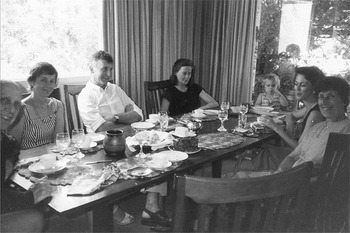
Dinner at the Hannans'. Ted Hannan on the far left, Manfred Deistler in the middle, and Irene Hannan on the far right.
Regarding my cooperation with Ted, it led me again to a problem concerning the structure of multivariable ARMA systems, namely, to the question on which sets of systems the map attaching parameters to transfer functions is continuous (in appropriate topologies). These questions arose from the 1976 paper by Dunsmuir and Hannan on consistency and asymptotic normality of the (quasi) maximum likelihood estimator for multivariable ARMA models (Dunsmuir and Hannan, 1976). One of the ideas of this paper was to stress a “coordinate free” consistency result for the maximum likelihood estimator (MLE) in the sense that the consistency (in an appropriate topology) was established—in a first step—on the level of transfer functions rather than on the level of the concrete parameter vector parameterizing the ARMA system. To obtain consistency of the implied parameter estimator in a second step then naturally leads to the question on which sets of transfer functions one can deduce convergence of the ARMA parameters from convergence of the transfer functions. The consistency proof of Dunsmuir and Hannan (1976) was quite innovative but contained several flaws; in particular, a clear understanding of the geometrical and topological properties of the parameter space and of the associated space of transfer functions was lacking at that time. The basic plan for my cooperation with Ted then was to investigate these problems. In particular, this required studying in detail the identifiability properties of the given parameterization and clarifying on which sets the map attaching the ARMA parameters to the transfer function is continuous. Besides being of importance for the asymptotic theory, these questions are important for an analysis of numerical algorithms used for optimization of the likelihood function. To illustrate, let me just mention two phenomena that arise in this context: First, if the true ARMA system is of lower order (in a sense that can be made precise) than the ARMA model class over which the MLE is computed, the MLE results in a consistent sequence of transfer functions, but the corresponding MLE for the ARMA parameters need not converge; while this MLE will get closer and closer to the true equivalence class, it will “search” along this equivalence class in a haphazard way as the sample size increases. To better understand this phenomenon observe that the asymptotic counterpart to the likelihood function is constant along the true equivalence class and achieves its optimum there. A second phenomenon is that the maximum of the likelihood function over the set of transfer functions corresponding to the given ARMA parameter space may not be attained on this set, but rather on a boundary point of this set of transfer functions. As a consequence, the optimizing transfer function does not correspond to an element of the parameter space, and hence any algorithm trying to maximize the likelihood function over the ARMA parameter will overflow, as—loosely speaking—the maximum occurs at a point of “infinity.” These phenomena—inter alia—are described in Deistler, Dunsmuir, and Hannan [16], which was written during my visit in 1977 and which amounted to a correction note to Dunsmuir and Hannan (1976).

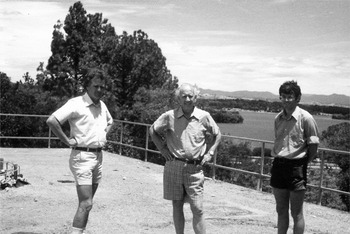
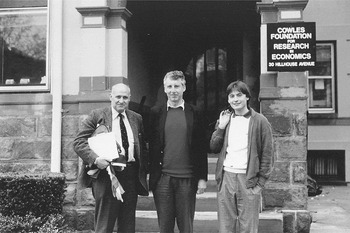
From left to right: Mike Osborne, Ted Hannan, and Peter Thomson at ANU. Picture taken by Manfred Deistler.
Parallel to this, you also came in contact with the systems engineering community in the 1970s. How did this come about?
During my time in Bonn (1971–1978) I gradually came across more and more systems engineering papers on the structure theory of linear systems cast in the framework of state space models. In particular, these were papers by Kalman (e.g., Kalman, 1963, 1965), who can be considered the founder of modern system theory. One should mention here in addition Glover and Willems (1974), Clark (1976), and Hazewinkel and Kalman (1976) discussing canonical forms and the manifold structure of the set of all transfer functions of a given McMillan degree. Later on came papers on the structure of multivariable ARMA systems, which built on properties of matrices of polynomials and rational functions. In 1978 I visited Tom Kailath in Stanford for a month. He was finishing his book on linear systems (Kailath, 1980). I also paid a visit to Lennart Ljung in Linköping.
BACK TO VIENNA, AND THE BOOK WITH TED HANNAN
In 1978 you accepted an offer for a full professor position at the University of Technology Vienna, where you have been ever since. What was the experience like to return to your alma mater after nearly a decade?
I followed Gerhard Tintner in his chair at the University of Technology in 1978, which he had held since 1973, when he had returned to Vienna from the United States. My former Ph.D. supervisor, Walter Eberl, had been the driving force in establishing this chair in econometrics, which was the first one in Austria. Eberl was also instrumental in establishing the chair in operations research at the University of Technology Vienna. He and Gustav Feichtinger, the chair of operations research, were the driving forces behind the offer to come to Vienna.
While I had not been embedded in a larger research group at Bonn University, I had plenty of time for my own research. This changed quite dramatically with my move to Vienna, partly also because the department was in a relatively chaotic state. Add to this the heavy administrative burden resulting from the way the university was organized and the high degree of participatory character of the organization, which meant that students were represented with a vote in all committees, including hiring committees for full professors. Of course, this structure made all organizational procedures extremely burdensome and time consuming.
From the very beginning I tried to build up a research group at my department in Vienna. I was lucky that I was able to hire excellent people. In particular, I was able to hire Werner Ploberger in 1978 and yourself in 1979. You already had completed your Ph.D. in pure mathematics (topology) and had been at the Institute of Advanced Studies Vienna for a year. You then began to work on order selection in univariate ARMA models based on Lagrangian multiplier test, which led to your two papers in the Annals and Metrika (Pötscher, 1983, 1985). At that time I was working on—among other things—my Econometrica paper on the structure of ARMA(X) systems [30], and I began work on the book with Ted Hannan. In the course of all this, you and I started to discuss a number of problems, for example, regarding basic properties of the likelihood function of multivariate ARMA systems. A result of this was our joint paper in Advances in Applied Probability [35], which, in particular, considered the question of the existence of a maximum of the likelihood function, a question that is much more intricate than one might believe at first sight. I think the paper was not widely read, perhaps also because the journal is not a mainstream statistics/econometrics journal, although—in my opinion—this paper treated an interesting and important question, namely, whether or not the likelihood function actually is (semi)continuous and possesses a maximum. The paper showed that this is not necessarily the case, even for quite natural parameter spaces.
At the same time, Werner Ploberger was working on his Ph.D. thesis on asymptotics of prediction error estimators in ARMA systems with an emphasis on the misspecified case, that is, when the data generating process is not properly described by the chosen parameter space. He completed his Ph.D. in 1981. General consistency results for the quasi MLE were then later derived by yourself in Pötscher (1987), extending the results in Dunsmuir and Hannan (1976) and Deistler, Dunsmuir, and Hannan [16]. Werner later on started to work on tests for structural change, leading to a series of papers on this subject.
You began to work on the book project with Ted Hannan in 1980, and the book was eventually published by Wiley in 1988 [1]. What are the most important features of and the most important ideas in the book? And what are your thoughts on this book almost two decades later?
One of the motivations for writing the book was to give a presentation that combines structure theory and statistical (estimation) theory for multivariate ARMA(X) systems and state space systems, which is an almost unique feature of the book (perhaps Reinsel, 1993, is the only other monograph addressing both of these aspects). A goal also was to integrate the contributions coming from the two communities, that is, econometrics and statistics on the one hand, and systems theory/systems engineering on the other hand. The book consists of four parts. The first part presents the structure theory of multivariable ARMA(X) systems and state space systems. In particular, questions regarding the parameterization of these classes of models like the following are discussed in detail: What are appropriate parameter spaces for such systems? When are the parameters identifiable, and what is the geometric and topological structure of parameter spaces and equivalence classes of observationally equivalent systems? When is the map attaching the parameters to the transfer function continuous?

From left to right: Martin Shubik, Manfred Deistler, and the interviewer at Yale in 1987.
The second part gives rigorous consistency and asymptotic normality results for quasi maximum likelihood estimators under fairly general conditions on the parameter space and on the error process. Also, the misspecified case is discussed.
The third part is concerned with order estimators in ARMA(X) and state space models based on information criteria like AIC or BIC and their asymptotic properties.
Finally, the fourth part is concerned with algorithms for actual computation of quasi maximum likelihood estimators, for example, the Hannan–Rissanen procedure (Hannan and Rissanen, 1982) and its multivariate extension by Hannan and Kavalieris (Hannan and Kavalieris, 1984).
To answer your second question, I think that the book did not have the impact among econometricians we had hoped for. One specific reason for this perhaps is that we did not provide enough motivation and did not pay enough attention to an extensive presentation of the main ideas; as a consequence, the presentation turned out to be perhaps a bit too terse and technical. In some of my later papers, such as the paper in System Identification and Adaptive Control [109], I tried to make up for that by explaining in more detail the basic ideas. A more general reason why the book did not have the impact we would have liked to see can probably be found in the fact that the methods and techniques necessary for a treatment of multivariable ARMA(X) models are much more demanding compared with the ones needed to understand AR(X) models; also, the required methods and techniques—originating to a large degree in algebra, geometry, and topology—are perhaps not so familiar to econometricians and statisticians as are methods deriving from probability and statistics. I believe that these are in fact also reasons why multivariate ARMA(X) systems and state space systems are still much less used when compared to multivariate AR(X) models.
Circumstantial evidence for the fact that the book does not seem to be on the radar screen of macroeconometricians is the following amusing experience I had recently: Two American macroeconometricians visiting the Institute of Advanced Studies Vienna approached me regarding a recently received referee report on one of their papers dealing with state space systems. The report stated that main results from their paper were already contained in my book with Ted Hannan. They felt that they were not guilty in not knowing about the book, because as they put it “not even Chris Sims knows the book.”

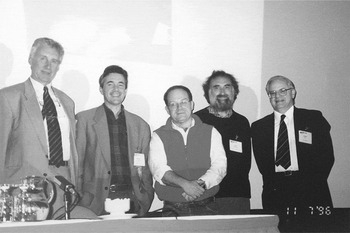
Hannan Memorial Session 1996. From left to right: Manfred Deistler, William Dunsmuir, Robert Kohn, Peter Robinson, and Joe Gani.
This is really a pity! I strongly believe that the theory exposited in your book should have been more widely appreciated in econometrics. Would you like to comment on this?
It is plain that econometricians should be well versed at least in basic properties of state space and ARMA(X) systems and their relationship, something that is not always the case. Of course, one can ask if all of the more advanced structure theory as exposited in the book is really needed and is of benefit to econometrics. One answer to this certainly is that without this theory no mathematically correct treatment of the asymptotic properties of parameter estimators in multivariate ARMA(X) models is possible (except under unreasonable and unnatural assumptions like compactness assumptions on the parameter space). But what is perhaps even more important is that a deep understanding of advanced structure theory is necessary in order to be able to successfully construct and evaluate algorithms that implement estimators like the MLE. Let me explain this in more detail: If we compare the class of (unrestricted) AR(X) systems, still predominant in econometrics, with the class of ARMA(X) systems (or state space systems), one advantage of the former class is that the structure theory is trivial and the algorithms implementing the (Gaussian quasi) MLE are given in explicit form and are simple, fast, and numerically reliable. The MLEs for ARMA(X) systems are often computed via brute force numerical optimization (e.g., via some Gauss–Newton type procedure). Hence, they are more costly, and also the problem of initializing the numerical optimization becomes important. In many cases these brute force procedures are also not successful in locating the maximum at all. As an example, I refer to the paper by McKelvey and Helmersson (1997), which caught me by surprise when I first read it. They show that even in univariate ARMA models brute force optimization methods (executed in the familiar ARMA parameterization) fail to converge in up to 70% of the cases! Let me stress here that the ARMA models considered in this paper are not pathological in any way but are models one could easily encounter in applied econometric work. This suggests that a nonnegligible fraction of MLEs reported in applied work may actually be suspect, as they may not represent optimizers of the likelihood function. These problems are numerical in nature and clearly do not show up in the usual statistical analysis, which proceeds under the assumption that the optimum of the likelihood function can be found without numerical error. In recent years, partly motivated by the previously mentioned results, numerical optimization procedures tailored to the computation of the MLE for ARMA(X) systems have been invented, one example being the method of “data driven local coordinates.” These algorithms exploit the structure theory of state space systems and avoid the problems of conventional brute force algorithms. As a parallel development, also estimators for state space (and thus for ARMA(X)) parameters that are given “explicitly,” like the so-called subspace algorithms, should be mentioned. This latter class of algorithms is built on realization algorithms, like the Ho–Kalman algorithm, combined with a model-reduction step given in most cases by a singular value decomposition. Again, these procedures make essential use of advanced structure theory of state space systems. However, subspace methods are asymptotically as efficient as the (Gaussian quasi) MLE only under restrictive conditions. Hence, the default procedure in the systems identification tool box of MATLAB 6.x is to use a subspace method to generate an initial value from which an optimization step is started that operates in data driven local coordinates. I find this an interesting success story of how a good understanding of the structure theory has led to far superior algorithms, but it is something that does seem to have gone unnoticed in econometrics.
Why do you think this important algorithmic development has occurred outside of and unnoticed by the econometrics community?
One reason could be that—as I already said—the mathematical methods underlying the structure theory are less familiar to econometricians than to systems engineers. Another reason might be that state space systems are more widespread in systems engineering than in econometrics since many engineering problems such as control problems are typically formulated in terms of state space systems. One should mention that subspace methods feature in the work of Masanao Aoki (Aoki, 1987), which however did not have much resonance in econometrics.
Can you explain in more detail what subspace methods and data driven local coordinates are all about?
Perhaps I should start with a historical comment. In the late 1980s we founded the European Network on System Identification (ERNSI), which joined together the major systems research departments in Europe, a network that exists to this day. In particular, the founders of this network—going from north to south—were Anders Lindquist (KTH Stockholm), Lennart Ljung (Linköping), Jan Macieowsky (Cambridge), Jan Willems (Groningen), Jan van Schuppen (CWI Amsterdam), Michel Gevers (Louvain-la-Neuve), Albert Beneviste (INRIA Rennes), Jean-Jacques Fuchs (INRIA Rennes), Laurent Baratchart (INRIA Sophie-Antipolis), Giorgio Picci (Padova), and myself. There were and still are three research topics central to the interests of the network: The first topic is subspace methods, which date back to work by Akaike (1976) and Larimore (1983). To explain in a nutshell what subspace methods are, consider estimating the parameters of a state space system. For simplicity let us assume that there are no exogenous variables in the system. Now, suppose that you are given an estimate for the state variable; then the parameter matrices A, B, and C of the state space system can easily be estimated by least squares. So the problem is how to estimate the state variable. The idea is to mimic on the empirical level Kalman's and Akaike's method for constructing the state variable from the observable processes. This state construction consists in projecting the future output variables on the space spanned by the past output variables. (The projection is here performed in the Hilbert space generated by the output variables.) The resulting projections can be shown to span a finite-dimensional space, and every basis of this space gives rise to a (minimal) state vector. This procedure can now be mimicked on the level of data: “Future” values are regressed on “past” values by a reduced rank regression, where the rank restriction results from the specified state dimension. Factorization of the resulting matrix of regression coefficients then leads to an estimator of the state. A numerical advantage of these methods is that they only consist of least squares steps and (typically) a singular value decomposition and hence are fast and numerically reliable. The asymptotic properties of subspace methods have been studied by our group in Vienna, in particular by Wolfgang Scherrer, Klaus Peternell, and finally Dietmar Bauer (see [77]; [81]; [96]; Bauer, 2005). Because these methods have been shown to be asymptotically as efficient as quasi Gaussian MLEs only under restrictive assumptions (Bauer, 2005), their main purpose is to produce good initial estimators that can then be used in a numerical optimization of the (Gaussian quasi) likelihood function (or another objective function if one wishes).
Now on to the second topic. In the late 1990s we began to work on the method of data driven local coordinates, building on a paper by McKelvey and Helmersson (1997). This is a method that is set again in the framework of state space systems. Let me first remark that—although state space systems and ARMA(X) systems represent the same class of transfer functions (namely, rational matrix functions)—there is a difference in the sense that state space systems come equipped with larger equivalence classes of observationally equivalent parameters. For example, in a scalar ARMA(p,p) system we generically have identifiability, whereas in a state space reformulation of the ARMA(p,p) system all these transfer functions correspond to equivalence classes which generically are manifolds of dimension p2. While at first glance this observation seems to suggest an advantage for the ARMA formulation, it is precisely the fact that we have no identifiability in the state space formulation whatsoever that turns into an advantage that is exploited by the algorithm. The advantage is that one can choose numerically suitable representatives from the equivalence class at which the likelihood function is evaluated. To be more concrete, the likelihood function is first expressed in terms of the unrestricted parameters of the state space systems, that is, A, B, and C (with minimality of the systems being taken into account). An initial estimator, for example, from a subspace method, gives an initial equivalence class of A, B, and C's. Then a suitable triple (A,B,C) in this equivalence is chosen, and the tangent space to the equivalence class at this point is determined. Next, the likelihood function is reparameterized in terms of coordinates that separately describe the tangent space and its ortho-complement, and an optimization step for the likelihood function is then taken only within the ortho-complement. This leads to a new estimated triple (A,B,C) and an associated equivalence class. Starting from this new equivalence class, the whole procedure is then iterated. It is not difficult to appreciate why this procedure should work better than an optimization algorithm that uses an identifiable parameterization: Suppose that instead of initially using the full (A,B,C) parameterization as before we would have started with an a priori chosen and identifiable parameterization; that is, we would have a priori selected one and only one representative of each equivalence class; also assume that we have done this in a smooth way (which is possible, at least locally). So, starting at the initial value we would then search along the lower dimensional manifold that represents the identifiable parameterization, and this manifold may intersect the equivalence class at the initial value at a very small angle, that is, movement along this manifold would only slowly move one away from the initial equivalence class, whereas the direction of steepest ascent of the likelihood function is orthogonal to the (tangent space) of the equivalence class. In contrast, the method of data driven local coordinates moves precisely only into the orthogonal directions. Hence, the choice of the ortho-complement as the “new parameter” space gives the method of data driven local coordinates a numerical advantage. The relevant Monte Carlo experiments bear this out and show a dramatic numerical advantage of the method of data driven local coordinates over conventional optimization methods. This new method was proposed in the second half of the 1990s and was quickly implemented as a default procedure in the systems identification tool box of MATLAB. Thomas Ribarits, a former Ph.D. student of mine, and myself have worked with Tom McKelvey and Ben Hanzon on this method, and we have investigated geometric and topological properties of this parameterization. We have also worked on improvements of this method that basically consist in concentrating the likelihood function with respect to parameters that can be computed via a least squares step. See [120] and [124].
The third central topic of ERNSI is identification under control, a topic I have not worked on but that is practically important and theoretically challenging. A problem one encounters here is that—like in simultaneous equations systems—errors and observed inputs are not orthogonal.
ERRORS-IN-VARIABLES, APPLIED RESEARCH, AND MISCELLANEOUS TOPICS
Another one of your research interests since the early 1980s has been “errors-in-variables” models, especially in a dynamic context. Would you please tell us a bit about this work of yours?
During one of my visits to Canberra it occurred to me that modeling of high-dimensional time series is an important issue and that a drawback of conventional AR(X) or ARMA(X) modeling is that the dimension of the parameter space increases with the square of the output dimension. Thus models that allow for data compression, both in the time series and in the cross-sectional dimension, are of importance. I spoke about this problem with Brian Anderson, who just had moved to Canberra from Newcastle, and we started to write a paper on linear dynamic errors-in-variables models, which was published in the Journal of Time Series Analysis [34]. This paper was just a beginning, as we only considered the bivariate case, and it was the first in a series of joint papers with Brian on this topic. I also want to mention here our work concerning causality in a linear dynamic errors-in-variables context ([40], [49]). A few days after my return to Vienna I had a phone conversation with Rudolf Kalman, who—by coincidence—told me about his research on this sort of problems. I have then later encouraged Wolfgang Scherrer to write his Ph.D. thesis on errors-in-variables models or—what is equivalent in a certain sense—on linear dynamic factor models. This has led to a paper that was published in SIAM Journal on Control and Optimization [91]. The main focus in all these papers is again on structure theory. The basic idea in this work with Brian Anderson and Wolfgang Scherrer is to employ “symmetric” systems in the sense that there is no a priori knowledge regarding which of the observed variables are inputs and which are outputs. This symmetry implies, in particular, a symmetry in the noise model in that noise is added to all variables, be they input or output. These ideas have also been advanced by Kalman (1982) and Willems (1986, 1987). I find symmetric system modeling an attractive idea, in particular also for econometrics, where often the a priori distinction between endogenous and exogenous variables is in question. A central focus in our work has been to give a characterization of the set of all “symmetric” systems compatible with a given spectral density matrix of the observations. This set describes the amount of uncertainty coming from symmetric noise modeling, rather than from sampling variation. In addition, continuity of the mapping from the spectral density matrix of the observations to this set of observationally equivalent systems has been established, thus establishing consistency of the natural “analog” estimator of this set. Furthermore, a geometric description of the set of all spectral density matrices of the observations corresponding to a given number of factors has been derived.
Errors-in-variables models actually have quite a long tradition in econometrics as witnessed, for example, by the book of Ragnar Frisch on confluence analysis (Frisch, 1934). However, errors-in-variables models have had the fate to fall into oblivion from time to time only to be revived later on. The latest of these revivals in econometrics has come with generalized factor models as introduced in Chamberlain (1983) and Chamberlain and Rothschild (1983). I think these two papers triggered a very interesting development, especially through the idea of adding information by increasing the cross-sectional dimension and through the weakening of the assumption of uncorrelatedness of the error components. There is now a series of papers on this subject, in particular the papers by Forni, Lippi, et al. (e.g., Forni, Hallin, Lippi, and Reichlin, 2005) as well as Stock and Watson (2002). These methods seem to work well in practice and are relevant for stock market data and for high-dimensional macro time series, for instance, cross-country time series data. In our work on errors-in-variables models mentioned in the preceding paragraph we did not consider the idea of generalized factor models. However, presently Brian Anderson, a group of my Ph.D. students, and myself are working on generalized linear dynamic factor models.
You have told us now quite a bit about your research interests. Could you perhaps summarize what you think are your most important contributions to econometrics, time series analysis, and systems identification?
First, I would say these are my contributions to structure theory of ARMA(X) and state space systems in connection with estimation, which to a certain degree are summarized in my book with Ted Hannan. My early papers on identifiability (e.g., [13], [30]) also belong here, as well as our joint paper on the properties of the likelihood function of multivariate ARMA systems [35]; furthermore, also my work on subspace methods and on the method of data driven local coordinates (e.g., [77], [120]), which can be seen as a continuation of the aforementioned contributions. This latter work is published in engineering journals like Automatica and hence is little known among econometricians. One could perhaps say that a main motivation for my research has been the wish to properly understand ARMA(X) and state space systems and to make them competitive with AR(X) systems from an application point of view.

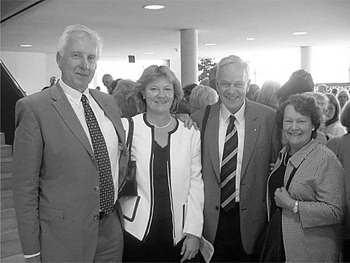
From left to right: Manfred Deistler, Gerda Deistler-Russ, Brian Anderson, and Dianne Anderson at the concert hall in St. Pölten in 2005.
As just mentioned, a second area where I have contributed—and where I and my group are currently quite active—is linear dynamic errors-in-variables and factor models (e.g., [34], [91]). Again, most of my work in this area is not published in econometrics journals.
You once mentioned in a conversation that you have missed contributing to some important developments in econometrics like, for example, cointegration, as you were active in the systems engineering community at that time. Any comments?
Yes, I was very much occupied with other aspects of ARMA(X) and state space systems as was already mentioned. Also, I was very much engaged in the systems theory community for the last two decades, and contrary to my predictions 20 years ago, econometrics and systems theory did not converge. Especially in view of my current interest in generalized factor models, my emphasis is now kind of shifting back to econometrics.
Can you be more specific in which sense econometrics and systems identification did not converge?
Twenty-five years ago the questions both communities were asking were very similar. Today the research agenda in both communities is governed to a large extent by problem-specific data structures and models. For example, the problem of integrated data and the ensuing problem of cointegration are of little concern to engineers. Conversely, the problem of identification and control—although it is a simultaneity problem—is not very much on the minds of econometricians but is of great interest to engineers. During the last 25 years, both communities have also grown in size and have established their own codes of conduct, so that there is now little to no interaction between these communities.
As we have heard, you have been actively involved with at least three scientific communities (econometrics, time series analysis, systems engineering) over an extended period of time. This is also reflected in your Festschrift (Journal of Econometrics, 2004, 118(1–2)), which has contributions from members of all three communities. Do you have any comments on similarities/differences and on the development in each of these communities?
I think that the developments in econometrics over the last 30 years have been very interesting, for at least two reasons: First, econometrics has gained in importance in many areas like in the financial sector and in the analysis of socioeconomic, market, business, and household data. At the time when I started with econometrics, it was mainly dealing with macro data. Second, there have been very interesting theoretical and methodological developments. For example, cointegration or models for the volatility of time series data in financial econometrics and macroeconometrics on the one hand, and limited-dependent-variables models, modeling of treatment effects, and duration models in microeconometrics on the other hand.
Time series analysis and econometrics have a much closer relationship with each other nowadays than any one of these two areas has with systems theory. Also, one can notice a shift in time series analysis from statistics to econometrics, so to speak. Indicators for this are that time series analysis papers nowadays seem to be more often published in econometrics journals than in statistics journals and that the number of time series papers in statistics journals has decreased somewhat. Furthermore, the development of models and methods, for example, for financial time series which originated within econometrics had an impact on statistics in general.
Systems theory has taken another road, partly because the development of new methods is now less paradigm-driven but more driven by applications, something that is also true for econometrics. In the last couple of years it is noticeable that systems theory is concentrating on new problem areas like, for instance, the description and control of networks and swarms and the modeling of biological systems such as the metabolism of cells.
We have already talked about your frequent visits to Australia and your contact with Ted Hannan and Brian Anderson. Are there any other scientific contacts that have been important and that you would like to mention?
As I already mentioned, I had a lot of scientific contacts with members of ERNSI. So far I have not mentioned my collaboration with M. Gevers (Louvain-la-Neuve) on the structure of ARMA systems and L. Baratchart (INRIA Sophia Antipolis) on the possible nonuniqueness of the best approximations of a (higher order) transfer function by the set of all transfer functions of given order, the nonuniqueness being due to the nonconvex nature of this set. This question has also been studied in Kabaila (1983) and Pötscher (1991) and is of importance for identification if the data generating process is not described in the model class. I also want to mention here the many scientific discussions I had with Rudolf Kalman, Jorma Rissanen, and, in particular, with Jan Willems on fundamental issues of data driven modeling.
I have been invited several times to lecture at the economics department at the University of Pennsylvania. I very much enjoyed these visits and my discussions with members of that department, in particular, Lawrence Klein and Bobby Mariano.
Wolfgang Scherrer from my department has been a most important co-author and partner for scientific discussions over many years. Last, but not least, I want to mention our weekly joint “Privatissimum,” which for me has become a major source of scientific refueling.
You have also been instrumental in establishing econometrics in Austria. Werner Ploberger and myself started our careers at your department, but also other people like Ingmar Prucha and Walter Krämer were strongly influenced by yourself during their time in Vienna. You also had a large number of Ph.D. students. Do you have any comments on this?
After returning to Vienna in 1978, I was approached by the Institute of Advanced Studies Vienna to run a biweekly research seminar in econometrics with the econometricians in the institute. At this time these were Ingmar Prucha and Gerhard Munduch. This seminar has since become a permanent institution and constitutes an interface between applied economic research and econometric methodology in Vienna.
As a consequence of the biweekly seminar, I established close scientific contacts with a number of researchers from the institute: First, with Ingmar Prucha, now a professor at the University of Maryland, and later on with Walter Krämer, now a professor at the University of Dortmund and Robert Kunst, now a professor at the University of Vienna. All three of them obtained their “habilitation” in econometrics from the University of Technology Vienna. I also met Liqun Wang at the institute when he was a student there. Eventually he became my Ph.D. student and now is an associate professor at the University of Manitoba.
I have always enjoyed working with and learning from Ph.D. students. Seven of my Ph.D. students so far have stayed on in academia. During the last 10 years, 10 Ph.D. students have finished their work under my supervision. Some were working on methodological questions central to the interests of my group in the department, others on marketing econometrics and financial econometrics or on modeling in areas such as material flow systems, electricity markets, and air traffic control.
Most people will know you as a theoretical econometrician, but you have also worked extensively on applications and consulting. Any thoughts on this?
I enjoy consulting and doing applied work in general. I have learned a lot through this activity, sometimes learning from failures. I also think that many problems in econometrics nowadays flow from practical experience. Currently, I am working on the following consulting projects: The first one is a project on modeling and forecasting of financial time series and portfolio optimization. This project is in its fifth year and is carried out together with the fin4cast group of SIEMENS. This project provides financial support for three of my Ph.D. students. I find this project very interesting since there is a sizable group of more than 30 inhouse experts at fin4cast and the outcomes of our joint efforts immediately flow into the final product sold by fin4cast. The second project, which started last year, is on modeling and forecasting of sales in the context of supply chain management. This is a joint project with a group at the Vienna University of Economics and Business Administration led by Alfred Taudes. This project builds on previous projects on forecasting of sales and on sales decomposition, which I conducted with industrial partners and with the Industrial Mathematics Competence Center at the University of Linz. The third project I just started in my function as a consultant for the Linz Mechatronics Competence Center at the University of Linz is a project on modeling of diesel engines. Furthermore, I am also doing consulting for a project conducted by the German branch of McKinsey.
A lesson I have learned from consulting is that for consulting to be successful it is important that there is an “in-house champion” on the customer side, that is, someone who is really interested in your results and provides valuable feedback, rather than just throwing the data at you and waiting for the final results.
Starting with the 1990s, I have put quite some effort into building a research group that consists of a mix of methodological and applied researchers, because I believe that such a mix leads to noticeable synergy effects. Unfortunately, budgetary problems at the University of Technology—and in particular in the School of Mathematics, to which my department belongs—have recently led to a dramatic reduction of positions for young researchers, which has hurt especially the theoretical part of the research team. The applied side is easier to steer through the budgetary turmoil as these projects are financed from sources outside of the university. As a related activity, Heinz Engl, a specialist for inverse problems and a professor of applied mathematics at the University of Linz, and myself took the initiative to found the Industrial Mathematics Competence Center at the University of Linz, where I served as a deputy director until 2005.
Another less known aspect of your scientific life is your research interests in sustainable development. How did you get interested in this field?
Beginning with the 1980s I became very interested in the scientific aspects of environmental issues and of problems of sustainable development. The scientific problems in this area are quite interesting: Besides nontrivial modeling and evaluation tasks, there are fundamental challenges to economics. Given the long-term importance of these problems, there is a great demand for scientific analysis and decision support. A group of Austrian scientists from different fields such as agricultural sciences, chemical engineering, water management, waste management, and economics interested in these issues joined together in the society SUSTAIN, of which I became a member. This society was supported by the Austrian federal government and the states of Austria. At the beginning I was very enthusiastic and found it very interesting to work on the fundamental principles underlying a sustainable economy. In addition, I formed a team of young researchers with the goal of contributing to these problems on a methodological level, especially through developing models and statistical methods for material flow analysis and through building spatiotemporal models for the prediction of surface concentrations of ozone. My enthusiasm for SUSTAIN, however, diminished over the years because I did not like the way the society developed; in particular, I disliked the fact that a nonnegligible fraction of its members were opinionated regarding environmental issues and were more interested in political impact than in a scientific analysis of these issues. I must also say that the communication among colleagues in a mainstream field like econometrics is much easier than among environmental scientists, at least in Austria. On top of all this, I could no longer find funding for my group; in fact, my last Ph.D. student in this field, working on modeling of carbon mass flows and energy flows to improve the data for the carbon dioxide emissions in Austria, had to stop his work, because the funds had completely dried up in 2002. Since working alone in such an area does not make much sense, this—at least for the time being—put an end to my involvement in this field. Nevertheless, let me emphasize that I think that sustainable development and enhancing scientific research in this area are very important.
Besides your work in academia you are also a member of the board of the Central and Eastern European branch (Henkel CEE) of Henkel KGaA, a large German corporation in the consumer goods and chemistry sector, as well as a member of the board of the Institute of Advanced Studies Vienna. How do these duties compare with academic life?
My activity on the board of Henkel CEE has been a most interesting experience. Foremost, I am really impressed by the sharpness and efficiency of top executives. This is in some contrast to what I have experienced in decision-making processes at the university. I also found it interesting to witness first-hand the expansion of the company into Central and Eastern Europe after the crumbling of the former East-bloc. My experiences on the board of the Institute of Advanced Studies were not so much different from my academic experiences.

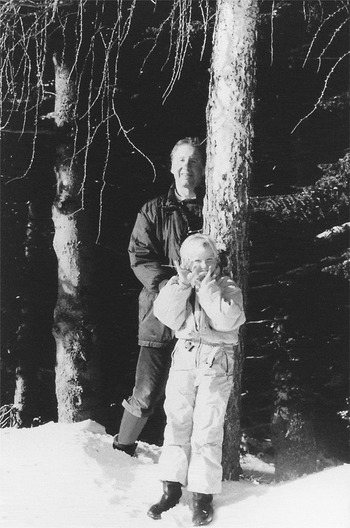
Manfred Deistler with daughter Gerda on skiing vacation in the mid-1990s.
You have been at the University of Technology Vienna since 1978, which is almost 30 years. You have stayed there although you had an offer from the University of Munich in 1989. What were the reasons for staying on in Vienna for such a long period despite the fact that the situation at your university, while never having been ideal, seems to have deteriorated over time?
I had come to Vienna in 1978 with great hopes. At the end of the 1960s and in the 1970s there was quite some optimism in Austria (and also in Germany) that it would be possible to close the gap to the leading institutions worldwide. For a number of reasons this did not happen, however. One reason is that in the 1970s the so-called process of democratization of universities was given priority over efficiency in research. There is no simple answer to the question of why I stayed on in Vienna and did not move to Munich. A partial answer perhaps is that Austria is a beautiful country and that the quality of life (outside of the academic sector) is high. Furthermore, the situation at the School of Mathematics in my university was not as bad at the time when I had the offer from Munich as it has become since. Also, the offer from the University of Munich was not entirely convincing. Last but not least, around this time I met my wife-to-be, a circumstance that finally convinced me to stay in Austria, because my wife-to-be was then already well established as a specialist for physical therapy and rehabilitation in the hospital in my hometown, St. Pölten.

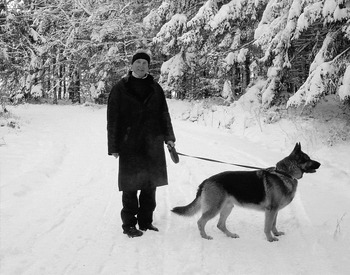
Master and dog (or vice versa?).
You have been in academia now for roughly 40 years. What are your general thoughts after such a long and distinguished career, and what are your predictions on the future of econometrics?
Looking back, I would say that econometrics has undergone impressive development in the last 40 years. I remember very well when I was a young econometrician and gave a talk at a meeting of the German Statistical Association that an older professor predicted that I—like all other econometricians—would be without a job within the next five years, because econometrics would be unmasked as pure nonsense. At that time this was not such an extreme point of view as it may appear to us nowadays. In general, the variance in the perception of econometrics has become much smaller over the last 40 years. At the end of the 1960s there was a broad spectrum of opinions on econometrics, ranging from the idea that within a few years a mix of formulas, data, and computers would practically allow for an automatization of economic policy making to the other extreme view that econometrics was complete nonsense. Today we are more conscious about the possibilities as well as the limitations of econometrics. It is also interesting to observe that 40 years ago econometrics was mainly an “Anglo-Saxon” enterprise that had just started to spread to other countries. Of course, advances in hardware and software as well as availability of databases have dramatically changed the way applied econometric work is carried out nowadays.

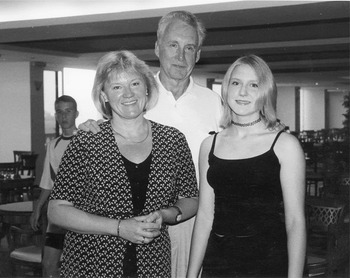
The Deistlers on holidays in Greece in 2004.
One important aspect of the development of econometrics has been the broadening of the spectrum of applications. Nowadays there is not only macroeconometrics, but also microeconometrics, econometrics in business, and financial econometrics. Another aspect is that econometrics has been and still is very lively on the methodological side and that it reacted properly to crisis situations such as the crisis coming with the oil price shock in 1974–1975.
In my opinion econometrics or, more generally, data driven modeling has not yet reached a saturation point. There are still many important open problems to be solved, such as problems arising from large data sets, from various classes of nonlinear systems, and from spatiotemporal systems just to name a few. Model selection, automatization, and the use of symbolic computation are further interesting challenges. An important opportunity for econometrics furthermore lies in an effort to improve the data basis through progress in methods for the collection, processing, and construction of data. Econometrics would derail if it would decouple from the needs of the applied economist; in this sense a “religio,” that is, a “reality check,” of the usefulness of the methodological research for the needs of the user is necessary from time to time. In any case, I think there is no danger that we will run out of work soon.
Thank you very much for being willing to do this most interesting interview!
PUBLICATIONS OF MANFRED DEISTLER
BOOKS
1988
1. With E.J. Hannan. The Statistical Theory of Linear Systems. Wiley.
PAPERS
1972
2. Die Vorhersagetheorie stationärer Prozesse mit besonderer Berücksichtigung von Spektralmethoden. In P. Mertens (ed.), Prognoserechnung, pp. 249–267. Physica-Verlag.
3. With W. Oberhofer. Macroeconomic systems. In Proceedings of the 5th International Federation of Automatic Control World Congress (Paris), part 3, S-5, pp. 1–15.
1974
4. With S. Schleicher. Struktur der österreichischen Industrieproduktion. Empirica 1, 72–97.
5. With G. Feichtinger. Bemerkungen über lineare Modelle der Populationsdynamik. In R. Henn (ed.), Operations Research Verfahren XV, pp. 40–62.
6. With G. Feichtinger. The linear model formulation of a multi-type branching process applied to population dynamics. Journal of the American Statistical Association 69, 662–664.
7. The identifiability of linear models with autocorrelated errors. Journal of Cybernetics 4, 107–120.
1975
8. Z-transform and identification of linear econometric models with autocorrelated errors. Metrika 22, 13–25.
9. With G. Feichtinger. Nullwachstum der Bevölkerung im linearen populationsdynamischen Modell. Zeitschrift für Bevölkerungswissenschaft 2, 39–53.
10. Die Analyse des Prognoseverhaltens ökonometrischer Modelle mit Hilfe von Spektralmethoden. In P. Mertens (ed.), Prognoserechnung, 2nd ed., pp. 253–263. Physica-Verlag.
1976
11. The identifiability of linear econometric models with autocorrelated errors. International Economic Review 17, 26–46.
12. Linear econometric models with autocorrelated errors: Identifiability and consistent estimators. In Proceedings of the IV International Federation of Automatic Control, Symposium on Identification and System Parameter Estimation (Tbilisi, UdSSR), part 2, pp. 30–41.
1978
13. With H.G. Seifert. Identifiability and consistent estimability in econometric models. Econometrica 46, 969–980.
14. The structural identifiability of linear models with auto-correlated errors in the case of cross-equation restrictions. Journal of Econometrics 8, 23–31.
15. With J. Schrader. The exact estimability of the transfer functions of linear systems. Mathematische Operationsforschung und Statistik, Series Statistics 9, 411–417.
16. With W. Dunsmuir & E.J. Hannan. Vector linear time series models: Corrections and extensions. Advances in Applied Probability 10, 360–372.
17. With G. Feichtinger, M. Luptacik, & A. Wörgötter. Optimales Wachstum stabiler Bevölkerungen in einem neoklassischen Modell. Zeitschrift für Bevölkerungswissenschaft 1, 63–73.
1979
18. With J. Schrader. Linear models with autocorrelated errors: Identifiability without minimality assumptions. Econometrica 47, 495–504.
19. The parametrization of rational transfer function linear systems. In M. Kohlmann & W. Vogel (eds.), Stochastic Control Theory and Stochastic Differential Systems, Lecture Notes in Control and Information Sciences 16, pp. 303–310. Springer-Verlag.
1980
20. Parametrization and consistent estimation of ARMA systems. In O.D. Anderson (ed.), Time Series, pp. 373–385. North-Holland.
21. With E.J. Hannan & W. Dunsmuir. Estimation of vector ARMAX models. Journal of Multivariate Analysis 10, 275–295.
22. With S. Schleicher. Neuere Entwicklungen der Ökonometrie. Wirtschaftspolitische Blätter 5, 55–60.
1981
23. Die Prognose mit ARMA Systemen. In P. Mertens (ed.), Prognoserechnung, 4th ed., pp. 295–311. Physica-Verlag.
24. With G. Tintner. Identifiability. In J. Gani & V.G. Rohatgi (eds.), Contributions to Probability, pp. 231–246. Academic Press.
25. With E.J. Hannan. Some properties of the parametrization of ARMA systems with unknown order. Journal of Multivariate Analysis 11, 474–484.
26. The properties of the parametrization of ARMAX systems in structural specification and their relevance for estimation. In M. Hazewinkel & J.C. Willems (eds.), Stochastic Systems: The Mathematics of Filtering and Identification and Applications. Proceedings of a NATO-ASI Conference, pp. 283–289. Academic Press.
1982
27. Recent developments in econometrics. In G. Feichtinger and P. Kall (eds.), Operations Research in Progress, pp. 399–411. Reidel.
28. With S. Schleicher. Maße und Modelle: Empirischer Befund der österreichischen Wirtschaft. In H. Abele, E. Nowotny, S. Schleicher, & G. Winckler (eds.), Handbuch der österreichischen Wirtschaftspolitik, pp. 53–76. Manz.
29. With W. Ploberger & B.M. Pötscher. Identifiability and inference in ARMA systems. In O.D. Anderson (ed.), Time Series Analysis: Theory and Practice 2, pp. 43–60. North-Holland.
1983
30. The properties of the parametrization of ARMAX systems and their relevance for structural estimation and dynamic specification. Econometrica 51, 1187–1208.
31. The structure of ARMA-systems and its relation to estimation. In P. Caines & R. Herman (eds.), Geometry and Identification, pp. 49–61. Mathematical Science Press.
32. Discussion of “The econometric analysis of economic time series” by D.F. Hendry and J.F. Richard. International Statistical Review 51, 148–149.
1984
33. With B.M. Pötscher & J. Schrader. The uniqueness of the transfer function of linear systems from input-output observations. Metrika 31, 157–181.
34. With B.D.O. Anderson. Identifiability in dynamic errors-in-variables models. Journal of Time Series Analysis 5, 1–13.
35. With B.M. Pötscher. The behaviour of the likelihood function for ARMA models. Advances in Applied Probability 16, 843–865.
36. ARMA systems: Parametrization and estimation. In J.P. Florens, M. Mouchart, J.P. Raoult, & L. Simar (eds.), Alternative Approaches to Time Series Analysis, pp. 143–160. Publications des Facultes Universitaires Saint Louis.
37. Linear errors-in-variables models. In J. Franke, W. Härdle, & R.D. Martin (eds.), Robust and Nonlinear Time Series Analysis, Lecture Notes in Statistics 26, pp. 68–86. Springer-Verlag.
1985
38. General structure and parametrization of ARMA and state space systems and its relation to statistical problems. In E.J. Hannan, P.R. Krishnaiah, & M.M. Rao (eds.), Handbook of Statistics 5, pp. 257–277. North-Holland.
39. Identification of linear dynamic systems. Methods of Operations Research 50, 187–203.
1986
40. Linear dynamic errors-in-variables models. In J. Gani & M. Priestley (eds.), Essays in Time Series and Allied Processes. Papers in Honour of E.J. Hannan, pp. 23–39. Applied Probability Trust.
41. Multivariate linear systems and time series analysis. Advances in Statistical Analysis and Statistical Computing 1, 51–85.
42. Identifiability and causality in linear dynamic errors-in-variables systems. In J.P. Florens, M. Mouchart, J.P. Raoult, J.M. Rolin, & L. Simar (eds.), Asymptotic Theory for non i.i.d. Processes, pp. 145–154. Publications des Facultes Universitaires Saint Louis.
43. Linear errors-in-variables-models. In S. Bittanti (ed.), Stochastic Models and Linear Systems, Lecture Notes in Control and Information Sciences 86, pp. 37–67. Springer-Verlag.
44. With M. McAleer. Some recent developments in econometrics. In S. Bittanti (ed.), Stochastic Models and Linear Systems, Lecture Notes in Control and Information Sciences 86, pp. 222–243. Springer-Verlag.
45. Identification of linear dynamic systems—a survey of some recent developments. IMA Journal of Mathematical Control & Information 3, 119–136.
46. With O. Prohaska, E. Reschenhofer, & R. Vollmer. Procedure for identification of different stages of EEG background activity and its application to the detection of drug effects. Journal of Electroencephalography and Neurophysiology 64, 294–300.
47. With M. Gevers. Parametrization of monic ARMA systems. In Proceedings of the IEEE Conference on Decision and Control 1986 (Athens), pp. 524–526. IEEE.
48. Identifikation von linearen dynamischen Systemen. In W. Krelle (ed.), Ökonomische Prognose, Entscheidungs- und Gleichgewichtsmodelle, pp. 272–285. VCH Verlagsgesellschaft.
1987
49. With B.D.O. Anderson & M. Green. Errors-in-variables identification: Linear Gaussian stationary results. In Proceedings of the 10th IFAC World Congress (München), pp. 294–299.
50. With B.D.O. Anderson. Dynamic errors-in-variables systems with three variables. Automatica 23, 611–616.
51. With E. Reschenhofer & R. Vollmer. Segmentation of the EEG by minimization of the total gain in information. Neuropsychobiology 18, 155–159.
52. An introduction to linear errors-in-variables models. In W. Sendler (ed.), Contributions to Stochastics, in Honour of the 75th Birthday of Walther Eberl sen, pp. 28–32. Physica-Verlag.
1988
53. With W. Fraissler, G. Petritsch, & W. Scherrer. Ein Vergleich von Methoden zur Kurzfristprognose elektrischer Last. Archiv für Elektrotechnik 71, 389–397.
54. With W. Ploberger. Comment on “ARMA memory index modeling of economic time series.” Econometric Theory 4, 35–59.
1989
55. With M. Gevers. Properties of the parametrization of monic ARMA systems. Automatica 25, 87–95.
56. With B.D.O. Anderson. Linear dynamic errors-in-variables models: Some structure theory. Journal of Econometrics 41, 1–25.
57. With L. Wang. The common structure of parametrizations for linear systems. Linear Algebra and Its Applications 122/123/124, 921–941.
58. Linear system identification—a survey. In J. Willems (ed.), From Data to Model, pp. 1–25. Springer-Verlag.
59. Symmetric modeling in system identification. In H. Nijmeijer & J.M. Schumacher (eds.), Three Decades of Mathematical System Theory. A Collection of Surveys on the Occasion of the 50th Birthday of Jan C. Willems, Lecture Notes in Control and Information Sciences 135, pp. 129–147. Springer-Verlag.
1991
60. With W. Scherrer, M. Kopel, & W. Reitgruber. Solution sets for linear dynamic errors-in-variables models. Statistica Neerlandica 45, 391–404.
61. With B.D.O. Anderson. Identification of dynamic systems from noisy data: The case m* = 1. In A.C. Antoulas (ed.), Mathematical System Theory. Festschrift in Honour of R. E. Kalman on the Occasion of his 60th Birthday, pp. 423–436. Springer-Verlag.
62. Comment on “State-space modeling of multiple time series” by M. Aoki & A. Havenner. Econometric Reviews 10, 61–65.
63. With W. Scherrer. Identification of linear systems from noisy data. In Proceedings of the IEEE Conference on Decision and Control 1991 (Brighton), pp. 1662–1667. IEEE.
1992
64. Identification of ARMA systems. In C. Banyasz & L. Keviczky (eds.), Identification and System Parameter Estimation 1991, IFAC Symposia Series, vol. 3, pp. 355–358. Pergamon Press.
65. Identification of linear systems. In T.E. Duncan & B. Pasik-Duncan (eds.), Stochastic Theory and Adaptive Control, Proceedings of a Workshop on Stochastic Theory and Adaptive Control (Lawrence), pp. 127–141. Springer-Verlag.
66. A survey on system identification. In F. Hodnett (ed.), Proceedings of the Sixth European Conference on Mathematics in Industry (Limerick), vol. 8, pp. 11–22. Teubner.
67. With W. Scherrer. Identification of linear systems from noisy data. In J. Geweke, P. Caines, & M. Taqqu (eds.), New Directions in Time Series Analysis, part II, vol. 46, The IMA Volumes in Mathematics and Its Applications, pp. 21–42. Springer-Verlag.
68. Die Umweltproblematik und die Paradigmen der Wirtschaftswissenschaft. In Neue Partnerschaften in der Marktwirtschaft oder ökologische Selbstzerstörung, Special issue of Förderungsdienst, pp. 73–78. Europäisches Forum Alpbach.
1993
69. With B.D.O. Anderson. Identification of dynamic systems from noisy data: Single factor case. Mathematics of Control, Signals, and Systems 6, 10–29.
70. With W. Scherrer. System identification and errors in the variables. In K. Haagen, D.J. Bartholomew, & M. Deistler (eds.), Statistical Modelling and Latent Variables, pp. 95–111. North-Holland.
71. With K. Neusser. Prognose uni- und multivariater Zeitreihen. In P. Mertens (ed.), Prognoserechnung, 5th ed., pp. 259–277. Physica-Verlag.
72. Alles Gute zum Geburtstag, IHS, und vielen Dank. In B. Felderer (ed.), Wirtschafts- und Sozialwissenschaften zwischen Theorie und Praxis, 30 Jahre Institut für Höhere Studien in Wien, pp. 133–138. Physica-Verlag.
73. Zum Konzept der Nachhaltigkeit. In F. Moser (ed.), Regionale Konzepte auf dem Weg zu einer nachhaltigen Wirtschaftsweise, pp. 139–146, TU-Graz.
1994
74. With B.D.O. Anderson. Solution set properties for errors-in-variables problems. In M. Blanke & T. Söderström (eds.), SYSID 1994 (10th IFAC Symposium on System Identification), Preprints, vol. 3, pp. 165–170. Elsevier.
75. With K. Peternell & W. Scherrer. Consistency and relative efficiency of subspace methods. In M. Blanke & T. Söderström (eds.), SYSID 1994 (10th IFAC Symposium on System Identification), Preprints, vol. 2, pp. 157–163. Elsevier.
1995
76. Zum Zustand der Ökonometrie: Einige Bemerkungen. In H. Rinne, B. Rüger, & H. Strecker (eds.), Grundlagen der Statistik und ihre Anwendungen. Festschrift für Kurt Weichselberger, pp. 17–23. Physica-Verlag.
77. With K. Peternell & W. Scherrer. Consistency and relative efficiency of subspace methods, Automatica 31, 1865–1875.
1996
78. With B.D.O. Anderson, L. Farina, & L. Benvenuti. Nonnegative realization of a linear system with nonnegative impulse response, IEEE Transactions on Circuits and Systems 43, 1–8.
79. With W. Scherrer. Identification of linear systems from noisy data. In S. Bittanti & G. Picci (eds.), Identification, Adaption, Learning. NATO ASI Series. Series F. Computer and Systems Sciences, vol. 153, pp. 246–265. Springer-Verlag.
80. With B.D.O. Anderson & W. Scherrer. Solution set properties for static errors-in-variables problems. Automatica 32, 1031–1035.
81. With K. Peternell & W. Scherrer. Statistical analysis of novel subspace identification methods. Signal Processing 52, 161–177.
82. With D. Bauer. Balanced parametrizations: A structure theory. In P.M. Robinson & M. Rosenblatt (eds.), Athens Conference on Applied Probability and Time Series, vol. 2, Time Series Analysis in Memory of E.J. Hannan, Lecture Notes in Statistics 115, pp. 27–41. Springer-Verlag.
83. Time series econometrics. CWI Quarterly 9, 165–179.
1997
84. With C. Heij & W. Scherrer. System identification by dynamic factor models. SIAM Journal on Control and Optimization 35, 1924–1951.
85. With D. Bauer & W. Scherrer. The analysis of the asymptotic variance of subspace algorithms. In Y. Sawaragi & S. Sagara (eds.), Proceedings of SYSID 1997 (Fukuoka), pp. 1087–1091. Elsevier.
86. With D. Bauer & W. Scherrer. A central limit theorem for subspace algorithms. In Proceedings of European Control Conference 1997 (Brussels).
87. With G. Bauer, A. Gleiß, E. Glenck, & T. Matyus. System analysis of material flows. Environmental Science and Pollution Research 4, 105–112.
88. With C. Heij & W. Scherrer. System identification by dynamic factor models. In Proceedings of the IEEE Conference on Decision and Control 1997 (San Diego), pp. 157–162. IEEE.
89. With D. Bauer. Balanced canonical forms for system identification. In Proceedings of the IEEE Conference on Decision and Control 1997 (San Diego), pp. 600–605. IEEE.
90. With M. Wagner. Comment on cointegration analysis. In C. Heij, H. Schumacher, B. Hanzon, & K. Praagman (eds.), System Dynamics in Economic and Financial Models, pp. 241–243. Wiley.
1998
91. With W. Scherrer. A structure theory for linear dynamic errors in variables models. SIAM Journal on Control and Optimization 36, 2148–2175.
92. With W. Schachermayer. The set of observationally equivalent errors-in-variables models. Systems and Control Letters 34, 101–104.
93. With M. Dörfler. A structure theory for identification of recurrent neural nets, part 1. In H.J.C. Huijberts, H. Nijmeijer, A.J. van der Schaft, & J.M.A. Scherpen (eds.), Proceedings of 4th IFAC Nonlinear Control Systems Design Symposium, Enschede, The Netherlands, 1–3 July 1998, pp. 459–464. Elsevier.
94. With A. Gleiß, T. Matyus, G. Bauer, E. Glenck, & C. Lampert. Identification of material flow systems—extensions and case study. Environmental Science and Pollution Research 5, 245–258.
95. With M. Wagner, E. Altan, & H. Yildiz. Ökonomische und massenflußbasierte Verfahren zur Bewertung ökologischer Probleme. SUSTAIN Eigenverlag, Institut für Verfahrenstechnik, TU Graz.
1999
96. With D. Bauer & W. Scherrer. Consistency and asymptotic normality of some subspace algorithms for systems without observed inputs. Automatica 35, 1243–1254.
97. With D. Bauer. Balanced canonical forms for system identification. IEEE Transactions on Automatic Control 44, 1118–1131.
98. Geschichte und Perspektiven der Ökonometrie. Rheinisch-Westfälisches Institut für Wirtschaftsforschung—Mitteilungen 50, 109–127.
99. Identification of linear systems: A general framework for the theory. In Proceedings of the IEEE Conference on Decision and Control 1999 (Phoenix), pp. 2822–2826. IEEE.
2000
100. Ökonometrie. In K. Acham (ed.), Cognitio Humana, pp. 177–203. Passagenverlag.
101. With M. Wagner. On the structure of cointegration. In E.J. Dockner, R.F. Hartl, M. Luptacik, & G. Sorger (eds.), Optimization, Dynamics and Economic Analysis, Essays in Honor of Gustav Feichtinger, pp. 368–374. Physica-Verlag.
102. With D. Bauer & W. Scherrer. On the impact of weighting matrices in subspace algorithms. In R. Smith (ed.), Proceedings of SYSID 2000 12th IFAC Symposium on System Identification (Santa Barbara). Elsevier.
103. With A. Gleiss & T. Matyus. Linear material flow models. In R. Smith (ed.), Proceedings of SYSID 2000 12th IFAC Symposium on System Identification (Santa Barbara). Elsevier.
104. Comments on the contribution by C.W.J. Granger and J.J. Heckman. Journal of Econometrics 100, 71–72.
105. With D. Trummer. On the identification of recurrent neural nets. In Proceedings of the IEEE Conference on Decision and Control 2000 (Sydney), pp. 1991–1995. IEEE.
106. The role of parametrizations in identification of linear systems. In Proceedings of the IEEE Conference on Decision and Control 2000 (Sydney), pp. 685–688. IEEE.
107. With I. Käfer, W. Scherrer, & M. Überwimmer. Prediction of daily power demand. In B. Bitzer (ed.), Proceedings of the 3rd European IFS Workshop, vol. 2, pp. 52–58. Shaker Verlag Aachen.
2001
108. Linear dynamic multiinput/multioutput systems. In D. Pena, G.C. Tiao, & R.S. Tsay (eds.), A Course in Time Series Analysis, pp. 436–456, Wiley.
109. System identification—general aspects and structure. In G. Goodwin (ed.), System Identification and Adaptive Control (Festschrift for B.D.O. Anderson), pp. 3–26, Springer-Verlag.
110. With G. Bauer & W. Scherrer. Time series models for short term forecasting of ozone in the eastern part of Austria. Environmetrics 12, 117–130.
111. Wold Decomposition. In M. Hazewinkel (ed.), Encyclopedia of Mathematics, supplement 3, pp. 446–447. Kluwer.
112. With S. Weiland & W. Scherrer. On continuity and consistency of l∞-optimal models. Systems and Control Letters 44, 167–176.
113. With T. Ribarits. Parametrisation of linear systems by data driven local coordinates. In Proceedings of the IEEE Conference on Decision and Control 2001 (Orlando), pp. 4754–4759. IEEE.
2002
114. With T. Ribarits. Data driven local coordinates: Geometrical and topological properties. In E.F. Camacho, L. Basenez, & J.A. De la Puenta (eds.), Proceedings of the 15th IFAC World Congress (Barcelona). Elsevier.
115. With T. Ribarits & B. Hanzon. Data driven local coordinates. In D.S. Gilliam & J. Rosenthal (eds.), Proceedings of the 15th International Symposium on Mathematical Theory of Networks and Systems 02 (South Bend), 12–16 August, University of Notre Dame. Available at http://www.nd.edu/∼mtns/cdrom.pdf.
116. System identification and time series analysis: Past, present, and future. In B. Pasik-Duncan (ed.), Stochastic Theory and Control, Festschrift for Tyrone Duncan, Lecture Note in Control and Information Sciences 280, pp. 97–108. Springer-Verlag.
2003
117. With T. Ribarits & B. Hanzon. Separable least squares data driven local coordinates. In P.M.J. Van den Hof, B. Wahlberg, & S. Weiland (eds.), Proceedings of SYSID 2003 (Rotterdam), 13th IFAC Symposium on System Identification, pp. 1922–1927. Elsevier.
118. With E. Weyer, A. Gleiß, K. Gruber, & T. Matyus. On the structure of balanced flow systems. In P.M.J. Van den Hof, B. Wahlberg, & S. Weiland (eds.), Proceedings of SYSID (Rotterdam), 13th IFAC Symposium on System Identification, pp. 1228–1233. Elsevier.
2004
119. With T. Ribarits & B. Hanzon. A novel approach to parametrization and parameter estimation in linear dynamic systems. In J. Antoch (ed.), COMPSTAT Proceedings in Computational Statistics (Prague), pp. 137–147. Physica-Verlag.
120. With T. Ribarits & T. McKelvey. An analysis of the parametrization by data driven local coordinates for multivariable linear systems. Automatica 40, 789–803.
121. With T. Ribarits & B. Hanzon. On new parametrization methods for the estimation of state-space models. International Journal of Adaptive Control and Signal Processing 18, 717–743.
122. With M. Überwimmer. Modelling effects of advertising for non-durable goods. In P. Neijens, C. Hess, B. van den Putte, & E. Smit (eds.), Content and Media Factors in Advertising, pp. 189–194. Het Spinhuis Publishers.
123. With T. Ribarits & B. Hanzon. Data driven local coordinates for normalized state-space systems: Ortho DDLC. In Proceedings of the IEEE Conference on Decision and Control 2004 (The Bahamas), pp. 3593–3598. IEEE.
2005
124. With T. Ribarits & B. Hanzon. An analysis of separable least squares data driven local coordinates for maximum likelihood estimation of linear systems. Automatica 41, 531–544.
125. With E. Hamann. Identification of factor models for forecasting returns. Journal of Financial Econometrics 3, 256–281.
126. With K. Neusser. Prognose Uni- and Multivariater Zeitreihen. In P. Mertens & S. Rässler (eds.), Prognoserechnung, 6th ed., pp. 239–260. Physica-Verlag.
2006
127. Stationary processes and linear systems. In J.-D. Fournier, J. Grimm, J. Leblond, & J.R. Partington (eds.), Harmonic Analysis and Rational Approximation, pp. 159–179. Springer-Verlag.
128. Linear models for multivariate time series. In M. Winterhalder, B. Schelter, & J. Timmer (eds.), Handbook of Time Series Analysis, pp. 295–320. Wiley.