Introduction
Primary chemoradiation has become the standard treatment in many centres for oropharyngeal squamous cell carcinoma (SCC) patients because it can provide similar oncological outcomes to surgery.Reference Calais, Alfonsi, Bardet, Sire, Germain and Bergerot 1 , Reference Soo, Tan, Wee, Lim, Tai and Khoo 2 The recent epidemic of human papilloma virus (HPV) positive oropharyngeal SCC, which typically responds very well to chemoradiation, has strengthened the role of primary chemoradiation as a primary treatment modality.Reference Marur, D'Souza, Westra and Forastiere 3 – Reference Fakhry, Westra, Li, Cmelak, Ridge and Pinto 5
Xerostomia is a serious complication of chemoradiation that reduces patients’ daily quality of life.Reference Jensen, Pedersen, Vissink, Andersen, Brown and Davies 6 – Reference Hey, Setz, Gerlach, Vordermark, Gernhardt and Kuhnt 8 Xerostomia impairs mastication, deglutition and gustation. Furthermore, it causes nutritional compromise, sleep disruption and changes in oral microbial flora leading to dental caries.Reference Jensen, Pedersen, Vissink, Andersen, Brown and Davies 6 The emergence of intensity modulated radiotherapy has improved tumour delineation while sparing functionally important structures such as the parotid glands and without compromising oncological safety.Reference Nutting, Morden, Harrington, Urbano, Bhide and Clark 9 Previous studies showed that intensity modulated radiotherapy led to improved xerostomia rates due to parotid gland sparing.Reference Jensen, Pedersen, Vissink, Andersen, Brown and Davies 6 , Reference Nutting, Morden, Harrington, Urbano, Bhide and Clark 9
Submandibular gland sparing may be important because these glands are responsible for most saliva production in the resting, unstimulated state and produce mucinous long-lasting saliva. In contrast, the parotid glands produce serous saliva, mostly upon gustatory stimulation.Reference Milne and Dawes 10 – Reference More, Tsue, Girod, Harbison, Sykes and Williams 12 Therefore, submandibular gland sparing may significantly affect day-long xerostomia.Reference Seikaly, Jha, McGaw, Coulter, Liu and Oldring 13
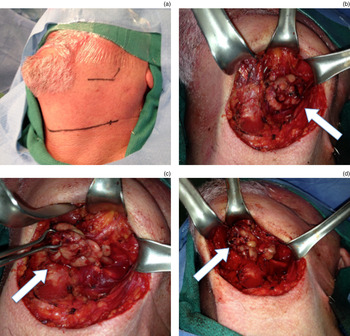
Salivary gland transfer is a simple surgical procedure involving displacement of the contralateral submandibular gland into the submental space (Figure 1). Away from high intensity radiation zones such as the submandibular space,Reference Seikaly, Jha, McGaw, Coulter, Liu and Oldring 13 the cumulative dose given to the submandibular gland can be significantly reduced, thus preserving almost full physiological function of the gland. Salivary gland transfer was superior to pilocarpine treatment in phase II and phase III clinical trials.Reference Jha, Seikaly, Harris, Williams, Sultanem and Hier 11 , Reference Jha, Harris, Seikaly, Jacobs, McEwan and Robbins 14 These studies reported objective measures of saliva production and/or simple subjective outcomes such as those included in the University of Washington questionnaire.Reference Zhang, Guo, Zhang, Wang, Peng and Mao 15 However, they did not report the quality of life of patients undergoing salivary gland transfer using a more thorough questionnaire such as the head and neck module of the European Organization of Research and Treatment of Cancer (‘EORTC’) Quality of Life Questionnaire (‘QLQ-H&N35’).Reference Wan Leung, Lee, Chien, Chao, Tsai and Fang 16 – Reference Bjordal, de Graeff, Fayers, Hammerlid, van Pottelsberghe and Curran 18 Several longitudinal and prospective studies into patient quality of life using this questionnaire showed that items related to ‘xerostomia’ (i.e. ‘sticky saliva’ and ‘dry mouth’) had among the worst scores for oropharynx cancer patients without salivary gland transfer.Reference Bjordal, de Graeff, Fayers, Hammerlid, van Pottelsberghe and Curran 18 , Reference Al-Mamgani, van Rooij, Tans, Verduijn and Sewnaik 19
(a) Pre-operative photograph indicating the anatomical landmarks. (b) Photograph showing the submandibular gland (arrow) in its anatomical position. (c) Photograph showing the submandibular gland luxated into the submental space after dissection. (d) Photograph showing the operative situs at the end of surgery. The submandibular gland lies in the previously cleared submental space.

Importantly, the potential impact of treatment delay associated with surgery has not been emphasized and studied accordingly. Moreover, the surgical complication rate has not yet been reported in a routine clinical setting.Therefore, the primary objectives of this study were to quantify the treatment delay associated with salivary gland transfer and to evaluate whether it has a negative impact on survival outcomes in oropharyngeal SCC patients compared with non-salivary gland transfer oropharyngeal SCC patients. Secondary objectives were to report the complication rate associated with salivary gland transfer and the quality of life of salivary gland transfer patients as assessed using the head and neck module of the European Organization of Research and Treatment of Cancer Quality of Life Questionnaire.Reference Bjordal, de Graeff, Fayers, Hammerlid, van Pottelsberghe and Curran 18
Materials and methods
Study population
Oropharyngeal SCC patients were treated and followed up at Sir Mortimer B. Davis Jewish General Hospital in Montreal, Québec, Canada, between 2003 and 2012. Patients were divided into two groups: those who underwent salivary gland transfer prior to primary chemoradiation and those who underwent primary chemoradiation without prior salivary gland transfer because they declined the procedure. Patients with bilateral (tumour–node–metastasis (TNM) stage N2c) or very advanced (N3) nodal disease, unilateral or bilateral level I lymph nodes, or cancer of the base of tongue crossing the midlineReference Seikaly, Jha, McGaw, Coulter, Liu and Oldring 13 are per protocol not eligible for salivary gland transfer and were excluded from both groups to ensure that baseline characteristics were comparable. After local ethical review board approval, the medical records of all patients were retrospectively examined to obtain detailed demographic data on age, sex, smoking, HPV status, primary tumour site, clinical stage, surgical complications, locoregional recurrence, distant treatment failure and disease-specific survival. Further, all patients' charts were specifically reviewed to assess surgical complications, such as nerve palsy (marginal branch, lingual, hypoglossal), fistula, haematoma or infection. For all patients, head and neck cancer was staged according to the 2010 recommendations of the American Joint Committee.Reference Edge, Byrd, Compton, Fritz, Greene and Trotti 20
Treatment delay was calculated as the number of days between the first histopathological or cytopathological diagnosis of cancer and the start of chemoradiation. All patients underwent primary intensity modulated radiotherapy, with concomitant chemotherapy when eligible. Intensity modulated radiotherapy was designed based on the definitions of gross tumour volume and clinical tumour volume,Reference Eisbruch and Gregoire 21 in American Society for Radiation Oncology guidelines.Reference Hartford, Galvin, Beyer, Eichler, Ibbott and Kavanagh 22 Bilateral neck irradiation was performed with both parotid glands outlined as critical structures; the mean dose to each parotid gland was restricted to less than 26 Gy. The transferred gland was outlined using the same constraint. All patients were followed up at regular intervals at the institute head and neck clinic.
To further evaluate their quality of life, all transfer group patients were asked to fill out the head and neck module of the European Organization of Research and Treatment of Cancer Quality of Life Questionnaire.Reference Cull, Sprangers, Bjordal and Aaronson 23 For each category, the questionnaire asked patients to indicate ‘the extent to which you have experienced these symptoms or problems during the past week’.Reference Cull, Sprangers, Bjordal and Aaronson 23 For each item, there were four graded responses: 1, ‘not at all’; 2, ‘a little bit’; 3, ‘quite a bit’; and 4, ‘very much’. Single items were then grouped by scale and results were expressed as percentages after linear transformation: a score of 0 per cent indicates no scale-related symptoms, while the maximum score of 100 per cent indicates severe symptoms.Reference Cull, Sprangers, Bjordal and Aaronson 23
Statistical analysis
For data with a normal distribution, the mean and standard error of the mean (SEM) of continuous variables are provided. Otherwise, the median and interquartile range (Q25–Q75) are given. Non-normally distributed variables were compared using the Mann–Whitney U test. Odds ratios and 95 per cent confidence intervals (CIs) were calculated using the Mantel–Haenszel (chi-square) method. A multivariate Cox regression model was used to investigate the effect of several variables on survival outcomes (i.e. disease-free or disease-specific survival). A parsimonious model including only factors with a significant effect was obtained by backwards elimination starting with all factors, and the final model was checked for all possible two-factor interactions. Statistical analyses were performed using IBM SPSS Statistics software version 21.0.0 (Armonk, New York, USA). A p value of less than 0.05 was considered to indicate statistical significance.Reference Middletion 24
Results
Baseline characteristics
The study population comprised 138 patients: 58 in the salivary gland transfer group and 80 in the non-salivary gland transfer group. All patients were treated with primary intensity modulated radiotherapy and 126 (91.3 per cent) received concomitant chemotherapy. At two and five years, the disease-free survival rates were 90 per cent and 86 per cent, respectively, the disease-specific survival rates were 96 per cent and 93 per cent, respectively, and the overall survival rates were 93 per cent and 85 per cent, respectively. The median follow up for the cohort was 41 months (25–64 months) and did not differ between the two groups (Mann–Whitney U test, p = 0.124).
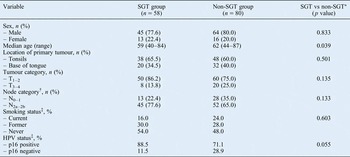
The baseline characteristics of all patients are shown in Table I. None of these differed significantly between groups, expect for age.
Patient baseline characteristics

*The chi-square method was used for binary variables, the Mann–Whitney U test for continuous variables. †Patients with N2c and N3 nodal tumours were excluded per protocol for both groups. ‡For patients with complete information showing percentage. SGT = salivary gland transfer
Surgical complications
In the salivary gland transfer group, one patient (1.7 per cent) experienced a surgery-related complication. He presented with local wound infection and a haematoma, which were managed conservatively with antibiotics. Importantly, palsies of the hypoglossal nerve, the lingual nerve and/or the marginal branch of the facial nerve were not complications of salivary gland transfer surgery. Furthermore, no patient experienced a cutaneous salivary fistula after submandibular gland transfer.
Treatment delay and survival impact
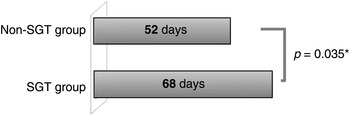
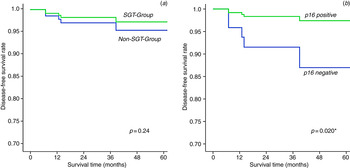
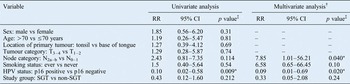
The median treatment delay between the first histopathological or cytopathological diagnosis of cancer and the start of chemoradiation was 68 days (44.5–83.5 days) in the salivary gland transfer group and 52 days (42–69.75 days) in the non-salivary gland transfer group (Figure 2). Therefore, the difference in medians between the two groups was 16 days. Although this difference was statistically significant (Mann–Whitney U test, p = 0.035), it did not correspond to poorer disease-free and disease-specific survival rates when groups were compared by Cox regression analysis including all relevant cofactors. Table II shows the results for disease-free survival. In the multivariate analysis, HPV status (p = 0.020) and advanced nodal disease (N2a–b vs N0–1; p = 0.040) were independent predictors of disease-free survival. Study group (i.e. salivary gland transfer vs non-salivary gland transfer) was not a predictor of disease-free survival. Cox regression plots showing relative survival in multivariate analysis according to study group and HPV status are shown in Figure 3. Notably, a lower proportion of smokers had disease-free survival, although this did not reach statistical significance (p = 0.10).
Graph showing the difference in treatment delay between salivary gland transfer and non-salivary gland transfer patients.

Cox regression plots showing relative disease-free survival curves by (a) study group (p = 0.24) and (b) HPV status (p = 0.020).

Cox regression analysis of disease-free survival for all patients*

*n = 138. †Cox regression analysis with adjustment for node category, smoking, HPV and study group. ‡For the null hypothesis. RR = relative risk (hazard ratio); CI = confidence interval; SGT = salivary gland transfer
Cox regression analysis showed that study group was not an independent predictor of disease-specific survival (p = 0.97).
Patient quality of life
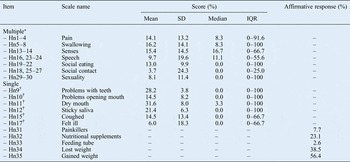
At follow up (mean ± SEM, 2.6 ± 0.3 years), salivary gland transfer patients filled out the head and neck module of the European Organization of Research and Treatment of Cancer Quality of Life questionnaire according to the accompanying guidelines. Patients reported a mean ‘dry mouth’ score of 31.6 per cent and a mean ‘sticky saliva’ score of 21.4 per cent. Further, 28.2 per cent of patients reported having problems with their teeth. Only 2.6 per cent of patients reported using a feeding tube. The main results of the questionnaire are summarised in Table III.
Quality of life scores for salivary gland transfer patients

Data were available for 39 out of 58 SGT patients. *For these scales, scores for each item were combined and expressed as a percentage: a low percentage indicates good function, while a high percentage indicates poor function. †Scores expressed as percentages: a low percentage indicates good function, while a high percentage indicates poor function. IQR = interquartile range; Hn = head and neck module. The questionnaire is copyrighted by the 1994 EORTC Quality of Life Study group.
Discussion
Intensity modulated radiotherapy has greatly improved the quality of life of head and neck cancer patients because it permits sparing of oncologically irrelevant but functionally important structures such as the parotid glands.Reference Dirix and Nuyts 7 , Reference Nutting, Morden, Harrington, Urbano, Bhide and Clark 9 , Reference Wan Leung, Lee, Chien, Chao, Tsai and Fang 16 However, efforts aimed at further technical improvements or innovations should not be dampened by these encouraging results. Salivary gland transfer is a simple, safe surgical technique that can greatly reduce xerostomia.Reference Seikaly, Jha, McGaw, Coulter, Liu and Oldring 13 , Reference Sood, Fox, O'Connell, Lovelace, Nguyen and Sharma 25
This study found salivary gland transfer to be safe: only one patient (1.7 per cent) suffered a minor complication following surgery. This means that adequate healing occurs before the start of chemoradiation for most patients. However, it should be noted that the salivary gland transfer group mainly comprised relatively young HPV-positive patients who are expected to have a high performance status and rapid wound healing.Reference Ang, Harris, Wheeler, Weber, Rosenthal and Nguyen-Tan 4
As expected, salivary gland transfer resulted in a treatment delay of approximately two weeks, and time to treatment differed significantly between groups. Survival analyses adjusting for potential confounders showed that both treatment groups had similar disease-free and disease-specific survival rates. Therefore, the treatment delay associated with salivary gland transfer surgery does not seem to result in a survival disadvantage. This is consistent with a recent Dutch study of almost 2500 head and neck cancer patients, which showed that a delay of up to 90 days between histopathological diagnosis and the start of chemoradiation did not reduce survival rates.Reference van Harten, de Ridder, Hamming-Vrieze, Smeele, Balm and van den Brekel 26 The median treatment delay in the present study was less than 90 days for both treatment groups. A Spanish study with a median treatment delay of 44 days reported similar results.Reference Leon, de Vega, Orus, Moran, Verges and Quer 27 These results should nevertheless be interpreted with extreme caution. In daily practice, any delay should be limited to minimise the potential negative psychological impact on patients.
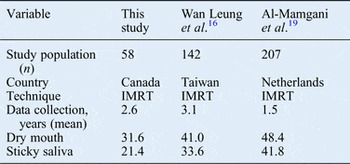
This study found that salivary gland transfer patients have very good quality of life scores. Other studies into the quality of life of oropharyngeal cancer patients treated with intensity modulated radiotherapy, as determined using the same questionnaire, reported much higher scores, especially for ‘sticky saliva’ and ‘dry mouth’ at comparable follow-up periods.Reference Wan Leung, Lee, Chien, Chao, Tsai and Fang 16 , Reference Al-Mamgani, van Rooij, Tans, Verduijn and Sewnaik 19 Compared with other studies, the mean score for saliva-related items was roughly 10–15 per cent lower in this study (Table IV). Although comparison among studies is limited by their external validity, maintaining submandibular gland function after its transfer into the submental space may explain the improved results in this study.
Comparison of xerostomia scores for salivary gland transfer patients in this study and the published literature

IMRT = intensity modulated radiotherapy
Normally, a contralateral submandibular gland in its correct anatomical position is expected to receive a dose of 45–50 Gy in the standard intensity modulated radiotherapy protocol.Reference Huang, Zhang, Zhuang, Wu, Li and Zheng 28 In the submental space, a cumulative dose of less than 20 Gy is usually reached.Reference Al-Qahtani, Hier, Sultanum and Black 29 This provides a cumulative radiation dose of below the half maximal inhibitory dose (‘D50’) for the submandibular gland, which is reported to be 34.6 Gy.Reference Saarilahti, Kouri, Collan, Kangasmaki, Atula and Joensuu 30 As the submandibular gland is responsible for non-stimulated saliva production, this may provide better functional outcomes during both day and night in the resting state.Reference Milne and Dawes 10 – Reference More, Tsue, Girod, Harbison, Sykes and Williams 12 In recognition that submandibular gland sparing is important, some groups have developed intensity modulated radiotherapy protocols that provide a lower dose to level Ib lymph nodes. These studies showed similar locoregional control rates between standard and submandibular gland sparing protocols. Importantly, however, the dose applied to the submandibular gland was only reduced from 45–50 Gy to 35–40 Gy.Reference Huang, Zhang, Zhuang, Wu, Li and Zheng 28 , Reference Little, Schipper, Feng, Vineberg, Cornwall and Murdoch-Kinch 31
-
• Salivary gland transfer is a simple surgical technique for reducing xerostomia in oropharyngeal cancer patients treated with primary chemoradiation
-
• Surgery delays the start of chemoradiotherapy, which could affect patient survival
-
• The median delay associated with salivary gland transfer was 16 days
-
• This delay did not affect patient survival
-
• Oropharyngeal SCC patients have an excellent quality of life after salivary gland transfer
The results of this study should be interpreted with the following caveats and limitations. First, patients with N2c and N3 nodal disease were excluded to ensure comparability between the two study groups. This may explain the relatively good two- and five-year disease-free and disease-specific survival rates. Second, this study compared survival rates between treatment groups. Although salivary gland transfer surgery resulted in a significant treatment delay, both treatment groups had the same survival rates. Unfortunately, there was insufficient questionnaire data from the non-salivary gland transfer group to compare quality of life scores between groups. Therefore, quality of life scores are reported for only the salivary gland transfer group. Previous studies reported the efficacy of salivary gland transfer and the high quality of life experienced by oropharyngeal SCC patients after therapy.Reference Jha, Seikaly, Harris, Williams, Sultanem and Hier 11 , Reference Jha, Harris, Seikaly, Jacobs, McEwan and Robbins 14 Third, study group allocation was not randomised owing to its retrospective nature and is therefore likely to suffer from bias. This may partly explain why the salivary gland transfer group was younger than the non-salivary gland transfer group.
It is important to note that some patients may have refused surgery precisely because they did not know exactly how long the treatment delay would be and whether it would affect their survival time. Therefore, this study may have a direct clinical impact by providing evidence to help the decision-making of both patients and physicians.
Conclusion
The questionnaire results showed that oropharyngeal SCC patients have an excellent quality of life after salivary gland transfer. The procedure was found to be safe: only one salivary gland transfer patient experienced a surgical complication. Furthermore, the treatment delay of about two weeks associated with the procedure did not significantly affect oncological outcomes.
Acknowledgements
G B Morand was supported by the Swiss Cancer League, Bern, Switzerland (BIL KFS-3002-08-2012). This research was supported by the Research Found of Sir Mortimer B Davis Jewish General Hospital. The authors would like to thank A Costescu and T Lewis for their help in data acquisition.