Introduction
Longitudinal studies have established that children of depressed mothers have an increased risk for depression (e.g. Hammen et al. Reference Hammen, Burge, Burney and Adrian1990; Hammen & Brennan, Reference Hammen and Brennan2001; Lieb et al. Reference Lieb, Isensee, Hofler, Pfister and Wittchen2002; Klein et al. Reference Klein, Lewinsohn, Rohde, Seeley and Olino2005; Weissman et al. Reference Weissman, Wickramaratne, Nomura, Warner, Pilowsky and Verdeli2006). Research has identified various biological and psychosocial mechanisms contributing to the intergenerational transmission of depression, including impaired parenting and interparental conflict (reviews in Goodman & Gotlib, Reference Goodman and Gotlib1999; Goodman, Reference Goodman2007; Hammen, Reference Hammen, Gotlib and Hammen2009; Joormann et al. Reference Joormann, Eugene, Gotlib, Nolen-Hoeksema and Hilt2009). The latter variables paint a picture of the lives of many depressed adults, in which they and their children are exposed to elevated rates of acute and chronic stress.
Given that stressors are potent precipitants of depression in adults and children (reviews in Kessler, Reference Kessler1997; Hammen, Reference Hammen2005; Monroe et al. Reference Monroe, Slavich, Georgiades, Gotlib and Hammen2009), further exploration of stress patterns and processes in the intergenerational transmission of depression is warranted, particularly regarding stress exposure. Exposure to stressors is not randomly distributed in the community and some segments of the population are at greater risk for higher exposure than others (Turner et al. Reference Turner, Wheaton and Lloyd1995). We propose that families of depressed mothers are such an at-risk group.
Hammen (Reference Hammen1991) used the term ‘stress generation’ to describe a particular pattern of stress exposure among women with histories of depressive disorders who showed elevated rates of stressful life events, especially interpersonal events, over a follow-up period, even when women were not currently depressed. Since then, stress generation among those with depression histories has been widely replicated in clinical, community, child, adolescent and adult samples (reviewed in Hammen, Reference Hammen2006; Liu & Alloy, Reference Liu and Alloy2010), portending a vicious cycle of recurring depression and stress.
There are several reasons to suspect that stress occurrence and generation represent one mechanism by which intergenerational transmission of depression occurs. First, there is evidence that children of unipolar depressed mothers show patterns of stress generation in the form of higher levels of events and stressful situations to which they contributed (Adrian & Hammen, Reference Adrian and Hammen1993; Hammen & Brennan, Reference Hammen and Brennan2001; Shih et al. Reference Shih, Abela and Starrs2009). Such children likely acquire cognitive, personality and interpersonal vulnerabilities that may then contribute to stressful social experiences or the failure to resolve difficulties before they become acute negative events. Second, children of depressed mothers may be at risk for exposure to adversity in their earliest years, especially because maternal depression is often associated with stress, social disadvantage, marital conflict and risk of overt maltreatment (e.g. Goodman, Reference Goodman2007; Silverstein et al. Reference Silverstein, Augustyn, Young and Zuckerman2009; Taylor et al. Reference Taylor, Guterman, Lee and Rahouz2009), all of which predict depression in adolescence and adulthood (Kessler & Magee, Reference Kessler and Magee1993; Gibb et al. Reference Gibb, Butler and Beck2003; Green et al. Reference Green, McLaughlin, Berglund, Gruber, Sampson, Zaslavsky and Kessler2010). Early adversity exposure may also predict a lowered threshold for depressive reactions to stress (Hammen et al. Reference Hammen, Henry and Daley2000; Harkness et al. Reference Harkness, Bruce and Lumley2006; Rudolph & Flynn, Reference Rudolph and Flynn2007).
The third reason to pursue the role of stress generation as a mechanism in the transmission of maternal depression to offspring is that the risk for depression is maintained by a bidirectional relationship between stress and depression, which unfolds over many years. An important but seldom-studied characteristic of at-risk families is the continuity of stress and disorder over time. Most stress–depression research focuses on stressors immediately proximal to depression and may minimize the lifetime context that includes not only continuing stress exposure but also the relevance of major early stressors and the potential effects of cumulative stress. The significance of these long-term patterns was demonstrated by Turner & Lloyd (Reference Turner and Lloyd2004), who found that young adults' depressive and anxiety disorders were predicted by both proximal (1 year) and distal (>1 year) stressors. Moreover, Turner & Turner (Reference Turner and Turner2005) showed that recent acute and chronic stress were significantly related to past exposure to major and traumatic life events, as well as to maternal depression (see also Hazel et al. Reference Hazel, Hammen, Brennan and Najman2008). Similarly, Brown & Harris (Reference Brown and Harris2008) proposed a life-course model of depression, noting that early adversity exposure doubled women's risk of experiencing later severe life events.
In the present study, several specific issues are addressed that bring together the stress generation and stress continuity hypotheses and the intergenerational transmission of depression from mother to offspring. A key mechanism of intergenerational transmission of depression is the long-term exposure to stressors, beginning with the association of maternal depression and early adversity. Once depression occurs in youth, it is likely to recur as a product of increased exposure to stress. Thus, intergenerational transmission of depression is initiated in part by early stressors predicting continuing stress exposure and early exposure to maternal depression predicting continuing risk for youth recurrent depression.
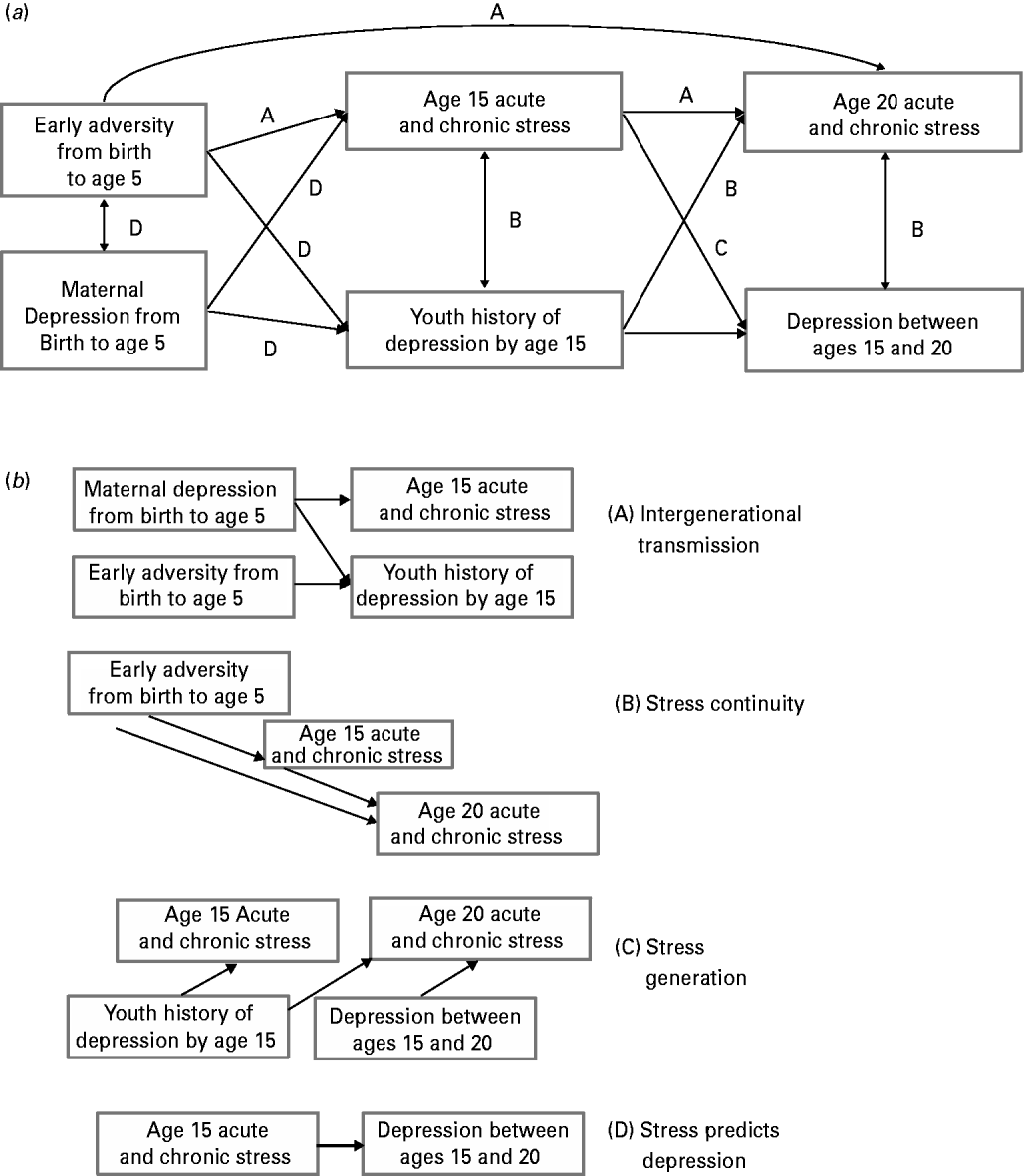
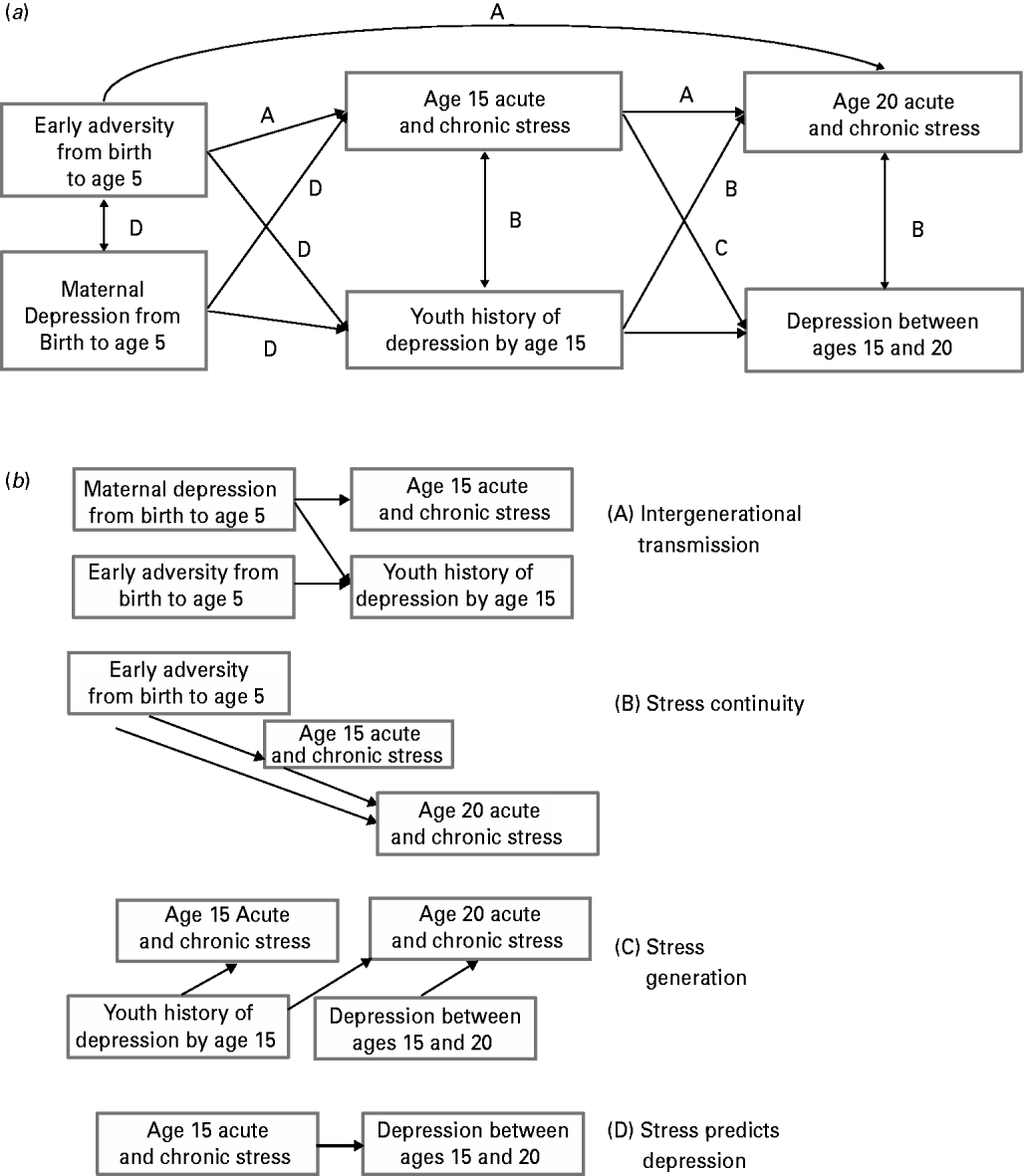
Fig. 1 depicts four facets of this theory in a 20-year high-risk longitudinal study, beginning in pregnancy and extending to the youth's age 20. Fig. 1 a is a schematic representation of the overall relationships. In Fig. 1 b, section A concerns the role of maternal depression in the intergenerational transmission of depression and stress. It is well established that maternal depression is a predictor of youth depression, but in the present analyses we specifically focus on the key effects of maternal depression in the child's earliest years in its association with early adversity (to age 5), youth's exposure to chronic and acute stress at age 15 and its predictive association with youth depression by age 15. Section B illustrates stress continuity, including predictions of longitudinal associations among both acute stressful life events and chronic interpersonal stress, starting with early adversity exposure. Chronic stress is often omitted in studies of effects and predictors of stressors, but in our view represents an important construct (e.g. Hammen et al. Reference Hammen, Kim, Eberhart and Brennan2009) and interpersonal chronic stress is particularly implicated in offspring of depressed women (e.g. Hammen & Brennan, Reference Hammen and Brennan2001). A third facet is stress generation (section C), in which depression in youths predicts later stress occurrence and section D is the well-documented relationship between stress and subsequent depression.
Diagram of conceptual hypotheses: (a) shows the overall continuity of stress and depression over 20 years; (b) shows the specific segments indicating intergenerational transmission of stress and depression (A), stress continuity (B), stress generation (C) and prediction of depression from stress (D).
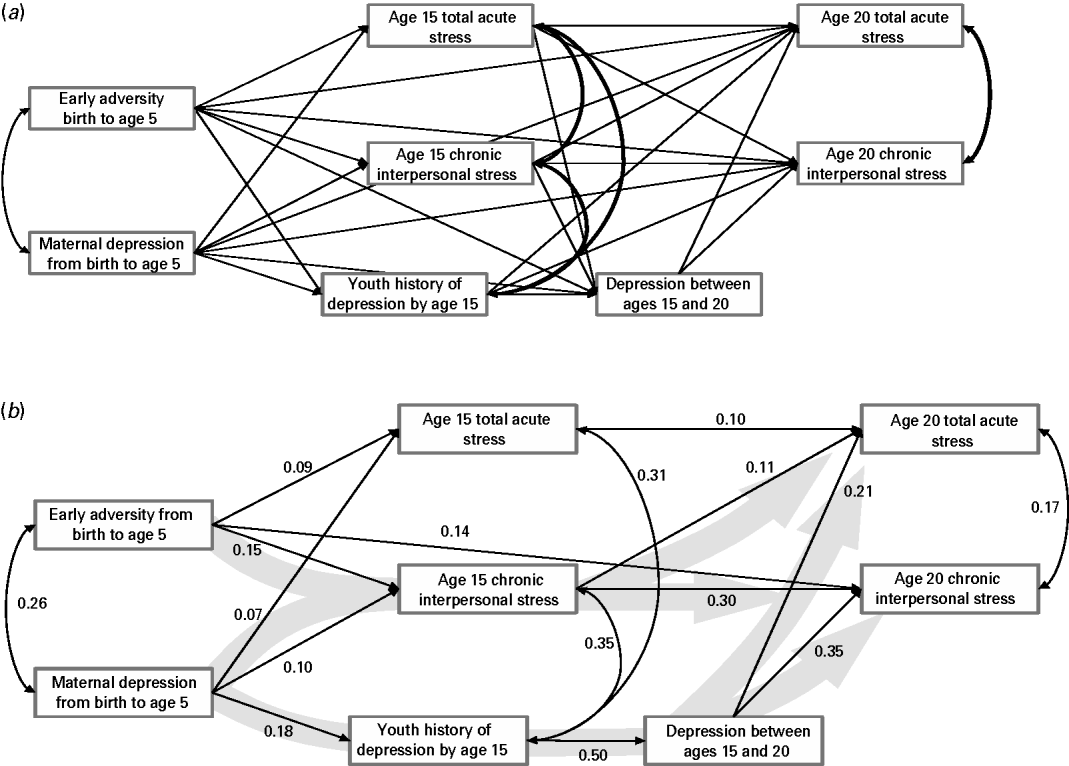
The study proposes to test a series of hypotheses representing each of the processes in Fig. 1 in a longitudinal study of mothers and their offspring from the child's birth to age 20 in a large community sample selected to represent women with varying depression histories (including no depression). The effects of gender are also explored, due to previously observed gender differences in depressive experiences and stress exposure (reviewed in Hammen, Reference Hammen2005). However, no specific hypotheses are offered about whether the pathways of stress continuity, stress generation and intergenerational transmission differ by gender. Following tests of specific components to highlight temporal associations and continuities, an overall path model with tests of meditational pathways over the 20 years is also presented (the initial model is displayed in Fig. 2 a).
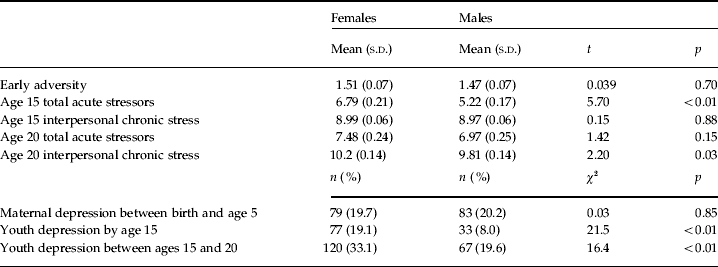
(a) Initial path model of associations among variables over 20 years. Curved lines indicate correlated variables; (b) final model showing statistically significant paths. Significant meditational pathways are suggested by shaded arrows.

Method
Participants
Participants were drawn from the Mater-University Study of Pregnancy (Keeping et al. Reference Keeping, Najman, Morrison, Western, Andersen and Williams1989), a birth cohort study of >7000 children born between 1981 and 1984 at Mater Misericordiae Hospital in Brisbane, Queensland, Australia, studying predictors of health and development of the children. When the children were 15, the present investigators selected 815 families to represent mothers with diverse experiences in severity and chronicity of depressive symptoms (including no or minimal depression) over the child's early life (details are reported in Hammen & Brennan, Reference Hammen and Brennan2001). At age 15, 92% of target youth were Caucasian, mostly of lower-middle class socio-economic status; 71% of mothers had completed grade 10 or less, 77% were either married or cohabitating with a partner (65% of mothers were currently married to the biological father of the youth).
At age 20 the sample of 815 families was contacted for follow-up and 705 (n=363 females) were located, consented and participated. The age 20 participants did not differ significantly from non-participants on own prior depression status [χ2 (df=1, n=815)=1.32, p=0.25] or on any prior diagnosis. Those who were included were marginally more likely to have mothers who had been depressed [χ2 (df=1, n=815)=3.56, p=0.06]. Non-participants were more likely to be males [χ2 (df=1, n=815)=12.63, p<0.01] and came from families with lower income at age 15 [t(783)=2.11, p<0.05].
Procedures
During pregnancy, after birth, 6 months after birth and at child age 5 years, the mothers completed questionnaire packets about themselves, their lives and the target child. At age 15, the youths and their mothers were interviewed individually and completed questionnaires. For the age 20 follow-up, the youths and their mothers were interviewed separately and completed a questionnaire packet. Parental and youth informed consent/assent was obtained at all assessments. All procedures were approved by ethics committees of Mater Hospital (mothers' pregnancy to child age 5), the University of Queensland and at the ages 15 and 20 follow-ups additionally by UCLA and Emory University. Age 15- and 20-year old participants were paid for their time. Interviewers were clinically trained postgraduate students in psychology and were blind to diagnostic status of the mother and, in the age 20 follow-up, blind to youth prior diagnostic status.
Measures
Maternal depressive disorder
Lifetime and current diagnostic status of the mother was evaluated at the age 15 follow-up, using the Structured Clinical Interview for DSM-IV (SCID; First et al. Reference First, Spitzer, Gibbon and Williams1995). Women were classified as to whether or not they had experienced a major depressive episode or dysthymic disorder during the first 5 years of the child's life (κ=0.81, p<0.01, based on independent judges' ratings of audiotaped interviews).
Youth depressive disorder
The Schedule for Affective Disorders and Schizophrenia for School-Age Children – Revised (Epidemiologic version) for DSM-IV (Orvaschel, Reference Orvaschel1995) was administered to youth and their mothers at the age 15 follow-up. Youth were considered to be depressed if they had a diagnosis of major depressive disorder or dysthymia by best estimate methods (κ=0.82 for current diagnoses of depression, 0.73 for past diagnoses).
Youth diagnoses of depression occurring after the age 15 interview were assessed using SCID (First et al. Reference First, Spitzer, Gibbon and Williams1995) administered at age 20. Diagnostic reliability was κ=0.83 for current diagnoses of depression and 0.89 for past depression (between 15 and 20). Altogether, 237 (33.6%) of the 705 participants retained at age 20 had received a diagnosis of major depression or dysthymia by the age 20 interview. Of those, 99 (41.8%) had been depressed prior to the age 15 interview and 138 (58.2%) were first depressed between ages 15 and 20.
Early childhood adversities
Measures of early childhood adversities in the first 5 years of the child's life were derived from information provided by the mother at the pregnancy, birth, 6-month and 5-year assessments (psychometric characteristics and predictive validity are reported in Hazel et al. Reference Hazel, Hammen, Brennan and Najman2008). Five variables included as adversities were financial hardship (mean of family income across assessments), child chronic illness (whether the child had any of 15 illnesses or injuries lasting ⩾3 months with impairment), parental discord [mean across Dyadic Adjustment Scale (DAS) eight-item relationship satisfaction scales; psychometric properties reported in Spanier, Reference Spanier1976], maternal stressful life events (sum of prenatal and postnatal nine-item life event checklists) and mothers' separation from partners (report at year 5 assessment on partner change, death, separation or divorce). The continuous variables (income, DAS and maternal life events) were recoded as present/absent using the 33rd percentile as the cut-off point for each measure to identify the most adverse conditions. A summary measure of early childhood adversity was formed by counting the number of adversities for each child (median=1; range 0–5).
Youth stress
Participants completed the youth version of the UCLA Life Stress Interview at ages 15 and 20. The interview has been used and validated in a variety of youth and young adult samples (e.g. Adrian & Hammen, Reference Adrian and Hammen1993; Rao et al. Reference Rao, Hammen and Daley1999) and assesses both acute stressors in the last 12 months and ongoing chronic stress. Similar to Brown & Harris' (Reference Brown and Harris1978) contextual threat interviews for adults, interviewers probed for information related to each acute negative life event's occurrence and impact. Teams of independent raters used the contextual information, blind to the participant's own subjective reaction, to rate each event on a 5 point objective threat scale (with 5 as extremely severe negative impact) and a sum of the ratings of negative life event impact comprised the measure of youth acute stress. Inter-rater reliability based on independent rating teams was 0.92 at age 15 and 0.84 at age 20.
In addition, the interviewer probed and rated the youth's ongoing chronic stress over the past 6 months on 5 point, behaviorally anchored scales in each of several domains. For the present study, chronic stress scores in the four interpersonal domains (family, social life, best friend and romantic relationships) were summed, with higher scores indicating greater total chronic stress. At age 15, intraclass correlations of reliability across the chronic stress domains ranged from 0.63 to 0.94. At age 20, inter-rater reliabilities ranged from 0.72 to 0.88 across domains. Validity data for youth have been reported elsewhere (e.g. Hammen & Brennan, Reference Hammen and Brennan2001; Hammen et al. Reference Hammen, Brennan and Keenan-Miller2008).
Results
Tests of separate hypotheses: regression analyses
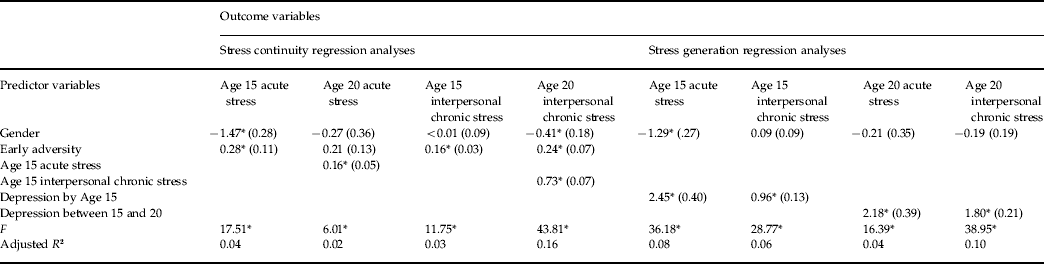
All available data for each analysis were used and missing data resulted in slight differences in cases available for each analysis (minimum 96% of cases). Most missing cases were due to the absence of one or more variables needed to compute the early adversity score (n=28). There were no differences on study variables between those with and without missing adversity data. Mean differences in variables by gender are presented in Table 1, showing higher levels of depression, age 15 acute and age 20 chronic stress in females. Coefficients for gender effects are presented in the table of results for the regression models. Unless otherwise noted, each analysis was conducted using ordinary least squares or logistic regression with gender, the predictor variable and their interaction as predictors. The gender×predictor variable interactions were significant in only a few cases reported below. For simplicity, the text and tables present the effects of the predictor variable on the criterion variable, controlling for gender, unless otherwise noted.
Means (s.d.) and proportions of study variables by gender

Intergenerational transmission
The associations between maternal depression and stress and depression in the youth are depicted in section A of Fig. 1. In three separate regression analyses, children's early adversity scores, age 15 acute stressors, and age 15 interpersonal chronic stress were predicted by the child's gender and maternal history of depression between birth and age 5. Children of mothers who were depressed between birth and age 5 had higher levels of early adversity than those whose mothers were not depressed [b=0.80, p<0.01; F(2, 780)=24.52, adj R 2=0.06]. Likewise, maternal depression prior to age 5 predicted both acute [b=0.96, p<0.01; F(2, 808)=19.94, adj R 2=0.04] and interpersonal [b=0.41, p<0.01; F(2, 807)=7.08, adj R 2=0.01] chronic stress at age 15.
Onset of depression by age 15 was predicted by maternal depression prior to age 5, gender and their interaction, χ2(df=3)=38.00. Females had significantly higher rates of depression by age 15 than males [odds ratio (OR) 4.01, p<0.01]. Females whose mothers were not depressed prior to age 5 had a predicted probability of 0.18 of being depressed by age 15, whereas those whose mothers were depressed had 0.24 probability, which was not a statistically significant difference (OR 1.44, p=0.22). However, maternal depression was associated with greater odds of depression by age 15 years in males, such that males without depressed mothers had only 0.05 probability of depression by age 15, whereas those with depressed mothers had 0.19 predicted probability of being depressed by age 15 (OR 4.35, p<0.01). The total effect of maternal depression for boys was not significantly different from that of the gender effect (p=0.79). That is, total effect of maternal depression for boys brought their risk to the same level as being female did for girls.
Similarly, onset of depression by age 15 was predicted by early adversity, gender and their interaction, χ2(df=3)=28.18. Early adversity did not predict depression by age 15 for females (OR 0.99, p=0.93), but did for males (OR 1.44, p<0.01).
Stress continuity
Acute stressors
Section B of Fig. 1 illustrates hypotheses concerning continuity of acute and chronic stress over 20 years. The first two columns of Table 2 show the results of two regression equations testing the continuity of acute stressors. Higher early adversity predicted total acute stress at age 15 (b=0.28, p<0.01). However, early adversity did not predict youth total acute stress at age 20. There was significant continuity between acute stressors at ages 15 and 20.
Unstandardized regression coefficients (s.e.) for eight separate regression analyses testing stress continuity and stress generation

Each column represents a separate regression analysis. Separate analyses in which interaction terms were included failed to yield significant interactions and are not displayed.
* p<0.05.
Chronic stressors
The third and fourth columns of Table 2 display results for two regressions testing the continuity of chronic interpersonal stress. Higher early adversity predicted total chronic stress at both 15 and 20 years. Likewise, youth chronic stress at age 15 predicted chronic stress at age 20.
Reciprocal relationship of stress and depression over time
Stress generation
Stress generation predicts a link between prior depression and subsequent stress, as depicted in section C of Fig. 1. The fifth and sixth columns of Table 2 display the results of two separate regression equations, in which the onset of depression prior to age 15 predicted both episodic and chronic interpersonal stress at age 15. The last two columns of Table 2 indicate that depression between ages 15 and 20 predicted both episodic and chronic interpersonal stress.
Because in the previous analyses it is possible that the depressive episode occurred after some of the stressors were assessed, two additional regressions were run, in which depression strictly preceded the window of stress assessed. Acute and chronic interpersonal stressors at age 20 were regressed onto depression onset prior to age 15, gender and their interaction [F(3, 701)=4.13, adj R 2=0.01]. Youth with an onset of depression by age 15 reported greater episodic stressors at age 20 (b=1.77, p's <0.01), but the gender–depression interaction was not significant (b=–0.45, p=0.67). Likewise, chronic interpersonal stressors at age 20 were predicted from depression onset prior to age 15, gender and their interaction [F(3, 700)=11.56, adj R 2=0.04]. There was an interaction between gender and depression onset (b=1.20, p=0.04) in predicting interpersonal chronic stress at age 20. While youth with an early onset of depression also reported greater interpersonal chronic stress at age 20, the magnitude of the effect was larger for males (b=2.22, p<0.01) than for females (b=1.02, p<0.01).
Predicting depression onset from previous stress
Depression between 15 and 20 years was the outcome variable in two logistic regression equations, as suggested by section D of Fig. 1. The presence of depression prior to age 15 was also controlled. Acute stress at age 15 (OR 1.06, p=0.01) and the onset of depression by age 15 (OR 2.74, p<0.01) independently predicted the onset of depression between 15 and 20 years. In a separate analysis, interpersonal chronic stress at age 15 predicted depression between 15 and 20 years (OR 1.22, p<0.01) after controlling for onset of depression by age 15.
Path analysis: model of meditational pathways
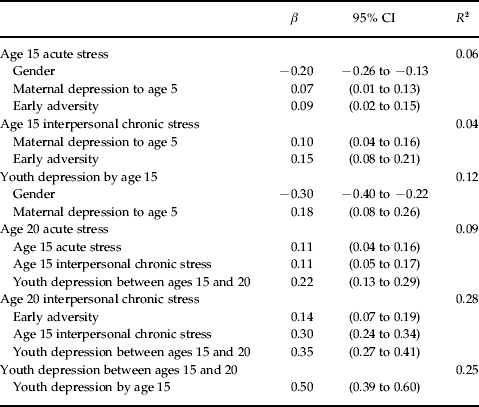
To address questions related to meditational pathways between stress and depression over time, a path analysis was conducted, which included each of the study variables. Fig. 2 a presents the initial model. Gender, early adversity and maternal depression were predictors of all subsequent variables. Acute stress, interpersonal chronic stress and depression history to age 15 were correlated and were predictors of acute and chronic interpersonal stress at age 20 and depression between ages 15 and 20. Acute and interpersonal chronic stressors were correlated at age 20 and were predicted by depression between ages 15 and 20.
The path analysis was conducted using Mplus software (version 6.11; Muthén & Muthén, Reference Muthén and Muthén2010). Weighted least squares estimates were calculated due to the presence of the dichotomous depression outcome variables, resulting in probit regression coefficients for the dichotomous outcomes. The initial model fit the data well, χ2 (df=2)=0.24, p=0.89, but yielded several insignificant pathways. Lagrange multiplier tests indicated no theoretically meaningful omitted pathways that would substantially improve model fit. Non-significant path coefficients were fixed at 0 with no loss of model fit as suggested by a Wald test [Δχ2 (df=10)=3.93, p=0.95] and the process of fixing non-significant paths was repeated for two additional models (results not shown). Fig. 2 b displays the final model, which fit the data acceptably (Yu, Reference Yu2002), χ2 (df=18)=24.12, p=0.15, comparative fit index=0.99, Tucker-Lewis index=0.98, root mean square error of approximation=0.02 (95% confidence intervals 0.00–0.04). Standardized path coefficients are displayed in Table 3.
Standardized path coefficients and R2 for final model of the path analysis

CI, Confidence intervals.
All paths and R 2 are significantly different from 0; p<0.05.
With regard to stress continuity, early adversity predicted both acute and chronic stress at age 15 and each type of stress, in turn, predicted its age 20 counterpart. Interpersonal chronic stress at age 15 also predicted total episodic stress at age 20. There was both a significant direct effect of early adversity on interpersonal chronic stress at age 20, as well as a mediated effect through chronic stress at age 15 (β=0.04, p<0.01). Likewise, there was an indirect effect of early adversity on age 20 acute stress mediated by age 15 chronic (β=0.02, p=0.01) but not acute (β=0.01, p=0.06) stress.
Maternal depression predicted youth depression by age 15, which, in turn, mediated the relationship between early maternal depression and depression in late adolescence (β=0.09, p<0.01). Depression after age 15 predicted both types of stress at age 20. Maternal depression had a significant indirect effect on acute stress at age 20 (β=0.04, p<0.01), mediated by two pathways through interpersonal chronic stress at age 15 (β=0.01, p=0.01) and the pathway through early and late youth depression (β=0.02, p<0.01), but not through episodic stress at age 15 (β=0.01, p=0.08). There was an indirect effect of maternal depression on youth chronic stress at age 20 (β=0.06, p<0.01) that was mediated by both interpersonal chronic stress at age 15 (β=0.03, p<0.01), and by the pathway through early and late adolescent depression history (β=0.03, p<0.01).
Notably, none of the stress variables predicted subsequent depression (all p's >0.05).
Discussion
The present study proposed to link the intergenerational transmission of depression from mothers to offspring with a stress generation perspective in order to characterize the continuity of stress and depression over a 20-year period in the lives of youth. Three primary pathways were examined with regression analyses. First, regarding continuity of stress over time, as hypothesized, exposure to adverse life conditions up to age 5 predicted youths' acute stressors at age 15 and chronic interpersonal stress at ages 15 and 20; acute and chronic stress at 15 predicted acute and chronic stress at 20, respectively. Second, bidirectional paths between stress and depression were predicted. The ‘stress generation’ path by which past depression predicts future stress was supported for both acute and chronic stress in both cross-sectional and strictly prospective analyses. Notably, early onset depression by age 15 predicted higher levels of acute and chronic stress at age 20. Unsurprisingly, stress also predicted subsequent depression.
The third pathway proposed to link the stress–depression continuity pathways to maternal depression. As predicted, the intergenerational transmission of depression from mothers to offspring may be set in motion in the earliest years of the child's life due to exposure to maternal depression and early adverse conditions and, in turn, predict youth depression and youth stress in early adolescence. Once established, as the other pathways demonstrate, such patterns predict continuing stress and depression.
The expected gender differences in depression rates were predictably observed and there were several differences in stress exposure (women with higher acute stress at age 15 and chronic interpersonal stress at age 20). In general, the pathways between variables showed similar patterns for girls and boys, but with two notable exceptions. Simply being female was associated with increased risk of depression by age 15 and the difference in depression between daughters of depressed and non-depressed mothers was not significant. By contrast, sons of depressed mothers were significantly more likely than sons of non-depressed women to be depressed by age 15. Similarly, boys' likelihood of depression by age 15 was significantly predicted by early adversity but girls' depression was not. It appears that girls have a significant risk for young adolescent depression by being female, but boys require the additional challenges of maternal depression or early adversity to present comparable risk. It should be noted that the different gender patterns are associated with maternal depression in the first 5 years, but maternal depression exposure is a significant predictor of girls' depression by age 15, when maternal lifetime depression to youth age 10 (e.g. Hammen & Brennan, Reference Hammen and Brennan2003) or age 15 (e.g. Hammen & Brennan, Reference Hammen and Brennan2001) is considered.
Supplementing the regression analyses, a path model was used to simultaneously model relationships between all study variables. The model confirmed the major predictions regarding stress continuity and generation, as well as the intergenerational transmission of both stress and depression. As hypothesized, the meditational pathways suggest that interpersonal chronic stress serves as a significant hub through which not only maternal depression predicts later stress, but also which facilitates continuity of exposure to episodic stressors. The pathway leading from stress to depression was the only pathway not supported, but it also has the most voluminous body of prior support (e.g. reviewed in Hammen, Reference Hammen2005), including the regression analyses of this study. Its absence in the final path model may represent an artifact of the initial temporal ordering of variables, resulting in an incomplete (or, at best, overly conservative) test of the stress–depression link.
Evidence of the continuity of stressful experiences over 20 years encompassed multiple stress assessment methods (questionnaires, interviews) and content (early childhood adversities, chronic and acute stress). The pattern suggests that those with high levels of stress exposure in early life continue to have relatively high levels of stress and, presumably, such patterns continue through at least young adulthood. Stress generation perspectives have previously demonstrated that elevated stress levels occur in part because of characteristics of the individual and may include not only acute events arising from specific actions of the person but also enduring circumstances of families and environments. Individuals may therefore become trapped in difficult and stressful circumstances that have the potential for continuing stress. Unfortunately, young adults may also make maladaptive choices regarding education, illicit or unhealthful activities, mate selection, childbearing and other role enactments that can result in further entrapment in stressful circumstances, also heightening the likelihood of acute life events.
Many previous studies have demonstrated the association between maternal depression and youth depression (e.g. reviewed in Hammen, Reference Hammen, Gotlib and Hammen2009; Joormann et al. Reference Joormann, Eugene, Gotlib, Nolen-Hoeksema and Hilt2009). The present study shows that maternal depression in the child's early years starts the process and early stress exposure appears to be a contributory factor.
Several implications are noted. First, it is useful to take a broad perspective about the role of environmental events and circumstances, encompassing not only their short-term contributory role to depression in children of depressed parents, but also to the long-term patterns of stress and stress–depression transactions over time. Not only are there long-term patterns of intergenerational transmission of depression, but also intergenerational transmission of acute and chronic stress occurrence. Such a perspective supplements the focus on wholly ‘internal’ processes and mechanisms involving genetic, neurobiological, cognitive and personality factors. Both perspectives seem necessary to fully characterize the lives and essential mechanisms of risk in families with depressed mothers. Indeed, as many investigators have found, high rates of stressors are likely to be especially predictive of depression reactions to those who have the s alleles of polymorphisms in the promoter region of the serotonin transporter gene (Karg et al. Reference Karg, Burmeister, Shedden and Sen2011). Second, the unfolding and interplay among stress and depression variables may suggest many potential points of intervention intended to break the cycle. It might be speculated, however, that the patterns that have emerged by early adolescence may become increasingly difficult to remedy as youths move into early adult roles and circumstances that create stressful environments, such as selection of dysfunctional partners and poor educational and occupational attainment. Youth with histories of maternal depression, stress and depression reach their childbearing years at risk for further depression, potentially recreating the cycle with the next generation. Thus, interventions that reduce depression in youth at risk due to maternal depression (Garber et al. Reference Garber, Clarke, Weersing, Beardslee, Brent, Gladstone, DeBar, Lynch, D'Angelo, Hollon, Shamseddeen and Iyengar2009) may benefit from efforts to alter the likelihood of occurrence or persistence of negative life events and chronically stressful environmental conditions, especially in their teenage years.
The study included a long-term longitudinal design following families over 20 years, a large community sample of high- and low-risk families, extensive interview-based measures of chronic and acute stressors and diagnoses of depression, as well as contemporaneously, rather than retrospectively, obtained measures of adverse conditions in the first 5 years of the children's lives. Despite these advantages, several limitations are also acknowledged. The sample is largely Caucasian and lower-middle income and results might not replicate in more diverse populations. Despite the relatively large sample, the number of depressed male offspring is relatively small and it would be desirable to study larger samples. The decision to characterize early adversity and maternal depression exposure by age 5 and youth depression and stress by ages 15 and 20 were determined by practical considerations of the design and data availability, but it would be desirable to investigate the hypotheses of the study with developmentally sensitive, theoretically determined assessment points. Further, it is acknowledged that different selection of stress variables and measures of the stress constructs might yield different results. Further research is needed to examine the effects of particular types of early adverse experiences or to contrast interpersonal versus non-interpersonal events or dependent and independent events. Neurobiological and genetic factors doubtless play a role in understanding the mechanisms, as well as occurrence of stress and depression and future studies that integrate such constructs with stressful experiences are needed. Finally, the focus of the current study was on depressive outcomes in youth at age 20, but future research that examines diverse diagnostic and functional outcomes over a long period would be useful.
In sum, the current study suggests that the study of maternal depression's role in depressive outcomes in youth should be expanded to include the interplay among stress and depression, and the continuity of stress and depression, over long periods of time. Such a view helps to further illuminate the intergenerational perspective as depression passes from parents to youth and then potentially to their own offspring.
Acknowledgements
This study was supported by NIMH R01 MH52239 to Brennan, Hammen and Najman and T32 MH015442 to Hazel. The authors greatly appreciate the assistance of Robyne Le Brocque, Cheri Dalton Comber and Sascha Hardwicke (project coordinators) and the interview staff. Thanks also to the original Mater-University Study of Pregnancy principals, William Bor, MD, Michael O'Callaghan, MD and Professor Gail Williams.
Declaration of Interest
None.