Introduction
This article examines the visual representations of nineteenth century joint-stock banks in portraiture, which were used to establish a corporate identity and build a reputation. The term “corporate identity” is used here to define an organization’s presentation of its key values, beliefs, products, services, and strategies to the outside world. Lambert describes it, rather broadly, as a projection of the organization, which shows “who you are, what you do, and how you do it.” Footnote 1 It is, like reputation, based on society’s perception of the business. A corporation’s identity can be controlled and the successful management of it can build and enhance a firm’s standing over time. Footnote 2 Within the service sector, these concepts are especially important, as there is no physical product to sell and the service itself is intangible. Footnote 3
Corporate identity manifests itself in a range of ways, including physical and visual forms, such as corporate livery, corporate logos, buildings, architecture, and paintings. Footnote 4 The value of an image over text is due to its simplicity: it can convey complex symbolism without requiring great effort from the receiver in order for those messages to be understood. Footnote 5 Portraiture has been shown to be an effective medium for communication. Guthrey and Jackson identified that the proliferation of pictures showing CEOs in the twenty-first century gave the leader an iconic presence. Footnote 6 Investing in corporate artwork is by no means a recent phenomenon.
The Repeal of the Bubble Act in 1825 furthered the transition from private partnership toward the joint-stock economy in the United Kingdom and led to physical and visual forms of corporate identity being increasingly used. The growth of share ownership and publically traded banking companies followed the passing of the Banking Co-partnership Act 1826. The Act lifted the restriction on the numbers of partners in banks and permitted companies to form with unlimited numbers of owners. Footnote 7 With large groups of shareholders, these banks did not maintain the identity of the private bank, which was built on the personal reputation of a small group of owners. Footnote 8
This research provides a unique view of nineteenth-century banks as organizations that have usually been studied mainly from the viewpoint of management, economic, or financial history. Footnote 9 Our aim is to build on existing studies to incorporate a discussion of corporate identity and reputation. Other studies, such as Black’s and Booker’s, have led the way and shown that joint-stock banks paid close attention to branch design and ensured that their exteriors made a powerful impression on their customers. These authors have both argued that these enterprises used prestigious architecture to instill confidence, trust and, a perception of historic stability. Footnote 10 In the visual representation of the joint-stock banks in this article, we show through the consideration of artwork that images of personalities and people were valuable tools for communication.
Through the bank’s commissioning and display of pictures of its managers and directors, a human face became a symbol of the organization. The portrait constituted a painting, photograph, engraving, or medal of a specific individual. It often depicted the likeness of the key decision makers within the bank. The portrayals avoided overt signals of vanity, avarice, or personal wealth, as they showed senior staff within joint-stock banks dressed soberly as authoritative male figures. All sitters were, of course, men. It was these images and their characteristics that the early joint-stock banks chose to exhibit. These portraits, we argue, gave the bank a human face and projected an identity, both internally and externally, which personified the company and became its emblem.
This article takes several portraits of bankers as individual case studies, along with literary, textual, and cultural sources, and places them within their social and historical context in order to analyze their purpose, display, and content. We show that in creating an identity and reputation for stability and success, banks gave as much thought, time, and care in designing the exterior of their buildings as they did to dressing its interiors. Footnote 11 These images were sometimes situated inside the bank and unveiled as part of a public celebration of the sitter’s achievements. Other pictures were also disseminated in print beyond the walls of the bank itself. As the demand for artwork grew, the banker’s portrait was sold openly, and it appeared in the public sphere enclosed as an illustration within the burgeoning number of periodicals and newspapers in the popular press.
We begin with an examination of joint-stock banking and the context in which these companies operated in order to establish why they needed to create a positive identity and reputation. This is followed by the second section, which considers the extent to which banks commissioned portraiture and the creation of artwork. The third section establishes the identity of the individual in the portrait and explains why this person was chosen to be commemorated in this permanent fashion. In the fourth section we discuss how the portrait was upheld and recognized the sitter as a model employee, as his performance and narrative in this role was paramount to the success of the symbol. We then analyze the display of a portrait, first inside and then outside the bank itself, finding that these images were shown to a wide public audience. In the sixth section, the article examines portraiture as means of communication and as a signaling device; we then move on to the sitter and his appearance. In the final section, background and props in the pictures are analyzed, as these also contain important symbols and messages.
Background
Throughout the nineteenth century, joint-stock banks met with vehement opposition from incumbent banking organizations, such as the private banks and the Bank of England, and the representatives in Parliament who fought hard to protect their own interest against the threat of new organizational form. Footnote 12 Added to this was distrust from skeptical businessmen, politicians, and a cautious public, all who had witnessed previous bank failures and remained unconvinced that a new form of bank would be any more successful or stable than the old. Footnote 13 Joint-stock companies in general had to combat negative stereotypes; and with a number of high profile cases, they became associated with negligent and poor management. Footnote 14
At a local level, rather than the national one, joint-stock banks encountered a different set of voices and critics. These banks found their feet by distinguishing the new organization from rivals and by competing directly with the other nearby banks. Joint-stock banks, unlike private banks, advanced interest on credit balances, accepted small accounts, exchanged local notes free of charge, and operated more convenient opening hours for their customers. Footnote 15 Offering improved services was one way to overcome opposition and attempt to gain customers in the face of general adversity and disapproving public sentiment.
Joint-stock banks also improved their standing in the local marketplace by establishing positive reputations. This was of prime importance, as banks could not function if they were thought to be in a weak position, experiencing difficulties, or lending frivolously. Customers would not deposit their money if they believed that the bank could not return it on demand. When a joint-stock bank lent money, it provided credit in the form of its own bank notes. The bank’s credit would only be useful to a borrower if the notes could be traded as currency and other parties believed that the notes could be redeemable at the bank. Therefore, new financial organizations had to build an identity that could inspire confidence and reduce anxiety for those who might choose to deal with them.
Initially, the new enterprise had no history or record of transactions for consumers to refer to when making their judgments as to whether or not to use their services. The majority of joint-stock banks were formed in the nineteenth century as the result of a new promotion rather than as a conversion of a private bank. While mergers between the two were common, the private bank tended to become a branch in the existing joint-stock bank’s network and the private bankers stayed on at a local level as branch managers. Footnote 16 Continuity at the point of service softened the transition from private to joint-stock bank, and it helped the bank deal with reputational issues of establishing as “new” institutions. Deposit customers or note holders from the private bank who were unhappy with a merger and the new joint-stock bank could, of course, withdraw their funds, exchange their notes, and look to bank elsewhere.
How did potential customers make a decision about who to bank with in this environment? How did joint-stock banks develop a distinct identity and a positive reputation? A potential customer gained hard facts about a bank’s performance through written sources such as prospectuses, other reports, and published documents. Footnote 17 However, with little regulation on the minimum threshold for disclosure, Footnote 18 most information gathering occurred on a small scale or interpersonal level. Decisions were often made without reference or access to useful facts or figures, although, as Rutterford shows, the dividend was often one of the most useful indicators. Footnote 19
Joint-stock banks generated the trust of customers by being embedded within the local communities they serviced. Footnote 20 They introduced personalities who became well known as trustworthy businessmen, and presented them with their portraits as a celebration and marker of their individual triumphs. The portrait provided the customer a face and a person to trust: it gave the bank a “personal” identity. The picture identified a senior member of the bank and provided insight into the sitter’s character and traits. Through the portrait’s display, the bank associated itself with those qualities. It showed that the bank employed a model citizen and upheld him as an example to be followed. The following section considers the manner in which banks invested in artwork and began building their reputations.
The Act of Commission
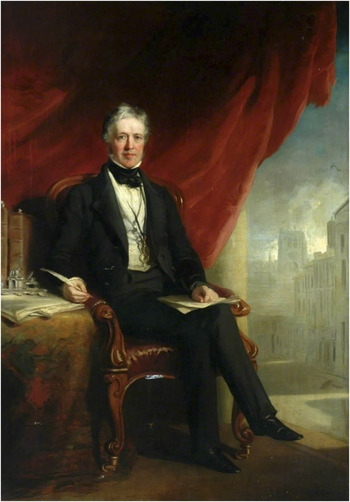
A proposal for the commission of a portrait tended to take place after an announcement to the bank’s shareholders. In one instance, the request came from the shareholders themselves. At the annual general meeting in 1844, the shareholders of the Bradford Banking Company asked if a painting of Samuel Laycock, the bank’s manager, could be made. They wished that “a portrait of Mr Laycock, the esteemed manager of the bank, should be taken, to be placed in the Bank, and an engraving thereof to be presented to each subscriber.” Footnote 21 Afterward, those at the meeting agreed that “a subscription should be entered into among the shareholders” to produce a portrait and a plate. The proposal met with success and “within a few weeks the subscription amounted to more than £600.” The report clarified that it was a private affair, conceived and paid for by willing shareholders, but that they had paid collectively in a somewhat even or fair way, so “no person was allowed to contribute more than 5 guineas.” Footnote 22 This image is shown in Figure 1. Footnote 23
Samuel Laycock (1786–1867), Bradford Banking Company, manager (1827–1867).
Source: Bradford Art Galleries and Museums, I.F, Bird, 1844.

The Bradford Banking Company established itself in 1827 in Yorkshire as one of the first joint-stock banks to be promoted. It began with a relatively small paid-up capital of £20,000, and, like many other joint-stock banks, it serviced its local community; in this case, it was people engaged in the wool, worsted, and iron industries. It did not establish branches but operated successfully and independently until 1900, when the London, City and Midland Bank Ltd. acquired it. Footnote 24 The shareholders believed that a key part of its initial success and survival was due to the manager, Samuel Laycock. The chairman of the bank presented a silver plate to Laycock, praising his “judgement, prudence, discretion, and diligence.” Footnote 25 Laycock’s portrait was painted while he was still in office for no other reason than as a sign of gratitude from the bank’s shareholders. Footnote 26
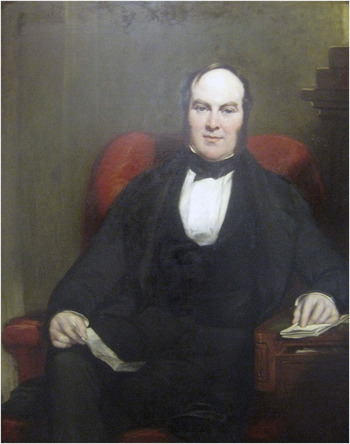
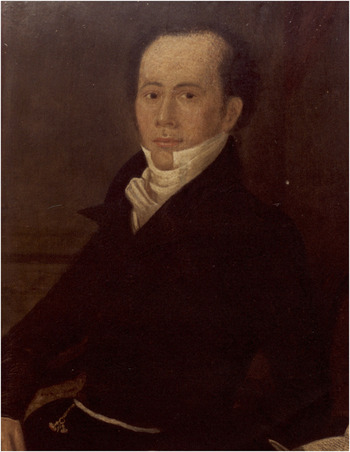
Although impromptu celebrations were common, Footnote 27 other companies identified significant dates or marked special occasions and anniversaries, such as retirement or death. When Charles Geach retired as the managing director of the Birmingham and Midland Bank, the shareholders presented him with a portrait (Figure 2), a silver plate set, and a testimonial. Footnote 28 Geach had worked for the firm first as chief manager and later as managing director since its establishment in 1836. He had seen the bank through from its formation to generating an annual profit of £16,474 twelve years later in 1848, and more than £13,000 per year in 1849, 1850, and 1851. Footnote 29 Even after Geach’s departure, his association with the bank did not end. To mark his death, the bank commissioned a medal, which captured his likeness. Footnote 30
Charles Geach (1808–1854), Birmingham and Midland Bank, founder, chief manager, 1836–1846; managing director, 1846–1854.
Source: HBSC Group Archives, 1850. J. Partridge.

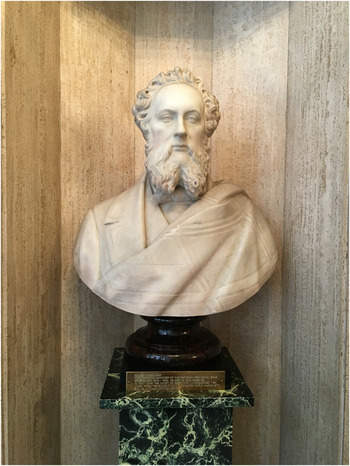
Indeed, death was an important marker in an individual’s history and an occasion that banks tended to record and observe. Daniel Robertson held the position of the general manager of the National Provincial Bank of England from its founding in 1833. As the bank’s name suggested, it aimed to serve a large geographical area, and it maintained a large branch network across England and Wales. Robertson retired from this role in 1863, thereafter continuing in service as an honorary director. On his passing in 1864, the directors of the bank ordered that Baron Marochetti, a Sardinian sculptor best known for his work for Queen Victoria, should produce a commemorative marble bust of Robertson (Figure 3). Footnote 31 Unlike Laycock’s portrait, a call for subscriptions did not appear to be mooted, which suggested that as the bank directors proposed the idea, they or the bank covered the cost.
Daniel Robertson (1805–1864), National Provincial Bank, general manager, 1835–1863; director, 1863–1864.
Source: Gibson Hall, site visit, July 28, 2016.

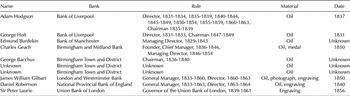
The popularity of institutional portraits and the rate of their commissioning or display cannot be enumerated in a reliable way. Retail banks have neither kept all of the artwork from their history nor retained all the details of commission or display. Table 1 provides an inventory of all the pictures of joint-stock bankers produced before 1860, which survive in the major banks in the United Kingdom. Some of the portraits are still used and exhibited inside bank premises or museums, while, for others, little remains known about them and the pictures are held in bank archives. Footnote 32 Research for this article has also revealed a number of images that were produced for joint-stock banks operating in this period but are no longer in their possession. Footnote 33 This point, therefore, suggests that investment in paintings was much more common than Table 1 implies.
Portraits of joint-stock bankers in held in bank archives and painted before 1860

Joint-stock banks commissioned portraits, busts, and medals with likenesses of prominent bankers engraved on them at several points in their early history, although this mostly occurred while the banker was in office, on his retirement, or on his death. The proposal to create such an artifact usually came from those within the bank, such as shareholders or directors. The individual, who was chosen to sit for the portrait, and his narrative, was significant as the portrait provided a clear, physical, and permanent link between the sitter and the organization. As the portrait acted to associate the two identities, the sitter’s personality needed to be suitably admirable and the story of his rise retold. We now turn to examine the identity of the sitter in greater detail.
The Sitter’s Narrative
When the portraits were commissioned or unveiled, a short written biography and testimonial usually described the sitter as an individual. It explained his characteristics and qualities, as well as the reasons for his importance and recognition in such a permanent way. As Table 1 shows, those men who found themselves represented in the bank’s artwork were male and senior members within the organization. Like James William Gilbart, of the London and Westminster Bank, several began as the general manager and, after retirement, held a position on the board. The bank or its shareholders identified such an individual through the successes in his professional life. It was the sitter’s performance in his capacity as an employee and his service as a loyal servant that elevated him to a position thought to be worthy of celebration.
When a local newspaper reported the commission of the portrait for Samuel Laycock, it explained that the portrait was:
A tribute of respect and appreciation on the part of the subscribers, to A PUBLIC MAN—to one closely identified with the progress and prosperity of the town—to one whom all classes of this trading community are deeply indebted for the prudence and skill with which he has managed the ... establishment. Footnote 34
The original inscription on the centerpiece of the silver plate presented to Geach, along with his picture, provided a similar vision of the sitter. The gift stood:
[As a record of the shareholders’] appreciation of the talent, zeal, and energy displayed by him in the administration of their affairs, and to mark their sense of a management characterised by firmness and considerate kindness, which has raised the bank through a signal course of prosperity to its present flourishing condition. Footnote 35
These endorsements, written on behalf of the bank, perpetuated the bank’s version of the individual’s narrative and biography. This style of advocacy ensured that the artwork appeared to be given from one party, either the bank directors or its shareholders, to another, with its management and senior staff being recipients. The rhetoric of recognition, and the role and involvement of a second party, ensured that the portrait did not appear as a selfish or vain act of one individual elevating himself. A narrative of achievement surrounded the act.
Not all wished to have their image recorded in this permanent way or would accept such a gracious public tribute. In 1866, at the annual general meeting of the Union Bank of London, the proprietors agreed that the outgoing general manager, Mr. Scrimgeour, should sit for his portrait in commemoration of his achievements for the bank. However, Bankers’ Magazine reported that this “was precisely the one good thing to which that gentleman refused to give his countenance. … He had an inconceivable repugnance to sit for his portrait.” Footnote 36 After Scrimgeour announced his unwillingness to agree to the shareholders’ request, the directors offered a plate instead. A plate was a less personal gift. Footnote 37 Nevertheless, this decision did not pass without criticism, as one London magazine considered the plate to be too cheap and a poor show of the bank’s appreciation. Footnote 38
While the style of presentation on a special occasion may have appeared to be a gift for all intents and purposes, the written testimonials explained that the portrait was, in fact, a reward. It served as a response for particular actions or service; it was not merely a present that could or would be given to any of its employees. The act showed that the individual had become exceptional, special, and extraordinary. It suggested that such conduct, which was outside the remits of his employment, should still be remunerated in a way that was fitting and extravagant. The narrative discussed the qualities and conduct worthy of this kind of admiration, and it ensured that the recognition was seen as appropriate.
On a more pragmatic level, in order for the organization’s leadership to have been successful, the enterprise must also have experienced its share of accomplishments too, even if this was some degree of longevity at the very least. For Laycock’s portrait, the tributes emphasized the manager’s role in enriching the surrounding locality and community and providing “prosperity.” Footnote 39 Here, it was difficult to distinguish the gap between the actions of a banker and function of a bank. Indeed, both aimed to provide a supply of credit. The gain the community felt was access to finance and increased wealth. Geach had, for example, caused the bank “to flourish” and that statement clearly linked the story of the sitter to the institution. Footnote 40
The narrative of a public good and personal achievement in relation to Geach continued with his role as Member of Parliament (MP) for Coventry. In an article in the Illustrated London News, a report recorded how he rose, with very little money and without a “first-rate education,” to “embrace the opportunity” of his appointment as clerk at The Bank of England in London at 17 years of age. Geach reportedly worked hard “so that by his own perseverance, and diligent performance” he was able to advance further in the Bank of England branch in Birmingham. He then left to become the manager of the newly open Birmingham and Midland Joint Stock Bank in 1836, at the age of 28, guiding the bank to both stability and prosperity. Footnote 41 Geach progressed from bank manager to managing director, and was eventually elected as the mayor of Birmingham in 1847 and MP for Coventry in 1851. Footnote 42 This article reinforced the history of both the individual and the bank: hard work, diligence, public good, and advancement through talent.
Sir Peter Laurie, of the Union Bank of London, sat for a painting in 1854. Footnote 43 He set up and ran his own successful saddlery business, before retiring to concentrate on politics, social reform, and banking. He was elected Sheriff of London, served as a magistrate in the City of Westminster, was elected as an alderman for Aldersgate, before becoming Lord Mayor of London. Laurie became the first chairman of the Union Bank of London in 1839, and served in this capacity for twenty-two years until his death in 1861 at the age of 83. Footnote 44 Portraits of such a man, commissioned by a bank, allowed the sitter to accrue more social, economic, and cultural capital at a local level. In some cases, it solidified his position and catapulted him into new situations, as occurred with Geach. Close and visual association with an MP or Lord Mayor of London also enhanced a bank’s identity and reputation.
The act of commissioning the portrait, although explicitly celebrating the individual’s personal success, said the same about the bank and its accomplishments. Indeed, the simple underlying point here was that the organization had experienced enough success to commemorate its staff and its achievements in an overt and explicit way. The rhetoric and reasoning for a commission said little of the sitter himself and his private life but much about his professional talents or work ethic. Outside a sitter’s professional life, these men were generally of good social standing and important within the localized environment and social circles. For example, Geach was active and successful in local business ventures, Footnote 45 as were Liverpool joint-stock bankers George Holt and Adam Hodgson. Footnote 46 As well as being founding directors of the Bank of Liverpool, and later chairing the bank, they were two of the first original directors of the Liverpool-Manchester Railway, which opened in 1831. Holt was also the first chairman of the Liverpool and London Globe Insurance Company and was originally a cotton broker. In addition to Hodgson’s roles in business, he was active and embedded in the social and political life of Liverpool. Footnote 47 These are examples that a sitter was identified through his professional achievements and, in turn, the organization’s identity was linked to his talents.
A portrait of a senior manager commemorated his service and efforts in the successful running of a bank, which had led to prosperity for the local community. Overall, the commission of such an image tended to be articulated as a personal expression and token of gratitude from the bank and its shareholders or directors. Despite its private origins, the portrait became an object for public consumption and conveyed messages about the banker within wider society. We consider the possession and display of portraits by joint-stock banks in more detail in the following section.
Display
This section explores where the portraits of bankers would have been positioned and the audience that would have heard his and the bank’s story of success. As banks commissioned portraits to recognize the individual and his achievements, the intention was to complete this celebration by unveiling the portrait when it was finished. Thereafter, the bank would do what it liked with the portrait. It could throw it away or continue to perpetuate this event and its values through display.
Before the advent of modern photography in the twentieth century, it is difficult for the historian to trace exactly how these images were used or where they would have been displayed. Portraits, like any moveable object, did not appear on floor plans. The mechanisms and methods used to disseminate the picture were fairly ambitious and diverse, as the next section will show. These attempts were not recorded centrally or organized to be thought of as comparable to a marketing campaign. Footnote 48 Often, if there is an archival record, it is the artifact itself. Despite the lack of archival material surrounding the portrait, a number of points can be made here with varying degrees of certainty. The first is that we believe that it is highly unlikely that the portraits were discarded or hidden immediately after commission. Aside from their monetary value or the costs associated with commission, the portrait was a picture of an individual, and it was the product of a gesture, a gift from one to another. Destroying or concealing it would probably have been offensive to a large number of people, not the least of which would be the person in the portrait, as well as those who felt close to him or simply thought the expression of gratitude to be appropriate.
While it appears fairly certain that the images were displayed rather than hidden, they were shown from a variety of places. A number of portraits were kept within the bank, although it is less clear where exactly they would have been positioned. For example, the corporate history of the Lancashire and Yorkshire Bank Limited, written in 1922, included images of paintings taken in the early nineteenth century of senior staff from its constituent banks. It recounted that these pictures were displayed in the corresponding branches but did not describe their location within each branch. Footnote 49
A number of possible locations existed in each bank, as it contained a number of rooms. In a typical bank, customers would first step into the banking hall. It followed the entrance and functioned like a lobby. The main activity of banking, such as depositing or withdrawing cash, would take place within this room. Stemming off from this reception area, there could be an office for the manager, a private counting room, and possibly a boardroom. Of all these rooms, the banking hall, as a receiving room, would be the prime location for display.
As Figure 3 shows, Daniel Robertson’s marble bust was one of the artifacts positioned in the foyer of National Provincial’s new head office in Bishopsgate, London. Footnote 50 When the report from the its annual general meeting in 1865 announced that the bust had been commissioned, it also gave some indication of where it would be placed. The report stated that the sculpture was going “to be placed in a prominent position in the Bank’s new building, as a mark of respect, which they hope will meet the approbation of the shareholders.” Footnote 51 The bust would be eventually sited in the entrance to the banking hall. As all who entered the bank would flow into the banking hall, it was where all shareholders and customers could view any image that was displayed there. Exhibition in the area with the greatest footfall was thought to be important in showcasing the commemorative artifact.
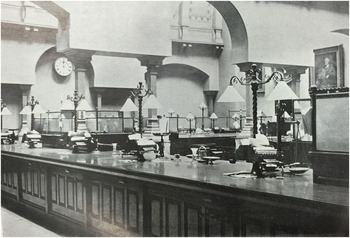
Another reason that explains why the banking hall may have been chosen over other areas is that it operated like a reception room; it was the first opportunity to make an impression on customers as they entered the bank. Considerable expense and effort was put into decorating this room. Banking halls were generally large open spaces with tall ceilings, which indicated space and grandeur. Footnote 52 Portraiture, like any artwork, would therefore have been entirely in keeping with this striking style of interior design. In Figure 4, a portrait can be seen in the top right-hand corner of a large and imposing banking hall. The image was taken inside a Lloyds Bank branch in Manchester after photography first became widely used in the early twentieth century.
A banking hall in a Lloyd’s branch showing a portrait in the top right corner.
Source: Manchester and Liverpool District Bankers’ Institute Magazine, 1 (Nov. 1902–Aug. 1905): 252.

Apart from the hall, another location for display was the boardroom or bank manager’s office. Neither possessed the same footfall, atmosphere, or design as the banking hall, but, nevertheless, they were important rooms within the bank. As branches would not have had boardrooms to hold meetings, the manager’s office would not have functioned as a private room but rather be used as a place where senior management gathered. It was also a space where customers would have entered to negotiate, open an account, gain credit, or obtain support from the bank. Discussions would take place in this location, away from the crowd so that the customer could reveal confidential information on a one-to-one basis. For banks with branches, a portrait of the general manager in a branch manager’s office also reminded staff of the check and balances that existed with the bank’s organizational structure. Images in the boardroom held a similar function. Access to the boardroom would have been limited to a select group and largely an internal audience. The images of Laurie, from the Union Bank of London, and Geach, from the Birmingham and Midland Bank (see Figure 2), were both shown in the boardroom. Footnote 53 These pictures also acted as a reminder to those following them in the bank’s hierarchy of what they should aspire to do.
The portraits were thus used to communicate and convey a message to shareholders and those using the bank, usually customers but also staff. The portrait was a ubiquitous reminder to staff that someone they knew as a manager was watching, overseeing transactions and the handling of money. They sent an important message about the identity of the individual manager, the ability of the manager to monitor branches and staff, and also of the ability of the consumer to clearly recognize who was in charge of their money.
Much like a mug shot, the portrait of a manager ensured that the bankers were permanently identifiable and able to be found. Transparency and openness could inspire confidence in the bank; given that most banking took place at a local level, the men in these portraits were easily recognizable. It also meant that those in the business community were best able to monitor and regulate bankers. As noted earlier, directors of the early joint-stock banks tended to be local, Footnote 54 and as Carnevali found in the case of regional Italian banks, “peer monitoring adds another element to the reduction of moral hazard.” Footnote 55
With local managers and directors overseeing the running of a company, those in the neighborhoods serviced by the bank would know their faces, and portraits drew attention to the process of managerial supervision in a direct and visible way. In turn, communities had the ability to identify bankers through their portraits and monitor the behavior of those running these financial institutions. The local society of businessmen and its associated social networks operated as an informal monitoring mechanism. They provided a supervisory role that offered a strong disincentive for those who may look to defraud clients, and who faced losing the trust, reputation, and connections so vital to business success. Footnote 56 Likewise, the visibility of the portrait within the bank was important for staff, especially in those banks with branches, in that the image would reinforce the concept of monitoring, even in the absence of these senior individuals. There were exceptions to this behavior and instances in which the portraits were unlikely to have been displayed inside the bank so proudly. For example, after the directors of the Bank of Manchester exposed Edmund Burdekin’s (Figure 5) embezzlement, he absconded to America; it is doubtful that his portrait remained on show. Footnote 57 Following the bank’s failure, Burdekin’s image portrayed mismanagement and poor judgment at best, and fraud at worst.
Edmund Burdekin, Bank of Manchester, managing director, 1829–1843.
Source: RBS Group Archives, Bank of Manchester, BMA/39. Undated. Unknown artist.

Joint-stock banks, therefore, commissioned paintings that were likely to have been viewed within the bank by customers and staff. While it was probable that most banks displayed the portrait in the hall or other public areas, examples can be found of images that were shown principally to an internal audience. Publication and illustrations in periodicals and newspapers took this celebration of the individual further than the organization itself, and communicated the success of the bank and the individual associated with it to a wider external audience. The following section discusses these issues in more detail.
Public Dissemination
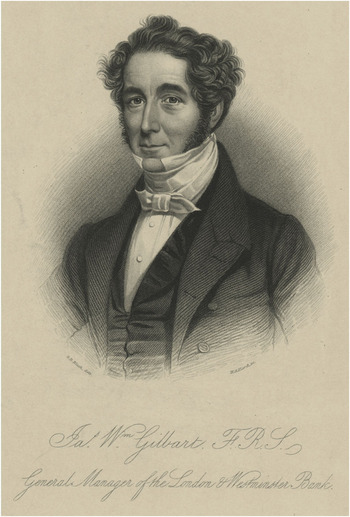
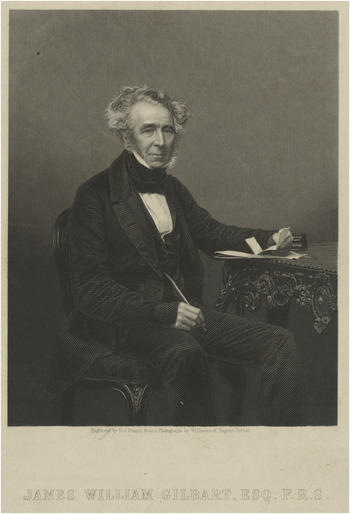
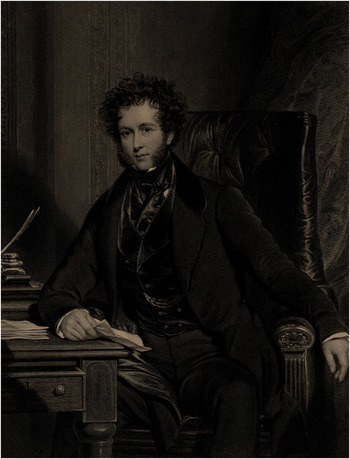
The banker’s image had a far greater impact than merely on those entering the hall, the manager’s office, and the very few who entered the boardroom. Gilbart’s portrait, from his time as the general manager of London and Westminster, had a wide circulation and multiple audiences. Its spread was helped by Bankers’ Magazine, which advertised copies of his image and sold them to members of the public. Footnote 58 The picture of a young Gilbart (Figure 6) also appeared in 1849 in the Bankers’ Magazine as its portrait of the week. Footnote 59 The periodical recognized Gilbart’s contribution to contemporary literature on banking and economic thought. The very same print had been published a year earlier in a volume of the Merchants Magazine, Footnote 60 and a version of it was acquired by the Royal Society after Gilbart was elected a member in 1846. Footnote 61 A portrait of Gilbart in his later years (Figure 7) was published in the Illustrated News of the World and the Drawing Room Portrait Gallery of Eminent Persons in 1860. Footnote 62 This image also appeared on one of the first pages in a corporate history of the London and Westminster Bank, together with the images of other branch managers. Footnote 63
James William Gilbart (1794–1863), London and Westminster Bank, general manager 1833–1860; director, 1860–1863.
Source: Royal Society Prints, Henry Adlard, c.1850. http://prints.royalsociety.org/artist/11079/henry-adlard.

James William Gilbart (1794–1863), London and Westminster Bank, general manager, 1833–1860; director, 1860–1863.
Source: New York Public Gallery, 1243016, circa 1860.

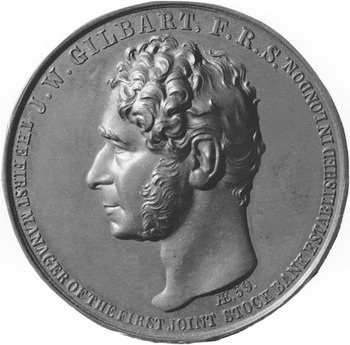
The success of Gilbart’s image was not entirely organic, as he pushed his own persona and the display of his likeness. In his will, Gilbart requested that a framed engraving of his likeness be circulated to those with whom he had been connected in banking. Footnote 64 Gilbart died without a wife, children, or heirs, Footnote 65 so he gave his picture to those whose lives he had touched the most: those in his professional life. He also provided the British Museum with a portrait medal in 1853, as shown in Figure 8; it was likely to have been issued on the London and Westminster Bank’s twentieth anniversary. Footnote 66
James William Gilbart (1794–1863), London and Westminster Bank, general manager, 1833–1860; director, 1860–1863.
Source: National Portrait Gallery, William Joseph Taylor (1853), bronze medal, 1853 NPG 5756.

While this behavior may not seem especially self-deprecating, Gilbart was not only interested in spreading his own image but also in collecting the images of others. He did so as he sought to build a group identity among bankers. In his memoir, he revealed that in his books he published images of his early colleagues, “whose portraits I associated with my own … to show my regard.” He revealed that he also wrote biographies of others for Bankers’ Magazine. Footnote 67 Gilbart appeared to have thought of the portrait as a means of celebrating the bank’s success, his own achievements, and those of others in the banking sector. The portrait was thus a means of communicating and introducing an individual to a wide audience.
The faces of London bankers were displayed a number of times in illustrated newspapers, periodicals, museums, and galleries because most of these publications or places were also located in London. These sources tended to feature bankers located nearby in the capital rather than those far away in the provincial towns and cities. It is perhaps unreasonable to expect that those who were not visible within the capital’s daily life should be a part of the material culture generated by it. Footnote 68 The picture of the provincial banker may not have been shown as frequently due to a smaller number of platforms. Nevertheless, there were still ways of exhibiting the image without using publications or public venues. With illustrations or engravings, the potential audiences extended beyond those who might see the painting held by the bank. A number of banks appeared to use this strategy. Multiple printed images of Daniel Robertson, manager of the National Provincial Bank of England, existed (see Figure 9). Footnote 69 In the example of Laycock, of Bradford Banking Company (see Figure 1), the ability to reproduce the painting was part of the project’s very appeal. Footnote 70 Just as the portrait of London banker Gilbart had been distributed in popular London-based periodicals, the provincial banker’s picture also appeared in local society.
Daniel Robertson (1805–1864), National Provincial Bank, general manager, 1835–1863; director, 1863–1864.
Source: RBS Group Archives, National Provincial, NAT/1313. c.1840. H. Robinson (from a painting by J. Partridge).

Why would the ordinary citizen be interested in possessing a copy of a banker’s portrait? As the banker overlooked accounts, granted advances and credit, and advised on investments, his acquaintance and commercial knowledge would be valuable. Marx explained that the banker’s position within the social hierarchy, and his power over ordinary society, was due to his role in terms of lending and providing credit. Marx said, citing the words of G. M. Bell, a Scottish bank manager, that the “knit brow of the banker has more influence over … [individuals than] the moral preaching of his friends. … The advice of the banker is more important … than that of a clergyman.” Footnote 71 Within local society itself, the banker held a senior position and association with him would be sought after.
Apart from the banker’s social standing, these pictures caught attention if they showed the sitter in a favorable light. The Waterford Literary and Scientific Institution commissioned one of Gilbart’s many portraits. Footnote 72 A reviewer in The Innkeeper and Trader explained that:
We are not surprised at the Waterford people wishing thus to embellish their hall, for, if we may judge from the portrait we find in the volume under notice, the author is really a very good-looking man, and has a remarkably high forehead. Even now, though close upon threescore [sixty] years and ten, we can scarcely trace a wrinkle in the portrait. The nose is as fine a specimen of the Grecian Roman as we ever saw. Footnote 73
For those images with a “good-looking” sitter, the artifact was not thought to be a strange or even “surprising” possession. While London-based bankers found their likeness reproduced in periodicals such as The Bankers’ Magazine and the Illustrated London News, those bankers in the provinces appeared in local places. The portraits shown outside of the bank were still capable of building the firm’s reputation.
While they may have reached a larger audience, the pictures did not improve the bank’s reputation in the same way that a portrait inside the bank itself could. It was not only through the act of commissioning that the sitter and institution entered into a symbiotic and reciprocal relationship. Footnote 74 Possession was more symbolic than the commission itself. Footnote 75 When the painting was kept inside the bank, it served as a physical manifestation and a sign of the sitter’s close bond with the organization. The association between the individual and organization was plain and clear for all to see. Without possession, the union between the portrait and the organization was much looser. When an image was displayed outside the bank, it said more of the connection between the individual who possessed the picture and the sitter, and less of a third party, such as the bank. The viewer had to be reminded, through another source, of the organization that employed the sitter.
External display could reinforce the bank’s messages of solidity, dependability, hard work, professionalism, achievement, and stability conveyed by the paintings hung in branches if the testimonial reminded the viewer of the bank. The text or narrative that surrounded the portrait often identified him through occupation as a banker and to a particular bank, but this detail needed to be read or verbalized, so that the viewer grasped the tie between the two. The bank benefitted from this form of reference to the profession when it was made.
By exhibiting these images, both internally and externally, portraits formed a clear and recognizable method to project a corporate identity and build a reputation. These early examples of corporate portraits would be displayed and distributed to assure their customers, and a wider public, of the institution’s prestige, success, and solidity. We now turn to examine the symbolism and messages within the portraits themselves in more detail.
Signifying a Historical Lineage
Over the course of the nineteenth century, banks tapped into the booming interest in artwork. The expansion of the art market in the late eighteenth century and early nineteenth century has been linked to the growth of the upper-middle-class consumer, together with the pace of industrialization. Footnote 76 With a demand for both old masters and new pieces, art formed an increasingly popular way for individuals to communicate their social and economic status, as well as signal their cultural tastes. The first joint-stock banks were, likewise, keen investors in portraiture and understood its value. The contemporary attraction toward paintings ensured that the banker’s image was a useful and effective tool for communication. Portraiture itself was favored over the gift of silver plates, as symbols or messages could be implanted within such art. As a device for transmitting ideas, art forms hold an internal meaning of their very own.
While artwork more generally was sought after, portraiture did not always have the same value or currency among artists themselves. The canvas was often left unsigned and the work unattributed because the artist did not wish to be associated with the product. Footnote 77 Pointon, in her examination of portrait painting as a business in the 1780s, highlighted how there were a very few artists that were highly successful, such as Reynolds and Gainsborough, but below them were “a host of less distinguished and now forgotten painters.” Footnote 78
Generally, portrait painting gained popularity in the 1780s. Indeed, while artists may have viewed portraiture as a secondary output, demand ensured that it provided a steady income. At this point, art historians have suggested that it became a dominant form of art for all classes of society. Footnote 79 By the mid-nineteenth century, the paintings that captured the likeness of individuals had become an increasingly important art form, as evidenced by the opening of the National Portrait Gallery in 1856. Moreover, the Illustrated London News was established in 1842 and, along with other similar periodicals, published engravings, which were frequently images of individuals. Portraits became an established means of communication in galleries and in print.
Although viewing paintings in galleries or periodicals became a mass activity, those recorded in these images were among the elite in society. By its very nature, commissioning a portrait signaled to others that the subject was worthy of recognition and of being recorded. These images would usually be accompanied by a biography of the sitter. Footnote 80 Indeed, the growth of this art form signified a symptomatic shift in general society from an emphasis on a civic and humanist concerns for the general body toward personal identity. It marked what Barlow has described as “the beginnings of the ethos of competitive individualism characteristic of industrial mass society.” Footnote 81
Outside the public arena, private institutions used portraits. Townsend-Gault noted that the three main investors in portraiture were financial institutions, the university, and the military. Footnote 82 Accountants were also keen investors in institutional portraits. Footnote 83 Each sector had different codes and symbols enclosed within their artwork. Townsend-Gault differentiated among these. Financial institutions tended to contain “[s]ome combination of honesty, shrewdness and the prosperity that signifies success,” which thus resulted in “greater uniformity.” At the university, it was a place “in which many intellectual disciplines are represented”; and for the military, it was where “loyalty and courage … must always be discernable in the subjects’ demeanour.” Footnote 84 Noting the symbolism and similarities present within portraiture, Foucault asserted that twentieth-century images preserved “the great nineteenth century effort in discipline and normalization.” Footnote 85
Indeed, the historic connotations to portraiture as an art form are well noted within social and art theory. Griffrey and Jackson stated, “Portraits have been produced for millennia, and their origins as commemorative images of the ruling elite have had a lasting influence on how, and for whom, portraits are created, and how they function for their intended audiences.” Footnote 86 Adding to this sentiment, Townsend-Gault argued that this “could be interpreted as yet another manifestation of the nostalgia which is expressed in the preservation of the forms of past order.” Footnote 87 Indeed, the portrait, whether a Roman-sculpted bust or a fifteenth-century Dutch painting, was an art form with a very long history, especially in representing those of wealth and power.
The joint-stock banks capitalized on the growing interest in artwork and visual communication in the nineteenth century. The general commissioning of an institutional portrait indicated a desire for the institution to be perceived as civilized, sophisticated, and cultivated. Footnote 88 Given the history of portraiture as an art form, the artwork itself lent status to the commissioner or owner. Overall, artwork provided the institution with a means to signal its identity and reputation. Griffey and Jackson have argued that the tradition of painting portraits of leaders reinforces the power of an institution and that painted portraits “possess a sense of permanence and prestige.” Footnote 89 The bankers of the nineteenth century, by sitting for portraits, were thus creating a type of image that was well established as an art form in historical terms and, therefore, suggested a historical legacy that did not, as yet, exist.
Conformity in Dress Code
Echoing the contemporary prestige attributed to those depicted in portraiture, the content of the image also captured the bank’s ambition. Peiss highlighted how appearance has played an important role in the corporation by “conveying through the body a certain set of messages about a firm.” This could be achieved, she argued, through dress codes and hairstyles, which “became visual cues that served to unify the corporate or brand identity, put forward a pleasing face to the public, and manage employees.” Footnote 90 These visual codes were noticeable but were also bound up in intangible social and symbolic meaning.
While dress and clothing may identify a firm or brand, in these portraits the sitters were from different banks. Even so, they adopted a very similar dress style and conformed to the same type of code or social type. Indeed, in the Victorian period, there was a high level of conformity in attire for both men and women, especially for those outside the very top echelons of society. Footnote 91 What code did bankers aim to communicate by their conformity in dress? Reliability and respectability would be desirable characteristics for any new bank or banker wishing to gain wealthy customers and investors. Craik contended that “respectability… was gauged by conveying an impression of a serious (business-like) demeanour created by wearing sombre clothes.” Footnote 92 Kidwell argued that reliability was judged by conservatism in dress, and this would have been considered within the wider context of male fashion and contemporary professional appearance. Footnote 93
The suit, Hollander believed, was “the uniform of official power.” In the nineteenth century, it reflected “male interests in the concerted advance of thought, science and commerce, and a lack of concern for capricious and suggestive trifles of any sort.” Footnote 94 In the 1830s, the suit tended to have fitted trousers, but by the 1840s and 1850s the trouser had given way to a looser fit, usually in “drab colours.” Footnote 95 The suit was traditionally three-piece. A stiff white shirt and collar were essential, often with a necktie added. Footnote 96 This attire is visible in each of the banker’s portraits seen here in this article.
The suit, Breward added, had a “static functionalism,” and with it “the successful bourgeois found an image that fixed an otherwise precarious existence with a remarkable symbolic clout.” Footnote 97 Its symbol, “through the prescription of a sober, business-orientated male costume,” Shannon argued, “defined legitimate masculinity.” Footnote 98 It also linked to the “increasing self-consciousness about occupation” that characterized masculinity in the nineteenth century, as well as to paid employment and the development of the professions. Footnote 99 Through the suit, bankers fitted themselves into these contemporary norms and maintained an established code of dress.
As well as clothing, physical appearance also had important social connotations for masculinity and competence. All the figures in this article show that each banker adopted the standard pose found in similar institutional portraiture: with their mouths “gently shut, heads immobile, postures upright, gestures strong.” Footnote 100 Regarding hairstyle, a treatise on hair and skin, written in 1854, advised its readers that anxiety and stress caused grey hair. It cited the extreme example of the financial panic in 1825–1826, which had resulted in a banker’s hair to weaken and turn grey in just three days. Footnote 101 In Robinson’s description of the head clerk in the novel The City Banker, she suggested that he went to great lengths to hide his grey hair, as “above all either he wore a wig or his hair was dyed for it contended with the hues of the raven in colour … [although] he had been grey for years.” Footnote 102
These images encapsulated the banker’s likeness in perpetuity, and, in portraiture at least, they tended to avoid being shown to have greying hair. It is not known if they, like the head clerk, wore a wig or dyed their hair. Perhaps driven by a desire to show that they were in control and prime condition or had not experienced great worry, most were portrayed with dark hair. Geach, although balding, had dark hair. Burdekin had a receding hairline but was presented with black hair. Robertson possessed a youthful and full head of curly hair. Gilbart had a full head of dark hair in images when he was younger but had grey hair in images where he was obviously older, seemingly happy for the change in color to be shown, possibly confident of his age, experience, and wisdom. Portraits that were painted permitted a degree of creativity and inventiveness, allowing the sitter to be visualized differently and with the possibility to embellish or remove certain characteristics. It would have been easy to change hair color in an oil painting or print.
Overall, conformity was at the heart of the banker’s dress and appearance. In portraiture, by and large, they adhered to contemporary notions of masculinity and authority. As Roper and Tosh asserted, “masculinity is never fully possessed, but must be perpetually achieved, asserted and renegotiated.” Footnote 103 As these images captured the sitter’s likeness in a permanent form, in portraiture at least, masculinity could not be renegotiated thereafter. Thus, dress and appearance were carefully staged or manufactured: loaded with symbolism, suits conveyed ideas of power and maleness. The bankers captured in these portraits adhered to conventional standards of business activity and, in some ways, an expectation of professional dress. Such conformity implied the notions of respectability, reliability, and essentially an unspoken expectation of morally and socially acceptable behavior. The signals were clear: these men did not dress in an extravagant manner and could be trusted with a customer’s money.
Utilitarian Settings, Props, and Professionalism
Moving on from the presentation of the sitter himself, it is necessary to examine the general content that surrounded him. This includes objects, the setting, the size, and the style of the portrait itself. Undoubtedly, a portrait centered on the sitter, but objects and accessories added to his persona, even if not as central as clothing or not placed within a prominent location in the portrait. Burke has stated that in portraits, the “postures and gestures of the sitters and the accessories or objects represented in their vicinity follow a pattern and are often loaded with symbolism.” Footnote 104 Unsurprisingly, portraits of bankers could only be helpful in creating an identity if their content was suitable for achieving these ends.
The joint-stock bankers’ postures, accessories, and poses were of a utilitarian nature and played down notions of wealth. Instead, they emphasized the individual’s skill and professionalism. Nevertheless, a certain amount of wealth was indicated by the act of commissioning itself, as hiring a particular artist could be expensive. In the case of two senior managers, Geach and Robertson, the bank used the established artist John Partridge to paint their likenesses. He was a successful and prosperous portrait painter and assisted in the movement to form the National Portrait Gallery in London. Footnote 105 In Burdekin’s case, the artist did not sign his painting and his identity has not been traced. This was not uncommon, as mentioned above.
As much as the name of the artist, it was the clarity, size, and type of image that also mattered in terms of price. Griffey and Jackson have drawn attention to the link between price and impact by stating that “full-length portraits were the most costly and connoted the most power.” Footnote 106 The painting of Geach was of good quality, in oils, and about one meter in height and 80 centimeters in width. The framed portrait of Adam Hodgson, director of the Bank of Liverpool, was 111 centimeters wide and 137 centimeters high, and that of George Holt (from the same bank) was 83 centimeters wide and 95 centimeters wide. Footnote 107 These images were painted to make an impression with their size and in the materials used.
Not all portraits followed this template. For example, Burdekin’s captured only his head and shoulders. This picture would have been cheaper to produce than more complete images, such as of Laycock or Geach. Robertson’s likeness was captured in a smaller print (see Figure 9), and therefore it is in no way as imposing in style, size, or effectiveness in signaling power as a life-sized oil painting. Gilbart, in Figure 6, appeared in an engraving, created by Henry Adlard and lithographer George B. Black, measuring 30 centimeters in height and 22 centimeters in width. Both engraved images of Gilbart (see Figures 6 and 7) were not grand oil paintings but rather smaller artifacts that were suitable for reproduction and wide dissemination.
Aside from size, props and accessories constituted another signaling device. Props in portraits showed skill and professional and occupational status. Without an official body accrediting learning and training, Footnote 108 bankers themselves were instrumental in developing their “image” as educated professionals. Their pictures did much in terms of communicating their intellectual abilities. During the nineteenth century, professionals gained an increasing amount of public recognition, as well as greater authority. This can be seen within other institutional images, such as the military, within universities, or of lawyers, accountants, and medical personnel. Footnote 109 However, common threads can be observed across all groups; namely, that of special dress or the centrality of occupation. Footnote 110 While military personnel might be associated with their uniform, for professional occupations, objects would be associated with a specialist knowledge or skill set. The accountants examined by Yamey held account books. Footnote 111
Joint-stock banks adopted this technique early on as they used props to identify the specialist skills, knowledge, and studious training needed for the role of banker. Laycock, Robertson, Gilbart, and Geach (see previous figures) sat with quill and notes or bills in their hand. Ironically, Burdekin, who embezzled money, did not hold any bills. It may be argued that the grip on currency or bills acknowledged a “hands-on” approach from these senior individuals and indicated that a customer’s money could be trusted directly, and literally, in their hands. With continuity in the use of props, these images reinforce a self-representation and project bankers as a group of trained and educated individuals who could be trusted. Footnote 112
These portraits thus include props that established the sitter’s professional role, but the association with an occupation and skill may have had more to do with the artist’s selection of props than the sitter’s. For example, Nicholson wrote of the eighteenth-century portrait painter Joseph Wright: he “instinctively associated each sitter with his profession or class, and whatever he holds or displays before him are symbols of his standing or attainments.” Footnote 113 The bank or sitter, therefore, may not have chosen the exact pose or symbolism involved. Nevertheless, it was the bank’s choice to display the resultant image and reproduce the portrait, ensuring the institution’s participation in perpetuating this image of professionalism.
The backdrop consistently chosen for joint-stock bankers appeared to be a commercial setting, with the sitter in his working environment, appearing on a chair at his desk in the bank or conducting financial activity, reinforcing the nature of his employment. The drawer of the desk was open in both Robertson’s and Geach’s portraits. It captured them in their normal everyday roles at the bank in the middle of a task. The overall setting and pose chosen presented the sitter in an ordinary setting, thus conveying honesty about the sitter’s role in the bank. The open drawer reinforced this message of transparency. All the portraits selected for analysis here convey messages about work, trustworthiness, and leadership through the props, the setting, and the attire of the men within. None convey symbols of personal wealth.
Chairs, on the other hand, did display power. Although, ostensibly, chairs were fairly basic and essential objects for clerical work, they could still be, and were, presented in ostentatious ways and used as symbols of position. Footnote 114 With a booming furniture and carpentry trade in nineteenth-century Britain, they came in various shapes and sizes. Footnote 115 Indeed, the expense of the chair in many ways also reflected on the subject’s wealth. In the portraits of the bankers examined in this article, Laycock and Geach sat in plush red upholstered chairs. Robertson’s chair was wooden but elegant and carved. All three are imposing pieces of furniture, high-backed and winged, each with a sense of authority. Within the bank, as senior members of staff, these individuals held both power and position. These portraits and the chairs therein did much to reinforce these notions.
Within society, joint-stock bankers tended to form part of an upwardly mobile professional class rather than being wealthy in their own right or forming part of the landed gentry and social elite. While the portrait alone identified the sitter as part of an existing respectable social elite, these images, although prestigious, and in some cases likely expensive, did not involve overly extravagant or rich background details. Joint-stock bankers appeared with props that signaled their reputation for skill and competence. Breward explained that within the Victorian era, “professional standing was presented as a position to be striven for and earned.” Footnote 116 His thoughts can be applied to the way artists’ imagined senior figures within joint-stock banks. Indeed, this became their image in perpetuity. In turn, the professionalism of the individual was linked to the identity of the bank and enhanced the institution’s reputation.
Conclusion
Corporate identity and a positive corporate reputation were important tools for gaining new customers and retaining customers once they conducted business with an organization. This was especially important to new entrants in finance and banking, for example, as they offered intangible services. Art in the form of portraits provided a mechanism to project corporate identity. As a method of reputation building, images served as a passive and simple mechanism to transfer ideas. Communication by image was full of complex symbols, meanings, and concepts that could be rapidly visually interpreted by the viewer.
The art commissioned by joint-stock banks in the nineteenth century was not simply commissioning art for the sake of it. These banks did not invest in images that might be more typical in the general art world, such as the view of a distant landscape or even a luxurious collection of foodstuffs. Footnote 117 Instead, the bank’s artwork depicted its senior managers. Through the portrait’s display, publication, or distribution, the banker’s face, along with other personable characteristics and reputation, became fused with that of the banks. The portrait, and the sitter in it, became the bank’s symbol.
The signals that were conveyed by these images were threefold. First, while the portrait normally captured an individual of some financial means and power, those appearing in bank portraits posed as members and part of the local community. Indeed, they appeared in contemporary dress and their style followed and changed with normative social conventions. Although commissioning portraiture could have been an expensive act, bank managers were not posed to appear lavish or flamboyant. Instead, the joint-stock bankers posed in professional dress with artifacts that were associated with the specialist skills required to act as a safe, prudent, and competent banker.
Second, portraiture provided new banks with a perception of historic legacy, sophistication, and gravitas. Even with widespread distrust, joint-stock banks were able to successfully establish local reputations for trustworthiness and respectability. Portraiture itself was a long-established art form. These images projected notions of history and the past, even where it did not exist. The act itself of commissioning or owning art suggested that bankers, as new entrants, had an interest outside of profit making and in high culture. It provided the bank with a reputation for gentlemanly and responsible behavior. It was also a reminder for staff and customers alike that those monitoring the performance of a bank and its branches—the sitter in the picture—would enforce this behavior. To shareholders and the wider public, portraits offered reassurance and confirmation of solidity and accountability.
Finally, above all, it was the banker’s standing within society and function as a lender of money that ensured that he was accepted as being important enough or worthy of having his likeness commemorated in art. Indeed, the social standing of bankers meant that portraits would be suitable for distribution and display in locations outside of the sitter’s bank. Ownership of these images implied the connectedness of the owner to the subject. The bank manager held information and the confidence of his customers within his community. As he could promote local wealth, connections to the bank were a silent sign of cohesion, importance, and propriety. Without his social position, his picture could not have been used as an easily accepted mechanism to assert the bank’s identity and reputation.
The portraits were not simply of human faces. Instead, they gave the company an identity. The face of the bank manager became synonymous with the image of the bank. He carried out customer-related duties and appeared in his painting as a man of professional and commercial knowledge. As a lender of money who held a senior position within his local community, this visual representation would apply to the bank as much as it would do the sitter. By commissioning, displaying, and disseminating the manager’s portrait, it connected the two inseparably: it communicated his and the company’s reputation for competence and care to those likely to see it within the local business environment and beyond.