One of the most cited and most influential American Political Science Association presidential addresses in recent decades was given by then-president Arend Lijphart (Reference Lijphart1997). Lijphart was deeply concerned about patterns of inequality and inclusion regarding electoral democracy, and one solution that he proposed was introducing a system of compulsory voting. Indeed, compulsory voting is an effective manner for implementing Jeremy Bentham’s dictum that “everyone is to count for one, and nobody to count for more than one” in the electoral realm. Almost 30 years after Lijphart’s address, there has not been much progress in implementing his preferred solution in the United States. From an empirical perspective, the consequences of introducing or abolishing compulsory voting are not yet fully understood. Earlier research on the differences between stable systems with and without compulsory voting highlights the fact that it is associated with higher electoral turnout, especially if the legislation is effectively enforced (Kostelka, Singh, and Blais Reference Kostelka, Singh and Blais2024). These observations, however, do not necessarily inform us about the specific dynamics that may occur as a result of changing the legislation on compulsory voting. It should not be assumed that citizens will comply with this type of legal arrangement. Neither should it be assumed that when voting is no longer compulsory, citizens automatically will change their engrained voting habits.
Indeed, compulsory voting is an effective manner for implementing Jeremy Bentham’s dictum that “everyone is to count for one, and nobody to count for more than one” in the electoral realm.
However, there are few opportunities to gain a better understanding of the effects of legal changes regarding compulsory voting. In some Latin America countries, compulsory voting has been diluted in the past, but the electoral survey data for a detailed observation of the consequences of these changes are not available. Chile abolished compulsory voting in 2012 but simultaneously changed its system of voter registration; therefore, it is almost impossible to determine precisely the exact consequences of abolishing compulsory voting (Brieba and Bunker Reference Brieba and Bunker2019). Compulsory voting was introduced in Australia in 1925 but, self-evidently, the question arises as to what extent this historical precedent is still relevant for contemporary societies (Gow Reference Gow1971). In countries with a federal structure such as Switzerland and Austria, compulsory voting was abolished gradually, leading to a nebulous process (Birch Reference Birch2016). Thus far, the best-documented study about the consequences of compulsory voting remains the classic article by Irwin (Reference Irwin1974) about the abolishment of compulsory voting in the Netherlands in 1971. The Dutch Parliament voted to abolish compulsory voting in 1970, taking effect with the general elections of April 28, 1971. Irwin (Reference Irwin1974) showed that there was a substantial decrease in voter turnout of approximately 20 percentage points, which occurred mainly among younger people, women, and those with a lower level of partisanship and political interest and who are politically alienated. To our knowledge, the Netherlands is the most recent example of a clear-cut and well-documented abolishment of compulsory voting.
This article introduces evidence from a recent example of abolishing compulsory voting that occurred in neighboring Belgium in October 2024. Admittedly, the case is slightly more complicated than in the Netherlands a half-century earlier, but it nevertheless can contribute further understanding of the consequences of abolishing or introducing a system of compulsory voting. Belgium provides a solid example of a system of compulsory voting, which was introduced in 1893 (Nerinckx Reference Nerincx1901). Because compulsory voting is enshrined in the country’s constitution, it has not changed since then, resulting in a remarkably stable electoral turnout of approximately 90% of eligible voters (Blais and Aarts Reference Blais and Aarts2006). Over time, turnout has remained stable for all election levels (i.e., European, federal, regional, and local). This system was still in place during the federal elections in June 2024, which resulted in a turnout rate of 89.4%—much higher than average turnout rates in contemporary liberal democracies.
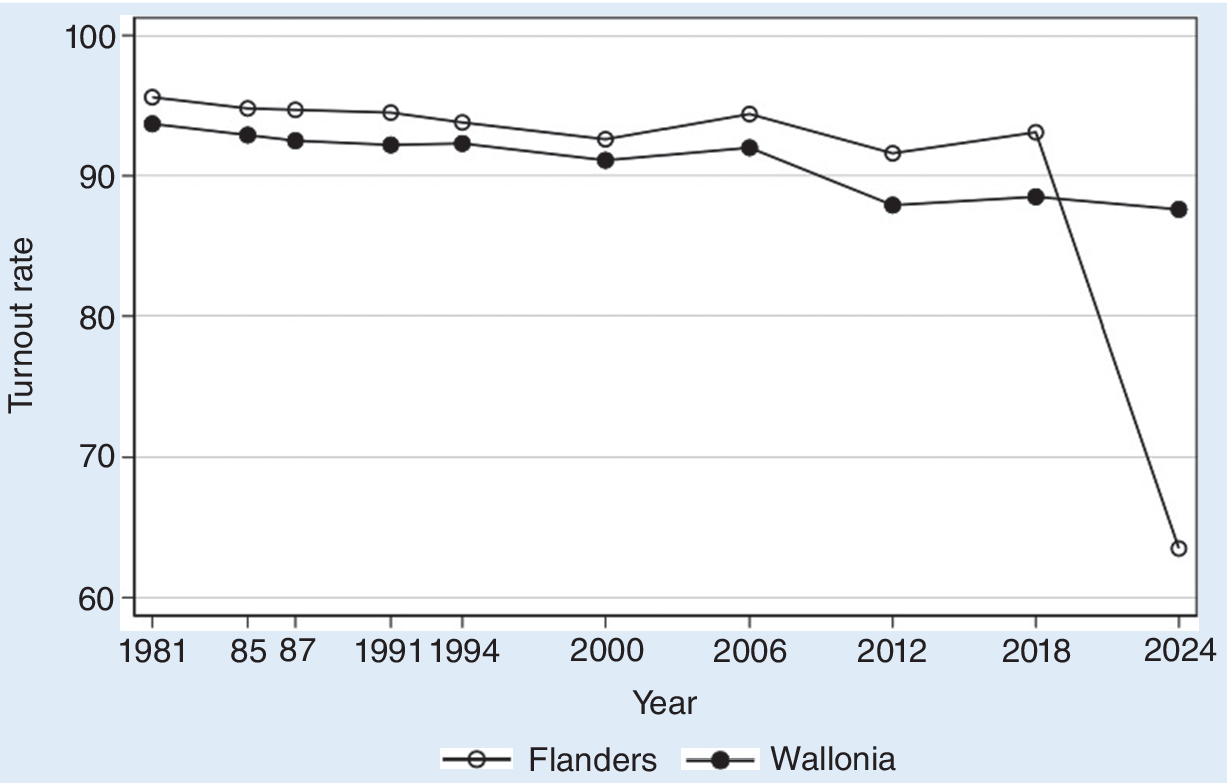
The federal structure of Belgium implies, on the one hand, that the federal parliament is responsible for organizing the federal elections, and the constitutional requirement to vote is fully applicable. On the other hand, the country’s regional parliaments are in charge of organizing the local and provincial elections within their own region, and they can decide which rules apply. The Flemish region is the largest autonomous region of the country, with 6.8 million inhabitants (i.e., 58% of the total Belgian population). Its parliament decided to abolish compulsory voting for the provincial and local elections that were held in Belgium in October 2024. These elections take place on the same day; therefore, the number of voters in both elections is almost identical. In the political science community, as well as among commentators, there was speculation about whether this decision would result in a decrease in turnout rates. The actual participation figures surprised everyone: turnout decreased from 89.4% to 63.5% (Stiers and Hooghe Reference Stiers and Hoogheforthcoming). For comparison, in the other major region of the country (i.e., the French-speaking Walloon region), there was a minimal decline in electoral turnout, from 88.5% to 87.6% (figure 1). It is important to note that in Belgium, voters are registered automatically—a procedure that is implemented uniformly across the country. Therefore, voter registration is not relevant in this case.
Turnout for Provincial Elections in Belgium, by Region
Source: Courrier Hebdomadaire du CRISP, 1981–2024. Provincial elections have been held simultaneously with local elections since 1994. Provincial elections are held across the country; in smaller municipalities, there may not be local elections when the number of candidates equals the number of available seats.

Initial indicators suggest that the effect of abolishing compulsory voting was much stronger in the Flemish region of Belgium in 2024 compared to the Netherlands in 1971, with a decrease of almost 26 percentage points. The main goal of our study was to determine how we could explain this sharp decline. Theoretically, we built on the model that Irwin developed in 1974, so we used (as much as possible) the same indicators as the original article to explain who voted and who abstained in the 2024 local and provincial elections in Belgium.
Efforts to explain the effects of compulsory voting typically focus on two distinct sets of individual-level determinants of turnout. First, we can distinguish between various stable characteristics, such as gender and educational level (Frank and Martínez Reference Frank and Martínez2023). Because these elements are associated with various forms of stratification and inequality, there is concern in the literature that some population groups will be less likely to participate in elections and therefore not have their voice heard in the political process. Irwin (Reference Irwin1974) found that young people and women dropped out in greater numbers after the abolishment of compulsory voting; however, it is interesting that there was no clear pattern in differences regarding educational level. For income groups as well, no linear relation was found.
Second, research invokes attitudinal elements that determine voter turnout (Kostelka, Singh, and Blais Reference Kostelka, Singh and Blais2024). Most notably, people with a lower level of political interest, political knowledge, political trust, and partisanship appear to be less likely to cast a vote when there is no legal obligation to participate in the electoral process. These attitudinal elements have a distinct theoretical status because they also are associated with the capability of citizens to cast an ideologically congruent vote (Dassonneville et al. Reference Dassonneville, Feitosa, Hooghe, Lau and Stiers2019; Lau et al. Reference Lau, Patel, Fahmy and Kaufman2014). When citizens with little interest in politics nevertheless show up at the ballot location, they are more likely to cast a vote that does not necessarily reflect their own political interests without any major distortions. In the Irwin (Reference Irwin1974) analysis, these attitudinal elements were a substantial determinant of the likelihood to refrain from voting.
DATA AND METHODS
In 2024, Belgium organized two different elections. On June 9, 2024, voters were called on to elect the European, federal, and regional parliaments. As mentioned previously, these elections were held under the system of compulsory voting. On October 13, 2024, the same citizens were called on to elect local and provincial councils; however, in the Flemish region, this happened without any legal obligation to vote. This provision was well publicized in the mass media in the weeks before Election Day. Other than that provision, all modalities in the voting process were identical: automatic voter registration, a similar system of proportional representation, the same ballot locations, and limited possibilities for absentee voting.
During this extended electoral season, we organized a four-wave panel survey: the Belgian Repeated Elections Panel (BelREP). This panel began with slightly more than 6,000 respondents; with a retention rate of about 75% for every wave, 2,744 respondents took part in all four waves (Hooghe and Stiers Reference Hooghe and Stiers2025). The panel data were collected through the professional survey company iVox using quota on gender, age, educational level, and region of residence. To ensure the representativeness of the data, we used weighted results, correcting for both the sample characteristics of the first wave and attrition between waves. For these analyses, we focused only on respondents from the Flemish region, limiting the sample to 1,670 respondents. The same respondents were interviewed before and after each set of elections. As expected, 96% reported having voted in the June 2024 elections. By itself, this is an overrepresentation of the 89.4% recorded turnout, but this phenomenon is universal in electoral research.
Following the October 2024 elections, 19.46% of respondents reported not voting in the local and provincial elections. This implies that also in this case, there was an overrepresentation of voters; therefore, the results of our analysis should be interpreted with caution. We used the same independent variables as Irwin (Reference Irwin1974) and, wherever possible, we aligned closely with his coding of these measures. In his study, Irwin (Reference Irwin1974) first included sociodemographic variables including age (divided into several categories), gender (1=female), and educational level. For the latter variable, we could not replicate exactly Irwin’s measure because the structure of education in the Netherlands and Belgium is not identical. We therefore coded educational level as primary education or less, lower secondary education, (higher/nontertiary) secondary education, and tertiary education. As in Irwin’s research (1974), prosperity was included as a measure of income, although the response categories differed. The categories used were (in euros): <1,000/month; 1,001–1,500/month; 1,501–2,000/month; 2,001–3,000/month; 3,001–4,000/month; 4,001–5,000/month; and more than 5,000/month. We therefore could include income as a continuous measure.
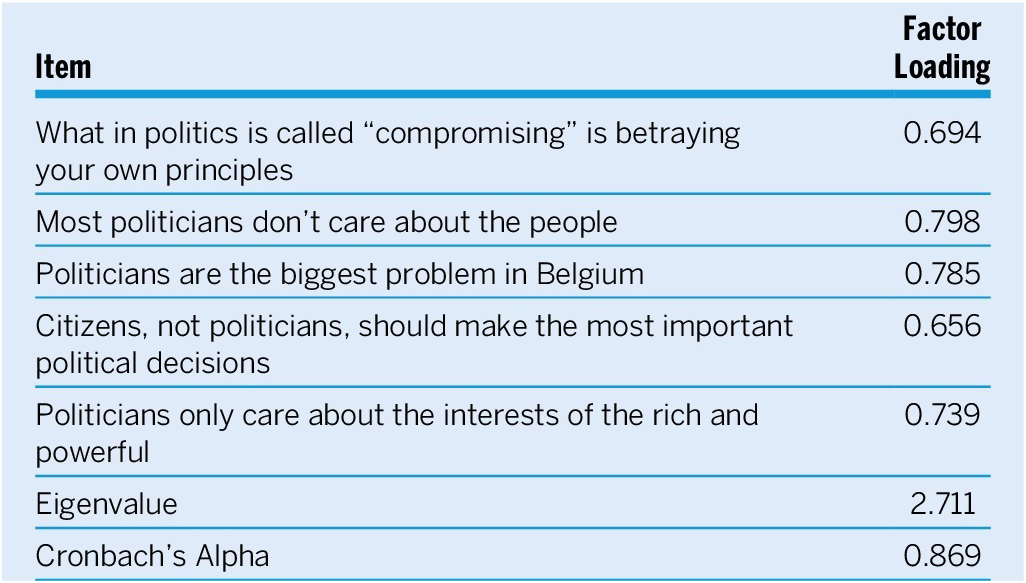
A second set of indicators measured interest and attention to politics. Reading about politics in the newspaper distinguishes respondents who never read the newspaper, do so once a week (“occasionally” for Irwin), between one and six times a week (“now and then”), and every day. Interest in politics was measured on a 0–10 scale ranging from “not interested at all” to “very interested”; because this is a full scale, we did not divide it into categories. The next set of Irwin’s (Reference Irwin1974) variables measured political alienation, indicating whether respondents agreed with statements that all parties are alike, that they never keep their promises, and that members of Parliament pay too little attention to the people. Although we did not have these exact indicators available, we had a comparable battery that measured anti-elite sentiments, which came close to the “alienation” that Irwin (Reference Irwin1974) tried to capture. We could not include these as separate items because the answers to these statements correlated too strongly; in fact, they all loaded onto one latent concept (table 1). Therefore, we included the factor scores derived from the factor analysis.
Factor Analyses of Anti-Elite Sentiments

Source: BelREP-2024. Entries are the result of a principal-component analysis.
As a final measure, we included party identification. Respondents were asked whether they felt close to one party or closer to one party than all of the others. Those responding “no” on both questions were non-identifiers. Those who felt closer to one party subsequently were asked how close they felt to that party: not so close, close, or very close. We kept this original coding because it was close to Irwin’s. Finally, and unfortunately, measures of the degree of urbanization of the community and religious preference were not available.
Using these measures, we replicated Irwin’s (Reference Irwin1974) models; however, the statistical methods available then were less sophisticated than they are now. Therefore, we did not separately examine bivariate statistics for every indicator but rather estimated models that explain turnout combining groups of variables. We used the same groups as those presented in Irwin’s different tables and closed with a full model. For this full model, we reported the predicted probabilities of turnout at the various levels of the independent variables to assess their substantive effect sizes. The dependent variable in the analysis was reported turnout in the first election after abolishing compulsory voting.
RESULTS
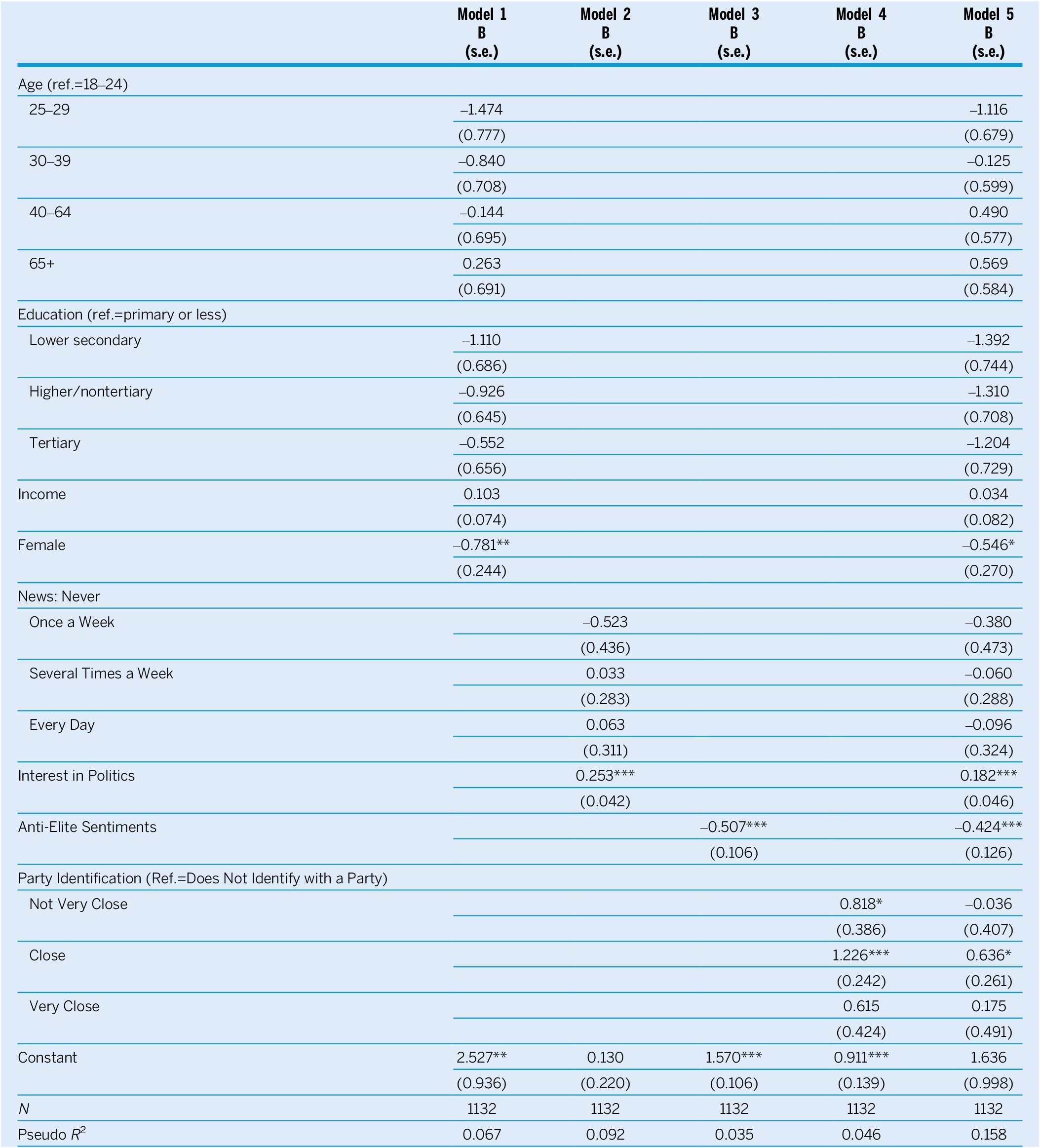
Table 2 summarizes the result of logistic regression models explaining turnout in the local elections. The results mostly align with Irwin’s (Reference Irwin1974) in the Netherlands; however, we found smaller differences, and many factors did no show significant effects.
Explaining Turnout in the 2024 Local Elections in Flanders

Notes: Entries are logit coefficients; standard errors are in parentheses. Significance levels: *p<0.05, **p<0.01, ***p<0.001.
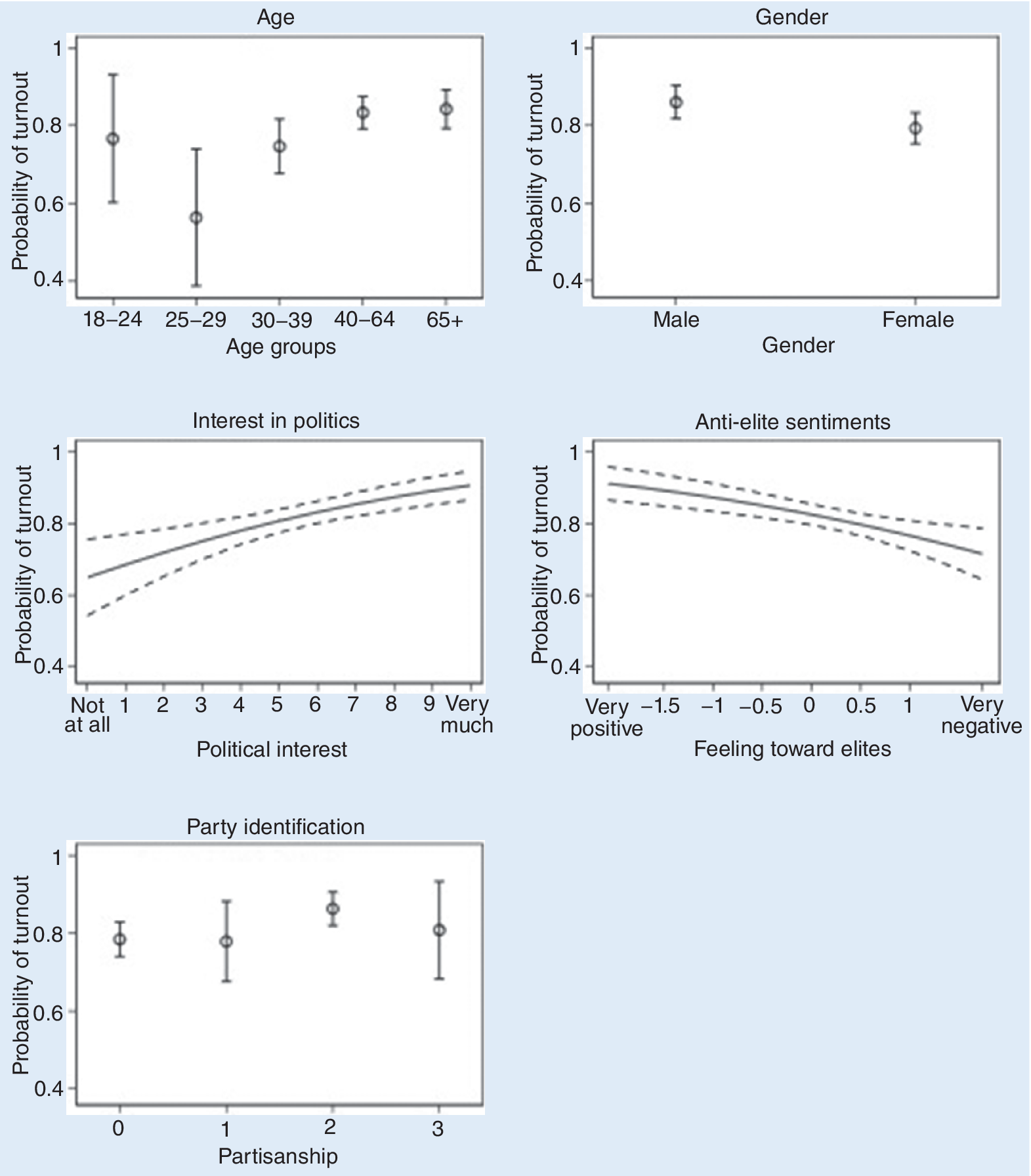
First reviewing the age variable, we found a similar pattern as in the Netherlands in 1971: older respondents were more likely to turn out to vote in the model including only sociodemographic characteristics (model 1) and in the full model (model 5). Because the significance of the reported differences depends strongly on the chosen reference category, figure 2 shows the predicted probability of turnout for each age group separately, based on the full model 5. These results reveal that especially the 25- to 29-year-old group was unlikely to turn out to vote, whereas the youngest age group (i.e., younger than 25) turned out to a similar extent as older respondents. For respondents 25-plus years old, there was a clear upward pattern, and most of the differences between these groups are statistically significant. This differs from the curvilinear pattern that Irwin (Reference Irwin1974) observed in the Netherlands, in which the oldest age groups clearly remained more loyal to their voting habits.
Probability of Turnout for Different Groups
Note: This figure is based on model 5 in table 2.

For educational level and income, we did not find the expected patterns that those with a higher education and income would turn out to vote more often. Aligned with Irwin’s (Reference Irwin1974) results, we found a significant gender effect. As displayed in figure 2, the predicted probability of turnout for male respondents based on model 5 was 86%, whereas for female respondents it was significantly and substantially lower at 79%.
In model 2, we did not find the expected pattern regarding newspaper reading, but we found a strong positive effect of interest in politics in general. This effect remained significant in the full model and, with a predicted turnout of 65% for those with the lowest interest and 91% for those who are very interested (see figure 2), this effect was substantially large.
In model 3, we tested whether politically alienated people are less likely to turn out to vote using a measure of anti-elite sentiments. Aligned with Irwin’s (Reference Irwin1974) results, those who were more negative about politicians were indeed less likely to turn out, and this effect remained robust in the full model. Figure 2 shows that the predicted probability of turnout decreased from 91% to 72% during the range of the measure of anti-elite sentiments.
The fourth determinant of voter turnout was party identification. The results in model 4 show that those who identified with a party—regardless of the extent—were more likely to vote. The only exception, surprisingly, was that those who felt close to their party did not differ significantly from those who did not identify with any party. It is important to note, however, that this group was small (i.e., 7% of respondents); therefore, the estimate has a high degree of uncertainty. In the full model, we found a significant difference between only the non-identifiers and those who felt close to a party (see figure 2). Overall, the pattern was rather weak.
POLICY EFFECTS
These results indicate that especially women and people with a lower level of political interest are less likely to turn out to vote after abolishing compulsory voting. A major problem, however, is the likely policy consequences of this substantial decrease in electoral turnout. Indeed, Lijphart (Reference Lijphart1997) was concerned mainly about the fact that the political system tends to pay less attention to societal groups that are less prone to vote and that also tend to be more strongly dependent on various forms of government intervention. It is too early to assess the long-term policy consequences of abolishing compulsory voting in the October 2024 elections. What can be documented, however, is the policy input that the political system receives. Research has shown that stronger electoral support for leftist political parties is associated with more social expenditure; the opposite is true for right-wing parties (Hooghe, Dassonneville, and Oser Reference Hooghe, Dassonneville and Oser2019). If lower voter turnout leads to a weakening of left-wing political parties, we might assume that it is more likely that local governments would receive fewer incentives to invest in social policy.
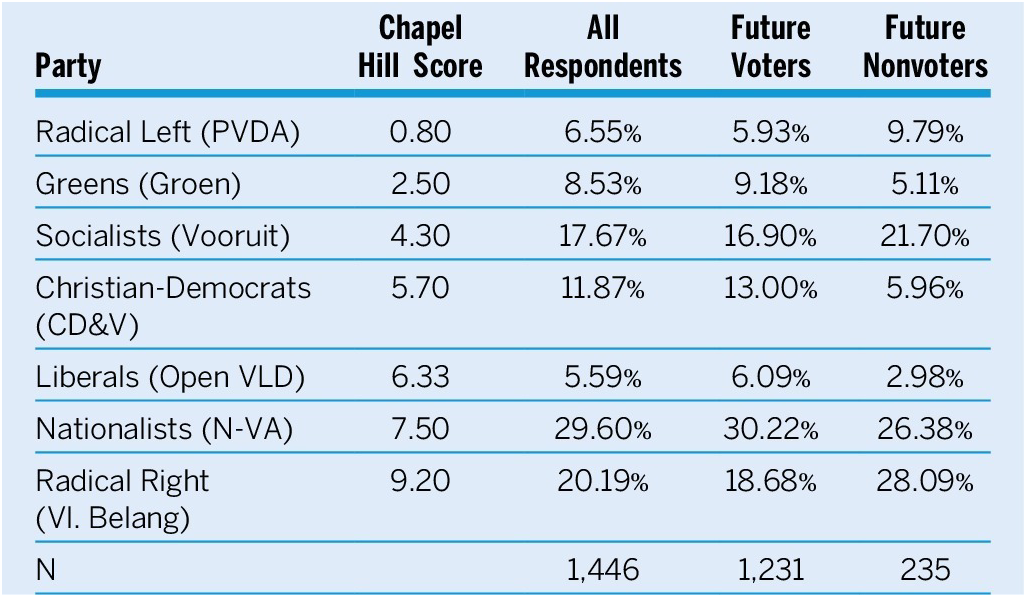
In assessing whether this is the case, we are confronted with the problem that these were local elections. Whereas in most municipalities, the national parties compete in those elections, there is a substantial number where purely local lists dominate the electoral process. Moreover, there is no reliable way to identify the ideological options of all of these local lists, which sometimes are completely apolitical. Therefore, we used the vote expressed during the June 2024 federal elections in which respondents had the option to vote for the national parties—which also are included in the Chapel Hill Expert Survey (Reference Survey2024) on the ideological position of political parties. We assessed whether those who could continue to vote in October already had different preferences in June, at a moment when respondents most likely had not yet decided about their future voting behavior. These results are presented in table 3.
Differences in Party Preferences for Voters and Nonvoters

Source: BelREP-2024. Federal Vote Choice in June from wave 2; the status of voter/nonvoter recorded in wave 4, October 2024. Chapel Hill score (2024) from chesdata.eu (0=radical left; 10=radical right).
As shown in the table, there initially appears to be substantial differences between voters and nonvoters. Greens, Christian-Democrats, Liberals, and Nationalists seem to have voters who clearly are committed to continue to vote. Several parties are substantially less popular among voters than nonvoters; it is mostly the radical right party Vlaams Belang and the radical left party PVDA that lose support because of their electorate not turning out to vote. Both the radical right and the radical left, therefore, clearly are weakened by the abolishment of compulsory voting. This aligns with the previous finding that a more negative attitude toward the political elite is a determinant of refraining from voting. This may imply that the political system receives a different policy input compared with the June elections, which were characterized by compulsory voting. However, although there are substantial relative differences, the group of nonvoters is small in absolute terms; therefore, its impact on policy input should be limited. Furthermore, if both the radical right and the radical left are weakened, to a large extent this cancels out one another with regard to overall policy input. To formalize this, we calculated the weighted ideological input average—that is, the average score of the electorate on the Chapel Hill Expert Survey according to the vote share of the different parties (i.e., the Chapel Hill score multiplied by the proportion of votes for that specific party). Among the entire electorate, this score was 6.15, whereas among voters it was 6.12 and 6.24 among nonvoters. Thus, average ideological differences between voters and nonvoters remain limited. Therefore, with this operationalization, we did not find strong evidence for different policy inputs for the political system.
Average ideological differences between voters and nonvoters thus remain limited; we did not find strong evidence for different policy inputs for the political system.
CONCLUSION
It is rather exceptional to conduct a replication study a half-century after the initial study. However, opportunities to study the real-life consequences of abolishing compulsory voting are rare; therefore, we seized the opportunity to investigate the consequences of this radical abolishment in the Flemish region of Belgium. In the first elections without compulsory voting (October 2024), turnout was 26 percentage points lower than in the previous elections with compulsory voting (June 2024).
Following the example of Irwin’s (Reference Irwin1974) study, we could demonstrate that women, younger people, and those with a low level of political interest and a distrusting attitude toward the political system were more likely to abstain from electoral participation. The fact that there was a strong age effect aligns with the international literature (Wattenberg Reference Wattenberg2024). In various countries, there is concern about the fact that especially younger age groups tend to refrain from the electoral process. Although the 18- to 24-year-old group showed a substantial turnout rate in this dataset, for those who were 25-plus years we found a strong effect of age. Collecting responses from the youngest age groups was especially challenging. This implies that the traditional response bias in which those who are most politically interested commonly participate in the survey is likely also to be stronger among the youngest respondents. Given the fact that voting can be considered a stable habit throughout a person’s life, it may be expected that this low level of voter turnout among the younger age groups also will affect their later voting habits. Currently, we have only one observation that immediately follows the abolishment of compulsory voting. We cannot comment, therefore, about the long-term consequences of abolishing compulsory voting. Suffice it to say that in the Netherlands, after the first substantial decrease, voter-turnout rates continued to decline because younger age cohorts apparently are no longer socialized into a system of compulsory voting. Whether the same phenomenon will occur in the Flemish region of Belgium is a topic that can be investigated only during the subsequent electoral cycle.
…we could demonstrate that women, younger people, and those with a low level of political interest and a distrusting attitude toward the political system were more likely to abstain from electoral participation.
In 1971 as in 2024, there was a significant gender effect, indicating that women are more likely than men to drop out of the electoral system after abolishment of compulsory voting. The effect that this may have for the representation of gendered political interests and preferences, therefore, is an obvious topic for further research. It is an interesting finding that educational level had no significant effect. There is growing concern in the literature about lower turnout levels almost automatically leading to lower levels of participation among less-educated people. In the current analysis, however, we did not find any empirical grounds for this concern.
In the current state of research, there is not much information about possible policy effects of this dramatic decline in voter-turnout rates. Regarding party choice, we found substantial differences. However, given the limited size of the nonvoter group and the fact that losses appear to be symmetrical for both the radical right and the radical left, these differences do not suggest a strongly different ideological signal. Policy effects, however, also may occur in different ways. Parties and candidates still may have (mistakenly or not) the perception that specific population groups may no longer turn out to vote and change their policy priorities accordingly. Furthermore, there also may be a learning process: now that political parties are aware of the powerful effects of abolishing compulsory voting, they may adapt their programs to reflect this new reality. Future research, therefore, must remain attentive to these possible indirect policy consequences.
In 1974, Irwin (Reference Irwin1974, 312–13) reached the general conclusion that abolishing compulsory voting had an effect especially on reluctant voters: “[I]t would be that those who are on sort of a borderline of whether to vote or not are helped to the polls by legislation. Those who are very likely to vote or very likely not to vote are influenced by the presence of the legislation, but to a lesser degree.” A half-century later, our results tend to be similar. For those with a high level of political interest, the legal change did not have any effect: turnout remained stable at 91%. The group that continued to vote was likely to participate in any case. Reversing the argument, a possible conclusion is that any effort to introduce compulsory voting, as originally suggested by Lijphart (Reference Lijphart1997), will have a limited effect unless it is accompanied by a strict system of enforcement (Kostelka, Singh, and Blais Reference Kostelka, Singh and Blais2024). Changes in the legislation on compulsory voting, therefore, seem to affect mainly those citizens who are unsure about whether to vote. It is interesting that—apart from gender and age—our analysis suggests that the attitudinal effects are more important than sociodemographic variables. The original idea that compulsory voting is a perfect antidote to the lack of electoral power of less-educated citizens, therefore, is not supported by the data, and this conclusion is true for both 1971 and 2024. The debate about the normative implications of these findings is a topic for future research.
ACKNOWLEDGMENTS
The authors thank the FWO–Flanders (Belgium) research agency for its generous support of the “From One Election to the Next” project. We especially thank Greet Louw for her invaluable support in conducting this study.
DATA AVAILABILITY STATEMENT
Research documentation and data that support the findings of this study are openly available at the PS: Political Science & Politics Harvard Dataverse at https://doi.org/10.7910/DVN/XFJYCQ.
CONFLICTS OF INTEREST
The authors declare that there are no ethical issues or conflicts of interest in this research.