Introduction
Major aortopulmonary collateral arteries are abnormal systemic-to-pulmonary vessels that develop in the setting of underdeveloped or absent native pulmonary arteries, most commonly associated with cyanotic CHD such as pulmonary atresia with ventricular septal defect and tetralogy of Fallot with pulmonary atresia. Reference Azeez, Babu, Sharmila, Sukesan, Ayyappan and Dharan1–Reference Yang, Wang, Meng, Zhang and Yang3 These vessels serve as compensatory pathways to maintain pulmonary blood flow and oxygenation prior to definitive surgical repair. Reference Alex, Ayyappan, Valakkada, Kramadhari, Sasikumar and Menon4 While advances in surgical and catheter-based management have improved survival, paediatric patients with major aortopulmonary collateral arteries remain medically complex and frequently require staged pulmonary artery reconstruction during early infancy. Reference Bauser-Heaton, Ma and Wise-Faberowski5
The cardiopulmonary physiology associated with major aortopulmonary collateral arteries places patients at increased risk for feeding and swallowing dysfunction. Prolonged hospitalisation, respiratory support, recurrent airway instrumentation, and perioperative cardiopulmonary instability can disrupt early feeding experiences and oral skill acquisition. Reference Abdou, El-Raggal, Rahman, Refaat and Gad6 Even minor fluctuations in respiratory or haemodynamic status may affect feeding endurance and suck-swallow-breathe coordination, placing infants at risk of aspiration. Further, these patients are particularly vulnerable to pulmonary complications due to their unique pathophysiology, including the nonuniform distribution of blood flow to different lung regions. This can result in lung damage, with some areas of the lungs being under-perfused and some areas being over-perfused. Reference Alahmadi and Sharma7
From a feeding and swallowing perspective, paediatric patients with major aortopulmonary collateral arteries represent a high-risk but understudied population. Many experience delayed initiation of oral feeding, limited opportunities for positive oral experiences, poor endurance, and reliance on enteral nutrition. These challenges may be further compounded by comorbid conditions frequently seen in this population, including prematurity, genetic syndromes such as 22q11.2 deletion syndrome, and postoperative complications such as vocal fold motion impairment. Despite these risks, existing literature on major aortopulmonary collateral arteries has focused predominantly on cardiopulmonary anatomy and surgical outcomes, and feeding and swallowing outcomes have not been systematically described in this population. This gap limits clinicians’ ability to anticipate feeding trajectories, counsel caregivers, and determine optimal timing for instrumental swallowing evaluation.
The purpose of this study was to characterise feeding and swallowing outcomes in paediatric patients with major aortopulmonary collateral arteries undergoing pulmonary artery reconstruction at a tertiary paediatric cardiac centre. Specifically, we aimed to describe the prevalence of dysphagia and enteral feeding dependence, examine changes in feeding outcomes before and after initial pulmonary artery intervention, and describe feeding outcomes in relation to relevant clinical factors. By establishing baseline feeding outcomes in this medically fragile population, this work seeks to address a critical gap in the paediatric cardiac feeding literature and support more consistent, evidence-informed feeding management for patients with major aortopulmonary collateral arteries.
Methods
Study design and setting
This study was a retrospective chart review of paediatric patients diagnosed with major aortopulmonary collateral arteries who were evaluated at Children’s Healthcare of Atlanta, a tertiary paediatric cardiac centre. The study was approved by the Children’s Healthcare of Atlanta Institutional Review Board with a waiver of informed consent.
Study population
Patients diagnosed with major aortopulmonary collateral arteries between January 1, 2020, and December 31, 2025, were eligible for inclusion if they were admitted to or followed at the study institution and had available feeding or swallowing data during the pre-operative, peri-operative, or post-operative period. Patients who underwent pulmonary artery intervention were included in paired pre- and post-operative analyses when both timepoints were available. Patients who died prior to pulmonary artery intervention were retained in the descriptive cohort if preoperative feeding or swallowing data were available. Patients were excluded if medical records were incomplete or if no feeding or swallowing data were available during the study period.
Data collection
Data were extracted from the electronic medical record and entered into a secure, de-identified database. All data were obtained from existing clinical documentation, and no direct patient contact occurred.
Demographic and clinical variables
Demographic variables included sex, race, ethnicity, gestational age at birth, and survival status. Genetic diagnoses were recorded, with specific attention to the presence of 22q11.2 deletion syndrome. Clinical variables included underlying cardiac diagnosis, history of prolonged intubation (>7 days), receipt of pulmonary artery intervention, and feeding-related comorbidities, including necrotising enterocolitis, vocal fold motion impairment, milk protein intolerance, and persistent oral aversion at six months post-intervention.
Feeding and swallowing outcomes
Feeding outcomes were documented before and after pulmonary artery intervention when available. Outcomes included timing of first oral feeding attempt, enteral tube use, and functional oral intake. Instrumental swallowing assessment data were abstracted when available. Swallowing safety was evaluated using the Penetration-Aspiration Scale, an 8-point ordinal scale used to quantify the depth of airway invasion and patient response during swallowing, with higher scores indicating greater airway compromise. Reference Rosenbek, Robbins, Roecker, Coyle and Wood8 Dysphagia was defined as a Penetration-Aspiration Scale score of 3 or higher for this study, reflecting penetration that is not effectively cleared from the airway and is generally considered an indication for a change in feeding management. This threshold is consistent with prior studies in paediatric and adult populations that have used a Penetration-Aspiration Scale ≥3 to identify clinically significant airway invasion. Reference Gaeckle, Domahs, Kartmann, Tomandl and Frank9–Reference Masuda, Ueha and Sato11 Functional feeding outcomes were assessed using the Pediatric Functional Oral Intake Scale, a validated 6-point scale measure of oral intake ranging from no oral intake to full oral feeding without restrictions. Reference Dodrill12,Reference Yi and Shin13 Scores were recorded pre-operatively and post-operatively when available.
Statistical analysis
Descriptive statistics were used to summarise patient demographic, clinical, and feeding characteristics. Categorical variables were reported as counts with percentages and continuous variables as medians with interquartile ranges. Feeding and swallowing outcomes were compared before and after pulmonary artery intervention, including only patients with paired pre- and post-operative measurements for each outcome. For Penetration-Aspiration Scale scores, 6 paired observations were available, as patients without preoperative swallow studies were excluded. For the Pediatric Functional Oral Intake Scale, 15 paired observations were available after excluding patients who did not undergo pulmonary artery intervention. For enteral tube outcomes, 14 paired observations were available after excluding four patients who did not undergo pulmonary artery intervention and one patient who died before post-operative enteral tube was placed.
Wilcoxon-signed rank tests were used for paired continuous variables, and exact McNemar’s tests for paired categorical variables to account for small sample sizes. Hodges–Lehmann estimates were calculated to describe median paired differences. Paired boxplots with overlaid individual patient trends were generated for Penetration-Aspiration Scale and Pediatric Functional Oral Intake Scale to visualise patient-level changes. Exploratory analyses were performed to summarise counts and percentages of pre- and post-operative enteral tube use, stratified by prematurity status or prolonged intubation. A p-value <0.05 was considered statistically significant. All analyses were performed using R (version 4.5.2; R Foundation for Statistical Computing) and RStudio.
Results
Patient and clinical characteristics
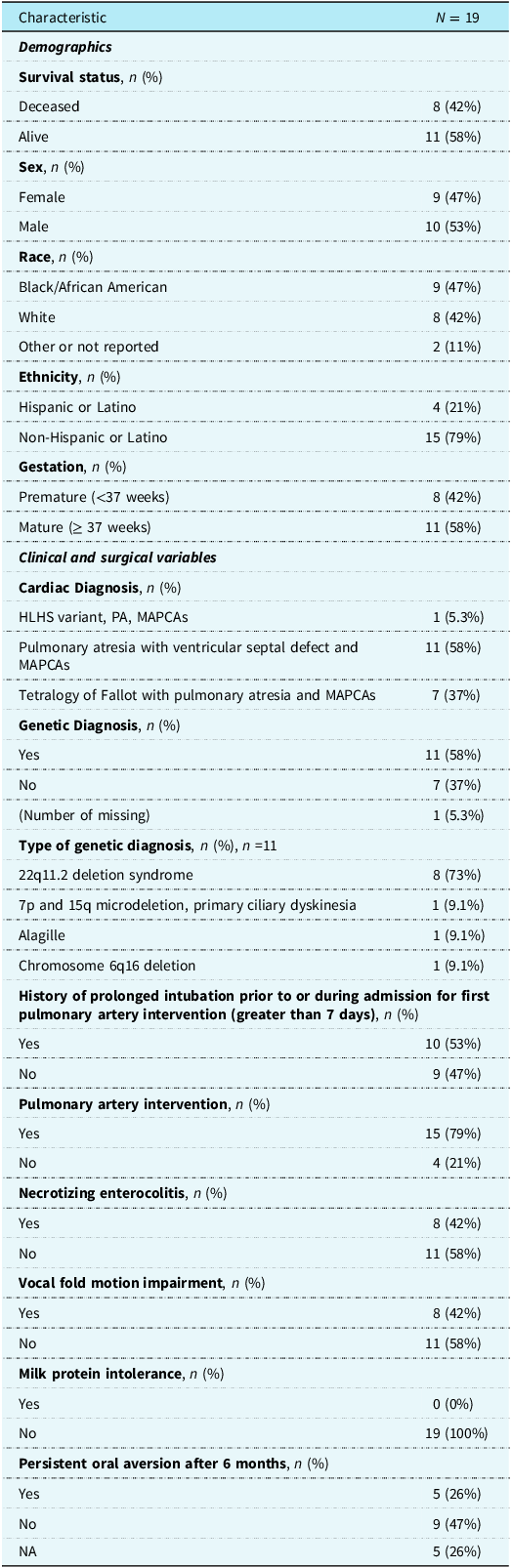
Nineteen patients with major aortopulmonary collateral arteries were included in the analysis (Table 1). Mortality was observed in eight patients (42%), with four deaths occurring prior to pulmonary artery intervention (three patients who were not surgical candidates and one patient who experienced refractory hypoxia preoperatively) and four deaths occurring after pulmonary artery intervention. Causes of death were predominantly cardiopulmonary, including progressive hypoxia, cardiac arrest, and refractory respiratory failure, with care withdrawal in a subset of patients. The high pre-intervention mortality limited the collection of paired post-operative feeding and swallowing data; only patients with both pre- and post-operative measurements were included in paired analyses. The sample was balanced by sex (47% female), and most patients identified as Black/African American (47%) or White (42%). Prematurity was present in 42% of patients.
Demographic and clinical factors in paediatric patients with MAPCAs

Table 1. Long description
The table presents demographic and clinical factors in 19 pediatric patients with major aortopulmonary collateral arteries. It includes survival status, sex, race, ethnicity, gestation, cardiac diagnosis, genetic diagnosis, history of prolonged intubation, pulmonary artery intervention, necrotizing enterocolitis, vocal fold motion impairment, milk protein intolerance, and persistent oral aversion after 6 months. The table has 19 rows and 15 columns. Column headers include Characteristic, Demographics, Survival status, Deceased, Alive, Sex, Female, Male, Race, Black/African American, White, Other or not reported, Ethnicity, Hispanic or Latino, Non-Hispanic or Latino, Gestation, Premature, Mature, Clinical and surgical variables, Cardiac Diagnosis, HLHS variant, PA, MAPCAs, Pulmonary atresia with ventricular septal defect and MAPCAs, Tetralogy of Fallot with pulmonary atresia and MAPCAs, Genetic Diagnosis, Yes, No, Type of genetic diagnosis, 22q11.2 deletion syndrome, 7p and 15q microdeletion, primary ciliary dyskinesia, Alagille, Chromosome 6q16 deletion, History of prolonged intubation prior to or during admission for first pulmonary artery intervention (greater than 7 days), Yes, No, Pulmonary artery intervention, Yes, No, Necrotizing enterocolitis, Yes, No, Vocal fold motion impairment, Yes, No, Milk protein intolerance, Yes, No, Persistent oral aversion after 6 months, Yes, No, NA. Row 1: Demographics, Survival status, n (%), Deceased, 8 (42%), Alive, 11 (58%). Row 2: Sex, n (%), Female, 9 (47%), Male, 10 (53%). Row 3: Race, n (%), Black/African American, 9 (47%), White, 8 (42%), Other or not reported, 2 (11%). Row 4: Ethnicity, n (%), Hispanic or Latino, 4 (21%), Non-Hispanic or Latino, 15 (79%). Row 5: Gestation, n (%), Premature (<37 weeks), 8 (42%), Mature (≥ 37 weeks), 11 (58%). Row 6: Clinical and surgical variables, Cardiac Diagnosis, n (%), HLHS variant, PA, MAPCAs, 1 (5.3%), Pulmonary atresia with ventricular septal defect and MAPCAs, 11 (58%), Tetralogy of Fallot with pulmonary atresia and MAPCAs, 7 (37%). Row 7: Genetic Diagnosis, n (%), Yes, 11 (58%), No, 7 (37%), (Number of missing), 1 (5.3%). Row 8: Type of genetic diagnosis, n (%), 22q11.2 deletion syndrome, 8 (73%), 7p and 15q microdeletion, primary ciliary dyskinesia, 1 (9.1%), Alagille, 1 (9.1%), Chromosome 6q16 deletion, 1 (9.1%). Row 9: History of prolonged intubation prior to or during admission for first pulmonary artery intervention (greater than 7 days), n (%), Yes, 10 (53%), No, 9 (47%). Row 10: Pulmonary artery intervention, n (%), Yes, 15 (79%), No, 4 (21%). Row 11: Necrotizing enterocolitis, n (%), Yes, 8 (42%), No, 11 (58%). Row 12: Vocal fold motion impairment, n (%), Yes, 8 (42%), No, 11 (58%). Row 13: Milk protein intolerance, n (%), Yes, 0 (0%), No, 19 (100%). Row 14: Persistent oral aversion after 6 months, n (%), Yes, 5 (26%), No, 9 (47%), NA, 5 (26%).
MAPCAs = major aortopulmonary collateral arteries.
Pulmonary atresia with ventricular septal defect and major aortopulmonary collateral arteries was the most common diagnosis (58%), followed by Tetralogy of Fallot with pulmonary atresia and major aortopulmonary collateral arteries (37%). A genetic diagnosis was identified in 58% of patients, most commonly 22q11.2 deletion syndrome (8/11, 73%). Prolonged intubation (>7 days) occurred in 53% of patients. Most patients (79%) underwent pulmonary artery intervention.
Clinical comorbidities were common, with necrotising enterocolitis and vocal fold motion impairment each observed in 42% of patients. Persistent oral aversion at six months was observed in a subset of patients (26%), while nearly half (47%) did not demonstrate oral aversion.
Feeding characteristics
Feeding challenges were common across the cohort (Table 1). Most patients were introduced to oral feeding preoperatively (n = 19, 89%). Despite early oral feeding exposure, enteral tube use remained common, with half of the patients requiring enteral support both preoperatively and postoperatively (47%).
Swallowing outcomes
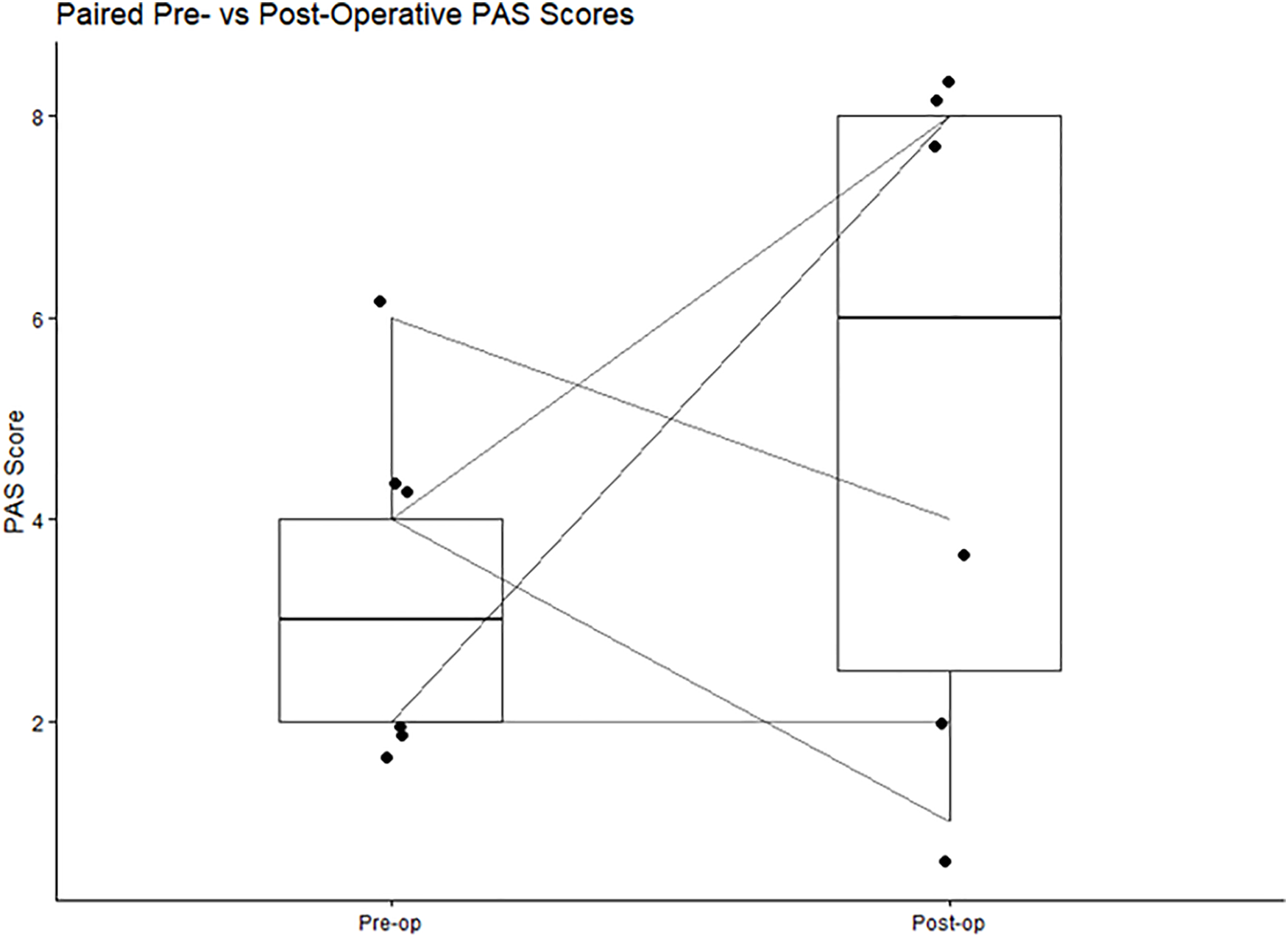
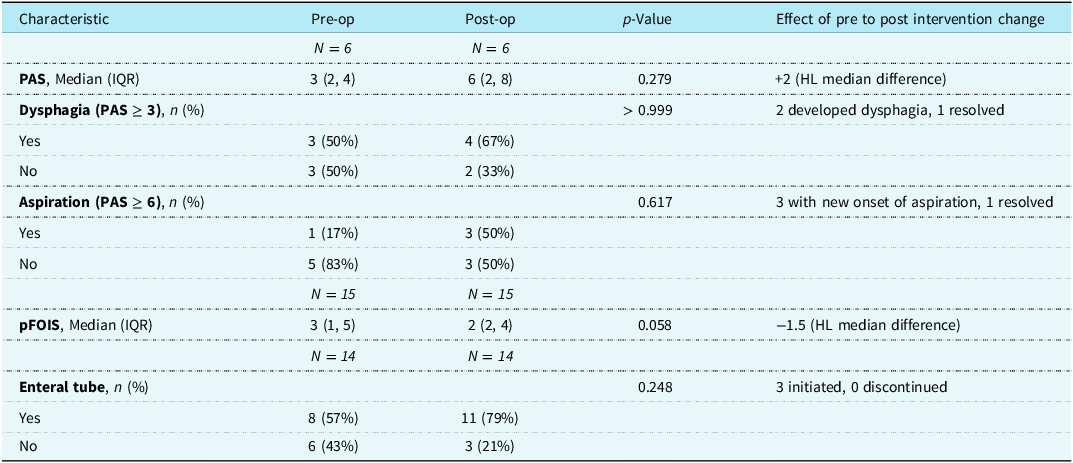
Among six patients with paired pre- and post-operative data, median Penetration-Aspiration Scale scores increased from 3 (interquartile range 2–4) pre-operatively to 6 (interquartile range 2–8) post-operatively (Figure 1), and the median paired difference was +2 (Hodges–Lehmann estimate) (p = 0.279, Table 2). Dysphagia was present in 50% pre-operatively and 67% post-operatively, with two patients developing dysphagia post-operatively while one patient’s dysphagia resolved. The proportion of patients demonstrating aspiration increased from 17% pre-operatively to 50% post-operatively (p = 0.617), with all three patients developing new aspiration post-operatively and one patient whose aspiration resolved.
Paired Penetration-Aspiration Scale change before and after pulmonary artery intervention boxplot, N = 6.
Note: PAS = Penetration–Aspiration Scale. Scores range from 1 to 8, with higher scores reflecting greater airway invasion: 1 = material does not enter the airway; 2 = material enters the airway, remains above the vocal folds, and is ejected; 3 = material enters the airway, remains above the vocal folds, and is not ejected; 4 = material enters the airway, contacts the vocal folds, and is ejected; 5 = material enters the airway, contacts the vocal folds, and is not ejected; 6 = material enters the airway, passes below the vocal folds, and is ejected into the larynx or out of the airway; 7 = material enters the airway, passes below the vocal folds, and is not ejected from the trachea despite effort; and 8 = material enters the airway, passes below the vocal folds, and no effort is made to eject.

Feeding and swallowing outcomes before and after pulmonary artery intervention

Table 2. Long description
A table comparing feeding and swallowing outcomes before and after pulmonary artery intervention. The table has 10 rows and 5 columns. Column headers are Characteristic, Pre-op, Post-op, p-Value, and Effect of pre to post intervention change. Row labels include PAS, Median (IQR), Dysphagia (PAS >= 3), n (%), Aspiration (PAS >= 6), n (%), pFOIS, Median (IQR), and Enteral tube, n (%). Row 1: PAS, Median (IQR), Pre-op N = 6, Post-op N = 6, p-Value 0.279, Effect of pre to post intervention change +2 (HL median difference). Row 2: Dysphagia (PAS >= 3), n (%), Yes Pre-op 3 (50%), Post-op 4 (67%), p-Value > 0.999, Effect of pre to post intervention change 2 developed dysphagia, 1 resolved. Row 3: Dysphagia (PAS >= 3), n (%), No Pre-op 3 (50%), Post-op 2 (33%), p-Value > 0.999, Effect of pre to post intervention change 2 developed dysphagia, 1 resolved. Row 4: Aspiration (PAS >= 6), n (%), Yes Pre-op 1 (17%), Post-op 3 (50%), p-Value 0.617, Effect of pre to post intervention change 3 with new onset of aspiration, 1 resolved. Row 5: Aspiration (PAS >= 6), n (%), No Pre-op 5 (83%), Post-op 3 (50%), p-Value 0.617, Effect of pre to post intervention change 3 with new onset of aspiration, 1 resolved. Row 6: pFOIS, Median (IQR), Pre-op N = 15, Post-op N = 15, p-Value 0.058, Effect of pre to post intervention change -1.5 (HL median difference). Row 7: Enteral tube, n (%), Yes Pre-op 8 (57%), Post-op 11 (79%), p-Value 0.248, Effect of pre to post intervention change 3 initiated, 0 discontinued. Row 8: Enteral tube, n (%), No Pre-op 6 (43%), Post-op 3 (21%), p-Value 0.248, Effect of pre to post intervention change 3 initiated, 0 discontinued.
PAS = Penetration-Aspiration Scale (8-point scale from 1-8); pFOIS = Pediatric Functional Oral Intake Scale (1-6); IQR = interquartile range (25th, 75th percentiles). HL = Hodges-Lehmann estimate is the median of all pairwise differences between observations in pre- and post-op. Confidence intervals were not reported due to small sample size and ties. Analyses include only patients with paired pre- and post-operative measurements for each outcome. For PAS, 6 paired observations were available. For pFOIS, 4 patients were excluded due to not receiving pulmonary artery intervention. For enteral tube outcomes, 4 patients were excluded due to not receiving pulmonary artery intervention, and 1 patient was excluded due to death prior to post-operative assessment. Wilcoxon signed-rank test for paired continuous variables; exact McNemar’s test for paired categorical variables.
Functional oral intake
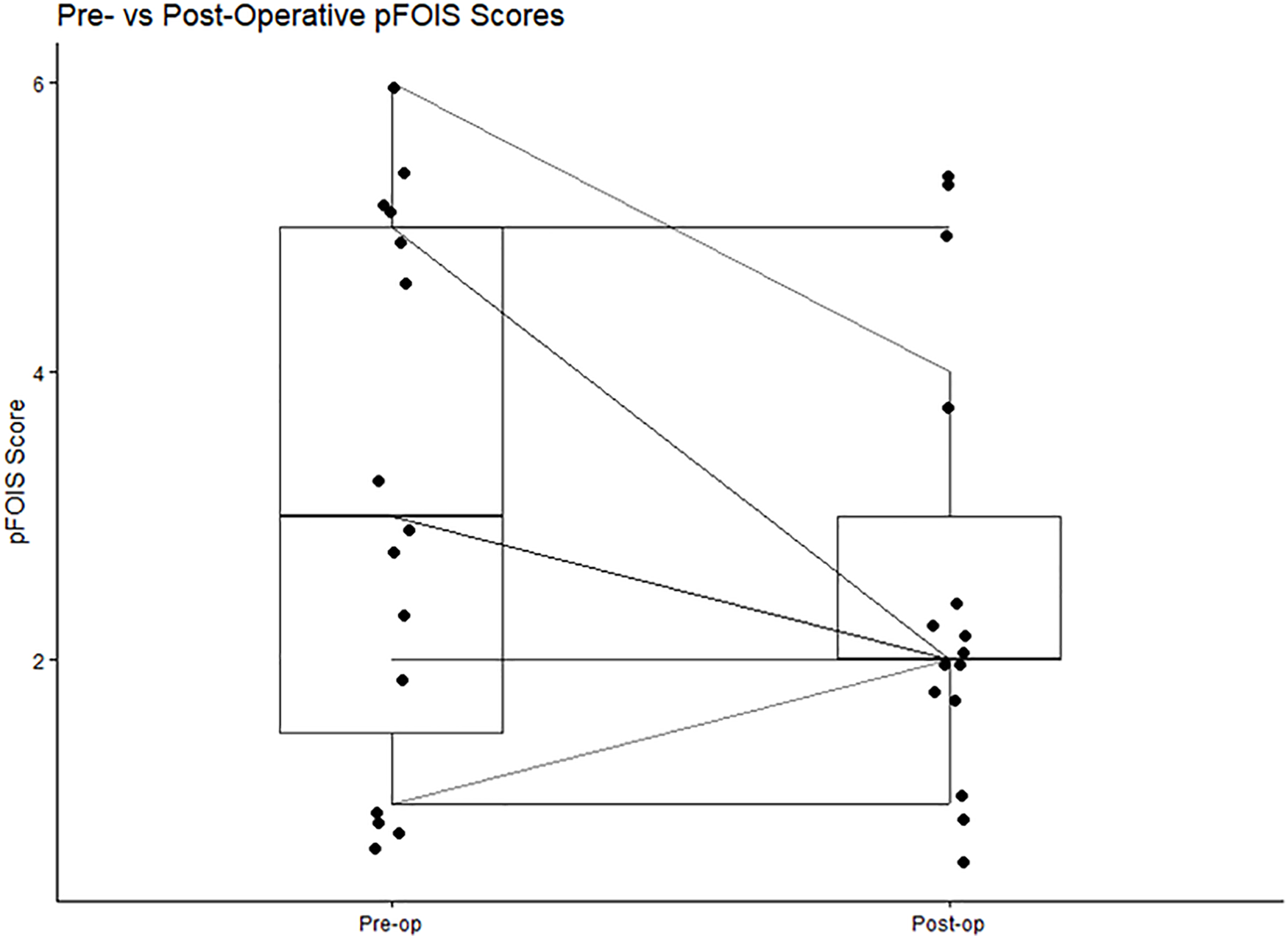
Median Pediatric Functional Oral Intake Scale scores decreased from 3 (interquartile range 1–5) pre-operatively to 2 (interquartile range 2–4) (Figure 2) post-operatively among the 15 patients who underwent pulmonary artery intervention, with a median paired difference of −1.5 (HL estimate) (p = 0.058, Table 2).
Paired pFOIS change before and after pulmonary artery intervention boxplot, N = 15.
Note: pFOIS = Pediatric Functional Oral Intake Scale. Scores are categorized as follows: 1 = nothing by mouth; 2 = tube dependent with minimal oral intake; 3 = tube dependent with consistent oral intake; 4 = total oral diet with special preparations; 5 = total oral diet without special preparation but with compensations; and 6 = total oral diet with no restrictions.

Enteral feeding
Enteral tube use was common before and after intervention, increasing from 57% pre-operatively to 79% post-operatively among the 14 patients who underwent and survived pulmonary artery intervention (p = 0.248, Table 2). Three patients initiated enteral tube feeding post-operatively, while none discontinued post-operatively among the eight patients who were on enteral tube pre-operatively.
Exploratory subgroup comparisons by 22q11.2 deletion syndrome
When stratified by genetic diagnosis, no differences were observed in Penetration-Aspiration Scale or in rates of dysphagia and aspiration between patients with and without 22q11.2 deletion syndrome (all p-values >0.999). Differences were observed in functional oral intake, with lower Pediatric Functional Oral Intake Scale among patients with 22q11.2 deletion syndrome (n = 8) compared to those without (n = 7), both pre-operatively (median 2, interquartile range 1–3 versus median 5, interquartile range 5–5; p = 0.002) and post-operatively (median 2, interquartile range 1–2 versus median 4 interquartile range 2–5; p = 0.011).
Enteral tube use was present in all patients with 22q11.2 deletion syndrome (n = 7) compared to 1 patient without the deletion (n = 7) (100% versus 14%; p = 0.005), with no significant difference observed post-operatively (100% versus 57%, p = 0.192).
Exploratory analyses by prematurity and prolonged intubation
Pre-operatively (N = 19), patients with prematurity or prolonged intubation had higher rates of enteral tube use compared to those without these factors (premature versus term: 100% (8/8) versus 45% (5/11); prolonged versus no prolonged intubation: 100% (10/10) versus 33% (3/9)). Post-operatively (N = 15), enteral tube use remained high across groups (100% (5/5) versus 70% (7/10) and 100% (6/6) versus 67% (6/9), respectively).
Discussion
This study provides one of the first characterisations of feeding and swallowing outcomes in children with major aortopulmonary collateral arteries undergoing pulmonary artery intervention. In this cohort, dysphagia, aspiration, and enteral feeding dependence were highly prevalent across the perioperative period. These findings suggest that feeding impairment is not only common in this population but likely multifactorial, reflecting the combined effects of cardiopulmonary instability, delayed oral feeding experiences, and associated medical comorbidities.
Feeding disruption appears to begin early in the clinical course for many of these patients. Over half of the cohort experienced prolonged intubation, and most patients required enteral tube support before or after pulmonary artery intervention. Although 89% of patients were introduced to oral feeding pre-operatively, 57% required enteral tube support pre-operatively and 79% required enteral tube support post-operatively, with 47% requiring enteral tube support both before and after intervention (Table 2). These early disruptions may limit opportunities for skill acquisition during a critical developmental window and may contribute to prolonged reliance on enteral feeding and longer-term feeding challenges. A subset of patients (26%) demonstrated persistent oral aversion at six months, suggesting that feeding difficulties may extend beyond the immediate perioperative period. This rate likely underestimates the true prevalence, as oral aversion status was unavailable for 26% of patients, largely due to mortality, and was identified from clinical documentation rather than a standardised measure. Among patients with available data, 36% (5/14) demonstrated persistent oral aversion. Early involvement of speech–language pathology at our institution may also have contributed to the observed rate, although this could not be evaluated in the present study. Prior studies in CHD populations have demonstrated that delayed initiation of oral feeding and prolonged respiratory support are associated with poorer feeding outcomes and increased tube dependence. Reference Jones, Desai and Fogel14,Reference Viswanathan, Ong and Kakavand15 Our findings extend this understanding to patients with major aortopulmonary collateral arteries, who may experience additional challenges related to staged surgical interventions and prolonged hospitalisation. Consistent with this, in exploratory analyses, patients in our cohort with prematurity or prolonged intubation demonstrated higher rates of pre-operative enteral tube use, although post-operative tube use was similar across groups. While these descriptive findings should be interpreted with caution given the small sample size, they suggest that early clinical factors may shape pre-operative feeding trajectories and warrant further evaluation in larger cohorts.
Swallowing impairment was also common among patients with paired instrumental swallowing data. Although the number of patients with paired pre- and post-operative Penetration-Aspiration Scale scores was small, aspiration was observed in half of this subgroup post-operatively. This finding is clinically important because aspiration may be difficult to detect at bedside, particularly in medically fragile infants who may demonstrate silent aspiration or subtle signs of swallow dysfunction. Patients with major aortopulmonary collateral arteries are at risk for swallowing impairment for a multitude of reasons, including prolonged intubation, disruption of swallowing and respiratory coordination due to limited cardiopulmonary reserve, and post-operative complications such as vocal fold motion impairment. Given this multifactorial risk profile and the limited cardiopulmonary reserve in this population, we used Penetration-Aspiration Scale ≥ 3, laryngeal penetration retained above the vocal folds, which has been associated with pulmonary morbidity in children with dysphagia, Reference Gurberg, Birnbaum and Daniel16,Reference Duncan, Larson and Rosen17 as our threshold for clinically significant airway invasion, recognising that a higher cutpoint (Penetration-Aspiration Scale ≥ 6) would likely underestimate the burden of swallowing impairment.
Prior literature has identified post-extubation dysphagia as a common complication in critically ill paediatric populations, particularly among younger patients with complex medical conditions. Reference Da Silva, Reis, Fonseca, Kubo and Fonseca18,Reference Lawlor and Choi19 Our findings were consistent with this literature, with 67% of patients demonstrating airway invasion (Penetration-Aspiration Scale ≥ 3) and 50% demonstrating aspiration on instrumental assessment (Penetration-Aspiration Scale ≥ 6) (Table 2). Vocal fold motion impairment was observed in a notable proportion of patients (42%) (Table 1), suggesting a significant contribution of laryngeal dysfunction to feeding and swallowing impairment. Recurrent laryngeal nerve injury is a recognised complication of cardiac surgery, particularly in procedures involving the great arteries, and may be further exacerbated by the surgical complexity and prolonged operative time required for MAPCA unifocalization. Reference Dewan, Cephus, Owczarzak and Ocampo20–Reference Strychowsky, Rukholm, Gupta and Reid22 Prolonged intubation is an additional known risk factor for vocal fold motion impairment, and in our cohort, 53% of patients experienced intubation greater than seven days, which may have contributed to the high prevalence observed. Reference Pan and Jiang23 Vocal fold motion impairment has been associated with impaired airway protection and an increased risk of silent aspiration following cardiac surgery. Reference Narawane, Rappazzo, Hawney, Clason, Roddy and Ongkasuwan21 Among patients with paired data, aspiration increased post-operatively, with 50% meeting criteria for aspiration (Table 2). In patients with major aortopulmonary collateral arteries, swallowing impairment is particularly clinically significant, as aspiration and subsequent lung soiling may contribute to pulmonary morbidity in patients with already-compromised cardiopulmonary physiology. The relatively high prevalence of prolonged intubation and vocal fold motion impairment observed in this cohort supports the importance of incorporating instrumental swallowing evaluation, rather than bedside evaluation alone, when determining feeding safety following complex cardiac interventions. For this reason, our centre has protocolized the completion of instrumental swallowing assessments, which are now routinely completed both before and after pulmonary artery intervention.
Medical comorbidities, including genetic syndromes and necrotising enterocolitis, were also frequently observed and may further compound feeding difficulties. In our cohort, 58% of patients had a genetic diagnosis, most commonly 22q11.2 deletion syndrome (Table 1). A significant proportion of patients had 22q11.2 deletion syndrome, which is associated with hypotonia, structural airway differences, and impaired coordination of oral motor skills. Reference Scheuerle, Geleske, Merchant and Goldenberg24,Reference Wong, Feng, Rappazzo, Turk, Randall and Ongkasuwan25 Additionally, up to 30% of patients with DiGeorge syndrome demonstrate dysphagia, often related to pharyngoesophageal dysmotility. Reference Scheuerle, Geleske, Merchant and Goldenberg24 The coexistence of genetic comorbidities alongside complex cardiac disease likely compounds vulnerability to feeding difficulties and may further delay oral feeding progression. Consistent with this, patients with 22q11.2 deletion syndrome demonstrated lower Pediatric Functional Oral Intake scale scores both pre-operatively and post-operatively. Although these exploratory findings should be interpreted cautiously, given the small sample size, they suggest that genetic comorbidity may further influence feeding progression in patients with major aortopulmonary collateral arteries.
Necrotising enterocolitis was also common, affecting 42% of the cohort, and represents an additional contributor to disrupted feeding trajectories (Table 1). In patients with CHD, necrotising enterocolitis is thought to arise from impaired mesenteric perfusion and hemodynamic instability, both of which may be exacerbated in MAPCA physiology due to fluctuations in pulmonary and systemic blood flow. Reference Alahmadi and Sharma7,Reference Kelleher, McMahon and James26,Reference Burge, Gunasekaran, Makoni, Mir, Burkart and Chaaban27 The need for prolonged nil per os periods during necrotising enterocolitis management may further limit early oral feeding and increase the risk of oral aversion. These findings suggest that genetic vulnerability and gastrointestinal morbidity are not isolated contributors but rather interact with cardiopulmonary instability and delayed feeding experiences to shape the complex feeding outcomes observed in this population.
Collectively, these findings highlight the importance of early, interdisciplinary feeding assessment for paediatric patients with major aortopulmonary collateral arteries. Given the high rates of dysphagia, aspiration, and enteral feeding dependence observed in this cohort, early involvement of speech–language pathology is critical to evaluate swallowing safety, support feeding skill development, and guide the timing of instrumental swallowing assessments. Proactive identification of feeding difficulties may allow clinicians to implement targeted strategies to support safe oral feeding progression while minimising complications such as aspiration, lung soiling, prolonged tube dependence, and feeding aversion. Additionally, improved understanding of expected feeding trajectories in this population may enhance caregiver counselling and support more consistent, multidisciplinary management across the continuum of care. These needs are made more urgent by the substantial mortality observed in this cohort (8/19 patients, 42%), which reflects the medical fragility of children with major aortopulmonary collateral arteries and is consistent with prior reports of significant early- and mid-term mortality in this population, particularly among those who do not reach unifocalization. In this context, the perioperative window represents a narrow opportunity in which proactive, multidisciplinary feeding evaluation can meaningfully influence developmental and nutritional trajectories before they are foreshortened by clinical instability.
This study has several limitations. It is a retrospective chart review conducted at a single tertiary cardiac centre, which may limit generalisability to other institutions and patient populations. The small sample size limits statistical power and the ability to examine associations between clinical variables and feeding outcomes. In addition, not all patients had paired pre- and post-operative instrumental swallowing assessments, and post-operative feeding outcomes were not available for patients who died before follow-up assessment. Variability in clinical documentation may have impacted the completeness and consistency of feeding-related data. Exploratory subgroup comparisons, including analyses by 22q11.2 deletion syndrome, should be interpreted cautiously given the small sample size.
Future multicentre studies are needed to better characterise feeding trajectories in patients with major aortopulmonary collateral arteries and to identify clinical predictors of feeding outcomes across the perioperative period. Prospective studies using standardised feeding, swallowing, and caregiver-reported outcome measures may help clarify how cardiopulmonary physiology, airway complications, gastrointestinal morbidity, and genetic comorbidities interact to influence feeding development. Such work may support earlier identification of high-risk patients, inform timing of instrumental swallowing assessment, and guide targeted interventions to improve feeding outcomes in this medically complex population.
Conclusion
This study provides important preliminary insight into feeding and swallowing outcomes in paediatric patients with major aortopulmonary collateral arteries, demonstrating high rates of dysphagia, aspiration, and enteral feeding dependence across the perioperative period. As survival for children with complex CHD continues to improve, greater emphasis on functional outcomes such as feeding development is essential. These findings highlight the need for early, interdisciplinary feeding assessments and consistent use of instrumental and functional outcome measures to guide clinical decision-making. Improved understanding of feeding trajectories in this population may support earlier identification of dysphagia, inform timing of assessments, and enhance caregiver counselling, ultimately contributing to improved developmental and nutritional outcomes.
Acknowledgements
None.
Financial support
This research received no specific grant from any funding agency, commercial or not-for-profit sectors.
Competing interests
None.