INTRODUCTION
The biogeographic sector or ecoregion of the Alboran Sea (Bianchi & Morri, Reference Bianchi and Morri2000; Spalding et al., Reference Spalding, Fox, Allen, Davidson, Ferdana, Finlayson, Halpern, Jorge, Lombana, Lourie, Martin, McManus, Molnar, Recchia and Robertson2007) is a hydrodynamic area where Atlantic waters enter the Mediterranean basin through the Strait of Gibraltar. The presence of upwellings of high-nutrient bottom-water masses in the northern littoral of this basin supports one of the highest biological productivity areas within the Mediterranean Sea (Parrilla & Kinder, Reference Parrilla and Kinder1987; Rodríguez et al., Reference Rodriguez, Bautista, Blanco, Figueroa, Cano and Ruiz1994; Sarhan et al., Reference Sarhan, García-Lafuente, Vargas and Plaza2000). The confluence of the temperate-cold Lusitanian, the warm-subtropical Mauritanian and the Mediterranean regions in the Alboran basin (Ekman, Reference Ekman1953) favour the coexistence of species with different biogeographic affinities, increasing the biodiversity in the area (García Raso, Reference García Raso1993; Maldonado & Uriz, Reference Maldonado and Uriz1995; Gofas et al., Reference Gofas, Moreno and Salas2011; García Raso et al., Reference García Raso, Marina and Baro2011, Reference García Raso, Salmerón, Baro, Marina and Abelló2014). The ecological importance of the Alboran Sea for the Mediterranean biodiversity was recently highlighted by Coll et al. (Reference Coll, Piroddi, Steenbeek, Kaschner, Ben Rais Lasram, Aguzzi, Ballesteros, Bianchi, Corbera, Dailianis, Danovoro, Estrada, Froglia, Galil, Gasol, Gertwagen, Gil, Guilhaumon, Kesner-Reyes, Kitsos, Koukouras, Lampadariou, Laxamana, López-Re De La Cuadra, Lotze, Martin, Monillot, Oro, Raicevich, Rius-Barile, Saiz-Salinas, San Vicente, Somot, Templado, Turon, Vafidis, Villanueva and Voultsiadou2010), as well as the need to improve the knowledge on the biodiversity of different habitat types present in this basin in relation to the current EU Directives (Habitat Directive, Marine Strategy Framework Directive) (Robles et al., Reference Robles, Rodríguez, Nachite, Berraho, Najih, Camiñas, Baro, Alcántara, Jeudy De Grissac, Simard, De Loyola and Bouillon2010).
Soft bottoms are the most common habitats in marine systems and support high biodiversity (Snelgrove, Reference Snelgrove1999). This is also the case in the Alboran Sea, where the diversification in different sedimentary micro-habitats enhances an enrichment of the fauna (García Muñoz et al., Reference García Muñoz, Manjón-Cabeza and García Raso2008; Urra et al., Reference Urra, Gofas, Rueda and Marina2011). Soft bottom epifauna and infauna are generally influenced by abiotic variables associated with the water masses (e.g. hydrodynamism, wave action) and the sediment characteristics (e.g. grain size, organic matter content), as well as by biotic interactions (e.g. recruitment and mortality events or predation, among others) (Wildish, Reference Wildish1977; Wilson, Reference Wilson1991; Snelgrove & Butman, Reference Snelgrove and Butman1994). All these factors determine the diversity and spatial variability of the subtidal benthic communities (Van Hoey et al., Reference Van Hoey, Degraer and Vincx2004; Bolam et al., Reference Bolam, Eggleton, Smith, Mason, Vanstaen and Rees2008; Labrune et al., Reference Labrune, Grémare, Amouroux, Sardá, Gil and Taboada2008). The study of soft bottom assemblages in areas where anthropogenic disturbances are generally scarce, such as those within Marine Protected Areas, may therefore provide interesting information on the biodiversity and patterns of natural sedimentary habitats within a particular region of the world.
Despite the importance, diversity and extension of soft bottoms in the Alboran Sea, there are relatively few studies on the spatial distribution and structure of benthic assemblages, most of them having focused on specific dominant taxa such as molluscs and decapods (Luque, Reference Luque1983, Reference Luque1986; García Raso, Reference García Raso1988, Reference García Raso1990; Martínez & Peñas, Reference Martínez and Peñas1996; Bayed & Bazairi, Reference Bayed and Bazairi2008; García Muñoz et al., Reference García Muñoz, Manjón-Cabeza and García Raso2008; Urra et al., Reference Urra, Gofas, Rueda and Marina2011, Reference Urra, Mateo Ramírez, Marina, Salas, Gofas and Rueda2013a, Reference Urra, Rueda, Mateo Ramírez, Marina, Tirado, Salas and Gofasb). This lack of information is particularly marked for circalittoral soft bottoms (Templado et al., Reference Templado, Guerra, Bedoya, Moreno, Remón, Maldonado and Ramos1993, Reference Templado, Calvo, Moreno, Flores, Conde, Abad, Rubio, López-Fe and Ortiz2006; Abad et al., Reference Abad, Preciado, Serrano and Baro2007). The characterization of soft bottom assemblages is important for the identification of potential Marine Protected Areas and fishing exclusion zones as management tools for habitat protection, species conservation and the sustainable use of marine resources. This is of particular importance in the Alboran Sea, with an important commercial fishing fleet composed mainly of artisanal fishing ships and trawler fishing boats (Giráldez & Alemany, Reference Giráldez and Alemany2002; Camiñas et al., Reference Camiñas, Baro and Abad2004; García et al., Reference García, Báez, Baro, García, Giráldez and Macías2012).
The coastal area located between Calahonda and Castell de Ferro (Granada, southern Spain), was declared a Site of Community Importance (SCI Code: ES6140014) within the EU Natura 2000 network (http://ec.europa.eu/environment/nature/natura2000/), in order to promote the conservation of biodiversity components of subtidal habitats, particularly of soft bottoms (from gravel and coarse sand to muddy bottoms) (Baro Domínguez et al., Reference Baro Domínguez, Fernández-Salas, García García, García Jiménez, García Martinez, Láiz Carrión, López González, Marina, Moya Ruiz, Serra Tur and Zunino Rodríguez2011). The aim of this work was to study the poorly known faunal communities inhabiting the infralittoral and circalittoral soft bottoms located in this stretch of coastline. Our primary objective was to identify the sublittoral benthic-demersal assemblages within the SCI, with special emphasis on the dominant animal groups (e.g. fish, molluscs, crustaceans, echinoderms). Our subsequent objective was to analyse the relationships between the identified faunal assemblages and the environmental variables monitored from the water column and the sediment, in order to identify key environmental variables structuring these faunal assemblages. The information provided here will be a baseline for stakeholders and decision-makers for the monitoring and management of this Marine Protected Area (SCI), which is scheduled to soon become a Specially Protected Area of Mediterranean Importance (SPAMI).
MATERIALS AND METHODS
Study area
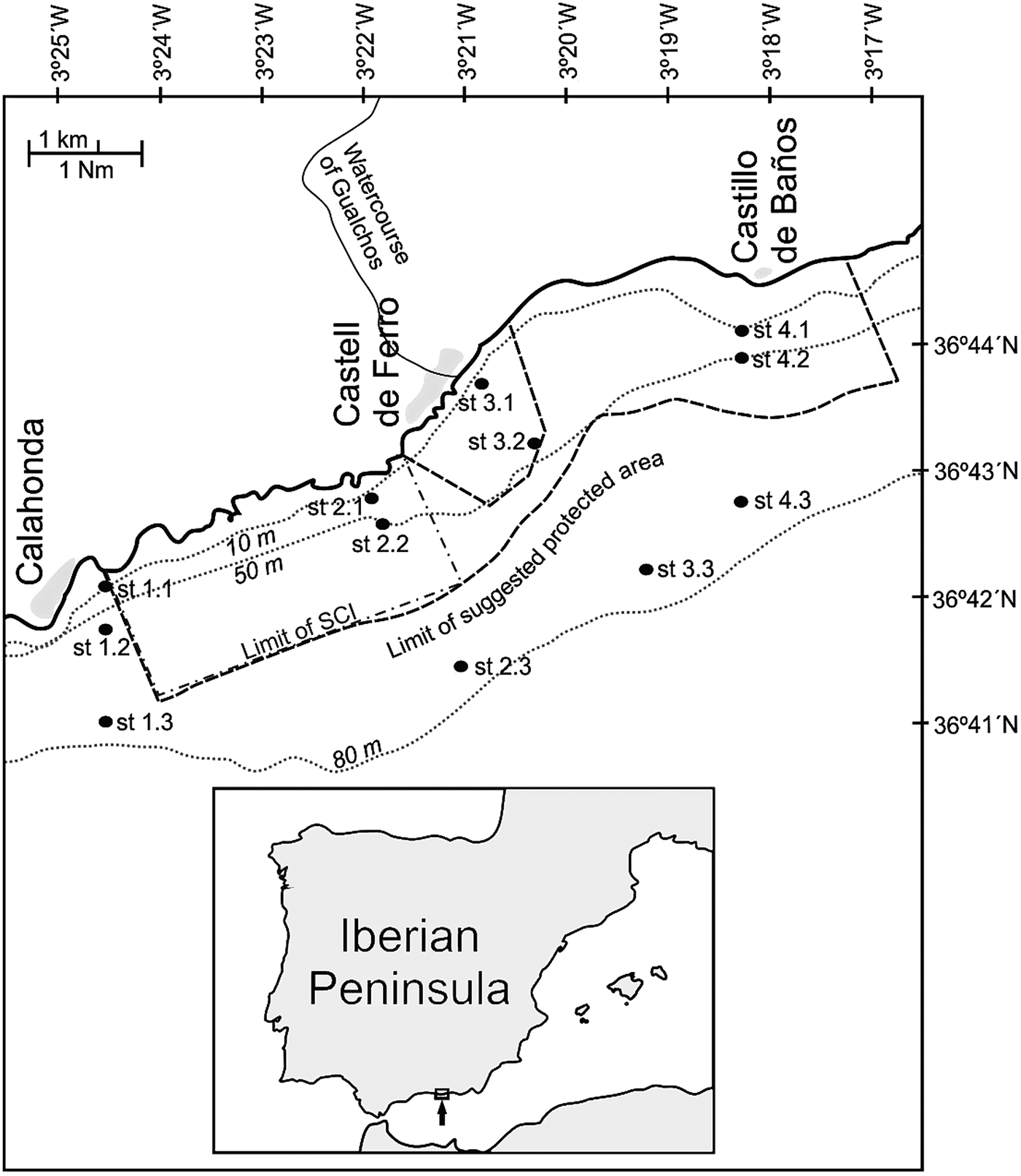
This study has been carried out within the SCI ‘Acantilados y Fondos Marinos de Calahonda – Castell de Ferro’ (Code: ES6140014) and the adjacent area up to Castillo de Baños, which has been proposed as an extension of this SCI by the regional government (Figure 1). The SCI covers 971.32 ha and is located between Calahonda (36°42′10″N 3°24′44″W) and Castell de Ferro (36°43′02″N 3°21′39″W), in the northern (Spanish) margin of the Alboran Sea. The protected coastal area is configured by high cliffs and rocky formations with submerged and semi-submerged caves promoted by karst processes, with the presence of two beaches that are located in sheltered areas. Alboran Sea currents flow from the slope and offshore areas, so there is only a residual circulation at the shelf. In the study area, the shelf water masses are mainly subjected to the wind action. According to the Environmental Information Network of Andalusia (REDIAM), the easterly and westerly winds are dominant in the studied area. The direction of waves and currents is predominantly east, followed by southwest and west. Surface currents are 17–29 cm s−1, decreasing with depth to 2.5 cm s−1 (Del Castillo y Rey & Macías Rivero, Reference Del Castillo Y Rey and Macías Rivero2006). The Atlantic anticyclonic gyre promotes upwelling of deep waters along the coasts of Málaga and Granada (Cebrián & Ballesteros, Reference Cebrián and Ballesteros2004). This phenomenon is enhanced by the strong westerly winds that usually blow in this area (Rodríguez, Reference Rodríguez1990). Seagrass meadows of the Mediterranean Posidonia oceanica and the subtropical Cymodocea nodosa occur close to Castillo de Baños on both soft and hard bottoms at depths between 8 and 15 m. The seafloor is mainly composed of rocky limestone and slates, with a powerful layer of sand and mud appearing in the circalittoral zone (between 30 and 60 m depth).
Location map of the studied area in the northern (Spanish) margin of the Alboran Sea, showing the sampling stations of the four transects.

Sample collection and laboratory procedures
Sampling was carried out in July 2010 in 12 sampling stations along four transects oriented perpendicularly to the coastline and at three different depths, corresponding to the sublittoral zone: three stations between 15 and 35 m depth (infralittoral), and nine circalittoral stations, five between 35 and 60 m, and four between 70 and 72 m (Figure 1). All necessary permits for sampling were obtained from the competent environmental authorities. Faunal samples were collected with a dredge of 42 cm width, 22 cm height and 4 mm of mesh size. In spite of the mesh size, the large amount of material collected stretched the net and clogged the mesh size, so the underestimation of the abundance of juveniles was minimized. The samples were collected by towing the dredge at a boat speed of 1.8 knots for 5 min, resulting in a sampling area of ~117 m2 per sample. This sampling technique has been previously used successfully for studying macrobenthic assemblages inhabiting soft bottoms of southern Spain (Rueda & Salas, Reference Rueda and Salas2003; García Muñoz et al., Reference García Muñoz, Manjón-Cabeza and García Raso2008; Urra et al., Reference Urra, Gofas, Rueda and Marina2011). Every sample was sieved over mesh sizes of 4 and 1 mm in the laboratory in order to facilitate sorting at the species level, and to help separate juveniles from adults of large species. Each size fraction was labelled and stored in 70% ethanol. Fauna was separated in different high taxonomic groups and quantified in each sample, but only the dominant groups (molluscs, crustaceans, echinoderms and fish) were identified to the lowest possible taxonomic level. The faunal material collected and identified has been deposited in the reference collections of the Centro Oceanográfico de Málaga (Instituto Español de Oceanografía) and of the Departamento de Biología Animal at the Universidad de Málaga.
Near-bottom seawater measurements (salinity, density and temperature) were performed at each sampling station using a Seabird SBE 25 CTD profiler. Samples of sediment were taken with a box-corer of 10 × 17 cm and 37 cm of maximum penetration at each sampling station. Granulometric analyses were performed in the laboratory using 100 g of dry sediment (60°C until constant weight) from the top 5 cm of the sediment column. Once dried, hydrogen peroxide and sodium polyphosphate were added for oxidation of the organic matter and dispersion of fine particles, respectively. Particles below 63 μm (mud fraction) were separated by wet sieving from those above 63 μm that were dry sieved for 15 min on an electric shaker to determine the following size fractions: >2 mm, 1–2 mm, 0.5–1 mm, 0.25–0.5 mm, 0.125–0.25 mm and 0.0625–0.125 mm, according to the Udden-Wentworth scale (Wentworth, Reference Wentworth1922). Sediment texture was defined by the Folk (Reference Folk1954) classification scheme. Weight percentages of organic matter and of carbonate were obtained using the Loss on Ignition (LOI) method and calculated as the weight loss of 25 g dry sediment samples after burning at 550 and 950°C, respectively (Heiri et al., Reference Heiri, Lotter and Lemcke2001).
Characterization of species and assemblages
Species were characterized according to their abundance (N: number of individuals of a species in the sample), Dominance index (%D: percentage of individuals of a species from the total) and Frequency index (%F: percentage of samples in which the species is present). The species were further classified according to the Constancy index (Glémarec, Reference Glémarec1964). The Constancy index is calculated as C ij = (P ij/P j) × 100, where P ij is the number of stations in which the species is present, and Pj is the total number of stations. C ij <12% indicates a rare species; 13%<C ij <25% less common species; 26%<C ij <50% common species; 51%<C ij <75% highly common species; 76%<C ij <100% constant species.
The faunal assemblages from each sampling station were characterized according to the total abundance (N, individuals·117 m−2), the species richness (S), the Shannon–Wiener diversity index (H′: log2) (Krebs, Reference Krebs1989) and the evenness index (J) (Pielou, Reference Pielou1969).
Data analysis
One-factor ANOVA was carried out for testing the differences in richness, abundance, diversity index and evenness between groups of samples collected at different sampling stations. Analyses to test the normality (Kolmogorov–Smirnov) and to verify the homogeneity of variances were executed prior to ANOVA analyses. When the normality or the homogeneity of variances did not adjust to ANOVA conditions, a log (x) transformation and a Welch test were applied respectively (Tomarken & Serlin, Reference Tomarken and Serlin1986). A post-hoc Tukey test (P < 0.05) was used for posterior multiple comparisons. These statistical procedures were performed using the software SPSS Statistics v11.
Non-parametric multivariate techniques, such as group-average sorting classification (CLUSTER) and non-metric Multi-dimensional scaling (MDS) ordination with the Bray–Curtis similarity index (Bray & Curtis, Reference Bray and Curtis1957), were applied on both qualitative (presence/absence) and quantitative data in order to identify the different benthic assemblages according to data on molluscs, decapod crustaceans, echinoderms and fish species occurring in each sampling station. For the quantitative analyses, a fourth root transformation on species abundance data was applied in order to normalize the data and to reduce the influence of highly dominant species (Field et al., Reference Field, Clarke and Warwick1982). ANOSIM (Analysis Of SIMilarity) was used for testing the differences between groups of samples according to different factors selected a priori (e.g. depth, transect, sediment type) (Clarke & Green, Reference Clarke and Green1988; Clarke & Warwick, Reference Clarke and Warwick1994). The SIMPER (SIMilarity of PERcentage) procedure was also used in order to establish the contribution of the different species to the different groupings of samples. These multivariate analyses were executed using the software PRIMER v6.0.
Canonical correspondence analyses (CCA) were carried out in order to study the relationships between faunal assemblages and environmental variables. This method provides a general framework for statistical tests of the relationships between the environmental variables and the biological assemblages (ter Braak, Reference Ter Braak1986). The statistical significance of the effect of each variable was tested by a Monte Carlo permutation test. CCA results were represented graphically in a bi-dimensional ordination diagram generated by biplot scaling focusing on inter-sample distances, in which samples are represented by points and environmental variables by vectors. This multivariate analysis was executed using the software CANOCO. Prior to the CCA analyses, environmental variables were screened and those which presented a correlation of more than 0.9 (after Spearman correlation analysis) were not further considered. Environmental data expressed as % were transformed log(x + 1).
RESULTS
Water and sediment characteristics
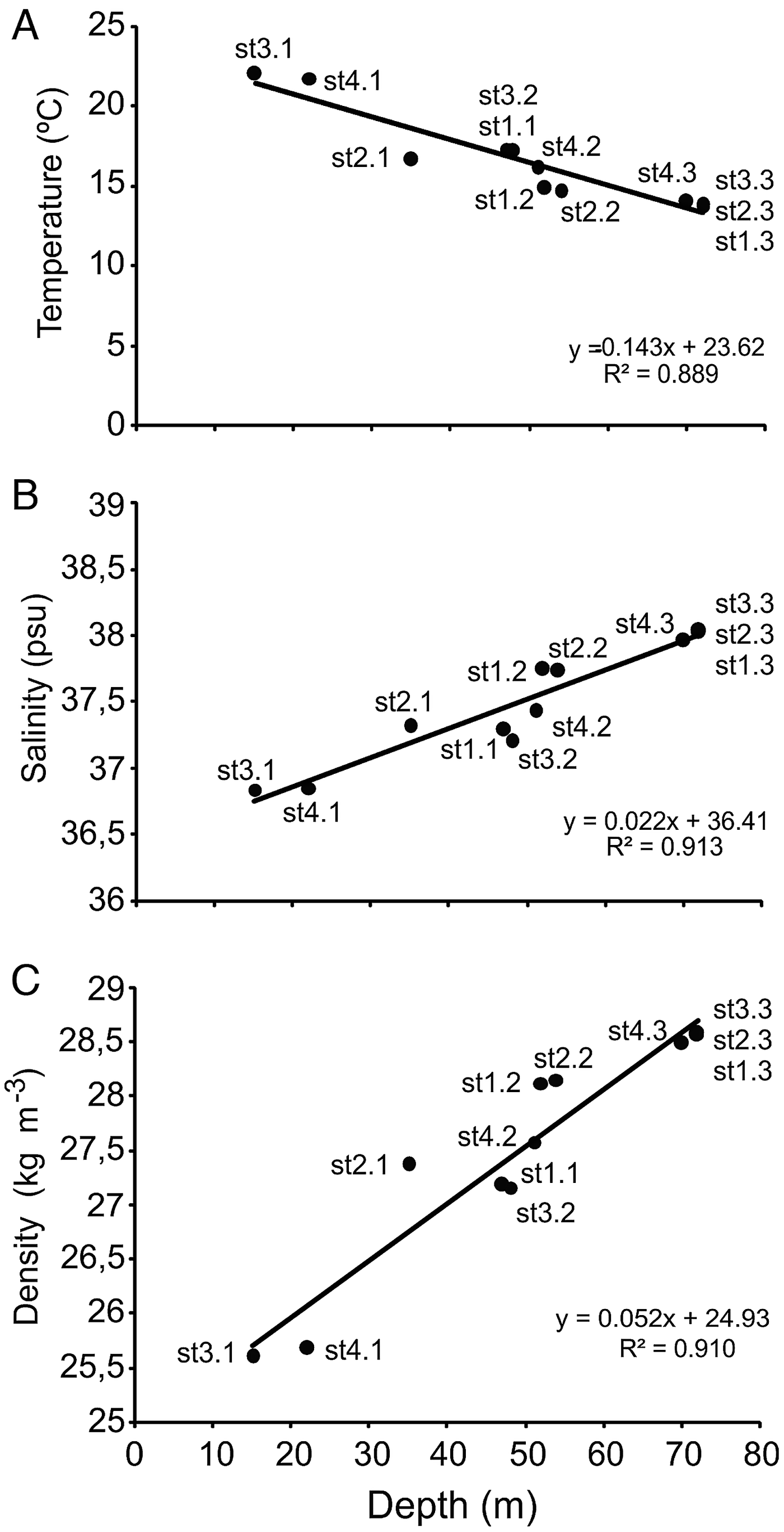
Near-bottom seawater temperature ranged between 13.77°C (sampling station st2.3) and ~22.06°C (st3.1), displaying a strong negative relationship with depth (R 2 = 0.89, P < 0.01) (Figure 2A). Salinity values ranged between 36.84 psu (st3.1) and 38.03 psu (st2.3), displaying a strong positive relationship with depth (R 2 = 0.91; P < 0.01) (Figure 2B). A similar significant trend was found with water density and depth (R 2 = 0.91; P < 0.01), with low density values (25–27 kg m−3) in shallow sampling stations (st1.1, st2.1, st3.1, st4.1) and high values (~28.5 kg m−3) in deep sampling stations (st1.3, st2.3, st3.3, st4.3) (Figure 2C).
Linear relationships between temperature (A), salinity (B) and water density (C) with depth in the SCI ‘Acantilados y Fondos Marinos de Calahonda-Castell de Ferro’. Codes resemble sampling stations displayed in Figure 1.
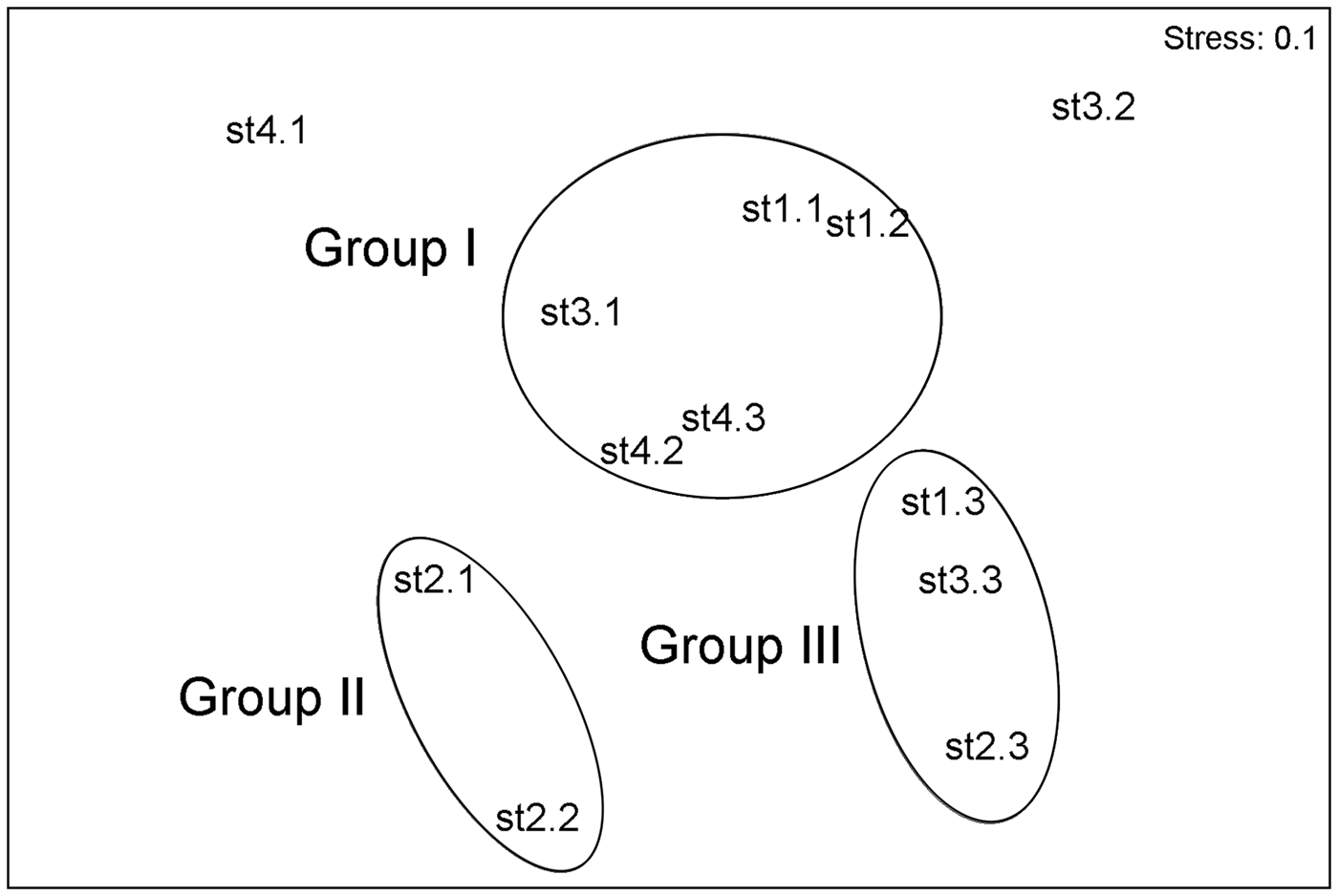
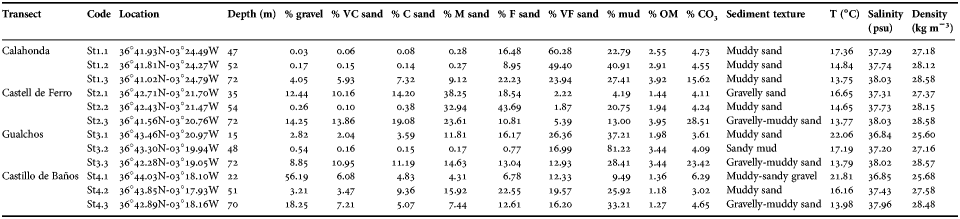
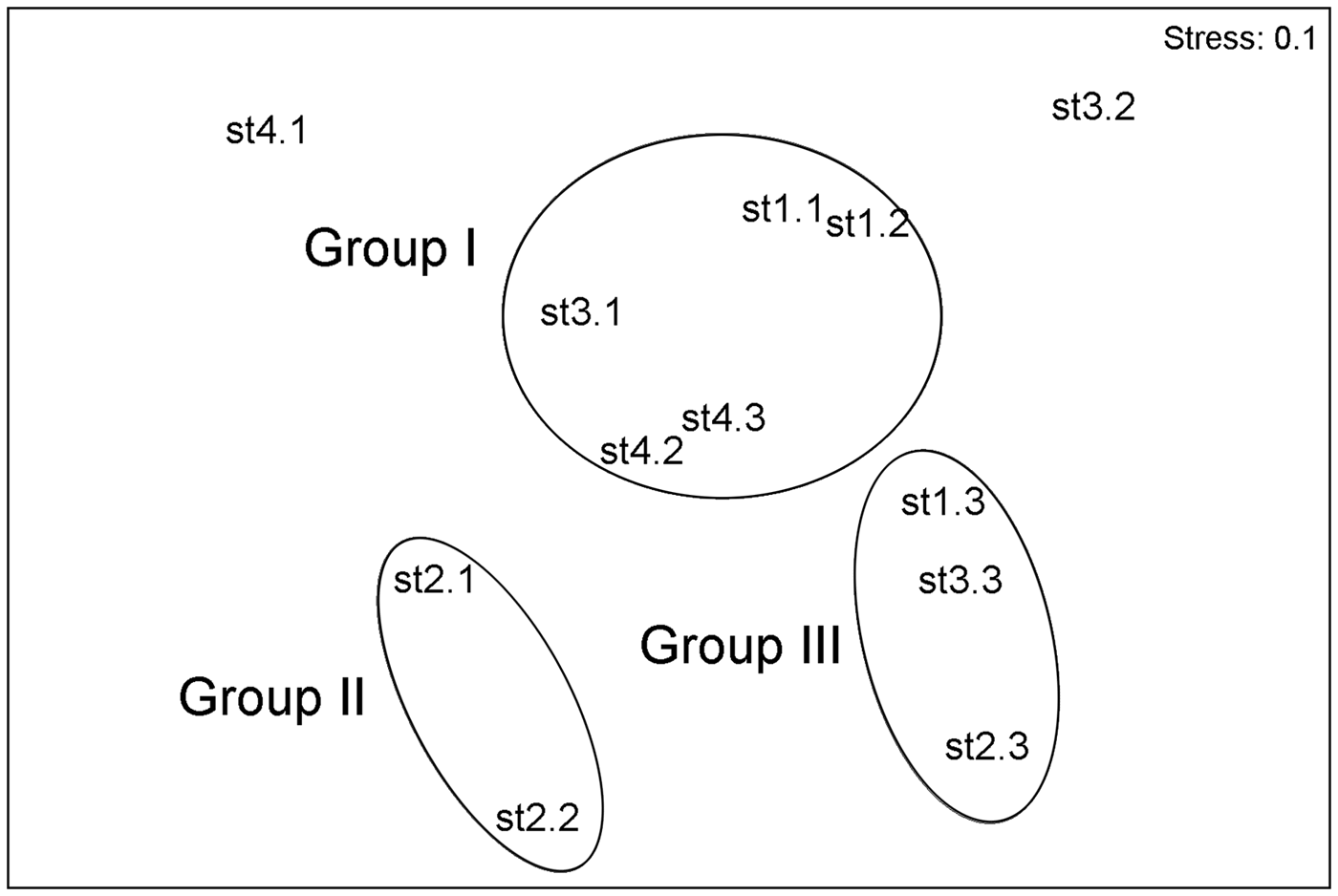
Data regarding the grain size distribution, organic matter (% OM) and carbonate content (% CO3) of the sediment collected in each sampling station are shown in Table 1. Sampling stations formed three main groups, related with the sediment characteristics, in the CLUSTER and MDS, except sampling stations st4.1 (high gravel content) and st3.2 (high mud and organic matter content) that did not show strong similarities with any other sampling station (Figure 3). Sediments from sampling stations forming group I (st1.1, st1.2, st3.1, st4.2, st4.3) generally displayed a high content of fine or very fine sand, with st4.3 displaying a higher content of gravel than the remaining ones from that group. Sediments from sampling stations forming group II (st2.1, st2.2) had a high content of medium sand, being higher in st2.1 that in st2.2, the latter also displaying a high content of fine sand. Group III was formed by deep sampling stations (st1.3, st3.3, st2.3) that contained a high amount of fine sand, organic matter and carbonate.
MDS analysis based on sediment data displaying groupings of samples at 50% of similarity. Differences between groups were significant according to percentage of mud (R ANOSIM = 0.70, P < 0.05) and organic matter content (R ANOSIM = 0.54, P < 0.05).
Location, sediment characteristics and environmental variables at each sampling station.
% gravel, percentage of gravel; % VC sand, percentage of very coarse sand; % C sand, percentage of coarse sand; % M sand, percentage of medium sand; % F sand, percentage of fine sand; % VF sand, percentage of very fine sand; % mud, percentage of mud; % OM, percentage of organic matter; % CO3, percentage of carbonate; T, temperature.
Faunal composition of sampling stations
A total of 14,318 individuals were collected during this study, with crustaceans as the dominant group (39.5% of the total individuals), followed by annelid polychaetes (27.4%), molluscs (27.4%), echinoderms (4.6%) and fish (1.1%) (Table 2). Among the crustaceans, decapods displayed the highest abundance with 2634 individuals (46.6% of the total crustaceans), followed by amphipods (1845 ind., 32.6%), mysidaceans (938 ind., 16.6%) and cumaceans (107 ind., 1.9%), with frequency values ranging between 83–100% F. Decapods (100% F) were the only crustacean group identified at species level, and thus further faunal analyses were performed on this group. Polychaetes displayed high frequency values (100% F), but were not identified at species level, with the exception of the serpulid Ditrupa arietina (O. F. Müller, 1776), which displayed a dominance value of 25.4% (considering total abundance of fauna) and was present in all the samples (100% F). Among the molluscs, bivalves displayed the highest abundance with 2029 individuals (51.7% of the total of molluscs), followed by gastropods (1868 ind., 47.6%), scaphopods (23 ind., 0.6%) and chitons (1 ind., 0.1%). Bivalves and gastropods were found in all of the samples (100% F), whereas scaphopods and chitons displayed a low frequency (generally < 25% F). Ophiuroids were the most abundant group among the echinoderms, with 547 individuals (83.1% of the total echinoderms), followed by holothurians (62 ind., 9.4%), sea urchins (30 ind., 4.6%) and sea stars (19 ind., 4.9%). Finally, and although the sampling methodology used here is not the most suitable for collecting fish, callionymids were the most abundant group among the fishes, with Callionymus risso Lesueur, 1814 the dominant species with 104 individuals (65.4% of the total of fishes). Other dominant fishes were gobids (36 ind., 22.6%) and soleids (7 ind., 4.4%). Regarding number of species, molluscs were the best represented group with 141 species (80 spp. of gastropods, 57 spp. of bivalves, 3 spp. of scaphopods and 1 spp. of chiton), followed by crustacean decapods (46 spp.), fishes (18 spp.) and echinoderms (13 spp.). The abundance of the top dominant and most frequent species in each assemblage are displayed in Table 3.
Total abundance (Nt), dominance (% D) and frequency (% F) values of the most abundant faunal groups found in the studied area.

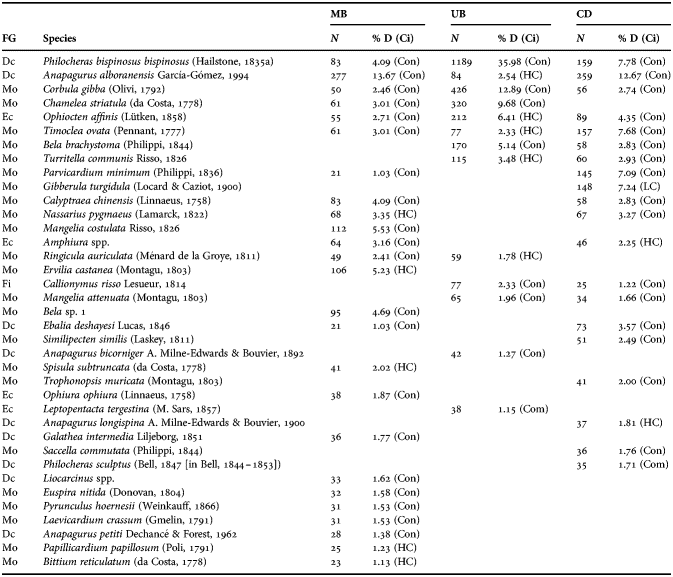
Abundance (N), dominance (% D) and constancy (Ci) values for dominant species (%D > 1) in the faunal assemblages identified in the soft bottoms studied within the SCI ‘Acantilados y Fondos Marinos de Calahonda-Castell de Ferro’.
MB, mixed bottoms assemblage (st2.1, st 3.1, st 4.1); UB, unstable bottoms assemblage (st1.1, st1.2, st3.2, st4.2); CD, coastal detritic bottoms assemblage (st1.3, st2.2, st2.3, st3.3, st4.3); FG, faunal group; Dc, decapods crustacean; Mo, mollusc; Ec, echinoderm; Fi, fish; Con, constant; HC, highly common; LC, less common.
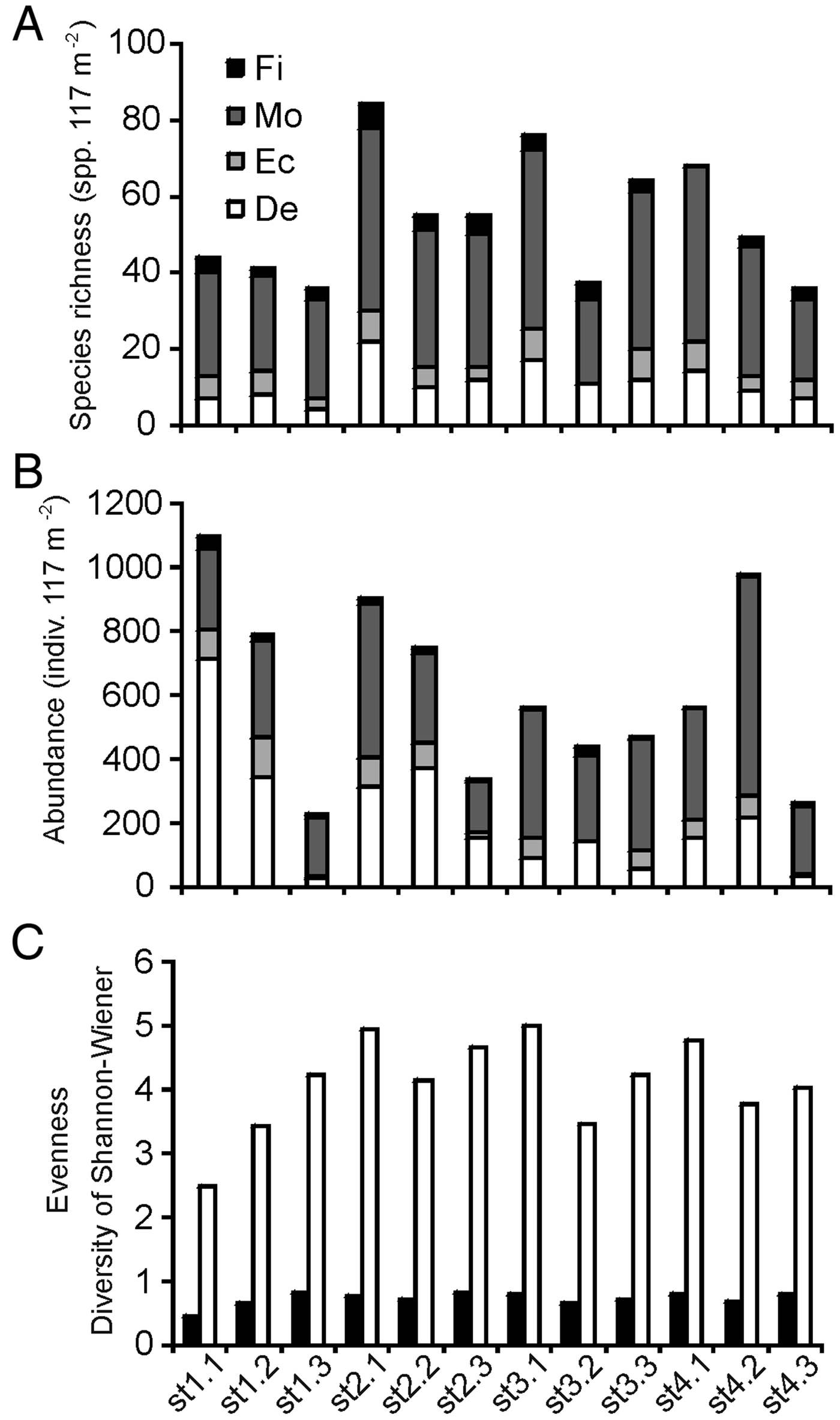
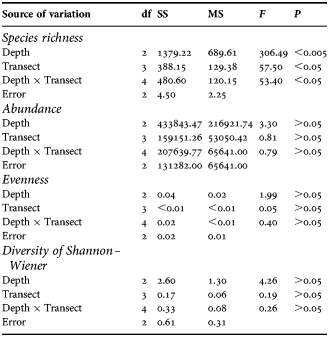
Considering data of mollusc, decapod crustaceans, echinoderm and fish species occurring in each sampling station, species richness values (S) decreased significantly with depth (Table 4), being highest at the sampling station st2.1 (89 spp.) and st3.1 (80 spp.), and lowest at st1.3 (39 spp.) and st4.3 (40 spp.) (Figure 4A). Differences in S were also significant according to transect (Table 4), with the lowest value (39–49 spp.) observed at transect 1 (Calahonda). Abundance, evenness (J′) and diversity (H′) values did not display significant differences in relation to depth and transect (Figure 4B, C; Table 4). The different faunal groups also showed a high abundance (N) variability, for example fish showed the highest N value at st1.1 and 3.2 (31–38 ind. 117 m−2), molluscs at st4.2 (~700 ind. 117 m−2), echinoderms at st1.2 (124 ind. 117 m−2) and decapods at st1.1 (717 ind. 117 m−2). Evenness and diversity displayed a similar trend, increasing with depth at transect 1, but decreasing in the remaining transects (Figure 4C). The highest J′ value was observed at st1.3 (J′ = 0.82) whereas the highest H′ value was observed at st2.1 and 3.1 (~5 bits). The faunal composition of the sampling stations differed significantly in relation to depth regarding qualitative (R ANOSIM = 0.56, P < 0.001) and quantitative data (R ANOSIM = 0.65, P < 0.001), but not to transect (in both cases P > 0.05).
Species richness (A), abundance (B), evenness (black bar) and Shannon–Wiener indices (white bar) (C) of soft bottom faunal assemblages in the sampling stations. Fi, fish; Mo, molluscs; Ec, echinoderms; De, decapod crustaceans.
Two-factor ANOVA analyses for testing differences in the values of the species richness, abundance, evenness and Shannon–Wiener diversity index in relation to mean depth (43, 48, 76 m) and location (transects: 1, 2, 3, 4) of sampling stations.
Df, degrees of freedom; SS, sum of squares; MS, mean square; F, F value; P, P value.
Characterization and spatial distribution of assemblages
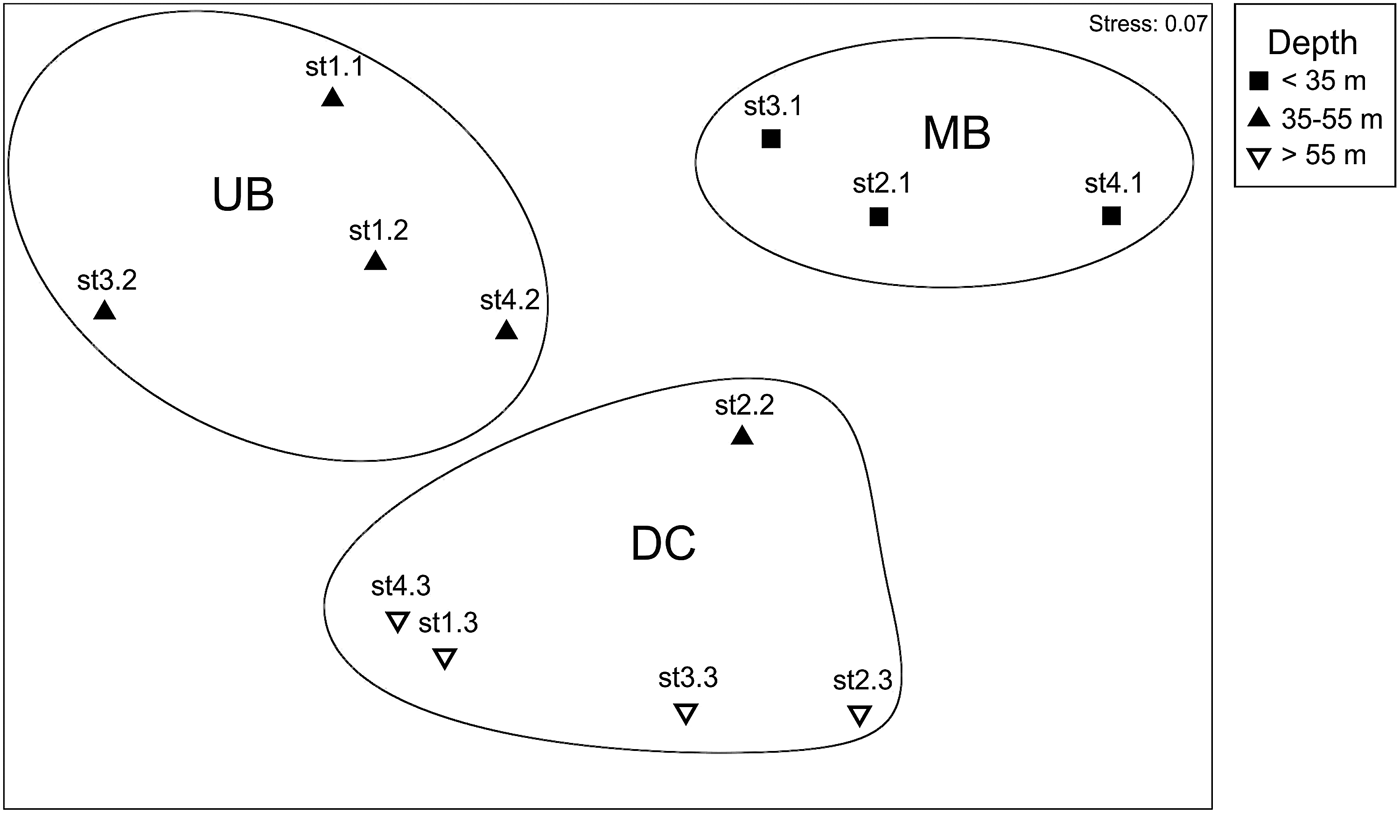
Three different faunal assemblages have resulted in the multivariate analyses (CLUSTER and MDS) in relation to depth at 44% of similarity (Figure 5). These groupings differed significantly using both qualitative (R ANOSIM = 0.693, P = 0.001) and quantitative data (R ANOSIM = 0.598, P = 0.001).
MDS analysis based on quantitative similarities (Bray–Curtis similarity index) of the faunal assemblages at each sampling station displaying groupings with more than 44% of similarity. MB, mixed bottoms assemblage; UB, unstable bottoms assemblage; DC, coastal detritic bottoms assemblage.
The first group of Mixed bottoms assemblage (MB) included samples of the shallowest sampling stations (15–35 m depth) with infralittoral species inhabiting soft bottoms with a high proportion of mud (st3.1) and gravel (st4.1). The second group of Unstable bottoms assemblage (UB) comprised samples collected between 47–52 m depth, with shallow circalittoral species inhabiting muddy fine to very fine sand bottoms. The third group of Coastal detritic bottoms assemblage (CD) is formed by samples collected at the deepest stations (70–72 m depth) together with st2.2 (54 m depth), with deep circalittoral species inhabiting soft bottoms with a high proportion of gravel and coarse sand. Differences among faunal assemblages were higher between MB and UB (R ANOSIM = 0.90, P < 0.05), than between UB and CD (R ANOSIM = 0.69, P < 0.05).
According to the SIMPER analyses, the species that mostly characterized MB (average similarity = 51.9%) were the decapods Anapagurus alboranensis, Philocheras bispinosus, Liocarcinus spp., the gastropods Calyptraea chinensis, Mangelia costulata, Pyrunculus hoernesii, Bela sp. 1, the bivalve Chamelea striatula and the echinoderms Ophiocten affinis and Amphiura spp. The decapod P. bispinosus and the bivalves C. striatula and Corbula gibba were the species that mostly characterized UB (average similarity = 56.6%). Finally, the bivalves Parvicardium minimum and Timoclea ovata, the gastropod Turritella communis and the decapods P. bispinosus, Ebalia deshayesi and A. alboranensis, were the species that mostly characterized CD (average similarity = 51.1%).
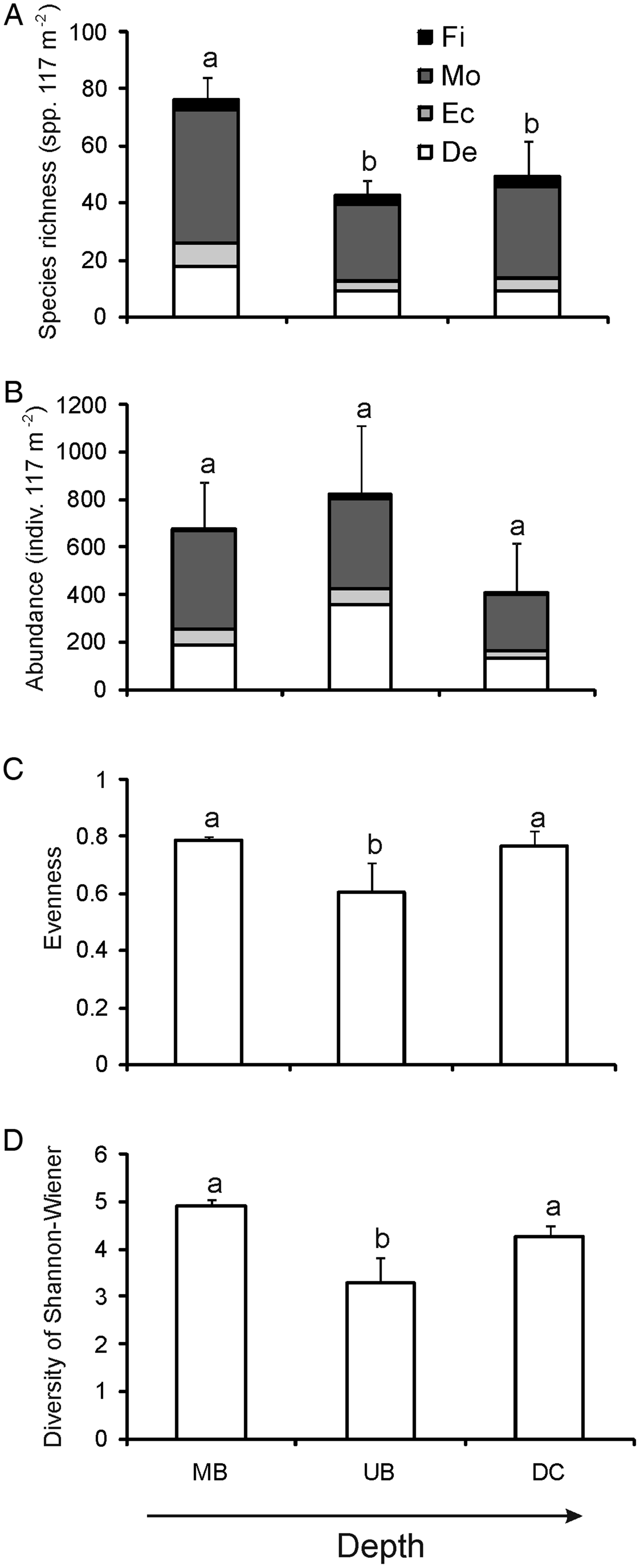
The MB (st2.1, st3.1, st4.1) displayed the highest mean species richness (one-factor ANOVA, F = 11.11, P < 0.005), evenness (F = 7.81, P < 0.05) and diversity values (F = 17.94, P < 0.005) when compared with those from other assemblages (Figure 6). From the 140 identified species in this assemblage, 25 of them displayed dominance values higher than 1%, with A. alboranensis as the top dominant species (13.7% D), followed by the gastropod Mangelia costulata (5.5% D) and the bivalve Ervilia castanea (5.2% D) (Table 3). Molluscs (63.3% of the total species) and decapods (22.3%) were the faunal groups best represented. The most characteristic species were, according to the Constancy indices, the decapod Pisidia longimana and the gastropods Bittium submamillatum, Cylichnina umbilicata and Crassopleura maravignae (constant).
Species richness (A), abundance (B), evenness (C) and Shannon–Wiener diversity index (D) for the faunal assemblages identified in the different types of bottoms. Mean + SE. Letters above error bars display the results of post-hoc test; different letters distinguish significantly different means at P < 0.05. MB, mixed bottoms assemblage; UB, unstable bottoms assemblage; DC, coastal detritic bottoms assemblage. Fi, fish; Mo, molluscs; Ec, echinoderms; De, decapod crustaceans.
The UB (st1.1, st1.2, st3.2, st4.2) harbours a total of 90 species, from which 13 spp. displayed dominance values higher than 1%. The species P. bispinosus (36% D) dominated quantitatively the assemblage, followed by C. gibba (12.9% D) and C. striatula (9.7% D) (Table 3). This assemblage displayed the significantly lowest S, J′ and H′ values of the studied assemblages, whereas the N values were the highest, although with non-significant differences with the MB and CD (Figure 6). Molluscs and decapods displayed the highest contribution according to the number of species (61.1 and 21.1% respectively). The most characteristic species were the decapod Anapagurus bicorniger (constant), the bivalve Thyasira flexuosa (very common) and the gastropod Colpodaspis pusilla (common).
The CD was found over the highest number of sampling stations (st1.3, st2.2, st2.3, st3.3, st4.3). A total of 123 species were identified, with 20 species displaying dominance values higher than 1% and A. alboranensis (12.7% D) as the top dominant species. It was followed by a group of species with values ranging between 7.1–7.8% D that included P. bispinosus, T. ovata, the gastropod Gibberula turgidula and P. minimum (Table 3). The S values were significantly lower than those found in the MB, whereas the rest of the indices displayed similar values (Figure 6). Once again, molluscs were the best represented faunal group (64.2% of the species), followed by decapods (18.7%). The most characteristic species were the gastropod Trophonopsis muricata and the bivalve Anadara polii, both of them constant species.
Relationships between environmental variables and faunal assemblages
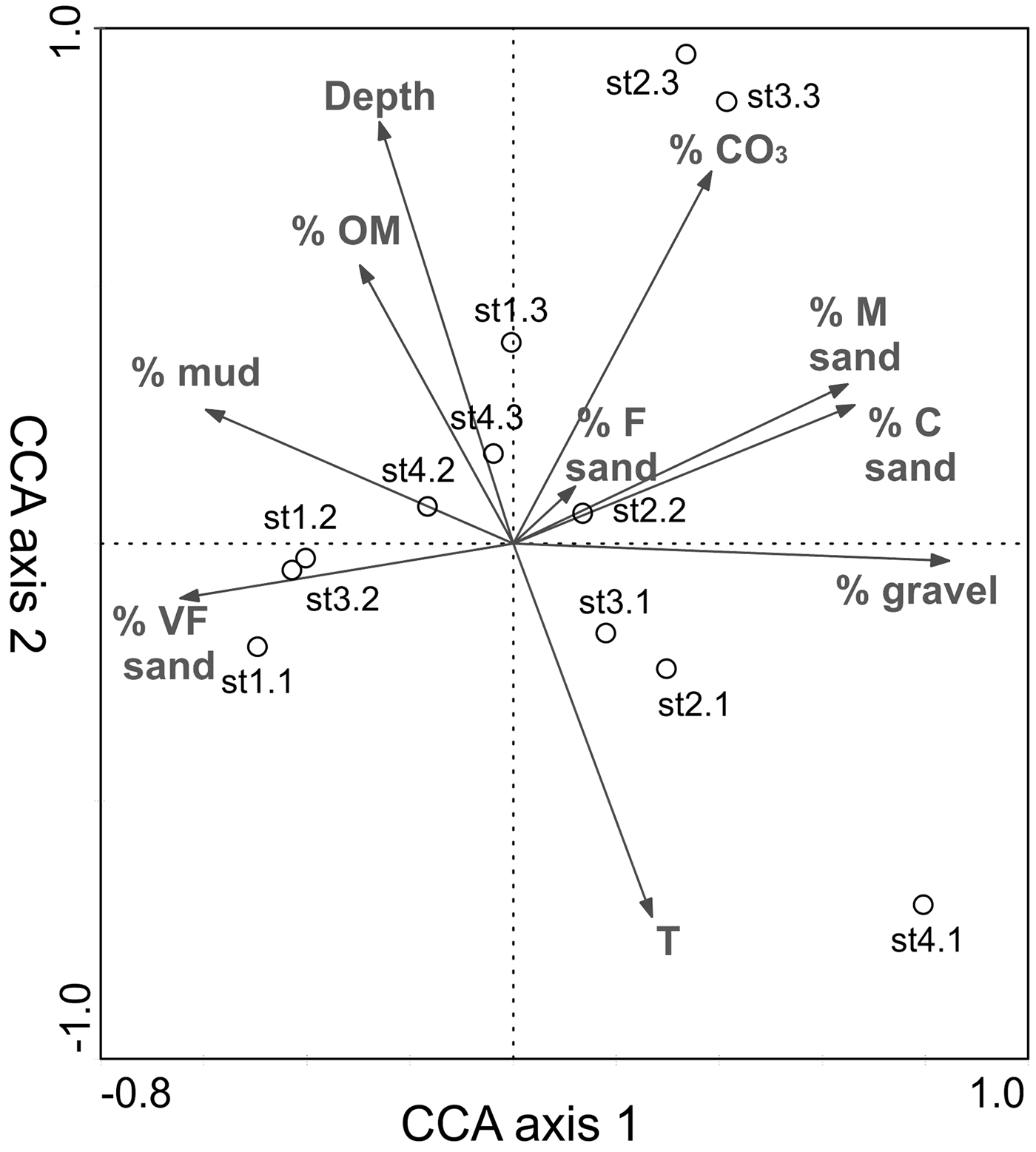
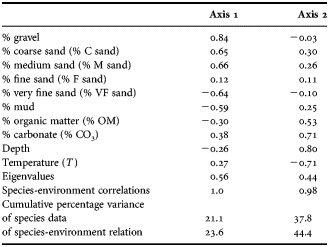
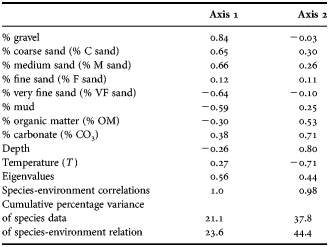
The canonical correspondence analysis (CCA) determined those environmental variables that explained most of the variance of the faunal data. The water density, salinity and percentage of very coarse sand were not considered in the analysis because they presented a Spearman correlation of more than 0.95 with other variables such as depth and percentage of gravel. As detailed in Table 5, the first axis of the graphic is related to the gravel, coarse and medium sand contents, so sampling stations appeared distributed from the left to the right of axis 1 following an increase of these variables (Figure 7). There is another gradient for the second axis, especially related to depth and percentage of carbonate, displaying a bottom-up increasing gradient (towards the positive side) (Figure 7). The location of each sample station with respect to each arrow represents the prevailing environmental characteristics. Axes I and II were the most important in CCA ordination, accumulating 37.8% of the species variance and 44.4% of the species-environment variance (Table 5).
Results of the canonical correspondence analysis (CCA) between the environmental variables and the faunal data of samples collected from soft bottoms within the SCI ‘Acantilados y Fondos Marinos de Calahonda-Castell de Ferro’. The samples are displayed by circles and the environmental variables by arrows. T, temperature; % gravel, percentage of gravel; % C sand, percentage of coarse sand; % M sand, percentage of medium sand; % F sand, percentage of fine sand; % VF sand, percentage of very fine sand; % mud, percentage of mud; % OM, percentage of organic matter; % CO3, percentage of carbonate.
Results of the canonical correspondence analysis (CCA) for the faunal assemblages identified in the soft bottoms studied within the SCI ‘Acantilados y Fondos Marinos de Calahonda-Castell de Ferro’.
DISCUSSION
Faunal composition and singular species
The soft bottoms studied within the SCI Calahonda-Castell de Ferro (southern Spain) contain a good representation of sublittoral fauna, with a total of 218 species identified for molluscs, decapods, echinoderms and fish. The detailed study of other groups such as polychaetes, small crustaceans, poriferans and cnidarians would considerably increase the number of known species for this coastal area of the northern Alboran Sea. Similar high species richness has been recently found in the SCI ‘Calahonda’ (Málaga province) in the north-western Alboran Sea (García Muñoz et al., Reference García Muñoz, Manjón-Cabeza and García Raso2008; García Raso et al., Reference García Raso, Gofas, Salas Casanova, Manjón-Cabeza, Urra and García Muñoz2010; Urra et al., Reference Urra, Gofas, Rueda and Marina2011). The high biodiversity observed in both areas seems to be related to the biogeographic confluence of fauna from different regions in southern Spain and the heterogeneity of soft bottoms, together with the prevailing hydrodynamic conditions, such as the presence of upwellings in these areas of the northern Alboran Sea (e.g. Marbella, Motril) that favour a high productivity (Parrilla & Kinder, Reference Parrilla and Kinder1987; Minas et al., Reference Minas, Coste, Lecorre, Minas and Raimbault1991; Rodríguez et al., Reference Rodriguez, Bautista, Blanco, Figueroa, Cano and Ruiz1994; Sarhan et al., Reference Sarhan, García-Lafuente, Vargas and Plaza2000). It is noteworthy that the SCI ‘Calahonda-Castell de Ferro’ and the SCI ‘Calahonda’ represent small stretches of coastline (~10 km length), but they contain a very high biodiversity that would probably increase if other shallower habitats were sampled and studied. Species richness values for these small protected areas, excluding annelid polychaetes, are even higher than those reported in larger soft bottom areas studied along European coastal waters (Mediterranean: Labrune et al., Reference Labrune, Grémare, Amouroux, Sardá, Gil and Taboada2008; Pubill et al., Reference Pubill, Abelló, Ramón and Baeta2011; Atlantic: Sanvicente-Añorve et al., Reference Sanvicente-Añorve, Leprêtre and Davoult2002; Holte et al., Reference Holte, Eivind and Salve2005), which stress the ecological importance of the Alboran Sea for the conservation of European marine biodiversity.
Molluscs and crustaceans are the most species-rich phyla among the faunal groups studied in soft bottoms of the northern Alboran Sea (García Raso et al., Reference García Raso, Gofas, Salas Casanova, Manjón-Cabeza, Urra and García Muñoz2010, this study), as commonly observed in similar bottoms in the Mediterranean Sea (Bianchi & Morri, Reference Bianchi and Morri2000). In this context, the southern Iberian Peninsula has shown to support highly rich molluscan and decapod assemblages in different habitats such as soft bottoms (Rueda et al., Reference Rueda, Salas and Gofas2000; García Muñoz et al., Reference García Muñoz, Manjón-Cabeza and García Raso2008; Rufino et al., Reference Rufino, Gaspar, Pereira, Maynou and Monteiro2010; Urra et al., Reference Urra, Gofas, Rueda and Marina2011; Martins et al., Reference Martins, Sampaio, Quintino and Rodrigues2014), seagrass meadows (Rueda et al., Reference Rueda, Gofas, Urra and Salas2009; Mateo Ramírez & García Raso, Reference Mateo Ramírez and García Raso2012; Urra et al., Reference Urra, Mateo Ramírez, Marina, Salas, Gofas and Rueda2013a), photophilous algal stands (Sánchez-Moyano et al., Reference Sánchez-Moyano, Estacio, García-Adiego and García-Gómez2000; Urra et al., Reference Urra, Rueda, Mateo Ramírez, Marina, Tirado, Salas and Gofas2013b) and hard bottoms with coralligenous communities (Cebrián & Ballesteros, Reference Cebrián and Ballesteros2004; García Muñoz et al., Reference García Muñoz, Manjón-Cabeza and García Raso2008; Urra et al., Reference Urra, Rueda, Gofas, Marina and Salas2012). The presence in Calahonda-Castell de Ferro of rare and uncommon species within the Mediterranean Sea is remarkable, for example the gastropods Gibberula turgidula (Locard & Caziot, 1900), Hadriania craticulata Bucquoy et al., 1882 and Philine retifera (Forbes, 1844) (Gofas et al., Reference Gofas, Moreno and Salas2011). Another singularity of the mollusc fauna of this SCI include some species commonly found at deeper bottoms, such as the bivalve Poromya granulata (Nyst & Westendorp, 1839), living usually between 200–500 m depth and collected here at 70 m depth, or the gastropod Alvania testae (Aradas & Maggiore, 1844), a typical species of the bathyal zone (100–800 m depth) and collected between 50–70 m depth. The individuals of A. testae displayed shells with a colour pattern unlike the whitish colour that generally presents in deeper specimens. Conversely, specimens commonly observed in shallow habitats were collected at deeper ones, such as Haminoea hydatis (Linnaeus, 1758), a gastropod that is generally associated with intertidal or very shallow muddy bottoms and collected between 20–35 m depth (Gofas et al., Reference Gofas, Moreno and Salas2011).
Similar observations were made regarding the crustacean decapods, with the presence of the shrimp Bythocaris cosmetops Holthuis, 1951, a typical Atlantic species known to inhabit deep waters and collected in Calahonda-Castell de Ferro at 61 m depth. Furthermore, the catch of three specimens of B. cosmetops represents the first record for the genus and species in the Mediterranean Sea and Iberian Peninsula (south-western Europe) (García Raso et al., Reference García Raso, Marina and Baro2011). Other remarkable species are the hermit crab Pagurus mbizi (Forest, 1955), a typical West African species with no records further north than Senegal (García Raso et al., Reference García Raso, Salmerón, Baro, Marina and Abelló2014), and Athanas amazone Holthuis, 1951, described from Africa and with few observations in European waters (Froglia & Atkinson, Reference Froglia and Atkinson1988; García Raso, Reference García Raso1996; Anker & Ahyong, Reference Anker and Ahyong2007), probably because it inhabits burrows of the stomatopod crustacean Squilla mantis (Linnaeus, 1758). The influence of the Atlantic waters entering the Mediterranean via the Strait of Gibraltar, together with the bottom currents and upwellings – these can be detected from the temperature and salinity values of the water masses present in the shallower and deeper stations respectively – may favour the connectivity among shallow habitats (e.g. seagrass meadows, rocky outcrops with large photophilous stands, underwater caves) and between these and deeper soft bottoms within the SCI. All this could explain the coexistence of these rare or commonly Atlantic species in the study area, as observed also in Calahonda (Málaga) with species that display a typical north Atlantic (Urra & Gofas, Reference Urra and Gofas2009) or north-western African distribution (Rueda & Salas, Reference Rueda and Salas1998; Rueda & Gofas, Reference Rueda and Gofas1999). Furthermore, the deep Mediterranean water (with high salinity and low temperature) can introduce larvae of bathyal species, such as Poromya granulata or Alvania testae.
Characterization of assemblages and environmental links
A mixed bottoms (MB) assemblage composed of 140 identified species was found inhabiting soft bottoms with a high proportion of mud or gravel. The top dominant species are the decapod Anapagurus alboranensis, the molluscs Mangelia costulata, Bela sp. 1, Nassarius pygmaeus and Calyptraea chinensis, and the echinoderm Amphiura sp. Some of these species have also been found as dominants in assemblages from bioclastic and fine sand bottoms of the north-western Alboran Sea (García Muñoz et al., Reference García Muñoz, Manjón-Cabeza and García Raso2008; Urra et al., Reference Urra, Gofas, Rueda and Marina2011), but some of them are replaced by congeneric species in other areas of the Mediterranean, such as in the case of A. alboranensis by the widespread Anapagurus laevis in detritic bottoms of Italy (Somaschini et al., Reference Somaschini, Martini, Gravina, Belluscio, Corsi and Ardizzone1998). However, the sampling station St4.1 displayed some differences, because it is located in a sandy bottom with high gravel content in the infralittoral zone. In this case, the benthic assemblage was dominated by the molluscs Ervilia castanea, Digitaria digitaria, C. chinensis, Callista chione and Anomia ephippium, the decapods A. alboranensis and Diogenes pugilator, and the echinoderm Echinocyamus pusillus. This type of assemblage has strong similarities with the ‘Coarse sand and fine gravel under the influence of bottom currents assemblage’ described by Pérès & Picard (Reference Pérès and Picard1964) and by Dauvin (Reference Dauvin1988), and it is common in high-energy infralittoral areas, such as the Strait of Gibraltar (Rueda et al., Reference Rueda, Salas and Gofas2000; García Raso & Manjón-Cabeza, Reference García Raso and Manjón-Cabeza2002), the outer part of some Galician Rias (Moreira et al., Reference Moreira, Quintas and Troncoso2005; Troncoso et al., Reference Troncoso, Moreira and Urgorri2005) or areas with high deposition of coarse sediment and bioclasts from adjacent seagrass beds (Somaschini et al., Reference Somaschini, Martini, Gravina, Belluscio, Corsi and Ardizzone1998).
The coastal detritic bottoms assemblage (CD) occurs on deeper bottoms with coarse sediment, as found for the MB assemblage, with a mixture of terrigenous and biogenic elements. The faunal assemblage, composed of 123 identified species, is dominated by Parvicardium minimum, Timoclea ovata, Nassarius pygmaeus and Gibberula turgidula and the decapods Anapagurus alboranensis, Philocheras bispinosus, Ebalia deshayesi and Anapagurus longispina. Some of these species are common components of circalittoral soft bottoms assemblages and have been found in other coastal detritic bottoms (Bourcier, Reference Bourcier1978) or muddy detritic bottoms within the Mediterranean Sea (Desbruyères et al., Reference Desbruyéres, Guille and Ramos1972). The coastal detritic assemblage is very widespread along European coasts (Bellan-Santini et al., Reference Bellan-Santini, Lacaze and Poizat1994; Dauvin, Reference Dauvin1997), and in Calahonda-Castell de Ferro it displays strong sedimentological and faunistic similarities to those found in the Ionian Sea at similar depths, which were also dominated by P. minimum and T. ovata (Zenetos et al., Reference Zenetos, Christianidis, Pancucci, Simboura and Tziavos1996). Coastal detritic assemblages generally support high species richness due to the presence of different micro-habitats, promoted by the gravels, bioclasts and sandy or muddy sediments that induce a diversification of the ecological niches for a diversified fauna when compared with homogeneous soft bottoms (Morin et al., Reference Morin, Kastendiek, Harrington and Davis1985; Frontier & Pichod-Viale, Reference Frontier and Pichod-Viale1993; Urra et al., Reference Urra, Gofas, Rueda and Marina2011).
The unstable bottoms assemblage (UB) could be considered a facies of the CD community, with transitional characteristics to muddy detritic bottoms (similar to ‘Biocénoses des fonds detritiques envasés’ sensu Pérès & Picard, Reference Pérès and Picard1964). The lowest number of identified species was found in this assemblage (90 spp.), and some of the dominant species included the molluscs Corbula gibba, Chamelea striatula, Turritella communis and Bela brachystoma, as well as the echinoderms Ophiocten affinis and Leptopenctacta tergestina. Different groups of crustaceans (caprellids, gammarids and mysids) also appeared with a high abundance in this type of assemblage as well as the polychaete Ditrupa arietina. Some of these species have also been indicated as common components of the coastal muddy terrigenous community of Pérès & Picard (Reference Pérès and Picard1964), such as L. tergestina and T. communis. The coexistence of common species from different types of biocenoses could be favoured by the unstable environmental conditions of this type of assemblage, considered a transition zone between infralittoral and circalittoral bottoms. Transition zones between shallow and deep soft-bottom communities have been described in the European coasts (Gambi & Fresi, Reference Gambi and Fresi1981; Zavodnik et al., Reference Zavodnik, Vidakovic and Amoureux1985; Zenetos et al., Reference Zenetos, Christianidis, Pancucci, Simboura and Tziavos1996; Somaschini et al., Reference Somaschini, Martini, Gravina, Belluscio, Corsi and Ardizzone1998), and these are mainly inhabited by ubiquitous species with a wide distribution, as observed in Calahonda-Castell de Ferro. On the other hand, the lower species richness found in this assemblage could be due to the homogeneous characteristics of this bottom and the higher content of fine particles and organic matter (Lenihan & Micheli, Reference Lenihan, Micheli, Bertness, Hay and Gaines2001).
Depth and sediment characteristics (e.g. percentage of gravel, medium sand and mud) were the environmental variables responsible for the distribution of the studied faunal assemblages, in accordance with similar studies (e.g. Constable, Reference Constable1999; Lourido et al., Reference Lourido, Gestoso and Troncoso2006; Cacabelos et al., Reference Cacabelos, Gestoso and Troncoso2008; Labrune et al., Reference Labrune, Grémare, Amouroux, Sardá, Gil and Taboada2008). In infralittoral soft bottoms of the north-western Alboran Sea, Urra et al. (Reference Urra, Gofas, Rueda and Marina2011) reported a high correlation between depth and percentage of gravel and clay and the distribution of molluscan assemblages. Overall, it is highly assumed that environmental variables related to the water column (e.g. hydrodynamics and wave action) and the sediment (e.g. grain size, percentage of organic matter) play a major role in the spatial variability of subtidal benthic communities associated with unvegetated soft bottoms (Snelgrove & Butman, Reference Snelgrove and Butman1994). Moreover, depth represents a major driver influencing, at different scales, the composition and structure of benthic communities from the intertidal to the bathyal zone due to changes in the water temperature, irradiance, dissolved oxygen concentration, sediment characteristics and food availability (Kaiser et al., Reference Kaiser, Attrill, Jennings, Thomas, Barnes, Brierley, Polunin, Raffaelli and Williams2005).
Marine Protected Areas (MPAs) are key parts of broader programmes for the conservation of biodiversity, the maintenance of essential ecological processes and systems, the preservation of genetic and ecosystem diversity, and the sustainable use of marine resources (Kelleher, Reference Kelleher1999). In spite of the importance of the Mediterranean Sea for marine biodiversity at a global scale (Coll et al., Reference Coll, Piroddi, Steenbeek, Kaschner, Ben Rais Lasram, Aguzzi, Ballesteros, Bianchi, Corbera, Dailianis, Danovoro, Estrada, Froglia, Galil, Gasol, Gertwagen, Gil, Guilhaumon, Kesner-Reyes, Kitsos, Koukouras, Lampadariou, Laxamana, López-Re De La Cuadra, Lotze, Martin, Monillot, Oro, Raicevich, Rius-Barile, Saiz-Salinas, San Vicente, Somot, Templado, Turon, Vafidis, Villanueva and Voultsiadou2010), being considered a hotspot as defined by Myers et al. (Reference Myers, Mittermeier, Mittermeier, Da Fonseca and Kent2000), there is a scarcity of both MPAs and representative areas and habitats of special ecological importance (Abdulla et al., Reference Abdulla, Gomei, Hyrenbach, Notarbartolo-di-sciara and Agardy2008). The recent incorporation of the coastlines between Calahonda and Castell de Ferro (Granada province) and Calahonda and Punta de Calaburras (Málaga province) as Sites of Community Interest within the EU Habitat 2000 network, represents a step forward in the conservation of marine biodiversity in the Alboran and Mediterranean contexts. In this line, the present study and previous information (Consejería de Medio Ambiente, 2007) have shown the presence in Calahonda-Castell de Ferro of the Natura 2000 habitats 1110 (sandbanks which are slightly covered by seawater all the time), 1120 (Posidonia beds) and 1170 (reefs), and up to 40 spp. of marine organisms (3 plants, 29 invertebrates, 2 fish and 3 mammals) that are included in regional and international lists of threatened species. Regarding this SCI, habitat 1110 is of importance because, as observed in this study, it supports a high biodiversity, including populations of commercial species, but at the same time it is exposed to different anthropogenic impacts (e.g. trawling) that may result in habitat degradation and loss of biodiversity, representing one of the types of habitat that may experience an important degradation in the future (Ramirez-Llodra et al., Reference Ramirez-Llodra, Tyler, Baker, Bergstad, Clark, Escobar, Levin, Rowden, Smith and Van Dover2011; Seitz et al., in press). In this way the results obtained in this study have been used by the Andalusian government for promoting the SCI ‘Acantilados y Fondos Marinos de Calahonda-Castell de Ferro’ to Special Area of Conservation (SAC), defined in the European Union's Habitats Directive (92/43/EEC). SACs complement Special Protection Areas and both form Natura 2000, a network of protected sites across the European Union. Thus, further detailed research should be carried out to increase the knowledge on the faunal communities inhabiting circalittoral sedimentary habitats of the Alboran Sea, especially when considering the presence of rare subtropical African and Atlantic species in this small basin, some of them displaying here their only populations in Europe.
ACKNOWLEDGEMENTS
We would like to thank the help of several colleagues from the IEO during the sampling cruises, of Francisco J. López Rodríguez for his help in the sediment analysis, as well as of the captains and the crew members of the RV ‘Odón de Buen’ and RV ‘Isla de Alborán’.
FINANCIAL SUPPORT
This study was developed under the collaboration agreement between the Consejería de Agricultura y Pesca of the Junta de Andalucía (autonomic government) and Instituto Español de Oceanografía (IEO) (CAP-IEO 29-06-2009), within the framework of the project entitled ‘Preliminary study for the protection, management and determination of a fishery reserve in the coastal area between Calahonda and Castell de Ferro, in Granada province’ (RECALA).