Infective endocarditis is a life-threatening infectious syndrome, with both high morbidity and mortality of 4–20%, and up to 50% mortality in patients having pre-existing CHD.Reference Day, Gauvreau, Shulman and Newburger 1 , Reference Kliegman, Stanton, St. Geme, Schor and Behrman 2 The incidence of infective endocarditis is increasing due to improved survival after surgical repair of congenital cardiac defects, the widespread use of central venous catheters in neonatal and paediatric intensive care units, and the increasing outpatient delivery of intravenous medications and parenteral nutrition. The most common infective agents are Staphylococcus aureus and the viridans group of Streptococci.Reference Day, Gauvreau, Shulman and Newburger 1 To date, the commonly accepted treatment practices include antimicrobial therapy, the removal of indwelling central catheters, and occasionally surgical intervention is required. All the treatments carry significant risk for morbidity and mortality.
At the Soroka Medical Center, in 1997, we began to use recombinant tissue plasminogen activator as an additional treatment for infective endocarditis. In pre-term patients, recombinant tissue plasminogen activator has become the standard of care for resolution of thrombi caused by indwelling catheters;Reference Rimensberger, Humbert and Beghetti 3 based on this information, we hypothesised that it may also help with the resolution of infected intra-cardiac thrombi. In 2003, we reported results for seven children after the failure of recommended medical management and who showed complete resolution of vegetations following treatment with recombinant tissue plasminogen activator.Reference Levitas, Zucker, Zalzstein, Sofer, Kapelushnik and Marks 4 , Reference Marks, Zucker, Kapelushnik, Karplus and Levitas 5 In addition, case reports of successful treatment of infective endocarditis using recombinant tissue plasminogen activator can be found in the literature.Reference Anderson, Urs, Tudehope and Ward 6 – Reference Tardin, Avanza and Andião 8 Based on our experience, we continued to use recombinant tissue plasminogen activator in every qualifying patient with infective endocarditis. We hypothesised that recombinant tissue plasminogen activator will help breakdown the vegetation, allowing better penetration of the antimircobials, and therefore resulting in faster resolution of vegetations and clearance of positive blood cultures and in turn lowering morbidity and mortality. The purpose of this study was to describe our experience with this therapy as a retrospective follow-up involving 32 patients.
Methods
Patients with infective endocarditis who met the criteria (see below) for recombinant tissue plasminogen activator treatment were enrolled into the study with written parental consent. The study was approved by the Ethics Committee of the Soroka University Medical Center and Ben-Gurion University of the Negev (SOR-0284-12). All patients were followed-up at the Soroka Medical Center, Paediatric Cardiology Division during 1997–2014. Diagnosis of infective endocarditis met the modified Duke’s criteria and consisted of a combination of positive blood cultures and positive echocardiogram findings for infective endocarditis (two major criteria) or a combination of a positive echocardiogram for infective endocarditis and at least three criteria from a predisposing cardiac condition, fever, and vascular and immunological phenomena – one major criteria and at least three minor criteria. After the diagnosis of infective endocarditis, all patients had their indwelling catheters, if any, removed or changed.
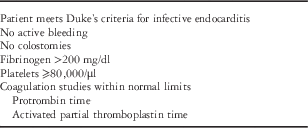
In the first 14 patients with infective endocarditis who met our criteria, recombinant tissue plasminogen activator was administered where no improvement was seen after at least 1–2 weeks of appropriate antimicrobial therapy, and where there was no significant risk of bleeding, such as intra-cranial haemorrhage or recent colostomy or other surgery after which there was an increased risk of bleeding, fibrinogen level >200 mg/dl, platelet count ⩾80,000/μl, and coagulation studies – protrombin time, activated partial thromboplastin time – within normal limits (Table 1). After no significant side-effects were noted in the cohort of the first 14 patients, inclusion criteria were modified. The patients received recombinant tissue plasminogen activator shortly upon echocardiography diagnosis of vegetation and in presence of modified Duke’s criteria.
Criteria for recombinant tissue plasminogen activator administration.

Before every dose of recombinant tissue plasminogen activator, a transfusion of fresh frozen plasma was given. The recombinant tissue plasminogen activator was administered through a peripheral or central vein where there was a central venous catheter. The dose was administered over 6 hours once every 24 hours for up to three to six doses of 0.1–0.3 mg/kg/hour. Before and after each treatment, all patients underwent echocardiography and close monitoring in the ICU for neurological changes, arrhythmias, bleeding, or other complications. In parallel to the recombinant tissue plasminogen activator therapy, all patients were treated with conventional intravenous antimicrobials as per infective endocarditis guidelines.
Medical information was collected regarding demographic parameters, pre-existing medical diagnoses at the time of diagnosis of infective endocarditis, and details of disease progression, treatment, and outcome.
Results
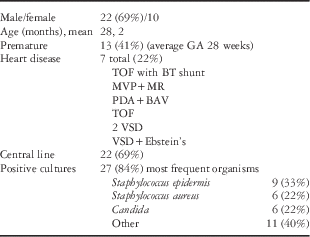
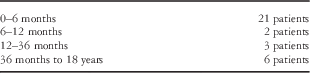
This study included 32 patients, including seven patients who had previously been reported, all of whom were diagnosed with endocarditis and treated with recombinant tissue plasminogen activator. During the period between 1997 and 2014, a total of 47 events of endocarditis occurred, with 15 patients not meeting the criteria for recombinant tissue plasminogen activator administration. The outcome and clinical details of these 15 patients were not available for analysis. Our patient population included 22 boys (69%) and 10 girls (31%). Among all, 13 patients were neonates with an average gestational age at birth of 28 weeks; overall, the average age of the cohort was 28 months with a median of 2 months (Table 2). Most of the patients were young, <6 months old (Table 3). The majority of patients (25, 78%) had structurally normal hearts, whereas seven patients (22%) had an underlying heart disease; 22 patients (69%) had a central venous catheter (Table 2).
Demographics and clinical database of children treated with rt-PA (n=32).

AG=average gestational age (weeks); BAV=bicuspid aortic valve; Ebstein’s=Ebstein’s anomaly; MR=mitral regurgitation; MVP=mitral valve prolapse; PDA=patent ductus arteriosus; rt-PA=recombinant tissue plasminogen activator; TOF=tetralogy of Fallot; VSD=ventricular septal defect
Age distribution of patients.

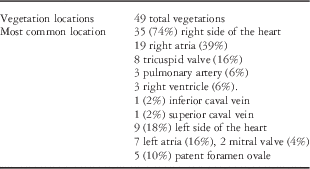
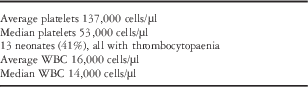
Out of the 32 patients in this study, microscopic haematuria was a frequent finding (60%) upon diagnosis. There were a total of 49 vegetations. Most vegetations (35, 74%) were found on the right side of the heart, and nine (18%) on the left side, whereas five (10%) cases had vegetations on both sides of the heart. Vegetations were seen most commonly in the following order: right atria, tricuspid valve, left atria, foramen ovale, right ventricle, pulmonary artery, inferior caval vein, superior caval vein, and mitral valve (Table 4). A total of 13 patients, mostly neonates, did not have fever at the time of presentation, and 19 children had a fever of 38–40°C for an average of 8 days before diagnosis. Patients had a mean white blood cell count of 16,000 cells/μl, median 14,000 cells/μl; and a mean platelet count of 137,000 cells/μl, median 53,000 cells/μl. All neonates had thrombocytopaenia (Table 5). It was also noted that all candida-positive cultures were accompanied by thrombocytopaenia. Several neonates and children also had neutropaenia, but this was not a frequent finding. Among all, 27 patients (84%) had positive blood cultures with the most frequent organisms being Staphylococcus epidermis (nine patients, 33%), Staphylococcus aureus (six patients, 22%), Candida (six patients, 22%), or other (11 patients, 40%) (Table 2). All four patients who had negative blood cultures were very sick oncologic patients receiving broad-spectrum antibiotics due to fever and neutropaenia. These patients were referred for evaluation by echocardiography due to continuous fever, events such as stroke, or signs such as Roth’s spots on fundoscopy, therefore meeting Duke’s criteria.
Vegetations that were diagnosed with echocardiogram.

Laboratory characteristics.

WBC=white blood cell count
At the time of diagnosis, most patients were receiving ICU level of care due to underlying acute illness with respiratory and/or haemodynamic instability. Specific diagnoses included severe malnutrition due to gut malabsorption, prematurity with respiratory distress syndrome, cerebral vascular accidents, motor vehicle accident, thrombocytopaenia-absent radius syndrome, septicaemia, pneumonia, and meningitis. Several patients were diagnosed in the paediatric ward and were transferred to the ICU before administration of recombinant tissue plasminogen activator for closer monitoring during the therapy. The mean number of doses before echocardiographic resolution of vegetations was three to six, with older patients requiring fewer doses than neonates; likewise, older patients required lower doses than neonates who received higher doses.
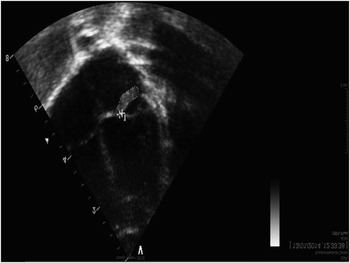
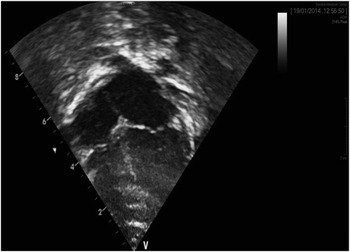
Furthermore, three patients (9%) suffered possible embolic/haemorrhagic events related to recombinant tissue plasminogen activator. A 25-week gestation premature infant had Grade I germinal matrix haemorrhage; one child with unrepaired tetrology of Fallot had a pulmonary haemorrhage preceded by a “Tet spell”. The haemorrhage occurred 2 hours after completing the second dose of recombinant tissue plasminogen activator; subsequently, the patient died. After this death, it was decided to limit the dose for all subsequent patients to 0.1 mg/kg/dose. Another 25-week gestation premature infant died from necrotising enterocolitis 1 week after treatment with recombinant tissue plasminogen activator. Thus, out of the 32 patients, there was only one (3%) mortality directly related to recombinant tissue plasminogen activator administration. There were no other significant complications noted that were considered to be related to the recombinant tissue plasminogen activator administration. All 31 patients who completed a course of recombinant tissue plasminogen activator had rapid and complete clot resolution as seen by echocardiography (Figs 1 and 2), clearance of the organism as evidenced by negative blood cultures, and complete resolution of fever. The first 14 patients failed to resolve vegetations or symptoms with the use of conventional infective endocarditis treatment, and as soon as they received recombinant tissue plasminogen activator vegetation resolution was noted within hours to days. None of the patients required surgical intervention to assist the resolution of vegetations. As described previously, one patient died during the treatment; one patient, a 25-week gestation premature infant, died from necrotising enterocolitis several weeks after the clearance of the vegetation without complications. Further, a patient died after several months from intestinal transplant rejection. A total of 29 patients had a clinic follow-up and echocardiography studies done 12–36 months after discharge; 28 patients had no evidence of cardiac complications such as valvular insufficiencies or decreased function; and one patient had mild mitral regurgitation and continues follow-up at our centre.
Vegetation in the mitral valve on the day of diagnosis.

Vegetation in the mitral valve 2 days after diagnosis after recombinant tissue plasminogen activator administration.

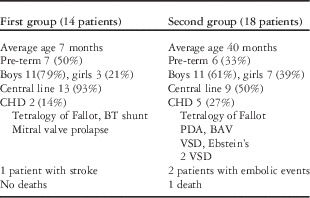
As noted above, after the first 14 patients received recombinant tissue plasminogen activator only after several weeks of failed conventional treatment, and without significant side-effects, inclusion criteria were modified so that recombinant tissue plasminogen activator was administered shortly after echocardiography diagnosis of vegetation in the presence of modified Duke’s criteria. For this reason, we have also analysed the data as two cohorts: the first 14 patients and the latter 18 patients (Table 6). As compared with the latter 18 patients, the mean age of the first cohort was significantly lower (7 months versus 40 months) and most of them had central venous catheters (Table 4). Although most of the other characteristics were similar between the two cohorts, fatality occurred in the second cohort.
Analysis of first 14 patients versus the second 18 patients of the cohort.

BAV=bicuspid aortic valve; Ebstein’s=Ebstein’s anomaly; MR=mitral regurgitation; MVP=mitral valve prolapse; PDA=patent ductus arteriosus; TOF=tetralogy of Fallot; VSD=ventricular septal defect
Discussion
Administration of recombinant tissue plasminogen activator for endocarditis is a novel therapy for which there have been no large-scale clinical studies. This study presents a retrospective review of 32 patients with endocarditis who underwent therapy with recombinant tissue plasminogen activator. This is by far the largest published group of patients treated with this therapy. In sequential echocardiographic studies before and after recombinant tissue plasminogen activator therapy, the resolution of the vast majority of vegetations was very rapid, hours to days, with simultaneous resolution of positive blood cultures and prolonged fever. As evidenced by our study’s own control group, the first 14 patients did not receive recombinant tissue plasminogen activator upon diagnosis. Only after failure to resolve symptoms and vegetations by the conventional treatment, they received the new adjunctive therapy, consequently with very rapid symptom and laboratory resolution of infective endocarditis. Compared with the latter group of patients where very rapid resolution was noted with the use of this new additional therapy demonstrates that there is significant improvement in infective endocarditis using the new adjunctive therapy when compared with the conventional treatment. Moreover, it further shows that even with older vegetations the therapy can be helpful. Importantly, the overall mortality of 3% is low when compared with conventional infective endocarditis treatment, where the mortality is 4–20%.Reference Day, Gauvreau, Shulman and Newburger 1 , Reference Johnson, Boyce, Cetta, Steckelberg and Johnson 9 , Reference Marom, Levy, Gutwein, Birk and Ashkenazi 10 In our centre, historically, paediatric endocarditis mortality was almost 20%; however, with the use of recombinant tissue plasminogen activator, this has decreased to 3% in this cohort.
In addition, it is important to bring into notice the case of one particular patient who came to medical attention due to fever, diarrhoea, and symptoms of ischaemic stroke, which was verified by head MRI. This patient immediately underwent echocardiography and was found to have an infection on his mitral valve (Fig 1). After extended discussion and consultations between haematoncology, intensive care, and cardiology specialists, it was decided to administer recombinant tissue plasminogen activator. The patient had complete resolution of vegetation after the first dose within 24 hours. Although he still showed mild mitral regurgitation, he also had significant improvement in his stroke symptoms clinically. Given that the patient was 6 months old, a decision was made not to expose him to further anaesthesia for repeat head MRI, but to follow-up clinically. As has been mentioned in several case reports,Reference Tan, Armstrong and Birken 11 ischaemic stroke, even within several days, might not be a complete contraindication for recombinant tissue plasminogen activator administration. In those case reports, the patients received thrombolytic therapy for stroke resolution; thus, it was not enough to have sufficient effect on vegetation resolution as well.
The morbidity of 9% is considerably lower than that reported with conventional infective endocarditis treatment.Reference Day, Gauvreau, Shulman and Newburger 1 , Reference Kliegman, Stanton, St. Geme, Schor and Behrman 2 An explanation for morbidity and mortality with the use of recombinant tissue plasminogen activator is that there was no dose recommended for infective endocarditis treatment; with the experience in our centre, we were able to begin to optimise the dose. Thus, in future studies, we hope for even further decreases in morbidity and mortality. In addition, it was observed that, compared with older children, neonates appeared to need a higher dose and increased number of doses for infective endocarditis resolution. This could possibly be explained by differences in the clotting factor cascade that is seen in neonates compared with older children.Reference Andrew, Paes and Milner 12 Morbidity in our study did not include surgical intervention because there were no surgeries needed after recombinant tissue plasminogen activator treatment. The cost of the treatment is an area to evaluate for statistical significance, which, unfortunately in this study, we were not able to carry out.
The drawbacks of our study are that the patient population included both younger patients and fewer patients with CHD than reported by other studies discussing infective endocarditis outcomes. In addition, our study includes a large proportion of neonatal populations with indwelling central or peripherally inserted central catheters. It should be noted that none of the vegetations were attached directly to the catheters and that all these patients had repeated positive blood cultures. These patients met the criteria for infective endocarditis, and thus were enrolled into the study for recombinant tissue plasminogen activator treatment. Unfortunately, it is very difficult without a biopsy to describe exactly the masses found in the heart, whether they were vegetations or thrombi in the presence of bacteraemia. Further studies are needed in order to delineate better drug dosing, morbidity, and mortality. Studies involving large number of patients are limited due to the infrequency of endocarditis in children; however, multi-centre co-operation may improve statistical significance.
In summary, recombinant tissue plasminogen activator appears to be a useful adjunctive therapy for infective endocarditis in infants and children. If future studies corroborate our findings, it may become an alternative treatment for infective endocarditis.
Acknowledgement
Special thanks to Professor Shaul Sofer, the Paediatric Intensive Care Unit, and the Haematoncology Unit for help in the management of the patients.
Financial Support
This research received no specific grant from any funding agency, commercial, or not-for-profit sectors.
Conflicts of Interest
None.
Ethical Standards
The authors assert that all procedures contributing to this work comply with the ethical standards of the relevant national guidelines on human experimentation of Ben-Gurion University of the Negev and with the Helsinki Declaration of 1975, as revised in 2008, and has been approved by the institutional committees of the Soroka Medical Center and Ben Gurion University of the Negev (SOR-0284-12).